Breaking News
ED freezes fresh Rs 192-cr deposits of WinZO in money laundering case | India News


ED freezes fresh Rs 192-cr deposits of WinZO in money laundering case

NEW DELHI: The Enforcement Directorate (ED) on Thursday said it has conducted searches at the accounting firm of real money online money gaming app WinZO and has frozen fresh bank deposits, mutual funds and fixed deposits worth Rs 192 crore.The raid at the office premises of the auditor was conducted on December 30.During the search, the federal probe agency said in a statement, “proceeds of crime” (name for illicit funds under the Prevention of Money Laundering Act) possessed by ZO Games Pvt. Ltd. (fully owned Indian subsidiary of Winzo Pvt. Ltd.) worth around Rs 192 crore were frozen.These funds are in the form of bank balances, fixed deposits and mutual funds, it said.In November, the agency had arrested the founders of WinZO — Saumya Singh Rathore and Paavan Nanda following their questioning at the Bengaluru zonal office of the ED.A Bengaluru court granted bail to Rathore a few days ago while a similar relief was denied to Nanda.The ED had conducted the first round of raids in this case in November and had then said that bonds, fixed deposits and mutual funds worth about Rs 505 crore “possessed” by WinZO Games were frozen by it.Reacting to these charges then, a spokesperson for WinZO had said in a statement that “Fairness and transparency are core to how WinZO designs and operates its platform.” The ED has alleged that the company was engaged in “criminal” activities and “unscrupulous” practices as customers were made to play with bots, Artificial Intelligence (AI), algorithms and software named ‘PPP, EP and Persona’ and not humans, without being informed so.“Winzo has also prevented/limited withdrawals of monies held by the customers in the wallets of Winzo Pvt Ltd. and it generated proceeds of crime in the form of ‘Rake Commission’ from the matches played by the bots with the real players on the Winzo app.“In this manner, the company made winnings of around Rs177 crore from the bots between May 2024 to August 2025,” according to the ED.It added that funds of Rs 557 crore were similarly generated between April 2022 and December 2023.The company, the agency alleged, was in possession of users’ monies worth Rs 43 crore, even after the ban on real money online gaming by the Union government (in late 2024).The ED had quantified the total proceeds of crime in this case at about Rs 802 crore.A part of these alleged illicit funds, according to the ED, has been taken out of India to the US and Singapore “under the garb of overseas investments”.Funds worth USD 54 million have been parked in their bank account in the US (bank account held in the name of WINZO US Inc.), which is a “shell” company since all the operations and day-to-day business activities, operation of bank accounts is done from India, the ED claimed.


Source link

BSF action near IB in J-K: 19-year-old Bangladeshi held; probe under way | India News


BSF action near IB in J-K: 19-year-old Bangladeshi held; probe under way

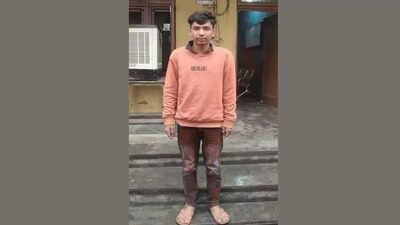
NEW DELHI: The Border Security Force (BSF) on Thursday apprehended a 19-year-old Bangladeshi national near the International Border in the Gajansoo area of Jammu and Kashmir.According to Jammu and Kashmir Police, the individual has been identified as Shariful Islam Bhuiyan, son of Mozibul Haque Bhuiyan. He is a resident of Adra village in Bangladesh’s Comilla district.After initial questioning, the BSF handed him over to the Border Police Post (BPP), Gajansoo, under Police Station Kanachak, where further interrogation is under way, reported news agency ANI.Meanwhile, the BSF is preparing to launch its annual winter security exercise, Operation ‘Sard Hawa’ (Cold Wind), across sensitive stretches of the Kashmir frontier, key security posts in Jammu, and the vast desert areas of Rajasthan along the India-Pakistan border and the Line of Control. The operation is aimed at preventing infiltration attempts that often increase during winter due to reduced visibility caused by dense fog.BSF officials told ANI that the operation is expected to begin next month and will continue till the end of January, a period considered critical ahead of Republic Day celebrations.Speaking on condition of anonymity, a BSF official posted in Jammu said the main focus of Operation Sard Hawa is to counter infiltration bids that exploit fog and mist during the winter months.“Heightened security measures are adopted with increased vigilance and patrolling along the India-Pakistan border during ‘Operation Sard Hawa’,” the official said.Operation Sard Hawa is carried out every year along the India-Pakistan frontier in Jammu and Kashmir and Rajasthan. It covers difficult terrain in the Kashmir sector, important border posts in Jammu, and parts of the Thar Desert, including vulnerable stretches of the International Boundary and the Line of Control.During the operation, the BSF intensifies surveillance by deploying additional personnel and using advanced equipment such as thermal imaging systems to detect infiltration, smuggling and illegal cross-border movement. The winter exercise runs alongside the summer counter-infiltration drive, Operation Garam Hawa (Hot Wind).


Source link

‘Conspiracy won’t work’: Akhilesh backs Mamata Banerjee for 2026 West Bengal polls; claims BJP will lose in UP as well | India News


'Conspiracy won't work': Akhilesh backs Mamata Banerjee for 2026 West Bengal polls; claims BJP will lose in UP as well

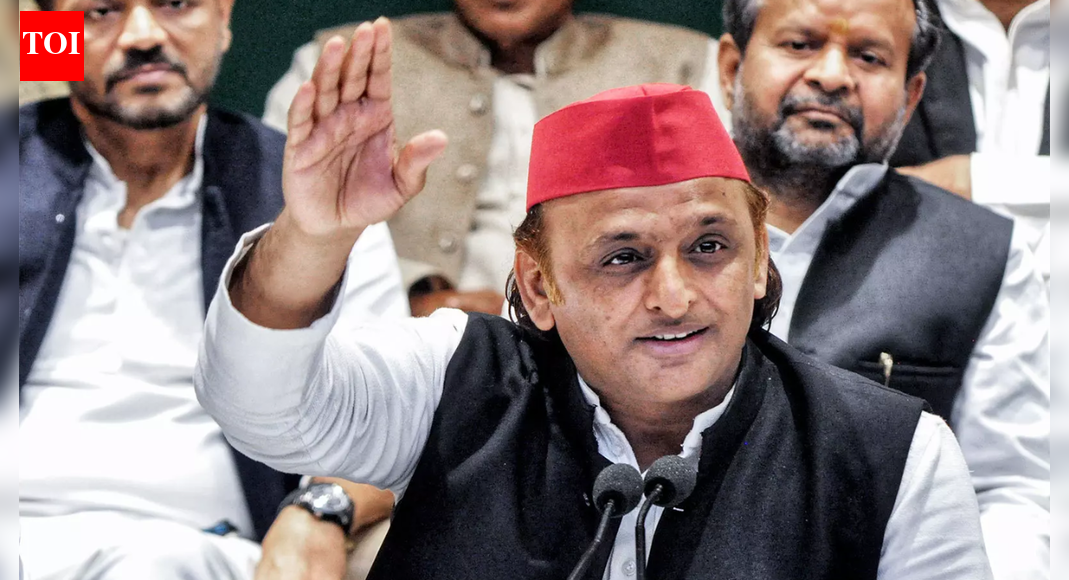
NEW DELHI: Samajwadi Party chief Akhilesh Yadav on Thursday backed West Bengal chief minister Mamata Banerjee ahead of the 2026 Assembly elections, asserting that the BJP’s “conspiracy” would fail. He also predicted that the BJP would lose the Uttar Pradesh Assembly elections in 2027.Speaking to reporters in Lucknow, Akhilesh Yadav said, “In West Bengal, Mamata Banerjee is going to win by a large margin of votes. These BJP people conspire everywhere. This time, their conspiracy will not work. First, they will lose in Bengal, and then they will lose in UP as well,” Akhilesh told reporters.

‘Will Rid Bengal Of Infiltrators’: Amit Shah Slams Mamata Banerjee’s 14-Year Rule, Sounds Poll Bugle

During a recent visit to Kolkata, Union minister Amit Shah alleged that “fear and corruption” have become the identity of West Bengal over the last 14 years.He also accused Mamata Banerjee’s government of facilitating the infiltration of illegal immigrants and claimed that the state government was refusing to provide land for border fencing.In response, Mamata Banerjee referred to Amit Shah as “Dushasana,” a character from the Mahabharat.Meanwhile, Akhilesh Yadav also targeted Uttar Pradesh chief minister Yogi Adityanath over the ongoing Special Intensive Revision (SIR) of voter lists in the state, alleging pressure on Election Commission officials.“When the chief minister said that four crore votes had been deducted from his count, he was essentially telling the officials to commit fraud… The data emerging at this time proves that the Election Commission and its officials need to demonstrate their credibility. Because if there is a discrepancy between figures from the state government and those from SIR, the EC will have to consider the purpose of SIR and the whole revision process,” Akhilesh Yadav said.


Source link

India, Pakistan exchange list of nuclear installations: All about the 1988 agreement; what purpose does it serve — explained | India News


India, Pakistan exchange list of nuclear installations: All about the 1988 agreement; what purpose does it serve — explained

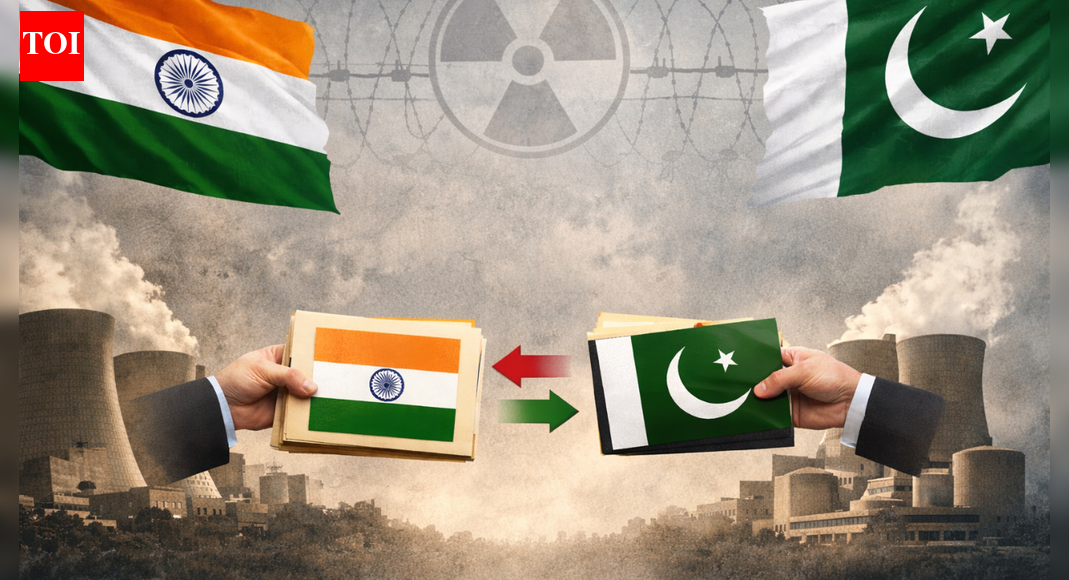
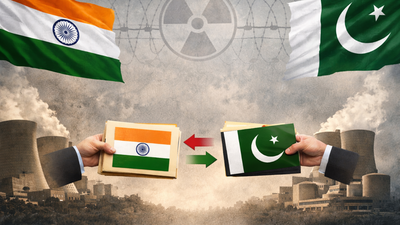
NEW DELHI: India and Pakistan on Thursday exchanged, through diplomatic channels, the list of nuclear installations and facilities covered under the Agreement on the Prohibition of Attack against Nuclear Installations and Facilities, the ministry of external affairs said.The exchange took place simultaneously in New Delhi and Islamabad, in keeping with the provisions of the bilateral agreement that governs the protection of nuclear infrastructure in both countries.

India’s Backyard In Flux: Nepal’s Gen Z Revolt To Pakistan’s Court Chaos Shakes South Asia In 2025

According to the MEA, the agreement requires India and Pakistan to inform each other of the nuclear installations and facilities covered under the pact on 1 January of every calendar year. Thursday’s exchange marked the 35th consecutive exchange of such lists, with the first taking place on 1 January 1992.The annual exchange has continued uninterrupted for over three decades, even during periods of heightened political and military tension between the two neighbours.

What the agreement says

The Agreement on the Prohibition of Attack against Nuclear Installations and Facilities was signed on 31 December 1988 and entered into force on 27 January 1991, following the exchange of instruments of ratification by both sides.Under the agreement, both India and Pakistan commit themselves to refrain from undertaking, encouraging or participating in any action aimed at causing destruction of, or damage to, nuclear installations or facilities in the other country.The scope of the agreement is broad. Nuclear installations and facilities covered under the pact include nuclear power plants, research reactors, fuel fabrication units, uranium enrichment facilities, isotope separation plants, reprocessing units and sites storing significant quantities of radioactive material, whether fresh or irradiated.The agreement also specifies that both countries must exchange information on the locations of these facilities, typically in the form of latitude and longitude coordinates, once every year.

Why the annual exchange matters

The annual exchange of lists is designed to reduce the risk of accidental, miscalculated or deliberate attacks on sensitive nuclear infrastructure during periods of conflict or crisis.By formally identifying protected sites, the agreement seeks to prevent scenarios in which conventional military operations could inadvertently escalate into a nuclear crisis. An attack on a nuclear installation, even with conventional weapons, could have catastrophic humanitarian, environmental and strategic consequences.Security analysts view the exchange as a confidence-building measure that helps maintain a minimum level of predictability between two nuclear-armed neighbours with a long history of conflict.Notably, the exchange has continued even during times of strained relations, including after major crises such as the Kargil conflict, the 2001–02 military standoff, the 2016 Uri attack and the 2019 Pulwama attack and Balakot air strikes.

Historical context

When the agreement was negotiated in the late 1980s, both India and Pakistan were moving steadily towards overt nuclear capability, though neither had yet conducted nuclear tests. Concerns over pre-emptive strikes on nuclear facilities, particularly in the context of regional instability, were central to the discussions.The agreement was one of the earliest formal nuclear confidence-building measures between the two countries and predated their 1998 nuclear tests, after which both openly declared themselves nuclear weapon states.Since entering into force in 1991, the agreement has remained intact despite the absence of progress on broader nuclear arms control or risk-reduction mechanisms in South Asia.

Limits of the agreement

While the pact prohibits attacks on nuclear installations and facilities, it does not restrict the development, deployment or use of nuclear weapons themselves. Nor does it include verification mechanisms beyond the annual exchange of lists.The agreement also does not cover missile bases, command and control centres or other strategic military assets linked to nuclear weapons.Even so, diplomats and experts argue that the continued observance of the agreement reflects a shared recognition of the dangers posed by attacks on nuclear infrastructure.More than three decades after it came into force, the agreement remains one of the few enduring pillars of nuclear risk reduction between India and Pakistan.In an environment marked by limited dialogue and recurring tensions, the uninterrupted annual exchange of nuclear installation lists serves as a reminder that both sides continue to acknowledge the need to prevent catastrophic escalation.For now, the routine exchange remains a rare example of sustained institutional cooperation between the two countries in the nuclear domain.


Source link

India–China reset in 2025: From Galwan’s shadow to tactical calm; how long can this balance hold? | India News


India–China reset in 2025: From Galwan’s shadow to tactical calm; how long can this balance hold?

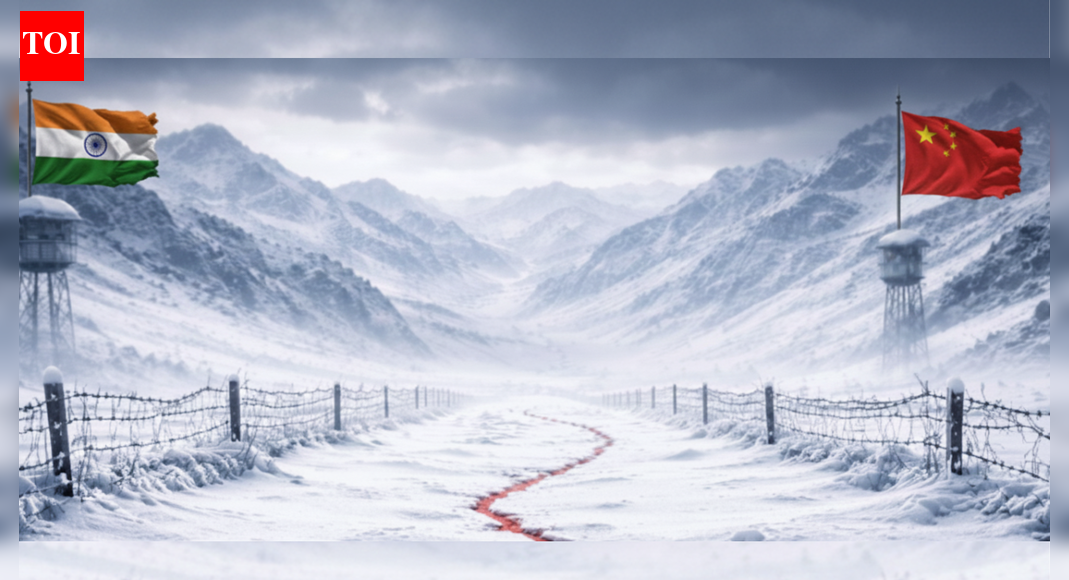
NEW DELHI: As India reopens channels with China, five years after the violent Galwan Valley clash, the moment carries an irony difficult to ignore. The last time an Indian prime minister trusted China, what followed has been echoing in our ears, at least for the past decade.In 2025, India–China relations have taken an unexpected turn. After years of diplomatic frost, military standoffs, and hardened rhetoric, both sides have stepped back from the edge, at least on the surface. High-level engagements resumed, including Chinese foreign minister Wang Yi’s visit to Delhi and Prime Minister Narendra Modi’s meeting with President Xi Jinping on the sidelines of the Shanghai Cooperation Organisation (SCO) summit. Talks on disengagement at sensitive friction points such as Depsang and Demchok were revived, commercial flights were restored, and limited trade channels reopened, catching many observers off guard.For a relationship long defined by suspicion, this thaw has raised as many questions as it has hopes.India–China ties are rooted in a long and uneasy history: the trauma of the 1962 war, recurring border confrontations, the Doklam standoff, and the prolonged deadlock following the Galwan clash of 2020. Against this backdrop, the question arises: how stable is this new calm, and what does it truly rest on?Just as important is what lies behind this shift. Strategic compulsions, economic pressures, and changing global alignments appear to have nudged both capitals towards a phase of managed stability, reset driven less by reconciliation than by necessity.For India, the sudden outreach to China marked a rare recalibration of posture. After years of projecting firmness and strategic distance, New Delhi’s decision to test a reset challenged long-held assumptions about Beijing. It signalled not abandonment of caution, but a willingness to probe whether limited cooperation could coexist with enduring rivalry, without compromising strategic autonomy or long-term security interests.

What all reopened

The 2025 reset unlocked channels that had remained frozen by mistrust since 2020. Direct passenger flights between major cities, including Delhi and Beijing, resumed after a five-year pause, restoring people-to-people contact and easing business travel that had effectively stalled since the Galwan clash.On the ground, border trade routes also saw movement. Nathu La in Sikkim reopened, allowing the exchange of local goods. These measures helped lift bilateral trade, supported by a gradual easing of restrictions on select shipments and licensing procedures.Diplomatically, both sides revived long-dormant mechanisms, from special envoys to working groups on boundary issues, creating channels to manage friction without escalating tensions. While none of these steps amounted to a breakthrough on the core border dispute, they helped restore a minimum level of predictability to a relationship that had become dangerously brittle.

Screenshot 2025-12-29 210435

.

Exports jump, but the imbalance deepens

India’s exports to China jumped sharply in November 2025, rising 90% year-on-year to $2.2 billion, according to the Global Trade Research Initiative (GTRI). From April to November, exports climbed 33% to $12.2 billion. At first glance, the figures suggested a revival in commercial ties after years of disruption.But the headline numbers conceal deeper vulnerabilities.GTRI notes that India’s export growth to China remains narrow and volatile, driven largely by a handful of products rather than a broad-based expansion of India’s traditional export basket. Naphtha and select electronics dominated the surge, while sectors such as iron ore and agriculture showed inconsistent or muted performance.At the same time, India’s imports from China remain heavily concentrated and structurally entrenched. Between January and October 2025, electronics alone accounted for $38 billion in imports, followed by machinery at $25.9 billion, organic chemicals at $11.5 billion, and plastics at $6.3 billion. These categories include mobile phone components, integrated circuits, laptops, solar modules, lithium-ion batteries, and pharmaceutical intermediates.The result is a widening trade imbalance. India’s exports to China fell from $23 billion in 2021 to $15.2 billion in 2022, remained subdued through 2023, and are projected to rise modestly to $17.5 billion in 2025. Imports, however, surged from $87.7 billion in 2021 to an estimated $123.5 billion in 2025, pushing the trade deficit towards $106 billion.Chinese customs data paints an even starker picture, suggesting a deficit of over $115 billion.India’s recent export gains to China are narrow, volatile, and heavily dependent on shifts in Chinese demand, GTRI warns. Without a sustained strategy to expand competitive manufacturing and reduce import dependence, short-term spikes will not alter the fundamentally imbalanced nature of the relationship.

Screenshot 2025-12-29 213830

.

A reset born of compulsion

Many analysts argue that the 2025 thaw was driven less by renewed trust and more by shared constraints. As Ashley Tellis put it in one of his articles, “The India–China detente is more tactical than transformative, driven by US tariff pressures and trade deficits, not genuine border resolution.”For Beijing, mounting pressure from renewed US tariffs under President Donald Trump, a slowing domestic economy, and widening Western efforts to reduce dependence on Chinese supply chains made engagement with India increasingly attractive. Stabilising ties with a major regional power offered China economic breathing space and diplomatic signalling at a time of global pushback.For New Delhi, the calculus was equally pragmatic. Prolonged military deployments along the Line of Actual Control strained resources and readiness, while global supply chain disruptions underscored the costs of sustained confrontation with the world’s manufacturing hub. De-escalation offered room to regroup without conceding core positions.What emerged was a carefully calibrated detente, transactional, limited, and hedged, designed to manage risk rather than resolve rivalry.

ChatGPT Image Dec 29, 2025, 08_40_14 PM

.

Is this sustainable?

The durability of the 2025 reset remains uncertain. There is still no agreed demarcation of the Line of Actual Control, and troop levels have not returned to pre-2020 positions. Even minor patrol incidents could quickly spiral into larger crises.Deeper political sensitivities remain unresolved. The presence of the Dalai Lama in India and Beijing’s concerns over succession continue to loom in the background. China’s strategic partnership with Pakistan, particularly in the aftermath of terror incidents such as the Pahalgam attack, remains a major source of friction.Former Indian ambassador to China Gautam Bambawale told DW, “Beijing knows this. So does New Delhi. For example, India is never going to permit Chinese firms like Huawei and ZTE into India’s telecom space again.”Without clearer ground rules and deeper strategic dialogue, many fear the thaw could remain temporary, vulnerable to the next shock.

Impact on Indian foreign policy

Opinions differ on whether India’s outreach to China reflects tensions with the United States or a broader recalibration. Beijing also recently rejected claims in a Pentagon report that China is easing border tensions to weaken US–India ties, calling such assertions misleading.For India, engagement with China fits a long-standing strategy of hedging, keeping options open, protecting strategic autonomy, and avoiding over-reliance on any one power. Strategic analyst Happymon Jacob, in an article, argued that the renewed bonhomie demonstrates that alternatives to exclusive alignment with Washington do exist.The reset has also improved India’s footing in multilateral forums such as the SCO and BRICS. With tensions temporarily eased, New Delhi will be able to engage more confidently, leveraging improved optics with Xi Jinping to press Global South concerns, development financing, and calls for a more balanced global order.At the same time, India can quietly continue to strengthen its neighbourhood strategy, deepening ties with Bhutan, expanding connectivity initiatives, and countering Chinese influence in Nepal and Sri Lanka.

What next

India now finds itself at a familiar but delicate crossroads. Over the past decade, it has sought to position itself as a central player in a multipolar world, balancing ties with the US and Russia while managing competition with China. This balancing act has become harder as global fault lines sharpen, forcing New Delhi to constantly reassess risks without locking itself into rigid alliances.Strategic analyst Brahma Chellaney, in an article, cautioned against overconfidence, warning that past experience shows how quickly tactical accommodation with China can unravel. History suggests that periods of calm in India–China relations often rest on fragile assumptions, vulnerable to sudden shifts triggered by border incidents, regional crises, or domestic political pressures on either side.Going forward, New Delhi will have to walk a tightrope. Military vigilance along the LAC cannot be relaxed even as diplomatic engagement continues. Economically, India must accelerate efforts to reduce critical import dependence, especially in electronics, pharmaceuticals, and clean energy components, while ensuring trade engagement does not translate into strategic vulnerability.The challenge ahead will be to preserve this fragile equilibrium: securing short-term stability without sacrificing long-term security, avoiding economic over-dependence, and ensuring that tactical resets do not harden into strategic illusions. For now, the 2025 thaw offers space, but not certainty.

Source link

‘Reinforcing our strategic autonomy’: Defence minister Rajnath Singh extends greetings on DRDO Day | India News


NEW DELHI: Defence minister Rajnath Singh on Thursday extended greetings for the DRDO Day to scientists, personnel, and their families, lauding their “commitment and scientific excellence.In an X post, the Defence Minister hailed the Defence Research and Development Organisation (DRDO), noting that developing indigenous technologies reinforces India’s “strategic autonomy.”He wrote, “On DRDO Day, I extend my heartfelt greetings to all @DRDO_India scientists, personnel and their families. Their unwavering commitment, scientific excellence and sense of national duty are vital to strengthening India’s defence preparedness and advancing Atmanirbhar Bharat in defence.”“By developing indigenous, future-ready technologies, DRDO is reinforcing our strategic autonomy and the confidence of our armed forces. I wish the entire DRDO family a year of meaningful breakthroughs and continued service to the nation,” the Union Minister added.January 1, 2026, marks the 67th Foundation Day of DRDO. According to the defence ministry, the DRDO was formed in 1958 from the amalgamation of the Technical Development Establishment (TDEs) of the Indian Army and the Directorate of Technical Development & Production (DTDP) with the Defence Science Organisation (DSO).Back then, DRDO was a small organisation with 10 establishments or laboratories. Over the years, it has grown multi-directionally in terms of the variety of subject disciplines, number of laboratories, achievements and stature.Chief of Army Staff (COAS) General Upendra Dwivedi also extended wishes to all DRDO personnel and their families on the occasion.“General Upendra Dwivedi, COAS and All Ranks of the Indian Army extend warm wishes and greetings to all DRDO personnel and their families on the occasion of DRDO Day,” ADG PI wrote on X.DRDO has marked several achievements in 2025, including the recent successful conduct of a salvo launch of two ‘Pralay’ missiles in quick succession from the same launcher off the coast of Odisha on Wednesday morning.According to a statement from the Ministry of Defence (MoD), the flight test at about 10:30 hrs was conducted as part of user evaluation trials. Both missiles followed the intended trajectory and met all flight objectives, as confirmed by tracking sensors deployed by the Integrated Test Range at Chandipur. The terminal events were confirmed by telemetry systems installed on board the ship, deployed near the impact points.‘Pralay’ is an indigenously developed solid propellant quasi-ballistic missile employing state-of-the-art guidance and navigation to ensure high precision. The missile is capable of carrying multiple types of warheads against various targets.


Source link

Congress slams Mohan Bhagwat over remarks on ‘Hindu Rashtra’, says his statement lacks action | India News


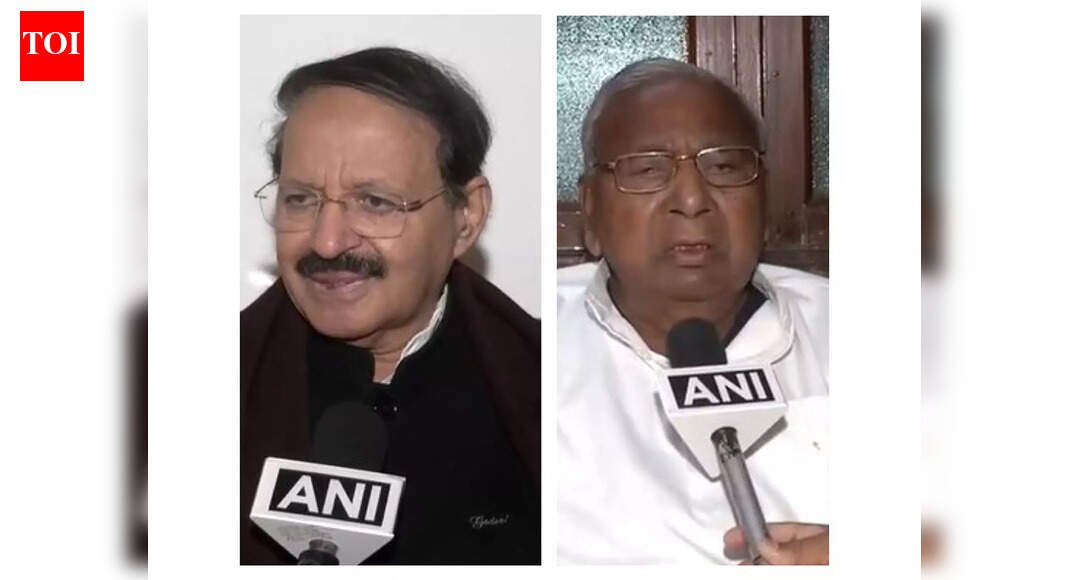
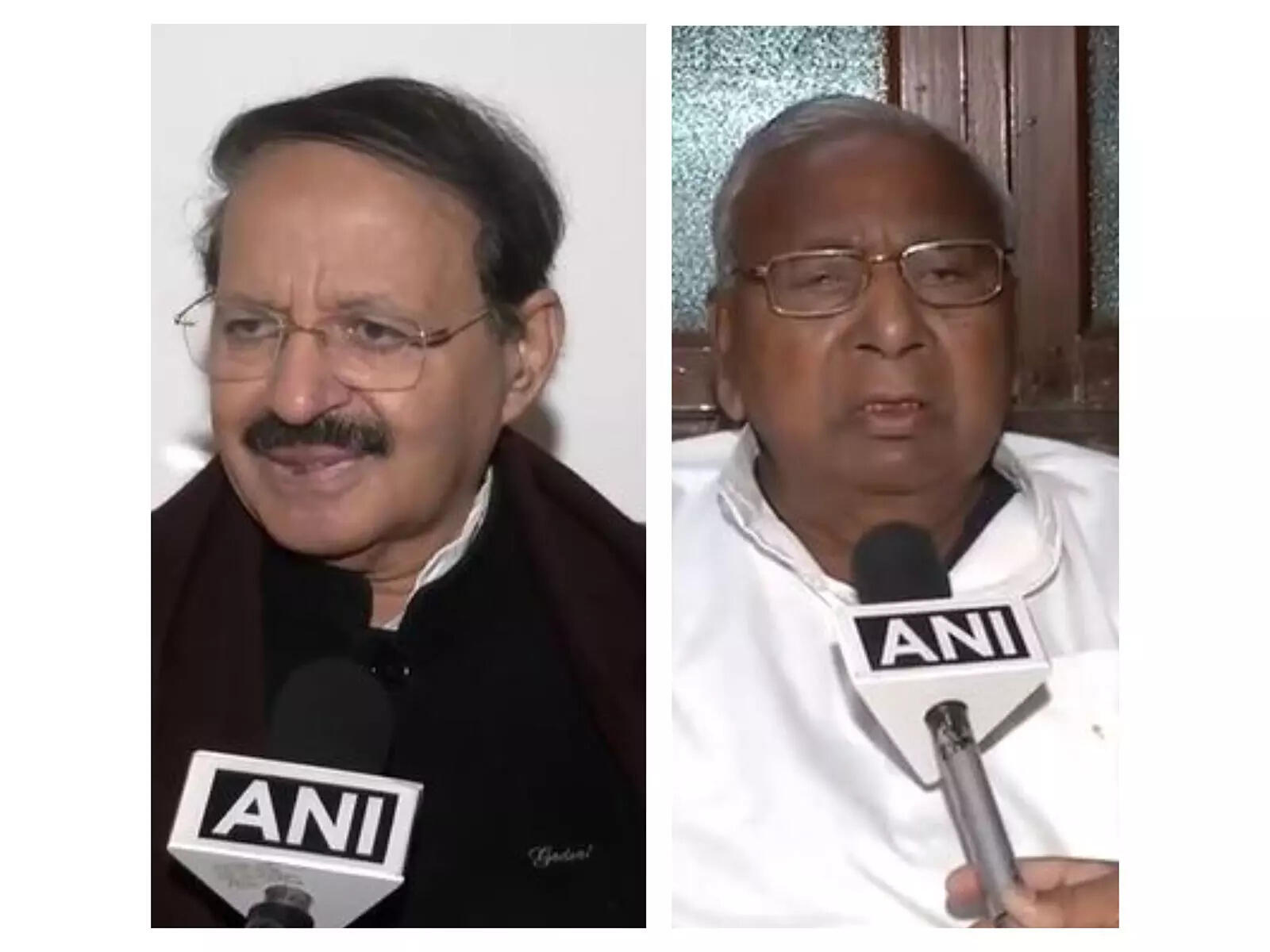
NEW DELHI: Congress leaders Rashid Alvi and V Hanumantha Rao on Thursday launched a sharp attack on RSS chief Mohan Bhagwat over his recent remarks, accusing him and the BJP of pushing divisive agendas, imposing Hindi, and attempting to undermine India’s secular character.The leaders alleged that Bhagwat’s statements do not translate into action and warned against efforts to erase Mahatma Gandhi’s legacy.

‘Have To Stay United’: RSS Chief Mohan Bhagwat On Atrocities Against Hindus In Bangladesh

Reacting to Bhagwat’s statement, Congress leader Rashid Alvi said that both the RSS chief and Prime Minister Narendra Modi were focused on image-building rather than addressing real issues on the ground.“Mohan Bhagwat and the Prime Minister are both trying to cultivate their images. Neither of them seems to care whether what they say actually translates into action on the ground. If Mohan Bhagwat truly believes this, why doesn’t he tell the BJP leaders to stop forcibly imposing Hindi on the people of South India, which only creates a huge uproar and makes people there hate Hindi? Mohan Bhagwat’s statements won’t make any difference. He needs to explain this to his cadre and the BJP leaders,” Alvi said.Congress leader V Hanumantha Rao also accused the RSS chief of working towards turning India into a Hindu Rashtra and erasing the legacy of Mahatma Gandhi.“RSS Chief Mohan Bhagwat has only one work, and that is to make India a ‘Hindu Rashtra’ and erase Mahatma Gandhi’s name from it… People must understand and try to stop this… this country cannot become a Hindu country as it is a secular country… They are even trying to change the name of the Mahatma Gandhi National Rural Employment Guarantee scheme (MNREGA) by removing Mahatma Gandhi’s name from it and adding Lord Ram’s name... people should fight to reverse it,” Rao said.On Sunday, Rashtriya Swayamsevak Sangh (RSS) chief Mohan Bhagwat said that India must once again work towards becoming a ‘Vishwaguru’, not out of ambition but because it is the need of the world, emphasising that the time has now come to carry forward the resurgence of Sanatana Dharma.Addressing a gathering in Hyderabad, Bhagwat referred to events from a century ago, saying that around 100 years back, Yogi Arvind had declared that the resurgence of Sanatana Dharma was God’s will and that the rise of the Hindu nation was essential for that resurgence.“That time has now come, 100 years ago, when Yogi Arvind declared that the resurgence of Sanatana Dharma is God’s will, and that the rise of the Hindu nation is for the resurgence of Sanatana Dharma,” he said.Bhagwat further asserted that Bharat, the Hindu nation, Sanatan Dharma, and Hindutva are synonymous. “Bharat or the Hindu nation, and Sanatana Dharma, Hindutva, are synonymous. He indicated that this process had begun. We now need to continue that process…We see that the efforts of the Sangh in India and those of Hindu Swayamsevak Sanghs in their respective countries are the same: to organise the Hindu community. To set an example of a society leading a religious life in the whole world, to set examples of people leading a religious life…”Following this, the RSS Chief said that becoming a ‘Vishwaguru’ requires sustained hard work across various streams, including the Sangh’s efforts.


Source link

Smelling of liquor, AI pilot detained at Vancouver airport on X’mas eve before operating Delhi flight | India News


Smelling of liquor, AI pilot detained at Vancouver airport on X'mas eve before operating Delhi flight

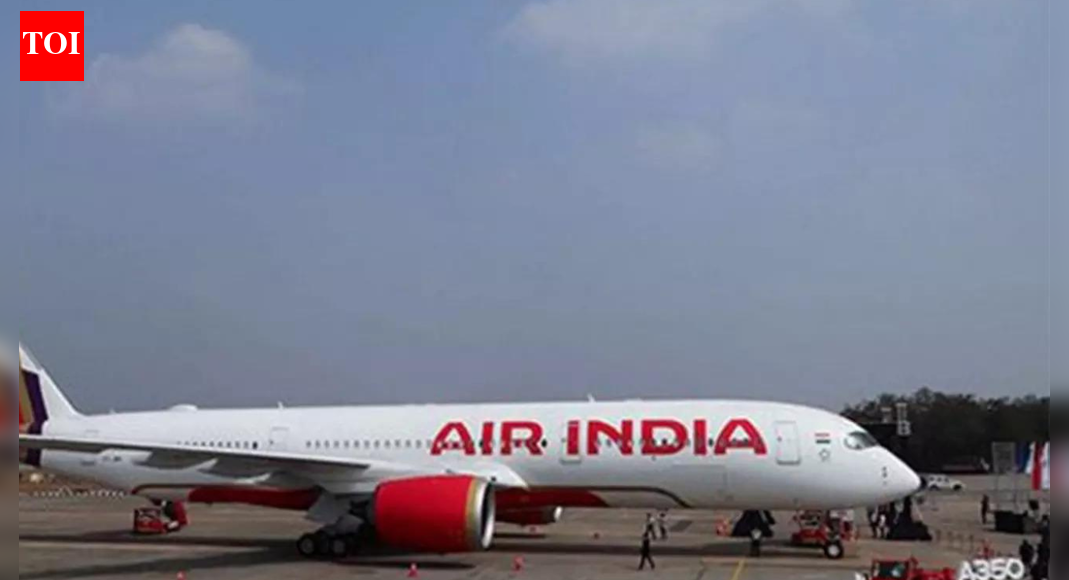
NEW DELHI: Getting into the Yuletide spirit could prove expensive for an Air India pilot who was to operate a Vancouver-Delhi (via Vienna) flight on Dec 23, 2025. A staffer at Vancouver duty free either saw him inadvertently sipping wine being offered at this festive time or found him smelling of liquor while he was buying a bottle. She reported this Boeing 777 pilot to the Canadian authorities who conducted a breath analyser test on him which he flunked and then he was detained. Luckily for passengers, Air India managed to quickly find a replacement. The ultra long haul, to be operated by four pilots or two sets (one captain and a co-pilot in each set) in turns, supposed to leave at 3 pm local time did so with just a two-hour delay. The aircraft then landed in Vienna from where another set of crew operated it to Delhi.“AI has taken a very stern view of this matter. The pilot was flown to Delhi a couple of days later and is being probed. The issue has been reported to the Directorate General of Civil Aviation (DGCA), which is also examining the same,” said people in the know. While some sources say the pilot had inadvertently sipped an alcoholic drink at the airport and a staffer at duty free saw him doing so, others said he smelled of alcohol when buying a bottle. It is not yet known which of the two really happened, staffer reported the matter to Canadian authorities who then used CCTV footage to find out the pilot in question was to operate with flight. They managed to trace him to the AI aircraft.In a statement, AI said: “AI 186 from Vancouver to Delhi on Dec 23, 2025, experienced a last-minute delay after one of the cockpit crew members was offloaded prior to departure. Canadian authorities raised concerns regarding the pilot’s fitness for duty, following which the crew member was taken for further inquiry. In accordance with safety protocols, an alternate pilot was rostered to operate the flight, resulting in the delay.“Air India regrets the inconvenience caused to its passengers and is fully cooperating with the local authorities. The pilot has been taken off flying duties during the process of enquiry. Air India maintains a zero-tolerance policy towards any violation of applicable rules and regulations. Pending the outcome of the investigation, any confirmed violation will attract strict disciplinary action in line with company policy. Safety remains Air India’s highest priority at all times,” the airline statement added.Pilots operating international sectors usually do not have pre-flight breath analyser (BA) tests and the same is conducted on arrival as liquor is available on board these flights. This is to ensure they have not taken a sip or two during the flight. On domestic flights, pre-flights BA tests are conducted as alcohol is not served/sold on flights within India. While rules don’t mandate this, AI on its own has enforced a policy of conducting random pre-flight BA at international stations. The airline frequently keeps sending its doctors on international flights who then conduct these checks on pilots who are to operate the return flight to India. Pilots are surprised at this case. “Forget drinking, we don’t even use after shaves, perfumes, mouth wash or homeopathic medicines some hours before operating a flight. There have been multiple instances of teetotallers failing BA tests because of the alcohol in their breath because of using toiletries with alcoholic content. We look for these items without any alcohol, except homeopathic medicines where possibly there’s no option,” said a captain. The reason: Failing BA test thrice means losing flying license.


Source link

India saved its tigers. Now big cats are running out of room | India News


India saved its tigers. Now big cats are running out of room

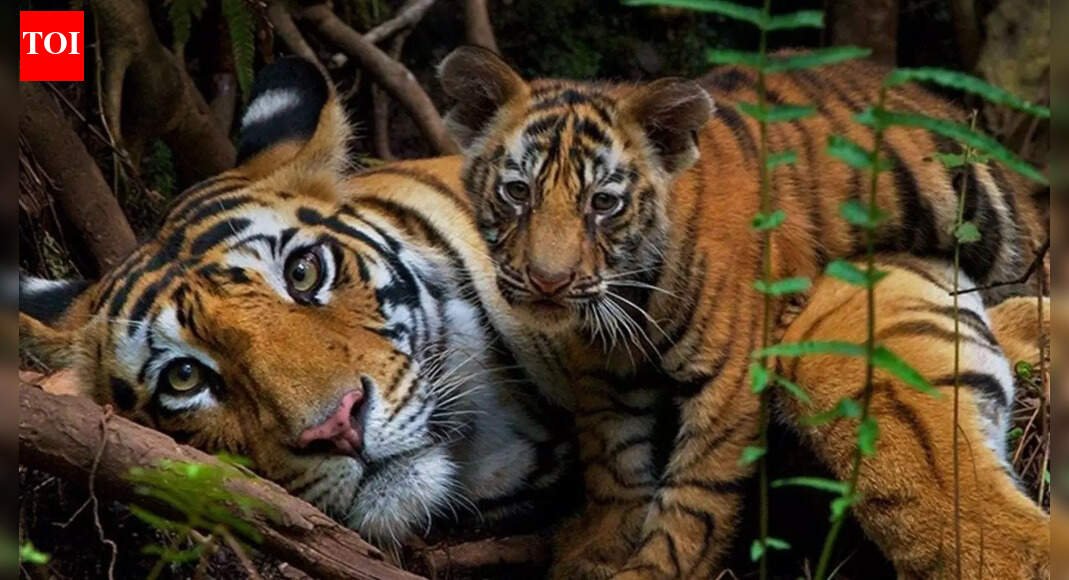
In early 2025, a motion-sensor camera high on the hills of Purulia district, West Bengal, blinked to life. The image it captured was unremarkable in isolation: the grainy silhouette of a tiger crossing scrubland. But for residents and forest officials, it was extraordinary. Purulia had never yielded a tiger sighting before. No camera traps, no spoor, no local memory of the big cat. The photograph was more than a record; it was a signal – that the landscape had begun to shift in ways people were only beginning to comprehend. Within weeks, researchers traced the animal’s path through a series of camera traps: March 2024 in Chhattisgarh’s Balrampur forest division; summer sightings in Jharkhand’s Palamau Tiger Reserve; and by January 2025, in Bengal’s Purulia and Jhargram. The tiger had wandered roughly 500 km through human-dominated terrain, crossing administrative and ecological boundaries in search of space. The tiger’s journey is not an anomaly. It is part of a pattern. India’s wild tiger population, once on the brink of collapse, has surged from 1,411 in 2006 to approximately 3,682 in the latest estimate – almost 75% of the world’s wild tiger population. This rebound, often hailed as a conservation landmark, is the centrepiece of Project Tiger’s story. Conservationists and forest staff took pride in the numbers, even as they now grapple with the consequences of unprecedented success. Scientists at the Wildlife Institute of India (WII) estimate that nearly 30% of these 3,682 tigers – more than 1,100 animals – now roam outside notified tiger reserves, sharpening the challenge of coexistence. WII director GS Bhardwaj told TOI that a dedicated Tiger Outside Tiger Reserves (TOTR) project has already been initiated from 2025, with the focus on conserving both tigers and people. The project targets forest divisions that host dispersing tigers, aims to mitigate human-tiger conflict linked to TOTR, and envisages strengthening protection regimes beyond reserve boundaries.

Testing human tolerance

Testing human tolerance

But there is a paradox embedded in that success: Project Tiger became “a little too successful”, as an expert said. As core reserves fill, tigers disperse farther – into buffers, across states and into human landscapes, fuelled by instinct, not intention. Tigers are inherently territorial; adults typically range across tens to hundreds of square km depending on prey and habitat. Studies in Indian landscapes have shown female home ranges between 30 and 64 sq km, with males sometimes exceeding 170 sq km. The average, even in prey-rich forests, often approaches 90 sq km. Bhardwaj said WII has advised all states to strengthen wildlife protection outside tiger reserves and carry out intensive monitoring of tigers moving beyond them, so that encounters do not escalate into human casualties or retaliatory killings. In the central Indian landscape – the broad swath of forests, hills and plateaus that includes Madhya Pradesh, Chhattisgarh and surrounding states – pressure is particularly acute. Bandhavgarh Tiger Reserve, for instance, has one of the highest tiger densities in the country. A state-level review found territorial fights to be a major cause of death among tigers there between 2021 and 2023, reflecting intense competition for space and mates. With older males holding core territories, younger animals are pushed into buffer zones and near villages, raising the frequency of conflict. Bandhavgarh registers more than 2,000 cattle kills annually – a stark indicator of how tigers are pressed against the edges of ecological and social boundaries. Not all reserves exhibit the same degree of crowding though. In Uttarakhand, Corbett and Rajaji tiger reserves are approaching saturation, but nearly half of India’s reserves remain below what scientists describe as their ecological capacity. Forest officials in the state have reported that Corbett can support about 20 tigers per 100 sq km, while eastern Rajaji’s capacity is around 14 per 100 sq km – figures that help explain why animals increasingly stray outside protected areas. As tigers move beyond core forests, their presence ripples through local communities in palpable ways. In early 2025, in several villages in Uttar Pradesh’s Pilibhit region, a prowling tiger caused schools to be closed. Children stayed home. “Exams are coming,” said a Class 5 student from Khalispur had then said, “but we haven’t even completed the syllabus.” Teachers refused to hold evening sessions. Parents stopped letting children walk alone. Tigers in Pilibhit often establish temporary bases in sugarcane fields, drawn by wild boars that feed on the sweet crop. Boars attract tigers. Sugarcane draws both. And between them lies the village. Elsewhere, the consequences have turned fatal. In Gadchiroli district of eastern Maharashtra, tiger numbers grew from zero to nearly 30 in five years – a startling shift in a landscape long considered tiger-scarce. With 12,000 sq km of forest, it appears generous on paper. But in practice, only about 7,000 sq km in two forest divisions is occupied. Human settlements, encroachments, and patchy prey base have constrained the actual carrying capacity. In 2024, 25 villagers died in tiger attacks across the Wadsa and Gadchiroli divisions. Two problem tigers were captured. A tigress was spared because she had cubs. Though technically capable of holding far more – by some estimates, up to 300 tigers – Gadchiroli cannot even accommodate 25 without triggering conflict. In one forest-fringe home in Jharkhand, a tiger entered a family’s hut, settled on a wooden cot, and waited. The family, stunned, watched in silence from a corner of the room. The tiger had wandered far from mapped territory. Its entry was a mistake. Its departure, hours later, was quiet. Nobody was hurt. The event became a story of awe and fear. These tigers are no longer sentinels of wilderness. They are migrants. Monarchs in exile. Each one a ghost of ecological success, walking into fields, hamlets and homes – not out of aggression, but because the forests behind them are full. In some landscapes, officials speak of “social carrying capacity” – not how many tigers the habitat can sustain, but how many human communities are willing to tolerate. In parts of Uttarakhand, tiger-inflicted fatalities have surpassed leopard attacks for the first time in years. In response, village volunteers called Bagh Mitras have been trained to monitor tiger movement and alert forest departments. Some report sightings through mobile apps. Others simply listen for silence – the kind that descends before a tiger appears. Translocation – moving tigers from dense parks to underpopulated reserves – has been tried. Odisha attempted it in 2018, without success. Intra-state efforts show more promise, but officials now lean toward corridor consolidation. Movement is safer when it’s natural. But for that, corridors must exist – not just on policy maps, but on the ground. In the Terai Arc, at least 10 critical corridors are under threat from habitat loss and development. In central India, linear infrastructure – railways, highways, power lines – cuts across migration routes. And yet, some reserves offer hope. In Tadoba, tiger density rose 30% over a decade, with buffer populations expanding as prey base improved. In Sundarbans, the reserve is being expanded by more than 1,000 sq km to create space for 101 tigers now crowding its mangrove heartland. India now has more than 50 tiger reserves. Some are full. Others still hold ecological potential, if prey can be restored. The key lies not just in creating new habitat, but in connecting the old – allowing dispersing tigers to move without triggering conflict. Perhaps the tiger today is not just an emblem of wilderness, but a kind of refugee of success – displaced by recovery. The Purulia tiger’s trek is both a biometric trail and a metaphor. It is the story of a tiger with nowhere to go, walking east until the land gave way to politics and fear. In the empty classrooms of Pilibhit, in the living room of a Jharkhand family, in the cattle sheds of Bandhavgarh, and in the forests of Gadchiroli now marked by claw and memory, India’s national animal is no longer confined to the forest. The tiger has returned. The question is – where can it stay?


Source link

‘China’s claim as baseless as Trump’s ceasefire talk’ | India News


'China's claim as baseless as Trump's ceasefire talk'
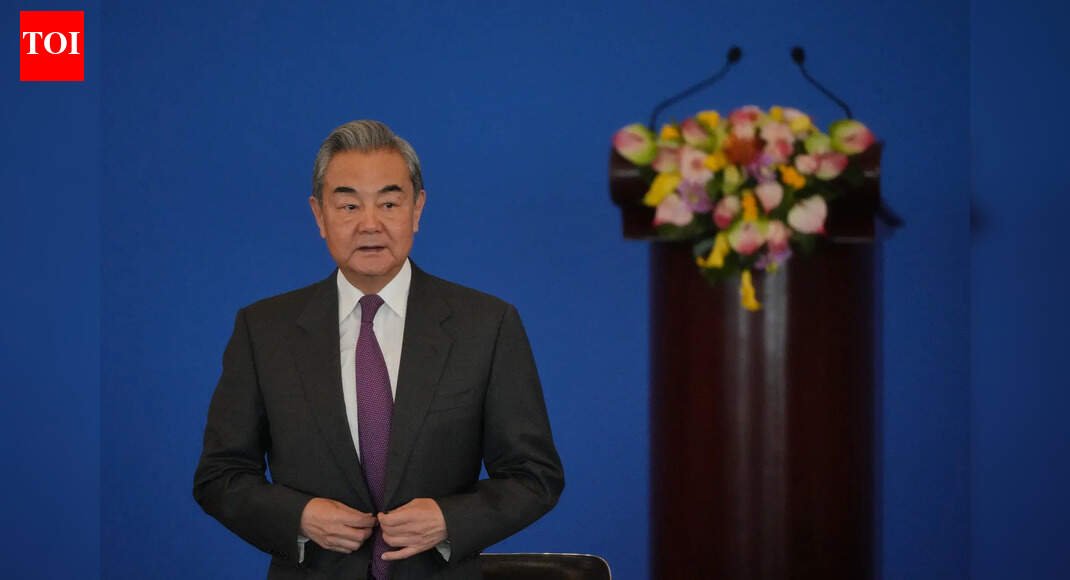
China’s foreign minister Wang Yi (AP Photo/Andy Wong)

NEW DELHI: India has rejected China’s claim of mediation in its conflict with Pakistan, reiterating its stand that the military action was paused following a request from the Pakistani DGMO to his Indian counterpart. Chinese foreign minister Wang Yi claimed on Tuesday that the crisis involving India and Pakistan were among the “hotspot issues” mediated by his country in 2025. The assertion, similar to the US President Donald Trump’s boasts of having played the peace broker in May, came as a surprise because of the time lag and the assessment here that Beijing was the undeclared participant in the4-day conflict arrayed on Pakistan’s side.

“To Build Peace That Lasts”: China Claims Credit for India-Pakistan Conflict, Follows Trump

Indian govt sources expressed surprise at Wang’s statement, whose country, in fact, provided crucial military assistance to Pakistan in May 7-10 conflict, and said it was as baseless as the repeated assertion of President Trump that he brokered a “ceasefire”.They emphasised that China was not part of any conversation related to the cessation of military action. India, from PM Modi downwards, has repeatedly asserted that it agreed to pause the military action after Pakistani DGMO Maj Gen Kashif Abdullah reached out to his Indian counterpart Lt Gen Rajiv Ghai.India has consistently maintained there is no place for any third-party intervention in matters related to India and Pakistan, terming them bilateral. Wang had said, “China mediated in northern Myanmar, Iranian nuclear issue, tensions between Pakistan and India, issues between Palestine and Israel, and the recent conflict between Cambodia and Thailand.”India had targeted terror infrastructure in Pakistan and PoK – following the killing of civilians, mostly tourists, by terrorists in Pahalgam – as part of Opeartion Sindoor, and had then responded to the hostile neighbour’s military action.


Source link