Breaking News
Murder charge dropped, alcoholic son gets 6.5-year jail term for mom’s death | India News


Murder charge dropped, alcoholic son gets 6.5-year jail term for mom's death

PANAJI: Holding him guilty of culpable homicide not amounting to murder, a sessions court in North Goa handed Sandeep Verlekar, 55, a sentence of 6 years and 6 months in prison for assaulting his aged, bed-ridden mother under the influence of alcohol in Merces in 2019. Sandeep was arrested for dragging his 69-year-old mother, Laxmibai, from the bed, hitting her with his fists and leaving her out in the verandah, where she succumbed to her injuries. The court took a lenient view. It considered that Verlekar was an alcoholic and stated that he had no intention to kill his mother. The court directed that the imprisonment of 6 years, 1 month and 11 days already undergone by him be set off, and that he be released upon completion of the balance period. Public prosecutor Roy D’Souza told the court that he should be given the maximum sentence as he had committed a serious offence by assaulting his own bedridden mother. Rohan Desai, appearing under free legal aid, stated that he had been in custody for over 6 years since he was arrested in Nov 2019, and that he had two children. The court observed that the manner in which he had assaulted his mother showed that he had been under the influence of liquor and had no intention of killing her. “I also came to the conclusion that the act of assault committed by the accused was not committed with an intention to kill his own mother. Although it is a death caused, he never intended to kill his own mother. Therefore, according to me, a lenient view has to be taken against the accused,” Merces sessions judge Irshad Agha said. The sessions court observed that there was no complaint of misbehaviour on his part during the period in custody. “The period of sentence already undergone acted as rehabilitation for the accused as he could not access liquor. In this context, I do not find any reason that the accused will again turn alcoholic to commit any such act,” the court stated.
Source link

Key Hizbul conspirator gets life term | India News


Key Hizbul conspirator gets life term

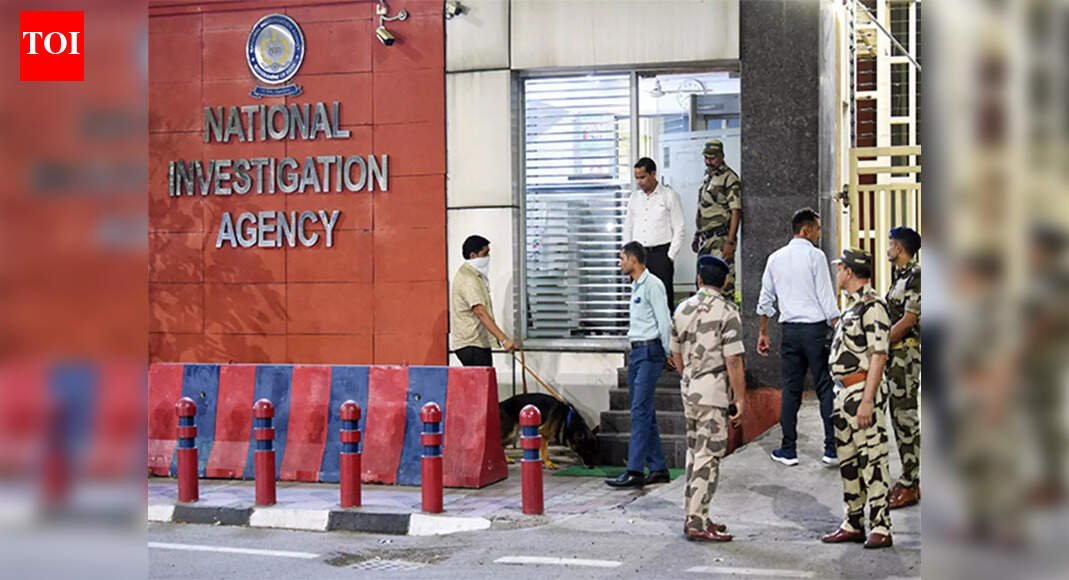
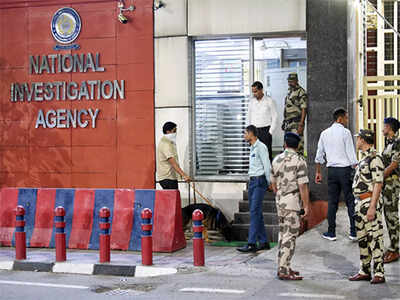
GUWAHATI: A special NIA court convicted and sentenced a key accused in a Hizbul Mujahideen terror conspiracy case to life imprisonment, the agency said Wednesday. The convict, Kamruj Zaman alias Hurairah or Kamaruddin from Erakapili village in Assam‘s Hojai district, was arrested in 2018 for conspiring to raise a module of the banned outfit in the state during 2017-18.Zaman was awarded three separate sentences, with maximum being life imprisonment under Section 18 of Unlawful Activities (Prevention) Act, 1967. He was sentenced to five years’ simple imprisonment each under UAPA sections 18B and 38, read with IPC Section 120B. All sentences will run concurrently. The court imposed a fine of Rs 5,000 in each case.NIA said Zaman recruited several accused to establish a terror network aimed at expanding Hizbul Mujahideen’s footprint in the northeast.

Throwback 2025: Five Big Moments When India Defied Pressure And Delivered Diplomatic Masterstrokes


Source link

Pragati-led ecosystem accelerated projects worth Rs 85 lakh crore in 10 years: PM Modi | India News


Pragati-led ecosystem accelerated projects worth Rs 85 lakh crore in 10 years: PM Modi

NEW DELHI: The Pragati-led ecosystem for monitoring of projects and flagship schemes has helped accelerate projects worth more than Rs 85 lakh crore in the past decade, PM Modi said Wednesday while chairing the 50th Pragati meeting online with secretaries and chief secretaries.Modi described the milestone as a symbol of the deep transformation India has witnessed in the culture of governance over the last decade. In a statement, the PMO said Modi shared clear expectations for the next phase, outlining his “vision of reform, perform and transform, saying reform to simplify, perform to deliver, transform to impact”. He said reform must mean moving from process to solutions, simplifying procedures and making systems more friendly for ‘ease of living and ease of doing business’.It added the PM spoke how outcome-driven governance has been strengthened through Pragati. He also said transformation must be measured by what citizens actually feel about timely services, faster grievance resolution and improved ‘ease of living’.“The PM underlined that when decisions are timely, coordination is effective and accountability is fixed, the speed of govt functioning naturally increases and its impact becomes visible directly in citizens’ lives,” it said.On Wednesday, the PM reviewed five infrastructure projects across sectors, including road, railways, power, water resources and coal, with a cumulative cost of more than Rs 40,000 crore.During a review of the PM SHRI scheme, Modi said that the scheme must become a national benchmark for holistic and future-ready school education and added that implementation should be outcome oriented rather than infrastructure centric. He asked all chief secretaries to closely monitor the scheme and asked them to make efforts to see that PM SHRI schools become benchmark for other schools of state govts.He suggested senior officers should undertake field visits to evaluate the performance of PM SHRI schools.Recalling the origin of Pragati, PM said as Gujarat CM, he had launched the technology-enabled Swagat platform (State Wide Attention on Grievances by Application of Technology) to understand and resolve public grievances with discipline, transparency and time-bound action. Building on that experience, after assuming office at the Centre, he expanded the same spirit nationally through Pragati, bringing large projects, major programmes and grievance redressal onto one integrated platform for review, resolution, and follow-up.


Source link

ED recovers Rs 5 crore cash, suitcase full of jewellery from premises linked to ‘gangster’ Inderjit Yadav | India News


ED recovers Rs 5 crore cash, suitcase full of jewellery from premises linked to 'gangster' Inderjit Yadav
The Enforcement Directorate (ED) has recovered over Rs 5 crore in unaccounted cash, Rs 8 crore in gold and diamond jewellery, and property documents worth Rs 35 crore during searches on alleged gangster Inderjit Singh Yadav’s premises. The investigation into money laundering stems from Yadav’s alleged illegal extortion and coercive loan settlements.

NEW DELHI: In a search on the premises of alleged gangster Inderjit Singh Yadav and his associates in Delhi-NCR, ED has recovered unaccounted cash of over Rs 5 crore, a suitcase full of gold and diamond jewellery worth more than Rs 8 crore and documents of properties worth Rs 35 crore, totaling to an estimated Rs 48 crore, so far. The search began on Tuesday and continued till late Wednesday, when bank officials were called in with a currency note-counting machine to estimate the laundered proceeds of crime from alleged extortions by politically-connected Yadav – who is absconding and is believed to have fled to the UAE. “The money laundering investigation has been initiated in connection with Inderjit Singh Yadav’s illegal extortion, coercive loan settlement of private financers, arms intimidation and earning commission from such illegal activities,” a senior official aware of the probe said. There are more than 15 FIRs registered and chargesheets filed by Haryana and UP Police under various sections of the Arms Act and other laws against Yadav and his associates.


Source link

Govt bans high-dose nimesulide painkiller pills citing health risk | India News


Govt bans high-dose nimesulide painkiller pills citing health risk

NEW DELHI: The Centre has banned the manufacture, sale and distribution of all oral formulations of nimesulide above 100 mg in immediate-release form, citing risk to human health and the availability of safer alternatives.In a notification issued on Dec 29 and published in The Gazette of India, the health ministry said it was satisfied that continued use of higher-dose nimesulide was “likely to involve risk to human beings” and that the prohibition was necessary in public interest.Nimesulide is a non-steroidal anti-inflammatory drug (NSAID) commonly used for pain, inflammation and fever. The ban applies only to oral formulations above 100 mg in immediate-release form and takes effect immediately. Lower-dose formulations are not covered.The order has been issued under Section 26A of the Drugs and Cosmetics Act, 1940, after consultation with the Drugs Technical Advisory Board (DTAB), and bars manufacturers, distributors and sellers from producing or supplying the banned formulations.Nimesulide has been under regulatory scrutiny for over a decade. In 2011, the central govt prohibited six drugs, including nimesulide, following DTAB recommendations, and barred its use in children below 12 years amid concerns over liver toxicity.Earlier this year, the Indian Council of Medical Research (ICMR) also flagged safety concerns, recommending restrictions on nimesulide use in patients below 18 years and above 60 years, and advising that formulations above 100 mg be banned. In India, the drug is sold under brands such as Nimulid, Nimtex and Nicip, with Nise among the largest-selling brands.Welcoming the move, Dr Rommel Tickoo, director, internal medicine, Max Hospital, Saket, said, “This is a prudent and timely decision taken by govt. The restriction on high-dose immediate-release nimesulide addresses a long-standing safety concern, especially when misused or taken without supervision. With safer NSAID alternatives readily available, limiting exposure to higher doses is clearly in the interest of patient safety.


Source link

Vote chori happening through manipulation of poll rolls: TMC | India News


Vote chori happening through manipulation of poll rolls: TMC

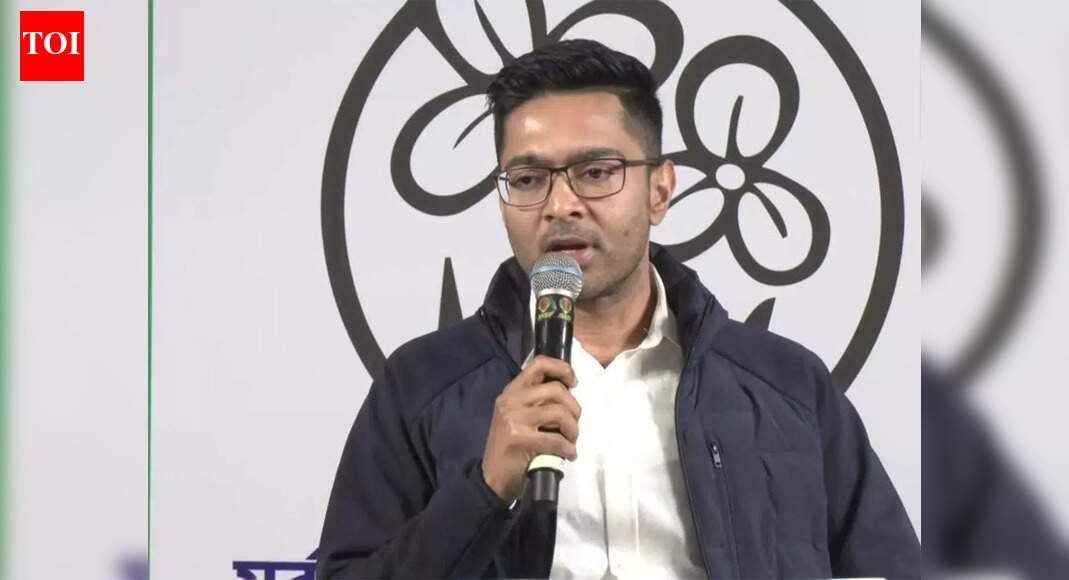
NEW DELHI: After its delegation met the full bench of EC Wednesday, Trinamool national general secretary Abhishek Banerjee alleged that “vote chori” is not happening through EVMs but through manipulation of electoral rolls, a tactic he said opposition parties failed to catch in states such as Haryana, Maharashtra, Delhi and Bihar, where they lost the polls. “If they had caught this, BJP would have lost in these states,” Banerjee said, adding that TMC would not allow it to happen in Bengal, which goes to the polls in a few months. The LS MP said the battle against “vote theft” cannot be won through television debates or social media campaigns and asserted that opposition parties, including Congress, must be present on the ground, particularly at polling booths, to thwart manipulation during SIR and special summary revision of electoral rolls. “EC has failed to address most of the concerns we raised. We will not accept the final voter list if it has discrepancies,” Banerjee said, alleging collusion between the EC and BJP. The 10-member delegation included MPs Derek O’Brien, Saket Gokhale, Kalyan Banerjee, Nadimul Haque, Ritabrata Banerjee and Mamata Thakur, along with West Bengal ministers. Banerjee alleged that CEC Gyanesh Kumar was “aggressive” during the two-and-a-half-hour meeting and challenged him to release CCTV footage of the interaction. He said the party would pursue legal options if EC failed to address its concerns on SIR. Referring again to Haryana, Maharashtra, Delhi and Bihar, Banerjee said people wanted to vote for opposition parties, but alleged manipulation prevented that. “Theft is happening in the voter list, in the software, not in EVM. You are failing to understand what algorithms are being used to disenfranchise voters,” Banerjee said.


Source link

‘LVM3 rocket debris’ washed ashore on Sri Lanka coast | India News


‘LVM3 rocket debris’ washed ashore on Sri Lanka coast
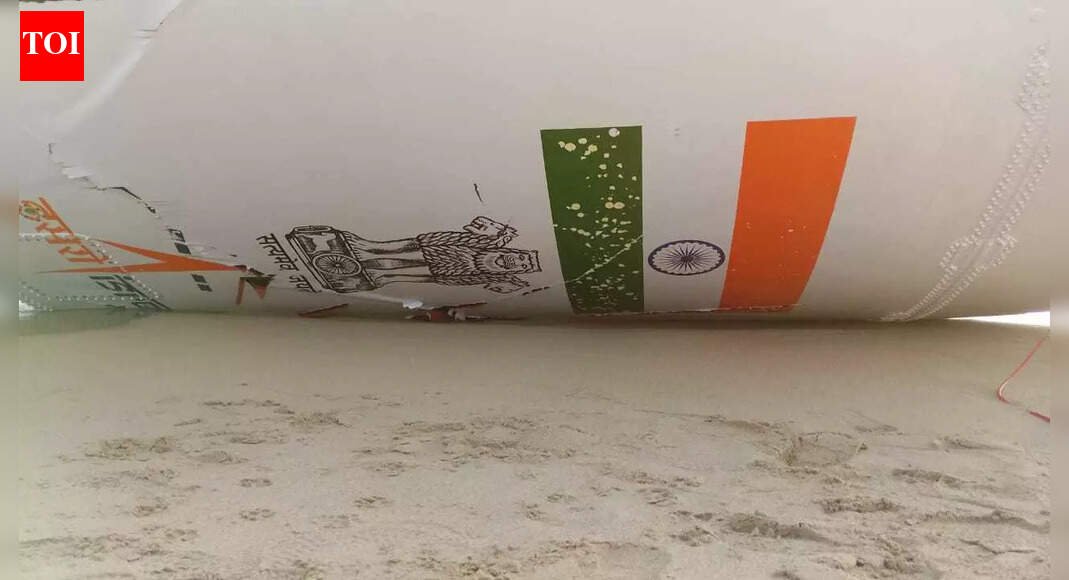
Suspected debris of LVM3 rocket found on the eastern coast of Sri Lanka.

NEW DELHI: Days after Isro launched its heavy-lift rocket LVM3 carrying US BlueBird Block-2 satellite, rocket debris, suspected of the Indian space rocket, washed ashore on the eastern coast of Sri Lanka. The rocket part was found on Sunday evening along the Malai Munthal sea stretch near Trincomalee. Local residents and fishermen first spotted the object after it was pushed ashore by strong ocean currents, prompting alerts to Sri Lankan authorities.Experts suspect the fragment is a portion of the payload fairing, the protective shell that houses satellites, which typically detaches during the rocket’s ascent. The payload fairing is five metre in diameter and 10 metre long. Following the spotting of the debris, Lankan naval officials were deployed to secure the site. This is not the first such incident in the region. In the past, debris from rockets launched from Sriharikota had occasionally been recovered in the waters of Sri Lanka and the Maldives.In the past, parts of Indian rocket debris were also found on the Australian coast. On July 31, 2013, officials had identified an object found on a beach in Western Australia to be a part of a rocket launched by Isro. The Australian Space Agency had then said it was likely debris from the “expended third-stage of a Polar Satellite Launch Vehicle”.


Source link

Search op in Rajouri after VDG opens fire at terror suspect; high alert in Chenab region | India News


Search op in Rajouri after VDG opens fire at terror suspect; high alert in Chenab region

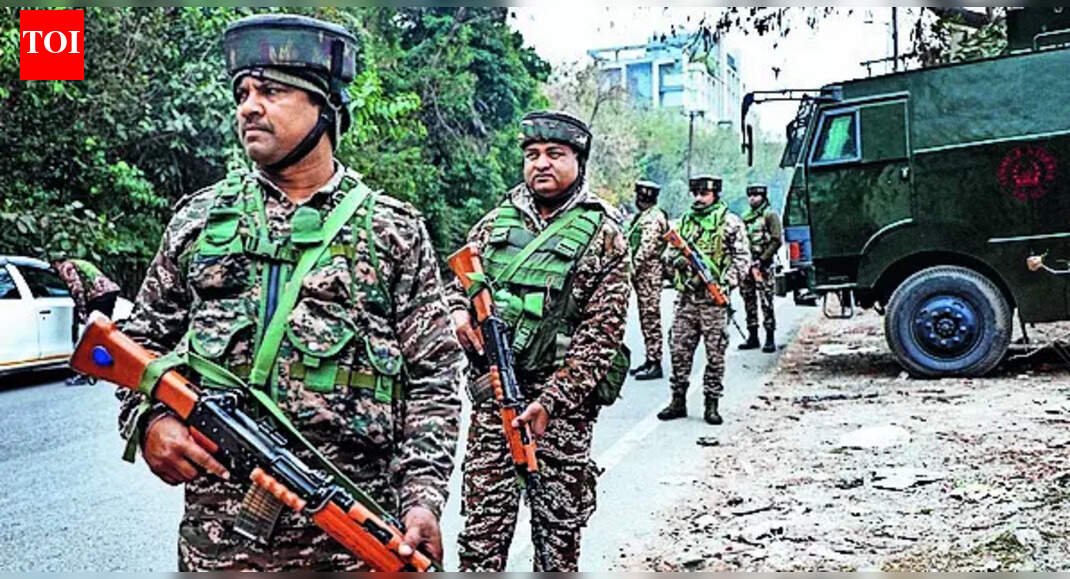
JAMMU: A village defence guard (VDG) opened fire after allegedly spotting a terror suspect in a remote village in J&K’s Rajouri district, even as security forces intensified surveillance in the upper reaches of Chenab region — Doda and Kishtwar districts — officials said Wednesday.Officials said the VDG fired about six rounds in the air upon allegedly sighting a terror suspect in Dali village in Rajouri’s Kalakote area late Tuesday. None was injured in the firing. “A joint team of the Army and police subsequently rushed to the spot and launched a search operation in the area, but found nothing suspicious,” an official said.A series of anti-terror operations was underway in the upper reaches of Doda, Kishtwar and Ramban districts in Chenab region, especially in areas bordering Udhampur and Kathua districts, officials said. Similar operations were also ongoing in the two frontier districts of Rajouri and Poonch, as well as Reasi, which shares a border with Rajouri-Ramban in Jammu Division and Kulgam in south Kashmir, said officials.Security forces were anticipating that terrorists hiding in non-habituated (higher reaches) may try to enter the mainland, in view of the closure of mountain passes, to get commodities. The intensified operations by Army’s Rashtriya Rifles and J&K Police’s SOG were also extended to a large area in Chenab region, said officials.The Army, meanwhile, stepped up efforts to strengthen grassroots security by imparting training to VDGs — the “first responders” in the security grid — in Doda district. On Tuesday, about 150 VDGs from 17 remote villages along Doda-Chamba border, including women volunteers, underwent intensive training in handling automatic rifles, minor tactics, self-defence, bunker construction and repelling enemy attacks, officials said. The training was being conducted at Shingini Panchayat in Bhalessa, around 90km from Doda district HQ, to equip volunteers with the necessary skills to protect their villages and act as the first line of defence, especially in vulnerable areas, an official said.Separately, a suspected Pakistani drone was spotted hovering briefly over Phulpur area near the International Border in Samba district late Tuesday. “Soon after the sighting, police and BSF personnel rushed to the spot and conducted a thorough search to ascertain whether any payload containing weapons or narcotics had been air-dropped, but found nothing on the ground,” an official said.


Source link

Situation along northern borders remains stable, yet sensitive: Defence ministry | India News


Situation along northern borders remains stable, yet sensitive: Defence ministry

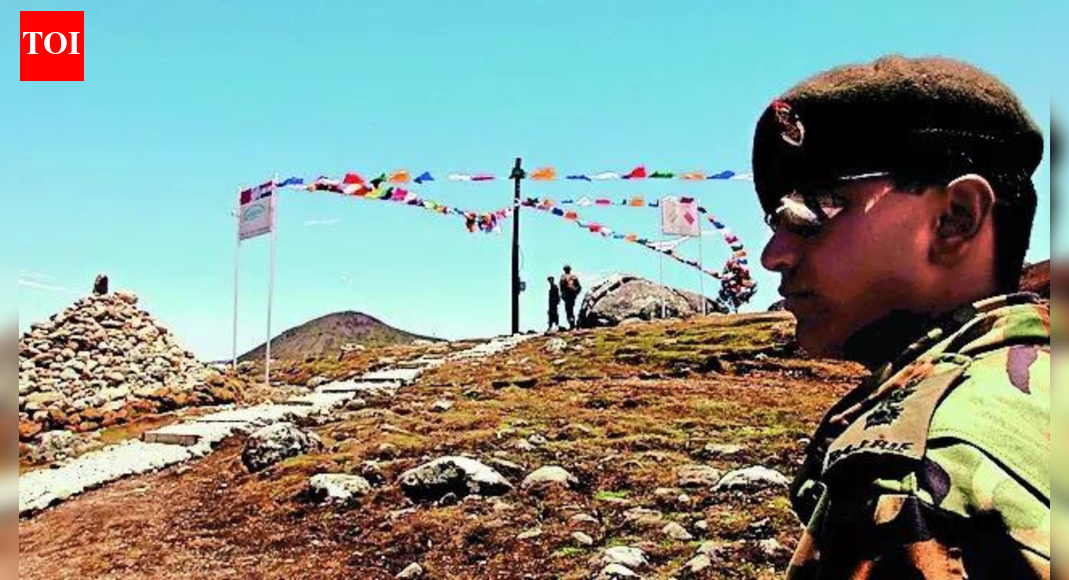
File photo (Picture credit: PTI)

NEW DELHI: The situation along the country’s northern borders remains stable, yet sensitive, the defence ministry said on Wednesday, and asserted that the deployment of the Indian Army in all sectors along the Line of Actual Control is “robust, well poised” and prepared to deal with any “emerging contingency”.Also, bilateral interaction between India and China at political, diplomatic and military levels have facilitated “positive developments and stabilisation” on the northern borders, it said.

Army Trains Village Defence Guards In J&K In Automatic Rifles, Self-Defence | Watch

The ministry on Wednesday issued a statement, carrying an analysis of the events and milestones for it in the year gone by.It also mentioned about the situation along the northern front, and the state of India-China ties after the process of disengagement of troops from both sides, along the Line of Actual Control (LAC).“After the agreement on disengagement achieved in Depsang and Demchok in 2024, year 2025 witnessed reduced deployment levels of PLA, both opposite the northern borders and in traditional training areas,” it said.“The PLA (People’s Liberation Army of China) maintained 10 Combined Arms Brigade size forces each in tactical/operational depth opposite the northern borders and in training areas,” the statement said.The ministry further said, “The overall BMP pattern remained unchanged from 2024.” The deployment of the Indian Army in all sectors along the LAC is “robust, well poised and prepared to deal with any emerging contingency”, it added.The country’s defence preparedness has been enhanced with infusion of new generation equipment and deployment of newly created force multipliers of Rudra Brigades, Divyastra Batteries and Bhairav Battalions along the northern borders, the statement said.“The northern borders also witnessed significant improvement of infrastructure, connectivity and billeting in all sectors,” it added.Also, India’s military actions are “calibrated”, and the approach is to respond to PLA activities with an aim to achieve “peace and tranquillity, adhering to the principle of ‘Mutual and Equal’ security”, the ministry said.During 2025, various channels of communication were effectively utilised to address mutual concerns, along the LAC, it said.“The year witnessed renewed engagement with 33rd and 34th round of Working Mechanism for Consultation and Coordination (WMCC) meeting in March and July, 2025 respectively followed by 24th round of Special Representatives (SR) talks on August 19, 2025 at New Delhi,” it said.The “positive developments” in bilateral relationship between both countries was further reinforced during Prime Minister Narendra Modi’s visit to China for SCO Summit in Tianjin in August 2025.“The constructive discourse of relations was also reflected during the 23rd Corps Commander Level Meet (senior highest military commander level meet) conducted in western sector (Eastern Ladakh) on October 25-26, 2025. At ground level, Border Personnel Meetings continued with the PLA in all sectors in a cordial and friendly environment to resolve issues of concern,” reads the analysis.The ministry also said the security situation in Jammu & Kashmir “remains firmly under control due to the relentless efforts of the Indian Army”.People have chosen to follow the path of development and has been actively participating in large numbers in all government and Indian Army-run initiatives, it said.The’ ‘whole-of-nation’ approach has resulted in “reduction in violence levels, scaled down protests and zero incidents of stone pelting”.


Source link

791 drone incursions in 2025: Defense ministry cites Pakistan-backed infiltration attempts; spoofers, jammers counter threat | India News


791 drone incursions in 2025: Defense ministry cites Pakistan-backed infiltration attempts; spoofers, jammers counter threat

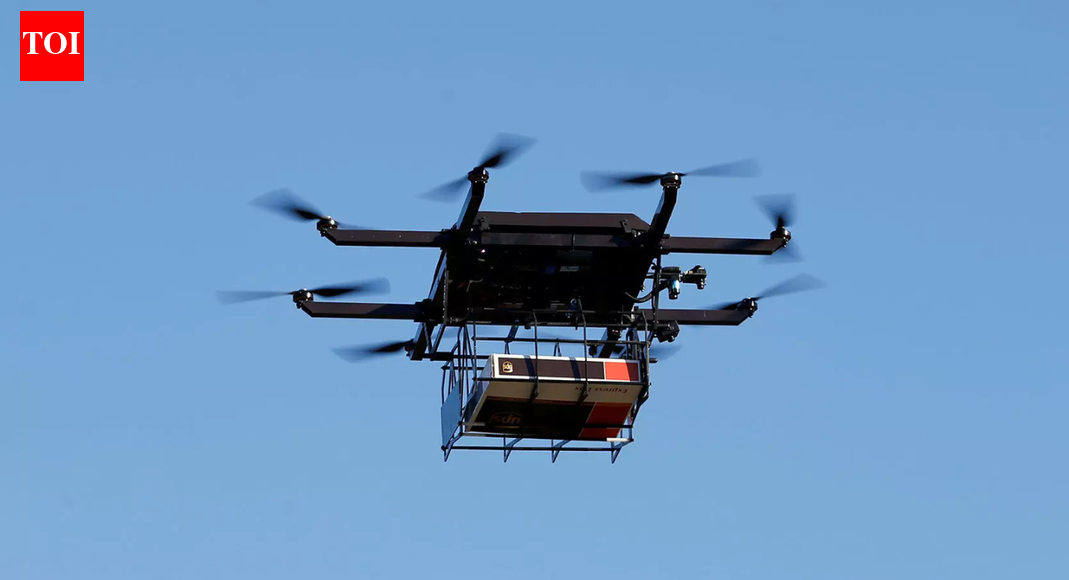
NEW DELHI: India reported 791 drone intrusions along the western border during 2025, underlining the increasing use of unmanned aerial systems for smuggling and infiltration, the defence ministry said on Wednesday.According to the ministry’s year-end review, nine such incidents were recorded along the International Border in Jammu and Kashmir, while 782 were reported along the IB in Punjab and Rajasthan. The ministry said that “Effective employment of own spoofers and jammers along the western front significantly countered the drone threat.”Indian forces also succeeded in neutralising 237 drones during the year in the IB sector. These comprised “five drones with war-like stores, 72 drones with narcotics and 161 drones without any payload.”The review noted that Pakistan has been attempting to use the IB sector extensively for hostile activities. “Significant efforts are being made by Pakistan to exploit the IB sector not only to smuggle weapons and narcotics using drones, but also to infiltrate large strength of terrorists,” it said. The continued functioning of training camps, presence of terrorists at launch pads and repeated infiltration bids reflect Pakistan’s “persistent intent to prosecute a proxy war strategy”, the ministry added.On the overall security environment, the ministry said the situation in Jammu and Kashmir remains “firmly under control” due to sustained and relentless efforts by the Indian Army. It said residents have opted for development and are participating actively in initiatives run by the government and the Army.The review credited the ‘whole-of-nation’ approach for a “reduction in violence levels, scaled down protests and zero incidents of stone pelting”. It further stated that the “security situation in hinterland continues to witness consistent improvement since 2019”.The ministry also referred to Operation Sindoor, carried out on May 7 in response to the Pahalgam terror attack in which 26 civilians were killed. The operation resulted in the elimination of at least 100 terrorists. As part of the action, Indian armed forces carried out precision missile strikes on nine terror camps located in Pakistan and Pakistan-Occupied Kashmir, triggering a four-day military confrontation between the two countries.Military actions were halted on May 10 following hotline discussions between the Directors General of Military Operations of India and Pakistan.The review also said Pakistan tried to turn the Poonch-Rajouri region into a “hotbed for proxy war during the year 2023-24”. In this context, the ministry said priorities for 2025 included strengthening the anti-infiltration grid, continuing operations in middle and higher reaches to neutralise terrorists, and curbing local recruitment by promoting a development-oriented environment.It said “a total of 29 capability development schemes have already been contracted and another 16 schemes are likely to be contracted in December 2025”.On self-reliance in drone production, the ministry said “515 Army Base Workshop and select Corps Z Workshops/EME Battalions have established credible drone manufacturing capability using in-house expertise and collaboration with subject matter experts”. It added that these facilities meet required quality standards.“The facilities are state-of-the-art, which meet the quality requirements of drones. A total of 819 drones (surveillance -193, kamikaze/armed/weaponised -337, first pilot view -289) have been manufactured till date by EME units,” the ministry said.


Source link