Breaking News
Twist in court: 2nd husband testifies for 1st; woman loses 17-year old domestic violence case | India News


Twist in court: 2nd husband testifies for 1st; woman loses 17-year old domestic violence case

MUMBAI: In an unexpected turn, a woman’s current husband took the witness stand to depose on behalf of her ex-spouse, ending a nearly 17-year-old domestic violence case. The case, initiated in 2009 by the woman, alleged years of torture by her first husband. She sought protection and monetary relief, claiming she was ousted from her home. However, a Borivli court ruled that with her current husband confirming marriage, she was not entitled to maintenance.‘Woman married 2nd time, not entitled to maintenance’Additional chief judicial magistrate B N Chikne said, “As such, in such facts and circumstances and the evidence on record, it appears to me that it is proved from the evidence and documents produced on record, after divorce from the respondent No. 1 (ex-husband), the applicant (woman) performed a second marriage. Therefore, she is not entitled to get maintenance from respondent No. 1.” The judgment centred on the revelation that the woman had entered into a second marriage while her original maintenance claim was still active.In her plea, the woman said she married her ex-husband in 2005 through an arranged setup. She alleged that she later found out that the man was already married and his first wife began to frequent their home. Along with the ex-husband, his first wife would abuse her too. She alleged numerous incidents of physical, emotional and economic abuse. In Dec 2009, the first husband was directed to pay the woman an interim monthly maintenance of Rs 3,200 until the disposal of the case. While the woman’s sister served as a witness to support her allegations, the man brought to court an imam who officiated the woman’s second marriage, a handwriting and fingerprint expert who testified on the signatures and thumb impression on the nikahnama of the second marriage, and her husband.The trajectory of the trial shifted dramatically when her ex-husband produced her current husband as a defence witness to confirm their marital status. By confirming the second marriage through the evidence of the current husband himself, the defence nullified the woman’s status as a dependent of her former spouse. The court ruled the existence of this second union, confirmed by the man who entered into it, extinguished the woman’s right to seek further maintenance or protection from her first husband.


Source link

UP boy who saved dad from crocodile wants to protect nation | India News


UP boy who saved dad from crocodile wants to protect nation

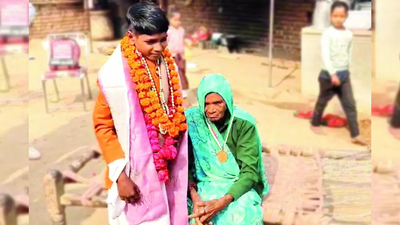
Ajay dedicated the award to his grandmother, Ratna Devi, who has been raising the 9-year-old and his sister since they lost their mother a few years ago

AGRA: Back in his hometown in Agra’s Bah to a grand reception on Saturday after receiving the prestigious Pradhan Mantri Rashtriya Bal Puraskar from President Droupadi Murmu in Delhi, Ajay Raj Nishad (9), who on July 25 saved father Vir Bhan from the jaws of a large crocodile in the Chambal, said, “I was afraid for my life too. But at that moment, the only thing that came to my mind was how to save my dad.”On that July afternoon, armed with only a long stick, the thin and diminutive 9-year-old boy struck the predator’s eye, forcing it to release his father and retreat back into the waters. And the child’s act of bravery was not just noticed by Bah’s residents, but it also went right up to the corridors of power in the national capital.In Delhi, inspired by his brief interaction with PM Narendra Modi at the award ceremony, the Class IV stud-ent, while dedicating the honour to his grandmother, Ratna Devi, said, “I want to join defence forces and serve the nation in the future… I want to protect my country the way I protected my father.”The award honours extraordinary accomplishments in various categories. Ajay was awarded in the category of ‘bravery’.His father, Vir Bhan, told TOI: “I’m a small-time labourer and also rear a few goats. On July 25, I, along with my children — Ajay and my daughter — took our goats out for grazing. It was around 2pm, I felt thirsty and went to fetch water from the river. To my horror, a full-grown crocodile moved towards me and before I could react, it grab-bed my right leg and tried to pull me into the water.”“Ajay quickly picked up a long stick and hit the crocodile at least 15 times. But it had little impact on the reptile. Then he struck the crocodile in the eye… It all happened within a few seconds. I thought that I was gone that day. I am alive today only because of my 9-year-old son,” Vir said, showing the months-old scar on his leg. The 37-year-old added that he had lost his wife a few years ago and his children were being raised by their grandmother.Back home, Ajay has become a local hero with people from neighbouring villages streaming in to catch a glimpse of him. Fatehpur Sikri MP Rajkumar Chahar also met the child and awarded him Rs 51,000.


Source link

Rahul permanent spokesperson of anti-India global forces: BJP | India News


Rahul permanent spokesperson of anti-India global forces: BJP

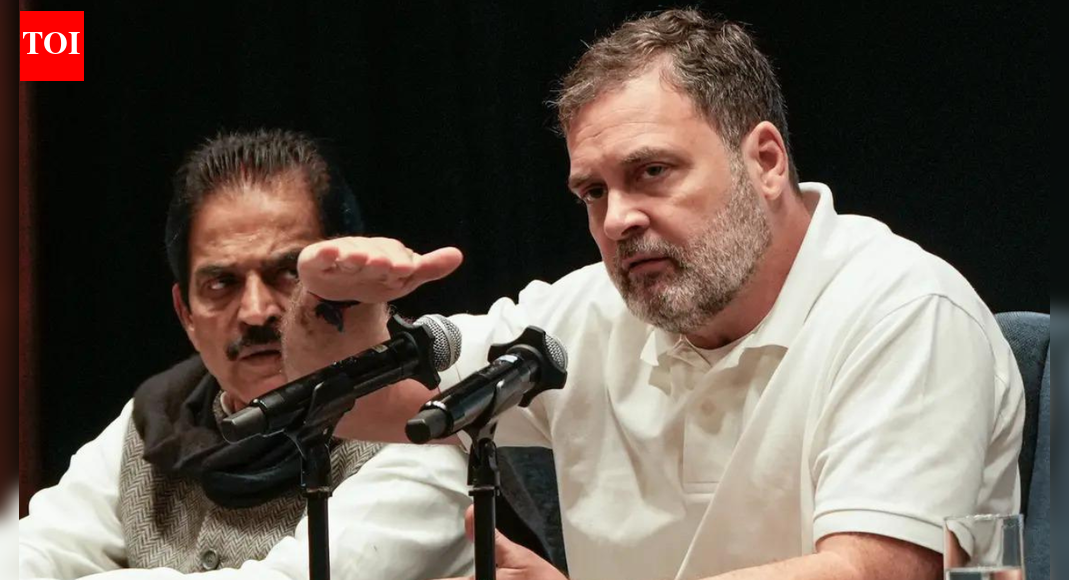
Rahul Gandhi during a presser in New Delhi (Picture credit: PTI)

NEW DELHI: BJP Saturday seized upon the disclosure made by Sam Pitroda, head of the overseas wing of the party and part of Nehru-Gandhi family’s inner circle, that Congress is a member of the George Soros-linked Global Progressive Alliance and that Rahul Gandhi is part of its presidium saying that it fully explains why the LoP has become the permanent spokesperson of anti-India global forces within Indian politics.At a presser, BJP s Sudhanshu Trivedi pointed to Pitroda’s remarks to a channel confirming Congress’s membership of the global conglomerate of left-leaning parties with links to the controversial billionaire hedge fund operator, and said that it has confirmed what BJP had maintained about real cause of Rahul’s frequent foreign visits.Pitroda was responding to a question about Rahulchoosing to visit Germany and skipping the passage of the legislation for substituting MNREGA. Pitroda justified Rahul’s absence by saying it was necessary because of Congress’s membership of GPA. Trivedi flagged Pitroda’s answer to say that it speaks about priorities of Congress.”If Pitroda and Congress do not care about this, then they must answer whom do they care or?”The RS MP referred to Soros’s statements against Modi govt and his mission of regime change to ask: “Rahul travels abroad, but why does he always meet anti-India organisations and anti-India individuals? Why does he never meet India-supporting institutions, India-friendly think tanks, industry leaders, parliamentarians, or thought leaders? Congress must answer this before the nation.”Trivedi said that on one hand, Rahul objected to not getting a meeting with Russian President Vladimir Putin, but during his Germany visit he shared the stage of the Friedrich Ebert Stiftung an organisation declared illegal by Russia and expressed anti-India statements. Trivedi remarked that even before this, Sonia Gandhi was found to be the co-chairman of Forum for Democratic Liberties Asia Pacific, and even today, she holds that post. “This organisation was also funded by George Soros”.“When Pitroda was asked what connection the Global Progressive Alliance has with Congress, he reveals that Rahul Gandhi is a member of its presidium, and Sam Pitroda is also its member.” Trivedi said that Pitroda has claimed that it is an alliance of democracies of 110 countries. He said that a question to Sam Pitroda and senior Congress netas is: which 110 countries in the world have stable democracies?“There are 190 countries, of which 57 are Muslim-majority where none have stable democracies. Apart from this, there are 30-40 countries that have monarchies, and if these are excluded, number of democratic countries falls below 100. In such situation, question arises under the cover of democracy, what is this group of countries that appears to attack India’s foundation?” Trivedi asked.


Source link

Himachal Pradesh: Government doctors launch indefinite strike; healthcare services hit | India News


Himachal Pradesh: Government doctors launch indefinite strike; healthcare services hit

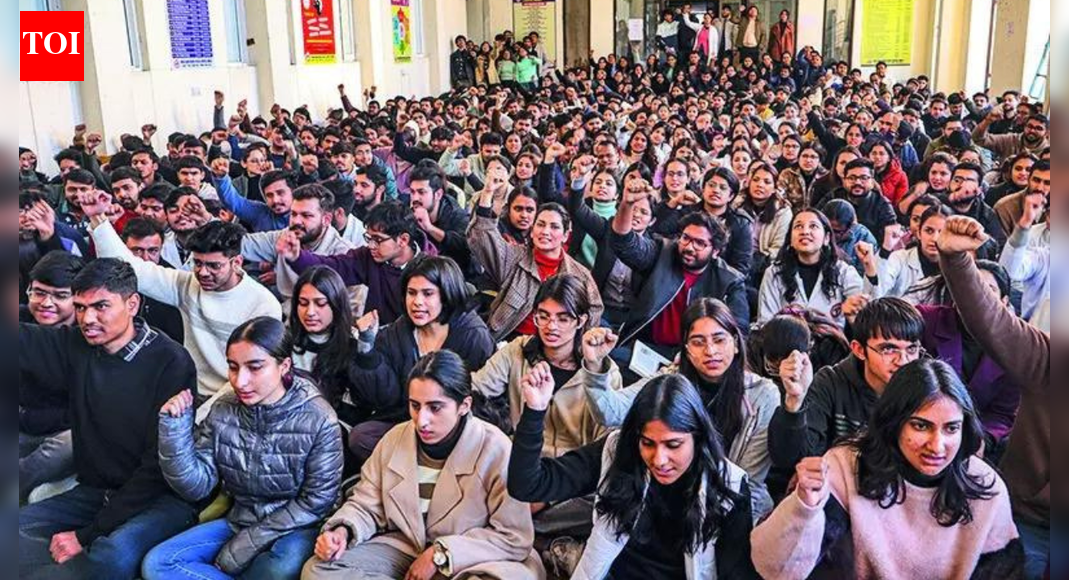
Doctors raise slogans during an indefinite strike against the termination of services of a fellow doctor at IGMC in Shimla

SHIMLA: Healthcare services, except emergency care, were disrupted across govt hospitals in Himachal Pradesh on Saturday after doctors went on indefinite strike, demanding the immediate reinstatement of Dr Raghav Nirula, who was sacked for assaulting a patient at Shimla’s Indira Gandhi Medical College (IGMC) on Dec 22.There’s a video of Nirula brutally thrashing the patient, who is also seen kicking him while lying in bed, but RDA says Nirula’s side of the story hasn’t been considered and the termination is unjust.RDA president Dr Sohail Sharma called Nirula’s termination a “humiliation of the medical fraternity”. Doctors will not resume work until govt reverses the decision, he said. “We accept that there was misconduct, for which the doctor was suspended within six hours. However, terminating him within 48 hours based on the disciplinary committee’s report is not justified,” Dr Sharma said.Patients and their attendants visiting IGMC and Atal Institute of Medical Super Specialities (AIMSS) at Chamiyana, in Shimla, faced hardship due to doctors’ absence. Several surgeries scheduled for Saturday had to be postponed.Health and family welfare minister Col Dhani Ram Shandil (retd) said the issue would be resolved soon. He added that he would call the doctors for discussions once the CM returned from Delhi. “I always say doctors should not let anger take over. If they had quietly met the chief minister and apologised, saying it happened in a moment of passion, perhaps the entire matter could have been resolved,” he said.The minister assured that steps were being taken to ensure patients did not face inconvenience. Emergency services would continue as usual, and reports were being compiled on doctors attending duty, he added.Jagat Ram (70), a resident of Gadakufar, in Theog tehsil of Shimla district, said his prostate surgery scheduled at AIMSS-Chamiyana on Saturday was postponed. “Doctors advised me not to eat anything after 11 pm yesterday. But this morning, I was told the surgery could not be performed until the strike ends,” he said.The directorate of medical education and research issued SOPs to ensure uninterrupted emergency healthcare services.


Source link

Sharing PM Modi photo, Digvijaya Singh lauds Sangh, BJP says attack on Rahul | India News


Sharing PM Modi photo, Digvijaya Singh lauds Sangh, BJP says attack on Rahul

Sharing PM photo, Digvijay Singh lauds Sangh

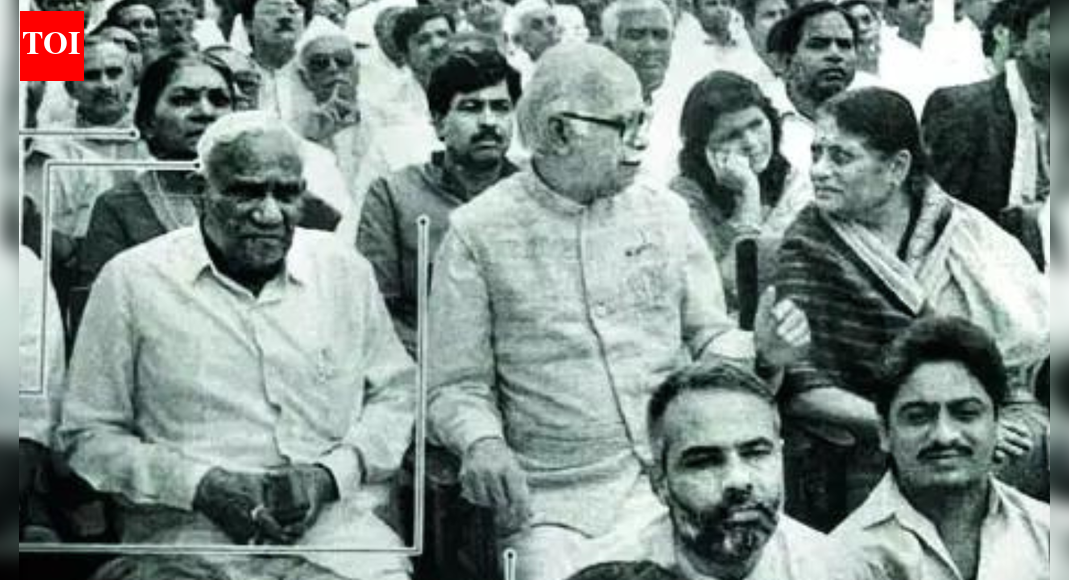
NEW DELHI: A CWC meeting to map out the party’s programmes to corner govt was overshadowed by inner turmoil after senior neta Digvijaya Singh praised the organisational strength of the RSS-BJP, citing how it enabled PM Modi‘s rise from the grassroots to the top.Singh’s remarks, made on social media timed with the meeting, appeared aimed at highlighting the need for organisational reforms within Congress. The post delighted BJP and raised eyebrows within the party, as Singh lauded the RSS-BJP system for allowing a ground-level worker to rise to CM and PM.At the CWC meeting, the former MP CM rued “over-centralisation” in Congress and pushed for decentralisation in the presence of top leadership, remarks that observers read with his X post in which he had said Rahul can do it but it is not easy to “convince” him.The post featured a 1990s photograph of Modi sitting on the ground while senior BJP netas, including L K Advani, sat on chairs at a meeting. Singh wrote that it was “very impressive” how an RSS volunteer and Jana Sangh-BJP worker rose to the highest offices, calling it the “strength of organisation”. In another take, Singh warned that there are “sleeper cells” in the party, which need to be identified.BJP seized on the comments to target Congress leadership. Spokesman Sudhanshu Trivedi said BJP’s system recognises a “gudri ke laal” like Modi, while Congress focuses on “Jawahar ke laal”. He said BJP’s working style allows people connected to the ground to rise through talent and organisational support.Targeting Rahul, Trivedi said Singh was not the first to question his understanding, recalling former US President Barack Obama’s description of Rahul in his memoir as having a “nervous, uninformed quality”. He said while Modi rose from the bottom and took BJP to the top, Congress’ “top-down” leadership was taking the party downward.As his comments triggered a storm, Singh clarified that he had merely praised the organisational strength of Sangh Parivar. “I was, am and will be a trenchant critic of the RSS and Modi,” he said, asking whether strengthening an organisation was a bad thing.In the CWC meeting, sources said Singh criticised govt’s bid to undo decentralisation under MGNREGA through changes in the law and pressed for decentralisation within Congress. He complained that district and state chiefs were appointed by AICC and questioned why decisions taken at Udaipur Chintan Shivir, including setting up an election management department, had not been implemented.


Source link

UK: Khalistanis counter-protest Hindus outside Bangladesh high commission in London


UK: Khalistanis counter-protest Hindus outside Bangladesh high commission in London

Khalistanis counter-protest Hindus outside Bangladesh high commission in London

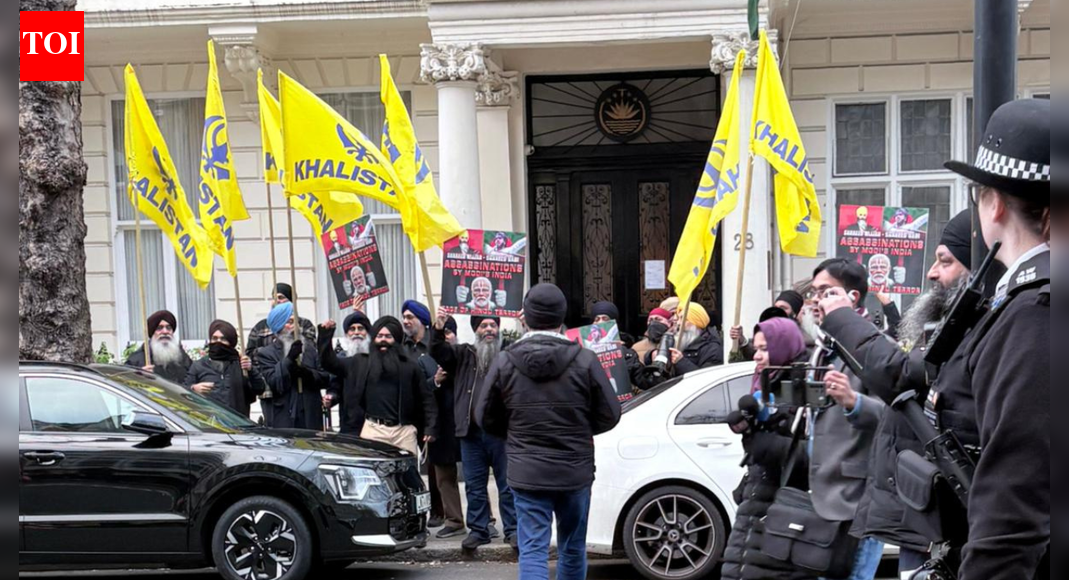
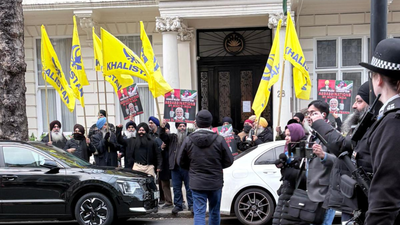
LONDON: A protest by Hindus over the lynching of Dipu Das and general persecution of Hindus in Bangladesh outside the Bangladesh high commission in London was met with a counter-protest by Khalistanis on Saturday.More than 500 protesters, mostly Bangladeshi and Indian-origin Hindus shocked by the brutal lynching of garment factory worker Dipu Chandra Das on Dec 18 in Mymensingh, joined the protest and shouted “Hindus Lives Matter”. They carried placards calling for justice for Das, for minorities to be saved, and raising the incarceration of Hindu monk Chinmoy Krishna Das.A digital van drove around with flashing images that read “Hindus have right to live.”The protest, organised by Bengali Hindu Adarsha Saangha (UK), was peaceful. Protesters stood behind barriers, on the opposite side of the road to the mission.Then around 10 men arrived directly in front of the high commission holding yellow Khalistani flags, shouting anti-India and anti-Hindu slogans, and praising the recently assassinated extremist Sharif Osman Hadi. Police then arrived to keep the two sides apart.One of the organisers, Prajjwal Biswas, from West Bengal, said, “I don’t know why Khalistanis are protesting as this is not their cause. They are trying to instigate us.”Bangladesh-born Shuchishmita, whose wider family still live in Bangladesh, said, “The persecution of Hindus in Bangladesh is something that has been going on for centuries and no media speaks about it. I am here to ask for justice for the Hindu community. We shouldn’t tolerate what is happening.”Vikram Banerjee, a British PIO whose family migrated from then East Pakistan to India, said: “We want India and the UK to take assertive action. Many innocent Hindus are in grave danger. Western media have ignored the Dipu Das lynching, the British public do not even know about it.”


Source link

J&K: CBI lawyer killed in highway crash; accused driver arrested | India News


J&K: CBI lawyer killed in highway crash; accused driver arrested

SRINAGAR: J&K police have arrested the driver of a car allegedly involved in a highway crash in Ramban district that killed CBI prosecutor Sheikh Adil Nabi, 35, officials said Saturday.Nabi was critically injured Thursday when his Alto K-10 was hit from behind by a speeding Scorpio near Banihal on Srinagar–Jammu NH. He was taken to sub-district hospital at Banihal and later shifted to Sher-e-Kashmir Institute of Medical Sciences in Srinagar, where he died around 10pm, family sources said.An FIR has been registered. Police seized the Scorpio and arrested Mohammad Shafi of Nadirgund Peerbagh in Srinagar.A resident of Kandipora village in Bijbehara in south Kashmir, Nabi was returning home when the crash occurred. Hundreds attended his funeral prayers Friday, as grief rippled through the legal fraternity. Nabi had cleared the UPSC examination in 2024 and was recently appointed public prosecutor with CBI in Chandigarh.


Source link

‘Such actions … ‘: Congress flags Karnataka government’s demolition drive; calls it ‘serious concern’ | India News


'Such actions ... ': Congress flags Karnataka government's demolition drive; calls it 'serious concern'

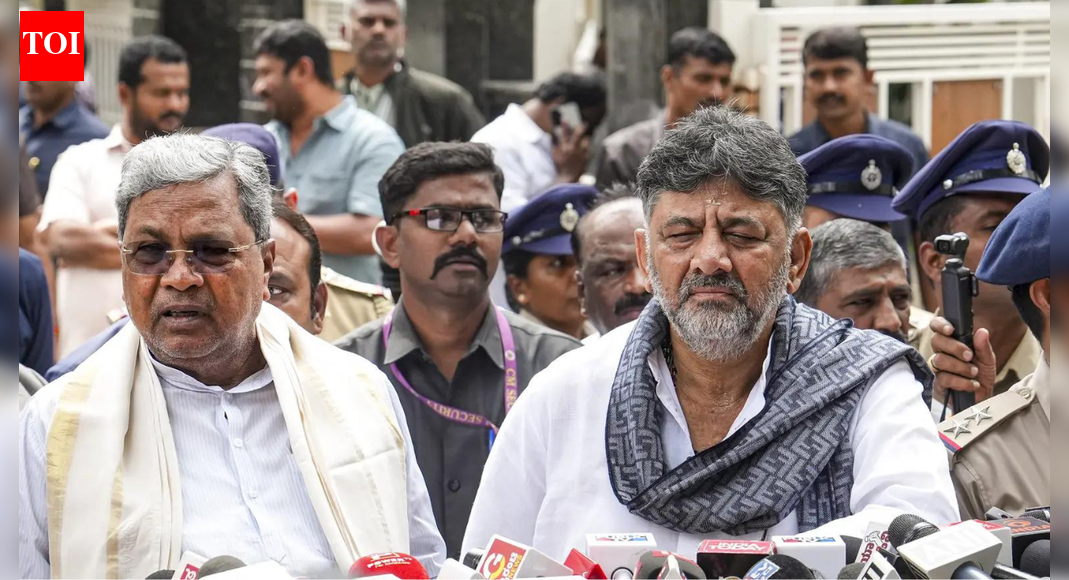
NEW DELHI: Congress party on Saturday expressed “serious concern” over the Bengaluru demolition drive carried out by the Karnataka government that led to the eviction of several settlers from Kogilu village. Party general secretary KC Venugopal spoke to the Karnataka CM Siddaramaiah and deputy CM DK Shivakumar and conveyed that such actions should have been undertaken with “far greater caution” keeping the “human impact at the centre”.“Spoke to Karnataka CM @siddaramaiah and DCM @DKShivakumar regarding the demolition of unauthorised constructions in Kogilu village, Bengaluru. Conveyed the AICC’s serious concern that such actions should have been undertaken with far greater caution, sensitivity, and compassion, keeping the human impact at the centre,” Venugopal informed in a post on X.“They have assured that they will personally engage with the affected families, put in place an appropriate mechanism for addressing grievances, and ensure rehabilitation and relief for those impacted,” he further said.Sidda and DK Shivakumar had defended the move saying that the “place was not suitable for human habitation”, adding that “temporary shelter, food, and other essential facilities would be arranged for all those affected.”“Several people had illegally erected makeshift shelters at the waste-disposal site in the Kogilu Layout near Yelahanka in Bengaluru. It is not a place suitable for human habitation. Despite issuing notices on multiple occasions directing the families to relocate, the residents failed to comply. Under these circumstances, it became unavoidable to clear the encroachment and vacate the site,” the Karnataka CM had said.Kerala CM Pinarayi Vijayan had also criticised the demolition drive calling it an example of “anti-minority aggressive politics.”Sidda hit back at the Kerala CM saying that his remarks were “politically motivated” and reflected a “lack of understanding of the factual situation.”“There is a fundamental difference between ‘bulldozer justice’ and the lawful removal of illegal encroachments. The criticism being made by Pinarayi Vijayan is politically motivated and reflects a lack of understanding of the factual situation,” he had said.


Source link

Salt Lines: A forgotten 4,000-km ‘living border’ reappears in a Mumbai museum | India News


Salt Lines: A forgotten 4,000-km 'living border' reappears in a Mumbai museum

In the open-air plaza of Mumbai’s oldest museum, a long, zig-zag wall of cloth ripples in the breeze. At first glance, it looks like a giant curtain. Step closer to squint at the crimson prints on it and the cloth becomes a partition: neat plant patterns on one side and chaotic termite marks on the other. Block-printed deliberately with dyes from homegrown shrubs like babool and karonda, this 20-metre-long cotton wall at the Dr Bhau Daji Lad Museum quietly leads visitors back to a little-known 4,000-km hedge that once formed a thorny botanical border across India, buzzing with birds and bees.Part hedge, part fence, the Inland Customs Line — a forgotten boundary created by the British in the 19th century to enforce the Empire’s deadly salt tax— is the centrepiece of ‘Salt Lines’, the first Indian solo exhibition by artist duo Himali Singh Soin and David Soin Tappeser who go by Hylozoic/Desires.Created in collaboration with RMZ Foundation and India Art Fair and supported by Alkazi Foundation, the show revisits the colonial 4,000km long border of which 2,500km constituted a fence of plants also known as ‘The Great Hedge of India’. Stretching from the Himalayas to the Bay of Bengal and patrolled by thousands of customs staff, the hedge–described as “utterly impassable to man or beast”–was built by the East India Company and later the British Raj to enforce the salt tax in the mid nineteenth century. “We first stumbled upon the incredible history of the Inland Customs Line when we were doing more general research on… salt,” the artists say. Its scale shocked them: “It seemed improbable to us that such a large botanical infrastructure could have existed for much of the 19th century without everyone knowing about it.”Salt, which had been lightly taxed under earlier Indian rulers and the Mughals, became one of the British Empire’s most lucrative revenue streams after Bengal Presidency governor Robert Clive’s victory at The Battle of Plassey in 1757. Through monopolies and price controls, the East India Company’s officials forced peasants and merchants to buy salt from government depots at inflated rates. Even during the catastrophic Bengal famine of 1770, which killed an estimated ten million people, land revenue and salt taxes were collected in full.Originally consisting of thorny branches and deadwood piled into a crude fence, it was designed to stop smugglers from moving coastal salt into British-controlled territories, where it was heavily taxed. From the 1860s, the British began converting it into a living hedge, planting hardy native shrubs, digging trenches, building embankments, and maintaining a patrol road. Under officials such as AO Hume, entire teams tended the hedge, watering, pruning, and replanting it.Between 1867 and 1870, Hume oversaw a dramatic expansion of the hedge. By 1869 it stretched more than 2,300 miles from the Indus to the Mahanadi, patrolled by nearly 12,000 men. The line snaked through what is now Pakistan, skirted Delhi, passed Agra, Jhansi, Hoshangabad, Khandwa, Chandrapur and Raipur, and terminated in present-day Odisha. Where living shrubs failed due to rocky soil or frost, stone walls were erected instead; elsewhere, dry hedges of dwarf Indian plum had to be rebuilt constantly after damage from insects, fire and storms.At its height, the hedge was said to be up to 12 feet high and 14 feet thick, made of tightly trimmed trees and shrubs of babool, Indian plum, carounda, prickly pear, and thuer, depending on the soil and climate, with a thorny creeper woven throughout. By the 1870s, more than 14,000 men were employed to guard and maintain it, making it one of the largest security operations in the subcontinent. “On no branch of their duties have the whole establishment bestowed anything like so much time, labour, care, and thought, as on the rearing of this barrier…after all it must be remembered that our barrier is to the Line what the Great Wall once was to China: alike its greatest work and its chiefest safeguard,” wrote Hume. The hedge was lost in the archives, say the artists who scoured the National Archives of India, the British Library, the South London Botanical Institute, the Alkazi Collections and more for its history. “We found textual evidence… but no imagery.” To fill the gap, they created speculative visual records such as re-enactments at Sambhar Lake, an important British salt outpost, and AI-generated images, printed using a 19th-century salt process and toned with gold.At the centre of ‘Salt Lines’ is ‘The Hedge of Halomancy’ (2025), a 23-minute film. It follows Mayalee, a courtesan known to history for resisting the British. “She refuses the British administrators… when they attempt to replace her traditional salt stipend with cash payments,” the artists explain. Salt, in the film, becomes material and metaphor. A three-dimensional salt crystal acts as “a magical talisman,” linking Mayalee to Hume and, symbolically, to Gandhi’s march to Dandi. In another room called the ‘Salt Office’, historical salt-tax objects including two photographs of Bombay’s salt satyagraha from the Alkazi Collection sit beside Salt Prints (2024). “Salt is an acid and a base, an amazing symbol of equilibrium,” the artists say. Sound underscores this tension. “The speculative chapters… are underpinned by bansuri and sitar,” says David. The archival sections use “tuba and percussion,” echoing British military bands and their transformation into Indian wedding music.How did the hedge disappear from public imagination? Nature played the first role. “Termites… begin to eat into the hedge,” the artists note. “Winds, rats, tigers stormed through parts of the hedge.” Human anger, it seems, finished the job. “During the 1857 mutiny, people burnt parts of the hedge down in fury.” When the British gained control over salt-producing regions like Sambhar Lake, they found a cheaper way to tax salt at its source. The hedge — expensive and unwieldy — was dismantled on April 1, 1879. Nature reclaimed it. The living shrubs died or were cut; deadwood was carted off by villagers; embankments eroded. Within decades, almost nothing remained. “The natural world’s resistance not only contributed to the fall of the hedge but also to its utter erasure from history,” say the artists.Many historians had never heard of it until British writer Roy Moxham rediscovered it in the 1990s, travelling across India to piece together its remnants for his book ‘The Great Hedge of India’. “People seldom realise how critical salt is to health,” wrote Moxham. “And yet, it seems inconceivable to me how this incredibly painful part of history, the immense abuse people endured at this time, could be so utterly forgotten.When he set out to find the remnants of the Customs Hedge, Moxham had imagined the barrier as a piece of British whimsy constructed to collect a minor tax. Along the way, he realized that the men posted along it, mostly local recruits, worked in isolation for months, patrolling harsh terrain with sticks, whips, and firearms. Those caught bypassing the hedge faced imprisonment. Famine, he discovered, was worsened by the Salt Tax. In 1877–’78, crops failed from poor rains in the North-Western Provinces while grain was exported, causing starvation. Official reports recorded 1.3 million deaths, with most deaths attributed to disease rather than hunger, though salt deficiency increased mortality. “I had assumed it was merely a flamboyant boundary, perhaps fashioned by administrators with fond memories of English hedgerows,” wrote Moxham. “It was a terrible discovery to find that it had been constructed, and ruthlessly policed, so as to totally cut off an affordable supply of an absolute necessity of life,” he concluded. The hedge entered public conversation again in recent years. In 2022, UK-based runner Hannah Cox set out to trace the forgotten border by running 100 marathons in 100 days, following the path of the Great Hedge across the country. Her journey — physically retracing a line most Indians have never seen — sparked renewed interest in how a structure so long, so intrusive, and so central to colonial revenue vanished almost without a trace.It is fitting that the exhibition sits inside the Dr Bhau Daji Lad Museum, Mumbai’s oldest, built by the British in 1857 as the Victoria & Albert Museum, Bombay. For the artists, its vitrines and industrial models echo the themes of extraction in the exhibition while Tasneem Zakaria Mehta, the museum’s managing trustee and director, says ‘Salt Lines’ allows the institution to “engage with the nature of colonial artistic production… including local people who harvested and consumed salt.As visitors leave ‘Salt Lines’, Hylozoic/Desires offer a last thought — a reminder of what the exhibition ultimately attempts: “All we know is that the artist’s work is to research rigorously, and then… enter into the missing gaps of history and the doubt of the future, and imagine how else we can be.”



Source link

Government unveils Rs 44,700 cr shipbuilding push to boost domestic capacity | India News


Government unveils Rs 44,700 cr shipbuilding push to boost domestic capacity

NEW DELHI: The shipping ministry has notified the guidelines for two major shipbuilding initiatives with an outlay of Rs 44,700 crore, aimed at boosting India’s shipbuilding capacity.The two schemes include the Shipbuilding Financial Assistance Scheme (SBFAS), with a corpus of Rs 24,736 crore, and Shipbuilding Development Scheme (SbDS), with an allocation of Rs 19,989 crore. These schemes are expected to provide a strong policy push to revive shipbuilding activity, attract investments and strengthen India’s maritime ecosystem.Under SBFAS, the government will provide financial assistance ranging from 15% to 25% per vessel, depending on the category of ships built. The scheme offers graded incentives for small normal, large normal and specialised vessels, with disbursement linked to clearly defined construction milestones and backed by security instruments. Incentives for series orders have also been included to encourage scale and efficiency.Under Shipbuilding Development Scheme (SbDS), greenfield shipbuilding clusters will receive 100% capital support for common maritime and internal infrastructure through a 50:50 Centre–state special purpose vehicle, while existing shipyards will be eligible for 25% capital assistance for brownfield expansion of critical infrastructure such as dry docks, shiplifts, fabrication facilities and automation systems.“These guidelines create a stable and transparent framework that will revive domestic shipbuilding, boosting forward and backward linkage amping ‘Make in India’ initiative, enable large-scale investment and build world-class capacity, positioning India as a major maritime nation on the path to Viksit Bharat and Aatmanirbhar Bharat,” port and shipping minister Sarbananda Sonowal said on Saturday.A key feature of SBFAS is the proposed National Shipbuilding Mission, which will ensure coordinated planning and execution of shipbuilding initiatives. The scheme also introduces a Shipbreaking Credit Note, under which ship owners scrapping vessels at Indian yards will receive a credit equivalent to 40% of the scrap value, linking ship recycling with new ship construction and promoting a circular economy. Over the next decade, SBFAS is expected to support shipbuilding projects worth about Rs 96,000 crore and generate employment.The SbDS focuses on long-term capacity and capability creation, including establishment of an India Ship Technology Centre to support research, design, innovation and skills development. The scheme also includes a Credit Risk Coverage Framework, offering govt-backed insurance for pre-shipment, post-shipment and vendor-default risks to improve project bankability and financial resilience.


Source link