Breaking News
‘Furniture damaged, posters destroyed’: Congress-run club vandalised in Kerala’s Kannur; party blames CPM | India News


'Furniture damaged, posters destroyed': Congress-run club vandalised in Kerala’s Kannur; party blames CPM

A Congress-run local club near Thalassery in Kannur district was vandalised on Saturday night, police said on Sunday.The Congress alleged that workers of the ruling CPM were behind the attack, claiming it was triggered by their defeat in the recent local body elections.The incident reportedly occurred at the Priyadarshini Club in the Mathumbhagam area of Eranjoli. According to Congress sources cited by PTI, miscreants damaged furniture, including chairs, and destroyed flags and posters kept inside the premises. A portrait of Mahatma Gandhi was also found thrown aside.The club had functioned as the Congress election committee office during the local body polls. The party claimed that resentment over its victory in the Mathumbhagam ward, considered a CPM stronghold, led to the vandalism.Party workers have lodged a complaint seeking action against those responsible. Police have registered a case and an investigation is underway, PTI reported.


Source link

Osman Hadi murder: Meghalaya security agencies reject Bangladesh’s claims of suspects entering India; call allegations ‘misleading’ | India News


Osman Hadi murder: Meghalaya security agencies reject Bangladesh's claims of suspects entering India; call allegations 'misleading'

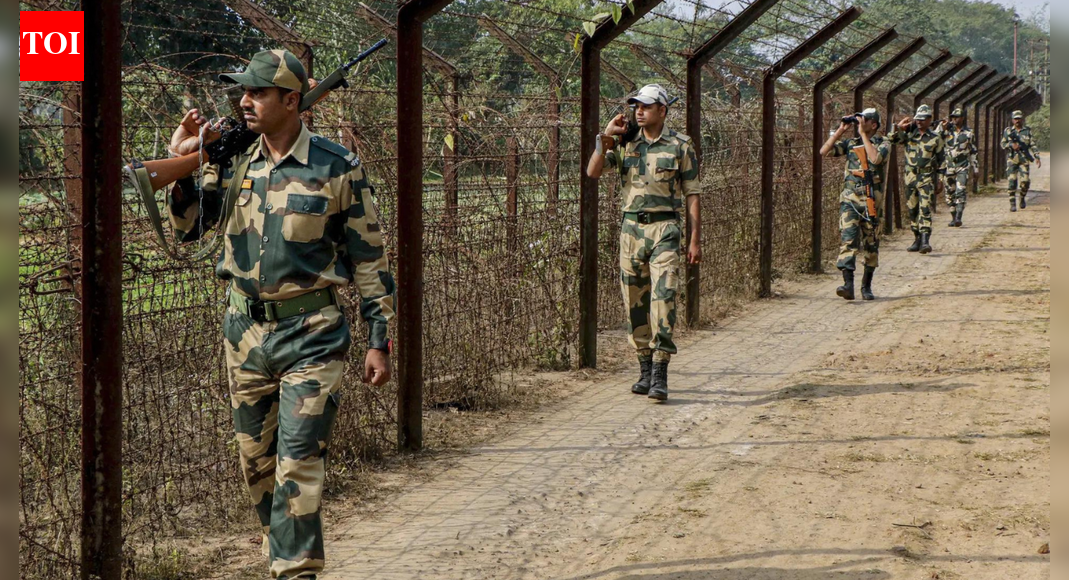
NEW DELHI: Security agencies in Meghalaya on Sunday rejected claims by the Bangladesh Police that the killers of student leader Sharif Osman Hadi had entered the state. They termed the allegations as unfounded and misleading.“There is no evidence to suggest that any individual crossed the international border from the Haluaghat sector into Meghalaya. The BSF has neither detected nor received any report of such an incident,” BSF chief in Meghalaya, Inspector General O P Opadhyay was quoted as saying by PTI.A senior Meghalaya police officer said there was “no input or intelligence to corroborate” claims that the suspects were present in the Garo Hills region, adding that local police units had detected no such movement and that coordination with central agencies was ongoing.Border Security Force (BSF) officials said personnel deployed along the international border remain on high alert to prevent any untoward incident, especially in view of the unrest and volatile situation in the neighbouring country. The force added that the border in the sector is under constant surveillance and that any attempt at illegal cross-border movement would be swiftly detected and dealt with.The Garo Hills region lies in Meghalaya’s western sector, which shares an international border with Bangladesh and is guarded by the Border Security Force.Earlier in the day, Bangladesh Police claimed that two prime suspects in the murder of Inquilab Moncho leader Osman Hadi had fled the country and entered India through the Meghalaya border.Addressing a media briefing in Dhaka, the Additional Commissioner of the Dhaka Metropolitan Police said Faisal Karim Masud and Alamgir Sheikh crossed into India via the Haluaghat border in Mymensingh with the assistance of local associates.Bangladesh Police said the suspects crossed into India through the Haluaghat border, were received by a local contact, and were later taken by taxi to Tura in Meghalaya, according to a report in the Daily Star.He added that Bangladeshi police had received informal reports indicating that Indian security agencies had detained those who assisted the suspects, and said the Bangladesh government is actively working to secure their return.Sharif Osman Hadi, 32, was shot in the head on December 12 during an election campaign in Dhaka. He was airlifted to Singapore for advanced treatment but succumbed to his injuries on December 18.Hadi, spokesperson of Inquilab Moncho, was a prominent youth leader during the mass street protests in July–August 2024 that contributed to the fall of the Sheikh Hasina-led Awami League government. He was also a parliamentary candidate for the upcoming elections scheduled on February 12.


Source link

Murshidabad: JUP chief Humayun Kabir’s son arrested for alleged assault on police constable; MLA claims political vendetta | India News


Murshidabad: JUP chief Humayun Kabir's son arrested for alleged assault on police constable; MLA claims political vendetta

Golam Nabi Azad, son of Janata Unnayan Party (JUP) chief Humayun Kabir, was arrested on Sunday after he allegedly assaulted a police officer posted at his family residence in Murshidabad district, police said.A senior police officer told PTI that Azad, also known as Sohel, was taken into custody after constable Jumma Khan lodged a complaint with Shaktipur police station. Khan had alleged that the MLA’s son assaulted him on Sunday morning when he applied for a few days’ leave.“On the basis of the complaint, the accused has been arrested for questioning. The matter is being investigated and necessary legal action will be taken,” the officer said.Kabir, who floated the JUP after being suspended from the TMC, claimed police had cordoned off his residence following the incident. He was away at the time on personal work.“My son objected to the entry of a policeman inside my house today and this angered the law enforcers who levelled false allegations against my son, accusing him of misbehaviour,” Kabir told reporters in Berhampore.The MLA alleged the police action was politically motivated at the behest of the TMC. “A police force cannot cordon the house of an elected representative under flimsy pretext,” he said. He also announced plans to gherao the SP’s office in Murshidabad on January 1 in protest and demanded explanations from senior police and administration officials.Kabir insisted his son was arrested “in an illegal manner under false charges” and demanded his immediate release.TMC spokesperson Arup Chakraborty was quoted by PTI saying Azad had committed a cognisable offence by raising a hand on a policeman. “Police have taken action as per the law. The party has nothing to do with it,” he added.


Source link

Year ender 2025: How women became the X-factor of the year | India News


Year ender 2025: How women became the X-factor of the year

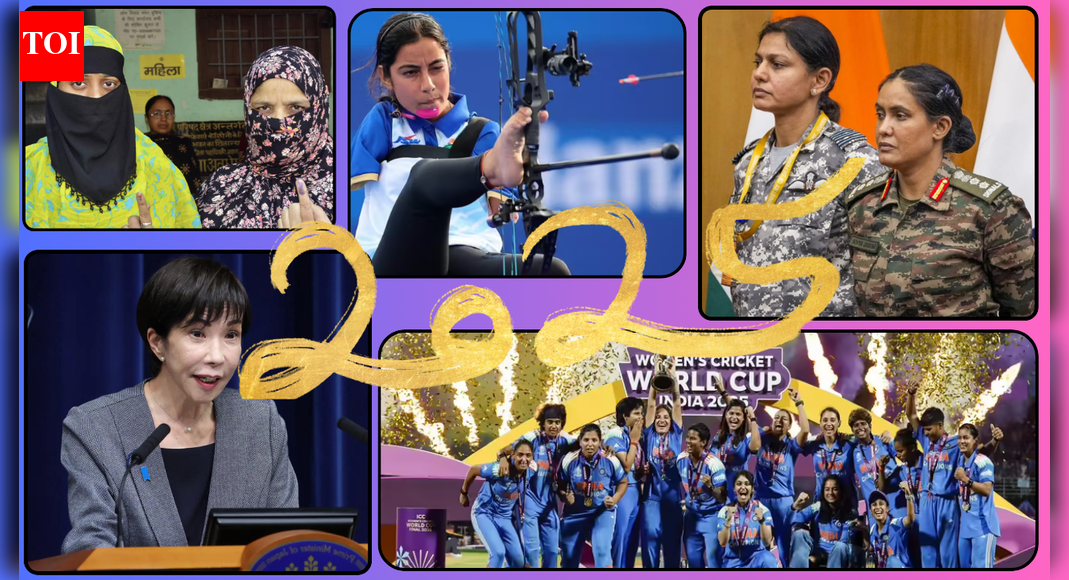
In 2025, women were no longer the footnote to the big story — they were the story. Across crises and celebrations, ballots and battlefields, podiums and boardrooms, women emerged as the decisive force shaping outcomes and narratives.This year ender traces how women became the X factor of 2025: from the symbolism and steel of Operation Sindoor, to the women voters who once again decided Bihar’s fate; from new women heads of state reshaping global politics, to athletes who carried India’s sporting year; and finally, to a woman who climbed into the world’s richest ranks, redefining economic power. These were not isolated moments. Together, they marked a year when women didn’t just influence events — they changed the balance.

Pahalgam attack and Operation Sindoor

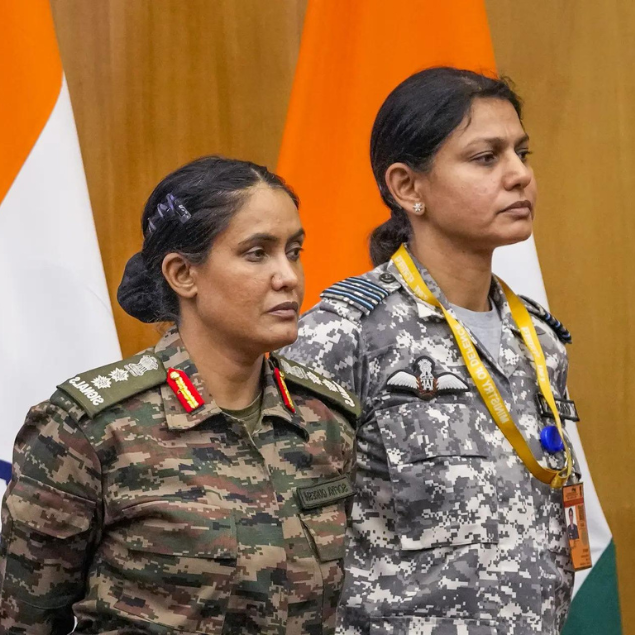
A newlywed wife, sitting silently beside her husband’s body — the image that came to define the Pahalgam attack.A terrorist strike. Twenty-six dead. All men.“Go, tell Modi,” a terrorist told a woman after shooting her husband.Operation Sindoor was the response. Its imagery was stark and deliberate — red and black, vermillion smeared like a warning. A symbol of vengeance, resolve, and the state’s answer to terror.“Terrorists dared to wipe ‘sindoor’ from the foreheads of our sisters; that is why India destroyed the very headquarters of terror,” PM Modi had said in his first address to the nation after the launch of the operation.The symbolism did not stop at words or posters. It took shape on the world stage when two women officers stepped forward to brief the global media on Operation Sindoor.

-

Colonel Sophia Qureshi and Wing Commander Vyomika SinghTheir presence was widely seen as intentional messaging — women not just as victims or symbols, but as the face and force of India’s response to terror.Operation Sindoor also saw women in direct combat. In the Akhnoor sector along the IB, a six-member women’s BSF team led by Assistant Commandant Neha Bhandari defended forward posts under sustained Pakistani fire for three days and nights, forcing enemy positions across Sialkot to retreat. For several of the young recruits, it was their first combat test — marking a decisive shift from symbolism to frontline action.

Nitish won Bihar, but credit goes to women

Women decided Bihar’s verdict once again, delivering Nitish Kumar a victory that numbers make hard to dispute. While their support for the JD(U)-BJP government’s pro-women agenda has been steady since 2005, this election saw a decisive surge. The turnout told its own story. As many as 71.6% women voted, nearly nine percentage points higher than men, and a sharp rise from 59.7% in 2020.A Rs 10,000 cash transfer to over 1.5 crore women in the run-up to polls acted as a turbo-boost. Like Rakhi after Diwali, the ‘das-hazariya’ payout — along with the mobilisation of Jeevika Didis — became the catalyst for the NDA’s sweeping win.For many women, this loyalty has been shaped over two decades — beginning with schemes like free bicycles for schoolgirls in Nitish Kumar’s first term.In 2010, smiling girls cycling to school became the defining image of his landslide victory, much like women voters have shaped this one.Even contentious policies have found unlikely champions. Prohibition, despite widespread criticism from men, continues to draw strong backing from women, particularly the poor, who often credit it with tangible household benefits.Add to this structural reforms — 35% reservation for women in government jobs, 50% in local bodies, and the expansive Jeevika self-help group network — and the pattern is clear.In Bihar, elections may be fought by parties, but they are increasingly won by women.

When women rose to rule

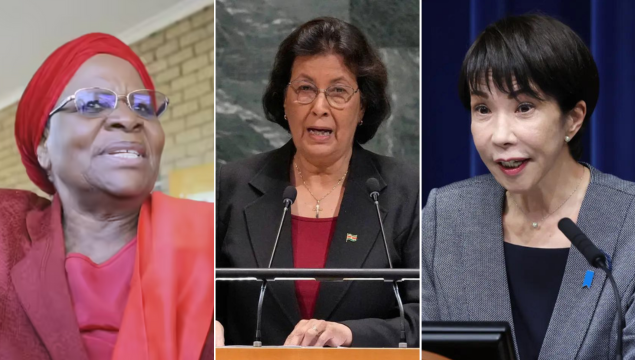
Across continents in 2025, the ascent of women to the highest political office began to look less like an exception and more like a long-delayed correction. In March, Namibia’s Netumbo Nandi-Ndaitwah was sworn in as the country’s first woman president. In a region where power has long been shaped by patriarchal traditions, her presidency carries the promise of something deeper: a recalibration of institutional culture, with greater emphasis on accountability, environmental stewardship, and gender-balanced governance.That same shift echoed months later in South America. In July, Suriname elected Jennifer Geerlings-Simons as its first woman president at a moment of economic uncertainty and cautious optimism, driven by newly discovered offshore oil reserves. A physician by training and a respected parliamentary leader, Geerlings-Simons embodies a quieter, steadier form of authority — one rooted in consensus-building and institutional continuity. Her victory underscored an important truth: the gender wave in politics is no longer confined to large economies or global power centres. It is reaching smaller, diverse nations where leadership had remained stubbornly homogeneous for decades.By October, the tremor reached East Asia. Sanae Takaichi’s elevation as Japan’s first female prime minister shattered one of the country’s most enduring political glass ceilings. In a system long dominated by men, her rise signalled a shift not only within party hierarchies but also in public expectations. For Japan, where women’s political representation has historically lagged, Takaichi’s appointment was as much a cultural moment as a political one — a sign that the contours of leadership are slowly expanding, allowing future generations of women to imagine themselves not at the margins of power, but at its very centre.

-

Netumbo Nandi-Ndaitwah, Jennifer Geerlings-Simons, Sanae Takaichi

Women played the best

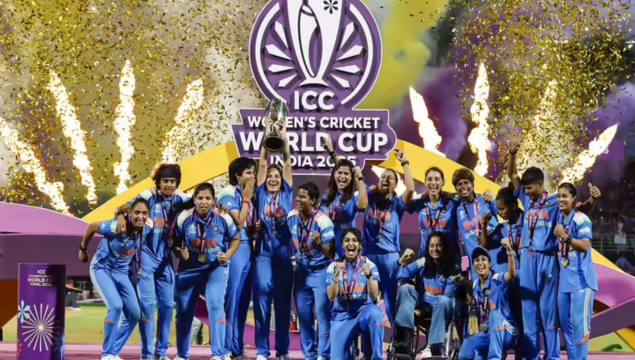
Harmanpreet Kaur, Jemimah Rodrigues, Divya Deshmukh, Sheetal Devi, Nikhat Zareen, Stanzin Dolkar, Anahat Singh and India’s women footballers defined Indian sport in 2025, delivering results that cut across disciplines. The landmark moment came when the Indian women’s cricket team won its first-ever ODI World Cup, that too in front of a home crowd, with Jemimah’s match-winning knock in a pressure semi-final and a controlled final performance sealing a long-awaited title.

-

Beyond cricket, Indian women asserted themselves with authority. Divya Deshmukh became the youngest Women’s World Cup champion in chess, while archer Sheetal Devi added a para-world title and earned selection to the able-bodied compound team purely on scores. In squash, Anahat Singh claimed the national spotlight by winning the SRFI Squash Indian Open, and in boxing, India’s women powered the country to seven of nine gold medals at the World Boxing Cup Finals, led by Nikhat Zareen.

-

Divya Deshmukh, Sheetal DeviSome of the year’s most powerful moments came from inclusive and emerging sport. The Indian Blind Women’s Cricket Team won the inaugural Women’s T20 World Cup for the Blind, while Stanzin Dolkar’s decisive goals earned India its first international bronze in women’s ice hockey. Football completed the surge, with the women’s national team qualifying outright for the AFC Asian Cup for the first time in over two decades, and the U-20 and U-17 sides also sealing continental berths. In 2025, Indian women didn’t just shine — they set the standard.

First Indian among world’s top 10 richest women

Roshni Nadar scripted history in 2025 by becoming the first Indian woman to break into the world’s top 10 richest women, ranking fifth on the Hurun Global Rich List with a net worth of Rs 3.5 lakh crore ($40 billion).The milestone followed the transfer of a 47% stake in HCL Technologies from her father, Shiv Nadar, firmly establishing her as India’s richest woman and the country’s third-richest individual this year.


Source link

In search of Bharaitya ‘porichoy’: Will the Matua–Namasudras rewrite ‘poriborton’ in Bengal elections? | India News


In search of Bharaitya 'porichoy': Will the Matua–Namasudras rewrite 'poriborton' in Bengal elections?
Will the Matua–Namasudras rewrite ‘poriborton’ in Bengal elections?

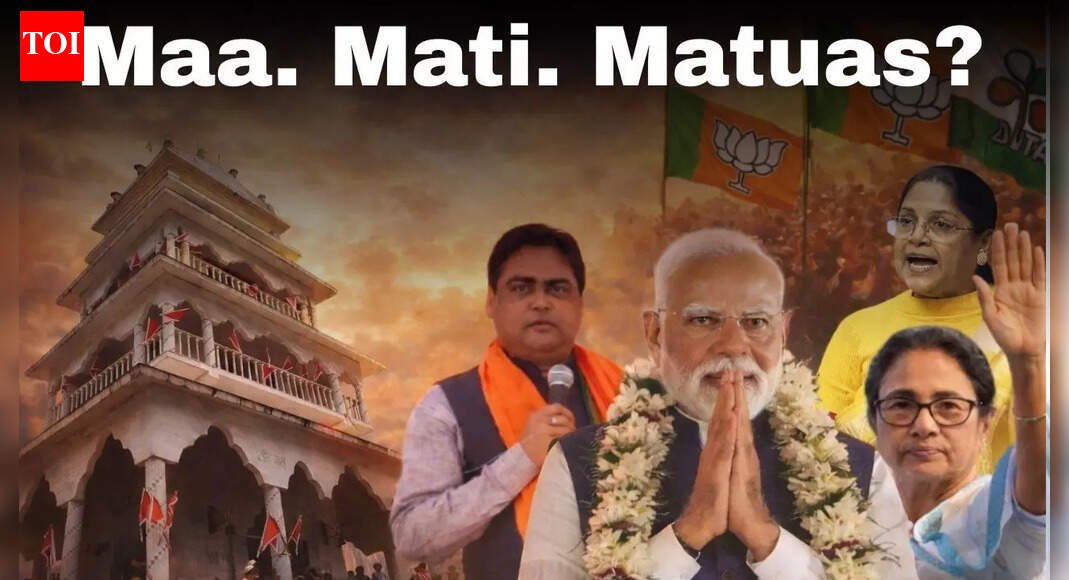
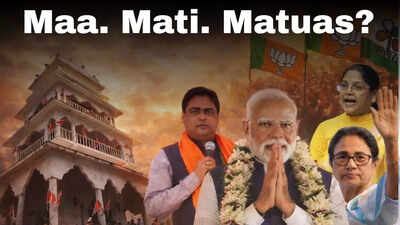
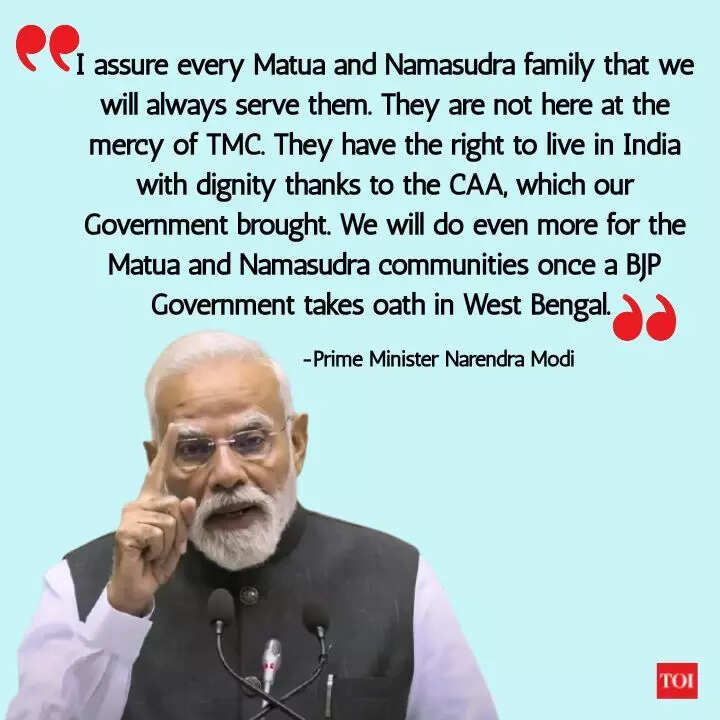
When bad weather forced Prime Minister Narendra Modi to cancel a public meeting in West Bengal’s Ranaghat on December 20, he chose not to let the moment pass quietly. Instead, he sent out a message addressed specifically to the Matua and Namasudra community, acknowledging their decades-long plight and quest to secure a place in the country they now call home.It was a small gesture in form but a telling one in substance.Prime Ministers do not routinely issue targeted messages to caste-based religious communities. That PM Modi did so, even when prevented by the weather, points to a political truth that has been steadily taking shape over the last decade. The Matua–Namasudra community is no longer on the margins of Bengal’s politics. It sits close to the Centre.But can the community deliver what the BJP now seeks in poll-bound Bengal and revive what was once chief minister Mamata Banerjee’s clarion call? Can it set in motion another ‘Poriborton’?
SIR vs Speical Reivision (8)

PM Modi post on X

It was a rare direct appeal, naming the community, invoking the controversial Citizenship Amendment Act (CAA), and framing dignity as a political entitlement rather than a favour. The message raised an obvious question. Why does a missed program with the Matuas merit such emphasis from the Prime Minister of India?The answer lies not in the weather, but in a long and layered history of caste oppression, religious reform, Partition-era displacement, and a steadily growing electoral clout that has turned the Matua–Namasudra community into one of the most closely watched constituents in Bengal’s politics today.“It is not as if the BJP suddenly discovered them. However, with the CAA, the history of the Matuas becomes very interesting. They are, of course, present in certain pockets of Bengal, but they are also scattered in large numbers across the state. With the CAA, the BJP felt that they could vote en masse for the idea of persecuted minorities from Bangladesh getting citizenship, ” Deep Halder, author of “Bengal 2021: An Election Diary”, who extensively covered the last West Bengal assembly polls, told TOI.Halder further said: “The BJP also studied the history of the Matuas, who were a bulwark against Islamisation of the lower castes in East Bengal. During that time, there were a lot of conversions of lower castes into the Islamic fold, and there was also caste discrimination. So they (Matuas), within the Hindu fold, found their own mythology, which gave shelter to many lower-caste Hindus and, in some way, kept them within the Hindu fold. This history also made the community very interesting to the BJP.”
Untitled design (7)

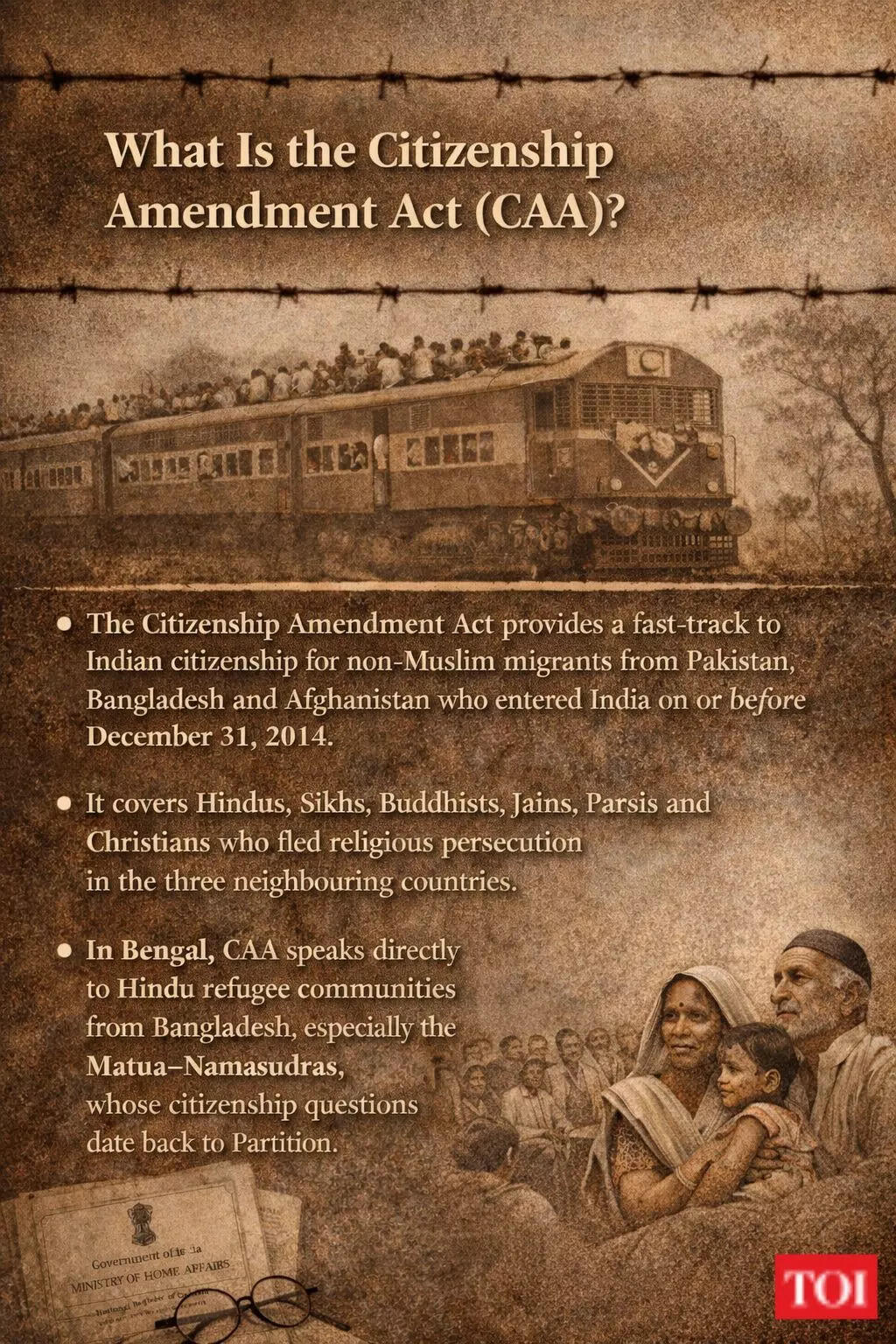
What is CAA

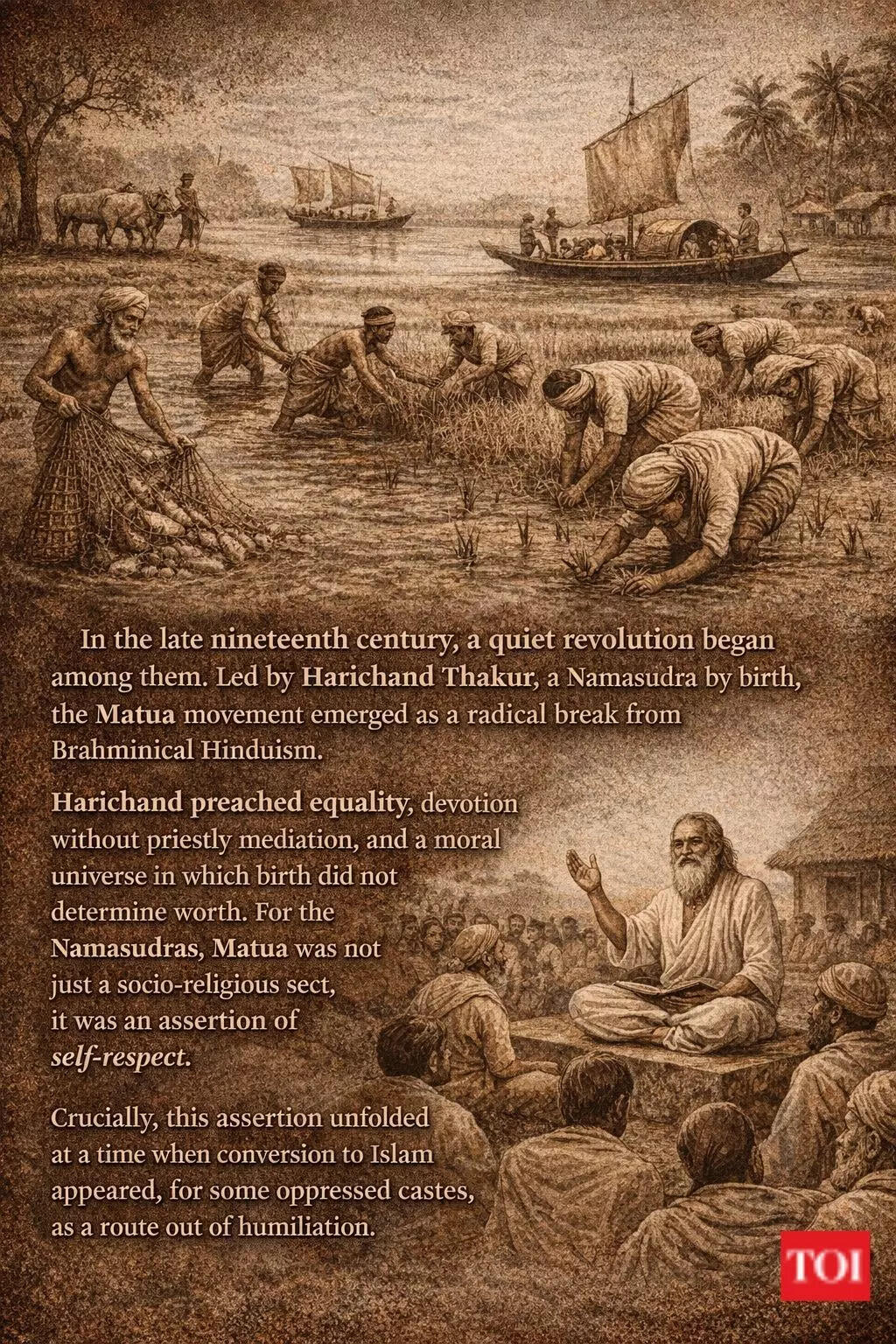
Matua–Namasudras: The question of belonging In the country’s popular discourse, opposition to the Citizenship Amendment Act (CAA) often comes wrapped in the language of constitutional morality, secularism, and “fear of exclusion”. But travel a few kilometres north of Kolkata, into the refugee settlements of North 24 Parganas, and the “popular” framing begins to look very different.For many among the Namasudras in the region, CAA is not an abstract constitutional question. It is a law that finally acknowledges a history they have lived with for generations.Why the Matua-Namasudra community views politics the way it does becomes clearer when one looks beyond electoral arithmetic, beyond BJP versus Trinamool Congress (TMC), and even before the creation of Bangladesh.The Namasudras are not migrants by origin. They are among the indigenous communities of eastern Bengal, once spread across the wetlands and riverbanks of what is now Bangladesh. For centuries, they lived at the bottom of the caste hierarchy, known by the historically stigmatising label “Chandal”. Denied dignity by the caste-driven society, they occupied the margins economically and socially, surviving as peasants, fishermen, and boatmen in Bengal’s agrarian economy.In the late nineteenth century, a quiet revolution began among them. Led by Harichand Thakur, a Namasudra by birth, the Matua movement emerged as a radical break from Brahminical Hinduism. Harichand preached equality, devotion without priestly mediation, and a moral universe in which birth did not determine worth. For the Namasudras, Matua was not just a socio-religious sect, it was an assertion of self-respect.Crucially, this assertion unfolded at a time when conversion to Islam appeared, for some oppressed castes, as a route out of humiliation. However, Harichand Thakur’s teachings offered an alternative. “Thakur was able to offer an independent and alternative space to the Namasudras, away from both Islam and Brahminical Hinduism, but closer to “Dharmic syncreticism”, an admixture of pre-Vedic Kaumadharma, Sahajiya Buddhism and Vaishnavism,” writes Avik Sarkar, an expert on Bengal’s Dalit history, in his article “Subaltern Resistance to Islam and Prospects of Dalit-Muslim Alliance in West Bengal”.
Untitled design (6)

History of Matuas

Harichand’s son, Guruchand Thakur, took this further. He institutionalised education among Namasudras, encouraged political awareness and repeatedly spoke of the community as “Bir Jaati” (Brave race).“The Guruchand Charit is replete with vivid descriptions of the two incidents of communal violence between the Namasudra-Matuas and the Muslims in Eastern Bengal. Guruchand Thakur, the second Sanghadhipati of the Matuas, often addressed Namasudras as “Bir Jaati” (brave race) and called for resisting any attempt to denigrate their collective honour”, Sarkar writes.The Matua movement, by the early twentieth century, had become as much a social force as a religious one.Prolonged plight after PartitionFor the Namasudras, 1947 was not a clean rupture but the beginning of prolonged displacement. Many stayed back in East Pakistan, hoping that a Muslim-majority state would offer them the dignity Hindus had denied. What followed was disillusionment! They found themselves squeezed between religious majoritarianism and economic vulnerability. Communal violence, political instability and the slow erosion of security pushed successive waves of Namasudras across the border.Their migration unfolded over decades, not overnight. The riots of 1950, unrest in the 1960s, and finally the Bangladesh Liberation War in 1971 forced large numbers to cross into India. They arrived in West Bengal not as migrants seeking opportunity but as refugees fleeing uncertainty. The settlement was harsh. Refugee colonies lacked infrastructure, employment was scarce, and the stigma of being “Bangal outsiders” persisted in the Ghoti-dominated society of West Bengal.Thakurnagar: The Mecca of MatuasOut of partition-led displacement emerged Thakurnagar in North 24 Parganas, which grew from a refugee settlement into the spiritual and organisational centre of the Matua movement after Partition. In the region, religion, memory, and politics are fused. The Matua identity provided continuity to people whose geography had been torn apart. Over time, this shared history translated into political consciousness. The Namasudra–Matua community in the 21st century is among the largest Scheduled Caste groups in West Bengal.
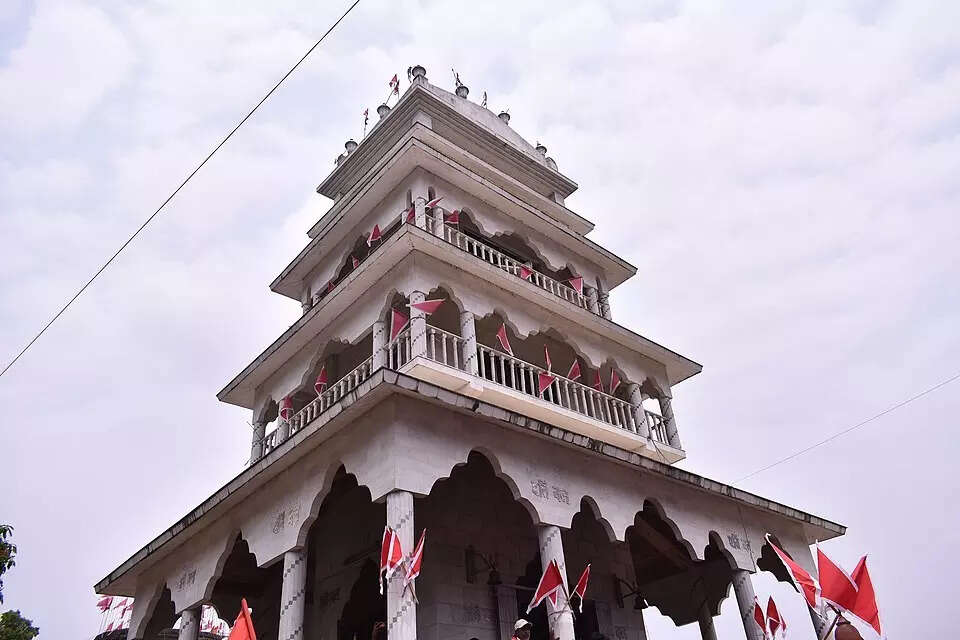
Thakurnagar

Thakurnagar Matua Mahasangha and Thakur Bari Temple: Credit: Wiki Commons

While there is no official caste-wise count, estimates suggest they form roughly 17 to 18 per cent of the state’s population. Politically, their presence stretches across North and South 24 Parganas, Nadia, Howrah, Cooch Behar, North and South Dinajpur and Malda.Electoral analysts routinely point out that Matua voters influence outcomes in as many as 60-65 assembly seats and are spread across at least six parliamentary constituencies. In a state where margins are often tight, that kind of concentration confers bargaining power.For decades, this power rested largely with the Left and later the Trinamool Congress. Welfare programs, refugee rehabilitation, and grassroots networks kept the community electorally aligned, while the BJP remained peripheral in Bengal until the mid-2010s.Boroma: Matua matriarch & her lineageThe Thakur family of Thakurnagar occupies a symbolic space that cuts across party lines. Binapani Devi, known as Boroma, carried Harichand Thakur’s teachings across India and became the Matua matriarch. After her death in 2019, the state accorded her funeral with full state honour, which reflected the recognition of Matua’s influence even among political rivals.Her grandson, Shantanu Thakur, now BJP MP from Bongaon, represents the intersection of faith and politics in contemporary Bengal. Parties court him not merely for endorsement but for access to a constituency shaped by history rather than ideology alone. At the same time, Boroma’s daughter-in-law, Mamata Bala Thakur, a former Rajya Sabha member, has been associated with the Trinamool Congress, illustrating that the family’s political affiliations cut across party lines.
GIZKx-9WkAES6Fw

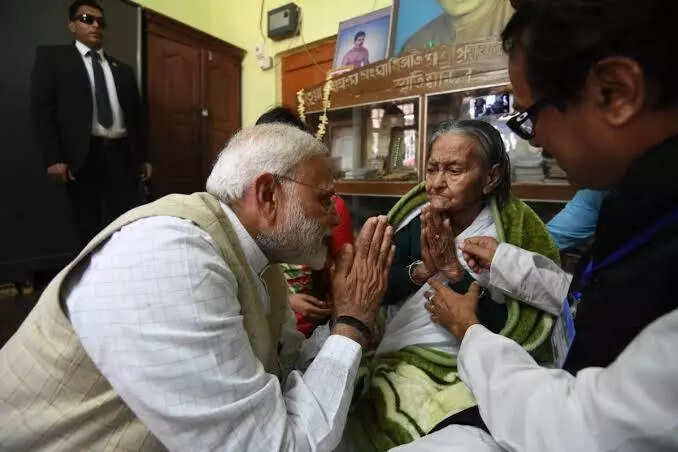
Prime Minister Narendra Modi met Matua Community’s ‘Boroma’ Binapani Devi Thakur in Thakurnagar in 2019.

On the “make or break election” potential of the community, Deep Halder says, “The family itself is very divided. There is another side of the family, which is with the Trinamool Congress (TMC). Yes, it is an important voting bloc, but make-or-break, I would not say.”To reduce the Namasudra–Matua community to a vote bank is to miss the point. Their political choices are anchored in a memory of caste humiliation, of religious assertion, of displacement and of delayed recognition. Their power lies not just in numbers but in a shared understanding of what the state has owed them and often failed to deliver. As Bengal’s politics grows more polarised, the Matua–Namasudra community remains a reminder that identity here is not manufactured overnight. It is inherited, negotiated, and, increasingly, exercised at the polling booth.2014: The year of shiftThe shift began after 2014. Identity, citizenship, and belonging entered the political mainstream in a way they had not before. In the 2014 Lok Sabha elections, the BJP won just two of Bengal’s 42 seats. Five years later, in 2019, it won 18. The jump was not accidental. Constituencies with large Matua populations, including Bongaon and Ranaghat, swung decisively.The Citizenship Amendment Act played a role in this consolidation. While the law does not name Namasudras or Matuas, it addresses precisely the condition of non-Muslim refugees from Bangladesh who entered India before 2014. For a community whose migration was born of Partition and persecution, the promise of citizenship was not symbolic. It was existential.That promise, and the delay in its implementation, shaped political expectations. In the 2021 assembly elections, the BJP fell short of forming the government, but it still emerged as the principal opposition with 77 seats, a dramatic rise from its three-seat tally in 2016. Many of these contests were fought tooth and nail in Matua-influenced belts. The 2024 Lok Sabha elections saw the BJP’s numbers in Bengal dip to 12 seats, with the Trinamool Congress winning 29. Yet even then, Matua-heavy constituencies remained competitive, asserting that the community was not locked into permanent allegiance. It votes, increasingly, with a sense of leverage.SIR and the dilemma of citizenshipMore than one lakh voters from the Matua heartland, spread across four assembly constituencies in North 24 Parganas’s Bongaon subdivision, are likely to receive notices for hearings following the publication of draft electoral rolls on December 16.A statement by junior Union minister Shantanu Thakur, hinting at one lakh Matua deletions from voter rolls following SIR, has led to fresh unease in the already anxious Matua belt in Bengal.Speaking at a public meeting at Bagdah’s Garapota, Thakur, also the sabhadhipati of the BJP-backed faction of the All India Matua Mahasangha, said: “If excluding 50 lakh infiltrators means that one lakh people from my community are temporarily deprived of voting, which option is more beneficial?”

BJP's Shantanu Thakur

BJP’s Shantanu Thakur on SIR

Hitting back, TMC called Thakur’s comment “nothing but a cynical, backstabbing betrayal”.“For years, they (BJP) dangled the mirage of citizenship in front of our Matua brothers and sisters, conning them election after election with honeyed lies, only to stab them in the back the moment the votes were pocketed,” the party said on X. “Now, with the EC reduced to their obedient B-team, BJP has rammed through their Silent Invisible Rigging (SIR) abomination in Bengal, forcing millions of Matuas into a humiliating litmus test of citizenship designed to strip them of their rights and erase their votes,” the party posted.
G5469nSawAATw7H

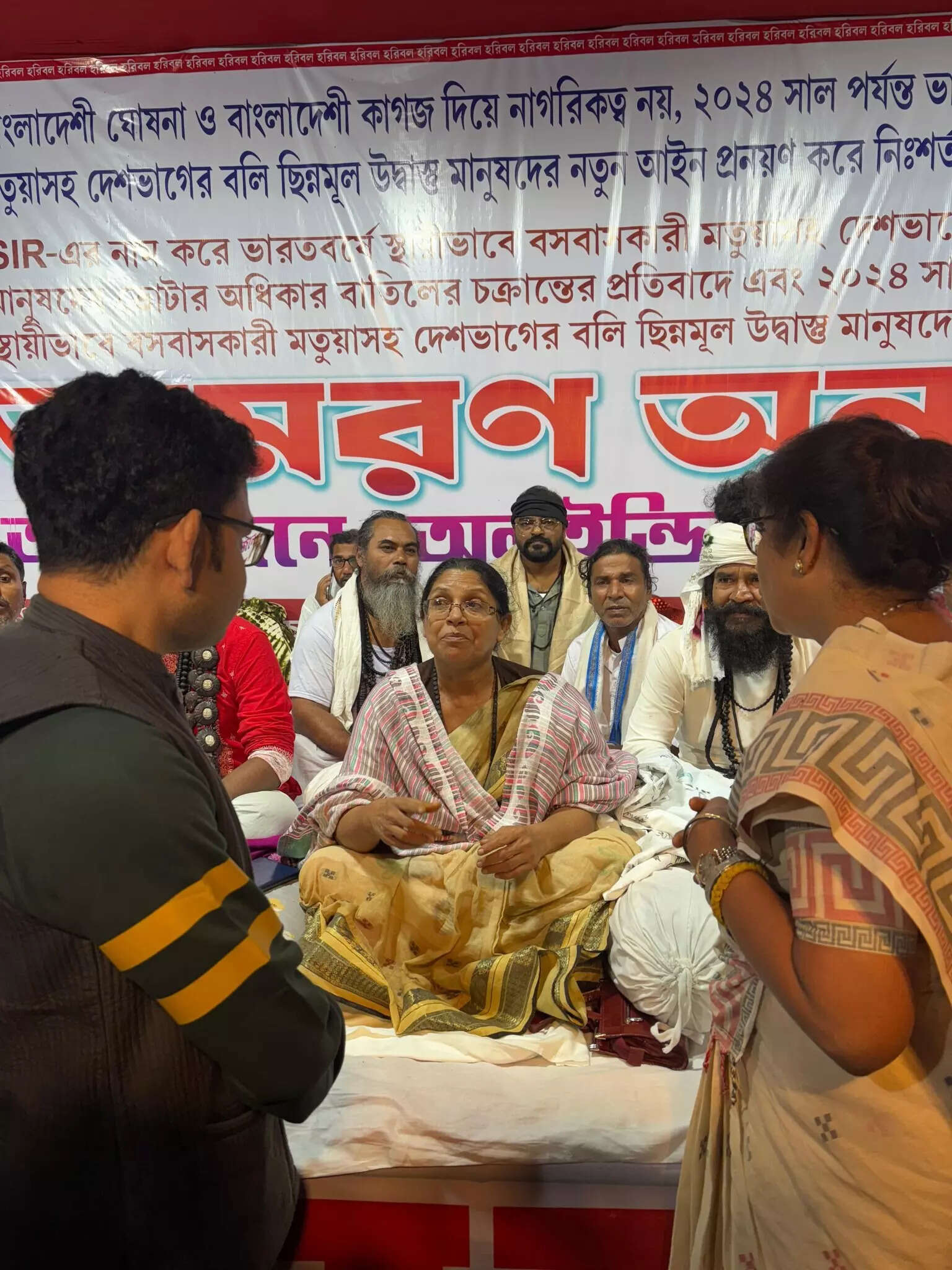
TMC MP Mamata Bala Thakur-led Matua faction during the hunger strike over SIR

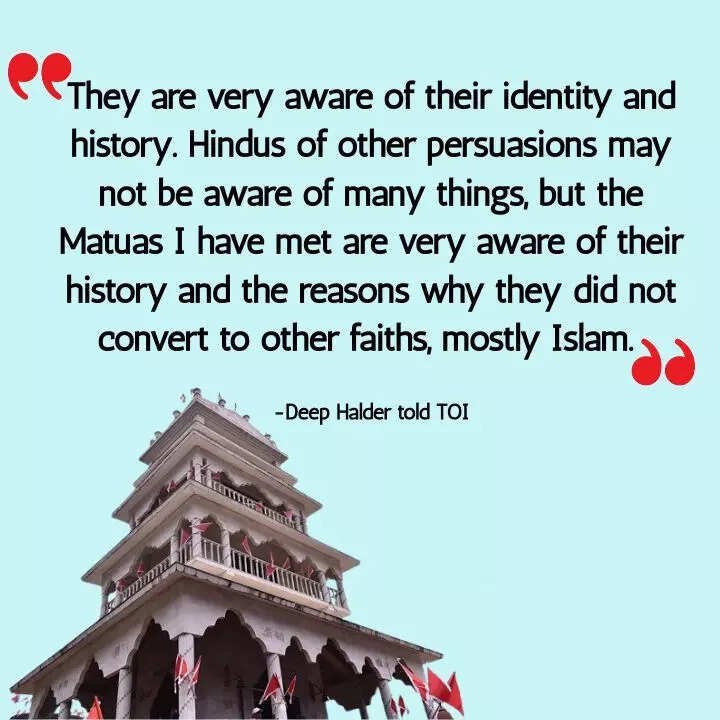
In this context, PM Modi’s assurance that the Matuas “have the right to live in India with dignity thanks to the CAA” could be read as an attempt to reassure the community that the ongoing revision of electoral rolls does not dilute its place or legitimacy in the state.The message appears aimed at separating administrative action from questions of belonging, even as concerns over voter exclusions continue to fuel unease in the Matua heartland.The Bengal battle for 2026On the factors that would probably play on the Matua community’s mind in the 2026 elections, Deep Halder said that “what is happening in Bangladesh explains why they left (East Pakistan) in the first place. Political galvanisation even on this side of the border (West Bengal) would remind them of what is happening on the other side of the border (Bangladesh)”.“The public lynching and burning of a Bengali Hindu man is a very recent memory for the Matuas. There is also a large chunk of Matuas on that side of the border (Bangladesh). I visited their headquarters there, and they are very aware of the developments in Bangladesh today. This would also play on their minds when they vote for either of the political parties.”He said the community may not choose one party solely on the issue of identity, but “identity is a big issue even for Gen Z Matuas”. “They are very aware of their identity and history. Hindus of other persuasions may not be aware of many things, but the Matuas I have met are very aware of their history and the reasons why they did not convert to other faiths, mostly Islam,” Halder told TOI.
Matua

Matuas and GenZ

For the Matua–Namasudra community, politics has never been a matter of slogans alone. It has been shaped by memory, by displacement, by the struggle to hold on to dignity across generations, and by the slow negotiation of belonging in a land they have helped build but have often had to justify their place in.Their choices have been pragmatic as much as emotional, guided as much by lived experience as by ideology. That is why their political loyalties have shifted, fractured and reassembled over time, resisting any attempt to be neatly categorised or permanently claimed. As Bengal moves toward another election cycle, the Matua story offers a reminder that electoral behaviour here is rarely divorced from history. Administrative processes, citizenship debates and developments across the border are not abstract issues for this community; they touch upon inherited anxieties and hard-earned assertions.Whether the Matua–Namasudra vote consolidates, fragments or recalibrates itself in 2026 will depend less on promises made from platforms and more on whether the state can convince them that recognition, security and dignity are not provisional, but settled facts of citizenship.

Source link

‘My children unsafe at home’: Unnao rape victim’s plea ahead of SC hearing; seeks justice against Kuldeep Sengar | India News


‘My children unsafe at home’: Unnao rape victim's plea ahead of SC hearing; seeks justice against Kuldeep Sengar
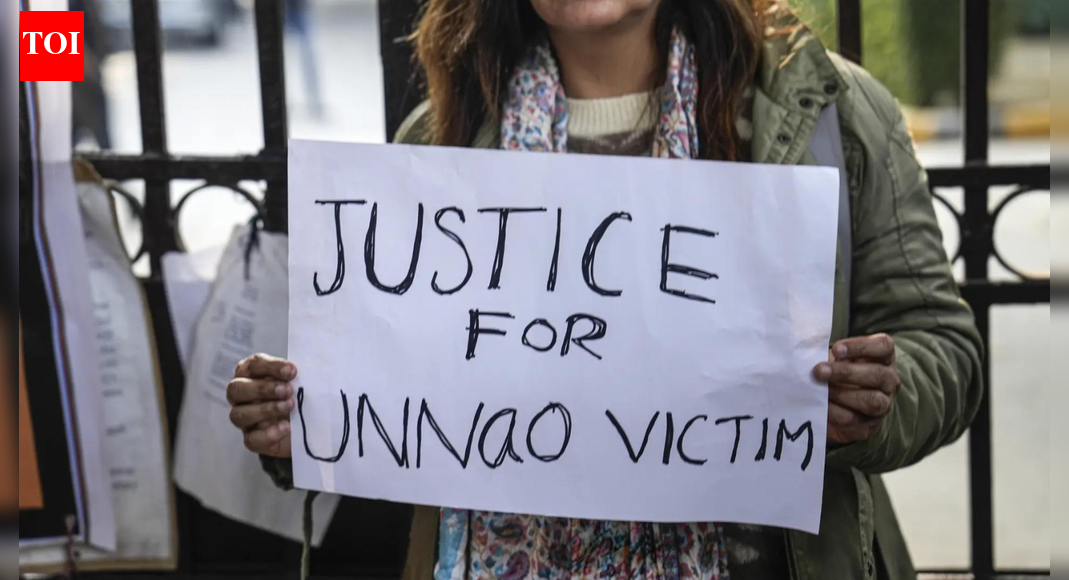
A protester holds a placard during a demonstration against the suspension of the jail term of Kuldeep Sengar

NEW DELHI: The survivor of the 2017 Unnao rape case on Sunday said that she fears for the safety of her children after the Delhi high court suspended the life sentence of expelled BJP leader Kuldeep Singh Sengar. Reacting to the CBI’s petition before the apex court, the survivor told news agency ANI, “I have faith in the Supreme Court that it will give me justice. I am raising the voice of every women… Had CBI done this before, I would have got justice. His (Kuldeep Sengar) bail would have been rejected because he raped me. My father was killed. My family members were killed. The security of my family members and witnesses was removed... My husband was fired from his job. My children are unsafe at home.The Supreme Court is scheduled to hear the CBI’s plea on December 29. As per the cause list, a bench headed by Chief Justice Surya Kant, along with Justices J K Maheshwari and Augustine George Masih, will take up the matter. The court will also hear a separate petition filed by advocates Anjale Patel and Pooja Shilpkar challenging the high court’s order.Also read: CBI cites Advani judgment to seek Sengar bail nixingOn December 23, the Delhi high court suspended Sengar’s life sentence in the rape case, noting that he had already served seven years and five months in prison. The suspension will remain in force while his appeal against conviction is pending. The CBI moved the Supreme Court against the order on December 26.Also read: Unnao rape survivor’s explosive charge; meets CBI officialsSengar was convicted in December 2019 and sentenced to life imprisonment along with a fine of Rs 25 lakh. While the high court granted him bail in the rape case, he will continue to remain in jail as he is serving a separate 10-year sentence in a CBI case related to the custodial death of the survivor’s father. His appeal in that case, along with a plea seeking suspension of sentence, is also pending.The high court imposed several conditions while granting bail, including a personal bond of Rs 15 lakh with three sureties, a direction not to enter a 5-km radius of the survivor’s residence in Delhi, and a strict bar on threatening her or her mother.


Source link

‘We can learn’: Shashi Tharoor’s ‘discipline’ retort to Digvijaya Singh’s RSS praise; signal for Congress? | India News


'We can learn': Shashi Tharoor’s 'discipline' retort to Digvijaya Singh’s RSS praise; signal for Congress?

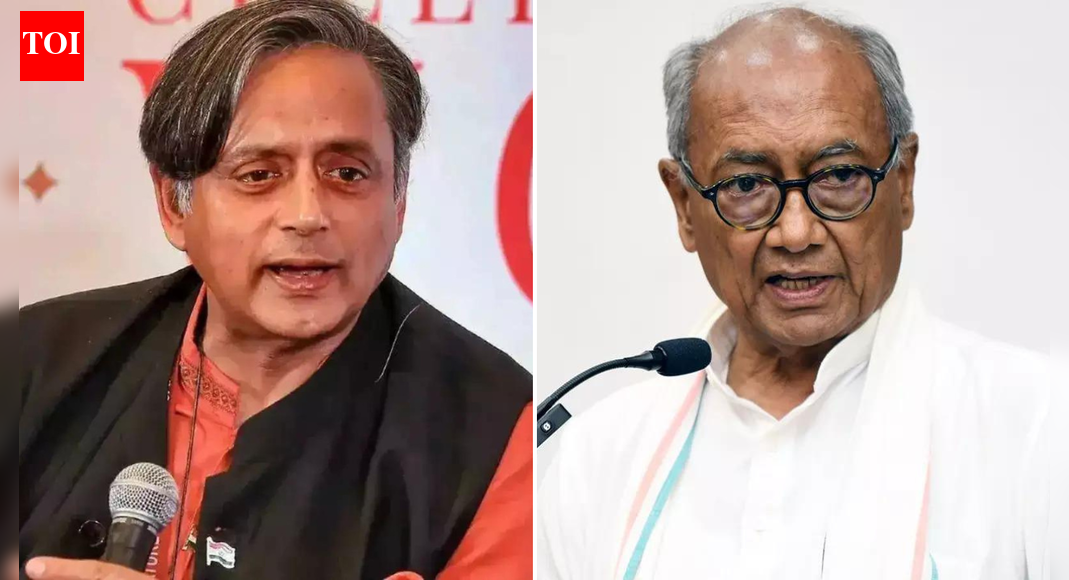
NEW DELHI: Congress MP Shashi Tharoor on Sunday offered a measured response to senior party leader Digvijaya Singh’s praise for the organisational strength of the Rashtriya Swayamsevak Sangh (RSS), remarks that triggered sharp reactions within the Congress and handed the BJP a fresh line of attack.“We have a history of 140 years, and we can learn a lot from it. We can learn from ourselves, too,” the Thiruvananthapuram MP said.“There should be discipline in our organisation. Digvijaya Singh can speak for himself,” he added.Calling Digvijaya Singh a “friend”, Tharoor, when asked whether he had spoken to Singh since his remarks ruffled feathers within the Congress, said: “We are friends, and having a conversation is natural. The organisation must be strengthened, there is no question about it.”Tharoor’s remarks came on the party’s 140th Foundation Day, which Tharoor described as “a very important day for the party” and “a day when we look back at our remarkable history and the contribution of Congress.” On Saturday, the Congress Working Committee (CWC) meeting convened to finalise programmes to corner the government over the VB-G RAM G Act, was overshadowed by internal disquiet after Singh’s social media post praising the RSS-BJP’s organisational structure.Also read: Sharing PM Modi photo, Digvijaya Singh lauds Sangh, BJP says attack on RahulSingh had shared a 1990s photograph showing a young Narendra Modi seated on the floor while senior BJP leaders, including L K Advani, sat on chairs, calling it “very impressive” and describing PM Modi’s rise as the “strength of organisation”.At the CWC meeting, Singh reportedly criticised “over-centralisation” within Congress and pushed for decentralisation.Also read: How Cong reacted to Digvijaya Singh’s RSS praiseThe BJP seized on Singh’s comments. Spokesman Sudhanshu Trivedi said the BJP recognises a “gudri ke laal” like PM Modi, while Congress focuses on “Jawahar ke laal”.Singh later clarified that his remarks had been misunderstood. “I was, am and will be a trenchant critic of the RSS and Modi,” he said. He reiterated, “I am opposed to the ideology of the RSS… But I admire their organisational capacity.”Meanwhile, Congress media department chairman Pawan Khera drew a sharp line, saying, “There’s nothing to learn from the RSS. What can an organisation known for Godse teach an organisation founded by Gandhi?”


Source link

‘Nothing to learn’: How Congress reacted to Digvijaya Singh’s RSS praise; senior leader clarifies stance | India News


‘Nothing to learn’: How Congress reacted to Digvijaya Singh’s RSS praise; senior leader clarifies stance

NEW DELHI: Congress on Sunday stopped short of agreeing with its senior leader Digvijay Singh after he gave example of Rashtriya Swayamseva Sangh (RSS) to call for organisational reforms within Congress.Congress spokesperson Pawan Khera, reacting to former Madhya Pradesh chief minister’s remarks said that an organisation known for Godse can not teach anything to a organisation founded by Gandhi.

Congress Rift Out In Open? Digvijaya Singh’s Modi-RSS Praise Draws Jibes From BJP Amid CWC Meet

“There’s nothing to learn from the RSS. What can an organisation known for Godse teach an organisation founded by Gandhi?” Khera said.‘Power of the organisation’Earlier on Saturday Digvijay praised the organisational strength of RSS and shared a black-and-white photograph from a social media platform that showed Prime Minister Narendra Modi seated back on the ground while BJP veteran Lal Krishna Advani sat on a chair in the background, acknowledging how the RSS shapes leadership within the organisation.“I found this image on the Quora site. It’s very impressive. How an RSS grassroots swayamsevak and Jan Sangh BJP worker sat on the floor at the feet of leaders and became the state’s Chief Minister and the country’s Prime Minister. This is the power of the organisation.”However, he issued a clarification, saying, “I’ve been saying this from the beginning: I am opposed to the ideology of the RSS. They neither respect the Constitution nor the country’s laws, and it’s an unregistered organisation.”“But I admire their organisational capacity because an organisation that isn’t even registered has become so powerful that the Prime Minister says from the Red Fort that it is the world’s largest NGO. If it’s an NGO, then where have your rules and regulations gone? But I admire their organisational capacity,” he added.Earlier this week, Singh had also praised Rahul Gandhi for his stance on socio-economic issues, giving him “full marks” while calling for internal reforms within the Congress. Drawing a parallel with Rahul Gandhi’s push for Election Commission reforms, Singh argued that the party itself needed similar changes.In another post on X, he wrote, “Rahul ji you are absolutely ‘Bang On’ in matters of Socio-Economic Issues. Full Marks. But now please look at Congress also. Like Election Commission needs Reforms, So Does Indian National Congress. You have started with ‘संघटन सृजन’ But we need more Pragmatic Decentralised Functioning.”He added, “I am sure you would do it because I know you can do it. Only problem is that it is not easy to ‘Convince’ you!!”BJP attacks Rahul GandhiMeanwhile, BJP alleged that Digvijay’s praise for the organisational power of the BJP and the RSS was an “open dissent” against Rahul Gandhi’s leadership in the party.BJP national spokesperson Sudhanshu Trivedi alleged that Rahul was bringing his party “upside down” because he had been sidelined in the party.“It’s because our Narendra Modi is ‘guddri ke lal’ (diamond in the rough) and their leader is ‘Jawahar ke lal’ (great-grandson of Jawaharlal Nehru). Since our Narendra Modi has risen to top from bottom, he is taking the party (BJP) also to the top from bottom,” Trivedi told a press conference at the BJP headquarters here.In a swipe to Rahul, he said, “Since their leader is ‘Jawahar ke lal’ who is now ‘side down from up’, he is bringing his party upside down.”This comes after the Congress held the CWC meet in Delhi on Saturday under the chaimanship of party chief Mallikarjun Kharge — first after the party suffered a huge loss in Bihar assembly elections.After the CWC meet, Kharge announced that the grand-old-party launch a nation-wide protest against the Centre for replacing rural employment scheme – MGNREGA – with VB G-RAM-G law from January 5.“In the meeting, we took an oath. We decided to launch a massive movement across the country, making the MNREGA scheme the central point. Indian National Congress party, taking a leading role, will launch the Save MNREGA Campaign from January 5th,” Kharge said.


Source link

Why India’s betting on new tactic against digital arrest | India News


Why India’s betting on new tactic against digital arrest

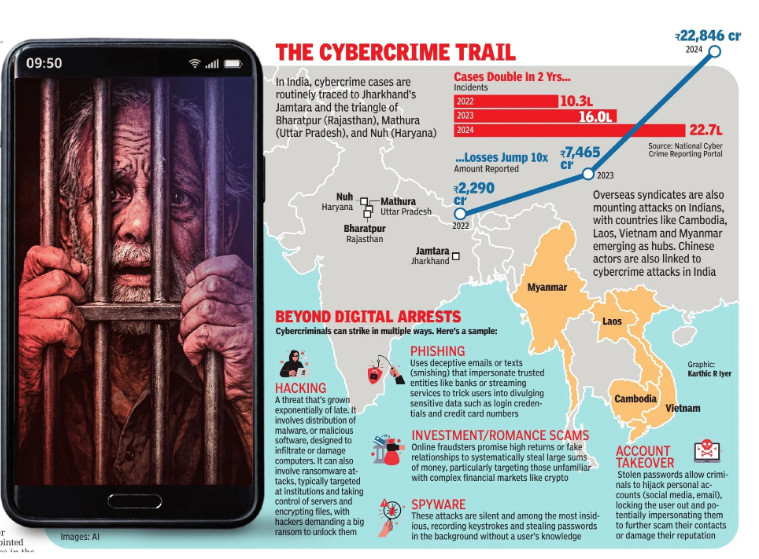
As another year winds down, a cybercrime epidemic of mindboggling proportions continues unabated in India. Striking with impunity and alarming frequency, there is seemingly no tactic that’s too bizarre and no target that’s out of reach for cyber fraudsters. Earlier this year, a doctor in Gujarat was kept under video surveillance for three months, reportedly losing Rs 19 crore during her digital-arrest ordeal. More recently, a former Punjab Police IG was defrauded of more than Rs 8 crore in an investment scam. The shock led him to shoot himself in the chest.While the law of the land does not specifically recognise the concept of “digital arrest”, cases are reported every day from across India — mostly, instances of cybercriminals impersonating police and central security officials and using panic and manipulation to wipe people’s bank accounts clean.But there are many more ways in which they come for your money (see box), like infecting your phone with forwards that transfer control, catching you by surprise with a video call and morphing the footage for blackmail, or ‘pig butchering’ you with texts about lucrative investment returns.The number of cases, and the swindled cash involved in those, has seen an exponential rise: 23 lakh cybercrime complaints were registered on the National Cybercrime Reporting Portal (NCRP) in 2024, a 42% jump over 2023. And the money lost to such frauds in 2024 was estimated to be Rs 23,000 crore, a 200% jump from Rs 7,500 crore in 2023. As a hydra-headed monster that takes new forms virtually every month, cybercrime is no longer a battle that state police can fight within their own limited jurisdictions and win. Which would explain why Supreme Court this month ordered CBI to launch a sweeping probe into all digital arrest scams.Central teeth for national problemBringing in the might of a central agency was an overdue move. As a senior cyber cell officer in Delhi pointed out, “the core challenge lies in the complex inter-state and geographical nexus of these operations, where the victim and the perpetrator are separated not just by distance but also by an intricate web of digital and financial layering.”Cybercrime presents a challenge entirely different from that posed by conventional crime. In a ‘digital arrest’ scam, which is perpetrated over a video call that can last hours, weeks, days, or even months, the money moves quickly through a series of what are known as ‘mule accounts’.These are usually located in places far apart and opened using forged documents or with the connivance of bankers. For example, money from a ‘digital arrest’ in Delhi, Gurgaon, Bengaluru or Hyderabad could be routed to mule accounts in West Bengal, Uttarakhand and Gujarat. That is why recoveries are only a fraction of the defrauded cash because, by the time the labyrinth of transactions has been decoded, the money has vanished.In India, two key hubs of cybercrime have been identified in Jharkhand’s Jamtara and the triangle of Bharatpur (Rajasthan), Mathura (Uttar Pradesh), and Nuh (Haryana). But an even more concerning dimension is the rise of large organised overseas operations in countries like Cambodia, Laos, Vietnam and, of late, Myanmar.

Cybercrime trail

These are operations that run call-centre-style scam compounds, drawing their manpower from human trafficking victims, including Indians who are snared by local placement agents with the lure of foreign jobs in data entry, IT and management. “Once trapped, these recruits are held in prisonlike conditions and coerced into undertaking cybercrimes targeting their own countrymen,” said a Delhi Police officer.Several of these international operations have been traced to Chinese criminal syndicates that provide technical infrastructure like apps and VoIP. “CBI is uniquely positioned to connect these disparate dots: like a SIM card issued in one state, a bank account opened in another, and an IP address originating at a third location,” said a government official.Banking, telecom breachesThe digital epidemic has fed on an explosive growth of the internet user base. While India has become an increasingly digital society, large sections of people remain digitally naïve because initiation to new technology and devices happened at a later stage in life. But cybercrime’s uncontrolled spiral has also exposed major vulnerabilities in two critical pillars — the telecom sector and the banking system. Both have failed to build adequate safeguards.“Fraudsters routinely exploit lax Know Your Customer (KYC) norms to illegally procure huge numbers of SIM cards. They are similarly also able to open mule bank accounts, the lifeblood of their operations,” said a Delhi cyber cell investigator. Systematic targeting of senior citizens with pension funds in their accounts and women makes it clear that scammers have access to banks’ customer data, investigators said.Recently, CBI arrested the manager of a prominent bank in Mumbai for allegedly accepting illegal gratification to process account-opening forms, creating channels for rapid layering of cybercrime proceeds. The accused is said to have facilitated the use of accounts that are linked to multiple cybercrime cases.Similar crackdowns across states, like ‘Operation Insider’ by Telangana Police, have led to the arrest of many bank officials for opening current accounts without due diligence in exchange for commissions from fraudsters.It’s the transnational cybercrime syndicates in Laos, Cambodia, Myanmar and Vietnam that execute the most complex frauds, increasingly deploying AI and deepfakes. These are the crimes that have so far proved the hardest to crack for police across Indian states. “Funds siphoned from Indian victims are quickly laundered, often converted into cryptocurrency and then moved internationally to accounts in countries like China, Singapore and Vietnam to evade detection,” explained a senior police officer.What’s the counterpunch?Sleuths may still have to play catch-up with new tactics, but the fight against cybercrime is much more organised now than it was two years back, which will help CBI.The Indian Cyber Crime Coordination Centre (I4C), through its Citizen Financial Cyber Fraud Reporting and Management System, has helped save around Rs 7,130 crore by facilitating rapid freezing of funds. NPCI (National Payments Corporation of India), too, has helped freeze scam proceeds in real time. A centralised toll-free helpline number, 1930, has been operationalised for quick assistance in lodging cybercrime complaints.Govt has blocked over 11 lakh SIMs and around 3 lakh IMEI numbers linked to frauds, underscoring the necessity of a coordinated, technological counteroffensive. Creation of a ‘Suspect Registry’ by I4C to flag suspect bank accounts and use of the ‘Pratibimb’ module to map criminal locations based on telecom and crime data are among other tech responses that have taken shape.“A state-of-the-art Cyber Fraud Mitigation Centre has been set up at I4C. It has brought together representatives of major banks, financial intermediaries, payment aggregators, telecom service providers, IT intermediaries and representatives of states/UTs and police to tackle cybercrime,” a government official said.Over to CBIBy combining domestic reach and collaborations with security agencies globally, CBI can serve as the lead enforcer and nodal point for busting complex, transnational cybercrime networks. Through specialised initiatives like Operation Chakra, CBI has been coordinating simultaneous raids on financial nerve centres of cybercrime with organisations like FBI and Europol. This is something that no state police force can do.CBI can ensure that the digital trail of a crime — which might involve a victim in Delhi, a server in Europe, and a perpetrator in Southeast Asia — is traced and documented for prosecution. By utilising the Bharatpol portal and its Global Operations Centre, CBI can also create a bridge between state police forces and international intelligence, allowing real-time sharing of data. CBI’s strength also lies in its role as National Central Bureau for Interpol in India, which gives it a direct line to law enforcement in over 190 countries.The agency is also equipped to lead large-scale crackdowns on illegal call centres that have been operating as hubs for international extortion. Besides, it has extraterritorial mandate under Section 75 of the IT Act, which gives it legal authority to investigate any individual, regardless of nationality, whose digital actions impact systems within India.


Source link

Family of junior engineer killed by Maharashtra roadways bus awarded 2.2 crore | India News


MUMBAI: After a routine trip to the market with his father to purchase vegetables on a winter morning in 2023 led to the death of a 30-year-old junior engineer with Konkan Railways, Motor Accident Claims Tribunal in Mumbai ordered Maharashtra State Road Transport Corporation (MSRTC) to pay approximately Rs 2.21 crore (inclusive of interest) to his bereaved family. The tragedy occurred on Dec 21, 2023, when Aniket Dabholkar, father to a one-year-old boy, was standing near his parked scooter while his father purchased vegetables. A speeding state-owned bus veered into the side margin of the road and struck Dabholkar, causing fatal head injuries.During the proceedings, MSRTC attempted to shift blame onto the deceased, suggesting he suddenly entered the path of the bus. However, the tribunal dismissed these claims, noting evidence and police reports clearly showed the scooter was stationary and the bus driver lost control. “The fact that the driver of the offending bus drove the vehicle at a high speed and recklessly and caused the accident resulting in death of a person standing still by the side of the road indicates negligence,” it said in the verdict.The family had moved the tribunal on January 20, 2024. “The claimants have duly proved negligence on the part of the accused driver,” the tribunal said.In determining the compensation, it took into account Dabholkar’s monthly salary of approximately Rs 84,000 and his promising career. It awarded Rs 1.95 crore as principal amount, which includes loss of dependency, funeral expenses, and “consortium” for emotional suffering of his 24-year-old widow, infant son, and elderly parents.It directed MSRTC to deposit the funds in 30 days, emphasising that the compensation must include 7% annual interest. Of the total award, it ordered Rs 95 lakh each be allocated to the wife and son, and the remainder shared between the parents.


Source link