Breaking News
Vajpayee’s democratic restraint holds lessons for a polarised South Asia | India News


Vajpayee’s democratic restraint holds lessons for a polarised South Asia
Photo credit: X/@FaisalNasym

NEW DELHI: Recalling Atal Bihari Vajpayee as a statesman who believed peace had to be consciously practised through restraint and institutional respect, former Maldives vice-president Faisal Naseem on Wednesday said the late prime minister’s political legacy remains deeply relevant for South Asia amid democratic and social turbulence in the region.Delivering the 8th Atal Bihari Vajpayee Memorial Lecture on “Peace, Democracy and Islam – The Maldivian Experience”, Naseem described Vajpayee as a leader who demonstrated that “firmness and civility can coexist” and that leadership could be “decisive without being divisive” — an approach he said holds enduring relevance in an era marked by polarisation.

Osman Hadi’s Brother Accuses Yunus Regime Of Murder Plot To Defer Bangladesh Polls Scheduled in Feb

“This year marks the birth centenary of a statesman whose legacy continues to shape India’s democratic journey and the wider neighbourhood of which the Maldives is a part,” Naseem said, speaking as a representative of “a small island nation in the Indian Ocean, a Muslim society and a young democracy”.Drawing parallels between India and the Maldives, he said peace in South Asia is often treated as an outcome, but leaders like Vajpayee understood it as “a practice cultivated through restraint, dialogue and respect for institutions”. “Peace is sustained not by uniformity, but by balance. It is preserved when differences are managed with dignity and when power is exercised with moderation,” he said.Naseem said Vajpayee’s long years in opposition reflected his belief in parliamentary democracy. “He believed in Parliament not because it was perfect, but because it embodied the people’s voice,” he said, adding that the lesson resonated deeply with the Maldives’ own democratic transition in 2008 from centralised authority to constitutional governance.The address acquired wider resonance amid political and social stress across South Asia. In Bangladesh, recurring political unrest and episodes of communal violence, particularly attacks on minority communities, have raised concerns about the state’s ability to protect pluralism and democratic norms. Sri Lanka’s post-crisis stabilisation has been accompanied by public unease over austerity and accountability, while Nepal continues to grapple with fragile coalition politics and leadership churn despite constitutional stability.Highlighting democratic outcomes in the Maldives, Naseem said democracy must deliver dignity and security. “This is what democracy delivers — protection, opportunity and shared prosperity,” he said, pointing to universal healthcare, pensions, minimum wages and free higher education.On India–Maldives ties, Naseem said the partnership was “written in deeds, not words”. Recalling India’s intervention during the 1988 coup attempt, he said the swift and restrained response “left a lasting imprint on Maldivian strategic thinking”. Vajpayee’s 2002 visit, he added, symbolised India’s enduring commitment to its neighbours.Naseem also credited Vajpayee with recognising the Indian Ocean’s strategic importance. “Maritime security is not only about naval strength, but about trust among neighbours,” he said, noting that current cooperation in maritime surveillance, coast guard capacity-building and emergency response reflects security built on partnership, not coercion.Concluding, Naseem said Vajpayee understood that while history could be shaped, geography could not. “Our shared responsibility is to ensure this region remains anchored in peace, democratic values and mutual respect,” he said.


Source link

Delhi chokes: GRAP-4 curbs lifted; stage I–III measures to continue amid ‘very poor’ AQI | India News


Delhi chokes: GRAP-4 curbs lifted; stage I–III measures to continue amid ‘very poor’ AQI

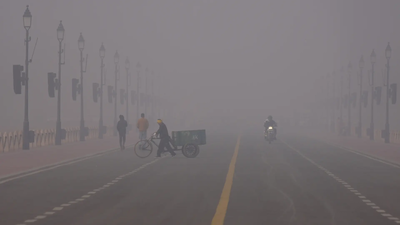
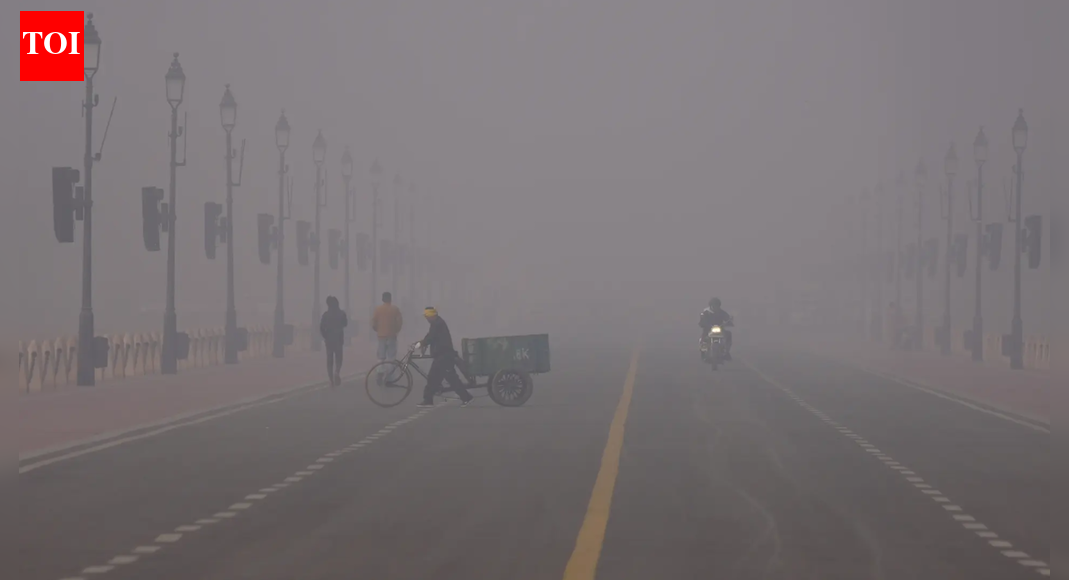
NEW DELHI: The Commission for Air Quality Management (CAQM) in the NCR and adjoining areas on Wednesday lifted GRAP-IV with immediate effect, even though air quality across large parts of the city remained in the ‘very poor’ category.According to data from the Central Pollution Control Board (CPCB), areas such as ITO and India Gate recorded AQI levels crossing 350, underscoring the persistence of hazardous air conditions in the national capital.

‘Can’t Stay Two Days In Delhi’: Gadkari On Severe Pollution, Transport Sector Role

The CAQM said the decision was taken to revoke its order dated December 13, 2025, which had invoked actions under Stage IV of the Graded Response Action Plan (GRAP).Stage IV is enforced when air quality reaches the ‘severe+’ category with an AQI above 450. The commission, however, clarified that measures under Stage I, Stage II and Stage III of the extant GRAP will continue and will be implemented as per the modified GRAP dated November 21, 2025.The easing of curbs came hours after the Delhi High Court directed the GST Council to meet at the earliest to consider lowering GST on air purifiers in view of the worsening air quality. During the hearing, the court questioned the Centre over the 18% GST imposed on air purifiers. At the outset, the bench expressed displeasure over the lack of action in the matter, observing that every citizen is entitled to clean air.Earlier, GRAP Stage-IV measures had been enforced across Delhi-NCR to curb rising pollution levels. Under Stage IV, private vehicle movement was not completely banned, with restrictions largely dependent on emission norms and fuel type. While vehicles meeting prescribed standards were allowed to operate, older vehicles face stricter curbs. BS-III petrol and BS-IV diesel vehicles are not permitted to ply in Delhi-NCR during this phase, except those providing essential services.


Source link

Evening news wrap: Unnao rape survivor to move SC against Kuldeep Sengar bail; Delhi Metro Phase-VA approved and more | India News


Evening news wrap: Unnao rape survivor to move SC against Kuldeep Sengar bail; Delhi Metro Phase-VA approved and more
Kuldeep Sengar; Delhi Metro
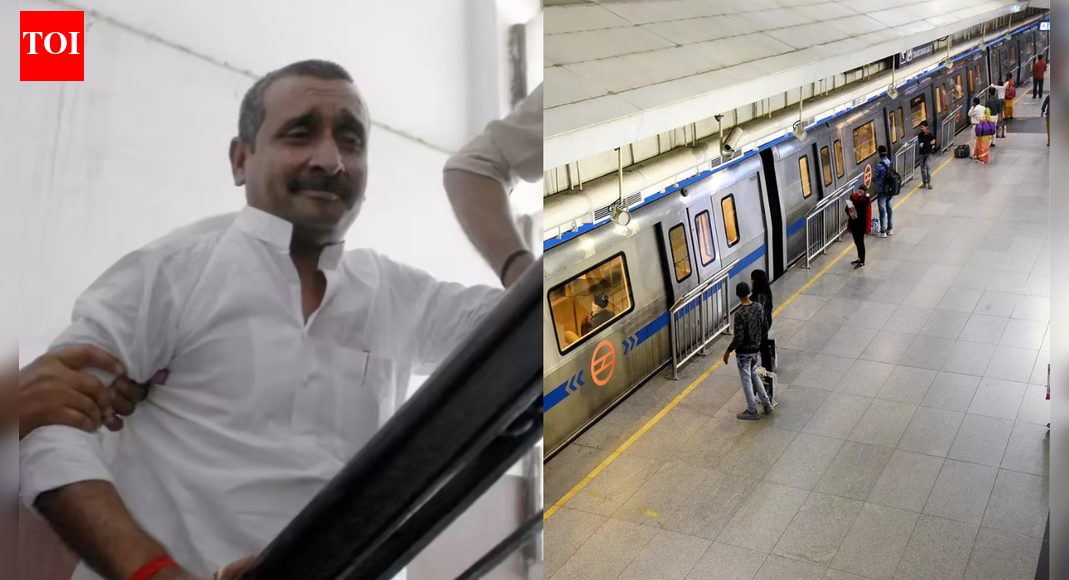
  • Unnao rape case: Kuldeep Singh Sengar’s bail, saying that the Delhi high court decision is like “kaal (death)” for her family and said she will challenge the order in the Supreme Court.
  • Delhi Metro expansion: The Union Cabinet has approved the Delhi Metro Rail Project Phase-VA, paving the way for the construction of 13 new stations and extending the capital’s metro network beyond the 400-km mark.
  • Delhi air pollution: The Supreme Court directed the GST Council to meet at the earliest to consider lowering the GST on air purifiers in view of worsening air quality.
  • Cricket record: Bihar rewrote the history books in emphatic fashion, piling up 574 runs, the highest team total ever recorded in List A cricket during their Vijay Hazare Trophy 2025–26 match against Arunachal Pradesh in Ranchi.
  • China’s Arunachal Pradesh claim: A recent Pentagon report submitted to the US Congress has flagged China’s claim over Arunachal Pradesh as part of Beijing’s stated “core interests.”

Here are the top 5 stories of the day:

‘His bail like kaal for us’: Unnao rape case survivor to move SC against suspension of Kuldeep Singh Sengar’s jail term

The Delhi high court granted bail to Sengar while suspending his life sentence, holding that he cannot be kept in jail only on the basis of the threat perception of the victim in the Unnao rape case.While allowing Sengar’s application under Section 389 of the CrPC, the court said, “Kuldeep Singh Sengar can’t be kept in jail only because of the threat perception of the victim in Unnao rape case,” and added that courts cannot deny bail merely out of apprehension that security agencies may fail in their duty. Read more

Delhi HC Grants Bail To Kuldeep Sengar; Victim’s Sister Says ‘Put Us In Jail To Keep Us Safe’

Cabinet clears Delhi Metro Phase-VA with 13 new stations; network to cross 400 km

According to details presented by Union minister Ashwini Vaishnaw, the Phase-VA project will involve the construction of 13 stations, of which 10 will be underground and three elevated. The total length of the approved corridors will be 16 km, and the project is scheduled to be completed within three years. Read more

‘Lower tax on air purifiers’: HC asks GST Council to hold meet; Delhi’s toxic air in focus

During the hearing. the court questioned the Centre over the imposition of 18% GST on air purifiers. At the outset of the hearing, the bench voiced its displeasure over the lack of action in the matter, observing that every citizen is entitled to clean air. The Centre told the court that the decision on GST rates is taken by the GST council, comprised of all states and UTs. Read more

Bihar smash highest-ever List A total; Sakibul Gani storms to fastest Indian hundred

Powered by breathtaking centuries and a relentless assault that lasted the full 50 overs, Bihar amassed a staggering 574/6, eclipsing the previous world record of 506/2 set by Tamil Nadu — also against Arunachal Pradesh — in the same tournament in 2022. At the heart of the carnage was Bihar captain Sakibul Gani (128 not out off 40 balls), who etched his name into the record books by smashing the fastest List A century by an Indian. Read more

China’s ‘rejuvenation’ plan: US Pentagon flags claim on Arunachal; highlights growing bonhomie with Pakistan

The report notes that China’s leadership has expanded the scope of its core interests to include Taiwan, sovereignty and maritime claims in the South China Sea, the Senkaku Islands, and Arunachal Pradesh, framing these objectives as central to achieving the “great rejuvenation of the Chinese nation” by 2049. Read more


Source link

The new logic of rural welfare: Why VB-G RAM G makes sense for a $4 trillion economy | India News


The new logic of rural welfare: Why VB-G RAM G makes sense for a $4 trillion economy

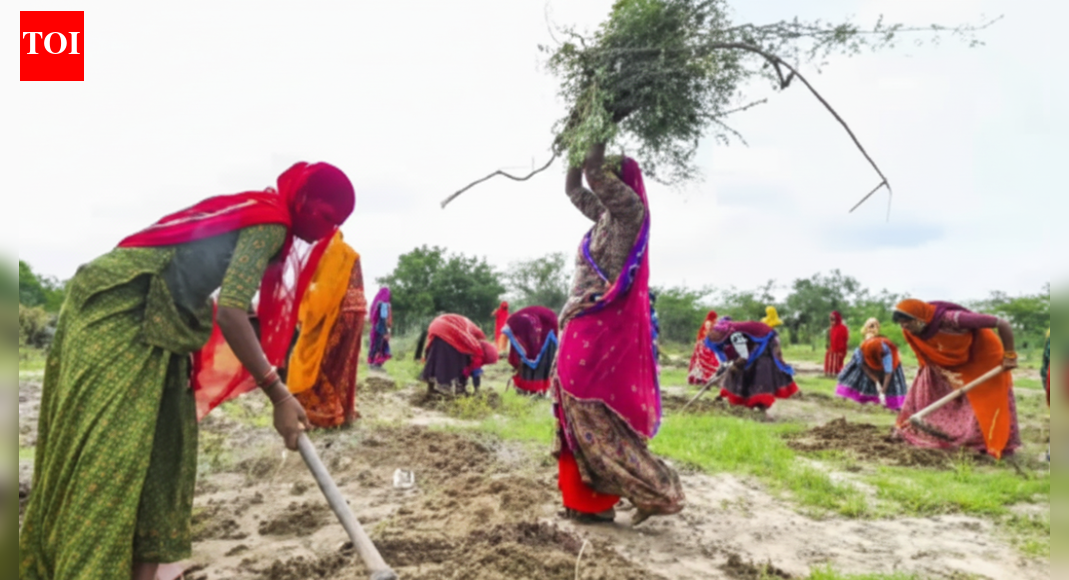
Driving the newsThe MGNREGA – a flagship UPA-era program that guaranteed 100 days of wage employment to rural households – has been replaced by the Viksit Bharat–Guarantee for Rozgar and Ajeevika Mission (Gramin) or VB-G RAM G Act.Union minister Shivraj Singh Chouhan framed it as a bold leap forward: “This is a far better scheme that will completely transform villages.”Critics, led by Congress leader Sonia Gandhi, allege it’s a stealth demolition of rights-based welfare: “The very structure of MGNREGA… has been annihilated.”But beyond the political heat, the quiet engine driving this reform is economic evolution. India’s welfare state – and rural labour market – has changed dramatically since 2005. The logic behind G RAM G isn’t just political; it’s economic.

Why it matters

MGNREGA was designed as a safety valve. Its purpose was simple: if private work dried up, the state would step in and guarantee wages. It was meant to stabilise consumption in bad years and give the rural poor bargaining power in the labour market. On those terms, it succeeded.But it is no longer the India of the mid-2000s.

  • In 2005: Rural safety nets were thin, bank accounts rare, and the idea of digital transfers futuristic.
  • In 2025: Over 80 crore people get free food grain for the next five years. DBT has matured.
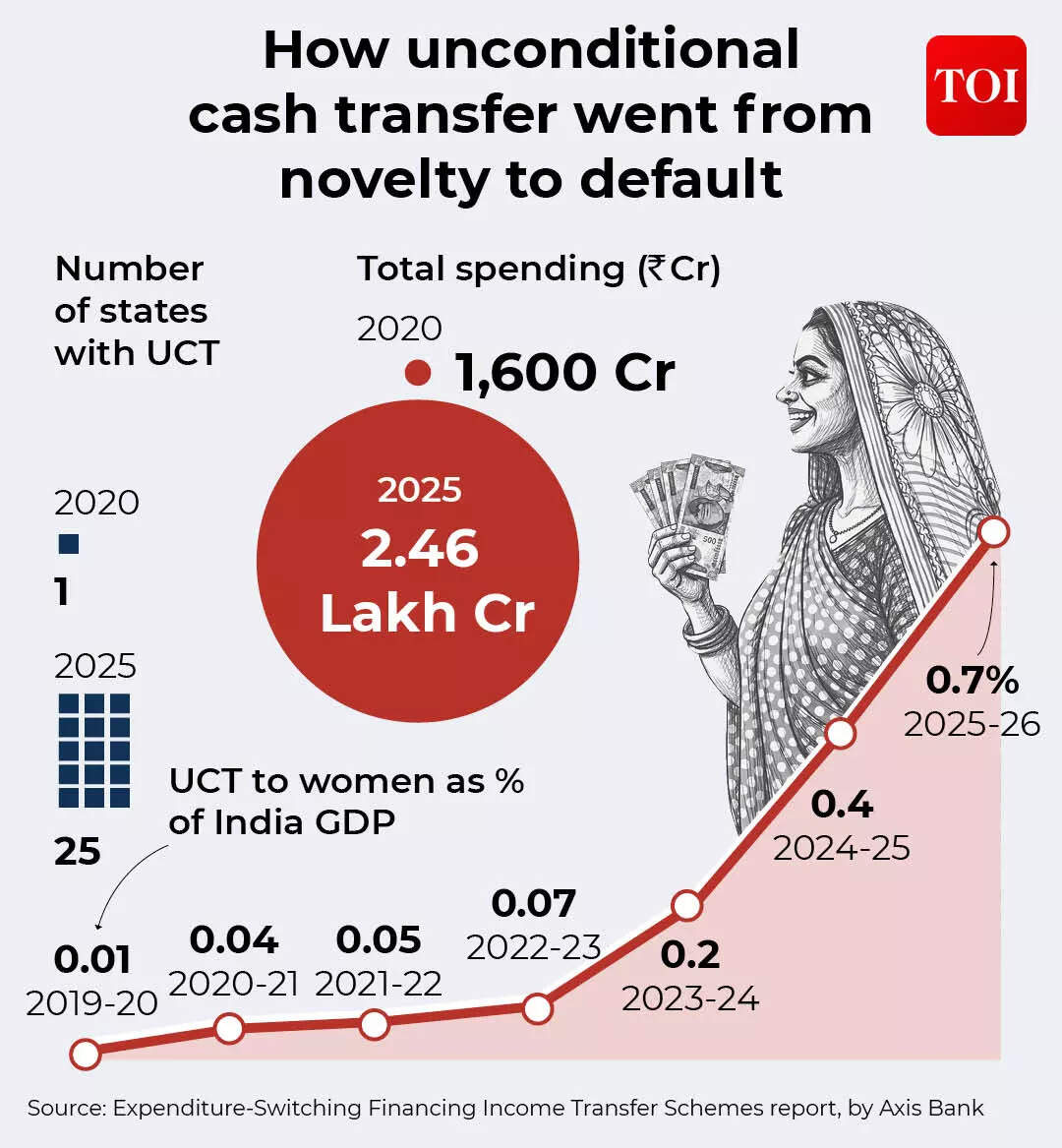
  • States are pumping Rs2.46 lakh crore annually into direct cash transfers to women.

MGNREGA, while historic in its impact, was built for an older economy. G RAM G is designed for a digitally connected, subsidy-rich, rural India where the challenge isn’t only poverty relief – it’s productivity, asset creation, and aligning with farm realities.

The big picture: Not a tweak, but a rethink

At a farmer rally in Rajasthan, Chouhan underlined the new mission:“We have not reduced it but increased it… Labourers will get wages and villages will see comprehensive development. Roads, drains, schools, everything can be built.”That shift – from emergency wage distribution to rural asset generation – reflects a deeper economic change.

What they’re saying

Sonia Gandhi calls G RAM G a “collective moral failure,” warning of job loss and loss of dignity: “The removal of the Mahatma’s name was only the tip of the iceberg.”The BJP’s Amit Malviya hit back: “Her arguments rest on mischaracterisations, selective memory, and outright falsehoods.”The divide is ideological – but also generational, rooted in two welfare philosophies: permanent subsidy vs productivity-driven support.Rahul Gandhi called it an ‘insult to the ideals of Mahatma Gandhi‘ and said the law bulldozes “both MGNREGA and democracy.”

Between the lines: The real economic logic of G RAM G

1. The safety net is now a floor, not a fallbackMGNREGA was built to prevent rural starvation and mass migration during crop failures and lean seasons. That logic worked in 2005.But today:

  • PMGKAY offers free food grain to 80 crore people until 2029.
  • NFSA guarantees subsidised food to two-thirds of India.
  • DBT infrastructure reaches 45 crore beneficiaries.

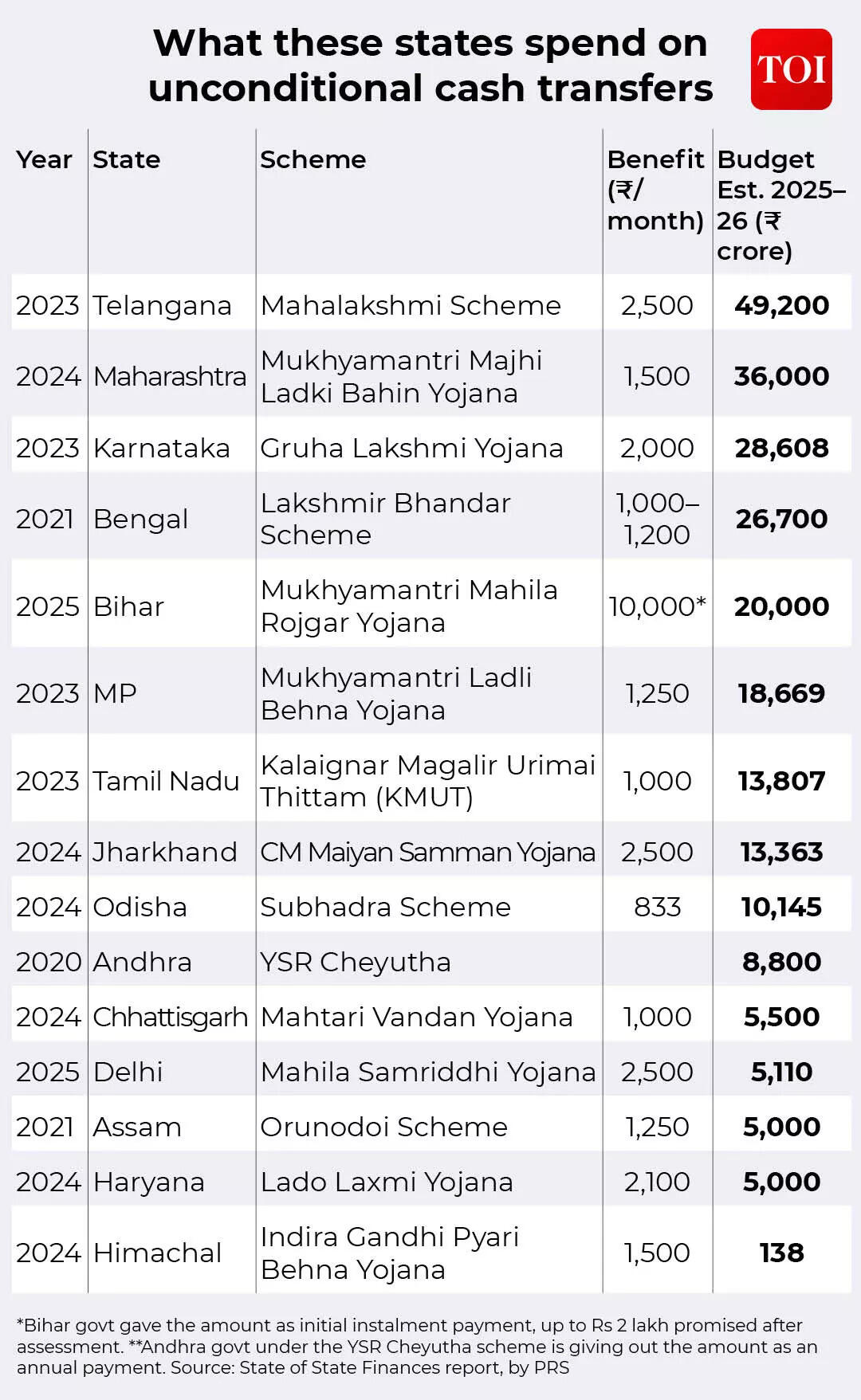
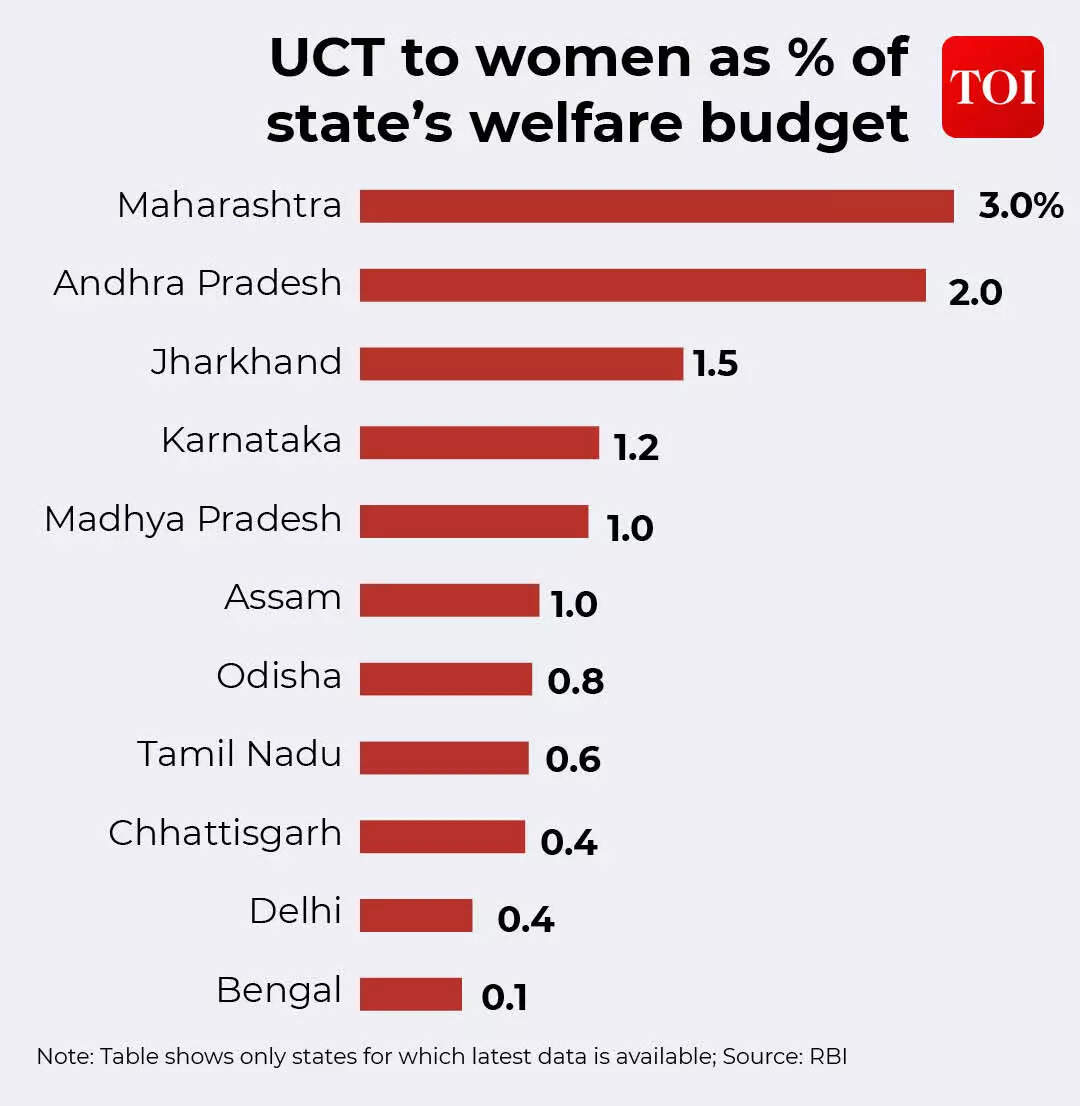
Implication: With calories protected, the role of employment guarantee schemes can shift from consumption smoothing to income generation through durable assets.In Chouhan’s words, “If needed, farm roads can also be constructed… everything can be built.”2. States are already flooding households with cash – so duplication is inefficient.From 1 state in 2020 to 15 states in 2025, unconditional cash transfers (UCTs) to women are now a Rs 2.46 lakh crore juggernaut.

  • Madhya Pradesh: Ladli Behna Scheme – Rs 1,000–Rs1,500/month.
  • Karnataka: Gruh Lakshmi – Rs 2,000/month.
  • Telangana: Mahalakshmi – Rs 2,500 + LPG subsidy + free bus rides.
women cash transfer desk gfx5

.

Why this matters: In villages where households already get regular cash + free food, demand for physical labour schemes changes.Women – the primary MGNREGA participants – are less likely to show up for work at Rs 220/day when cash arrives in their bank.
women cash transfer desk gfx

.

G RAM G acknowledges this by focusing on village development outcomes, not just labour targets.
women cash transfer desk gfx4

.

3. G RAM G fixes a paradox MGNREGA helped create: Labour shortages during harvestOne of the least discussed but most consequential changes is also one of the most controversial: The ability of states to suspend works for up to 60 days during peak sowing and harvesting seasons.Under MGNREGA, this was effectively taboo. Work was meant to be available year-round, on demand. But over time, farmers across states complained that the programme had become a rival employer. During peak agricultural seasons, when labour was needed most, workers often chose guaranteed public works instead. Wages rose. Harvests were delayed. Small farmers paid the price.The new law openly acknowledges this tension. By allowing a notified pause during peak seasons, it treats the employment guarantee not just as welfare, but as a labour-market instrument that must coexist with agriculture rather than crowd it out.States can pause work for 60 days to prevent a labour squeeze during critical farming periods.This reflects labour market realism, not policy retreat. In today’s India.

  • Farm productivity is vital.
  • Labour availability during key agri windows is essential.

G RAM G helps re-sync the rural workforce with agri cycles, rather than cannibalising farm labour.“They (MGNREGA) are trying to scare labourers… but we have increased the days to 125,” said Chouhan.4. India needs to move from “supporting poverty” to “building capacity”India’s economy is set to cross $4 trillion soon, but per capita income remains modest – around $2,800/year.That creates a challenge: How do we support vulnerable households without freezing them in place?“The real nature of the Modi government’s intentions can be understood from its decade-long track record of throttling MGNREGA,” Sonia Gandhi wrote in an article in a national daily.But G RAM G’s supporters argue the opposite: the scheme is not abandoning rights but upgrading them

  • From income support to income generation
  • From person-days to water tanks, roads, climate resilience
  • From centralised bureaucratic design to village-level planning

By raising guaranteed work to 125 days and channeling it into productive, measurable outputs, G RAM G aims to raise village capability – not just survival.

What next: Execution is the litmus test

Even the most elegant economic theory fails if delivery falters. G RAM G’s success hinges on four critical design principles:1. Avoid stealth caps: Centre determines normative funding per state – but must ensure that does not limit the legal guarantee.2. Use the 60-day pause wisely: It should match local agri calendars, not become a loophole to under-provide work.3. Biometrics must include – not exclude: With tech-driven tracking, grievance redress and offline options must remain strong.4. Measure outcomes, not just inputs: Focus must shift from how many people worked to what got built, how it’s used, and what productivity gains it generates.

Zoom out: The economics of co-ownership

The 60:40 Centre-State cost sharing is controversial but crucial. It ends the previous model where states authorised spending and the Centre paid the bill.Now:

  • States must co-own work quality.
  • Panchayats get more voice in planning.
  • Centre retains unemployment allowance provision – if work isn’t provided in 15 days.

Chouhan assured at the rally, “Funds won’t be swindled. Wages will be paid with interest if delayed.”It’s a governance pivot: from passive disbursement to performance-driven delivery.

The bottom line:

VB-G RAM G is not just a renamed MGNREGA. It’s a fundamentally new compact between India’s rural poor, its states, and its economy.In a welfare-rich, DBT-driven, digitally connected India:

  • Safety nets must become springboards.
  • Cash cannot replace infrastructure.
  • Relief must evolve into resilience.

G RAM G, with all its caveats and criticism, tries to answer a simple but vital question: What should rural employment guarantee look like – in a $4T India where the real challenge is not food or cash, but opportunity?

Source link

‘Survivor treated like criminals’: Rahul Gandhi on ‘manhandling’ of Unnao rape victim; slams bail to ex-BJP MLA Kuldeep Sengar | India News


'Survivor treated like criminals': Rahul Gandhi on 'manhandling' of Unnao rape victim; slams bail to ex-BJP MLA Kuldeep Sengar

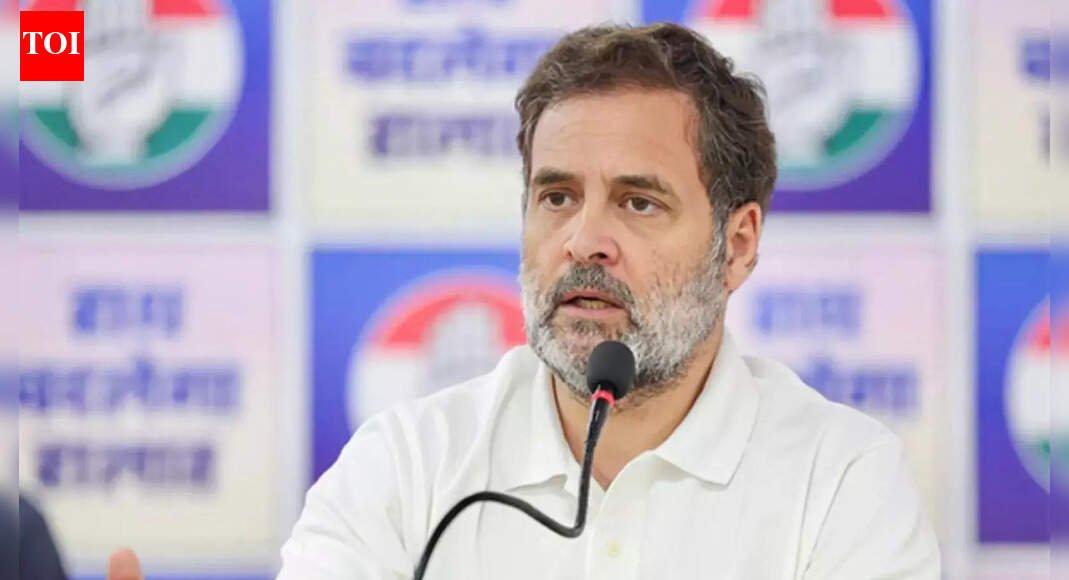
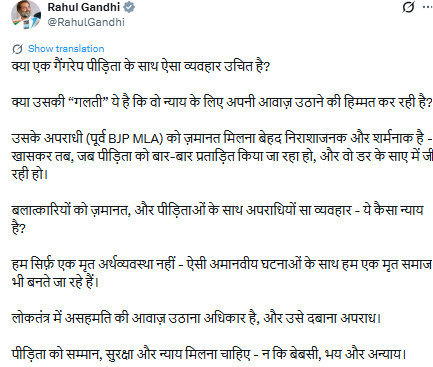
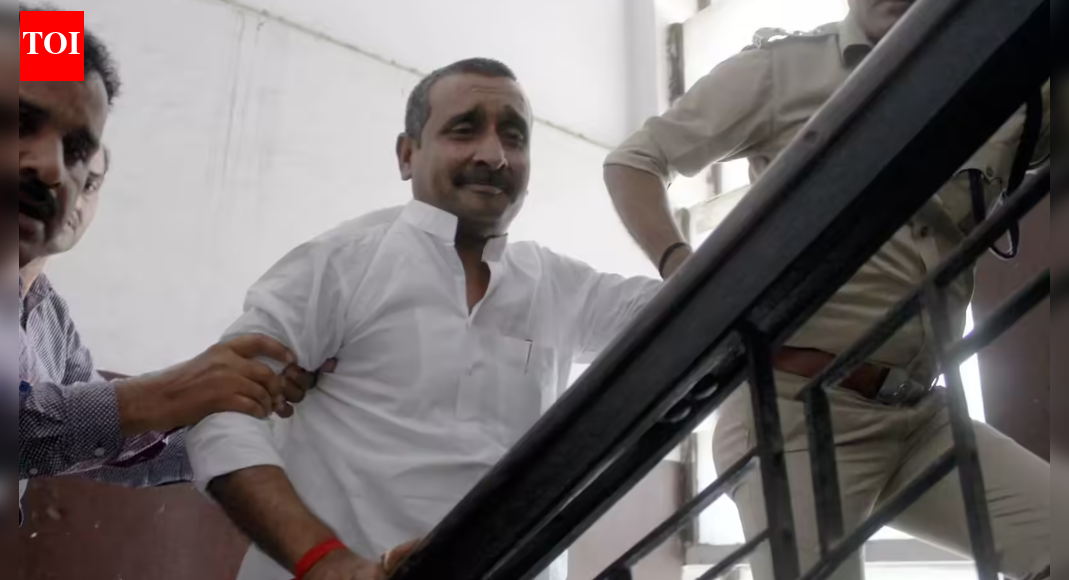
NEW DELHI: Leader of opposition Rahul Gandhi on Wednesday criticised the forcible removal of the Unnao rape survivor by security forces from India Gate, where she was protesting against the Delhi high court’s order suspending the life sentence of the convict and former BJP leader Kuldeep Singh SengarAlso Read | ‘His bail like kaal for us’: Unnao rape case survivor to move SC against suspension of Kuldeep Singh Sengar’s jail term; seeks justice“Is such treatment of a gang rape survivor appropriate? Is her ‘fault’ that she has the courage to raise her voice for justice?” Gandhi wrote on X.The Congress leader described the high court’s bail to Sengar as “disappointing” and “shameful.” Sengar committed the crime in June 2017 and was convicted in December 2019, months after the Supreme Court shifted the trial from Uttar Pradesh to Delhi.

Delhi HC Grants Bail To Kuldeep Sengar; Victim’s Sister Says ‘Put Us In Jail To Keep Us Safe’

Also Read | ‘Is this country or a banana land’: Unnao rape survivor’s mother blocked from protest, claims daughter is ‘held captive’“Bail for rapists and treating survivors like criminals—what kind of justice is this?” Gandhi asked.

Rahul Gandhi X post

Rahul Gandhi X post

He added that India is not only a “dead economy” but is also becoming a “dead society.” This was a reference to his earlier remark endorsing US President Donald Trump’s jibe at India and Russia.“In a democracy, raising a voice of dissent is a right, and suppressing it is a crime. The survivor deserves respect, safety, and justice—not helplessness, fear, and injustice,” the Raebareli MP said.Also Read | ‘Put us in jail for safety’: Unnao rape survivor’s sister on HC relief for Kuldeep Sengar; ex-BJP leader’s life term suspendedThe high court on Tuesday granted conditional bail to Sengar and suspended his life sentence in the Unnao rape case for the duration of the pendency of his appeal challenging his conviction and sentencing.The conditions of his bail include furnishing a Rs 15-lakh personal bond with three sureties of the same amount, not entering within a five-kilometre radius of the survivor’s residence, and refraining from threatening or influencing her or her mother.


Source link

Army JCO killed: Firing inside J&K’s Samba camp; terror angle ruled out | India News


Army JCO killed: Firing inside J&K's Samba camp; terror angle ruled out

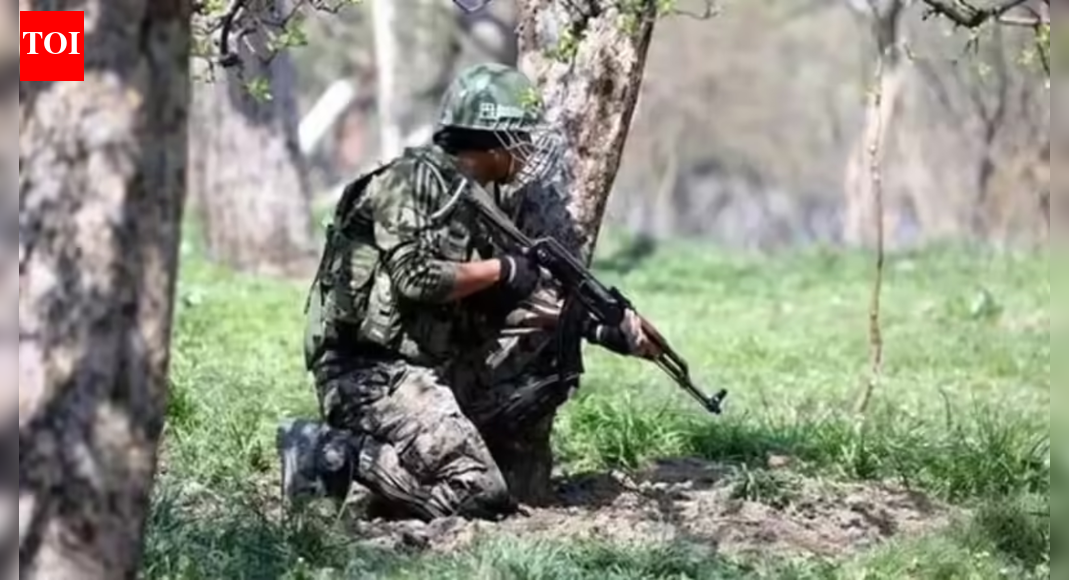
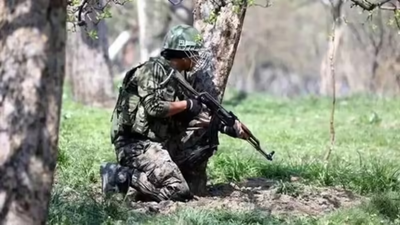
A Junior Commissioned Officer (JCO) of the Indian Army Subedar Surjeet Singh was killed in a firing incident inside a military camp in Jammu and Kashmir’s Samba district on Tuesday.Paying tribute to him, the Rising Star Corps said he made the supreme sacrifice while on operational duty in Jammu.

300-Kg Explosives, Weapons, Timers: J&K Police Stop Deadly Terror Plot Targeting North India In Time

“Rising Star Corps pays solemn tribute to braveheart Subedar Surjeet Singh, who made the supreme sacrifice while on operational duty in Jammu. The Indian Army stands firmly with the bereaved family in this hour of grief and assures unwavering support,” the Corps said in a post on X Wednesday.According to the defence spokesperson, Singh sustained a gunshot wound and later succumbed to his injuries. The spokesperson noted that a terror angle has been ruled out and the incident is under investigation.“The incident is under investigation and further details will be shared as facts are established,” the spokesperson added, as quoted by PTI.


Source link

‘His bail like kaal for us’: Unnao rape case survivor to move SC against suspension of Kuldeep Singh Sengar’s jail term; seeks justice | India News


'His bail like kaal for us': Unnao rape case survivor to move SC against suspension of Kuldeep Singh Sengar's jail term; seeks justice

NEW DELHI: The Unnao rape case survivor on Wednesday said that Kuldeep Singh Sengar’s bail and the Delhi high court decision is like “kaal (death)” for her family and said she will challenge the order in the Supreme Court.“HC decision like ‘kaal (death)’ for us, will challenge order in SC,” the survivor told PTI after the Delhi high court on Tuesday granted bail to expelled BJP leader Kuldeep Singh Sengar and suspended his life sentence in the 2017 Unnao rape case.

Delhi HC Grants Bail To Kuldeep Sengar; Victim’s Sister Says ‘Put Us In Jail To Keep Us Safe’

The Delhi high court granted bail to Sengar while suspending his life sentence, holding that he cannot be kept in jail only on the basis of the threat perception of the victim in the Unnao rape case.While allowing Sengar’s application under Section 389 of the CrPC, the court said, “Kuldeep Singh Sengar can’t be kept in jail only because of the threat perception of the victim in Unnao Rape case,” and added that courts cannot deny bail merely out of apprehension that security agencies may fail in their duty.“At the same time, however, the argument of keeping the appellant (Sengar) in custody because of threat perception to the victim/ survivor, in the opinion of this court, is not a tenable argument to deny the benefit of section 389 CrPC to the appellant,” the bench said in its 53-page verdict.The bench of Justices Subramonium Prasad and Harish Vaidyanathan Shankar observed that such an approach would undermine the work of security forces. “Such an observation or such a thought process would undermine the laudable work of our police/paramilitary forces,” the court said.Suspending Sengar’s sentence till the pendency of his appeal against the December 2019 trial court verdict, the high court noted that he has already spent about seven years and five months in prison and that continued incarceration would violate Article 21 of the Constitution. The appeal has been listed before the roster bench on January 16, 2026, subject to orders of the chief justice.The court imposed several conditions while granting bail, directing Sengar to furnish a personal bond of Rs 15 lakh with three sureties of the same amount. It ordered that all three sureties must be residents of Delhi and directed Sengar to stay in the national capital during the pendency of his appeal. He was also asked to deposit his passport with the trial court and to report to the local police station every Monday at 10 am.Sengar has been barred from entering within a five-kilometre radius of the survivor’s residence and from threatening or contacting her or her mother. “Violation of any of the conditions would lead to cancellation of bail,” the high court said. The court also said he should remain available to complete the remaining part of the sentence if found guilty.On the safety of the survivor, the court said it expects that she will continue to get CRPF cover and directed the deputy commissioner of police of the area where she is residing to personally ensure and supervise her protection during the pendency of the appeal.“The state is also providing for the accommodation of the victim. The Delhi Commission for Women is responsible for ensuring that the victim is provided sufficient accommodation and such arrangement is directed to be continued till further orders,” the bench said, adding that the survivor is free to approach the court if required.The high court noted that the Supreme Court had earlier transferred the trial from Uttar Pradesh to Delhi keeping in mind the survivor’s vulnerability and the custodial death of her father, for which Sengar has been convicted.Despite the suspension of sentence in the rape case, Sengar will continue to remain in jail as he is also serving a 10-year sentence in the custodial death case of the survivor’s father and has not been granted bail in that matter. His appeal in the custodial death case, in which he has sought suspension of sentence, is also pending.Reacting to the order, the survivor told PTI that she was not satisfied with the verdict.“I have small children. There is an elderly, differently-abled mother-in-law and my husband at home. The safety of my children is the biggest concern,” she said.She alleged lapses during the trial and withdrawal of security cover. “Usually, a verdict is pronounced within two or three days after the conclusion of arguments. But in this case, the decision came after three months. Even before the verdict, security for the family and witnesses was withdrawn,” she alleged.The survivor further said, “In the serious crime where my father was murdered and I was subjected to rape, the accused is granted bail after serving a few years in prison. This raises the question of what kind of justice this is.”Sengar was convicted for kidnapping and raping a minor in 2017. The rape case and other connected matters were transferred from Uttar Pradesh to Delhi on the directions of the Supreme Court on August 1, 2019.


Source link

Brahmin MLAs hold meeting during UP Assembly session, focus on community upliftment | India News


Brahmin MLAs hold meeting during UP Assembly session, focus on community upliftment

LUCKNOW: During the Uttar Pradesh legislative assembly winter session, Brahmin community MLAs organised a meeting with about four dozen MLAs in attendance. MLA Ratnakar Mishra, who attended the meeting, said the purpose was to discuss the problems faced by the community. “The purpose of this meeting was just one topic: that today our community is fragmenting. Earlier, three generations used to live under one roof, but now, as our children are moving towards Western civilisation, our community is fragmenting,” he said.

‘Do Namune’ Dig By Yogi Adityanath Ignites UP Assembly Clash, Akhilesh Accuses BJP Of Decorum Breach

“Our only one objective was to bring these children in one direction and how to unite everyone. Today, our parents are going to old age homes, which is a matter of concern for us. How to keep them under one roof? With this purpose, this meeting was held,” Mishra added.He further explained the role of Brahmins in society, saying, “Giving values/culture is the work of Brahmins, so if a meeting is being held by Brahmins to give values/culture, then what is wrong in it? Rather, every community should hold a meeting to bring everyone into the mainstream of Bharat Mata.”Political discussions were not the aim of the gathering, Mishra said.“Political brainstorming is not necessary for us because under Chief Minister Yogi Adityanath ji’s government, there is no mafia rule, and all systems are better, so there was no need for political brainstorming,” he added.Mishra also clarified party participation.“About four dozen MLAs participated in this meeting, so which party’s MLAs were there, I do not have their information. I reached a little late, so I could not get an introduction with everyone,” he said.He noted that other communities had previously held similar meetings.“Earlier, Thakur community MLAs had also held their meeting, which was a very good thing. Kurmi community MLAs had also held their meeting, and I say that other communities should also hold their meetings so that the community can be connected to the mainstream,” Mishra said.Meanwhile, P N Pathak, Bharatiya Janata Party MLA from Kushinagar and organiser of the meeting, said, “Yesterday we held a big meeting of Brahmin MLAs. In this meeting, no MLA from any other party was present. This meeting had no political purpose.”He dismissed media reports, adding, “Various things are being circulated in the media that Brahmins are angry, but nothing like that is true. Brahmins are only talking for upliftment and social welfare.”He also mentioned other discussions during the gathering.“However, we also discussed SIR and issues related to the Legislative Assembly session, and a party feast was also organized in which we all participated together. There is nothing else in this, otherwise,” Pathak said.


Source link

Jairam Ramesh accuses Centre of misleading public on Aravallis, questions redefinition | India News


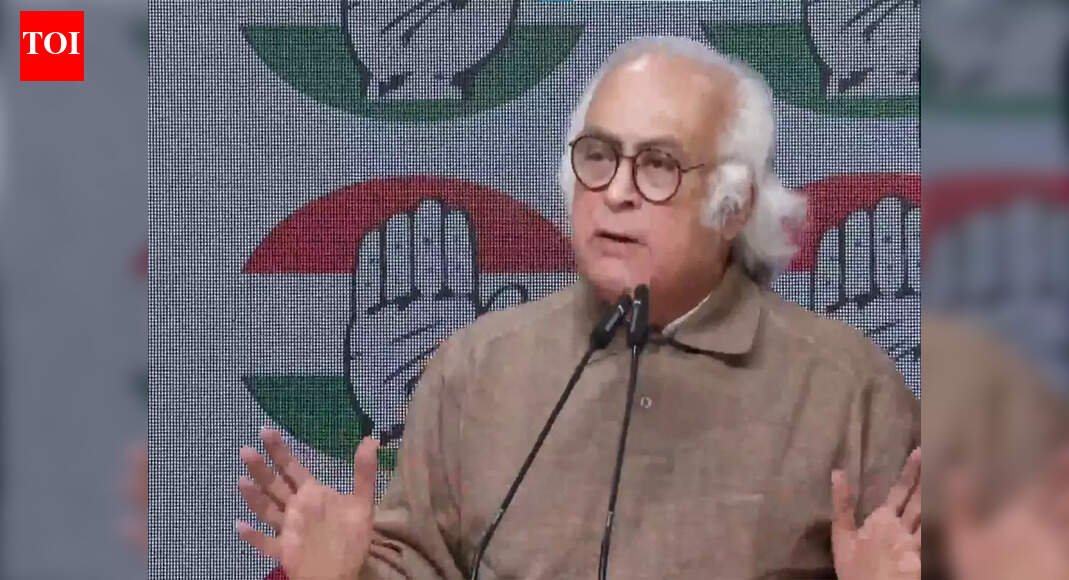
NEW DELHI: Senior Congress leader and former Union environment minister Jairam Ramesh on Tuesday stepped up his attack on the Modi government over the Aravalli Hills, accusing the Centre of “misleading the public” and pushing through a “fatally flawed” redefinition of the ecologically sensitive range.In a post on X, Ramesh alleged that the Union ministry of environment,forests and climate change was being “economical with the truth” on the Aravalli Hills issue. He claimed that the redefinition being adopted by the government had been “clearly and compellingly opposed” by key statutory and judicial bodies, including the forest survey of India, the central empowered committee (CEC) of the Supreme Court, and the apex court’s own amicus curiae.

Aravalli Hills Row: Why Definition Battle Could Decide Mining Water Security And AQI In North India

“Why is the Modi Govt pushing through a fatally flawed redefinition of the Aravallis?” Ramesh asked in his tweet.Speaking to on Tuesday, the Congress MP had alleged that the government was attempting to “sell the Aravalli Hills instead of saving them”. He argued that changes in the definition of the Aravalli region would open the door for increased mining and real estate activity, further aggravating pollution levels, particularly in and around the National Capital Region.His remarks came in response to Union environment minister Bhupender Yadav’s clarification that only 0.19 per cent, or about 277 square kilometres, of the total 1.44 lakh square kilometres of the Aravalli range would be permitted for mining activities.Questioning the government’s figures, Ramesh said the assessment lacked transparency. “On what basis have they decided the 0.19 per cent of the Aravalli Hills? That 0.19 per cent means 68,000 acres of land. This is a game of figures. The environment should not be changed into a game of figures,” he said.Ramesh also announced that he would approach the Supreme Court in January, challenging the government’s move and seeking judicial intervention to protect the fragile ecosystem spread across Rajasthan, Haryana, Gujarat and Delhi.The Union environment ministry, meanwhile, issued a detailed clarification stating that no new mining leases would be allowed until a comprehensive study is conducted, in accordance with the Supreme Court’s November 20 order.Environmentalists have repeatedly warned that degradation of the Aravalli range, an ancient mountain system that acts as a natural barrier against desertification, could have serious consequences. The hills are the source of major rivers such as the Chambal and the Sabarmati and play a crucial role in supporting agriculture, livelihoods and regional rainfall patterns.


Source link

Internet suspended, curfew imposed: What triggered the unrest in Assam’s Karbi Anglong — all you need to know | India News


Internet suspended, curfew imposed: What triggered the unrest in Assam's Karbi Anglong — all you need to know

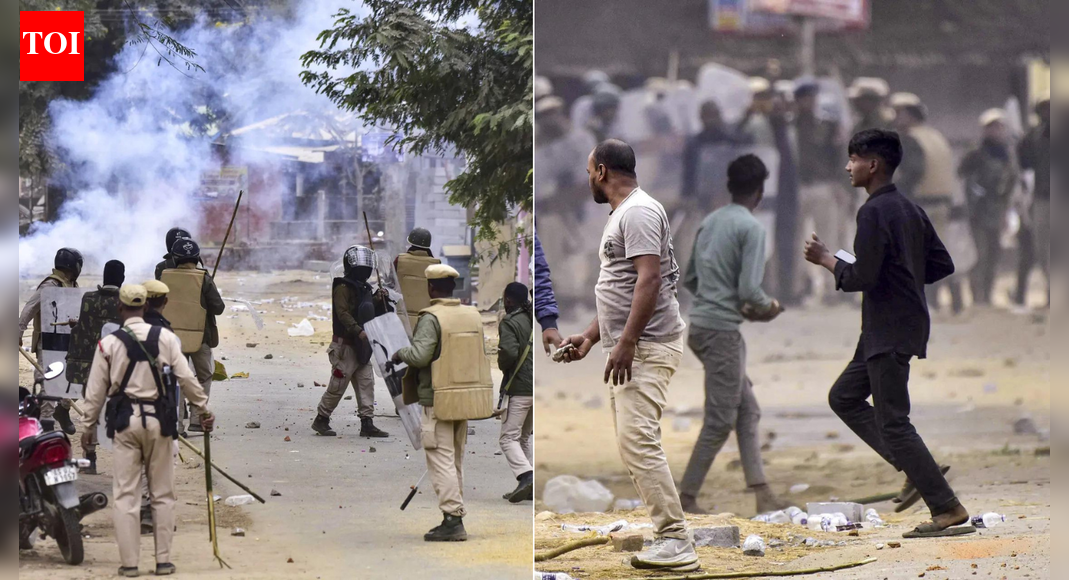
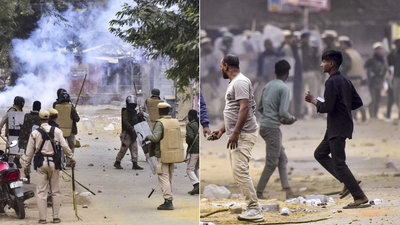
NEW DELHI: Violent protests over alleged illegal non tribal settlement in Assam’s constitutionally protected Karbi Anglong hill region entered the third day on Wednesday, leaving two people dead, dozens injured, and prompting the state government to impose curfew-like restrictions and suspend mobile internet services in two districts.The violence erupted in West Karbi Anglong and adjoining Karbi Anglong district after long simmering tensions over land rights escalated into clashes between tribal protesters and security forces. One tribal protester died in police action, while a non tribal man was killed in a fire that gutted several shops in Kheroni, a small trading town that has emerged as the epicentre of the unrest, police said.

Security forces attacked, senior officers injured

Assam DGP Harmeet Singh said 48 police personnel, including senior officers, were injured after protesters armed with bows, arrows, crude bombs and stones attacked security forces. The DGP and IGP Law and Order Akhilesh Kumar Singh were among those injured during the clashes.Police said protesters attempted to take control of a bridge in the area and turned violent when stopped.“Today, they tried to take over the bridge, and when we tried to stop them, they attacked us. Crude bombs and stones were thrown. I was attacked with bows and arrows,” Singh said, adding that the police have video footage and will take legal action against those responsible.

Land rights and Sixth Schedule at the core

The protests are rooted in opposition by the Karbi community to what they allege is illegal encroachment by non tribal settlers on professional grazing reserve and village grazing reserve lands.The districts fall under the Karbi Anglong autonomous council, governed by the Sixth Schedule of the Constitution, which grants tribal regions autonomy over land, forests and local governance to protect indigenous communities.Residents have for over a year demanded eviction of alleged encroachers, saying unchecked settlement threatens tribal land rights.

Hunger strike, misinformation triggered violence

Tensions intensified after members of the Karbi community launched a hunger strike on December 6. The situation spiralled on Tuesday after police shifted some fasting protesters to Gauhati Medical College and Hospital due to deteriorating health.According to police, misinformation spread that a protest leader had been arrested, triggering anger and violence.“A huge crowd has gathered here since yesterday. I met the protestors and spoke with them. Last night, their leader was taken to Guwahati for a medical check-up as the doctors thought that his health was deteriorating because of the hunger strike. Still, someone spread misinformation that he is being arrested. Violence does not get anything for anybody,” DGP Harmeet Singh told reporters.

Talks announced, arson continues

State cabinet minister Ranoj Pegu, who met protesters at Kheroni earlier, said the group agreed to call off the hunger strike and participate in tripartite talks on December 26 involving the state government and the Karbi Anglong Autonomous Council.“We assured the Karbi community that the government is serious about land rights and other tribal issues,” Pegu said, adding that discussions would address “broader issues related to existence of Karbi community.”Despite the assurance of talks, violence continued through the day, with shops and markets in Kheroni set ablaze. Police said a special investigation team has been formed and video footage is being examined to identify those involved in arson and attacks.

Internet suspended to prevent escalation

In response to the deteriorating law and order situation, the Assam government on Tuesday ordered suspension of internet and mobile data services in Karbi Anglong and West Karbi Anglong districts with immediate effect.“It is, however, clarified that the voice calls and the broadband connectivity based on fixed telephone lines shall remain functional during this period. Any violation of the promulgation will be punishable under Section 223 of the Bharatiya Nyaya Sanhita, 2023 and also under the relevant provision of the Indian Telegraph Act, 1885,” said Biswajit Pegu, Commissioner and Secretary to the Government of Assam, Home and Political Department.The government said district magistrates warned that social media could be used to spread inflammatory messages and rumours, further aggravating tensions.

CM monitors situation, appeals for calm

Assam chief minister Himanta Biswa Sarma said he was closely monitoring the situation and announced deployment of additional forces in Kheroni, about 250 km east of Guwahati.“It is deeply painful that two persons lost their lives during today’s unrest,” Sarma said in a post on X, offering condolences to the families of the deceased and assuring all possible support.Authorities said efforts are under way to restore calm, urging community leaders to restrain youths and prevent further violence ahead of the scheduled talks later this week.


Source link