Breaking News
Omar praises Centre for allocating funds to Jammu & Kashmir, complains about statehood | India News


Omar praises Centre for allocating funds to Jammu & Kashmir, complains about statehood

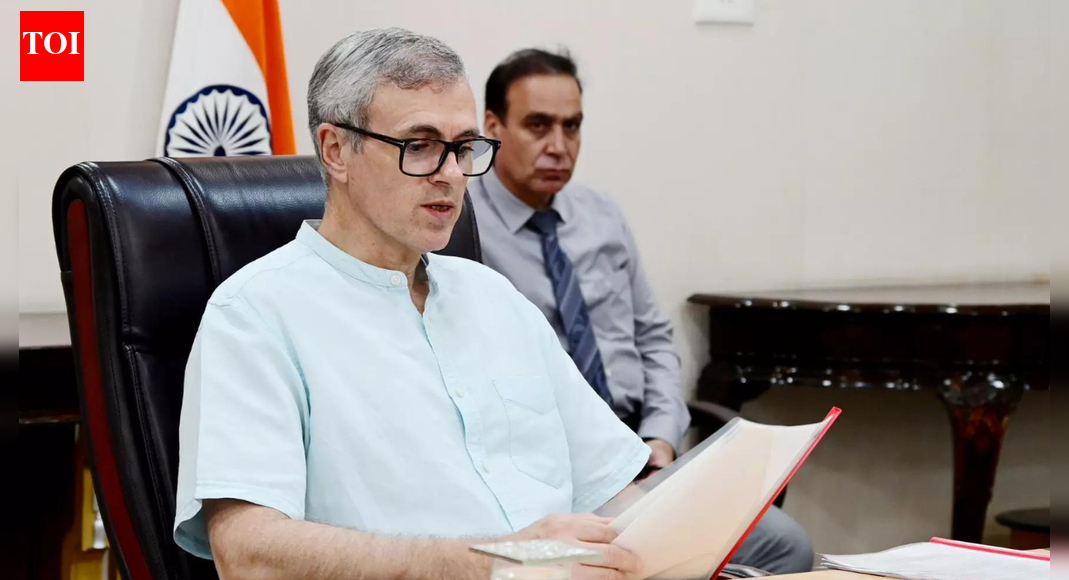
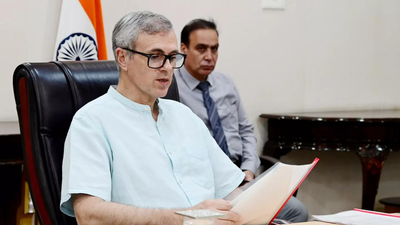
SRINAGAR: J&K Omar Abdullah Saturday praised the Centre for being generous in allocating funds to J&K, but said the same magnanimity had not been shown in the matter of restoring statehood.Omar said he had no hesitation in acknowledging and thanking the Centre’s efforts where it had delivered. “I am not among those who practise politics by deceiving people. Whenever the Centre extends support, I acknowledge it; and wherever there are shortcomings, I also speak about it,” he added.The CM was responding to media persons’ queries about the opposition’s accusations that he praised BJP in Delhi, but criticises it in Kashmir. At a meeting in New Delhi recently, Omar had said the Centre had been generous to J&K, even though, if it wanted, it could have brought his govt to its knees. Opposition parties in Kashmir widely criticised him for the statement, referring to him as “good boy” and alleging that he spoke in different voices in Delhi and Srinagar.Rejecting the criticism, Omar said he did not make statements to please anyone. “I do not say one thing in Delhi and another in Kashmir. I say this (praising Union govt over funds allocation) everywhere — in public meetings, in official interactions and even on the floor of the Assembly,” he said.Omar said the Centre had left no scope for complaint on issues other than statehood restoration, a commitment it has not fulfilled.Criticising the new rural employment guarantee Bill that has been brought to replace MGNREGA, Omar said the Centre had shifted the financial and administrative burden of the programme on the states.The CM was in Srinagar to review the winter preparedness of the administration.

‘Who named G-RAM G Bill?’

Omar Abdullah poked fun at the renaming of MGNREGA as ‘Viksit Bharat-Guarantee for Rozgar and Ajeevika Mission (Gramin), or VB-G RAM G, Omar Abdullah said the acronym sounded like a Bollywood movie’s name.“First of all, I am surprised where this name came from,” he said. “I am sorry, but a Bill should have been named after giving it some thought. It reminds me of an old Bollywood movie, ‘Ji Mummy Ji’. I don’t know if you have seen it or not, my nephew has,” he added. “Who named the bill as G RAM G?” he asked. He also criticised the removal of Mahatma Gandhi’s name from the scheme.


Source link

Agusta scam: Michel gets bail in ED case, but to remain in jail | India News


Agusta scam: Michel gets bail in ED case, but to remain in jail

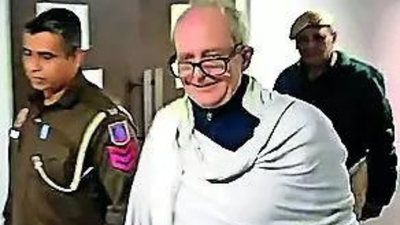
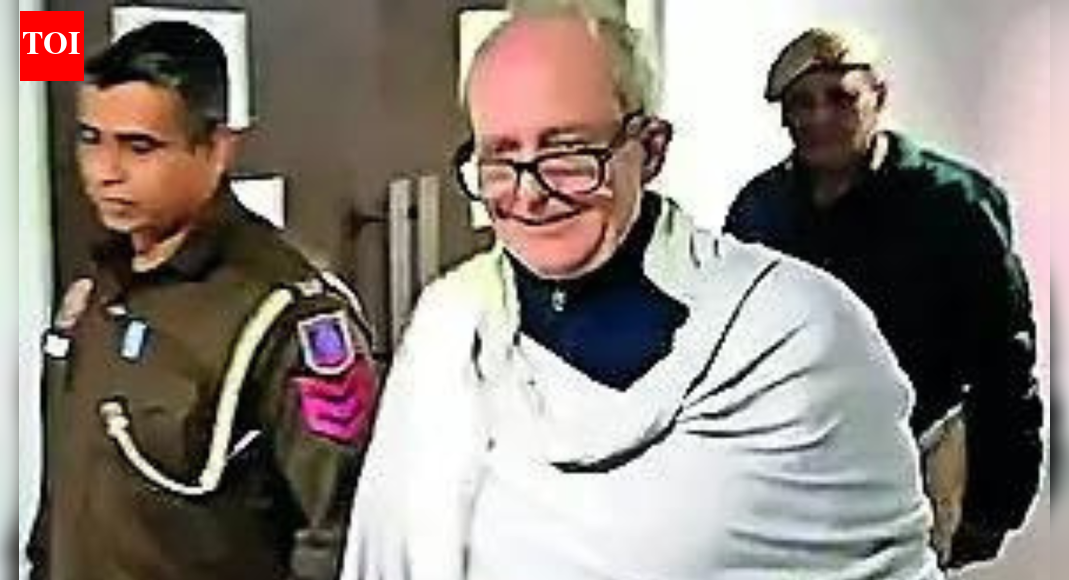
NEW DELHI: A Delhi court on Saturday ordered the release of Christian James Michel from custody in a money laundering case linked to the AgustaWestland VVIP chopper scam, holding that he has already spent the ‘maximum period’ of incarceration prescribed for the offence.Allowing Michel’s plea seeking release in the case filed by ED, special CBI judge Sanjay Jindal said: “By virtue of second proviso to section 436A CrPC (maximum period for which an undertrial prisoner can be detained) with all necessary implication as per law, he be released from jail, if not required in any other case.”However, Michel will continue to remain in jail as he is also an accused in a corruption case filed by CBI.The court noted that Michel has been charged under the Prevention of Money Laundering Act, which is punishable with imprisonment of up to seven years. It noted that he will complete seven years in custody on Dec 21. According to the second proviso, no person can be detained during investigation, inquiry or trial for more than the maximum period of imprisonment prescribed for the offence.“In view of the mandatory provisions of second proviso to section 436A CrPC, the said accused is entitled to be released accordingly and he cannot be detained in this case beyond Dec 21, 2025,” the court said.During the hearing, Michel submitted in writing that he would participate in the remaining trial, even if released. His counsel told the court that ED and CBI had been investigating the case for the last 12 years, while his client had remained in custody for nearly seven years. Despite being granted bail, the counsel argued, Michel had been unable to go home, calling the situation a “mockery of justice”.Earlier in the day, the court heard Michel’s plea seeking release in the CBI case and directed the agency to file its response. The matter has been listed for further hearing on Dec 22.Michel had approached the court seeking custodial release in both ED and CBI cases.Michel, alleged to be a middleman in the Agusta deal, was extradited from Dubai in Dec 2018, following which CBI arrested him and filed a chargesheet. The ED subsequently charged him in the money laundering probe.


Source link

FIR against doctors, manager over kidney surgery death | India News


FIR against doctors, manager over kidney surgery death

LUCKNOW: Police on Saturday lodged an FIR against two doctors and the manager of a private hospital for alleged medical negligence following the death of a man after a surgery for kidney stone removal in Rae Bareli.Lodging a complaint at Kotwali Nagar police station, Santosh Kumar Gupta said his son Deepak Gupta, 22, was suffering from kidney stones and was misled by hospital manager Ajay Yadav, who took him to the hospital on Dec 14.He alleged doctors initially said surgery was required only in one kidney. However, during the operation conducted late in the night, both kidneys were allegedly operated upon without consent. Santosh claimed that soon after the surgery, his son’s condition started deteriorating. Despite repeated pleas, the doctors kept assuring the family the patient would recover. By Dec 16, Deepak’s condition worsened significantly.The complainant alleged when the family insisted on shifting Deepak to Lucknow, hospital staff attempted to force them to take him to another hospital of their choice in Mohanlalganj.Eventually, Deepak was taken to a private hospital in Lucknow where doctors pronounced him dead. A post-mortem examination was conducted at King George’s Medical University on Dec 17, but the cause of death could not be established.


Source link

9 years after NH-91 horror, UP court convicts 5 in mother-daughter gangrape, sentencing tomorrow | India News


9 years after NH-91 horror, UP court convicts 5 in mother-daughter gangrape, sentencing tomorrow

MEERUT/BULANDSHAHR: Nine years after the horrific gang rape of a woman and her young daughter on a stretch of National Highway-91 in Uttar Pradesh as male members of the family, tied and assaulted by robbers, begged and cried for mercy, a special Pocso court in Bulandshahr convicted five men for the gruesome crime on Saturday. The assault had not just shocked the nation, but also forced the then-state govt to tweak road rules, even posting ‘snipers’ on trees to curb crimes along the key stretch. Sentencing of the five convicts is scheduled to be done on Monday. The incident happened on July 29, 2016, when the family’s vehicle was intercepted near a village, while they were travelling to Shahjahanpur from Noida. The gang held the entire family hostage at gunpoint and assaulted the mother-daughter after dragging them to a nearby field.Despite the crime scene’s proximity to a local police station, the cops there failed to respond on time. The family reported that initial calls to emergency services went unanswered, and the investigation only gained momentum after the father contacted a personal acquaintance in the Noida police department.Providing details, additional district govt counsel (ADGC) Varun Kaushik, said, “Forensic evidence, including semen traces matching the convicts, played a crucial role.” “The court convicted Zuber alias Parvez (35), Mohd Sajid (37) both from Kannauj, and Dharamveer Singh (36), Sunil Kumar (35), Naresh Kumar (46), from Farrukhabad district. Saleem Bawaria (45) – the gang’s kingpin – died during the court trial in Dec 2019,” he added. The ADGC added that “all the convicts were unable to secure bail and remained in jail since the incident.” “Their bail was even rejected by the Supreme Court,” he said. An FIR was registered on the afternoon of July 30, that year, under sections 394, 395, 397 (aggravated forms of robbery and dacoity), 376-D (gangrape), 120-B (criminal conspiracy) of the IPC, and 5/6 of the Pocso Act. “The next day, police arrested Mohd Riyazuddin, Mohd Shahwez and Jabar Singh from Haryana. They were, however, later given clean chit by CBI and let-off,” Kaushik said. The gravity of the incident led to a CBI probe ordered by the Allahabad high court and resulted in the suspension of several high-ranking police officers for “negligence”.Notably, the apex court also reprimanded then-UP cabinet minister Azam Khan for calling the incident a “political conspiracy by the Opposition”. Khan later tendered an apology in court. TOI’s extensive coverage at that time exposed the vulnerability of the travellers on desolate stretches of the UP highways, some of them without adequate road lights.Twenty-five witnesses provided testimony during the trial. Of the 11 individuals implicated, the legal outcomes varied – two suspects died in police encounters, one passed away in custody due to illness and three were acquitted for lack of evidence. Saturday’s conviction by additional district and sessions judge-III, Omprakash Verma, concluded the lengthy legal process.


Source link

4th elephant death on rail tracks this year, toll rises to 94 since 2019 | India News


4th elephant death on rail tracks this year, toll rises to 94 since 2019

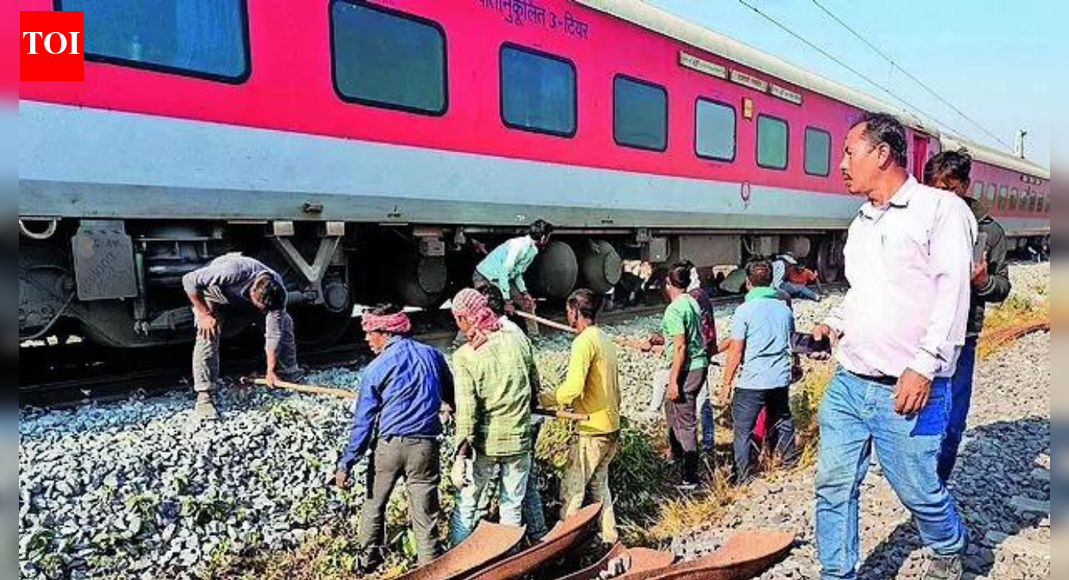
NEW DELHI: The death of at least seven elephants after being hit by a high-speed passenger train in Assam on Saturday has taken the toll of such fatalities since 2019-20 to 94. This was the fourth such accident this year. The last two accidents were reported from Jalpaiguri in West Bengal, sources said, adding that the safety of elephants remains a concern on rail corridors passing through forest areas.Railway officials said that while several initiatives have been taken to prevent such mishaps, including use of AI-powered Intrusion Detection Systems (IDS), sensors, thermal cameras and eco-friendly buzzers, in addition to construction of underpasses, fencing and vegetation clearance, there is clearly a need to do more.In the Monsoon session of the Parliament, the govt had informed Lok Sabha that 81 elephants had been killed after being hit by trains between 2019-20 and 2023-24. The central govt had also listed the interventions undertaken at various places to prevent such accidents.The govt had also said that a comprehensive report titled “Suggested Measures to Mitigate Elephant and Other Wildlife Train Collisions on Vulnerable Railway Stretches in India” has been prepared after field surveys across 127 identified railway stretches spanning 3,452.4 km.“Based on the intensity of wildlife movement, 77 railway stretches covering 1,965.2 km across 14 states have been prioritised for mitigation along with site-specific interventions,” it had said.The report containing details of identified stretches and the mitigation measures has also been shared with states & railway ministry for action.


Source link

Can’t deny passport renewal to convicts with court NOC: Supreme Court | India News


Can't deny passport renewal to convicts with court NOC: Supreme Court

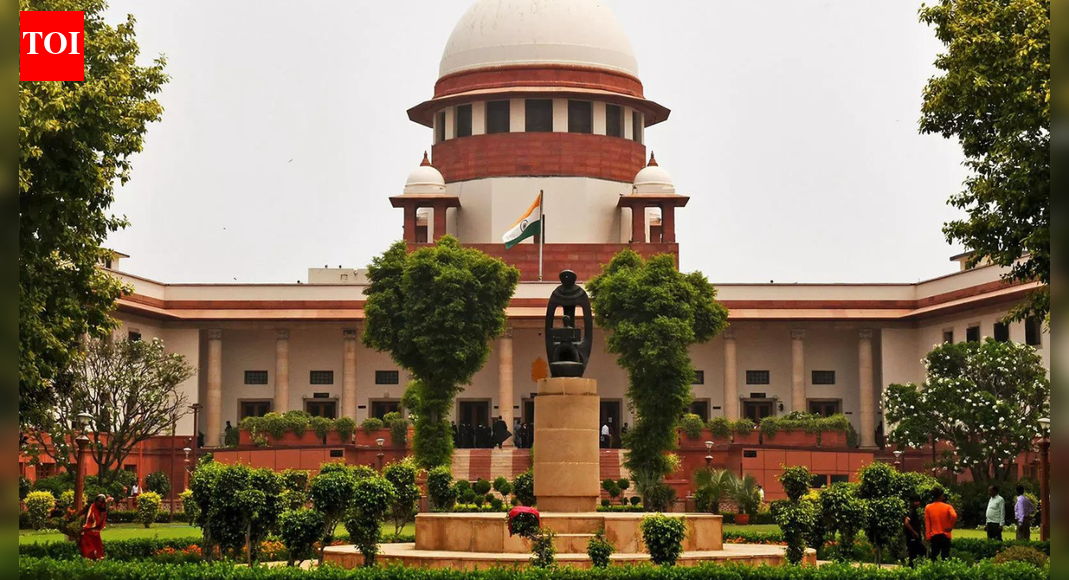
NEW DELHI: Holding that the Constitution itself is put at risk if the balance between power of the State and dignity of the individual is disturbed, Supreme Court held that govt cannot deny renewal of passport to an accused or convict when the court concerned has given no-objection to get it renewed with a condition that prior permission would be needed to go abroad.A bench of Justices Vikram Nath and A G Masih said where criminal cases are pending then a “no objection certificate” or permission from criminal court may override an adverse police report for renewal of passport. It quashed order of passport authority rejecting renewal of passport to one Mahesh Kumar Agrawal who is convicted in one case in Delhi and being prosecuted by NIA court in Ranchi in coal mining case. He challenged his conviction in Delhi HC and his appeal is pending. He got bail in both cases and got no-objection from both DelhI HC and Ranchi court for renewal.Allowing his plea, the bench said, “Liberty, in our constitutional scheme, is not a gift of the State but its first obligation. Freedom of a citizen to move, to travel, to pursue livelihood and opportunity, subject to law, is an essential part of guarantee under Article 21 of the Constitution. The State may, where statute so provides, regulate or restrain that freedom in interests of justice, security or public order but such restraint must be narrowly confined to what is necessary, proportionate to the object sought to be achieved, and clearly anchored in law,” it said.It said the law permits court to allow renewal of passport while retaining complete control over each instance of foreign travel by insisting on its prior approval as had been done in the present case. “In our view, once criminal courts, with full knowledge of the pending proceedings, consciously allowed renewal subject to the condition that the appellant shall not travel abroad without their permission and, in case of NIA court, required redeposit of renewed passport, underlying concern of Section 6(2)(f) stood adequately addressed under judicial supervision,” it said. Section 6(2)(f) talks about denying passport when criminal case is pending.“In the present case, both criminal courts have adopted a different but equally legitimate method of control by allowing renewal while reserving to themselves the power to regulate each instance of foreign travel. That method satisfies the statutory concern of securing the accused’s presence…” it said.“Denial of renewal of a passport does not operate in a vacuum. This court has repeatedly held in a catena of judgements that right to travel abroad and right to hold a passport are facets of right to personal liberty under Article 21 of the Constitution. Any restriction on that right must be fair, just and reasonable, and must bear a rational nexus with a legitimate purpose,” it said.


Source link

Anil Vij orders probe into roadways bus accident in Karnal; advisory on Fog Speed Limit reiterated | India News


Anil Vij orders probe into roadways bus accident in Karnal; advisory on Fog Speed Limit reiterated
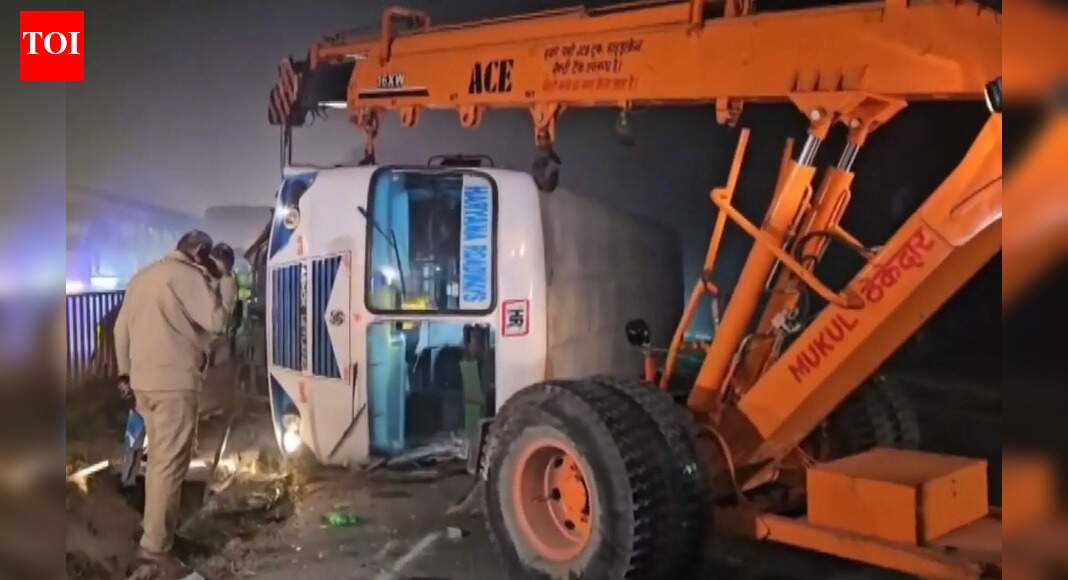
Karnal: Wreckage being towed after a Haryana Roadways bus overturned on the National Highway, in Karnal, Haryana. (PTI Photo)

Haryana transport minister Anil Vij on Saturday announced that a detailed inquiry has been ordered into the recent state roadways bus accident in Karnal, reiterating that clear advisories are already in place restricting vehicle speed during foggy conditions.Speaking to the media in Ambala, Vij said that an official advisory mandates that buses and other vehicles should not be driven at speeds exceeding 60 kmph in fog. “In view of the Karnal incident, orders have been issued to investigate the accident. If it is found during the probe that the driver was driving at a speed of more than 60 kmph in dense fog, strict action will be taken,” the minister said.He emphasised that accountability would be fixed after the investigation. “There will be an inquiry, action will follow, and the punishment prescribed under the rules will be imposed,” Vij also urged drivers of state transport buses to strictly comply with safety advisories, particularly during fog, to prevent accidents and ensure the safety of commuters. Officials of the transport department, he said, have been instructed to ensure that all drivers are sensitised about speed limits and precautionary measures during adverse weather conditions.Meanwhile, responding to a question regarding Aam Aadmi Party (AAP) Rajya Sabha MP Sanjay Singh’s remark on VB-G RAM G change of name of MGNREGA—where Singh reportedly said that the word “Ram” is also written in “haram”—Vij made a sharp political remark. “Yes, it is written there. That is why we are of Ram, and they are of haram,” the minister said.


Source link

From ‘Karmashree’ to ‘Mahatmashree’: Bengal renames employment scheme; move after Centre’s VB-G RAM G bill | India News


From 'Karmashree' to 'Mahatmashree': Bengal renames employment scheme; move after Centre's VB-G RAM G bill
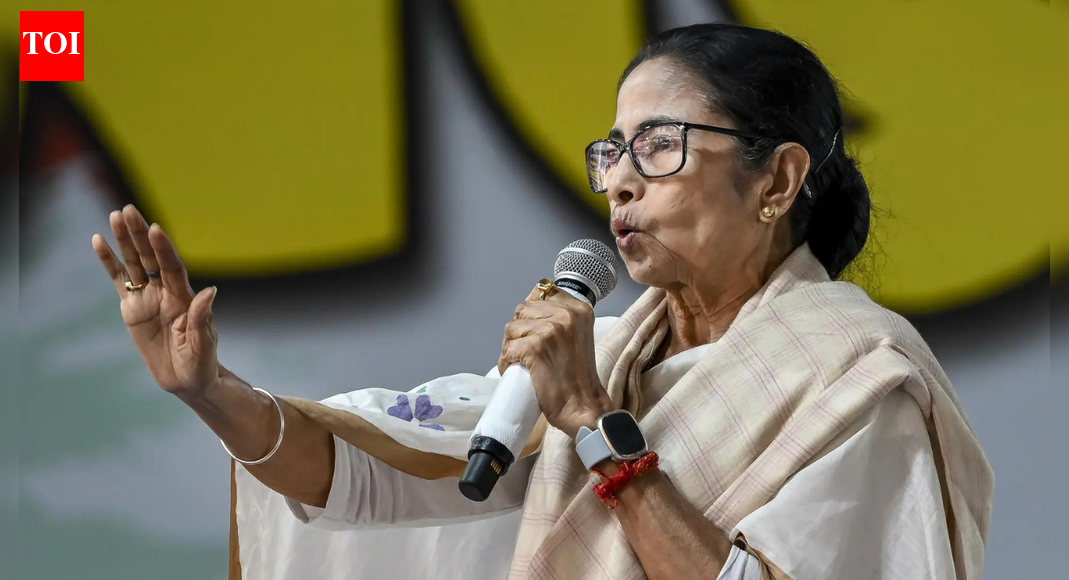
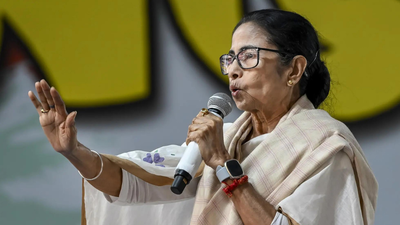
West Bengal CM Mamata Banerjee

NEW DELHI: The West Bengal government on Saturday officially renamed its flagship 100-day employment scheme, ‘Karmashree’, to ‘Mahatmashree’ in honour of Mahatma Gandhi.The notification follows West Bengal chief minister Mamata Banerjee’s announcement two days earlier, amid the row over the central government renaming the Mahatma Gandhi National Rural Employment Guarantee Act (MGNREGA) to Viksit Bharat–Guarantee for Rozgar and Ajeevika Mission–Gramin (VB-G RAM G) Bill.Also Read | ‘We’ll give respect to Mahatma Gandhi’: Mamata to rename Bengal job scheme; slams Centre“The renaming not only preserves the legacy of Mahatma Gandhi but also aligns our state programme with the spirit of public welfare,” news agency PTI quoted a senior state official as saying.On Thursday, Banerjee, who also leads the state’s ruling TMC, announced at a business event in Kolkata that Karmashree would be given a new name. “We started the Karmashree scheme, but Gandhi ji’s name was not included. I’m really sorry, I’m ashamed. The father of the nation’s name should have been there, just like in the MGNREGA program. In the new bill, Gandhi ji’s name won’t be there,” Banerjee said.“So, Karmashree’s name will be changed to Mahatma ji’s scheme. If the Centre does not give respect to Mahatma ji, we will,” she added.Govt vs opposition on VB-G RAM GBoth Houses of Parliament passed the VB-G RAM G Bill on Thursday, the penultimate day of Parliament’s winter session, which began on December 1. VB-G RAM G to replace MGNREGA and guarantees 125 days of rural wage employment every year. MGNREGA was introduced by the erstwhile Congress-led UPA government at the Centre in 2005.Also Read | ‘Attack on poor’: Sonia Gandhi slams PM Modi over VB-G RAM G Bill; criticises repealing of MGNREGAThe national opposition, including the TMC, had demanded that the VB-G RAM G Bill be sent to a parliamentary committee for scrutiny, citing the “financial burden” it would place on states, and criticised the BJP-led Centre for removing Mahatma Gandhi’s name from the rural employment guarantee scheme.The Union government, however, maintains that the new legislation is a “substantial improvement” over MGNREGA, which it described as “riddled with corruption and inefficiency.”


Source link

Hijab row: SCBA issues ‘strongest condemnation’ over Nitish Kumar’s act; seeks unconditional apology from Giriraj Singh, Sanjay Nishad | India News


Hijab row: SCBA issues 'strongest condemnation' over Nitish Kumar's act; seeks unconditional apology from Giriraj Singh, Sanjay Nishad

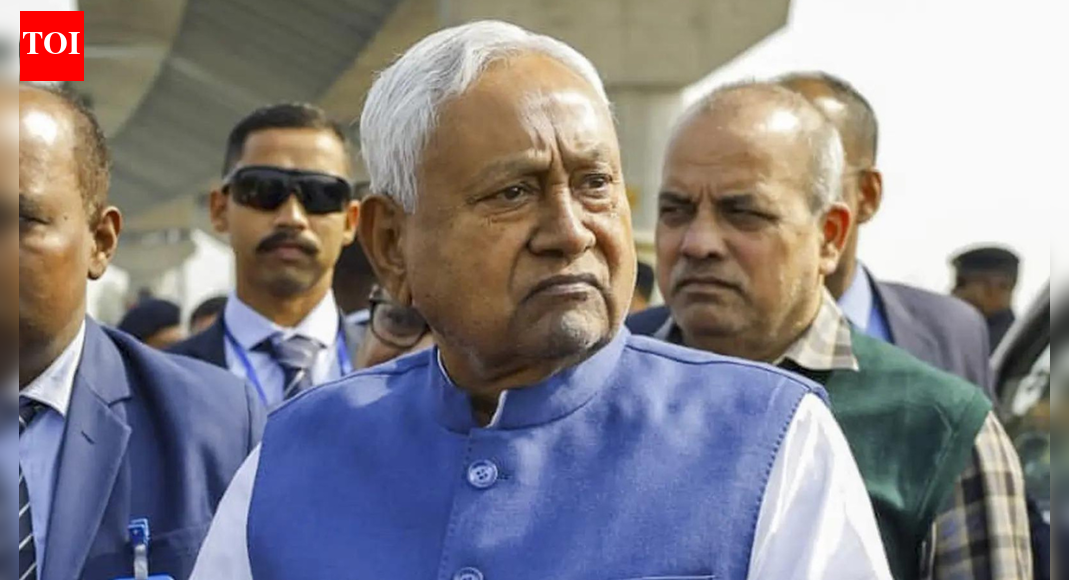
NEW DELHI: The Supreme Court Bar Association (SCBA) on Saturday issued a letter expressing its “strongest condemnation” of the recent incident in Bihar in which CM Nitish Kumar pulled down the hijab of a woman doctor during a public ceremony.The incident, which occurred on December 15 at the chief minister’s secretariat in Patna during the distribution of appointment letters to newly recruited AYUSH doctors, was captured in a video that quickly went viral. The clip showed Nitish questioning the woman’s naqab, saying “what is this?” and then attempting to remove it, leaving the doctor visibly flustered. Deputy chief minister Samrat Choudhary appeared to intervene to restrain him. In a post on X, RJD wrote: “What has happened to Nitish ji? His mental state has now reached a completely pitiable condition, or has Nitish Babu become 100% Sanghi now?” In its letter, the SCBA condemned the Bihar CM’s action as an infringement on the woman’s autonomy, religious freedom and personal dignity.It stated, “Besides infringing on her autonomy, agency and religious freedom, it is a reflection of the depraving attitude against women in general.” The association also condemned “the vile comments made by union minister Giriraj Singh and Uttar Pradesh minister Sanjay Nishad,” saying such remarks further undermined the dignity of women. Signed by SCBA secretary Pragya Baghel, the letter demanded an unconditional apology from the chief minister and others involved.The controversy escalated after union minister Giriraj Singh defended Nitish, describing the incident as “nothing wrong” and framing it as a procedural act. Singh said it was up to the woman to refuse the government job or “go to hell” and argued that the act should not be seen through a religious lens. He drew parallels to other official procedures, stating, “When you go to get a passport, do you not show your face? When you go to the airport, do you not show your face? People talk about Pakistan and Englishtan, but this is India. In India, the rule of law prevails.”Similarly, Uttar Pradesh minister Sanjay Nishad’s remarks defending Bihar CM were widely criticised. Nishad initially supported Nitish’s action but later said his comments were misunderstood due to translation issues and offered to withdraw them if they had hurt sentiments. Despite this, opposition leaders continued to demand an unconditional apology from both ministers.


Source link

On this day, a democratic milestone: When India lowered its voting age to 18 in 1988 | India News


On this day, a democratic milestone: When India lowered its voting age to 18 in 1988

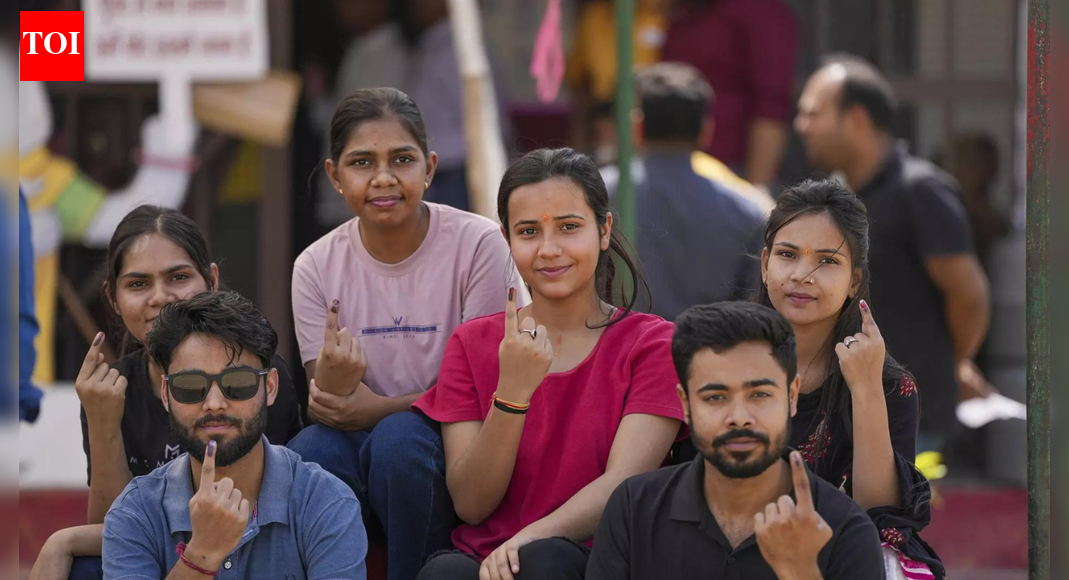
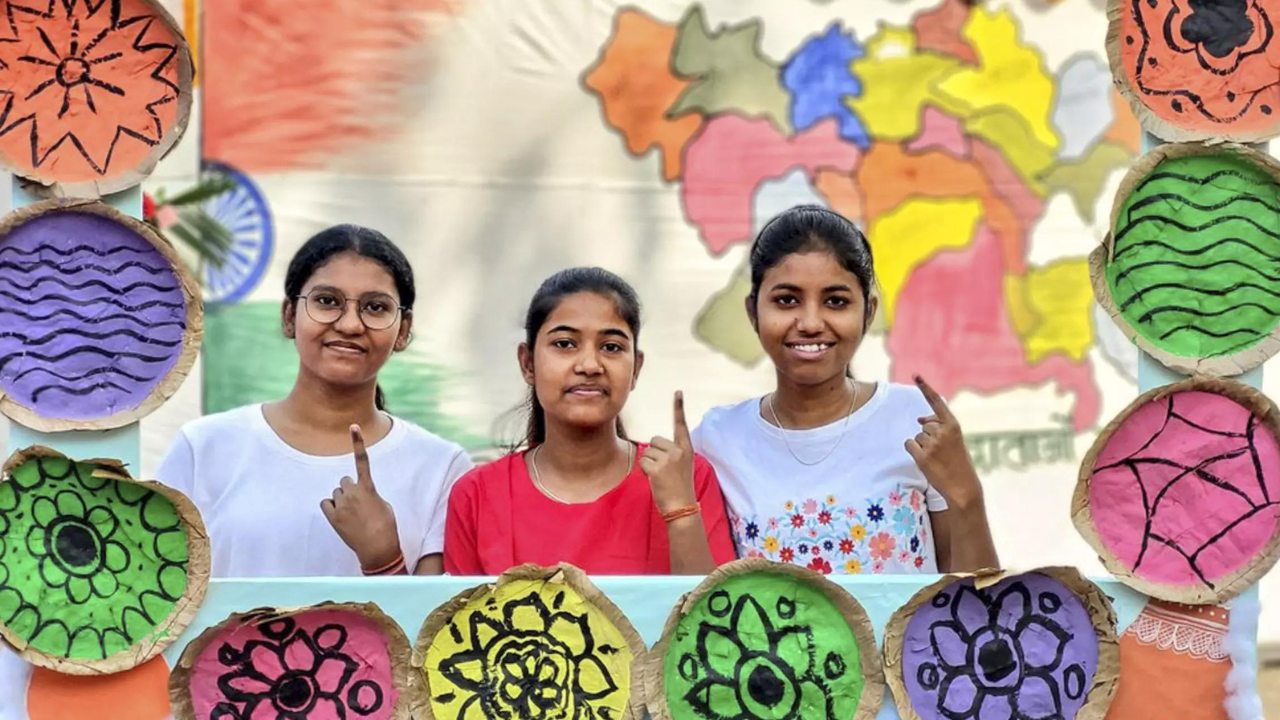
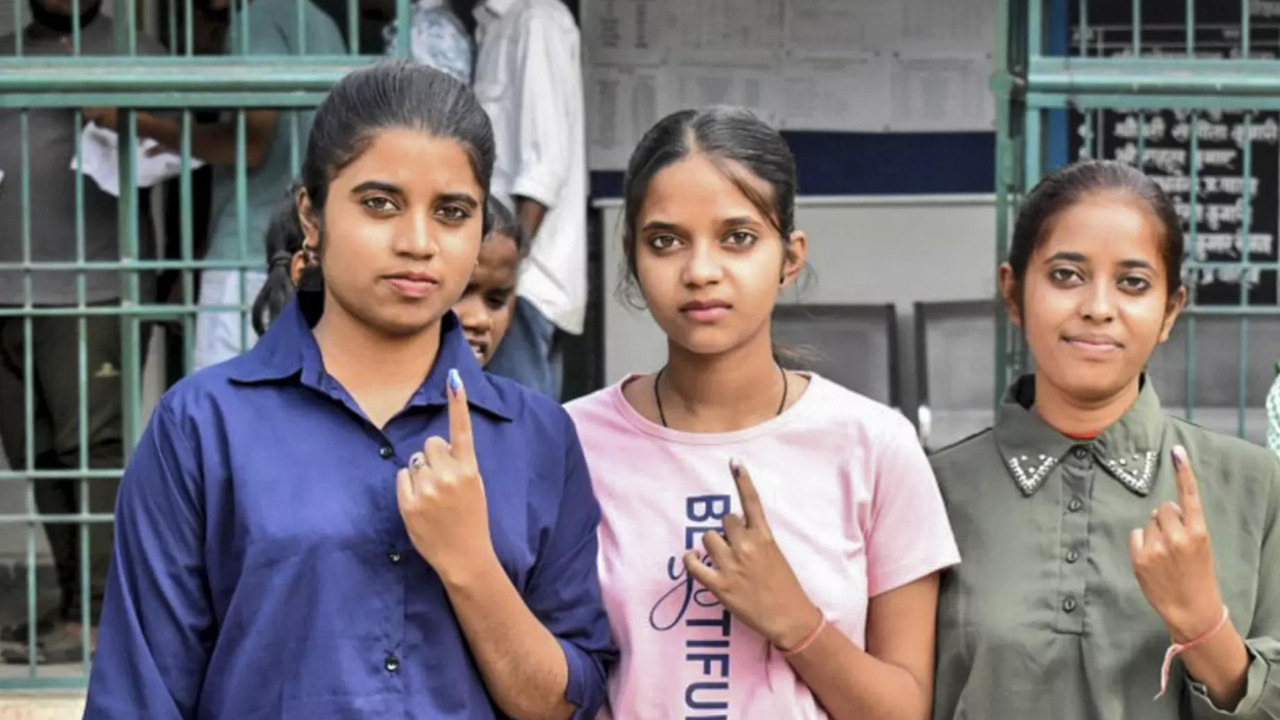
NEW DELHI: On this day in 1988, India lowered the voting age from 21 to 18, expanding voter participation and strengthening universal adult franchise in the world’s largest democracy. The 61st Constitutional Amendment, enacted under Article 326, brought millions of young citizens into the democratic process.Introduced by the government led by the then Prime Minister Rajiv Gandhi, the 61st Amendment is regarded as a landmark reform in Parliament, empowering millions with a fundamental democratic right in India.Universal suffrage ensures that every eligible citizen can participate directly in process of choosing their representatives, whether to the Lok Sabha, state assemblies, or local bodies across urban and rural India.

What is Article 326?

Elections to the Lok Sabha and Vidhan Sabha of states are to be conducted on the basis of adult suffrage. This clarifies that every Indian citizen who is at least 18 years of age on a date specified by law, and who is not disqualified under the Constitution or any law due to non-residence, unsoundness of mind, criminal conviction, or corrupt or illegal practices, is entitled to be registered as a voter in such elections.Key points –

  • Scope – Applies to both the Lok Sabha and state legislative assemblies
  • Basis – Adult suffrage, every citizen meeting the age and legal criteria has the right to vote.
  • Minimum age – 18 years (as fixed by legislation in 1989)

Disqualification groundsVoting rights can be denied due to –

  • Non-residence
  • Unsoundness of mind
  • Criminal convictions
  • Corrupt of illegal practices
  • Registration – Eligible citizens must be registered to vote in elections

Lowering the voting age was more than a legal reform; it was part of India’s broader effort to widen political participation and shape an electorate that reflects the country’s diverse and increasingly youthful population.

Reversing colonial legacy

In the years leading up to independence, voting in India under British was a limited privilege. Under colonial rule, barely 13 per cent of Indians were eligible to vote, with franchise restricted by property, education, and income qualifications. Large sections of society, workers, peasants, women, and young people, remained outside the electoral process. Democracy, as experienced by most Indians, was distant and exclusionary.
PTI file photo

PTI file photo

Independent India sought to reverse this legacy from the very outset. One of the most striking decisions taken by the framers of the Constitution was to adopt universal adult franchise. At a time when many newly independent nations hesitated to extend full voting rights to their citizens, India chose to trust its people. Every adult, regardless of gender, caste, wealth, or education, was given an equal vote.India’s approach to women’s voting rights was particularly notable. Unlike in many parts of the world where women had to fight long and sustained political battles to secure the franchise, Indian women received the right to vote from the very beginning of the republic. This placed India among the early nations to grant women full electoral rights, well ahead of several established democracies. Yet even as the universal adult franchise took shape, the minimum voting age remained 21 for decades. By the 1980s, this threshold increasingly appeared out of step with social realities. Young Indians were entering higher education, joining the workforce, and engaging actively with political and social issues, yet many had no formal voice in choosing their representatives.That changed with the 61st Constitutional Amendment Act, passed in the Rajya Sabha on December 20, 1988, and brought into effect on March 28, 1989, amending Article 326. The amendment lowered the voting age to 18, signalling faith in the political maturity of India’s youth.It acknowledged that democracy must grow with its people, especially in a country where young citizens form a significant share of the population.

What is the universal adult franchise?

From the very beginning, India’s Constitution makers took a bold and deliberate decision: democracy in independent India would rest on universal adult franchise. This meant that every adult citizen would have one vote, and that every vote would carry equal value. There would be no distinctions based on caste, creed, religion, gender, education, income, or social status. The word “universal” captured this promise in full: political equality for all.This principle became a cornerstone of Indian democracy. Elections to the Lok Sabha, to the legislative assemblies of states and union territories, and to local bodies in villages and cities were all anchored in this idea. Article 326 of the Constitution enshrined it clearly, affirming that elections would be based on adult suffrage and that voting was a personal right, no one could cast a ballot on another’s behalf.The decision marked a decisive break from the colonial past. Under British rule, voting rights were limited and deeply exclusionary. Laws such as the Government of India Acts of 1919 and 1935 restricted the franchise to those who met specific property, income, or educational qualifications. As a result, only about 3 to 10 per cent of Indians were eligible to vote. For the vast majority, political participation remained out of reach.This long history of exclusion made the demand for universal suffrage central to India’s national aspirations. The idea appeared early in constitutional thinking. The Constitution of India Bill of 1895 asserted that “every citizen shall have the right to give one vote.” Over the following decades, the demand evolved and strengthened. The Lucknow Pact of 1916 spoke cautiously of creating “as broad a franchise as possible,” while later proposals, such as the Commonwealth of India Bill of 1925, still retained restrictions based on property and education.By the late 1920s, however, the direction had become clear. The Nehru Report of 1928, drafted under Motilal Nehru’s leadership, declared that every person who had attained the age of 21 would be entitled to vote, unless disqualified by law. This commitment was reinforced by the Karachi Resolution of 1931, which resolved that any future Indian constitution must rest on adult suffrage.In the 1940s, the demand became unequivocal. Influential documents such as the Sapru Report (1945), B.R. Ambedkar’s States and Minorities (1945), and the Gandhian Constitution of Free India (1946) all provided for universal adult franchise. Even the Cabinet Mission Plan of 1946, while citing practical difficulties in applying the principle immediately, acknowledged adult suffrage as the democratic ideal.
PTI file photo

PTI file photo

By the time the Constituent Assembly began its work in December 1946, the case had already been settled. Universal adult franchise was recommended as a non-negotiable feature of the future Constitution. Though one member briefly opposed the idea on theoretical grounds, the Assembly’s leadership made it clear that the decision had already been taken. The debate closed swiftly, reflecting the broad consensus in favour of political equality.Article 326 of the Constitution formally sealed that commitment. When India held its first general elections in 1951–52, nearly 173 million citizens were registered to vote, an unprecedented democratic exercise, as cited by ConstitutionofIndia.net. Many elections have followed since, but the principle remains unchanged: in India, democracy begins with the simple, powerful act of one person, one vote.

When India chose universal suffrage ahead of the world

It is often assumed that Western democracies, with their long histories of representative government, were early champions of universal adult franchise. The record, however, tells a more complex story. In many of these countries, the right to vote for all adults emerged only after prolonged struggle, and often much later than commonly believed.The First World War (1914–18) was fought, in the words of the Allied Powers, to make the “world safe for democracy.” Yet, even as democracy was invoked as a moral cause, several of these nations had not yet extended the vote to all their citizens. Ironically, it was defeated Germany that moved first, incorporating universal adult franchise into its Constitution in 1919.Great Britain, despite its long parliamentary tradition, took nearly a decade longer to remove voting inequalities. In 1918, it extended the franchise to all adult men aged 21 and above, but women were granted only a limited right to vote, and only if they were over the age of 30. Full voting equality between men and women came only in 1928, when this discrimination was finally abolished.France, the country associated with the powerful ideals of Liberty, Equality, and Fraternity, introduced universal adult franchise even later. French women gained the right to vote only in 1945, after the end of the Second World War. Switzerland presents an equally striking example. Often cited as the home of direct democracy, it denied women the right to vote at the national level until the early 1970s.Against this global backdrop, India’s decision stands out. When the Constitution was adopted in 1949 and implemented on January 26, 1950, the country embraced universal adult franchise in one decisive step. Every adult citizen, man or woman, was granted the right to vote, without distinctions based on education, wealth, or social status. For a newly independent nation emerging from colonial rule, this was an extraordinary act of democratic confidence.Voting age, too, has varied widely across countries. In some nations, adulthood at the ballot box came much later. Denmark and Japan, for instance, once set the voting age at 25, while Norway fixed it at 23. In contrast, countries such as Great Britain, the United States, Russia, and Turkey eventually settled on 18 as the threshold for voting.India’s own journey later aligned with this global shift when it lowered the voting age to 18 in 1989. Together with its early adoption of universal adult franchise, the move reinforced a defining principle of Indian democracy: political participation is not a privilege reserved for a few, but a right extended to all adult citizens.

Source link