Breaking News
Local authorities asked to take necessary steps to ensure visible improvement in the prevailing air quality situation across NCR within one week | India News


Local authorities asked to take necessary steps to ensure visible improvement in the prevailing air quality situation across NCR within one week
Union environment minister Bhupender Yadav

NEW DELHI: With no let up in the air pollution crisis, Union environment minister Bhupender Yadav on Friday asked local authorities to take necessary steps to ensure “visible improvement” in the prevailing air quality situation across the national capital region (NCR) within one week.Chairing a high-level meeting to undertake a detailed review of action plans of the governments of NCT of Delhi, Haryana and Uttar Pradesh, Yadav directed the authorities to remove dust and construction and demolition (C&D) waste lying on roads, containment of biomass burning, and strict enforcement of construction bans during high pollution periods.

From Work-From-Home To Vehicle Ban- Delhi Rolls Out Fresh Pollution Curbs

“Individual officers were asked to be assigned responsibility for Mechanical Road Sweeping Machines (MRSMs), supported by GPS tracking, to ensure efficient road cleaning and dust control,” said the environment ministry in a statement.It said directions were issued to remove encroachments causing traffic congestion within 10 days, ensure annual maintenance contracts for pothole-free roads, and provide proper drainage to prevent monsoon-related damage to the roads.Expressing concern over the persistence of poor air quality in the Delhi-NCR, Yadav announced that from January 2026 onwards reviews of action plans, being finalised now, will be held every month at the ministerial level.Reviewing the individual presentations on measures taken by the state governments and municipal bodies, he emphasised that the momentum of these actions must be sustained until there is a visible improvement in air quality across the NCR.“The minister further made it clear that strict measures must be taken against defaulters, but at the same time the general public must not get inconvenienced unnecessarily. Identified issues are to be addressed through corrective actions, with a review scheduled in 15 days,” said the ministry.During the meeting, staggered timings for offices, shopping malls and commercial complexes were also emphasised to reduce peak-hour congestion. “Gurugram, Faridabad, Ghaziabad and Noida were directed to fast-track the implementation of the Integrated Smart Traffic Management System (ITMS), while traffic police were asked to ensure that enforcement checks do not themselves lead to congestion,” said the ministry.


Source link

EWS housing scam case: Bombay HC suspends ex-Maharashtra minister Manikrao Kokate’s two-year sentence; bail granted, conviction stands | India News


EWS housing scam case: Bombay HC suspends ex-Maharashtra minister Manikrao Kokate’s two-year sentence; bail granted, conviction stands

Manikrao Kokate (File photo)

NEW DELHI: The Bombay High Court on Friday suspended a two-year sentence to former Maharashtra minister Manikrao Kokate in a case centred around cheating and forgery connected to a government housing scheme. It also granted bail to the NCP leader.However, citing strong preliminary evidence of Kokate’s involvement, the court refused to stay his conviction. Kokate was accused of submitting false income reports in order to secure a flat in a government EWS scheme.“Permitting a person convicted of criminal offence (to hold a cabinet position) solely on account of suspended sentence would cause grave and irreparable prejudice to public service,” said the court, as quoted by PTI. Justice R N Laddha’s order also noted that Kokate remained on bail throughout the magistrate’s court trial and during the sessions court appeal proceedings. The high court deemed it enough to grant bail, considering the brief duration of the sentence. “The application for suspension of sentence is allowed….The applicant has to deposit a sum of Rs one lakh as surety,” ruled the HC while accepting Kokate’s revision petition challenging the sessions court’s verdict.Ravi Kadam, representing Kokate, said that his client was at Lilavati hospital in Bandra for an angiography, with an urgent angioplasty scheduled for Friday afternoon. Public prosecutor Mankunwar Deshmukh contested the bail application.This came after the Nashik district and sessions court upheld Kokate’s conviction. He subsequently resigned from his position as sports and youth affairs minister in the Maharashtra cabinet on Thursday night. Nashik police arrived in Bandra late Thursday to execute the arrest warrant.The core matter originated between 1989-1992, concerning an EWS housing scheme with Rs 30,000 as the annual income ceiling. The allegations claimed that Kokate acquired a flat in the scheme through false income declarations.The magistrate court found evidence of his substantial income through bank loans for grape cultivation, rabi crops, and documentation from the Kopargaon Sahakari Sakhar Karkhana, indicating his earnings exceeded the scheme’s limits.


Source link

ASTE marks graduation of 1st UAS test course | India News


ASTE marks graduation of 1st UAS test course
(Image credits: X @IAFTPS)

BENGALURU: The valedictory function of the “1st Test Course for Unmanned Aerial Systems (UAVs)” — or drones — and the 25th Production Test Pilots (PTP) Course was held Friday at the Air Force Test Pilots School (AFTPS), under the Aircraft and Systems Testing Establishment (ASTE), Bengaluru.Air Marshal KAA Sanjeeb, director general (aircraft), was the chief guest. Senior representatives from the Indian Air Force (IAF), the Defence Research and Development Organisation (DRDO), defence PSU Hindustan Aeronautics Limited (HAL), the Society of Experimental Test Pilots (SETP) and the Society of Flight Test Engineers (SFTE) attended the ceremony.Meritorious student officers were presented trophies in recognition of their performance during the courses. The graduating officers from the PTP and the Test Course (UAS) will now be involved in test flying of production aircraft and in the testing of indigenous unmanned aerial systems currently under development. “Their work is expected to play a key role in strengthening India’s Atmanirbhar Bharat initiatives in the defence aerospace sector,” a ministry of defence (MoD) statement read.AFTPS, established under ASTE, is the only institution in the country that trains experimental and production flight test crew for fixed-wing, rotary-wing and unmanned aerial systems, MoD said, adding that over the years, the school has produced test crew who have contributed to major defence aeronautical programmes and to space missions, including the Gaganyaan programme. “Officers from friendly foreign countries have also undergone training at the school. So far, AFTPS has graduated 47 Flight Test Courses, 24 Production Test Pilots Courses and four RPA Test Courses. The school is among a small group of internationally recognised test pilot schools, with its standing endorsed by bodies such as SETP, SFTE and the Aeronautical Society of India,” MoD added.


Source link

SIR showdown: EC deletes over 97 lakh voters in poll-bound Tamil Nadu; 14.25 lakh deletions in Chennai alone | India News


SIR showdown: EC deletes over 97 lakh voters in poll-bound Tamil Nadu; 14.25 lakh deletions in Chennai alone

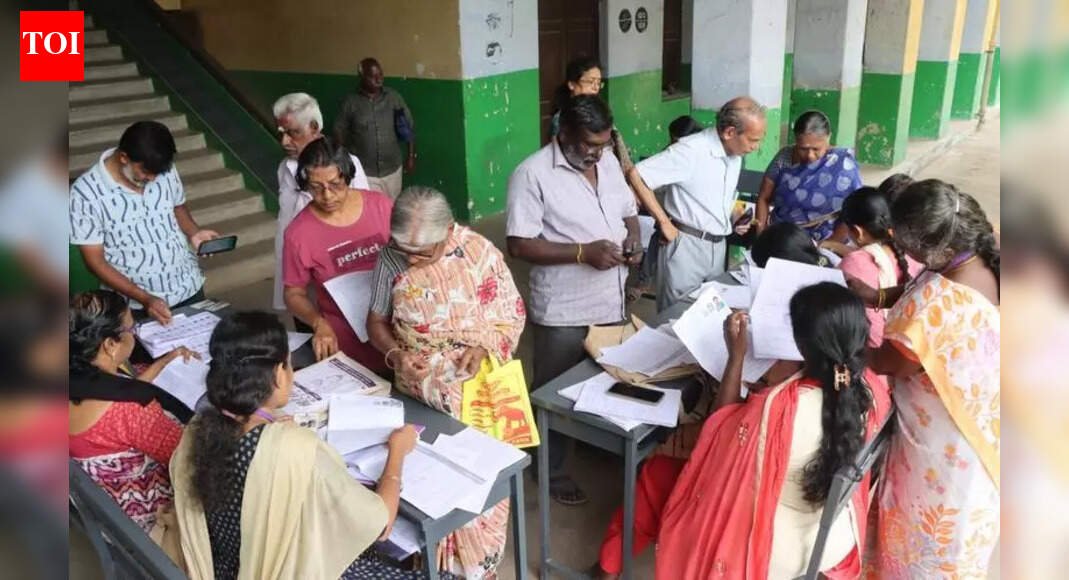
NEW DELHI: Tamil Nadu chief electoral officer Archana Patnaik on Friday said the draft electoral roll, after the Special Intensive Revision (SIR), for the state now includes 5,43,76,755 voters, comprising 2.66 crore women and 2.77 crore men.She said that prior to the SIR, the poll-bound state had around 6.41 crore registered voters, and the exercise led to the deletion of 97,37,832 names from the rolls.According to Patnaik, the deletions included 26.94 lakh voters who had died, 66.44 lakh voters who had permanently shifted or migrated, and 3,39,278 duplicate entries where individuals were found to be registered in more than one place.She added that among those marked as migrated, 66,44,881 persons were found not residing at their registered addresses after three rounds of door-to-door verification conducted across the state.The SIR in the DMK-ruled state was conducted amid vehement opposition by chief minister MK Stalin, whose party filed a petition in the Supreme Court against the major roll-revision exercise in the southern state.“To prevent this anti-democratic move, we convened an all-party meeting and passed a resolution condemning the SIR. The Election Commission’s decision to carry out a full revision of the electoral roll just months before the election is part of a well-planned strategy to delete legitimate voters,” CM Stalin said while criticising the Election Commission’s electoral roll sanitisation exercise.Also read: Nearly 74 lakh names deleted from Gujarat rolls; EC opens window for objectionsCM Stalin added that the same tactic was used earlier in Bihar, where lakhs of genuine voters were allegedly “removed from the list”. He also pointed out that opposition to this controversial process had first emerged from Tamil Nadu, after which the Congress leader Rahul Gandhi, who also happens to be the Lok Sabha leader of opposition, raised strong objections.“Even after a legal case was filed, the Election Commission did not give a satisfactory explanation,” CM Stalin said.Taking aim at AIADMK general secretary Edappadi K Palaniswami, CM Stalin accused him of “playing a double game” and being “afraid of the Election Commission due to his ties with the BJP.”He added that while migrant workers from Bihar had found livelihood and respect in Tamil Nadu, the Prime Minister was “playing political drama in Bihar for electoral gain.”SIR in GujaratNearly 74 lakh voters have been removed from Gujarat’s draft electoral rolls following the completion of the Special Intensive Revision (SIR) exercise, reducing the state’s total electorate to 4.34 crore from 5.08 crore earlier, officials said on Friday.The Election Commission published the draft electoral rolls on Friday, after which 73.73 lakh names were omitted as part of the roll-cleaning exercise, Gujarat Chief Electoral Officer Hareet Shukla said.“Before the publication of the draft rolls, Gujarat had 5,08,43,436 registered voters. After the revision, the number stands at 4,34,70,109,” Shukla said.According to the CEO’s office, the deletions included 18,07,278 deceased voters, 9,69,662 absent voters, 40,25,553 voters who had permanently migrated, 3,81,470 duplicate entries, and 1,89,364 names removed under other categories.SIR in BengalOn Tuesday, the Election Commission published a draft list of deleted voters after the SIR of the electoral rolls in West Bengal. The list features voters whose names were included in the state’s electoral rolls in 2025 but were deleted from the draft rolls of 2026.This came after the first phase of the SIR exercise ended on December 11. The second phase, which began after December 16, will involve the filing of claims and objections. The notice phase, which includes issuance, hearings, verification and decisions on enumeration forms, as well as disposal of claims and objections, will be carried out concurrently by Electoral Registration Officers (EROs).Parliament debate on SIRThe SIR issue was also debated and discussed at length during the Winter Session of the parliament, with the Leader of the Rajya Sabha JP Nadda and other key minister in the NDA government urging the opposition parties to come together to back the SIR of the electoral roll, while pointing out how West Bengal has seen a massive spike in its electorate from 4.8 crore to 7.6 crore since the last SIR in 2002.Nadda, citing ECI data during the debate in Rajya Sabha on electoral reforms, said the minimum increase in voters’ list of the 9 West Bengal districts bordering Bangladesh was 70 per cent since 2002, while the maximum had crossed 100 per cent. He shared that Uttar Dinajpur has witnessed the highest spike in electors at 105.5 per cent, Malda at 94.8 per cent, Murshidabad at 87.6 per cent, 24 Parganas at 83.5 per cent and Jalpaiguri at 82.3 per cent. What is SIRThe Election Commission of India (ECI) conducts a Special Intensive Revision (SIR) of electoral rolls to ensure the accuracy and completeness of voter lists ahead of major elections. The exercise involves a detailed door-to-door verification to identify and remove duplicate, shifted or deceased entries while enrolling new and first-time voters.Carried out under the Representation of the People Act, 1950, the SIR aims to maintain the integrity of the electoral rolls by updating demographic details and correcting inaccuracies.During the revision, booth-level officers visit households, verify electors’ details, and facilitate claims and objections. The process is a key part of the Commission’s voter roll management, ensuring that every eligible citizen is included and the rolls reflect the most current and authentic data before elections.

Source link

‘No PUC, No Fuel’ rule: Awareness improves; checks across Delhi pumps uneven | India News


'No PUC, No Fuel' rule: Awareness improves; checks across Delhi pumps uneven

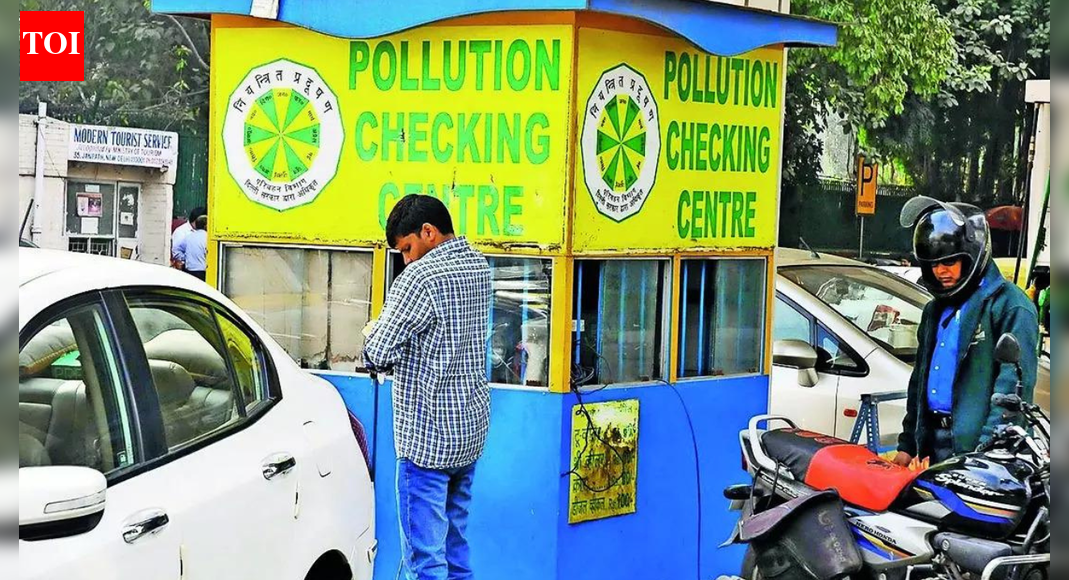
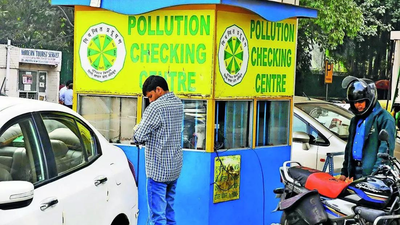
A day after the enforcement of BS-VI compliance and mandatory pollution-under-control certificates at Delhi’s border points and petrol pumps, awareness among commuters appeared to have increased on Friday, with many people voluntarily producing documents before refuelling.Nischal Singhania, president of the Delhi Petrol Dealers’ Association, told PTI that queues at pollution-under-control (PUC) certification centres remained unchanged, while fuel sales had taken a hit in some border areas.“Earlier, there was uncertainty about how long the ‘No PUC, No Fuel’ rule would continue. Now, it is clear that it will remain in force till GRAP-IV is in place. Sales have dipped in border areas. Pump owners in Badarpur reported a decline yesterday, and the trend has continued,” he said.Singhania, however, said compliance levels had improved. “Customers are themselves taking out their PUC certificates while coming to refuel. This is a positive sign,” he added.Despite the overall increase in awareness, checks were not uniformly enforced across the city. At a few petrol pumps, commuters reported that no verification was carried out on Friday.Piyush, a commuter at a petrol pump on Rohtak Road, said he could buy fuel without being asked for his PUC certificate and that there was no visible police or enforcement presence at the site.Another commuter, Bhushan Singh, travelling from Gulabi Bagh to his workplace, said the situation at the pump he visited was “like any other day”.Meanwhile, teams from the traffic police and transport department were deployed at city entry points, toll plazas and petrol pumps to check PUC certificates and BS-VI compliance.Traffic personnel were also stationed at key intersections with smart number plate recognition devices to verify documents and issue challans, even as some motorists requested leniency during the checks.Several motorists approaching the Bijwasan toll plaza on the Dwarka Expressway were seen slowing down abruptly after spotting enforcement barricades and Delhi Traffic Police personnel positioned just ahead of the toll point.As traffic personnel flagged down vehicles for document verification, a noticeable number of cars could be seen taking sudden U-turns, heading back towards the Gurugram side to evade inspection.The scene near the toll plaza reflected heightened enforcement under the ongoing restrictions, with traffic police teams stationed strategically on the carriageway.Vehicles were stopped intermittently, while others slowed down considerably upon seeing personnel in reflective jackets checking registration numbers and pollution-related documents on the spot. Some drivers, after briefly halting and assessing the situation, chose to turn back, causing brief congestion on the expressway.“A deployment near toll plazas is always strategic,” a senior traffic police officer said.He further said drivers automatically reduce their speed when they see enforcement teams close to toll points. It becomes easier for traffic personnel to stop vehicles smoothly and check papers without causing major traffic disruption.He added that the department has already taken steps to ensure motorists are aware of the latest restrictions.“We have pasted information boards at various Delhi-UP and Haryana-Delhi border points clearly explaining the rules and different norms under the recently enforced GRAP-IV. The idea is to ensure compliance through awareness, not just penal action,” the officer said.According to the officer, enforcement has been significantly scaled up across the national capital.“More than 100 teams of the Delhi Traffic Police have been deployed at vulnerable entry and exit points, including expressways, highways and border areas.These teams are tasked with checking vehicle documents, ensuring adherence to pollution norms and preventing the entry of restricted vehicles into Delhi,” he added.


Source link

Dunki route probe: Haryana contractor took property papers as collateral; ED raids conducted in 3 states | India News


Dunki route probe: Haryana contractor took property papers as collateral; ED raids conducted in 3 states

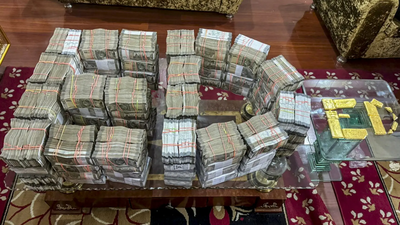
NEW DELHI: The Enforcement Directorate (ED) in its probe into the ‘donkey’ or ‘dunki’ route found Thursday that a key operator based in Haryana allegedly collected property papers from aspirants as security to guarantee payments for arranging illegal travel to the US through Mexico.‘Dunki’ route is a network used to send Indians illegally to the United States. The searches spread across Punjab, Haryana and Delhi were focused on what officials described as “second and third layer persons involved in the chain” of the donkey route syndicate.“Chat with other involved persons and other incriminating evidence regarding dunkey business has been found,” officials associated with the probe told news agency ANI.“From premises of a key donkey player in Haryana, records and documents related to donkey business has been found. It has been revealed that he used to keep property documents of candidates as surety for payment of amount for sending USA through Mexico donkey route,” said the officials, adding “some incriminating documents and mobile have also been recovered from the premises of other persons covered under search operations.”During the operation, the agency seized assets worth Rs 19.13 crore from the premises of a travel agent based in Delhi. Cash amounting to Rs 4.62 crore, along with 313 kg of silver and 6 kg of gold bullion was seized. The latest search operations covered premises linked to Richi Travels in Jalandhar, Tarun Khosla in Delhi and Balwan Sharma in Panipat.In a related development, the ED recently attached assets worth Rs 5.41 crore belonging to agents Shubham Sharma, Jagjit Singh and Surmukh Singh- individuals accused of generating illegal proceeds by facilitating unlawful migration through the donkey route. The properties include agricultural land, residential and commercial properties, as well as bank accounts held in their names and those of their family members.The searches were initiated based on specific intelligence inputs in a case that took shape after multiple FIRs were registered in connection with the deportation of 330 Indian nationals by US authorities in February 2025. The individuals were flown back to India on military cargo planes after it was found that they had entered the US illegally.The ED said that “these agents and their associates used to cheat gullible people by luring them under the pretext of sending them to the USA legally and charged hefty amounts for this.” The agency added that the victims were instead taken through risky routes via several South American countries before being pushed across the US-Mexico border illegally. “Throughout the way, people were tortured, extorted for even more money and made to commit illegal acts. These ‘agents’ and their associates generated proceeds of crime by cheating various persons on false pretexts and obtaining large sums from them.


Source link

Most-liked tweets: In top 10 posts from India, PM Modi in top 8 – check the posts | India News


Most-liked tweets: In top 10 posts from India, PM Modi in top 8 - check the posts

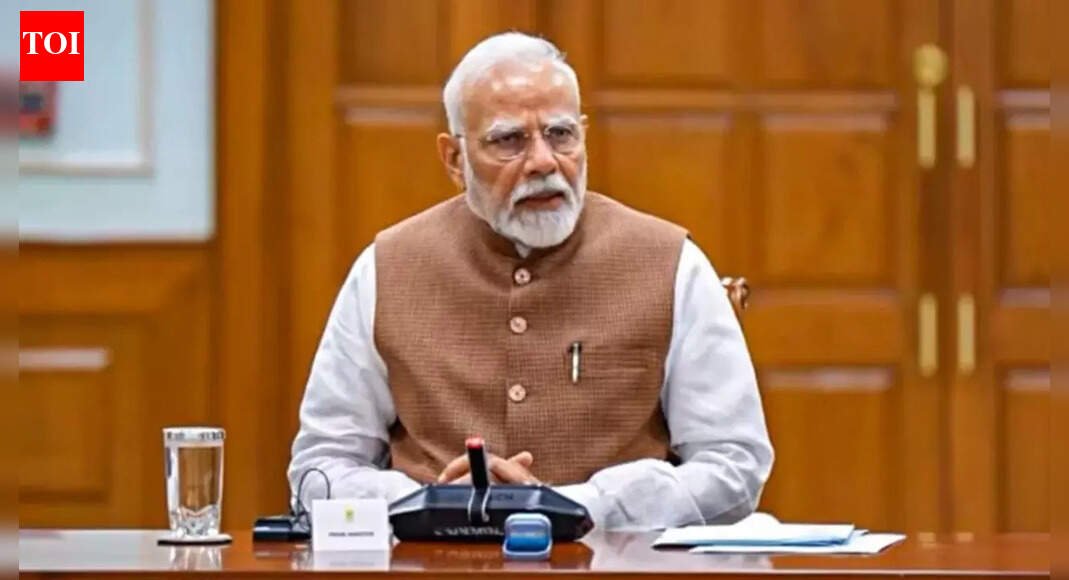
NEW DELHI: Prime Minister Narendra Modi continues to dominate social media engagement in India, emerging as the most influential political voice on X both in terms of followers and public response.

Ethiopia Confers Top National Honour On PM Modi, Citing Visionary Leadership And Global Impact

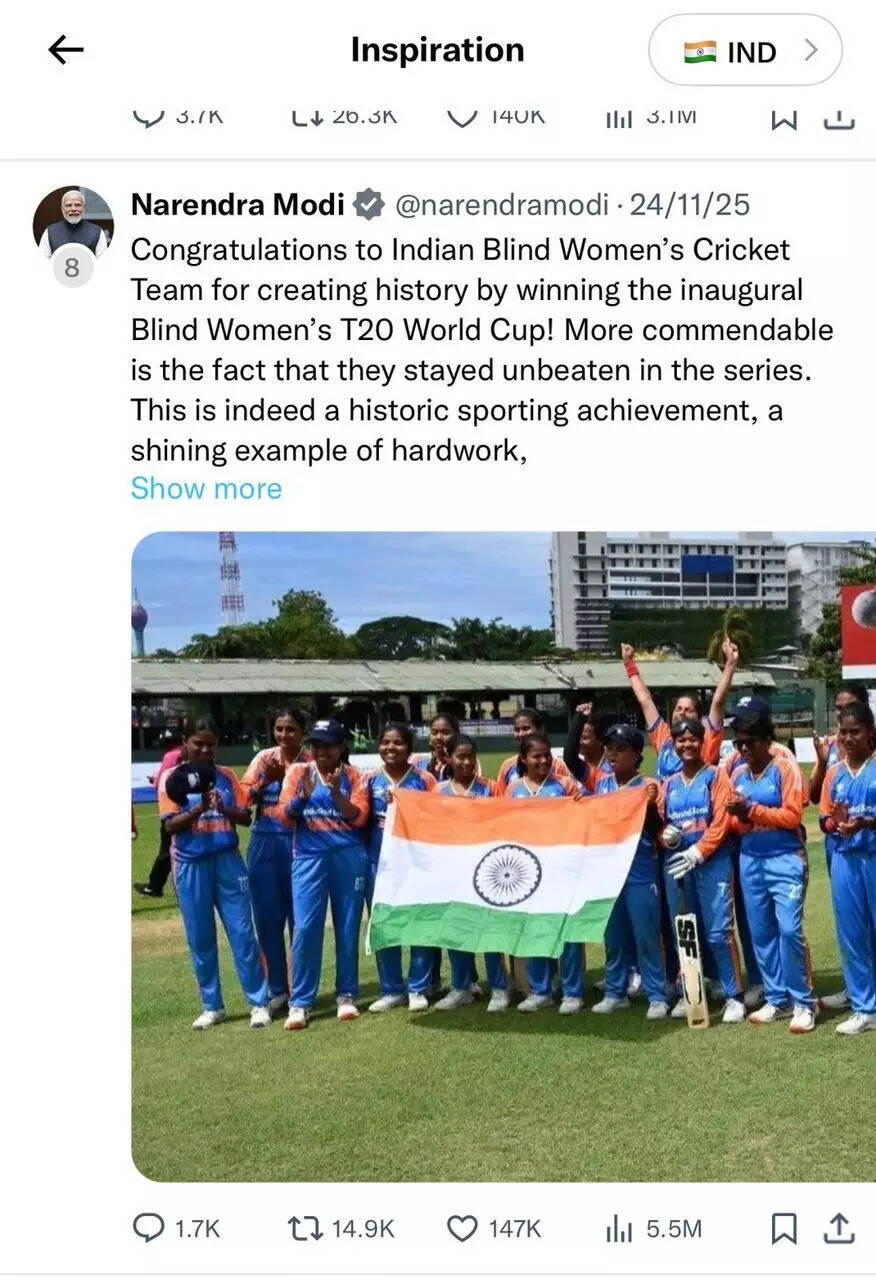
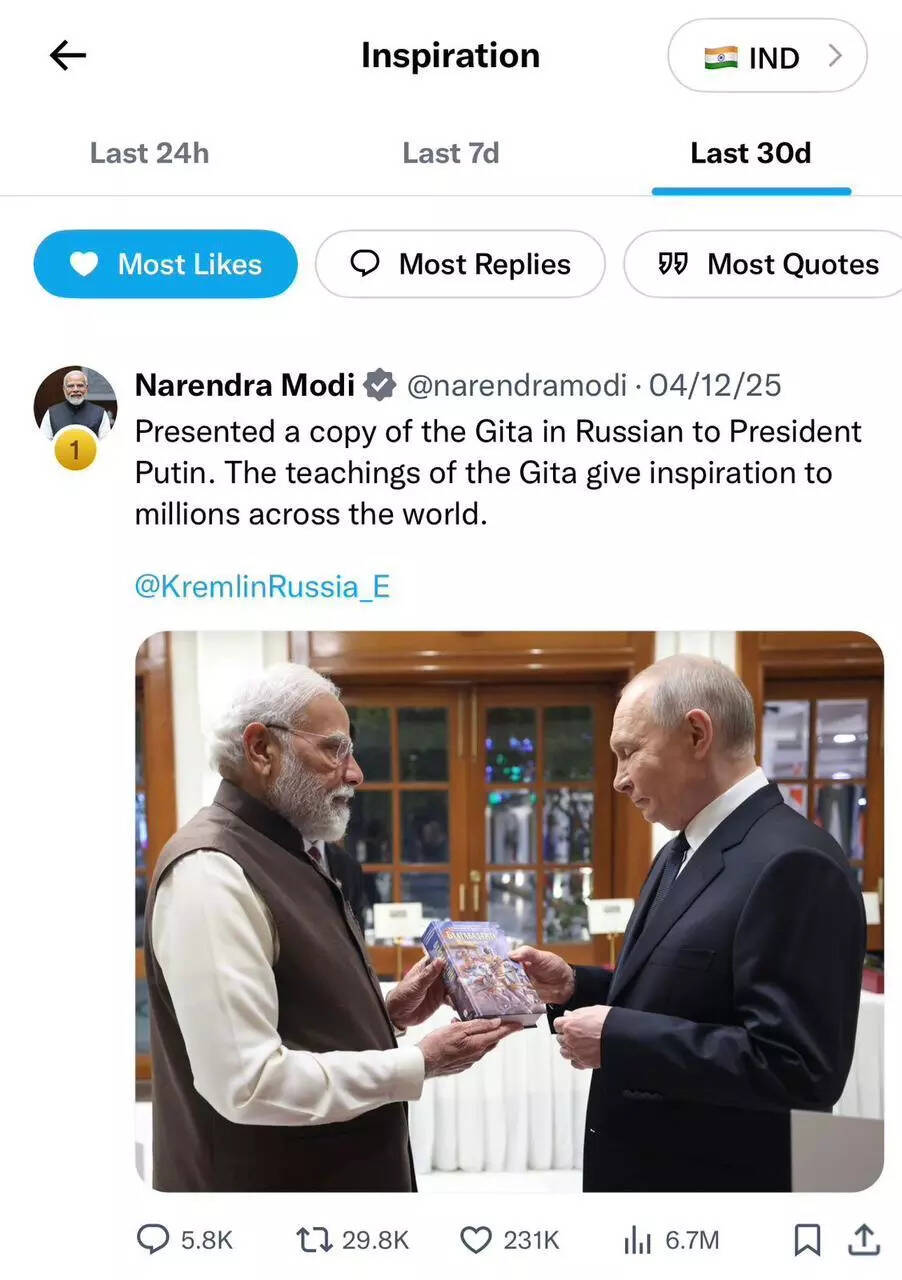
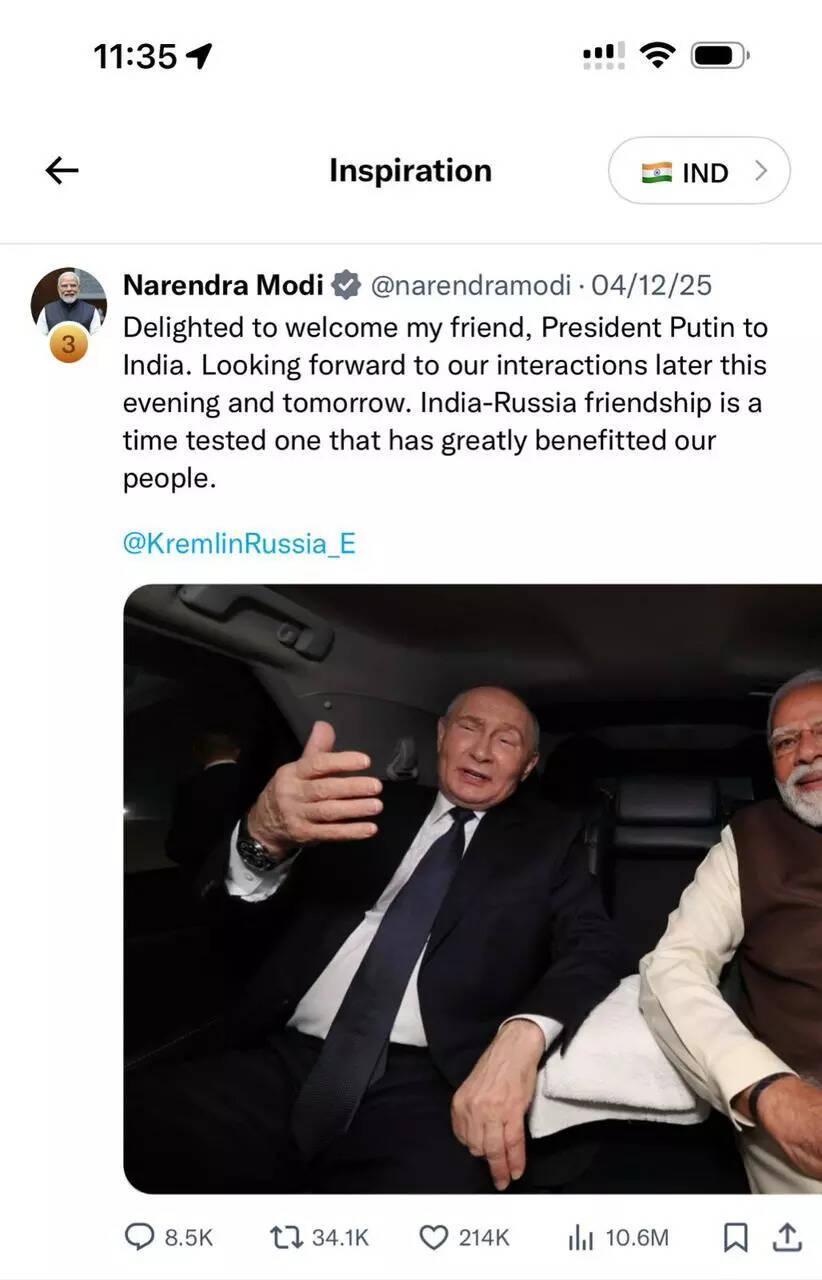
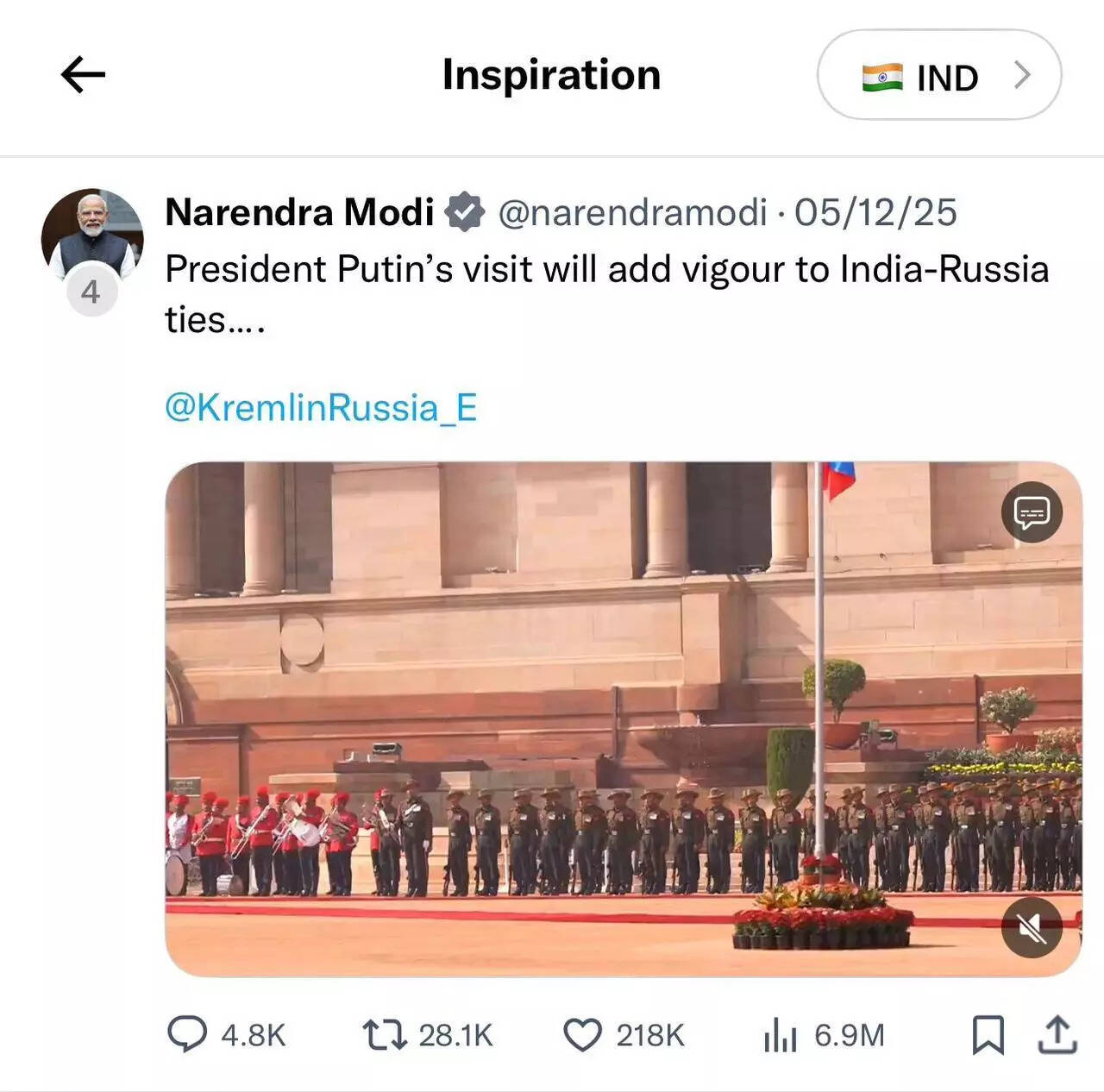
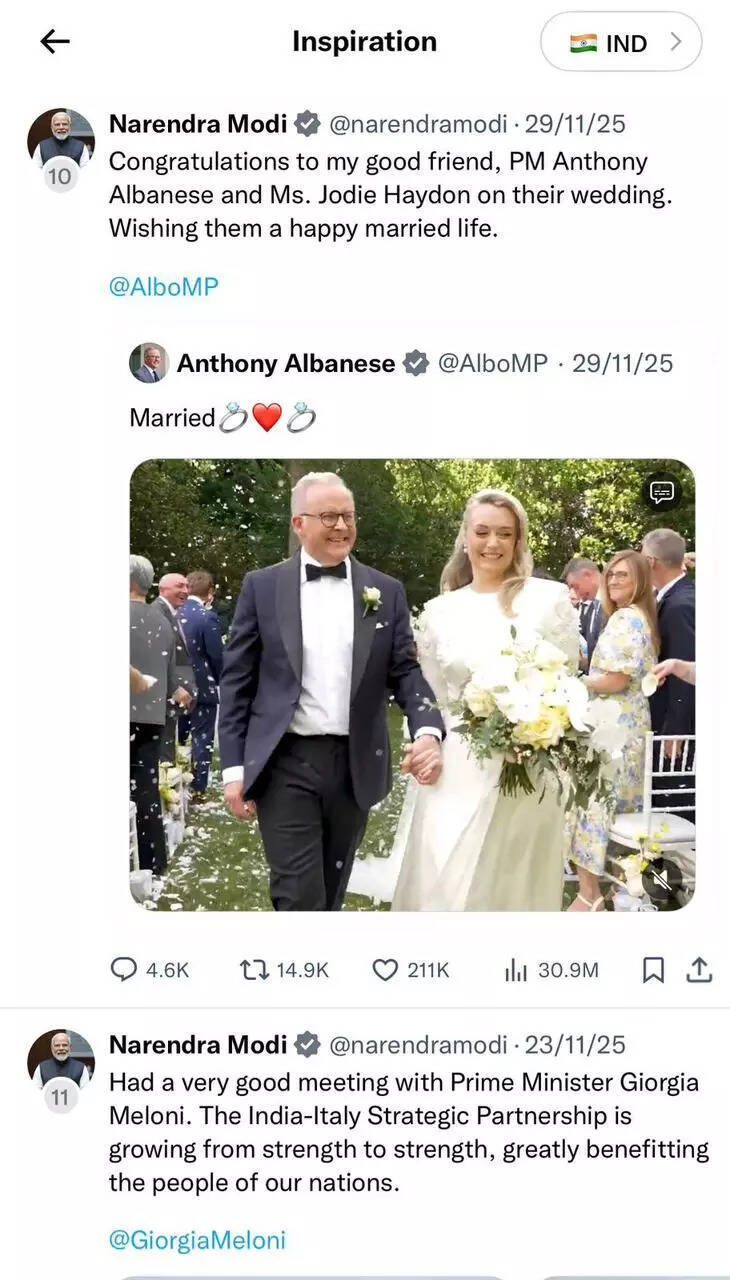
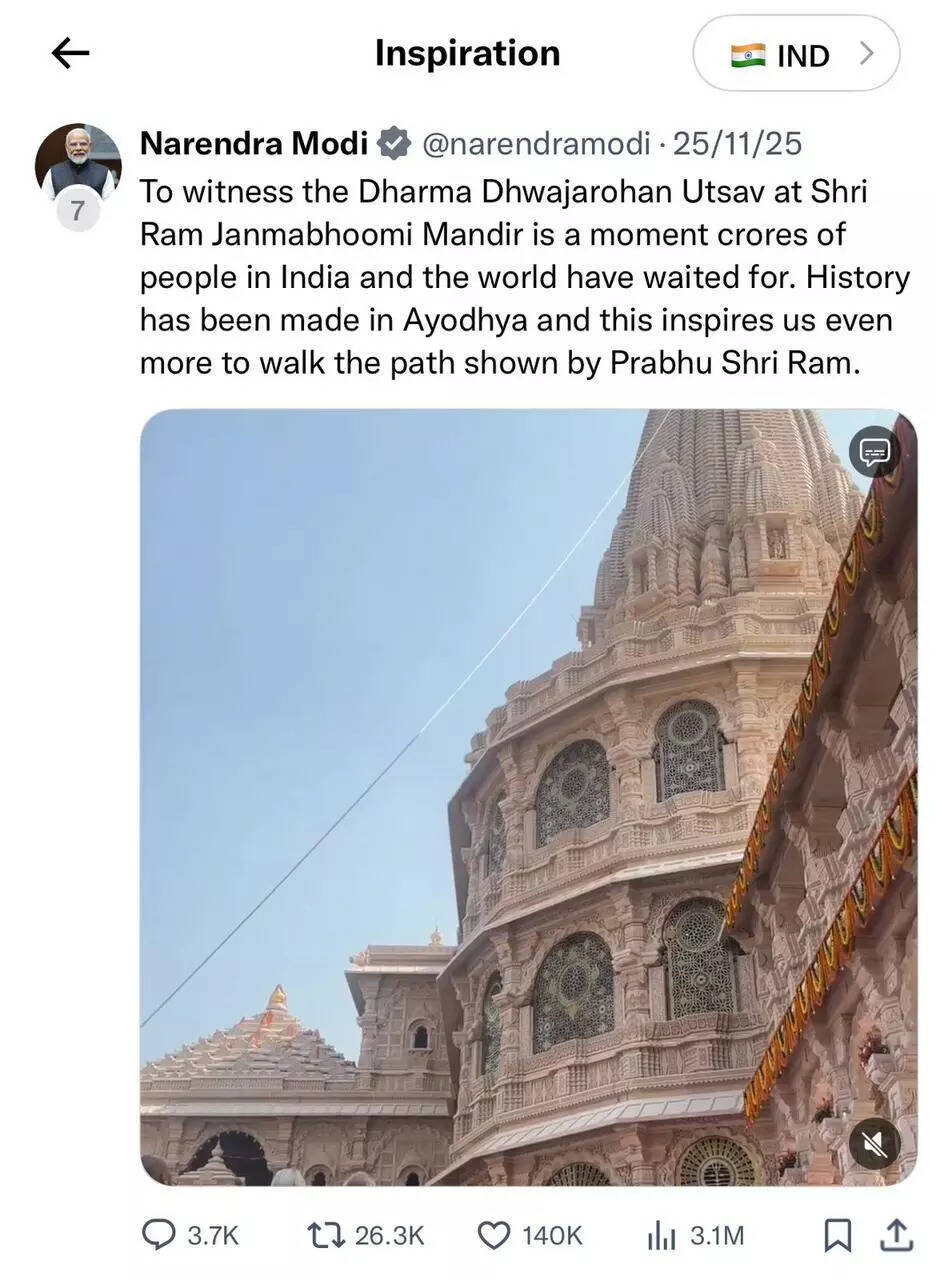
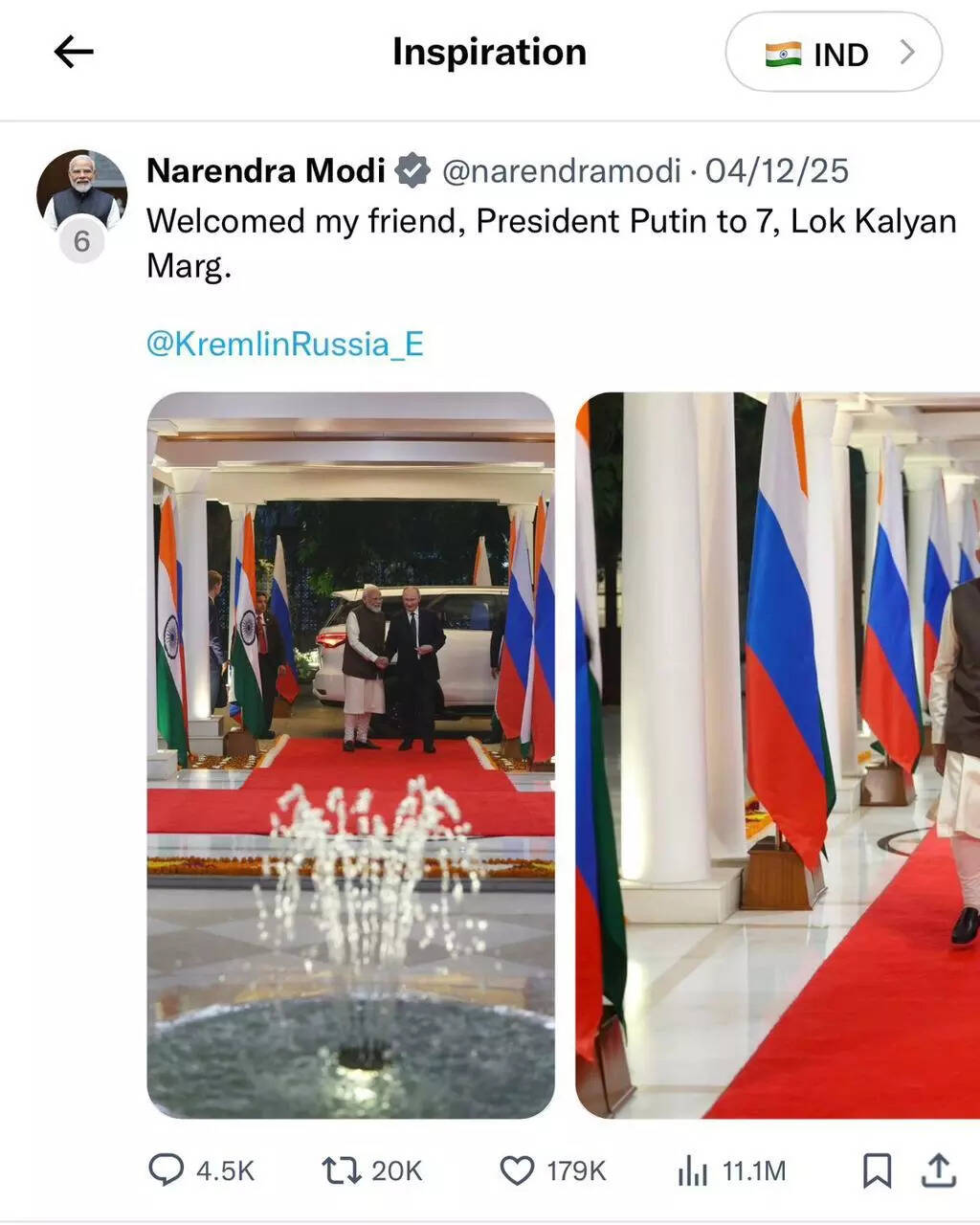
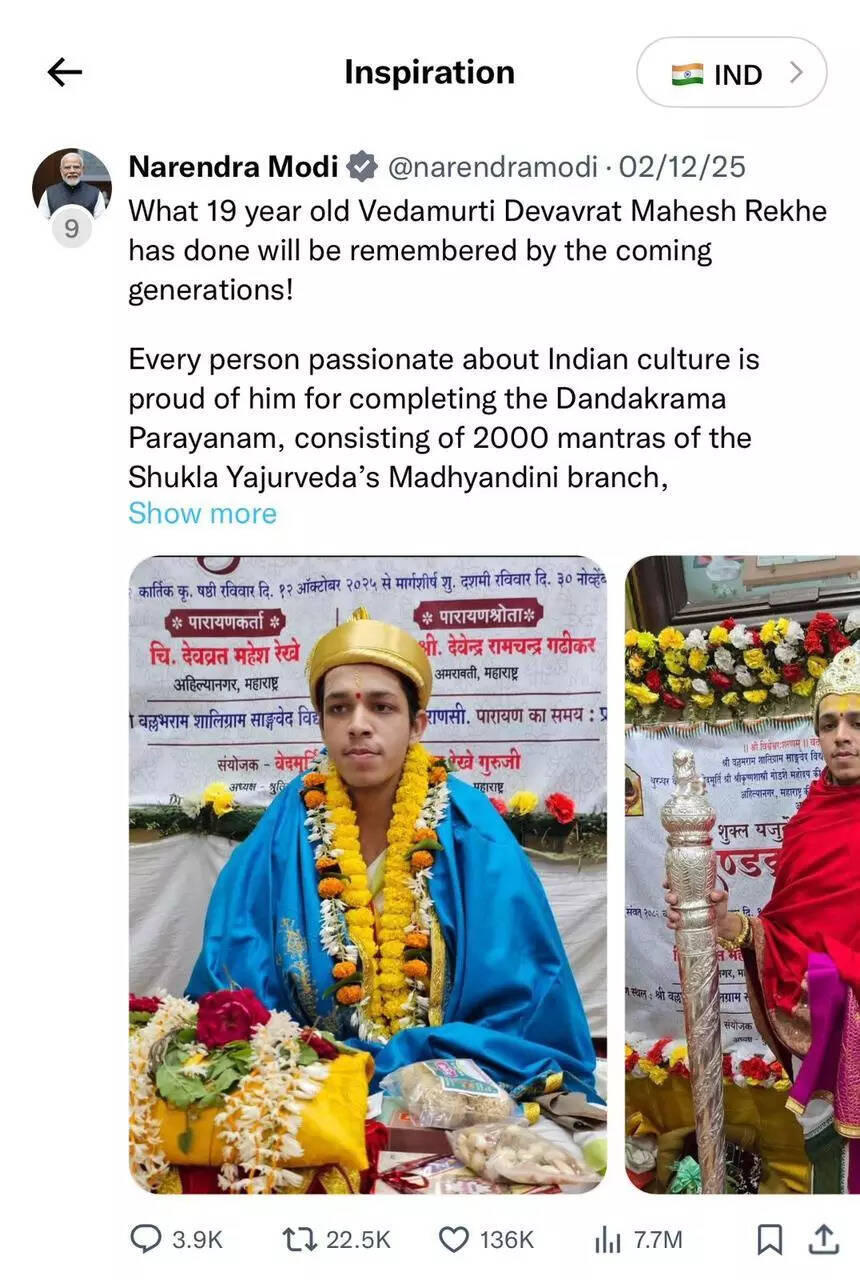
X recently rolled out a feature that shows the most-liked tweets in a country over the past 30 days. For India, eight of the top 10 most-liked tweets during this period were posted by Prime Minister Narendra Modi, with no other politician featuring in the top 10.

.

This comes as PM Modi has climbed to become the fourth most-followed person globally on X, overtaking pop stars Justin Bieber and Rihanna. According to data compiled by Statista, the Prime Minister has around 105 million followers, placing him behind only X owner Elon Musk, former US President Barack Obama, and footballer Cristiano Ronaldo.

.

Justin Bieber follows closely with around 108 million followers. PM Modi is currently the most-followed world leader in office on the platform. US President Donald Trump is the only other serving head of government to feature in the global top 10 list.

.

Among non-political figures in the top ranks are musicians Taylor Swift, Katy Perry, Rihanna, and Justin Bieber, highlighting Modi’s rare position among entertainment and sports icons.

.

In 2024, PM Modi crossed the milestone of 100 million followers on X, adding nearly 30 million followers over the previous three years.

.

The Prime Minister remains highly active on X, using the platform to share updates on government policies, public engagements, and interactions with global leaders, while also responding to citizens.

.

Beyond X, PM Modi also leads on Instagram, where he is the most-followed politician with over 97 million followers.

.

According to Statista, the top X accounts globally as of October 2025 are Elon Musk, Barack Obama, Cristiano Ronaldo, Narendra Modi, Justin Bieber, Donald Trump, Rihanna, and Katy Perry.

.


Source link

‘Case of acute acronym-itis’: Congress takes swipe at PM Modi over MGNREGA replacement; mocks VB-G RAM G Bill | India News


‘Case of acute acronym-itis’: Congress takes swipe at PM Modi over MGNREGA replacement;  mocks VB-G RAM G Bill

NEW DELHI: The Congress on Friday took a swipe at Prime Minister Narendra Modi a day after Parliament passed the VB-G RAM G Bill, which seeks to replace the 20-year-old Mahatma Gandhi National Rural Employment Guarantee Act, alleging that the Prime Minister is suffering from a “case of acute acronym-itis”.

Winter Session Closes As Lok Sabha Skips Pollution Debate A Day After G RAM G Bill Sparks Chaos

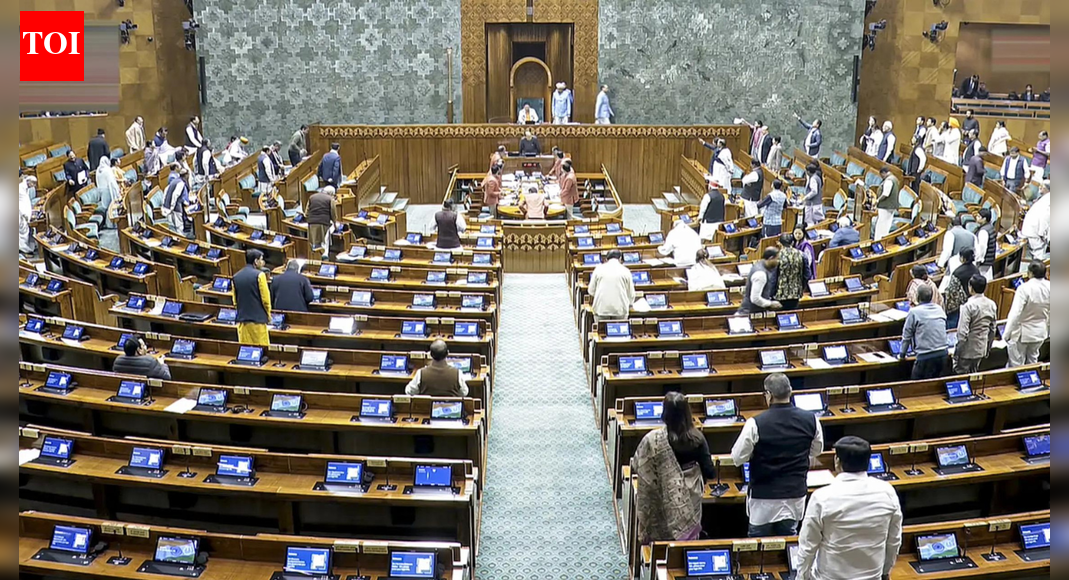
Congress general secretary in-charge communications Jairam Ramesh shared a cartoon on X that read, “All new A.C.R.O.N.Y.M MANTRALAYA – Administrative Commission for Renaming Old Schemes — New Yet Meaningless”. Accompanying the post, Ramesh said, “The PM is suffering from a case of acute acronym-itis.”The Congress leader’s remark came a day after Parliament cleared two bills carrying long acronyms, including the Viksit Bharat Guarantee for Rozgar and Ajeevika Mission (Gramin) (VB-G RAM G) Bill and the Sustainable Harnessing and Advancement of Nuclear Energy for Transforming India (SHANTI) Bill.The VB-G RAM G Bill was passed by the Rajya Sabha with a voice vote hours after it was approved by the Lok Sabha on Thursday, amid strong protests by opposition parties. The opposition objected to the removal of Mahatma Gandhi’s name from the existing rural employment guarantee scheme MGNREGA and accused the government of shifting the financial burden of the new scheme onto states.During the passage of the Bill, several opposition members staged a walkout in the Rajya Sabha after demanding its withdrawal and raising slogans against the government. Some MPs also tore pages of the Bill, prompting Chairman C P Radhakrishnan to warn them against approaching the treasury benches.Following the passage of the legislation, opposition MPs staged an overnight dharna outside the Samvidhan Sadan in the Parliament complex to protest against the Bill.


Source link

Voice note with jihad oath leads NIA to arrest 9th accused in Delhi car blast case | India News


Voice note with jihad oath leads NIA to arrest 9th accused in Delhi car blast case

NEW DELHI: Yasir Ahmad Dar, the ninth accused arrested by the National Investigation Agency (NIA) on Thursday in the Delhi car blast case, had sent a voice note to co-accused Mufti Irfan Ahmad Wagay pledging allegiance to the cause of ‘jihad’.The voice note — in which Yasir can be heard declaring his readiness to sacrifice his life for jihad operations — was recovered from Mufti Irfan’s phone by the agencies after the latter’s arrest. It was on the basis of this voice note that the agencies had had zeroed in on Yasir.

Car Blast Near Delhi’s Red Fort Leaves 8 Dead, Several Injured; City on High Alert

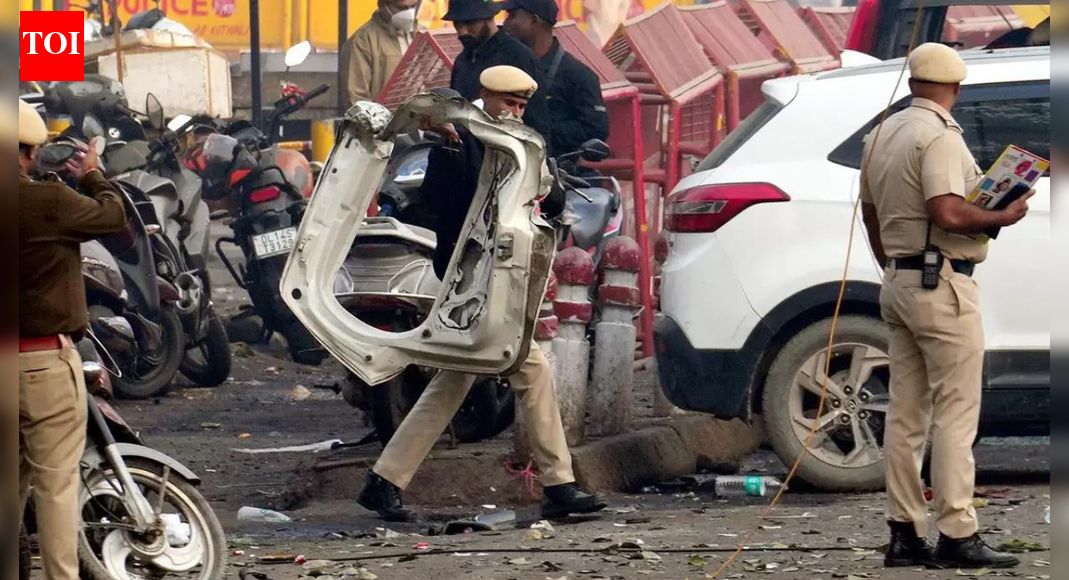
Sources told TOI that Mufti Irfan had met Yasir in 2023 and recruited him for terror activities. Around April 2024, Yasir was put in touch with Delhi bomber Dr Umar Nabi by Mufti Irfan. Dr Umar started brainwashing him to execute Jaish e Mohammad’s sinister plot to carry out fidayeen attacks across multiple Indian cities.Sources said Dr Umar would often share radicalisation material and videos with Yasir on Telegram and cite the “atrocities against Palestinians” to motivate him to launch spectacular attacks in India.NIA has charged Yasir under the relevant provisions of the UA(P) Act 1967 and BNS 2023.An NIA statement on Thursday said investigations have revealed Yasir’s active role in the Nov 10 car blast conspiracy.Working closely with various central and state agencies, NIA continues to move with alacrity to unravel the complete conspiracy behind the terror attack, said an NIA spokesperson. Earlier this month, the agency had conducted extensive searches at the premises of several accused and suspects in J&K and Uttar Pradesh and seized various digital devices and other incriminating materials. These were preceded by similar searches on the premises of the prime accused Dr Muzammil Shakeel Ganie and Dr Shaheen Saeed in the Al Falah University complex and other places in Faridabad.The Delhi car blast, triggered by Dr Umar with explosives that the doctors’ module had been amassing for a good 2-3 years, had killed 11 persons and injured several others.


Source link

‘Anti-state, anti-village’: Rahul Gandhi hits out VB-RAM G bill day after passage; what he said | India News


'Anti-state, anti-village': Rahul Gandhi hits out VB-RAM G bill day after passage; what he said

NEW DELHI: Leader of opposition in Lok Sabha Rahul Gandhi launched a sharp attack on the Modi government after Parliament passed the VB–G RAM G Bill, accusing it of dismantling the core principles of the 20-year-old MGNREGA and weakening rural workers’ rights.In a post on X, Rahul Gandhi wrote, “Last night, the Modi government demolished twenty years of MGNREGA in one day,” arguing that the new law was not a reform but a rollback. “VB–G RAM G isn’t a ‘revamp’ of MGNREGA. It demolishes the rights-based, demand-driven guarantee and turns it into a rationed scheme which is controlled from Delhi. It is anti-state and anti-village by design,” he said.Rahul said MGNREGA had given rural workers bargaining power, reduced exploitation and distress migration, raised wages, and improved working conditions while building rural infrastructure. “That leverage is precisely what this government wants to break,” he wrote, warning that capping work and creating new denial mechanisms would weaken “the one instrument which the rural poor had”.He pointed to the scheme’s role during the Covid lockdowns, saying it prevented crores from falling into hunger and debt and benefited women the most. “When you ration a jobs programme, it is women, Dalits, Adivasis, landless workers and the poorest OBC communities who get pushed out first,” he said.Gandhi also criticised the passage of the Bill without committee scrutiny, calling it a law that “rewires the rural social contract”. “We will not let this government destroy the rural poor’s last line of defence,” he added, pledging nationwide opposition to the move.


Source link