Breaking News
North India covered with dense fog: Red alert in Delhi, UP, Punjab and Haryana; over 150 flights cancelled | India News

North India covered with dense fog: Red alert in Delhi, UP, Punjab and Haryana; over 150 flights cancelled

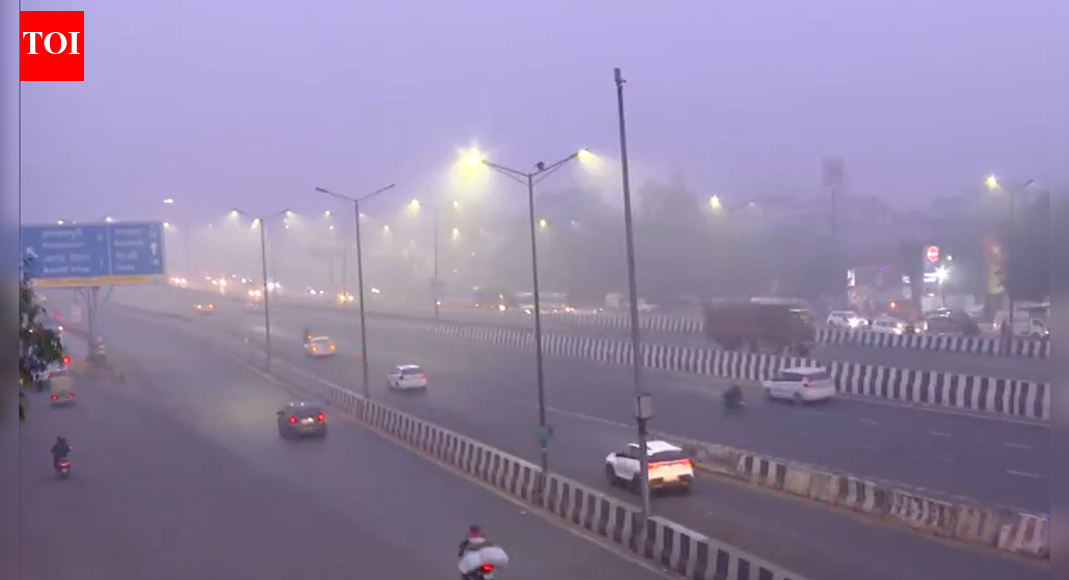
NEW DELHI: The India Meteorological Department has issued a red alert for the next 24 hours, warning of dense to very dense fog across large parts of north India, even as air quality in the national capital and surrounding regions remained in the ‘very poor’ to ‘severe’ category on Friday.According to the IMD, very dense fog is likely to prevail over Uttar Pradesh and Bihar, with Uttar Pradesh also expected to witness a very cold day. Dense to extremely dense fog has been forecast across Punjab, Uttarakhand and Bihar on December 19 and 20, and over Uttar Pradesh and Haryana during the early morning hours. The weather agency said fog conditions are likely to persist for the next two to three days, raising concerns over reduced visibility, travel delays and road safety.

From Work-From-Home To Vehicle Ban- Delhi Rolls Out Fresh Pollution Curbs

Airport authorities said flight operations were impacted through the day, with 79 departures cancelled, including two international flights, and 73 arrivals cancelled, including two international services. Passengers have been advised to check with their respective airlines for the latest updates before heading to the airport. In Delhi, hazardous air conditions continued, with thick smog blanketing several areas, including Anand Vihar. The Commission for Air Quality Management activated all measures under GRAP Stage IV across Delhi-NCR to curb rising pollution levels.
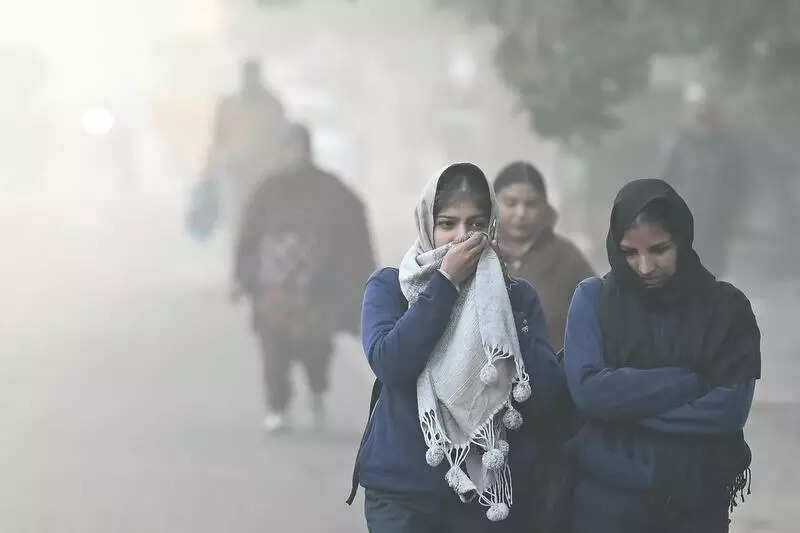
Fog envelops Punjab & Haryana, as visibility drops to 10m in Bathinda, 30m in Hisar

Data from the Central Pollution Control Board showed the Air Quality Index at 442 in Ghazipur, 409 in ITO and 447 in Palam, placing these areas in the ‘severe’ category. The city’s overall AQI stood at 330 at 7.47 am, while earlier readings showed levels as high as 358 during the morning hours. At around 8 am, Delhi’s overall AQI was recorded at 387, placing it in the ‘very poor’ category.Authorities advised residents, particularly children, the elderly and people with respiratory ailments, to limit outdoor exposure as pollution continued to pose serious health risks.Dense fog also disrupted aviation operations at the Indira Gandhi International Airport, with flights being operated under CAT III conditions, leading to multiple delays. Delhi International Airport said low visibility was affecting flight schedules.“Dense fog is impacting flight schedules, and operations are currently under CAT III conditions. Our on-ground teams are working in close coordination with all stakeholders to assist passengers and provide necessary support across all terminals. For real-time flight updates, please reach out to your respective airlines. We sincerely regret any inconvenience caused and appreciate your understanding,” the airport said in a statement.CAT III is a category of the Instrument Landing System that allows aircraft to land in extremely low visibility conditions and requires advanced equipment and specialised pilot training.IndiGo also issued a travel advisory, saying early-morning fog in Delhi and across parts of northern India was disrupting flight operations. “Early-morning fog in Delhi and across parts of northern India is reducing visibility and disrupting flight operations. We seek your understanding, as this is a seasonal occurrence, and flight movements are being managed accordingly to ensure safe and orderly operations. Customers travelling in the early hours may experience delays or revised timings. We recommend checking the latest flight status prior to leaving for the airport, goindigo.in/flight-status,” the airline said in a post on X.“Our teams are actively monitoring weather conditions and coordinating with air traffic authorities. Wherever possible, we are making operational adjustments to minimise inconvenience and ensure customer support remains available across all key touchpoints. We will keep you informed and get you on your way as soon as conditions permit,” the post added.On Thursday, 15 out of 40 air quality monitoring stations in Delhi recorded ‘severe’ pollution levels. Anand Vihar reported the highest AQI at 441, falling under the ‘severe-plus’ category, while 24 stations logged ‘very poor’ air quality, according to CPCB’s SAMEER app.As per official classification, AQI levels between 401 and 500 are considered ‘severe’, while readings above 300 indicate ‘very poor’ air quality.Data from the Decision Support System for Air Quality Management showed transport as the largest contributor to Delhi’s pollution at 18.3 per cent, followed by industries at 9.2 per cent. Residential sources contributed 4.5 per cent, construction activities 2.5 per cent, waste burning 1.6 per cent, road dust 1.3 per cent, other sectors 1.2 per cent and power generation around 1.2 per cent.Pollution from neighbouring NCR districts also added to Delhi’s air quality woes, with Jhajjar contributing 12.3 per cent, Sonipat 8.8 per cent, Rohtak 4.8 per cent, Jind 3.1 per cent, Bhiwani 1.4 per cent and Gurugram 1.1 per cent.Meanwhile, the IMD urged people to exercise caution, avoid unnecessary travel during foggy conditions and stay updated with local advisories over the next few days.
Source link

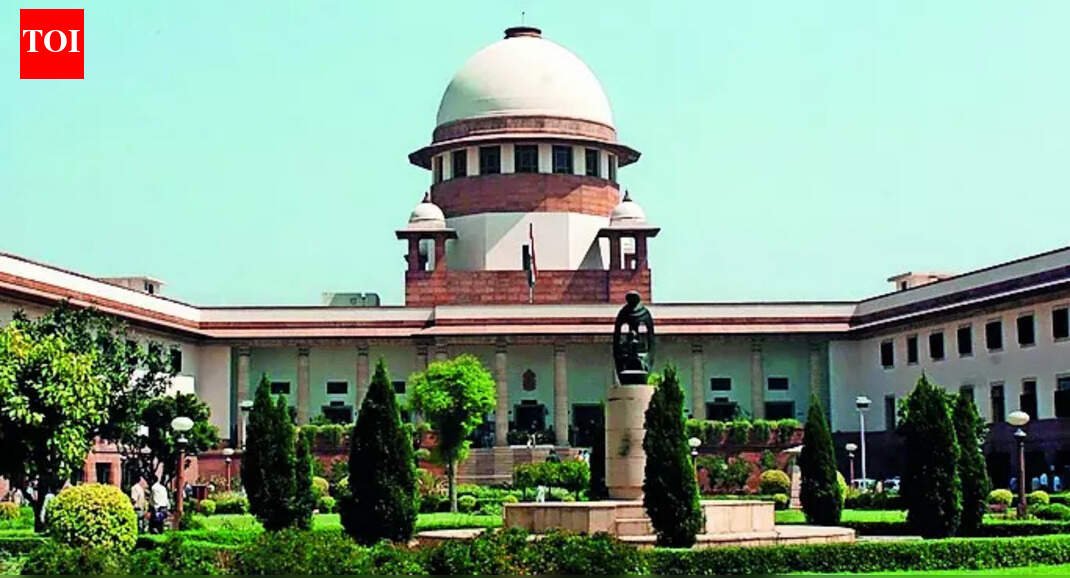
Supreme Court will talk to patient’s parents before deciding on passive euthanasia | India News


Supreme Court will talk to patient’s parents before deciding on passive euthanasia

NEW DELHI: Saying that time has come for it to decide on the passive euthanasia plea regarding 31-year-old Harish Rana, who has been in a vegetative state for the last 13 years, Supreme Court on Thursday decided to talk to his parents before it moves further in the matter.

SC will talk to patient’s parents before deciding on passive euthanasia

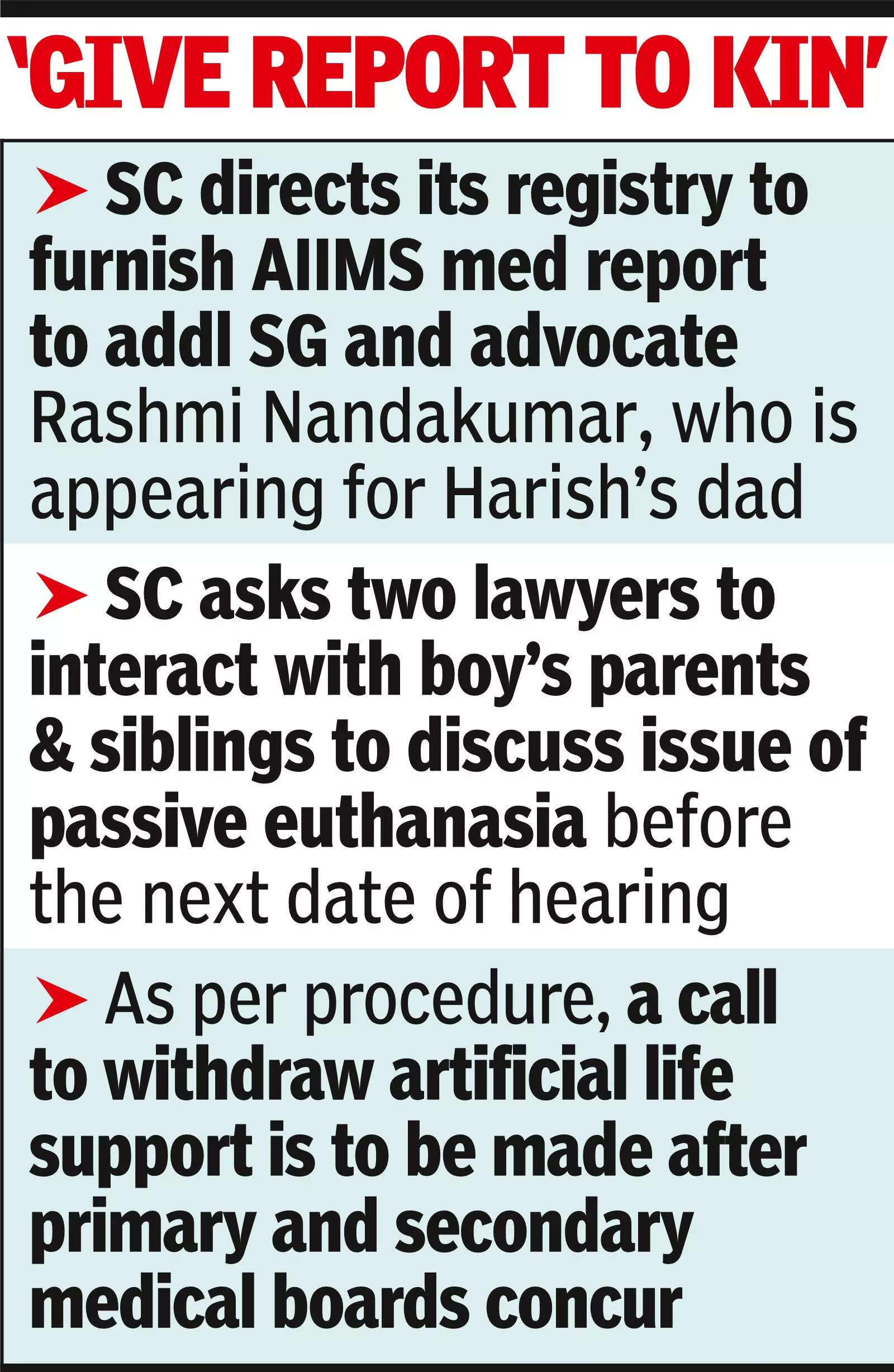
Significantly, the secondary report filed by AIIMS medical board, as was directed by SC, is similar to the primary medical board’s report, which had said that there is negligible chance of the man’s recovery.A bench of Justices J B Pardiwala and K V Viswanathan called AIIMS Delhi’s secondary medical report a “sad” one and said it wanted to talk to the parents in person before moving ahead. It requested them to come to court on Jan 13 when it would interact with them in the chamber. The court also directed its registry to furnish the AIIMS medical report to additional SG Aishwarya Bhati.

Court asks two lawyers to meet & interact with Harish’s parents, siblings

The Supreme Court also directed its registry to furnish the AIIMS medical report additional SG and advocate Rashmi Nandakumar, who is appearing for Harish’s father. “We have reached a stage wherein we will have to take a final call. So, your thorough assistance will be required. We will ask the registry to provide you with one copy of the report. Study the report. You will have to assist us. It’s a very sad report, and it will be a big challenge for us also, but we can’t keep the boy like this for all time to come,” it told both the lawyers.The bench also asked the two lawyers to meet and interact with Harish’s parents and his siblings to discuss the issue before the next date of hearing.“In pursuance of our last order dated Dec 11, a secondary medical board was constituted by AIIMS, New Delhi. The team of doctors medically examined the patient, and a report has been forwarded. The report consists of the medical history, general examination, neurological examination and other observations made and diagnostic criteria. We direct the registry to provide each copy to Ms Rashmi and Ms Aishwarya Bhati, learned ASG. We request them to look into the report and study the same and assist us in the report. We request them to jointly speak to the parents and other family members of Harish Rana and give us a report in that regard,” the bench said.As per the procedure framed by SC on passive euthanasia, a decision to withdraw artificial life support is to be made after the primary and secondary medical boards concur. In case of contradictory reports from the two, the matter is to be decided by court, which may constitute an independent committee to depute three doctors from the fields of general medicine, cardiology, neurology, nephrology, psychiatry or oncology, with experience in critical care and with overall standing in the medical profession of at least 20 years.Harish had fallen from the fourth floor on Aug 20, 2013. He was treated at various hospitals, but his condition did not improve. His father had first moved Delhi HC, which refused his plea to refer the case to a primary medical board. Last week, the court went through the report of the primary medical board set up by Noida District Hospital and said, “The bare reading of the letter would indicate Harish is in a pathetic condition.”


Source link

VB – G RAM G row: Opposition sleeps outside Parliament in protest – watch video | India News


VB - G RAM G row: Opposition sleeps outside Parliament in protest - watch video

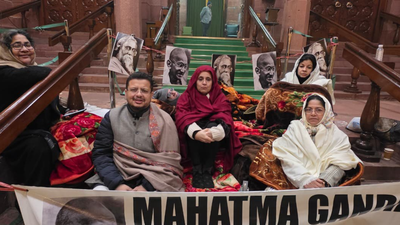
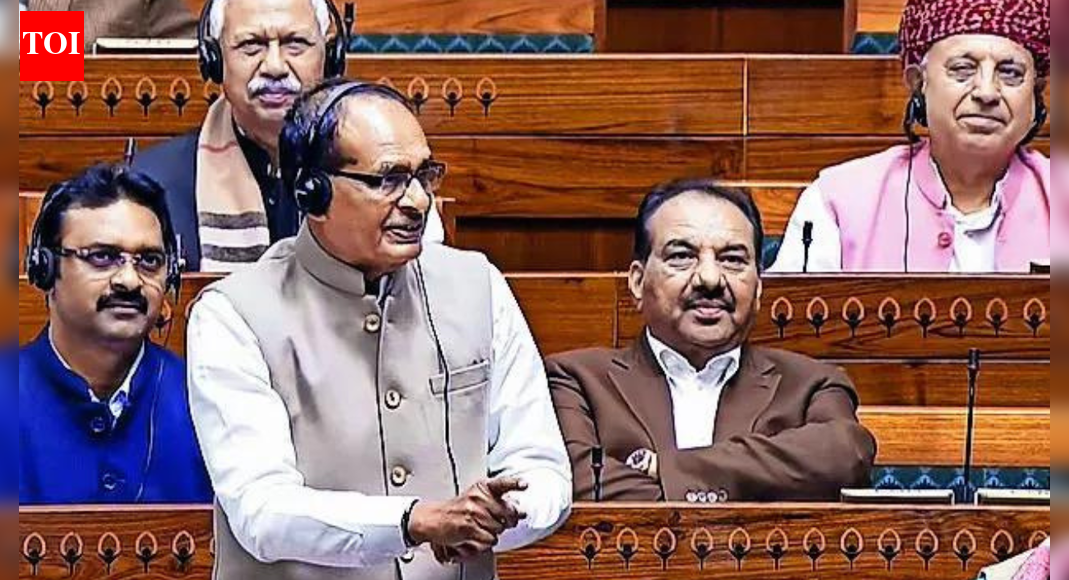
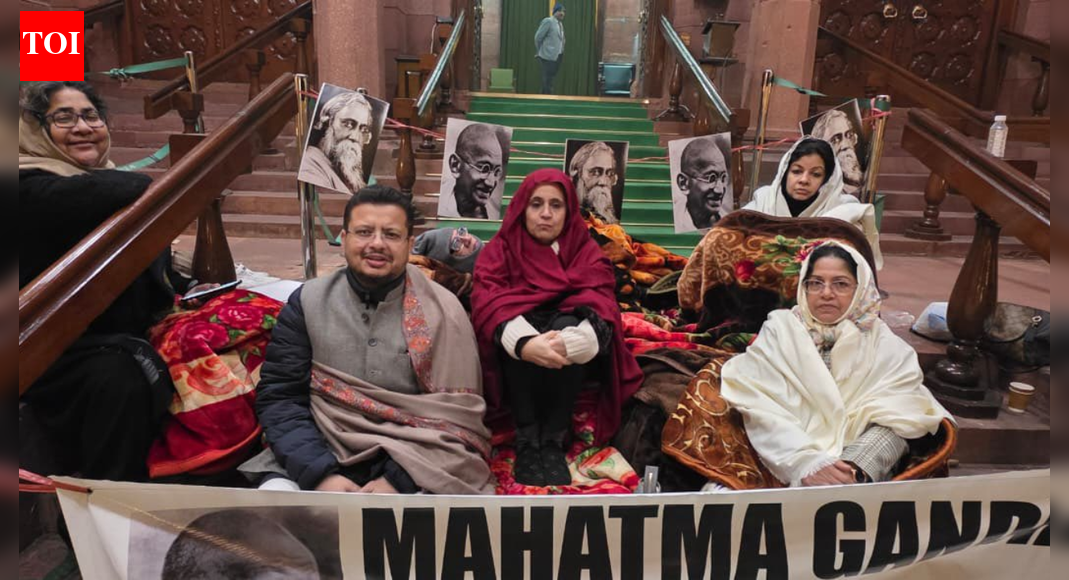
NEW DELHI: Opposition parties staged a 12-hour overnight dharna in the Parliament complex on Thursday night to protest the passage of the Viksit Bharat Guarantee for Rozgar and Ajeevika Mission (Gramin) Bill, or VB-G RAM G Bill, which replaces the Mahatma Gandhi National Rural Employment Guarantee Act.The protest came hours after Parliament cleared the Bill amid noisy scenes and walkouts. The Rajya Sabha passed the legislation post midnight by a voice vote, following its approval by the Lok Sabha earlier in the day, even as opposition members demanded its withdrawal and sought its referral to a parliamentary panel.

Lok Sabha Passes Viksit Bharat G Ram G Bill Amid Protests, Opposition Tears Copies Over Gandhi Name

Opposition MPs accused the government of rushing the Bill through without adequate debate and of scrapping a flagship rural employment scheme that, they said, supported crores of poor households. Several members walked out of the Upper House, raised slogans against the government and tore copies of the Bill, prompting repeated warnings from the Chair.Trinamool Congress Rajya Sabha deputy leader Sagarika Ghose alleged that the government had “bulldozed” the legislation. “This is an insult to India’s poor, it is an insult to Mahatma Gandhi, it is an insult to Rabindranath Tagore. With just five hours’ notice, this bill was given to us. We were not allowed a proper debate,” she said.“Our demand was such an important bill should be sent to the Select Committee and let the opposition parties examine it, let the opposition parties discuss it, let all stakeholders discuss it, but no, in a display of tyranny, in a murder of democracy,” Ghose said, announcing the overnight protest. “We are now going to sit on a 12-hour dharna, 12-hour dharna against the manner in which the Modi government has brought this black law against the people of India, against the poor of India, against the rural poor of India.Congress general secretary Randeep Singh Surjewala described the development as a “sad day for the country’s labour force” and alleged that the government had hit the livelihoods of millions. “This is perhaps the saddest day for the labourers of India. BJP government has attacked the livelihood of 12 crore people by repealing the MGNREGA. They have proved that the Modi government is anti-farmer and anti-poor,” he said.Congress leader Mukul Wasnik said the original law was framed after extensive consultations. “When MGNREGA was drafted, consultations were held for 14 months. It was passed by Parliament with consensus. The scheme would put an extreme burden on states. As a result, this scheme will collapse,” he said.DMK leader Tiruchi Siva accused the government of erasing Mahatma Gandhi’s legacy. “Likewise they have removed Mahatma Gandhi’s name himself. Without Gandhi there is no freedom, that is the total belief in this country. Even in Britain parliament we are having Gandhi statue, but here in Indian parliament his statue is hidden somewhere, and now the scheme which bore his name, his name has also been removed,” he said.Defending the legislation, Rural Development Minister Shivraj Singh Chouhan said the new law was necessary to address shortcomings in the old scheme and to boost rural development. “This Bill is very necessary as it will help provide employment opportunities, help development of rural India and take the country forward,” he said while replying to the debate in the Rajya Sabha.Chouhan accused the Congress of misusing Mahatma Gandhi’s name for political gains and of disrupting parliamentary proceedings. “I heard the opposition with patience all these hours and expected the opposition to hear my response to the discussion. Making their points, making allegations and running away is like murdering the dreams and ideals of Mahatma Gandhi,” he said.“The entire nation is watching their ‘goondagardi’ and the opposition is committing the sin of insulting democracy. House ‘dadagiri se nahin chalega’,” the minister added.He also cited funding figures to defend the government’s record, claiming that while the previous UPA government released Rs 2.13 lakh crore for MGNREGA, the NDA had released nearly Rs 8.53 lakh crore. The opposition, however, maintained that the passage of the Bill without detailed scrutiny set a dangerous precedent and said it would take its protest against the law to the streets across the country.


Source link

Can Andhra’s rare earth corridor fuel India’s clean-energy dreams? | India News


Can Andhra’s rare earth corridor fuel India’s clean-energy dreams?
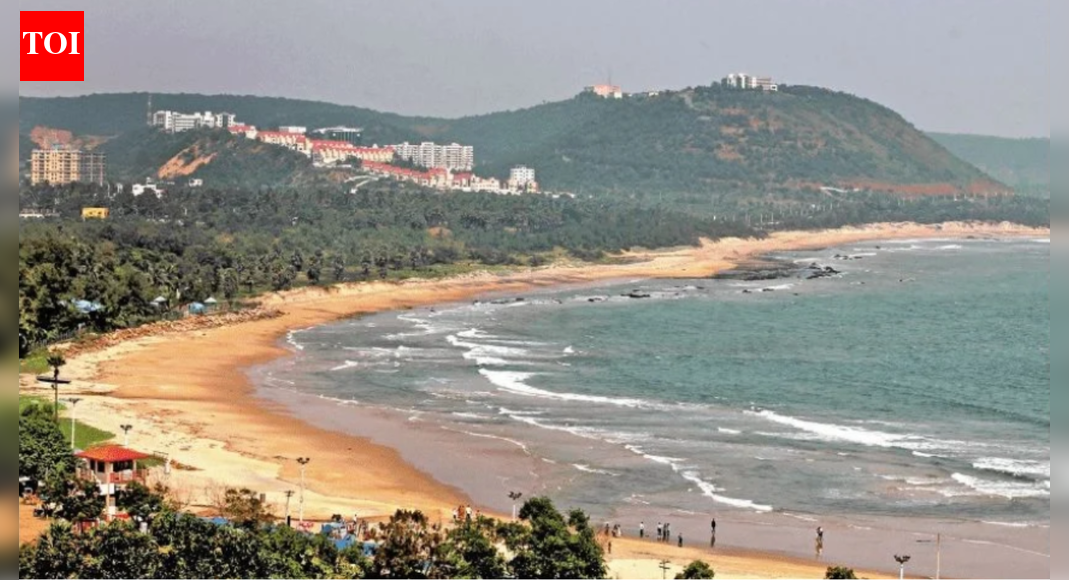
The mineral-rich belt forms an unbroken stretch along Andhra’s coastline (Picture credit: A Sarath Kumar)

Along Andhra Pradesh’s sweeping 974km coastline, the waves wash more than picturesque beaches and bustling fishing harbours. Beneath the dark, heavy sands — from Srikakulam in the north to Nellore in the south — lies one of India’s most valuable and underexploited geological assets: rare earth mineral reserves that could define the nation’s cleanenergy, defence and semiconductor future.These beach sands contain vast quantities of monazite, the primary source of rare earth elements (REEs) and thorium, along with ilmenite, rutile, zircon, garnet and sillimanite, making the state a rich natural repository of strategic minerals.What distinguishes Andhra’s reserves is not only their abundance, but also their grade. Monazite extracted along this coast carries 55-60% rare earth oxides — among the highest in global benchmarks — and 8-10% thorium, considered a potential fuel for India’s next-generation nuclear reactors.The ore houses a complete suite of light REEs such as lanthanum, cerium, praseodymium, neodymium, samarium, europium and gadolinium, elements that power permanent magnets essential for electric vehicles, wind turbines, missile guidance, satellite systems, fibreoptics, superconductors and advanced medical diagnostics.The mineral-rich belt stretches like a continuous corridor. Geological surveys identify promising deposits at Bhimunipatnam, Kalingapatnam, Kakinada, Narsapur, Machilipatnam, Chirala, Vodarevu, Ramayapatnam and Dugarajapatnam, forming an uninterrupted chain of strategic material potential. Estimates by the Atomic Minerals Directorate and Indian Rare Earths Limited (IREL) place India’s total deposits at over 300 million tonnes of heavy mineral sands (sand deposits rich in dense, valuable minerals like ilmenite, rutile and zircon), with 12-15 million tonnes of monazite, enough to support 40-50% of domestic rare earth requirements for decades. Andhra is estimated to hold 3035% of India’s monazite reserves.For long, these beaches have remained underutilised, overshadowed by concerns around atomic regulation, limited processing capacity and policy restrictions. Now, with global supply chains tightening and countries scrambling to diversify away from China — which controls nearly 85% of global REE processing capacity — the state has quietly moved into strategic focus.APMDC steps on the gasRecognising the opportunity, the Andhra Pradesh Mineral Development Corporation (APMDC) has stepped up exploration and monetisation efforts with renewed urgency. The Centre has granted 16,000 hectares of beach sand-mining leases to the corporation, marking one of the largest allocations for any state. Of this, operational clearance has been issued for 1,000 hectares, recently allotted to a private developer through open tender. Encouraged by potential revenue prospects, the state has sought approval to open another 4,000 hectares, after which the corporation plans to scale out activities across the remaining 11,000 hectares on a fast-track basis.APMDC’s shift is not confined to mining. The focus now is on value addition within India — crucial because exporting raw ore leads to importing high-value end products at a steep cost. “We are concentrating on downstream processing facilities to make the country self-reliant,” APMDC managing director and senior IAS officer Pravin Kumar told TOI, underlining the state’s aggressive roadmap. “Exporting raw minerals forces us to import finished rare earth magnets, chips and components at a high premium. The Centre’s PLI (production-linked incentive) will be a game changer.”

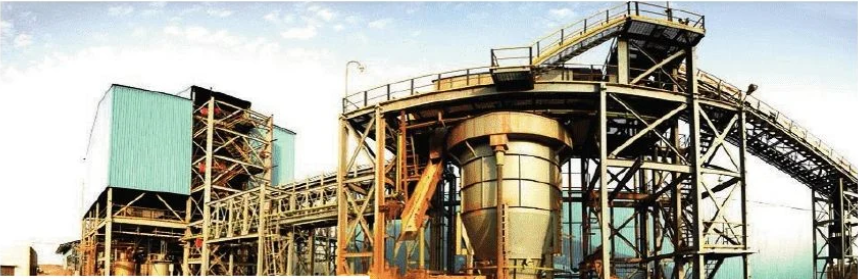
A sand filtration plant in Srikakulam

At present, monazite processing remains the exclusive domain of IREL, a Central PSU operating under atomic mineral regulations. Private players can mine associated minerals such as garnet, ilmenite and zircon but must hand over monazite to IREL after separation. To increase domestic refining capacity, IREL is establishing a 10,000-tonne-perannum monazite processing plant at Gudur, Nellore, scheduled for commissioning in 2026. Once operational, it is expected to become a central pillar of India’s REE value chain.Centre’s PLI pushIn a major policy intervention aimed at cutting import dependence and accelerating green-tech manufacturing, the ministry of mines has rolled out guidelines for pilot projects to recover critical minerals — including REEs — from mining waste, red mud, fly ash and industrial tailings. The programme, approved under the National Critical Mineral Mission (NCMM), earmarks funding of up to Rs 100 crore from the National Mineral Exploration and Development Trust (NMEDT) for recovery-oriented R&D and commercial pilots.The mission targets securing domestic supply of 24 strategic minerals such as neodymium, dysprosium, yttrium and cobalt, vital for EV batteries, solar wafers, turbines and missiles. “These guidelines mark a pivotal step towards converting waste into wealth,” said Geetika Sharma, director (projects), NMEDT. Pilot studies may receive 90% central funding, enabling partnerships across PSUs, academia, startups and private mining companies.This policy push is particularly advantageous for Andhra Pradesh. Though placer deposits have for decades supported India’s titanium and zircon industries, enormous quantities of tailings with recoverable REEs, thorium and uranium have remained unprocessed due to lack of technology and regulatory clarity.Existing infrastructureAndhra Pradesh already possesses early-stage infrastructure that could scale with the new policy. A private REE-processing plant in Anantapur is operational and handles thousands of tonnes annually. IREL runs a beach sand separation plant in Visakhapatnam, generating tailings suited for rare earth extraction using hydrometallurgical and solvent-extraction techniques. Officials estimate that reprocessing alone could unlock a Rs 5,000-crore annual opportunity through circular extraction.“Our monazite reserves can yield dysprosium for EV magnets and terbium for high-performance turbines,” a senior mines and geology department official told TOI.To ensure accountability, proposals will be screened by an inter-ministerial project sanctioning committee, while technical validation will come from experts at IITBombay, IIT-ISM Dhanbad and CSIR-IMMT Bhubaneswar. Implementation pathways will be led by Jawaharlal Nehru Aluminium Research Development and Design Centre, Nagpur for mining waste recovery projects and Anusandhan National Research Foundation (ANRF), under the Centre’s department of science and technology, for tech-driven pilots.Pilot projects in pipelineThe Andhra government is preparing applications to recover REEs from thermal plant fly ash in Nellore and Krishnapatnam, known to contain trace rare earths. Collaboration possibilities with IIT-Hyderabad, National Mineral Processing Laboratory (Jamshedpur) and geologists are being explored, especially around bio-leaching and electrochemical extraction. Scientists say tailings (ore residues) at Andhra Pradesh and comparable IREL operations in Kerala suggest that over 80% REE extraction is achievable with modern technology.DAR Subramanyam, a retired economics professor from Acharya Nagarjuna University, noted that rapid scale-ups can reduce India’s import dependence from 95% to nearly 50% within five years, provided commercial plants are deployed under the National Critical Mineral Mission (NCMM) framework. With global REE demand expected to grow tenfold by 2030, Andhra stands positioned to emerge as the country’s critical-mineral capital.The first call for proposals under the PLI window is expected shortly, signalling what experts describe as the beginning of a mineral renaissance on the state’s shoreline.From being a silent geological marvel, Andhra’s beaches are on the cusp of powering India’s transition to clean mobility, renewable energy and advanced electronics. The sands are no longer just a coastal landscape — they are India’s next strategic frontier.


Source link

Citizens feel opposition’s criticism of government is pessimistic: Jyotiraditya Scindia | India News


Citizens feel opposition's criticism of government is pessimistic: Jyotiraditya Scindia

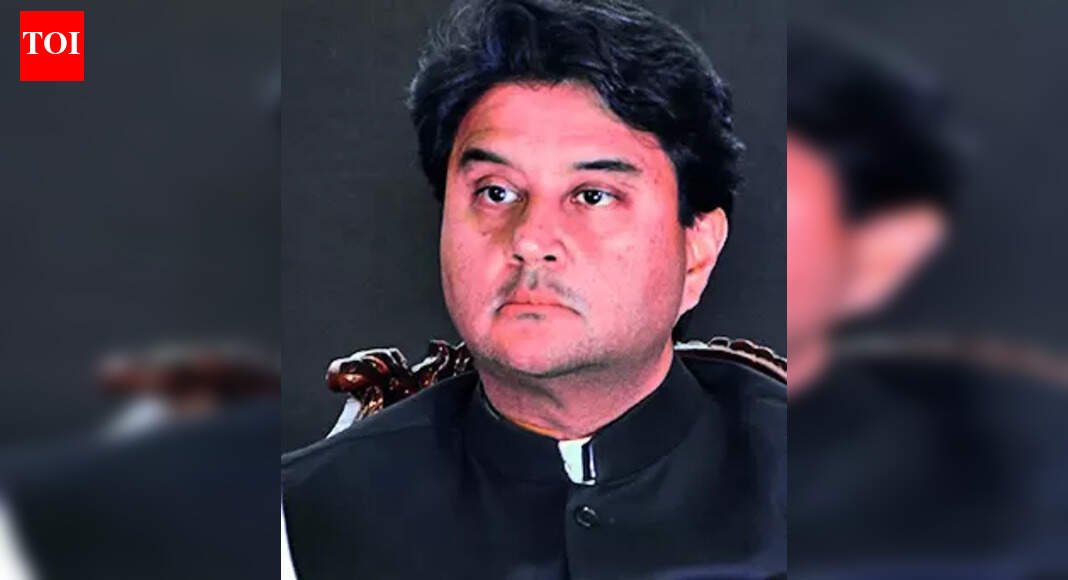
NEW DELHI: Communications minister Jyotiraditya Scindia on Thursday said the Congress party has been left behind as the country moves forward and progresses on the global stage, with citizens finding the opposition party’s criticism of the govt ineffective and pessimistic.“The train has left the station. Congress is still at the station. The country is moving forward as all 36 bogies – 28 states and 8 Union territories – move ahead. The train is powering the world,” Scindia said. Asked about Congress neta Rahul Gandhi and his criticism of Modi govt on foreign soil, Scindia, who quit Congress a few years ago, said, “For those who go abroad and on foreign soil talk our Maa Bharti down, there is no space for them in the souls, hearts and minds of 140 crore Indians. But some people still refuse to learn. And so, the country moves on.”Responding to charges that the BJP-headed govt calls any criticism of its governance ‘anti-national’, Scindia admitted that mistakes can happen. “Certainly, all of us are fallible. You cannot say no one makes mistakes. But as long as you have the trust of the citizens, you should be proud of what India has become… But the tirade, tone and tenor of the leader – whose only thing is to bring down the image of our country and get the chair – has been rejected by the people. Indians have no space for these pessimists.”On the Special Intensive Revision and the mammoth exercise of revision of voter lists, he dismissed the Opposition’s charge of ‘vote chori’ as opportunistic. “Is it the first time this is happening? This exercise used to happen every 15 years and also during the time of Jawaharlal Nehru and Indira Gandhi. Then how can it be wrong in Modi’s time? If you win the election due to SIR, then it is good. If you lose, then it is vote chori.


Source link

File Muda scam report involving Sidda by Dec 23, court tells Lokayukta police | India News


File Muda scam report involving Sidda by Dec 23, court tells Lokayukta police

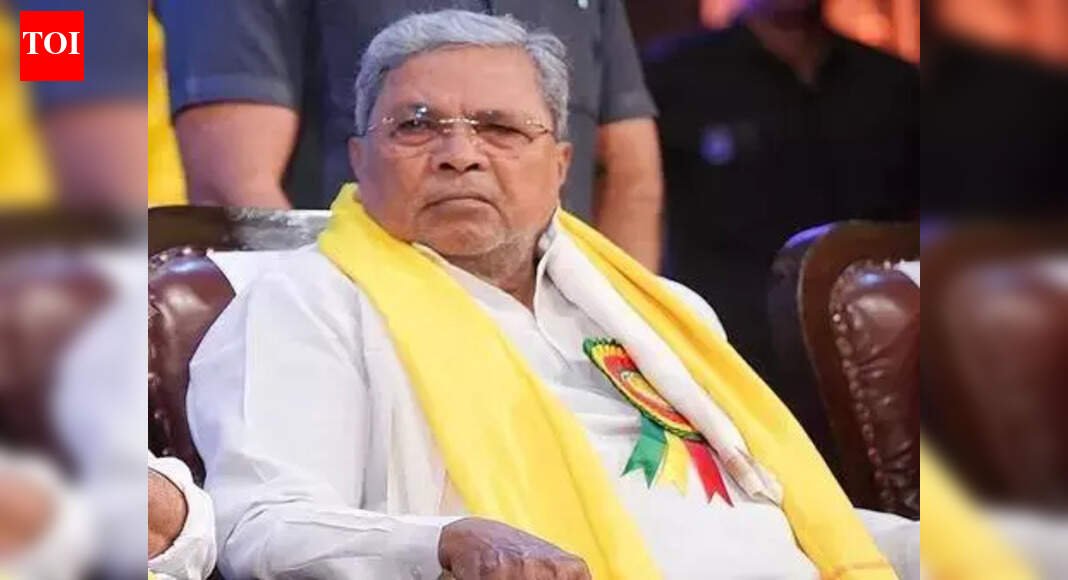
BENGALURU: Criticising the Lokayukta police for delaying the submission of its final report in the Muda scam case, a special court for elected representatives in the city on Monday directed the agency to file its report by Dec 23 on a protest petition challenging the clean chit given to chief minister Siddaramaiah, his wife Parvati, and two others.Mysuru-based activist Snehamayi Krishna filed the protest petition against the ‘B report’ submitted by the Lokayukta police, which cited a lack of evidence. Krishna contended that the investigation contained serious loopholes that resulted in a clean chit to Siddaramaiah, Parvati, her brother Mallikarjuna Swamy, and the original landowner, Devaraju.In his complaint to the court last year, Krishna accused Siddaramaiah and his family of profiting by Rs 56 crore. In 2021, Siddaramaiah’s wife received 14 housing sites from Muda in exchange for 3.16 acres of land acquired by Muda. The land was gifted to Parvati by her brother in 2010.After the special court directed a probe, Siddaramaiah’s family returned the sites to Muda. Krishna told TOI, “The special judge, Santosh Gajanana Bhat, has directed the Lokayukta police to submit their report by Dec 23. The judge pointed out to Lokayukta that he has given them enough time. The Lokayukta is trying delay tactics to protect Siddaramaiah and others.”


Source link

SC upholds man’s will cutting off daughter for marrying ‘outsider’ | India News


SC upholds man's will cutting off daughter for marrying 'outsider'
Says Testator’s Wish Assumes Pre-Eminence

NEW DELHI: The string of landmark judgments on gender equality could not help Shyla Joseph get an equitable 1/9th share of the property of her father N S Sreedharan, who had nine children but in his will disinherited her for marrying outside the community.A Supreme Court bench of Justices Ahsanuddin Amanullah and K Vinod Chandran reversed the concurrent findings of the HC and the trial court which had doubted the will and allowed equitable partition of Sreedharan’s property among the nine children, including Shyla.Writing the judgment, Justice Chandran said, “There can be no interference to the will which stands proved unequivocally. The judgment and decree of the high court and that of the trial court stands set aside. The plaintiff (Shyla) is found to have no claim over the properties of her father, which by a will have been bequeathed to the other siblings of the plaintiff.”Once the SC doubted the claim, senior advocate P B Krishnan, appearing for Shyla, requested the bench that her entitlement at best was just 1/9th share of her father’s assets which is a negligible portion of the properties.The bench said the question of equality does not arise in a case relating to the wish of a man about division and inheritance of his properties. It said, “We are not on equity, and the wish of the testator assumes pre-eminence. The last will and testament of the testator cannot be digressed from or frustrated.” While allowing the appeal of her siblings, the bench ordered dismissal of the suit she had filed for equitable partition of her father’s properties.It said the rule of prudence cannot apply to the contents of a will, which is the wish of the individual who has absolute discretion to divide his properties. If all siblings had been divested of their inheritance through a will, then the rule of prudence could have been applied by the courts, the bench said.Referring to the reason for which Sreedharan had disinherited Shyla, the SC said, “There is a reason stated for such exclusion, the acceptability of which to our minds, is not what the rule of prudence dictates. We cannot put the testator in our shoes… We cannot substitute our opinions in place of that of the testator; his desire prompted by his own justifications.”


Source link

SC satisfied as Kerala govt, governor agree on VCs | India News


SC satisfied as Kerala govt, governor agree on VCs

NEW DELHI: As Kerala govt and the governor told the court that they agreed on names to be appointed as vice-chancellor for the two state universities, SC Thursday expressed satisfaction and hoped that they would continue to keep talking and work together in the larger interest of the state.As the tussle between the two authorities was blocking the process of appointment for two varsities, SC decided to intervene and appointed a committee headed by its retired judge Sudhanshu Dhulia to recommend names for appointment. It passed the order after both CM and governor consented for the panel. The dispute refused to die as both functionaries again did not come to consensus on selecting two out of nine names suggested by the committee and the court thereafter asked the panel to recommend names on the order of preference.As the matter was called Thursday, attorney general R Venkataramani, appearing for governor, told SC that both functionaries have come to a consensus on who are to be appointed. “We are happy to record that the chancellor and govt, in one voice, reported that appointment of VC in two universities have been made from empanelled list. We place our gratitude to the office of Justice Sudhanshu Dhulia. Our endeavour was to ensure that institutions have a permanent head, which alone would ensure that interests of all stakeholders are safeguarded. We place our appreciation to the authorities who are parties in the matter and who, in the true spirit of the Constitution, especially Article 144, have acted in aid of the orders of this Court,” the bench said.After the order was dictated, the AG said it was the Kerala governor who invited CM, and then they were able to reach a consensus. Responding to this, the bench said, “I hope they keep talking like this, over a mug of coffee, for the larger interest of people.”


Source link

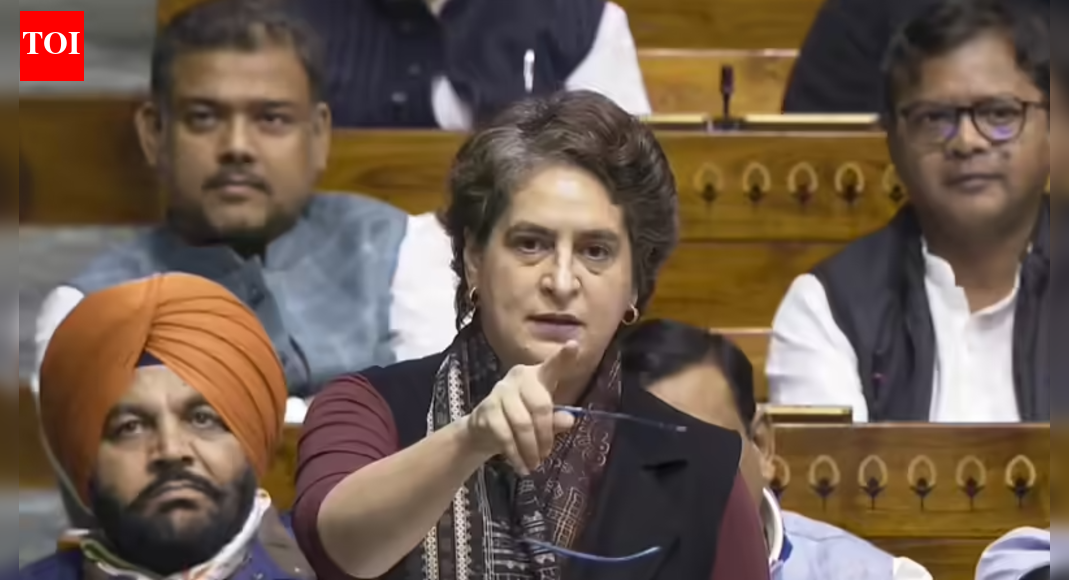
Priyanka Gandhi meets Nitin Gadkari over work, shares food & laughter | India News


Priyanka Gandhi meets Nitin Gadkari over work, shares food & laughter

NEW DELHI: An impromptu request for a meeting from Congress functionary Priyanka Gandhi Vadra during Question Hour in Lok Sabha and quick response from Union road transport minister Nitin Gadkari got huge traction in Parliament Thursday. Their meeting in the minister’s chamber saw work, laughter, and food tasting.During Question Hour, Priyanka raised concerns over recurring landslides on the Chandigarh-Shimla highway, pointing out that low retaining walls were failing to prevent slope collapse. She also sought an appointment with Gadkari to discuss highway issues in her Wayanad constituency. Responding promptly, Gadkari said his doors were always open, and no appointment was needed to meet him.During the meeting, Priyanka discussed six road projects that pass through Kerala, including a few under Centre. Gadkari assured her that he would look into them. Some eyewitnesses said during the discussion, Gadkari pointed out that Rahul Gandhi had met him over some roads in his constituency. “Bhai ka kaam kar diya, behen ka nahin karunga toh aap bolenge ki nahi kiya (You’ll complain that I addressed your brother’s concerns but not yours),” he said, drawing laughter from Priyanka and others in the room.They added Gadkari also offered a rice dish to Priyanka that was made after watching YouTube videos. Congress MP Deepender Singh Hooda was also seen tasting the rice balls while talking to Gadkari.


Source link

VB-G Ram G Bill cleared by Parliament: Rajya Sabha passes law hours after Lok Sabha approval; Opposition protests | India News


VB-G Ram G Bill cleared by Parliament: Rajya Sabha passes law hours after Lok Sabha approval; Opposition protests

Parliament on Friday cleared the Viksit Bharat – Guarantee for Rozgar and Ajeevika Mission (Gramin) or VB-G Ram G Bill, 2025, with the Rajya Sabha passing the legislation hours after its approval in the Lok Sabha, amid strong opposition protests and repeated demands for scrutiny by a parliamentary committee.Earlier, the lower house passed the Bill on Thursday.Replying to the debate in the Lok Sabha, Rural Development Minister Shivraj Singh Chouhan said the new law substantially improves upon MGNREGA, which he described as having been “riddled with corruption and inefficiency”. He said the revamped scheme seeks to move beyond wage payments to focus on creation of durable rural assets, while also making implementation more transparent.Opposition members, led by Congress MPs, protested against the bill, alleging that the government had removed Mahatma Gandhi’s name from the rural employment guarantee framework.Also Read: MGNREGA to be replaced with VB–G Ram G: What it is and how it’s different — key FAQs answered As demands to refer the bill to a committee were rejected, opposition MPs entered the well of the House, tore copies of the bill and continued demonstrations until its passage.Rejecting the criticism, Chouhan said Mahatma Gandhi’s name was not part of the original 2005 legislation and was added only in 2009. Turning the charge back on the Congress, he said numerous schemes, institutions and awards had been named after members of the Nehru-Gandhi family, citing figures to underline his point.The minister said the government has allocated over Rs 1.5 lakh crore for the scheme, with the Centre’s share exceeding Rs 95,000 crore. Addressing concerns over states bearing 40% of the expenditure, he said both the Centre and states share responsibility for development.Chouhan accused the opposition of turning parliamentary debate into “bheedtantra and goondatantra” and criticised the conduct of Congress leaders during the discussion. Speaker Om Birla said 99 MPs participated in the eight-hour debate before the bill was passed.


Source link