Breaking News
E-challan fine recovery down in 2024, says govt | India News


E-challan fine recovery down in 2024, says govt

New Delhi: Recovery of fines raised through e-challans reduced in 2024 to Rs 3,834 crore compared to Rs 4,150 crore in 2023, while unpaid fines spiked from Rs 6,654 crore in 2023 to Rs 9,097 crore in 2024, as per road transport ministry data provided in RS, reports Dipak Dash.Replying to a question on e-challans issued, fines recovered and unpaid e-challans for traffic violations between 2022 and 2024, the ministry said UP topped the list both in recovery of fines and pending challans, followed by Rajasthan. UP reported recovery of Rs 1,717 crore in the three years and the pending fine was Rs 5,785 crore. Tamil Nadu and Kerala reported high unpaid dues at Rs 1,235 crore and Rs 814 crore, respectively. Data showed last year, only 30% of fines were recovered — Rs 3,834.8 crore against fine of Rs 12,933 crore.


Source link

Matters of personal liberty must get top priority in court: CJI | India News


Matters of personal liberty must get top priority in court: CJI
Chief Justice of India Surya Kant

NEW DELHI: Unveiling details of his brain child ‘Unified Judicial Policy’ (UJP), CJI Surya Kant on Saturday said courts will give top priority to cases relating to personal liberty, ensure predictability in decisions relating to commercial and economic matters to foster investor confidence, and deal empathetically with disputes relating to family, consumers and social justice.Speaking at the Regional Judicial Conference at Jaisalmer, the CJI said citizens approach courts not only to seek remedies but with the hope that the law will be applied consistently, liberties will be guarded, rights will be clarified and govts will be held accountable.He said predictability of the justice delivery system, pruned of legal jargon, is important to further public understanding and maintain faith in the system. Predictability is rooted in consistency, reason, precedent and timely disposal, he said, adding, “investors look for it, accused persons rely on it, families hope for it and society depends on it.”“A justice system that operates unpredictably or without clear guiding principles inevitably weakens public confidence because litigants cannot anticipate how similar cases will be treated or when their matters will be resolved,” CJI Kant said. “When judicial outcomes reflect principled reasoning, consistent application of law and transparent evolution of doctrine, confidence in the courts is strengthened, as people come to understand justice is not dependent on chance but guided by established norms.Technology has evolved into a constitutional instrument that strengthens equality before the law, expands access to justice and enhances institutional efficiency. It allows the judiciary to transcend physical barriers and bureaucratic rigidities to deliver outcomes that are timely, transparent and principled.Justice systems, one headed by HCs in the states and the other operated nationally by SC, are not operating in parallel, he said while underscoring the need for UJP, under which technology will be the engine to ensure convergence of the two systems by harmonising procedural norms, prioritising cases, removing delays and formatting coherently judgments across jurisdictions. “But technology alone cannot sustain the Rule of Law; it must operate alongside the deeper constitutional traditions that anchor judicial behaviour and preserve institutional coherence,” he said.CJI Kant said uniformity in judgment and reasoning is a must in cases of similar nature. “A Unified Judicial Policy is not merely an administrative doctrine; it is the architecture of constitutional confidence. It strengthens the idea that our courts are not isolated entities but parts of one Republic, driven by common values, delivering coherent justice,” he said.“Ultimately, the measure of innovation is not the complexity of the software we deploy, but the simplicity with which a citizen understands the outcome of their case and believes that justice has been served,” he stressed.


Source link

Delhi plans to run 11 govt hospitals on PPP model | India News


Delhi plans to run 11 govt hospitals on PPP model

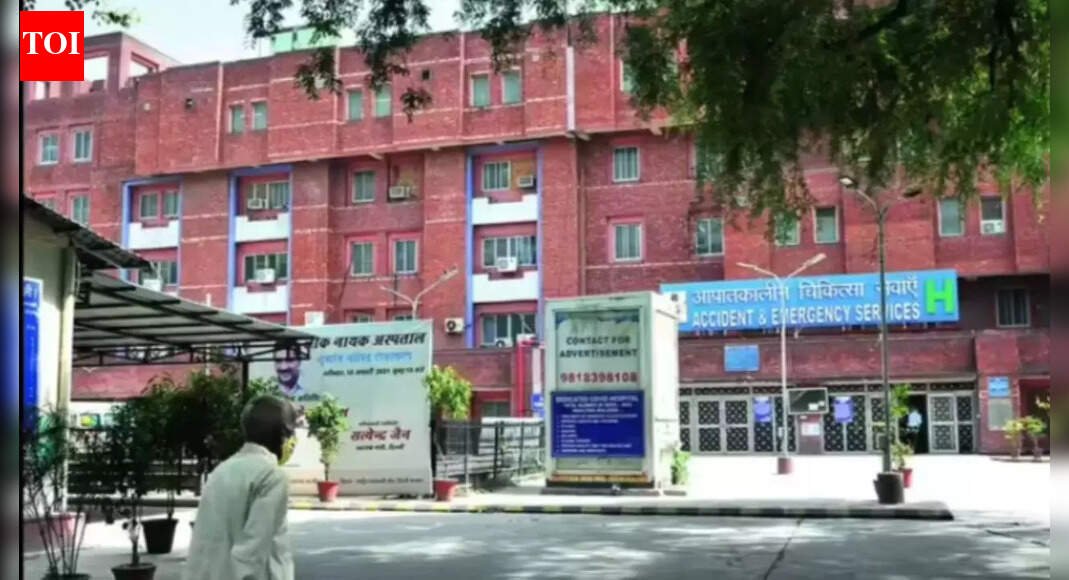
New Delhi: Delhi govt has moved ahead with its plan to operate 11 govt hospitals, most of them under construction, through the public-private partnership (PPP) model. The initiative aims to expand healthcare infrastructure and fast-track long-stalled projects. Govt has invited bids to conduct a detailed feasibility study to assess the financial, technical and operational viability of the proposal, reports AlokKNMishra .Once operational, these facilities will add 10,073 beds, including 4,314 ICU beds, to the city’s healthcare system. The plan covers four general hospitals and seven ICU-bedded hospitals located across different parts of the capital.Under the proposed framework, private agencies selected through a bidding process will take over ongoing construction.


Source link

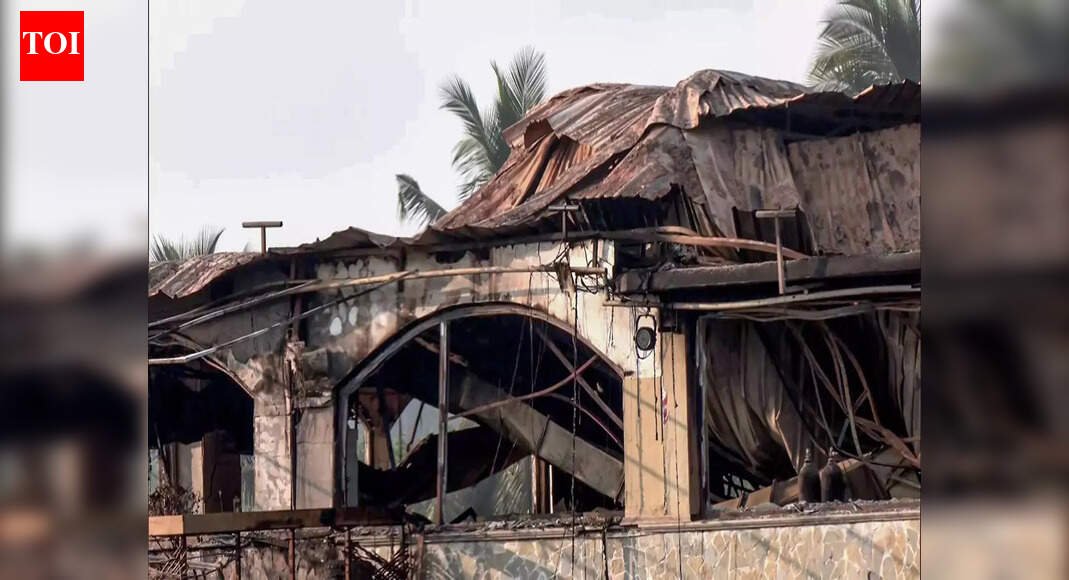
Goa nightclub inferno: Landowner, Arpora–Nagoa sarpanch questioned; magisterial panel probes cause | India News


Goa nightclub inferno: Landowner, Arpora–Nagoa sarpanch questioned; magisterial panel probes cause
The nightclub in Arpora, Goa, was devastated by a major fire on December 6 (ANI photo)

NEW DELHI: Original landowner Pradeep Ghadi Amonkar and Arpora–Nagoa sarpanch Roshan Redkar were questioned till late Saturday night by a magisterial inquiry committee probing the deadly fire at the Birch by Romeo Lane nightclub in North Goa.Amonkar appeared before the panel following a summons issued for 3.30 pm and was questioned until around 10.30 pm. His lawyer, Prasenjeet Dhage, said the inquiry focused on understanding the circumstances that led to the fire. He described the questioning as detailed and intense.“My client had a warrant of appearance before the committee today,” said Amonkar’s lawyer Prasenjeet Dhage. “It was a very intensive and vigorous inquiry,” advocate Dhage said as quoted by PTI.The Goa government has set up the magisterial inquiry committee, headed by North Goa district magistrate Ankit Yadav, to investigate the incident, which claimed 25 lives.Sarpanch Roshan Redkar also appeared before the committee and said he responded to all questions put to him. He has earlier secured pre-arrest bail from a local court in connection with the case.Meanwhile, Goa Police have arrested five managers and staff members of the nightclub. The club’s co-owners, Gaurav Luthra and Saurabh Luthra, who allegedly left India after the incident, have been detained in Thailand.


Source link

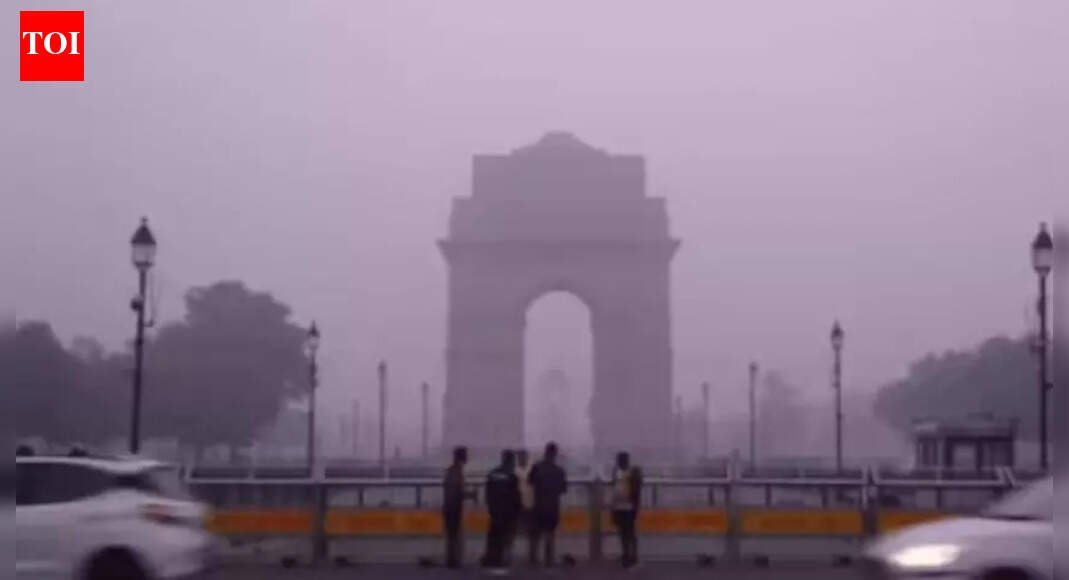
GRAP 4 imposed as Delhi air worsens | India News


GRAP 4 imposed as Delhi air worsens

NEW DELHI: The air quality in Delhi sharply deteriorated to the ‘severe’ category on Saturday as a toxic greyish haze blanketed the city. The 24-hour average overall AQI released at 4pm was 431, as opposed to 349 a day earlier. However, the AQI subsequently slipped into the ‘severe plus’ category for the first time this year, reaching 452 at 8pm.This prompted CAQM to impose stringent measures under GRAP, first under stage 3 and then stage 4 as the air worsened, on the same day. No respite from hazardous air quality is expected on Sunday. Experts said the AQI spiked due to high emission loads and unfavourable meteorological conditions. The farm fire season is over, while an increase in moisture due to the formation of fog, calm winds, and inversion trapped the pollutants.Among the measures invoked are a ban on construction and demolition, no entry of non-essential trucks, hybrid mode for schools, and a ban on BS-III petrol and BS-IV diesel vehicles.The Delhi govt has directed that all govt and private offices operate at 50% strength, with the rest working from home. Data from the Central Pollution Control Board showed that the AQI rose rapidly on Saturday. It was 397 at 9am, in the higher end of the ‘very poor’ category, but reached the severe range at 10am at 401.According to the India Meteorological Department, the lowest visibility at Safdarjung, the city’s base station, was observed at 400 metres at 8am. It improved to 500 metres at 9.30am.Anumita Roychowdhury, executive director (research and advocacy), Centre for Science and Environment, said, “As the atmospheric conditions are turning unfavourable with low wind speed and poor dispersion of pollutants, high emissions from local sources are getting trapped, spiking the peak levels.”CAQM said a feeble western disturbance is approaching north-west India, and the prevailing meteorological condition has marked a reduction in wind speed, at times becoming calm, a shift in wind direction from westerly to easterly, and an increase in moisture content in the lower atmosphere. “Such conditions during the winter season are conducive to the formation of smog,” it said.


Source link

Messi visit ends in chaos as angry stadium erupts | India News


Messi visit ends in chaos as angry stadium erupts
VIPs Surround Stars, Block View From Stands

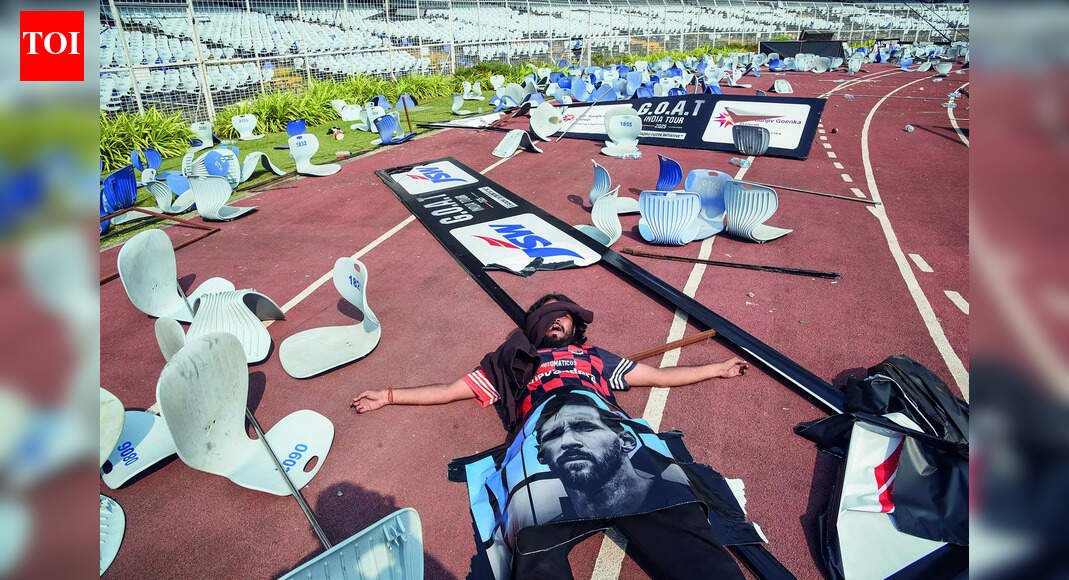
KOLKATA: Frenzy at dawn. Fury by noon. Chaos by afternoon. Lionel Messi’s much-hyped Kolkata appearance collapsed into bedlam at Salt Lake stadium Saturday after tens of thousands of fans who paid steep prices for a glimpse of the football icon saw him for barely minutes – if at all – before he was whisked away, triggering vandalism, pitch invasion and mass outrage.Around 60,000 fans, many in Argentina’s blue-and-white stripes with “Messi” emblazoned on their backs, packed the stands from early morning. Tickets cost between Rs 5,000 and Rs 16,000. Expectations soared. Tempers snapped.

Messi’s Kolkata Visit Turns Chaotic As Angry Fans Vandalise Banners At Salt Lake Stadium

Argentina’s World Cup-winning captain stepped onto the pitch at 11.30am to a deafening roar. Within moments, he was engulfed by a crush of VIPs, officials and selfie-seekers. Fifteen minutes later, with the crowd around him refusing to thin out, Messi and Inter Miami teammates Luis Suarez and Rodrigo De Paul were pulled out for security reasons. The stands never got their moment.On the way out, Messi was briefly introduced to former India cricket captain Sourav Ganguly, who had just arrived and taken a seat in a makeshift tent on the pitch. Bollywood star Shah Rukh Khan, scheduled to do a ceremonial lap with Messi, Suarez, De Paul and Ganguly, never entered the stadium. He waited outside, then left as the situation spiralled.When it became clear Messi would not return, the stadium exploded. The stadium — refurbished for the 2017 Under-17 FIFA World Cup — bore the brunt of the anger. Police were overwhelmed. Fearing a stampede, DGP Rajeev Kumar rushed to the venue and led crowd-control efforts for nearly 90 minutes. Officers avoided a lathi-charge, mindful of narrow exits and packed concourses. CM Mamata Banerjee, en route to the stadium, turned back after being briefed on the scenes. “Deeply disturbed and shocked by the mismanagement,” she wrote on X, ordering a probe to fix responsibility and recommend safeguards for future events. For Kolkata, it was a bitter contrast to memory. Messi’s visit in 2011 ended with Argentina beating Venezuela 1-0 at the same venue. This time, the superstar landed in the city early Saturday, attended a sponsor programme at his hotel, then arrived at the stadium smiling, waving and greeting former India players. Surrounded by politicians, celebrities, organisers and VIP pass-holders, he was scarcely visible to the paying crowd. “We never imagined the day would end in such a chaos,” said former India forward Dipendu Biswas, who managed to get his jersey signed. Behind the collapse lay a single, glaring problem: too many people where none should have been. Messi struggled to take a step as hundreds clustered around him .


Source link

‘Dhurandar in rebranding’: Congress slams BJP for renaming MGNREGA; questions hatred for Gandhi | India News


‘Dhurandar in rebranding’: Congress slams BJP for renaming MGNREGA; questions hatred for Gandhi

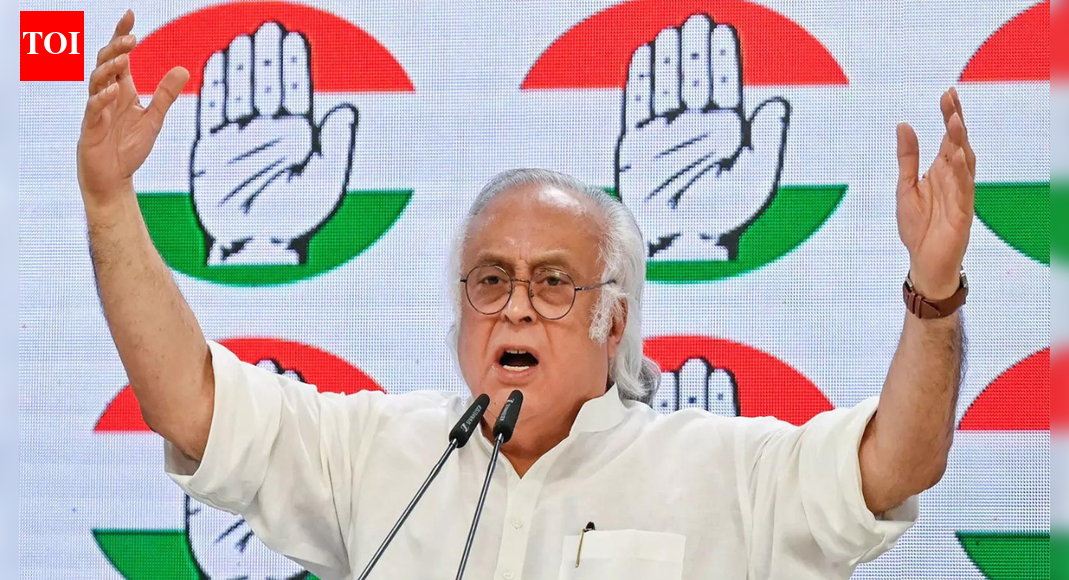
NEW DELHI: The Congress on Saturday criticised the Modi government after the Union cabinet approved a bill to rename the Mahatma Gandhi national rural employment guarantee act (MGNREGA), questioning why Mahatma Gandhi’s name needed to be dropped and accusing the Centre of focusing on rebranding rather than reform. Reacting to the Cabinet decision, Congress general secretary in-charge communications Jairam Ramesh said the government was a “dhurandhar” at renaming schemes and laws. “They renamed the Nirmal Bharat Abhiyan to Swachh Bharat Abhiyan, and the rural LPG distribution programme to Ujjwala. They are experts in re-packaging and branding,” he told PTI. Ramesh questioned the rationale behind the move, saying, “They hate Pandit Nehru but it seems they also hate Mahatma Gandhi. What’s wrong with the name Mahatma Gandhi, why rename the Mahatma Gandhi National Rural Employment Guarantee Act to Pujya Bapu Employment Guarantee Scheme?”PTI citing Sources said the Cabinet on Friday cleared a Bill to rename the scheme as ‘Poojya Bapu Grameen Rozgar Yojna’ and increase the guaranteed number of workdays from the current 100 to 125 days.Congress general secretary in-charge organisation K C Venugopal said Prime Minister Narendra Modi, who had earlier described MGNREGA as a “monument of failure”, was now renaming the scheme to claim credit for it. “It’s yet another way of erasing Mahatma Gandhi from our national psyche, especially from the villages, where, he said, India’s soul resides,” he alleged in a post on X.Venugopal also accused the government of neglecting the scheme, saying the renaming was a “cosmetic change”. “MGNREGA workers have been demanding higher wages, but the Centre has been reducing allocated funds for the scheme year after year,” he said, alleging that mounting arrears reflected a “carefully planned strategy to engineer a slow death for the scheme”.“But Mr Modi, rename it all you want, the people know it was Dr Manmohan Singh ji and Smt Sonia Gandhi ji who brought this transformative scheme to every village of India,” Venugopal added.Enacted in 2005, MGNREGA is a flagship rural employment programme that guarantees at least 100 days of wage employment in a financial year to rural households whose adult members undertake unskilled manual work.


Source link

‘What’s the benefit?’: Priyanka Gandhi questions proposed MGNREGA renaming; flags cost | India News


‘What’s the benefit?’: Priyanka Gandhi questions proposed MGNREGA renaming; flags cost

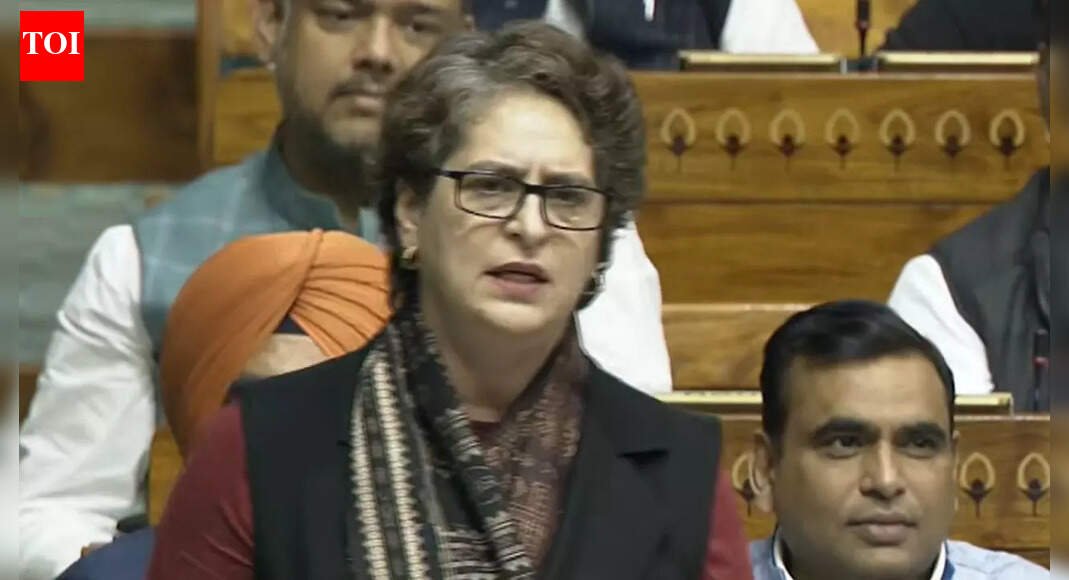
NEW DELHI: Congress MP Priyanka Gandhi Vadra on Saturday questioned the Centre’s reported decision to rename the Mahatma Gandhi National Rural Employment Guarantee Act (MGNREGA), arguing that the exercise would lead to unnecessary expenditure of government resources without delivering any clear benefit.Her remarks came a day after the Union cabinet approved a Bill to rename the scheme and increase the number of guaranteed workdays. According to these sources, MGNREGA will be renamed the ‘Poojya Bapu Grameen Rozgar Yojna’, with the annual work guarantee raised from 100 days to 125 days.

‘Only 2 Reasons’: Priyanka Gandhi Slams PM Modi, Links Vande Mataram Debate To Bengal Polls

Also read: Union Cabinet approves renaming MGNREGA as Pujya Bapu Gramin Rojgar YojnaSpeaking to reporters, Priyanka Gandhi said she could not understand the rationale behind changing the name of a flagship rural employment programme enacted in 2005. “I can’t understand what mentality is behind this. First, this is Mahatma Gandhi’s name, and when it is changed, the government’s resources are spent on it again. From offices to stationery, everything has to be renamed, so this is a big, costly process. So what’s the benefit of doing this unnecessarily? I can’t understand,” she said, as quoted by ANI.MGNREGA, also known as NREGA, is one of India’s largest social welfare schemes, aimed at enhancing livelihood security in rural areas. It guarantees at least 100 days of wage employment each financial year to rural households whose adult members volunteer for unskilled manual work. Any Indian citizen aged 18 or above and residing in a rural area can apply, with employment to be provided within 15 days. Wages are deposited directly into bank or post office accounts, with equal pay for men and women, and the scheme covers the entire country except fully urban districts.The proposed renaming has also drawn criticism from other opposition leaders. Shiv Sena (UBT) MP Priyanka Chaturvedi described the move as a “distraction” and accused the Centre of trying to divert public attention. “Because of the frustration, such decisions are being made. This is another way to distract attention,” she said, adding that those who know history “will always respect the Gandhi family for their contributions”.Chaturvedi also welcomed Lok Sabha Leader of the Opposition Rahul Gandhi’s call for a parliamentary discussion on air pollution, arguing that urgent issues affecting public health were being sidelined. Rahul Gandhi earlier urged all parties to work together to address what he described as a crisis destroying children’s futures, saying, “Most of our major cities are living under a blanket of poisonous air… This is not an ideological issue.


Source link

Wonder if MP HC aware of condonation delay law: SC | India News


Wonder if MP HC aware of condonation delay law: SC

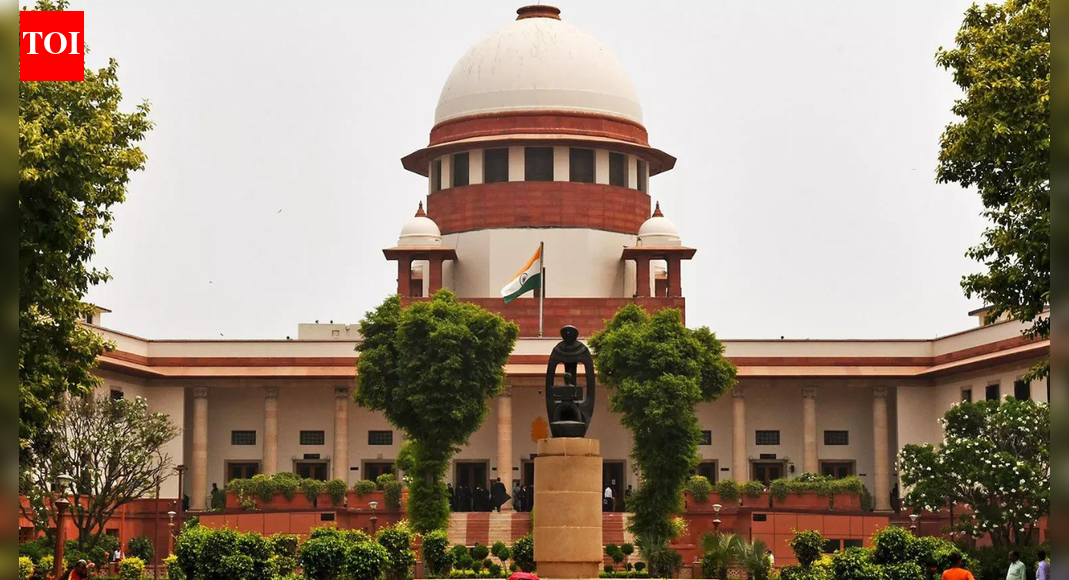
NEW DELHI: Expressing dismay over the Madhya Pradesh high court order condoning delay of over four years on the state govt’s part to file an appeal, the Supreme Court has said it “wonders” whether the high court was aware about law laid down by the apex court on condonation of delay, and quashed the order.The Limitation Act states that appeals must be filed within specific timeframes, and if not, a petitioner would have to request condonation, or pardon, for the delay before the court concerned in order for the matter to be heard.A bench of Justices J B Pardiwala and Prasanna B Varale asked HC to re-examine the case in light of SC’s recent judgment on pardoning delay and pass a reasoned order. “We are dismayed to say from the tenor of the impugned order that HC condoned the delay of 1,612 days on mere asking without highlighting the sufficient cause that might have been assigned by the state. The law, insofar as limitation and condoning delay is concerned, is well-settled. We wonder if HC is aware of the following decisions of this court — (1) Union of India vs Jahangir Byramji Jeejeebhoy, (2) Shivamma (Dead) By Lrs. vs Karnataka Housing Board,” the bench said in its order.Additional solicitor general Aishwarya Bhati, appearing for the state government, told the bench the delay happened due to the Covid-19 pandemic. However, the bench said HC did not mention any reason for the condoning delay. It said SC, in the recent past, has delivered judgments explaining in what manner the sufficient cause has to be looked into, and the plea for condonation of delay is to be considered.“In such circumstances, referred to above, we set aside the impugned order passed by the HC and remand the matter to the HC for fresh consideration,” the bench said.SC, in its various rulings, had repeatedly held that the state or any of its instrumentalities could not be given preferential treatment for condonation of delay under Section 5 of the Limitation Act.Contrary to SC judgments, HC in its order on Sept 1 said, “It is well settled in law that in the matter of condonation of delay liberal approach has to be adopted by court, therefore, on due consideration of the submissions advanced by learned counsel for the petitioner and the reasons assigned in the application, which is supported by the affidavit interim application is allowed and the delay of 1,612 days is hereby condoned.The apex court was hearing an appeal against the HC order. The petition, filed through advocate Dushyant Parashar, said the high court passed the order on the basis of the state’s affidavit, which had no explanation for the delay and was only an eyewash, which was accepted by the HC.


Source link

Indians on board: Iran seizes oil tanker in Gulf of Oman; diesel cargo totals six million litres | India News


Indians on board: Iran seizes oil tanker in Gulf of Oman; diesel cargo totals six million litres
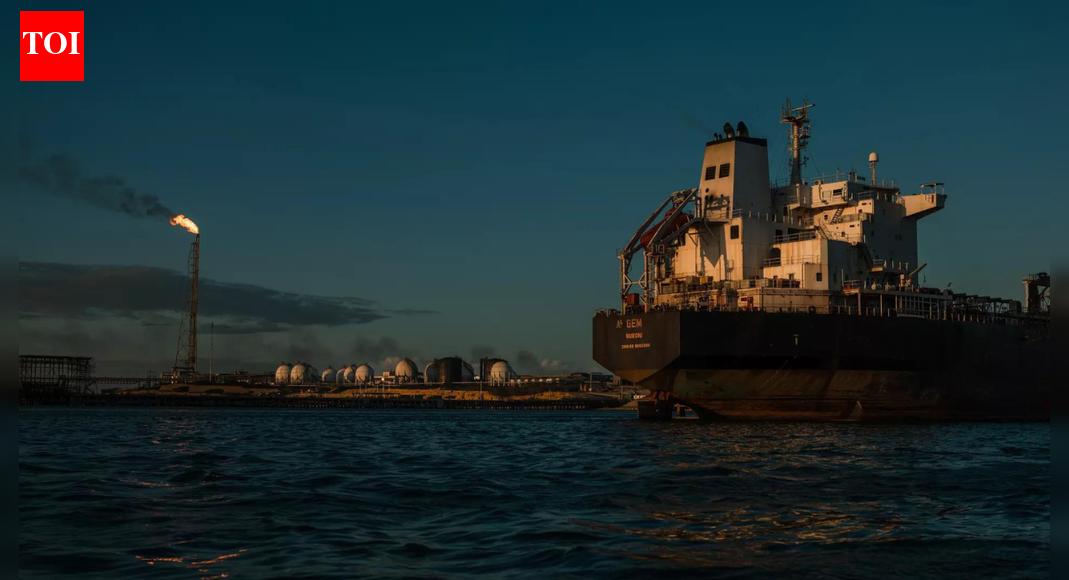
(Representative image credit: NYT)(Photo credit: NYT)

Iran has seized an oil tanker in the Gulf of Oman saying the vessel was carrying six million litres of diesel fuel and had 18 crew members from India, Sri Lanka and Bangladesh on board, as per news agency AFP. Fars news agency cited an official from Iran’s southern Hormozgan province, saying the tanker had disabled all its navigation systems before being intercepted.The operation reflects Iran’s frequent announcements of boarding ships it claims are transporting fuel illegally. Fuel prices in Iran are among the lowest globally, making smuggling highly profitable. Last month, Iranian authorities seized another tanker for carrying what they described as an unauthorised cargo, denying that the move was in retaliation against any foreign country.Iran has a history of targeting commercial vessels in the region. In November, it confirmed the seizure of the Marshall Islands–flagged tanker Talara in the Strait of Hormuz, alleging it carried an “illegal consignment” of petrochemical products en route to Singapore. That operation followed a court order, with the Islamic Revolutionary Guard Corps stating it was conducted to protect Iran’s national interests. Past incidents include attacks on commercial vessels using limpet mines in 2019, drone strikes in 2021 that killed two crew members, and the seizure of Greek and Portuguese-flagged tankers in 2022 and 2024.The latest seizure comes just two days after the United States took control of a tanker off Venezuela’s coast. Washington said the ship, transporting oil from Venezuela and Iran, was part of a sanctioned oil network supporting Hezbollah and Iran’s Islamic Revolutionary Guard Corps (IRGC). The US Coast Guard carried out the operation by boarding the vessel from a helicopter. President Donald Trump’s administration has been intensifying pressure on Venezuela, including sanctions and naval deployments, citing alleged links between Caracas, Iran, and drug-trafficking networks. The seized tanker, expected to dock in Galveston, Texas, will have its crew released upon arrival, US officials said. Venezuela’s government condemned the action as “blatant theft” and “international piracy,” with President Nicolas Maduro calling it an attack on free trade.The Gulf of Oman and the Strait of Hormuz are strategic chokepoints, with about 20% of the world’s oil trade passing through them. Tensions remain high as Tehran continues to assert control over maritime routes, while the US Navy’s Bahrain-based 5th Fleet maintains a presence to safeguard commercial shipping. The interception underscores the ongoing geopolitical contest over energy resources in the region and highlights the risks faced by international crews navigating these waters.


Source link