Breaking News
Zubeen’s manager, fest organiser among 4 to face murder trial | India News

Zubeen's manager, fest organiser among 4 to face murder trial
A 12,000-page chargesheet has been filed in the Zubeen Garg death case, with four individuals, including a woman, accused of murder. The investigation into the incident off Singapore’s St John’s Island on September 19 has established motive and conspiracy. The Assam Chief Minister expressed confidence in securing a conviction and plans for a fast-track court.

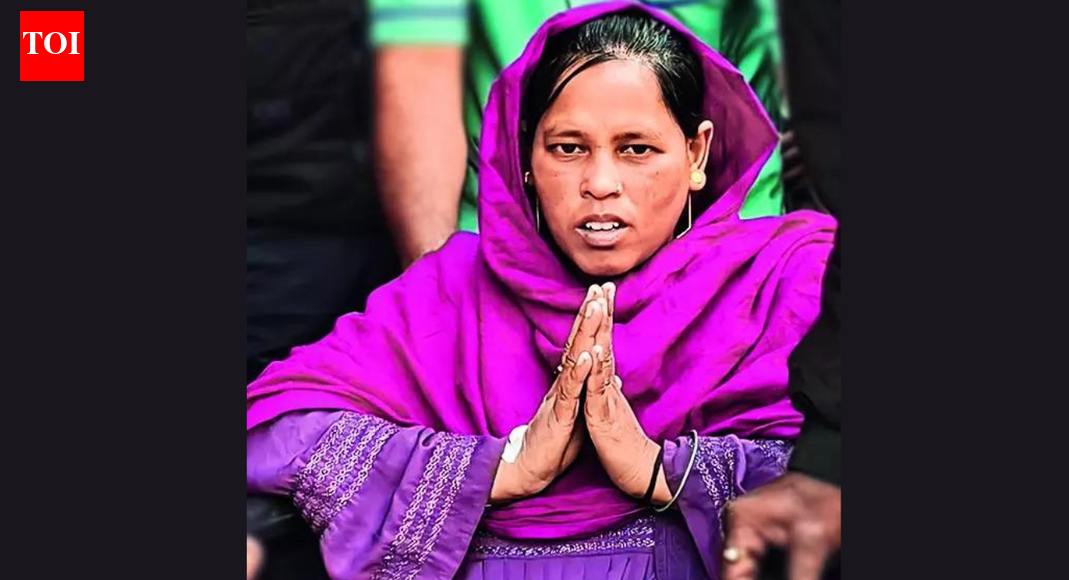
GUWAHATI: Four of the seven arrested suspects linked to cultural icon Zubeen Garg‘s death, including the lone woman in the group, have been charged with murder and another with culpable homicide not amounting to murder in a 12,000-page chargesheet filed Friday by the special investigation team (SIT) probing what happened off Singapore’s St John’s Island on Sept 19.North East India Festival organiser Shyamkanu Mahanta, at whose invitation Zubeen travelled to Singapore, the singer-composer-actor’s manager Siddharth Sharma, band member Shekhar Jyoti Goswami and female singer Amritprava Mahanta will face trial for murder (BNS Sec 103), common intention (Sec 3), and criminal conspiracy (Sec 61).Motive established in Zubeen case: Assam CM Himanta

Assam CM Calls Zubeen Garg’s Death ‘Plain Murder’, Drops Explosive Revelation

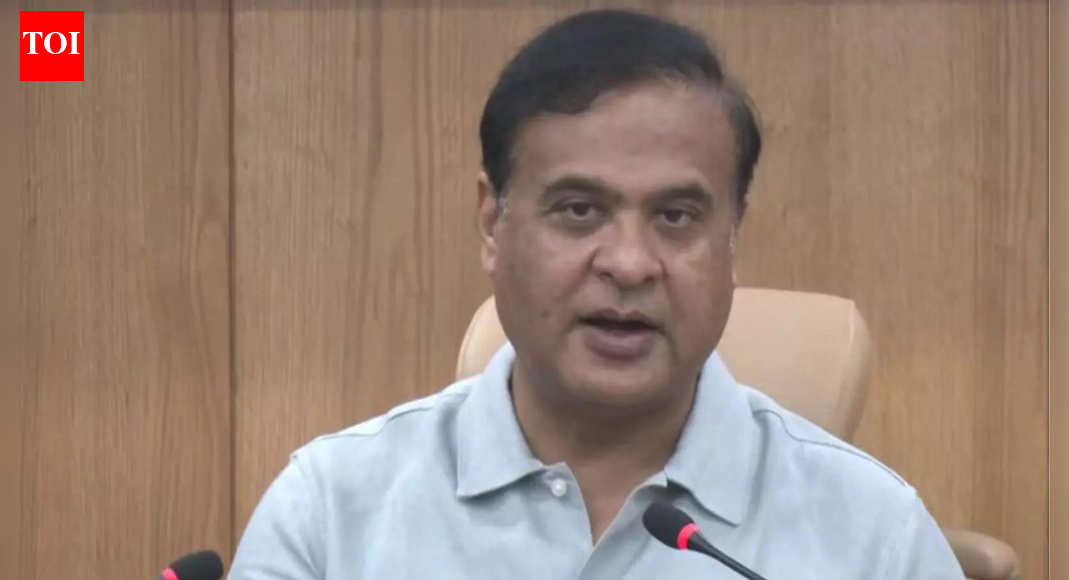
Zubeen’s cousin and suspended Assam Police Service officer Sandipan Garg has been charged with culpable homcide not amounting to murder (Sec 105), while PSOs Nandeswar Bora and Paresh Baishya will be tried for criminal breach of trust (Sec 316) and criminal conspiracy.While other details of the chargesheet received by the Kamrup district CJM’s court weren’t immediately available, CM Himanta Biswa Sarma said its submission within the stipulated timeframe of three months reflected the state govt’s commitment to ensuring justice for Zubeen.“We gave the people of Assam our word. As promised, we have filed a chargesheet under Section 103 (murder) and 11 other sections of BNS,” he said. “Motive and criminal conspiracy have been established and examined by the advocate general and our director of prosecution. Everyone is convinced the prosecution will be able to get a conviction.”The BJP-led govt plans to petition the chief justice of Gauhati high court to set up a fast-track court for the trial. Sarma said a special public prosecutor would be appointed once the case moves from the CJM’s court to a sessions judge. “These are legal steps that we have to meticulously follow,” he told reporters.The chargesheet includes the SIT’s reconstruction of events leading to Zubeen’s death, available evidence, statements of the suspects and the testimonies of 300-odd witnesses.Sarma said the SIT, led by special DGP MP Gupta, had put in “hard labour” to build what he said was a watertight case against the suspects. “Although we have received documents from Singapore, we have built the case with independent findings. Even if court says that no Singapore document is admissible, we have filed a chargesheet with sufficient documentation to prove the charges. Now, it is over to the court. It will definitely give justice.Shekhar Jyoti and Amritprava are in a sub-jail in Dima Hasao district’s Haflong while the rest are in Baksa district jail.Barring Shyamkanu and the two PSOs, the suspects were on the yacht that took Zubeen to the island for sightseeing and swimming. SIT has recorded the statements of 10 Assamese residents of Singapore who accompanied the group on that trip.



Source link

Consider bringing back Sunali’s husband, 3 others from Bangladesh: Supreme Court | India News


Consider bringing back Sunali's husband, 3 others from Bangladesh: Supreme Court
‘Examine On Humanitarian Grounds’

NEW DELHI: After ascertaining repatriation of a pregnant Sunali Khatun along with her eight-year-old son to India, Supreme Court on Friday asked the Union govt to consider on humanitarian grounds the pleas for bringing back four others, including her husband, who were deported to Bangladesh in June this year.A bench of CJI Surya Kant and Justices Joymalya Bagchi and Vipul M Pancholi was informed by West Bengal’s counsel Kapil Sibal and counsel Sanjay Hegde, who appeared for Sunali’s father Bhodu Sekh, that she is back in India and residing with her father. When the bench asked whether adequate healthcare facilities are being extended to her, the state govt said it is providing her with required medical facilities given her advanced stage of pregnancy.Both Sibal & Hegde requested the court & solicitor general Tushar Mehta to consider bringing back the four others, who were deported along with Sunali to Bangladesh, and claimed that they have every document to prove that they were Indian citizens.Mehta said govt will need time to verify documents. The bench said, “If govt thinks on humanitarian grounds they can be brought back, it can do so. That will be without prejudice to govt’s legal arguments in the case.”The SG drew attention to a report on Friday on Sunali and said publication of such reports was meant to create a narrative, which amounts to influencing public opinion. The CJI-led bench said criticising orders of the court & publishing court proceedings in a case is perfectly fine, but attempting to peddle a narrative through a newspaper publication timed to the date of hearing is avoidable.“There should be no running commentary when a matter is sub-judice. Healthy criticism of a judgment is welcome. But publishing opinions on a sub-judice matter… the author and publisher need to be responsible. We judges are totally immune to what is published in newspapers which we go through only in the evening,” the CJI said.Sibal said, “Globally, comments are made on sub-judice matters in newspapers. It is not a sacrilege if motive is not attributed to the judge.” The CJI said, “Problem arises when distorted and half-baked truth is published. It creates a misapprehension in the minds of people.” Hegde said, “We need to develop thick skin for all these things.” The bench posted the matter for further hearing on Jan 6, when it would consider the plea for repatriation of the other four.


Source link

Digitised states at higher cyber risk, says report | India News


Digitised states at higher cyber risk, says report
A new report reveals a surprising trend: wealthier, more digitalized Indian states are more vulnerable to cyberattacks. While richer states boast better defenses, they face a higher volume of threats. Conversely, poorer states, despite weaker defenses, experience fewer attacks. Karnataka, Tamil Nadu, and Telangana offer the least cybercrime protection, while Rajasthan and Assam lead in security.

NEW DELHI: Richer and more digitalised states face higher risk of cyber attacks than poorer and less digitalised states, a report said on Friday. “Poorer states perform well not because they have superior defences but because their protection is sufficient in the face of relatively low levels of digital attack, while richer states may have stronger defences, but face far more frequent attacks,” said the report by think tank ICRIER and technology firm Prosus.Karnataka, TN and Telangana provide least protection from cybercrime, while Rajasthan, Assam, Punjab, MP and Bihar scored highest. Delhi is most digitalised, followed by Kerala, Karnataka & Maharashtra. Jharkhand, Assam & Chhattisgarh rank lowest.


Source link

Mirwaiz asks Omar govt to stop arrest of people in decades old cases | India News


Mirwaiz asks Omar govt to stop arrest of people in decades old cases

SRINAGAR: Days after J&K Police arrested two persons in cases dating back nearly 30 years, Hurriyat Conference chairman Mirwaiz Umar Farooq on Friday asked the Omar Abdullah govt to intervene and stop such action. He accused the authorities of “harassing” individuals over matters long settled”, and said the move had created anxiety and uncertainty among those who had moved on.Mirwaiz said already thousands of “Kashmiri prisoners are languishing in jails in and outside J&K, some for decades, and arresting more people only adds to the woes and pain of Kashmiris”.Addressing the Friday congregation at Jamia Masjid, Mirwaiz said the continued detention of people for decades in jails outside J&K raised serious humanitarian and legal concerns. This often resulted in delays in trial proceedings and severely limited family access, running contrary to basic principles of humane treatment and natural justice, he said.Mirwaiz called for a review of the handling of old cases, and appealed for the transfer of detainees back to J&K.On Dec 10, police took two senior separatists into custody in connection with a 29-year-old rioting and Arms Act case. Former JKLF leader Javed Mir and Islamic Students League chairman Shakeel Bakshi were arrested after surrendering before a Srinagar court.Officials said the arrests are part of a renewed push to pursue long-pending cases from the peak of militancy in the 1990s.


Source link

‘Authorities must own every stage of projects’: Road ministry issues tunnel safety guidelines | India News


‘Authorities must own every stage of projects’: Road ministry issues tunnel safety guidelines

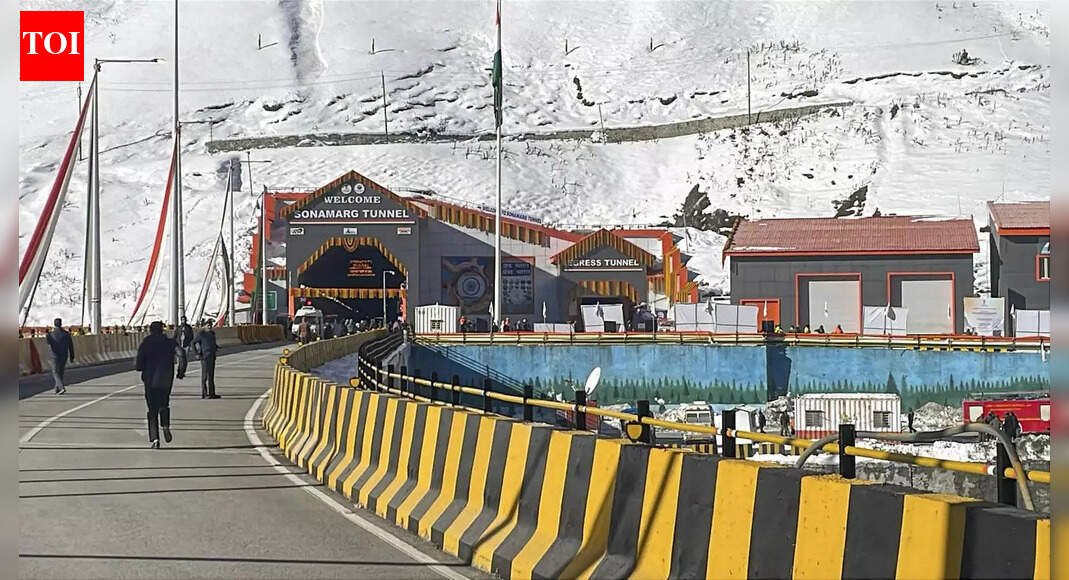
NEW DELHI: Authorities must take responsibility for every stage of a project, the road transport ministry said in its ‘Guidelines for Prevention and Mitigation of Road Tunnel Collapses’ issued on Thursday, amid a trend of highway authorities finding easy escape for such mishaps by passing the blame on contractors and consultants.As per the guidelines, the project in-charge must attend weekly risk management meetings with key project stakeholders. “The risk register shall remain a live document, regularly updated to ensure top risks are discussed and mitigation measures are implemented. Each identified risk shall have a designated person responsible for mitigation,” the document said.Specifying that authorities concerned must have ownership, the guidelines said hired agencies such as DPR consultants, contractors and authority engineers or independent engineers are distinct entities with specific and time-bound roles. “Authorities must ensure optimal performance from these entities to achieve project goals,” it said.To ensure safety and structural integrity of tunnel projects, the ministry said at the time of alignment survey, geological maps and national landslide susceptibility mapping published by the Geological Survey of India (GSI) must be consulted. It said all critical aspects of the contract — milestones, scheduling, provisions for variations, risk-sharing mechanisms and force majeure, must be addressed unambiguously.Highlighting that recent evidences suggest that many tunnel DPRs lack the necessary technical depth, reducing them to procedural formalities rather than effective risk management tools, the ministry said the project in-charge of the authority will be responsible for ascertaining the correctness of the geological and geotechnical investigation conducted as part of the DPR.


Source link

Fort-like security: India holds UNESCO meet for the first time; surveillance ramped up at Red Fort | India News


Fort-like security: India holds UNESCO meet for the first time; surveillance ramped up at Red Fort

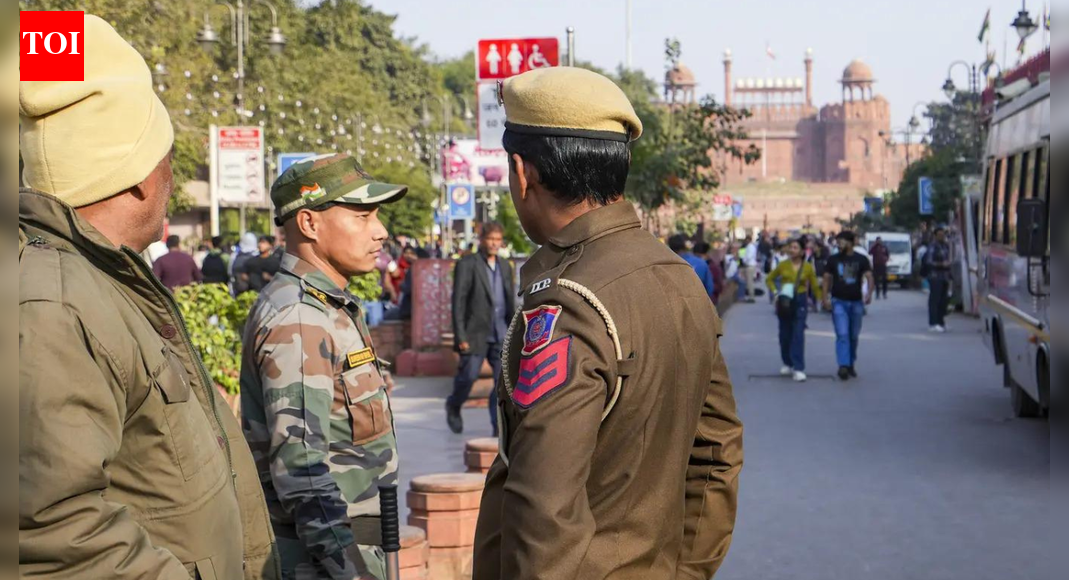
NEW DELHI: The Red Fort has turned into a high-security zone as India hosts, for the first time, the 20th session of the Intergovernmental Committee for the Safeguarding of the Intangible Cultural Heritage (ICH) of UNESCO, days after a deadly blast near the monument.The week-long meeting, being held from December 8 to 13 inside the fort complex, comes against the backdrop of the November 10 Red Fort blast that killed 15 people and injured more than two dozen, prompting a massive security overhaul in and around the UNESCO World Heritage Site.Multiple layers of security have been put in place, with Delhi Police and paramilitary forces manning both the perimeter and inner precincts of the fort. Delegates and accredited media entering from the busy Chandni Chowk side are being funnelled through a labyrinthine series of barricades before they can approach the heavily guarded Lahori Gate and access the venue.“This is the same spot where the blast took place in November, and since this is a very big international event being held in Delhi, security is very tight, day or night,” a police personnel on duty said, pointing to a layer of soot still visible on a street side near the gate of the Lal Quila Metro Station, where fresh rows of ‘Delhi Police’ barricades now stand.Only UNESCO-accredited delegates and media with dedicated badges are being allowed entry into the Red Fort complex. The Archaeological Survey of India (ASI), which has jurisdiction over the site, has closed the monument to general visitors from December 5 and plans to keep it shut till December 14.While an armed CISF contingent guards the entry from the Delhi Gate side, Delhi Police and paramilitary personnel maintain a constant vigil inside, tracking the movement of delegates and guests. After dark, bike-borne police patrol the street skirting the fort’s perimeter, from Lahori Gate to Delhi Gate, as part of the enhanced deployment.The high-profile session formally opened on December 7 with External Affairs Minister S Jaishankar as chief guest. Union minister Gajendra Singh Shekhawat, UNESCO Director-General Khaled El-Enany, Delhi Chief Minister Rekha Gupta, and India’s Ambassador and Permanent Delegate to UNESCO, Vishal V Sharma, attended the ceremony.On Wednesday, India’s Deepavali, the festival of lights, was inscribed on the UNESCO Representative List of the Intangible Cultural Heritage of Humanity, adding to the significance of the gathering for the host country. In the evening, a cultural programme was organised for delegates on the lawns facing the iconic Diwan-i-Aam, followed by a gala dinner held under a tight security ring.“It is a pleasure to be in India for the first time, to know more about this land and its people,” said Abu Dhabi-based Walid Al Halani, a member of the UAE delegation, speaking on the sidelines of the session.Outside the high-security cordon, life is slowly returning to normal in the adjoining Old Lajpat Rai Market, even as traders still speak in hushed tones about the November blast. “We have to move on, but the scars are there,” said a trader who did not wish to be named.The Red Fort, built by Mughal emperor Shah Jahan as the palace of his capital Shahjahanabad, is one of Delhi’s most visited tourist attractions, drawing heavy footfall daily in normal times. Its massive fortified walls, whose construction was completed between 1638 and 1648, have long been a symbol of India’s political and cultural heritage.In 2023, the fort also hosted the maiden India Art, Architecture and Design Biennale (IAADB), reinforcing its status as a marquee venue for major national and international cultural events. The ongoing UNESCO ICH session, officials say, has further underlined both its global profile and the security challenges that come with it.


Source link

‘We will have to do something now’: Supreme Court moves on passive euthanasia plea | India News


'We will have to do something now': Supreme Court moves on passive euthanasia plea

NEW DELHI: The choice is between an artificially sustained painful life and peaceful death. As a medical board of four specialised doctors told Supreme Court about the condition of 31-year-old Harish Rana who has been living with 100% disability in a permanent vegetative state for 13 years and stressed the negligible chance of his recovery, the court Thursday decided to set in motion the next stage of the process for passive euthanasia.A bench of Justices J B Pardiwala and K V Viswanathan asked the director of AIIMS Delhi to set up a secondary medical board, the second step as per the procedure laid down by the apex court in 2018, and simplified in 2023, on euthanasia pleas. The plea was filed by Harish’s father, Ashok Rana. Going through the report of the primary medical board set up by Noida District Hospital, the bench noted there was no hope of recovery. “The bare reading of the letter would indicate Harish is in a pathetic condition. He was found to be lying on a bed with tracheostomy tube for respiration and gastrostomy for feeding. The photographs attached with the letter would indicate he has suffered huge bed sores. The team of doctors are of the opinion that the chance of his recovery from the present state is negligible. Harish appears to be in this vegetative condition for the past 13 years. In such circumstances…we should now proceed to the next stage in the process,” the bench said. We can’t allow 31-yr-old to live like this, that’s for sure, says SCAs per the apex court’s guidelines, a secondary medical board comprising one registered medical practitioner nominated by the chief medical officer (CMO) of the district and at least two subject experts with at least five years’ experience in the specialty concerned has to be constituted after a primary medical board approves withdrawing artificial life support for a patient in a vegetative state. Though advocate Rashmi Nandakumar, appearing for the petitioner, said that there was no need for a secondary board as the CMO was involved in the primary medical board itself, the bench decided to adhere to the procedure.It said this would be in accordance with the decision of the SC in the ‘common cause’ case. “We request the director, All India Institute of Medical Sciences, New Delhi to constitute a secondary board, as referred to above, and give us a report by next Wednesday, ie Dec 17. Let the matter come up for hearing on Thursday,” the bench said.At the end of the hearing, the court remarked, “We will have to do something now. We can’t allow him to live like this. That’s for sure.”Harish’s case will be the first to see a court monitor the process on a euthanasia plea since SC framed guidelines and the procedure to allow it. In 2018, the court legalised passive euthanasia by allowing withdrawal of life support for terminally ill patients and ruled that the “right to die with dignity” is a part of the fundamental right to life.The court subsequently modified its order in 2023 to simplify the process and put in place two-tier medical board to take the call on a plea for passive euthanasia and also allowed the kin of the patient to move the high court concerned in case of denial of the same.Harish had fallen from the fourth floor of his paying guest accommodation on Aug 20, 2013, while he was pursuing a B Tech degree at Punjab University. He was treated at various hospitals, but his condition did not improve. His father had first moved Delhi HC, which refused his plea to refer the case to a primary medical board.Challenging the HC order, the father said Harish’s existence in his current state is a violation of his fundamental right to dignity, and the HC had erred in not adhering to apex court guidelines.


Source link

Kept saying we’re Indian, they didn’t listen: Sunali Khatun | India News


Kept saying we're Indian, they didn't listen: Sunali Khatun

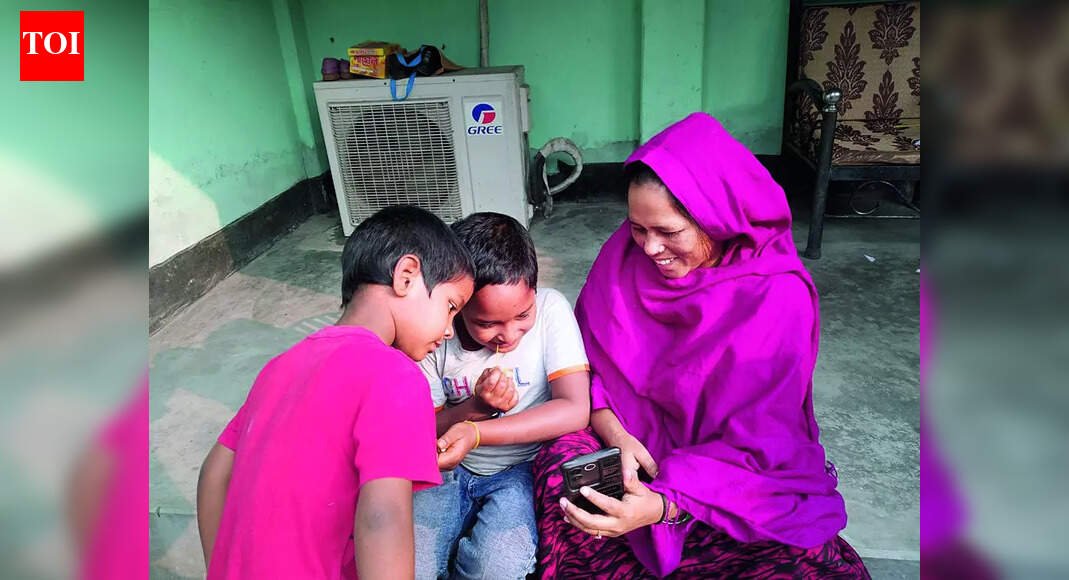
NEW DELHI: More than nine months pregnant now, and visibly exhausted, Sunali Khatun’s voice carried a strange mix of tired resolve and simmering anger when she spoke to TOI on Thursday. “I’m tired from inside. The worst part is that despite showing all documents, no one listened to us,” she said, fighting back tears.The 26-year-old domestic worker from Paikar village in West Bengal’s Birbhum district was detained during an identity verification drive in Delhi’s Rohini in late June this year. Sunali said she and her husband, Danish Sekh, immediately produced every document they had – Aadhaar, PAN and ration card. “I even quickly presented my in-laws’ ID proofs arranged over WhatsApp the same night.” Nothing worked.

Why will we run away from own country: Sunali

We did everything in our power,” Sunali said. “We showed every single document. We kept telling them, ‘We are not Bangladeshi. We are Indian.’ Who will listen to people like us?”Within 48 hours, on June 26, after the Foreigners Regional Registration Office deportation order, police seized the couple’s belongings from their Rohini jhuggi and took them and their eight-year-old son, Sabir Sekh, to Guwahati. From there, she said, they were pushed across the Bangladesh border in hot haste.The deportation was sudden and unexpected for the couple and their families back in West Bengal. For the next five months, Sunali was trapped in a maze of suspicion. What followed, she says, “broke something inside her.”After filing a missing-person complaint at his local Palkar police station on 6 July 2025, Sunali’s father, Bhodu Sekh, moved the Calcutta HC three days later. On 9 July 2025, his habeas corpus petition seeking production of his daughter, son-in-law and grandson was registered.With no information from authorities & fearing his heavily pregnant daughter might be left to deliver without medical help in an unknown country, Bhodu filed pleading for urgent intervention. In his petition, he, too, said family had supplied Aadhaar, voter IDs, PAN cards and land records to show their Indian roots, yet authorities deported them.Back in Bangladesh, the time there for Sunali and her family were a blur of hunger, fear and humiliation. “We remained in hell. We didn’t even have Rs 5 to feed our children,” she said. “We had a single set of clothes, my yellow kurta and blue salwar. My son his red T-shirt and black half-pants. For food & shelter, there was the mercy of strangers.”When they initially attempted to return a few days after entering Bangladesh, she says the Indian side beat them brutally despite their pleas. “We were profiled simply because we were Bengali-speaking Muslims.”When produced before a Bangladeshi court, Sunali says she expected questions about who they were, how they crossed, why they were there. But it was over in minutes. “They didn’t ask us anything, just put us in jail,” she said. “Humne sirf bola hum Bharat ke hain. Documents hote hue koi kyun bhejega? Wo log bhi hairaan thhe. (We only said in court there that we are from India. Why will we run away from our own country when we possess valid papers. They, too, were surprised).” Sunali described the months in the jail as “mental torture”. Though she is home for now, Sunali says her heart is heavy with fear & foreboding. “Are there any other documents we can get? What if we are shoved out again? I can’t sleep thinking about that.”


Source link

Supreme Court rejects plea to suspend Sanjiv Bhatt’s 20-yr jail term in ’96 drug-planting case | India News


Supreme Court rejects plea to suspend Sanjiv Bhatt's 20-yr jail term in '96 drug-planting case
The Supreme Court has denied former IPS officer Sanjiv Bhatt’s plea to suspend his 20-year jail sentence in a 1996 drug planting case. Bhatt, convicted by a Gujarat court, sought bail but the bench declined his request. The case involves allegations of framing a lawyer in Palanpur, with Bhatt accused of planting drugs to settle a property dispute.

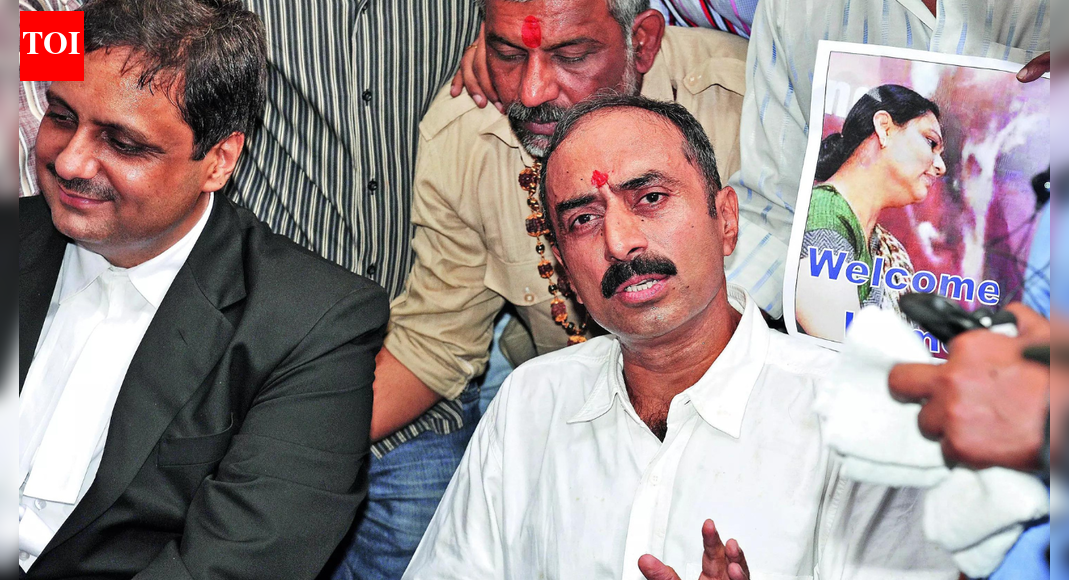
NEW DELHI: Supreme Court Thursday declined to suspend the 20-year jail sentence of former IPS officer Sanjiv Bhatt in a 1996 drug planting case.Bhatt was convicted by a Gujarat court last year under various provisions of the Narcotics Drugs and Psychotropic Substances (NDPS) Act and the IPC. He moved SC for suspension of sentence to get bail, but a bench Justices J K Maheshwari and Vijay Bishnoi declined to entertain his plea.This NDPS Act case pertained to the arrest of a Rajasthan-based lawyer, Sumer Rajpurohit, in 1996 by the Banaskantha Police following alleged recovery of drugs from his hotel room in Palanpur. Bhatt was then serving as DSP of Palanpur.Rajpurohit, who was discharged, later accused Bhatt and other cops of planting drugs to frame him. The same was done only to harass the lawyer with regard to a property dispute, it was alleged.Last year, the former IPS officer had approached SC seeking transfer of trial in the 28-year-old drug case to another sessions court alleging bias. He also sought directions for recording of the trial court proceedings.However, SC dismissed the plea and imposed Rs 3 lakh cost on him for alleging bias against the judge conducting trial in the drug planting case.


Source link

22 feared dead in Arunachal gorge tragedy | India News


22 feared dead in Arunachal gorge tragedy

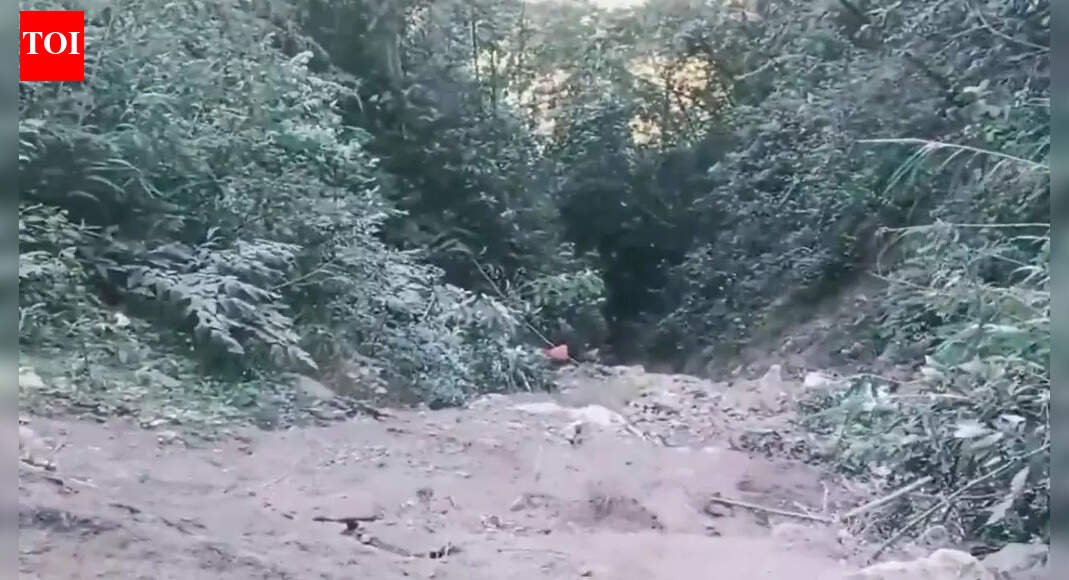
GUWAHATI: At least 22 labourers from Assam are feared dead after a mini truck fell into a deep gorge in Arunachal Pradesh’s Anjaw district near the Indo‑China border. The accident occurred on Monday night along the high‑altitude Hayuliang–Chaglagam road.The incident came to light only on Thursday night when a lone survivor, severely injured, managed to climb out of the gorge and walk about 4 km to reach a Border Roads Organisation camp. He alerted officials to the mishap.Anjaw district deputy commissioner Millo Kojin “The NDRF team from Assam is reaching the site with specialised equipment tonight, and search and rescue operations are expected to begin tomorrow. The injured survivor has been shifted to Assam Medical College and Hospital in Dibrugarh,” he said.He added that details of 18 individuals are known so far and efforts are on to collect the information of the other four.Defence PRO Lt Col M Rawat said that Indian Army launches search and rescue operation in higher reaches of Arunachal Pradesh.He said that after four hours of intensive search and rope descent on Thursday, the truck was spotted around 200 metres below the road near KM 40 in a re-entrant, inaccessible and not visible from helicopters or the road due to dense tree cover and thick foliage and 18 bodies have been spotted so far.“The accident site, approximately 12 km short of Chaglagam, lies in difficult terrain with limited connectivity and had not been reported by any local agency, contractor or civil representative until the survivor’s arrival,” the PRO said.


Source link