Breaking News
‘Will not accept’: Shashi Tharoor declines ‘Veer Savarkar Award’; here’s what he said | India News


'Will not accept': Shashi Tharoor declines 'Veer Savarkar Award'; here's what he said

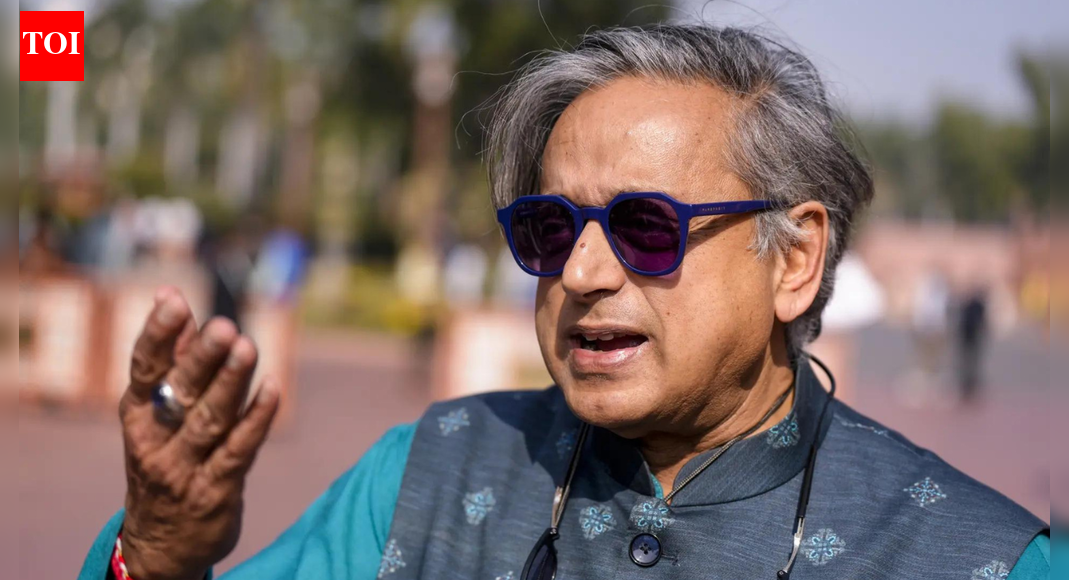
NEW DELHI: Congress MP Shashi Tharoor on Wednesday declined to accept the ‘Veer Savarkar Award’, calling the organisers “irresponsible” for announcing his name without him having agreed to receive it.Tharoor was named among the first winners of the newly instituted Veer Savarkar International Impact Award 2025, to be presented by Highrange Rural Development Society India.

‘Engaging Atmosphere Reigned’: Shashi Tharoor After State Dinner With Russian President Putin

“I have come to know from media reports that I have been named a recipient of the “Veer Savarkar Award,” which is to be presented today in Delhi. I only learned about this announcement yesterday in Kerala, where I had gone to vote in the local self-government elections. There in Thiruvananthapuram, responding to media queries, I had clarified that I was neither aware of, nor had accepted, such an award and it was irresponsible on the part of the organisers to announce my name without my having agreed to receive it,” the Thiruvananthapuram MP said in a post on X.“Despite that, today in Delhi, some media outlets continue to ask the same question. Therefore, I am issuing this statement to clarify the matter unequivocally. In the absence of clarifications about the nature of the award, the organization presenting it or any other contextual details, the question of my attending the event today or accepting the award does not arise,” he added.After Tharoor’s remarks, Aji Krishnan, secretary of the HRDS India said that the Congress MP had been notified about it well ahead of time, PTI reported citing a TV channel.He added that HRDS India representatives and the jury chair had visited Tharoor at his home to extend the invitation, during which the MP requested a list of the other awardees.Kerala law minister P Rajeev had said that the choice to accept or decline the award rested entirely with Tharoor.


Source link

Historic moment as Diwali makes it to Unesco list: Deepavali joins Yoga, Durga Puja among intangible cultural heritage — full list | India News


Historic moment as Diwali makes it to Unesco list: Deepavali joins Yoga, Durga Puja among intangible cultural heritage — full list

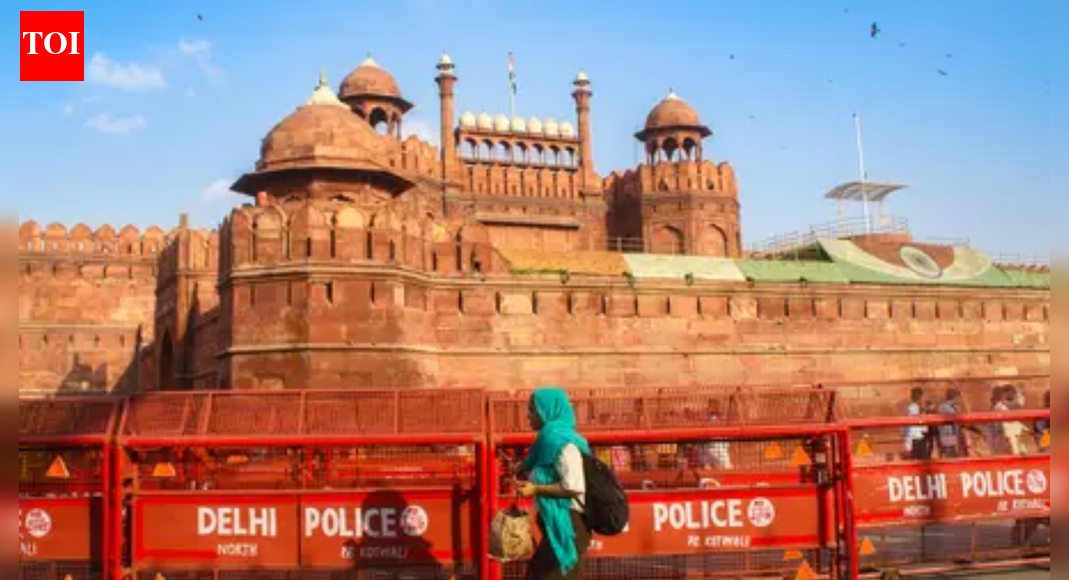
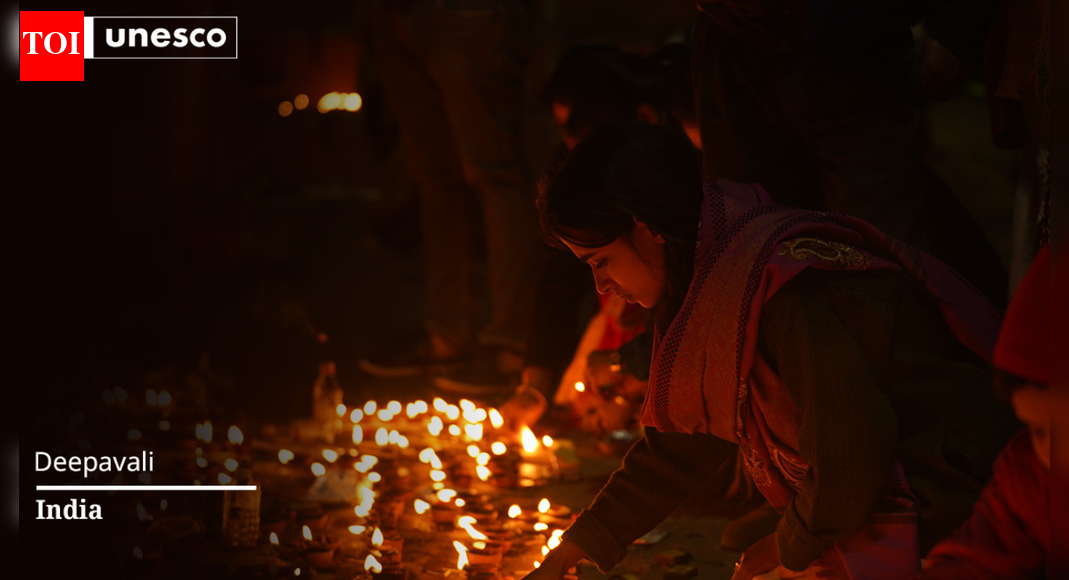
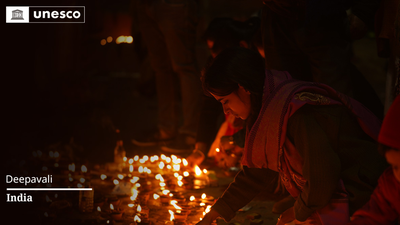
NEW DELHI: In a landmark recognition, Deepavali has been added to Unesco’s list of Intangible Cultural Heritage of Humanity, becoming the 16th Indian tradition to earn the honour, joining the ranks of Yoga and Durga Puja.“A historic day for India. Deepavali has been officially inscribed on the Unesco List of Intangible Cultural Heritage of Humanity. During the tenure of Hon’ble PM Shri Narendra Modi Ji, India’s cultural heritage is receiving unprecedented global recognition and this milestone strengthens that journey. This honour celebrates the universal message of our festival of lights: hope over despair, harmony over division, and light for all. My gratitude to Unesco and to every custodian of our timeless traditions,” said culture and tourism minister Gajendra Singh Shekhawat.In the same round of additions, Unesco also inscribed “Georgian wheat culture: traditions and rituals” from Georgia, recognising the nation’s centuries-old agricultural heritage. The inscription of Deepavali on Unesco’s Intangible Cultural Heritage list comes as part of a significant global review underway in New Delhi, where the 20th session of the Intergovernmental Committee for the Safeguarding of Intangible Cultural Heritage is being held from December 8 to 13 at the historic Red Fort. This marks the first time India has hosted the prestigious Unesco panel, which is tasked with evaluating cultural practices, traditions, and expressions from around the world for international recognition and protection. During the nearly week-long session, the committee is examining 67 nominations submitted by 79 countries, including India’s entry of the Deepavali festival. The assessments form part of Unesco’s larger mandate to safeguard cultural traditions that hold historical, artistic, or social value, ensuring their continuity for future generations. The global diversity of this year’s submissions — ranging from festivals and rituals to agricultural and craft traditions — underscores the expanding scope of the intangible heritage programme and the growing international interest in preserving living cultural practices.


Source link

Miami Mayoral Elections: Eileen Higgins becomes city’s first-ever female mayor – who is she? | India News


Miami elections: Eileen Higgins becomes city’s first-ever female mayor - who is she?

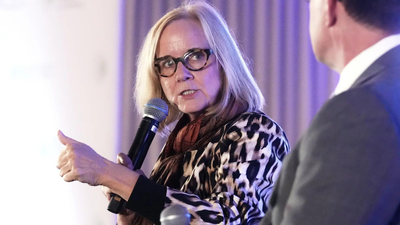
Miami voters have elected Democrat Eileen Higgins as the city’s first female mayor and the first Democrat to hold the office in nearly three decades. In Tuesday’s runoff, Higgins, a former county commissioner, defeated Republican Emilio González, a former city manager backed by former President Donald Trump and Florida Governor Ron DeSantis.“Together, we turned the page on years of chaos and corruption and opened the door to a new era for our city, one defined by ethical, accountable leadership that delivers real results for the people,” Higgins said in a statement after the voivtory, promising to lead a government “that finally earns the public’s trust,” as cited by NYT. Although Miami’s elections are officially nonpartisan, both major parties played an active role in the campaign. US President Donald Trump endorsed González, while the Democratic National Committee backed Higgins. In the days leading up to the vote, several prominent national Democrats traveled to Miami to campaign alongside her, an unusual show of support for a low-turnout, off-year local election. Higgins secured victory the victory after topping the first round of voting on November 4, where she received 35 per cent of the vote compared to González’s 19 per cent.

Who is Eileen Higgins?

Higgins will make history as Miami’s first female mayor and its first non-Hispanic mayor since the 1990s, breaking a three-decade dominance of Cuban American Republicans in city politics.Higgins, a trained mechanical engineer and former Peace Corps director in Belize, previously represented what she described as a Republican-leaning district on the county commission. She also holds a Master of Business Administration from Cornell University’s Johnson Graduate School of Management.On the campaign trail, she pledged to focus on addressing residents’ everyday concerns if elected, as cited by Politico. Higgins had served as a well-known county commissioner for eight years, representing a district that included Miami’s downtown. In the November 4 election, she also secured the top spot across all five of the city’s commission districts.She received a social media endorsement from former transportation secretary Pete Buttigieg, who is a former mayor and was a 2020 presidential candidate.She also led in all five of the city’s commission districts and will succeed outgoing Mayor Francis Suarez, who had briefly sought the Republican presidential nomination, as cited by the NYT. Miami, home to roughly half a million residents, is Florida’s second-largest city after Jacksonville. While the city, like the state, has trended Republican in recent election cycles, Higgins’ Democratic victory stands out as particularly notable.


Source link

107 oppn MPs submit notice to remove Madras HC judge over lamp-lighting order | India News


107 oppn MPs submit notice to remove Madras HC judge over lamp-lighting order
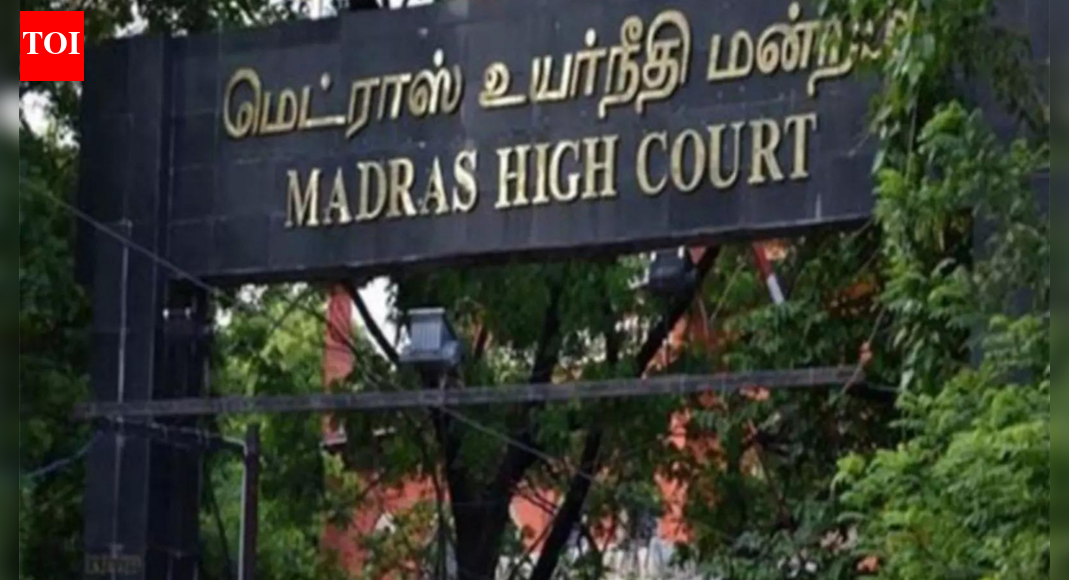
Over 100 opposition MPs have submitted a notice to the Lok Sabha Speaker seeking the removal of Madras High Court Justice GR Swaminathan. They accuse him of misconduct and bias in a recent order concerning a lamp lighting at a temple near a dargah in Tamil Nadu.

As many as 107 MPs, including those from Congress, DMK and Samajwadi Party, signed the application which accuses Justice Swaminathan of misconduct, saying his functioning has raised questions over “impartiality, transparency and secular nature” of the judiciary.One of the grounds cited in the notice by the opposition against the Madras HC judge is “deciding cases on the basis of particular political ideology and against secular principles of Indian Constitution”. DMK MP Kanimozhi handed over the notice to Birla. She was joined by Priyanka Gandhi and Gaurav Gogoi of Congress and Akhilesh Yadav of SP, among others.

Oppn accuses Madras HC judge of showing ‘undue favouritism’

The judge is also accused of showing “undue favouritism” to a senior advocate and lawyers from a particular community. Supriya Sule of NCP(SP) and Asaduddin Owaisi of AIMIM were also among the signatories.At least 100 MPs are required to support a motion to remove a judge, and it is now for Birla to study the grounds on which they have sought the motion for his removal and verify the signatories before he decides on admitting the notice.The judgment has sparked a political row, with DMK raising the issue in Lok Sabha last week. Party MP TR Baalu accused BJP of trying to spark communal tensions in the state, where elections are due in a few months. Union minister and BJP MP L Murugan had hit back, accusing the state govt of denying devotees their right to worship.Baalu’s criticism of Justice Swaminathan in Lok Sabha for owing allegiance to a “particular ideology” had drawn a sharp response from govt, with Union minister Kiren Rijiju emphasising that he cannot cast aspersions on the judiciary.Hearing a plea, Justice GR Swaminathan had on Dec 1 held that Arulmighu Subramania Swamy temple was duty-bound to light the lamp at the ‘deepathoon’, a stone lamp pillar located on the Thiruparankundram hillock close to the dargah.When authorities did not allow it, the single bench passed another order on Dec 3 permitting devotees themselves to light the lamp and directed Central Industrial Security Force to ensure their protection.However, the state govt did not implement the order and has moved Supreme Court challenging the verdict. The Madurai bench of the high court had last week dismissed an appeal filed by Madurai district collector and city police commissioner.


Source link

Threats to BLOs during SIR unacceptable: Supreme Court | India News


Threats to BLOs during SIR unacceptable: Supreme Court
The Supreme Court has mandated all states to provide robust security for booth-level officers during voter enumeration, warning of severe action against any threats or obstructions. The court emphasized that non-cooperation with the Election Commission’s work is a serious matter, extending beyond West Bengal to all states, and stressed the need for BLOs’ safety to prevent anarchy.

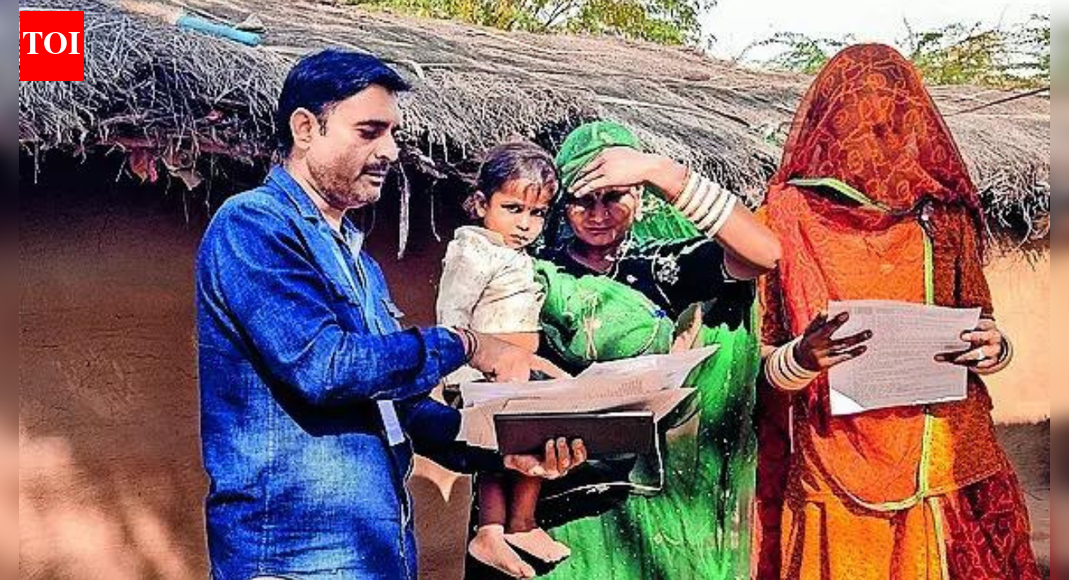
NEW DELHI: Supreme Court on Tuesday asked all states to provide adequate security to booth-level officers engaged in special intensive revision, and warned that it would seriously view any instance of BLOs being threatened or impediments being placed in their work.The observations were made by a bench of Chief Justice Surya Kant and Justice Joymalya Bagchi after senior advocate V Giri, appearing for NGO Sanatani Sangsad, demanded security for BLOs, alleging that they were being intimidated and threatened during voter enumeration work in West Bengal. EC, through senior advocate Rakesh Dwivedi, said the commission had written a strong letter to WB govt on security of BLOs and assured the court that it had adequate powers under the Constitution to handle the situation. Dwivedi said such situations were arising because EC had no control over state police. The petitioner sought deployment of paramilitary forces in WB for safety and security of BLOs.Giving a pan-India dimension to the issue raised in the petition, the bench said, “If EC had any grievance about non-cooperation from state officials or police regarding safety and security of BLOs, it should approach the SC. We will pass appropriate orders. It is not only about West Bengal but for all states. Non-cooperation with EC work is a serious issue. BLOs must get full security.”While seeking a response from the Centre and EC, the bench asked the poll panel to assess the situation in all states and move SC for appropriate directives, if needed. “We will take strong action to protect BLOs. Their safety and security must be ensured, otherwise there will be anarchy,” the CJI-led bench said and referred to its Dec-4 order directing states to allow BLOs who are stressed or face health issues to withdraw from SIR work and provide adequate replacements.When Dwivedi and senior advocate Maninder Singh said problems were arising in Tamil Nadu, Kerala and West Bengal because their state govts had made public their opposition to SIR, the bench said BLOs unwilling to carry out SIR work would have to file an application before the district electoral officer, who would inform the state.During the proceedings, Justice Bagchi questioned the material submitted by Sanatani Sangsad to allege intimidation of BLOs in West Bengal. “Apart from a solitary FIR, there is no other credible evidence to substantiate the allegations. Based on a solitary incident, can it be said that it is done only in West Bengal and not in other states? Is it not a narrative from one side? Should police in all states be put under EC?” he asked. EC said there had been certain incidents in West Bengal that saw electoral officers being gheraoed and threatened by the public. “A lot of narratives are being floated by political parties. At present, a BLO is to do enumeration of a maximum of 1,200 voters in 37 days, which is roughly 35 per day. Is it too much work?” the poll panel said.Justice Bagchi said, “This is not a desk job where the quota of 35 is met easily. A BLO must go from house to house, verify enumeration forms and then upload it. There could be stress and physical strain. We want to ensure that SIR at ground level is done without a hitch.” EC said the narrative of BLOs being under stress was being spread by political parties. The CJI said that was why the court had directed states on Dec 4 to augment the workforce.


Source link

Sonia Gandhi turns 78: Veteran leader celebrates inside Parliament; cuts cake with INDIA bloc MPs | India News


Sonia Gandhi turns 78: Veteran leader celebrates inside Parliament; cuts cake with INDIA bloc MPs

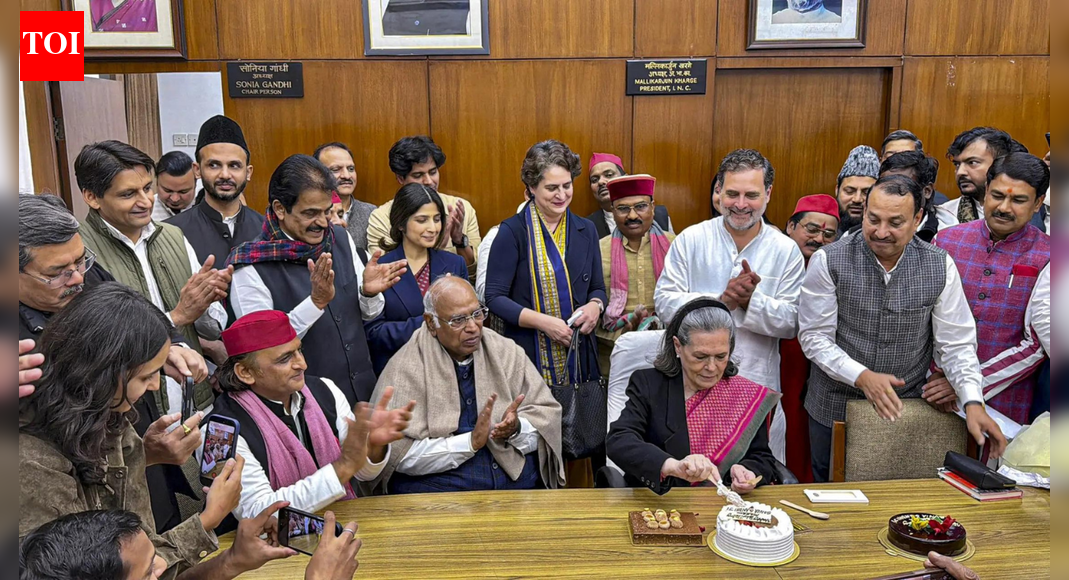
NEW DELHI: Veteran Congress leader Sonia Gandhi on Tuesday celebrated her 78th birthday inside the Parliament complex as the House discussed electoral reforms.Congress party shared images in a post on X, in which Sonia was seen cutting a cake in the Congress Parliamentary Party office as several Members of Parliament from INDIA bloc parties joined in.“Here’s to many more years of your wise leadership and dedicated service to the nation, Smt Sonia Gandhi ji. Members of Parliament extended birthday greetings to CPP Chairperson Smt Sonia Gandhi ji at the CPP Office, Parliament House,” the party said.When asked if she wants to convey any message to the people of the country, Sonia said, “Vande Mataram and Jai Hind”Additionally, Samajwadi Party chief Akhilesh Yadav also greeted Sonia, saying, “Heartfelt birthday greetings to Mrs Sonia Gandhi ji, along with endless good wishes for a healthy and active life!”Meanwhile, a Delhi court on Tuesday also issued a notice to Sonia Gandhi over the “illegal inclusion” of her name in the voter rolls of 1980-81.The petition stems from a complaint filed by advocate Vikas Tripathi, which the Magistrate had rejected at the threshold, holding that it lacked legal foundation and relied solely on uncertified photocopies of electoral records from 1980.The matter is now listed for further hearing on January 6, when the Sessions Court will continue examining the challenge to the Magistrate’s order dismissing the complaint at the threshold.


Source link

Isha Foundation launches free cremation services for BPL families in Tamil Nadu | India News


Isha Foundation launches free cremation services for BPL families in Tamil Nadu

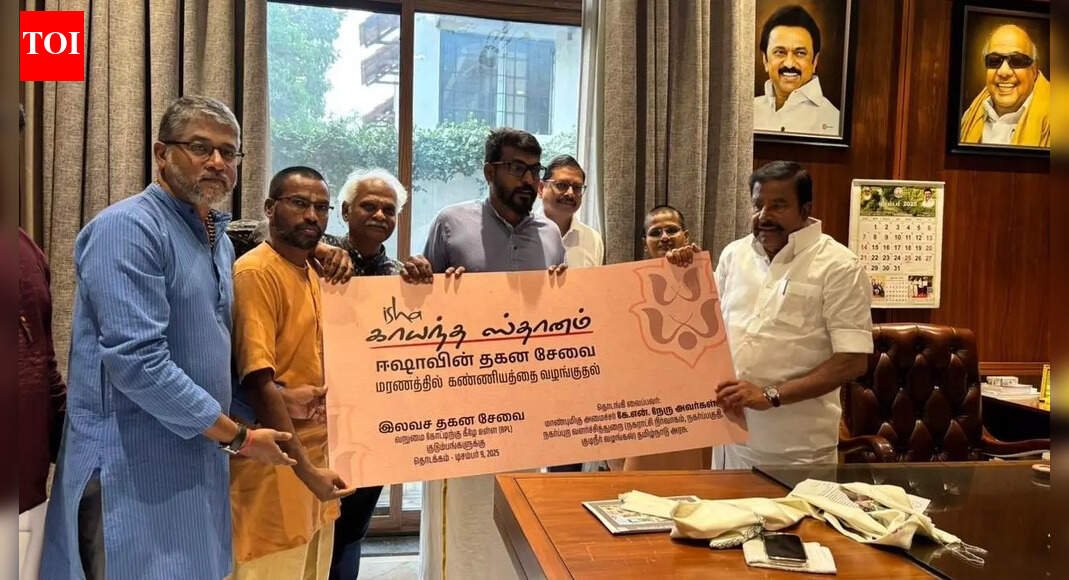
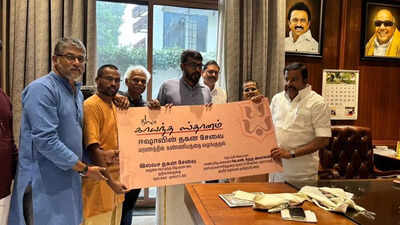
Free cremation services for Below Poverty Line (BPL) families have been launched in Tamil Nadu by the Isha Foundation.State municipal administration minister, K N Nehru, inaugurated the service in Chennai on Tuesday. The free service is meant to help families who may struggle to pay for final rites. The Foundation currently runs 17 gas crematoriums in partnership with the Tamil Nadu government and is set to take charge of three more. A member of the Isha Kayantha Sthanam team, Maa Gurudasi, said the organisation has been managing these crematoriums for around 15 years across several districts.“For the past 15 years, under Sadhguru’s guidance, IshaFoundation has been managing crematoriums in several districts of Tamil Nadu in partnership with the state government. In these facilities, Isha has revived ancient traditions and death rituals with a powerful energy basis, conducting them in the spirit of service rather than as a commercial venture,” Maa Gurudasi said. She said the staff try to handle the process with care and sensitivity so that families feel supported during a difficult time.Staff members receive training to handle bodies respectfully and to maintain the quiet, solemn atmosphere expected at these facilities. A separate mandapam is available for families who want to perform traditional rituals.The crematoriums managed by the foundation are located in Chennai, Vellore, Thanjavur and parts of Coimbatore district, including areas such as Nanjundapuram, Veerakeralam, Thudiyalur, Podanur, Vellalore, Alandurai, Thondamuthur, Karamadai and Goundampalayam.The foundation has said it hopes to expand this model in the coming years by taking up more crematoriums across the country to ensure accessible and dignified services.


Source link

Delhi car blast: NIA makes eighth arrest in terror case; accused held for destroying evidence, harbouring Umar Un Nabi | India News


Delhi car blast: NIA makes eighth arrest in terror case; accused held for destroying evidence, harbouring Umar Un Nabi

NEW DELHI: National Investigation Agency (NIA) on Tuesday arrested Dr Bilal Naseer Malla of Baramulla, Jammu and Kashmir, for allegedly destroying evidence linked to last month’s car blast near the Red Fort. His arrest in Delhi marks the eighth made in the case as investigators continue to widen their probe into the deadly attack.According to the NIA, Bilal also played a role in the larger conspiracy behind the November 10 explosion, which killed 15 people and injured several others in the busy Red Fort area. “As per NIA investigations, Bilal had knowingly harboured the deceased accused Umar Un Nabi by providing him logistical support. He is also accused of destruction of evidence related to the terrorist attack,” the agency said in a statement.The blast is being treated as a terrorist strike under the Unlawful Activities (Prevention) Act, with investigators linking it to a Jaish-e-Mohammed module involving radicalised young doctors and cross-border handlers. Several others connected to the accused have already been arrested, including a Faridabad resident who allegedly sheltered Umar Un Nabi shortly before the incident.The NIA said it is continuing to work closely with central and state agencies to trace every part of the conspiracy and identify all those involved in planning and executing the attack.


Source link

IGNOU, MSDE tie up to set up skill centres across 70 regional hubs | India News


IGNOU, MSDE tie up to set up skill centres across 70 regional hubs

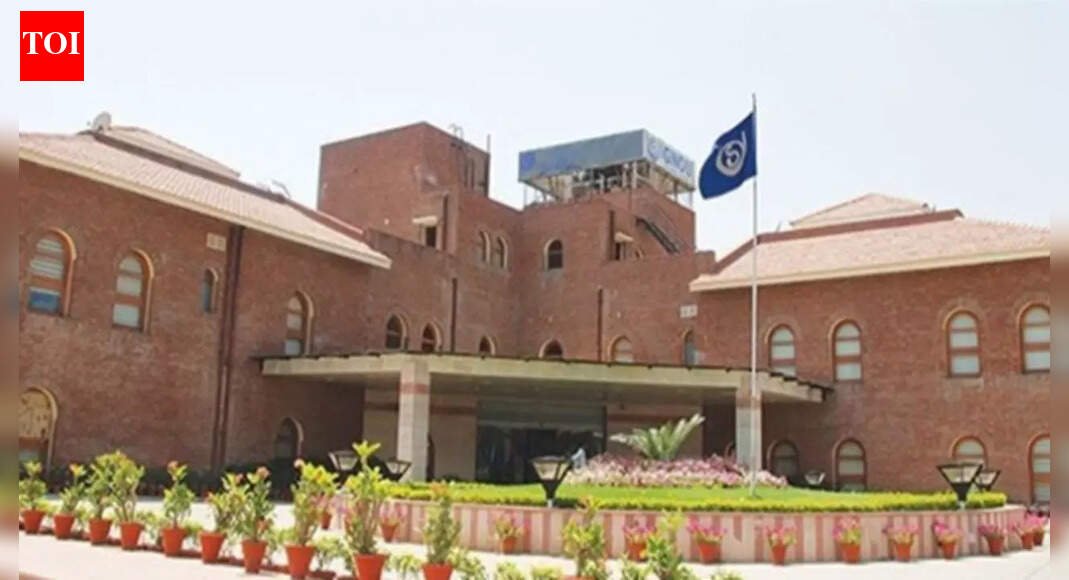
NEW DELHI: Indira Gandhi National Open University (IGNOU) and the union ministry of skill development and entrepreneurship (MSDE) on Tuesday signed a memorandum of understanding to roll out skill training under Pradhan Mantri Kaushal Vikas Yojana (PMKVY) and establish skill centres across IGNOU’s regional centres nationwide.The MoU was signed in the presence of IGNOU vice-chancellor Uma Kanjilal and MSDE secretary Debashree Mukherjee, along with senior officials from both institutions.Under the agreement, skill centres will be set up at all 70 IGNOU regional centres to conduct National Skills Qualifications Framework (NSQF)-aligned, industry-focused training programmes under PMKVY 4.0. IGNOU, which has over 2,400 learner support centres, will function as a training partner and a project implementing agency under the scheme.Officials said the university will use its digital and blended learning ecosystem and its status as a National Council for Vocational Training (NCVT)-recognised awarding body to design and deliver employability-oriented skill programmes. The initiative also envisages integration of vocational modules with academic courses to enable credit-linked learning pathways in line with the National Education Policy.The collaboration includes training of trainers through sector skill councils and the National Skill Development Corporation, along with placement support through industry partnerships, apprenticeships, internships and job fairs. Outcomes will be digitally tracked through the Skill India Digital Hub platform.Kanjilal said the initiative would expand access to skill education for women, rural youth, first-generation learners and workers in the informal sector. Officials said the partnership is aimed at linking education with workforce requirements and strengthening local employment ecosystems.


Source link

India’s pharmaceutical potential: From middleman to manufacturing powerhouse | India News


India's pharmaceutical potential: From middleman to manufacturing powerhouse

By Jake Chasan and Will ConteThere is an irony about India’s position in global pharmaceuticals: the country supplies forty percent of the United States’ generic medications, earning its reputation as the “pharmacy of the world.” Yet beneath this veneer of dominance lies an uncomfortable truth: seventy percent of the active pharmaceutical ingredients (APIs) and key starting materials (KSMs) that flow into Indian manufacturing facilities originate in China. India has been, in essence, a sophisticated assembler rather than a true manufacturer, a middleman handling the final steps of a value chain controlled from Beijing.That calculus is now shifting, driven by a combination of pandemic-induced awakening, geopolitical realism, and unusually assertive industrial policy. The Production Linked Incentive (PLI) schemes launched by the Department of Pharmaceuticals represent the most ambitious attempt in a generation to restructure India’s pharmaceutical supply chain from the ground up.

Israeli Firm IWI Backs ‘Make-In-India’, In Talks To Bring ARBEL Rifle System To India

The numbers are striking. Under the PLI scheme for bulk drugs alone, manufacturers have invested Rs 4,763 crore in greenfield projects over three and a half years, exceeding the six-year commitment of Rs 4,329 crore. Production capacity now exists for twenty-six key starting materials and drug intermediates that were previously almost entirely imported. The broader pharmaceutical PLI scheme has drawn cumulative investment of Rs 40,890 crore, vastly surpassing the Rs 17,275 crore originally targeted. Some 726 APIs and intermediates are now being manufactured domestically, including 191 produced in India for the first time. The import substitution is quantifiable: Rs 1,807 crore in avoided imports under the bulk drugs scheme through September 2025, with cumulative domestic sales reaching Rs 26,123 crore across both programs.What makes this moment genuinely different from previous self-reliance campaigns is the infrastructure accompanying the incentives. Three bulk drug parks are under development in Andhra Pradesh, Gujarat, and Himachal Pradesh, each supported by up to Rs 1,000 crore in central funding for common infrastructure, effluent treatment plants, solvent recovery systems, warehouses, and utilities. State governments are layering additional subsidies: capital assistance, GST reimbursements, concessional land. The aim is to compress the cost structure that has historically made domestic API production uncompetitive against Chinese facilities operating with fully amortized capital and generous state support.The strategic logic is sound. COVID-19 exposed pharmaceutical supply chains as fragile in ways that proved impossible to ignore. When China’s Hubei province locked down in early 2020, Indian drug manufacturers faced immediate shortages of critical intermediates. The lesson was brutally simple: dependence on a single source for essential inputs is not merely an economic risk but a public health vulnerability. American and European policymakers have drawn identical conclusions, with the U.S. BIOSECURE Act targeting Chinese contract manufacturers and the EU Critical Medicines Alliance funding supply chain resilience initiatives across member states.India’s opportunity lies precisely in this global reordering. Western pharmaceutical companies and governments are actively seeking alternatives to Chinese suppliers, not out of geopolitical spite, but from rational diversification. India possesses the technical workforce, the regulatory familiarity with developed markets, and now the industrial policy framework to capture this demand. The excipients market tells a parallel story: Asia-Pacific is projected to be the fastest-growing region through 2034, with Indian manufacturers increasingly positioned to serve both domestic formulation and export demand.Challenges remain substantial. Land acquisition, environmental clearances, and subsidy disbursement delays have slowed progress at several facilities. Not all targeted intermediates have achieved import substitution, particularly in fermentation-based products where Chinese scale advantages remain formidable. The global cost gap will not close through incentives alone; it requires sustained investment in process technology, workforce development, and the kind of operational discipline that distinguishes pharmaceutical manufacturing from commodity chemical production.But the trajectory is unmistakable. India’s pharmaceutical sector, valued at approximately $67 billion in 2025, is projected to reach $174 billion by 2033. More importantly, an increasing share of that value will be captured domestically rather than remitted to Chinese suppliers of basic inputs. The country that has long dispensed the world’s medicines is finally building the capacity to manufacture them, from the first molecular building blocks to the finished tablets and vials.This is not merely an economic story. It is a strategic repositioning with implications for global health security. In a world where supply chains have become instruments of statecraft, India’s pharmaceutical self-reliance is not nationalism dressed in industrial policy. It is prudence.

Source link