Breaking News
Russian oil tanker MT Aqua Tita arrives off Mangaluru port amid Middle East tensions | India News


Russian oil tanker MT Aqua Tita arrives off Mangaluru port amid Middle East tensions

A Russian oil tanker chartered by Mangalore Refinery and Petrochemicals Ltd (MRPL) arrived off the Indian coast on Sunday, underscoring ongoing concerns over global energy supplies amid escalating tensions in Middle East. The vessel, MT Aqua Titan, is currently anchored around 10 nautical miles off the coast of Mangaluru in the Arabian Sea, having been expected a day earlier.The arrival comes as international energy markets remain volatile, with supply chains disrupted by the intensifying conflict in the region, now in its fourth week. Key maritime routes, particularly through the Strait of Hormuz, continue to face uncertainty, affecting the steady flow of crude oil and liquefied gas.Earlier today, a cargo ship transporting liquefied petroleum gas (LPG) from Texas in the United States docked at New Mangalore Port, further boosting India’s energy imports. In a move aimed at facilitating smoother operations, the Shipping Ministry recently announced a waiver of cargo-related charges for crude oil and LPG shipments at the port between 14 and 31 March. Officials have also confirmed that there is currently no congestion at any Indian port.Providing an operational update, Rajesh Kumar Sinha, Special Secretary at the Shipping Ministry, stated that all 22 Indian vessels and 611 sailors operating in the Persian Gulf region remain safe. He added that authorities are closely monitoring developments and have reported no maritime incidents in the past 24 hours.Meanwhile, India’s broader energy logistics continue to adapt to the evolving situation. The Indian-flagged tanker *Jag Laadki* recently reached Mundra port in Gujarat, while LPG carriers *MT Shivalik* and *MT Nanda Devi* safely navigated the Strait of Hormuz earlier this month, delivering over 92,000 metric tonnes of LPG.Domestically, officials have sought to reassure the public over fuel availability. The Ministry of Petroleum and Natural Gas reported a significant drop in panic LPG bookings, with 5.5 million recorded on Thursday, indicating stabilising consumer sentiment. Authorities maintain that adequate stock levels are available nationwide, despite rising concerns and a reported 25 per cent increase in industrial diesel prices.Elsewhere, Prime Minister Narendra Modi also chaired a high-level review meeting on Sunday, focusing on ensuring uninterrupted supply, stable logistics, and efficient distribution of critical energy resources across the country.


Source link

‘Can’t survive without terrorism’: BJP reacts to ex-Pakistan envoy’s remarks on striking India | India News


'Can’t survive without terrorism': BJP reacts to ex-Pakistan envoy's remarks on striking India
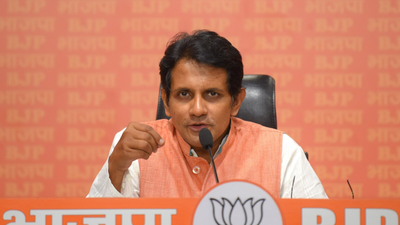
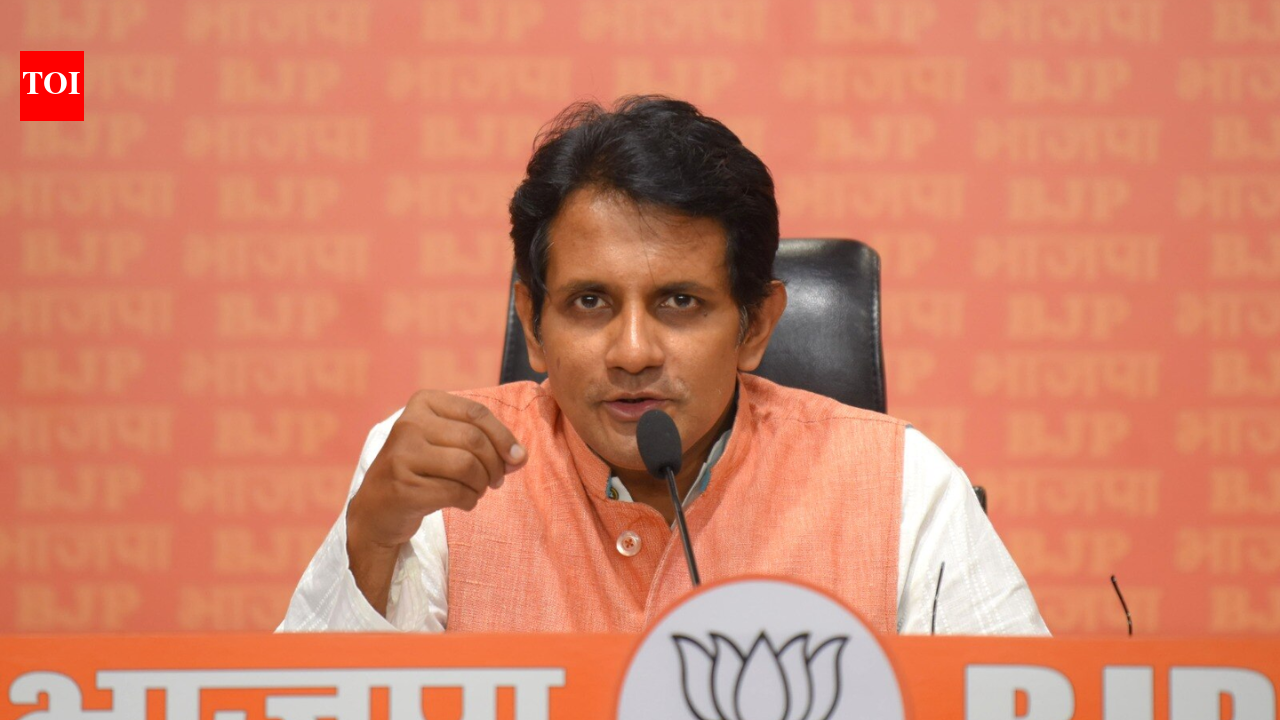
BJP National Spokesperson Tuhin Sinha

NEW DELHI: The Bharatiya Janata Party (BJP) on Sunday said former Pakistani diplomat Abdul Basit’s recent remarks against India showed that Pakistan “cannot survive without terrorism.”Basit, former Pakistani envoy to India, said in an interview that in a hypothetical scenario where the US tried to destroy Pakistan’s nuclear capabilities, Islamabad would have to strike Mumbai or New Delhi.Reacting sharply to the remarks, BJP National Spokesperson Tuhin Sinha told IANS, “Abdul Basit’s threat that Delhi and Mumbai will be blown up with bombs from Pakistan shows that even today, Pakistan is rattled by strikes during Operation Sindoor. It has lost its mental balance.”Terming Pakistan a “terrorist state”, Sinha said, “It is a terrorist state and now we don’t even have to say it. Last year, (Pakistan Army Chief) Asim Munir had told the US that if needed, the oil refineries in Jamnagar would be blown up. Now, the country’s former envoy has used this kind of language. It shows that terrorism is ingrained in their nature. Pakistan can’t survive without terrorism.”Basit had said, “Suppose there is a scenario where the US views our nuclear programme in a negative light or tries to destroy our nuclear capability.It is unlikely, but I am talking about a worst-case scenario. Let’s imagine that the US tries to attack us. Even if the US is not within our nuclear range, what options do we have?”When asked if India would be involved, he replied, “India. We would not have to do anything else. Even if we do not have the range to target the US, we would have to strike India’s Mumbai and New Delhi without thinking. We have no other option, since the US is not within our range, then we would have no choice but to attack India. Then let’s see what happens. We do not want that to happen.”Basit’s comments came amid tensions in the Middle East over Iran’s nuclear programme, following joint US-Israeli strikes on Tehran on 28 February. The attacks triggered a wider conflict in the region, which has now entered its third week. Donald Trump has also warned Iran to reopen the Strait of Hormuz or face military action.


Source link

Preparations begin for hoisting flags atop 6 sub-temples in Ram Janmabhoomi complex | India News


Preparations begin for hoisting flags atop 6 sub-temples in Ram Janmabhoomi complex

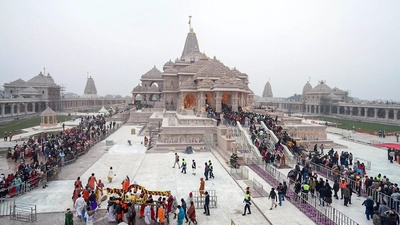
AYODHYA (UP): Following the flag hoisting on the main spire of the Ram temple and other main temples in the Ram Janmabhoomi complex, preparations have begun for similar ceremonies at the six remaining sub-temples, the Shri Ram Janmabhoomi Teerth Kshetra Trust said.After a meeting held on Saturday, Trust General Secretary Champat Rai shared that the temples where flag hoisting will occur are dedicated to Surya, Bhagwati, Shivling, Ganpati, Sheshavatar, and Hanuman.Rai said that the flag hoisting ceremony for the Hanuman temple will take place on Hanuman Jayanti, which falls on April 2 this year.The ceremonies for the other five sub-temples will be conducted over eight days – on March 22, 23, 24, 25, 29, 30, and 31 – in a phased manner, he added.He emphasised that these events will be held without large public gatherings, with participation limited to a small number of attendees. Each ceremony will include approximately 50 seers and nearly 200 attendees, comprising engineers and workers involved in the project.The trust also noted that the flag hoisting on the main spire was first conducted on November 25, 2025, by Prime Minister Narendra Modi.


Source link

‘We will help fulfil Charan Singh’s dream’: KC Tyagi joins RLD, says JD(U) bond remains intact | India News


'We will help fulfil Charan Singh's dream': KC Tyagi joins RLD, says JD(U) bond remains intact
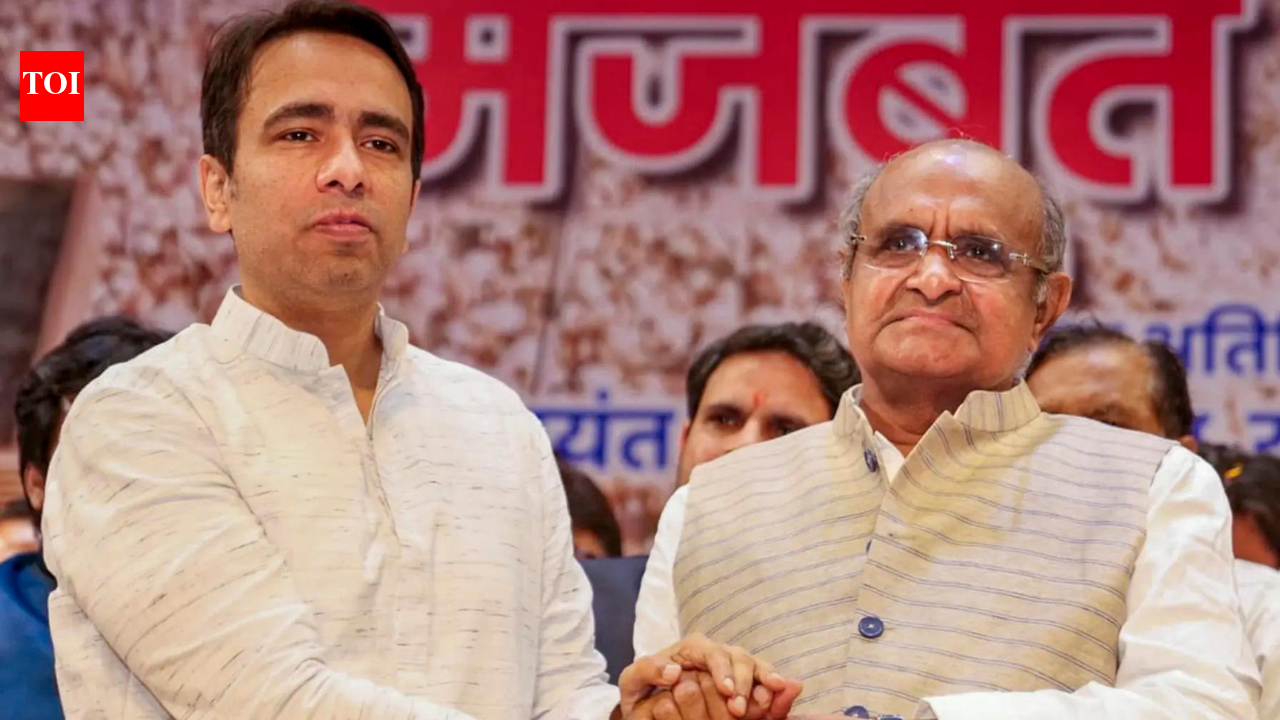
RLD chief Jayant Chaudhary with KC Tyagi (PTI photo)

NEW DELHI: Senior JD(U) leader KC Tyagi on Sunday pledged to carry forward former Prime Minister Chaudhary Charan Singh’s legacy after joining the Rashtriya Lok Dal, after parting way from the Nitish Kumar-led party, which has been at the helm of the Bihar government for the past two decades under chief minister Nitish Kumar.However, Tyagi’s political base lies in western Uttar Pradesh, far from JD(U)’s stronghold in Bihar. Meanwhile, the RLD, also an NDA ally, has been in influence in Uttar Pradesh, especially in the western region, carrying forward the legacy of Chaudhary Charan Singh under the leadership of his grandson, Jayant Chaudhary.Tyagi said his move reflects continuity rather than change, stressing that there is no difference between JD(U) and the RLD, while recalling past efforts by Nitish Kumar and Chaudhary Ajit Singh to come together politically.Speaking to ANI, Tyagi said, “I began my political career with the Lok Dal itself. This is just its original form; there’s nothing new in it… We will help fulfil the dream that Chaudhary Charan Singh left behind… There is no difference between JD(U) and RLD. There was a time when Nitish Kumar and Chaudhary Ajit Singh were set to form a party together. There is no difference between these two.”Tyagi formally joined the RLD in New Delhi in the presence of party president and Union minister Jayant Chaudhary. The veteran socialist leader, a founding member of JD(U), had resigned from the party on March 17.Earlier this week, Tyagi said he did not take part in the party’s latest membership drive, clarifying that there is no personal friction between him and Bihar chief minister Nitish Kumar over the Rajya Sabha seat allocation.Maintaining that his ties with the party remain intact, Tyagi said his “relationship with Nitish Kumar and the Bihar JDU remains the same”.“I am the founder of Janata Dal (United) alongside George Fernandes, Sharad Yadav, Nitish Kumar, and Digvijay Singh… I have been a member ever since. However, I did not participate in this membership drive,” he said.The senior leader also addressed speculation around his parliamentary ambitions, denying that his exit was linked to any bid for a Rajya Sabha seat. “There is not a single instance of me trying for a Rajya Sabha ticket. Even in 2013, Nitish Kumar called me and offered me a ticket,” said Tyagi.


Source link

Flamingo habitats face decline as wetlands turn toxic in Navi Mumbai | India News


Flamingo habitats face decline as wetlands turn toxic in Navi Mumbai

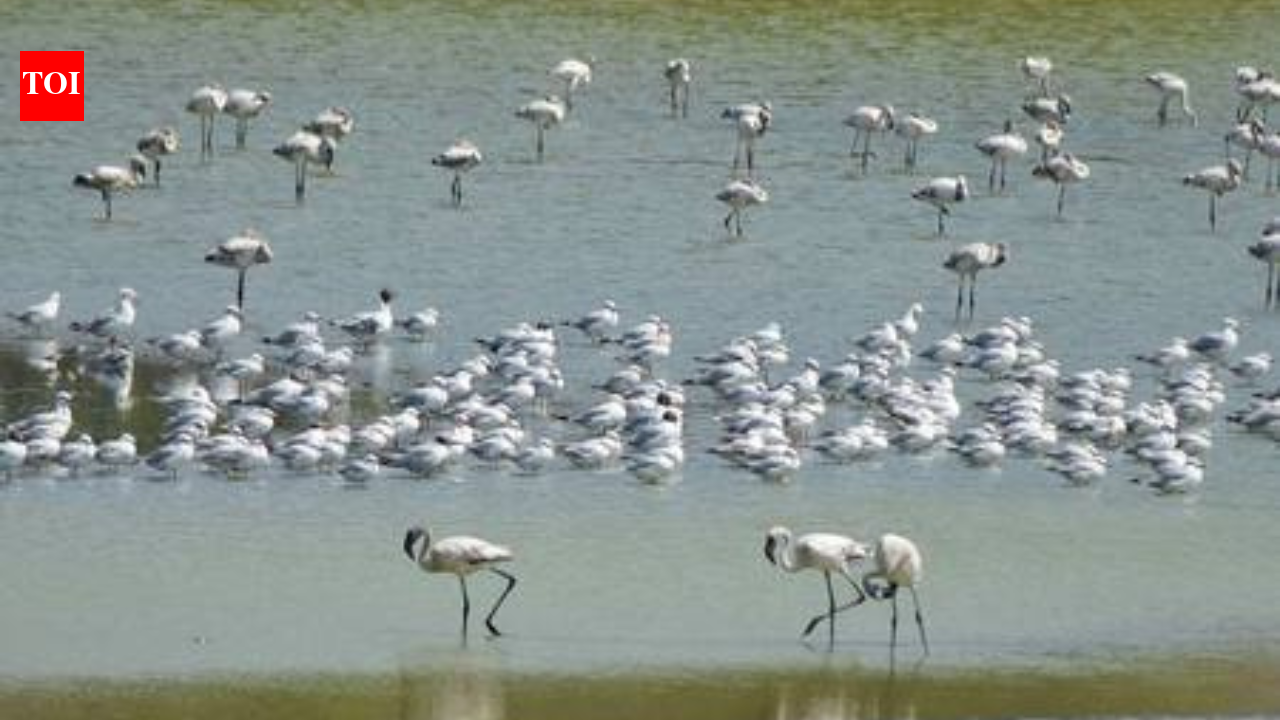
Climate activists have sounded a ‘wetland emergency’, as three key flamingo habitats in Navi Mumbai have turned toxic, with tests of water samples revealing alarming results.Activists flagged the deteriorating condition of the DPS, NRI, and T S Chanakya lakes at Nerul, which serve as satellite wetlands for the Thane Creek Flamingo Sanctuary (TCFS), a Ramsar site.Flamingo season in Navi Mumbai is from November to May, with January to March seen as the peak viewing time, as bird lovers and enthusiasts gather at wetlands to catch a glimpse of the pink parade.Water sample tests commissioned by the NatConnect Foundation indicate a system under severe stress, activists have stated in messages sent to Prime Minister Narendra Modi and Maharashtra Chief Minister Devendra Fadnavis.The warning is reinforced by the absence of flamingos, which have not arrived this season, said B N Kumar, director of NatConnect Foundation.Four basic indicators – TDS, pH, BOD and COD – paint a consistent picture of decline. The results showed over-concentrated, stagnant water rather than natural tidal flushing.“Put simply, all four indicators tell the same story-the water is not moving as it should in a healthy intertidal wetland,” Kumar said, pointing to blocked or restricted tidal flow.Instead of being regularly flushed, the wetlands are turning into stagnant, polluted basins.Activists squarely blame governance failure.The City And Industrial Development Corporation (CIDCO) is “largely responsible for what has happened,” Climate activist Nandakumar Pawar said, adding that regulators such as the Maharashtra Coastal Zone Management Authority and the forest department have “simply looked the other way”.The wetlands, he warned, are a public asset being destroyed in plain sight.Flamingos depend on algae and microorganisms that thrive in balanced conditions. As water quality deteriorates, the food chain collapses, turning feeding grounds into stressed habitats.While flamingos have adapted to degraded sites in the past, their absence now suggests the system may have crossed a critical threshold.“These wetlands were our pride. Today, they are being destroyed in full view,” said Rekha Sankhala of Save Flamingos and Mangroves Forum, urging authorities to treat the situation as a public health emergency.Calling for accountability, Sandeep Sareen of Navi Mumbai Environment Preservation Society (NMEPS) said the lab results expose “toxic waters” driven by unchecked development.“CIDCO’s apathy – putting concrete over conservation – is destroying these wetlands despite court orders,” he said, warning that flamingos are “the canary in our ecosystem’s coal mine.” “CIDCO’s deliberate neglect in a time of climate crisis has put groundwater and biodiversity at risk, and we urge immediate government intervention to save these wetlands,” activist Pamela Cheema said.


Source link

PM Modi to chair high-level meeting to review energy preparedness amid Middle East tensions | India News


PM Modi to chair high-level meeting to review energy preparedness amid Middle East tensions

NEW DELHI: Prime Minister Narendra Modi will chair a high-level meeting on Sunday evening to review India’s energy preparedness amid escalating tensions in the Middle East, with senior ministers set to assess the situation in the petroleum, power and fertiliser sectors, PTI reported citing sources.The meeting will focus on ensuring uninterrupted supply, stable logistics and efficient distribution across the country.

Watch

PM Modi Discusses West Asia Crisis, Secure Shipping Routes With Iran President

Officials said continuous monitoring of global developments remains a priority to protect consumer and industry interests amid the ongoing crisis.On March 12, PM Modi had said that the war in West Asia has triggered a worldwide energy crisis, calling it a “critical test of national character” that requires handling the situation with peace, patience and greater public awareness.The prime minister had also emphasised that the government is working relentlessly to address disruptions in international supply chains. “Continuous efforts are also underway to determine how we can overcome the disruptions that have occurred in the supply chain,” he said.The conflict, now in its third week, began on February 28 with attacks by the US and Israel on Iran, has since escalated, with Iran retaliating against Israel and several Gulf neighbours.Iran’s control over the Strait of Hormuz, a key global shipping route for energy supplies, has significantly impacted movement, with limited ships allowed to pass. The resulting blockade has disrupted energy supplies to several countries, including India.Since the conflict began, Prime Minister Narendra Modi has held telephonic conversations with several global leaders, including those from Saudi Arabia, the UAE, Qatar, Bahrain, Kuwait, Jordan, France, Malaysia, Israel and Iran.


Source link

Beyond a diagnosis: Rethinking Down Syndrome in a more inclusive world | India News


Beyond a diagnosis: Rethinking Down Syndrome in a more inclusive world

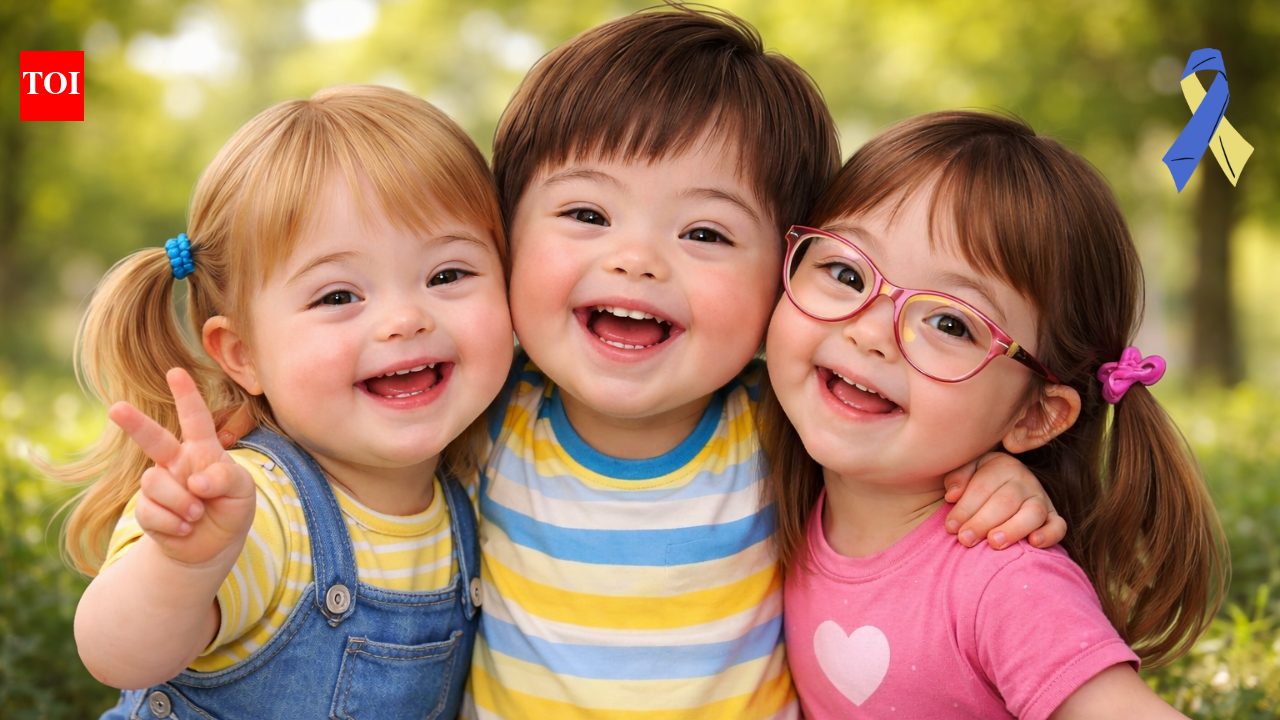
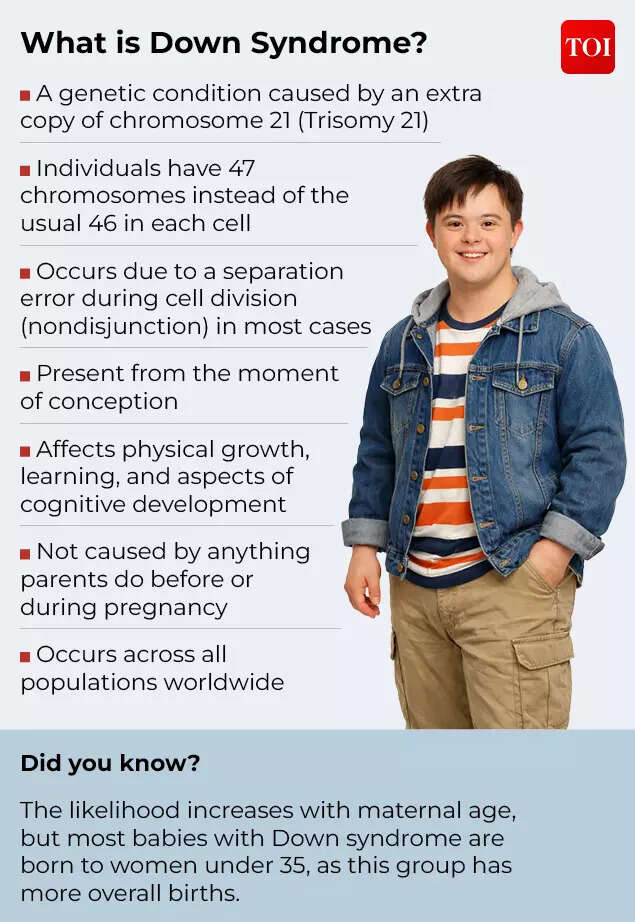
Every year on March 21, the world observes World Down Syndrome Day, a date that reflects the very nature of the condition it represents. The symbolism of 3/21 marks the presence of three copies of chromosome 21, a genetic variation that shapes millions of lives across the globe.Down syndrome, or Trisomy 21, is the most common chromosomal condition worldwide. It occurs when an individual has an extra copy of chromosome 21, resulting in 47 chromosomes instead of the usual 46 in each cell, influencing physical growth, cognitive development, and aspects of social skill development. It is present from the moment of conception and occurs sporadically, meaning it is not caused by anything a parent does during or before pregnancy. Only a small proportion of cases, around 1%, are hereditary, typically due to translocation, where genetic material is passed on to the child from a parent.According to the Down Syndrome Federation of India, it affects approximately one in every 800 to 1,000 live births in India, amounting to nearly 30,000 children each year.Yet, while its biology is relatively well understood, the story of Down syndrome is not defined by chromosomes alone. It is shaped by access to care, early intervention, inclusion, and, perhaps most importantly, by how society chooses to see it.
Down

What is Down Syndrome?

Understanding the genetics

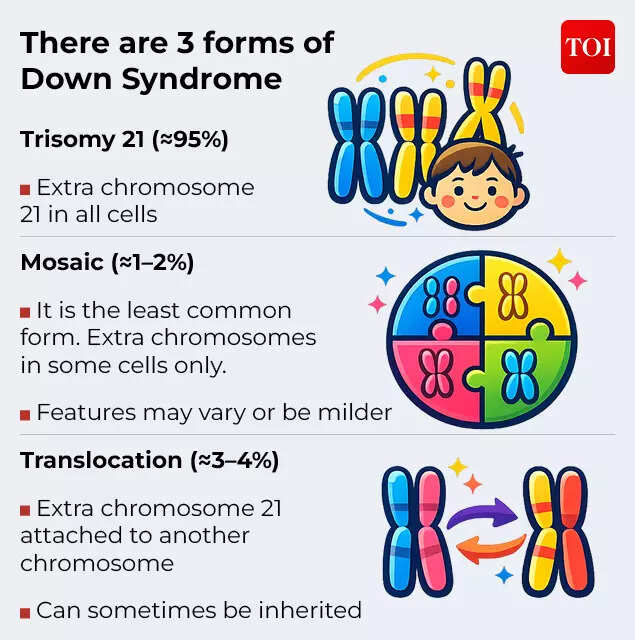
In nearly 95% of cases, Down syndrome occurs due to nondisjunction, a process that occurs when the two copies of chromosome 21 fail to separate during egg or sperm formation, leading to a fertilized egg with three copies of chromosome 21 instead of two (trisomy 21). This is why it is the predominant cause.However, there are two less common forms: mosaic and translocation.Mosaic Down syndrome – Here, the nondisjunction event happens after fertilization in one of the early cell divisions. As a result, only a proportion of cells carry the extra chromosome. The degree of mosaicism can influence the severity of physical and cognitive traits, often making them less pronounced than in full trisomy 21.Translocation Down syndrome – In this form, an extra copy of chromosome 21 attaches to another chromosome (often chromosome 14). Unlike nondisjunction, this form can sometimes be inherited from a parent who carries a balanced translocation, meaning the parent has no extra chromosome material and may be unaffected.
Down 2

The 3 forms of Down Syndrome

Though less common, both forms highlight an important reality that Down syndrome is not uniform.

Recognising early signs and confirming diagnosis

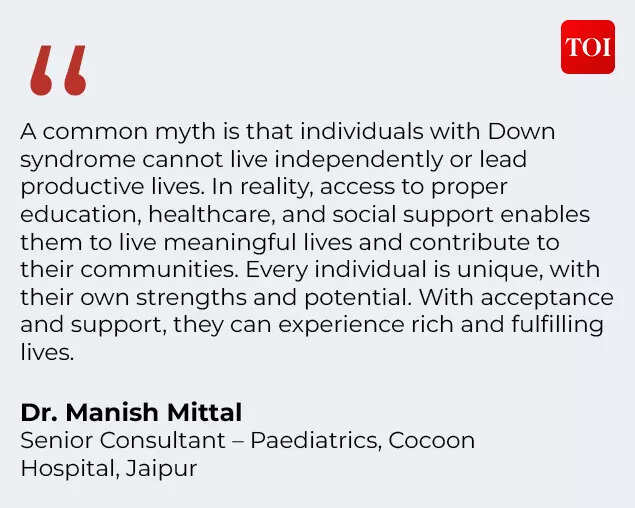
In infancy, early signs often present as developmental delays or certain physical features.“Early signs of Down syndrome in infants may include certain physical features and developmental delays, such as slower head control or delayed response to stimuli,” explains Dr. Manish Mittal, senior consultant-paediatric.However, these signs can overlap with typical developmental variations.“A definitive diagnosis cannot rely on observation alone. Genetic testing is essential to confirm the condition,” he says.Doctors typically confirm the diagnosis through a karyotype test, a chromosomal analysis performed on a blood sample. During pregnancy, screening methods such as ultrasound markers and maternal blood tests may indicate the likelihood, followed by confirmatory procedures like amniocentesis or chorionic villus sampling (CVS).“Early screening, along with timely medical evaluation and intervention, plays a crucial role in ensuring better health and developmental outcomes,” Dr. Mittal adds.
Down 4

.

Physical traits and developmental differences

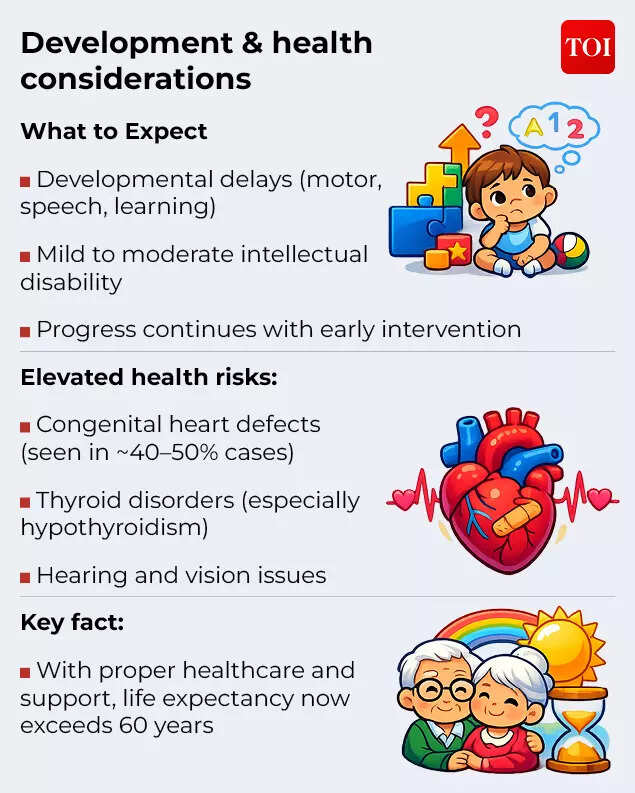
Down syndrome is associated with a range of physical characteristics, though not all individuals will display all of them.Common features may include a flat facial profile, small head, flat nasal bridge, upward-slanting eyes, a small mouth with a relatively larger tongue, and most commonly low muscle tone. Individuals may also have smaller, low-set ears, short stature, broad hands with a single deep crease across the palm, a curved fifth finger, and a noticeable gap between the toes. Increased joint flexibility is also frequently observed.Alongside these physical traits, developmental delays are common such as mild to moderate intellectual disability.“Children with Down syndrome are delayed in achieving their motor and cognitive milestones,” says Dr. Ratna Dua Puri, chairperson, Institute of Medical Genetics and Genomics, Sir Ganga Ram Hospital.
Down 3

.

However, she emphasizes that these delays should not be seen as limitations. “Children with Down syndrome are capable of achieving all major life milestones and are increasingly participating in a wide range of activities. “However, these children can do everything in life. They will walk, they can go to school, and now they are doing various activities” Dr. Ratna adds.Thus, it is important to recognize that developmental delays in individuals with Down syndrome should not be treated as absolute developmental limits for their potential as the pace of development may differ, but progress is still there.While some individuals may not pursue higher education, many attend school and acquire life skills, and increasingly find employment opportunities.

The critical window: Why early intervention matters

Prenatal screening methods, including ultrasound markers and maternal blood tests, can help identify the likelihood of Down syndrome during pregnancy, allowing families to allowing families to better understand the condition and prepare for early care and supportEarly intervention plays a defining role in shaping outcomes.“This involves helping them with their muscle tone so that they can sit, stand and hold their heads,” explains Dr. Puri. “It is also important for assisting them in developing language and communication.”Therapies such as occupational therapy, physical therapy, and speech therapy form the backbone of this support, often delivered through specialised child development centres that bring together multidisciplinary care.But these structured sessions are only part of the process.“These are just one-hour sessions. Parents need to incorporate what they learn into their daily interactions with the child, in a fun and engaging way. That is what leads to the best outcomes,” she says.She also emphasises reducing passive screen exposure and encouraging direct engagement, talking, playing, and stimulating the child’s senses.It is in these everyday moments that development gathers momentum.The United Nations also emphasises that access to adequate healthcare, early intervention programmes, inclusive education, and appropriate research is vital to the growth and development of individuals with Down syndrome.

Pregnancy, fertility, and recurrence

One of the most common misconceptions around Down syndrome relates to maternal age. While the likelihood increases with age, the broader picture is more complex.A significant proportion, around 85%, of children with Down syndrome are born to mothers under 35, largely because more births occur in this age group.For families who already have one child with Down syndrome, the chance of having another child with the condition is slightly higher than the general population, in addition to the baseline risk associated with maternal age.Fertility patterns also differ in individuals with Down Syndrome. Males with Down syndrome typically have reduced sperm counts and as a result they may experience infertility. Females, however, can have regular menstrual cycles and may conceive and carry a pregnancy to term, making appropriate counselling and healthcare guidance essential.

Health considerations across the lifespan

Individuals with Down syndrome may face a range of associated health conditions, particularly if not monitored early.Congenital heart defects are among the most common, often requiring medical or surgical management in infancy. Thyroid disorders, especially hypothyroidism, are also frequently observed. Hearing and vision impairments, recurrent infections, and low muscle tone can further influence early development.As individuals grow older, the risk profile evolves. There is a higher likelihood of obesity, diabetes, and metabolic syndrome, along with conditions such as cataracts and other visual problems. Mental health concerns, including depression, may emerge, particularly during life transitions.There is also an increased risk of early-onset dementia, with symptoms similar to Alzheimer’s disease. In many cases, early signs may first appear as subtle changes in behaviour rather than memory alone, making close observation essential.At the same time, individuals with Down syndrome appear to be less prone to certain conditions common in the general population, including atherosclerosis and some solid tumour cancers.With consistent medical care and monitoring, many individuals today live longer, healthier lives, with life expectancy now extending to around 60 years and beyond.

Education, transition, and adulthood

The landscape of education is steadily evolving. Increasingly, children with Down syndrome are included in mainstream classrooms, sometimes partially, often fully, depending on individual abilities.Many go on to complete school education, pursue vocational training, and in some cases, engage in post-secondary education.As they transition into adulthood, new challenges and opportunities emerge. Some individuals move into supported housing or independent living arrangements, take up employment, and build social relationships.This transition, however, requires careful support. What determines these outcomes is not just ability, but access to early support and inclusive environments.

Inclusion in education and society

The conversation around Down syndrome is increasingly shifting, from care to inclusion.Children today are part of classrooms, playgrounds, and communities. Adults are entering workplaces, contributing across sectors, and building independent lives.Yet, true inclusion is not just about access, it is about perception.Ritika, a special educator, points out that many societal beliefs continue to underestimate what individuals with Down syndrome are capable of achieving.She beautifully captures this perspective, “If the world could see my students the way I do, we would shift our focus from their limitations to their incredible strengths. We would celebrate their resilience, creativity, and infectious enthusiasm. Inclusion would no longer be an obligation, but a natural choice, because they are valuable contributors to society.My students would be asked about their dreams, their ideas, and their passions, not just their condition. We would learn from their unique ways of problem-solving, their ability to find joy in simple moments, and their deep capacity for empathy and love. Ultimately, we’d realise that inclusion isn’t a favour; it’s a mutual enrichment”, she adds.
Down 5

.

As conversations around Down syndrome continue to evolve, the shift that is needed is not just in awareness, but in action and acceptance. Inclusion must move beyond policy into everyday practice, in education, healthcare, workplaces, and communities. Ultimately, the question is not what individuals with Down syndrome can achieve, but whether society is willing to create the supportive conditions that allow them to reach their full potential and be truly supported and accepted as they are.

Source link

8,931 days milestone! PM Modi overtakes Pawan Kumar Chamling to become longest-serving head of government | India News


8,931 days milestone! PM Modi overtakes Pawan Kumar Chamling to become longest-serving head of government
PM Narendra Modi (Image/PTI)

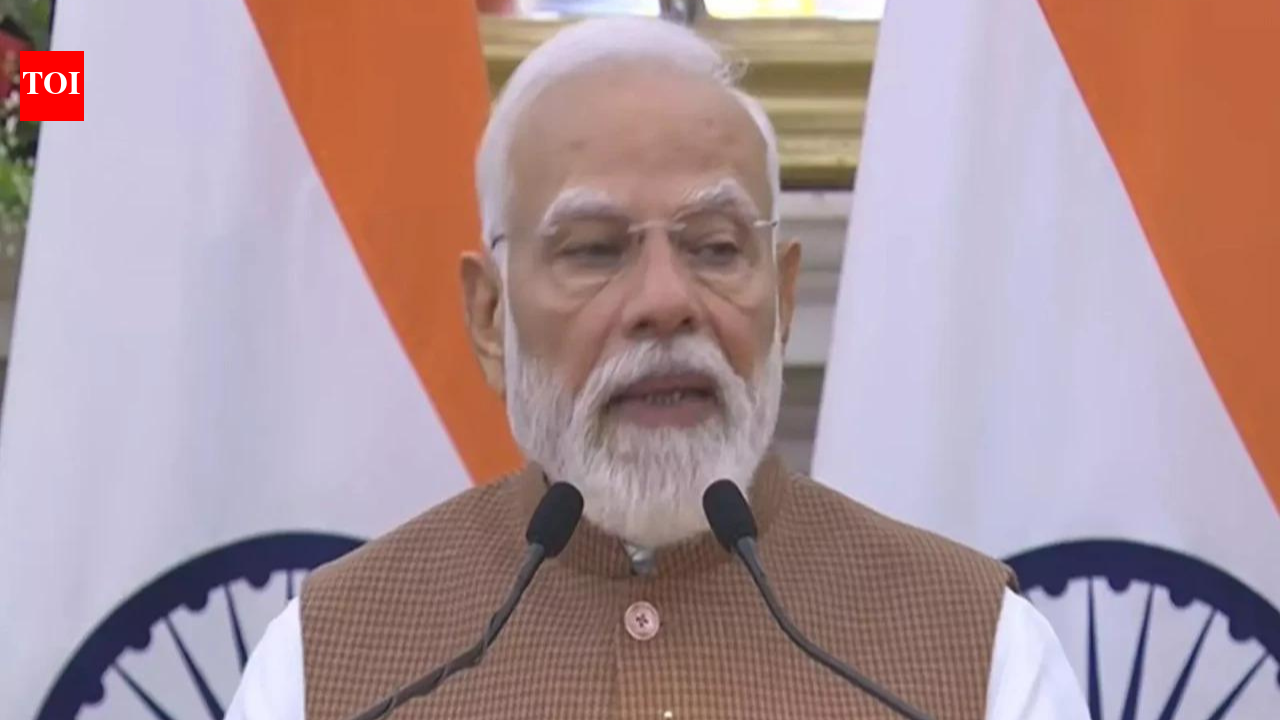
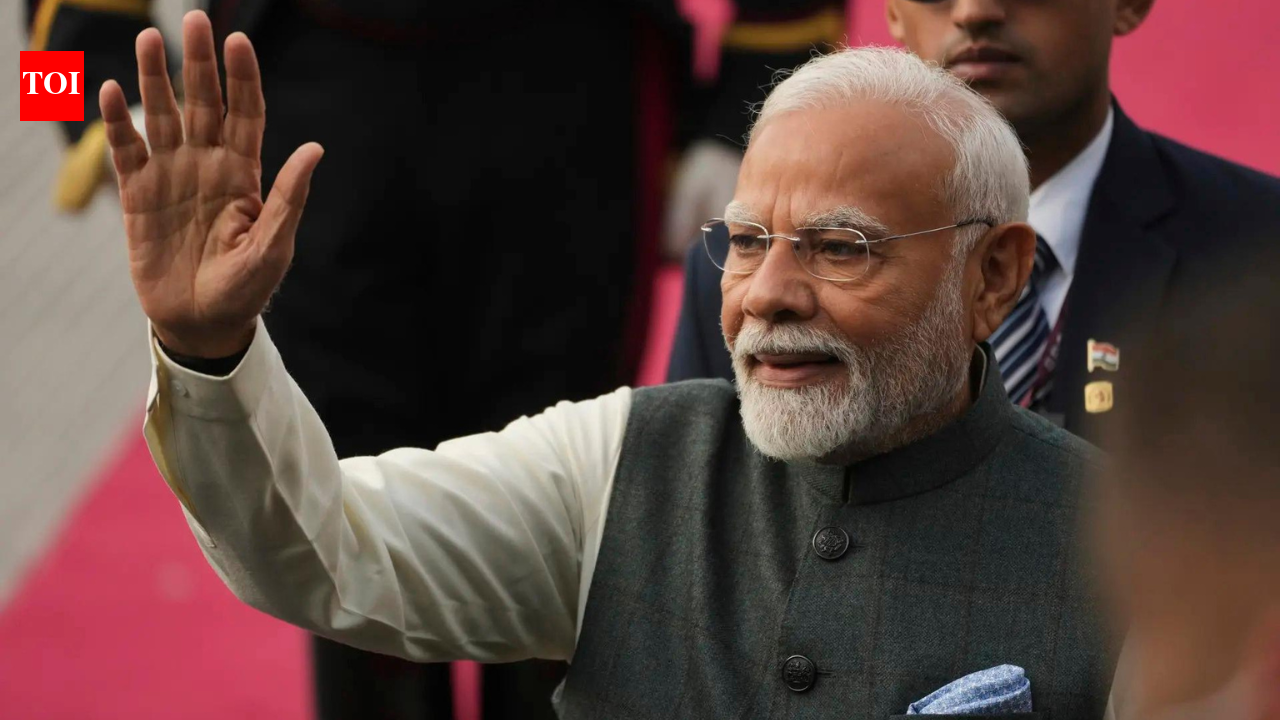
NEW DELHI: Prime Minister Narendra Modi on Sunday became the longest-serving head of a government, completing 8,931 days in office. He surpassed the previous record held by Pawan Kumar Chamling who served as Sikkim’s chief minister for over 24 years, remaining 8930 days in office.PM Modi served as the chief minister of Gujarat for over 13 years from October 7, 2001 to May 21, 2014. During this period, he became the longest-serving chief minister of the state, winning four consecutive terms in 2001, 2002, 2007 and 2012.He later assumed office as the Prime Minister of India in 2014 and has since been re-elected in 2019 and 2024, making him a three-term PM.Defence minister Rajnath Singh congratulated PM Modi for achieving a significant milestone in his long public service.“Prime Minister Narendra Modi is now the longest-serving head of a government in India. Pure devotion to the nation and its people defines PM Modi Ji. From his unwavering commitment as the Chief Minister of Gujarat to his dedicated leadership as the Prime Minister, his life has been a continuous journey of service,” Singh wrote in a post on X.Home minister Amit Shah called PM Modi’s service in governance as ‘hard work and unwavering commitment.’In a post on X, Shah wrote: “A milestone rooted in service, hard work and unwavering commitment. Today, PM Narendra Modi ji surpasses the 8,930-day record of former Sikkim CM Pawan Kumar Chamling, becoming the longest-serving head of a government in India. PM Modi Ji’s 8,931 days in public life, first as Gujarat CM and now as Prime Minister reflect a deep dedication to nation-first governance, integrity in action, and tireless service to every citizen. A rare legacy built on unprecedented trust and unparalleled Seva.”The milestone comes alongside PM Modi’s growing global digital presence. Earlier, he became the first world leader to cross 100 million followers on Instagram. He has more than double the followers of US President Donald Trump, who has over 43 million followers.


Source link

Puducherry Assembly Elections: Puducherry polls: BJP names another candidate for Karaikal South – check full list | India News


Puducherry polls: BJP names another candidate for Karaikal South - check full list

NEW DELHI: The Bharatiya Janata Party (BJP) on Sunday named M Arulmurugan as its candidate for the upcoming Puducherry assembly elections, set to be held on April 9. The announcement follows the BJP’s release of the first list of nine candidates a day earlier. Arulmurugan will contest from the Karaikal South constituency in the Union territory.With this, Bharatiya Janata Party (BJP) has announced all candidates for the upcoming Puducherry Assembly elections. Earlier, the party had announced several candidates for constituencies it will contest as part of the alliance. It did not announce candidate for one seat as its alliance partner AIADMK, which was allotted two seats, insisted on one more seat.Here’s a list of all the candidates

  • M Arulmurugan from Karaikal South
  • A Namassivayam will contest from Mannadipet
  • E Theeppainthan from Oussoudu (SC)
  • PML Kalyanasundaram from Kalapet
  • VP Ramalingame from Raj Bhavan
  • A Johnkumar from Mudaliarpet
  • Embalam R Selvam from Manavely
  • GNS Rajasekaran from Thirunallar
  • A Dineshan from Mahe

Seat sharingThe BJP is contesting the election in alliance with the AINRC. Under the agreed formula, AINRC will contest 16 seats, while the BJP and its allies will fight the remaining 14 seats. The BJP itself will contest 10 constituencies, while two seats each have been allotted to the AIADMK and Jose Charles Martin’s Latchiya Jananayaga Katchi (LJK), following discussions over the latter’s inclusion in the alliance.Puducherry pollsThe Election Commission has scheduled polling for all 30 seats in Puducherry in a single phase on April 9, with counting of votes set for May 4.Preparations for the polls are underway, with the Commission completing the first randomisation of Electronic Voting Machines (EVMs) and Voter Verifiable Paper Audit Trails (VVPATs). It said detailed records will be shared with candidates after the final list of contestants is ready to ensure transparency in the process.Puducherry has around 9.44 lakh eligible voters, including about 4.43 lakh male voters, 5 lakh female voters and 139 third-gender electors. The electorate also includes 23,033 first-time voters aged between 18 and 19, over 6,000 voters aged 85 and above, and 12,204 persons with disabilities.Voting will be held across 1,099 polling stations, including 610 in urban areas and 489 in rural regions, with an average of 859 voters per booth.With candidates being announced and logistics in place, the focus is now on the upcoming contest as parties prepare for polling next month.


Source link

Potholes to poor lighting: AI Dashcams to detect 30 types of highway defects | India News


Potholes to poor lighting: AI Dashcams to detect 30 types of highway defects

NEW DELHI: National Highways Authority of India (NHAI) will deploy AI-powered dashcam analytics services (DAS) on approximately 40,000 km of the NH network which are under operation and maintenance contracts. The decision comes amid complaints of commuters against riding quality and road conditions.For effective monitoring, NHAI has divided the country into five zones and contracts have been awarded for two years.This week, highway ministry informed Rajya Sabha that the number of public complaints over the quality of highway construction and condition of riding surface of NHs has registered over 60% increase this year compared to last year. Till March 12, such complaints increased to 11,340 from 7,030 in 2024-25. The ministry also said that this year, 9,977 grievances have been resolved.An NHAI official said the dashcams will be installed in every highway patrol vehicle and these will record all details, including 30 types of defects and anomalies on highways. The primary focus will be on pavement condition, including potholes, cracks, rutting, and surface deterioration, along with issues such as faded lane markings, damaged crash barriers, and non-functional street lights.“The recordings will be fed into a specialised IT platform that features dedicated modules for data management and AI analytics. This will generate reports within a day and identify the defects. Based on this instructions will be issued for fixing the issues to agencies and officials concerned,” said an official.The system will also identify other safety concerns, including illegal median openings, unauthorised signboards, encroachments, and illegal parking.The surveys will be conducted at least once a week, with night time inspections conducted at least once a month to assess the performance of road signage, pavement markings, road studs, and highway lighting. It will also cover critical issues such as water stagnation, missing drainage covers, vegetation growth, and the condition of bus bays.


Source link