Breaking News
NHAI promises uninterrupted fuel, bitumen supply amid rising cost concerns | India News


NHAI promises uninterrupted fuel, bitumen supply amid rising cost concerns

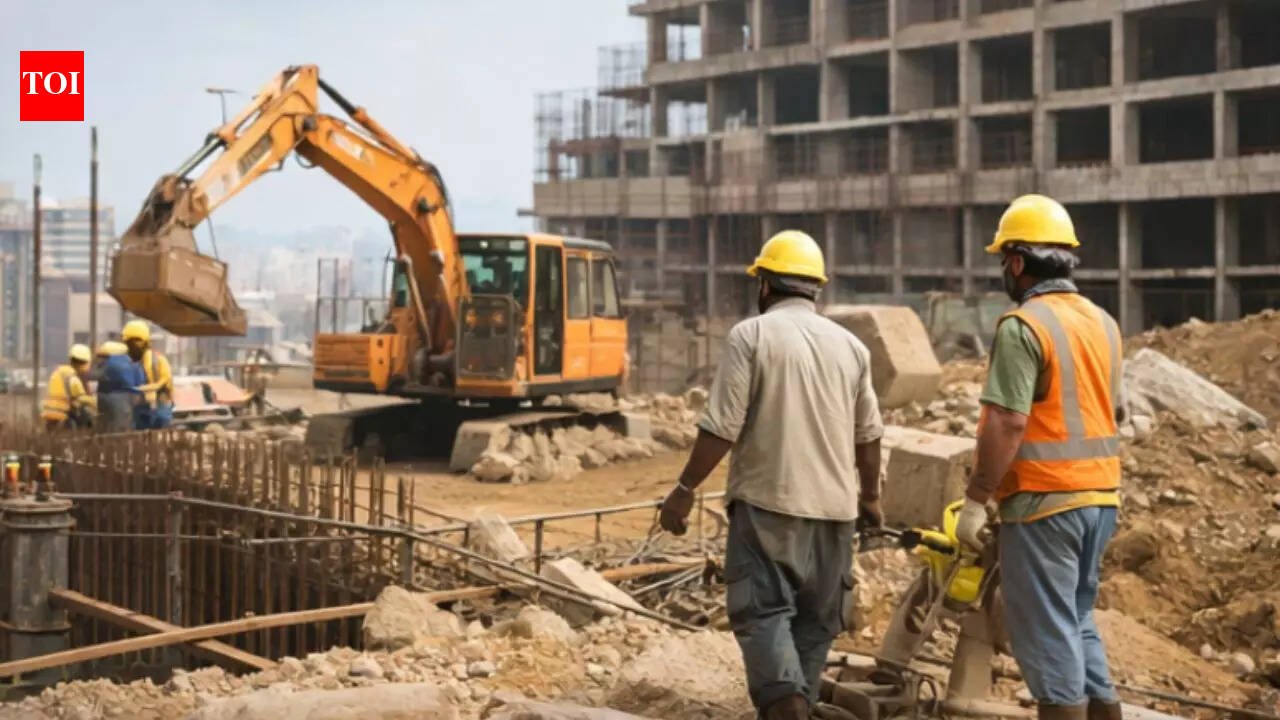
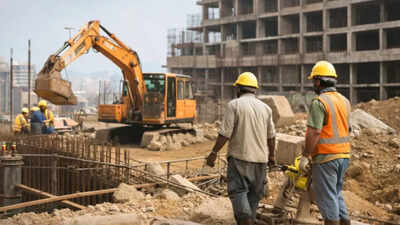
NEW DELHI: National Highways Authority of India (NHAI) on Friday assured highways builders that adequate supplies of fuel, bitumen and other essential inputs would be maintained amid concerns over a likely fall in availability of bitumen and increase in fuel prices.Highway builders, in a meeting with NHAI chairman Santosh Kumar Yadav, flagged that the prolonged conflict in West Asia is likely to impact project cost and even toll collection on stretches that get a high share of port-bound traffic. They also urged the highways authority to declare the prevailing situation as a force majeure event for highway projects to help them protect against revenue shortfall and extension of concession periods.Officials said the National Highway Builders Federation (NHBF) flagged several issues including possible increase in prices of essential inputs that could impact the pace of highways construction.“NHAI chairman said they are in continuous coordination with IOCL, which has confirmed sufficient stock availability of fuel and bitumen, with no major supply disruptions anticipated. He advised contractors to immediately approach NHAI regional offices and field authorities in case of supply disruptions,” said a person who attended the virtual meeting.Yadav assured developers that NHAI would coordinate with local administrative authorities to ensure uninterrupted material availability.The highway developers said they anticipated an increase in transportation cost on the back of increase in diesel price and rising input material costs are expected to escalate transportation expenses. They also suggested NHAI to reduce the price indexation lag from three months to one month to better reflect real-time market conditions and prevent under-compensation to contractors.


Source link

‘Will make Tehri important place for water, adventure sports’: CM Dhami attends Tehri Lake Festival | India News


'Will make Tehri important place for water, adventure sports': CM Dhami attends Tehri Lake Festival
“We will continue our efforts to give more speed to the possibilities here and to give them wings. We have started this. We will work to move this forward”, Dhami said.

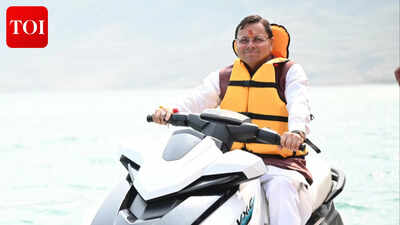
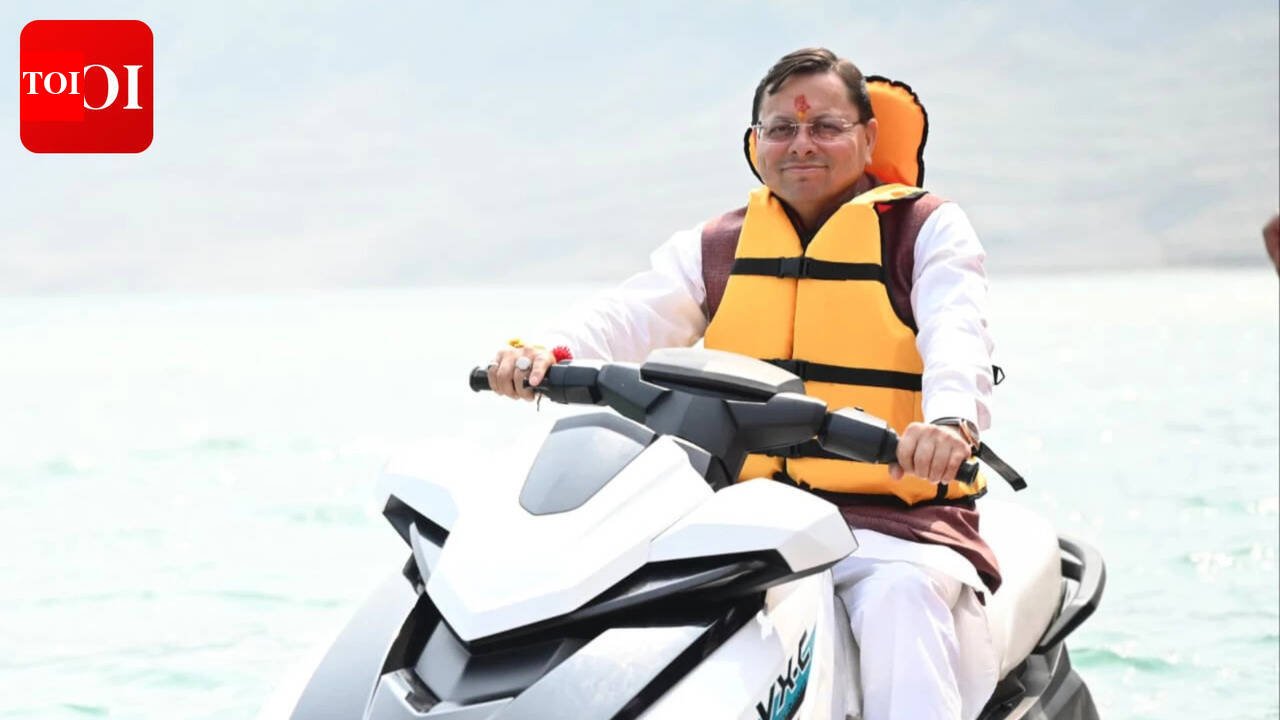
TEHRI GARHWAL (UTTARAKHAND): Uttarakhand chief minister Pushkar Singh Dhami on Friday attended the Tehri Lake Festival Himalayan-O2 2026, highlighting the objective to make it a major hub for sports. Adressing the event, he said, “Our government’s goal is to make Tehri an important place for water and adventure sports. A place where national and international athletes come for water sports and adventure sports,” he said, adding that sports such as kayaking, canoeing, jet skiing, and scuba diving are being encouraged.“We will continue our efforts to give more speed to the possibilities here and to give them wings. We have started this. We will work to move this forward”, he added. Highlighting that the development of the Tehri Lake is being carried out as part of the Pratam Gram of Timan village, he said, “Rs 1.3 billion has been invested in the development of the Tehri Lake and the construction of the Ring Road.”Encouraging the players to pursue their sports, he assured them of support from the government. “I would like to tell all our players that they should dedicate themselves to the sport, and they should carry this feeling with them in their lives. I would like to tell all the young players that they should move forward with full dedication, enthusiasm and self-confidence to realize their dreams,” said Dhami.“I am sure that in the future, you will definitely make India and our state proud on national and international stages,” he added. Tehri Lake is steadily emerging as a major attraction for tourists from across India and abroad. Under the leadership of chief minister Dhami, tourism in Uttarakhand is gaining a new identity. The CM also emphasized that through tourism, new employment opportunities are being created for local youth.


Source link

No shortage of funds for development works, no place for laxity: Delhi CM | India News


No shortage of funds for development works, no place for laxity: Delhi CM

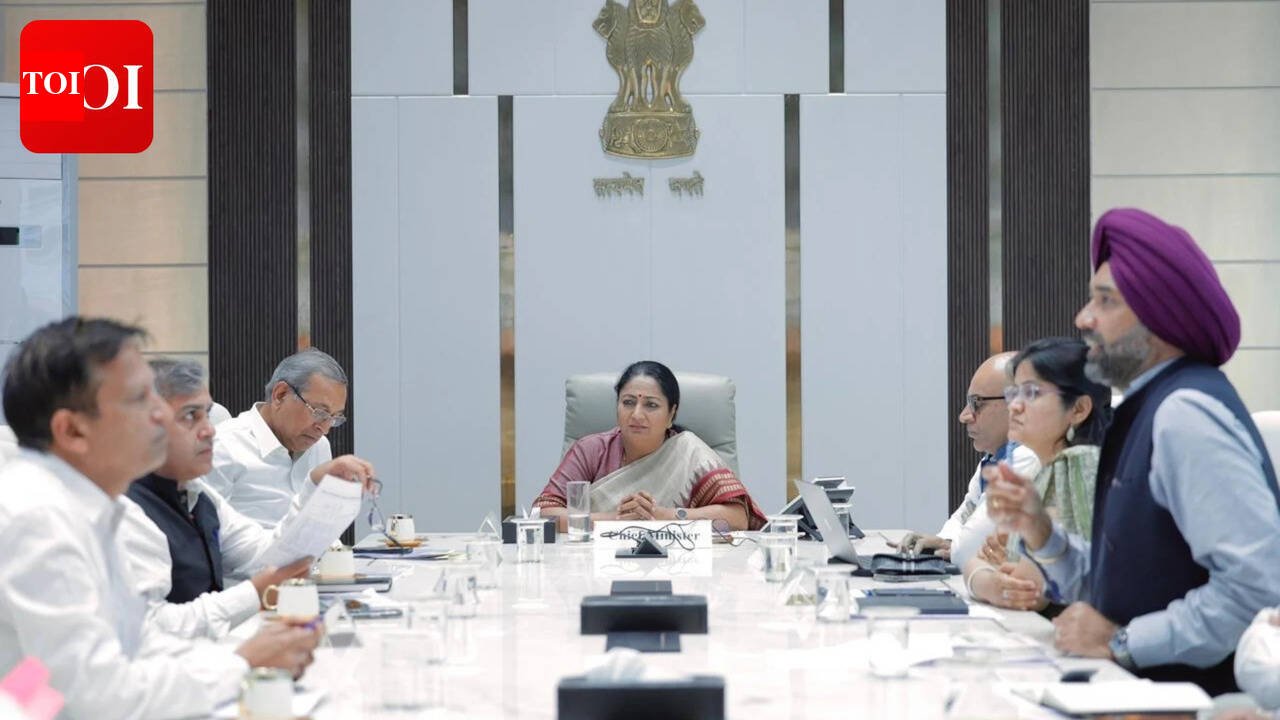
NEW DELHI: Chief minister Rekha Gupta on Friday reiterated that there would be no shortage of funds for development works in Delhi, also asserting that laxity will not be tolerated.Gupta chaired a review meeting on road and drainage works approved earlier and directed the departments concerned to complete tendering processes by March end to ensure that the projects are completed before monsoon.“The pace of development works must be visible on the ground. Development projects worth approximately Rs 3,786 crore in total have been approved so far under three departments. All agencies must work in close coordination and expedite the completion of pending documentation,” the chief minister said.The meeting was held to review works under the Chief Minister Development Fund (CMDF), the Delhi Village Development Board (DVDB) and the Trans-Yamuna Area Development Board.“In order to strengthen basic infrastructure in the capital, a large number of projects have been approved under the CMDF scheme. So far, 3,812 development projects have received administrative approval under this scheme, with a total estimated cost of approximately Rs 1,798.85 crore,” Gupta said.Following the meeting, the chief minister said the Delhi government is taking concrete steps for the holistic development of villages. “In this direction, 707 projects in various rural areas have been approved under the Delhi Village Development Board, with an expenditure of approximately Rs 1,557 crore.” She also said in the trans-Yamuna region, 799 projects have been approved under the Trans-Yamuna Area Development Board , with an expenditure of approximately Rs 430 crore.These projects include construction of roads and drains, works related to water supply, installation of streetlights, development of parks and other basic infrastructure facilities, she added.


Source link

‘No shortage of energy in India’: Union minister Hardeep Singh Puri amid supply concerns due to US-Iran war | India News


'No shortage of energy in India': Union minister Hardeep Singh Puri amid supply concerns due to US-Iran war
Photo credit: X/ @HardeepSPuri

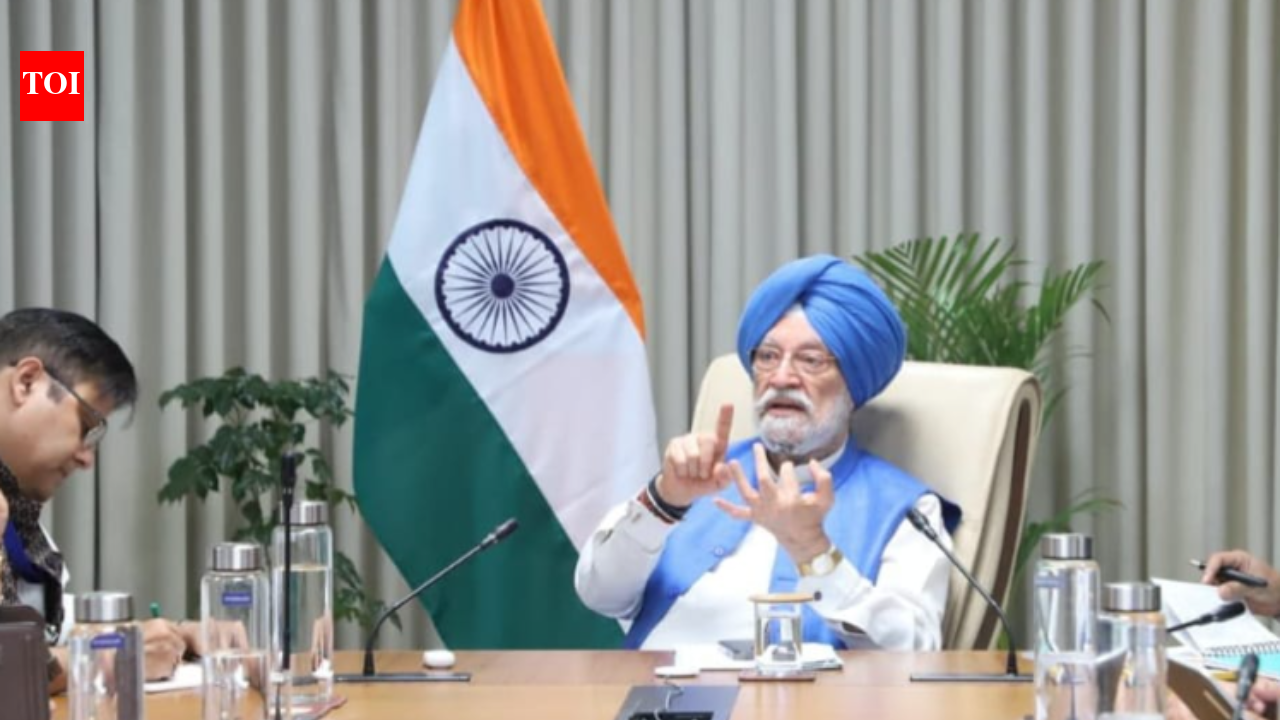
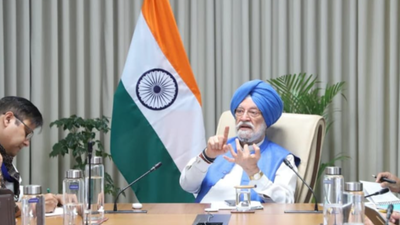
NEW DELHI: Union minister for petroleum and natural gas, Hardeep Singh Puri, on Friday sought to allay public concerns about energy availability, stating that there is “no shortage of energy in India” and no reason for consumers to worry amid ongoing geopolitical tensions in West Asia. In a post on X, the minister said, “In my regular interaction with members of the fourth estate today, we discussed various aspects of India’s uninterrupted energy imports despite geopolitical challenges. Our priority is to ensure availability of affordable and sustainable fuel for our citizens, and we are doing it comfortably. There is no shortage of energy in India and there is no cause of worry for our energy consumers.”The comments come against the backdrop of tensions in West Asia, which have raised global concerns about potential disruptions in crude oil flows through the strategically important Strait of Hormuz. Government sources cited by the ANI described India’s oil, petroleum products and LPG supplies as being in a “very comfortable position”.Officials highlighted that India has significantly diversified its crude import basket in recent years. Since 2022, imports from Russia have risen sharply. In February, around 20 per cent of India’s total crude imports — roughly 1.04 million barrels per day — came from Moscow.State-run Indian Oil Corporation dismissed social media posts alleging fuel shortages as “baseless”, asserting that stocks are sufficient and distribution networks are functioning normally. The company urged citizens not to panic or crowd fuel stations and to rely on official sources for accurate information.The sources added that all major refineries, including LPG units, have been instructed to increase output to ensure adequate availability nationwide. India has also started importing LPG from the United States, with public sector firms signing a one-year contract in November 2025 to purchase around 2.2 million tonnes per annum from the US Gulf Coast for 2026.


Source link

Nitish Kumar: Nitish Kumar heads to Delhi, how JD(U) faces its defining test in Bihar | India News


Nitish Kumar heads to Delhi, how JD(U) faces its defining test in Bihar

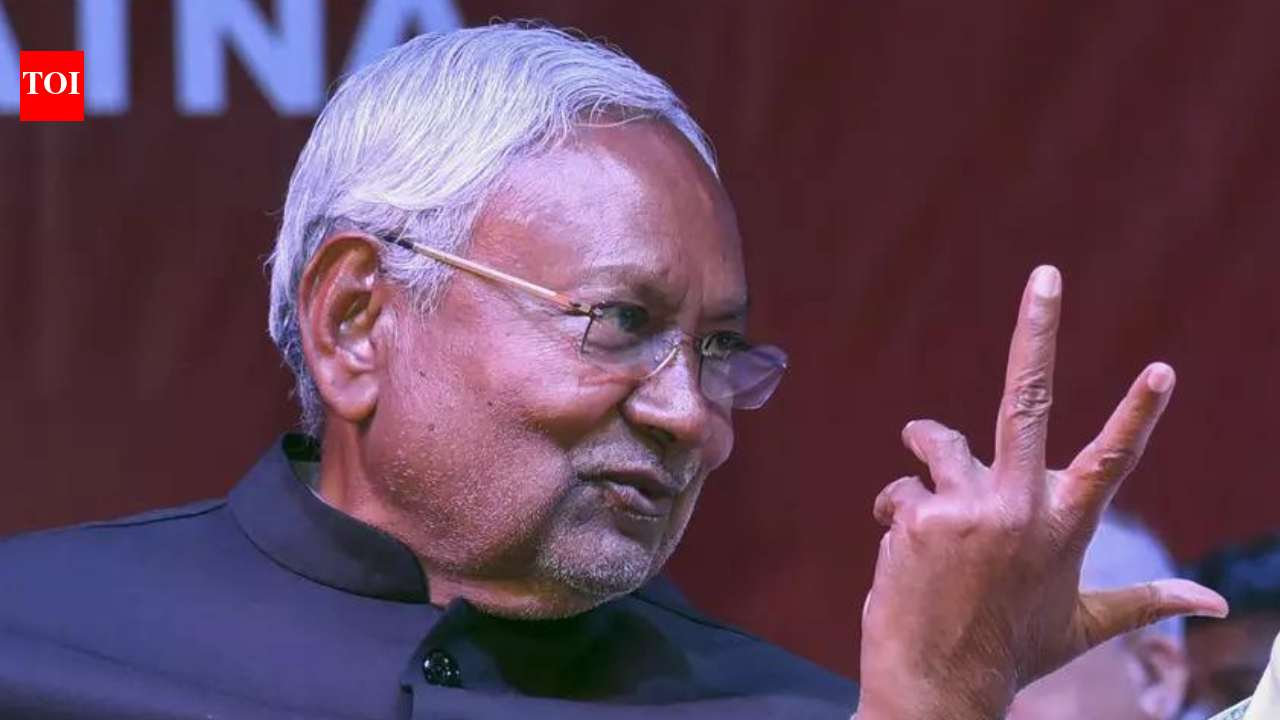
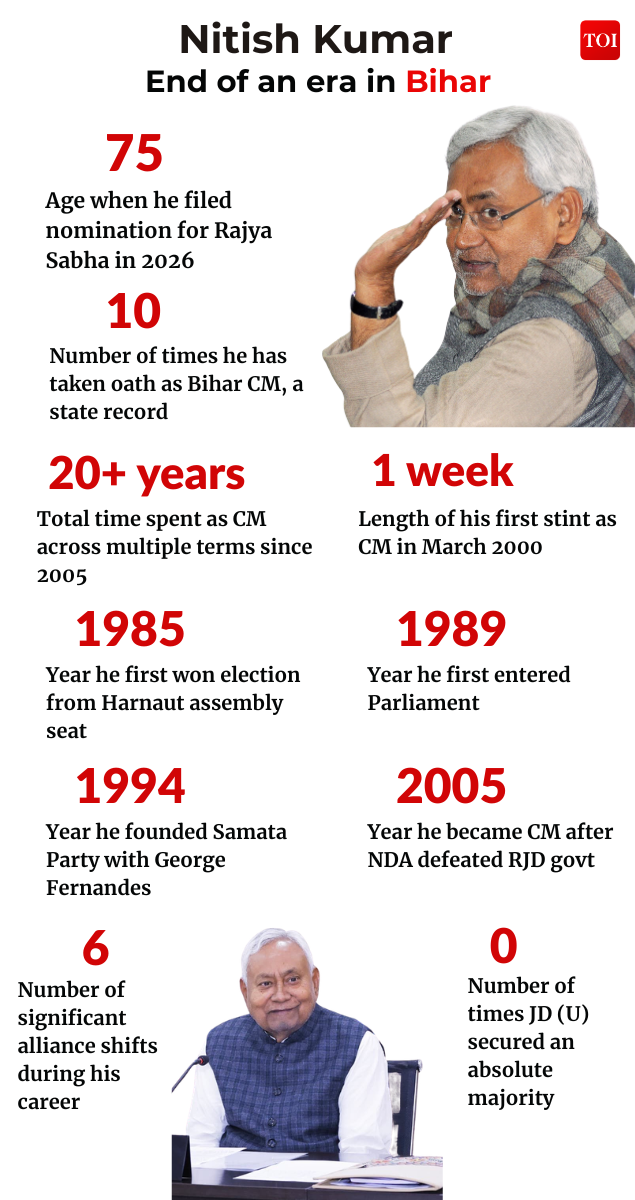
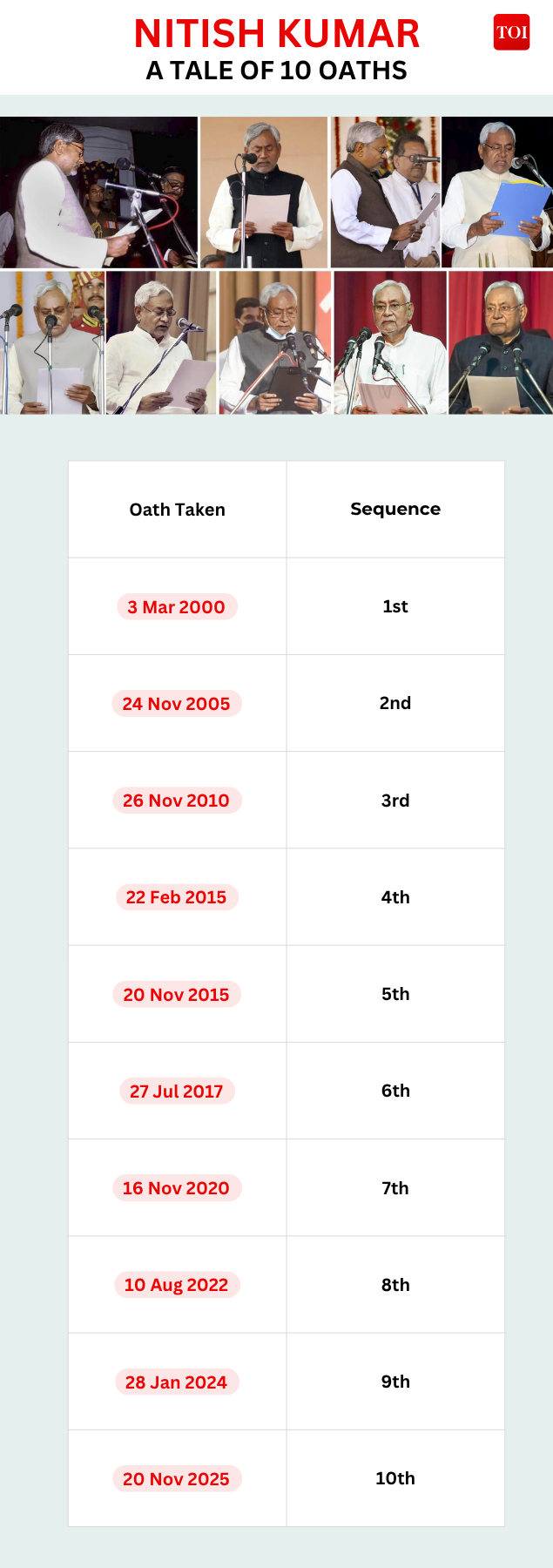
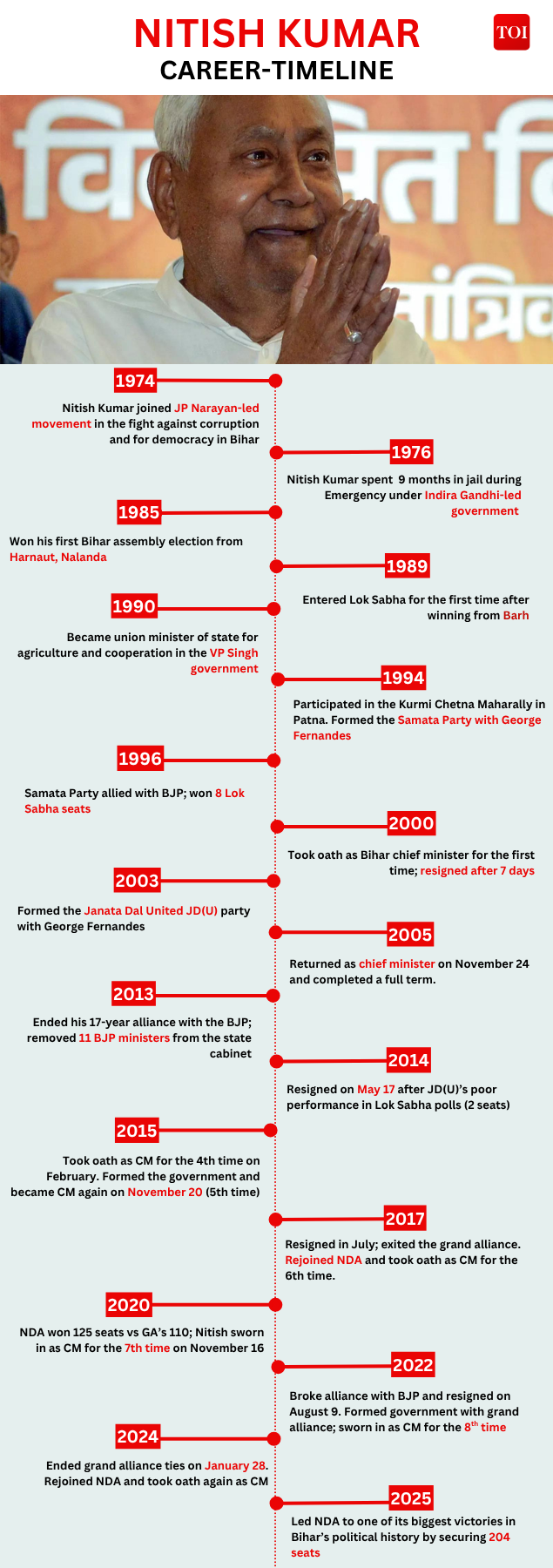
NEW DELHI: Politics in Bihar has revolved around Jayaprakash Narayan’s disciples —Nitish Kumar and Lalu Yadav — for more than three decades. With Lalu stepping back from active politics and Nitish now opting for a Rajya Sabha seat over the state’s top job, Bihar appears to be entering an unknown phase, with a new face likely to take over as chief minister.After an overwhelming performance in the recently held Bihar assembly elections, Nitish filed his nomination for the Rajya Sabha on Thursday.“I seek to become a member of the Rajya Sabha in the elections being held this time. I want to assure you with complete honesty that my relationship with you will continue in the future as well, and my resolve to work together with you to build a developed Bihar will remain steadfast. The new government that will be formed will have my full cooperation and guidance,” the 75-year-old politician wrote on X.Although many anticipated this move amid speculation about his deteriorating health, Nitish’s sudden announcement still surprised many who expected a smoother transition plan.In the coming days, Nitish is expected to win the election unopposed and move to the Rajya Sabha, thus resigning from the chief ministerial post. The Janata Dal (United) chief’s decision not only ends the political lineage of JP Narayan, Ram Manohar Lohia and Karpoori Thakur in Bihar but also throws his party into uncharted waters with no clear roadmap for the future.After Nitish, who?Nitish had long been the “Peer-Bawarchi-Bhisti-Khar” for his party. Despite never managing an outright majority in the state assembly, Nitish Kumar‘s “Sushasan Babu” image helped the party remain in the driver’s seat of Bihar politics for more than two decades.However, the party never managed to nurture a second line of command beyond Nitish. Leaders like Sanjay Jha, Lalan Singh and Vijay Choudhary exist within the party, but none enjoys a mass connection with the JD(U)’s core vote base.Additionally, Nitish has always been a staunch opponent of dynastic politics. Throughout his long political career, he never allowed his family members to enter politics in any form. Unlike Lalu, who made his son Tejashwi Yadav his political heir, Nitish’s son Nishant has remained away from politics.

.

Amid these ongoing developments, speculation is growing that Nishant may make a political debut, with the party seeing him as a potential link to its core supporters.“Now, it’s clear, and it has been finalised that Nishant Kumar will join active politics. The party will make a formal announcement in a day or two. Party workers have been demanding Nishant’s entry into politics for several years. Now party workers and supporters are upbeat with the decision ahead of Holi,” senior JD(U) leader Shrawan Kumar told news agency PTI.However, Nitish’s brother-in-law Anil Kumar accused Sanjay Jha and Lallan Singh of hatching a conspiracy against JD(U).“The workers are clearly saying that Sanjay Jha and Lalan (Rajiv Ranjan) Singh are involved in this… This cannot happen without a conspiracy… All the workers are saying Sanjay Jha and Lalan Singh’s name,” he said. In conversation with The Times of India, political analyst Kumar Vijay said that JD(U)’s future looks bleak after Nitish Kumar’s exit from the centre stage of Bihar politics.

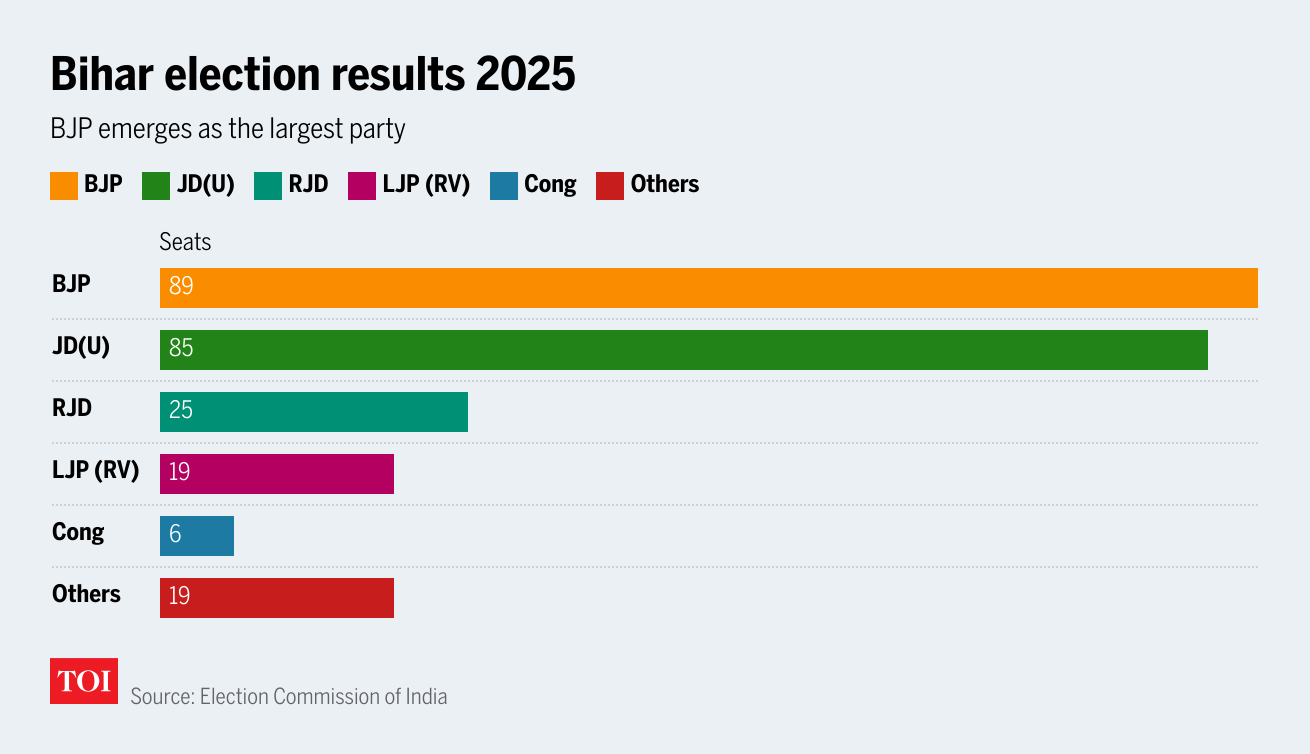
Bihar election results

“Nitish Kumar’s exit in this manner is not a natural political transition. If it had been a natural process, it would have been different. Everyone says Nitish Kumar’s health is not good, but the way events unfolded has surprised many. From what it appears, the future of JD(U) looks quite difficult. People say that Nishant may take over, but he has no political experience. Also, the people around him are not very open yet, but there seems to be something happening internally that is preventing Nitish Kumar from speaking openly,” Vijay said.“At the same time, the role of leaders like Sanjay Jha, Lalan Singh, Vijay Choudhary and Ashok Choudhary looks suspicious. In a way, they have deserted Nitish Kumar, and there may be no one left capable of holding JD(U) together. At the worker level, protests have already begun. Hardcore JD(U) workers believe this is BJP’s handling of the situation,” he added.Will BJP-JD(U) merge?Kumar Vijay also feels that there might be a possibility that JD(U) will merge with its ally BJP in the coming days, though not everyone in the party may accept such a move.“There is also a possibility that BJP and JD(U) may merge in the future, though not everyone in JD(U) will accept such a merger. Several leaders may resist it. Some leaders within the party may move to RJD, while others may join BJP,” Vijay told The Times of India.

.

“Earlier, JD(U) workers even voted for BJP candidates because they believed Nitish Kumar would ultimately remain chief minister. But now many hardcore workers may refuse to support BJP in the future,” he added.Nitish Kumar’s decision to move to Rajya Sabha has come just five months after BJP emerged as the elder brother in the alliance. In the 2025 assembly elections, BJP emerged as the single largest party, winning 89 seats with a vote share of 20.45%, while JD(U) secured 85 seats with 19.61% votes.After the thumping victory, BJP appeared less a coalition partner and more a challenger trying to manoeuvre itself into the driver’s seat of power. It secured a larger share in the cabinet of ministers and Nitish Kumar also had to let go of the home portfolio.Interestingly, Bihar was the only Hindi heartland state where the party has not held the top office so far.What happens to Nitish Kumar’s EBC vote bank?Over time, Nitish gradually positioned himself as the “poster boy” of the Extremely Backward Class (EBC), which constitutes the largest portion of the population in Bihar.The JD(U) chief made a conscious effort to weave his support base around the entire EBC community by modelling his politics on Karpoori Thakur’s ideals and focusing specifically on the economically weaker sections.After his exit, questions also arise over who will get the advantage of the EBC vote bank.According to Kumar Vijay, no party in Bihar seems to be in a position to inherit the non-Yadav OBC and EBC vote banks.

.

“If Tejashwi Yadav had strong leadership credentials, that vote bank could have shifted to RJD. But the biggest tragedy in Bihar today is the lack of strong political leadership. Congress doesn’t have it, RJD doesn’t have it either. Despite being a politically mature state, Bihar is facing a serious leadership crisis,” he said.“Upendra Kushwaha has lost credibility. Tejashwi Yadav has not emerged as a grassroots leader. LJP too has become more of a dramatic political outfit,” he added.For Bihar, Nitish Kumar’s move to Rajya Sabha signals the end of a long political chapter that revolved around him, his constant alliance flip-flops and his ‘susashan’ government. We will know in the coming days who will take his position as CM. However, the coming months will determine how his party and state’s politics evolve beyond him.

Source link

‘Will present those voters declared dead’: Mamata Banerjee begins sit-in protest against EC-BJP ‘conspiracy’ over SIR in Bengal | India News


Bengal SIR Row Decoded: Why Mamata Banerjee Is Launching Dharna Against EC Ahead Of Polls

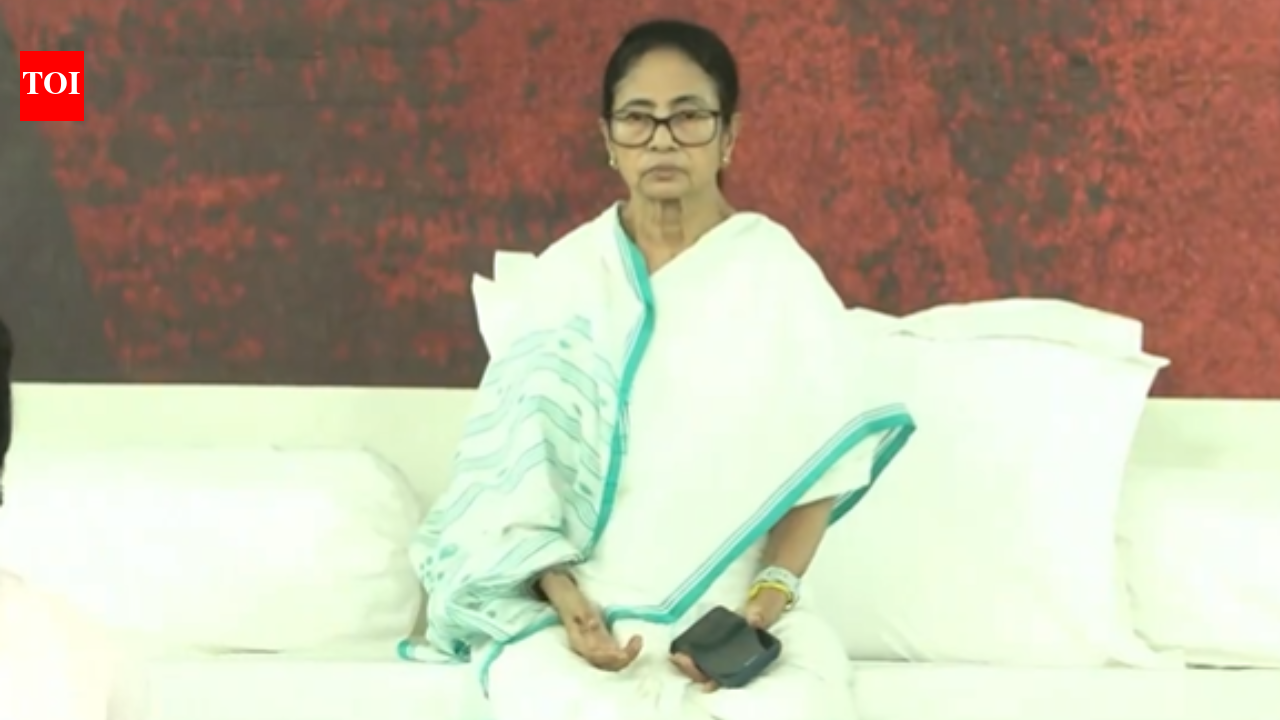
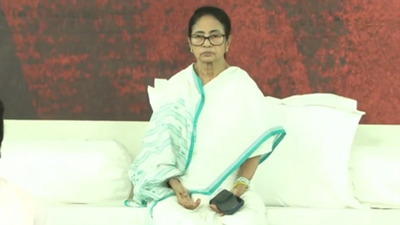
NEW DELHI: West Bengal chief minister Mamata Banerjee on Friday began sit-in protest against alleged voter roll deletions via Special Intensive Revision (SIR) in the state, accusing the Bharatiya Janata Party and Election Commission of hatching a “conspiracy to disenfranchise Bengali voters”. She vowed to present all those voters that have been declared dead by the poll body.“I will expose the BJP-EC conspiracy to disenfranchise Bengali voters,” she said at the start of the protest.

Bengal SIR Row Decoded: Why Mamata Banerjee Is Launching Dharna Against EC Ahead Of Polls

“I will present those voters, who have been declared dead by the Election Commission, at this protest site,” she added.Official figures released on February 28 show that nearly 63.66 lakh names — about 8.3% of the electorate — have been removed since the SIR exercise started in November last year, bringing the total number of voters down from roughly 7.66 crore to a little over 7.04 crore.Additionally, more than 60.06 lakh electors have been classified as “under adjudication”, indicating that their eligibility will be assessed through legal review in the coming weeks, a process that could further alter constituency-level electoral dynamics.The sit-in protest, which began at in central Kolkata on Friday afternoon, had been announced earlier by TMC national general secretary Abhishek Banerjee, who alleged that the poll panel was conducting a “politically motivated” exercise that could disenfranchise lakhs of genuine voters.BJP’s Amit Malviya slammed the Bengal CM over high unemployment in the state saying that the CM should have been focusing on “delivering what she was elected for, instead of sitting on dharnas”.“There are approximately 85 lakh unemployed people in the 18–40 age group in West Bengal, according to informed sources in the state government. That puts unemployment under Chief Minister Mamata Banerjee at a staggering 13%, far higher than the national average, which remains in the low single digits. This is entirely to the credit of Mamata Banerjee and the result of the colossal misgovernance that West Bengal has endured over the last 15 years. Had the Chief Minister focused on delivering what she was elected for, instead of sitting on dharnas, things wouldn’t have been this bad. But it is too late now,” he said in a post on X.


Source link

UP economy sees surge in credit distribution and industrial investment | India News


UP economy sees surge in credit distribution and industrial investment

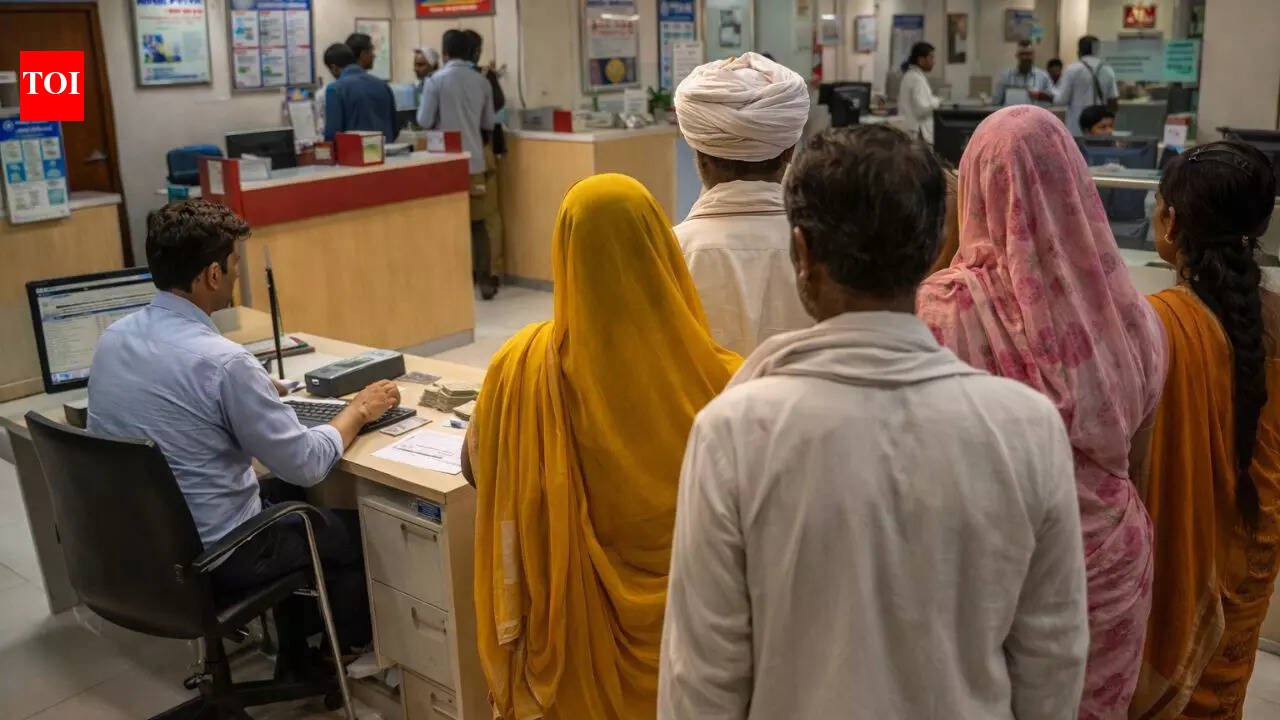
Uttar Pradesh is witnessing a historic transformation in its financial landscape. Recent data reveal a massive surge in credit distribution, industrial investment, and banking accessibility, signalling a robust shift toward economic self-reliance and manufacturing-led growth.

1. Credit-Deposit (CD) ratio: A surge in financial momentum

The Credit-Deposit (CD) Ratio is a key indicator of how effectively a state is utilising its bank deposits for local lending and development.

  • Significant growth: The CD ratio in Uttar Pradesh has jumped to 60% in 2024, up from 43% in 2017. This follows decades of sluggish growth and represents a major shift in the state’s financial health.
  • Bridging the gap: This improvement reflects better credit access and rising confidence in the state’s economy. To put this in perspective, the ratio was at a historic low of 32.8% in 1990.
  • Banking infrastructure: The state has significantly expanded its reach through:
    • 20,416 bank branches
    • 4,00,932 Bank Mitras and BC Sakhis
    • 18,747 ATMs
    • Total: 4,40,095 banking touchpoints providing financial services across the state.

2. Industrial credit: Boosting manufacturing-led development

The state has successfully doubled its industrial credit in just seven years, highlighting its commitment to becoming a manufacturing hub.

  • Doubling the investment: Industrial credit has grown from Rs 82,800 crore in 2017 to Rs 1.68 lakh crore in 2024.
  • Policy intervention: This growth is attributed to strong policy interventions, infrastructure development, and active efforts to encourage investors.
  • Private investment: This consistent focus has not only attracted large-scale private investment but has also boosted the confidence of financial institutions in the state’s industrial sector.

3. Total credit distribution: 3x capital availability

The overall availability of capital in Uttar Pradesh has seen an exponential rise, empowering entrepreneurs and rural development.

  • Rapid allocation: The total outstanding credit in Uttar Pradesh rose from Rs 3.54 lakh crore in 2017 to Rs 9.24 lakh crore in 2024. This is a 2.6x increase in just seven years.
  • Historical context: In 1990, the total credit was a mere Rs 7,200 crore, and by 2004, it had only reached Rs 39,600 crore. The recent spike demonstrates a massive increase in credit absorption capacity.
  • Enabling policies: Key drivers for this growth include:
    • Expansion of digital financial services and banking infrastructure.
    • Support for MSME financing and agricultural credit schemes.
    • Financial Inclusion: Initiatives like universal Jan Dhan account coverage, the BC Sakhi Yojana for doorstep banking via female agents, and the 2025 Gram Panchayat Financial Saturation Campaign.


Source link

‘Exploitation’: Rahul Gandhi takes ‘compromised individual’ dig at Centre after US waiver on Russian oil | India News


'Exploitation': Rahul Gandhi takes 'compromised individual' dig at Centre after US waiver on Russian oil

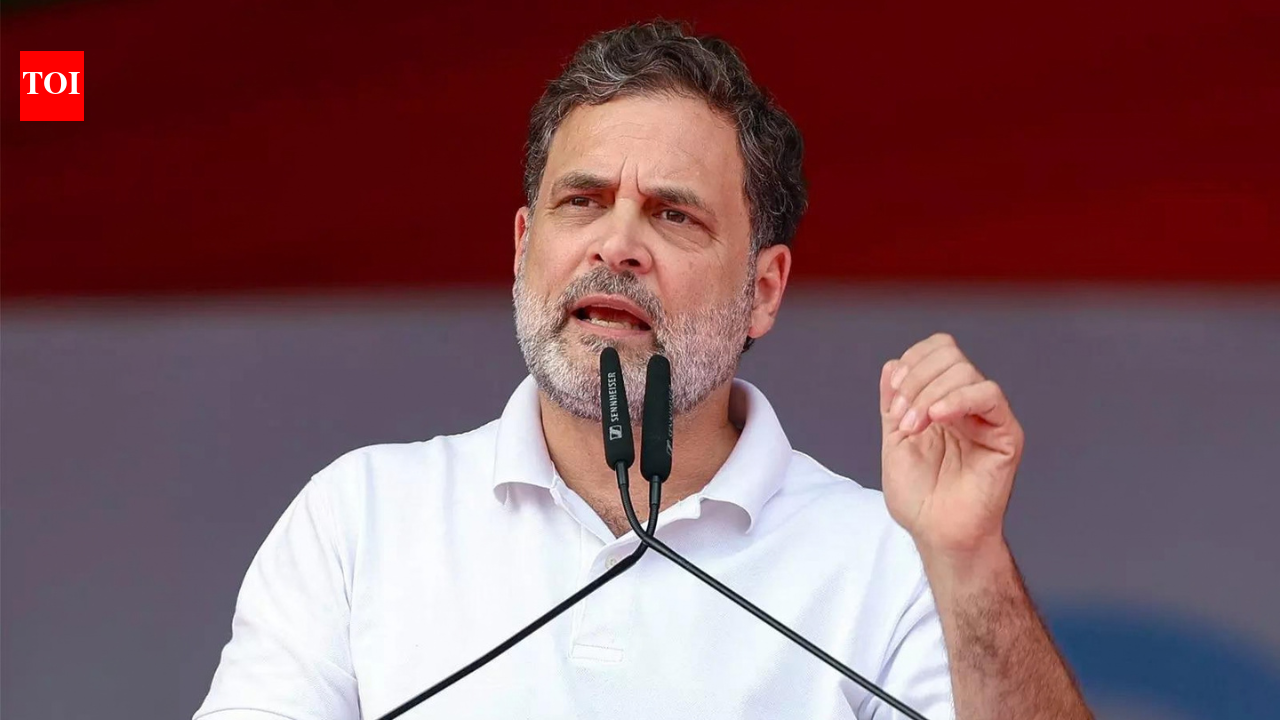
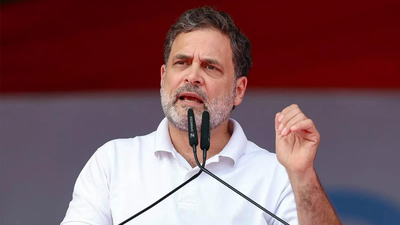
Lok Sabha leader of opposition Rahul Gandhi on Friday slammed PM Narendra Modi-led government over its foreign policy in the backdrop of the recent waiver issued by the United States for India allowing New Delhi to buy Russian oil, alleging that it was the result of the “exploitation of a compromised individual.Taking his criticism to X while retweeting a video shared by the Congress of his speech in the Lok Sabha on concerns related to India’s trade sovereignty, Rahul wrote: “India’s foreign policy emerges from the collective will of our people. It should be rooted in our history, our geography, and our spiritual ethos based on Satya and Ahimsa. What we are witnessing today is not policy. It is the result of the exploitation of a compromised individual.”

‘Conflict In Backyard’: Rahul Gandhi Targets PM Modi On Iran Warship, Govt Denies Responsibility

In the video shared by the Congress, Rahul can be heard blaming Prime Minister Modi and calling him “compromised.” He said, “The US will tell us who we can or cannot buy oil from — if it’s Russia or Iran, the US will decide. But our Prime Minister will not decide.”Earlier in the day, Congress targeted the Centre after the United States announced that it would allow India to continue purchasing Russian oil, questioning how long this “American blackmail” would continue.In a post on X, Congress general secretary Jairam Ramesh wrote: “Trump ka naya khel, Dilli dost ko kaha, Putin se le sakte ho tel, kab tak chalega ye Ameriki blackmail (Trump’s new game; told his friend in Delhi you can get oil from Putin; how long will this American blackmail continue?).”The remarks came after the US issued a temporary waiver allowing India to continue buying Russian oil, saying the move was intended to stabilise global energy supplies amid rising tensions in the Middle East.US treasury secretary Scott Bessent said: “President Trump’s energy agenda has resulted in oil and gas production reaching the highest levels ever recorded. To enable oil to keep flowing into the global market, the Treasury Department is issuing a temporary 30-day waiver to allow Indian refiners to purchase Russian oil.”He added that Washington expects India to increase energy imports from the United States in the future. “India is an essential partner of the United States, and we fully anticipate that New Delhi will ramp up purchases of US oil,” Bessent wrote, noting that the temporary measure would “alleviate pressure caused by Iran’s attempt to take global energy hostage.”The waiver comes at a time when India faces potential risks of energy supply disruptions in Middle East following escalating tensions in the region. The situation intensified after a joint US-Israel military strike on February 28 on Iran that killed Ali Khamenei and several senior officials.India sources nearly 40 percent of its oil imports from the region, with a significant share transported through the strategically crucial Strait of Hormuz.Meanwhile, Russia has indicated that it is ready to redirect crude shipments to India to offset potential supply disruptions caused by the conflict. According to Reuters, nearly 9.5 million barrels of Russian oil are currently positioned near Indian waters and could reach the country within weeks.The potential shift in supply follows Iranian strikes on vessels in the region, raising fears that the Strait of Hormuz could be partially closed — a development that could affect roughly 40 percent of India’s crude imports.


Source link

‘Kab tak chalega blackmail?’: Congress slams Centre over US waiver allowing India to buy Russian oil amid Iran war | India News


'Kab tak chalega blackmail?': Congress slams Centre over US waiver allowing India to buy Russian oil amid Iran war

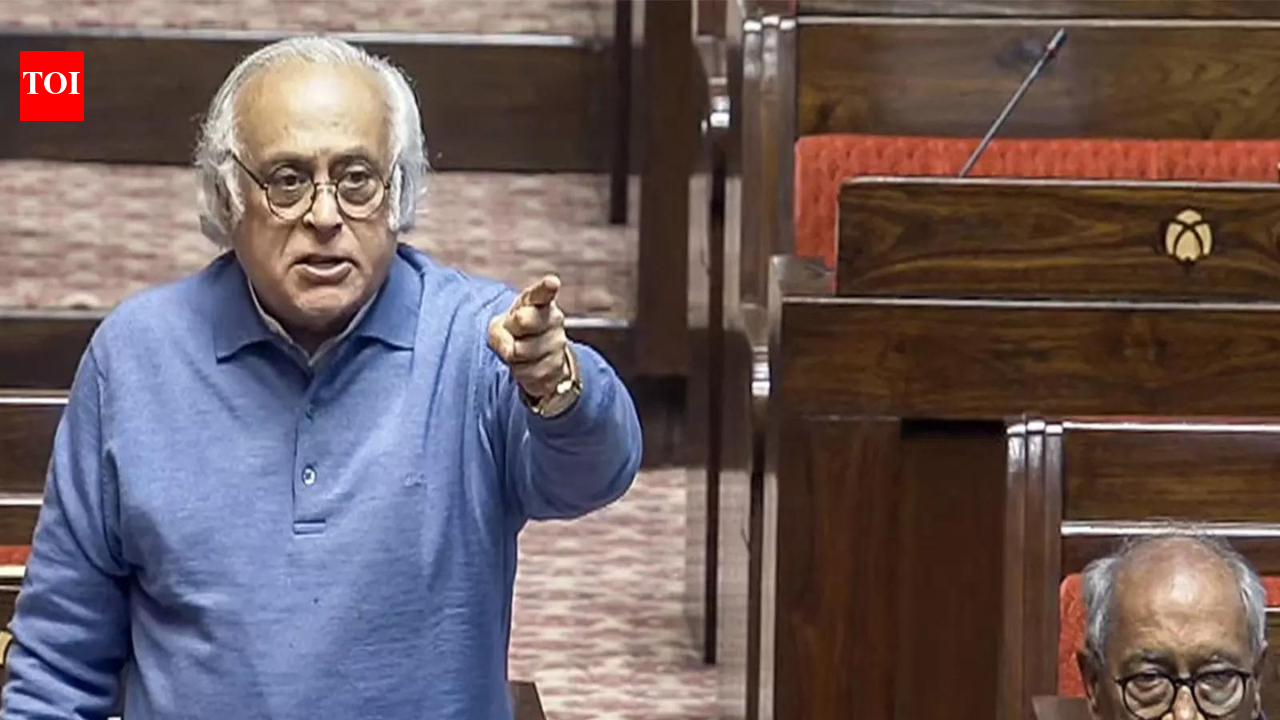
NEW DELHI: Congress on Friday targeted the Centre after the United States announced that it would allow India to purchase Russian oil, asking how long this “American blackmail” would continue.In a post on X, Congress general secretary Jairam Ramesh said, “Trump ka naya khel, Dilli dost ko kaha, Putin se le sakte ho tel, kab tak chalega ye Ameriki blackmail (Trump’s new game; told his friend in Delhi you can get oil from Putin; how long will this American blackmail continue?).”Congress leader Manish Tewari also criticised the government and said, “Issuing a 30-day waiver — the sanctimonious language of condescension drips with neo-imperial arrogance. Are we a banana republic that we need the permission of the US to secure our energy security imperatives?”He added, “The silence of an otherwise overly loquacious government is deafening. Does it not understand what sovereignty means?”The move comes after the United States issued a temporary waiver allowing India to continue purchasing Russian oil, with Washington stating that the step is aimed at stabilising global energy supplies amid rising tensions in the Middle East.US Treasury Secretary Scott Bessent said, “President Trump’s energy agenda has resulted in oil and gas production reaching the highest levels ever recorded. To enable oil to keep flowing into the global market, the Treasury Department is issuing a temporary 30-day waiver to allow Indian refiners to purchase Russian oil.”He added that the US expects India to increase energy imports from the United States in the future.“India is an essential partner of the United States, and we fully anticipate that New Delhi will ramp up purchases of US oil,” Bessent wrote, noting that the temporary measure would “alleviate pressure caused by Iran’s attempt to take global energy hostage.”The waiver comes as India faces potential risks from energy supply disruptions in the Middle East, following escalating tensions in West Asia after a joint US-Israel military strike on February 28 on Iranian territory that killed Supreme Leader Ayatollah Ali Khamenei and other senior officials.India sources nearly 40% of its oil imports from the region, with a significant portion transported through the strategically crucial Strait of Hormuz.Russia has signalled that it is ready to redirect crude shipments to India to offset supply disruptions caused by the conflict. Nearly 9.5 million barrels of Russian oil are currently positioned near Indian waters and could reach the country within weeks, according to Reuters.The potential supply shift follows Iranian strikes on vessels in the region, raising fears that the Strait of Hormuz could be partially closed, affecting roughly 40% of India’s crude imports.


Source link

UP urban transition after 2017 – A shift to non-agricultural economy | India News


UP urban transition after 2017 - A shift to non-agricultural economy

Over the last eight years, Uttar Pradesh has undergone a structural metamorphosis. Historically viewed through its agrarian roots, the state is rapidly pivoting toward an urban-centric economy. Between 2011 and 2021, the shift from agricultural to non-agricultural employment grew at a rate of 7% per decade, outstripping the 5% growth seen in previous decades. This shift is the backbone of a new, diversified economic era for India’s most populous state.

A foundation of governance and funding

The state’s strategy began with expanding the reach of local governance. Since 2017, 117 new Urban Local Bodies (ULBs) were established and 123 were expanded to accommodate a surging urban population. This administrative expansion was backed by a massive fiscal commitment: the budget allocation for urban development saw a staggering 287% increase between 2016 and 2025.Funding via the State and Central finance commissions has also scaled dramatically:

  • State Finance Commission (SFC): Increased from Rs 6,406.09 crore in 2016-17 to Rs 14,400 crore in 2024-25.
  • Central Finance Commission (CFC): Increased from Rs 1,667.22 crore to Rs 5,118 crore in the same period.

Cleanliness as a culture: The Swachh Bharat revolution

The most visible change has been in sanitation and waste management. Uttar Pradesh has moved from a state of “planning” to one of “execution.”

Component 2014–2017 (Baseline) 2017–2025 (Achievements)
Waste processing 0% 85%
Legacy waste treated 0 112.17 lakh metric tons
Individual toilets (IHHL) 2,23,747 9,40,033
Garbage free cities (GFC) 0 83 cities
ODF+ / ODF++ status 15 (ODF) 660+ (ODF+/++)

The introduction of Integrated Command and Control Centers (ICCC) powered by AI has turned cities into “smart hubs,” allowing for real-time monitoring of waste, traffic, and even emergency response—a system that proved vital during the Covid-19 pandemic.

Infrastructure and living standards: AMRUT & PMAY

Through the AMRUT 1.0 and 2.0 missions, the state has prioritised the basic necessities of life: water and sewage.

  • Water connections: From zero structured progress in 2017 to 15 lakh connections.
  • Sewage connections: Reached 9.40 lakh households.
  • Housing (PMAY): A massive leap from 7,409 approved houses in 2017 to over 15.49 lakh by 2025.

Smart cities and modern policing

The Smart City Mission is nearing completion, with 95% of projects finished. Beyond the 10 cities selected by the Central government, Uttar Pradesh launched its own State Smart City initiative for 7 additional cities.A standout achievement is the management of Mahakumbh 2025, which utilised AI and IoT for crowd management and security, achieving a 97% success rate in “lost and found” cases and clearing 161 garbage hotspots through a dedicated force of 12,000+ workers.

Sustainability and social welfare

The “Green” agenda has seen the development of 228 acres of green area and the introduction of the UP Urban Greening Policy. Social welfare has also been modernised:

  • Animal welfare: 676 ‘gaushalas’ (cow shelters) providing refuge to 1.4 lakh cattle.
  • Aspirational cities: 100 youth-centric/underdeveloped cities have been selected for specialised infrastructure development.
  • Chief Minister Urban Creation Scheme (CM-NSY): Focused on the grassroots, constructing 2,534 km of roads and 342 km of drains in newly formed ULBs.

Conclusion

The data paints a picture of a state in a hurry to modernise. By blending technology (AI/ICCC) with massive civil engineering projects and community-led initiatives like the Swachh Bharat Mission, Uttar Pradesh has laid a robust foundation. The result is a network of cities that are not just larger, but smarter, cleaner, and more resilient.


Source link