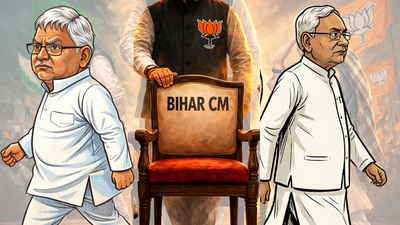
Five faces who are in the race for Bihar CM’s chair | India News
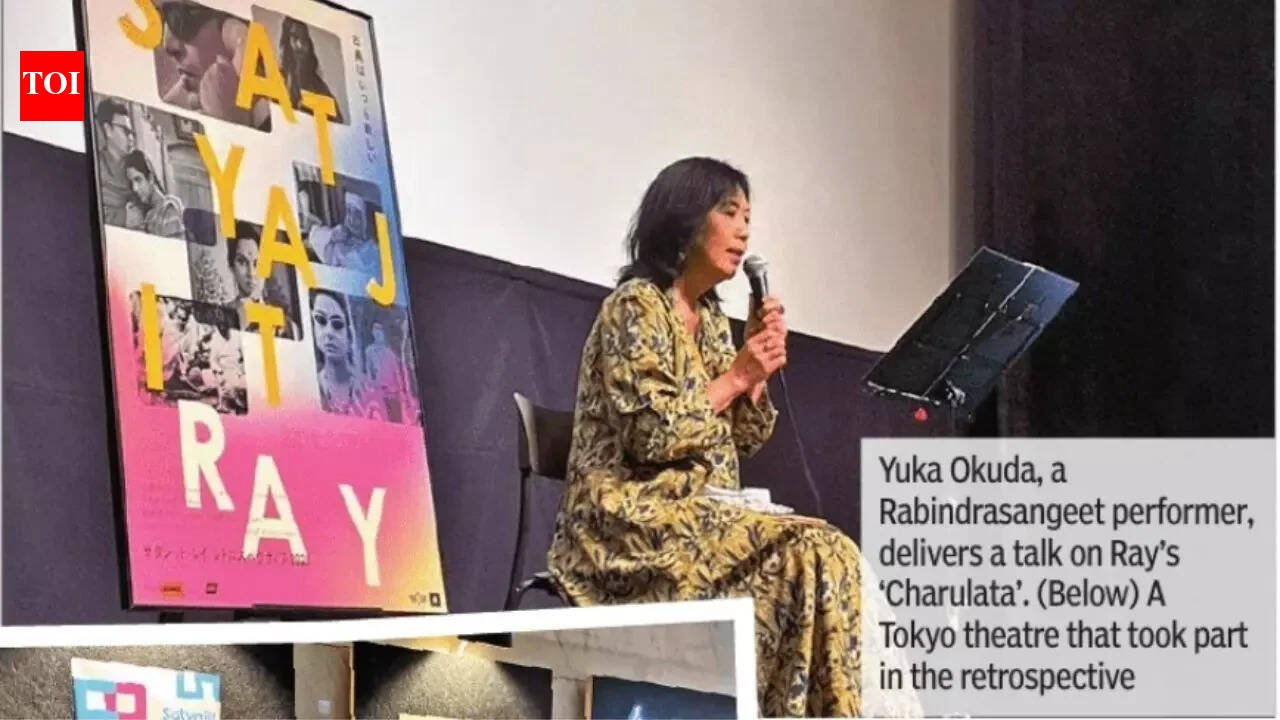
All seats look taken in a mediumsized Tokyo theatre on an Aug evening in the Japanese summer. The audience listens rapt to a woman sitting on stage, framed by the movie screen behind her. Clearly, it’s not just another screening, but then, neither can the topic be called usual for this part of the world. For the woman on stage is discussing Rabindrasangeet, and the context is ‘Charulata’, maestro and auteur Satyajit Ray’s 1964 masterpiece, one of the seven films that were shown last year in Japan as part of a retrospective of his works.The lineup — featuring ‘Jalsaghar’ (1958), ‘Mahanagar’ (1963), ‘Charulata’ (1964), ‘Kapurush’, ‘Mahapurush’ (both 1965), ‘Nayak’ (1966), and ‘Jai Baba Felunath (1979) — earning their first theatrical release in Japan, spans a two-decade arc of some of Ray’s most memorable films. The films were also made available on VOD and home video with Japanese subtitles. The demand has grown to the point that these films are set for a Blu-ray release in March.To Sandip Ray, filmmaker and Ray’s son, however, none of this is surprising. After all, it was the Japanese film great Akira Kurosawa who’d said, “Not to have seen the cinema of Satyajit Ray means existing in the world without seeing the sun or the moon.” Sitting in his Lake Temple Road residence in Kolkata, he recalled the role of a Japanese distributor, Toho-Towa Co. Ltd, founded in 1928 by film pioneer Nagamasa Kawakita, and said Kawakita’s wife, Kashiko Kawakita, was a Ray admirer.

“She was very close to our family and a die-hard Satyajit follower right from the start,” he said. When Ray first visited Japan, it was Kashiko who arranged a meeting between Ray and Kurosawa in 1966. “I think till the 80s, they distributed all of Baba’s films in Japan. The films must have done good business. Otherwise, why would she ask about new films every year?” said Sandip Ray.The seven restored titles began their theatrical run on July 25 at Le Cinema Bunkamura in Tokyo. The retrospective was to run for three weeks, but a further week was added due to the demand. “The films were not only screened in Tokyo, but in cities like Hiroshima, Osaka, Kyoto, etc, covering 15-20 cinemas nationwide,” said Varsha Bansal, who helmed the restorations of the Ray classics produced by her grandfather, RD Bansal.The screenings were paired with discussions and talks. If film researcher and producer Eri Morinaga spoke after ‘Mahanagar’, Asian cinema researcher Tamaki Matsuoka delivered a talk following a screening of ‘Jalsaghar’. Yuka Okuda, a Rabindrasangeet performer and Bengali language instructor, led a session after a ‘Charulata’ screening. “I offered some reflections on the impact of the Rabindrasangeet in the film... Some in the audience said they wanted to watch the film again. It made us realise all the more that Ray’s cinema is a deeply layered and magnificent creation,” Okuda told TOI .
PUNE: India’s summer heatwaves – the humid, suffocating kind that impact more than dry heat – are not just getting more frequent, but also more intense through a now-identified specific atmospheric chain reaction. A Jan 2026 study by scientists from IMD and Indian Institute of Tropical Meteorology (IITM) Pune, published in the Journal of the Atmospheric Sciences, is the first to explain the precise mechanism behind these “moist heatwaves” and the findings have direct implications for early warning, public health, and climate preparedness.IITM scientist Rajib Chattopadhyay told TOI that their earlier study identified two types of Indian summer heatwaves and classified them as dry and moist. “The dry variety, which mainly scorches the northwest plains, is not showing an increasing trend. But the moist variety, in which high humidity compounds with high temperature to make the body’s cooling system fail, shows a statistically significant and accelerating trend. The current study provides a hint towards the mechanism which can intensify moist heatwaves over India,” he said.Scientists traced the trigger to Rossby atmospheric wave patterns originating near Europe’s west coast. These waves travel through a Europe-Middle East-Indian Ocean pathway and arrive over India as upper-air high-pressure systems, suppressing clouds and baking the surface. “But what turns a bad heatwave worse is a second actor – the anomalous warming in southernmost Bay of Bengal. When that warm patch generates its own circulation pattern and the two systems arrive over northwest India simultaneously, they superimpose and amplify each other,” Chattopadhyay said.The anticyclone strengthens, lingers longer, and simultaneously pumps moisture westward into India, producing a lethal combination of heat and humidity. The team validated this using a mathematical atmospheric model run under 129 different experiment configurations.“The model results showed a clear pattern. When warming over the Bay of Bengal occurs at the same time as atmospheric waves arriving from Europe, temperature and the ‘feels-like’ heat index increase noticeably over northwest India. We also found that if the atmospheric wave pattern shifts slightly, the zone of stronger heat stress moves toward eastern and southeastern coastal parts of India,” Chattopadhyay said.Observational data suggested the humid heat signal in these regions has been strengthening in recent decades, he said. “In experiments examining climate conditions, we found this interaction between atmospheric waves and Bay of Bengal warming works most effectively when jet stream speeds are within the range seen under present-day conditions. This matters because climate change is expected to influence large-scale atmospheric patterns, including jet streams and wave behaviour.“
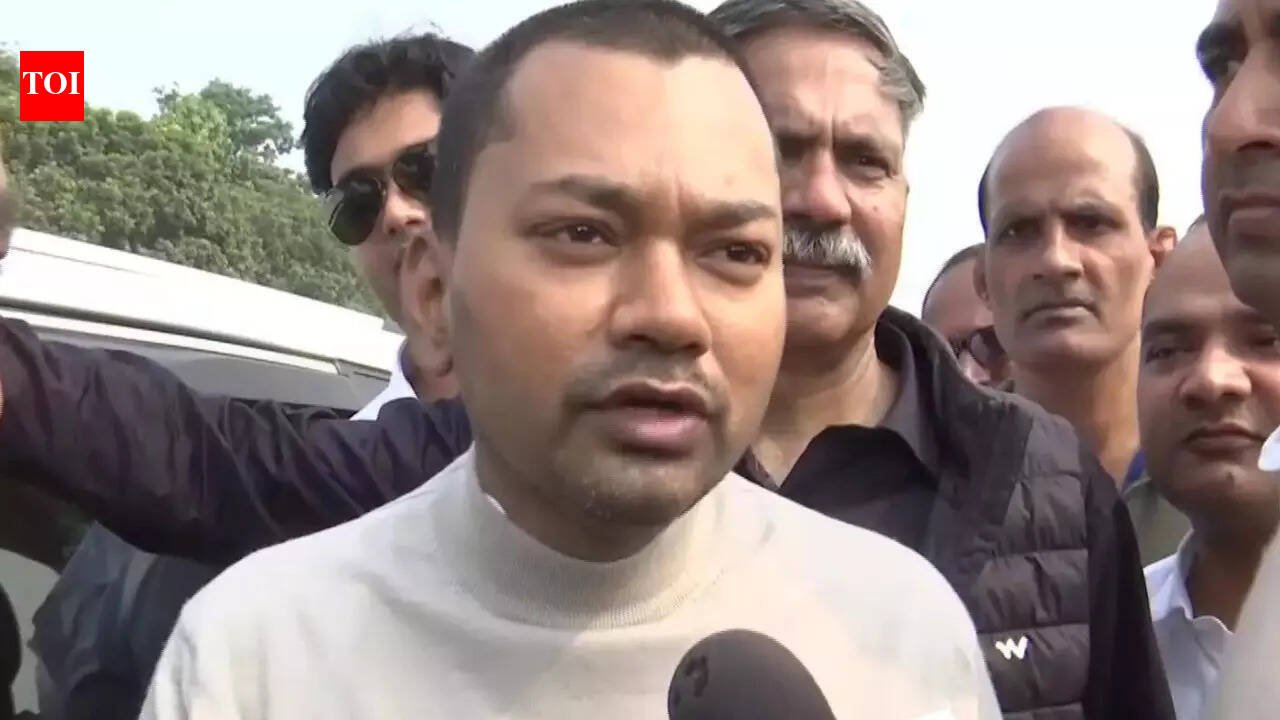
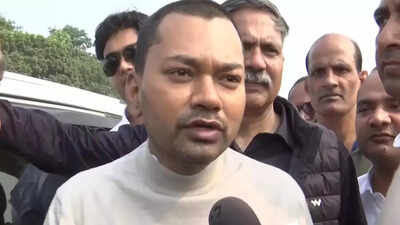
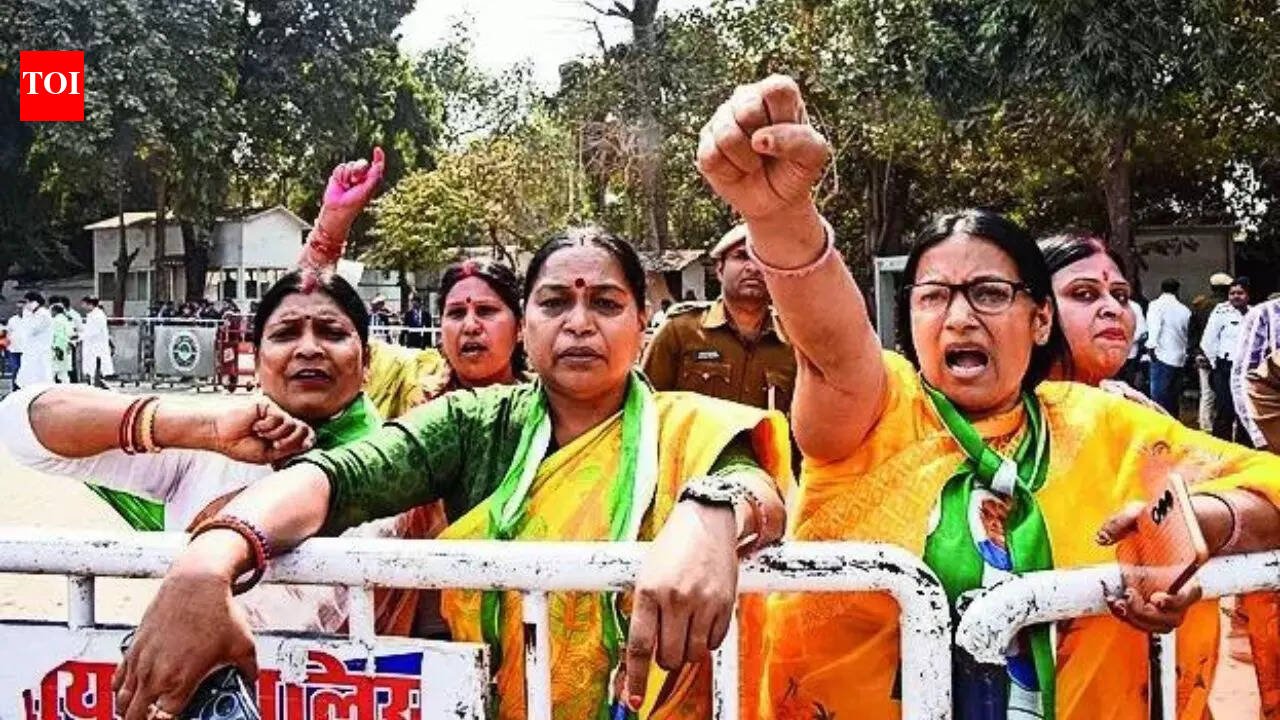
NEW DELHI: Bihar CM Nitish Kumar is a rare regional heavyweight who has been vocal in his disdain of dynastic politics and made it a point to keep his family members, including his only son Nishant, out of any limelight. As politics would have it, Nishant is now being seen by the JDU cadre with keen anticipation to step in to keep the party rooted to its support base as his father moves out of his two-decade long stewardship of Bihar.As Nishant Kumar appears set to make his political debut, the decision has been driven as much by filial considerations as by political necessity.Signs of unease in a section of JDU workers over post-Nitish era were visible after a swift turn of events leading to the CM filing his nomination for Rajya Sabha, as some cried, some raised slogans and some toppled furniture and threw plates at the party’s Patna headquarters, which was to host a lunch, as it became clear that their ‘leader’ is set to pass the baton, in all likelihood, to a BJP nominee.JDU MP, Kaushalendra Kumar, Nitish’s choice to represent his home turf of Nalanda in Lok Sabha since 2014, said supporters of the Bihar’s longest serving CM are feeling sad. “If Nishant joins politics, they will be feel a little assuaged,” he said, emphasising that everyone in the party will finally go by what Nitish says.Kaushalendra, like Nitish, hails from the Kurmi community, whose members, including legislators of the party, are believed to be propelling the move to bring Nishant into politics.Several party members have said he will soon be joining politics. While there is no confirmation from the JDU brass on the role to be assigned to the 50-year-old engineering graduate, indications have been given that he will be joining the new Bihar govt as a deputy CM.With Nitish’s stint in Rajya Sabha to begin once the outgoing members retire on April 9, party functionaries said there is a month left to finalise details.JDU’s core support base has traditionally included Kurmis, sections of backward castes and Dalits, and while it has shown signs of fraying for several years, Kurmis remain solidly behind Nitish.With key confidants of Nitish coming from upper castes, there is a view from the party’s base that his son should be given a key role to convey continuity and its readiness for future battles as his father shows signs of withdrawing from the gruelling field of state politics.
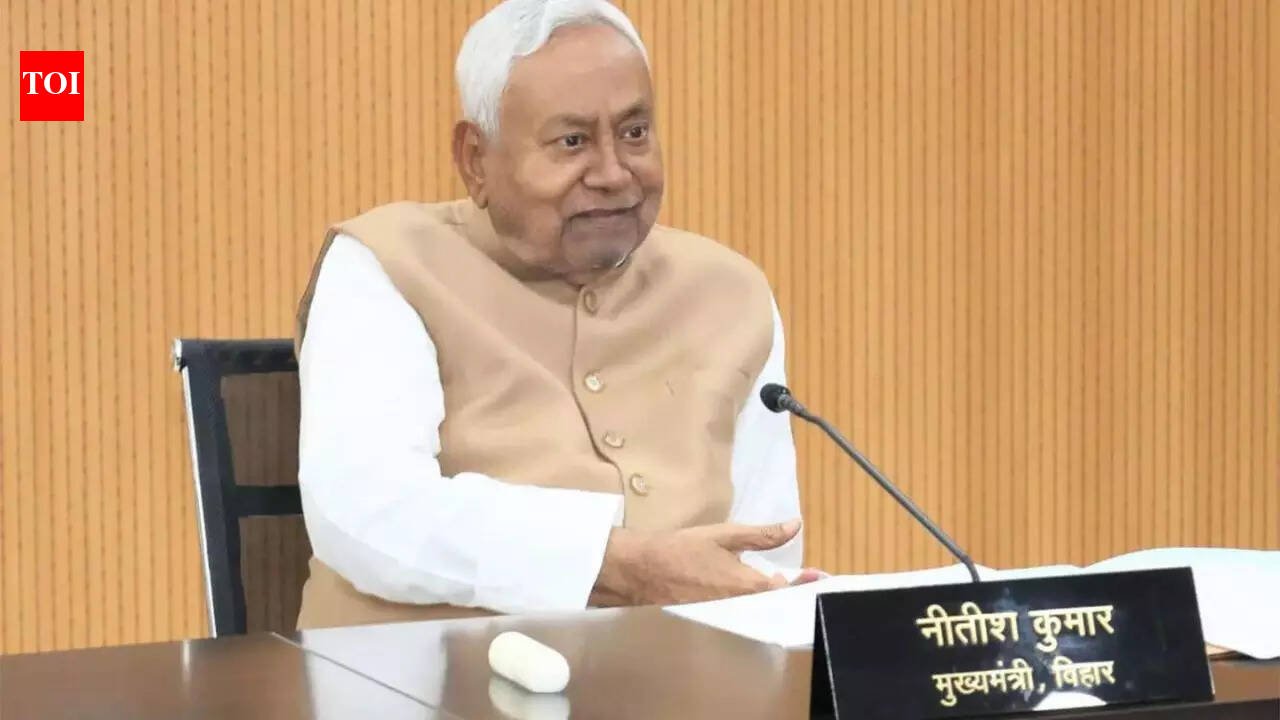
NEW DELHI: After two decades at the helm of Bihar, Nitish Kumar has finally ceded the seat that he made his own, kicking up a storm of reaction from angry supporters and criticism from the opposition that cited it as another example of BJP “cannibalising” its allies like in Maharashtra.But Kumar appeared to go quietly, posting on X his desire to work in Parliament.The aloofness of his departure, as witnessed in his announcement, matched the icy wiliness with which he ensured post-2005 that he stayed in the CM’s seat, irrespective of who he went with or which among the allies had more MLAs. After all, it was nothing short of a ‘Paltu Ram’ act that saw him win a majority to eject Lalu Prasad’s RJD from Patna in 2005 before joining hands with RJD and Congress in Bihar. In 2015, as part of “Mahagathbandhan”, he humiliated BJP that had just stormed to office in Delhi led by Narendra Modi. He returned to NDA in 2017, then turned to RJD and Congress in 2022, before realigning with BJP in Jan 2024. All this while, he resigned and took oath as CM.The flip-flops were not just about parties, but also about ideology and players, moving from being a “never-Modi” to a willing partner of the PM. But through his ideological shifts, Kumar carved a niche that had not been witnessed before – as an OBC politician who brought a “Mandal-plus” age-nda to the fore in a backward state, and as a strategist who worked to carve a personal constituency for himself. He stood out also for being a rarity-an OBC politician from the north who could govern well, and was not tainted by corruption allegations.Kumar’s equity with voters was on display during the 2025 assembly elections. As his growing gaffes and eccentricities coupled with a prolonged absence from public view led to questions about his mental acuity, the opposition stepped up its campaign that BJP would install its own CM, like it had done in Maharashtra. BJP increased Kumar’s campaign rallies and announcements. That is said to have done the trick by reinforcing the “Jodya Modi-Nitish ke hit hoi” (Modi-Nitish partnership will prevail) message. On the road to entrenching himself as a satrap, Kumar was helped by the low bar set by his once comrade-in-arms Lalu. He made “clean administration” and “crime” issues that he and BJP hammered on for years to keep rival RJD on the backfoot.But the real cunning lay in thinking of a strategy to overcome RJD’s advantage on caste front in a state that has an overwhelmingly large OBC/Dalit population. This is where Kumar set a template that was later emulated by other states. Hailing from the Kurmi caste of OBCs that has a minuscule population share, Kumar moved with alacrity to fragment the OBC population by categorising them along “developmental” status – backwards and most backwards. He cornered the loyalty of a large chunk of “aspirational” OBC communities, while turning “Yadavisation” into a stick to beat the rival with. The polarisation of “Yadav vs non-Yadavs” sustained him for two decades. Kumar tried the same with “Dalits vs Maha Dalits” but failed as political compulsions forced him to dilute the “Maha Dalit” tag by including stronger communities.The game changer was when his search for a personal constituency led him to focus on the pan-caste category of “women”. From his earliest signalling through reservations in panchayats to bicycles for girls to microfinance loans/self-help groups, to dole for women, the JDU leader fused his “welfarism” with “development” to earn the loyalty of a key voting bloc. Questions remain whether women vote independently from family and caste factors, but it consolidated pro-JDU sections at multiple levels, diluting factors like anti-incumbency.To successfully create personalised loyalty in the shifting sands of competitive caste politics is a feat that remains unrivalled since Lalu’s ejection from the Patna throne.
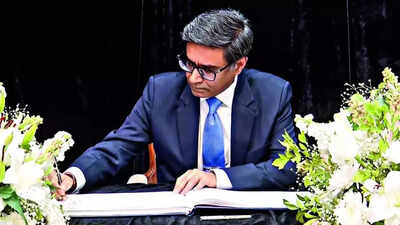
NEW DELHI: Foreign secretary Vikram Misri signed the book of condolence – on behalf of the Indian government and people – opened at the Iranian embassy on Thursday, following the killing of Iran’s supreme leader Ali Khamenei on Feb 28, amid criticism over India’s silence.External affairs minister S Jaishankar spoke to his counterpart Abbas Araghchi, and posted about the “telecon” on X, without elaborating. Araghchi had said earlier in the day that the Iranian warship destroyed by a US submarine was a guest of the Indian Navy.The two sides may have their first high-level contact since the war began, on Friday, with Tehran seeking a meeting for visiting deputy foreign minister Saeed Khatibzadeh. It is learnt that Misri may meet the minister who is in India for the Raisina Dialogue.After signing the condolence book, Misri meets the Iranian ambassadorTehran had been hoping India would express condolences over the killing of Khamenei, if not condemn the US-Israel attacks on Iran. After signing the book, Misri had a short meeting with Iranian ambassador Mohammad Fathali.Russian ambassador Denis Alipov and Pakistani charge d’affaires Saad Ahmad Warraich were among the first to sign the condolence book when it was opened in the morning. In his message, Misri expressed condolences on behalf of the government and people of India. “We pray for peace for the departed soul,” he said. However, in 2024, after the death of then Iranian President Ebrahim Raisi, Jaishankar had himself visited the embassy to sign the condolence book. India had then also declared a day-long national mourning.Misri signed the book on the first day of its opening but the fact that India had not offered its condolences for Khamenei, who was killed on Saturday, had drawn criticism from the opposition. India always had mixed feelings about Khamenei who endorsed efforts to address shared regional interests with the Indian government, most notably for connectivity through the Chabahar port, but also riled India on several occasions with his “misinformed and unacceptable” utterances about J&K and Muslims in India.Khamenei met PM Narendra Modi when the latter travelled to Tehran in 2016 for what was the first bilateral visit by an Indian PM to Iran in 15 years. The Indian foreign ministry had described the meeting then as a rare honour for the PM.Iran also denied that it is indiscriminately attacking the Gulf countries where close to 10 million Indians live. “We told all our neighbours we are attacking US bases from which they target us,” said Iran’s ambassador to India Mohammad Fathali. He also said Iran has good relations with India with a historical background and wants to improve ties further. “But in this case, all governments and all people are being put to the test,” he said.According to Iranian authorities, Tehran has always sought to maintain robust ties with India and does not want the relationship to be affected by any third country. It also maintains that no country should cherry-pick on international law.Iran is also non-committal about safe passage for Indian or other tankers through the Strait of Hormuz as it believes its action will depend on specific conditions. Iran has maintained it communicated to neighbours in an official communication that US bases would be legitimate targets if Iran was attacked by the Trump administration. Tehran’s contention is insurance companies as also others looking to avoid the war are also responsible for the strait’s closure.
NEW DELHI: As the nomination process for Rajya Sabha elections spread across 10 states ended on Thursday, moves for new political alignments, including a rare BJD-Congress tie-up in Odisha and unity of BJP’s rivals in Bihar, are up for a stern test, while developments in Maharashtra signalled that attempts for the merger of the two NCP factions have come to naught.While candidates in most states are set to be elected unopposed, both Bihar and Odisha are headed for a keen battle on March 16.RJD’s decision to renominate its outgoing MP and businessman A D Singh has forced a contest in one of the five seats in Bihar. He can even pull it off if all of BJP’s rivals, including 5 AIMIM MLAs and the lone BSP MLA, join hands with the RJD-Congress-Left combine.Yet, the NDA camp, which will have 38 votes to spare for the fifth seat after allocating the necessary 41 votes each to ensure its win on four seats, is sanguine about its prospects in the belief that a contest will only end up exposing divisions in the opposition’s ranks and even force some defections.Unity among all opposition parties will get Singh 41 votes, but AIMIM, which was snubbed by the RJD-led alliance on its suggestion for a tie-up during last year’s polls, is yet to spell out its stand.The political temperature in Odisha, another state where a contest is on the cards, has gone up a notch after Congress decided to back BJD’s choice of an eminent doctor, Datteswar Hota, and BJP then announced its support for former Union minister Dilip Ray, a well-networked hotelier contesting as an independent candidate.Archrivals for decades, BJP’s swift ascendancy in the state has brought BJD and Congress together; both parties can pull together 32 MLAs to ensure Hota’s win against the requisite backing of 30.However, instances of discontent within the two parties have muddied the waters. BJP has a history of outmanoeuvreing its rivals in closely contested RS seats, and its decision to back Ray is driven by its instinct to play on their internal differences to spring a surprise. With all three MVA parties backing Sharad Pawar’s renomination for the lone seat they could win of the seven on offer, claims of his supporters about an “imminent merger” between the two NCP factions should pause.A senior Sena UBT functionary said they have been told there is little possibility of the two factions coming together, as the group headed by Ajit Pawar’s wife, Sunetra Pawar, never warmed up to Sharad Pawar’s desire – marking a reversal of his public “I have had enough” stance – to do another term in RS .Parth Pawar, the son of Ajit Pawar who is set to be elected unopposed, will be arrayed against his grand uncle as a member of NDA.In the elections to 37 Rajya Sabha seats, the BJP-led NDA has continued with its push to expand its social coalition by reaching out to different sections of society, illustrated by their nominees from Maharashtra. BJP has backed a Dalit in Ramdas Athawale, a tribal woman in Maya Chintaman Inwate, a Maratha in its national general secretary Vinod Tawde and Ramrao Wadkute, and an OBC candidate from Dhangar community. Its ally Shiv Sena, too, has picked a Dalit woman, Jyoti Waghmare.
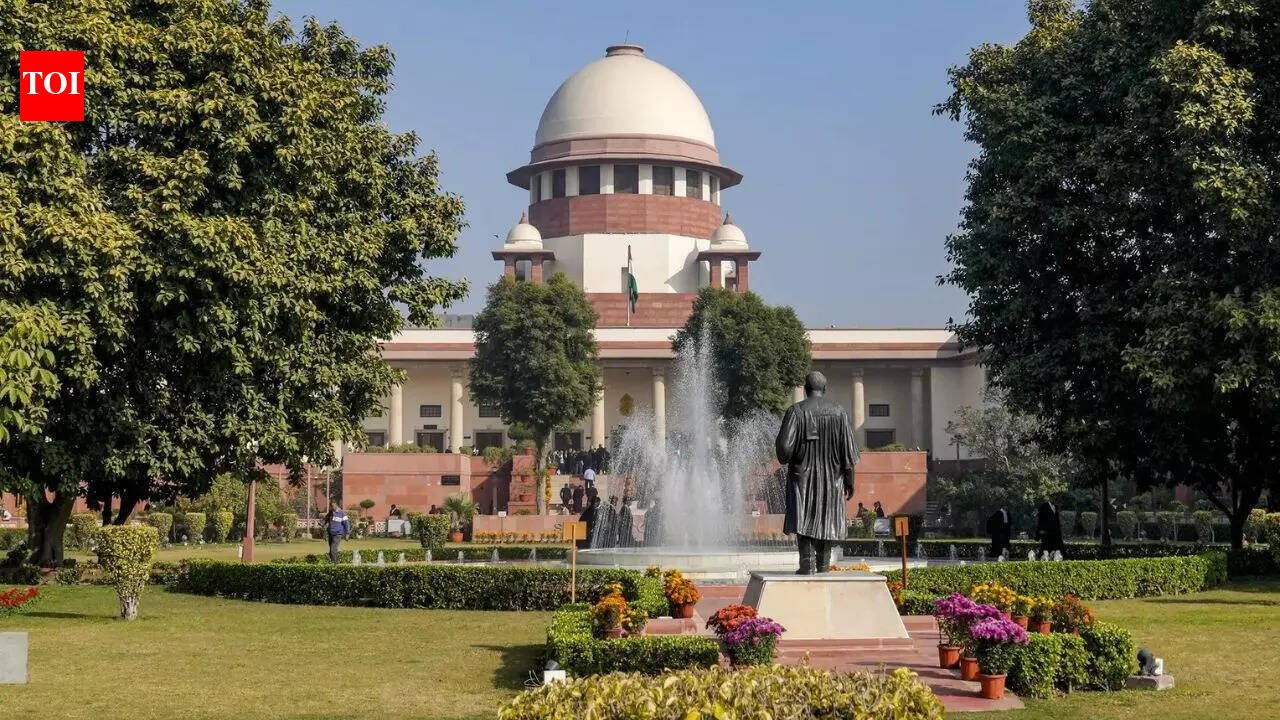
NEW DELHI: Criticising the practice of litigants, particularly government authorities, of not complying with court orders and filing appeals or review pleas when faced with contempt proceedings, the Supreme Court has said the court should deal with them harshly, otherwise public faith in the judiciary would erode.A bench of Justices Ahsanuddin Amanullah and R Mahadevan also held that the defence of administrative hurdles, or even impossibility to perform what has been ordered, cannot be invoked in contempt proceedings if a contemner has failed to brief the court the difficulty in implementation of its order within the prescribed time limit. “Delayed filing of appeals should be the exception. But in recent times, the exception has practically evolved to become the rule. Orders passed by courts are not complied with for a long time, and when contempt petitions are filed, belated appeals, with tremendous delay, are preferred,” it said.SC: Disobedient litigants may face criminal contemptIt said, “We, in no uncertain terms, deprecate these practices. It is felt that by such modus operandi, disobedient litigants act brazenly which has the further effect of bringing down the authority and majesty of courts and the rule of law, interfering in the administration of justice. The same may well, in certain situations, border on criminal contempt.”High courts should deal with such “unscrupulous litigants, more so when they happen to be ‘State’, within the meaning of Article 12 of the Constitution, or like bodies, with an iron hand”, the SC said, adding, “Unless HCs, so also this court, deal with these aspects firmly, we run the clear risk of erosion of the unflinching faith that the ordinary litigants of this country repose in the judiciary at all levels. It is the solemn duty of all of us manning courts across the hierarchy to ensure that the public faith never wavers.”The bench said justice is tempered with mercy but courts should take strong exception to dishonest litigants, and it needs to be examined whether the ‘liberal’ jurisprudence on contempt requires a serious re-look. It also made it clear that contempt proceedings would not be confined only to parties before the court for non-implementation of order, but third parties/non-parties, who are part of the chain in decision-making process, would also be liable for contempt.“Simply put, thus, it is no longer res integra that a party, once becomes or is made aware of an order of this court, if yet acts in wilful default or deliberate non-compliance or any such like conduct against/in breach of the order concerned, makes itself liable to face the full wrath of contempt jurisdiction,” it said.The court passed the order on a contempt petition against Chhattisgarh government officials for not complying with its order on regularising the services of employees, and granted last chance to them to implement it within 15 days.
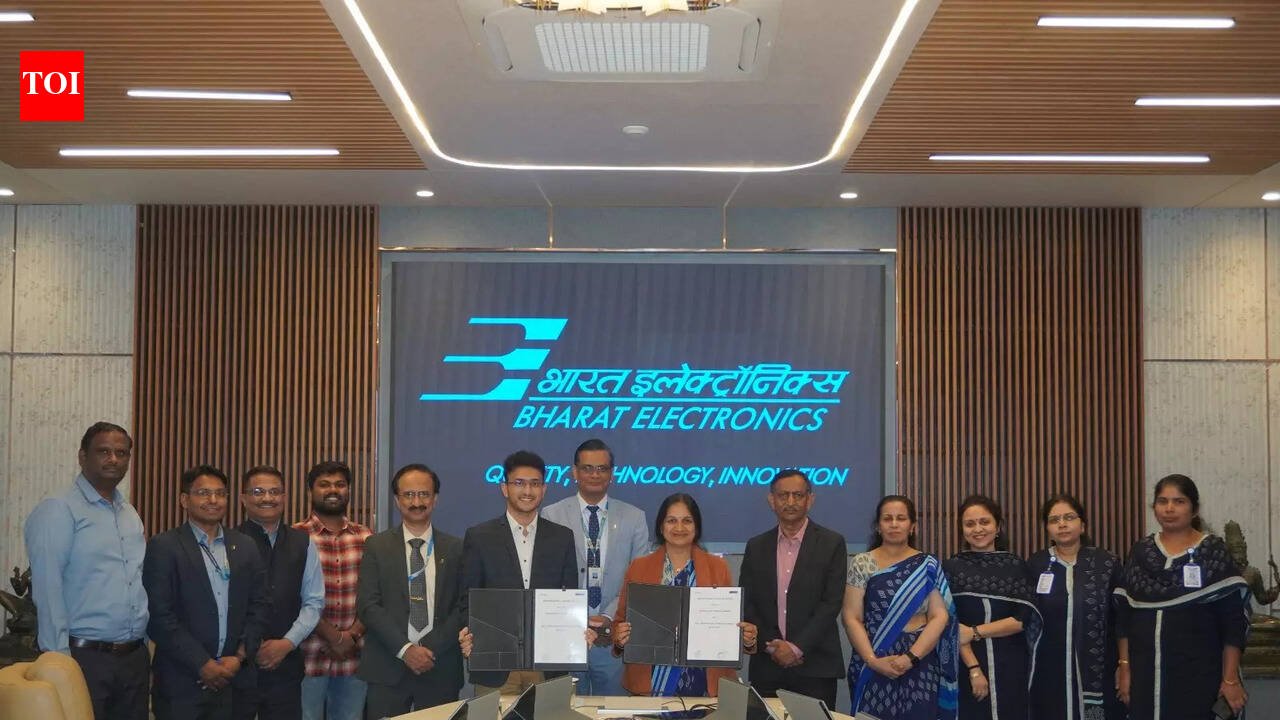
BENGALURU: State-run defence electronics major Bharat Electronics Limited (BEL) has signed a memorandum of understanding with space technology startup Bellatrix Aerospace to jointly design, develop and manufacture satellite systems and payloads, with a focus on the emerging very low Earth orbit (VLEO) regime.“The agreement aims to combine BEL’s experience in mission-critical electronics and defence payloads with Bellatrix’s expertise in satellite propulsion and subsystems to develop next-generation satellite platforms suited for VLEO operations,” BEL said Thursday.VLEO refers to orbital altitudes below traditional low Earth orbit, typically between about 150 km and 450 km above the Earth. Satellites operating in this region can offer higher-resolution imaging, lower communication latency and reduced launch costs, but require advanced propulsion systems to counter atmospheric drag.Under the partnership, the two companies plan to develop integrated satellite solutions that can support both strategic and civilian space missions. The collaboration is expected to strengthen indigenous capabilities in satellite platforms designed for VLEO operations.BEL said the tie-up reflects a broader effort to combine the manufacturing depth of established public sector firms with the agility and innovation of emerging deep-tech startups in the space sector.“BEL has decades of experience in developing advanced electronics, radars and communication systems for defence and strategic programmes. Bellatrix Aerospace, headquartered in Bengaluru, specialises in electric and green propulsion systems for satellites,” BEL said.The memorandum was exchanged between BEL general manager Rashmi Kathuria and Bellatrix Aerospace CEO and chief technology officer Rohan M Ganapathy.Representatives from both organisations said the partnership is expected to accelerate innovation and support the development of indigenous satellite systems tailored for next-generation space missions.
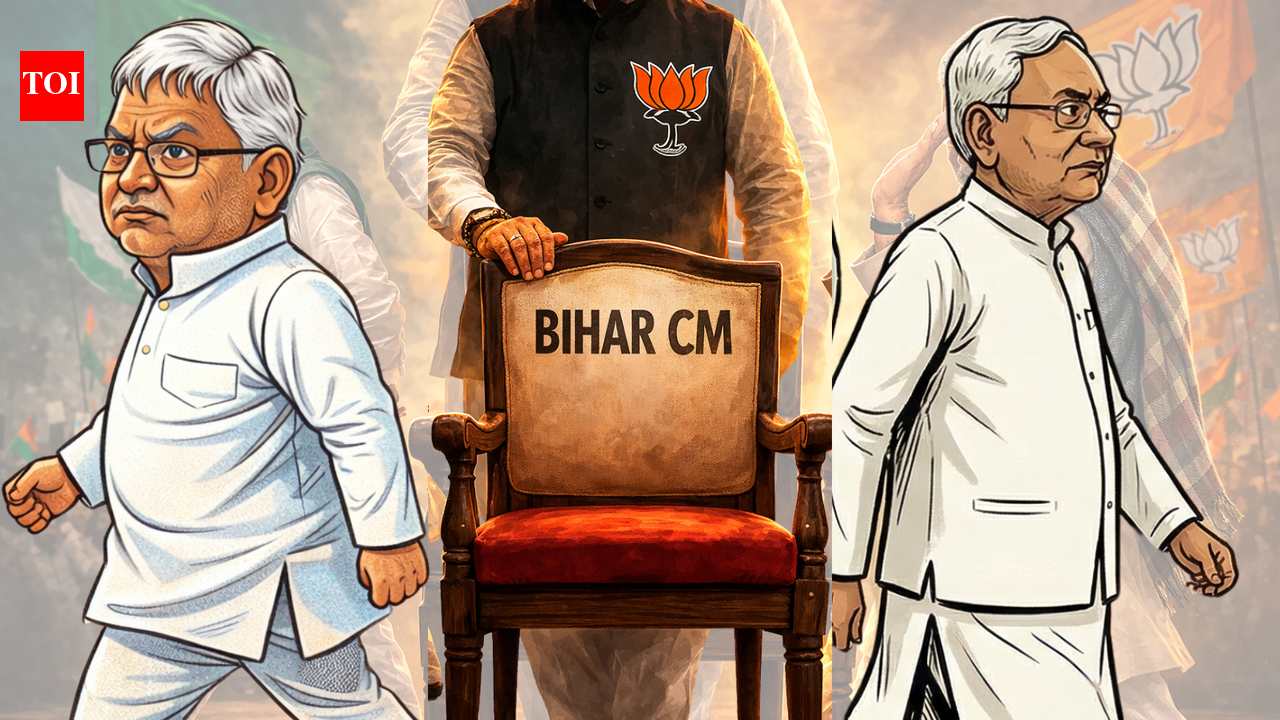
NEW DELHI: The BJP is on the threshold of a historic first in Bihar. After a long wait – spanning first the Lalu era and then the Nitish era in Bihar – the saffron party is all set to get its first chief minister in the state. This follows JD(U) chief Nitish Kumar’s “voluntary decision” to return to national politics, marking the biggest political transition in the state in recent times. Chief minister Nitish Kumar, who led the NDA alliance to a thumping victory in the assembly elections just four months ago, today filed his nomination papers for Rajya Sabha paving the way for a change of guard in the state.Announcing his decision, Nitish Kumar said in a post on X: “For more than two decades, you have consistently placed your trust and support in me, and it is on the strength of that trust that we have served Bihar and all of you with complete dedication. It was the power of your trust and support that has enabled Bihar today to present a new dimension of development and dignity. In keeping with this aspiration, I seek to become a member of the Rajya Sabha in the elections being held this time.“Nitish Kumar’s move marks the end of an era in Bihar politics. But does it come as a surprise? The answer is “no”. The transition was widely anticipated especially after the BJP edged past the JD(U) as the largest party in the ruling coalition for the second time in a row. In the 2025 assembly elections, the BJP emerged as the single largest party winning 89 seats with a vote share of 20.45% while the JD(U)’s score was 85 with 19.61% votes. However, the BJP did not stake claim to the top post and Nitish Kumar took oath as chief minister for the record 10th time. But the dominance of BJP in decision-making became evident as the saffron party got a lion’s share in the new council of ministers and for the first time Nitish Kumar had to let go of the all-important home portfolio. The swearing-in ceremony of Nitish Kumar was more of a BJP show of strength. It was attended by Prime Minister Narendra Modi, Union home minister Amit Shah and a number of their cabinet colleagues, besides CMs of several states ruled by the BJP.In fact, the BJP could have claimed the top post in Bihar six years back in 2020. The BJP had then won 74 seats with a vote share of 19.46%. This was almost double of what Nitish Kumar’s party had won: 43 assembly seats with a vote share of 15.39%. However, the BJP decided to honour its pre-poll commitment of making Nitish Kumar the chief minister if the alliance won the elections. The BJP perhaps did not have an option then as Lalu Prasad’s RJD had won 75 seats and would have readily supported Nitish Kumar to keep the BJP out. So, Nitish Kumar continued as chief minister. However, the power dynamics within the Bihar NDA had changed as the BJP for the first time became the senior ally in the coalition. It has been a long wait for the BJP to have its first chief minister in Bihar. It is the only Hindi heartland state where the party has not held the top office so far. The BJP and the JD(U) came together in the state for the first time in 2005. From 2005 to 2015, the JD(U), guided by Nitish Kumar’s towering presence, was the dominant partner in the coalition. Even number wise, the JD(U) was always ahead of the BJP – forcing the saffron party to play second fiddle in the state coalition. Such was the dominance of Nitish Kumar in state politics, that the BJP was forced to welcome him back with open arms twice after the JD(U) left the NDA and joined hands with the rival Mahagathbandhan. It is in this context that the turn of events in Bihar is significant for the BJP. Its rivals have been quick to draw parallels from Maharashtra to attack the saffron party for coercing Nitish Kumar into submission. RJD leader Tejashwi Yadav, leader of the opposition in the state assembly, alleged that the BJP had always been opposed to Dalits and OBCs, and with Kumar leaving the CM’s post the party would attempt to implement its agenda in the socialist stronghold.“The BJP has done a Maharashtra in Bihar. We have been saying from the very beginning that the BJP will not let Nitish Kumar remain the chief minister after the elections. This is exactly what has happened. This development is against the mandate of the people and amounts to a betrayal of it,” he said.Congress general secretary in-charge communications Jairam Ramesh said, “What the Indian National Congress had been saying often during the Bihar election campaign has now come to pass.”“A leadership coup and regime change orchestrated by G2 has taken place. It is, in many ways, a huge betrayal of the mandate of the people,” Ramesh said on X.For the BJP, the next big challenge would be to keep the caste considerations in mind in deciding the next chief minister of the state. The names of some big contenders – Samrat Choudhary who is the deputy chief minister, Nityanand Rai, who is a Union minister are already doing the rounds. But these big names will be keeping their fingers crossed given the BJP track record. It has rarely chosen prominent faces to lead the government and has instead always surprised by picking up unknown leaders for the post of chief minister.