Breaking News
‘They will be forced to accept defeat’: Army commander warns Pakistan’s nuclear rhetoric won’t save it next time | India News

'They will be forced to accept defeat': Army commander warns Pakistan's nuclear rhetoric won't save it next time

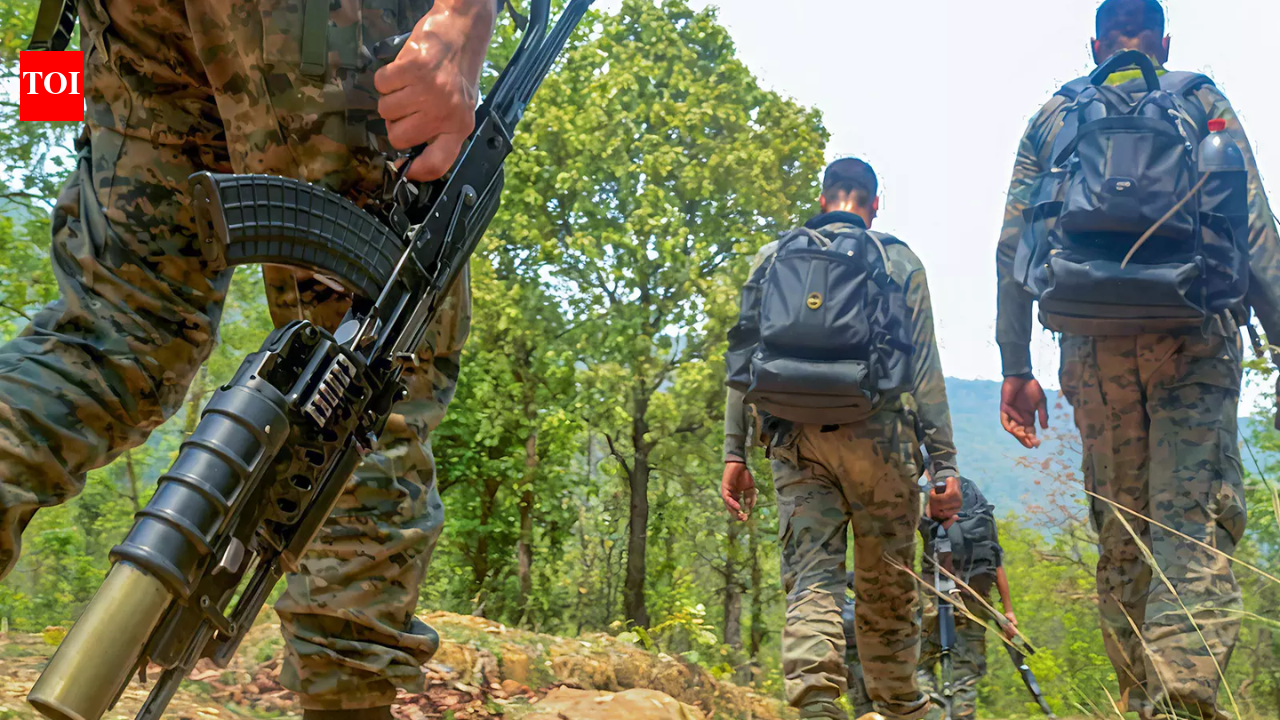
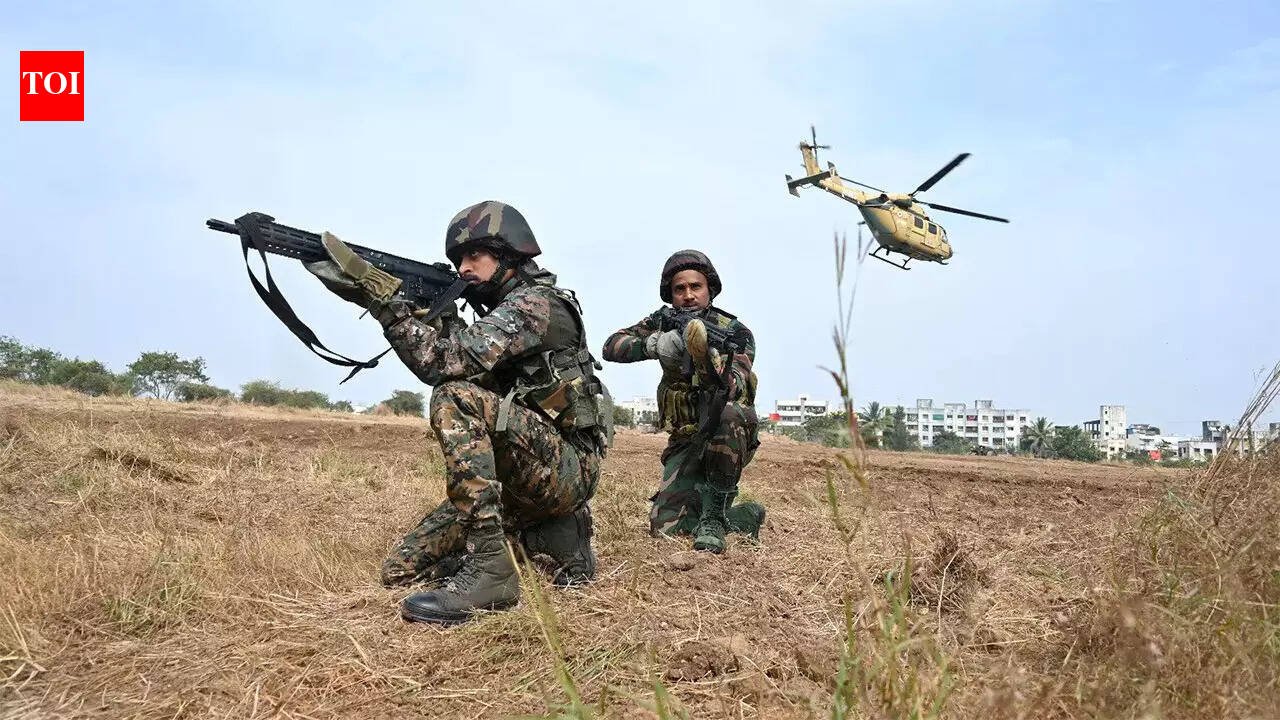
NEW DELHI: The Indian Army is fully prepared for future contingencies and will not be deterred by Pakistan’s nuclear threats, Western Army Commander Lt Gen Manoj Kumar Katiyar said on Thursday. He warned Pakistan that any future conflict would end with a decisive outcome on the ground.Addressing troops after an investiture ceremony at Dhyan Singh Stadium in Mamoon Military Station, Lt Gen Katiyar said Pakistan had sought a ceasefire during Operation Sindoor while simultaneously issuing nuclear threats. “They said if they go down, they will take half the world with them. We ignored those threats then, and we are even better prepared now, with a clear plan for the future,” he was quoted as saying by news agency PTI.Calling out Pakistan’s military leadership ofor sustaining a “war-like situation” to remain relevant at home, the commander said India’s leadership was focused on national development, while Pakistan’s generals were driven by the need to retain power. He said Pakistan lacked the courage and capability for open combat and instead relied on proxy warfare to provoke escalation.“Pakistan repeatedly uses terrorist outfits to provoke India so that when we retaliate, it can project a war-like situation and rally domestic support,” he said, adding that Islamabad had misled its own people with a false narrative of victory and media propaganda. “This time, we will not give them that opportunity,” he added.Lt Gen Katiyar stressed that future operations would go beyond targeting bases and posts. “Our victory will be on the ground and so decisive that they will be forced to accept defeat before the world,” he said.Underscoring the role of Western Command formations, he told troops their preparedness would be critical in any future action. “You must be ready to enter enemy territory, seize key areas and inflict damage, while also protecting Jammu and Punjab,” he said, adding that the nation’s expectations demanded peak operational readiness.He said India’s preparedness should serve as a strong deterrent. “Our readiness must make the enemy think ten times before any misadventure,” he said.“The danger has not gone away. Our response must be stronger than before,” he said, adding that Pakistan had failed to learn from past conflicts, including the 1971 war and the Kargil conflict.
Source link

PM Modi to launch nationwide HPV vaccination drive from Ajmer on February 28: Health ministry | India News


PM Modi to launch nationwide HPV vaccination drive from Ajmer on February 28: Health ministry

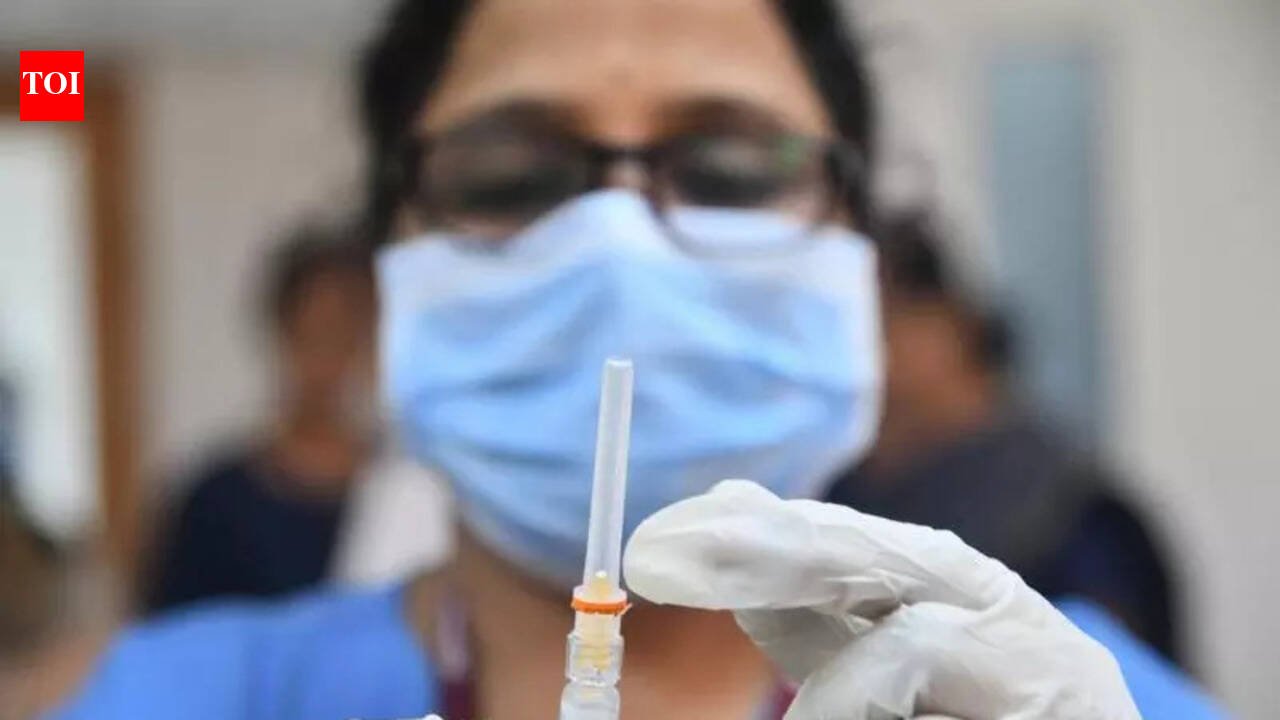
NEW DELHI: Prime Minister Narendra Modi is set to inaugurate the nationwide Human Papillomavirus (HPV) vaccination drive for 14-year-old girls from Ajmer in Rajasthan on Saturday, the Union health ministry announced. The launch event will see participation from representatives of all states and Union territories through a virtual platform, the ministry stated on Thursday. In an official statement, the ministry said, “We remain committed to promoting vaccination among girls to prevent cervical cancer. The launch of the HPV vaccination campaign for all girls aged 14 years is tentatively scheduled for 11:30 am on February 28. The prime minister has graciously agreed to launch the campaign from Ajmer, Rajasthan.”It added that all states and UTs will join the programme virtually in coordination with their local National Informatics Centre (NIC) units. Chief ministers, administrators, state health ministers, and senior health officials are expected to be present at their respective state or UT headquarters. The access link for the event will be shared separately. The ministry clarified that girls who turn 15 within three months of the campaign’s launch will also be eligible for vaccination during the special three-month drive. A single dose of Gardasil-4 will be administered as part of the campaign, which will be conducted at government health centres across the country.The vaccination will be entirely voluntary and will require consent from a parent or guardian. During the three-month intensive phase, the HPV vaccine will be available daily to maximise coverage. After this period, it will continue to be offered at the same health facilities on designated routine immunisation days.


Source link

DNPA Conclave 2026: India’s digital public infrastructure puts media at heart of civic innovation | India News


DNPA Conclave 2026: India’s digital public infrastructure puts media at heart of civic innovation
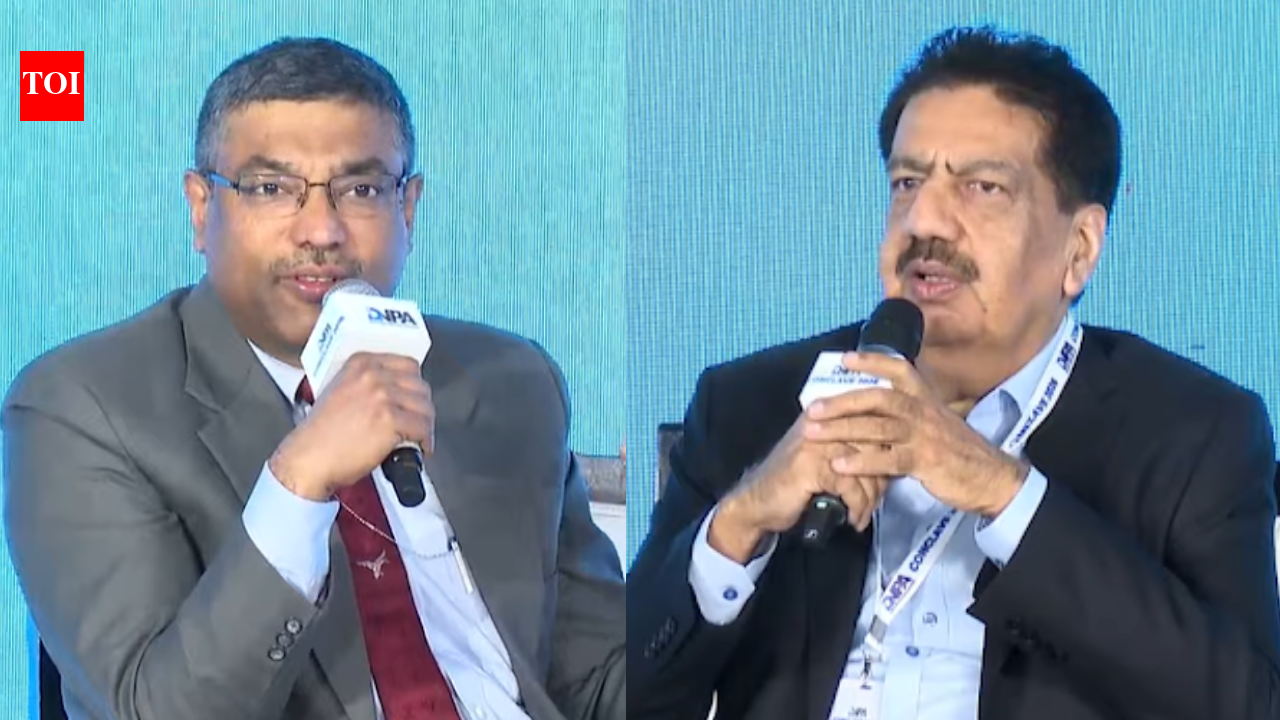
S Krishnan, secretary of MeitY, left and Vineet Nayar, founder-chairman of Sampark Foundation and former CEO of HCL Technologies

India’s digital news ecosystem is at a critical juncture, as technology, artificial intelligence, regulatory frameworks, and audience expectations converge to reshape the future of journalism. At the DNPA Conclave 2026, leaders from media, technology, and policy discussed how credibility, verified content, and India’s expanding digital public infrastructure are redefining the responsibilities and opportunities for news organisations.Technology can strengthen journalism by amplifying credible and responsible reporting, S. Krishnan, Secretary, MeitY, said, stressing the need to prioritise authenticated information in an era of rapid digital change.“If you create the right kind of content, technology will help you amplify the right kind of message.”He highlighted the public responsibility of publishers to ensure verified and curated information receives precedence over unverified material circulating online.“There’s a social duty, and there’s a social necessity of creating authenticated content. Any content which is authenticated and curated clearly needs to have priority and more privilege than any other content which is just randomly put up there.”The conclave also underscored the convergence of pressures on Indian media. Artificial intelligence adoption, regulatory recalibration, advertiser scrutiny, and audience mistrust are unfolding simultaneously, compressing change and reducing the space for trial-and-error strategies. Publishers are now facing structural decisions that will determine long-term direction rather than short-term growth, particularly in a diverse market marked by linguistic variety, uneven connectivity, and massive youth participation.Adding perspective on India’s digital foundations, Anil Kumar Lahoti, chairman of the Telecom Regulatory Authority of India, spoke during a fireside chat on The Evolving Telecom & Digital Infrastructure Landscape, highlighting how telecom and digital systems are transforming access to information and connectivity.Vineet Nayar, founder-chairman of Sampark Foundation and former CEO of HCL Technologies, addressed The Architecture of India’s Digital Identity, explaining how India’s public digital infrastructure—spanning governance, finance, and identity—is reshaping citizen expectations around access, authentication, and trust. For media organisations, this signals that credibility, inclusion, and accessibility are no longer optional—they are central to their role.India’s digital public infrastructure positions technology as civic architecture, placing media at the heart of a broader ecosystem of digital citizenship. Globally, India is being observed as a model for integrating technology, governance, and public interest, with media serving as both a participant and a stakeholder in this transformation.The conclave, held under the theme “Rewriting the Playbook for a Resilient Digital Future,” brought together leaders to explore how trust, innovation, AI, regulation, and sustainable growth will shape the next phase of India’s news industry.


Source link

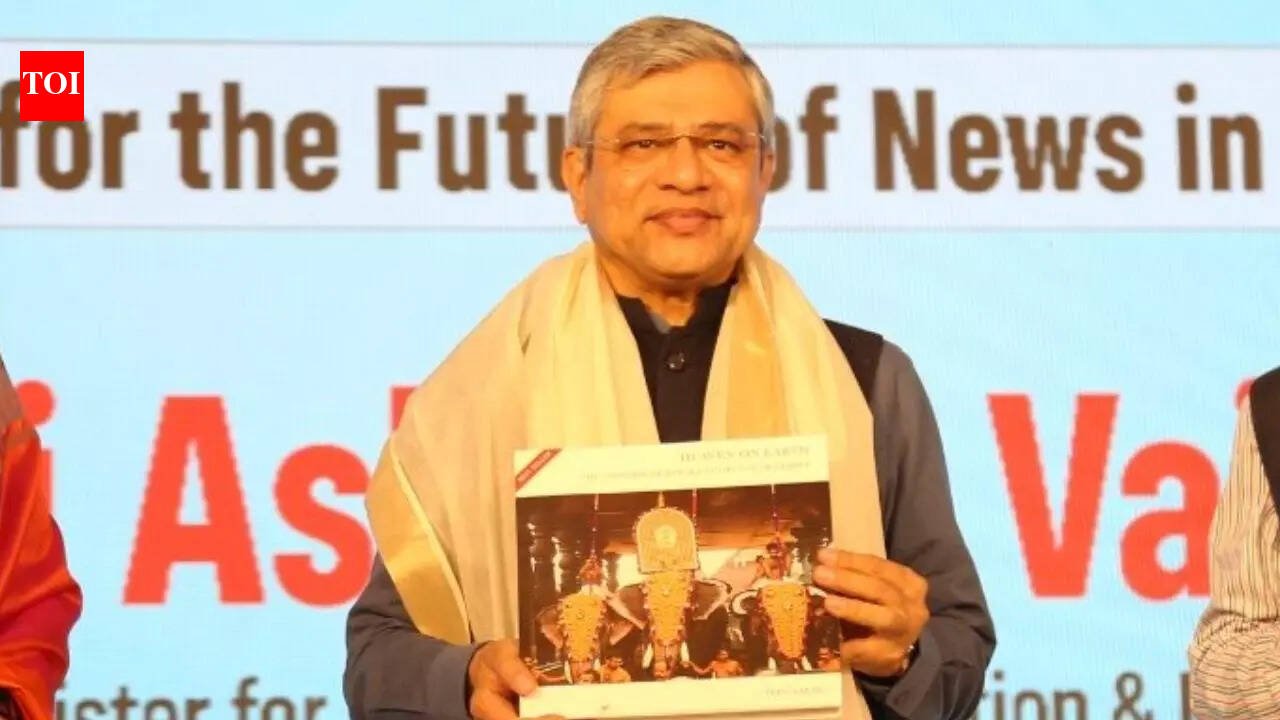
DNPA Conclave 2026: Ashwini Vaishnaw says social media platforms must fairly share revenue with content creaters | India News


DNPA Conclave 2026: Ashwini Vaishnaw says social media platforms must fairly share revenue with content creaters

NEW DELHI: Union minister Ashwini Vaishnaw on Thursday said user consent must be mandatory for “all synthetically generated” content and called on digital platforms to take proactive steps to curb cyber fraud.Speaking at the Third Annual Storyboard18 Digital News Publishers Association (DNPA) Conclave 2025 in New Delhi, Vaishnaw said, “Platforms must take responsibility of what they are publishing. Times have gone when a platform could say that they are responsible for the content. Those times have gone because the platforms have themselves changed from being pure platforms to becoming hosts to the world. They must take the responsibility for the harmful content which is hosted by them.“Social media platforms must share revenue in a fair way with content creators… including creators sitting in far-flung areas, influencers, professors… There has to be a fair share of revenue with people creating content,” Vaishnaw said.“There has to be user consent for all synthetically generated content…platforms must take proactive action on cyber fraud,” he added.Emphasising the importance of trust in democratic systems, Vaishnaw said, “Human society is built upon trust and institution. When human beings created the social structures. They created so many institutions beginning with the institution of family, a social identity, judiciary, media, legislature and a democratic way of coming together and deciding things.”“All these institutions were built on one fundamental premise. The premise of trust,” he noted.“And that basically means that diff arms of the society, different institutions within the society and the individuals interacting with those institutions. They believe that institutions work on certain principles which are based upon trust,” he said.“Mutual trust defines the entire core of the institution,” the Union minister added.Warning that this foundation is under strain, Vaishnaw said, “The way the world is emerging today, that core tenet of trust is under threat. That threat is coming from so many different angles, deepfakes which can make you believe in things which have never happened anywhere.”“Disinformation barrage which can cause a sense of distrust, which doesn’t exist in real life. Creating synthetically generated photos and videos which have absolutely no relation with reality. And all that content when it reaches the common citizen. They start questioning the very basic structure of the society. And this is a big threat that every country including India is juggling with these issues now,” he added.Earlier, DNPA Chairperson and Manorama Online CEO Mariam Mammen Mathew opened the conclave, saying artificial intelligence and rapid shifts in the digital ecosystem are fundamentally reshaping how news is created, distributed, discovered and monetised.Speaking on the theme she said, “Transformation of Media in the Age of Artificial Intelligence is at a critical juncture as AI, evolving data governance norms, shifting platform economics and changing audience behaviour redefine digital journalism.”The DNPA Conclave 2026 brought together policymakers, media leaders and industry experts to discuss the rapidly evolving landscape of news, governance and digital innovation. As a key industry platform, the conclave featured curated panel discussions and expert-led sessions examining emerging trends, addressing shared challenges and outlining a forward-looking roadmap for India’s digital media ecosystem.Discussions focused on the evolving regulatory environment governing digital communications and how policy frameworks can balance innovation with consumer protection and industry growth in an AI-driven era. Sessions also explored how artificial intelligence is transforming newsroom workflows, content creation, distribution strategies and audience engagement across platforms.The conclave further examined where audiences are turning for credible information, how trust can be built and sustained, and what constitutes the new public square in a fragmented, platform-led media landscape. The impact of regulatory changes on various stakeholders was also discussed, including who stands to benefit, who bears the costs, and how the ecosystem can remain competitive and inclusive.


Source link

DNPA Conclave 2026: AI, policy shifts and platform changes redrawing future of digital news | India News


DNPA Conclave 2026: AI, policy shifts and platform changes redrawing future of digital news

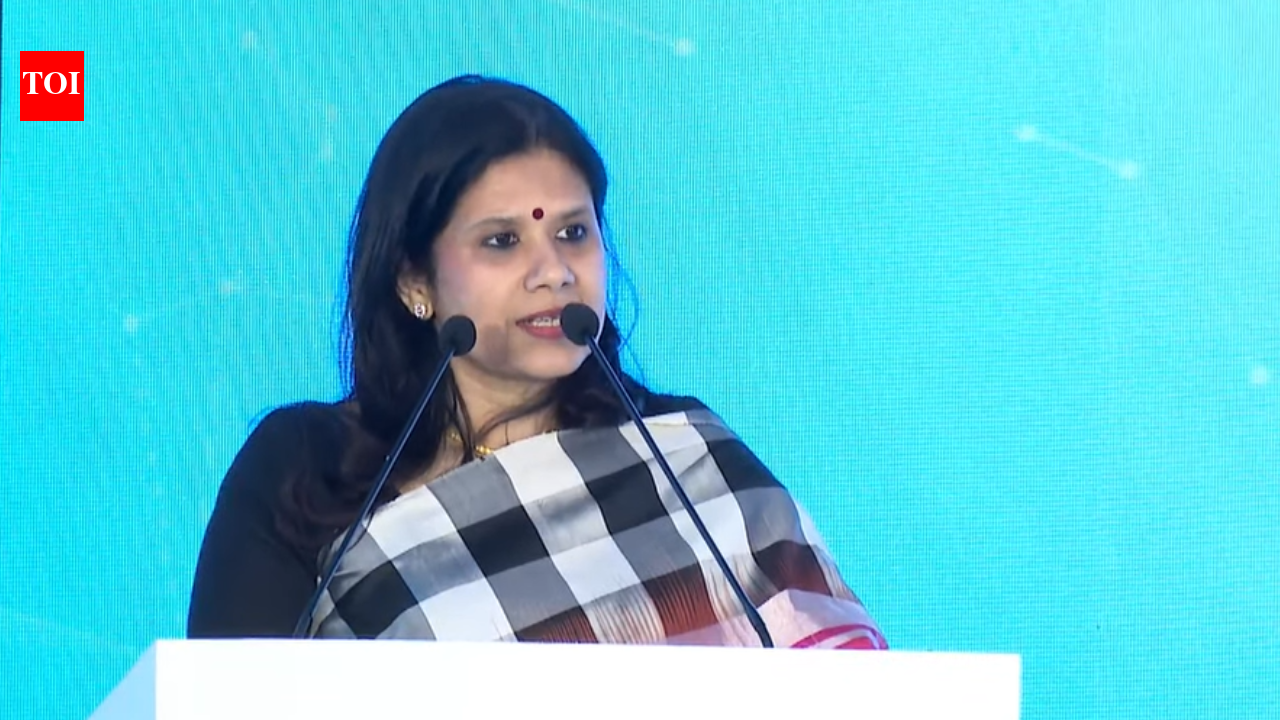
Digital News Publishers Association (DNPA) chairperson and Manorama Online CEO Mariam Mammen Mathew on Thursday opened the DNPA conclave and said that artificial intelligence and rapid shifts in the digital ecosystem are fundamentally reshaping how news is created, distributed, discovered and monetised.Speaking at the Third Annual Storyboard18 DNPA Conclave 2025 on the theme, “Transformation of Media in the Age of Artificial Intelligence,” Mathew said the industry is at a critical juncture as artificial intelligence, evolving data governance norms, shifting platform economics and changing audience behaviour redefine digital journalism.With India preparing to implement a forward-looking AI regulatory framework, she described the dialogue between policymakers and industry leaders as both timely and essential.Mathew said DNPA has worked to ensure that the voice of credible digital publishers remains central to this transformation. The association has engaged with the government on key policy consultations, including the Digital Personal Data Protection framework, discussions on generative AI, copyright and broader regulatory developments affecting digital news.“Strong AI requires strong, credible journalism,” she said, highlighting the need to anchor technological advancement in trust and editorial integrity.Internally, she noted, DNPA has strengthened collaboration among its members, focusing on traffic growth, sustainable monetisation models, newsroom adoption of AI tools and collective opportunities for innovation. Through working groups, policy dialogues and knowledge exchanges, the association aims to ensure that no publisher navigates the ongoing disruption alone.Mathew emphasised that trust remains the core principle amid industry-wide transformation. She said DNPA has brought together policymakers, technology leaders, industry partners and publishers not only to discuss challenges but to co-create solutions. Key concerns include building sustainable monetisation in an AI-mediated ecosystem, protecting intellectual property while enabling innovation, and reducing platform dependency to build traffic resilience.The Digital News Publishers Association represents 21 prominent digital news publishers in India. The body advocates on behalf of its members in engagements with institutions such as the ministry of electronics and information technology, the ministry of information and broadcasting and the Telecom Regulatory Authority of India, while also promoting best practices and collaboration across the industry.


Source link

Maoist commander killed by leader for allegedly planning surrender in Odisha | India News


Maoist commander killed by leader for allegedly planning surrender in Odisha
Representative image (ANI)

NEW DELHI: A Maoist commander, carrying a reward of Rs 22 lakh on his head, was allegedly killed by his leader for intending to surrender to the Odisha Police, a senior officer said.Anwesh, alias Renu, a native of Sukma in neighbouring Chhattisgarh, was allegedly killed by notorious Naxal leader Sukru on January 29.Anwesh was a divisional committee member (DVCM) and military platoon commander of the KKBN (Kalahandi-Kandhamal-Boudh-Nayagarh) Division, police said.Police in Kandhamal district on Wednesday exhumed his decomposed body from the Pakari reserve forest area under Daringbadi police station limits. “It has been ascertained that Anwesh was killed by Sukru and his associates when the former was preparing to surrender before the Odisha Police along with some other Maoist cadre,” Kandhamal SP Harish BC told PTI.The SP said the body was exhumed following strict legal protocols in the presence of the executive magistrate.“Answesh’s move to surrender was opposed by the leadership. The murder is believed to have been executed by SZCM (State Zonal Committee Member) Sukru, with the assistance of DVCM Sila and ACM (area committee member) Jagesh,” he said.Jagesh was neutralised in an exchange of fire with security forces on February 22 in the Nandabali Reserve Forest area in Kandhamal district.Top officials engaged in anti-naxal operations in Odisha said the incident exposes internal conflicts within Maoist groups over surrendering before the police.


Source link

After SC rap, NCERT ‘trying’ to retrieve sold copies of now-withdrawn class 8 textbook | India News


After SC rap, NCERT 'trying' to retrieve sold copies of now-withdrawn class 8 textbook

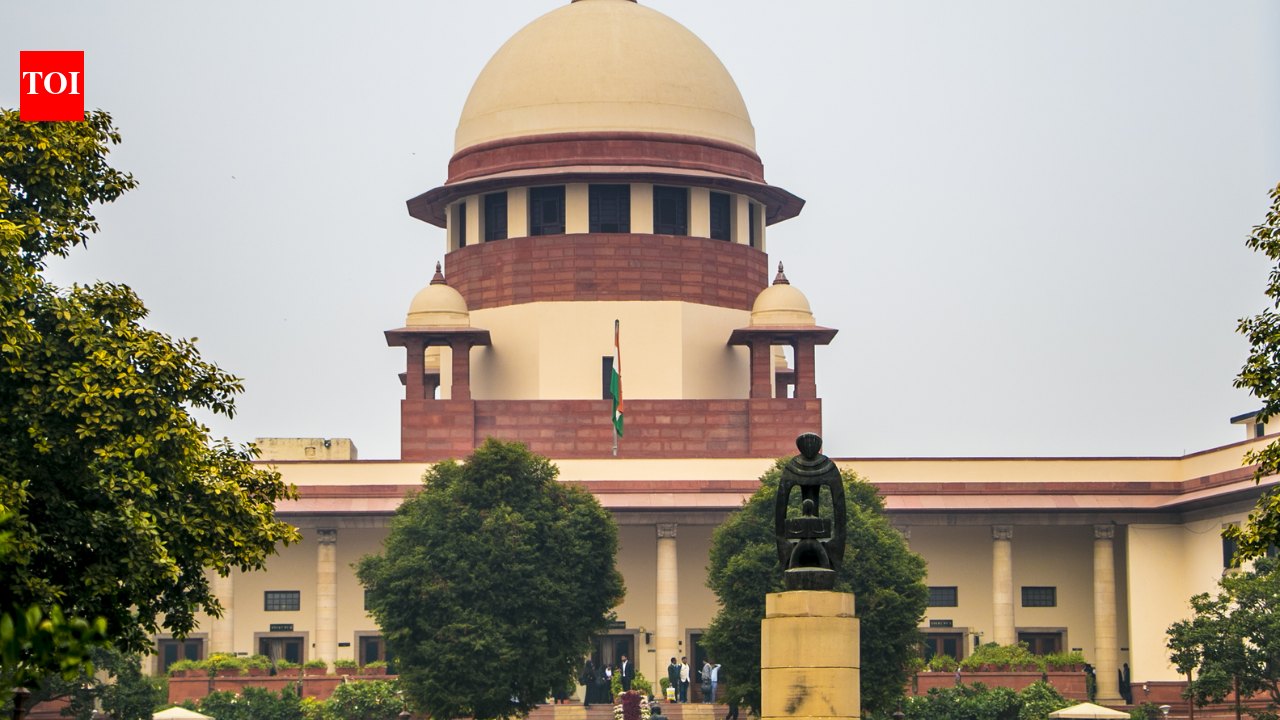
NEW DELHI: The National Council of Educational Research and Training (NCERT) on Thursday moved to retrieve 38 copies of the now-withdrawn Class 8 Social Science textbook after drawing sharp criticism from the Supreme Court. A bench led by CJI Surya Kant described the content as a “deep-rooted conspiracy to defame” the judiciary.The textbook sparked a judicial backlash after the newly introduced edition outlined key challenges facing the country’s judicial system, including corruption, a heavy backlog of cases, and an inadequate number of judges.However, following strong remarks from the CJI-led bench, NCERT on Wednesday decided to remove references to “corruption at various levels of the judiciary” from the textbook and revised the chapter titled ‘The Role of the Judiciary in Our Society.’In a late-night development, the board announced that it has put the distribution of the newly released textbook on hold after noticing “inappropriate textual material and error of judgement” in the chapter on the judiciary. It said the issue was flagged both internally and by the Department of School Education and Literacy under the education ministry.The CJI said, “Judges of the constitutional and district courts are perturbed by this. I have taken suo motu cognisance of the issue. I will not allow anyone on earth to defame the institution or taint its integrity. Whosoever and however high it may be, I know how to deal with it,” while addressing senior advocates Kapil Sibal, Abhishek Manu Singhvi and Mukul Rohatgi, who raised the matter at the start of proceedings at 10.30 am.The advocates informed the bench of CJI Kant and Justices Joymalya Bagchi and Vipul M Pancholi that teaching students of an impressionable age about corruption in the judiciary could bring disrepute to the institution, and urged the apex court to take cognisance of the matter. The suo motu case has been listed for hearing on Thursday.


Source link

‘That activity is not continuing’: Canada says India not linked to violent crimes anymore | India News


'That activity is not continuing': Canada says India not linked to violent crimes anymore
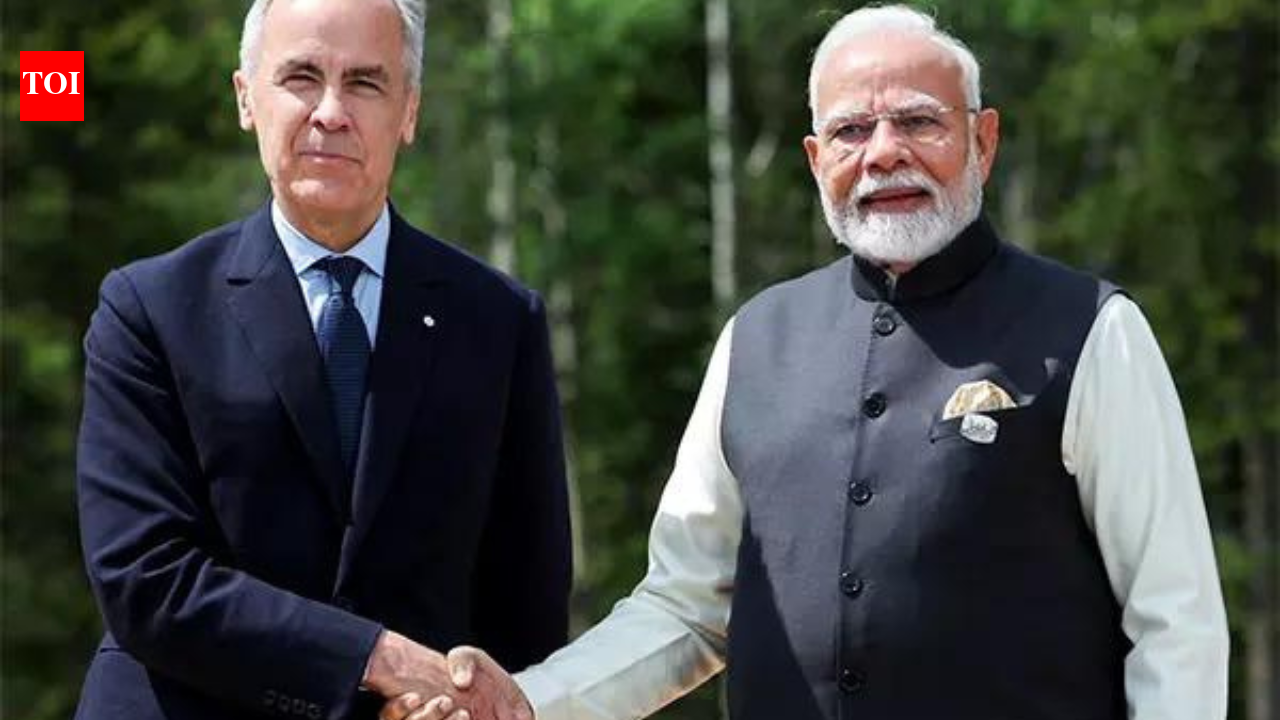
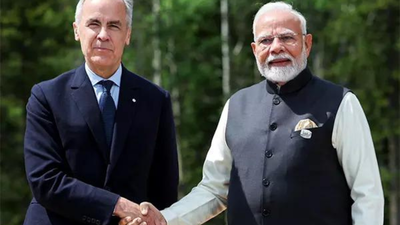
Mark Carney and PM Narendra Modi (ANI image)

NEW DELHI: Canada on Wednesday clarified that it does not believe India is linked to violent crimes on its soil, signalling a diplomatic thaw with New Delhi ahead of Prime Minister Mark Carney’s visit to India. This marks a notable shift after months of strained ties between the two countries, as the Toronto Star reported.According to a report by The Toronto Star, a senior Canadian official stated during a background briefing that Ottawa is now confident such alleged activities are no longer continuing. “We have a very robust diplomatic engagement, including between national security advisers, and I think we can say we’re confident that that activity is not continuing,” the official said.Another official added that the visit itself reflects this assessment: “I really don’t think we’d be taking this trip if we thought these kinds of activities were continuing.”The Prime Minister’s Office later clarified that Canada would continue to address transnational repression, organised crime and criminal activity within its borders, while re-engaging with India through law enforcement and security channels.The Toronto Star further reported that the reassessment follows months of high-level security dialogue between the two countries. Officials indicated that communication channels between national security advisers and law enforcement agencies remain active and that engagement with India is being approached in a “step-by-step” and cautious manner.The news agency also highlighted that Carney’s government sees the visit as part of a broader effort to stabilise relations with key global partners, particularly in the Indo-Pacific region. However, some Sikh community leaders in Canada expressed concern over the renewed engagement, saying investigations into past allegations should continue transparently even as diplomatic ties improve.

Carney’s ‘pragmatic’ reset with India

This comes as Mark Carney is scheduled to visit Mumbai and New Delhi, marking his first trip to India as Prime Minister. He is scheduled to meet Prime Minister Narendra Modi, business leaders and officials to expand cooperation in trade, energy, technology, artificial intelligence and defence.Canada sees India as an important economic partner. In 2024, bilateral trade between the two countries reached $30.8 billion. Both sides have discussed reviving negotiations for a Comprehensive Economic Partnership Agreement (CEPA), which aims to double trade to $70 billion by 2030.The Toronto Star reported that Carney’s government views engagement with India as part of a broader effort to diversify Canada’s trade partnerships in a more uncertain global environment.However, the shift has drawn criticism from some Sikh activists. Moninder Singh, a religious leader in British Columbia, told the newspaper that he had received multiple police warnings about threats to his life since Nijjar’s killing. He described the renewed engagement as a betrayal.At the same time, Canadian officials said that security dialogue with India continues. Trade minister Maninder Sidhu said Canada can both protect communities at home and engage internationally on economic matters.

Diplomatic row after Nijjar killing

Relations between Canada and India deteriorated sharply after the killing of Hardeep Singh Nijjar, a Sikh separatist leader, in British Columbia in June 2023. Months later, then-prime minister Justin Trudeau told the Canadian Parliament there were “credible allegations” linking Indian government agents to the killing.India rejected the allegations as “absurd.” The dispute led to tit-for-tat expulsions of diplomats, suspension of visa services, and a freeze in trade talks.In October 2024, the Royal Canadian Mounted Police (RCMP) claimed it had evidence linking Indian government agents to violent criminal activity in Canada, including threats against Khalistan activists. Canadian officials later said they believed India’s home affairs minister Amit Shah was connected to the allegations. New Delhi strongly denied all such claims.India maintained that Canada was giving space to extremist and secessionist elements. After Trudeau’s exit, Ministry of External Affairs said that it was ready to rebuild ties based on “mutual trust and sensitivity.” MEA spokesperson Randhir Jaiswal stated that the downturn in relations was caused by the “license that was given to the extremist and secessionist elements” in Canada.


Source link

‘Yadav Ji ki…’ doesn’t defame community: Supreme Court | India News


'Yadav Ji ki...' doesn't defame community: Supreme Court

NEW DELHI: The Supreme Court Wednesday rejected a plea seeking a ban or a change in the title of the upcoming film, ‘Yadav Ji ki Love Story’, saying the name does not portray the Yadav community in a poor light.A bench comprising justices B V Nagarathna and Ujjal Bhuyan rejected the petition filed by the chief of the Vishwa Yadav Parishad. Its main grievance was that the name of the film reflected the Yadav community in bad light in society.“We fail to understand as to how the title of a film can reflect the community in a bad light. The title…nowhere has any adjective or any word that portrays the Yadav community in bad light,” Justice Nagarathna said. The bench called the apprehensions “wholly unfounded” and dismissed the petition. The bench distinguished its earlier order in a similar case related to ‘Ghooskhor Pandat’ in which it had asked the producer to change the title of that movie.“The expression ‘ghooskhor’…means corrupt. Therefore a negative meaning was being attached to the community. In the instant case, no such negativity is attached to the Yadav community. Neither of the reasonable restrictions under Article 19(2) (reasonable restrictions to freedom of speech and expression) under the Constitution are attracted. The name in no way portrays the Yadav community in bad light or any negative way. The writ petition is accordingly dismissed,” the order said.The petitioner had alleged that the title created an offensive stereotype against the community and raised concerns over the depiction of the female lead. During the hearing, the counsel for the petitioner argued that while they do not oppose inter-community marriages, the film’s portrayal of a woman was unacceptable.“A lady cannot be publicised this way,” the counsel said, adding that the film claims to be based on a true story. However, the bench remained unconvinced, categorising the film as a work of fiction.


Source link

India’s international air travel hit record 2 crore passengers in October-December | India News


India's international air travel hit record 2 crore passengers in October-December

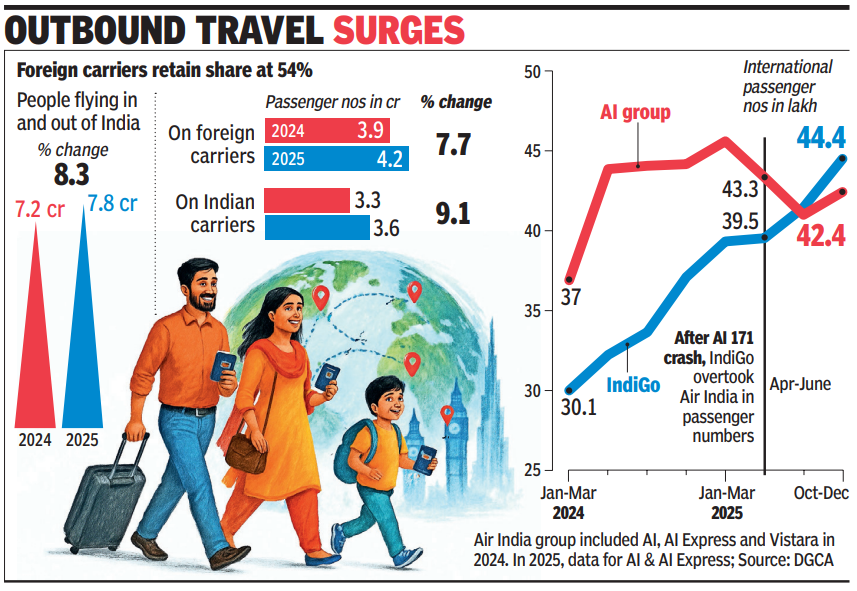
NEW DELHI: International air travel in and out of India touched a new quarterly high and crossed the two-crore mark for the first time in October-December 2025.Despite travel to the US remaining subdued due to visa issues across categories such as students and H-1B during President Trump’s second presidency; Canada’s high rejection rate for Indian visa applicants and issuance delays and the reduction in flights by Air India after AI 171 Ahmedabad crash last June, last calendar year saw 7.8 crore people fly to and from India – 8% more than previous year’s 7.2 crore, according to DGCA data.While the share of foreign carriers has been static at 54% as India did not hike the flying rights of a majority of countries whose airlines have a large presence here, the share of Indian carriers has seen a change. In the recent past (after Jet’s demise), Air India group was the largest in terms of flying passengers in and out of the subcontinent.

Screenshot 2026-02-26 053445

..

That changed in the July-Sept 2025 quarter, with IndiGo since then flying more than the AI Group (see graphic). “Almost 1.5 crore Indians were issued Passports last year. Only 33-35 lakh of these passport holders travelled abroad last year. So we have a large number of passport holders who are aspiring to travel but have not yet travelled. Combine this with the growing power of the Indian passport with more countries offering visa-on-arrival or visa free access and the growing aspiration of a booming middle class, this segment is bound to grow by leaps and bounds for many years to come. There has been a growth in direct connectivity between India and new destinations abroad , many in the nations frequented by Indians, that is fuelling demand,” said Anil Kalsi, Travel Agents Federation of India VP.Many countries in the neighbourhood like Vietnam, Malaysia and Thailand count Indians among their bigger foreign spenders and overseas travellers.”Except North America, every other place is seeing a serious growth in demand from Indian travellers. Given the fact that Indians are very high spenders, many countries are increasingly welcoming them with open arms,” said officials.


Source link