Breaking News
Bipartisan MPs’ panel can boost ties with Israel: PM Modi | India News

Bipartisan MPs’ panel can boost ties with Israel: PM Modi

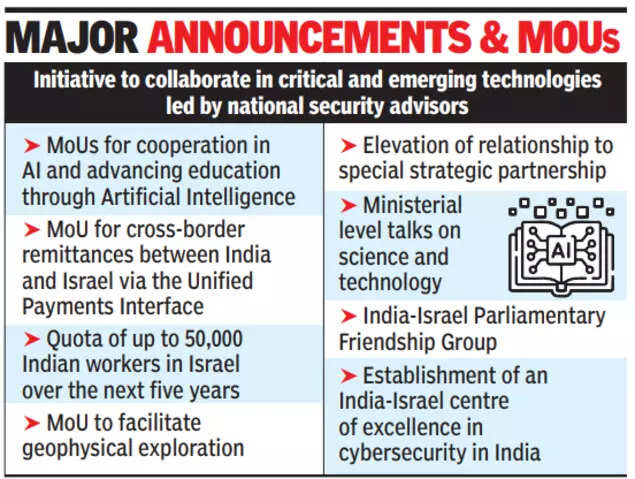
NEW DELHI: The bipartisan Parliamentary Friendship Groups of MPs recently announced by Lok Sabha received a hearty endorsement from PM Narendra Modi in his address to Israel’s Knesset, as he dwelt on the role it can play in strengthening ties at the level of legislatures between the two countries.Modi called for greater parliamentary interaction between the two democracies, making use of the parliamentary group headed by BJP MP Bhartruhari Mahtab which has been tasked with engaging with lawmakers from Israel.The idea of constituting such committees, 64 of which were announced by Lok Sabha Speaker Om Birla on Monday, was seeded during Modi’s interaction with the MPs from multi-party delegations that were formed to convey India’s stand to the world after Operation Sindoor, as there was realisation at the highest levels in govt of the role they had played in projecting a bipartisan stand on the issue of national interest.Modi had then spoken about institutionalising the bipartisan platform, which finally culminated in 64 such groups being set up to foster ties with 61 countries and three blocs, including EU Parliament and Nordic nations.If the exercise, which is conventionally conducted with inputs from govt, reflected Parliament’s keenness to deepen exchanges with legislatures across the world to complement traditional diplomacy, its decidedly bipartisan composition has conveyed an attempt to build inter-party camaraderie amid rising acrimony between the ruling BJP-led NDA and opposition parties.The groups include the eight MPs, seven from Congress and one from CPM, who were suspended during the Budget session from Lok Sabha for their “unruly” protest.Birla himself is facing an Opposition notice for his removal from office, which is expected to be taken up on Mar 9 when Parliament reconvenes after a recess.Governing National Democratic Alliance MPs from the two Houses head 37 of these groups while others chair 27, including 10 from Congress and three each from Dravida Munnetra Kazhagam, Trinamool Congress and Samajwadi Party, three key opposition parties.
Source link

India, Israel upgrade ties; PM backs Gaza peace plan | India News


India, Israel upgrade ties; PM backs Gaza peace plan

PM Narendra Modi in Israel on Thursday said, “The Gaza Peace Plan has opened a pathway towards peace. India has extended its full support to these efforts. In the future as well, we will continue to engage in dialogue and cooperation with all countries.In a joint statement, PM Modi and his Israeli counterpart Benjamin Netanyahu welcomed US President Donald Trump’s “Comprehensive Plan to End the Gaza Conflict”. They discussed the regional developments, including the peace process, and underlined the need for the establishment of a just and durable peace, security and freedom of navigation and trade in the region through dialogue and mutual understanding, said the statement.

PM Modi in Israel

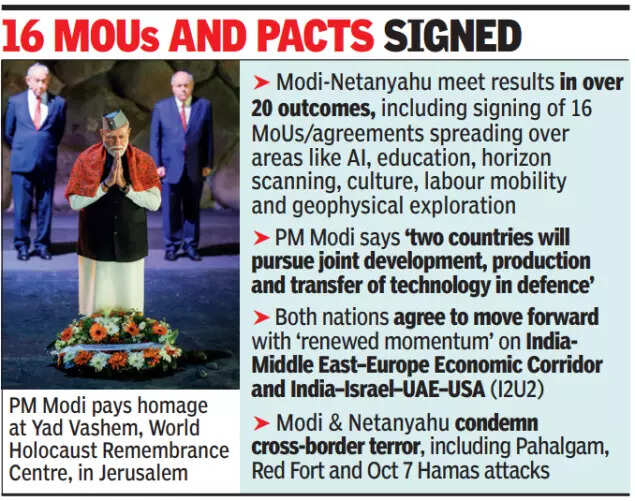
While discussing the regional situation, Modi and Netanyahu also spoke about the US-Iran tensions, with Modi underlining India’s “firm belief” in dialogue and the significance of pursuing a peaceful solution. Foreign secretary Vikram Misri said that the PM reiterated his readiness to offer, if required, India’s support towards a peaceful solution.The meeting resulted in more than 20 outcomes, including signing of 16 MoUs/agreements spreading over areas like AI, education, horizon scanning, culture, labour mobility and geophysical exploration for “sustainable resource development”. The leaders shared their vision and provided a roadmap for further strengthening “trusted cooperation” in defence, with Modi saying both sides will advance towards joint development, joint production, and transfer of technology.

PM Modi in Israel: Major announcements

Modi said technology lies at the heart of India-Israel future partnership. “We have decided to establish a Critical and Emerging Technologies Partnership. This will impart fresh momentum to cooperation in areas such as AI, quantum technologies, and critical minerals,” he said. According to the joint statement, this initiative would synergise the individual strengths of both countries in niche technologies, fostering a focused and futuristic partnership.Looking to promote regional connectivity, both sides agreed to move forward with “renewed momentum” on the India-Middle East-Europe Economic Corridor (IMEC) and India-Israel-UAE-USA (I2U2).On terrorism, Modi said that India and Israel are unequivocal in their position that terrorism cannot be accepted in any form and manifestation. “We have stood shoulder to shoulder in opposing terrorism and those who support it, and we will continue to do so,” he said, carrying on from where he left on the issue in his Knesset address.The leaders condemned cross-border terrorism in the joint statement, including the Pahalgam attack, Red Fort “terror incident” and Oct 7, 2023, Hamas terrorist strikes. “They called for decisive and concerted international efforts to combat terrorism in a comprehensive and sustained manner. Expressing the grave concern over this common challenge, the prime ministers reaffirmed their collective resolve to combat this menace as the leaders of two vibrant and resilient democracies,” said the statement.According to Modi, both sides resolved to give agriculture collaboration a futuristic direction. “The Centres of Excellence established in India with Israel’s cooperation stand today as outstanding examples of our friendship. Encouraged by their success, we have set a target to expand their number to 100,” he said.


Source link

Mehbooba, Tarigami oppose PM’s Israel visit | India News


Mehbooba, Tarigami oppose PM’s Israel visit

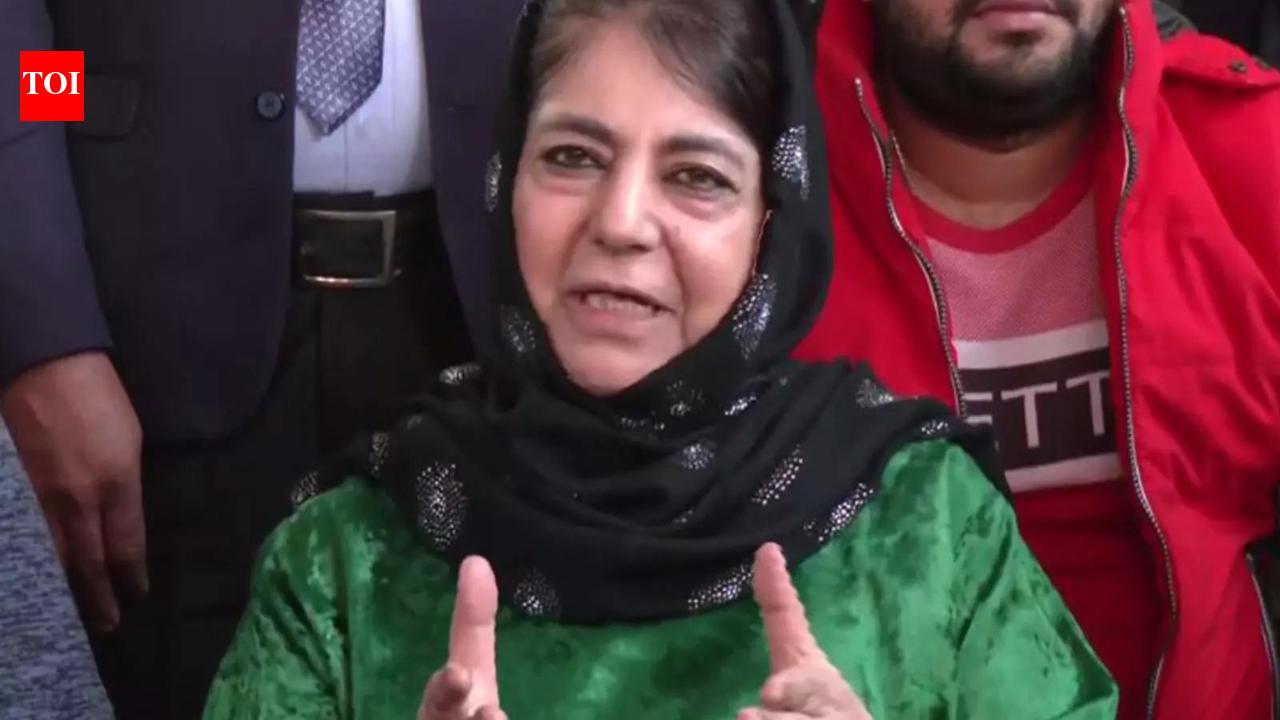
SRINAGAR: PDP chief Mehbooba Mufti criticised PM Narendra Modi’s visit to Israel, saying it ran contrary to India’s long-standing policy of maintaining a moral and balanced position in global affairs.Mehbooba told reporters much of the international community had distanced itself from Israel PM Benjamin Netanyahu following the International Criminal Court’s indictments against him. “The prime minister should not be seen embracing such leaders.”CPM MLA MY Tarigami posted a party statement on X, saying the visit came at a time Israel was “killing scores of innocent people”.Srinagar MP Aga Syed Ruhullah Mehdi was the lone functionarty of governing NC to oppose the visit. Responding to Modi’s statement that he carried the “greetings of 1.4 billion Indians”, Mehdi said on social media, “No, not my greetings. Give them my curses for their illegal occupation of Palestine and the genocide in Gaza.”


Source link

Preparing Delhi’s power sector for next 50 years: CM Rekha Gupta | India News


Preparing Delhi's power sector for next 50 years: CM Rekha Gupta

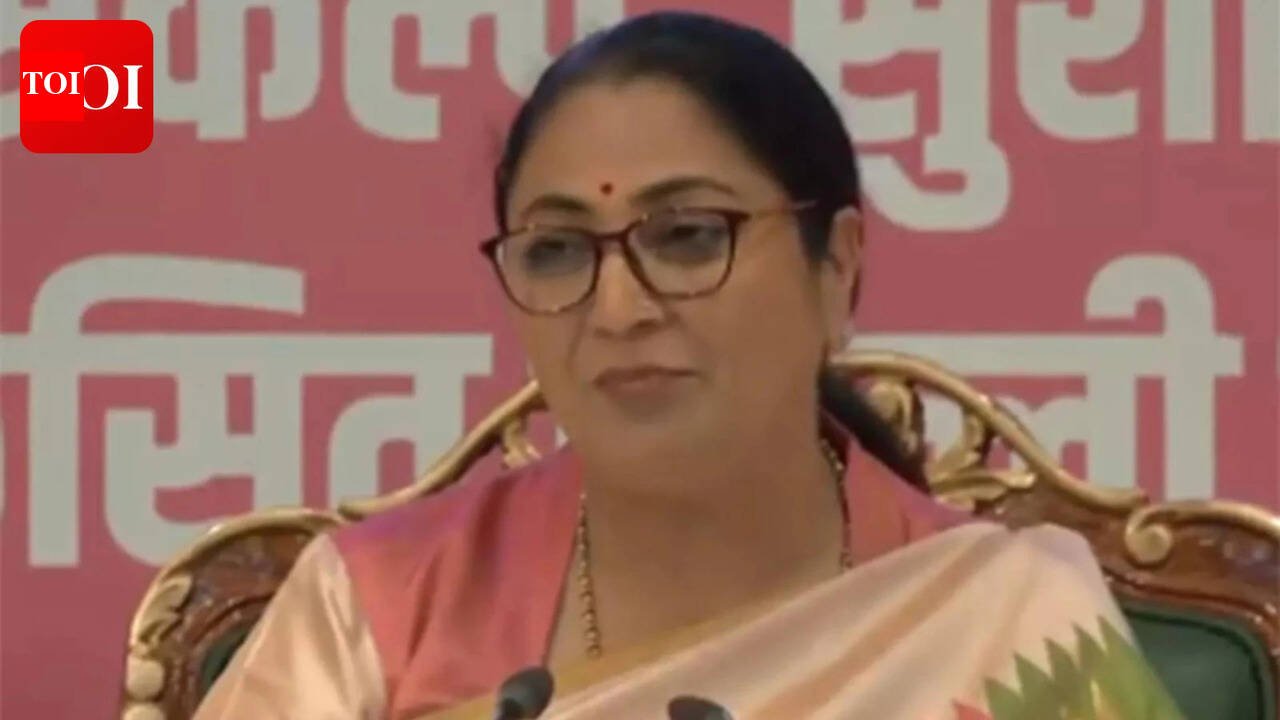
NEW DELHI: The Delhi government is ramping up the city’s power capabilities for the next 50 years, chief minister Rekha Gupta said on Wednesday after inaugurating a project to shift overhead electricity wires underground in Chandni Chowk.Addressing the gathering, Gupta said that 28 roads and streets in Old Delhi, including Kucha Mahajani, Bhagirath Palace, Jama Masjid Road, and Nai Sadak, will be freed from hanging electricity cables. The project will cost Rs 160 crore.The work will be carried out in phases during night hours to minimise disruption to daily life and traffic movement, a statement issued by the chief minister’s office (CMO) said.Around 10,000 consumers will directly benefit from the project, which will reduce fire hazards and weather-related power disruptions, improve supply reliability and significantly beautify the historic precinct, the statement said.According to Gupta, the government is pushing electric vehicle adoption in a big way, which will have a direct bearing on the need for more power.The chief minister said the government will also revive the historic Town Hall building as a monument.A total of 52.5 km of overhead wiring in Chandni Chowk will be shifted underground to enhance safety and reliability while preserving the area’s heritage character, officials said.The chief minister also laid the foundation for BYPL’s 66/11 KV, 63 MVA gas-insulated switchgear (GIS) indoor grid at Mandoli, and four standalone utility-scale battery energy storage systems (BESS) across south and west Delhi.The officials said a digital twin-enabled system will introduce real-time intelligence and predictive monitoring to Old Delhi’s modernised power network.The Mandoli GIS indoor grid to be constructed for Rs 55.5 crore will strengthen the power backbone of north-east Delhi and benefit nearly 1.5 lakh consumers, the statement said.It is targeted to be complete within 18 months, it added.The residents of Mandoli, Harsh Vihar, Bank Colony and adjoining areas will receive a more stable and reliable electricity supply, it said.The Rajiv Gandhi Super Speciality Hospital, Mandoli Jail and a DTC EV bus depot will also receive assured power, the statement added.The BESS project by BSES Rajdhani Power Limited (BRPL) will have a total capacity of 55.5 MW, and will benefit around 50,000 consumers in the Shivalik, 1,28,000 in Dwarka (G-5), 16,000 in Dwarka (G-7), and 28,000 consumers in Goyla Khurd with seamless supply, according to the statement.All projects are targeted for commissioning before March 2027.The statement said the battery systems will help reduce peak-hour load shedding, improve voltage stability and strengthen the grid, adding that the technology is environmentally sustainable and supports clean energy transition.


Source link

Rail Minister urges startups, innovators to join ‘Rail Tech Portal’ for transformative solutions | India News


Rail Minister urges startups, innovators to join 'Rail Tech Portal' for transformative solutions
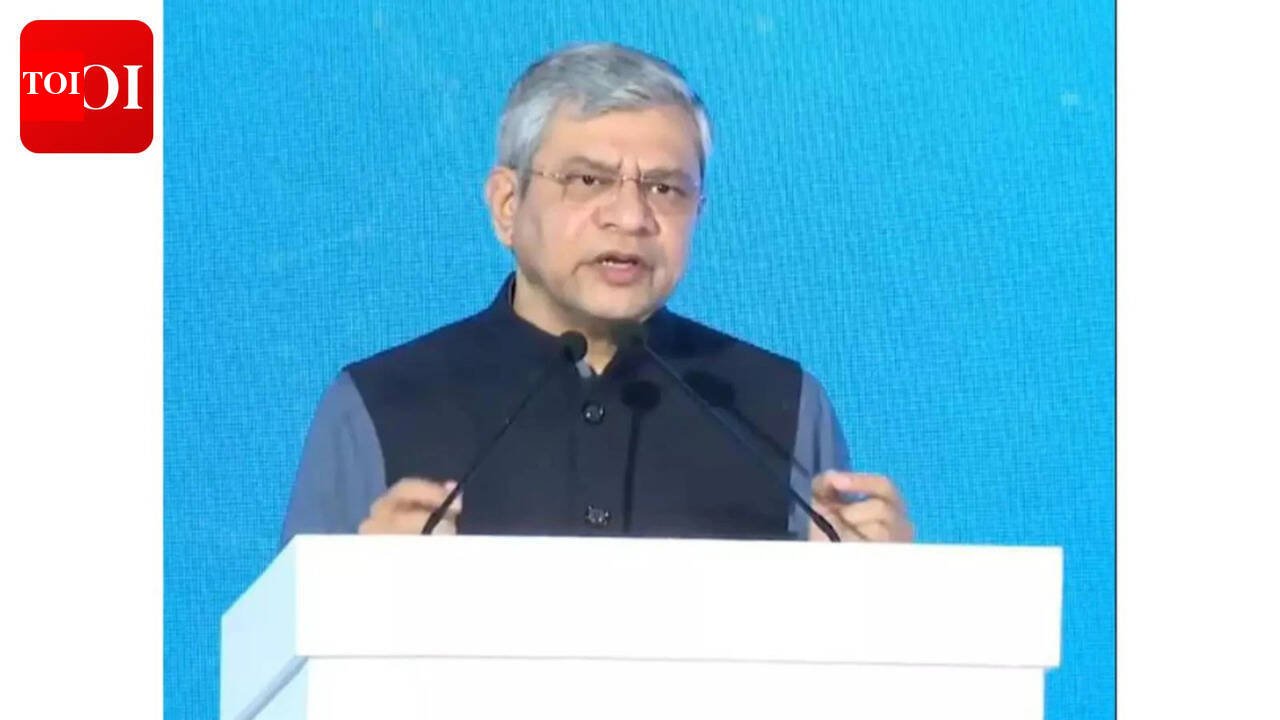
Union Minister of Railways, Ashwini Vaishnaw, has invited startups and innovators to collaborate with the government through ‘Rail Tech Portal’ to solve difficult problems with technology within the Indian Railways. Speaking at the DNPA Conclave on Thursday, the Minister described the portal as the primary “digital way of accepting solutions.” He encouraged anyone with an interest in problem-solving to contribute to the platform.

NEW DELHI: Union minister of Railways, Ashwini Vaishnaw, has invited startups and innovators to collaborate with the government through ‘Rail Tech Portal’ to solve difficult problems with technology within the Indian Railways. Speaking at the DNPA Conclave on Thursday, the minister described the portal as the primary “digital way of accepting solutions.” He encouraged anyone with an interest in problem-solving to contribute to the platform.The minister invited the startup and innovators’ community to engage with the portal’s digital framework.“I would like to request the startups, innovators across the country and all the people who are interested in solving difficult problems with technology to get associated with the Rail Tech Portal. Rail Tech Portal is the digital way of accepting solutions. Any problem that you think is worth your attention. We will be very happy to consider it as a part of the Rail Tech Portal.”The minister also explained that the initiative is built upon a specific vision of inclusive innovation to drive national achievement.“The vision of the Prime Minister at the beginning of this Rail Tech Portal is when science meets scale, when innovation becomes inclusive, when technology drives transformation, the foundation of great achievement. So, with this vision, this Rail Tech Portal will move forward”In the same event, Vaishnaw also spoke on the responsibilities of tech platforms with regard to the internet and the rights of the content creators.The minister stated that platforms must wake up to their role in protecting society.“I will request that platforms must wake up, must understand the importance of reinforcing trust in the institutions which human society has created over thousands of years. Platforms must take the responsibility for the content that is hosted by them,” he said.“The online safety of children, the online safety of all citizens, is the responsibility of the platforms. Non-adherence to these principles will definitely make them responsible because the nature ofthe Internet has changed now,” he added.Talking about the fair revenue system for the content creators, Vaishnaw said, “I will request all the platforms to rethink their revenue-sharing policies because that is also one of the major concerns that the entire society today is raising. If this is not done voluntarily, then there are so many countries which have shown the path to get it done in a legal way.”


Source link

DNPA Conclave 2026: Evolving regulations a big enabler for innovation in news media | India News


DNPA Conclave 2026: Evolving regulations a big enabler for innovation in news media

At the ourth Digital News Publishers Association (DNPA) Conclave 2026, industry leaders and policy experts came together to discuss the current regulatory environment in the country and the kind of impact it is having over the media industry and publishers. Speaking on the question of whether the conditions serve as a hurdle or as a mechanism for publishers to survive, Rajnish Gupta, Partner and Leader, Economic Policy, EY India, said “it depends on from the lens you’re looking at it.” He emphasized, it needs to be understood that the outcome of every policy is going to be different from everyone, saying “we’re in an evolving space, it’s not set. For example if you’re a platform you might not like the guidelines that have come about these intermediaries. Whereas you look from the shoes of digital media, in an age of AI, deepfakes, the credibility, research and authenticity of work is in question.” Highlighting his journey through different media platforms Shivnath Thukral, VP Public Policy & Government Affairs, PhonePe (former Public Policy VP at Meta), said after working through different mediums “I can hardly complain that policy hasn’t been an enabler.” He went on to say, “there must be a reason why all the platforms like Facebook, Google, and all have the largest market base in India. There must be a reason why RBI is working towards policy enabling with the Government of India support. India has the largest digital payment ecosystem,” adding, “regulation follows innovation. The regulation in the digital ecosystem including digital media has created a lot of space for innovation.Asserting the importance of regulation for a good economy Supreme Court lawyer, Vivek Narayan Sharma, said “there is no question of no regulation and operating, for good economy and a stable economy regulations have to be in place. If they are not in place everything will go haywire, everyone will do what they want and there will be no control.”Sharma also spoke about an important question that how much control should be there and to what extent. He said, “control should be exercised with the barometer of the fundamental rights enshrined in the Constitution. So regulation with an end so that people can operate their businesses, so these are very very important regulations.”Adding another perspective, Founder & Chairman, International Commission on Cyber Security Law, Pavan Duggal, said “don’t wait for regulations.” He added, “ that current regulations are neither adequate, nor sufficient, nor can be termed as over -regulations.”Duggal talking about the newly introduced rules by the Centre to counter the AI content said, “these are not going to be enough, so if you think it’s the end of rules on the subject it’s surely not…But we need to make sure are we actually complying with the already existing rules.”


Source link

DNPA Conclave 2026: Digital news leaders emphasize trust, credibility, and content in the new era of journalism | India News


DNPA Conclave 2026: Digital news leaders emphasize trust, credibility, and content in the new era of journalism

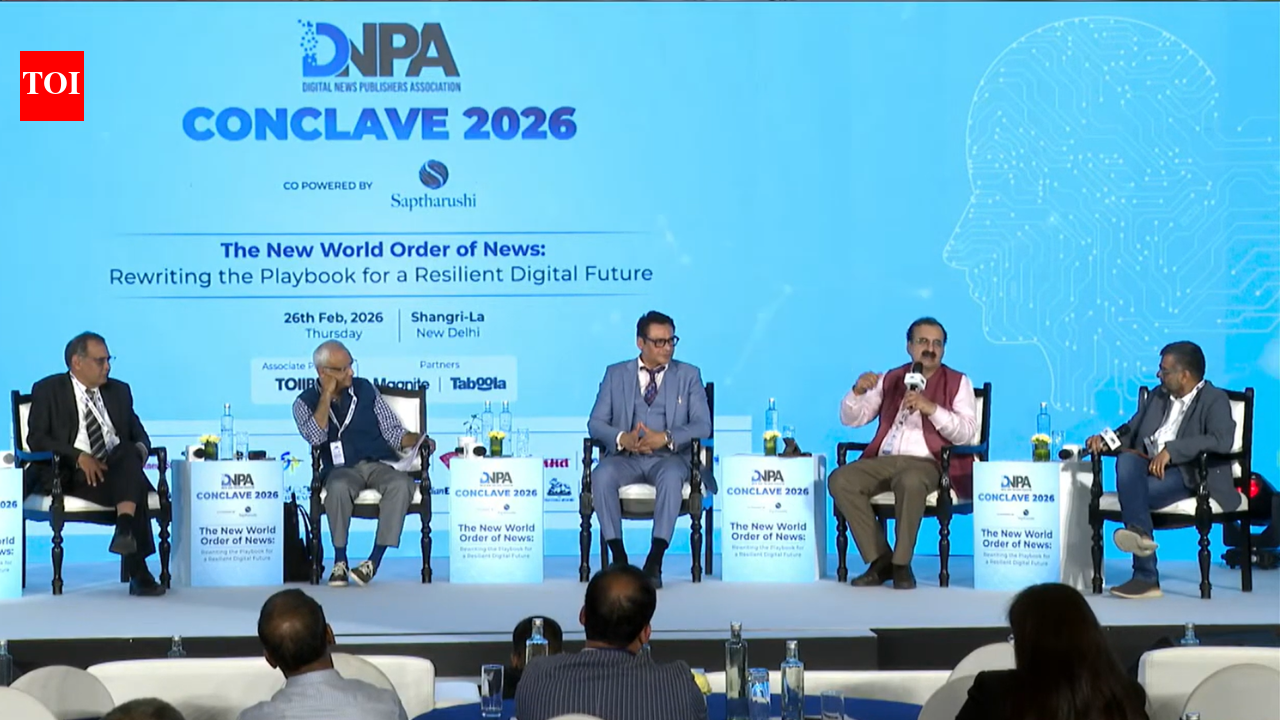
The Digital News Publishers Association (DNPA) Conclave 2026 took place in New Delhi on Thursday, bringing together India’s foremost digital media leaders. The event focused on the dynamic evolution of news, governance, and digital innovation, centered around the theme: “The New World Order of News: Rewriting the Playbook for a Resilient Digital Future.During the DNPA Conclave 2026, the panel “From Creation to Compensation: Content Economics”, moderated by Prasad Sanyal, Group Business Head at TimesofIndia.com, Indiatimes.com, and Whatshot, delved into the intricacies of content economics. The discussion explored building trust, monetization strategies, and the importance of a digital-first approach in today’s evolving media ecosystem.Speaking at the Conclave, Nandini Bhalla, Editor-in-Chief of The Word Magazine and former editor of Harper’s Bazaar, Cosmopolitan, Brides Today, and Grazia, highlighted the enduring value of print principles in digital journalism: “The Word is digital with a heart of print. All those values that print stands for—trust, research, journalism—we bring them into the digital world where our audience sits. Digital is where all of the action is, but content will always be king, whether it’s on paper or on your phones.Malini Agarwal, Founder of MissMalini and Co-founder of IF, emphasized the role of authenticity and reliability in digital content: “Anyone can create content. But who do you trust? Whose content do you trust is where the real value lies. Print still has that strength of authenticity, and digital has the pace. The ones that survive will be truthful.”Dhruv Chitgopekar, Co-founder & Partner, Collective Artists Network, added, “Trust is no longer a nice-to-have. Consistency, authenticity, and depth in your content are critical. Digital magnifies the need to be yourself, to be credible, and to invest in your subject expertise.”DNPA Conclave 2026 served as a key platform where policymakers, media leaders, and industry experts came together to discuss the evolving world of news, governance, and digital innovation. Through curated panel discussions and expert-led sessions, the conclave will highlight emerging trends, shared challenges, and the future roadmap for India’s digital media landscape. As the Indian digital news ecosystem faces unprecedented disruption, the conclave underscored that the future of content is defined not just by speed, but by credibility, innovation, and strategic value.The DNPA is a premier Indian industry body representing leading digital media organisations across the country. It is committed to strengthening credible journalism, upholding ethical standards, and enabling sustainable growth in the digital news ecosystem.


Source link

Dnpa Conclave 2026: DNPA Conclave 2026: Sudhir Chaudhary calls for rewriting the news playbook with purpose and clarity | India News


DNPA Conclave 2026: Sudhir Chaudhary calls for rewriting the news playbook with purpose and clarity

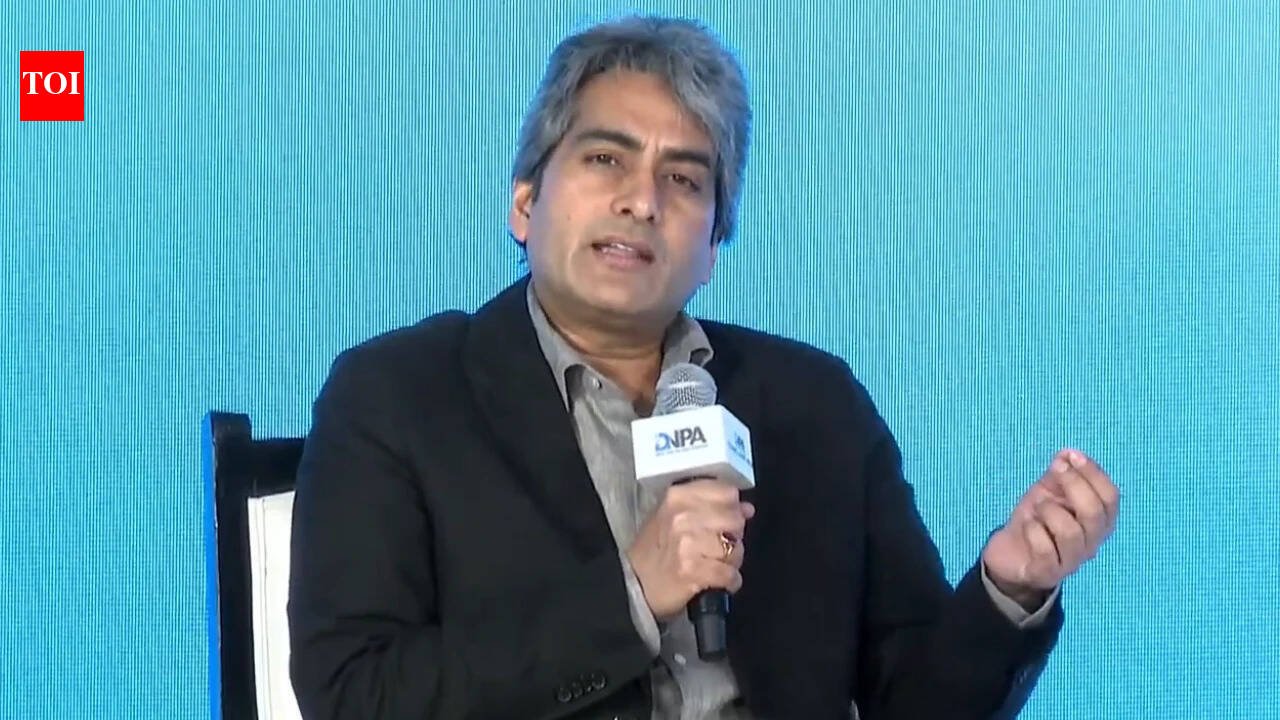
NEW DELHI: Veteran journalist and news anchor Sudhir Chaudhary on Thursday shared his reflections on the evolution of television journalism and the fast-changing landscape of digital news during a session at the Fourth Annual Storyboard18 Digital News Publishers Association (DNPA) Conclave 2026 in New Delhi.In an engaging conversation moderated by RJ Raunac — the artist, entertainer, and entrepreneur popularly known as “Bauaa” — the discussion, themed “The new world order of news: rewriting the playbook for a resilient digital future”, explored how technology continues to redefine storytelling, credibility, and audience engagement in modern newsrooms.Responding to a question about the dramatic shift from the early days of television to the rise of the digital and AI-driven era, Chaudhary traced his journey from the mid-1990s, when India’s TV news industry was just taking root.“When I began my career in 1994–95, television was just taking off in India. There was only one news bulletin a day, aired around 9 or 10 pm. People would wait eagerly for that slot, believing it marked the dawn of a new era in broadcasting. It was truly just the beginning,” he said, recalling how the medium evolved from a single nightly bulletin to over 400 channels running 24 hours across the country today.Sharing anecdotes from his early reportage, Chaudhary highlighted the challenges of telling stories when technology was limited. He recounted how, during the Kargil War in 1999, which he called India’s first “televised war,” sending footage from the conflict zone to Delhi took up to two days, often leaving reporters anxious and helpless.Sharing another memory from the 2002 Parliament attack, he said, “I had the best visuals, best footage of the incident, but there was no medium to send it from the Parliament to my office in Noida. Though OB vans were a thing, we did not have OB vans available that day.”Reflecting on how far the industry has come, he observed that despite the tools changing—from broadcast to social media, and now AI—certain core principles have remained constant.“People say TV is dying now since it’s being taken over by social media, which is also being challenged by AI. But I feel certain things have not changed,” he said.Emphasising the enduring essence of journalism, Chaudhary noted, “Storytelling, clarity, and responsibility — these things have never changed. Technology can create content for you, but the emotion and intent behind the content will always be driven by you.”The DNPA Conclave 2026 brought together policymakers, editors, technologists, and industry leaders to deliberate on the future of news in an AI-led world. The day’s sessions examined how innovation, regulation, and ethics can coexist to shape a trustworthy and sustainable digital media environment for the next decade.


Source link

Isha doing ‘pious work’: SC urges mediation to settle row over gas crematoriums | India News


Isha doing 'pious work': SC urges mediation to settle row over gas crematoriums

The Supreme Court on Thursday heard a Special Leave Petition (SLP) filed by an individual challenging the modern gas crematorium established at the Isha Yoga Center in Coimbatore, in a matter earlier dismissed by the Madras High Court.During the hearing, the Chief Justice of India described Isha’s service as “pious work” and suggested that an arrangement regarding alternate land to the petitioner could be mediated between the parties. The Supreme Court noted that the petitioner had already sold part of his land to Isha Foundation but contended that the sale was not intended for constructing a crematorium. The bench advised both sides to hold discussions and explore an amicable settlement regarding the adjoining land, and both parties agreed to resolve the matter through negotiations. During the hearing, Advocate Prashant Bhushan, representing the petitioner, argued that the crematorium was causing a nuisance, with bodies being cremated daily over the past couple of weeks, and violated local rules prohibiting crematoriums or burial grounds near a dwelling or water body without a Gram Panchayat license. He also highlighted that the petitioner’s house is in a tribal area where burial, rather than cremation, is the customary practice, and that the bodies brought to the crematorium were from Coimbatore city, around 30 km away.The apex court appointed retired Madras High Court judge Rajendran as mediator for this purpose.The Madras High Court had earlier dismissed the case, observing that “the petitioner has no legal grounds. The gasifier crematorium has been built with proper panchayat permission and within the rules. Furthermore, the construction of a crematorium, especially a gas crematorium, serves the society; it cannot be called against public interest.”The foundation stated that residents from over five village panchayats surrounding the Isha Yoga Center had requested authorities to establish a crematorium in the area. It said the Isha Foundation subsequently set up the modern gasifier crematorium after securing panchayat approval and necessary clearances from the concerned government departments, including the Tamil Nadu Pollution Control Board.Isha Foundation said that it has been operating and maintaining crematoriums across Tamil Nadu since 2010 with the objective of providing “Dignity in Death”. It currently maintains 30 crematoriums in areas including Chennai’s Besant Nagar, Coimbatore, Neyveli, Vellore and Thanjavur.


Source link

‘Priyanka wasn’t talking to me’: Rahul Gandhi on how Wayanad helped end sibling tiff – watch | India News


'Priyanka wasn't talking to me': Rahul Gandhi on how Wayanad helped end sibling tiff - watch

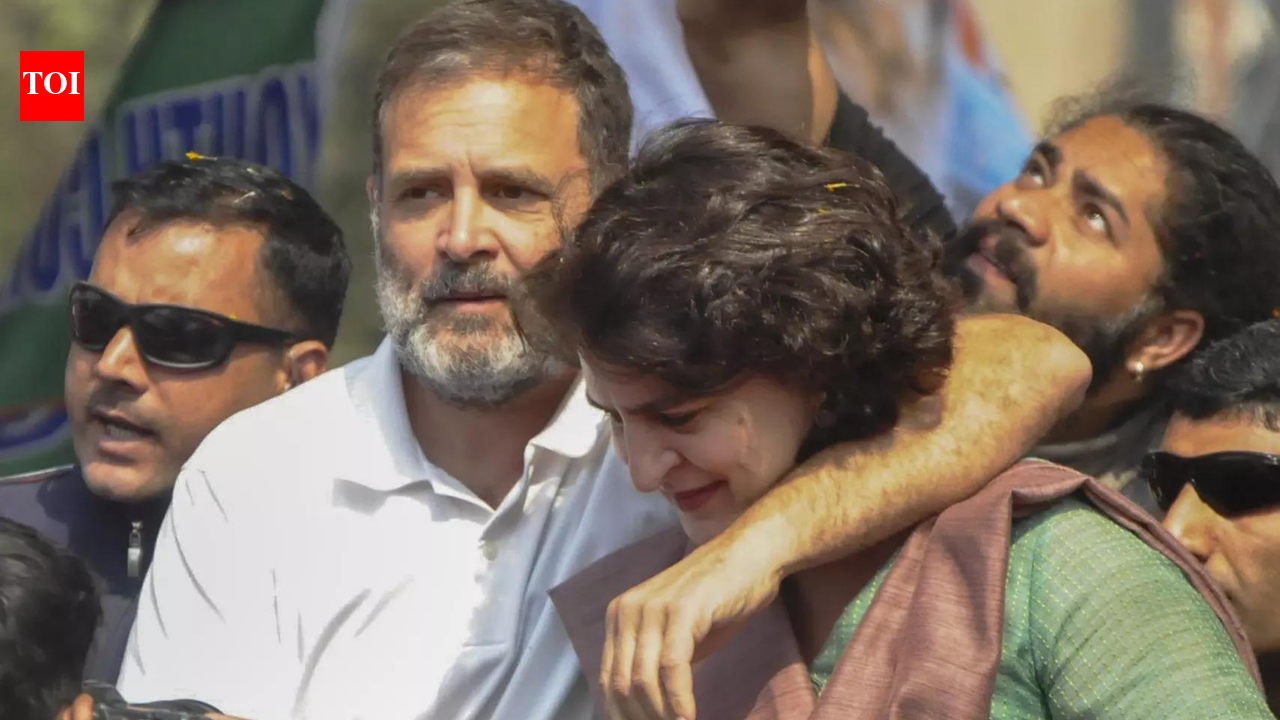
NEW DELHI Congress leader Rahul Gandhi on Thursday shared a light-hearted anecdote about his sister Priyanka Gandhi Vadra, crediting Wayanad with resolving a sibling standoff faster than any peace negotiation.Rahul Gandhi, who was speaking at the foundation stone-laying ceremony for houses being built by the party for victims of the 2024 Wayanad landslide, reflected on his 22 years in politics, arguing that politicians should be more open and transparent about themselves.“I have been in politics since 2004, almost 22 years. As you progress, you begin to change the way you think about things. One thing I strongly believe is that politicians should be more open about themselves and more transparent about what is going on,” he said.Calling the people of Wayanad his extended family, Rahul Gandhi let the audience in on a recent domestic deadlock. “My sister wasn’t talking to me yesterday,” he said, adding that the silence was serious enough to warrant a mention to his mother, Sonia Gandhi.“When my mother asked how my sister was, I told her she was upset and not speaking to me,” he said. Rahul then revealed his masterstroke: planning a joint trip to Wayanad. “I told my mother I had trapped her. Once she came to Wayanad, she couldn’t continue not talking to me.”The plan, he admitted, didn’t work immediately. Priyanka remained unimpressed on the flight. “But the moment we reached Wayanad, she started talking to me again. That is the magic of Wayanad,” Rahul added.Rahul Gandhi, who previously represented Wayanad in Lok Sabha, vacated the seat after winning from both the Kerala constituency and Rae Bareily in Uttar Pradesh in the 2024 elections. The constituency is now represented by Priyanka Gandhi Vadra.


Source link