Breaking News
Puducherry assembly election SWOT analysis: NDA vs Congress-DMK in direct clash amid TVK buzz | India News
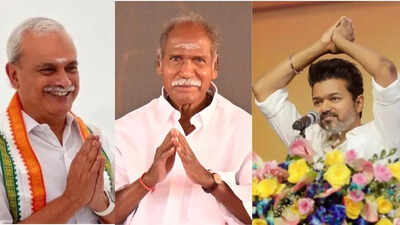

Puducherry assembly election SWOT analysis: NDA vs Congress-DMK in direct clash amid TVK buzz
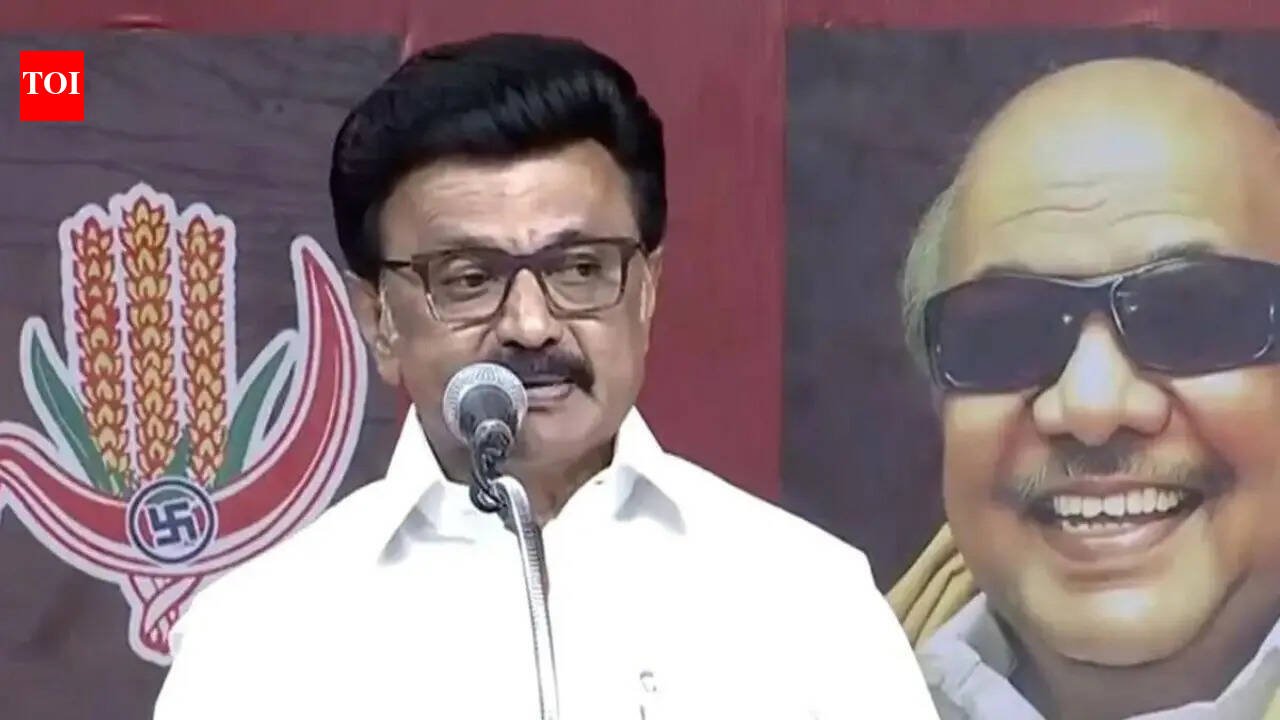
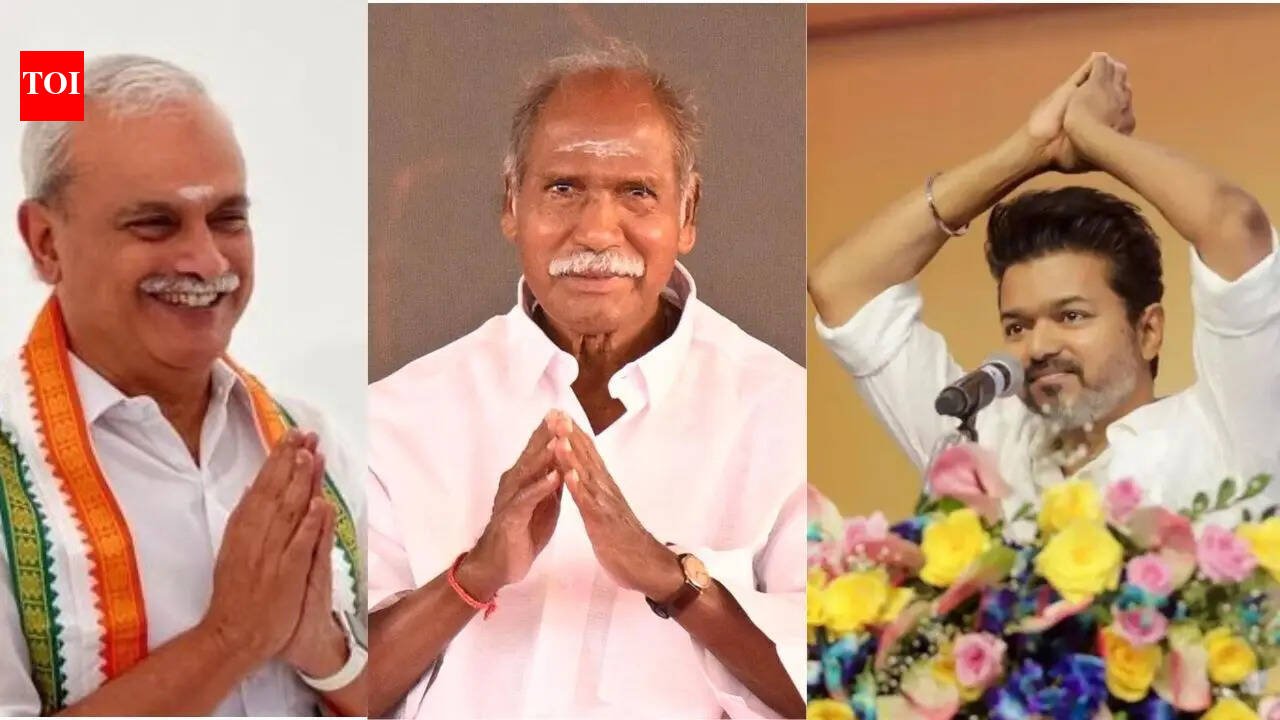
Congress’ V Vaithilingam; CM N Rangasamy; TVK chief Vijay

NEW DELHI: The upcoming Puducherry assembly elections have set the stage for a direct contest between the ruling National Democratic Alliance (NDA) of All India NR Congress (AINRC)–BJP and the Congress–DMK alliance.
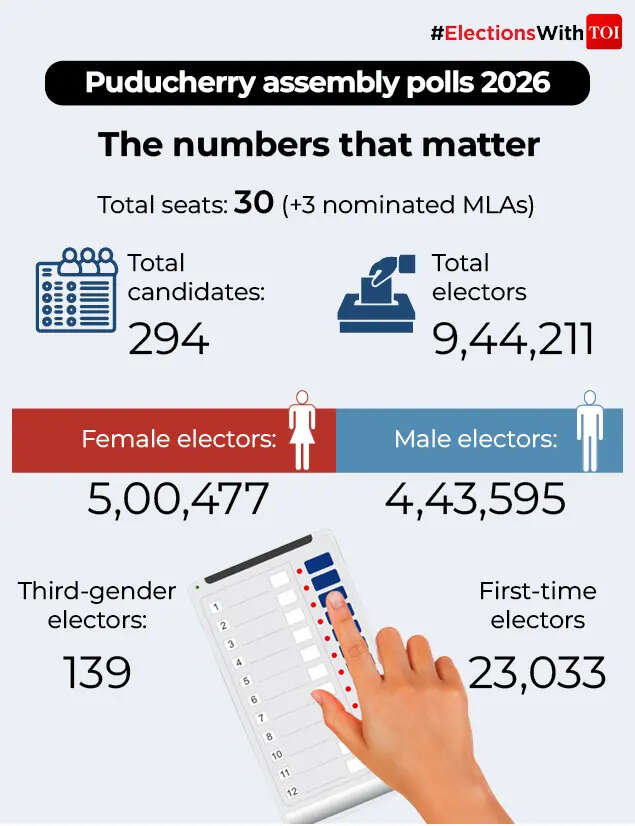
Puducherry assembly polls 2026

Puducherry assembly polls 2026

The NDA, led by chief minister and AINRC founder-president N Rangasamy, is aiming for a second consecutive term. Meanwhile, the Congress and DMK finalised their seat-sharing at the last moment, and will fight to reclaim power in the Union territory.

Watch

Puducherry Elections 2026: TVK To Contest Solo, BJP and AINRC Alliance Finalises Seat-Sharing

Puducherry’s 33-member legislative assembly includes 30 elected seats, while three members are nominated by the Centre. Voting will be held on April 9, followed by counting on May 4, alongside counting in Assam, Kerala, Tamil Nadu and West Bengal, all of which will also vote this month.

A snapshot of past elections

Puducherry has not re-elected a government since the Congress in 2006. In February 2011, Rangasamy, a former Congress member, launched the AINRC, which came to power a few months later. The grand old party reclaimed power in 2016, before the AINRC–BJP combine won the assembly elections in 2021.In the previous polls, the AINRC and BJP—contesting together for only the second time and their first assembly election as allies—ousted the Congress. The alliance won 16 seats, exactly the majority needed to form the government.
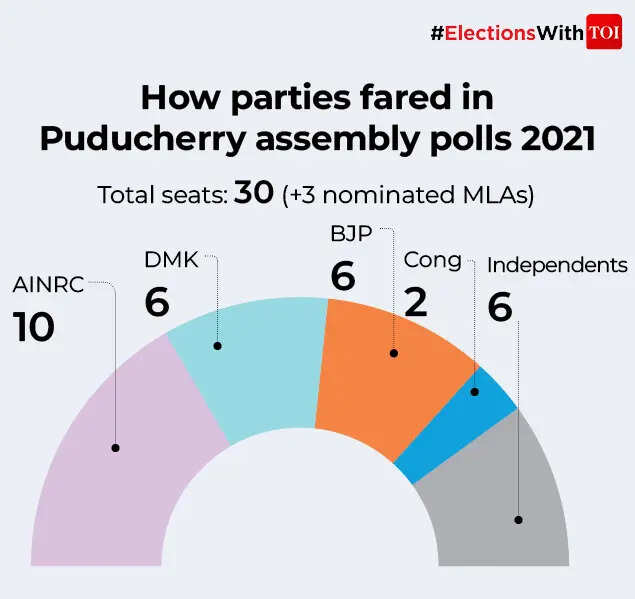
How parties fared in Puducherry assembly polls 2021

How parties fared in Puducherry assembly polls 2021

Five years before that, the Congress had emerged victorious with 15 seats, while the DMK added two more to their joint tally. The AINRC, which had experienced rapid success soon after its formation, was voted out, securing just eight seats.Can AINRC reverse the trend?

High-stake contest

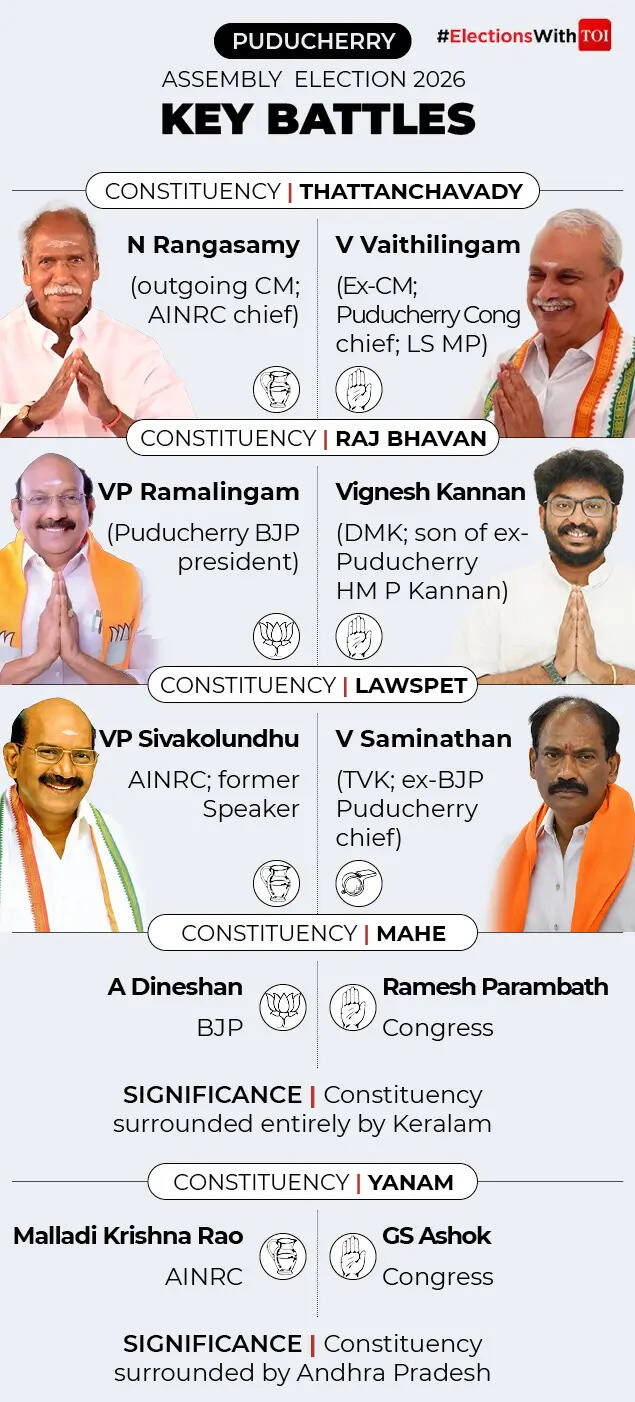
The most high-profile contest of the election is set to unfold in Thattanchavady, featuring two candidates who were once in the same party and have both held the UT’s top executive post. On the final day of nominations, with the Congress and DMK yet to finalise a seat-sharing agreement, V Vaithilingam, Puducherry Congress president and former chief minister, filed his nomination from Thattanchavady, setting up a direct clash against Rangasamy, the outgoing CM.
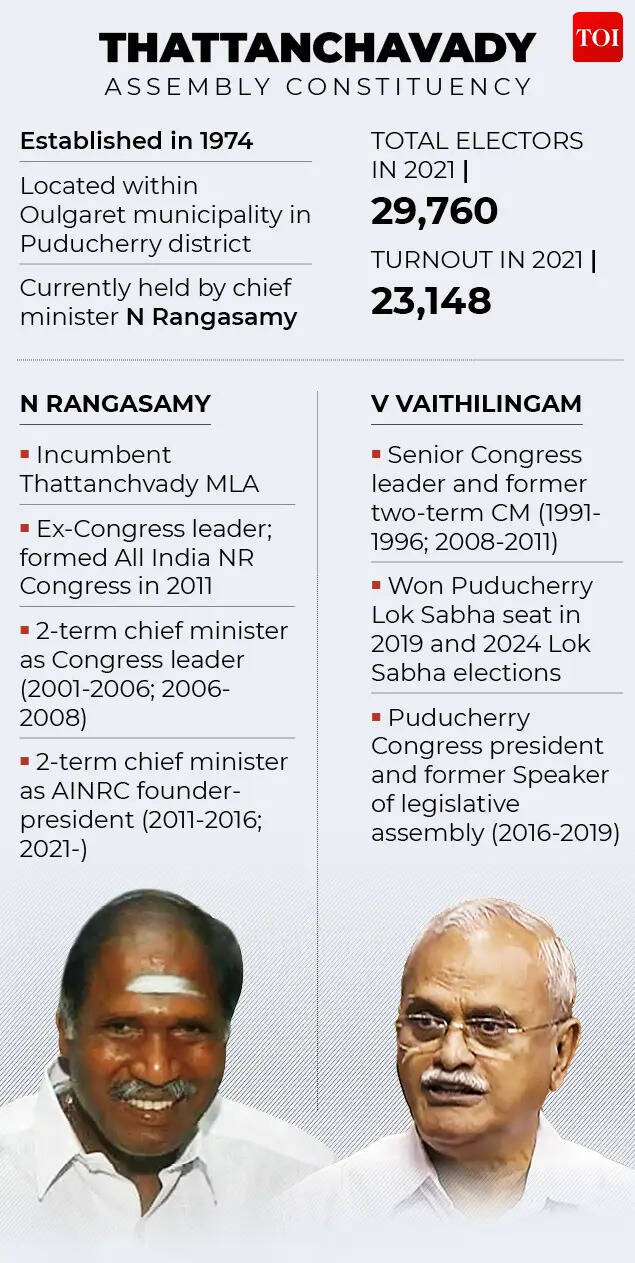
Thattanchavady constituency

Thattanchavady constituency

Since his second term as chief minister ended in 2011, Vaithilingam has represented the UT’s only Lok Sabha seat—also called Puducherry—which he won in both the 2019 and 2024 general elections. Meanwhile, Rangasamy has held the chief ministerial post four times, twice each with the Congress and later with the AINRC.Thattanchavady could, therefore, once again decide Puducherry’s next chief minister.

Major poll battles

While the Rangasamy–Vaithilingam contest will be the most high-profile battle, several other constituencies are also set to witness intense fights. For the Raj Bhavan segment, the NDA has nominated VP Ramalingam, the Puducherry BJP chief. The SPA nominee is Vignesh Kannan, who recently joined the DMK and is the son of the late P Kannan, an ex-Puducherry minister and a former parliamentarian.
Key battles

Key battles

In Lawspet, AINRC’s VP Sivakolundhu, who served as assembly speaker while in the Congress, faces a strong challenge from V Saminathan of actor-politician Vijay’s two-year-old Tamilaga Vettri Kazhagam (TVK). Saminathan, a former Puducherry BJP president, holds the distinction of being the longest-serving leader in that position, making this race a high-stakes contest.In Mahe and Yanam, which fall in Kerala and Andhra Pradesh respectively, the NDA candidates are A Dineshan (BJP) and Malladi Krishna Rao (AINRC). The opposition candidates are Ramesh Parambath (Congress) and GS Ashok (Congress).
Puducherry dynasty candidates

Puducherry dynasty candidates

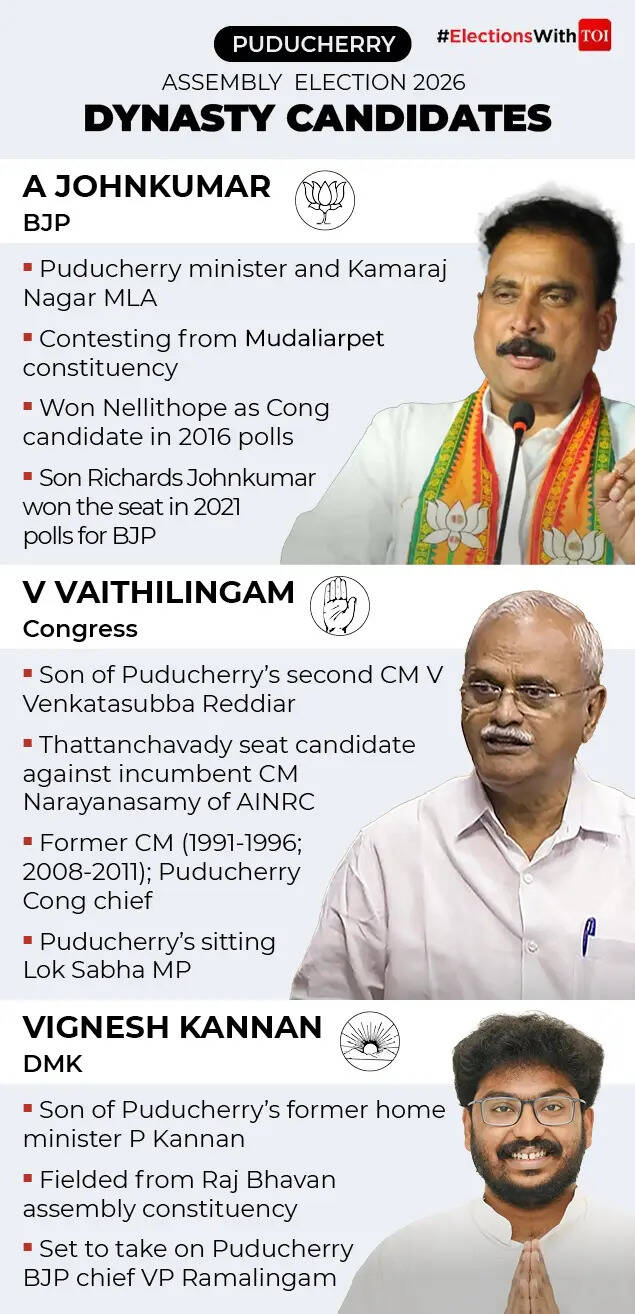
Other major candidates include home minister and BJP leader A Namassivayam (Mannadipet), minority affairs minister and BJP leader A Johnkumar (Mudaliarpet), and AINRC’s Nedungadu nominee Chandira Priyanga, a former minister who resigned in October 2023 as the lone woman in the cabinet.From the Congress-DMK alliance, DMK’s R Siva, leader of the opposition in the outgoing assembly, will contest from Villianur. DMK leader and ex-minister AMH Nazeem will contest the Karaikal South seat.

Key issues dominating the election campaign

Statehood: Ahead of the electoral battle, the long-pending demand for statehood for Puducherry has emerged as the biggest issue and could play a decisive role in the outcome. As the ruling party and an ally of the BJP, which leads the Union government, the AINRC stands to lose the most if the opposition is able to bring this issue to the forefront effectively.Puducherry’s Union territory status means that most administrative matters are decided by the lieutenant governor—the UT’s constitutional head appointed by the President on the Centre’s recommendation—rather than the chief minister. For instance, the police department reports to the Union home ministry, unlike in a full-fledged state, where it functions under the elected political administration. Successive governments in Puducherry have cited this lack of full-fledged powers as a hindrance to effective governance.‘Excessive’ focus on Puducherry district: The district, which shares its name with the Union territory and is home to its capital city of the same name, also accounts for a lion’s share of the assembly seats. Out of the 30 assembly constituencies, 23 are located here, giving it an overwhelming influence in determining the outcome of the elections. This concentration of seats means that political campaigns, party strategies, and voter attention are heavily focused on the Puducherry district, often overshadowing Karaikal, Mahe, and Yanam. Additionally, Mahe and Yanam are surrounded by two different states (Kerala and Andhra Pradesh, respectively), which shape their political and administrative dynamics differently.
Candidates with criminal cases

Candidates with criminal cases

Water contamination: In September 2025, the Puducherry city faced a public health concern due to contaminated drinking water in some areas, with many residents reportedly falling ill with symptoms like diarrhoea and vomiting after consuming unsafe water. The contamination was believed to be caused by poor sanitation and possible mixing of sewage with the water supply. The incident led to protests and raised concerns about the need for better water quality management and improved public health measures.Unemployment: Despite its small size and relatively low population, the UT has recorded a high unemployment rate. In June 2021, just a month into the AINRC–BJP government’s first term, the unemployment rate stood at a national high of 47.1%, according to a Centre for Monitoring Indian Economy (CMIE) study, compared to a national average of 9.2%.This was significantly lower than the figures recorded in April 2020, when the unemployment rate had peaked at 75.8% against a national average of 23.5%, largely due to the lockdown imposed to curb the spread of Covid-19.

SWOT analysis

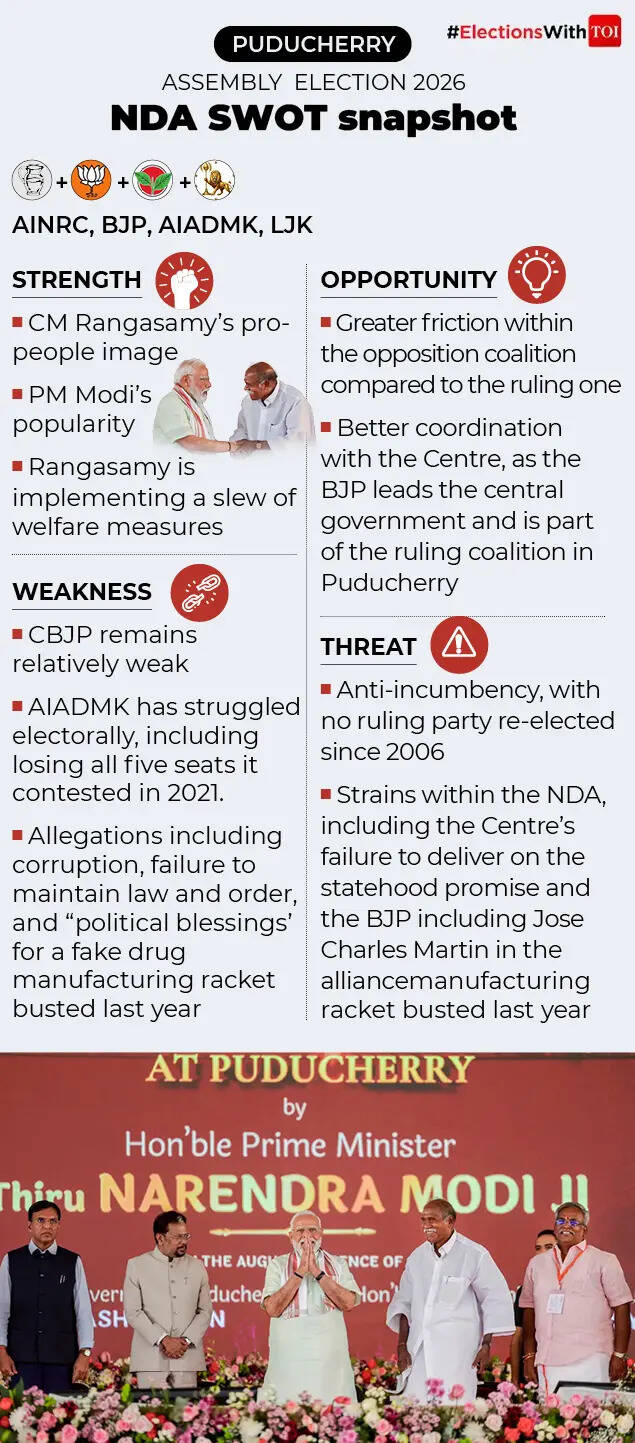
NDA: The alliance has retained its previous formula, under which AINRC will contest 16 seats and BJP 14. From its quota, the BJP has allocated two seats each to allies like the AIADMK and the newly formed Latchiya Jananayaga Katchi (LJK), led by businessman Jose Charles Martin, son of “lottery king” Santiago Martin.Strength

  • CM Rangasamy’s pro-people image
  • The UT government’s popularity
  • Rangasamy is implementing a slew of welfare measures

Weakness

  • BJP remains relatively weak in Puducherry
  • AIADMK has struggled electorally, including losing all five seats it contested in 2021.
  • Allegations including corruption, failure to maintain law and order, and “political blessings’ for a fake drug manufacturing racket busted last year

Opportunity

  • Greater friction within the opposition coalition compared to the ruling one
  • Better coordination with the Centre, as the BJP leads the central government and is part of the ruling coalition in Puducherry

Threat

  • Anti-incumbency, with no ruling party re-elected since 2006
  • Strains within the NDA, including the Centre’s failure to deliver on the statehood promise and the BJP, including Jose Charles Martin in the alliance
NDA SWOT

NDA SWOT

Congress-DMK: The Congress–DMK alliance is the more traditional of the two major coalitions, having contested assembly elections here since 2006.Last time, the DMK won six constituencies compared to the Congress’ two, emerging as the second-largest party and holding the leader of the opposition post.The Congress will field 16 candidates, with the remaining seats allotted to the DMK. The MK Stalin-led party had initially announced one seat from its quota for the Viduthalai Chiruthaigal Katchi (VCK). However, the VCK chose to contest independently and field its own candidates in three constituencies.Strength

  • As the two most successful parties, both – especially the Congress – continue to have a widespread organisational presence

Weakness

  • Congress’ inability to convert issues into votes
  • Congress-DMK sea-sharing friction almost derailed the alliance

Opportunity

  • The previous AINRC (2011–2016) and Congress (2016–2021) administrations both lost power after just one term

Threat

  • Congress’ broader national decline
  • Despite potential anti-incumbency, AINRC-BJP combine appears better positioned to retain power
  • The last-day seat-sharing announcement could lead to friendly contests
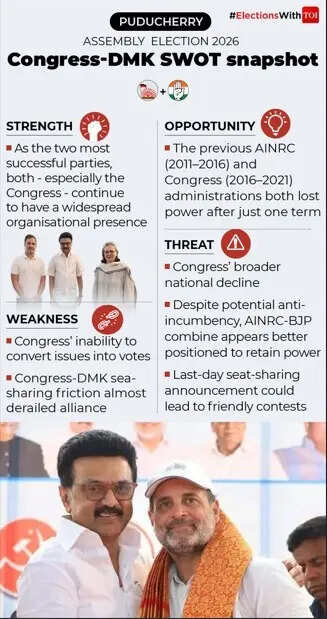
Congress-DMK SWOT

Congress-DMK SWOT

Wildcard factor

As in neighbouring Tamil Nadu, the biggest wildcard factor in Puducherry is “Thalapathy” Vijay. His TVK initially announced candidates for all 30 constituencies before joining hands with independent legislator G Nehru’s newly formed Neyam Makkal Kazhagam (NMK).Under this arrangement, the TVK withdrew its nominees from the Orleanpet and Thattanchavady seats for the NMK. Nehru himself will contest from Orleanpet, while NMK general secretary E Vinayagam will stand from Thattanchavady.Like in Tamil Nadu, the TVK’s biggest strength is Vijay’s massive popularity; his Puducherry rally in December last year drew thousands. Yet, converting his fan base into votes will be the party’s biggest challenge. Additionally, as a newly formed party—it was launched in February 2024—the TVK lacks both a strong grassroots organisation and governance experience compared to more established parties.Yet, TVK could attract voters seeking alternatives beyond the two major alliances. This could end up benefiting one of the two while hurting the other, and at the same time help establish TVK as a rising political force.Unsurprisingly, Vijay was reportedly courted by the AIADMK, BJP, and Congress in Tamil Nadu, but he declined overtures from all three.Strength

  • Built-in fan base driven by Vijay’s strong popularity

Weakness

  • Political debutant; therefore lacks political and policy experience
  • Lack of a grassroots organisational network
  • No prominent face beyond Vijay

Opportunity

  • Positioning as a fresh alternative to the dominant coalitions
  • Attracting voters seeking change

Threat

  • Potential difficulty in converting fan support into actual votes
  • Reputation impact following the Karur stampede
  • Potential disruptions due to frequent travel to Delhi for CBI questioning
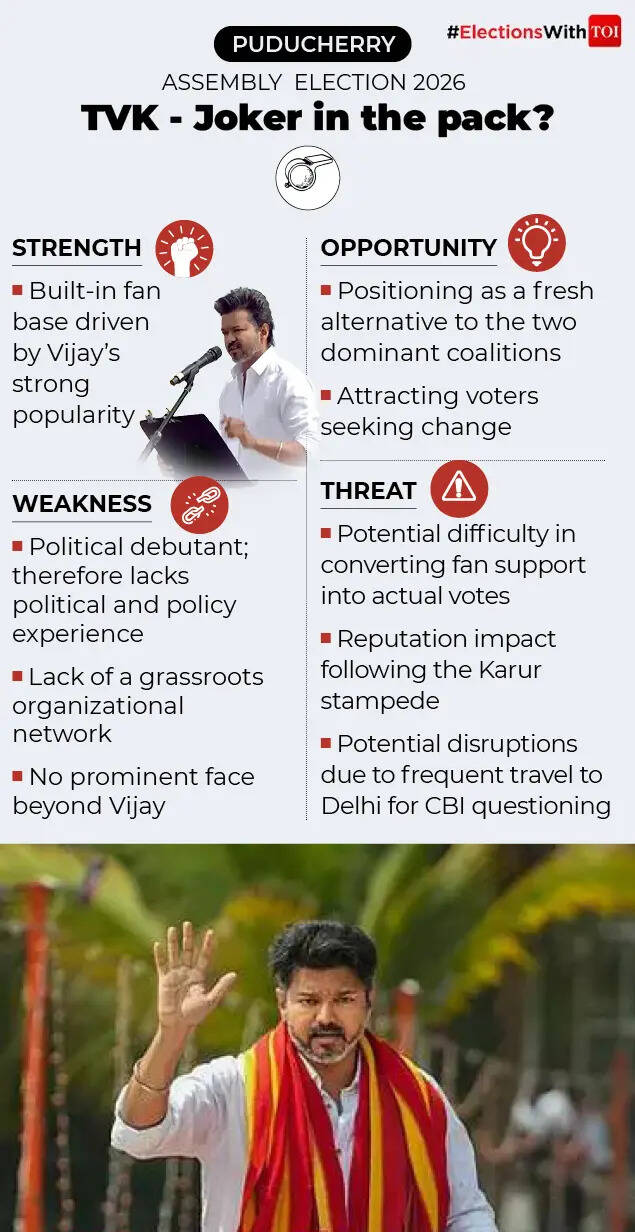
TVK SWOT

TVK SWOT

Stage set for poll battle

As the elections approach, several political heavyweights—including Prime Minister Narendra Modi, Union home minister Amit Shah, and Congress MP and Lok Sabha leader of opposition Rahul Gandhi—are expected to visit Puducherry regularly to campaign for their respective parties..Still, attention is not on Puducherry as it is a Union territory and small in size. However, it has its own politics and stands out for its French colonial past and the fact that its four districts are spread across three different states, with two of the states—Tamil Nadu and Kerala —voting in the current round, giving the UT a unique political significance.With the key players and alliances in place, the stage is now set for a potentially close poll battle.
Source link

Pushed out by Jyoti Basu, eclipsed by Mamata, crushed by BJP: Congress’ 50-year exile in West Bengal | India News


Pushed out by Jyoti Basu, eclipsed by Mamata, crushed by BJP: Congress' 50-year exile in West Bengal
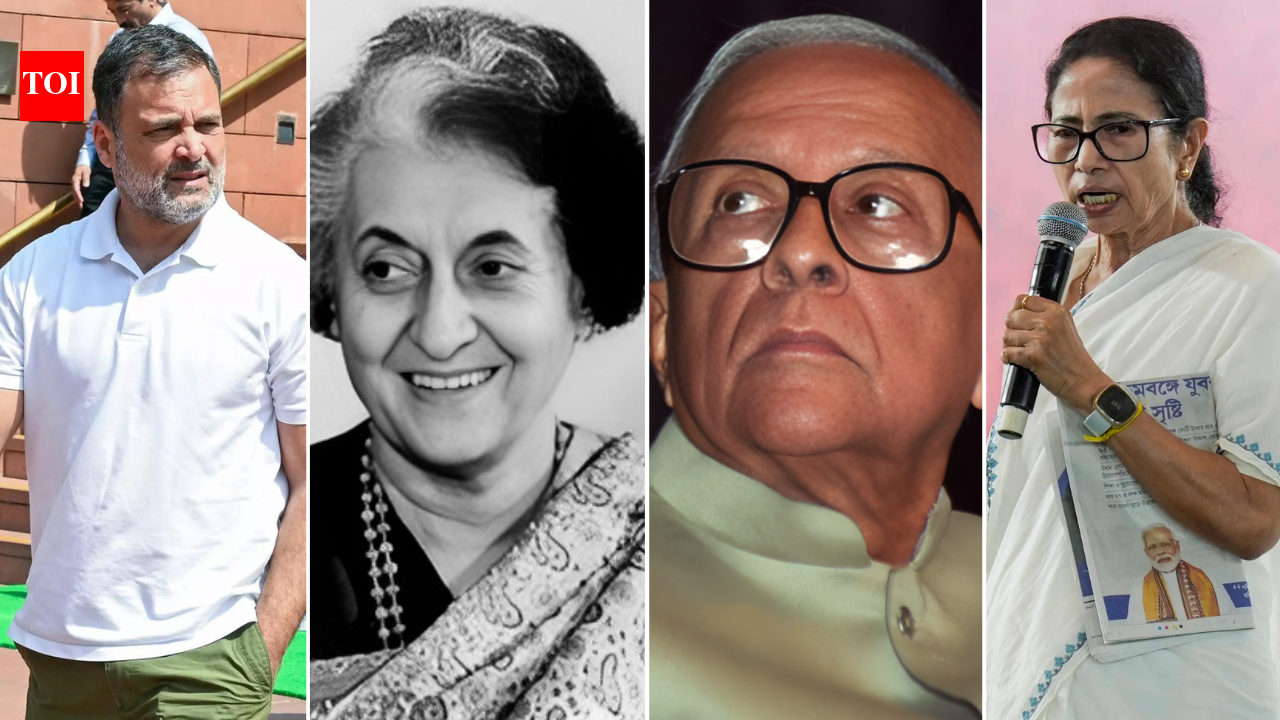
Rahul Gandhi, Indira Gandhi, Jyoti Basu, Mamata Banerjee (File photo)

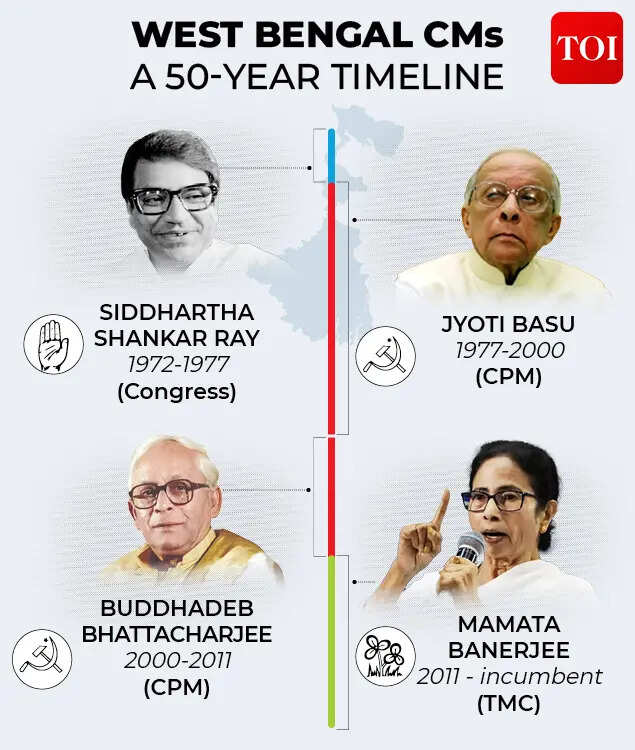
NEW DELHI: Nearly 50 years have passed since the Congress party’s Indira Gandhi era, when stalwart Siddhartha Shankar Ray helmed West Bengal as chief minister. His tenure ended in 1977, giving way to a sweeping communist surge led by veteran Marxist Jyoti Basu, who would become the state’s longest-serving chief minister.The decades of Left dominance systematically eroded the Congress’s influence. The party of the iconic Bidhan Chandra Roy was pushed so far to the margins that it now struggles to project itself even as a credible third force.

Watch

Mamata Writes to EC Over Alleged BJP Voter Hijacking, Demands Protection of Electoral Rolls

The Left’s long hegemony was eventually shattered by Mamata Banerjee. Her political ascent relegated the communist brigade to the sidelines, but in the most recent elections, it was the Bharatiya Janata Party (BJP) that emerged as the primary challenger to her Trinamool Congress (TMC) in last elections that took place in 2021. Amidst these seismic shifts, the Congress’s footprint remains a shadow of its former self as the next assembly polls approach.The decline is stark when compared to 1972, when the Congress secured a landslide victory with over 200 seats and nearly half the total vote share. However, following the rise of the CPM-led Left Front under Jyoti Basu, the party began a long retreat from the center of power.

-

In the 1977 elections, the grand old party suffered a crushing defeat, eclipsed by the CPM wave. This collapse was fuelled in part by the backlash against Indira Gandhi’s Emergency, which also led to the Congress’s first-ever defeat in Centre, losing general election that same year. By 1977, the party had lost more than half the vote share it held in 1972. It never returned to a commanding position.While Congress remained a relevant opposition force for years, the turn of the millennium saw its political space seized by Mamata Banerjee. Having broken away to form the Trinamool Congress in 1998 under the “Jora Ghas Phul” symbol, Banerjee achieved power within 15 years, filling the vacuum left by the declining Left and a stagnating Congress.In many ways, the TMC managed to ascend to the top while more than a century older Congress languished. Even as national leadership transitioned from Indira to Rahul Gandhi, West Bengal’s electorate showed little interest in returning to the Congress fold.

Poll

Do you believe Congress can regain its relevance in West Bengal politics?

The 2021 elections marked a final turning point. The BJP surged to 77 seats, becoming the principal opposition. While the BJP could not unseat Mamata Banerjee, its rise dealt a devastating blow to the Congress, which failed to win a single seat, cementing its position as a distant third.Now, facing an uphill battle for relevance, the Congress is preparing to fight back. As the state gears up for elections across 294 seats, the party hopes to transition from a faded memory to a renewed political force in a state where the results will define the next chapter of Bengal.


Source link

Electricity Amendment Bill 2025: Why farmers, workers and states are pushing back | India News


Electricity Amendment Bill 2025: Why farmers, workers and states are pushing back

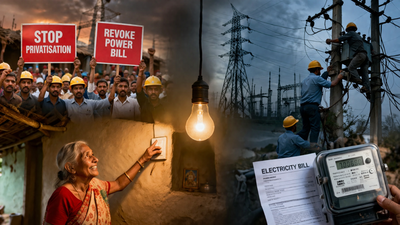
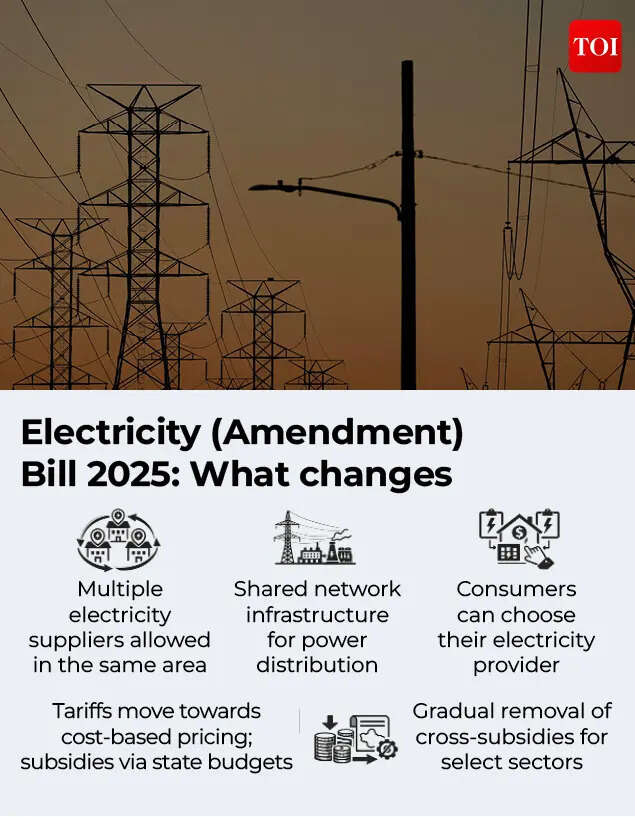
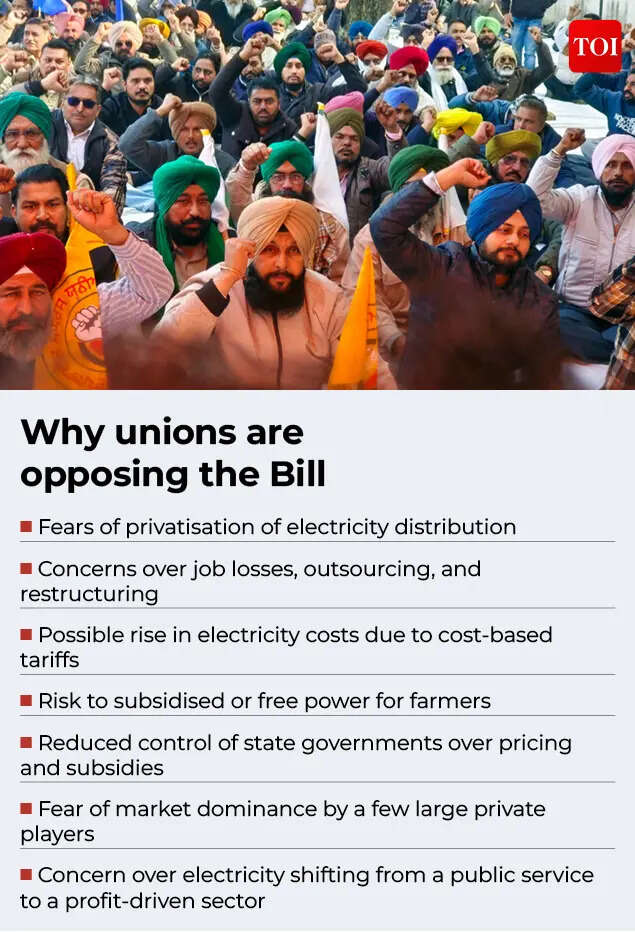
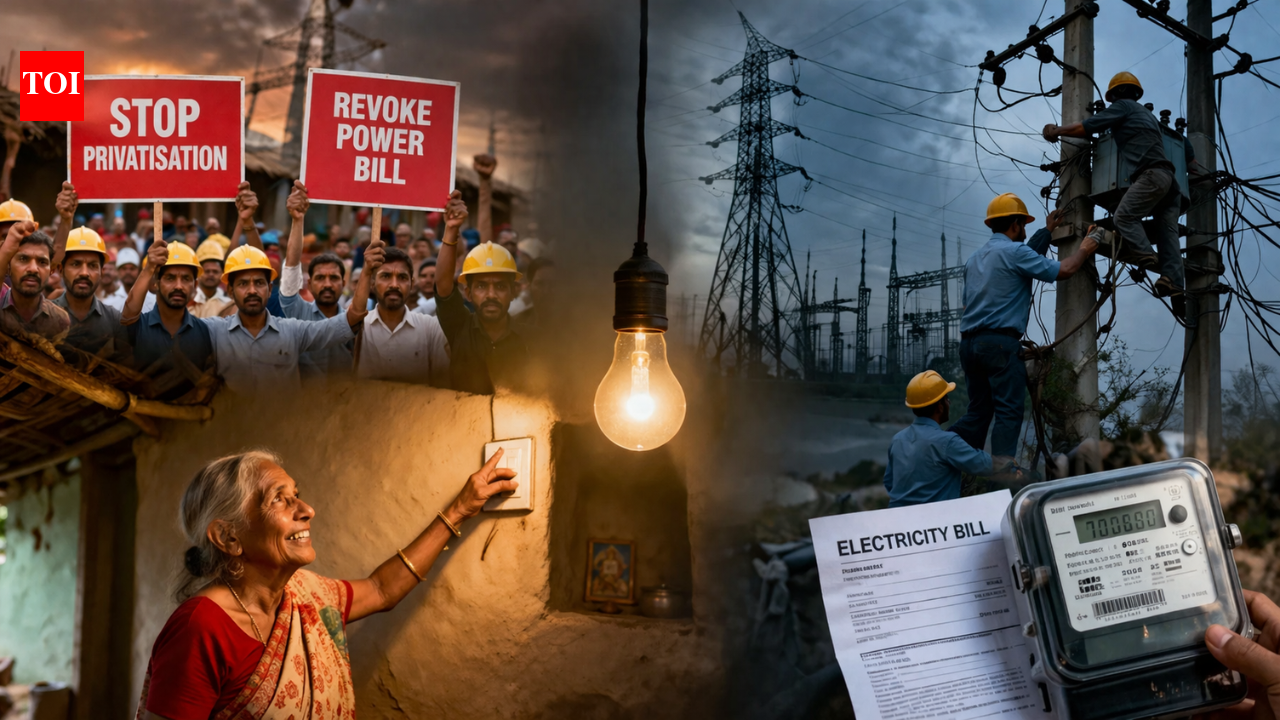
Nearly 27 lakh workers are gearing up for a nationwide strike—triggered by a single move: the introduction of the Electricity (Amendment) Bill, 2025 in Parliament. These aren’t just any workers, but the people who keep the country’s power running—engineers, linemen, and staff across the electricity system. Centre is yet to table the Bill in the Parliament.A glimpse of this unrest was already visible earlier this month, when employees from several state electricity boards walked off the job in protest.Opposition isn’t limited to the workforce. Farmer unions have also raised concerns, signalling that resistance to the Bill cuts across sectors. The government, however, has framed the Draft Electricity (Amendment) Bill, 2025 as a long-overdue reform—one that aims to make the power sector more competitive, efficient, and better equipped for future demand. At its core is a key shift: allowing multiple electricity distribution companies to operate in the same area, using shared infrastructure, while maintaining an obligation to supply power to all consumers.But it’s not quite as simple as one switch, one bulb, and a wave of happiness. For Kaveri Amma, electricity arrived like a quiet miracle—simple, shared, and powered by a single supplier who lit up the entire village.But if Kaveri Amma were around today, that simplicity wouldn’t hold. The power would still come at the flick of a switch—but behind it wouldn’t be just one Shah Rukh Khan-like figure running the show. It could be multiple companies, sharing the same wires, competing to supply electricity to the same home.That shift is at the heart of the Electricity (Amendment) Bill 2025. “Privatisation!”—that’s the word power sector employees, farmers, and trade unions have been rallying around as they push back against it. The Centre has been trying to rework the electricity law for over a decade, but each attempt has met resistance.The opposition isn’t just about the Bill, it’s also about how it’s being drafted. A working group set up by the power ministry in January 2026 to finalise the Bill has drawn criticism from the All India Power Engineers Federation, which has flagged the inclusion of the All India Discom Association, arguing it points to a tilt towards privatisation and sidelines worker concerns.

-

But privatisation is not the only concern. The Bill could change something far more immediate—who supplies electricity to consumers, and how much they end up paying for it.Here’s the thing, India’s power sector is at an interesting crossroads. Electricity use is climbing steadily–more appliances, more electric vehicles, more data centres quietly running in the background. And the system, for now, is keeping up. In 2025, the country met a record peak demand of over 240 GW, with total installed capacity crossing 5 lakh MW. What’s more striking is the shift in the energy mix—over half of this capacity now comes from non-fossil sources. On paper, it looks like a sector that’s expanding, modernising, and even getting cleaner.But behind this growth story lies a more complicated reality. Getting electricity to your home still depends on a vast and expensive network—generation, transmission, and finally distribution. And it’s this last leg that continues to carry the most stress. State-run distribution companies, or discoms, have historically struggled with mounting losses. In fact, only recently, after years of red ink, did they collectively post a modest profit of about Rs 2,700 crore in 2024–25. To put that in perspective, the sector had reported losses of over Rs 25,000 crore just a year earlier, and nearly Rs 68,000 crore a decade ago. It’s a turnaround, but a fragile one, built on a system that still struggles with underpriced tariffs, delayed subsidies, and persistent inefficiencies.This gap—between a fast-growing power system and financially strained distributors—is what the government is trying to address through the Electricity (Amendment) Bill 2025. The idea itself isn’t new; versions of it have surfaced multiple times over the past few years. But the pitch remains the same: introduce competition, allow multiple companies to supply electricity in the same area, and, give consumers more choice while pushing the system to become more efficient, at least in theory.

Why are farmers against it?

A key focus of the proposed changes is tariff reform and efficiency. The government says the bill will move towards cost-reflective tariffs, while continuing targeted subsidies for vulnerable groups such as farmers and low-income households through state budgets. But farmer unions are not buying this. In India, several states provide free or subsidized electricity to farmers. Entry of private players will eventually make the state-run discoms inefficient, leaving farmers to pay to opt for private suppliers.

-

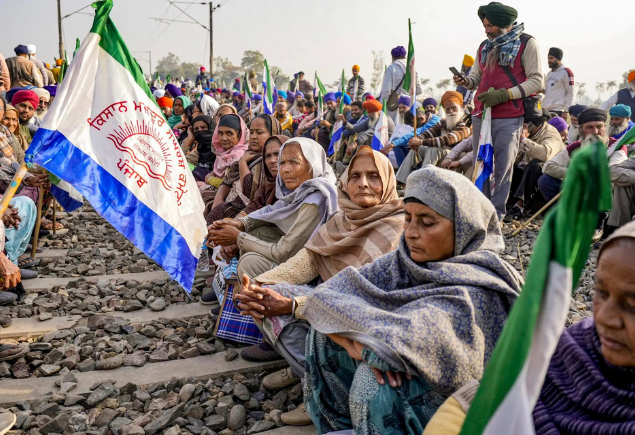
Kisan Mazdoor Morcha’s rail roko protest

Centre vs state question

Another concern runs deeper—who gets to call the shots. Right now, electricity distribution largely sits with the states. Each has its own utility, and with it, a degree of control over tariffs and subsidies—often used as a policy lever, and sometimes as a political promise.The worry is that this balance could shift. If greater control moves toward central regulators or new private players entering the system, states may find themselves with less say over how electricity is priced and who gets subsidised power. And for many, that’s not just an administrative tweak—it’s a loss of a key tool they’ve long relied on.These anxieties aren’t limited to policy alone. They extend to jobs as well. With more private participation, there are concerns about outsourcing, restructuring of state-run utilities, and the possibility of job losses across the sector—especially for the very workforce now leading the protests.“Privatisation and open access will lead to large-scale job losses, contractualisation, and outsourcing. By allowing private licensees in defence zones, the Bill also jeopardises national security in the name of ‘ease of doing business’,” said Centre of Indian Trade Unions (CITU) vice president Tapan Sen.

What about consumers?

Electricity is a politically sensitive subject in India. Elections are fought and won promising free or subsidised electricity in India. Hence, the commodification of the subject has sparked the welfare state debate.CITU said that “the Bill is part of a wider neoliberal strategy to hand over the entire electricity supply chain—from generation to distribution—to private monopolies.” “By promoting speculative power markets, the Bill converts electricity—a basic human necessity—into a tradable commodity. Such deregulation will lead to price volatility, unreliable supply, and the weakening of public control over energy security,” Sen said.The Bill seeks to make the power sector competitive. Competition offers choice to consumers, brings down prices and offers them best services. It clearly states “lack of competition in electricity supply, with consumers tied to a single discom, limiting service quality and innovation.”At least on paper, the promise is straightforward: more competition should mean more choice, better service, and lower prices. That’s the logic driving the Bill. If multiple companies can supply electricity in the same area, they’ll compete to keep consumers happy.But it doesn’t always play out that neatly. In some sectors, competition initially worked, like telecom. More players entered, prices dropped, and services improved. But over time, that same competition thinned out the field. What began as a crowded market eventually narrowed down to a handful of dominant players. Likewise, the effort to privatise Air India was initially welcomed but recent IndiGo crisis exposed perils of duopoly in the system.That possibility exists here too. Even if several electricity distributors enter the same area, the market may not stay crowded forever. It could settle around a few large companies. And when that happens, competition may still push for better service, but it doesn’t necessarily guarantee cheaper power.

-

How successful have privatisation moves been?

If the idea is to bring in private players to fix distribution, India has already tried that—just not at scale. Discoms sit at the very end of the electricity chain, responsible for delivering power to homes and collecting payments. They are, in effect, monopoly retailers in their areas. And yet, despite their central role, most state-run discoms have struggled for years with losses, inefficiencies, and mounting debt. Privatisation has often been pitched as a way out of this cycle.In practice, only a handful of states have gone down that route. Odisha was among the first to try in the late 1990s, but the initial attempt didn’t hold and had to be rolled back. Delhi’s experience, which followed in 2002, is often held up as the benchmark. After unbundling its electricity board and bringing in private operators, the results on the ground were visible—losses in the system dropped sharply. Aggregate Technical and Commercial (AT&C) losses, once as high as 45–60%, fell to under 6.5% over time. That’s a significant improvement, especially when the national average still hovers around 15%.But that’s only one part of the story. As research and analysis by the Centre for Social and Economic Progress points out, while efficiency improved and supply became more reliable, the financial picture remained complicated. Tariffs continued to be tightly regulated, and disagreements between the regulator and the discoms over cost approvals became routine. A large share of expenses claimed by discoms was not always allowed to be recovered through tariffs, leading to the buildup of “regulatory assets”—essentially costs deferred to the future. In Delhi’s case, these have piled up to tens of thousands of crores, with disputes dragging on across tribunals and courts for years.And that’s where the limits of privatisation start to show. Bringing in private operators may fix operational issues—like reducing theft or improving billing—but it doesn’t automatically resolve deeper structural problems. Questions around tariff-setting, cost recovery, and regulatory oversight don’t disappear. In fact, if anything, they become more contested. The result is a system where efficiency gains coexist with financial uncertainty—and where, eventually, the consumer may still have to bear the cost.That’s perhaps why most states haven’t rushed to follow Delhi’s path. Government-run discoms still dominate the landscape, and private participation remains limited. The broader lesson from the past two decades is fairly clear–privatisation can improve how electricity is delivered, but by itself, it doesn’t guarantee a financially stable system. That depends just as much on how the sector is regulated—and how those rules are enforced.


Source link

Olympic academy, Rs 2,000 aid for women, pumpsets for farmers: DMK’s big poll pitch ahead of Tamil Nadu elections | India News


Olympic academy, Rs 2,000 aid for women, pumpsets for farmers: DMK's big poll pitch ahead of Tamil Nadu elections

NEW DELHI: MK Stalin on Wednesday unveiled a series of welfare promises and development plans at a DMK rally in Tiruchirappalli, positioning them as key offerings ahead of the Tamil Nadu Assembly elections.Addressing party workers and voters in central Tamil Nadu, the DMK chief sought support for party candidates while highlighting his government’s track record and outlining fresh commitments if voted back to power.He said Tiruchirappalli would be developed on par with Chennai, signalling a push to decentralise growth beyond the state capital. Stalin also used the platform to contrast Tamil Nadu’s law and order situation with BJP-ruled states, asserting stability under his leadership.The Chief Minister reiterated that his government had fulfilled major assurances, including fare-free bus travel for women, and pointed to welfare measures aimed at education, agriculture, and women’s empowerment as central to the DMK’s electoral pitch.

What CM Stalin promised ahead of polls

  • The Chief Minister’s Breakfast Scheme will be extended to cover students up to Class 8.
  • The sugarcane procurement price will be increased to Rs 4,500 per tonne.
  • Paddy will be procured at Rs 3,500 per quintal if the DMK returns to power.
  • Pumpsets will be provided to 20 lakh farmers to support irrigation needs.
  • Women beneficiaries will receive a monthly assistance of Rs 2,000.
  • College-going students will be given financial aid of Rs 1,500 per month.
  • Women will be provided with coupons worth Rs 8,000 to purchase home appliances of their choice.
  • Around 9 lakh students will continue to receive Rs 1,000 per month for higher education support.
  • Tiruchirappalli will be developed with projects such as a major library, TIDEL Park, and an Olympic Academy.
  • Infrastructure in the region will be expanded with initiatives including mini stadiums, schools, and drinking water projects.

Stalin said his administration had ensured that “TN has no caste riots, communal violence seen in BJP-ruled states, mob violence seen in UP, or continued violence in Manipur,” while urging voters to back the DMK for continuity in governance and welfare delivery.


Source link

PM Modi visits Assam tea garden, plucks leaves, takes selfies with workers, calls it ‘memorable experience’ | India News


PM Modi visits Assam tea garden, plucks leaves, takes selfies with workers, calls it 'memorable experience'
PM Modi at tea garden in Dibrugarh

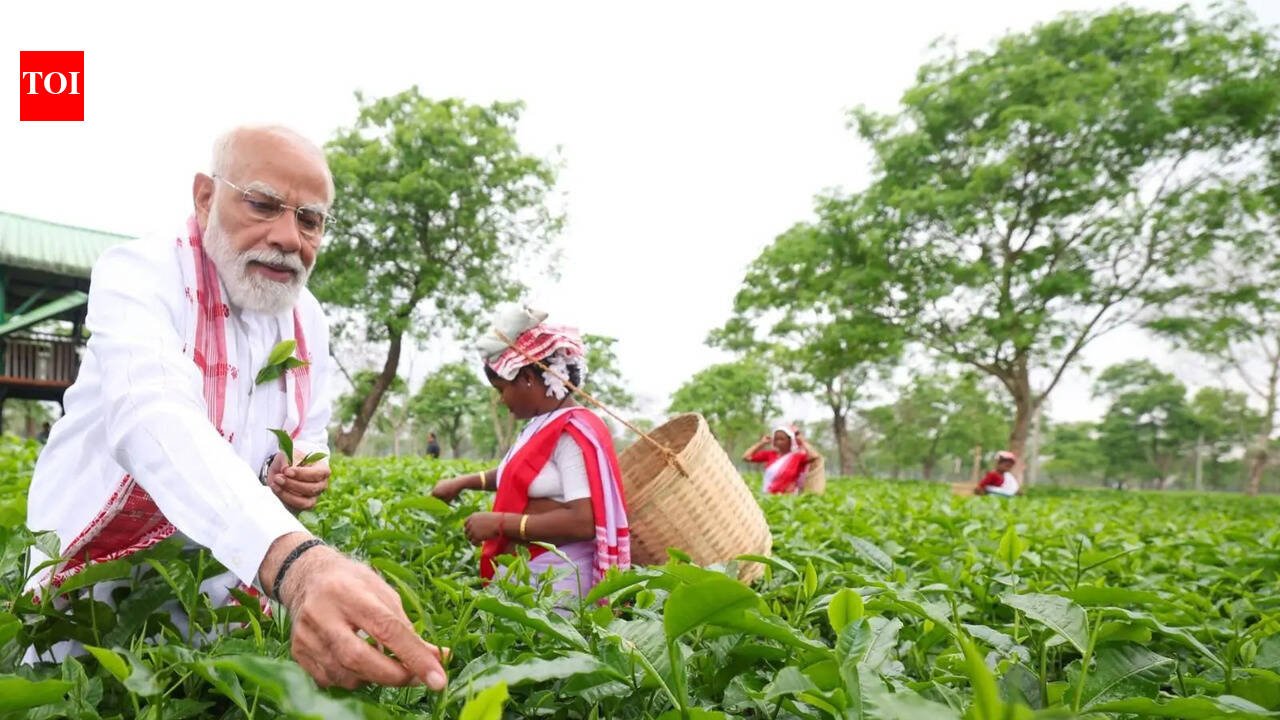
NEW DELHI: Prime Minister Narendra Modi on Wednesday visited a tea garden in Dibrugarh, Assam, ahead of two public rallies in the poll-bound state.He described tea as the “soul of Assam.” “Tea is the soul of Assam! The tea from here has reached across the world. This morning in Dibrugarh, I visited a tea garden and interacted with the women working here. It was a very memorable experience,” PM Modi wrote on X, sharing photos from the visit. He added, “We are very proud of the efforts of every tea garden family. Their hard work and perseverance have enhanced Assam’s pride. Here are some more glimpses from a tea garden in Dibrugarh.”PM Modi also shared a selfie with women working in the tea garden.According to the Assam State Portal, the state produces around 630–700 million kg of tea annually, accounting for over half of India’s total output. PM Modi’s rallies in Assam As per his itinerary, the prime minister will first address a rally at Gogamukh in Dhemaji at 11 am, followed by a second public meeting in Biswanath district around 1 pm. Senior BJP leaders and state ministers are expected to attend both events.

Poll

What really drives your decision when choosing a leader?

At the first rally, the PM will campaign for BJP candidates Ranoj Pegu and Naba Kumar Doley from the Dhemaji and Dhakuakha assembly constituencies. At the second rally in Behali, he will support party candidate and former minister Pallab Lochan Das. All 126 assembly seats in Assam will go to polls on April 9, with vote counting scheduled for May 4, alongside counting in Tamil Nadu, West Bengal, Kerala, and the Union territory of Puducherry, where elections will be held around the same period. The BJP-led NDA has been in power in Assam since 2016, when the party won its first assembly elections in the state


Source link

Delhi CM Dismisses Pink Saheli Card Rumors: AAP’s Discontent Over Women’s Welfare Initiatives | India News


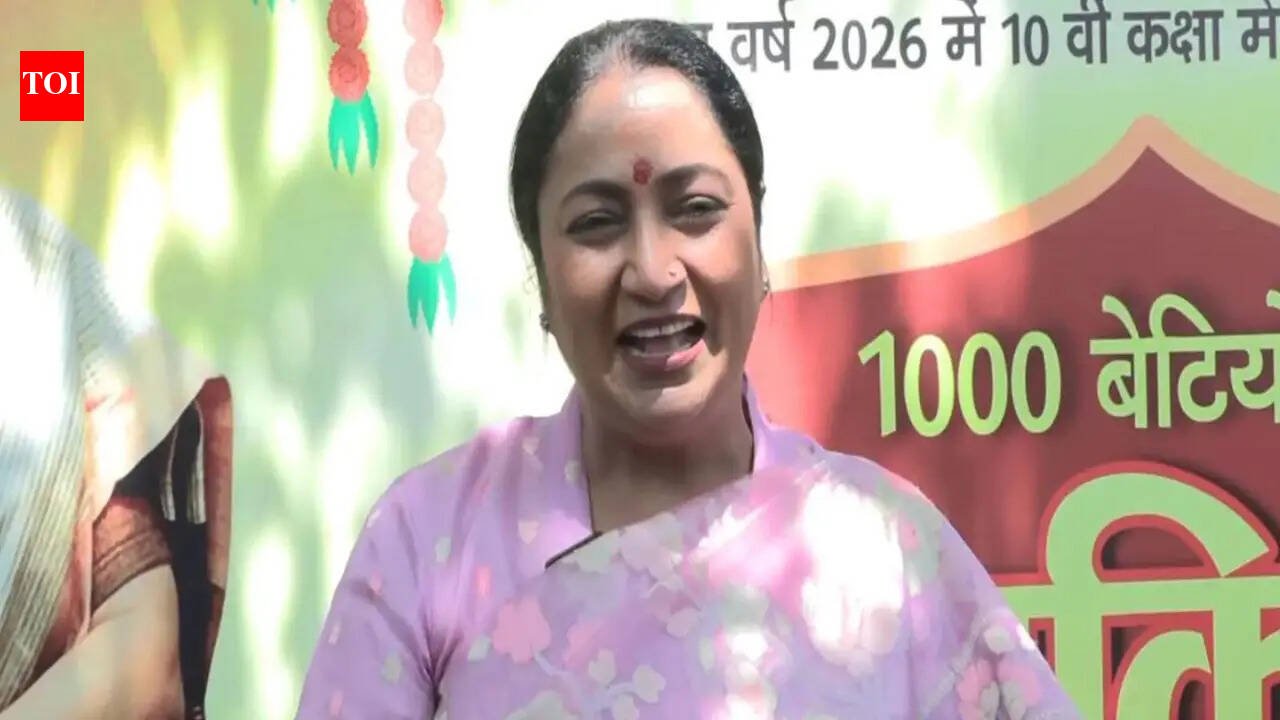
Delhi CM Rekha Gupta dismisses rumours about 'Pink Saheli card', says AAP just 'annoyed' by welfare schemes

Delhi CM Rekha Gupta ( Photo credit : ANI )

NEW DELHI: Delhi chief minister Rekha Gupta on Tuesday dismissed claims regarding the ‘Pink Saheli Card’ not functioning, stating that certain political individuals are attempting to spread false rumours about its use.“Under political propaganda, a few political people are attempting to spread rumours on ‘Pink Card’ for the women of Delhi, that if you travel once on bus and tap it once and then get off the bus to take another, it cannot be tapped again. This is a lie. Your cards are working 100% fine. With ‘Pink Card’, the benefits of this travel are not going to any private person and that is irking some people. You need not worry and you can get your ‘Pink Card’ made easily,” said CM Gupta.She also took a jibe at the Aam Aadmi Party, claiming they are ‘annoyed’ by welfare initiatives being given to women, including bicycles and the ‘Pink Saheli card’.“When ‘AAP’ are irked by the daughters’ bicycles, how will the Saheli Pink Card appeal to them. The Pink Saheli Card is working perfectly. Free rides. Tap it. Stay worry-free,”CM Gupta wrote on X. Earlier, President Droupadi Murmu launched four women’s welfare schemes of the Delhi government at the Indira Gandhi Indoor Stadium.According to officials, the four schemes are ‘Saheli Pink Smart Card,’ free LPG cylinder scheme, Delhi Lakhpati Bitiya Yojana, and ‘Meri Punji Mera Adhikaar.’Under the initiative, the Pink Card was introduced within the National Common Mobility Card (NCMC) framework, providing free bus travel to eligible women and transgender residents. The card will also allow paid travel on the Metro and the Regional Rapid Transit System through a single touch-free smart card. Cards will be issued at about 50 DM/SDM offices and selected DTC centres, with eligibility verified via Aadhaar and linked to the beneficiary’s mobile number.The chief minister stated that this initiative will prove to be a milestone in making public transport more accessible, safe, and digital.In two free LPG Cylinders during festivals, this scheme will be provided through Direct Benefit Transfer (DBT). An amount equivalent to the current price of one cylinder will be deposited into the Aadhaar-linked bank account of the head of the family. Approximately 15.50 lakh ration card-holding families will benefit from this scheme.The third initiative, ‘Delhi Lakhpati Bitiya Yojana’, focuses on the financial empowerment of daughters. Under this scheme, Rs 56,000 will be deposited in the name of a girl child in instalments, which, with interest, is expected to exceed Rs 1 lakh by the age of 21.The fourth measure involves the disbursement of pending dues under ‘Meri Punji Mera Adhikaar,’ ensuring citizens’ financial rights are addressed in a timely and transparent manner.


Source link

Final deadline for CGHS hospitals: Comply by April 30 or lose empanelment | India News


Final deadline for CGHS hospitals: Comply by April 30 or lose empanelment

NEW DELHI: The Centre has given private hospitals one final window to stay on the Central Government Health Scheme (CGHS) panel, extending the deadline for mandatory empanelment formalities to April 30, 2026, while making it clear that no further extension will be granted.An office memorandum issued by the Director, CGHS, Dr Satheesh Y H, on March 28 allows hospitals to sign their Memorandum of Agreement (MoA) to complete the process by the new deadline. The extension, from the earlier March 31 cut-off, comes after several hospitals flagged technical hurdles on the newly rolled out HEM 2.0 portal — the government’s digital platform meant to streamline empanelment by moving applications and approvals online.While the transition is aimed at improving transparency, it has slowed submissions. At the same time, the government has drawn a hard line: hospitals failing to comply by April 30 will be de-empanelled from May 1, making them ineligible to treat CGHS patients or raise claims, with re-entry requiring a fresh application.Empanelment is directly tied to payments—only hospitals on the CGHS panel can treat beneficiaries and raise claims, making delays or lapses in the process a direct hit on both patient access and hospital cash flows.Once empanelled, claims are processed within defined timelines, officials said, noting that settlement typically takes up to 90 days, with delays largely arising from queries or documentation gaps. The official also pointed to revised CGHS rates in October 2025 and existing provisions to penalise hospitals for denial or delay in treatment.However, this official view contrasts with feedback from the ground. Patient groups say delays and access issues persist, reflecting deeper systemic gaps. “CGHS beneficiaries today are caught in a system marked by delays, uneven access, and weak accountability,” said TK Damodaran, general secretary of the CGHS Beneficiaries Welfare Association of India, noting that complaints often remain unresolved and disparities in care continue.Hospitals, meanwhile, point to financial stress. “Delays in CGHS payments — often stretching beyond three to six months — put significant pressure on hospital cash flows, especially for smaller facilities,” said Dr Aashish Chaudhry, managing director of Aakash Healthcare. He added that while care delivery remains uninterrupted, current reimbursement rates do not fully reflect rising costs, making timely payments and realistic revisions critical for sustainability.The order acknowledges that portal-related issues contributed to missed deadlines but makes clear this is the last extension. For lakhs of CGHS beneficiaries dependent on private hospitals, any large-scale de-empanelment could directly disrupt access to cashless treatment across cities.


Source link

Terrorist killed in overnight encounter in J&K’s Ganderbal; anti-terror operation underway | India News


'Troops observed suspicious activity': Terrorist killed in overnight encounter in J&K’s Ganderbal
File photo (Picture credit: X/@ChinarcorpsIA)

NEW DELHI: A terrorist was killed in an overnight encounter with security forces in Jammu and Kashmir’s Ganderbal district, the Army said on Wednesday.A cordon and search operation was launched by security forces on Tuesday night in the Arhama area of the district following inputs about suspicious movement, news agency PTI reported.“Based on specific intelligence input, joint search operation was launched by the Army and Jammu and Kashmir Police in general area Arhama of Ganderbal,” Srinagar-based Chinar Corps said in a post on X.According to the Army, vigilant troops noticed suspicious activity during the operation. “On being challenged, terrorists opened fire and own troops retaliated,” it said.The Army added that the cordon was tactically reorganised amid intermittent firing, and troops responded in a calibrated manner, resulting in the killing of one terrorist. Officials said the anti-terror operation in the area is still in progress.


Source link

Chanchal Kumar I&B secretary, VV Yadav appointed DGCA | India News


Chanchal Kumar I&B secretary, VV Yadav appointed DGCA

NEW DELHI: Govt on Tuesday appointed Chanchal Kumar, an IAS officer of Bihar cadre, as the new information and broadcasting (I&B) secretary, while designating Sanjay Lohiya as the secretary of department of financial services (DFS). In the bureaucratic reshuffle, Vir Vikram Yadav has been appointed director general of civil aviation (DGCA), replacing Faiz Ahmed Kidwai.Kidwai, an MP-cadre IAS officer, has been appointed additional secretary in the personnel department. Lohiya will take over as secretary DFS when M Nagaraju retires on May 31.

Rejig sees appointment of 12 secretaries, 27 additional secretaries

Chanchal Kumar, currently in the department of north-east region, moves to I&B ministry, swapping places with Sanjay Jaju. Tuesday’s order included the appointment of 12 secretaries and 27 additional secretary level officers.Rohit Kansal, an AGMUT cadre officer of 1995 batch, has been appointed the new rural development secretary. Tourism secretary Srivatsa Krishna will be the new minority affairs secretary, while UIDAI chief executive Bhuvnesh Kumar will take charge as tourism secretary.Nagaland-cadre IAS officer Abhishek Singh, who has been promoted to the secretary rank, will take over as director general of National Testing Agency. Nivedita Shukla Verma, a 1991-batch IAS officer who is currently secretary, chemicals and petrochemicals, will take charge as secretary, department of administrative reforms and public grievances. Punjab-cadre IAS officer Tejveer Singh will be the new chemical and petro-chemicals secretary.Narendra Bhooshan, a UP-cadre officer, was named the new secretary of land resources department. The present minority affairs secretary, Chandra Sekhar Kumar, has been made CEO, National Rainfed Area Authority.Tuesday’s order also mentioned that Bharat Harbanslal Khera, a HP-cadre officer of 1995 batch, has been appointed OSD in MSME ministry, and he will take over as secretary on April 30.


Source link

IT rules may cover social media news | India News


IT rules may cover social media news

NEW DELHI: The Centre has moved to extend its digital media rules to news and current affairs content shared by non-publisher users on social media platforms, proposing changes that expand the reach of Part III of the Information Technology (Intermediary Guidelines and Digital Media Ethics Code) Rules, 2021, beyond registered publishers.In draft amendments issued on March 30, the ministry of electronics and information technology (MeitY) has invited stakeholder comments till April 14, signalling a move to strengthen compliance requirements for intermediaries and expand oversight of online content.A key proposal seeks to make it clear that Part III of the Rules — applicable to digital news publishers — will also apply to “news and current affairs content” shared on social media by users who are not registered publishers.While the draft itself focuses on clarifying applicability and strengthening oversight mechanisms, officials indicated the framework could enable action on such content through the existing grievance redress process overseen by the Inter-Departmental Committee, though the draft does not spell out specific actions.It also proposes changes under Part II, including the insertion of a new Rule 3(4), which requires intermediaries to follow government-issued advisories, directives and guidelines as part of their legal responsibilities under Section 79 of the IT Act. It further states that platforms must retain user data as required under the Rules.The draft also expands the role of the Inter-Departmental Committee under Rule 14, allowing it to examine not only complaints from users but also cases referred directly by the government.The ministry, in its notice, said the amendments were intended to ensure “an Open, Safe, Trusted and Accountable Internet” and to “strengthen compliance with clarifications, advisories and directions issued by the ministry”, while improving how digital content is regulated.Governement has described the proposed changes as “clarificatory and procedural”, aimed at furthering legal certainty and strengthening the enforceability of its directives.


Source link