Breaking News
States must drive next wave of reforms for 2047 goal: Niti CEO | India News


States must drive next wave of reforms for 2047 goal: Niti CEO

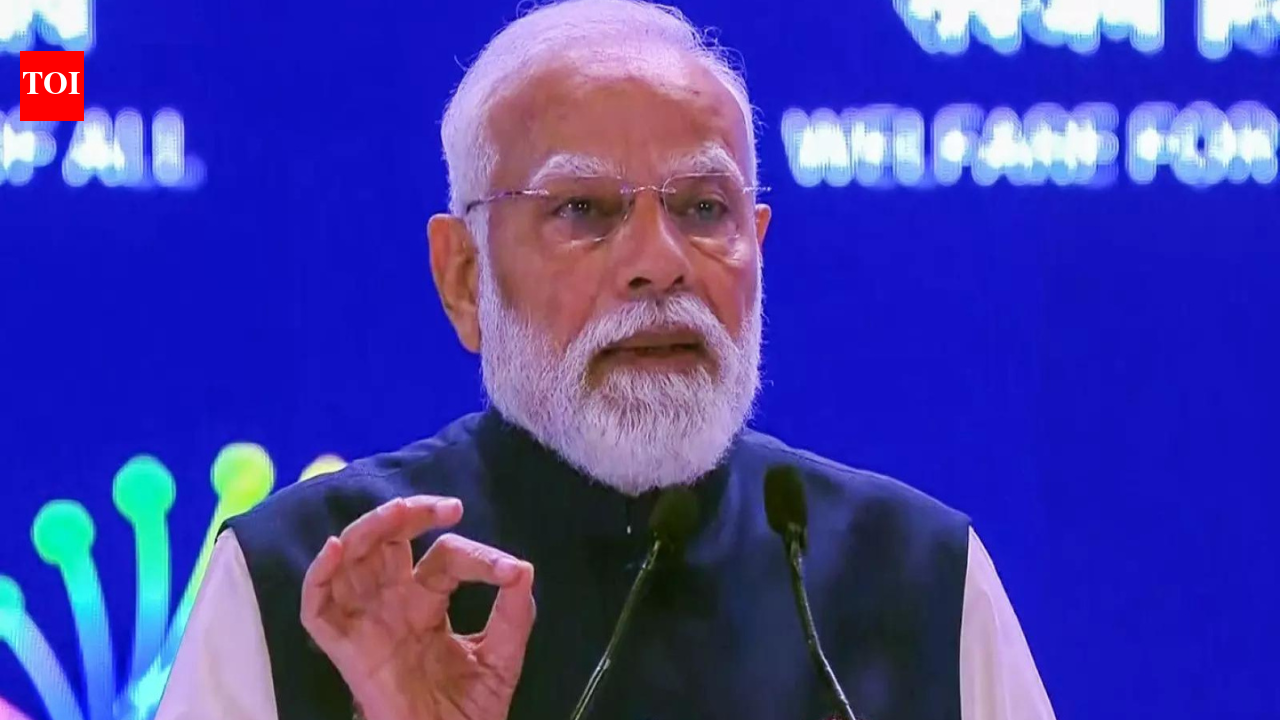
NEW DELHI: The next big wave of reforms must come from the states if India wants to become a developed nation by 2047, as most of the heavy lifting at the Centre has been done, Niti Aayog CEO BVR Subrahmanyam said Saturday.“Most of the action in India is now at the state level. The government of India did probably 90% of what it had to do,” Subrahmanyam said at an event organised by the All India Management Association.“Land is state, labour is state, electricity is state, water supply is state, roads are state,” he said.“Differences in state-level governance now determine growth outcomes. States that push reforms move ahead, while others risk falling behind,” added Subrahmanyam.He said India’s demographic profile gives it a significant opportunity. “India is in for good times… demography is behind us, our capabilities are behind us and there is wind in our sails,” however, he said becoming a developed nation will require sustained high growth.At the event, Vianai Systems founder Vishal Sikka said India must build its own AI stack and not become dependent on systems it does not understand or control.


Source link

‘Shirtless protest’ at AI summit akin to treason, Rahul was inspiration, says BJP | India News


BJP Targets Rahul Gandhi Over AI Summit Protest Row

Image credit: ANI

NEW DELHI: BJP stepped up its attack on Congress as it likened its protest at the AI summit to treason and claimed that Rahul Gandhi was the inspiration for his party’s youth workers involved in the shirtless demonstration as he frequently defames India.Union minister Kiren Rijiju termed the protest as a “big crime” and “big sin” against the country, alleging that Congress tried to defame it when the world was lauding AI Impact Summit organised here under PM Narendra Modi’s leadership.

BJP Targets Rahul Gandhi Over AI Summit Protest Row

Its frustration has grown so much over its repeated electoral failures, that it has turned “anti-national,” he alleged.He told a press conference, “If Congress had even an ounce of sensitivity towards the country, it would have introspected and apologised. Instead of expressing regret, Congress is justifying the misconduct of its members.”He said there is widespread anger across the country against the opposition party which turns sad and angry at the nation’s progress.Lashing out at Congress, BJP spokesperson Sudhanshu Trivedi slammed the protesters as “flag-bearers of Lashkar-e-Rahul” who tried to tarnish India’s image. “What the Congress has done cannot be dismissed as mere negative politics, it amounts to treason,” Trivedi alleged.So far Rahul used to make derogatory and offensive statements about India abroad, he claimed and then added, “Now the flag-bearers and sepoys of Lashkar-e-Rahul are trying to tarnish India’s image in front of foreign guests.”He alleged that the protest at the AI summit venue was a “shameful display” of the Congress’ “pettiness and nakedness”.


Source link

7 CRPF personnel injured in Srinagar as vehicle plunges into canal | India News


7 CRPF personnel injured in Srinagar as vehicle plunges into canal
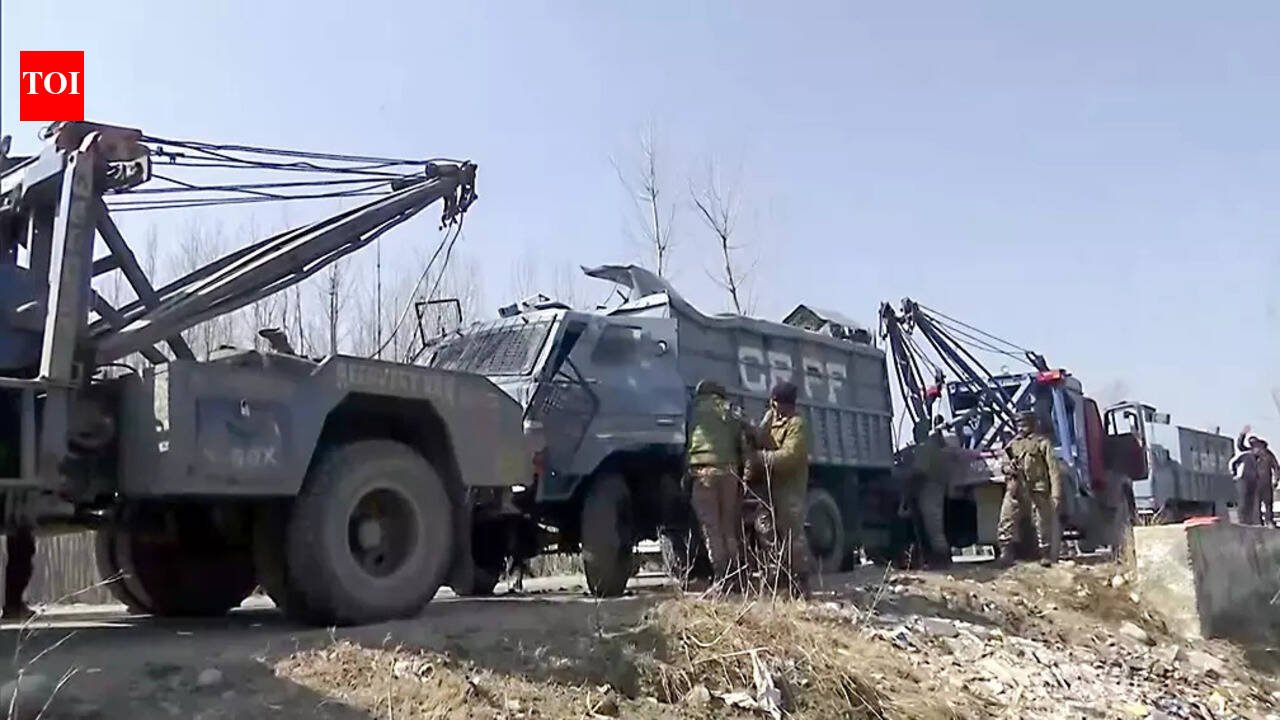
Central Reserve Police Force (CRPF) personnel at the spot where a CRPF vehicle met with an accident near a water canal, in Ahmad Nagar, in Srinagar on Saturday. (ANI Video Grab)

SRINAGAR: At least seven Central Reserve Police Force (CRPF) personnel were injured after their vehicle plunged into a canal in Srinagar Saturday morning. The driver allegedly lost control of the vehicle, which skidded off the road in Ahmadnagar area on the city’s outskirts.The injured personnel were rushed to the Shri Kashmir Institute of Medical Sciences for treatment. “All seven are stable,” an official said. The vehicle was later retrieved from the canal.In a separate incident, a suspicious object was detected and neutralised in Ganderbal. SSP Khalil Ahmad Poswal said the object was found along the Safapora-Ganderbal road Saturday morning prompting security forces to cordon off the area and restrict traffic as a precautionary measure. “We are not sure whether it was an IED. We are investigating it,” Poswal told TOI. A bomb disposal squad was called, and the object was neutralised. Police have not yet issued any statement on the incident.


Source link

In Kashmir show of strength, BJP attacks Omar govt over ‘doublespeak’, raises 2010 killings | India News


In Kashmir show of strength, BJP attacks Omar govt over ‘doublespeak’, raises 2010 killings

SRINAGAR: At an induction rally in Srinagar on Saturday, BJP put leader of opposition in the J&K assembly, Sunil Sharma, on the forefront to launch a political attack on Omar Abdullah govt.Sharma, who represents the Paddar constituency in Kishtwar district, alternated between Urdu and Kashmiri as he addressed hundreds of party workers, accusing governing National Conference (NC) of practising “doublespeak” on Kashmir, and failing to fulfil promises on jobs and welfare schemes.The J&K chief of BJP and Rajya Sabha member Sat Sharma welcomed new entrants into the party fold from PDP, NC and Congress, calling such steady influx of leaders and workers from every section in Kashmir as indication of the party’s widening base.“He (CM Omar Abdullah) says one thing in Delhi and another in Kashmir,” Sunil Sharma told the gathering, adding that NC leaders portray Kashmiris in a negative light before the central govt, while publicly expressing sympathy for their suffering in the Valley. “Why don’t people see this doublespeak?” he wondered.However, it was his attempt to draw a parallel between two defining moments in Kashmir’s history that drew particular attention and raised the hackles of NC, which accused BJP of “manufacturing narratives”.Sharma referred to the 2010 unrest, when more than 100 civilians, many of them teenagers, were killed during months of protests and clashes with police and security forces. Among the first to be killed were 13-year-old Wamiq Farooq and 17-year-old Tufail Mattoo, whose deaths became rallying points for widespread demonstrations. Sharma said Omar had justified the killings of Wamiq and Tufail, claiming they were part of a “rebellion” against the then govt led by him.The LoP then invoked July 13, 1931, when 22 people were shot dead by the forces of Maharaja Hari Singh outside Srinagar jail during protests against Dogra rule. The date is widely commemorated in Kashmir as ‘Martyrs’ Day’.Those killed in 1931 were remembered as ‘martyrs’ by NC, while Wamiq, Tufail and others killed in 2010 were charged with rebellion, Sharma said, adding “we need to reflect on this”.He accused NC of exploiting “Kashmiri sentiments” after failing to deliver on economic commitments, including promises of jobs and 200 units free electricity, and alleged that govt had outsourced 24000 jobs to an unknown company. “BJP will come on roads against such clandestine recruitments,” he said.NC spokesperson Imran Nabi Dar dismissed the allegations. “It is BJP that has failed to deliver on its promise of restoring statehood,” he said. Referring to July 13, 1931, Dar said the day symbolised Kashmiri resistance against monarchy and the assertion of Kashmir’s identity. “BJP is trying to build a fake narrative around it. They are trying the same with the events of 2010 to arouse sentiments in Kashmir in their favour,” he said.


Source link

‘26% vs 8%’: Congress MP pushes for leading alliance in Puducherry – will DMK concede? | India News


'26% vs 8%': Congress MP pushes for leading alliance in Puducherry - will DMK concede?
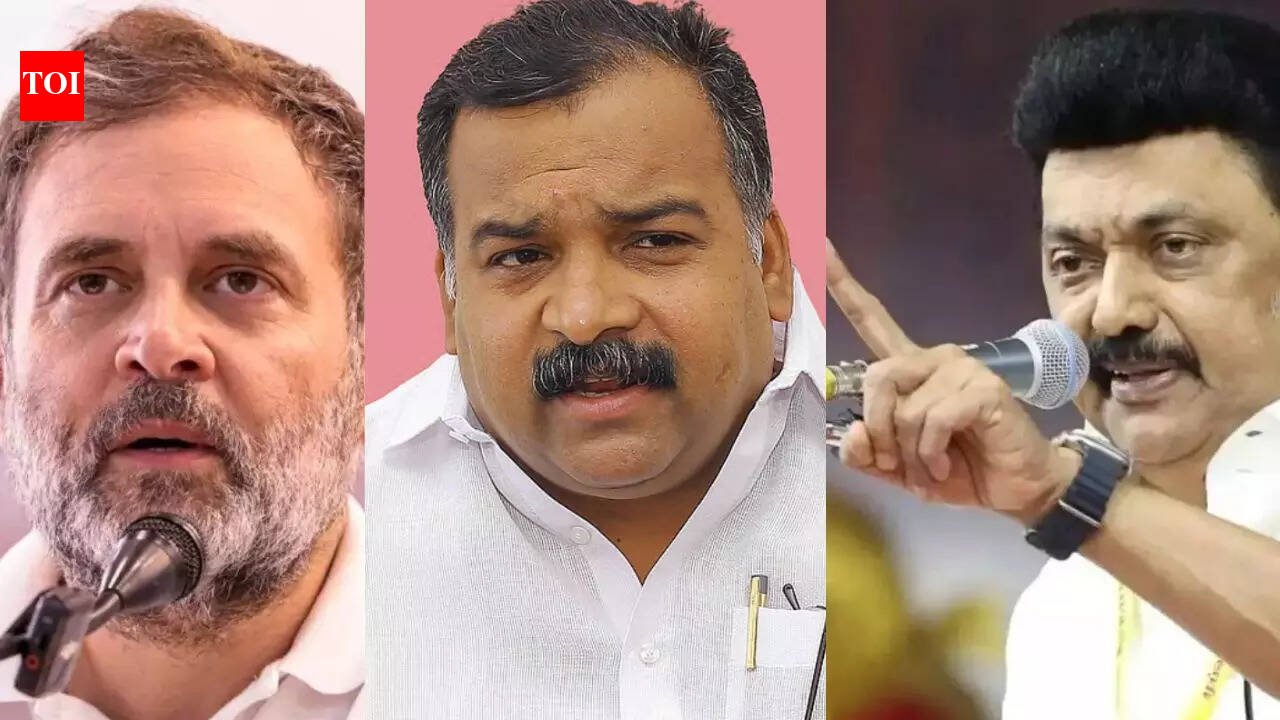
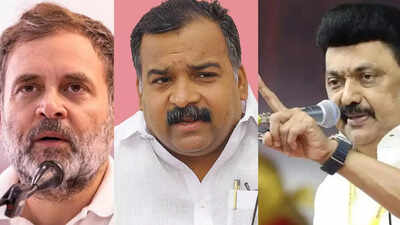
Rahul Gandhi, Manickam Tagore, MK Stalin

Puducherry, the Union territory nestled within Tamil Nadu, will head to the polls in April alongside the state. But a growing rift between the Congress and its ally, the DMK — which governs Tamil Nadu on its own despite their alliance — now threatens to spill into Puducherry just months before the crucial assembly elections.At the heart of the conflict is the Congress’ demand for a share of power in Tamil Nadu if the DMK-led bloc wins again, along with a larger number of seats to contest than in 2021. Puducherry, given its geographical and cultural closeness to Tamil Nadu, is also emerging as a stage for this simmering rift.

Congress In Damage Control Mode After Mani Shankar Aiyar’s Baton Remark To Kerala Chief Minister

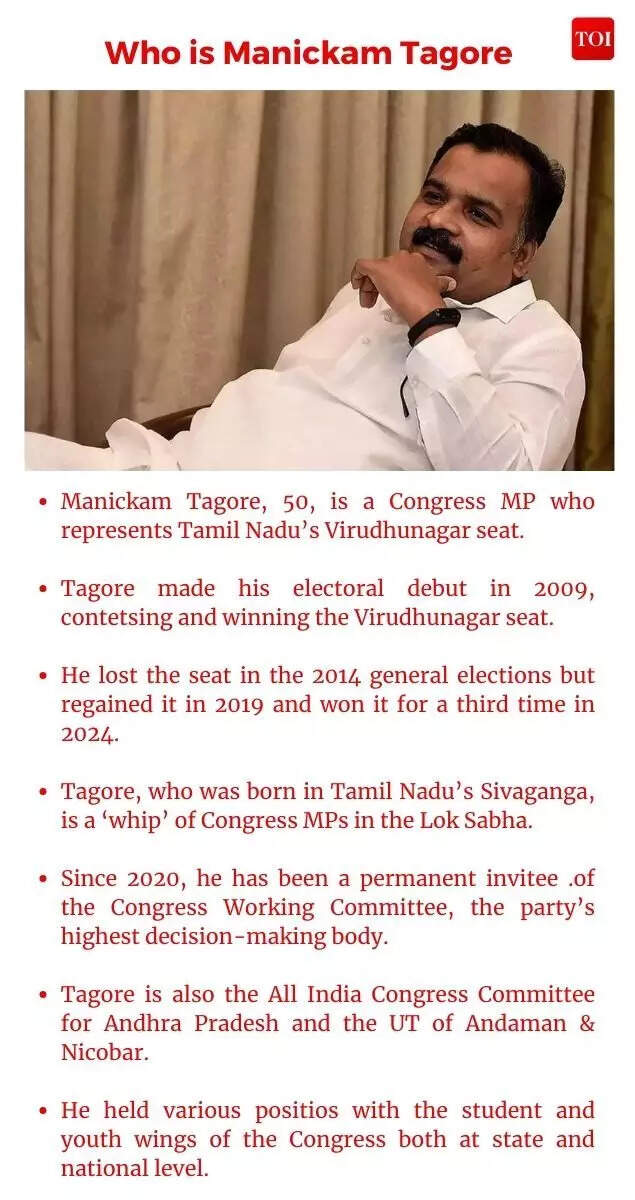
Manickam Tagore, a close confidant of former Congress president and current Lok Sabha leader of opposition, Rahul Gandhi, has been at the forefront of the party’s push for greater “respect” from the DMK in Tamil Nadu. Now, he is extending that demand for “respect” in Puducherry as well.How practical is Tagore’s demand? Can he — or the Congress — compel the DMK to concede? How likely is it that the DMK would give in? And with elections approaching, can the alliance afford internal strains? Let’s take a closer look.

Congress: A giant of Puducherry politics

The politics in Puducherry, a former French colony, has been dominated by the Congress. Three other parties have also formed governments here—DMK, AIADMK, and the All India NR Congress—but none have ever enjoyed the level of dominance that the Congress did.That dominance is evident in the numbers: of Puducherry’s 10 chief ministers, seven have hailed from the Congress.

  • Edouard Goubert (in office: July 1963-September 1964)
  • V Venkatasubba Reddiar (September 1964-April 1967)
  • MOH Farook (April 1967-March 1968; March 1985-March 1990)
  • V Vaithilingam (July 1991-May 1996; September 2008-May 2011)
  • P Shanmugam (March 2000-May 2001; May 2001-October 2001)
  • N Rangaswamy (October 2001-May 2006; May 2006-September 2008)
  • V Narayanasamy (June 2016-February 2021)

The UT’s lone Lok Sabha seat has also mirrored this political success. The constituency, also called Puducherry, has been contested in 15 general elections since 1967 and has been won by the grand old party — either directly or through its factions — 11 times.This legacy perhaps explains why the Congress sees Puducherry as politically significant. Given its long-standing dominance and the stakes of a potential defeat, the Congress would be keen to reclaim its supremacy here.

Manickam Tagore’s ‘26% vs 8%’ salvo

Against the backdrop of political tensions in Tamil Nadu, the first signs of a possible spillover to Puducherry emerged on February 6. That day, Tagore posted on social media, citing electoral data to argue that the Congress — and not the DMK — should lead their alliance in Puducherry.

Manickam Tagore

Manickam Tagore

“Will the party with 8% of the votes lead the coalition? No, the party with 26% of the votes will lead. Why should the Congress party be talked down to in the coalition?” he asked.Also Read | ‘26% votes vs 8% votes’: Cong MP Tagore targets ally DMK; seeks leadership role for Puducherry unit in poll-bound UTThe data he referred to was from the 2014 general elections. He did not explain why he chose figures from more than a decade ago, particularly from a parliamentary election rather than an assembly contest. In that election, the Congress finished second in the Puducherry Lok Sabha constituency, while the DMK came fourth. The Congress candidate, V Narayanasamy, who became chief minister two years later and held the post for over four years, secured 26.35% of the vote, whereas DMK’s AMH Nazeem received 8.19% and came fourth.A visit to Puducherry by the DMK’s election in-charge and Lok Sabha MP, S Jagathrakshakan, appears to have triggered the current episode. During the trip, he did not meet Congress leaders, and this “snub,” coupled with the ongoing friction in Tamil Nadu, seems to have sparked Tagore’s outburst.But beyond the immediate provocation, the larger question is whether his assertion is merely rhetorical posturing or grounded in electoral reality.

Congress in Puducherry: Historically dominant – not so much today?

Despite Tagore’s assertive stance, the ground reality appears far less encouraging – if not outright alarming -for the Congress in Puducherry, where it was once the dominant political force. While the DMK remains the undisputed leader of the alliance in Tamil Nadu, the Congress now finds itself on comparatively weaker footing in Puducherry. Although it won the Puducherry seat in the two most recent general elections, its performance in the 2021 assembly polls was far less impressive. The Congress secured just two of the 14 seats it contested — a steep drop from the 15 it had won out of 21 during a successful campaign five years earlier. In contrast, the DMK, which contested 13 assembly constituencies under the seat-sharing arrangement, won six of them — securing the post of the leader of opposition in the assembly. The DMK, which is currently headed by Tamil Nadu CM MK Stalin, had managed just two of the nine seats it contested in 2016. Tagore’s remarks could, therefore, be read either as election-season posturing or as a calculated attempt to pressure the DMK — in Puducherry or even in Tamil Nadu.

Leverage-less Congress?

The DMK remains a significant political player in Puducherry, while the Congress has been largely marginal in Tamil Nadu — last heading a government there in 1967 and last holding the leader of opposition post in 1996.The Dravidian major’s categorical refusal to share power in the southern state — a stance reiterated by Stalin himself — presents a major challenge for the Congress, leaving it to try and assert itself in Puducherry, where its historical influence still exists and where the party held power as recently as 2021.

We also know that it (power-sharing) will not work in Tamil Nadu. It is a problem created by some people. They are deliberately conspiring to see if there will be a rift in the alliance.

MK Stalin

However, the Congress’ leverage — or lack thereof — in Tamil Nadu is already evident. The state Congress unit has urged the party’s national president, Mallikarjun Kharge, to take action against Tagore for his criticisms of the DMK, which itself has also called for action against the Virudhunagar MP.Also Read | TN Cong seeks action against party MP Manickam Tagore for putting DMK ties under ‘strain’Whether the DMK exercises this leverage in Puducherry too or concedes ground to the Congress to maintain alliance cohesion ahead of the elections would shape not only the immediate electoral battle with the UT’s ruling NDA coalition, but also the longer-term balance of power between the two allies.

Why Congress can’t afford friction in Puducherry

With much at stake, the Congress can hardly risk tensions in Puducherry, especially on the eve of elections. With governments in only three states — Himachal Pradesh, Karnataka, and Telangana — the Congress can ill afford fresh tensions within the alliance. A victory in Puducherry would provide a much-needed additional governing foothold and strengthen its hand within INDIA, the national opposition bloc it leads. Tensions within the opposition coalition have been simmering after a series of electoral setbacks following the 2024 Lok Sabha elections, in which they succeeded in reducing the BJP below the majority mark for the first time since 2014.For now, the Congress appears to be adopting a wait-and-watch approach. Whether this strategy bolsters its position or strains a key alliance ahead of the elections will soon be revealed.


Source link

‘Not appropriate’: ‘Ashamed’ Congress allies, BJP rivals slam ‘semi-nudity’ protest at AI Summit | India News


'Not appropriate': 'Ashamed' Congress allies, BJP rivals slam 'semi-nudity' protest at AI Summit

NEW DELHI: Opposition leaders and Congress allies on Saturday criticised the Indian Youth Congress (IYC) over its “semi-nude” protest at the AI Impact Summit, calling the act “inappropriate” and saying it brought shame to the country on an international platform.Speaking to reporters, Samajwadi Party chief Akhilesh Yadav said, “… We may have internal rifts, but what Congress did on the global platform was not appropriate.”“They should have refrained from doing something that brings shame to our country in front of foreign delegates and world representatives…” he added.These remarks come after around 10 IYC workers were detained on Friday after they briefly raised slogans against Prime Minister Narendra Modi inside Exhibition Hall No. 5 at Bharat Mandapam during the summit, triggering a political storm.The protesters had entered the venue wearing or holding white T-shirts bearing images of Prime Minister Narendra Modi and US President Donald Trump, along with slogans such as “India-US Trade Deal”, “Epstein Files” and “PM is compromised,” leading to heated exchanges with attendees.

‘They made us all feel ashamed’

YSR Congress chief YS Jagan Mohan Reddy wrote on X, “Yesterday at the AI Summit, the Youth Congress made us all feel ashamed. Where is our politics heading! No one should ever demean our country.”“Whatever our political differences may be, we should always present a united face to the world,” he added.

‘Utterly unbecoming and reprehensible’

BSP president Mayawati also expressed the same sentiment saying that at an internationally significant event like the ‘AI Impact Summit’, “any expression of anger through semi-nudity by those who did so during this event—most of whom are said to be young Congress members—is utterly unbecoming and reprehensible.”“Had this conference not been of international stature, it would have been a different matter altogether; however, such conduct during the summit is a cause for concern, meaning it would be fitting not to tarnish the dignity and image of our country,” she posted on X.

‘There could have been better way’

RJD MP Manoj Kumar Jha said while grievances may exist, the manner of protest could have been better.“I said this yesterday, and I’m saying it again today: grievances exist, and no one can deny that. Whether it’s about the lack of clarity in a deal or issues with Epstein files, there could have been a better way to address these concerns. In my view, the Youth Congress acted, but personally, as I see it, any movement needs to be handled responsibly,” he said.“In the past, BJP members have done similar things, but that doesn’t make it right for anyone. The point is, grievances exist, people especially a section of farmers are worried, and there could have been a better option for how and where these concerns were expressed,” he added.The ruling BJP had on Friday slammed the Congress and Leader of Opposition Rahul Gandhi over the shirtless protest, calling it a “despicable act.”BJP MP Sambit Patra said, “Rahul Gandhi and the Congress Party are traitors of the highest order. The nation’s biggest traitors. Wherever the country progresses, wherever happiness prevails, they will surely spoil it. These are traitors…I have only three words for Congress: topless, brainless, shameless.”“Today, they went topless, brainless. Congress doesn’t have that much wisdom that this AI summit that is going on is not a BJP summit. This is an AI summit of the entire world,” he added.Later in a statement, the Indian Youth Congress defended its action, saying its workers were protesting against a “compromised Prime Minister who has traded the identity of the country at the AI Summit.”“That is why the fearless workers of the Indian Youth Congress arrived at Bharat Mandapam.. so that a voice can be raised against the ‘Compromised PM’ and the Modi government is forced to answer for the compromises being made on the country’s honour!” it added.


Source link

Delhi government launches ‘ CM Jansunwai Portal’ to address public concerns | India News


Delhi government launches ' CM Jansunwai Portal' to address public concerns

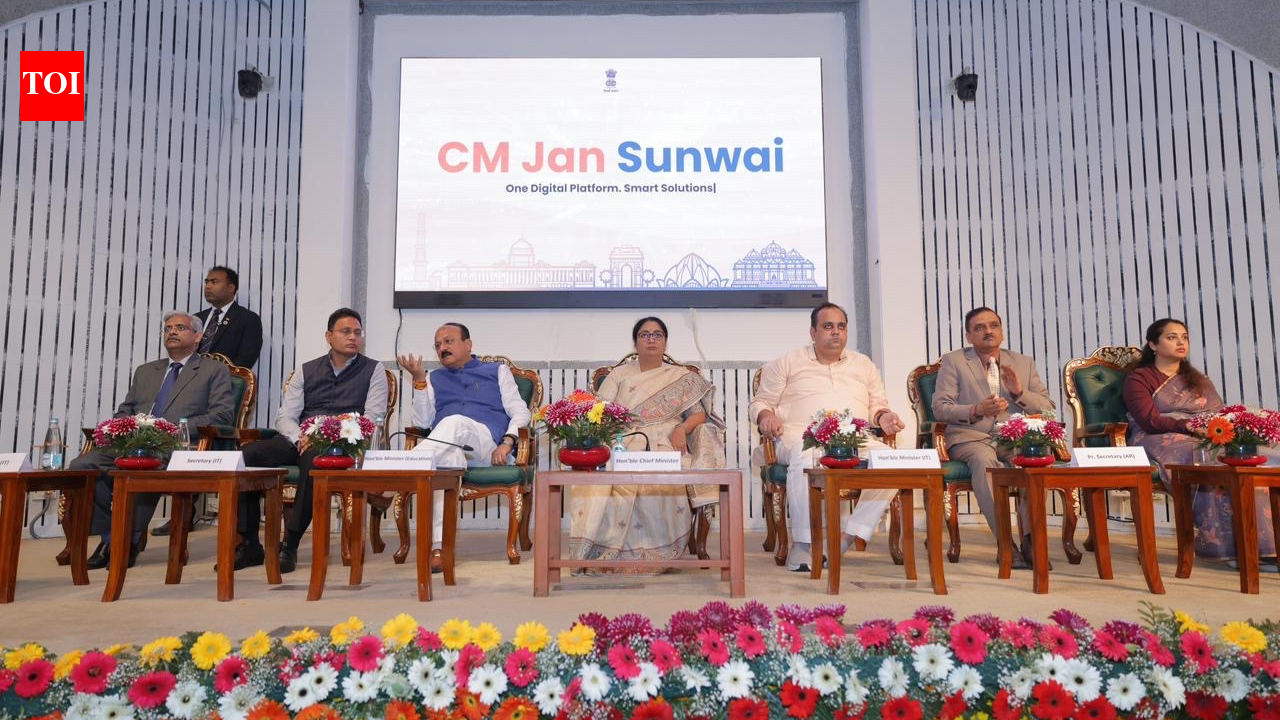
NEW DELHI: Delhi chief minister Rekha Gupta on Saturday launched a ‘CM Jansunwai Portal’ and mobile app along with other IT services for the public to submit complaints online.The chief minister said that this portal will help in monitoring the complaints of the public and finding timely solutions to the problems is a priority of the government.“While I keep on holding ‘Jan Sunvai’ physically to listen to the problems of people, now we have a digital mode, which will provide a platform for people to complain from anywhere,” Gupta said.Through this portal, there will be more transparency and efficiency in the system, she added.“We also want to assure the public that a project monitoring system is also being developed by the government. Through this, we will be able to keep track of the status of all our projects, which will ensure timely completion,” the chief minister said.The chief minister also stated that the Delhi government is already providing 75 services online will now be linked to this portal.


Source link

‘Made-in-India chips crucial for a self-reliant India’: PM Modi virtually inaugurates semiconductor facility in UP | India News


Beyond Oil: How India & US Are Securing the Future of AI Chips

Photo credit: ANI

Prime Minister Narendra Modi on Saturday emphasised the importance of self-reliance in India’s technological future, stating that “Developed India will be built only when India is self-reliant. For this, Made in India chip is very important.”Addressing the virtual ceremony to lay the foundation stone of India Chip Pvt Ltd — a joint venture between the HCL Group and Foxconn — PM Modi noted that the global shortage of semiconductor chips during the Covid-19 pandemic had disrupted economies and halted production in factories worldwide.

Beyond Oil: How India & US Are Securing the Future of AI Chips

“Whatever India is doing in the field of technology in this decade, it will become foundation of our capability in the 21st century, the Prime Minister added.Prime Minister Narendra Modi highlighted India’s growing semiconductor ambitions, noting that “India has so far approved 10 semiconductor fabrication and packaging projects under its Semiconductor Mission,” adding that “four of these units are set to commence production very soon.”The PM also welcomed the entry of major companies into India’s chip manufacturing sector, emphasising the need for self-reliance. He called for “atmanirbharta” in the process, underlining the goal of strengthening India’s leadership in the global market.“Today, the arrival of major companies like Foxconn in India and their collaboration in chip manufacturing also sends a global message. A democratic country like India is a trusted partner for the world. Therefore, India’s recognition as the world’s factory is a win-win situation for both India and other countries,” PM Modi said.The new Outsourced Semiconductor Assembly & Test (OSAT) facility will be located in the Yamuna Expressway Industrial Development Authority (YEIDA) area at Jewar, Greater Noida. The 60:40 joint venture between HCL Group and Foxconn represents an investment of Rs 3,700 crore, with operations expected to commence by 2028. The plant will manufacture display driver chips, supporting India’s growing domestic demand for semiconductor components.According to PTI, the project is expected to generate more than 3,500 direct and indirect jobs, foster local supply chains, and attract partners across the semiconductor ecosystem. The facility is designed to process up to 20,000 wafers per month, strengthening a resilient and self-reliant chip supply chain in India.“In the last 11 years, the Prime Minister has established India as powerhouse of electronics manufacturing. India is now ranked third among nations that export electronics. In a month, 3.6 crore chips will be produced from this plant. The brain of the digital screens that you see will now be made in Jewar,” said Union electronics and IT minister Ashwini Vaishnaw.UP chief minister Yogi Adityanath described Jewar as a “jewel not only for UP but also for the country,” adding that the state’s development will be aligned with the Prime Minister’s vision for chip manufacturing.Bob Chen, President of Foxconn’s Semiconductor Business Group, was quoted by news agency PTI as saying, “Today we are ground breaking for India chip. We want to establish reliable semiconductor assembly and testing facility in India. We look forward to growing together and contributing to India’s growth in global technology landscape.”HCL Group Chairperson Roshini Nadar highlighted that the facility will serve both domestic and international markets, positioning India as a significant player in the global semiconductor sector.


Source link

Bomb threats, pollution alerts and online classes: The new holiday calendar in schools | India News


Delhi Schools On High Alert After Khalistan Bomb Threat Emails Trigger Panic Across National Capital

Amid online classes, pollution and bomb threats, school calendar today has new holidays

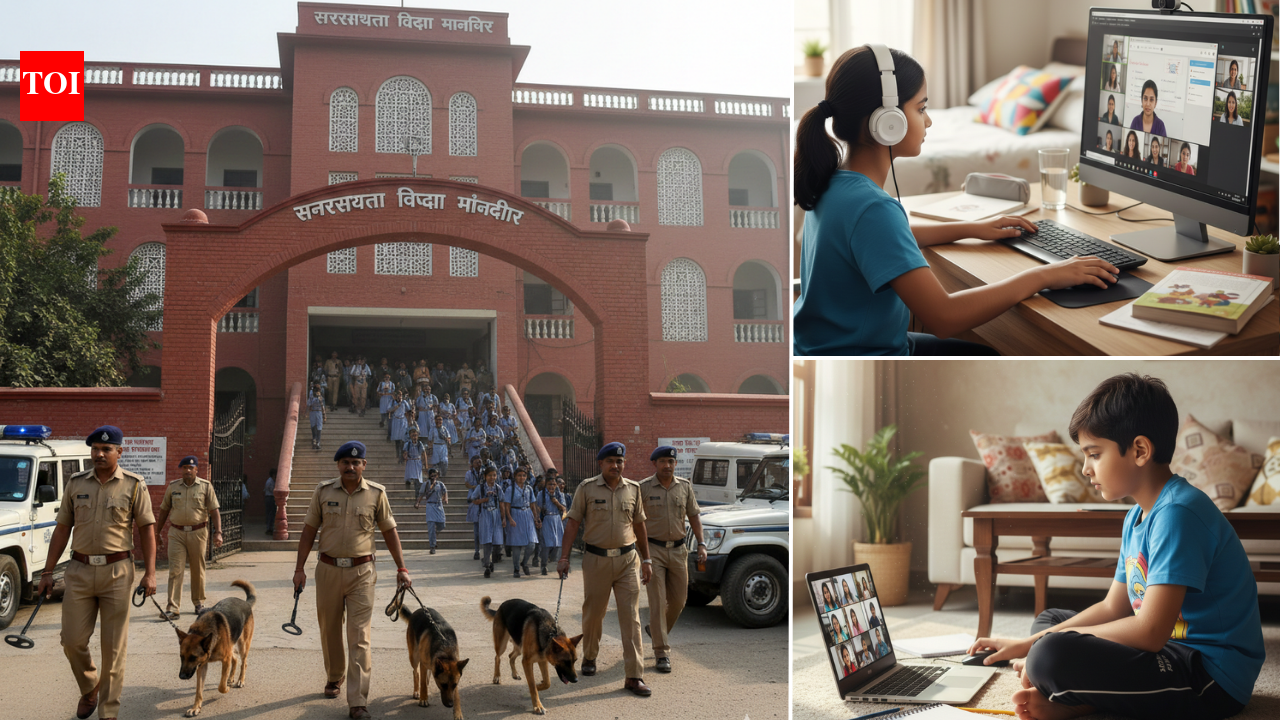
Remember waking up as a child to the sound of rain pouring and clouds rumbling, your very first thought whispering, “Will it be a rainy holiday today?”Let’s say the modern-day school life has a new form of rainy holiday.Books have given way to tablets, chalkboards to smart boards. And the much-anticipated rainy-day “chutti” has been replaced by pollution-triggered online classes and bomb threat evacuations.In a recent incident, multiple schools in Ahmedabad, Gujarat, received bomb threat emails.

Delhi Schools On High Alert After Khalistan Bomb Threat Emails Trigger Panic Across National Capital

Students were dispersed, investigations were launched, and nothing suspicious was ultimately found. Yet the disruption was real.Such incidents are no longer isolated. They mark a shift few could have imagined — a shift that is fast becoming routine.So, in this evolving landscape, has the idea of the impromptu day-off also transformed?Technology is no longer an add-on; it is the norm. Distance learning now runs parallel to physical classrooms. Since Covid, technology has been intricately woven into the students’ daily lives. Online classes have become the default response to disruption. For today’s children, a cancelled school day no longer translates into freedom.But in preserving continuity, something else has changed.But the larger question lingers: How is this reshaping the academic landscape? And more importantly, what is it doing to the children growing up within it? Have repeated pollution alerts and bomb threats begun to feel routine? Is a generation slowly being desensitised to dangers that should provoke alarm?The topography of the golden days of one’s life, the school life, has changed on a grand scale.For caregivers, the transition brings layered emotions. There is comfort in knowing education no longer collapses at the first sign of disruption. Technology offers stability.Yet there is unease, too. A nostalgia for simpler interruptions.And somewhere between nostalgia and necessity, a new version of school life is quietly taking shape — one that no one fully anticipated, yet one that an entire generation is learning to call normal.

The “Rainy Day” logins

Parents describe a clear post-Covid shift in school life, where technology and online classes have moved from an emergency measure to a default backup for almost any disruption.Tejash Tarun, a Bengaluru-based parent, points to how even logistical inconveniences now trigger digital shifts rather than cancellations.“Even for relatively minor issues, say road renovations on the last stretch leading to the school, the classes are not cancelled now. Instead, the school would send out notifications for a week of online classes,” he says.His observation underscores a broader structural shift. Continuity now outweighs interruption, and the idea of a pause once embedded in school culture is steadily disappearing.Radhika Ashok Kumar, another parent, also notes that administrative and logistical needs increasingly push learning online.“Last year, the school was the centre for boards. So some sessions were planned online.”But online classes come with their own set of challenges. Tarun highlights the material demands that online education imposes on households.He says, “If a child is attending classes from home, they also need a proper space to study. Secondly, they need a suitable device. It cannot just be a mobile phone for a few minutes. A laptop or a computer is essential.”He further goes on to highlight the drawbacks the parents might face in their professional life, saying, “In case of working parents, and the work-from-home arrangements at offices largely over, if a child’s school suddenly shifts to online classes, it creates an immediate challenge. They may have to take leave or try to manage work from home, if that option is even available.”An idea largely promoted as institutional flexibility can, at the household level, translate into logistical strain.

Space, screen and social life

The learning space has extended beyond the school campuses.Across conversations, there is broad agreement that offline school remains irreplaceable for social, emotional and overall personality development – “no alternate” to going to school for real-world interaction with peers and teachers, learning social norms, and building discipline and routine.Manish Masoom, a Delhi-based parent whose child’s classes have witnessed an online shift due to the implementation of GRAP measures, shares the value of real-world interactions over online classes.

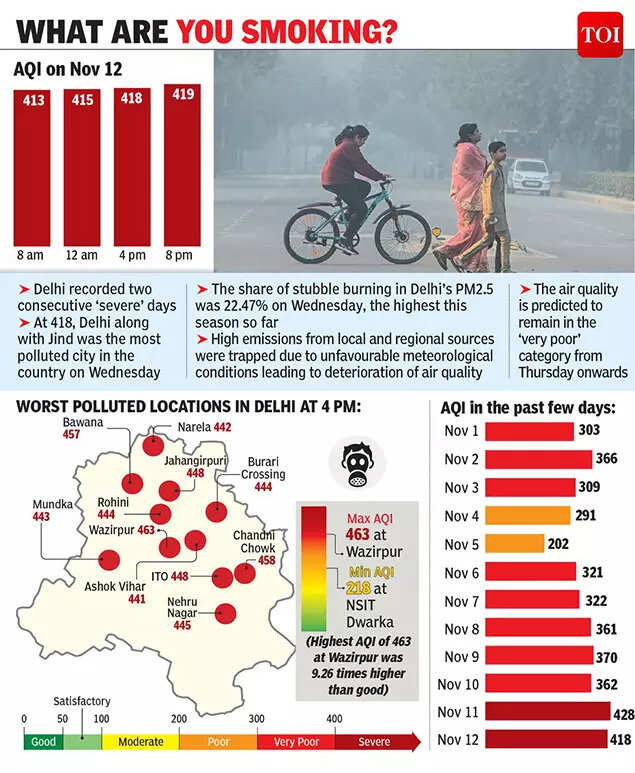
Delhi AQI

He says, “Ideally, children should go to school, sit in a classroom, and learn alongside others. After all, human beings are social by nature. Whether the reason is pollution, a strike call, or any other disruption, shifting to online classes creates its own set of problems.”Tarun further elaborates on how he views the micro-lessons embedded in everyday school life.He says, “Beyond academics, school is where children learn community interactions. A classmate may borrow my pencil today; tomorrow, I might borrow their notebook. These small exchanges teach cooperation, sharing, and understanding.”When asked about the drawbacks of online classes, the parents highlighted the lack of preparation for their kids as offered by the offline classes.Radhika shares, “For the lower grades, I feel it was still manageable, at least in my son’s case. But in the higher classes, I have noticed that children struggle with subjects like Mathematics, Science, and Chemistry.”She further goes on to add that online classes often fall behind in preparing the students for a broader grasp on the pressure, as she says, “When students were in Class 9 during online sessions, some of them could not build a strong foundation. As a result, when they moved to Class 10, they found it hard to handle the academic pressure because their basics were not clear.”

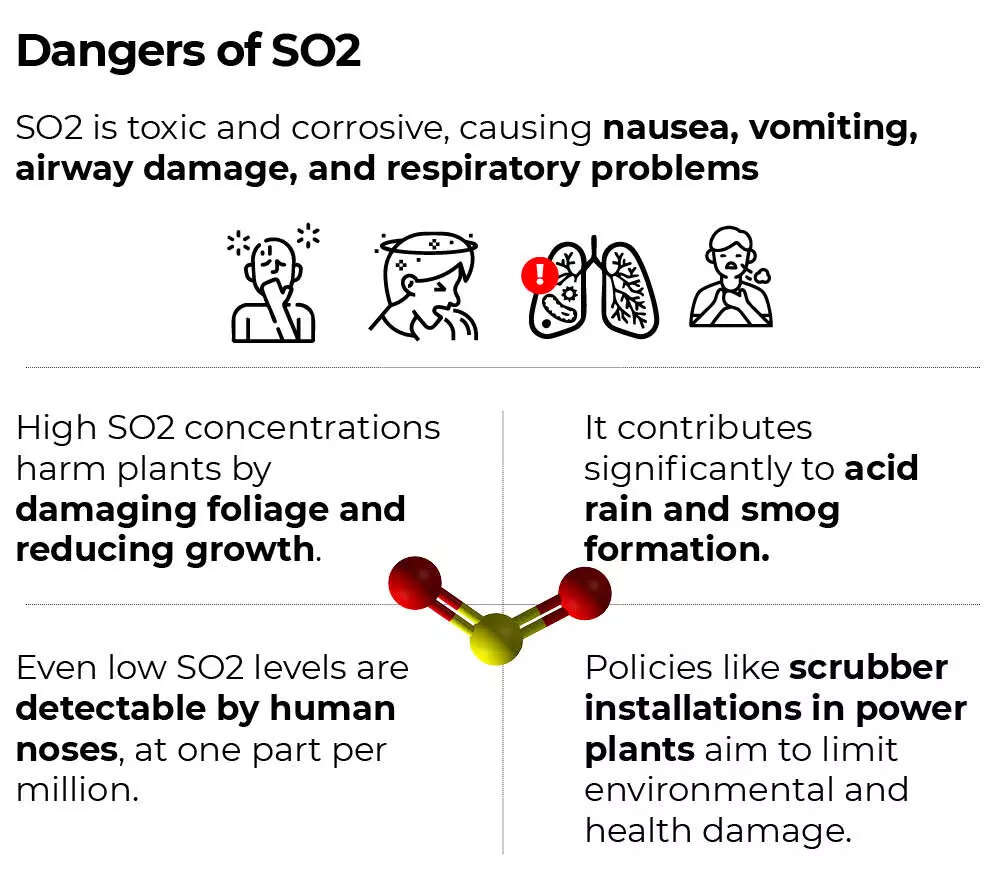
Dangers of SO2

In preserving academic calendars, schools may have inadvertently widened conceptual gaps. And to top it, screen time has emerged as another difficult battle for parents.For some, e-learning sessions have significantly increased the number of hours their children spend in front of screens. For others, avoiding screens altogether feels nearly impossible.Parents point out that online classes add a non-negotiable stretch of screen exposure to a student’s day. However, beyond that, televisions, mobile phones, gaming, and social media continue to contribute to consistent digital engagement.In a landscape where education itself is mediated through devices, setting boundaries is no longer as simple as taking a gadget away. It becomes a delicate balancing act which calls for weighing academic necessity against cognitive rest, connectivity against overexposure.

Shadows in the hallway: The new security normal

If digital shifts represent one dimension of change, recurring bomb threats and hoax emails represent another. It not only becomes a logistical issue but also influences the emotional climate.When it comes to bomb threats and hoax emails, parents’ memories cluster around a new kind of routine disruption. But how is this new chaos impacting children? Where is it driving their sensibility, and how are the schools and parents able to handle it?In a unanimous vote, the parents shared that the schools have done a commendable job in managing the situation without causing unnecessary panic for the students. There might or might not be an evacuation based on the intensity of the threat, but the students were surely not conveyed the panic.The evacuation was carried out calmly, without triggering direct panic among students, and was accompanied by clear and timely communication with parents.
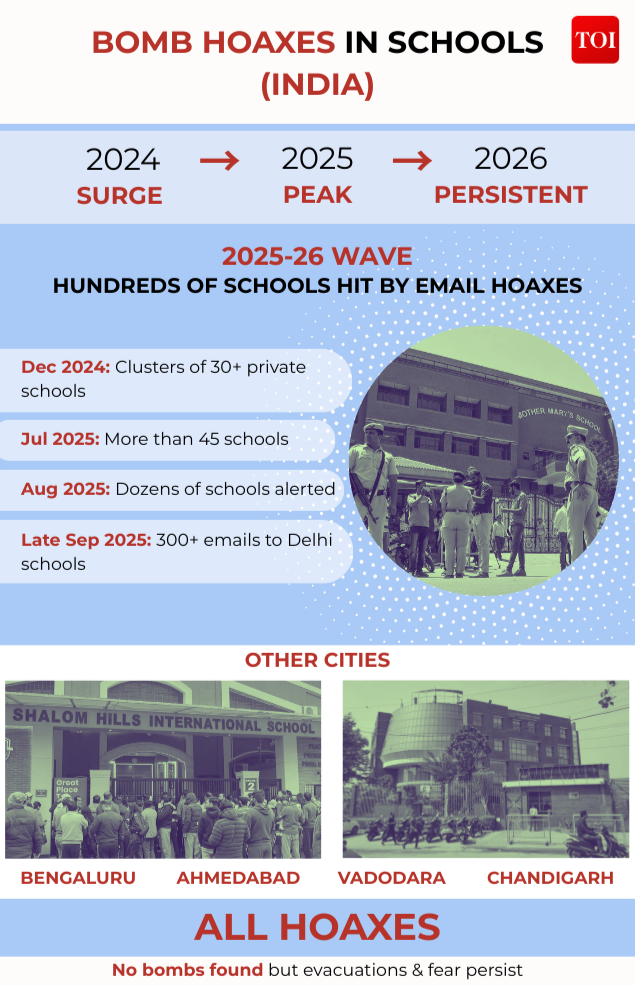
Bomb threats in Indian schools

Bomb threats in Indian schools

For rather younger kids, parents found it best keep the situation discreet for them.Neha Arora, a teacher and a parent based in Delhi, sheds light on the approach. She says, “Considering how young the children are, the school did not make any effort to explain the situation to them in clear or direct terms. We have also consciously kept him away from such news and incidents, as he is still too young to fully understand these concepts.”Older children, however, operate in a different information ecosystem. With access enabled, they have an extended curiosity about what happened.Aakansha Aashu shares how her 15-year-old reacted after his school was evacuated following a bomb threat message. She describes how curiosity shapes their reactions.“My son got deeply involved in discussions. Setting everything else aside, they start talking about who was involved, who the culprit might be, and who did what,” she says, “He didn’t enjoy these conversations, but there was no real sense of fear among them. They didn’t seem frightened either.”Masoom on the inevitability of information flow in the digital age. He goes on to add that his son has been curious about the incidents around in general. Despite being only 10 years old, he reads and understands everything.He attributed this awareness to access to technology. Whether they talk about certain things or not, the kids themselves go on to explore and understand and as a final step, they come back to their parents to get the answers.He says, “In today’s situation, whether I explain things to him or not, he already knows a lot. This information reaches children directly. Even if he does not watch the news, countless content creators are discussing such topics in different ways, some in a serious tone, others humorously or theatrically.He further adds, “Naturally, when children come across such content, they become curious. They try to understand it at their own level and then come to us with questions. He is only 10 years old — but they are certainly aware of more than we might expect.”

The new landscape of normal

At first glance, the contrast can feel almost apocalyptic. But history reminds us that every generation grows up in a version of the world reshaped by its time.What we are seeing today is not just a change in how schools function — it is a shift in what “normal” feels like for children.The simple thrill of an unexpected holiday, the shared pause when life briefly slowed down, the innocence of being shielded from larger anxieties — these small but meaningful parts of childhood are not fading, but is remolding itself.In their place stands a system optimised for stability, but one that asks children to adapt continuously while keeping their curiosity well fed.The question is no longer whether education can continue amid disruption. It clearly can.The more important conversation lies elsewhere: as schools evolve between nostalgia and necessity, how do we preserve the human rhythms, the joy, the pause, the sense of ease of the school day?


Source link

Evening news wrap: PM Modi, Brazilian president set $20 billion trade target; Delhi on alert after terror intel & more | India News


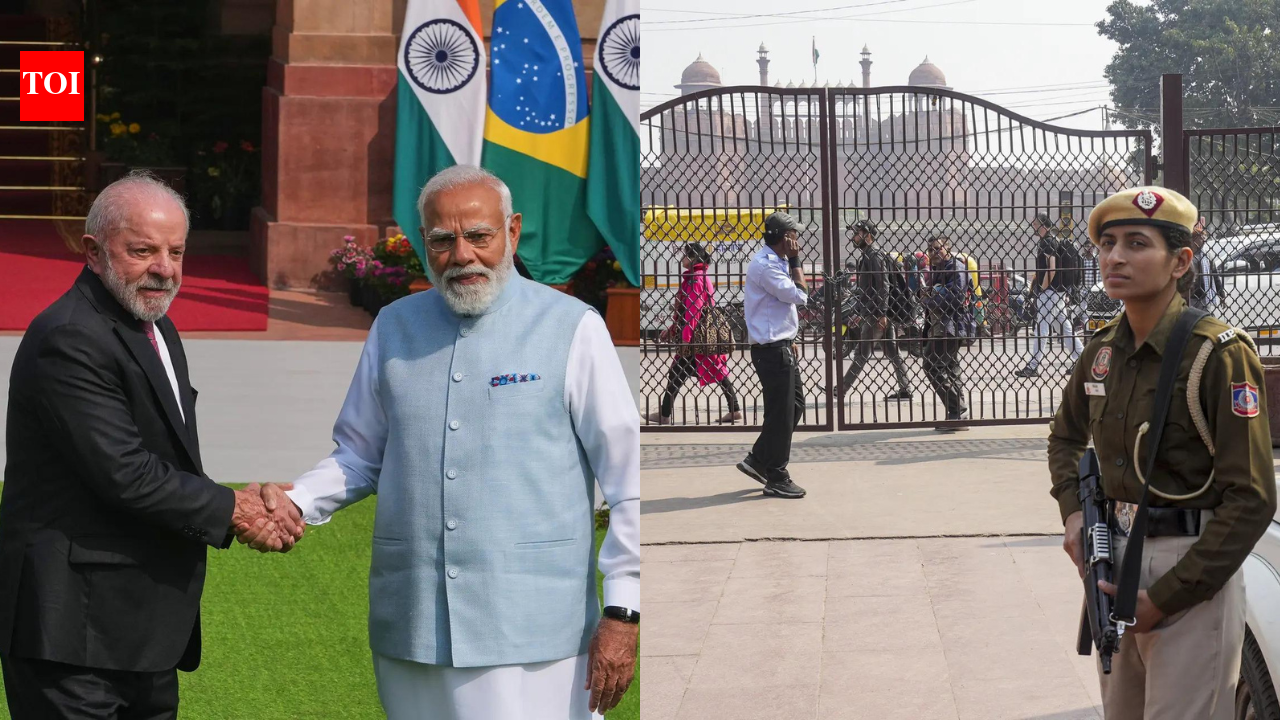
PM Modi Sets 20 Billion Dollar Trade Target As India And Brazil Call Ties A Win Win Partnership

Photo credit: Agencies

  • An intelligence alert has been issued in Delhi over a possible terror threat near the Red Fort and Chandni Chowk area.
  • PM Narendra Modi and Brazilian President Luiz Inácio Lula da Silva set a $20 billion bilateral trade target over five years and signed agreements on digital partnership, rare earths, and mining supply chains during talks in New Delhi.
  • The ministry of commerce said it is closely studying the implications of the Supreme Court of the United States ruling striking down US President Donald Trump’s global tariffs.
  • A Delhi court granted five-day custody to four Indian Youth Congress members for staging a shirtless protest at Bharat Mandapam during the AI summit.
  • Microsoft has appointed Asha Sharma, widely said to be of Indian origin, as chief executive officer of its gaming division, succeeding Phil Spencer.

PM Modi Sets 20 Billion Dollar Trade Target As India And Brazil Call Ties A Win Win Partnership

Delhi on alert: Lashkar-e-Taiba ‘plotting’ IED attack near Red Fort, Chandni Chowk area

An intelligence alert has been issued in Delhi after inputs warned of a possible terror threat near the Red Fort, with sources saying terrorists may target a temple in the Chandni Chowk area and that Pakistan-based outfit Lashkar-e-Taiba is allegedly plotting an IED attack while keeping key religious places on its radar. The inputs also claim the group may be seeking to avenge a February 6 mosque blast in Islamabad, though authorities have not publicly confirmed specific details and security has been tightened at sensitive locations. The alert comes in the backdrop of the November 10 deadly car explosion near Red Fort which killed 15 people. Read full story

PM Modi, Brazil President Lula sign rare earths deal; aim for trade beyond $20 billion

Prime Minister Narendra Modi and Brazilian President Luiz Inácio Lula da Silva set a target of raising bilateral trade to $20 billion within five years and signed three agreements on digital partnership, rare earths and mining supply chains after they held talks in New Delhi during the Brazilian leader’s February 18–22 state visit, with PM Modi saying the goal reflects “trust” and stressing expansion of the India–MERCOSUR pact as Brazil remains India’s largest trading partner in Latin America; the leaders also pledged deeper cooperation in emerging technologies, renewable energy and sustainable fuels, while Lula described the engagement as a meeting of two major Global South democracies and called India a “digital superpower.Read full story

4 Youth Congress workers sent to 5-day custody for ‘shirtless’ protest at the AI Impact Summit

A Delhi court granted five-day police custody of four members of the Indian Youth Congress arrested for staging a shirtless protest inside Bharat Mandapam during the AI Impact Summit, after Delhi Police alleged the demonstration was part of a larger conspiracy possibly linked to a protest pattern seen in Nepal and aimed at defaming the country internationally. Police told the court that the accused raised anti-national slogans against the India–US trade deal, wore T-shirts carrying messages targeting Prime Minister Narendra Modi, and injured three policemen during the protest. Read full story

‘Studying all developments’: India reacts after US Supreme Court strikes down Trump’s tariffs

The government said it is closely studying the developments and implications of the US Supreme Court’s ruling that struck down sweeping global tariffs imposed by US President Donald Trump, with the commerce ministry noting it has taken cognisance of both the judgment and subsequent steps announced by the US administration. The court, in a 6–3 verdict authored by Chief Justice John Roberts, held the tariffs violated federal law, after which Trump called the decision “terrible” and said he would impose a fresh 10% global tariff under Section 122 of the Trade Act of 1974 while keeping existing Section 232 and 301 tariffs in place. He also asserted that the India–US trade deal would remain unaffected. Read full story

Indian-origin executive Asha Sharma named CEO of Microsoft Gaming

Microsoft has appointed Asha Sharma, widely said to be of Indian origin, as chief executive of its gaming division, succeeding longtime Xbox head Phil Spencer, who is retiring after nearly four decades and will remain an adviser through summer, as the company faces slowing growth, rising costs and stiff competition in the global gaming market. Sharma will report directly to chairman and CEO Satya Nadella. The leadership change comes as Microsoft Gaming faces multiple pressures. Read full story


Source link