Breaking News
Bhupen Borah’s BJP switch: Ghosts of past rifts haunt Congress before Assam elections | India News

Former Assam Congress Chief Bhupen Borah to Join BJP, Assam CM Himanta Biswa Sarma Confirms

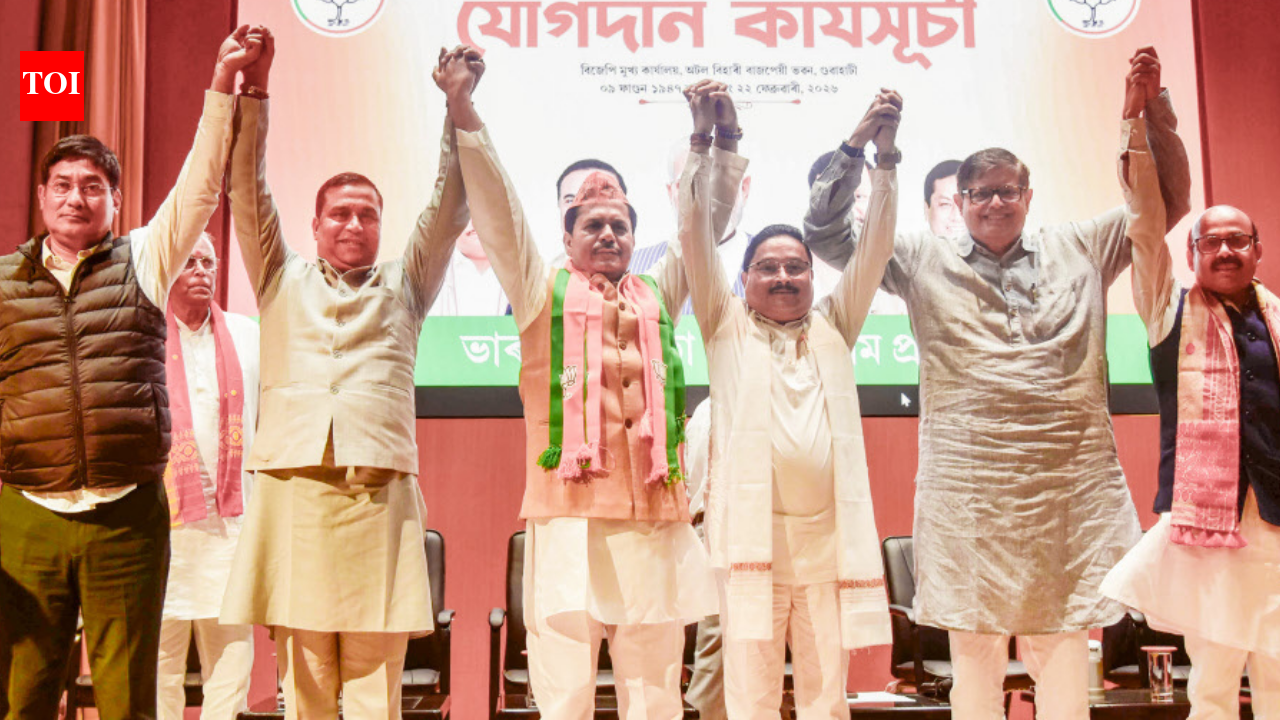
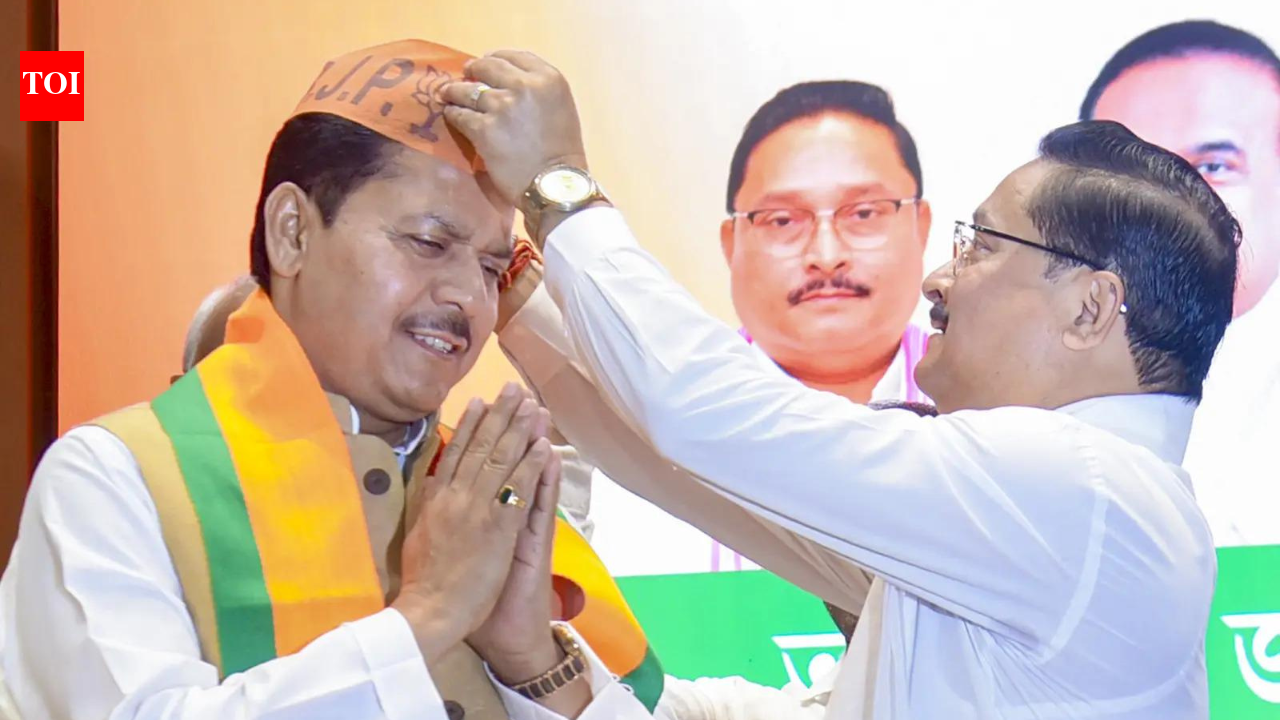
NEW DELHI: Is Congress faltering even before the run-up to the Assam assembly elections?Earlier on Sunday, the Congress in Assam faced its most significant setback yet as former state chief Bhupen Borah formally joined the Bharatiya Janata Party (BJP) at their headquarters, Vajpayee Bhawan. While the defection of a state president is a seismic event in its own right, for the Congress, the true weight of the moment lies in its resemblance to the events of 2015.It appears the “ghosts” of the past have returned to haunt the grand-old party just as the state gears up for the 2026 assembly elections.

Former Assam Congress Chief Bhupen Borah to Join BJP, Assam CM Himanta Biswa Sarma Confirms

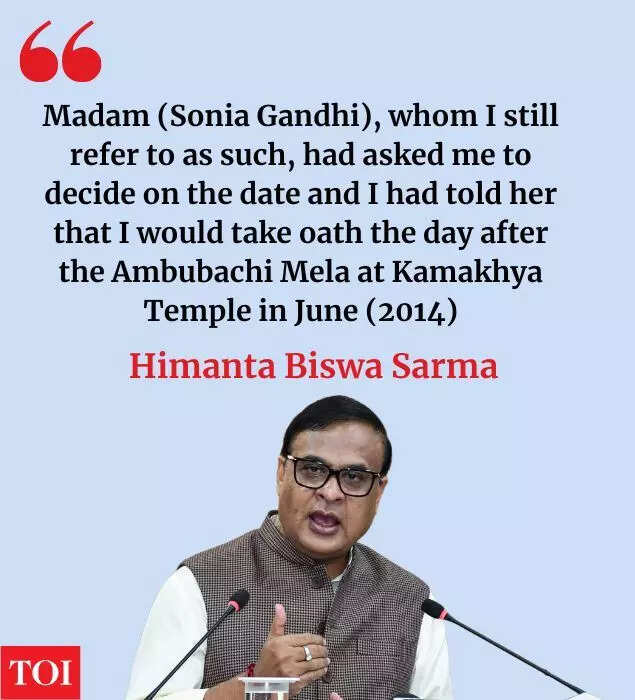
Ahead of the 2016 assembly elections, Himana left Congress after the party high command projected Tarun Gogoi’s son as the face of Assam’s Congress leadership despite Sarma’s key role in managing the 2011 election campaign for the party and helping it win an unprecedented 79 seats in the 126-member assembly.Recalling the event, Sarma recently claimed that Sonia had virtually cleared his name for the chief minister’s post — only for a phone call from Rahul Gandhi to change everything.“Madam (Sonia Gandhi), whom I still refer to as such, had asked me to decide on the date and I had told her that I would take oath the day after the Ambubachi Mela at Kamakhya Temple in June (2014),” he said.
.

“The situation changed after Rahul Gandhi made the calls,” Sarma added.Déjà vuHistory repeated itself in Borah’s case. Following his resignation, Congress leaders reached out to a long-faced Borah but failed. All India Congress Committee (AICC) state in-charge Jitendra Singh stated that Borah had “withdrawn” his resignation after discussions with the party leadership, including Rahul Gandhi, and that the resignation had not been accepted.However, Borah claimed Rahul called him “but did not say a word” about his resignation letter.“He mentioned how we helped the party grow, and he helped me over the years, which is true, but he did not say a word about my resignation letter,” Borah told news agency PTI.
.

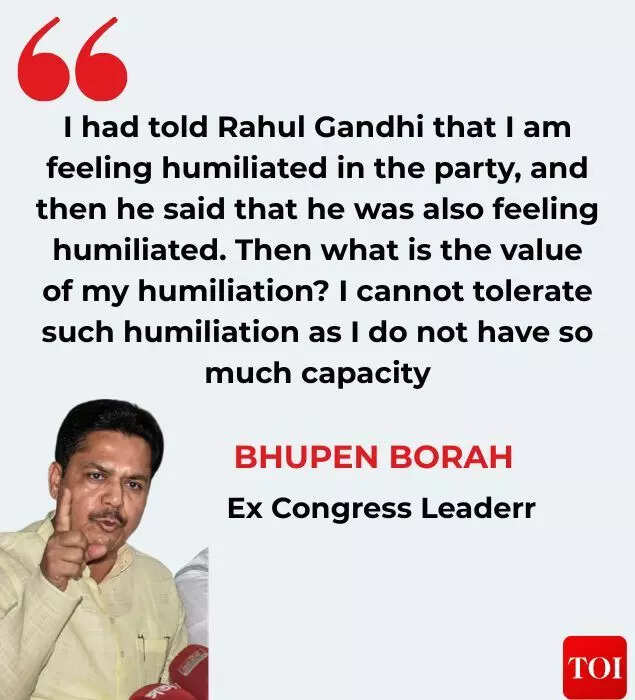
“I had told Rahul Gandhi that I am feeling humiliated in the party, and then he said that he was also feeling humiliated. Then what is the value of my humiliation? I cannot tolerate such humiliation as I do not have so much capacity,” he added.During this time, the Assam chief minister announced that the doors of the BJP were open for Borah, promising that he would help him win from a “safe seat” in the assembly polls.Why Borah cut ties with CongressMany flashpoints contributed to the bitterness between Borah and Congress. In his letter to Kharge, Borah listed his grievances against Gaurav Gogoi and Rakibul Hussain.After resigning from the party, Borah launched an attack on a section of Congress leaders without taking names. He said he was prepared to stay in the Assam Pradesh Congress Committee (APCC) but not in “APCC (R),” in an apparent reference to Hussain.“The prevailing perception in Assam is that the state unit of the Congress is being steered under the influence of Rakibul Hussain, a leadership arrangement that has not found resonance with a substantial section of the majority community in Upper Assam. His apparent connivance with Shri Jitendra Singh has further propelled the party towards calamity, pushing it to the brink of disaster and leading it ominously towards political doom. Politics, after all, is as much about perception as it is about principle, and when confidence erodes across key constituencies, the consequences are neither trivial nor transient,” the letter read.Borah also accused Gogoi of subjecting him to marginalisation in the party’s decision-making process.“Personal reversals I can withstand, but self-respect and dignity are not currencies with which I may barter. I find myself neither consulted on substantive party matters nor accorded the regard befitting a senior colleague. I do not articulate these reflections in a spirit of rancour, but in genuine perplexity as to why I appear to have been subjected to marginalisation at the hands of Gaurav Gogoi and Rakibul Hussain,” the letter read.Later, he alleged that Gogoi had broken the opposition alliance that he had stitched together a few years ago, fearing that if the opposition came to power “by chance,” he might not become the chief minister.“When I was given the responsibility to take the alliance forward once again on February 9, what was the point of including Dhubri MP Rakibul Hussain in the talks?” he asked.“Gogoi perhaps felt that if the alliance took shape, then Bhupen Borah would put everything amicably before Priyanka Gandhi Vadra, threatening his existence,” he claimed.Borah, who was chairman of the ‘Assam Sanmilita Mancha’ — a front of 16 opposition parties — also claimed that before the bypolls to five assembly constituencies in 2024, it was decided that a CPI(ML) candidate would contest the Behali seat as the outfit had secured 40,000 votes in the previous election.“I agreed to it, but my proposal was not considered by the AICC. Two or three leaders from the state unit also started discussing other names. Finally, a person was named as the Congress candidate who, till then, was not even a member of the party,” he said.
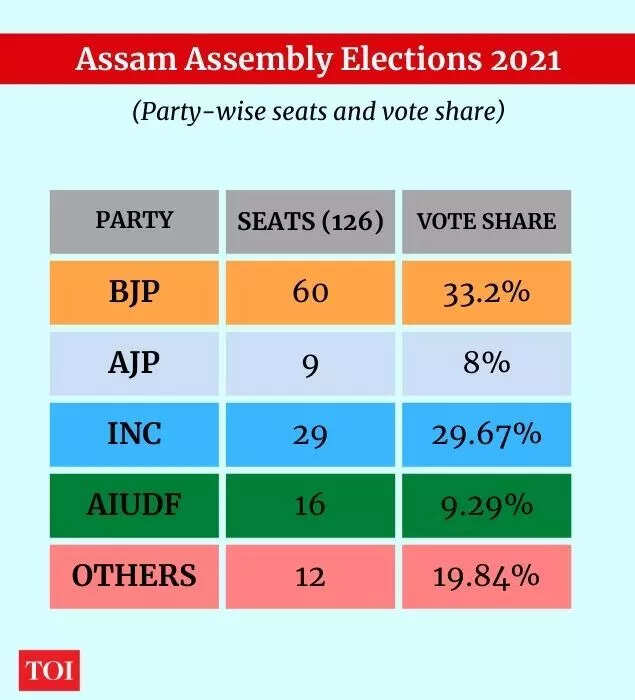
Assam assembly elections 2021

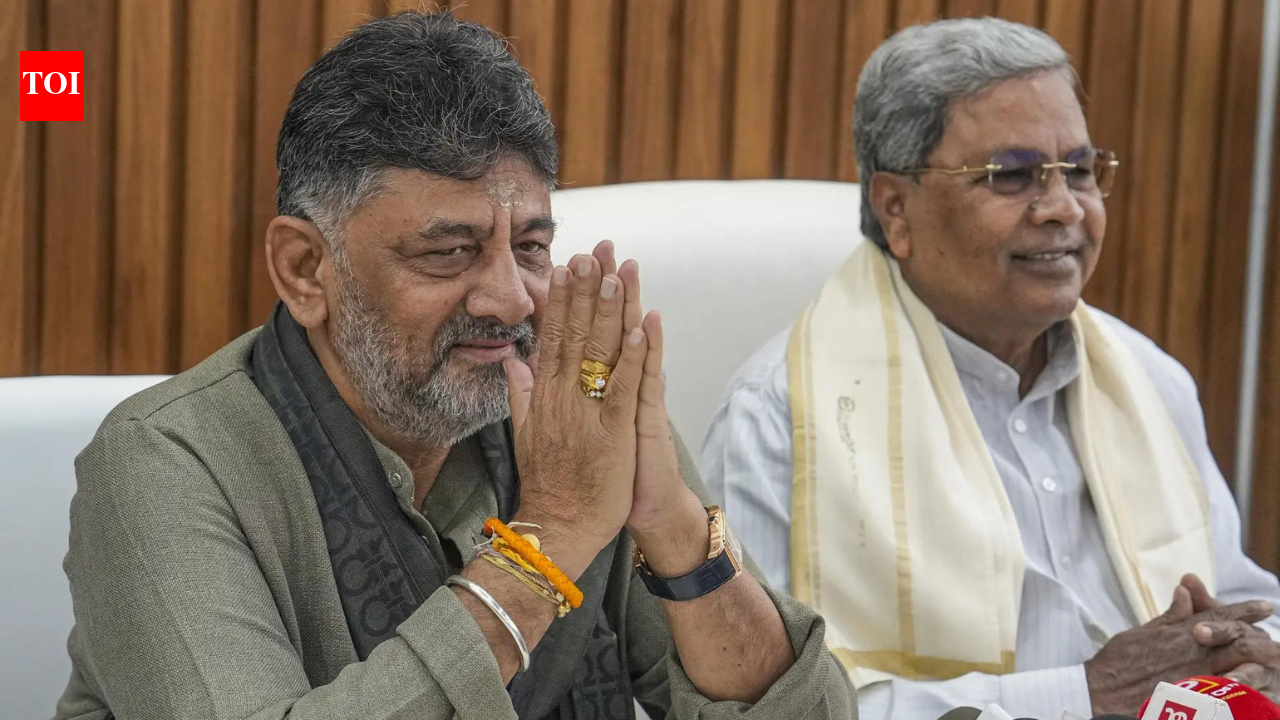
“The leaders of the other alliance parties then told me that if you cannot leave even one seat out of the five, what is there left to discuss for the 126 seats in the next elections? I then resigned as head of the coalition on moral grounds, and the Congress candidate lost badly,” he added.Borah also said that Congress state in-charge Jitendra Singh chaired a meeting with six leaders on February 9, where he was given responsibility for taking forward alliance talks ahead of the assembly polls.“I accepted it as it was the party’s decision. I also felt that an alliance was necessary as Congress could not tackle the BJP alone. I saw a need to unite anti-BJP votes,” he said.He added that the next day, Gogoi told him Rakibul Hussain would be actively involved in the talks.“I told him this was not the decision taken at the meeting. In the meantime, Nagaon Congress MP Pradyut Bordoloi called me and said that if Rakibul was there, he would not tolerate it,” Borah claimed.“Amid this, Gaurav publicly said I was spreading misinformation about leading the talks. I had already spoken to leaders of other parties, including Akhil Gogoi,” he said.‘Congress separating itself from Hindu society’Meanwhile, Assam chief minister Himanta Biswa Sarma claimed Borah’s resignation marked a “separation” of Congress from Hindu society, calling him the last recognised Hindu leader in the state unit.“Bhupen Borah was the last recognised Hindu leader of the Congress,” Sarma said.Sarma asserted that more Congress leaders would cross over to the BJP and claimed disillusioned Muslim leaders might join Raijor Dal.“The BJP will have Raijor Dal and not Congress as its opposition in the 2031 assembly polls,” he claimed.Drawing parallels with his own journey, Sarma said Borah’s resignation reflected deeper issues within Congress.“His resignation carries the symbolic message that in Congress, no one from a normal family can prosper. Congress does not give recognition to people from ordinary families. I hail from an ordinary middle-class family, and the BJP has made me a chief minister,” he said.Congress marred with infights?Assam is not the only state where Congress is facing internal rifts.In Karnataka, chief minister Siddaramaiah and deputy DK Shivakumar have publicly displayed tensions. In Odisha, Mohammed Moquim resigned, citing organisational issues.
.

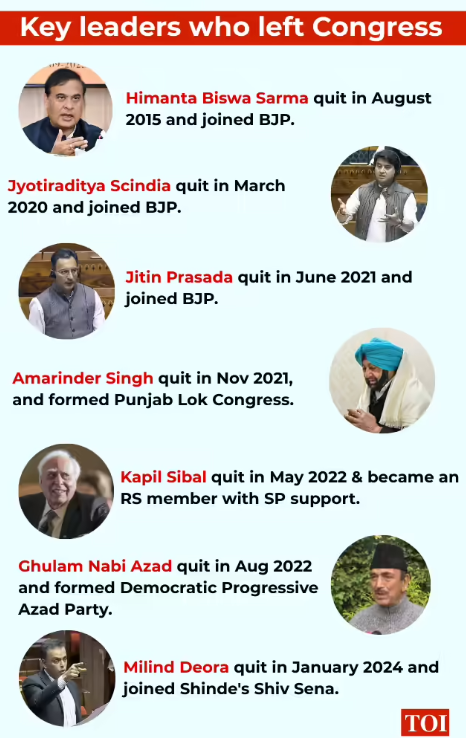
During the Bihar assembly elections, cracks resurfaced within Congress’s state unit. Rebel leaders protested after being denied tickets. The party eventually emerged as the weakest link in its alliance, recording the lowest strike rate among major partners.Borah now joins a growing list of leaders who exited Congress after clashes with the high command or state-level rivalries, including Jyotiraditya Scindia, Ghulam Nabi Azad, and Jitin Prasada, all of whom quit the party to join rivals.In the run-up to assembly elections in the state, the Congress finds itself at a crossroads, trying to navigate not only the BJP but also the familiar internal frictions that have historically hindered its momentum.
Source link

From posters in Delhi to raids in Tamil Nadu & Bengal: How cops busted Pakistan-based terror plot in India | India News


From posters in Delhi to raids in Tamil Nadu & Bengal: How cops busted Pakistan-based terror plot in India
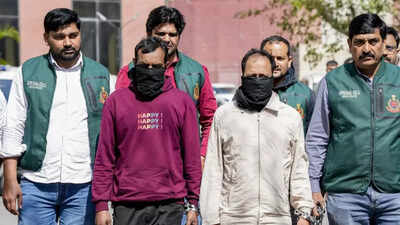
Delhi Police Special Cell arrests 8 accused involved in planning a terror plot linked with Pakistan’s intelligence agency, ISI, and Bangladeshi terrorist organisations. (ANI)

NEW DELHI: The Delhi Police Special Cell has busted a terror module allegedly linked to Pakistan-based Lashkar-e-Taiba (LeT) handlers operating from Bangladesh, arresting eight suspects and preventing what officials described as a major untoward incident.The operation spanned Delhi, West Bengal and Tamil Nadu, uncovering a network accused of pasting anti-national posters, conducting reconnaissance and planning terror activities at the behest of Pakistan’s ISI and Bangladesh-based operatives.

Anti-India posters trigger probe

The case began on February 7, when anti-national posters were found pasted on pillars at the Kashmiri Gate Metro station and nearby locations in Delhi.Addressing a press conference, Additional CP (Special Cell) Pramod Kumar Kushwaha said, “A team from the Special Cell busted a module that was being handled by a Lashkar handler based in Bangladesh. A major untoward incident has been prevented. On February 7th, anti-national posters were pasted on pillars at the Kashmiri Gate Metro station and some nearby metro stations in Delhi. The CISF noticed this and brought it to the attention of the Metro unit of the Delhi Police. The Special Cell team went to Kolkata.” Two suspects Umar Farooq and Bangladeshi national Robil Ul Islam were arrested in Kolkata with the help of local police.Kushwaha said, “With the help of the local police, two people were arrested, and one of these two people was Umar Farooq and with him a Bangladeshi, Robil Ul Islam. Both of them were arrested, and they revealed that anti-India posters were put up at many places in Delhi, the posters that echoed terrorists, were put up by these two. Later, it was found out through interrogation and investigation that the direction to them was being given by Shabbir Ahmed Lone, from Bangladesh.Police sources said that four of the eight accused had earlier come to Delhi and pasted “Free Kashmir” and other provocative posters at a metro station during the AI Summit before returning to Tamil Nadu and West Bengal.

Bangladesh-based handler identified

Investigations revealed that the module was allegedly directed by Shabbir Ahmed Lone, a resident of Ganderbal in Kashmir, currently based in Bangladesh.“In 2007, Shabbir Ahmed Lone was arrested, and AK-47, grenades were found on him, and he had come for ‘fidayeen’ to kill a senior political leader…He remained in jail for many years and was released in 2019. After his release, he again fled to Bangladesh. He is a resident of Ganderbal, Kashmir. Initial investigations have revealed that he reconnected with the LeT leadership and re-established his organisation to carry out terrorist activities,” Kushwaha said.According to police, Lone allegedly reassembled his associates and conducted dry runs in multiple cities.“He (Lone) reassembled his men and conducted dry runs with these men. He had posters put up in various locations. He did so not just in Delhi, but also in Kolkata. On February 10th, he put up anti-India posters at several metro stations and other locations in Kolkata. He also rented a house in Kolkata…” Kushwaha added.

Raids in Tamil Nadu: Dozens mobile phones & SIM cards seized

Further investigation led the Special Cell to Tamil Nadu, where six more suspects, all Bangladeshi nationals were arrested with the assistance of the Tamil Nadu Police.“The investigation revealed that some individuals who are Bangladeshi nationals were in Tamil Nadu. They were going to take them back to Kolkata and plant them in a terrorist activity before they could do anything. The team then went to Tamil Nadu and, with the help of the Tamil Nadu police, arrested six more people, all of whom are Bangladeshi nationals,” Kushwaha said.Earlier, police had identified six accused from Tamil Nadu, Mizanur Rahman, Mohammad Shabat, Umar, Mohammad Litan, Mohammad Shahid and Mohammad Ujjal, who were arrested and brought to Delhi.Two were picked up from Uthukuli, three from Palladam and one from Thirumuruganpoondi. They were working in the garment industry and allegedly concealing their identities using fake Aadhaar cards.During the raids, police recovered dozens of mobile phones and SIM cards. In one phase of the operation alone, eight mobile phones and 16 SIM cards were seized.Officials said the accused were in contact with each other through social media and were allegedly posting content in support of Pakistan-based terrorist organisations. Investigators also suspect the group conducted reconnaissance of several cities.

Larger terror alert

The crackdown comes amid intelligence inputs warning of a possible terror threat in the national capital. Sources said Lashkar-e-Taiba may be plotting an IED attack, with a temple in the Chandni Chowk area and areas around the Red Fort potentially on the radar.“Blast alert in front of the Red Fort in Delhi. Terrorists may target a temple in Chandni Chowk. Lashkar-e-Taiba is plotting an IED attack. They are planning a major terrorist attack in India to avenge the February 6th mosque blast in Islamabad, Pakistan. Major temples in the country can be targeted by Lashkar-e-Taiba,” intelligence sources said.Police said all eight accused are being brought to Delhi for further interrogation and that the investigation is ongoing.


Source link

Evening news wrap: Two JeM terrorists killed in Army operation in J&K’s Kishtwar; PM Modi flags off Meerut Metro & more | India News


Evening news wrap: Two JeM terrorists killed in Army operation in J&K's Kishtwar; PM Modi flags off Meerut Metro & more
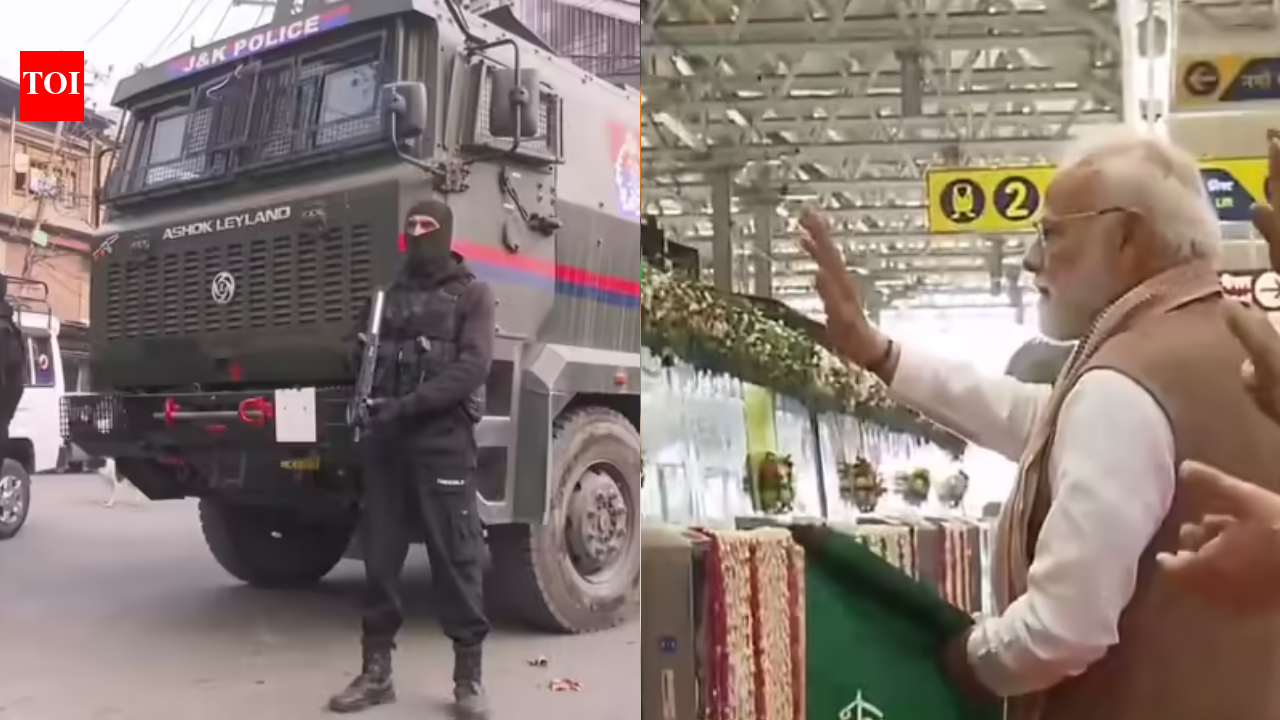
  • Two terrorists affiliated with Pakistan-based Jaish-e-Mohammad were killed in an operation by the Army, police, and CRPF in a forested area of Kishtwar district, Jammu and Kashmir.
  • Prime Minister Narendra Modi inaugurated the Meerut Metro and Namo Bharat RRTS in Meerut, Uttar Pradesh, flagging off the remaining portions of India’s first high-speed RRTS.
  • Eight suspects allegedly linked to Pakistan’s ISI and Bangladesh-based extremist groups were arrested over a possible terror plot targeting Delhi’s Red Fort and temples.
  • Prime Minister Modi strongly denounced the Congress party for the “shirtless” protest staged by Indian Youth Congress workers at the AI Summit in New Delhi.
  • Former CIA officer John Kiriakou claimed on a podcast that the United States has reportedly decided on an imminent military strike against Iran, citing intelligence sources.

Here are the top 5 news of the day:

Two terrorists killed in operation in J&K’s Kishtwar, war-like stores & 2 AK-47 rifles recovered

Two terrorists affiliated with the Pakistan-based terror group Jaish-e-Mohammad were killed in an ongoing encounter between security forces and militants in a remote forest area of Kishtwar district in Jammu and Kashmir after troops launched a search operation in the snow-bound Chatroo forests based on intelligence inputs from J&K police, IB, and other sources; officials said the militants, hiding in a mud house at the base of a hill, opened fire on advancing teams, leading to a fierce exchange in which troops of the Army, coordinating with police and CRPF, neutralised them and recovered war-like stores including two AK-47 rifles. Read full story

PM Modi flags off India’s fastest metro and Namo Bharat train in Meerut

Prime Minister Narendra Modi inaugurated the Meerut Metro and the Namo Bharat Regional Rapid Transit System in Meerut, flagging off the remaining portions of India’s first Namo Bharat RRTS and the country’s fastest metro. The 82 km Delhi–Meerut corridor, with sections in Delhi and Uttar Pradesh, connects major urban centers including Sahibabad, Ghaziabad, Modinagar, and Meerut, reducing travel time to under one hour. During the visit, the Prime Minister also unveiled development projects valued at nearly Rs 12,930 crore. Read full story

Red Fort, temples on radar? Eight suspects with Bangladesh, Pak ISI links held for plotting terror attack in India

Eight suspects allegedly linked to Pakistan’s ISI and Bangladesh-based extremist groups were arrested in Tamil Nadu and West Bengal after intelligence alerts warned of a possible terror plot targeting Delhi’s Red Fort and prominent temples, with Delhi Police saying six suspects were detained across multiple Tamil Nadu locations and two in West Bengal during follow-up action, and that dozens of phones and SIM cards were seized for analysis. Investigators believe the group communicated via social media, posted content supporting Pakistan-based outfits, and that four had earlier travelled to Delhi to paste “Free Kashmir” posters at a metro station during an international summit before returning to Tamil Nadu and West Bengal. Read full story

‘Nation knows your true form’: PM Modi shreds Cong’s ‘dirty, naked politics’ at AI Summit

Prime Minister Narendra Modi sharply criticised the Congress for its “shirtless” protest at the AI summit in New Delhi, accusing it of turning a global event into an arena for “dirty and naked” politics while speaking after flagging off the Namo Bharat train. The shirtless demonstration by workers of the Indian Youth Congress at Bharat Mandapam drew backlash from rivals and some allies including Akhilesh Yadav, who called it inappropriate. Meanwhile the four Indian Youth Congress members were sent to five days’ police custody by Patiala House Court after Delhi Police said they raised anti-national slogans, obstructed officials, and staged the protest before foreign delegates, with charges filed including assault on a public servant, hate speech, and criminal conspiracy. Read full story

Ex-CIA agent claims US has decided on imminent strike against Iran

Former CIA officer John Kiriakou claimed that the United States has made a final decision to launch a military strike against Iran early next week, citing information from a fellow former intelligence official who recently visited the White House. Speaking on the Julian Dorey Podcast, Kiriakou said, “I have a friend, former CIA officer, who was at the White House this morning talking to his friends, and he says that a decision has been made to attack Iran on Monday or Tuesday.Read full story


Source link

What’s in a name? The debate over renaming cities and landmarks | India News


What’s in a name? The debate over renaming cities and landmarks
This image is used for representative purpose only (AI-generated)

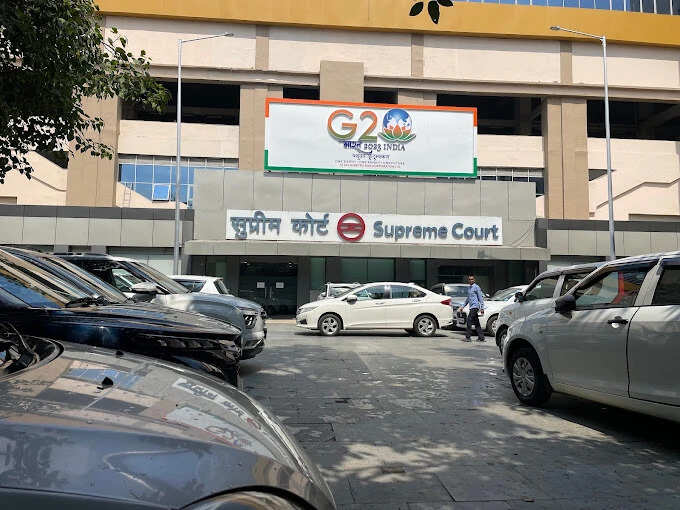
You are travelling on Delhi Metro’s Blue Line. The train slows down. A familiar announcement echoes through the coach: “Agla station hai… Supreme Court.”On the display board, it still reads in Hindi: “सुप्रीम कोर्ट.”For most commuters, it is just another stop. For a few, it sparks a question. If the country’s highest court is officially referred to in Hindi as Sarvochh Nyayalaya,” why does the station continue to use the English name? Think about it. How often do you still call Varanasi by its older, more familiar name—Banaras? Or refer to Prayagraj as Allahabad in everyday conversation? The instinct is almost automatic. Names, after all, are more than administrative labels; they are memories, habits and histories rolled into a single word.Each renaming brings with it fresh signage, updated records and official notifications. But while governments can issue gazette notifications overnight, public memory rarely updates at the same pace. This results in creating a visible overlap of the past and the present, where old names continue in conversation and memory, even as new ones appear on official boards, documents and public announcements.

From Seva Teerth to metro maps: How a name is reshaping public space and law

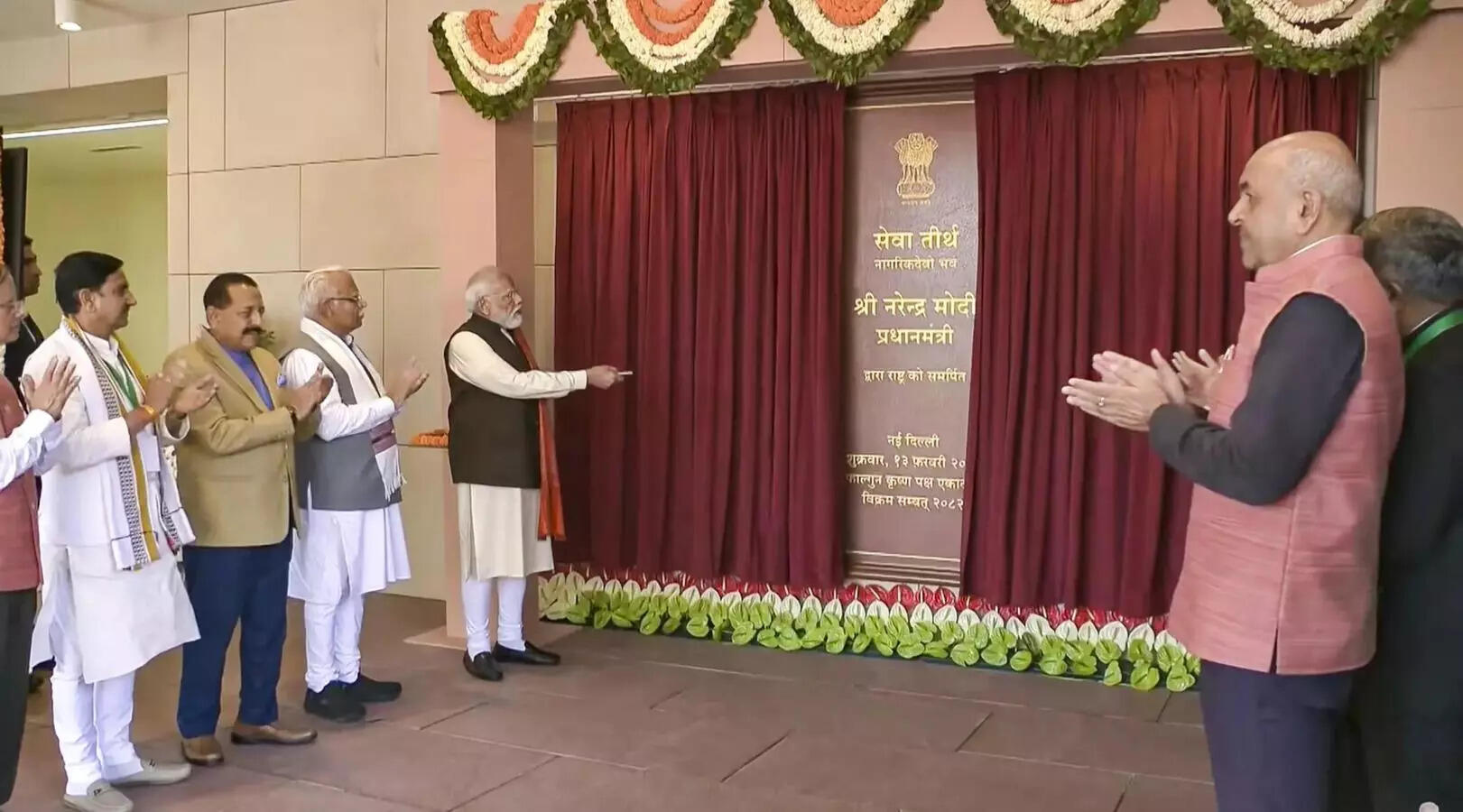
In the heart of the capital, a name change has sparked public discussion, policy attention and administrative implications.Following the renaming of an iconic complex as Seva Teerth, discussions have also extended to process, precedent and legality that have reached the Supreme Court.On February 13, Prime Minister Narendra Modi unveiled the name Seva Teerth for the new building complex housing the Prime Minister’s Office, the National Security Council Secretariat and the Cabinet Secretariat. He formally inaugurated Seva Teerth and Kartavya Bhavan-1 & 2 and addressed a public programme the same evening.

PM Modi inaugurates new PMO building (PTI image)

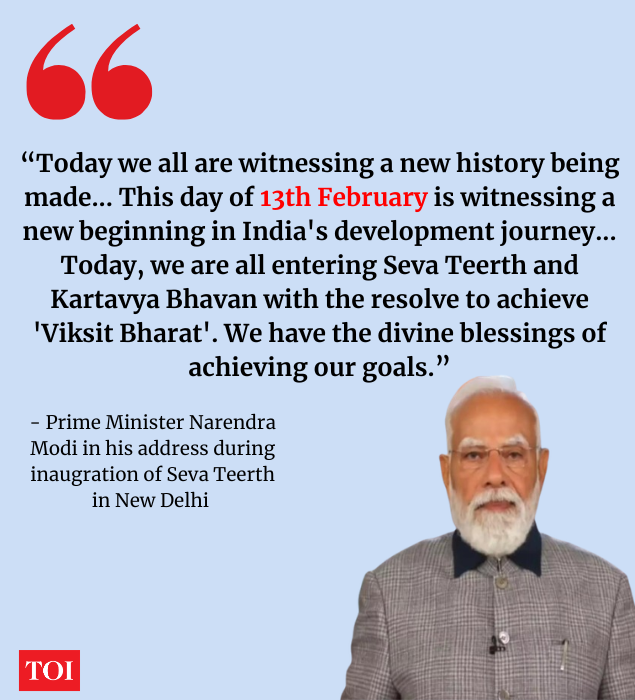
The government described the inauguration as “a transformative milestone in India’s administrative governance architecture,” stating that the new complexes consolidate ministries that were earlier functioning from fragmented and ageing infrastructure across the Central Vista area.Kartavya Bhavan-1 and 2 accommodate key ministries including Finance, Defence, Health & Family Welfare, Corporate Affairs, Education, Culture, Law & Justice, Information & Broadcasting, Agriculture & Farmers Welfare, Chemicals & Fertilizers and Tribal Affairs.Addressing the gathering, PM Modi said: “Today we all are witnessing a new history being made… This day of 13th February is witnessing a new beginning in India’s development journey… Today, we are all entering Seva Teerth and Kartavya Bhavan with the resolve to achieve ‘Viksit Bharat’. We have the divine blessings of achieving our goals.”

PM Modi's address during Seva Teerth inauguration

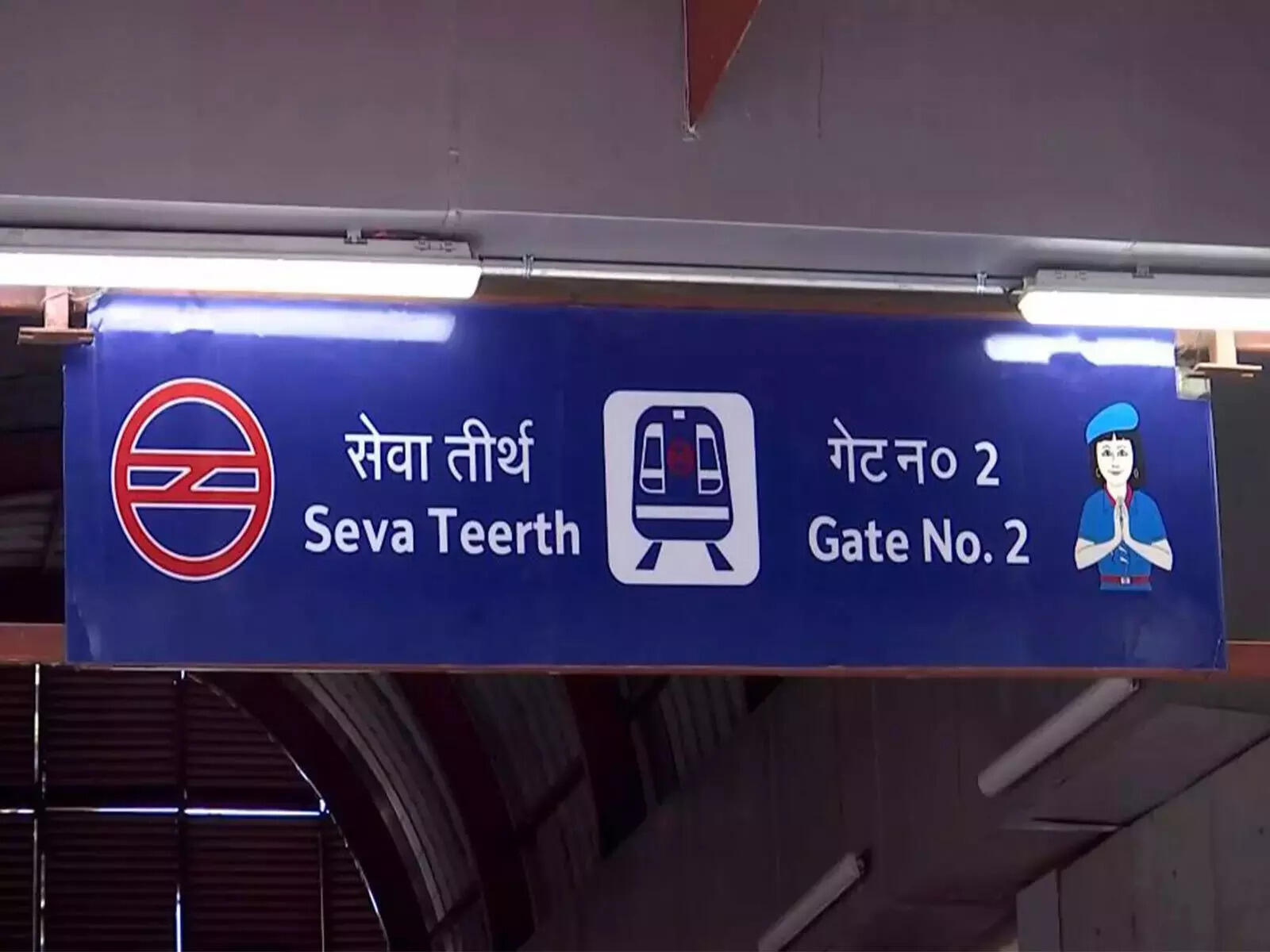
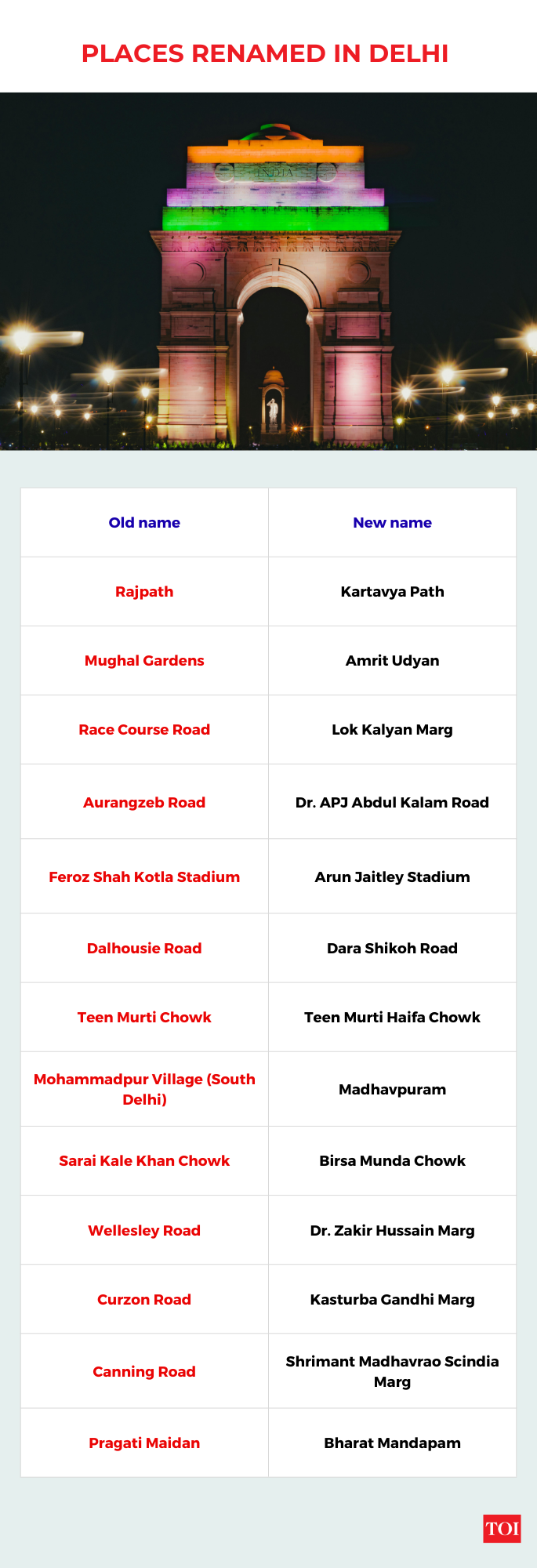
A day after the unveiling of the PMO complex, the Udyog Bhawan Metro Station on the Yellow Line was renamed Seva Teerth. The station lies beside Lok Kalyan Marg (earlier called Race Course) and serves lakhs of commuters across the capital.The renaming aligns with the government’s broader move since 2014 to shift away from colonial-era nomenclature. Over the years, Race Course Road became Lok Kalyan Marg, Rajpath became Kartavya Path and other similar changes were introduced.

Delhi's Udyog Bhawan Metro Station renamed to Seva Teerth (ANI image)

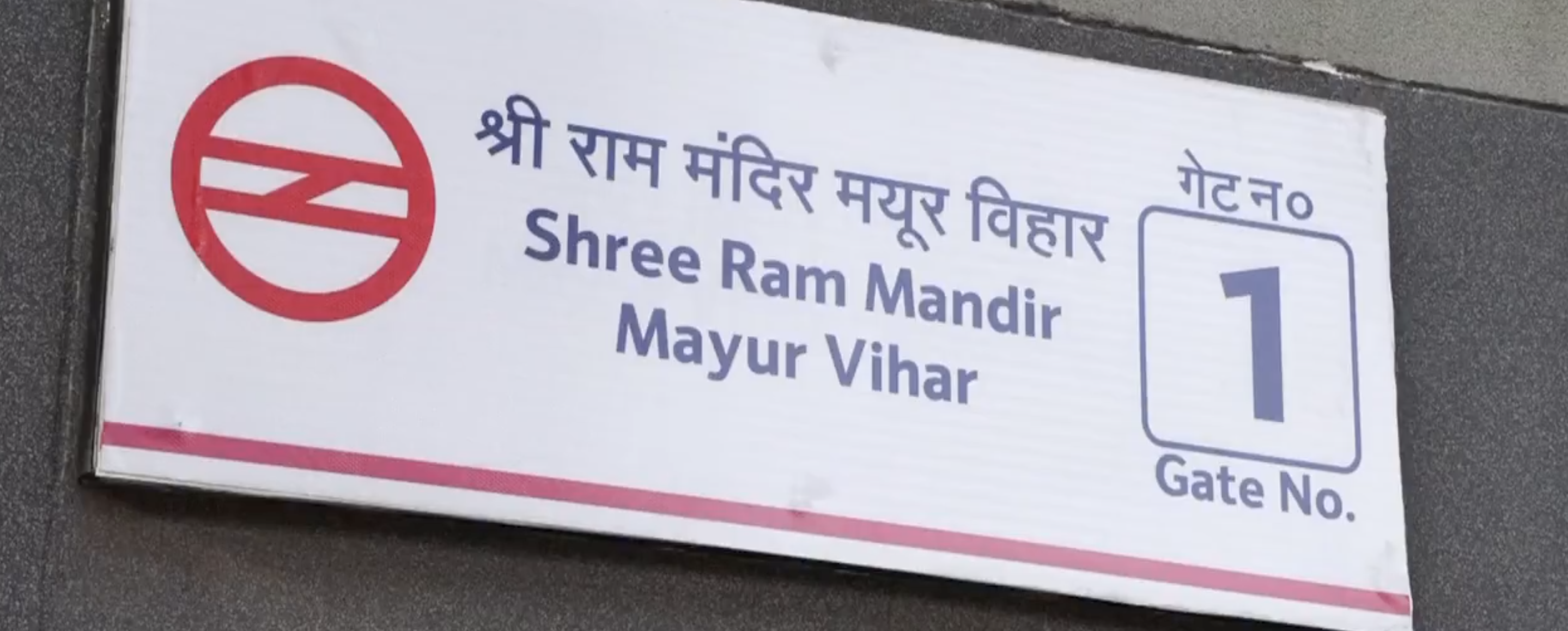
Another recent example is the Mayur Vihar Pocket 1 Metro Station, now renamed Shree Ram Mandir Mayur Vihar. The station, located on the Pink Line, connects major transit points including Anand Vihar Railway Station, Rajouri Garden and Lajpat Nagar.Explaining the decision, a local resident and Sanatan Dharm Sabha patron Govind Singh Pawar said: “People used to get confused between Mayur Vihar Phase 1 and Mayur Vihar Pocket 1. The BJP government, which promotes Sanatan Dharma, has corrected this. The people are very happy with this decision.”

.

.

“I don’t really see any harm in changing metro station names. But yeah, it can be confusing for people who don’t travel every day. Someone who visited Mayur Vihar Pocket 1 earlier might struggle to find it again on the map after the name change. It’s a small issue though, people will get used to it over time. Mayur Vihar connects to Noida and Ghaziabad, so many students and working professionals live here, and I don’t think this will affect their daily lives much,” a local resident said.

Places renamed in Delhi

A plea before the Delhi high court seeks to designate the Hindi name of the Supreme Court Metro Station as ‘Sarvochh Nyayalaya’ instead of simply writing ‘Supreme Court’ in Devanagari script.Advocate Umesh Sharma, who filed the petition, told the court: “The Metro station had been named ‘Supreme Court’. We demanded that its name be ‘Sarvochh Nyayalaya’… On the Supreme Court’s board and website it is written as ‘Sarvochh Nyayalaya’.”He argued that under the Official Languages Act, 1963, Hindi in Devanagari script must be used appropriately and that merely transliterating the English term does not fulfil the mandate.Appearing before the Delhi high court, the Delhi Metro Rail Corporation (DMRC) opposed the plea, citing financial and operational concerns. Counsel for DMRC submitted: “It comes as a financial burden. One such change is 40-45 lakh per station… It will involve a change in the roadmap. It’s a PSU and the public’s money.”The corporation also warned of a potential ripple effect, stating that similar litigations could follow if the change were allowed.However, the court observed: “Multiple litigation is not (the defence). We have to honour the act.”It directed the Centre and the DMRC to file affidavits, keeping in view the Official Languages Act, 1963 and the Official Languages (Use for Official Purposes of the Union) Rules, 1976.

The law behind a name: What the Constitution says on renaming?

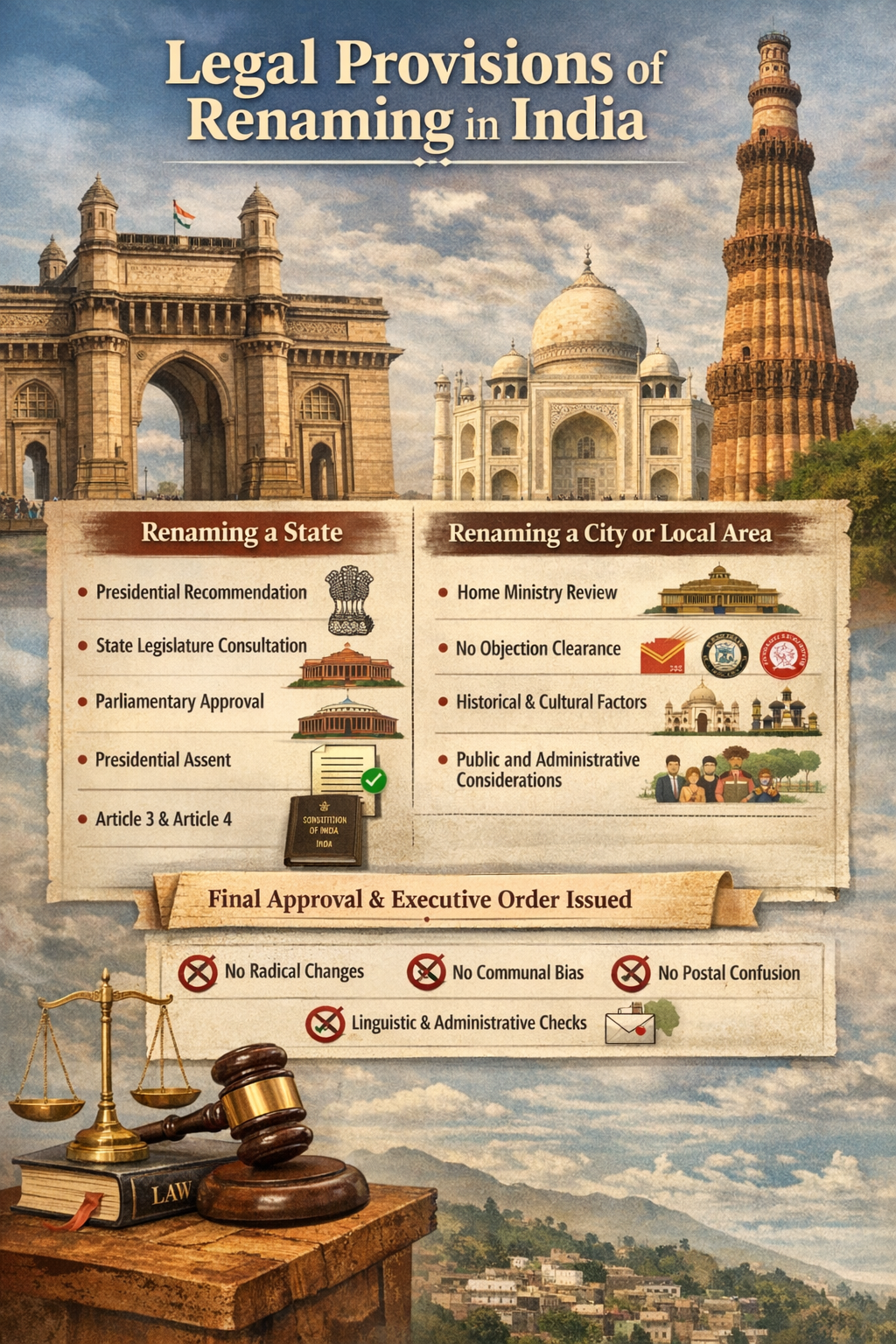
The legal framework governing the renaming of places in India differs depending on whether the change involves a state or a city/local area. The Constitution lays down a clear procedure for states, while cities are guided by legislative powers and central guidelines.The Constitution of India provides for the renaming of a state under Article 3. It empowers Parliament to form new states and alter the areas, boundaries or names of existing states by law.Under this provision:

  • A bill for renaming a state can be introduced in Parliament only on the recommendation of the President.
  • Before the bill is introduced, the President refers it to the concerned State Legislature to express its views within a specified period.
  • The views of the State Legislature are not binding on Parliament, but they must be taken into consideration.
  • The bill must be passed by a simple majority in both Houses of Parliament.
  • After passage, the bill is sent to the President for approval, and upon assent, it becomes law.

Article 4 complements Article 3 by enabling Parliament to make consequential amendments necessary to give effect to such changes.

.

.

The procedure for renaming a state can be initiated either by Parliament or by a State Legislature passing a resolution and sending it to the Central Government for approval. The Central Government then introduces the bill in Parliament after obtaining the President’s recommendation.At the central level, the proposal is examined by the ministry of home affairs in consultation with concerned agencies. Approval is granted only after obtaining no objections from:

  • The Department of Posts
  • The Survey of India
  • The Ministry of Railways

These agencies confirm that there is no other village, town or city with a similar name in official records that could create administrative confusion.The Central Government considers factors such as:

  • Historical significance
  • Public sentiment
  • Linguistic affinity
  • Administrative convenience
  • National integration

Guidelines issued in 1953 further state that:

  • The change should not involve a radical alteration but may allow phonetic correction or transliteration.
  • It should not be based on communal or sectarian considerations.
  • It should not create confusion for postal, railway or other services.
  • It should not adversely affect the interests of any other state or union territory.

After scrutiny and approvals, an executive order is issued formalising the renaming.

The administrative cost: What renaming entails

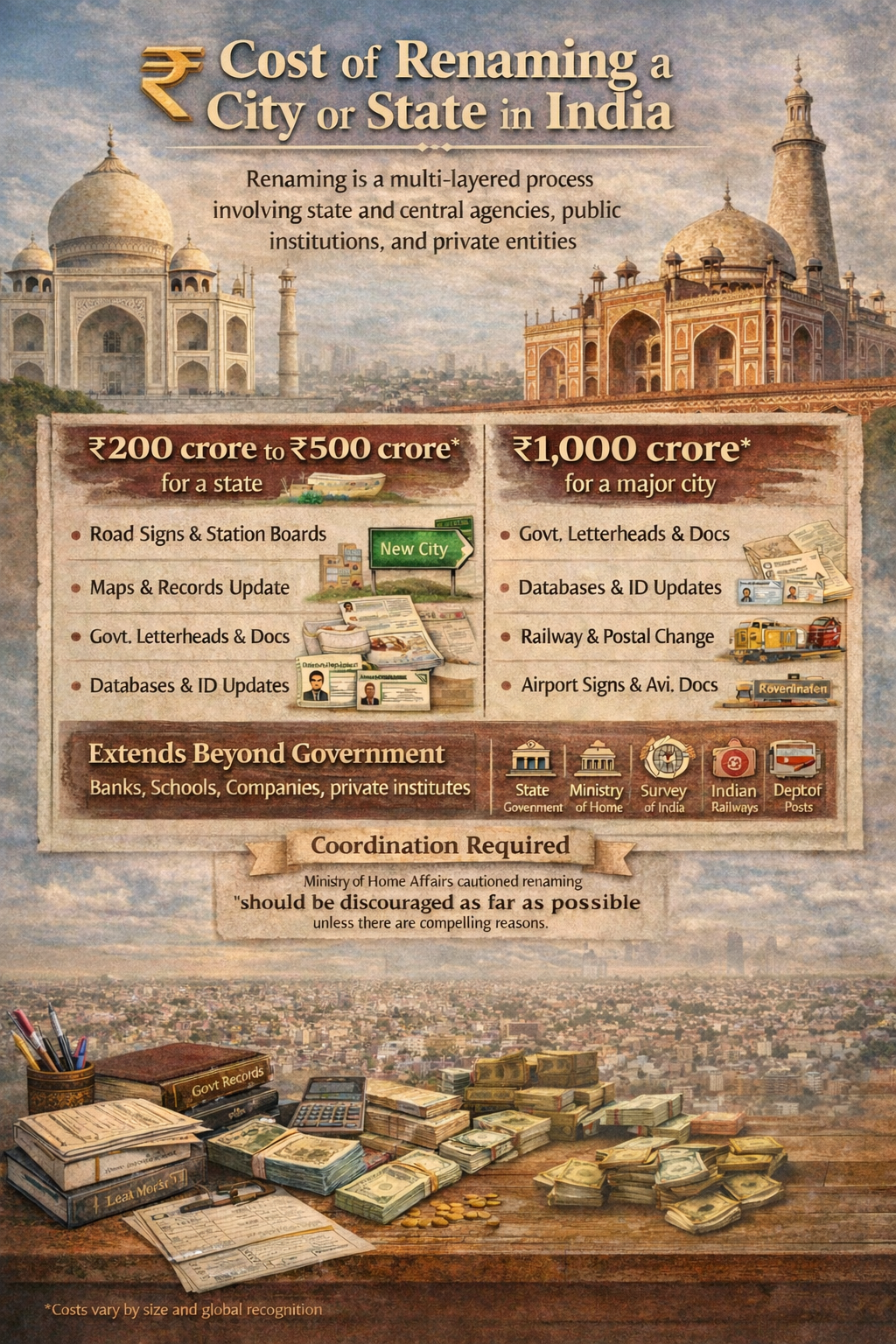
Renaming a city or state is not limited to replacing a signboard — it triggers a multi-layered administrative overhaul involving state and central agencies, public institutions and private entities.The material shows that the cost of renaming a city or state can range from Rs 200 crore to Rs 500 crore, depending on its size and global recognition. In the case of a major city, estimates suggest that the figure can go up to Rs 1,000 crore.

  • The renaming of Allahabad to Prayagraj reportedly cost over Rs 300 crore, according to government estimates.
  • The Indian Railways spent Rs 2.5 crore to change Bombay to Mumbai on signboards, tickets and timetables in 1995.
  • Using a revenue-based estimation model, the projected cost of renaming India to Bharat was calculated at approximately Rs 14,304 crore, according to government of finance.

The expenditure typically covers:

  • Updating road signage, highway markers and railway station boards
  • Revising official maps and land records
  • Changing government stationery and departmental documentation
  • Modifying databases across ministries and civic authorities
  • Updating railway tickets, timetables and postal records
  • Adjusting airport signage and aviation documentation
  • Changes to Aadhaar, passports, voter IDs and other official records

Beyond government departments, private institutions like banks, schools, businesses and corporate houses must also update their records, branding and promotional material. This involves both direct expenditure and indirect administrative costs.

.

.

The process requires coordination between the State Government, the Ministry of Home Affairs, the Survey of India, the Railways and the Department of Posts. Government guidelines have historically outlined considerations for renaming proposals. For instance, a 1953 Ministry of Home Affairs communication noted that it “should be discouraged as far as possible unless there are compelling reasons,” observing that such changes create confusion and administrative burden.

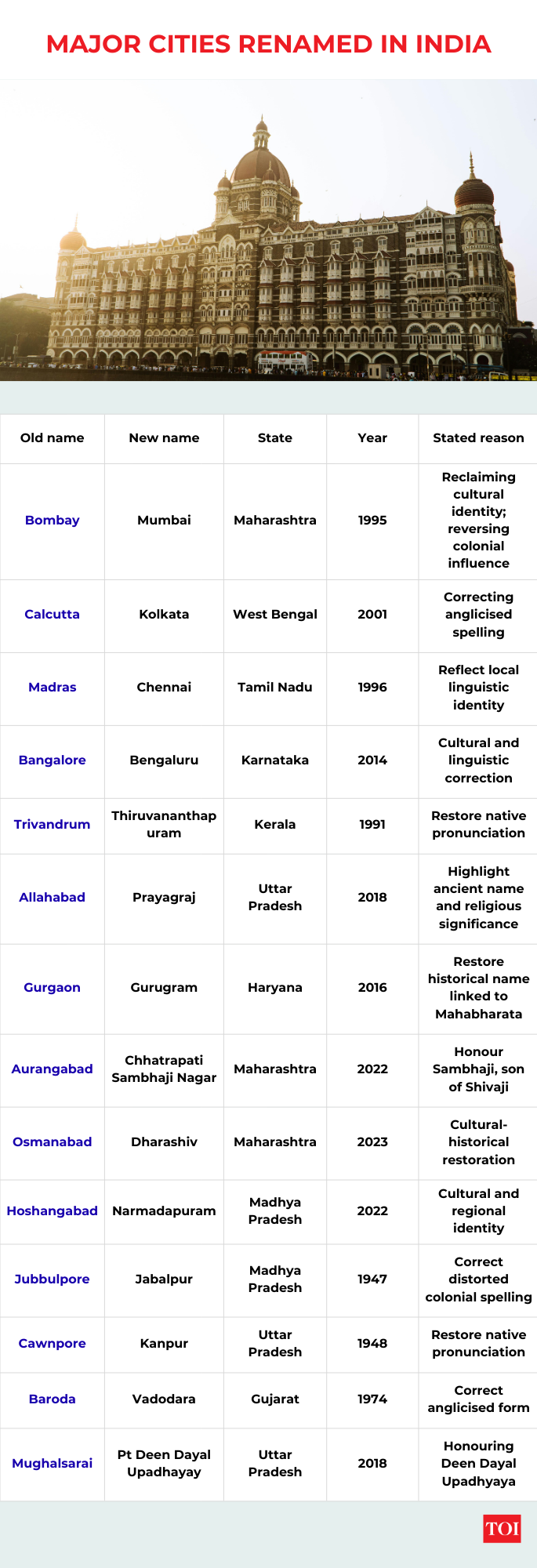
List of cities renamed

The material also highlights that renaming affects not only local systems but district, state, national and even international documentation. In a country as large and diverse as India, this coordination significantly increases logistical complexity.

Identity, impact and the Supreme Court: Advantages, challenges and the 2023 ruling

Renaming a place is driven by multiple factors. The rationale behind renaming includes:

  • Rapid urbanisation, with India projected to add 416 million people to cities by 2050, requiring new infrastructure and names.
  • Reclaiming identity by correcting anglicised or distorted spellings imposed during colonial rule.
  • Honouring national leaders, martyrs and culturally significant figures.
  • Asserting linguistic and cultural identity of regions.
  • Political repositioning and symbolic shifts in public memory.

Supporters argue that renaming can:

  • Instil pride, dignity and a sense of belonging among residents
  • Preserve and revive cultural heritage and civilisational consciousness
  • Correct historical distortions in spelling and pronunciation
  • Shape the values inscribed in public space
  • Build a distinctive brand identity that may attract tourism and investment

On the loop side there can be several challenges associated as well:

  • Confusion in a global economy once a city has achieved international recognition
  • Administrative inconvenience and extensive paperwork updates
  • Economic strain due to large public expenditure.
  • Emotional and cultural resistance from residents accustomed to older names
  • Risk of social division and political polarisation
  • Possible erosion of historical continuity and public memory

In 2023, the Supreme Court dismissed a Public Interest Litigation seeking the formation of a renaming commission focused on “ancient India” and restoration of names allegedly altered by “barbaric invaders”.

Supreme Court metro station (Image/X)

The bench made it clear that the “country cannot remain a prisoner of the past.” It observed that selectively invoking history could create divisions”.

What’s in a name? Perhaps everything.

You are still in that metro coach. The announcement has passed, the doors have opened and closed, and the train has moved on.Centuries ago, William Shakespeare wrote in Romeo and Juliet:

“What’s in a name? That which we call a rose,By any other name would smell as sweet.”

William Shakespeare

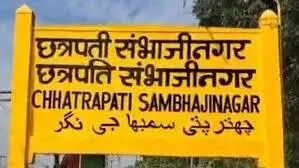
The line suggests that essence matters more than labels. Yet in modern India, names are rarely just labels. They carry history, memory, politics and identity. From Calcutta becoming Kolkata to Aurangabad being renamed Chhatrapati Sambhaji Nagar, each decision is framed as restoration, assertion or correction.

Aurangabad renamed to Chhatrapati Sambhajinagar (Image/X)

But even as official notifications are issued and signboards replaced, conversations at tea stalls, in homes and on public transport often tell a different story. Banaras survives in speech. Allahabad slips into daily vocabulary. Old and new coexist.In India, names often carry layers of history, memory and identity. They are reflections of power, pride, protest, policy and perception. They can unify, divide, restore or rebrand. They can cost hundreds of crores or just a few strokes of ink in a gazette. But they always mean something.So the next time the metro announcement echoes through the coach, whether it says Supreme Court or Sarvochh Nyayalaya, the question may not simply be what the station is called.It may be what we choose to remember when we hear it.

From India To Bharat: PM Modi’s Nameplate Grabs Eyes, Draws Global Attention At AI Impact Summit


Source link

‘We need a change’: Karnataka Congress MP Iqbal pushes for swift CM switch; hints at DKS crucial Delhi meeting | India News


'We need a change': Karnataka Congress MP Iqbal pushes for swift CM switch; hints at DKS crucial Delhi meeting

NEW DELHI: Congress MLA HA Iqbal Hussain has renewed pressure on the Congress high command to swiftly resolve the uncertainty over a possible change of leadership in Karnataka, even as the power tussle between chief minister Siddaramaiah and his deputy DK Shivakumar refuses to die down.Speaking amid continuing speculation over a mid-term switch of the chief minister’s post to DK Shivakumar, Hussain said, “We need a change, we are asking for others to be given a chance. We are only asking for a change from an election perspective.”

Congress In Damage Control Mode After Mani Shankar Aiyar’s Baton Remark To Kerala Chief Minister

Insisting there is no groupism or vested interest, he said, “Apart from that, there is no factionalism or vested interests. The high command should quickly resolve the confusion regarding the leadership change. This is the demand of all the MLAs and ministers, including me. Draw the curtain without giving room for confusion.”Hinting towards a possible meeting between deputy CM Shivakumar and the Congress high command, he further added, “There is information that DCM D. K. Shivakumar has been asked to come to Delhi again to meet the party high command on February 26.”Siddaramaiah’s camp emphasises governance and warns against unsettling the AHINDA coalition, while Shivakumar stresses unity but hints at a resolution soon. Recent meetings, including PWD minister Satish Jarkiholi’s with AICC chief Mallikarjun Kharge, signal the high command’s intent to decide “soon”, with Shivakumar’s February 26 Delhi visit seen as pivotal. Party insiders note Shivakumar has pressed for a legislature party meeting by late February, aligning with this timeline.

High command’s Catch-22 dilemma

The central leadership faces a bind: backing Shivakumar risks alienating Lingayat and minority voters tied to Siddaramaiah, while retaining him could demotivate the Vokkaliga base and organisational machinery under Shivakumar. Kharge has promised a collective decision involving Rahul and Sonia Gandhi, with both leaders likely summoned post-February 26 talks. Hussain’s intervention, tying the “draw the curtain” plea to the Delhi meeting, highlights how the February 26 rendezvous could finally break the deadlock in Karnataka’s protracted power tussle.


Source link

‘Abki baar Trump se haar’: Congress targets Centre over Trump tariffs; slams India-US trade deal | India News


'Abki baar Trump se haar': Congress targets Centre over Trump tariffs; slams India-US trade deal
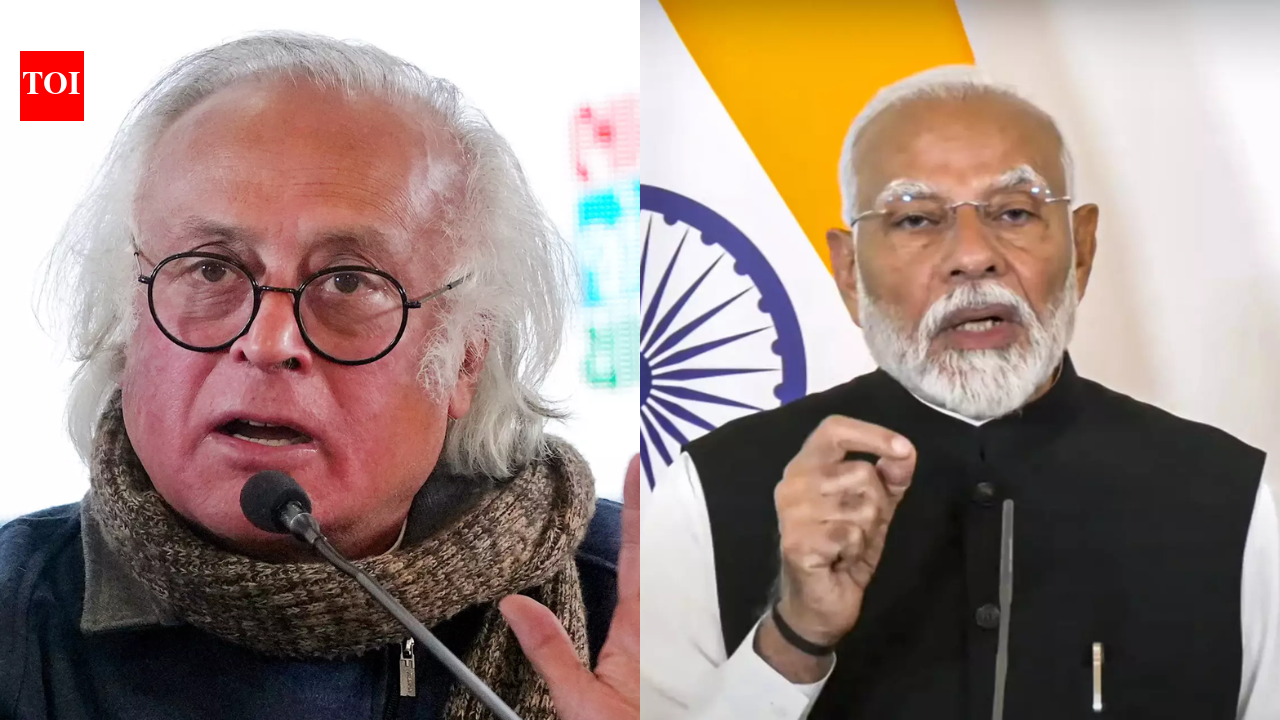
Jairam Ramesh, left, and PM Modi

NEW DELHI: Congress general secretary in-charge communications Jairam Ramesh on Sunday stepped up his attack on the Centre over the proposed India-US interim trade agreement, saying it was reflective of “Abki baar Trump se haar” and should be put in “cold storage.His remarks came amid confusion following a US Supreme Court verdict striking down President Donald Trump’s earlier global tariffs.He said the terms of the framework must be renegotiated and the clause on import liberalisation, especially of agricultural products, scrapped, arguing that India had conceded without adequate gains.“Prime Minister Narendra Modi had given a slogan in Houston in 2019 — ‘Abki baar Trump Sarkaar’ but this framework for an interim agreement is proof of ‘Abki baar Trump se haar’,” he told PTI.Ramesh pointed out that the framework allows either side to modify commitments in case of changes, and said India had the right to revise its obligations after Trump altered tariffs. “The first commitment we have made is to reduce or eliminate tariffs on a wide range of food and agricultural products. Our demand to the PM is to put this in cold storage,” he said.According to him, India had committed to eliminate or cut import duties on all US industrial goods and a wide range of American food and agricultural products — a provision that should be changed under the joint statement. He warned that soybean, maize, fruits and nuts, and cotton farmers in Jammu and Kashmir, Bihar, Madhya Pradesh, Rajasthan, Maharashtra and Himachal Pradesh would be directly affected.“Our second question is that when the PM, the commerce minister (Piyush Goyal), knew from December that any time (now) the Supreme Court verdict could come, many believed that it could be struck down. Why did you hurriedly strike a deal when you knew the verdict could go against Trump,” he said.“I hope in light of the massive confusion that surrounds this issue, this joint statement is put on cold storage, we renegotiate the terms, this is a one-sided deal. This will be detrimental to the interests of lakhs and lakhs of farmers in different states of the country,” Ramesh added.Questioning the timing of the announcement, he asked what happened on February 2 that led the prime minister to “force” President Trump to announce the trade deal. “This is directly linked to Mr. Rahul Gandhi’s attack in Parliament on the PM on the failures on the external security front. So this announcement of the deal was part of managing the news and the headlines,” he alleged.Sharpening his campaign, Ramesh said the Congress would organise a “Maha Kisan Maha Chaupal” in multiple states to mobilise farmers and discuss the potential fallout of the evolving trade deal.“We’ll have a Maha Kisan Maha Chaupal in Bhopal, in Yavatmal, Maharashtra, on 7th March, and later in Sri Ganganagar, Rajasthan. We’re in touch with farmers’ organisations. We’ll work with them too. Three black laws were withdrawn. It took 14-15 months, but PM Modi was forced to withdraw them. Prime Minister does ‘taareef’, while Trump keeps imposing ‘tariffs’. I’m telling you this based on President Trump’s statements,” he told ANI.The remarks came days after the US Supreme Court struck down most of Trump’s sweeping tariff measures, ruling 6-3 that the administration exceeded its authority by using the International Emergency Economic Powers Act of 1977 to impose broad import tariffs. The Court held that the power to levy taxes rests primarily with Congress.Following the ruling, Trump announced a new 10 per cent global tariff on all countries under Section 122 of the Trade Act of 1974 as a temporary import surcharge of up to 15 per cent for 150 days to address balance-of-payments deficits. He later raised it to the “fully allowed, and legally tested, 15% level,” effective immediately.


Source link

‘Very touched’: Brazilian President Lula reacts after Portuguese songs played during lunch with PM Modi | India News


‘Very touched’: Brazilian President Lula reacts after Portuguese songs played during lunch with PM Modi

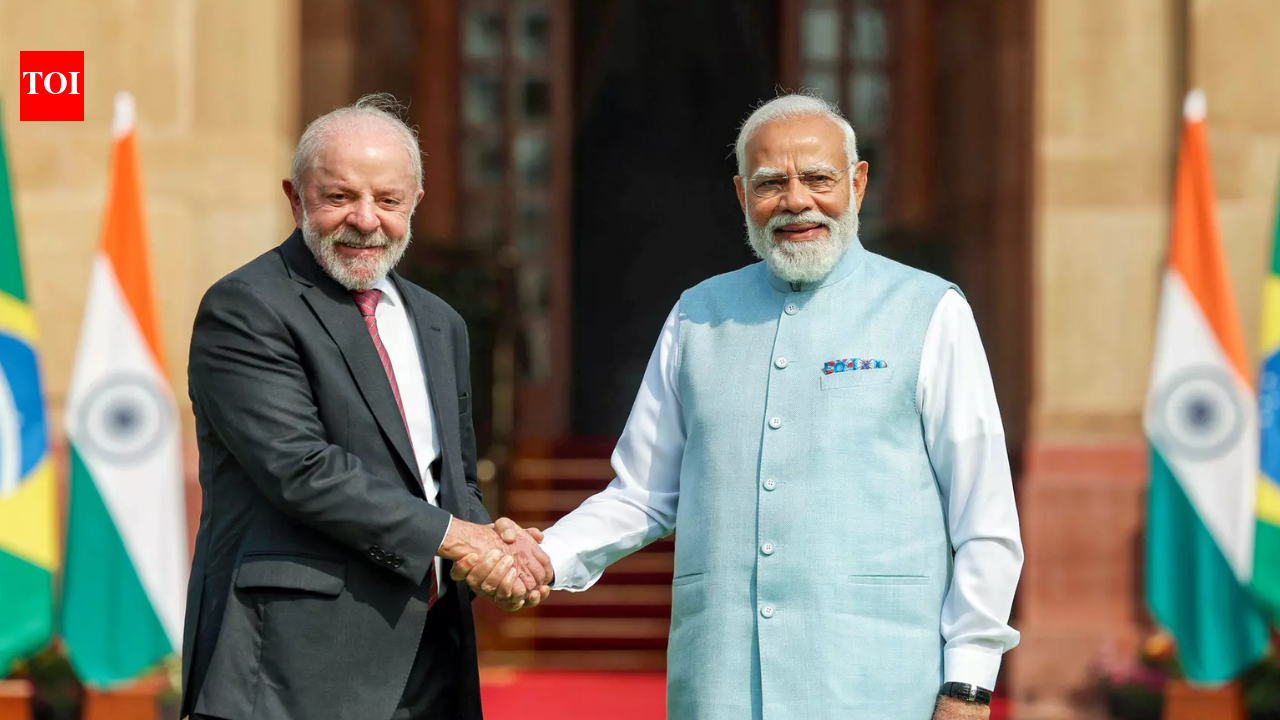
NEW DELHI: Brazilian President Luiz Inácio Lula da Silva, during his state visit to India, said he was moved by a special gesture that reminded him of a surprise he had arranged for PM Modi during his visit to Brazil last year.Speaking at the India-Brazil Economic Forum on Sunday, the President recalled that at both a lunch and a state dinner, songs by Brazilian composers—including the iconic Asa Branca—were played, leaving him “surprised” by the thoughtful tribute.“I was surprised yesterday, at the state dinner and at lunch too. I don’t know if the Brazilian journalists remember this, but when Prime Minister Modi went to visit Brazil last year, we did research on the song that he preferred most. We went to São Paulo to try to find a singer who could sing the song that he enjoyed most. So we did a surprise for him at the Palácio da Alvorada in Brazil, and it was visible that he was touched by the song that we chose to play for him,” he said.“Yesterday I was surprised because during lunch we started to hear a song. I saw that that song had something to do with us… Then they played other songs from the Brazilian composers. They played Asa Branca,” Lula added.“I was very touched for that because I did not remember. I did not imagine that they could’ve remembered of a good reception that we did for him and so they decided to give me a gift in exchange,” he added.President Lula was on a state visit to India from February 18-22, meeting Prime Minister Narendra Modi to strengthen bilateral ties and expand strategic cooperation. Addressing a joint press conference after delegation-level talks, PM Modi outlined the key outcomes of their discussions. The two leaders set a target to raise bilateral trade to $20 billion within five years and signed agreements in areas including rare earth minerals, digital partnership, and mining cooperation.Energy cooperation also emerged as a key pillar, with both sides agreeing to accelerate collaboration in renewable energy and sustainable fuels. President Lula described the meeting as “a partnership between two major global powers of the Global South” and highlighted the strategic importance of India–Brazil relations.“My dear friend Modi, it is a reason of happiness for me to return to this country for the sixth time. The meeting between India and Brazil is a meeting of superlatives. We are not just the two biggest democracies of the Global South. This is a meeting of a digital superpower with a renewable energy superpower,” he said. He emphasized the importance of multilateral cooperation, adding, “A turbulent global scenario requires our countries to strengthen and deepen our strategic dialogue. India and Brazil are crucial voices at the UN, the WTO and G20.”President Lula was accompanied by a delegation of top business leaders and participated in the 2nd AI Impact Summit, as well as a state banquet hosted by President Droupadi Murmu.


Source link

Bhupen Borah joins BJP days after quitting Congress ahead of Assam elections | India News


Bhupen Borah joins BJP days after quitting Congress ahead of Assam elections

NEW DELHI: Former Assam Congress president Bhupen Borah on Sunday joined the BJP, days after stepping down from the Congress ahead of the upcoming assembly elections in the state.Former Congress worker Sanju Bora also switched sides and entered the saffron party along with him.Borah had resigned earlier this week, but the Congress high command had not accepted his resignation. Senior party leaders visited his residence to persuade him to reconsider, and Rahul Gandhi also spoke to him. Borah had sought time to review his decision, but a day later Assam chief minister Himanta Biswa Sarma visited his home and announced that he would formally join the BJP on February 22.After meeting Union home minister Amit Shah, Borah wrote in a post, “32 years vs 32 hours — the difference is visible.”Reacting to the development, Assam PCC president Gaurav Gogoi asserted that Borah’s exit would not dent the party’s prospects. “Congress is like an ocean; we are all just water drops in it. Congress was there long before our fathers and forefathers existed. Bhupen Borah’s leaving will not impact our party’s prospects in the assembly polls,” he said.Assam is set to hold assembly elections later this year, with the BJP, led by chief minister Himanta Biswa Sarma, aiming to retain power while facing a renewed challenge from the Congress.


Source link

Put US trade deal ‘on hold’, renegotiate, Cong tells govt | India News


Put US trade deal ‘on hold’, renegotiate, Cong tells govt

NEW DELHI: Congress on Saturday demanded that govt “put on hold” the India-US trade deal in view of the decision of the United States Supreme Court invalidating the reciprocal tariffs imposed by President Donald Trump and “renegotiate” the terms of the deal.Congress MP Rahul Gandhi accused PM Modi of being “compromised”, alleging that his (Modi’s) “betrayal” in the trade deal now stands exposed. “He can’t renegotiate. He will surrender again.” In an X post, Congress president Mallikarjun Kharge wrote: “Clueless foreign policy or one-sided surrender? Why did the Modi govt not wait for the US SC judgment on tariffs before rushing to fall into a trap deal, which extracted huge concessions from India?” Congress general secretary in-charge communications Jairam Ramesh said there was a provision in the ‘Framework of Interim Agreement’ that in case of one country modifying the terms, the other country can also do that. Referring to Trump’s statement after the SC decision the trade agreement still holds, Ramesh said Modi must say in clear terms the ‘Framework of Interim Agreement’ cannot be implemented under current circumstances. Party general secretary Randeep Surjewala asked if Modi govt will now declare in “national interest” it will buy cheaper Russian and Iranian crude oil.


Source link

‘Journalism is first draft of history, Wikipedia second’ | India News


‘Journalism is first draft of history, Wikipedia second’

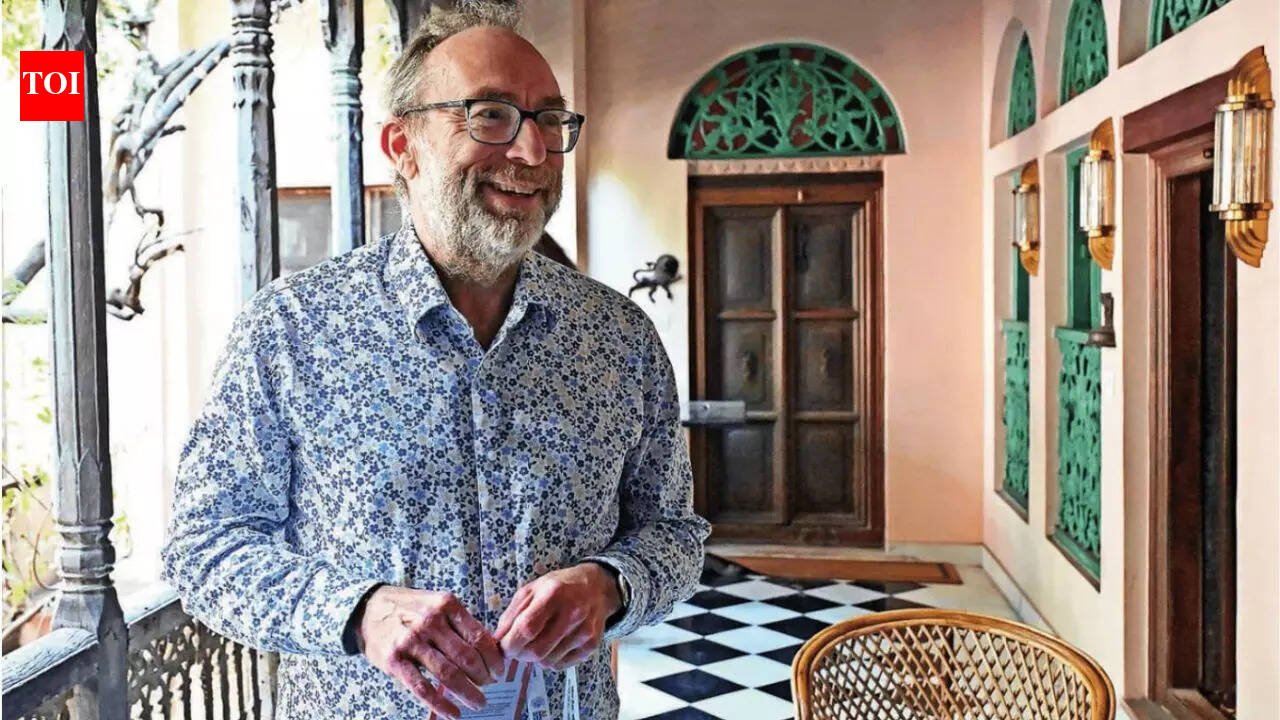
AI is fast changing the way information is created and shared, but speed and scale don’t necessarily mean credibility. Jimmy Wales , who co-founded Wikipedia — harnessing the wisdom of the crowd to upend traditional encyclopaedias like Britannica and become the internet’s default reference point — now finds it at the centre of a new debate on trust, including attacks from Elon Musk over alleged bias. Speaking to Rohit Saran and Saikat Dasgupta on the sidelines of the AI Impact Summit in Delhi, Wales reflects on the opportunities and risks AI presents, why neutrality is non-negotiable, and why trust is more important than everFor centuries, humanity has found itself caught between the promise of tomorrow and its perils when talking about the future. Socrates died a worried man because he thought writing will kill the quest for knowledge. It’s the same now with AI. How do you see this?■ John Philip Sousa (one of US’s most celebrated composers) believed people wouldn’t sing anymore when music began to be recorded. Chess, as a game, is more popular than ever before, even though the best chess player in the world is no longer human. It hasn’t stopped people from saying, ‘Oh, but we really enjoy playing chess!’ About AI, since the technology is so new, and so accessible, I don’t know. You ask a computer a question and it can answer, that’s incredible. But we also know it’s flawed. And then, there is this wild conjecture that it’s going to destroy all jobs, or no one will need to work anymore because we’re going to become vastly wealthy. Probably the answer, as ever, is somewhere in the middle. AI is obviously going to have a huge impact. What it will be is so hard to predict right now.Broadly speaking, internet has made information a ‘commodity’. Do you think AI will make intelligence a commodity?■ All I can say is that right now, when we look at large language models — and I use them a lot, I’m a programmer, but not a very good one because I enjoy making things — it’s incredibly helpful and very fun. But it also makes things up and hallucinates. What I’m most interested in right now is, are there ways we can use this technology to support the community? Are there things that I can do pretty well? A lot of Wikipedia discussions are really long. You can get AI to summarise it. But here’s a key point, I want to read the original. It’s very useful. Another example would be you load up the Wikipedia article and all the sources and ask if there’s anything in the sources that should be on Wikipedia, but isn’t, or is there anything that’s not supported by sources. I did this and I think it is potentially useful for the community. Then say I want to write about a Bollywood movie that’s not globally famous in Wikipedia and I want to just get some basic facts about it. But I can’t read Hindi. Maybe the AI could help me a bit.

.

.

Wiki powered a huge number of Google search answers and is now emerging as a source layer for AI. Are LLMs both a threat and an opportunity to Wiki’s future? We’re really about that human element, the human curated knowledge, the judgement. That machine translation might be a grammatical translation, but if you think about the cultural context of the reader, what they need to understand, what they are likely to know and what you need to explain to them, that goes beyond just the text. My example is, who’s the most famous cricket player? Today, it could be Virat Kohli in India. But if you’re writing for a global audience, you need to add a little text to explain who he is and put it in context. Machine translation can’t do that. But a human can.You’re making the case really for human moderation of information. Do you think that is where eventually the biggest problem with AI-curated information will lie, a wall that it cannot breach?■ So, Gary Marcus is an AI researcher who has become known as kind of an AI sceptic, although I would say he’s not really an AI sceptic, but thinks that large language models have already hit a sort of wall — that we’re not seeing improvement on a lot of key issues like hallucinations. He thinks there needs to be some more fundamental breakthroughs. For some time, scaling seemed to make all the difference. But there are other experts of equal fame who disagree with them. Just watching that, I think, maybe we’re going to have a little bit of a break for a few years until there’s more breakthroughs where it’s like ‘okay, we’ve got this amazing tool but maybe we’re not that close to the next steps’.Like Google search in the past, AI companies have a frenemy relationship with news media — New York Times has sued OpenAI, for example. If AI systems increasingly cite original sources, should they be required to link back and share revenue or traffic?■ I think we’re going to have a big fight on copyrights. It’s going to be across legislatures and courts, rethinking how copyright law is structured. My concern is, we want to be careful about overreach. One of the classic principles of copyright law has always been that you can’t copyright facts. Some scientific publishers may be very excited to be able to say, you can’t use the facts unless you pay. And that’s a disaster. We don’t want to go there. That damages Wikipedia and our ability to say that on this date, this happened. Here’s the sources, and it’s five different newspapers. Also, newspapers don’t want to go there. One of the bigger, deeper issues is that local journalism has been wrecked. And that happened long before AI. For society, that’s a huge problem. I’m from Huntsville, Alabama, which is not a huge city, but it’s not tiny — 250,000 people. When I was a kid, I was a paper boy. I rode my bike and threw the papers (into houses). As a Wikipedian, the value of this is if I want to write about the history of Huntsville or the 1978 mayoral election, I’ve got a lot of good content to work with. But if I want to write about the most recent election? Very thin content. Because there’s just one afternoon paper now that’s published three times a week and from 100 miles away. And that means the first draft of history, which is journalism, isn’t being written. So, the second draft of history, which is Wikipedia, becomes much harder.

.

.

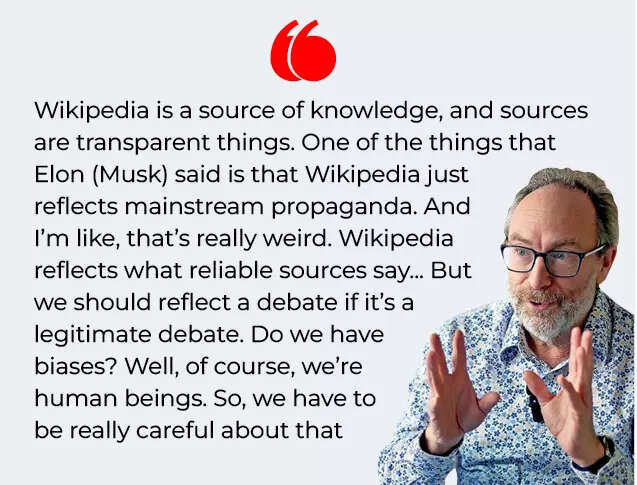
How do we solve that?■ I wish I had the answer to that. In some cases, maybe AI can help, if there’s some way to make it possible for one or two journalists to do more in a useful way that could be good. The changes in the information ecosystem have a lot of positives, obviously, but also some negatives. So go ahead and test.Wikipedia has had this debate between deletionists and inclusionists. Which side are you on?■ It has helped strengthen Wikipedia that we have this active, intellectual dialogue. I always say that I’m an eventualist, which is, we’ll probably get it wrong a lot but we’ll get it right eventually. The health of the Wikipedia community is important for us. Is the community having active discussions, having fun, behaving well? Are we doing things in a thoughtful way? I’m very comfortable with the debates as long as they don’t just become angry screaming matches. Tell us about your India community and volunteer group. There’s a perception or misperception, you tell us, that India pages are not as rigorous. ■ I find the Indian Wikipedia community to be very similar to everywhere in the world. A lot of nerds, not necessarily professionals in this field. There’s this guy in the global community with the nickname Hurricane Hank, who is a weather expert but not a professional meteorologist. The community has more men than women, unfortunately. That’s always something that we talk about. We want to improve that around the world. This is my third trip to India in a month and a half. On one of the trips, I was in Kerala, and I met with the local Wikipedia group. Among them was a couple, both Wikipedia editors, who brought their kids. On the second part of your question, I’ve not heard that about India pages. I do think it would be likely for the smaller language versions of Wikipedia. Obviously, those pages are typically going to be shorter and less filled in and less rigorous because there are fewer people doing it.When people say, ‘Wikipedia is broken because it’s biased’, how do you react to that? And what’s your take on an AI-first competitor like Grokipedia?■ See, Wikipedia is a source of knowledge, and sources are transparent things. One of the things that Elon (Musk) said is that Wikipedia just reflects mainstream propaganda. And I’m like, that’s really weird. Wikipedia reflects what reliable sources say. We cannot take one strange side, and say, ‘uh, we’re going to fight against all of scientific wisdom’, right? But we should reflect a debate if it’s a legitimate debate. Do we have biases? Well, of course, we’re human beings. So, we have to be really careful about that. Being neutral is one of the core values in the community. There’s no dispute about that. But do we always get it right? Maybe not. An old saying that I love is if you ask a fish about water, the fish will say, ‘What water?’ They live in it. They have no idea about it. And so oftentimes our biases are just there because we don’t know.How important is tone neutrality for credibility? Amartya Sen makes a comment in the introduction of his book, ‘10 Indians, 12 opinions’. That’s actually all humans — 10 humans, 12 opinions. Tone neutrality is very important for Wikipedia and for newspapers as well. I live in London and read two papers, Guardian and Telegraph. Guardian is a sort of centre left, Telegraph centre right. Both quality newspapers. I have an electric car, not a Tesla. I love electric cars and so I read a lot about them. If you cut out the headlines from those two papers, I can probably filter the information 90% accurately, because Guardian loves electric cars and Telegraph hates them. But because of this tone, I also trust both of them less because it feels like they are both campaigning. That’s a problem because it can reduce trust, not just with people who disagree, but even with people who agree with the tone.You launched WikiTribune to address neutrality in public discourse. Why did you not continue?■ Tribune was an experiment to see if there was a way for journalists and community members to collaborate. What journalists can do, like you have come here in the middle of Delhi to chat with me, or go and report on something, or attend a press conference, or talk to a politician, that’s almost impossible to do as a volunteer. So, we explored some good collaborations. And then we would look at traffic stats every day. We had one story that had a really clickbait headline that I didn’t like. To make this into a commercial success, we needed more clickbait headlines. I didn’t want to do that. That’s how I realised the problem is not with journalism but that model, the broader ecosystem. The newspapers always love a good, juicy headline. There’s nothing wrong with that. But if algorithms are feeding people content to keep them around as long as possible, then that encourages more of the same kind of behaviour and so on. So it kind of changed my focus and was like, ok, good experiment.


Source link