Breaking News
VP CP Radhakrishnan releases Shashi Tharoor’s book on Sree Narayana Guru | India News


VP CP Radhakrishnan releases Shashi Tharoor’s book on Sree Narayana Guru
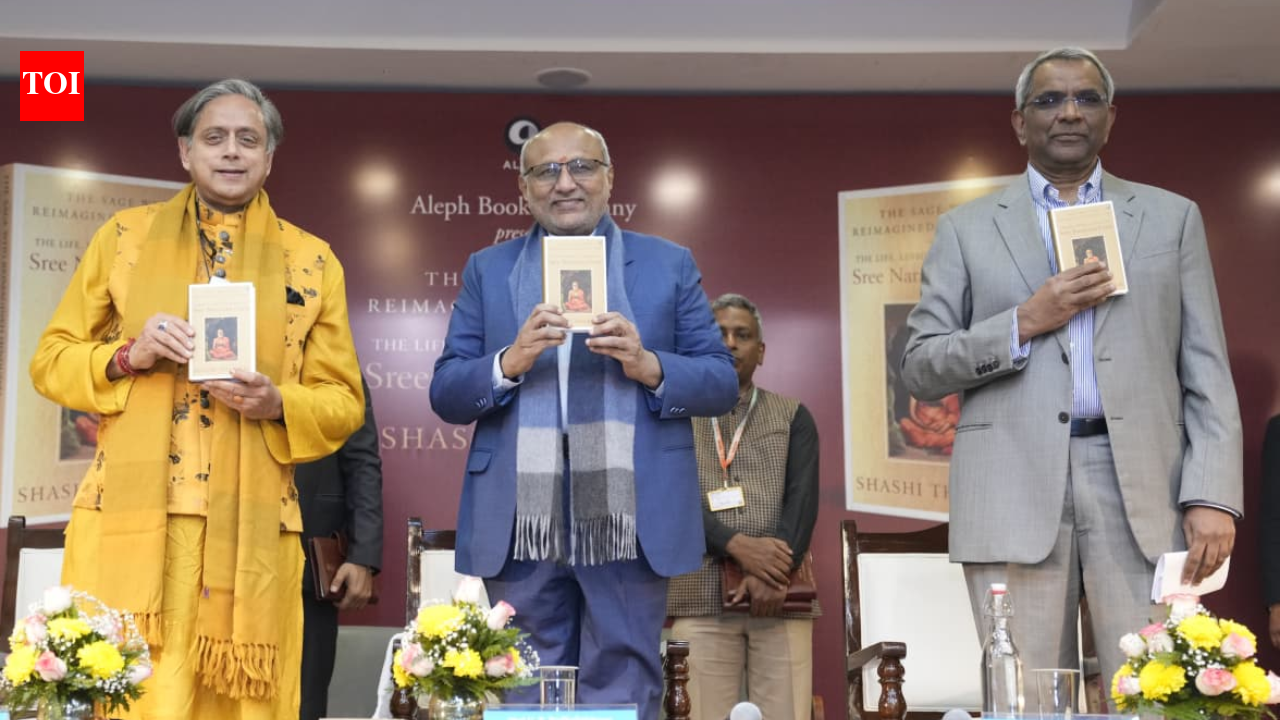
Vice President CP Radhakrishnan with Congress MP Shashi Tharoor (Image/X)

NEW DELHI: Vice President CP Radhakrishnan on Thursday lamented that contributions of Indian philosophers and social reformers like Sree Narayana Guru have not been adequately recorded in international languages, which has created a gap in global academic discourse.Releasing a book on Narayana Guru by Congress MP Shashi Tharoor, Radhakrishnan said “The sage who reimagined Hinduism” will take India’s heritage to a global audience.

“We Can’t Be Seen As Weak”: Tharoor’s Bold Claim On Rafale Deal

The VP said that the book is special because it was first released in Sivagiri Mutt, the hermitage founded by the Guru. He said a visit to the Mutt provides the inspiration to treat everyone with equality and dignity.Radhakrishnan said that the Guru emerged as a spiritual guide at a time when caste divisions and social discrimination were deeply entrenched in society. He noted the Guru’s immortal message “One Caste, One Religion, One God for humankind” was not only a spiritual proclamation but also a revolutionary call for equality, dignity and universal brotherhood.Tharoor said it is unfortunate that while Guru’s message has a universal resonance, he is hardly known outside Kerala. Talking about Kerala of the 19th century, he said that caste prejudices were so deep in the state that Swami Vivekananda had called it a “lunatic asylum”. He said Guru took up social reform in such a bad situation and shook up society to the point that Kerala is now the most progressive state in the country.


Source link

EC asks 22 states, UTs to prepare for final phase of SIR expected in April | India News


EC asks 22 states, UTs to prepare for final phase of SIR expected in April

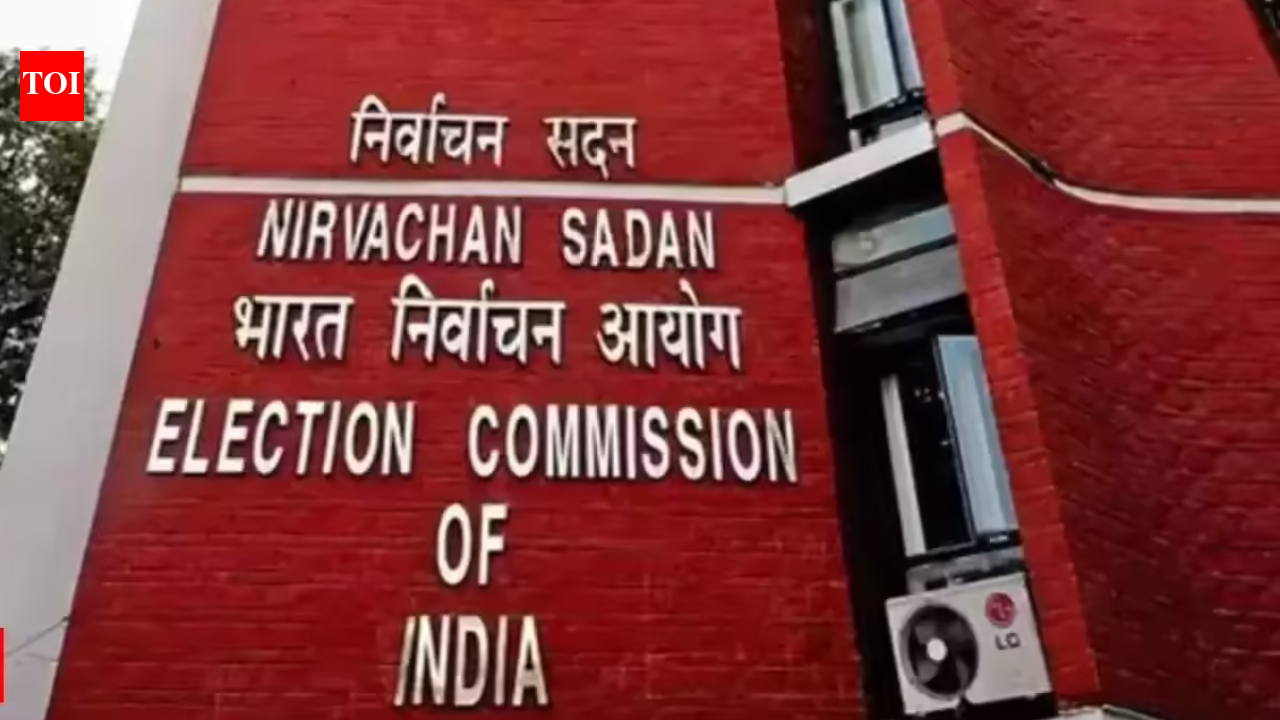
NEW DELHI: The Election Commission on Thursday asked 22 states and Union Territories including Delhi to complete preparatory work related to the Special Intensive Revision (SIR) at the earliest as the exercise is “expected to start from April”.Once the exercise is completed, all states and UTs will be covered.In a letter to the chief electoral officers of Andhra Pradesh, Arunachal Pradesh, Chandigarh, Dadra and Nagar Haveli & Daman and Diu, Haryana, Himachal Pradesh, Jammu and Kashmir, Jharkhand, Karnataka, Ladakh, Maharashtra, Manipur, Meghalaya, Mizoram, Nagaland, Delhi, Odisha, Punjab, Sikkim, Tripura, Telangana and Uttarakhand, the poll authority said pan-India SIR of voters’ list was ordered in June last year.Battling “vote chori” allegations levelled by the opposition Congress, the Election Commission held the SIR of electoral rolls in 13 states and UTs and a ‘special revision’ in Assam this year. It is all set to hold a similar exercise in the remaining 22 states and UTs this year.While the exercise, which kept the EC in the news, was completed in Bihar, it is ongoing in 12 states and UTs with nearly 60 crore electors.The remaining 40 crore electors will be covered in these 17 states and five UTs.In Assam, a ‘special revision’, instead of SIR, was completed on February 10.Due to a variety of reasons, SIR in the nine states and three UTs have seen frequent tweaking in schedules.Like Bihar, political parties have approached the Supreme Court challenging SIR in Tamil Nadu and West Bengal.Recently, TMC president and West Bengal Chief Minister Mamata Banerjee personally pleaded before a bench of the chief justice of India against the poll roll cleanup exercise in her state.As the EC was preparing for SIR in Bihar, its officials had claimed that several nationals from Bangladesh, Nepal and Myanmar were found by its grassroots level functionaries.But eventually, the poll authority did not share any numbers or proof of such people who were not eligible to be on the voters’ list.Opposition parties had dubbed the EC’s claims as a ploy to carry out SIR to target electors not aligned to BJP and its allies.


Source link

From remark to retreat: Why Shivaji Maharaj–Tipu Sultan comparison sparked row – explained | India News


From remark to retreat: Why Shivaji Maharaj–Tipu Sultan comparison sparked row - explained
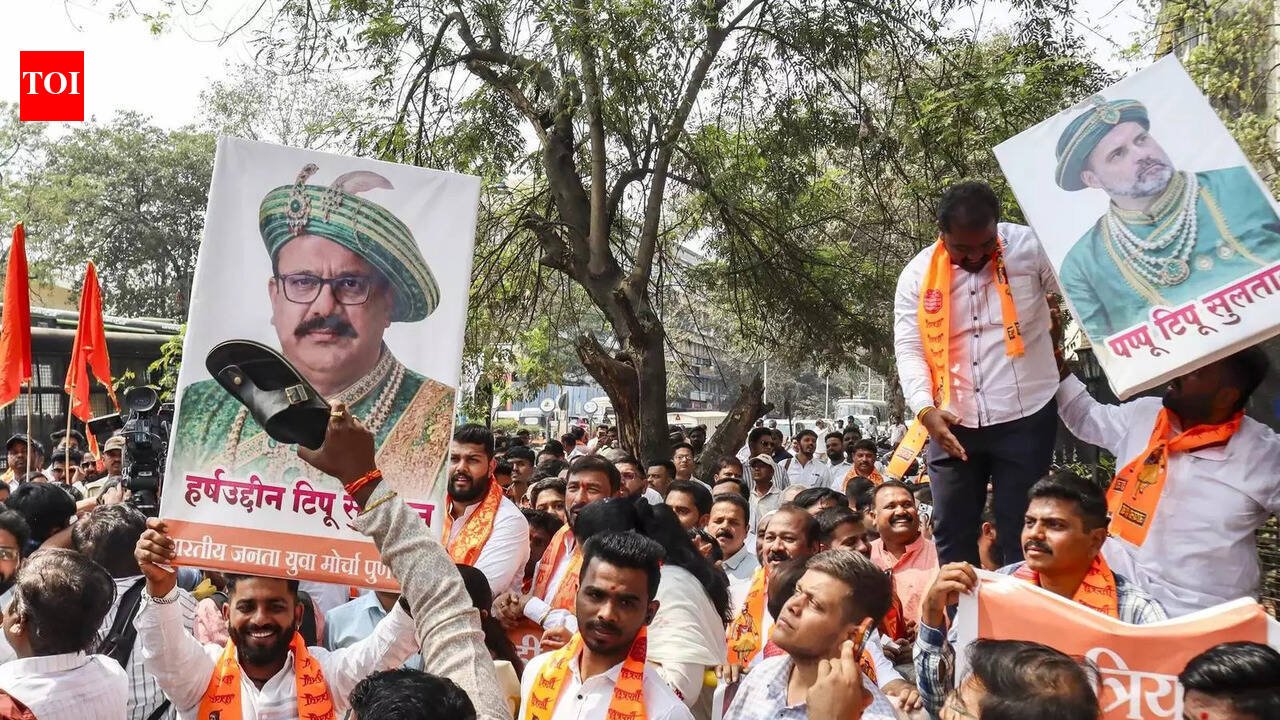
BJP activists protest against Maharashtra Congress chief Harshwardhan Sapkal’s remarks equating Chhatrapati Shivaji Maharaj with Tipu Sultan outside Congress Bhavan, in Pune. (PTI photo)

History does not always stay in textbooks. Sometimes, it returns framed on a wall. In Malegaon, a portrait of the 18th-century Mysore ruler Tipu Sultan, briefly placed inside the office of a newly-elected deputy mayor, triggered a political controversy that has travelled far beyond the municipal corporation building where it began. Within 48 hours, the image was removed by the civic administration, the matter escalated into a war of words between Maharashtra chief minister Devendra Fadnavis and state Congress chief Harshwardhan Sapkal, protests broke out in multiple cities, and eight people were injured in stone pelting in Pune.At the centre of the row was not merely the presence of Tipu Sultan’s portrait but Sapkal’s statement comparing him with Chhatrapati Shivaji Maharaj as belonging “to the same league of valour”. The chief minister described the comparison as “unacceptable” and said the Congress politician should be “ashamed”. What followed was a familiar pattern in Indian public life where history, memory, symbolism and contemporary political positioning intersect.

How controversy unfolded

The controversy began after Shiv Sena corporators in Malegaon objected to the display of Tipu Sultan’s portrait in deputy mayor Shaan-e-Hind Nihal Ahmed’s office. A delegation met Malegaon civic chief Ravindra Jadhav, demanding that it be removed and warning of an agitation if the administration failed to act. The Malegaon Municipal Corporation on Saturday removed the portrait from the office.Jadhav confirmed that the administration examined the state government’s official protocol list, which outlines leaders whose anniversaries are observed and whose portraits are permitted for display in government offices, before taking the action. “Tipu Sultan’s name is not included in the list. Therefore, the portrait was removed from the deputy mayor’s office,” MMC officials said.Ahmed, however, defended the figure’s historical relevance. “Tipu Sultan fought against the British and was acknowledged for his bravery at that time. There are roads named after him in Mumbai and Nagpur. This is an attempt to divert attention from our work. Some people are unable to digest that two Muslim women are mayor and deputy mayor in Malegaon,” she told reporters.When asked about the controversy, Sapkal, speaking in Buldhana on Saturday, said, “He (Tipu Sultan) waged a war against the British and was a brave warrior. He was a son of the soil. He never entertained poisonous or divisive thoughts. We should view Tipu Sultan as an equal to Chhatrapati Shivaji Maharaj as a symbol of bravery,” he said.
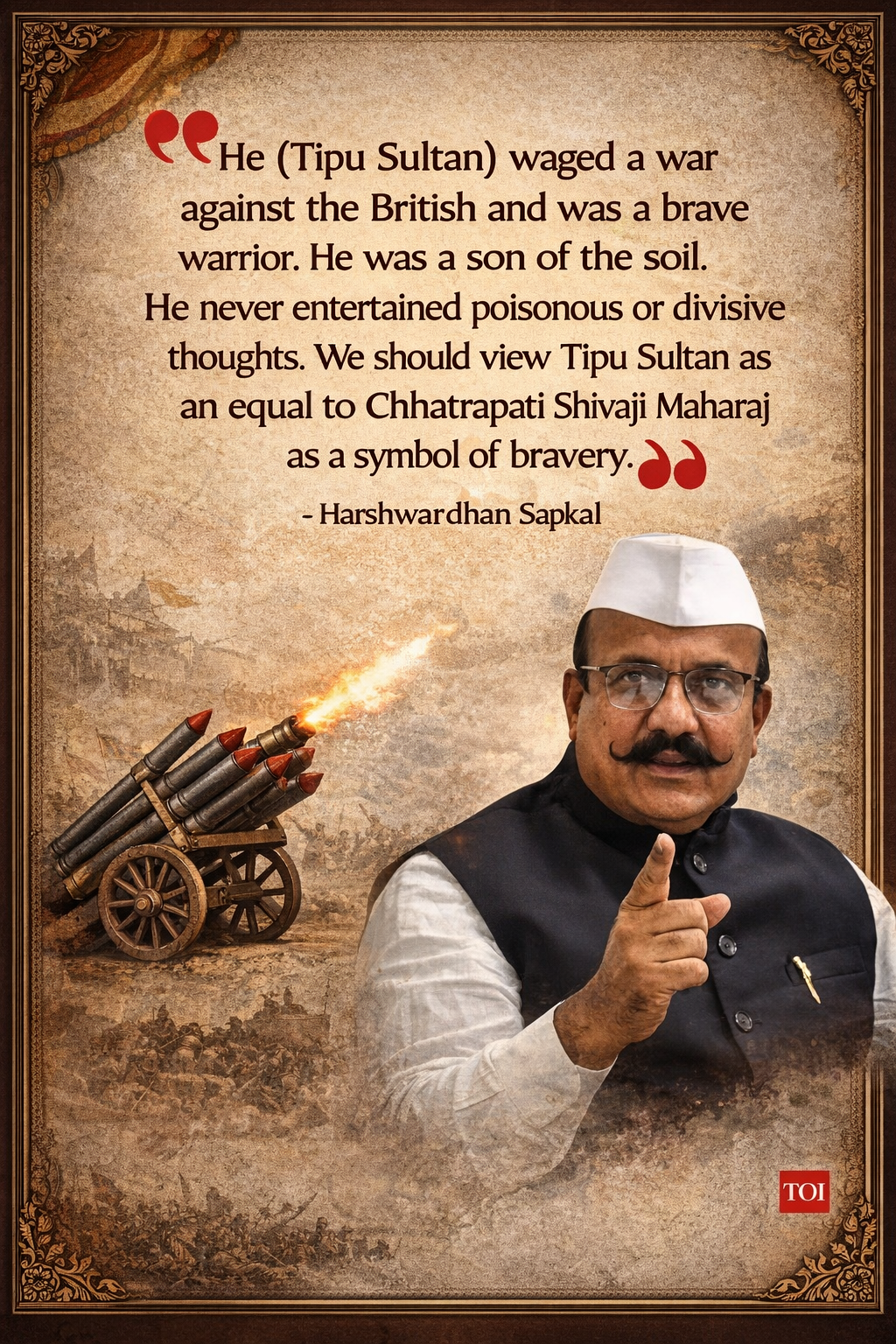
Sakpal remark

Sakpal’s remark sparks a storm

CM Fadnavis called the comparison unacceptable. Congress “should be ashamed of equating the founder of Hindavi Swarajya with Tipu Sultan, who butchered 1,000s of Hindus,” he said.The episode reopened an older historical debate that has periodically entered political discourse as both figures occupy significant but very different spaces in Indian history.
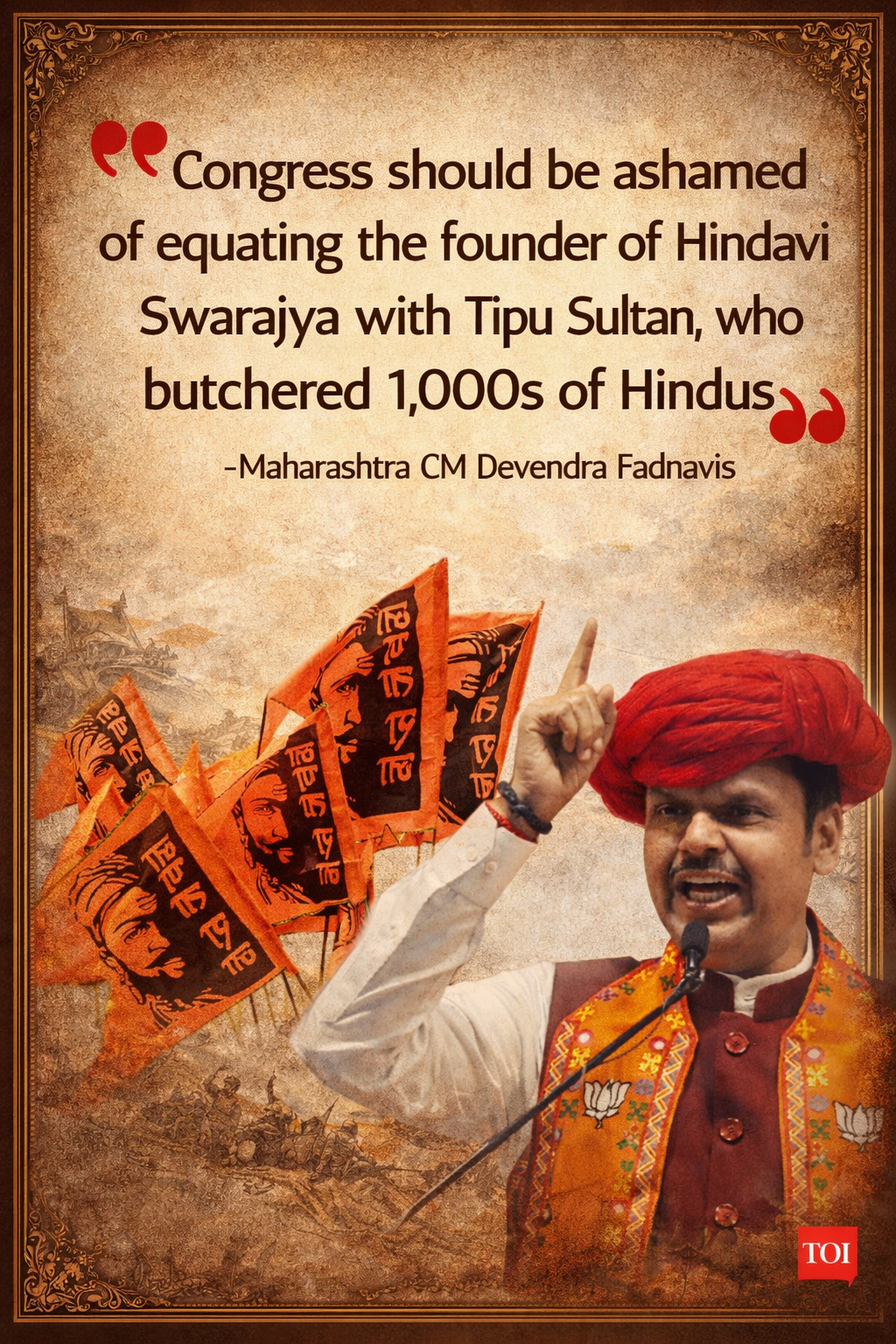
Fadnavis remark

CM Fadnavis hits back

Shivaji = Tipu, or Shivaji > Tipu?

Chhatrapati Shivaji Maharaj, born in 1630, is widely regarded as the founder of the Maratha state and the architect of Hindavi Swarajya. His military campaigns against the Mughal Empire and regional sultanates laid the foundation for a political formation that eventually expanded into one of the most powerful empires in early modern India. Shivaji’s legacy in Maharashtra is not confined to historical admiration alone. He represents resistance, self-rule, regional pride, and a warrior ethos deeply embedded in the state’s socio-political consciousness.
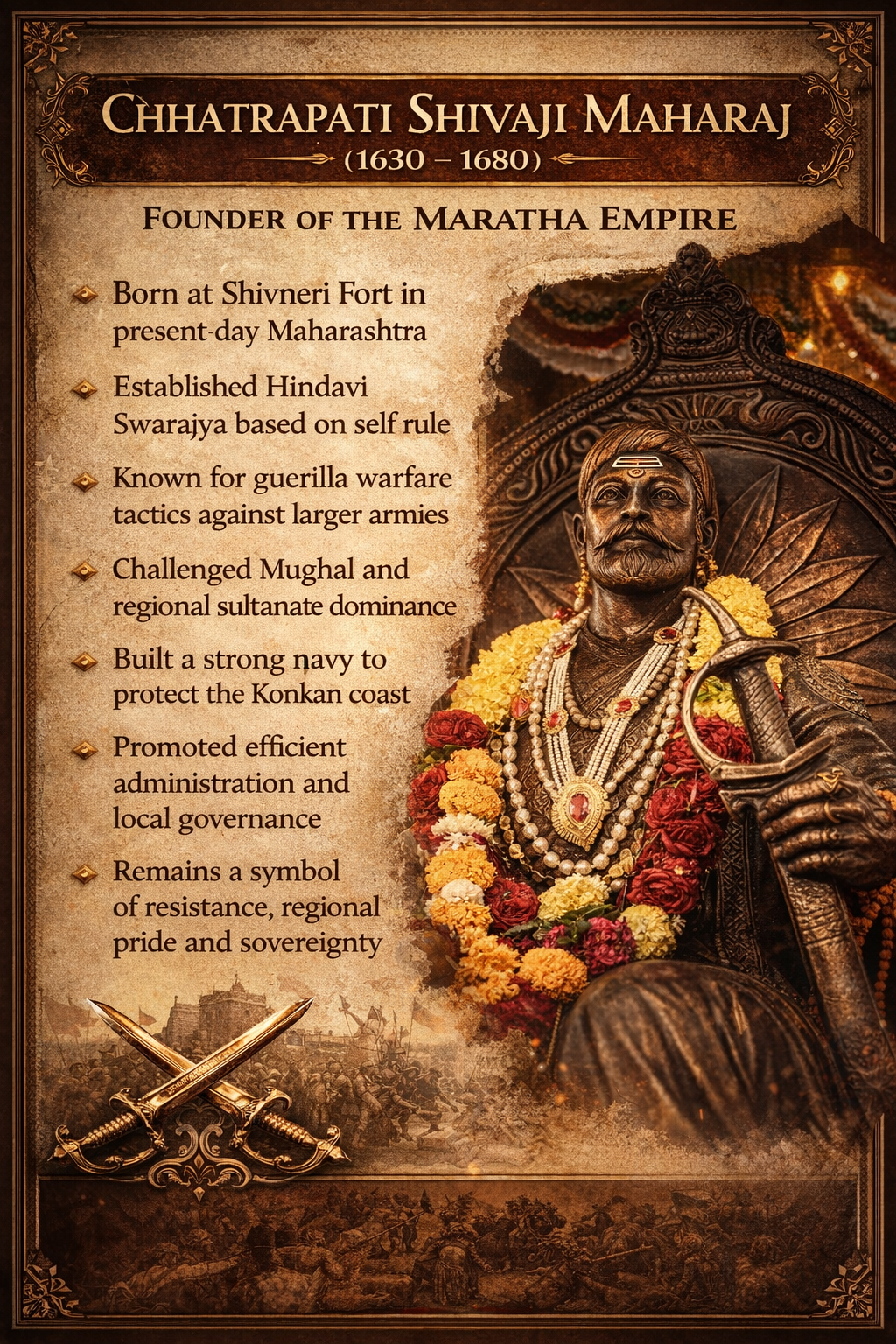
Shivaji

Chhatrapati Shivaji Maharaj

Tipu Sultan, born in 1751, ruled the Kingdom of Mysore during a period of intense conflict between Indian polities and the expanding British East India Company. Alongside his father, Hyder Ali, he waged multiple wars against British forces and is remembered in several accounts as one of the earliest rulers to adopt modern military technologies such as iron-cased rockets. In 1799, Tipu Sultan died fighting the British during the siege of Srirangapatna.For many historians, Tipu Sultan’s significance lies in his sustained resistance to colonial expansion. For others, particularly in regions such as parts of Karnataka and Kerala, he remains a contested figure due to accounts of forced conversions, temple desecrations and harsh campaigns against certain communities.
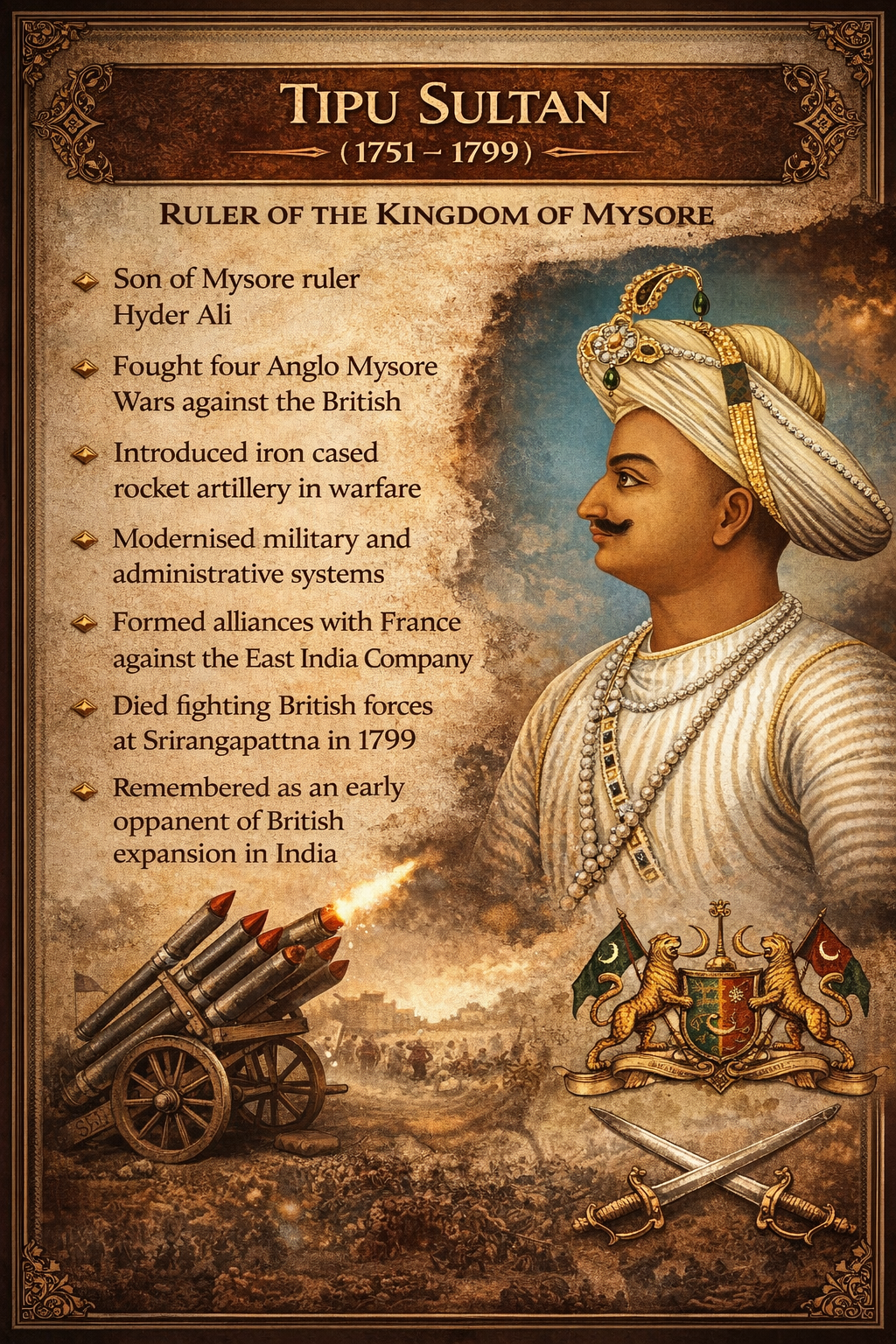
Tipu

Tipu Sultan

The debate over his rule has persisted for decades and has often been shaped by political context as much as archival evidence. These differing interpretations have given Tipu Sultan a complex afterlife in contemporary politics.

Why did it explode into controversy

In Maharashtra, Shivaji Maharaj occupies an almost sacred position across ideological lines, but particularly within the political vocabulary of the Bharatiya Janata Party (BJP) and Shiv Sena. The Maratha ruler is frequently invoked as a symbol of indigenous sovereignty, martial pride and cultural assertion. References to Hindavi Swarajya resonate strongly with narratives centred on civilisational identity and self-determination.Any perceived attempt to equate Shivaji Maharaj with another historical figure, especially one whose legacy is contested, therefore carries political sensitivity.
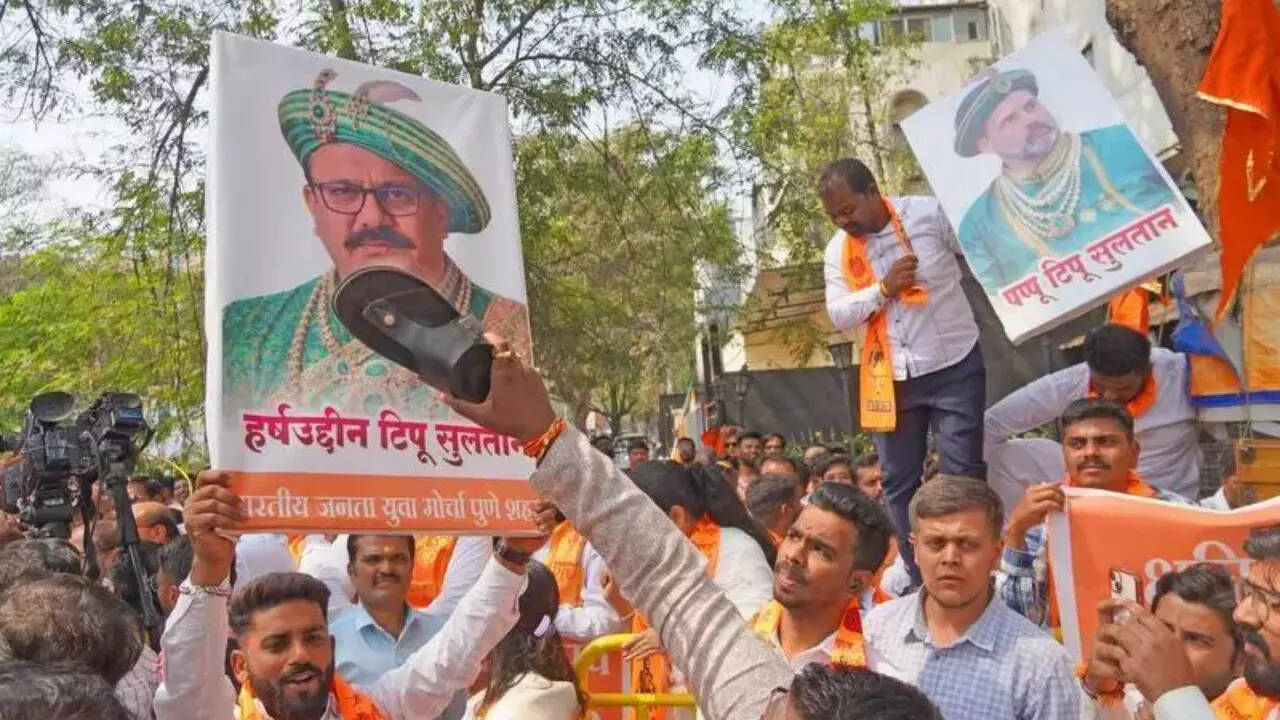
Tipu-Shivaji Maharaj row.

BJP activists protest against Maharashtra Congress chief Harshwardhan Sapkal’s remarks equating Chhatrapati Shivaji Maharaj with Tipu Sultan outside Congress Bhavan, in Pune.

BJP leaders have argued that comparisons diminish the unique historical role of Shivaji Maharaj. BJP Pune city president Dheeraj Ghate said, “Sapkal’s remarks deeply hurt the sentiments of all those who idolise Chhatrapati Shivaji Maharaj as a deity. It is a deliberate attempt to create a rift in society.”For the Congress, Tipu Sultan has at times represented anti-colonial resistance and an inclusive strand of historical nationalism. In southern states, especially Karnataka, Congress governments have celebrated Tipu Jayanti, framing him as a freedom fighter who resisted British rule. Political opponents, particularly from the BJP and allied organisations, have long argued that such commemorations reflect an attempt at minority outreach, with the emphasis on Tipu’s anti-British legacy seen by them as part of a broader effort to counter the rise of Hindutva-centred historical narratives.This divergence in emphasis reflects deeper ideological differences in how the past is mobilised in present day politics. While the BJP’s political messaging often foregrounds civilisational continuity and indigenous cultural pride aligned with Hindutva thought, the Congress has tended to promote pluralist interpretations of history that critics frequently characterise as accommodative or appeasement-driven in their political intent.The political undertone of invoking either figure is therefore significant. Shivaji Maharaj serves as a unifying icon in Maharashtra, but also as a potent symbol within a wider discourse on identity, sovereignty and cultural resurgence associated with Hindutva politics. Tipu Sultan, by contrast, often becomes a focal point in debates where his remembrance is interpreted by critics through the prism of Muslim appeasement versus majoritarian assertions of historical identity.

From portrait to protests

The controversy in Malegaon quickly spread beyond the initial administrative decision. BJP and right organisation supporters protested in Nagpur, Nashik, Ahilyanagar, Sangli, Solapur, Chhatrapati Sambhajinagar, Nanded, Latur and elsewhere. In Pune, Patit Pawan Sanghatana members were the first to assemble in front of the Congress Bhawan on Sunday morning, condemning Sapkal’s remarks.Around 12.30 pm, BJP workers, including mayor Manjusha Nagpure, reached the site and started sloganeering and showing posters. By then, about 100 Congress workers reached the site and started raising counter slogans.“As the sloganeering was on from both sides, someone hurled a stone. This set off stone pelting by members from either side,” additional commissioner of police Manoj Patil said. “Two women constables, two reporters and two workers each from BJP and Congress were injured. “The nature of injuries was not serious,” he said.
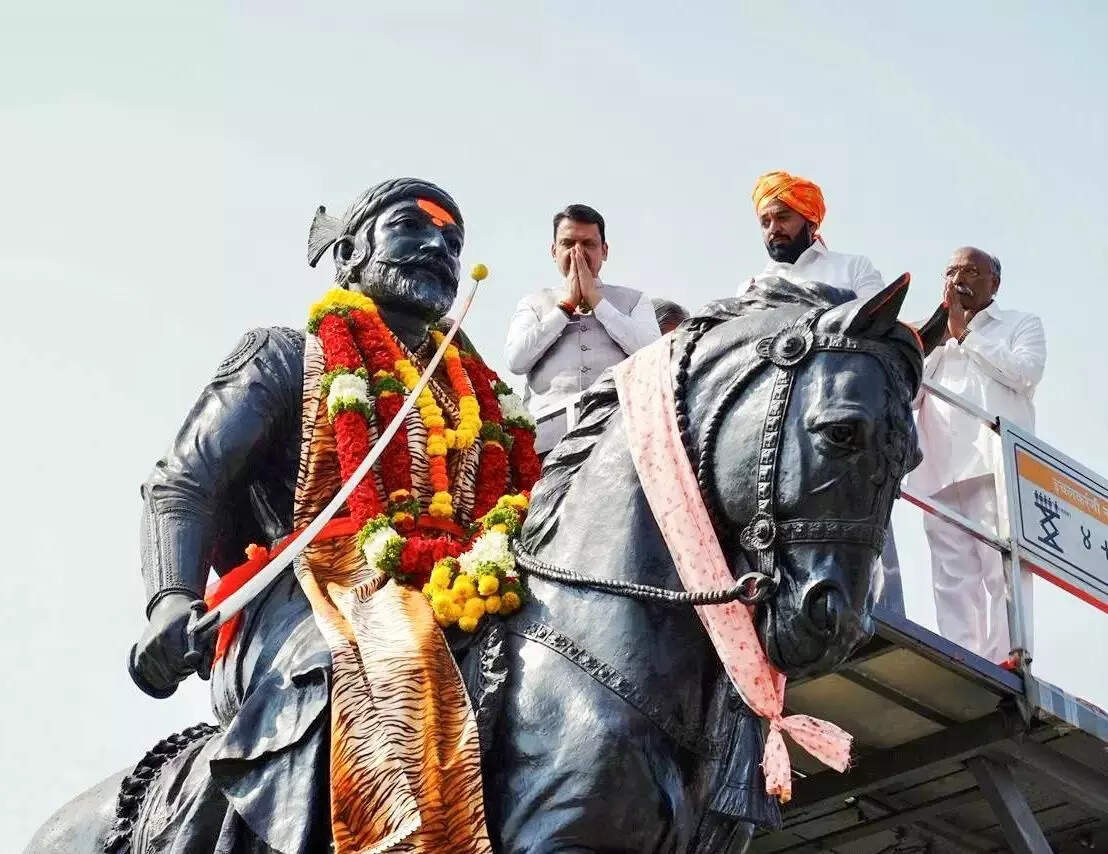
Kolhapur, Dec 15 (ANI)_ Maharashtra Chief Minister Devendra Fadnavis pays tribut....

Maharashtra CM Devendra Fadnavis pays tribute to the greatest king, Chhatrapati Shivaji Maharaj at Shivtirtha, Ichalkaranji, in Kolhapur.

As political leaders weighed in, the debate widened. AIMIM chief Asaduddin Owaisi defended Tipu Sultan, saying, “In 1799, Tipu Sultan died fighting the British,” and added, “He did not sit in jail and write love letters to the British.”Meanwhile, Telangana BJP president N Ramchander Rao said by glorifying Tipu Sultan, the AIMIM “is distorting history”.Amid mounting criticism, Sapkal later clarified his remarks. “My statement was misinterpreted by the BJP for political benefits. I said that there cannot be anyone like Shivaji Maharaj, and Tipu Sultan took inspiration from him.” He subsequently expressed regret, saying, “I did not say anything wrong about Chhatrapati Shivaji Maharaj. The question of comparison does not arise; I did not make one.”He described Shivaji Maharaj as “my ideal, my inspiration and my pride,” and appealed for calm. “If any Shiv devotees’ sentiments were hurt because of misuse of my words, I sincerely express regret. It was never my intention to hurt anyone’s feelings. Let us put this matter to rest here.”Yet, the episode illustrates how historical figures continue to function as political signifiers in contemporary India. Portraits in public offices are rarely neutral. They signal not only admiration but also affiliation, narrative and sometimes ideological positioning.As demonstrations spread and leaders traded charges over historical interpretation, the controversy showed no immediate sign of abating. What began as the placement of a portrait has become a reminder that in Indian politics, the past remains an active participant in the present. The images on the wall often speak as loudly as the speeches delivered beneath them.

Source link

‘Absolutely unacceptable’: Israel condemns ‘racially motivated’ attack on 2 Indian workers in Ashkelon | India News


'Absolutely unacceptable': Israel condemns 'racially motivated' attack on 2 Indian workers in Ashkelon

NEW DELHI: Israel on Thursday condemned the attack on two Indian workers in the city of Ashkelon, calling the incident “absolutely unacceptable.”The Israeli embassy in India also denounced the assault and said action had been taken against those responsible. In a post on X, it said, “The attack on two Indian workers yesterday in Ashkelon by delinquents is absolutely unacceptable. The Israeli police have caught the perpetrators and will bring them to justice.”The two workers were reportedly beaten in Ashkelon, located about 50 km from Tel Aviv. Israeli media described the assault as a “targeted, racially motivated attack.”Congress leader Pawan Khera raised concerns over the incident and urged External Affairs Minister S. Jaishankar to intervene. In a post on X, he said, “It was a premeditated racist assault, planned over private chats. This is not the first such attack. And sadly, it may not be the last.”He added, “The government’s failure to generate adequate employment at home has pushed Indian labourers to seek work in Israel. It celebrates Indo-Israel ‘friendship’ when sending Indian labourers there. But when our people face barbaric treatment, it falls silent and shrugs off responsibility.”Tagging Jaishankar, he said the minister “should urgently look into the matter, confirm the victim’s condition, and ensure he has access to adequate, free-of-cost medical care if required.”Khera also questioned whether Prime Minister Narendra Modi would raise the issue during his upcoming visit to Israel. “PM Modi is visiting Israel soon, will he raise the issue of racism and violent attacks against Indian nationals in Israel?” he asked.According to TRT World, the incident comes at a time when India has chosen not to join more than 80 countries that criticised Israeli settlement expansion in the occupied West Bank in a joint statement at the United Nations.Meanwhile, Prime Minister Narendra Modi is scheduled to visit Israel next week, marking his second trip to the country since 2017.


Source link

Indian visas in Bangladesh likely to be ‘fully restored’ soon as Tarique Rahman takes charge | India News


Indian visas in Bangladesh likely to be 'fully restored' soon as Tarique Rahman takes charge
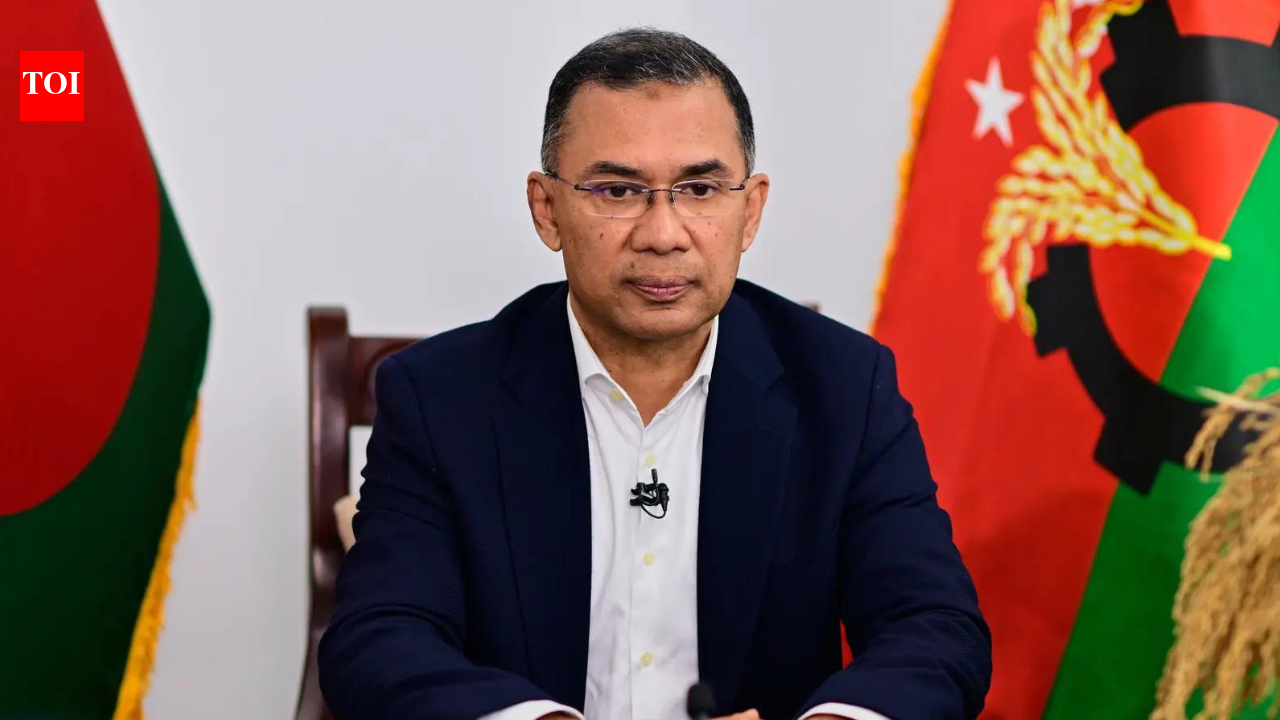
BNP chief Tarique Rahman (PTI photo)

NEW DELHI: With Muhammad Yunus’ departure from the power centre in Dhaka, steps are under way to “fully restore” all Indian visa services, India’s senior consular official in Sylhet, Aniruddha Das, has confirmed.Aniruddha Roy on Thursday assured full cooperation to strengthen India-Bangladesh relations and said efforts are being made to ease visa services.Speaking at the Sylhet District Press Club, he said medical and double-entry visas are currently being issued, and steps are under way to resume other categories, including travel visas.“Medical and double-entry visas are being issued now, and steps are under way to resume other categories, including travel visas,” BD News24 quoted him saying.He said India-Bangladesh ties are based on mutual respect and shared interests.“India-Bangladesh relations stand on the foundation of mutual respect and honour. The people of both countries will be the principal stakeholders of a stable, positive, constructive, long-term and mutually beneficial relationship,” he said.He added that both countries share cultural links and common goals, and cooperation can help create new opportunities.“We should transform our geographical and cultural proximity, growing economic capacity, and future aspirations into new opportunities through cooperation,” he said.He also said journalists can play an important role in strengthening ties between the two countries.“Through objective reporting and constructive criticism, journalists can further reinforce and strengthen this relationship,” he added.Days earlier, Bangladesh entered a new political phase after Tarique Rahman took charge as the country’s new prime minister. Following the Bangladesh Nationalist Party’s landslide victory, securing a two-thirds majority, Rahman invited Prime Minister Narendra Modi to attend his swearing-in ceremony.Prime Minister Modi congratulated Rahman on his party’s victory and later invited him to visit India after he took oath.India-Bangladesh relations had come under strain after Sheikh Hasina’s exile in August 2024. Ties were affected during the interim government led by Nobel laureate Muhammad Yunus, particularly after India provided refuge to the former prime minister Hasina. This led to tensions between the two countries, with several reports highlighting diplomatic unease in recent months.India had also expressed concern over incidents of violence against minorities, especially the Hindu community, during the period of unrest in Bangladesh under Yunus’ interim government.


Source link

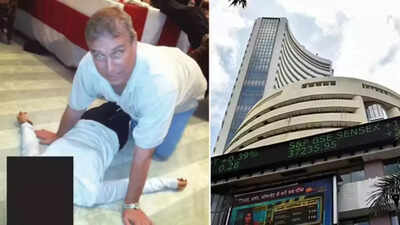
Evening news wrap: Former UK prince Andrew arrested amid Epstein row; Bloodbath on D-Street as markets crash & more | India News


Evening news wrap: Former UK prince Andrew arrested amid Epstein row; Bloodbath on D-Street as markets crash & more
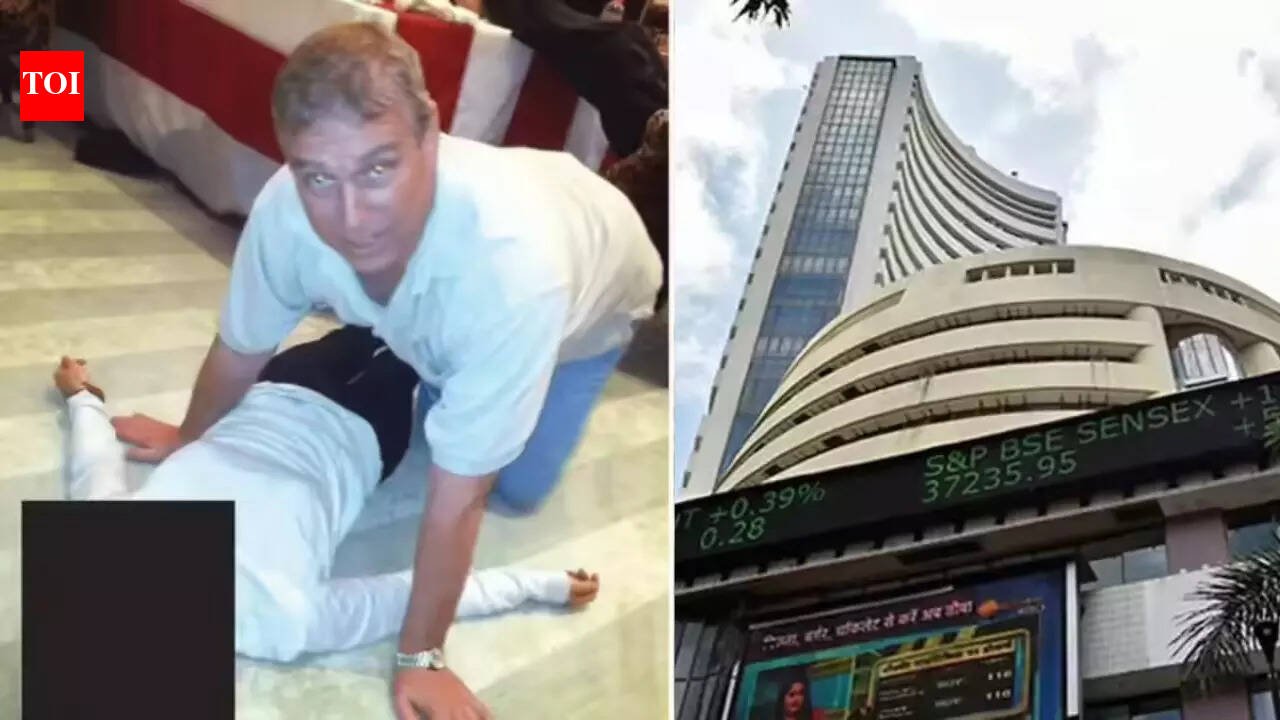
  • British former prince Andrew was arrested by police over alleged misconduct in public office amid renewed scrutiny linked to the Jeffrey Epstein case, with searches conducted at Sandringham and other properties.
  • Indian benchmark indices tumbled sharply as the BSE Sensex fell over 1,200 points and the Nifty50 closed below 25,500, wiping out nearly Rs 7.55 lakh crore in investor wealth.
  • The Supreme Court of India warned states against indiscriminate “freebies”, cautioning that universal benefits without targeting the needy could strain finances and amount to an appeasing policy.
  • At least 35 students of a government middle school in Chhattisgarh’s Dhamtari district were found with healed wrist cuts, prompting authorities to order a probe after the matter surfaced through a parent’s complaint.
  • Shivam Dube credited former India captain MS Dhoni for guiding his batting approach after his match-winning 67 against the Netherlands in the T20 World Cup.

Here are the top five news:

Former royal prince Andrew Mountbatten-Windsor arrested amid Epstein row

Andrew Mountbatten-Windsor, brother of King Charles III, was arrested by Thames Valley Police on suspicion of misconduct in public office, becoming the first senior British royal to be detained in modern history. The arrest came days after the release of files linked to the Jeffrey Epstein case by the US Justice Department, prompting searches at properties in Berkshire and at the Sandringham estate in Norfolk.UK Prime Minister Keir Starmer said that “nobody is above the law” as officers carried out raids on Andrew’s 66th birthday. The development marks a dramatic escalation in scrutiny over his alleged links to the Epstein files. Read full story here

Stock market crash: Sensex falls over 1,200 points, Nifty below 25,500

Indian equity markets witnessed a sharp sell-off on Thursday, with the BSE Sensex plunging 1,236 points to close at 82,498.14 and the Nifty50 falling 365 points to end below 25,500. The decline came after three straight sessions of gains, with heavy intraday losses reflecting broad-based selling pressure.The market downturn wiped out nearly Rs 7.55 lakh crore in investor wealth, dragging the overall market capitalisation of the Bombay Stock Exchange to around Rs 464 lakh crore. The sharp fall raised fresh concerns about volatility in the near term. Read full story here

Supreme Court flags ‘freebies culture,’ warns states on fiscal strain

The Supreme Court expressed concern over the growing culture of distributing freebies, cautioning that extending benefits to all without targeting the needy could harm state finances and long-term development.Hearing a plea by Tamil Nadu Power Distribution Ltd, which plans to provide free electricity to all consumers regardless of their financial status, the court said welfare measures are justified for the poor, but extending them to everyone may turn into an “appeasing policy” and weaken economic discipline. It urged states to strike a balance between social support and fiscal responsibility. Read full story here

35 students found with wrist cuts in Chhattisgarh school; probe ordered

At least 35 students from classes 6 to 8 at a government middle school in Chhattisgarh’s Dhamtari district were found with healed cut marks on their wrists, sparking concern among parents and authorities. The injuries, believed to be 20–25 days old, came to light after a parent raised the issue with the school principal.Following the discovery of similar marks on several students, the education department ordered a probe to determine the cause and circumstances. Officials are now investigating how so many students sustained comparable injuries without earlier detection. Read full story here

Shivam Dube credits MS Dhoni after match-winning performance against the Netherlands

Shivam Dube credited former India captain MS Dhoni for guiding him after he scored a match-winning 67 against the Netherlands in the T20 World Cup. Dube said Dhoni’s advice helped him refine his approach, especially against pace bowling.He revealed that Dhoni emphasised strike rotation and smart shot selection over constant big hitting, which improved his confidence and performance under pressure. The guidance, Dube said, played a key role in shaping his maturity as a batter. Read full story here


Source link

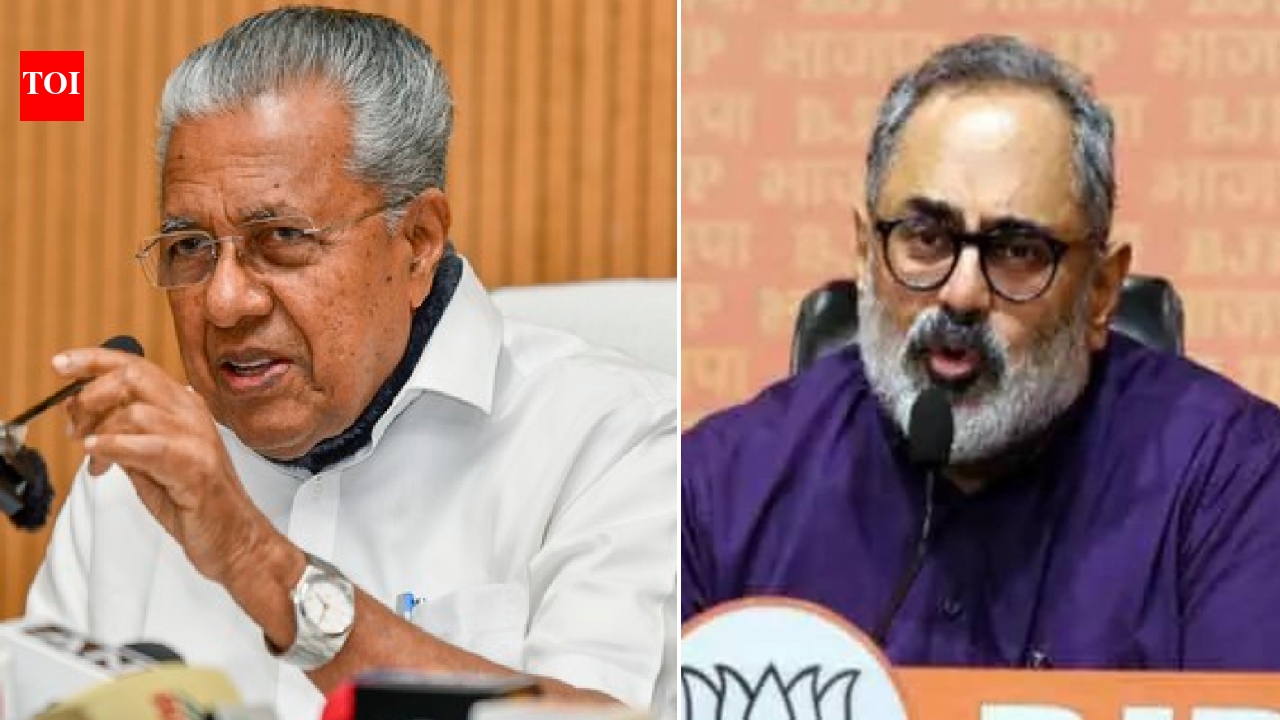
‘Go to court, don’t threaten people’: Kerala BJP chief Rajeev Chandrasekhar hits out at CM Vijayan over ‘The Kerala Story 2’ | India News


'Go to court, don't threaten people': Kerala BJP chief Rajeev Chandrasekhar hits out at CM Vijayan over ‘The Kerala Story 2’
Kerala BJP president Rajeev Chandrasekhar and CM Pinarayi Vijayan (Images/Agencies)

NEW DELHI: Kerala BJP president Rajeev Chandrasekhar on Thursday slammed chief minister Pinarayi Vijayan over his remarks opposing the sequel to The Kerala Story, accusing him of hypocrisy and attempting to distract people from governance issues.Speaking to ANI, Chandrasekhar said that the chief minister was reacting differently now compared to earlier instances involving freedom of expression.“Pinarayi Vijayan has 45 days more as Chief Minister, and he knows that on the 46th day, he is going to have to move his residence. When a movie came out which is against the BJP, we did not protest or say anything. He quoted Freedom of Expression. How is it that when somebody else makes a movie against his political thinking, it suddenly becomes a problem? This is hypocrisy. This is basically an attempt to distract the people of Kerala from his 10 years of failure,” he said.

Kerala CM Slams Jury: National Awards for The Kerala Story Are ‘Insult to Kerala’

The Kerala BJP chief asserted that filmmakers have the right to create content and that citizens have the right to choose what they watch.“I wanted to tell you, Pinarayi Vijayan, that nobody has appointed you protector. There is no need for you to act like you’re a protector of any community. Every Indian today, every Malayali, is given the same fundamental rights. Stop making fools out of people. This movie will be shown because just as much as you have the right to watch a movie, I have the right to watch a movie. Just as any director has the right to make a movie, this director also has the right to make a movie,” he added.Chandrasekhar also urged CM Vijayan not to create fear or threaten people over the film’s release.“If you have a problem with it, and if there is something illegal in the movie, go to court. But don’t try to threaten people. Don’t try to use your Chief Minister’s position to create fear amongst people that we will not allow,” he said.Earlier in the day, Vijayan expressed strong opposition to reports of a sequel to The Kerala Story. In a post on social media platform X, he alleged that the sequel was another attempt to spread communal discord in the state.“The reports regarding the release of a sequel to the hate-mongering film ‘The Kerala Story’ should be seen with utmost gravity. Having already seen through the communal agenda and blatant lies of the first part, Kerala will once again reject this attempt to demonise our secular fabric with contempt. It is shocking how fabricated narratives aimed at inciting communal discord receive a free pass, while critical expressions of art get gagged. We must stand united against these attempts to paint our land of harmony as a hub of terror. The truth shall always prevail,” Vijayan said.The makers recently released the trailer of The Kerala Story 2, which portrays Hindu women being trapped by Muslim men in the name of love. The film is written by Amarnath Jha and Vipul Amrutlal Shah and directed by Kamakhya Narayan Singh.The film is scheduled to be released in theatres on February 27.


Source link

Nikhil Gupta, Pannun murder plot and the Nijjar connection: Inside a case that spanned 3 continents | India News


Nikhil Gupta, Pannun murder plot and the Nijjar connection: Inside a case that spanned 3 continents

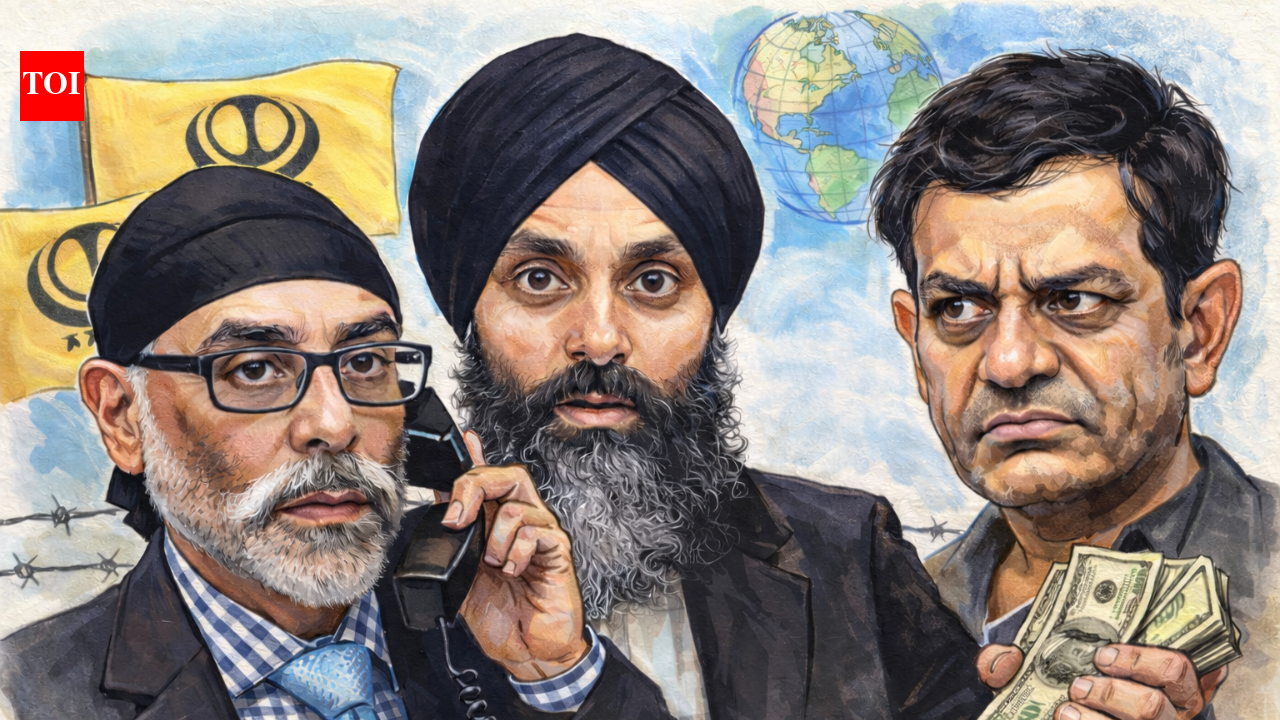
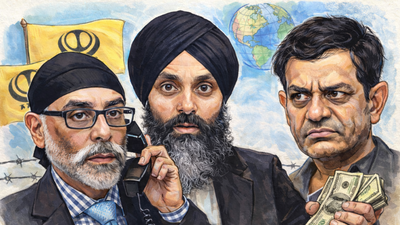
NEW DELHI: On June 17, 2023, Hardeep Singh Nijjar — a Khalistani separatist designated as a terrorist by India — reportedly called his close associate Gurpatwant Singh Pannun to warn of what he described as a “serious threat” to his life. The conversation would later draw attention as investigators pieced together the final hours before his killing.The following day, Nijjar was shot dead by assailants in the parking lot of a gurdwara on the outskirts of Vancouver. Witness accounts cited in media reports said a white sedan pulled up, after which assailants approached and opened fire, discharging dozens of rounds before fleeing. The brazen nature of the attack quickly pushed the case beyond a local criminal investigation and into the realm of international scrutiny.In the weeks that followed, diplomatic ties between New Delhi and Ottawa came under strain after former Canadian Prime Minister Justin Trudeau said authorities were examining allegations of a possible Indian link to the killing — a claim India rejected. Around the same period, US authorities disclosed they had disrupted what they described as a separate plot targeting Pannun. Acting on intelligence inputs, Czech police arrested Indian national Nikhil Gupta at Prague airport roughly a week after Nijjar’s death, setting off a parallel legal and diplomatic track.The US department of justice claimed that Gupta was involved in an alleged plot, directed by an employee of the Indian government, to target and assassinate Pannun. The DoJ also said that Gupta had links to international narcotics and weapons trafficking and was connected to Nijjar’s murder.India’s external intelligence agency, the Research and Analysis Wing, came into the spotlight after authorities in both countries linked it to the alleged killing plots targeting Hardeep Singh Nijjar and Gurpatwant Singh Pannun.But what really happened? Was this a poorly executed covert operation, the act of a rogue operative, or an entirely different case with a third party at play?To understand this, the list of characters in the play must be known.

.

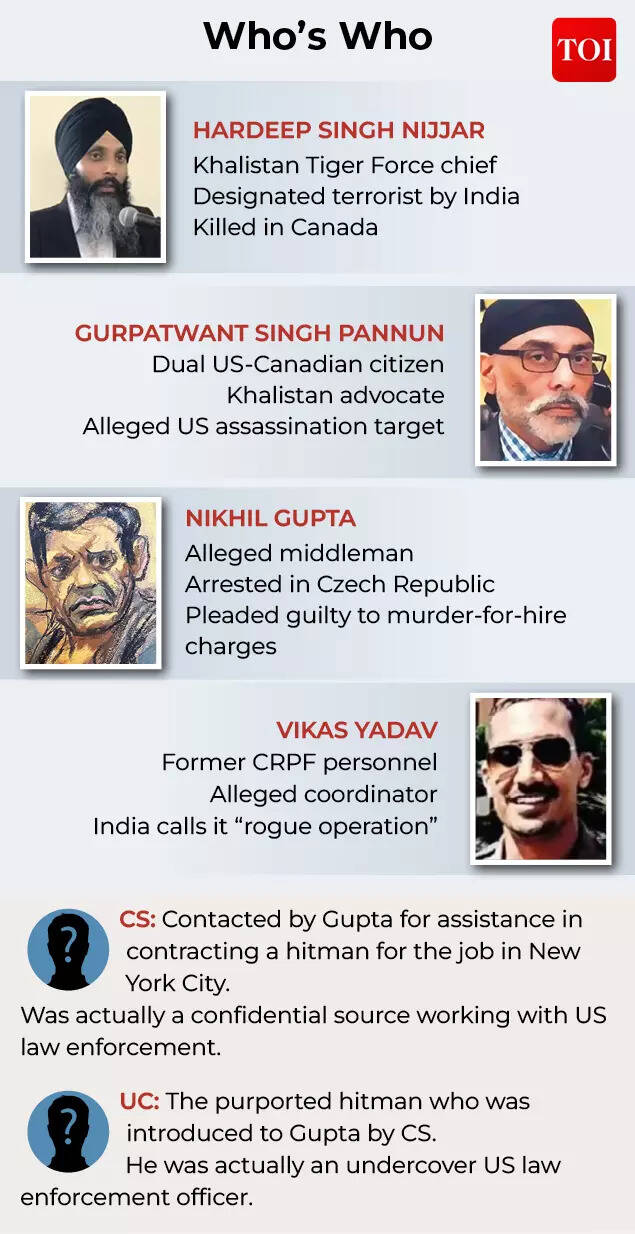
Hardeep Singh Nijjar

  • Nijjar was a Sikh separatist initially associated with Babbar Khalsa International (BKI). New Delhi has listed BKI as a “terrorist organisation” and says it is funded by Pakistan’s Inter-Services Intelligence (ISI), a charge Islamabad denies.
  • Nijjar later became chief of the militant group Khalistan Tiger Force (KTF) and was “actively involved in operationalising, networking, training, and financing” its members, according to a 2020 Indian government statement.
  • New Delhi officially categorised him as a “terrorist” in the same statement, saying he was involved in “exhorting seditionary and insurrectionary imputations” and “attempting to create disharmony among different communities” in the country.
  • He was gunned down by assailants in the parking lot of a gurdwara in Vancouver, Canada, on June 18, 2023.

Gurpatwant Singh Pannun (“the Victim”)

  • Gurpatwant Singh Pannun is a dual US-Canadian citizen and a close ally of Nijjar. He is also a designated terrorist in India and an advocate for Khalistan.
  • Pannun, who is also a lawyer based in the US, is believed to be the brainchild of Pakistan’s intelligence agency ISI and has been among the most vocal proponents of Khalistan in recent years.
  • Pannun has posted several video messages on social media, often threatening Indian leaders, diplomats, and Hindus.

Nikhil Gupta

  • Nikhil Gupta, alias Nick, is an Indian citizen who described himself as an international dealer in narcotics and weapons.
  • On June 30, 2023, Gupta was arrested in the Czech Republic and later extradited to the United States.
  • He is a co-accused in the alleged murder conspiracy case targeting Pannun.

Vikas Yadav

  • Vikas Yadav, previously identified as CC-1.
  • Yadav is the alleged Indian intelligence officer accused of orchestrating the plot from India. He formerly served in the Central Reserve Police Force (CRPF).
  • Yadav was arrested by Delhi Police in December 2023, though in a totally different case of extortion and kidnapping. He was subsequently granted interim bail in March 2024, followed by regular bail a month later. The case is currently under trial.

CS (Credible Source)

  • Contacted by Gupta for assistance in contracting a hitman for the job in New York City.
  • Was actually a confidential source working with US law enforcement.

UC (Under Cover Agent)

  • The purported hitman who was introduced to Gupta by CS.
  • He was actually an undercover US law enforcement officer.

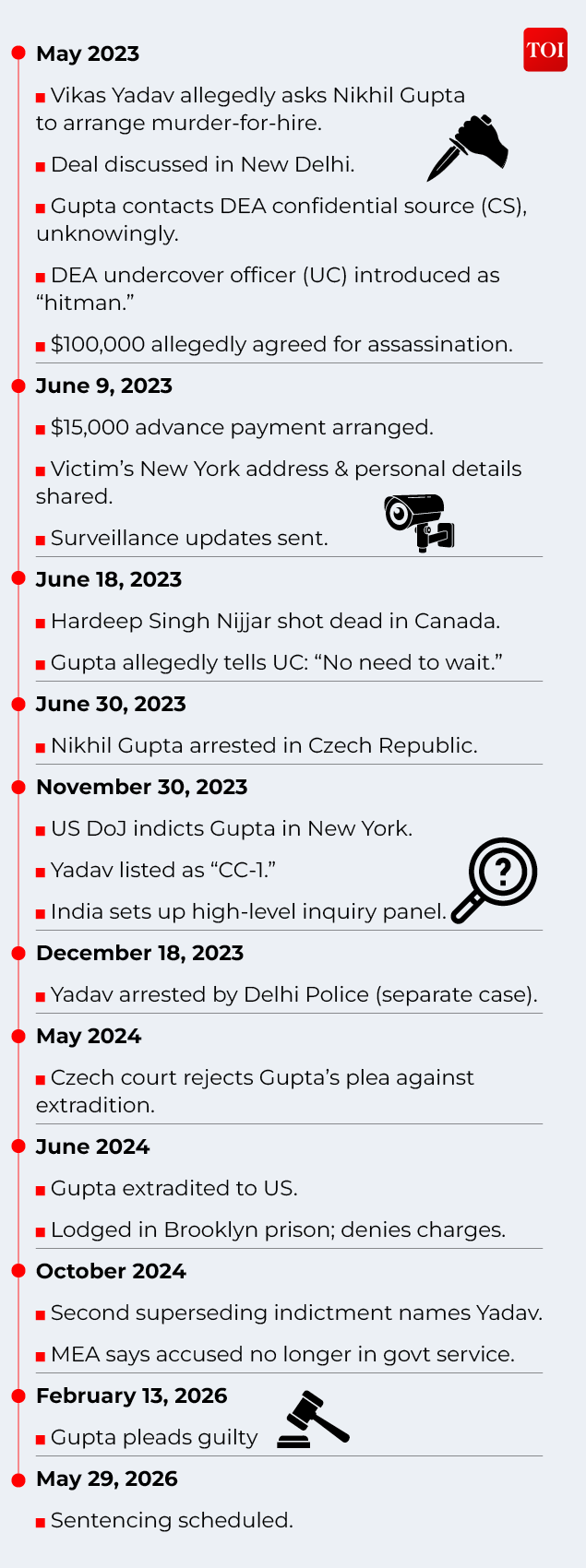
How Gupta was caughtAccording to the US Department of Justice, Nikhil Gupta plotted the assassination of Pannun at the direction and coordination of Vikas Yadav — whom US authorities identified as an Indian government employee.“At the direction and coordination of an Indian government employee, Nikhil Gupta plotted to assassinate a United States citizen on American soil,” FBI Assistant Director in Charge James C Barnacle Jr said.According to the Second Superseding Indictment and statements made in court, Yadav was employed by the government of India’s Cabinet Secretariat, which houses India’s foreign intelligence service, the Research and Analysis Wing.“In or about May 2023, Yadav recruited Gupta to orchestrate the assassination of ‘the Victim’ in the United States,” the justice department said.At Yadav’s direction, Gupta contacted an individual he believed to be a criminal associate. That individual was, in fact, a confidential source working with the Drug Enforcement Administration.The confidential source introduced Gupta to a purported hitman who was actually a DEA undercover officer.“Yadav subsequently agreed, in dealings brokered by Gupta, to pay the UC $100,000 to murder the Victim,” the release said.“On or about June 9, 2023, Yadav and Gupta arranged for an associate to deliver $15,000 in cash to the UC as an advance payment for the murder,” it added.Gupta pleaded guilty on February 14 to federal charges and admitted to three counts: murder-for-hire, conspiracy to commit murder-for-hire, and conspiracy to commit money laundering.India’s stanceA high-powered panel set up by the Centre in 2023 – formed after the US flagged activities of some organised criminal groups, terrorist organisations, and drug peddlers “who undermine the security interests of both India and the US” -claimed that Vikas Yadav had “criminal links” but insisted the episode was a “rogue” operation, denying state-sponsored intent.The ministry of external affairs has also reiterated that Yadav, who had served in the CRPF in the past, is no longer in government service.Did Vikas Yadav go rogue?Serving and retired officials at security agencies feel that the whole affair seemed to brazenly violate every rule in the book that even rookie interns at any agency across the globe wouldn’t.“Forget a senior – any mid-level officer in an agency in the know would have shut it down instantly given the number of red flags the whole thing generated,” a retired government officer told The Times of India.

.

“Handlers never communicate directly with low-level criminal middlemen using traceable electronics. Yet, DoJ documents reveal that Yadav and Gupta exchanged routine messages on encrypted platforms that were clearly compromised,” the officer added.“In a real operation, a handler is a ghost; here, Yadav comes across as a digital pen pal. The ‘trap’ was not just visible; it was screaming.”On June 9, 2023, the conspirators arranged for an associate to hand over $15,000 in cash to the undercover agent in Manhattan. This, according to officials, was a “financial Op-Sec suicide.”Rather than going “dark” after Nijjar’s killing, Yadav allegedly sent Gupta a video of Nijjar’s bloodied body and a message stating that the New York target was now a “priority.”“By discussing an assassination so casually and explicitly linking the two hits, they surrendered all deniability and handed the DoJ the narrative of a transnational repression plot,” an official said.What now?Gupta is scheduled to be sentenced by US District Judge Victor Marrero on May 29, 2026, according to a joint statement by the FBI and DEA.By admitting to murder-for-hire and money laundering charges, Nikhil Gupta may have secured a reduction in the 40-year maximum sentence through an “acceptance of responsibility” credit.While the combined charges carry a maximum statutory punishment of 40 years in prison, a guilty plea typically triggers a reduction under federal sentencing guidelines.Gupta (54) may still have to serve around 80% of the awarded jail time. Under US law, if he receives a sentence longer than 12 months, he would be eligible for up to a 15% reduction for good behaviour while incarcerated.


Source link

Claim, blame, warning, exit: How Galgotias University’s Chinese robodog row unfolded at AI Summit | India News


'Proud Moment For Humanity!' Social Media Roasts Galgotias University, China Reacts To Robo Dog Row

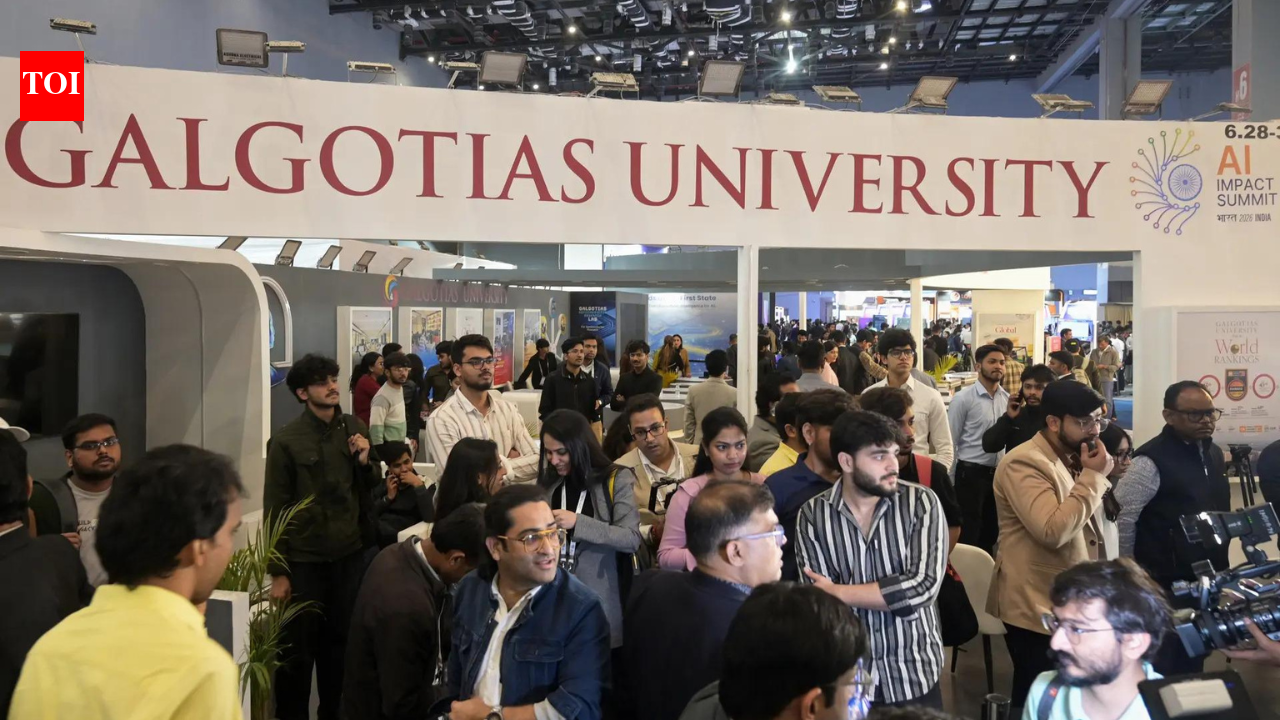
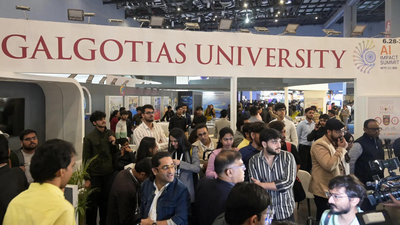
When a four-legged robot named “Orion” trotted onto the floor of the India AI Impact Summit, it was meant to showcase cutting-edge innovation from Greater Noida. Instead, within hours, it triggered a storm that forced Galgotias University to vacate its stall and issue a public apology — after social media users identified the machine as a Chinese-made product.

From ‘Orion’ to Unitree: How the controversy erupted

The row began when Professor Neha Singh, representing the university at the summit, introduced a robotic dog branded as “Orion” during a media interaction. In a clip aired by DD News, she said the robot “has been developed by the Centre of Excellence at Galgotias University” and described its surveillance and monitoring capabilities.

‘Proud Moment For Humanity!’ Social Media Roasts Galgotias University, China Reacts To Robo Dog Row

However, online users quickly pointed out that the robot appeared identical to the Unitree Go2, a commercially available quadruped manufactured by Unitree Robotics. The model is widely used in research and education globally and is available in India for roughly Rs 2–3 lakh.What followed was swift ridicule and political criticism. Critics alleged that an imported Chinese product had been presented as an in-house innovation at a summit designed to spotlight domestic AI capability.As scrutiny intensified, sources said that authorities asked the university to vacate its stall. Power supply to the pavilion was reportedly cut before the team cleared the premises.The Ministry of Electronics and Information Technology made its position clear. Secretary S Krishnan said the government wanted “genuine and actual work” to be reflected at expos and that “misinformation cannot be encouraged”. Without directly assigning blame, he added that organisers did not want controversy surrounding exhibits and that a code of conduct was essential.Additional Secretary Abhishek Singh said the intention was not to stifle innovation but that displays should not be misleading, and the episode should not overshadow the efforts of other participants.

Damage control and shifting explanations

Faced with mounting backlash, the university’s response evolved over the course of the day.In an initial statement, it maintained that it had not claimed to have built the robot, arguing that exposure to global technologies was central to student learning. It described criticism as a “propaganda campaign” and said robotic programming formed part of its effort to help students develop real-world AI skills using globally available tools.Registrar Nitin Kumar Gaur later sought to clarify what he called a “jumble” between the words “develop” and “development”. Speaking to ANI, he said the university did not develop the robot but had “worked on its development” for academic and research purposes. The machine, he said, had been purchased to support student research.Professor Singh also issued a clarification, saying there had been a “misinterpretation” and that the university never claimed the robot was manufactured by it. She accepted that she may not have conveyed her point clearly in the flow of the interaction.By evening, the tone shifted decisively. In a formal apology, the university said the representative manning the pavilion had been “ill-informed” about the technical origins of the product and had given “factually incorrect information” in her enthusiasm on camera, despite not being authorised to speak to the press.The statement insisted there was “no institutional intent to misrepresent this innovation” and said the university had vacated the premises in line with the organiser’s sentiment.Meanwhile, opposition leaders seized on the episode. Leader of opposition Rahul Gandhi described the summit as a “disorganised PR spectacle”, questioning why Chinese products were being showcased at an event meant to project India’s AI ambitions.


Source link

‘Who will pay for it?’: SC raps Tamil Nadu govt for promising free electricity; flags ‘freebie’ politics | India News


'Who will pay for it?': SC raps Tamil Nadu govt for promising free electricity; flags 'freebie' politics

NEW DELHI: The Supreme Court on Thursday pulled up Tamil Nadu electricity board for promising free electricity to consumers irrespective of their financial status.The apex court issued notice to the Centre and others on plea of DMK government which proposes to provide free electricity. A bench led by Chief Justice of India Surya Kant slammed freebies culture adopted by states and political parties, saying that it hampers economic development.The apex court added that most states in the country are revenue deficit but offering such freebies while overlooking development.“The economic development of the nation will be hampered with this kind of largesse distribution Yes, it is the State’s duty to provide. But the ones who are enjoying freebies.. is it not something that should be looked at?” Chief Justice of India Surya Kant verbally observed.“We know states where there is free electricity even if you are big landlord.. you keep lights on..machines on etc. If you want to have a facility you pay for it. But this money which state says will pay now… Who will pay for it? This is the tax money,” he said.The court said that it is aware of what happened in some states in the recent elections, where welfare schemes were suddenly announced just ahead of the elections.The Court clarified that the issue was not confined to any one State but all States in the country.“We are not on Tamil Nadu context only. We are on the fact that why are schemes being announced just before elections. All political parties, sociologists need to revisit ideology. How long will this continue?” CJI said.“It’s not one State we are talking about, it’s about all States. It is planned expenditure. Why don’t you make Budget proposals and give justification that this is my outlay on unemployment of people,” Justice Joymalya Bagchi added.


Source link