Breaking News
India guided by ethos of ‘Vasudhaiv Kutumbakam’: President Murmu at International Fleet Review | India News


India guided by ethos of ‘Vasudhaiv Kutumbakam’: President Murmu at International Fleet Review
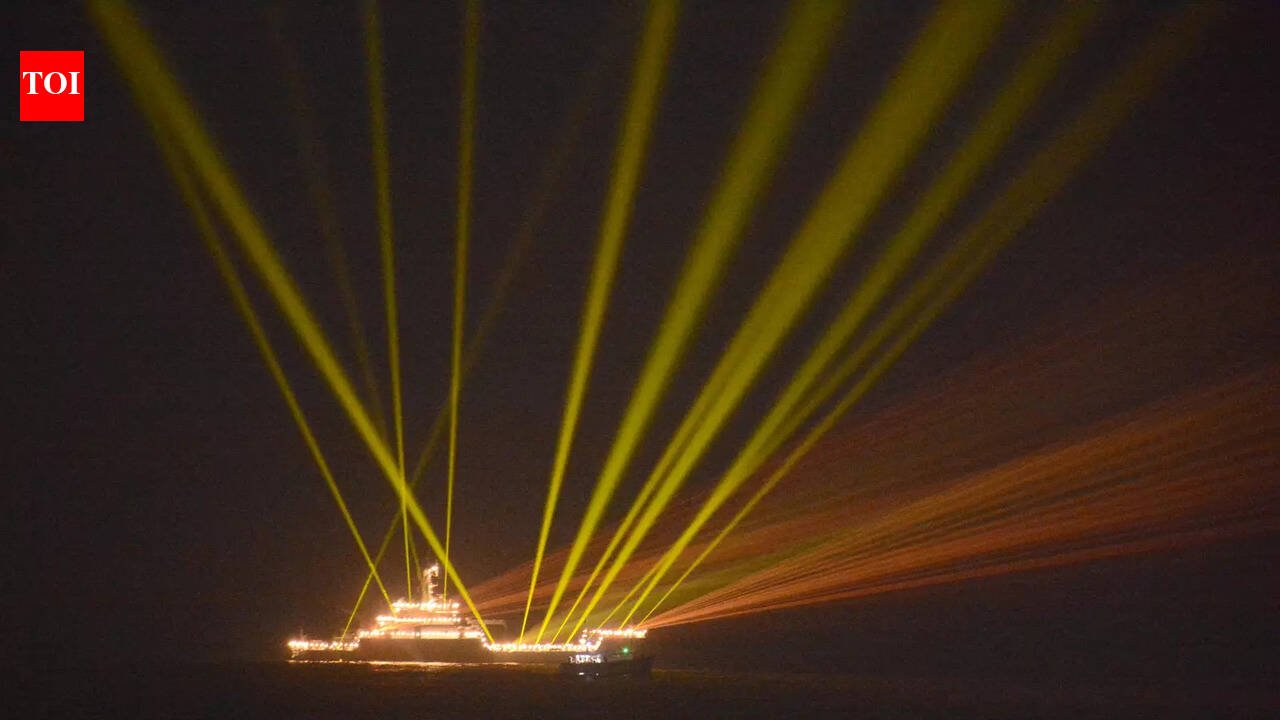
A glimpse of International Fleet Review off the coast of Visakhapatnam (Pic credit: Kanaka Nalam)

NEW DELHI: Reviewing the International Fleet Review (IFR) 2026 off the coast of Visakhapatnam, President Droupadi Murmu — the supreme commander of the armed forces — said on Wednesday “the spirit of friendship on display today through participation of so many friendly-foreign countries highlights the truth that we are collected rather than divided by the seas. India’s approach to international relations, including the maritime domain, is guided by our ethos of ‘Vasudhaiv Kutumbakam’ or ‘the world is one family’.”“This approach reflects the wisdom that global security, growth, sustainability, and stability are built through friendship,” she said.The President said the Indian Navy is vigilant in safeguarding the country’s maritime interests and contributing to stability across the wider maritime commons. Navy units deployed in the region serve as credible instruments of deterrence and defence against threats and challenges arising in the seas, she said, adding the Indian Navy is often the first responder in times of humanitarian crises and natural disasters, extending quick assistance with compassion and competence.Over 74 countries participated in the IFR, marking a grand maritime spectacle. Eighty-five ships, including 19 foreign warships, participated in the fleet review, reflecting the scale and diversity of maritime participation. The Indian fleet included 60 ships of the Indian Navy, four Indian Coast Guard vessels, and one ship each from the Shipping Corporation of India and the National Institute of Ocean Technology.The review also featured three Indian Navy submarines, one French Atlantique maritime patrol aircraft, and participation by over 60 aircraft, underscoring the multi-domain operational capability and the coordinated maritime presence on display.The President also reviewed the Indian naval air arm, marked by a flypast of helicopters and fixed-wing aircraft. This was followed by a mobile column of warships and submarines steaming past the Presidential yacht. The IFR will be followed by the MILAN exercise. To welcome foreign delegates and naval personnel, the Navy has set up a MILAN village in the coastal city.The IFR reaffirmed India’s commitment to maritime cooperation, interoperability and collective security, in keeping with the theme “United Through Oceans”, while highlighting the Navy’s indigenous capability, operational professionalism and enduring partnerships with like-minded navies.On the sides of the fleet review, Navy chief Admiral Dinesh K Tripathi held a bilateral interaction with US Pacific Fleet Commander Admiral Stephen T Koehler. The meeting on Tuesday focused on MALABAR and RIMPAC exercises, and on strengthening interoperability. The Navy chief also met Kyrgyzstan’s armed forces chief and first deputy minister of defence, Col Otonbaev Tariel Zarylbekovich, and Myanmar navy chief Vice-Admiral Aye Min Htwe.


Source link

INS Krishna launched: Navy cadets to get ‘floating classrooms’ for sea training | India News


INS Krishna launched: Navy cadets to get ‘floating classrooms’ for sea training
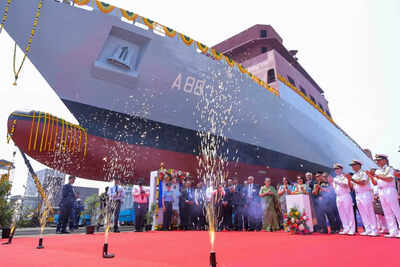
Anupama Chauhan, wife of CDS General Anil Chauhan, launched INS Krishna in the presence of CDS himself and senior officials of the armed forces and ship-builder Larsen & Toubro (L&T) in Chennai

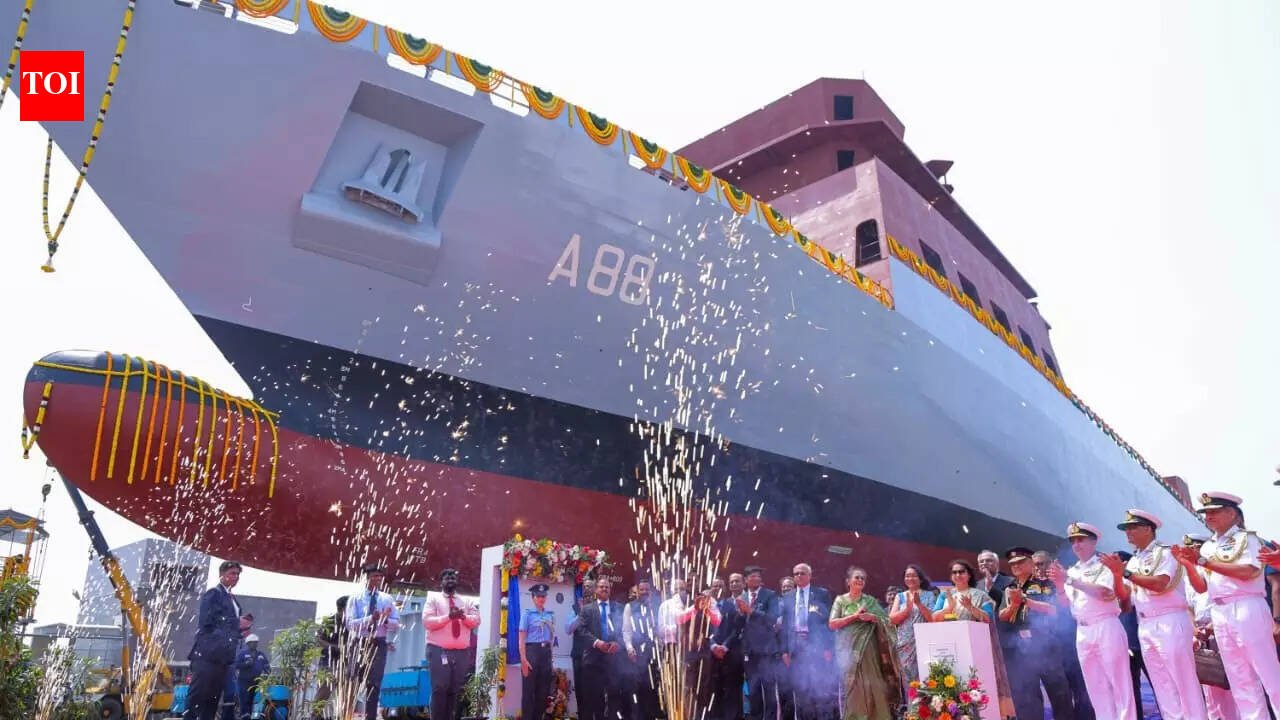
NEW DELHI: Indian naval cadets will now get dedicated “floating classrooms” at sea as the Indian Navy has launched ‘INS Krishna’, the first in a new series of indigenous three cadet training ships (CTS).Unlike earlier when training opportunities at sea were limited, these “dedicated floating classrooms and living labs” have been designed to provide cadets with hands-on experience in navigation, seamanship and watch-keeping in real-world sea conditions. The three ships, which will serve as the backbone of the Navy’s sea training infrastructure for the next 30 years, will host trainees soon after they complete their basic training ashore.In keeping with the Naval traditions, Anupama Chauhan, wife of CDS General Anil Chauhan, launched INS Krishna in the presence of the CDS and senior officials of the armed forces and ship-builder Larsen & Toubro (L&T). INS Krishna (designated ‘Yard 18003)’, which was constructed at the L&T shipyard in Kattupalli near Chennai, is planned for formal delivery and operational availability to the Navy by year-end.The ships will also be used for training cadets from friendly foreign countries, enhancing India’s defence cooperation. In addition to training, these ships can be used for non-combatant evacuation operations, humanitarian aid and disaster relief, and search-and-rescue operations.Krishna can accommodate 20 officers, 150 sailors and 200 cadets simultaneously. It has three classrooms (70 cadets each), a dedicated training bridge, and a chart house. With a displacement of approximately 4,700 tonnes, it can attain a maximum speed of 20 knots with an endurance of 60 days at sea.


Source link

Uttarakhand achieves 1 GW solar energy capacity boosting green energy push and local jobs | India News


Uttarakhand achieves 1 GW solar energy capacity boosting green energy push and local jobs

Uttarakhand has crossed a major renewable energy milestone, surpassing 1 gigawatt (GW) of installed solar power capacity. The state’s total installed solar capacity now stands at over 1,027.87 megawatts, underlining its growing push towards clean and sustainable energy.Chief Minister Pushkar Singh Dhami said the achievement reflects the Centre’s policy focus on renewable energy under the leadership of Prime Minister Narendra Modi. He said the Prime Minister’s vision of Atmanirbhar Bharat and emphasis on green energy had encouraged states like Uttarakhand to turn solar power into a people-driven movement.According to Dhami, coordinated implementation of central schemes and state-led initiatives has also opened up self-employment opportunities for youth and local entrepreneurs. He expressed confidence that Uttarakhand would further consolidate its position among India’s leading solar energy states in the coming years.The milestone has been achieved through a mix of grid-connected rooftop solar projects, ground-mounted plants, installations on government buildings, solar pumps for agriculture, and solar schemes for domestic, commercial and industrial consumers.Of the total installed capacity, around 397 MW has come from ground-mounted projects, 241 MW from rooftop solar installations under the PM Surya Ghar scheme, 137 MW under the Chief Minister Solar Self-Employment Scheme, 110 MW through commercial net metering, 51 MW from captive solar plants, 37 MW from canal-top and canal-bank projects, and 26 MW from solar installations on government buildings.In addition, more than 100 MW is currently being installed under the Chief Minister Solar Self-Employment Scheme, along with 30 MW from captive solar plants and 13.5 MW on government buildings. These efforts have contributed to reducing carbon emissions, improving energy self-reliance, and generating local employment.The Uttarakhand Renewable Energy Development Agency (UREDA) has played a key role in driving solar adoption across the state by implementing projects, providing technical support, raising awareness, and extending solar solutions to remote and mountainous areas.Officials said supportive policies, subsidies, simplified approval processes and incentives for private investment have helped accelerate solar growth. The state government has set further targets to expand solar capacity, deepen outreach in remote regions, and boost public participation as part of its long-term sustainability goals.


Source link

‘Western nations spread fundamentalism’: RSS chief Mohan Bhagwat hits out at US, China | India News


'Western nations spread fundamentalism': RSS chief Mohan Bhagwat hits out at US, China

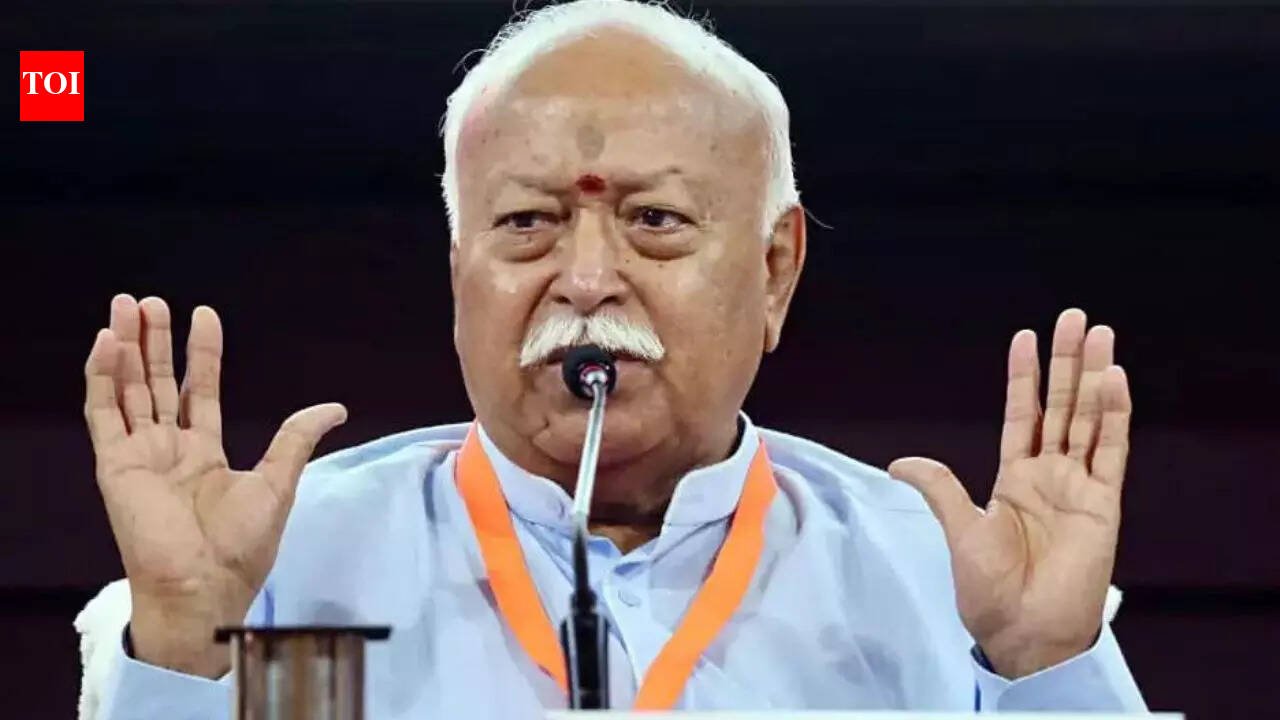
NEW DELHI: RSS chief Mohan Bhagwat on Wednesday criticised the United States and China, alleging that “Western countries spread fundamentalism,” and asserting that India holds solutions to many of the world’s problems.Speaking at a Shodharthi Samvad programme at Lucknow University, Bhagwat said, “Western countries spread fundamentalism. Their thinking is to become powerful, live on their own, and abandon the rest, eliminating those who become obstacles. This is what America and China are doing today.”

Mohan Bhagwat Credits RSS Grind For BJP’s Success, Draws Line Between Sangh And Political Power

Bhagwat maintained that India can offer solutions to global crises but must first strengthen itself.“Today, India has the answers to the problems the world is facing. If we want to become a world leader, we must become powerful in all areas. The world only believes it when truth is backed by power,” he said.“Research plays a major role in changing India’s direction and condition. Truthful information should be brought to light. We will not be able to understand India through ignorance,” he added.He further alleged that Western powers had distorted India’s traditional education system. “Westerners have messed with education. They replaced our education system and imposed their own, so they could find black Englishmen to do the work. What the British did wrong must be rectified,” he said.“Today globalisation means marketisation, which is dangerous. We talk about Vasudhaiva Kutumbakam. That means we consider the entire world as our family. Unless everyone is happy, no one can be happy,” he said.“Therefore, our lives should be restrained, not consumerist. A life of restraint and sacrifice is in our cultural self-realisation,” he added.‘Not a single speck of dust can be secular’Speaking on religion, Bhagwat said that religion remains eternally relevant and governs the laws by which the universe operates. “The eternal nature of religion is always relevant. Religion is the laws by which the universe operates. Not a single speck of dust can be secular,” he said.“Religion brings happiness to everyone. Religion is applicable in everything we do. Our behaviour changes according to religion, country, and time. Religion tells us that we should live with everyone, not alone,” he added.Bhagwat also stressed the importance of environmental protection, urging people to adopt sustainable practices in daily life.Ghar Wapsi (homecoming) should be acceleratedEarlier on Tuesday, Bhagwat expressed concern over “a decline in the Hindu population”. According to a release, he called for a halt to religious conversions allegedly driven by greed or coercion.He said the process of “Ghar Wapsi” (homecoming) should be accelerated and that those who return to Hinduism must be supported.Bhagwat further stated that Hindus should have at least three children. Citing scientific studies, he claimed that a society with an average of fewer than three children faces long-term decline. He added that newly married couples should be informed of this view.


Source link

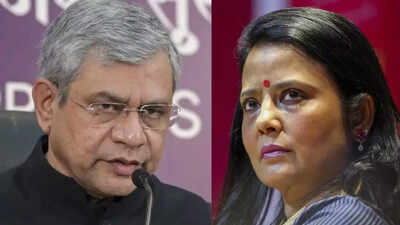
‘Join Galgotias as Professor of Spin’: Mahua Moitra jabs Ashwini Vaishnaw amid robodog row, asks him to quit | India News


'Join Galgotias as Professor of Spin': Mahua Moitra jabs Ashwini Vaishnaw amid robodog row, asks him to quit
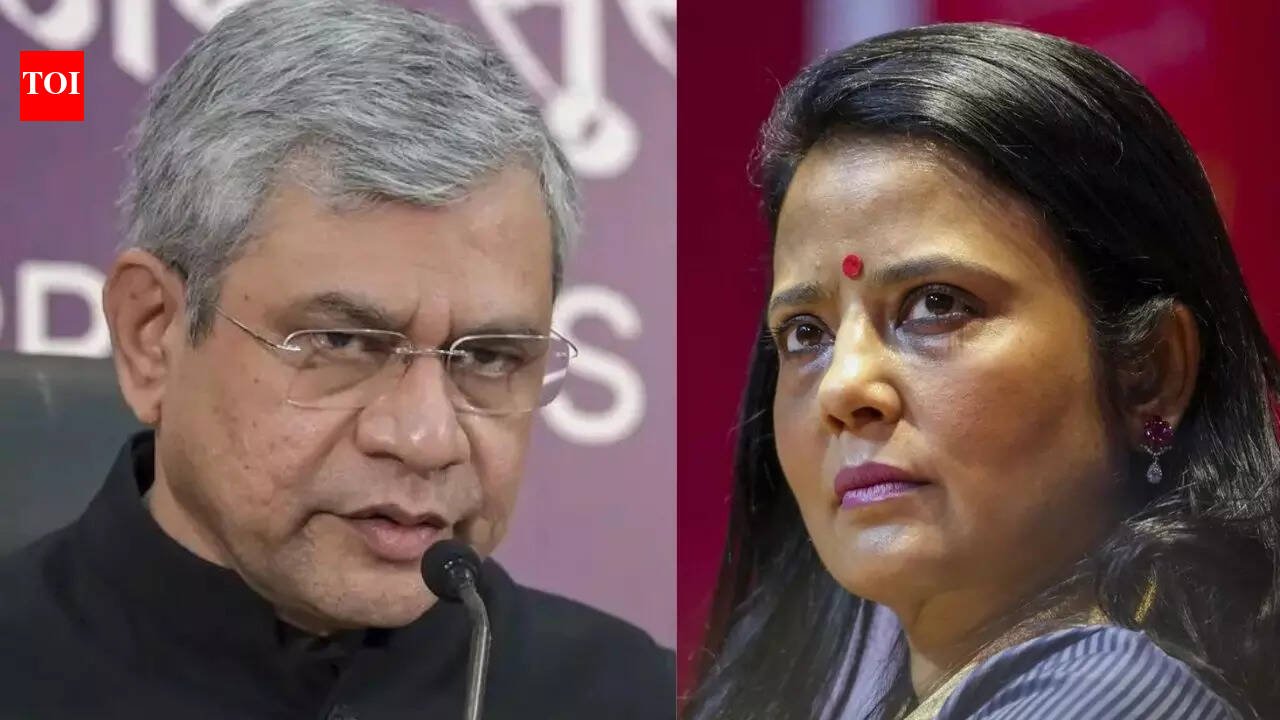
Ashwini Vaishnaw and Mahua Moitra

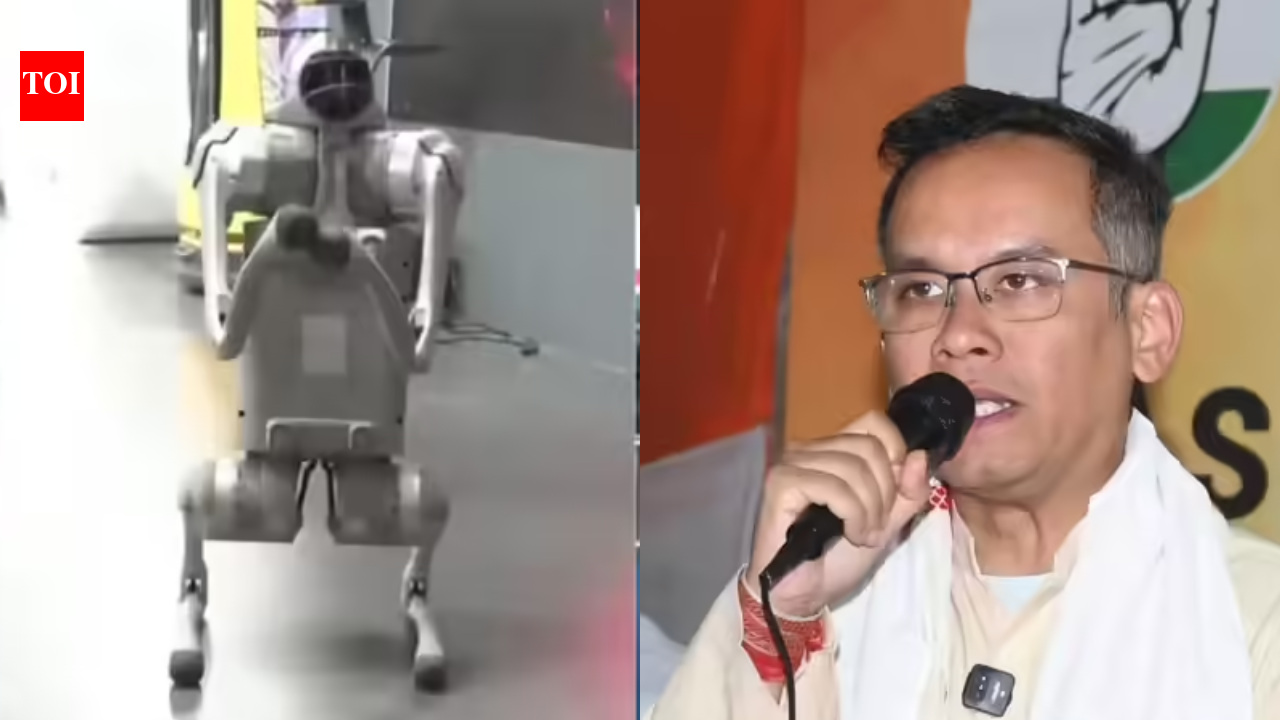
NEW DELHI: The Modi government’s ambitious AI summit on Wednesday was overshadowed by controversy over Galgotias University’s contested displays of robotic exhibits, with Trinamool (TMC) leader Mahua Moitra calling the I-T minister Ashwini Vaishnaw to quit.Taking a sharp dig at the minister, who also holds crucial railway and information & broadcasting portfolios, the Lok Sabha MP wrote Vaishnaw has “made India a laughing stock”.

AI Impact Summit: Facing Backlash Over China-made Robo Dog, Galgotias University Told To Leave Event

Mahua also shared a Vaishnaw’s deleted X post in which he had purportedly praised the Galgotias University’s robodog, which triggered a massive backlash online over its Chinese origins. In the post, as was posted by the TMC leader, Vaishnaw had said: “Bharat’s sovereign models are performing well on global benchmarks.”Mahua, considered a fierce critic of the ruling BJP, said the minister “maybe join Galgotia as Professor of Spin?”“Deleting tweets doesn’t change reality @AshwiniVaishnaw – you have made India a laughing stock. Quit the chair if you can’t do your job. Maybe join Galgotia as Professor of Spin?” Mahua wrote on X.Government acts against Galgotias As the controversy escalated into a major embarrassment, the government asked Galgotias University to vacate its stall at the AI Summit Expo in Bharat Mandapam.The robot, showcased by the university as “Orion,” was recognised by observers as the Unitree Go2, commercially available product, made by Chinese robotics firm Unitree. The quadruped robot is reportedly sold in India for about Rs 2–3 lakh.The incident quickly escalated into a wider controversy at the India AI Impact Summit 2026, a flagship AI event that PM Modi himself inaugurated.The university pins all blame on the professorHours after the drawing intense flak, Galgotias University apologised in the statement that blamed the woman professor for the fiasco.In the statement, it expressed regret over the confusion and said it arose because Professor Neha Singh, who was managing the stall, was unaware of the product’s technical origins.


Source link

This day, that year: When India launched the world’s first official airmail service | India News


This day, that year: When India launched the world’s first official airmail service

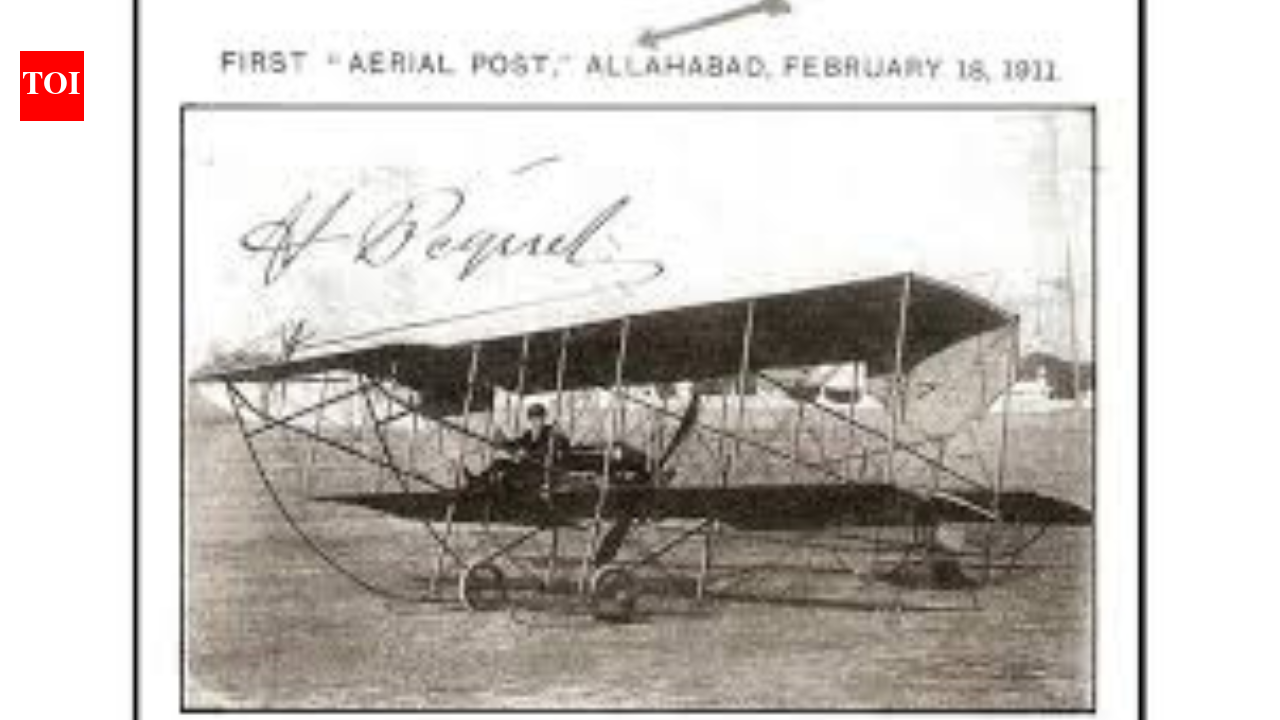
On a winter evening in 1911, as the sun dipped over the confluence city of Prayagraj, a small crowd gathered on the banks of Yamuna to witness what many believed was little more than a spectacle. Kumbh Mela pilgrims thronged the city, traders and farmers moved through the UP Exhibition grounds, and curious onlookers looked out for a strange contraption of wood, fabric and wire. Few were aware that they were about to watch a moment that would quietly reshape global communication.At around 5.30 pm on February 18, 1911, French aviator Henri Pequet climbed into his Heavyland aircraft, its engine clinking against the evening air. In the cockpit, alongside fuel and instruments, were 6,500 letters — ordinary envelopes entrusted to an extraordinary experiment. When Pequet lifted off, crossing the Yamuna and steering towards Naini, he carried with him not just mail, but the idea that any distance could be conquered by air.The flight lasted just 13 minutes. It covered roughly 15 kilometres, from the exhibition grounds in Prayagraj to a landing site near Naini Junction, close to what is now the Central Jail. But the journey’s brevity concealed its significance.This was the world’s first official airmail service, launched from colonial India at a time when powered flight itself was barely eight years old. Around one lakh people, according to contemporary accounts, watched in astonishment as the machine rose, crossed the river, and descended safely on the other side.The setting was as symbolic as the event. The UP Exhibition, an agricultural and industrial fair, had brought together innovation and tradition on the riverbanks. Two aircraft had been shipped in parts by British officers and assembled in full public view, turning engineering into theatre. The airmail flight was staged as a highlight, but its implications would ripple far beyond the fairgrounds.More than a century later, postal services have transformed beyond recognition, from fragile biplanes to drones and satellites. Yet, India’s role in inaugurating the airmail era remains a lesser-known chapter in aviation and communication history.On that February evening in 1911, amid pilgrims, farmers and curious citizens, a modest flight across the Yamuna quietly launched a global revolution in how the world sends its messages.

Before wings of metal, wings of feather

.

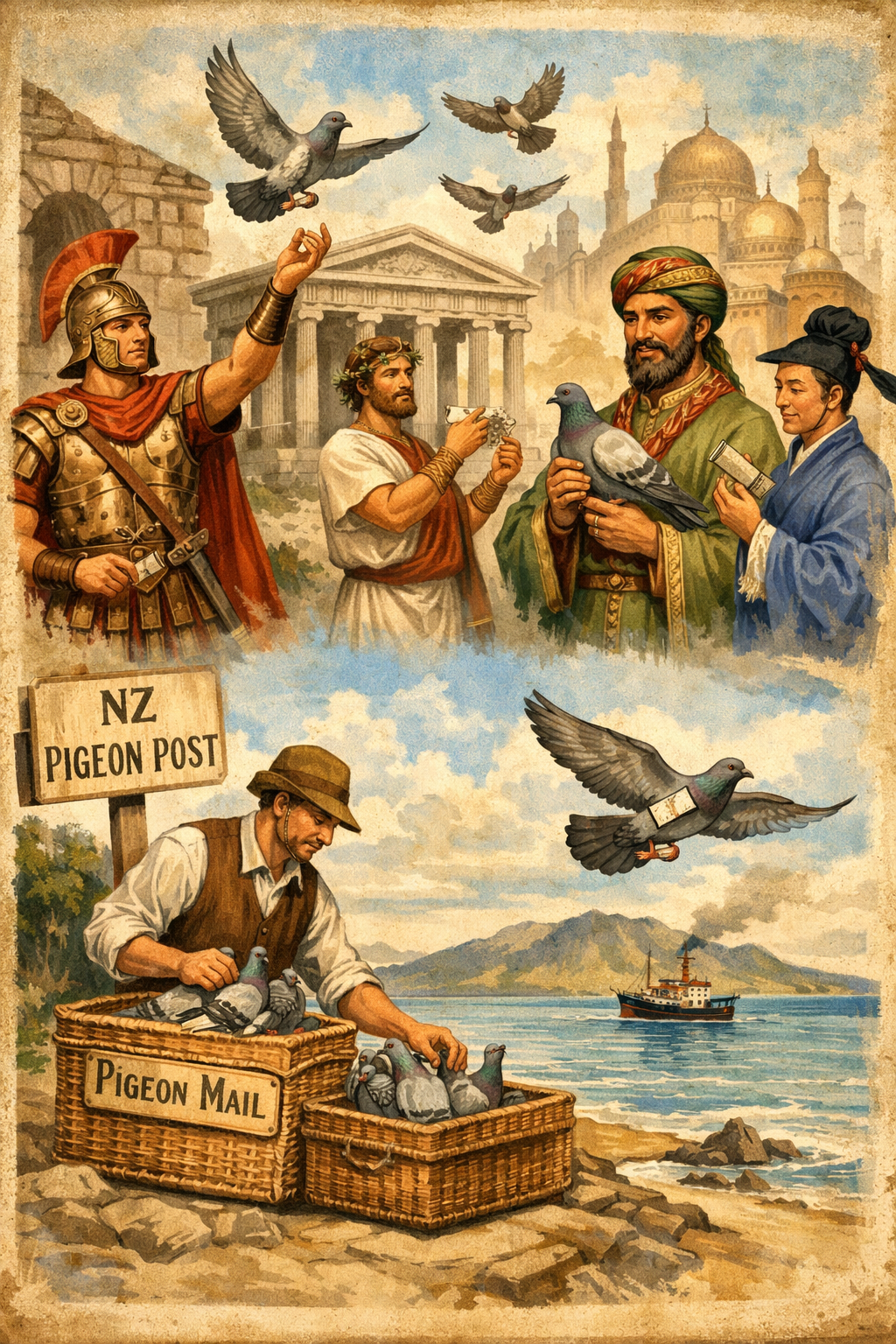
Long before engines roared and wings of fabric and wood lifted off the ground, messages travelled on feathers. For at least two thousand years, pigeons have carried letters across distances that were otherwise difficult, dangerous or slow to traverse. A small note would be tied to the bird’s leg, released from a distant point, and the trained pigeon would instinctively fly back to its home loft—where the intended recipient waited.Ancient civilisations relied on this method with remarkable sophistication. The Romans used homing pigeons to relay military and administrative messages; the Greeks employed them to announce the results of sporting contests; Persian and Chinese networks also integrated pigeons into their communication systems. In many ways, these birds formed one of the earliest organised long-distance messaging systems.The practice did not vanish with antiquity. In the late 19th century, a structured pigeon-based postal service briefly operated in New Zealand. Between 1897 and 1901, the New Zealand Pigeon Post carried messages between the mainland and Great Barrier Island, issuing stamps that are today prized by philatelists. It was an ingenious solution to geographic isolation in an era when reliable telegraph or ferry services were still developing.

.

Yet pigeon post had an inherent limitation that often went unremarked. The bird could only fly home. To send a message from a remote location, someone first had to transport the pigeon there—usually confined in a cage. Even the earliest “airmail” required its own logistics chain.Against this backdrop, the leap from pigeon legs to powered flight was not just technological; it was conceptual. When Henri Pequet carried mail across the Yamuna in 1911, he was building on centuries of experiments in conquering distance—this time with a machine, not a bird, and with the promise of transforming how nations would communicate.

Magenta mail and a 13-minute leap into history

The idea itself was quite audacious for its time. According to Postmaster General Krishna Kumar Yadav, Colonel Y Wyndham first approached postal authorities with a proposal that sounded closer to fantasy than policy: sending mail by aeroplane. The postal chief of the day gave his consent, and preparations began for what would become a landmark experiment in communication.The mail bag prepared for the flight was intentionally distinctive. It carried the markings “First Air Mail” and “Uttar Pradesh Exhibition, Allahabad,” with an illustration of an aircraft printed on it. Instead of the customary black ink, magenta was used, giving the consignment a distinctive identity.Organisers were acutely aware of the aircraft’s limitations. Weight was a critical concern, and strict calculations were done to ensure the load would not exceed what the machine could lift. Each letter was weighed, restrictions were imposed, and finally, the number of items was capped at 6,500. The flight itself would last only 13 minutes, but everything leading up to it had been planned with military precision.Yadav, who has noted down India’s postal history in his book ‘India Post: 150 Glorious Years’ notes that the service was not merely symbolic; it was also structured as a special premium offering. A surcharge of six annas was levied on each letter, and the proceeds were donated to the Oxford and Cambridge Hostel in Allahabad. The hostel became the nerve centre of this unusual operation. Letters were accepted for booking until noon on February 18, and the rush was such that the building resembled a miniature General Post Office. The postal department had to deploy three to four staff members on-site to handle the volume.Within days, nearly 3,000 letters had reached the hostel for onward transmission by air, a testament to the novelty and prestige attached to the service. Among the senders were local elites—rajas, maharajas, princes, and prominent citizens of Prayagraj, eager to have their names associated with history.One envelope even bore a postage stamp worth Rs 25, an extraordinary sum at the time, underscoring how much symbolic value people placed on this pioneering flight.

From balloons to biplanes: The making of Henri Pequet

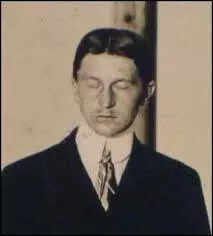
Henri Pequet’s journey to the banks of the Yamuna was anything but straightforward. Born on February 1, 1888, in Bracquemont, a small town in France’s Seine-Inférieure region, he was drawn to flight at a time when aviation was still an experiment more than a profession. He began in 1905 with balloon flights under the guidance of Baudry, later moving on to work with the dirigible Ville de Paris built by Paulham. These early years were spent learning the fundamentals of aeronautics, often through trial, error, and mechanical improvisation.

Henri Pequet

By 1908, Pequet was working at the Voisin brothers’ aircraft factory in Mourmelon, one of the pioneering centres of European aviation. His transition from mechanic to pilot was almost accidental. While on an assignment in Châlons to repair an aircraft abandoned in a field after its Anzani engine failed, Pequet secured permission to test the plane himself. It was there that he experienced the thrill of controlling an aircraft for the first time, discovering a talent that would soon define his career.The following year, he was hired as a pilot and mechanic by Chilean aviation entrepreneur José Luis Sánchez. In 1909, Pequet travelled to Johannisthal, near Berlin, to attend an aviation meeting. Circumstances led him to replace another pilot, Edwards, on a flight, on a condition that he would no longer be employed as a mechanic. On October 30, he took off, executed a short but controlled flight, and landed smoothly. The performance marked his emergence as a professional aviator.Pequet soon returned to the Voisin factory and went on to participate in aerial exhibitions in Argentina, flying Voisin biplanes powered by 60-horsepower engines. On March 24, 1910, he made a notable flight at Villa Lugano. Later that year, he returned to France and enrolled at the Voisin brothers’ flying school in Reims, earning his pilot’s brevet from the Aéro-Club de France on June 10, 1910, with licence number 88.Less than a year later, the young French aviator would find himself in colonial India, piloting an aircraft over the Yamuna and writing a small but enduring chapter in the history of global postal and aviation.

Source link

After BMC setback, Raj Thackeray meets Eknath Shinde amid MNS unease | India News


After BMC setback, Raj Thackeray meets Eknath Shinde amid MNS unease

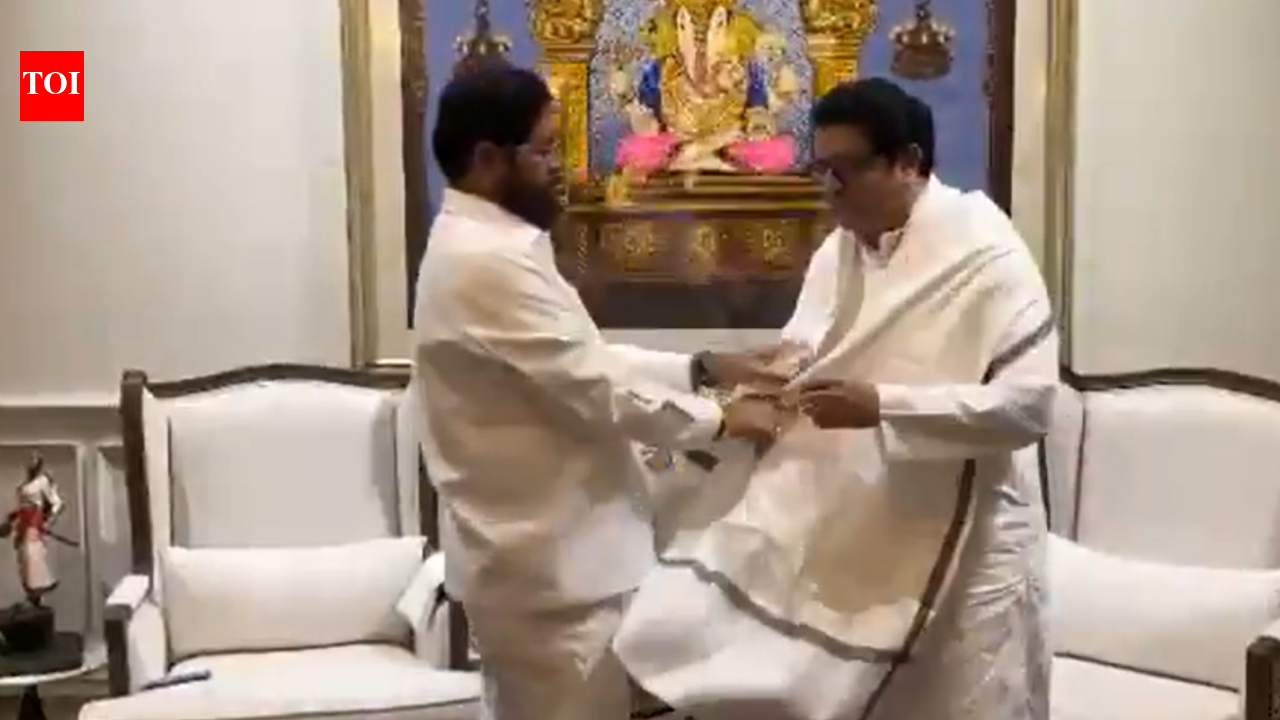
NEW DELHI: Maharashtra Navnirman Sena chief Raj Thackeray on Wednesday met Maharashtra deputy chief minister Eknath Shinde at the latter’s residence in Mumbai. This was their first face-to-face interaction since last month’s Brihanmumbai Municipal Corporation (BMC) elections.The meeting, held at Shinde’s official residence Nandanvan, covered a range of issues, a functionary from the Shinde-led Shiv Sena told PTI. However, the details of the meeting were not made public.MNS had extended its supported Shinde’s Sena in Kalyan-Dombivli.Last month, Shinde had praised Raj Thackeray saying he never looked at personal gain and had always taken decisions from a broader perspective. “MNS has supported Shiv Sena for development in Kalyan-Dombivli. Earlier too, MNS was with us (Mahayuti) in LS and assembly elections. The alliance of BJP and Shiv Sena is not just for now. Now MNS has also participated in it. We are seeing who benefited and who lost from the (UBT Sena-MNS) alliance, Raj has never looked at personal gain,” he had said.“He has always taken decisions from a broader perspective. He had supported PM Modi on development. He had also supported us in the assembly elections. Raj Thackeray values feelings of his workers,” Shinde said.Raj Thackeray’s recent outreach comes amid visible discontent within the MNS, with a section of its leaders publicly expressing disappointment over what they see as inadequate support from the Shiv Sena (UBT) during the civic polls.The meeting follows the high-stakes BMC contest that saw the Thackeray cousins briefly reunite after nearly two decades, only for their joint effort to fall short. The Bharatiya Janata Party emerged victorious, ending the almost three-decade dominance of the undivided Shiv Sena led by the Thackeray family.


Source link

Evening news wrap: Galgotias University under fire over Chinese robodog at AI Summit; Gogoi calls CM Himanta ‘Assam’s Jinnah’ & more | India News


Evening news wrap: Galgotias University under fire over Chinese robodog at AI Summit; Gogoi calls CM Himanta 'Assam's Jinnah' & more
  • Galgotias University apologised after being asked to vacate its AI Impact Summit stall over a Chinese-made robotic dog display, blaming the controversy on a faculty member’s unawareness of the product’s origins.
  • Congress leader Gaurav Gogoi called Assam chief minister Himanta Biswa Sarma “Assam’s Jinnah” and downplayed former state chief Bhupen Borah joining the Bharatiya Janata Party, saying it would not hurt the Congress before polls.
  • The Election Commission of India announced the date for polls for 37 vacant seats in the Rajya Sabha across 10 states.
  • A former Indian Space Research Organisation employee, Nagesh Ishwar Rao, was arrested in Bengaluru for allegedly strangling his wife Sandhya Shri at their apartment.
  • The Pakistan men’s cricket team dropped pacer Shaheen Shah Afridi for a must-win ICC Men’s T20 World Cup match against the Namibia men’s cricket team.

Robodog row at AI Summit: Galgotias University apologises, blames professor’s ‘enthusiasm’ for controversy

Galgotias University issued an apology following a row over the showcase of a Chinese-made robotic dog at its booth during the AI Impact Summit expo at Bharat Mandapam. However, in its statement, the university attributed the lapse to a woman faculty member. The apology came after the university was asked to vacate its pavilion at the summit. In a press release, it expressed regret over the controversy, stating that the situation stemmed from Professor Neha Singh — who was overseeing the stall — not being aware of the product’s technical origins. Read full story

AI Impact Summit: Facing Backlash Over China-made Robo Dog, Galgotias University Told To Leave Event

‘Himanta is Assam’s Jinnah’: Congress plays down Bhupen Borah’s exit; alleges ‘confidential leaks’

Congress leader Gaurav Gogoi hit out at Assam chief minister Himanta Biswa Sarma calling him “Assam’s Jinnah” and dismissed the exit of former state chief Bhupen Borah from the Congress to join the Bharatiya Janata Party as politically insignificant ahead of the polls. He also alleged that the move reflected Borah’s proximity to the chief minister and was aimed at diverting attention from allegations against him. Speaking in Guwahati, Gogoi said the defection would not affect Congress’s campaign, while Borah defended his decision citing humiliation within the party and said he had raised his concerns with Rahul Gandhi. Read full story

ECI announces Rajya Sabha biennial elections for 37 seats across 10 states

The Election Commission of India has announced that biennial elections to fill 37 vacant seats in the Rajya Sabha across 10 states will be held on March 16, with polling from 9am to 4pm and counting from 5pm the same day, as terms of outgoing members end in April 2026. The notification for the same will be issued on February 26, nominations close March 5, scrutiny is on March 6 and withdrawal is allowed till March 9, while states going to polls include Maharashtra, Odisha, Telangana, Tamil Nadu, Chhattisgarh, West Bengal, Assam, Haryana, Himachal Pradesh and Bihar, and retiring MPs this cycle include Upendra Kushwaha, Priyanka Chaturvedi, Tiruchi Siva, Saket Gokhale, Ramdas Athawale, Abhishek Manu Singhvi, Sharad Pawar, Bhagwat Karad, Mamata Mohanta, Rameswar Teli, Indu Bala Goswami, K. T. S. Tulsi, N. R. Elango, Amarendra Dhari Singh and Kiran Choudhry. Read full story

‘Was anxious about her future after my death’: Former Isro employee murders wife inside Bengaluru flat

A former employee of the Indian Space Research Organisation, Nagesh Ishwar Rao, was arrested for allegedly strangling his wife Sandhya Shri to death at their apartment in the Virtuoso Apartment Complex in Bengaluru, police said, adding that preliminary investigations indicate he was undergoing treatment for depression and was in distress, and allegedly told officers he feared for his wife’s future if he died and intended to take his own life after the attack. Deputy commissioner of Police said no other major motive has emerged so far and that the couple’s daughter, who lives in the United States, has been informed. Read full story

With Super 8 spot on the line, Pakistan drop Shaheen Afridi for must-win match vs Namibia

The Pakistan men’s cricket team left out fast bowler Shaheen Shah Afridi from the playing XI for their must-win group match against the Namibia men’s cricket team in the ICC Men’s T20 World Cup at the Sinhalese Sports Club on Wednesday. Captain Salman Ali Agha won the toss and chose to bat, making two changes after the defeat to the India men’s cricket team, with Salman Mirza and Khawaja Nafay replacing Shaheen and Abrar Ahmed. Pakistan entered the match needing a win to stay in Super 8 contention after their 61-run loss, with senior batter Babar Azam and Shaheen facing criticism for form. Read full story


Source link

Mahayuti govt cancels 5% Muslim quota: What was it, why it was scrapped and why opposition is angry | India News


Mahayuti govt cancels 5% Muslim quota: What was it, why it was scrapped and why opposition is angry

NEW DELHI: The Mahayuti government in Maharashtra has formally cancelled the five per cent reservation for Muslims in jobs and education.The Social Justice Department on Tuesday issued a Government Resolution (GR) cancelling its 2014 order that had granted a 5 per cent reservation to the Muslim community in educational institutions and government and semi-government jobs — a provision that had already been legally invalidated over a decade ago.The reservation was introduced in July 2014 through an ordinance, classifying Muslims under the Special Backward Class-A (SBC-A) category. However, the policy was challenged in the Bombay High Court, which stayed its implementation in November 2014.What was the 5% Muslim quotaThe five per cent reservation for Muslims was introduced in July 2014 by the then Congress–NCP government through an ordinance. The move came alongside a 16 per cent reservation for Marathas and was pitched as a response to socio-economic data indicating backwardness among sections of the Muslim community.The quota was not framed as religion-based. Muslims were classified under a new category, Special Backward Class-A (SBC-A), and the benefits were to apply to government jobs, semi-government posts and admissions to educational institutions.The ordinance was cleared just months before the 2014 assembly elections, making it politically contentious from the outset.The legal troubleAlmost immediately after the ordinance was issued, it was challenged in court. Petitioners argued that reservations based on religion violated constitutional principles and that the quota breached the 50 per cent ceiling on reservations laid down by the Supreme Court in earlier judgments.In November 2014, the Bombay High Court stayed the implementation of the ordinance. This meant the quota could not be operationalised unless the stay was vacated or the policy was reworked.Meanwhile, the ordinance also faced a procedural hurdle. Under the Constitution, an ordinance must be converted into law by being passed in the legislature within a stipulated period. The Maharashtra legislature did not take up the ordinance before the deadline of December 23, 2014, causing it to lapse automatically.Subsequently, Supreme Court, while deciding a Special Leave Petition against the high court’s order, effectively upheld the legal position that the quota could not continue.As a result, the five per cent Muslim reservation never came into force in practice.Why cancel it nowDespite the ordinance having lapsed and the courts having stayed its implementation, the original 2014 government resolution was never formally withdrawn. Over the years, this created administrative ambiguity, with sporadic applications for caste or validity certificates under the SBC-A category.The Maharashtra government said the latest GR is meant to remove this ambiguity by formally cancelling all decisions and communications linked to a quota that has no legal standing.What is the GR The new directive:

  • Cancels the 2014 GR granting five per cent reservation to Muslims
  • Nullifies all circulars and administrative instructions related to the quota
  • Stops issuance of caste and non-creamy layer certificates under SBC-A
  • Declares all pending or future claims under this category invalid

The government has underlined that no existing benefits are being withdrawn, since the quota was never operational.Opposition protestsCongress leaders have strongly criticised the move, arguing that even if the quota was legally stalled, formally scrapping it sends a political message of exclusion.Mumbai Congress MP Varsha Gaikwad described the decision as “harmful to democracy” and said it would push Muslims away from the mainstream. She argued that instead of cancelling the quota, successive BJP-led governments should have explored legally sustainable ways to address backwardness among Muslims.NCP (SP) spokesperson Crasto said the decision proves that the BJP doesn’t value Muslim leaders of the party and its allies. “It also shows that these Muslim leaders won’t get justice from the BJP,” he claimed.(With agency inputs)


Source link

Vijay Mallya plea: Fugitive businessman tells Bombay HC he can’t return to India, cites UK travel ban | India News


Vijay Mallya plea: Fugitive businessman tells Bombay HC he can’t return to India, cites UK travel ban

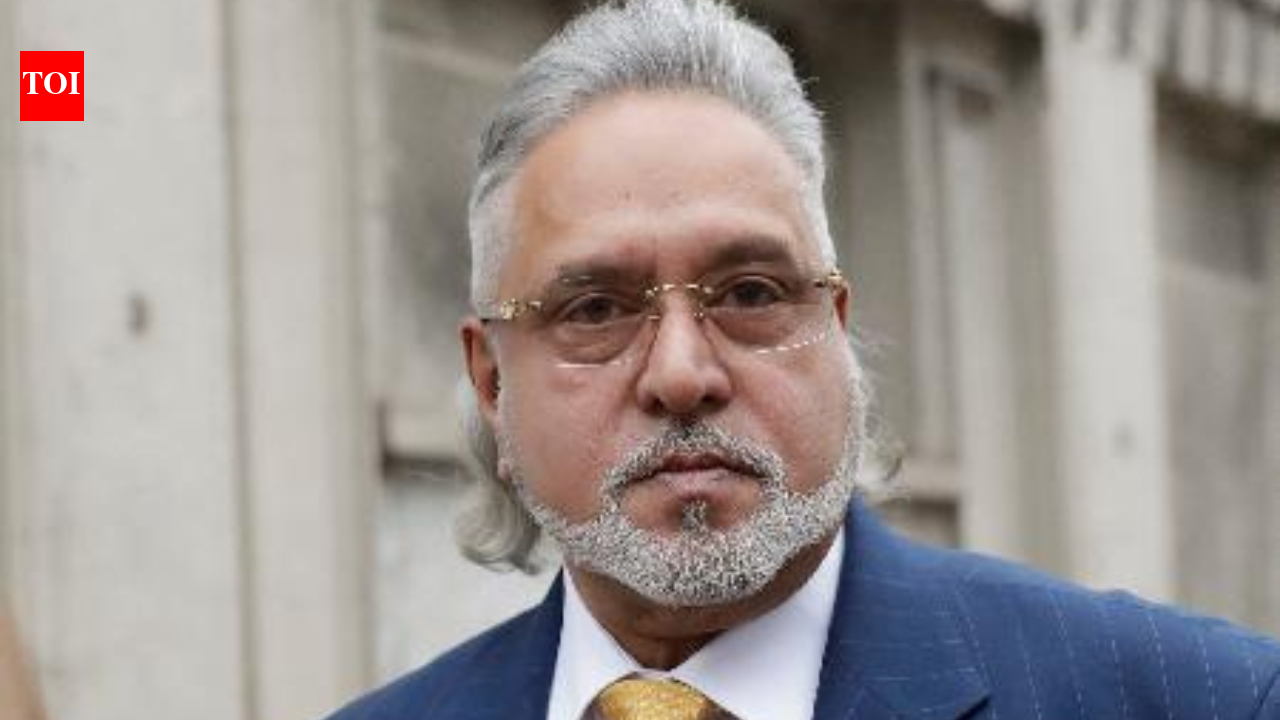
NEW DELHI: Fugitive businessman Vijay Mallya on Wednesday informed the Bombay high court that he cannot specify when he will return to India as he is legally barred from leaving the United Kingdom.In a statement submitted through his counsel Amit Desai, Mallya said that he does not have an active Indian passport and is also restrained by court orders in England and Wales from travelling outside the UK. The submission came after a bench of Chief Justice Shree Chandrashekhar and Justice Gautam Ankhad last week made it clear that it would not hear his plea challenging the order declaring him a fugitive economic offender unless he returns to India.The court had asked Mallya to clarify whether he intended to come back to the country.Mallya, who has been based in the UK since leaving India in March 2016, has filed two petitions before the high court, one challenging the order declaring him a fugitive economic offender and another questioning the constitutional validity of the Fugitive Economic Offenders Act.In his statement read out in court, Mallya said that he cannot give a definite date for his return as his passport was revoked by the Indian government in 2016 and because courts in England and Wales have prohibited him from leaving the country.“Mallya is not permitted to leave or attempt to leave England and Wales or apply for or be in possession of any international travel document. In any event, the petitioner is unable to precisely state when he will return to India,” Desai read out from the statement.The senior counsel further argued that Mallya’s physical presence in India was not necessary for the court to hear his pleas against the fugitive tag and the provisions of the Act.“If he (Mallya) were to appear in India, then all these proceedings would be rendered irrelevant as the statute says that once the offender appears in the concerned court of law, then all these orders would be set aside,” Desai told the court.Mallya, 70, faces multiple cases of alleged fraud and money laundering linked to the default of loans amounting to several thousand crores. He was declared a Fugitive Economic Offender in January 2019 by a special court hearing cases under the Prevention of Money Laundering Act.The high court has directed the Union government to file its reply to Mallya’s statement and posted the matter for further hearing next month.


Source link