Breaking News
India-Pakistan clash sends ad rates soaring 25%

[ad_1]

India-Pakistan clash sends ad rates soaring 25%

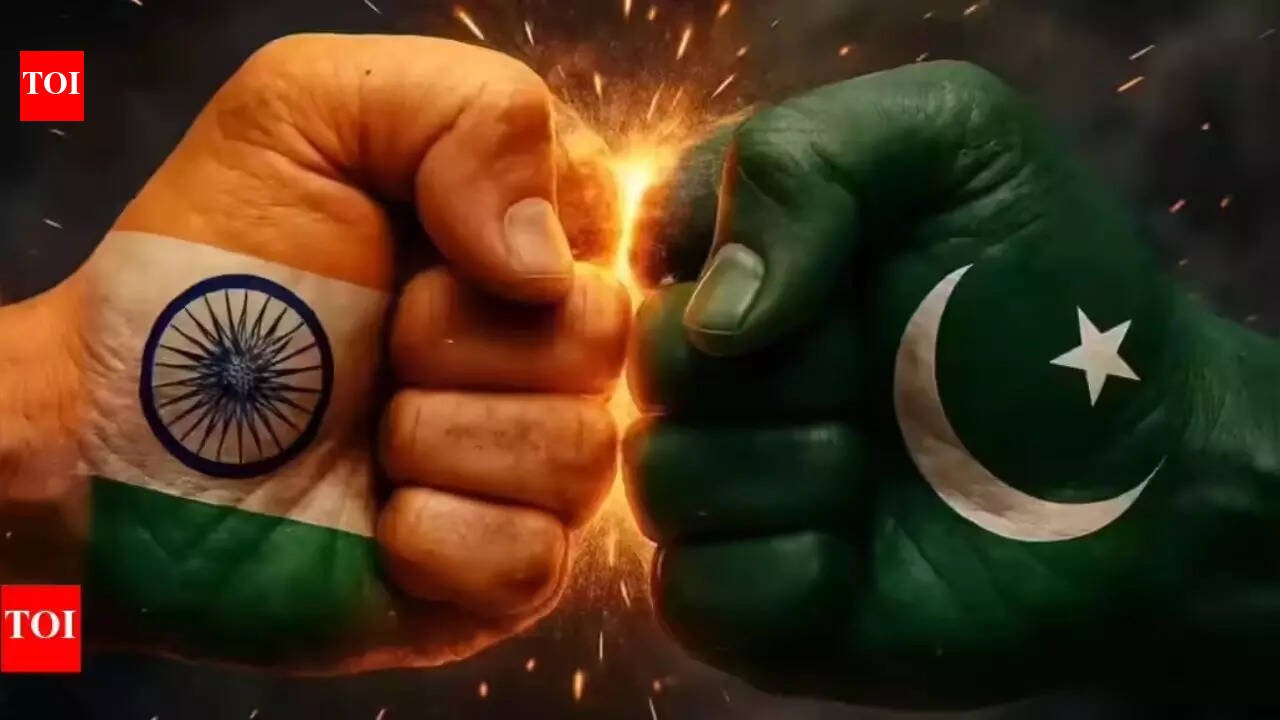
MUMBAI: With arch-rivals India and Pakistan set to face off in the T20 World Cup in Colombo on Sunday, ad rates for the match have soared. Companies are rushing to book slots to place their brands and cash-in on the huge viewership the game is likely to attract. Ad rates for a 10-second TV slot are now selling in the range of about Rs 30-40 lakh which otherwise usually costs between Rs 20-25 lakh for major World Cup matches, industry experts tracking the space said. “Rates for last minute inventory have jumped by at least 20%-25%. Every second of ad slots for the match will be taken,” said senior sports analyst and commentator Neeraj Jha, projecting broadcaster JioStar to rake in ad revenues of about Rs 2,000 crore from the tournament.Ad rates for a 10-second slot on digital (JioHotstar) have spiked to around Rs 15-20 lakh. “Companies want to own the ad space and money is not something they are thinking about. The viewership will be so large that firms do not want to miss out on the opportunity. There’s a lot of interest from auto, FMCG, financial services and real estate companies,” said Kushal Sanghvi, director at global marketing firm Komerz. The industry is equating ad rates for the Indo-Pak match to the price of gold and silver, said Sanghvi.

.

Colombo Calling: Airfares, Hotel Bookings Rise Sharply Ahead Of Key T20 WC Match

JioStar did not share specific details of the advertisers for the India-Pakistan match but said that Emirates, OpenAI, Birla Opus, Rapido, Amul, Mahindra & Mahindra Auto, Hyundai, Britannia and General Insurance Council are among companies that are advertising in the World Cup.Air ticket prices shoot upIndian cricket fans are headed to the Sri Lankan capital, taking prices of air tickets to Colombo and hotel fares in the city higher. Airfares to the city are trending significantly higher than non-event travel periods, particularly on high demand routes from major Indian metros, said Rikant Pittie, CEO and co-founder of EaseMyTrip. “On select dates, round-trip fares have risen sharply compared to regular averages, with prices increasing by as much as 45%-50% further closer to departure. This trend reflects concentrated travel demand typically seen when Team India plays overseas matches in nearby destinations,” Pittie said. MakeMyTrip has seen bookings for Colombo for the weekend of Feb 15 doubling over the past three days compared to the average booking levels.“Bookings to Colombo have surged by nearly 65% especially around the marquee fixture like the India-Pakistan match, helped by factors such as visa-free access and the ease of planning short-haul international gateways,” said Manjari Singhal, chief growth and business officer at Cleartrip, adding that the demand is largely being led by Indian fans travelling out from major metro cities. Hotel search volumes and bookings in Colombo have also increased substantially around the match window, with centrally located four and five-star hotels recording the strongest demand. For premium properties, average room rates are currently around 20%-25% higher than typical seasonal levels, EaseMyTrip said.

[ad_2]

Source link

‘History being made’: PM Modi says after inaugurating Kartavya Bhawans | India News

[ad_1]

PM Modi Unveils Seva Teerth, A New PMO Hub Marking Governance Shift In National Capital Delhi

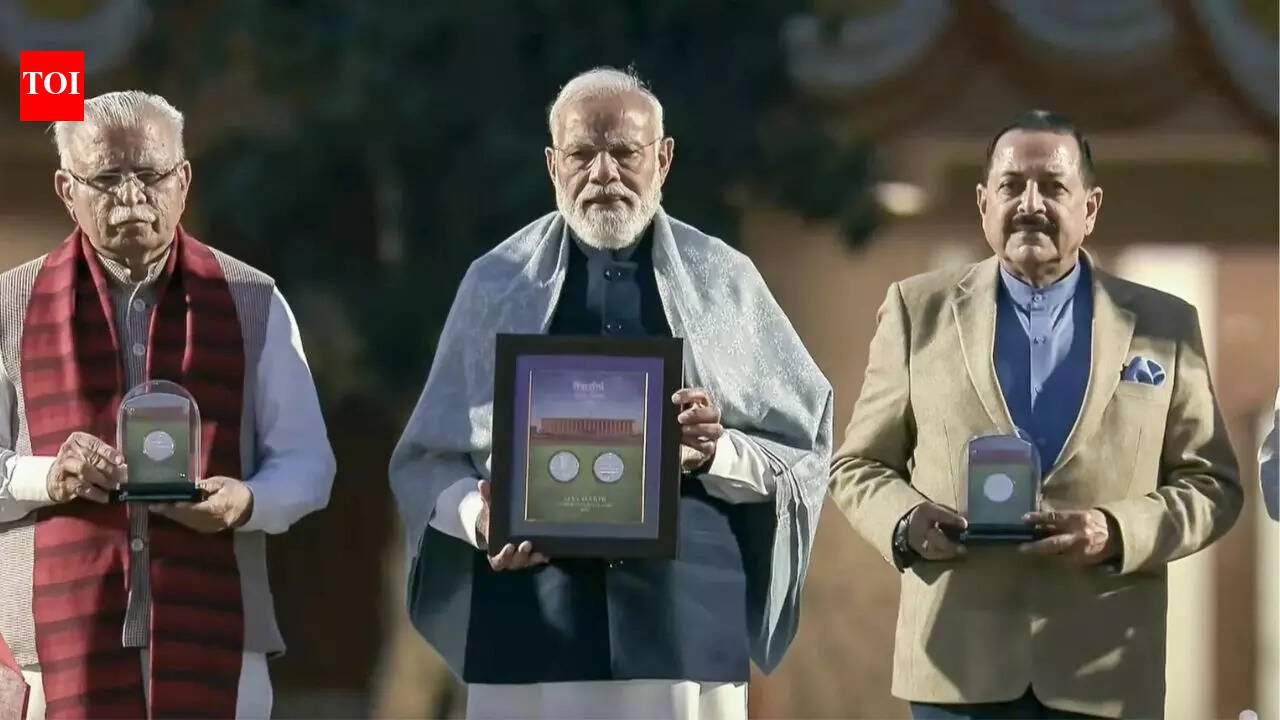
PM Modi with Union ministers Manohar Lal and Jitendra Singh during the inaugural programme of the ‘Seva Teerth’ and two Kartavya Bhawans. (PTI photo)

NEW DELHI: Prime Minister Narendra Modi inaugurated two new Kartavya Bhawans and released a commemorative postage stamp and coin on Friday, hours after shifting to his new office, “Seva Teertha.The Prime Minister said the newly inaugurated buildings reflect India’s commitment to citizen-centric governance and national progress.

PM Modi Unveils Seva Teerth, A New PMO Hub Marking Governance Shift In National Capital Delhi

“Today we all are witnessing a new history being made… This day of 13th February is witnessing a new beginning in India’s development journey… Today, we are all entering Seva Teerth and Kartavya Bhavan with the resolve to achieve ‘Viksit Bharat’. We have the divine blessings of achieving our goals,” he said.PM Modi noted that after independence, many crucial decisions shaping the nation’s future were taken, and key policies were framed within buildings such as the South Block and North Block.He added that it is important to remember these structures were originally built as symbols of the British Empire. “The intention behind their construction was to reinforce British dominance and keep India in a state of subjugation for generations,” he said.The Prime Minister said Seva Teerth and Kartavya Bhavan have been constructed to fulfil the aspirations of the people of India.Seva Teerth houses the Prime Minister’s Office, the National Security Council Secretariat and the Cabinet Secretariat, all of which were earlier functioning from separate locations.Kartavya Bhavan-1 and 2 accommodate several key ministries, including the ministry of finance, ministry of defence, ministry of health and family welfare, ministry of corporate affairs, ministry of education, ministry of culture, ministry of law and justice, ministry of information and broadcasting, ministry of agriculture and farmers welfare, ministry of chemicals and fertilizers, and the ministry of Tribal affairs.

Here are the top quotes from PM Modi:

  • Future generations should remember this era as a time when India re-wrote its fate.
  • I want Seva Teerth to be a role model for citizen-centric governance.
  • Decisions taken in these new buildings will decide the course of our journey to emerge as a developed nation by 2047.
  • Dreams of citizens our biggest assets; their aspirations should guide us.
  • I want Seva Teerth to be a role model for citizen-centric governance.
  • You all will play key role as India has boarded ‘Reform Express’, is re-writing international ties with new trade deals.
  • Unfortunate that road along PM’s residence was called Race Course Road and that leading to President’s House was Rajpath.
  • I can say with pride that Seva Teerth, Kartavya Bhawans built to fulfil aspirations of Indians, not of any monarch.
  • These 100-year-old buildings were becoming dilapidated, lacked space, facilities; they were inadequate to meet needs of a new nation.
  • India’s capital moved from Kolkata to buildings on Raisina Hill that were built according to the wishes of British royalty.
  • South Block and North Block were built with an aim to keep India under colonial shackles for centuries.
  • We are entering Seva Teerth and Kartavya Bhawan 1 and 2 with a resolve to achieve the goal of Viksit Bharat.

[ad_2]

Source link

Connectivity boost for ‘Chicken neck’! Indian Railways announces underground rail route through Siliguri Corridor; check route and key details

[ad_1]

Connectivity boost for 'Chicken neck'! Indian Railways announces underground rail route through Siliguri Corridor; check route and key details

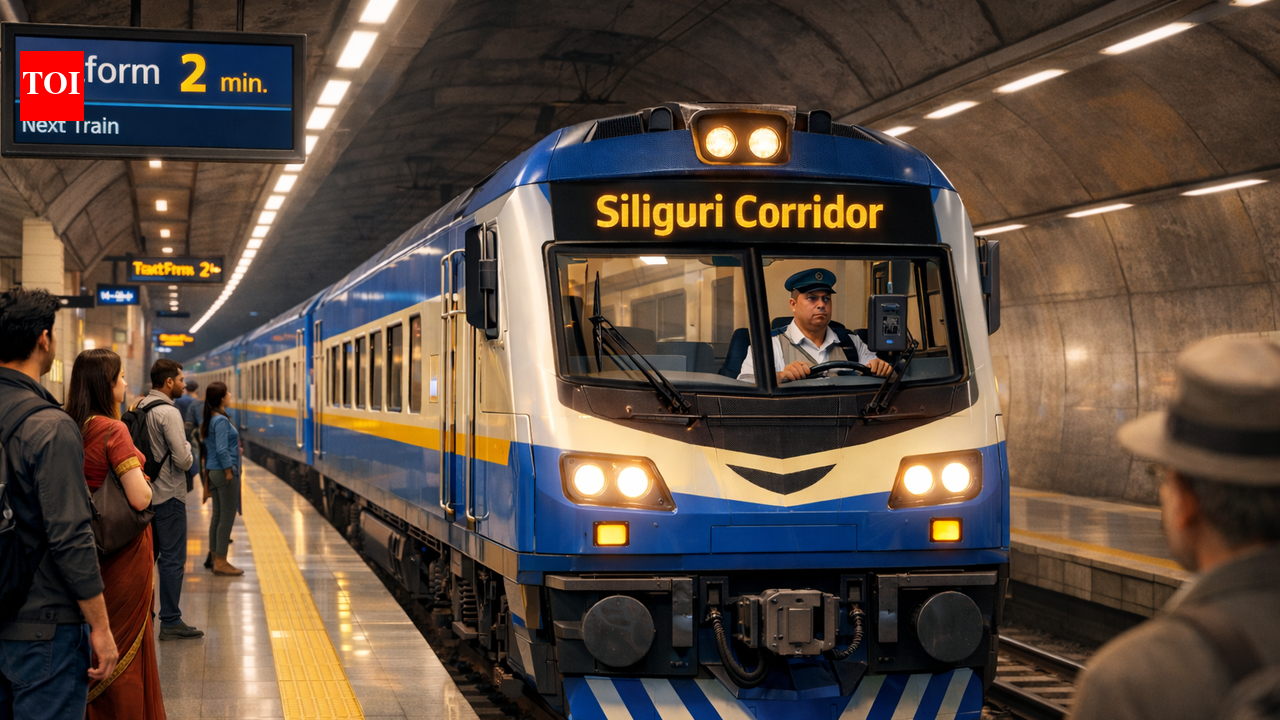
India’s “Chicken neck” is all set for a new connectivity boost!In a bid to strengthen regional connectivity to India’s North-eastern States, Indian Railways has announced plans to construct a new underground railway line through the Siliguri Corridor, commonly known as the “Chicken’s Neck”. Union minister for railways, information & broadcasting and electronics & information technology, Ashwini Vaishnaw, said that the project is designed to ensure secure, reliable and uninterrupted rail connectivity in this strategically sensitive region.

Route:

The new line will fall under the Katihar Division of Northeast Frontier Railway and will begin from Tinmile Hat going to Rangapani, and onwards to Bagdogra. En-route, the link will cover parts of Darjeeling and Uttar Dinajpur districts in West Bengal, as well as Kishanganj district in Bihar.

Length:

The proposed underground alignment will run for a total length of 35.76 km between Dumdangi and Bagdogra, with the Dumdangi–Rangapani section measuring 33.40 km. The corridor, approximately 22 km wide, connects mainland India with the North-eastern States and has been planned primarily as an underground route to provide secure and resilient connectivity.

Protection:

Due to the corridor’s proximity to international borders with Nepal, Bhutan and Bangladesh, and its vulnerability to natural disasters, congestion and security risks, the underground railway line is expected to play a critical role. The alignment will offer a protected and non-visible route, enabling the uninterrupted movement of defence personnel, military equipment and emergency relief supplies during emergencies. Its location near Bagdogra Air Force Station and the Bengdubi Army Cantonment of the Indian Army’s 33 Corps also supports integration of air–rail logistics.

Modern tech at play:

The project will be developed using modern technology and advanced engineering, which includes a 2×25 kV AC electrification system, Automatic Signalling (Standard-IV) with VOIP-based communication on OFC and quad cables, bridges built to RDSO 25-ton axle load standards, and twin tunnels constructed using the Tunnel Boring Machine (TBM) method with NATM tunnels for crossovers, ET reported.Vaishnaw described the Tinmile Hat–Rangapani–Bagdogra underground line as a reflection of railways’ commitment to strengthening strategic infrastructure in the Northeast. West Bengal has received a record budget allocation of Rs. 14,205 crore for railways this year, more than three times the average allocation during 2009–2014. He added that railway projects worth around Rs. 92,000 crore are currently underway in the State, which will facilitate major infrastructural transformation.Additionally, the Union minister revealed that the first Bullet Train for West Bengal, announced in this year’s Rail Budget, will begin its journey from Siliguri.

[ad_2]

Source link

British Indians have continually helped British economy prosper since WWII: Report

[ad_1]

British Indians have continually helped British economy prosper since WWII: Report

LONDON: A white paper published by the Aston India Centre has shown how Indian migrants to the UK have repeatedly helped transform the British economy since World War II.Described as “one of the most consequential migration stories of modern Britain”, the paper, titled “Migration of the Indian Diaspora to the UK”, explores four waves of migrants from the 1940s post-war reconstruction to the post-2019 post-Brexit influx, showing how Indian migrants have strengthened Britain’s capacity to rebuild, adapt and prosper.It recommends the UK adopt a smarter migration strategy to align visa routes with employer demand, mutual qualification recognition with India, and for sector regulators in the UK and India to work together to verify credentials of workers and hold joint assessment clinics with employers to speed up recruitment and ensure the best people are hired.Written by the joint directors of Aston India Centre at Aston University, Prof Sangeeta Khorana and Prof Pawan Budhwar, as well as Manish Tiwari, chairman of Here&Now365, the report shows how Indian migrants have helped fill labour shortages since the 1940s. Until the 1970s there was no visa requirement for most Commonwealth citizens to move to the UK, and post-WWII the UK had many labour shortages which Indians came to fill, attracted by wage differentials and political upheaval back home.In 1972 a large number of Indians with British passports expelled from Uganda moved to the UK. More arrived via family reunion visas and set up businesses in places like Leicester and Birmingham.In the 1990s, Indians flowed to the UK to work in the services sector, especially IT, also transport, manufacturing and hospitality, attracted by the strong economy.Brexit in 2016 led to a loss of EU-origin workers in the UK. That, combined with policy liberalisation, led to a large influx of Indians as students, healthcare workers and skilled workers. Covid also triggered huge labour shortages in Britain. Indians are now the largest cohort on the skilled worker route and Indian migrants account for around 16% of all NHS professionals and 13% of the tech workforce.Since 2019 highly-skilled Indian migrants and entrepreneurs, specialists in AI, fintech, life sciences, advanced manufacturing and the digital sector, have established businesses and driven technological innovation not just in London, but in the regions as well. British Indians are now the wealthiest ethnic group in the UK by median net worth and have broadened Britain’s culinary traditions, music, film, literature and festivals. British Indians increasingly feature in public life, from local councils to being the PM, which helps social cohesion, the report said.Budhwar told TOI: “The white paper provides evidence-based analysis about the contribution of the Indian diaspora to the UK’s economy, culture and social capital. It highlights that the Indian diaspora are not a burden and are contributing significantly.”

[ad_2]

Source link

America wants AI girlfriends, China wants AI boyfriends – here’s why | World News

[ad_1]

America wants AI girlfriends, China wants AI boyfriends - here's why

There was a book. Men Are from Mars, Women Are from Venus. The AI update is this: AI boyfriends are from China, AI girlfriends from America.That line sounds like a meme. It isn’t. It is an accurate description of how two superpowers have ended up exporting very different kinds of digital intimacy, using largely the same technology, but embedding it in radically different social anxieties, gender politics, and state priorities.The argument was first laid out clearly in an October 7, 2025 Substack essay by Zilan Qian, a fellow at the Oxford China Policy Lab, titled Why America Builds AI Girlfriends and China Makes AI Boyfriends. It is worth quoting her framing once, because it captures the core idea neatly: different societies build different AI companions, and those companions then reflect and amplify the fears of those societies.Now let’s unpack what that actually means.

America’s AI girlfriends and the crisis of male intimacy

America's AI problem

In the US and much of the English-speaking internet, AI companions are overwhelmingly designed for men. The typical AI girlfriend is endlessly available, emotionally affirming, flirtatious on demand, and crucially programmable. She does not reject. She does not argue unless asked to. She does not leave.This is not accidental design. It maps directly onto a very specific social moment. Young men in the West are lonelier than previous generations, more online than ever, and increasingly anxious about real-world dating. Many explicitly say they prefer AI partners because they fear rejection or feel alienated by changing gender norms.AI girlfriends fit neatly into this gap. They offer intimacy without negotiation and validation without vulnerability. The technology is sold as companionship, but the appeal is control. You do not need social skills. You do not need emotional labour. You just need a subscription.There is something quietly tragic about that. Not because desire is wrong, but because it is being channelled into something that never risks disappointment. Real intimacy requires the possibility of being refused. It requires awkwardness, compromise, the uncomfortable knowledge that the other person has an interior life that may not centre you. The AI girlfriend removes that risk. She is affection without friction.It also explains why US regulators worry less about marriage rates and more about addiction and minors. When the Federal Trade Commission launched inquiries into AI companion apps, the concern was emotional dependence, especially among teenagers. The fear is not that people will stop having families. It is that people will stop needing other humans at all.The American anxiety is psychological. It is about isolation in a hyper-connected world. It is about a generation that can stream anything, order anything, automate anything, but struggles to sit across from another person and ask, without irony, “Do you like me?”

China’s AI boyfriends and the politics of marriage

The Loneliness Problem

China’s AI companion market flips the gender script almost entirely. The dominant users are not young men but urban, educated women, typically in their late twenties and thirties. The most popular products are not hypersexualised girlfriends but emotionally attentive, narrative-driven AI boyfriends.This difference is rooted in demography and policy. China has a collapsing marriage rate, a persistent gender imbalance, and a state that is openly anxious about falling birth numbers. In that context, AI companionship is not just a mental health question. It is a demographic one.For many educated women in Chinese cities, traditional marriage comes with heavy social costs: expectations around caregiving, career sacrifice, and patriarchal family structures. AI boyfriends offer romance without those obligations. They listen. They support. They never ask you to quit your job or move back to a hometown you escaped years ago. They do not bring in-laws into the conversation. They do not measure your worth against fertility timelines.There is poignancy here too. Not because technology is replacing men, but because it reveals what many women feel they must give up to enter conventional relationships. The AI boyfriend becomes a quiet protest. A rehearsal for tenderness without surrender.That is precisely why Chinese regulators are uneasy. The concern is not merely sexual content or minors. It is whether emotionally fulfilling AI relationships make opting out of marriage easier. In a system that still views family formation as a matter of national interest, that is politically sensitive territory.The Chinese anxiety is structural. It is about births, social stability, and the invisible architecture of the family.

Same tech, different fantasies

AI Boyfriends vs AI girlfriends

Strip away the avatars and the accents, and the underlying technology is similar. Large language models do not care about gender politics. Product managers do.American platforms monetise desire through freemium models, explicit content, and rapid character switching. The user can customise, tweak, discard, upgrade. The relationship is modular.Chinese platforms borrow mechanics from gaming culture: story arcs, collectible cards, gacha systems, and long-term emotional investment. The relationship unfolds like a serialised romance, with layers, memory, and continuity.One market rewards novelty. The other rewards narrative depth.What emerges is not just a difference in taste, but a difference in what each society is quietly anxious about.The US fears isolation, radicalisation, and emotional dependency among young men. China fears declining marriages, declining births, and women opting out of traditional social roles.Underneath both is the same current: a sense that something in human relationships is fraying.

What this really says about us

The Loneliness Conundrum

AI companions did not invent loneliness, misogyny, or demographic panic. They monetised them.American AI girlfriends are a mirror held up to a generation of men who feel rejected by real relationships and empowered by programmable ones. Chinese AI boyfriends reflect a generation of women who want intimacy without the costs that society still attaches to marriage.In both cases, the technology is doing something very human. It is filling gaps that societies have failed to address. It is stepping into the silence left by mistrust, exhaustion, and unmet expectations.The uncomfortable question is not whether these companions are safe, or addictive, or manipulative. The uncomfortable question is why so many people find them preferable.Men were never really from Mars. Women were never from Venus. But in the age of artificial intimacy, where your AI lover comes from tells you exactly what your country is worried about.And perhaps, more painfully, what it has not yet managed to fix.
[ad_2]

Source link

‘No CM talk at AICC, leadership will take call whenever they find suitable’: DK Shivakumar | India News

[ad_1]

'No CM talk at AICC, leadership will take call whenever they find suitable': DK Shivakumar

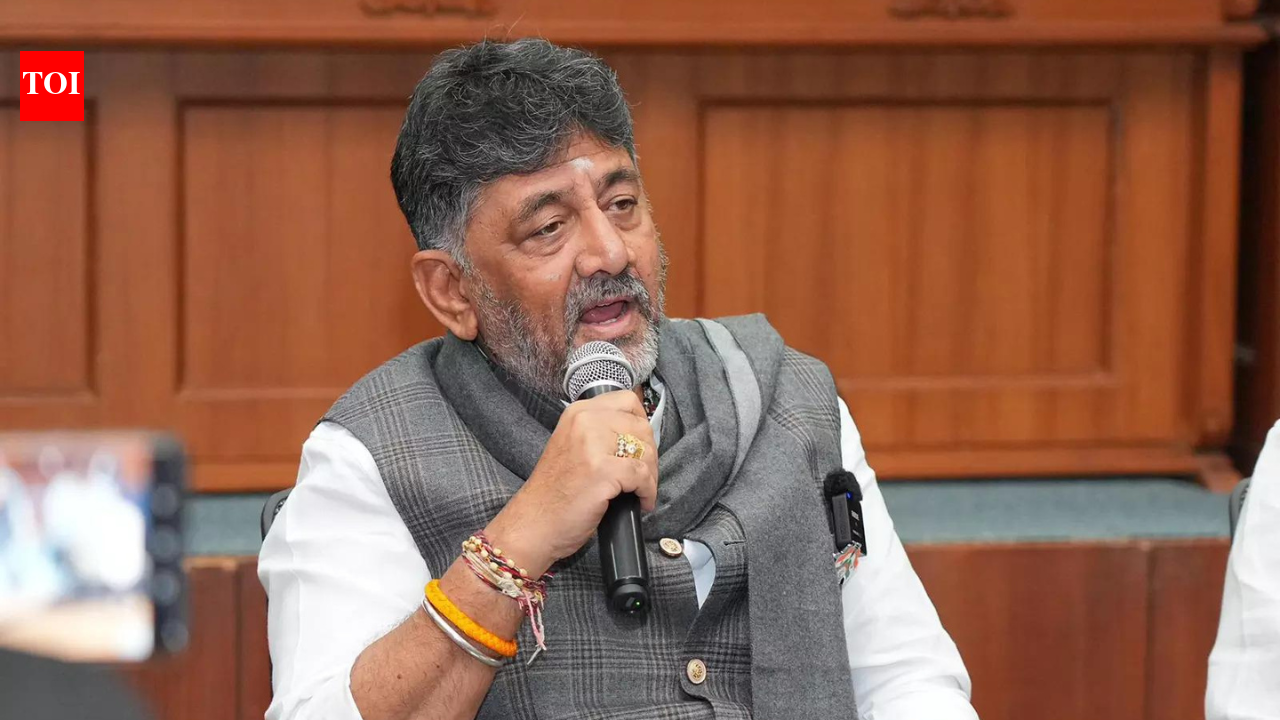
NEW DELHI: Seeking to tamp down speculation over a leadership change in Karnataka, deputy chief minister DK Shivakumar on Thursday said there was no discussion on the chief ministerial post during his meetings with the Congress leadership at the All India Congress Committee.Addressing reporters in the national capital, Shivakumar said the party leadership would take decisions at an appropriate time and that the focus remained on the organisation’s broader vision and goals. “We are not discussing anything on this. The party has a vision and a goal. Party success is important. Senior leaders are there and they will take a call whenever they find it suitable in the interest of Karnataka and the country,” he said.Shivakumar also declined to disclose details of whom he met during the visit, asserting that internal political discussions were not meant for public airing. “I don’t think I need to disclose whom I met inside 10 Janpath. We are not ready to discuss politics on the streets. We met our high command and discussed what needed to be discussed,” he said, adding that the visit was “to discuss political things, not just to breathe air.”Speculation over a power-sharing arrangement in Karnataka has persisted since the Congress government crossed the halfway mark of its five-year term in November last year. The debate has been fuelled by statements from some party MLAs. Earlier this week, Congress MLA Iqbal Hussain claimed that 80–90 MLAs had conveyed their preference for Shivakumar to the high command, while urging party colleagues to maintain discipline and avoid public statements that could embarrass the leadership. Shivakumar, however, when asked about this in Delhi had said he had support of all 136 MLAs.Meanwhile, the opposition has seized on the internal churn. BJP leader and leader of ppposition in the Karnataka Assembly R Ashok said the recurring discussion over the chief minister’s post reflected a deeper struggle within the Congress. “For the last two years, the same questions keep coming up. We heard about a 50-50 government, 2.5 years have gone by and that date is also past. This is a fight between the old and the new Congress,” he said.

[ad_2]

Source link

‘Linked with anti-India forces’: BJP MP moves motion to revoke Rahul Gandhi’s Parliament membership | India News

[ad_1]

'Linked with anti-India forces': BJP MP moves motion to revoke Rahul Gandhi's Parliament membership

NEW DELHI: BJP MP Nishikant Dubey on Thursday said he has moved a substantive motion in the Lok Sabha against the leader of opposition in Lok Sabha Rahul Gandhi, accusing him of misleading the country with the help of “anti-India forces.”Dubey said he is seeking the termination of Gandhi’s parliamentary membership and a lifetime ban on him from contesting elections.“I have moved a motion in Lok Sabha today against Rahul Gandhi on how he is misleading the nation with the help of forces like (George) Soros, who want to harm the nation. In the motion I have moved, I have requested that Rahul Gandhi’s membership should be terminated and he should be barred for life from contesting elections,” Dubey was quoted as saying by ANI. When asked about the motion brought against him, Rahul responded, “do they give you some keywords?”The motion comes a day after Gandhi’s speech in the Lok Sabha in which he accused the Centre of compromising national interests.In his address, Gandhi said the government had acknowledged a global shift marked by the end of a single superpower era, rising geopolitical conflicts, and the weaponisation of energy and finance. Despite this, he alleged, the government had allowed the United States to weaponise energy and financial systems in ways that affect India.“You yourself admit that we are facing a global storm that the era of one superpower is over, that geopolitical conflicts are intensifying, and that energy and finance are being weaponised. Yet, despite acknowledging this reality, you have allowed the United States to weaponise energy and financial systems in ways that impact us. When America says we cannot buy oil from a particular country, it effectively means our energy security is being dictated externally that energy itself is being weaponised against us. Are you not ashamed of this? I am saying you have compromised India’s interests,” Rahul had said.

Priyanka Gandhi hits out at Centre

Meanwhile, Wayanad MP Priyanka Gandhi slammed BJP for moving a motion against the LoP and said that “Rahul Gandhi won’t be affected by all these.”“What all they will do – privilege notice, FIR, case – let them do whatever they want. Rahul Gandhi won’t be affected by all these.”“Whatever they are doing is completely wrong. They are betraying the farmers. The kind of trade deal they have signed will result is sufferings for farmers. We are supporting the labour unions in their strike today,” she added.

[ad_2]

Source link

Saudi Arabia’s early Hajj 2026 visa explained: Deadlines, vaccines, biometric rules, 8 things pilgrims need to know

[ad_1]

Saudi Arabia's early Hajj 2026 visa explained: Deadlines, vaccines, biometric rules, 8 things pilgrims need to know
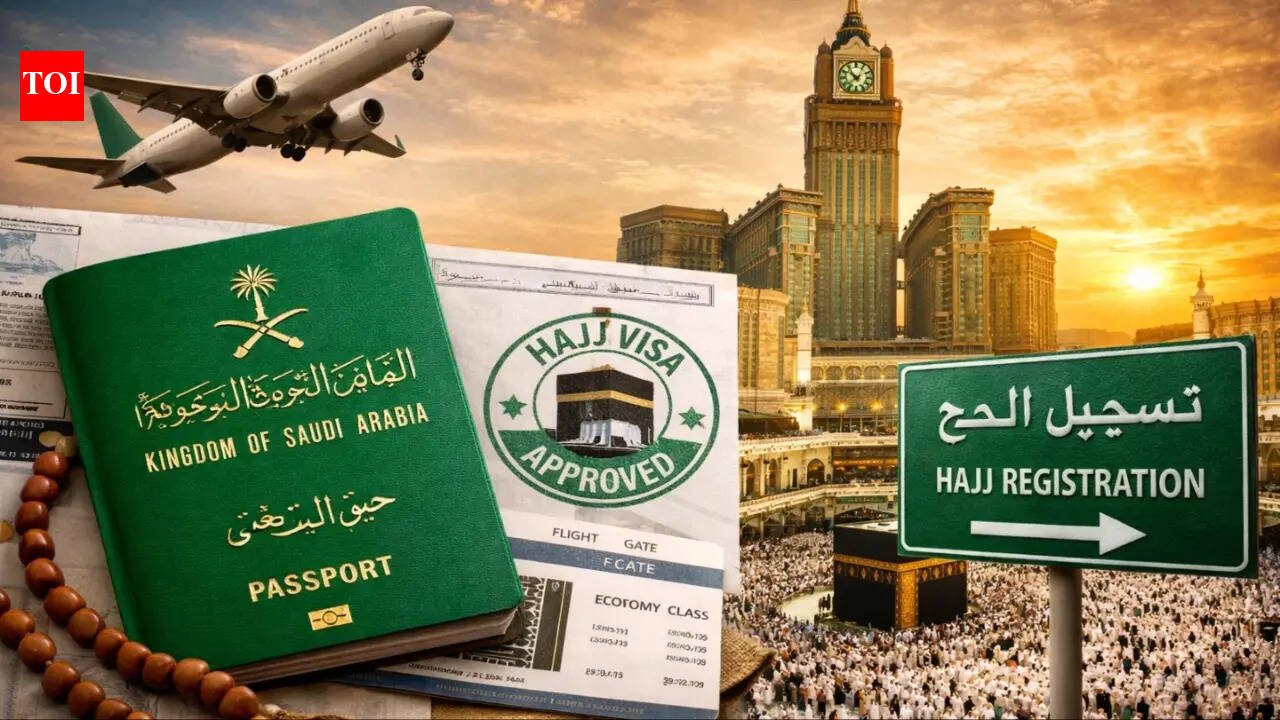
Going for Hajj 2026? These New Saudi Visa Dates Could Make or Break Your Plans (Representative Image)

Saudi Arabia’s Ministry of Hajj and Umrah has officially begun issuing visas for the 2026 Hajj season (1447 AH), kicking off the process on February 08, 2026, months ahead of the expected pilgrimage in late May 2026. This early rollout is part of a proactive effort by the Kingdom to streamline planning, improve coordination with global Hajj affairs offices and ensure a smooth, well-organised experience for millions of pilgrims from around the world.

Why early Hajj 2026 visa issuance by Saudi Arabia matters

Traditionally, Hajj visa windows opened closer to the pilgrimage period itself. This year’s February 08 start date allows more time for pilgrims to complete necessary documentation, organise travel and healthcare requirements and coordinate with their national Hajj missions well before they depart. Officials have tied this schedule to an official operational calendar released to Hajj affairs offices worldwide, aimed at smoothing logistics on the ground months in advance.The early issuance also reflects Saudi Arabia’s broader emphasis on strategic planning and service readiness as part of the Kingdom’s Vision 2030 initiative, which emphasises enhanced pilgrimage services, improved infrastructure and the use of digital platforms like Nusuk and Masar for seamless processing and coordination.

What Hajj 2026 pilgrims should know

  1. When Applications Opened and Deadlines: Visa issuance officially began on February 08, 2026, enabling pilgrims to start uploading required data and biometric details and secure permits well ahead of travel. In many countries, pilgrims also must complete biometric verification before their visas are processed; some ministries have extended biometric deadlines into mid-February to allow everyone time to comply. Officials have indicated final processing cut-offs and submission deadlines are usually set to ensure visas are fully completed by March 20, giving ample time for flight arrangements and accommodation.
  2. Pilgrim Arrivals Scheduled for April Onward: Although visas are now being issued, the actual arrival of pilgrims is expected to begin from around April 18, 2026, corresponding to 1 Dhu Al Qadah 1447 AH, well ahead of the peak Hajj days later in May. This timeline gives groups and Hajj missions sufficient time to arrange travel, transport and accommodation before the main rites begin.
  3. Technology and Organisation: Saudi authorities are relying on digital tools like Nusuk Masar, an online platform that centralises pilgrim data, hotel bookings, transportation and service contracts. These integrated systems help in planning batches of arrivals, assigning camps and coordinating services across multiple holy sites in Makkah and Mina.

Pilgrims are encouraged to complete their documentation and verify personal details on the platform early to avoid delays or last-minute issues.

Global Hajj 2026 registration figures and Muslim pilgrim quotas

Reports indicate that hundreds of thousands of pilgrims have already registered for Hajj 2026 via official channels. In some countries, such as India and Bangladesh, large numbers of citizens have completed registration and are progressing through the visa and health verification stages.

Saudi Arabia Opens Hajj 2026 Visas Early: What's the Real Reason?

Saudi Arabia Opens Hajj 2026 Visas Early: What’s the Real Reason?

Saudi Arabia typically manages nation-specific quotas, allocating fixed numbers of pilgrims per country to maintain crowd control and safety during peak ritual days. Early visa processing helps national missions coordinate within these quotas and plan travel arrangements for large pilgrim contingents.

Health, biometric and documentation requirements for Hajj 2026

Pilgrims must meet several prerequisites before a Hajj visa is finalised:

  1. Biometric verification: Most countries require pilgrims to complete biometric enrollment (fingerprints, photograph) ahead of visa approval. This process is sometimes facilitated via mobile apps or at visa-support centres.
  2. Health checks and vaccinations: Medical examinations and required vaccinations such as meningitis and other Saudi-mandated immunisations are prerequisites for visa issuance in many countries.
  3. Accurate documentation: Pilgrims must ensure their passport details, package registration and travel plans align with visa documentation requirements to avoid delays.

How this year’s Hajj preparation by Saudi Arabia compares

Saudi Arabia’s early visa issuance for Hajj 2026 is part of an evolving pattern of front-loading pilgrimage logistics. Preparations, including planning calendars and global Hajj mission collaboration, began as early as mid-2025, when initial guidelines were shared with partner offices and accommodation contracts were locked in.

Hajj 2026 Visas Issued Early: Are Pilgrims Ready for the Changes?

Hajj 2026 Visas Issued Early: Are Pilgrims Ready for the Changes?

This pre-emptive strategy helps reduce congestion in visa processing offices and gives pilgrims, especially those in distant regions, time to arrange flights, transport and prayer arrangements, contributing to a smoother, safer experience.

Hajj 2026 pilgrim travel and ritual timeline

While the exact dates for Hajj inspections and main rites depend on the Islamic lunar calendar (with the pilgrimage typically occurring in Dhu Al-Hijjah), officials have set visa issuance and early arrival windows to run months ahead –

  • Visa issuance: February 8 to March 20, 2026 (approx.)
  • First pilgrim arrivals: From April 18, 2026
  • Main Hajj rituals: Late May 2026 (exact dates depend on moon sighting)

Pilgrims planning their travel should align bookings with this schedule to ensure continuity between visa approval and arrival. Launching Hajj visa issuance well ahead of time, in early February, nearly four months before pilgrims are expected to reach Saudi Arabia, marks a more strategic, organised and pilgrim-centric approach to one of the world’s largest annual religious gatherings.Saudi authorities aim to reduce administrative bottlenecks while enhancing safety, logistical coordination and service quality at holy sites. For Hajj missions and travel agents, this early window offers better planning flexibility and less pressure compared with last-minute visa rushes of previous years. For pilgrims, it means more time to make travel, health and accommodation arrangements, a crucial advantage for families and first-time participants.Saudi Arabia’s announcement that Hajj 2026 visas began being issued on February 08, 2026 is a major milestone in the pilgrimage cycle, signalling early readiness, improved global coordination and enhanced services for millions of Muslims intending to perform this sacred journey. With visa issuance running ahead of schedule and arrivals expected from April, the Kingdom continues to refine how it hosts one of the world’s largest annual congregations.

[ad_2]

Source link

Fiery showdown over Epstein files: Pam Bondi vs lawmakers — 5 key moments

[ad_1]

Fiery showdown over Epstein files: Pam Bondi vs lawmakers — 5 key moments

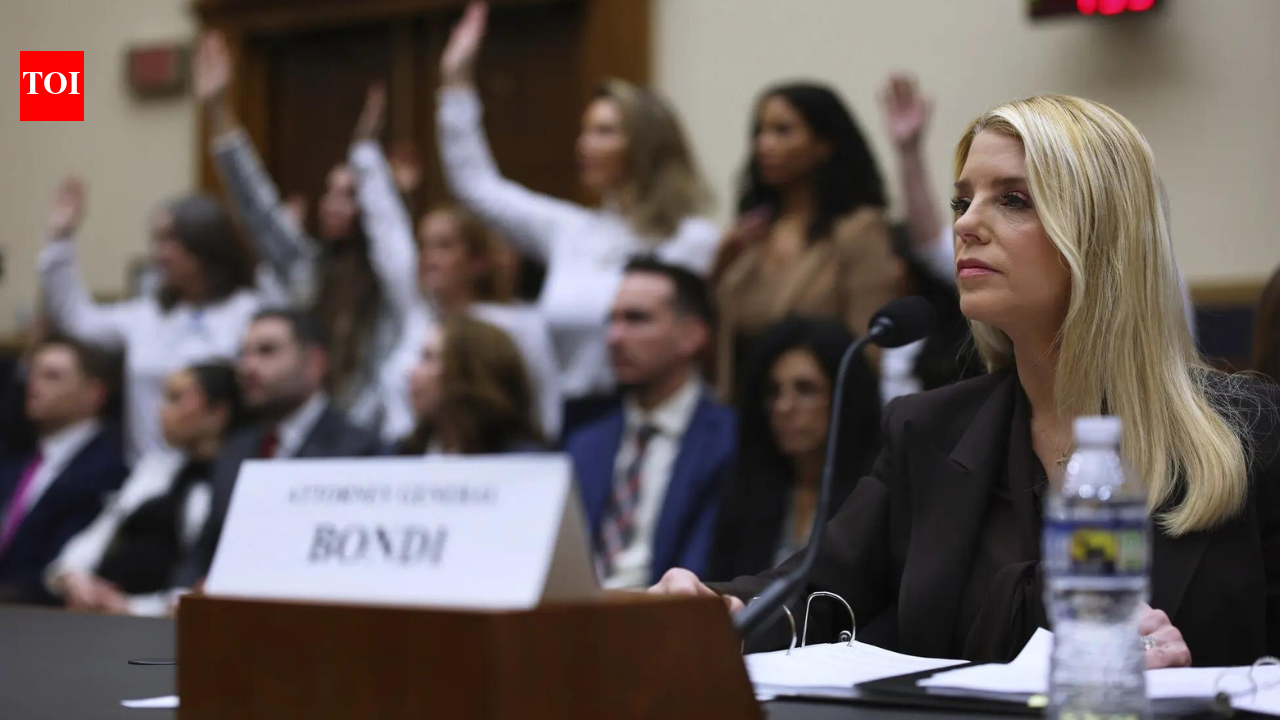
Attorney General Pam Bondi’s appearance before the House Judiciary Committee was meant to steady the ship after months of controversy over the Justice Department’s handling of the Jeffrey Epstein files. Instead, it descended into one of the most combative hearings of her tenure.For more than four hours, Bondi faced furious questioning from Democrats and pointed scrutiny from at least one Republican over redactions, the exposure of victims’ personal details, and accusations of a political cover-up. With Epstein survivors seated directly behind her, the optics were stark. Lawmakers accused the department of failing both transparency and basic care for victims.

‘Shut Up, You Washed-up Loser Lawyer!’: Raskin, Nadler Ambush Pam Bondi Over Epstein Action

Bondi, however, chose confrontation over contrition. She forcefully defended President Donald Trump, dismissed allegations of a cover-up, and repeatedly clashed with members of the committee. Here are five key moments that defined the hearing.

Survivors in the room — and a refusal to apologise

One of the most powerful moments came early, when Democratic Representative Pramila Jayapal asked Epstein survivors seated in the hearing room to stand. She then pressed Bondi to apologise not only for the abuse they endured — which Bondi had acknowledged in her opening remarks — but for the Justice Department’s failure to properly redact sensitive information in the released files.Bondi declined to apologise for the redaction failures. Instead, she accused Jayapal of engaging in “theatrics” and said officials had done their “very best in the time frame allotted” under the legislation mandating release of the files. She insisted that any information released inadvertently had been “immediately redacted” once identified.At one point, when urged again to address the survivors behind her, Bondi refused to turn around, saying she would not “get in the gutter”. The moment underscored the central tension of the hearing: whether the department had prioritised speed and politics over victims’ dignity.

The Massie clash: ‘Bigger than Watergate’

While Democrats hammered Bondi, one of the most striking exchanges came from Republican Representative Thomas Massie, who helped push the legislation forcing disclosure of the Epstein files.Massie accused the department of improperly redacting names of individuals who were not legally entitled to protection. He specifically raised the case of billionaire Les Wexner, whose name had initially been blacked out in a section referencing potential criminal conduct.Bondi responded that Wexner’s name had been restored “within 40 minutes”. Massie shot back: “Within 40 minutes of me catching you red-handed.”Calling the issue “bigger than Watergate”, Massie argued the handling of the files reflected a cover-up spanning multiple administrations. Bondi dismissed his line of questioning as a “political joke” and accused him of being a “failed politician” with “Trump derangement syndrome”.The exchange cut through the broader partisan noise. Unlike many Democratic attacks that dissolved into shouting matches, Massie’s questioning directly challenged the department’s credibility on specific redactions — and left Bondi on the defensive.

Trump takes centre stage

Though the hearing was about Epstein, it frequently became a platform for Bondi to defend President Trump.“You sit here and you attack the president and I’m not going to have it,” she told lawmakers. At another point she declared, “There is no evidence that Donald Trump has committed a crime. Everyone knows that.”When Democratic Representative Ted Lieu referenced unsubstantiated tips in the files mentioning Trump, Bondi angrily replied: “Don’t you ever accuse me of committing a crime,” after Lieu suggested she was misleading the committee.Bondi also praised the stock market’s performance under Trump, citing record highs in the Dow and Nasdaq, and suggested lawmakers should focus on that instead. Critics quickly noted that market performance was not the Judiciary Committee’s remit.Her repeated alignment with Trump marked a departure from traditional Justice Department distance from the White House. Rather than positioning herself as an independent law enforcement official, Bondi openly cast herself as the president’s defender.

Misfires and walkouts

Bondi’s aggressive approach did not always land cleanly.In one exchange, she criticised Democratic Representative Becca Balint over a vote related to antisemitism. Balint responded that she was the granddaughter of a Holocaust victim and shouted, “Are you serious?” before storming out of the hearing.Bondi also sparred with Jamie Raskin, the committee’s top Democrat, calling him a “washed-up loser lawyer” during a heated exchange over time limits and questioning tactics.Meanwhile, Democrats repeatedly accused her of running a “massive Epstein cover-up” and siding with perpetrators over victims. They also pointed to the department’s recent attempt — rejected by a grand jury — to indict Democratic lawmakers, fuelling claims of political weaponisation.Bondi insisted the department was focused on reducing violent crime and restoring its “core missions” after what she described as years of politicisation. But by the end of the session, it was clear she had not come to concede ground.

A rare moment of unity over threats

Amid the rancour, there was a brief pause in hostilities.Democratic Representative Eric Swalwell shifted the focus to threats made against him and his family. He asked Bondi whether they were being investigated and appealed for help in protecting lawmakers’ families in an increasingly volatile political climate.Bondi responded: “None of you should be threatened ever. None of your children should be threatened. None of your families should be threatened, and I will work with you.”

[ad_2]

Source link

UP woman constable ditches cop fiance hours before wedding, elopes with history-sheeter | Meerut News

[ad_1]

UP woman constable ditches cop fiance hours before wedding, elopes with history-sheeter

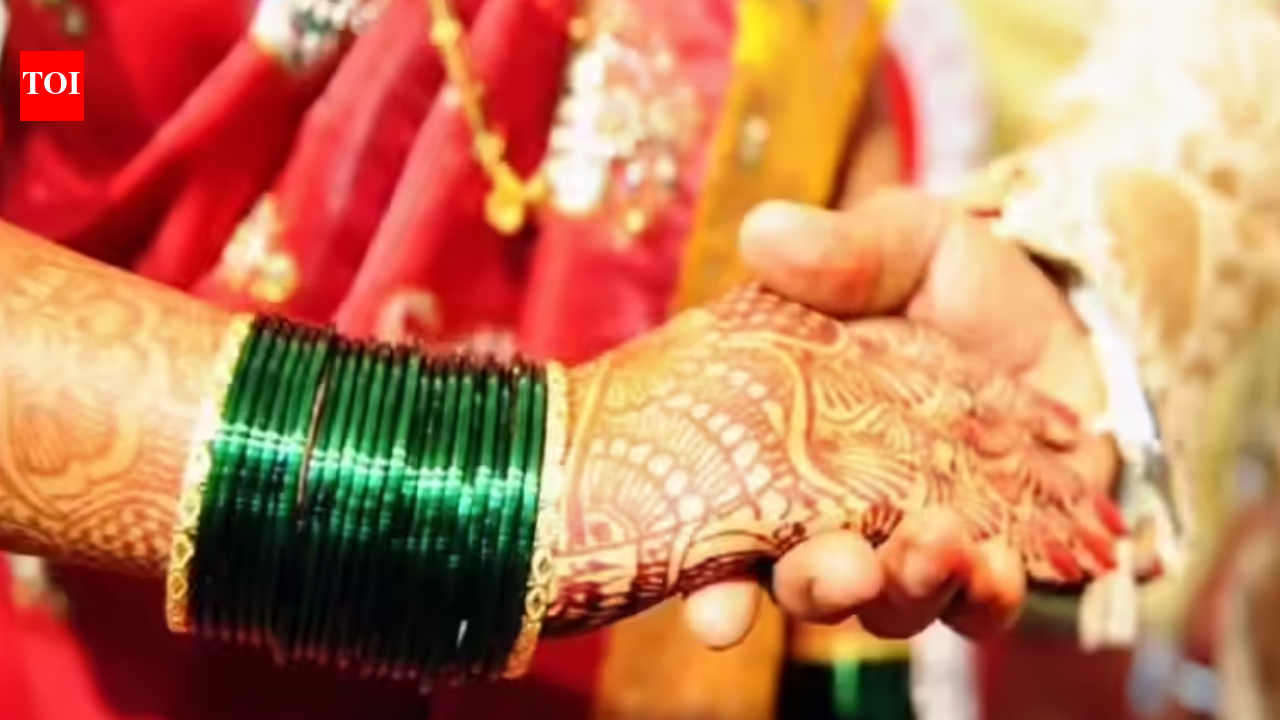
MEERUT: It was meant to be a picture-perfect wedding — a constable set to marry a fellow constable in a match arranged by their families. Invitations had gone out, preparations were complete, and the stage was set for the ceremony.Then, on Saturday, a night before the wedding, the 25-year-old bride-to-be, Sandhya Bhardwaj, vanished.Bhardwaj, who hailed from Akbarpur Sadat village in Meerut’s Bahsuma region, walked out of her home and disappeared. Unaware of her whereabouts, her father, Subhash Sharma, approached police on Sunday, alleging that Ankit Chauhan, 28, a history-sheeter facing nine criminal cases, including robbery and murder, had abducted his daughter. He said she had taken 20 days’ leave for her wedding to Atul Sharma, a constable from Muzaffarnagar, and had returned home from her posting at the cyber police station in Aligarh.“On Feb 5, Chauhan threatened the groom over the phone, saying he would kill him if he married my daughter. On Saturday night, he abducted her,” Sharma alleged in his complaint. An FIR was subsequently registered against Chauhan under BNS sections 87 (kidnapping) and 351(2) (criminal intimidation).Police traced Bhardwaj within eight hours to Buxar in Meerut. When questioned, however, the case took a dramatic turn. She denied being abducted and told police she had left of her own accord. Investigators said Bhardwaj had known Chauhan for the past few years. “She met him during visits to her aunt’s house in Dhikoli village, from where Chauhan hails,” said Mawana circle officer (CO) Pankaj Lavania.Chauhan’s record, police said, includes several cases of loot and murder. Last May, he was arrested following a police encounter in connection with a liquor shop robbery and was recently released on bail.As the stunned groom called off the wedding, the bride remained firm, asserting her right to choose, even if her choice stood in stark contrast to the uniform she wears. SP (rural) Abhijeet Kumar said she would soon be produced before a court.

[ad_2]

Source link