Breaking News
ISL: For first time, bottom-ranked club set for relegation to second division | Goa News


AIFF has included the relegation clause in ISL League Rules

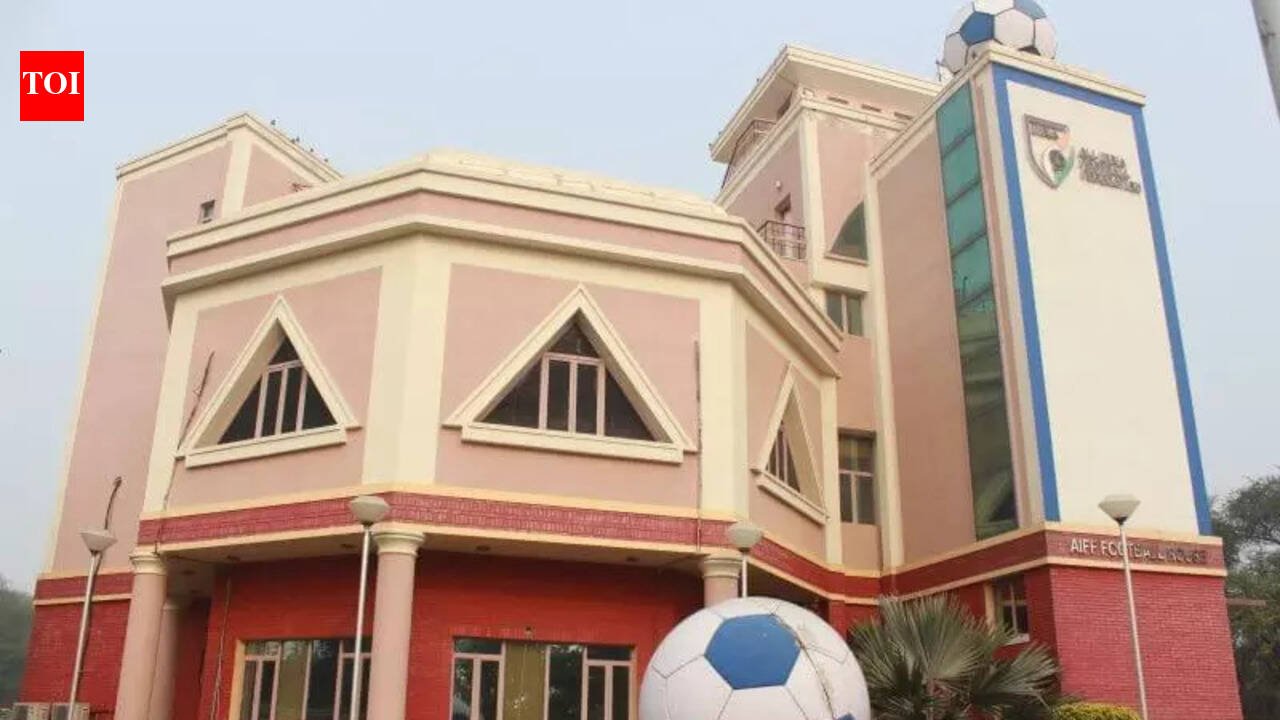
Panaji: The All India Football Federation (AIFF) will implement relegation in the Indian Super League (ISL), despite objections from all 14 participating clubs to keep the constitutional requirement on hold due to a truncated season.Since it’s launch in 2014, first as a three-month tournament, ISL has remained a closed league. In 2020, the league became India’s top tier, and even though champion teams from the lower division were promoted to the top, no ISL club has ever been relegated.That will no longer be the norm, in line with the AIFF’s new constitution that makes it mandatory for the seniormost top division league to be “owned, operated, recognised and directly managed by the AIFF, with principles of promotion and relegation.”The AIFF has now circulated the ISL League Rules to all clubs and made it clear that the team finishing at the bottom of the 14-team table will be relegated to the second division. According to Article 3.2.6 “at the conclusion of the season, the bottom ranked club in the League (last on the league table), on the date of completion of all matches, shall be relegated to the I-League 2026-27 (or the second division of men’s professional league football, as it is then known).”The League Rules also stipulate that the winner of the second division I-League – now renamed Indian Football League — will be promoted to next season’s ISL.AIFF’s move to implement relegation has caused some discomfort amongst ISL clubs. At least one of them will now write to the federation and keep its legal options open.Clubs have previously maintained that the current season is truncated and exceptional, conducted under circumstances that materially deviate from a normal sporting cycle. “Due to compressed timelines, operational constraints, and structural uncertainty, not all teams will be competing under identical playing, financial, or logistical conditions. As such, the foundational principle of sporting parity ordinarily underpinning promotion and relegation cannot be said to exist in full measure for the current season,” the clubs wrote the Joint Secretary, Ministry of Youth Affairs & Sports on Jan 30.Others said there are global examples of relegation being on hold due to exceptional circumstances, like in Argentina, Mexico, besides League One and League Two (third and fourth divisions in England) during the Covid-19 pandemic. The Mexican top tier league in fact suspended promotion and relegation in 2019 for five seasons, seeing the first division maintain 18 teams for the period.Should AIFF change its mind, the governing body will need approval from the Supreme Court to keep relegation on hold in the top division league.


Source link

FTAs show increased global confidence in India: PM Modi | India News


FTAs show increased global confidence in India: PM Modi

NEW DELHI: Prime Minister Narendra Modi on Friday rejected the criticism over the recent free trade agreements, asserting that few countries were willing to sign FTAs during the UPA dispensation when India was marred by scams and counted among ‘Fragile Five’ economies, while it is now capable of competing with the world.Addressing the ET NOW Global Business Summit, the PM said UPA could conclude FTAs with only four countries, while his govt has signed agreements covering 38 countries.“Who would have confidence in India when policy paralysis and scams marked its governance,” he said in a swipe at the UPA govt. To emphasise what has changed since 2014, he added that new policies and capabilities effected by his govt have led to a transformation.The celebration of FTAs signed seemed to mark a rejection of the criticism by Congress and other opponents as well as the confidence that the charges against the trade deal with the US were not going to wash. “India today is full of self-confidence. It is ready to compete with the world and has built a strong manufacturing ecosystem,” he said. Modi said the post-second World War global order is now crumbling and a new order will emerge, and India is going to be a big basis of global transformation in this century of change.


Source link

EC names special observers for SIR drive in West Bengal, Tamil Nadu | India News


EC names special observers for SIR drive in West Bengal, Tamil Nadu

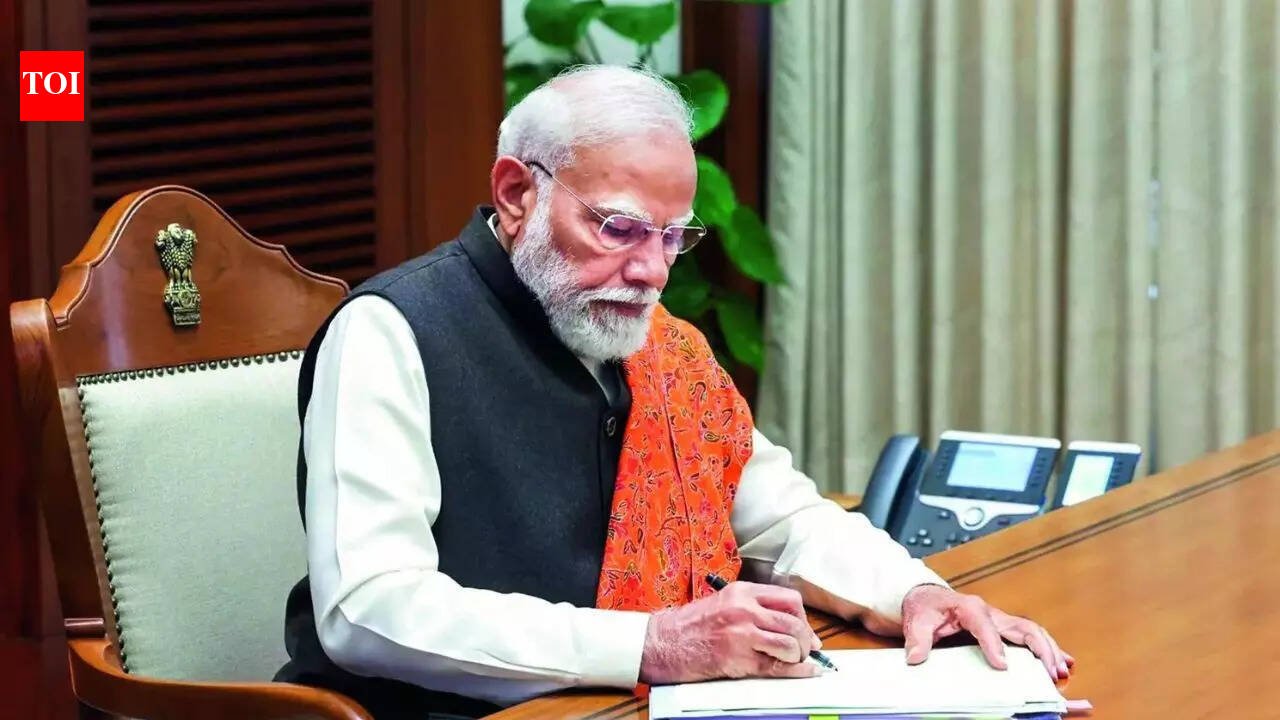
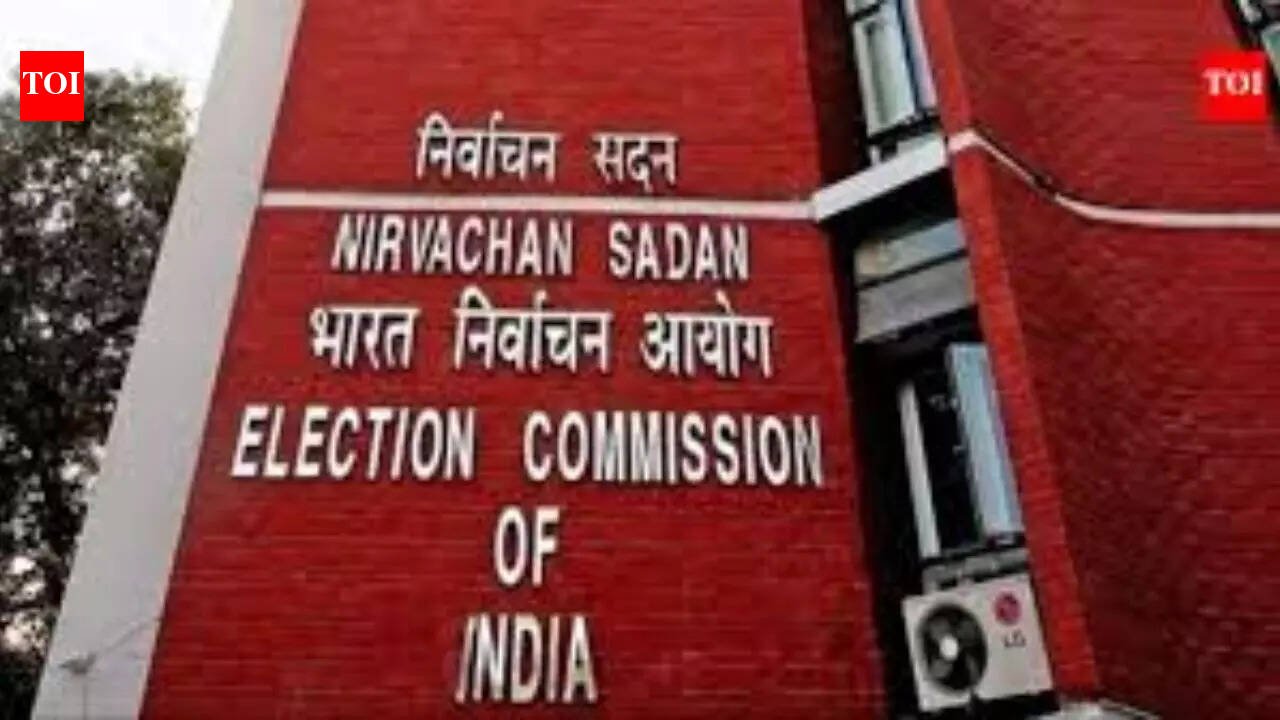
NEW DELHI: The Election Commission on Friday appointed ex-IPS officer N K Mishra and ex-IRS officer Pratap Singh as special observers for West Bengal and Tamil Nadu, respectively, tasked with overseeing the ongoing Special Intensive Revision (SIR) of electoral roll as well as the preparedness and conduct of impending assembly poll in the two states.Polls in West Bengal, Tamil Nadu, Assam and Kerala as well as the UT of Puducherry are expected to be held in April-May. EC usually appoints special observers after announcement of Lok Sabha/assembly poll schedule.“As a special observer, you will oversee that the process of SIR is strictly as per the directions of the commission issued from time to time. You will be required to visit West Bengal/Tamil Nadu from time to time to observe the ongoing SIR…poll preparedness and the conduct of forthcoming general election to the legislative assembly of West Bengal/Tamil Nadu, 2026, and give your inputs to the commission for necessary action,” EC said in separate communications sent to Mishra and Singh on Friday.EC asked the two retired officers — who will be under its superintendence — to visit their respective states in coordination with the chief electoral officer concerned. Per rules of the Election Commsission, special observers are paid a base slab of Rs 1 lakh for a two-week deployment, which goes up by Rs 25,000 with each extra week of deployment.Mishra had served as DGP of Sikkim and as special director in the Intelligence Bureau. Singh had served with Income Tax (Investigation) in Tamil Nadu.


Source link

Access Denied


Access Denied

You don’t have permission to access “http://www.ndtv.com/world-news/donald-trump-says-regime-change-in-iran-would-be-best-thing-that-could-happen-11001748” on this server.

Reference #18.7fdd417.1771031028.ecaea75

https://errors.edgesuite.net/18.7fdd417.1771031028.ecaea75


Source link

T20 World Cup 2026: Sunil Gavaskar highlights technical flaw in Sanju Samson’s batting ahead of Pakistan showdown


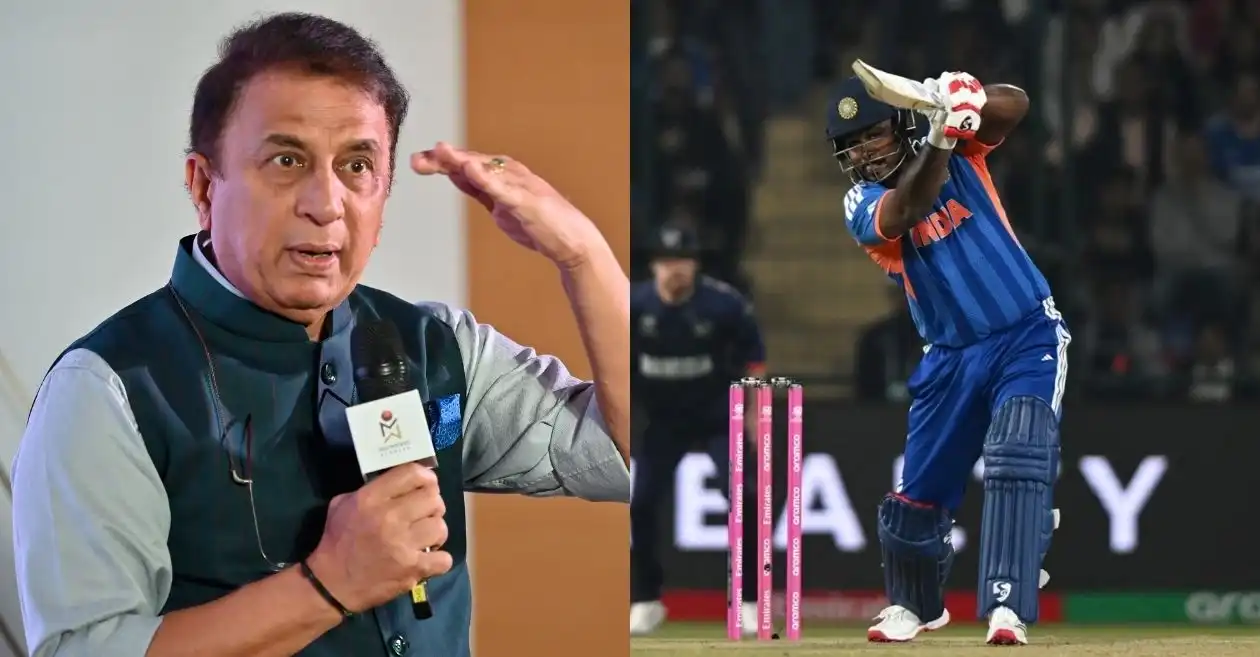
As India gear up for their high-voltage T20 World Cup 2026 showdown against Pakistan in Colombo on 15 February, legendary former captain Sunil Gavaskar has offered a candid assessment of Sanju Samson‘s ongoing struggles with the bat.

Following India’s commanding 93-run victory over Namibia, Gavaskar suggested that Samson is battling a technical issue that has repeatedly cost him his wicket — particularly when opening the innings against the new ball. While Samson’s cameo of 22 off just eight deliveries showcased his flair, it also highlighted the very flaw that continues to hold him back.

Explosive start but a familiar ending for Sanju Samson in Namibia clash

With Abhishek Sharma sidelined due to illness, Samson was promoted back to the opening slot alongside Ishan Kishan. The opportunity was rare — and Samson seized it with aggressive intent. He wasted no time announcing himself, launching left-arm pacer Ruben Trumpelmann for a towering six in the very first over. The fireworks continued in the next over when he dismantled Ben Shikongo, smashing two consecutive sixes over deep fine leg, followed by a stylish cover drive. In a flash, Samson had raced to 22 and looked poised for something substantial.

However, attempting to flick a slower delivery from Shikongo on the final ball of the second over, Samson was caught at deep mid-wicket. Replays revealed a familiar pattern — his back leg rooted deep inside the crease, preventing full commitment forward and leaving him slightly off balance.

It was a dismissal that mirrored his recent struggles, including a modest return of 46 runs in the five-match T20I series against New Zealand last month.

Also READ: Explained: Gerhard Erasmus-Rod Tucker dead ball controversy during India vs Namibia T20 World Cup 2026 clash

Sunil Gavaskar flags technical flaw in Samson’s batting ahead of Pakistan clash

Speaking after the match, Gavaskar pointed out that Samson tends to stay too deep in the crease while attempting the flick shot, reducing his control and balance.

“Sanju Samson has a technical problem. He goes too deep into the crease and plays that flick shot. You can only hope he times it into the gap or that it goes for six,” Gavaskar told JioHotstar.

Gavaskar acknowledged that Namibia’s bowlers were tactically sharp, setting a field designed specifically to exploit Samson’s preferred scoring areas. The batting great stressed that if Samson retains his place for the blockbuster encounter against Pakistan, patience will be key.

“Namibia were clever with their field placements. They set a field specifically to get Samson out. But it was good that he played some nice shots — that must have given him confidence. He needs to make improvements, especially when he opens against the new ball. If he plays the next match against Pakistan, he needs to spend more time at the crease,” added Gavaskar.

Also WATCH: T20 World Cup 2026 – Suryakumar Yadav holds back security to let fan in Virat Kohli jersey meet Hardik Pandya during IND vs NAM match


Source link

India-US trade deal will expand cotton demand, benefit farmers: Piyush Goyal


India-US trade deal will expand cotton demand, benefit farmers: Piyush Goyal

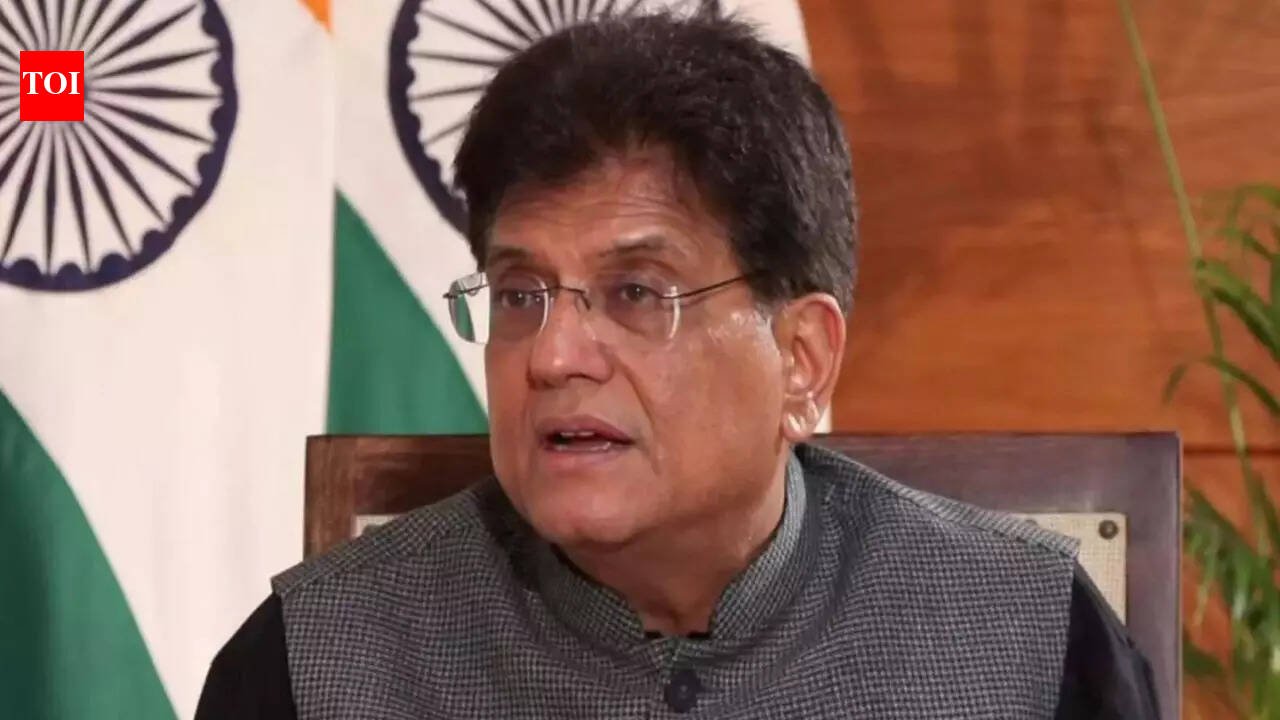
NEW DELHI: The India-US trade arrangement will expand cotton demand rather than hurt domestic growers, commerce and industry minister Piyush Goyal said on Friday, while asserting Indian farmers stand to gain from rising textile exports.“This will also not hurt our cotton producers… I can see before my eyes a huge requirement for more cotton and a huge and wonderful future for our cotton,” Goyal said at the ET NOW Global Business Summit.

‘Dairy, Agriculture Protected’: Piyush Goyal Outlines ‘Historic’ US-India Trade Deal, Lauds PM Modi

Explaining the mechanism, he said India will get the same concession that Bangladesh enjoys. “The same concession is available to India also. It’s called a yarn forward. If you buy cotton or yarn from the US and process it and use it for making garments, you are able to export it to the US at zero duty. That’s an established principle of theirs. And India will benefit from the same way of working,” he said.Goyal also said the reduction in US reciprocal tariffs from 50% to 18%, along with access at zero reciprocal for textiles in Europe, has made Indian exports significantly more competitive. “We become extremely competitive. Let us convert this market access into market share,” he said, projecting strong growth in sectors such as textiles, leather, footwear, handlooms, handicrafts and marine products.He said recent free trade agreements finalised by India have been structured to protect sensitive sectors, while expanding export opportunities. In the US deal, key agricultural products such as rice, wheat, corn and millets have been kept out to safeguard the interests of farmers. Similarly, India has not opened the dairy sector in any of its trade agreements, the minister said, noting that millions of small farmers depend on it for supplementary income.Goyal also said India has concluded nine free trade agreements in the last three-and-a-half years with 37 developed economies, effectively opening up access to over 70% of global trade. These pacts, he said, are aimed at providing certainty and predictability for businesses, attracting investment, creating jobs and integrating India more deeply with global markets.“There has never been a country that became developed while remaining insulated from the global economy,” he said, adding that India’s calibrated opening up is designed to balance consumer interests, farmer protection and export-led growth.On the issue of imports, where India and the US are eyeing $500 billion of shipments over five years, Goyal said, India needs coking coal to boost its steel production and the US is a major supplier of this commodity. “…with the US, we are hopeful to get more aeroplanes into the country, which would be good for our tourism, which would be good for our mobility and hopefully bring down the airfares for all of us… It should open up remote area connectivity into the country,” he said. “Very easily I can see before my eyes, just the aviation sector, meeting probably a hundred billion dollars of imports – Boeing planes, aircraft engines and spare parts in the next five years.” Goyal said India has used trade pacts to secure advantages such as investment commitments and better terms for Indian professionals abroad. FTAs, he said, are not just about tariffs but about “trust, transparency and time-bound certainty” that attract investment.


Source link

T20 World Cup: Saiteja Mukkamalla, Harmeet Singh shine as USA register first T20I win over Netherlands | Cricket News


T20 World Cup: Saiteja Mukkamalla, Harmeet Singh shine as USA register first T20I win over Netherlands
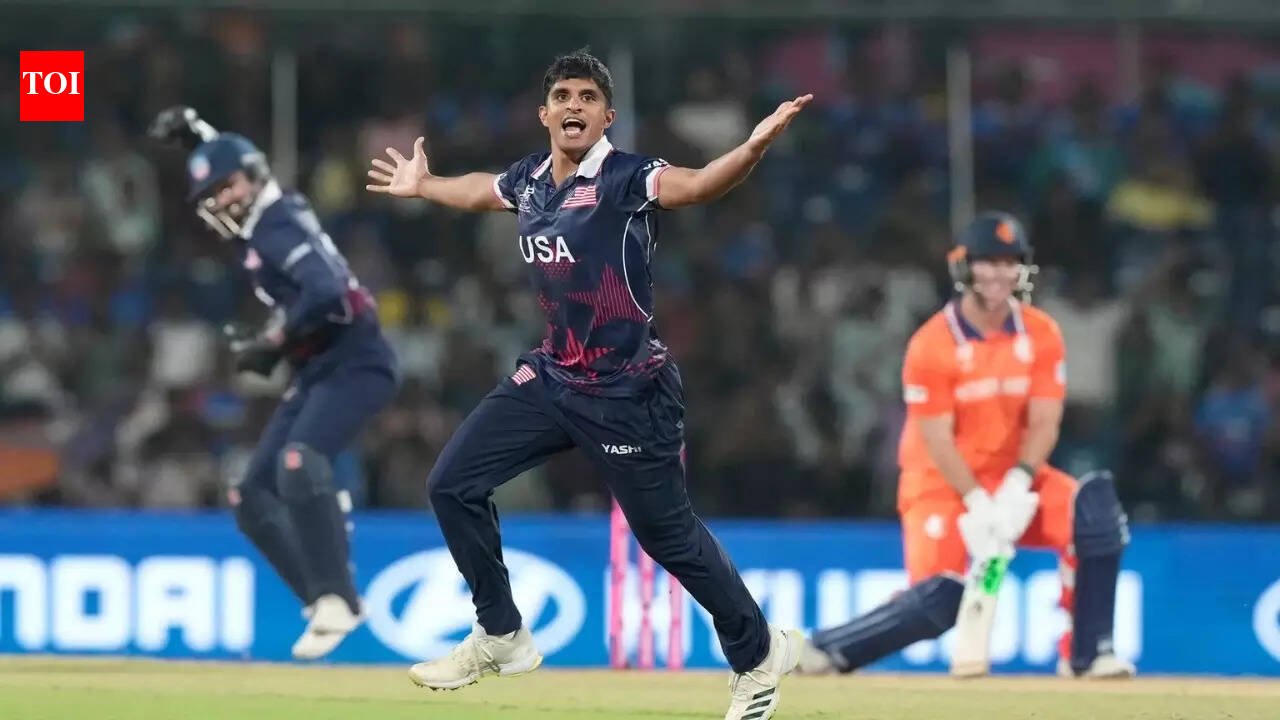
United States’ Nosthush Kenjige celebrates the wicket of Netherlands’ Michael Levitt during the T20 World Cup cricket match between Netherlands and United States in Chennai, India, Friday, Feb. 13, 2026. (AP)

The United States secured a 93-run win over the Netherlands in a group-stage match of the T20 World Cup on Friday, riding on Saiteja Mukkamalla’s 79 and a four-wicket spell from former India U-19 cricketer Harmeet Singh. It was USA’s first T20I victory against the Netherlands.Mukkamalla’s 51-ball 79 anchored the innings as USA posted 196 for 6 in 20 overs. Shubham Ranjane contributed 48 not out from 24 balls to push the total close to 200.

‘We weren’t good enough,’ says Australia’s Matt Renshaw after 23-run defeat to Zimbabwe in T20 World Cup

In reply, the Netherlands were bowled out for 103 in 15.5 overs. Left-arm spinner Harmeet Singh returned figures of 4 for 21, the best by a USA bowler in a T20 World Cup match.Harmeet did not extract sharp turn but benefited from errors by the batters. Opener Max O’Dowd (13) and all-rounder Bas de Leede (23) were dismissed off short deliveries that were hit to fielders. He also bowled a flat delivery that beat captain Scott Edwards and another straight ball that trapped Roelof de Merwe lbw.Left-arm spinner Nosthush Kenjige accounted for Michael Levitt with a ball that stayed low.Chasing on a surface that slowed as the match progressed, the Netherlands did not build partnerships and fell well short of the target.Earlier, Mukkamalla set the platform with his 79. He shared a 55-run stand for the second wicket with captain Monank Patel (36) and added 54 for the fourth wicket with Ranjane.Mukkamalla, who trained at the academy run by VVS Laxman in Hyderabad, struck five fours and four sixes. He scored freely through the off side, including shots over cover.Ranjane attacked in the closing overs and handled the short-ball approach used by the Netherlands bowlers. He hit Roelof van der Merwe for a straight six and pulled both Bas de Leede and Logan van Beek.At one stage, with Mukkamalla and Ranjane at the crease, USA were positioned for a total beyond 200. However, van Beek and de Leede varied their pace on the Chepauk surface to restrict further damage.Bas de Leede, son of former Netherlands seamer Tim de Leede, finished with figures of 3 for 37.


Source link

Passenger vehicle dispatches up 13% on GST reforms, price cut


Passenger vehicle dispatches up 13% on GST reforms, price cut

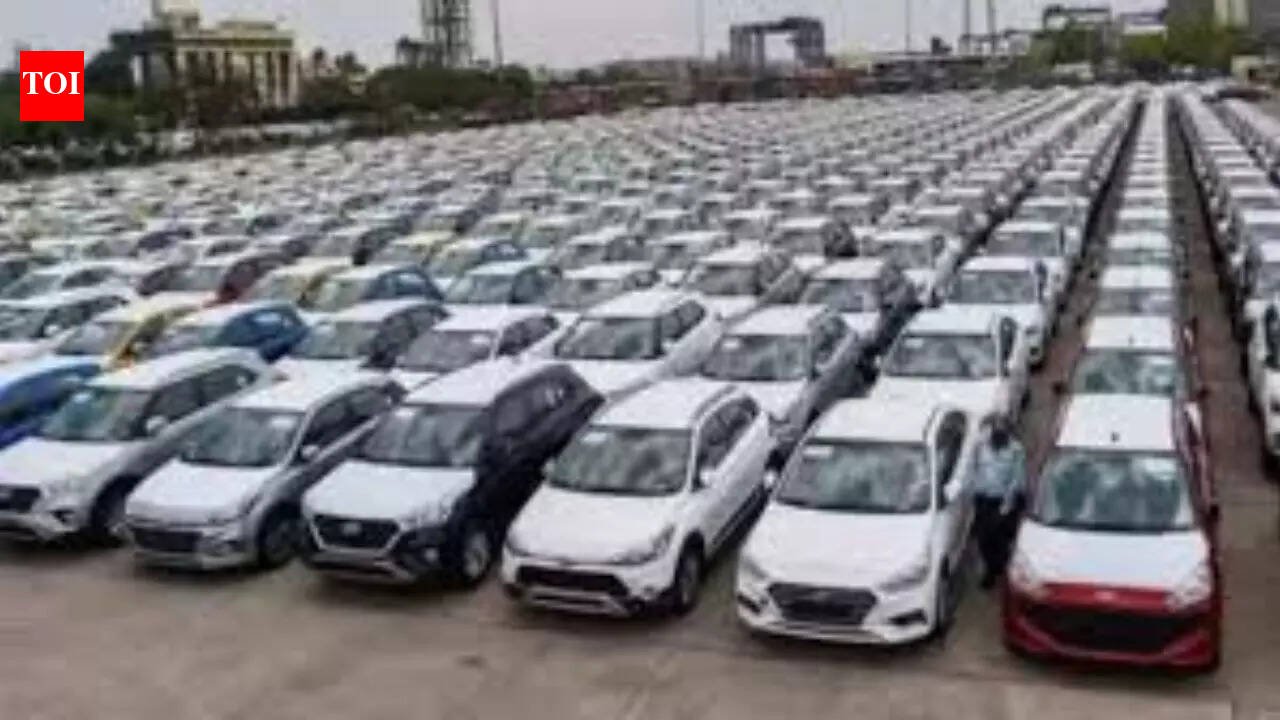
NEW DELHI: Domestic passenger vehicle (PV) dispatches from companies to dealers rose 13% year-on-year to 4,49,616 units in Jan, with demand remaining robust, owing to GST rate rationalisation and subsequent dip in prices, industry body Society of Indian Automobile Manufacturers (Siam) said on Friday.The sales growth last month was aided by utility vehicles. The segment wholesales increased to 2.5 lakh units last month as compared with 2.1 lakh units in year-ago period, showing a growth of 16%. Van sales rose to 11,914 units in Jan as against 11,250 units in the same month last year. Passenger car dispatches, however, declined 5% year-on-year to 1.2 lakh units in Jan. Maruti Suzuki led the PV segment in Jan, with a dispatch of 1.7 lakh units. Two-wheeler sales rose 26% to 19.3 lakh units last month as against 15.3 lakh units in Jan last year, the Siam said .“Passenger vehicles, two-wheelers and three-wheelers posted their highest-ever sales of Jan in 2026, with double digit growth, compared to Jan 2025,” Siam DG Rajesh Menon stated. The new year has begun on a positive note, extending the strong momentum seen in the previous quarter, supported by sustained demand following the GST rate reduction, he added.The initiatives announced in the Union Budget 2026 to strengthen India’s manufacturing base, along with existing policy tailwinds, are expected to deliver long-term benefits for the sector and support growth in the medium term, Menon added. The GST Council approved limiting slabs to 5% and 18% effective from Sept 22 last year, the first day of Navaratri.The GST rate rationalisation led to companies cutting vehicle prices. The price cuts led to record sales in the ensuing festive period and the sales momentum has now been carried to the new year as well. agencies


Source link

Spectrum can’t be part of insolvency process: SC | India News


Spectrum can't be part of insolvency process: SC

NEW DELHI: Supreme Court on Friday held that telecom companies cannot claim ownership over spectrum allocated to them by govt and the natural resource cannot be subject to insolvency and liquidation process of a bankrupt telecom company.A bench of Justices P S Narasimha and A S Chandurkar rejected the plea of banks, which submitted that licenced spectrum could also be put on block to recover debt taken by a bankrupt telecom company. It quashed an NCLAT order in insolvency proceedings of Aircel group, which had said that spectrum usage rights could be treated as assets of a corporate debtor and could be transferred during insolvency or liquidation. The court’s order is a setback to banks, which have exposure to telecom firms.“Recognition of spectrum licensing rights as an intangible asset in the balance sheet is not determinative of recognition/transfer of ownership of the spectrum to telecom service providers (TSPs). It only indicates control over the future economic benefits flowing from the grant of the right to use the spectrum. Hence, even if the right to use spectrum exhibits property-like features, such as longer licensing terms, exclusivity, transferability, tradability, etc, they merely represent different sticks in the bundle of rights and falls short of conferring complete ownership of the spectrum on TSPs,” the bench said.Justice Narasimha, who penned the judgment, said merely because spectrum can be treated as an “asset” on the basis of certain attributes – such as possession and usage, lease and assignment, claim and liability or credit and debt – the entirety of the telecom sector cannot be brought under the sweep of the Insolvency and Bankruptcy Code (IBC).He said the grant of a telecom licence, including the right to use spectrum, does not effect a transfer of ownership or proprietary interest. “What is conferred is a limited, conditional and revocable privilege to use spectrum for specified purposes and for a defined duration,” the bench said.“In conclusion, the framework of IBC is clear in excluding assets over which the corporate debtor has no ownership rights. Mere recognition of spectrum licensing rights as an intangible asset by TSPs in financial statements is not conclusive of their ownership, as it only represents control over future economic benefits. Even assuming that licensing of spectrum rights is one among the bundle of rights, in the absence of transfer of title over the spectrum, no ownership rights are created in TSPs either in the spectrum or in its right to use as governed by licensing conditions. Hence, under the IBC framework, spectrum licensing right is not a part of the pool of assets for insolvency or liquidation,” the judgment said.It said licence agreement leaves no doubt that effective and pervasive control over the licence and spectrum vests with the licensor (govt) and licensee’s rights are circumscribed by regulatory oversight, disclosure obligations, restrictions on transfer, and the ever-present power of the licensor to suspend or terminate the licence for breach, liquidation, or winding up of the licensee.


Source link

India-Pakistan clash sends ad rates soaring 25%


India-Pakistan clash sends ad rates soaring 25%

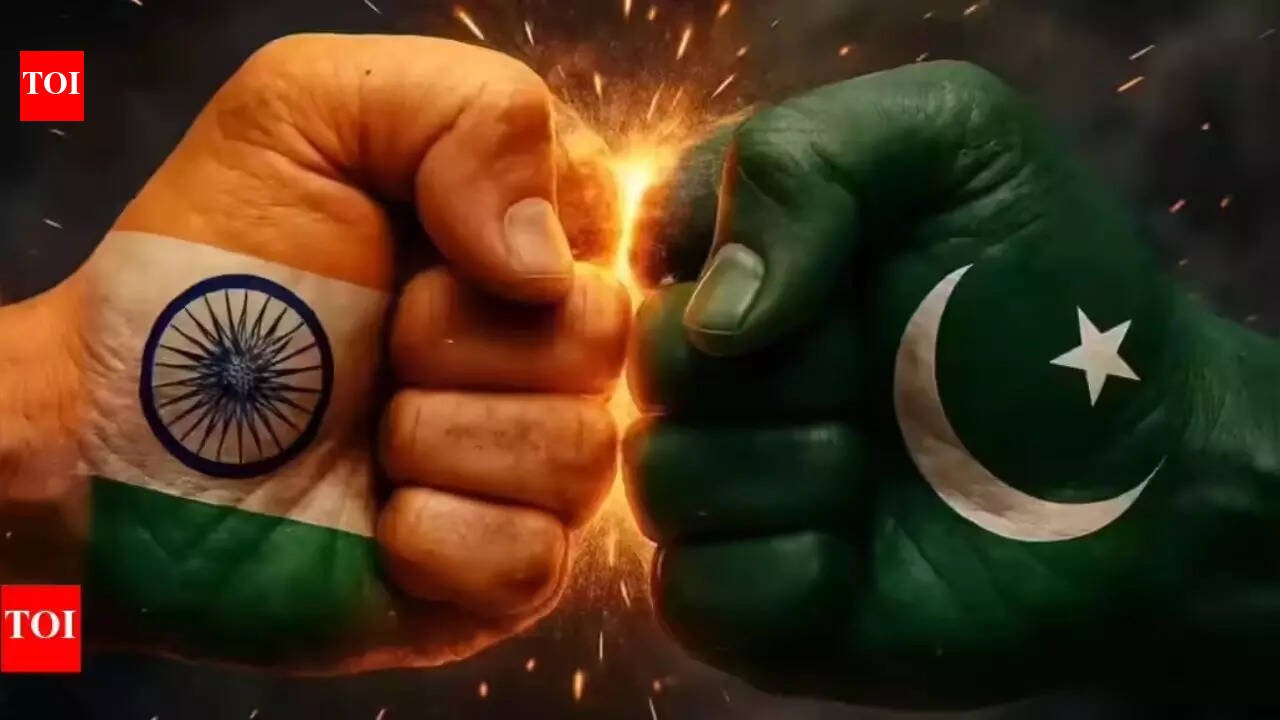
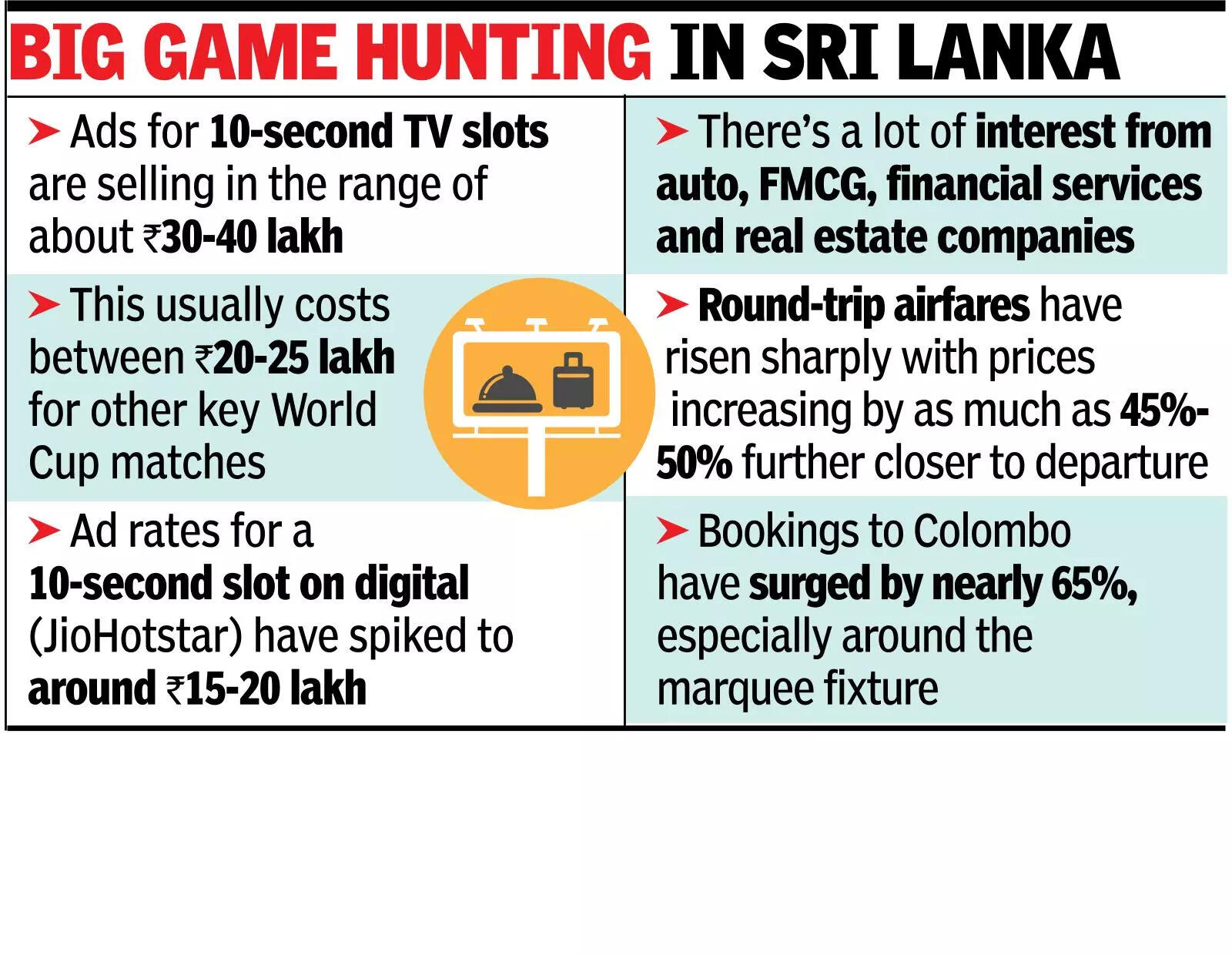
MUMBAI: With arch-rivals India and Pakistan set to face off in the T20 World Cup in Colombo on Sunday, ad rates for the match have soared. Companies are rushing to book slots to place their brands and cash-in on the huge viewership the game is likely to attract. Ad rates for a 10-second TV slot are now selling in the range of about Rs 30-40 lakh which otherwise usually costs between Rs 20-25 lakh for major World Cup matches, industry experts tracking the space said. “Rates for last minute inventory have jumped by at least 20%-25%. Every second of ad slots for the match will be taken,” said senior sports analyst and commentator Neeraj Jha, projecting broadcaster JioStar to rake in ad revenues of about Rs 2,000 crore from the tournament.Ad rates for a 10-second slot on digital (JioHotstar) have spiked to around Rs 15-20 lakh. “Companies want to own the ad space and money is not something they are thinking about. The viewership will be so large that firms do not want to miss out on the opportunity. There’s a lot of interest from auto, FMCG, financial services and real estate companies,” said Kushal Sanghvi, director at global marketing firm Komerz. The industry is equating ad rates for the Indo-Pak match to the price of gold and silver, said Sanghvi.

.

Colombo Calling: Airfares, Hotel Bookings Rise Sharply Ahead Of Key T20 WC Match

JioStar did not share specific details of the advertisers for the India-Pakistan match but said that Emirates, OpenAI, Birla Opus, Rapido, Amul, Mahindra & Mahindra Auto, Hyundai, Britannia and General Insurance Council are among companies that are advertising in the World Cup.Air ticket prices shoot upIndian cricket fans are headed to the Sri Lankan capital, taking prices of air tickets to Colombo and hotel fares in the city higher. Airfares to the city are trending significantly higher than non-event travel periods, particularly on high demand routes from major Indian metros, said Rikant Pittie, CEO and co-founder of EaseMyTrip. “On select dates, round-trip fares have risen sharply compared to regular averages, with prices increasing by as much as 45%-50% further closer to departure. This trend reflects concentrated travel demand typically seen when Team India plays overseas matches in nearby destinations,” Pittie said. MakeMyTrip has seen bookings for Colombo for the weekend of Feb 15 doubling over the past three days compared to the average booking levels.“Bookings to Colombo have surged by nearly 65% especially around the marquee fixture like the India-Pakistan match, helped by factors such as visa-free access and the ease of planning short-haul international gateways,” said Manjari Singhal, chief growth and business officer at Cleartrip, adding that the demand is largely being led by Indian fans travelling out from major metro cities. Hotel search volumes and bookings in Colombo have also increased substantially around the match window, with centrally located four and five-star hotels recording the strongest demand. For premium properties, average room rates are currently around 20%-25% higher than typical seasonal levels, EaseMyTrip said.


Source link