Breaking News
Indian football: Crisis-hit ISL’s restart in sight as AIFF to announce dates next week | Football News

[ad_1]

Indian football: Crisis-hit ISL's restart in sight as AIFF to announce dates next week

NEW DELHI: The All India Football Federation (AIFF) said on Saturday that the dates for the Indian Super League (ISL) will be announced next week after a meeting of its Emergency Committee.In a statement, the AIFF said the Emergency Committee met on January 3 to consider and acknowledge the report submitted by the AIFF-ISL Coordination Committee. The Coordination Committee was set up on December 20, 2025, following discussions during the AIFF Executive Committee meeting and the subsequent Annual General Meeting.

Where did it all go wrong for Indian football?

The Coordination Committee had been asked to submit its report to the AIFF Secretariat by January 2, which it did. The report was formally acknowledged by the AIFF Emergency Committee, which recommended that the league should be conducted by the AIFF.Following this, the AIFF said it will conduct the league and confirmed that the date of commencement of the ISL will be announced next week.In a statement shared on Instagram, the AIFF said, “The AIFF Emergency Committee met today (January 3, 2026), to consider and acknowledge the report submitted by the AIFF-ISL Coordination Committee. The Coordination Committee was constituted on December 20, 2025, following the AIFF Executive Committee meeting and the subsequent AIFF Annual General Meeting. The Coordination Committee was requested to submit its report to the AIFF Secretariat by January 2, 2026, which was duly complied with. The report was formally acknowledged by the AIFF Emergency Committee, which recommended that the league be conducted by the All India Football Federation. Accordingly, the AIFF will conduct the league, and the date of commencement will be announced next week.”The ISL, which was expected to begin last September, has not started so far due to the absence of a commercial partner.On Friday, several footballers, including Sunil Chhetri, Gurpreet Singh Sandhu and Sandesh Jhingan, released a video titled ‘Save Indian Football’, calling on FIFA and FIFPRO to step in.“It’s January and we should be on your screens as apart of a competitive football game in the Indian Super League,” Gurpreet said in a joint video statement posted on social media.“Instead, here we are driven by fear and desperation to say aloud something which we all know,” Jhingan added.The players said the All India Football Federation (AIFF) is no longer in a position to fulfil its responsibilities and appealed to FIFA to step in to safeguard the future of the sport in the country.“But more importantly, we are here to make a plea. Indian football governance is no longer able to fulfil its responsibilities.We are now staring at a permanent paralysis. This is the last-ditch effort to save what we can. So we are calling the FIFA to step in and do what it takes to save Indian football,” other players pitched in.The players stressed that their appeal was not political in nature, but born out of necessity.“We hope this message gets to the power that are in Zurich. This call is not political, it is not driven by confrontation but by necessity. It might sound like a big word but the truth is that we are facing a humanitarian, sporting and economic crisis. And of course, we need rescuing at the earliest. We just want to play football, please help us do it,” other players said in the statement.“Players, staff, owners and the fans deserve clarity, protection and more importantly, a future,” Chhetri concluded.

[ad_2]

Source link

‘Dragged out of their bedroom’: New details on how US captured Maduro, his wife – where are they now

[ad_1]

'Dragged out of their bedroom': New details on how US captured Maduro, his wife - where are they now

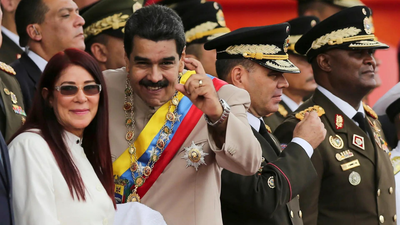
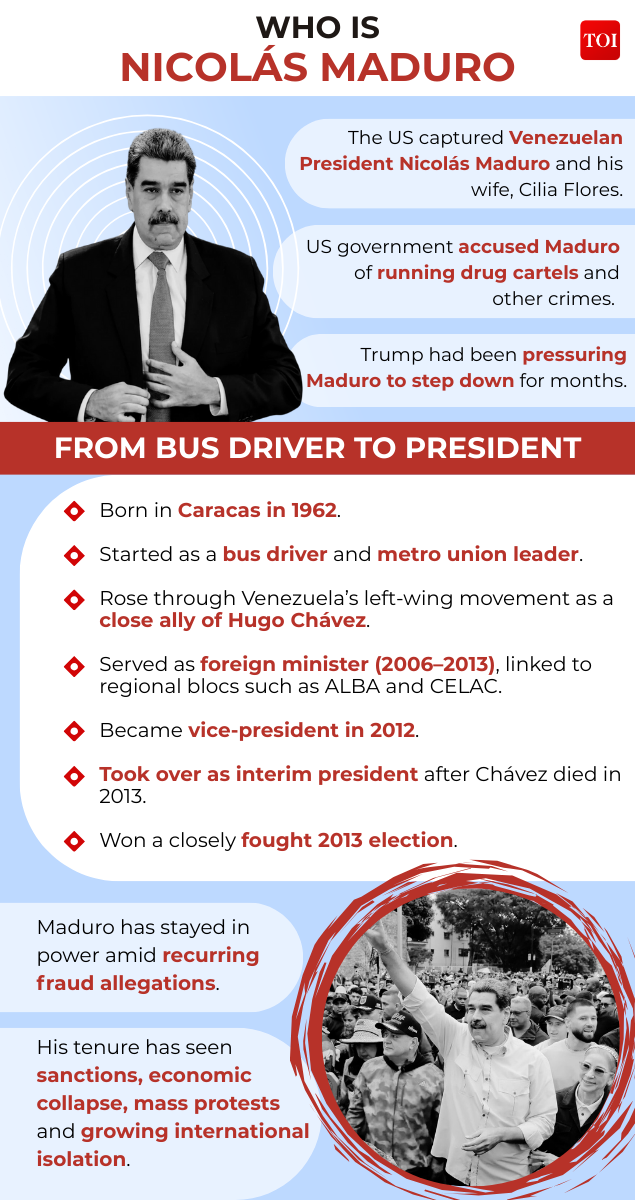
Venezuelan President Nicolás Maduro and his wife Cilia Flores were dragged from their bedroom during the overnight US military raid that led to their capture, according to officials briefed on the operation, as cited by CNN.The couple were asleep at their home inside the heavily guarded Ft Tiuna military complex in Caracas when US special forces stormed the residence, as per news agency AP.US bombs Venezuela – follow live updates The operation, carried out by the US Army’s elite Delta Force alongside FBI agents, lasted less than 30 minutes and resulted in no American fatalities.

Who is Nicolas Maduro

US President Donald Trump said Maduro had been taken from a “fortress”, describing the absence of US deaths as “amazing”, though he acknowledged some personnel were injured. Trump said that they are aboard a US warship. Fox reported that the duo will reach New York on Monday.The United States launched a swift overnight military operation against Venezuela early on Saturday, capturing Maduro and his wife. US officials say both will face narco-terrorism charges in American courts.Explosions were reported across Caracas in an assault lasting less than half an hour. At least seven blasts were heard, apparently targeting military sites, with smoke rising from a base hangar and power cut at another installation. Earlier Trump said in a social media post that Maduro “has been, along with his wife, captured and flown out of the Country.” Venezuelan ruling party figure Nahum Fernández said the pair were seized at their residence inside the Ft. Tiuna military complex.The operation followed months of escalating US pressure, including naval deployments and strikes on alleged drug-smuggling routes. Last week, a CIA drone strike reportedly hit a Venezuelan docking site linked to cartels.US Attorney General Pam Bondi said Maduro and Flores had been indicted in New York and “will soon face the full wrath of American justice on American soil in American courts.” She detailed charges including “Narco-Terrorism Conspiracy” and weapons offences. Trump said the couple were being held aboard a US warship and would be prosecuted in New York.

[ad_2]

Source link

Elon Musk says: I hold only American passport; I will live and die in America or …

[ad_1]

Elon Musk says: I hold only American passport; I will live and die in America or ...

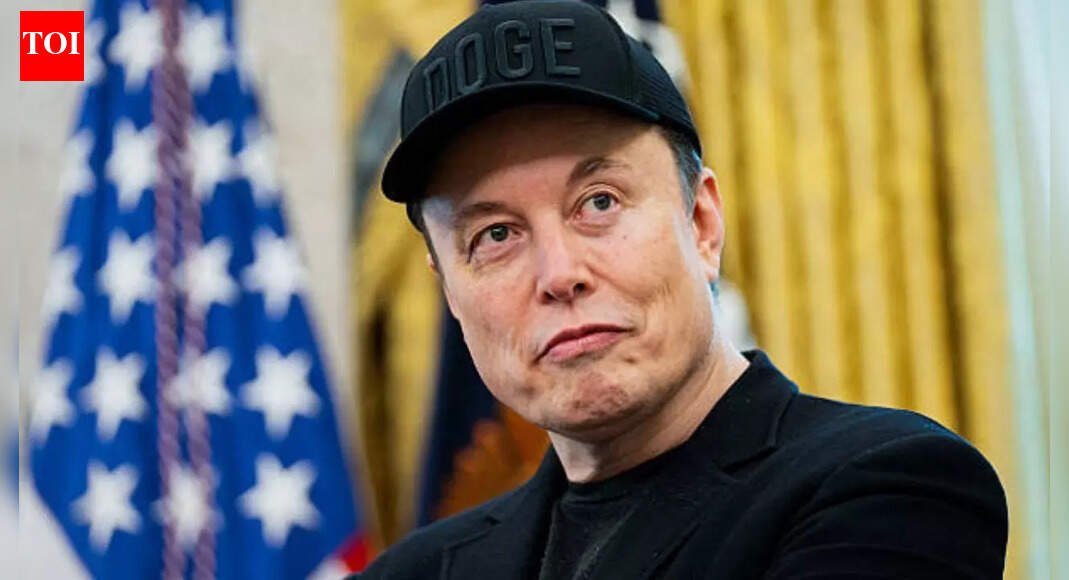
Tesla CEO Elon Musk said that he holds only American passport, and plans to live and die in the US. Musk’s statement was shared by X (formerly Twitter) user DogeDesigner who quoted the tech billionaire as saying: “I hold one passport now & forever: America. I will live & die here. Or Mars (part of America).”Elon Musk was born in Pretoria, South Africa on June 28, 1971. His mother, Maye Musk is a Canadian citizen that enabled him to get Canadian citizenship in 1989 at the age of 17. In the same year, he enrolled at Queen’s University in Kingston, Ontario. In 1992, he transferred to the University of Pennsylvania in the United States under a J-1 Exchange Visit.

What is J-1 exchange visa Elon Musk used to move to the US

A J-1 visa is a US exchange visitor visa that allows foreign nationals to visit the country to take part in approved cultural and educational exchange programmes. It is commonly used by students, researchers, teachers, interns, trainees, professors, scholars and medical residents. J-1 visa holders usually come to the US for a fixed period, depending on their programme. In some cases, they must return to their home country for at least two years after the programme ends before applying for certain other US visas or permanent residency. This is known as the two-year home residency requirement.

Elon Musk’s early career in the US questioned

Now the world’s richest person, Musk became a naturalized US citizen in 2002. In 2024, the Washington Post reported that Musk began his career working illegally in the US when he was building a Silicon Valley startup in the 1990s. Video of the then US President Joe Biden referencing the report’s claims went viral on X. Responding to one such video, the tech billionaire denied working without authorization in the US. “I was in fact allowed to work in the US,” Musk wrote, accusing Biden of lying.

Citizenship status of Elon Musk’s children

Elon Musk has 12 children with three different partners. Many of his children are US citizens by birth, having been born on American soil. They may also hold Canadian citizenship through their mothers.

[ad_2]

Source link

‘Don’t know what’s coming next’: Fear and hope collide as Venezuela wakes after US strikes

[ad_1]

'Don't know what's coming next': Fear and hope collide as Venezuela wakes after US strikes

Venezuelans woke on Saturday to deserted streets, plumes of smoke and a single, nagging question: who is in charge now?Security forces patrolled near-empty avenues in the capital hours after loud explosions rattled Caracas and US commandos carried out overnight strikes that President Donald Trump said led to the capture of President Nicolas Maduro and his wife. Reuters reported that areas around the Miraflores presidential palace were sealed off with checkpoints manned by armed personnel, while residents stayed indoors, glued to their phones for updates.Follow live updates here“We don’t know what’s coming next,” Nancy Perez, 74, told Reuters. “I saw it first on social media, then on television. Now everyone is just waiting,” she said.Dark smoke continued to rise from the direction of the Port of La Guaira north of Caracas which was severely damaged according to CBS news, while another plume was visible near a major air base in the capital. Meanwhile, videos showed explosions lighting up the night sky, followed by sustained blasts. Most residents chose to remain at home, though long lines formed at grocery stores as people stocked up on food and essentials. Fuel stations were shut across several cities, adding to fears of prolonged disruption.“I went to check on my workshop because I was afraid of looting, but the streets were empty,” Jairo Chacin, 39, a mechanic in the oil hub of Maracaibo told Reuters. For some opposition supporters, cautious optimism mixed with anxiety. Chacin said his sister, who lives in the United States, called him in tears when the news broke. “We cried together out of happiness,” he said, “but nobody knows what happens now.”Meanwhile, US President Donald Trump confirmed Maduro’s capture, following months of accusations that the Venezuelan leader was involved in drug trafficking and illegitimately clinging to power. The operation marked the first US military intervention aimed at removing a foreign leader since the 1989 invasion of Panama.In a post on Truth Social, Trump wrote: “The United States of America has successfully carried out a large scale strike against Venezuela and its leader, President Nicolas Maduro, who has been, along with his wife, captured and flown out of the Country. This operation was done in conjunction with US Law Enforcement.”

[ad_2]

Source link

Rishabh Pant retains place, Mohammad Shami ignored: India announce team for New Zealand ODIs; see full squad | Cricket News

[ad_1]

Rishabh Pant retains place, Mohammad Shami ignored: India announce team for New Zealand ODIs; see full squad
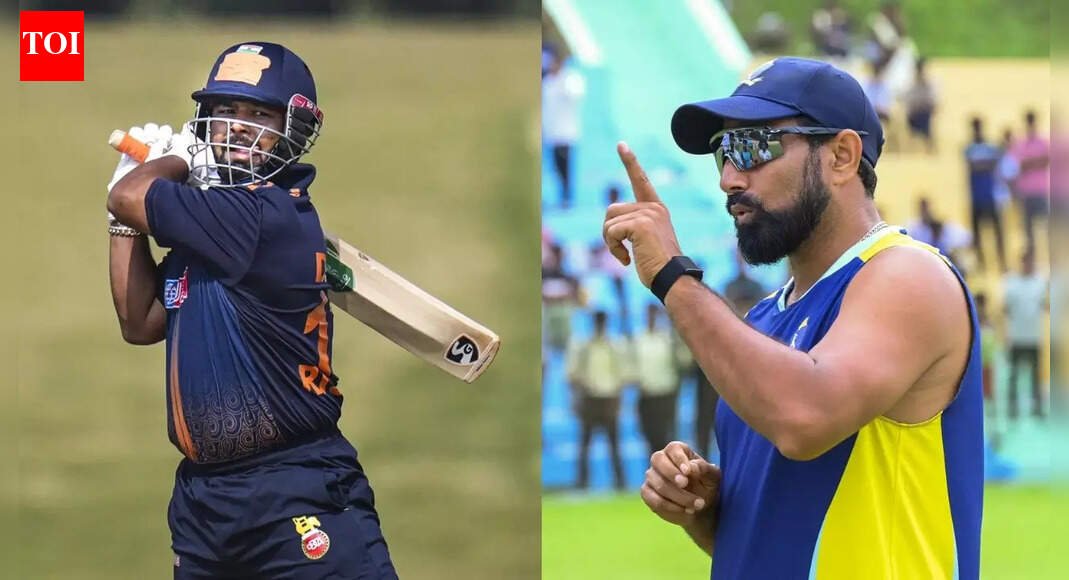
Rishabh Pant, Mohammad Shami

NEW DELHI: The Board of Control for Cricket in India (BCCI) on Saturday announced the squad for the upcoming three-match One-Day International series against New Zealand, starting January 11 at the BCA Stadium in Vadodara.Shubman Gill has returned as captain after missing the previous ODI series against South Africa due to injury.Shreyas Iyer has been included in the squad and named vice-captain. However, his availability is “subject to fitness clearance from BCCI COE,” the board said in a release.

Inside details of why Shreyas Iyer’s return to cricket has been DELAYED

Despite reports suggesting he could be left out, wicketkeeper-batter Rishabh Pant has retained his place in the squad as Ishan Kishan, who has returned to India’s T20 setup, was not included.All-rounder Hardik Pandya has also not been included. Explaining the decision, the BCCI release said, “Hardik Pandya has not been cleared by the BCCI COE to bowl 10 overs in a match, and considering the ICC Men’s T20 World Cup to follow, his workload is being managed.”Nitish Kumar Reddy has been named in the squad in Pandya’s place.While pacer Mohammed Siraj is back in the squad, Mohammad Shami couldn’t find a place in the squad despite doing some heavy lifting in the domestic cricket in the last few months, and it is now all but clear that the BCCI has decided to move on from Shami.The first ODI of the series will be played in Vadodara on January 11. The other two matches will be played in Rajkot and Indore on January 14 and 18 respectively.India’s ODI squad: Shubman Gill (C), Rohit Sharma, Virat Kohli, KL Rahul (WK), Shreyas Iyer (VC), Washington Sundar, Ravindra Jadeja, Mohd Siraj, Harshit Rana, Prasidh Krishna, Kuldeep Yadav, Rishabh Pant (WK), Nitish Kumar Reddy, Arshdeep Singh, Yashasvi Jaiswal

[ad_2]

Source link

Power check 2026: Top politicians in focus this year | India News

[ad_1]

Power check 2026: Top politicians in focus this year

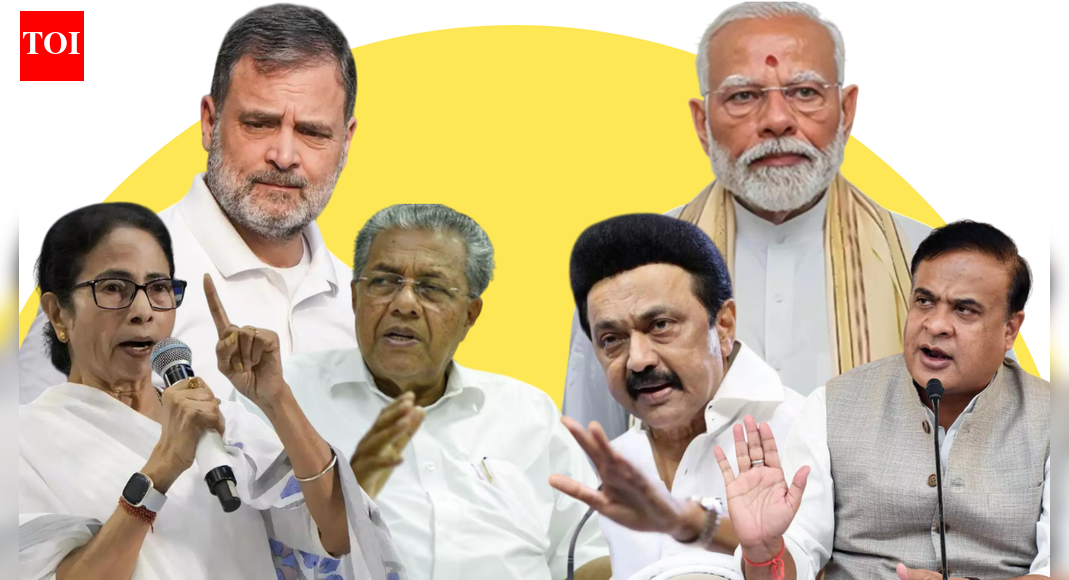
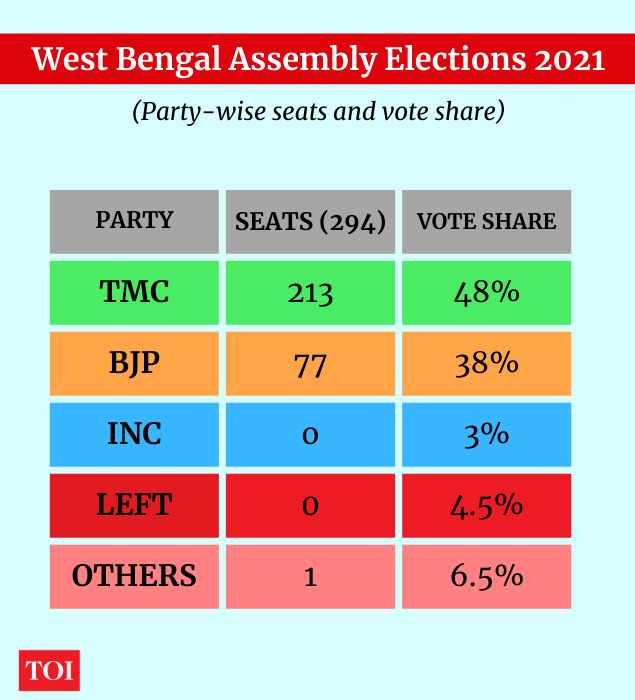
The year 2026 is finally here and we know it will not be a routine stop on the electoral calendar. This year’s calendar is filled with elections, starting with the long-overdue Mumbai-Pune civic polls. Later, with high-stakes assembly elections due in West Bengal, Tamil Nadu, Kerala, Assam and Puducherry, it will place some of the most influential politicians under rare and sustained scrutiny. For many leaders, the results will define not just the fate of their governments and party, but also their relevance heading into the 2029 Lok Sabha elections.Across these five states and a Union Territory, regional parties are strong and national parties are testing the outer limits of their expansion. What unfolds in 2026 will reshape the party’s existence, recalibrate the opposition’s cohesion and test the BJP’s claim of being a truly pan-Indian force. At the centre of it all are a dozen leaders whose careers may pivot decisively over the year.West Bengal: Mamata Banerjee vs Dilip GhoshWest Bengal remains one of the most politically charged battlegrounds of 2026. The pre-campaign has already started with high-voltage remarks amid the Election Commission’s Special Intensive Revision (SIR) exercise. For Mamata Banerjee, this election comes after a decade in uninterrupted power. Having crushed the Left and successfully repelled the BJP’s surge in the 2021 assembly elections, she now faces her toughest test yet. BJP’s momentum stalled in the 2024 Lok Sabha elections after it managed to win only 12 out of 40 seats. In the 2021 assembly election, it won 77 seats while TMC won the election by winning 213 seats.

Source: Election Commission of India

A fourth consecutive term would cement Mamata’s status as Bengal’s long-term chief minister and one of the last regional leaders capable of stopping the BJP’s advance. But the margins matter. A slip below 200 seats from the 213 she won in 2021, or a BJP surge past the 100-seat mark, would signal vulnerability and weaken her leverage in national opposition politics ahead of 2029.Meanwhile, on the last day of 2025, Union home minister Amit Shah outlined an action plan for the party’s West Bengal unit while reviewing its preparedness for the assembly polls due early next year. Addressing the party’s public representatives, both past and present, Shah sought to project a unified front, while indicating former state president Dilip Ghosh as one of the main faces of the saffron camp for the elections.For Ghosh, the stakes are existential. The BJP firebrand and a former TMC heavyweight, he was central to the party’s rise to 77 seats in 2021. If the BJP crosses 120 seats in 2026, Ghosh emerges as Mamata’s undisputed challenger and Bengal’s principal alternative. Failure to capitalise on anti-incumbency, however, would raise uncomfortable questions about his influence and the BJP’s long-term strategy in the state.Tamil Nadu: Stalin vs Palaniswami — and the Vijay factorTamil Nadu’s contest is shaping up as a three-cornered test of endurance, revival and disruption.Chief minister MK Stalin is seeking a second term after the DMK’s comfortable victory in 2021. Retaining a tally above 130–140 seats would keep the DMK firmly dominant and reinforce Tamil Nadu’s role as a firewall against the BJP’s national narrative. But anti-incumbency pressures, over floods, employment, law and order, and urban governance, could open space for a revival of the opposition.

Source: Election Commission of India

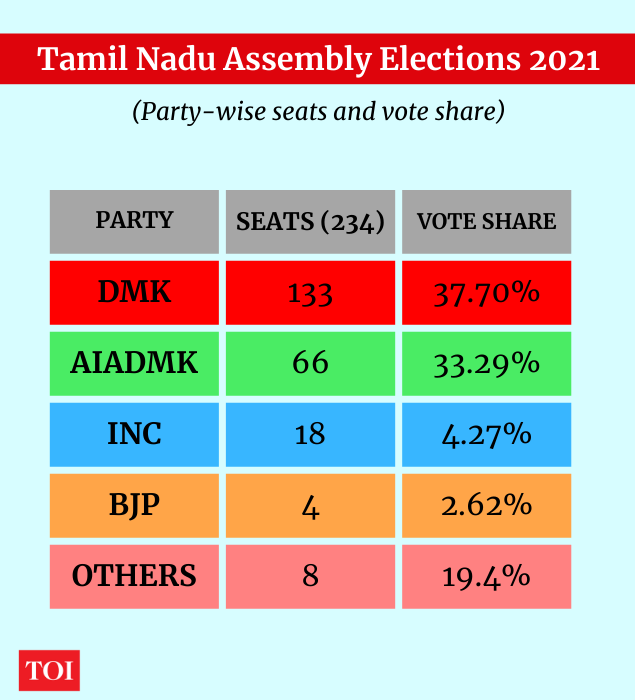
That revival hinges on Edappadi K Palaniswami, the former AIADMK chief minister and leader of the main opposition. A strong showing of 100-plus seats would restore the AIADMK as the DMK’s equal and slow the BJP’s attempt to subsume it. Another weak performance, however, could accelerate AIADMK’s marginalisation and strengthen the BJP’s influence within opposition politics in the state.Hovering over both is Joseph Vijay, the actor-turned-politician whose Tamilaga Vettri Kazhagam is eyeing its electoral debut. Even a victory in 10–20 seats could make him a kingmaker. A failure to break through, however, would mean another failed debut and would reinforce the DMK–AIADMK duopoly.In the 2021 assembly election, DMK won 133 seats, AIADMK got 66 seats and BJP got 4 seats.Kerala: Vijayan vs SatheesanKerala’s 2026 election carries unusually high stakes for both the Left and the Congress.For Pinarayi Vijayan, the CPI(M) stalwart and chief minister, the contest is about legacy. He is aiming for a historic third consecutive term—something rarely achieved in Kerala’s alternating political culture. Retaining a clear majority would keep the LDF dominant in the state and cement Vijayan’s stature as the Left’s most powerful surviving leader. But dipping below the 70-seat mark would likely end his era, especially amid criticism over governance, SFI-linked violence, and fatigue after two terms.

Source: Election Commission of India

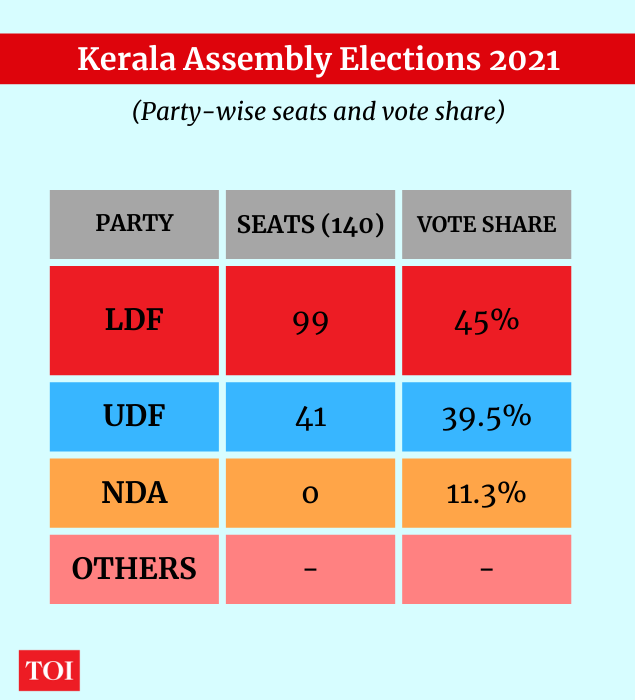
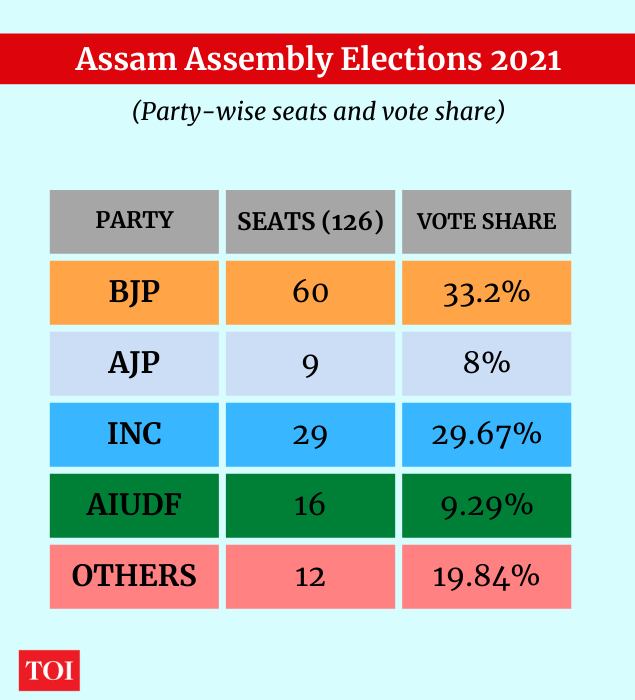
On the other side stands VD Satheesan, the Congress-led UDF’s leader of opposition. A crossing of the 80-seat mark would flip the House and revive Congress’s credibility in the South. Another narrow loss, however, would reinforce the perception that while Congress fights hard in Kerala, BJP’s slow creep, not the UDF, is the more consequential long-term challenger.In the 2021 assembly election, the LDF won 99 seats and the UDF got 41 seats, while the NDA was unable to open its tally. Assam: Himanta Biswa Sarma vs Gaurav GogoiAssam will test the durability of strongman politics versus generational transition.Chief minister Himanta Biswa Sarma is targeting a third straight NDA victory, with ambitious claims of winning over 104 of the state’s 126 seats.

Source: Election Commission of India

In 2021, Sarma delivered a decisive mandate as the BJP-led alliance won 75 seats in the 126-member assembly.Success would burnish his national ambitions and strengthen his standing as the BJP’s most assertive regional leader. But even a significant drop from the BJP’s 60 seats in 2021 would expose cracks beneath his muscular governance style, particularly amid CAA and NRC.Facing him is Gaurav Gogoi, Congress leader and son of former CM Tarun Gogoi. For Gogoi, 2026 is about emergence. A credible fight, around 40 seats for the INDIA bloc, would position him as Assam’s foremost Congress face and a potential future chief minister. A rout would risk pushing the Congress further into irrelevance in the state.Puducherry: N Rangasamy vs V VaithilingamSmall in size but large in symbolism, Puducherry could deliver one of 2026’s most telling verdicts.Incumbent CM N Rangasamy is leading a fragile AINRC-BJP coalition and currently governing with a narrow majority secured in 2021. Retaining power would validate his long-standing role as a political kingmaker and reinforce the BJP’s power of managing complex coalition politics.For V Vaithilingam, the Congress stalwart, 2026 is a chance at revival. A UDF victory with 15 or more seats would mark a dramatic comeback for a party that once ruled Puducherry. Failure would further cement the BJP’s foothold and underline Congress’s shrinking influence in smaller southern units.The bigger pictureBeyond state leaders, two national figures will shape the outcomes across all five battlegrounds.For PM Narendra Modi, 2026 is less about immediate electoral survival and more about narrative control. With high-stakes assembly elections this year, the Prime Minister’s role will be that of a campaign anchor and message-setter across multiple states, particularly West Bengal, Assam and the southern battlegrounds where the BJP remains an outsider.

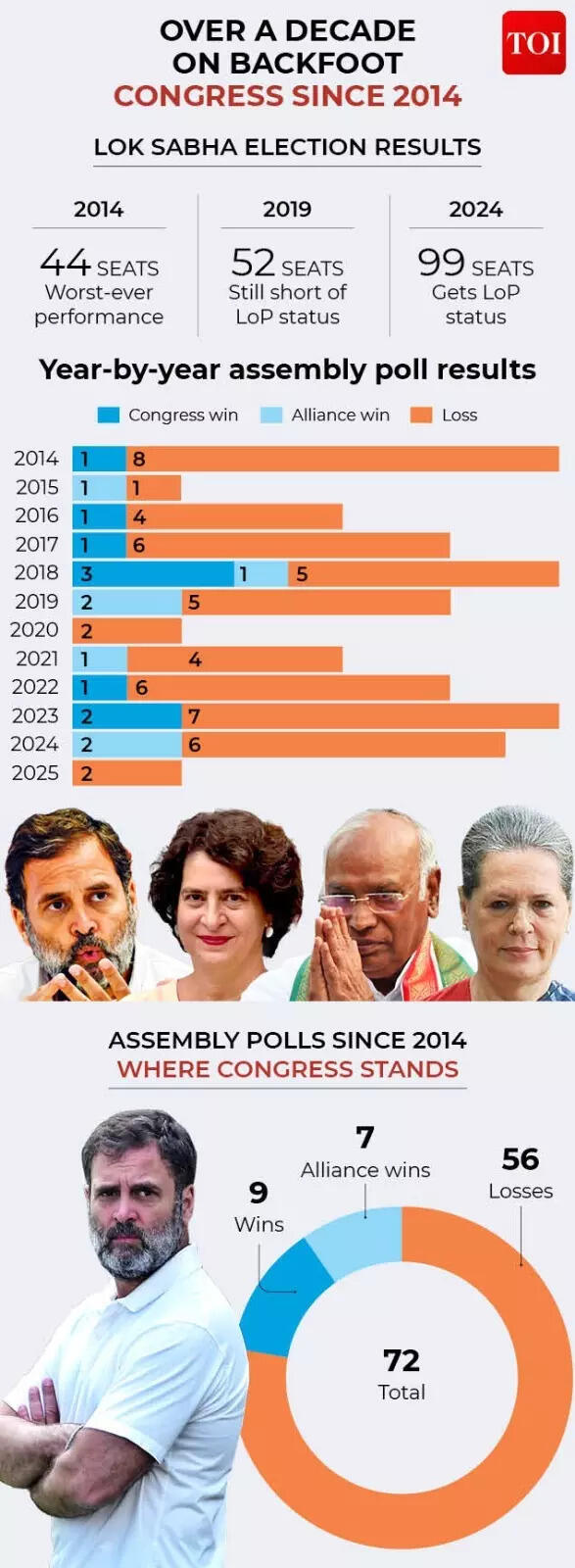
A strong BJP showing in Bengal or incremental gains in Tamil Nadu and Kerala would reinforce PM Modi’s claim of leading a truly pan-Indian party heading into 2029. Conversely, stagnation or reverses in these regions would embolden the opposition’s argument that the BJP’s expansion has peaked outside its core Hindi belt. The margins, not just victories, will matter in shaping how invincible PM Modi appears in the run-up to his third Lok Sabha contest.While not a mass leader, Nitin Nabin will be one of the BJP’s most closely watched backroom strategists in 2026. As a key organisational figure tasked with strengthening party units beyond the Hindi heartland, the outcomes in West Bengal, Assam and the South will directly reflect on his effectiveness.If the BJP improves booth-level performance, vote share and cadre depth in traditionally resistant states, Nabin’s stature within the party will rise sharply. But failure to translate central leadership popularity into durable state-level structures would revive internal questions about the BJP’s organisational limits and succession planning within its second rung of leadership.For Amit Shah, 2026 is the culmination of “Mission 2026”. As Union home minister and the BJP’s chief electoral architect, he is overseeing campaigns across Assam, Puducherry, Bengal, Tamil Nadu and Kerala. Clean sweeps in states the BJP already governs, combined with breakthroughs in the South, would further solidify his authority.For Rahul Gandhi, 2026 is a make-or-break year. After setbacks in Bihar and Delhi, strong UDF performances in Kerala or Puducherry, or credible INDIA bloc gains elsewhere, would validate his approach to coalition politics. Continued erosion would deepen doubts about his leadership at a time when Congress’s room for error is shrinking fast.

Source: Election Commission of India

For Priyanka Gandhi, this year will decide if she is ready to take charge of the party, as demanded by several disgruntled party leaders in the past. As Congress’s most recognisable campaigner after Rahul Gandhi, her effectiveness will be judged by how far she can convert charisma and street connect into electoral dividends, particularly in states where the party is fighting to arrest decline rather than expand. Strong UDF performances in Kerala or a credible revival in smaller battlegrounds would bolster her standing as the party’s chief mobiliser. Meanwhile, in BMC elections, the Pawar senior and junior have united for the Pimpri-Chinchwad Municipal Corporation (PCMC) and the Thackeray cousins have joined hands for the Brihanmumbai Municipal Corporation (BMC) polls. If these reunions frutify, it could change the dynamics of mega Maharashtra alliances (MVA and Mahayuti).In 2026, people will look at Shashi Tharoor with the ‘will he, won’t he’ question. With his constant tug of war with his own party, it will be interesting to see if Congress finally makes him fall in line with the party lines or if he calls it quits. Tharoor’s influence will also be tested by outcomes closer to home in Kerala.A Congress-led UDF victory would strengthen Tharoor’s hand within the party, renewing speculation about a larger leadership role nationally or in the state. A loss, however, would blunt his political momentum. How Tharoor positions himself during the campaign, whether as a team player or a distinct voice, will be closely parsed by both supporters and critics.Stage is all for a year of back-to-back elections that matter. In the end, 2026 will not just choose governments, it will quietly decide who still matters when the long road to 2029 truly begins.

[ad_2]

Source link

The psychology behind fraud: Why people fall prey despite knowing better | India News

[ad_1]

The psychology behind fraud: Why people fall prey despite knowing better

It’s easy to judge people who fell for scams. Many times, one simply thinks, “they should have known better”, label them foolish, naive, careless, or ignorant. After all, warnings are everywhere. Banks keep issuing alerts, digital platforms run awareness campaigns and news regularly reports on the latest frauds and cybercrimes.​Yet, when one looks more closely at how scams actually work, fraud is rarely the result of low intelligence or a lack of information. People who are cautious in one context can be disarmingly vulnerable in another. Those who pride themselves on scepticism can make impulsive decisions under pressure. The question, then, is not why people fail to “know better,” but why knowing better so often fails to protect them.The answer lies not in ignorance, but in psychology.​Scams succeed because they are engineered to move past rational judgement rather than confront it. Understanding the psychology behind fraud requires setting aside moral judgement and confronting an uncomfortable truth: vulnerability to scams is not an exception but a human trait. Frauds happen not because people are foolish, but because scammers exploit how people think, react, and cope under emotional stress.

​Why even cautious people fall for scams

If knowledge were a substitute for preventing fraud, scams would not be this pervasive. The fact is that some of the most articulate, tech-savvy, and financially educated individuals are duped into cash transfers, sharing credentials, or clicking links that under normal circumstances they never would have trusted.The reason is that scams do not challenge what people know; they manipulate how people feel and think.As Dr Radhika Goyal, PhD (Psychology), said, in her insights shared with TOI , “Scams work by bypassing rational thinking and triggering automatic emotional responses. Even highly educated or careful individuals rely on mental shortcuts in daily life to make quick decisions. Fraudsters design situations that feel urgent, personal, or threatening, pushing the brain into ‘survival mode’.”When this happens, the emotional brain (which reacts fast) overrides the logical brain (which analyses slowly). In that moment, intelligence offers little protection, because the scam is not engaging logic, it is exploiting trust, fear, or hope.”Dr Medha, Assistant Professor of Psychology at Patna Women’s College (Autonomous), Patna University, situated this vulnerability within a well-established psychological framework, as she talked to TOI.“Even cautious, intelligent, or well-educated individuals can fall victim to scams because fraudulent schemes exploit normal psychological processes rather than ignorance. From a psychological perspective, scams function by bypassing rational thinking and activating emotional and automatic responses” she said.She further explained this through Kahneman’s Dual-Process Theory.

.

The psychological biases scammers exploit

Fraudsters do not rely on random manipulation. They repeatedly exploit predictable cognitive biases that guide human behaviour in legitimate social settings.These biases are not flaws, they are mental shortcuts that help people function efficiently in everyday life.

How scammers trick people

By pretending to be, say, a bank representative, an authority from a government department, an important executive, and short-circuiting the time it takes to reach a decision, scammers tap into compliance ahead of skepticism and reasoning. This insight into behavior is vital, because it helps to re-understand fraud not just as trickery using clever telling, but at its root, an exploitation of psychology, using guilt, fear, and other trigger mechanisms.​​Dr Radhika Goyal identified several of the most commonly used psychological levers.

.

Meanwhile, Dr Medha linked these tactics to foundational psychological theories. Authority-based scams, she notes, draw directly from research on obedience.“Scammers are effective because they take advantage of fundamental psychological theories that explain how humans perceive, decide, and behave in social contexts. These theories highlight that human decision-making is often guided by automatic, emotional, and socially conditioned processes rather than deliberate reasoning,” she said.Further elaborating on individual behaviour, she added, “Individuals have a strong tendency to comply with perceived authority figures. Scammers exploit this bias by impersonating officials such as bank representatives, police officers, or government agents. The presence of authority cues—formal language, uniforms, or official symbols—reduces resistance and critical questioning, leading individuals to comply even when requests are unreasonable. -This has been supported by Milgram’s theory of obedience.”Emotional manipulation, she added, is equally deliberate.“Strong emotions such as fear, hope, guilt, or affection activate the limbic system, which can overpower rational control mechanisms in the prefrontal cortex. Scammers intentionally evoke emotional reactions to impair logical evaluation and promote impulsive decisions,” the assistant professor added, citing Damasio’s Affective Decision-Making Theory.Scarcity is another powerful tool.Dr Medha explained how scammers can trigger “scarcity bias” to trap people. Citing Cialdini’s Persuasion theory, the professor explained, “Scarcity bias occurs when people assign greater value to opportunities perceived as limited.”Scammers exploit this by saying things such as- “Offer valid for 24 hours”, “Only a few slots left”. Another tactic that fraudsters use is “fear of missing out (FOMO)” which “shifts thinking from evaluation to action”, explained the professor.Emotional stress blinds peopleOne of the most troubling aspects of fraud is that victims often recognise warning signs, but only in hindsight. Emotional stress plays a key role in this temporary blindness.“Emotional stress narrows attention. When someone is anxious about money, scared of legal trouble, or feeling lonely, their brain prioritizes relief over verification,” said Dr Goyal.Further explaining the psychological mindset of the people under stress, she added, “Under stress, people focus on solving the immediate emotional discomfort — “How do I stop this problem right now?” — instead of asking critical questions.”

Red flags may still be visible, but the brain temporarily ignores them because emotional safety feels more urgent than accuracy. This is why scams often target people during vulnerable moments — late at night, after a loss, or during financial uncertainty.

Dr Radhika Goyal, Psychologist

Dr Medha described the same process at the neurological level:

Emotional stress such as fear of loss, financial pressure, or loneliness activates the limbic system, particularly the amygdala, which prioritizes emotional survival responses over careful analysis.

Dr Medha, Assistant Professor, Psychology

Further talking about the stress factor, the professor said, “This heightened emotional arousal weakens the functioning of the prefrontal cortex, reducing logical reasoning, impulse control, and risk evaluation. As a result, individuals rely more on fast, intuitive processing rather than deliberate, analytical thinking, even when warning signs are present. Stress also narrows attention to emotionally relevant cues, causing people to overlook inconsistencies or red flags that would normally signal fraud. Consequently, the desire to quickly relieve emotional distress overrides caution, making individuals more vulnerable to deceptive tactics.”

Why victims often stay silent

Even after realizing that they’ve been swindled, victims often opt not to speak out. In most cases, this is not because they lack information or do not care, but due to complex factors involving psychological, social, as well as structural barriers that ultimately favor the fraudsters.Shame and self-blame are some of the deterrents. Victims often internalise responsibility, believing they were “careless” or “gullible,” despite scams being deliberately engineered to exploit normal human trust and authority cues. Admitting the fraud can feel like admitting a personal failure, particularly for educated or financially savvy individuals.

Ways to trick people

Fear of judgement adds to the reluctance. Victims worry about how family members, employers, or peers will see them, especially when the loss involves large sums or repeated transactions. In a professional environment, disclosure may be seen as reputationally damaging, reinforcing the instinct to stay quiet.There is also a general feeling that nothing worthwhile will come out of reporting and that what has been lost is irretrievable. This perceived futility discourages reporting, even where formal channels exist.In this context, confusion and intimidation also prevail. Frauds involve tricks and mind games that include numerous platforms, jurisdictions, and phony identities. Victims often do not know to whom they need to report, what evidence will be required, or fear being dragged into long and stressful investigations. Some are even threatened bluntly by the scammers, further suppressing disclosure.Dr Goyal pointed to shame as a central barrier. “Shame is a major barrier. Victims often blame themselves, thinking, ‘I should have known better.’ This self-blame is intensified by social stigma that equates being scammed with being foolish.”Talking about the feeling of shame leads to isolation, she added, “Fraudsters deliberately reinforce this shame, telling victims to keep the matter confidential or warning them they will ‘get into trouble’ if they speak up. Unfortunately, silence protects the scammer and isolates the victim further. Psychologically, it is easier to stay quiet than to confront embarrassment — even when reporting could prevent harm to others.Meanwhile, Dr Medha explained that self-blame is deeply tied to identity. “Victims often internalize the fraud as a personal failure, believing they should have been more careful, which leads to self-blame rather than attributing responsibility to the scammer. Shame triggers avoidance behavior, causing individuals to hide the experience to protect their self-image and social identity.”“Additionally, cognitive dissonance makes it emotionally uncomfortable to admit having been deceived, especially for educated or competent individuals. Together, shame, damaged self-esteem, and fear of stigma significantly reduce the likelihood of reporting scams, despite the importance of doing so,” she added.

Breaking the psychological grip

As scams operate at the emotional, mental level, resisting them requires psychological interruption. In general, fraud succeeds not because the victims are uninformed, but rather because jacked-up emotions temporarily displace rational judgment.

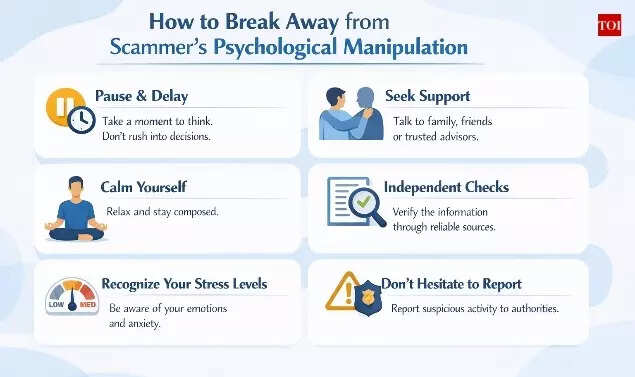
How to break away

Scammers create a situation that instills urgency, fear, or excitement, forcing fast decisions, narrowing attention, and suppressing doubt. In such a state, one may even fail to notice flagrant red flags. The best counter remains pause: slowing down, stepping away from the communication, or delaying any action, which breaks the emotional momentum on which scams depend.A second opinion is equally important. Bringing in a trusted third party reintroduces perspective and exposes inconsistencies that are hard to see under pressure. In practice, the strongest defences against fraud are behavioural — time, distance, and verification — rather than just knowledge.Dr Goyal emphasised on simple but effective pauses.

.

Meanwhile, Dr Medha framed resistance as “mind over manipulation.”“Using Mind Over Manipulation — Scams succeed when emotion outruns reasoning. Breaking a scam requires slowing down emotion, widening perspective, and re-activating rational control,” she said.She outlined concrete steps:

.

A human vulnerability, not a personal failure

The main point to understand in this is that fraud thrives in the space between emotion and reason. It succeeds, not because people lack intelligence, but because they are humans; capable of fear, hope, trust, and urgency. Con artists structure their approach based on these universal characteristics, taking advantage of the instances where the responses are instinctual, meaning where a reaction exceeds the boundaries of logical processing.The susceptibility to a scam is not an anomaly but a side effect of human instincts in pressing circumstances. Recognising this distinction is critical. It shifts the narrative away from personal failure and towards systemic manipulation. When victims understand that they were targeted through deliberate psychological engineering, shame loses its power and reporting becomes more likely. This, in turn, improves visibility into how fraud networks operate and where safeguards fail.The more society moves away from blaming victims and towards understanding the psychology of manipulation, the harder it becomes for fraudsters to win. Awareness framed around human vulnerability encourages openness, earlier intervention, and collective defence; thus, weakening the conditions that allow scams to spread unchecked.

[ad_2]

Source link

Another Hindu dies in Bangladesh: Khokon Das succumbs to injuries after 3 days; was set ablaze by mob

[ad_1]

Another Hindu dies in Bangladesh: Khokon Das succumbs to injuries after 3 days; was set ablaze by mob

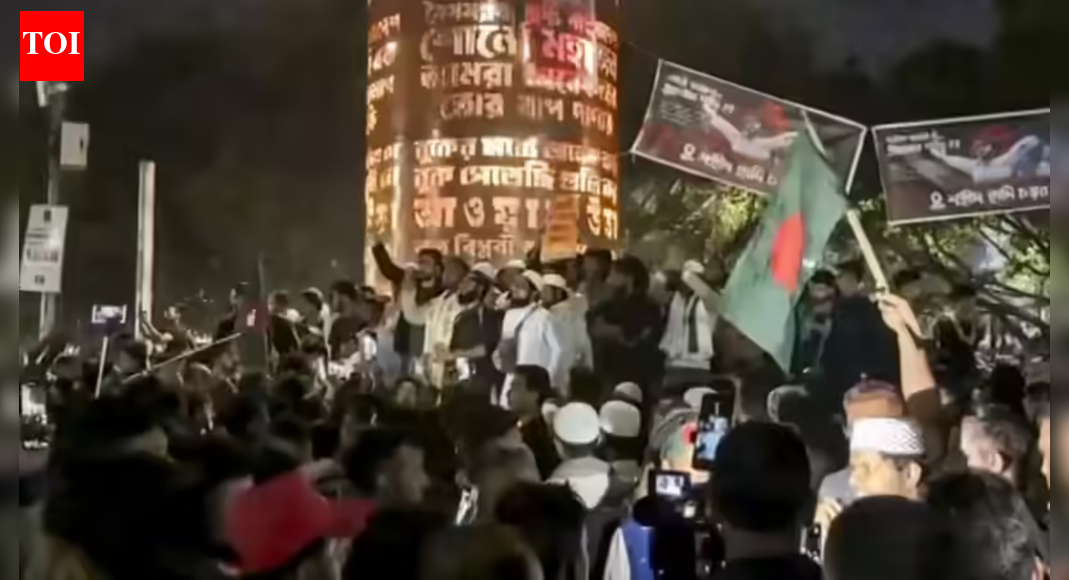
Hindu businessman Khokon Das, who was attacked with sharp weapons and set afire in Bangladesh, died on Saturday while receiving treatment in the Natioal Burn Institute in Dhaka.According to the news agency ANI, professor of the National Burn Institute Dr Shaon Bin Rahman confirmed his death.This comes three days after 50-year-old Khokon Chandra Das was reportedly waylaid, beaten and doused with petrol before being set ablazeAccording to the police, Das was a resident of Tiloi village in Koneshwar Union and ran a pharmacy along with a mobile banking business at Keurbhanga Bazar.On Wednesday night, after shutting his shop, he was returning home in an auto-rickshaw when the attackers stopped the vehicle on the Damudya–Shariatpur road near the market and assaulted him. According to Prothom Alo, the miscreants attacked him with sharp weapons before setting him on fire. In a desperate attempt to save himself, Das jumped into a nearby pond along the roadside.Hearing his cries, local residents rushed to the spot, forcing the attackers to flee.Locals later rescued Das and rushed him to Shariatpur Sadar Hospital, where he was given first aid in the emergency ward.Sima Das, the victim’s wife, said the family was struggling to understand why he was targeted. “My husband returns home every night after closing his shop with the day’s sales money. On Wednesday night, criminals attacked him. He recognised two of the attackers, and because of that, they assaulted him with the intention to kill–hacking him and setting fire to his head and face after pouring petrol on him. We have no enemies in the area. We have no disputes with anyone over any matter. We cannot understand why the criminals suddenly targeted my husband.”This comes amid a series of violent incidents targeting members of the Hindu community in Bangladesh. Last month, two Hindu youths were lynched in separate incidents. Dipu Chandra Das, a garment factory worker in Mymensingh district, was beaten to death over alleged blasphemy charges on December 18, after which his body was reportedly hanged and set on fire.Meanwhile, a Hindu youth identified as Amrit Mondal was lynched in Hosendanga village of Kalimohor Union in Rajbari’s Pangsha sub-district over an alleged extortion dispute.These incidents have triggered widespread outrage and condemnation from political leaders, religious organisations and minority groups in both Bangladesh and India.

[ad_2]

Source link

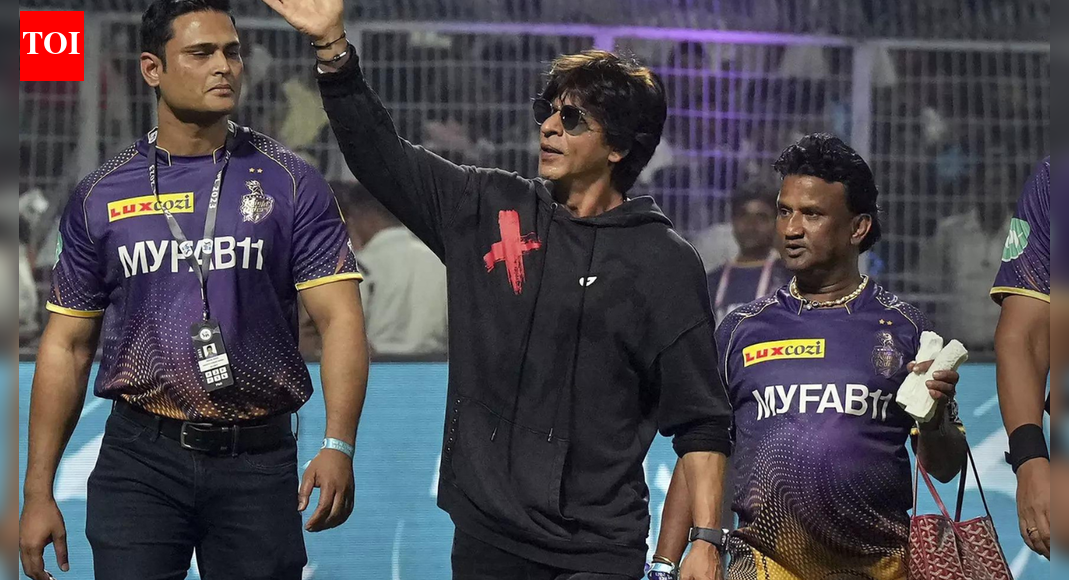
‘Victory of the Hindus’: After Shah Rukh Khan draws flak, BCCI asks KKR to release Bangladesh player; BJP hails move | India News

[ad_1]

'Victory of the Hindus': After Shah Rukh Khan draws flak, BCCI asks KKR to release Bangladesh player; BJP hails move

NEW DELHI: Bharatiya Janata Party on Saturday welcomed BCCI’s decision to instruct Shah Rukh Khan owned Kolkata Knight Riders to release Bangladesh player Mustafizur Rehman from their roster ahead of Indian Premier League.BJP leader Sangeet Som thanked BCCI for its decision and hailed it as a “victory of the Hindus of the entire nation.”

‘Very Petty & Shameful’: Shashi Tharoor On Row Over KKR Selecting Bangladeshi Player In IPL

“Thanks to BCCI for its decision in view of the 100 crore Sanatanis of India,” Som said.“We said yesterday that cognisance will be taken of this matter because the sentiments of 100 crore people cannot be taken lightly. This is the victory of the Hindus of the entire nation,” he added.Earlier in the day, BCCI secretary Devjit Saikia said that the decision was taken “due to the recent development going all across.”“Due to the recent developments which is going on all across, BCCI has instructed the franchise KKR to release one of their player Mustafizur Rahman of Bangladesh from their squad and BCCI has also said that if they ask for any replacement, BCCI is going to allow that replacement,” Saikia told news agency ANI.Recently, spiritual leaders had launched a broadside against KKR owner Shah Rukh Khan in context of the recent targeting of Hindu minorities in Bangladesh.Devkinandan Thakur criticised Shah Rukh Khan after KKR acquired right-arm pacer Mustafizur for a massive amount of Rs 9.20 crore during the IPL auction.“In Bangladesh, Hindus are being brutally murdered, their homes are being burned, and their sisters and daughters are being raped. After witnessing such brutal killings, how can someone be so heartless, especially someone who calls himself the owner of a team? How can he be so cruel as to include a cricketer from that very country in his team?” he said.Meanwhile, Imam Umer Ahmed Ilyasi, the Chief Imam, All India Imam Organisation, also demanded that Shah Rukh Khan apologise to the nation for inclusion of the Bangladesh pacer in the KKR Squad.Imam Umer Ahmed Ilyasi said that KKR owner Shah Rukh Khan should give a statement condemning the atrocities being committed against Hindus in Bangladesh and also remove Mustafizur from his team.“Does Shah Rukh Khan have no information regarding the atrocities being committed against Hindus in Bangladesh?… It is a matter of regret that despite having information regarding the atrocities being committed against Hindus in Bangladesh, KKR selected a Bangladeshi player in the IPL auction. Shah Rukh Khan should apologise to the nation…He should also give a statement condemning the atrocities being committed against Hindus in Bangladesh,” Imam Umer Ahmed Ilyasi told ANI.Earlier, Shiv Sena leader Sanjay Nirupam had urged KKR owner Shah Rukh Khan to remove the Bangladeshi player from his team before the before he becomes a target.“When the entire country is enraged and angry at Bangladesh, anyone in India who has even the slightest connection to Bangladeshis could become a target of that anger. If there is a Bangladeshi in Shah Rukh Khan’s team, before he becomes a major target, we request that Shah Rukh Khan remove the Bangladeshi from his team. This will be for his own good and will also protect India’s interests,” Sanjay Nirupam told ANI.Reacting to the controversy, Congress leader Supriya Shrinate said the focus should be on who permitted Bangladeshi players to be included in the IPL auction in the first place.“First of all, I want to ask who put the Bangladeshi players in that pool. This question is for the BCCI and the ICC. Home Minister’s son, Jay Shah, should answer who put the Bangladeshi players in the pool where IPL players are bought and sold, the pool where the players’ auction takes place… he is the ICC’s chief and the main decision-maker in cricket all around the world,” she said.This comes as Bangladesh saw a series of violent incidents targeting members if Hindu community. Last month, two Hindu youths were lynched in separate incidents. Dipu Chandra Das, a garment factory worker in Mymensingh district, was beaten to death over alleged blasphemy charges on December 18, after which his body was reportedly hanged and set on fire.In another case, a Hindu youth identified as Amrit Mondal was lynched in Hosendanga village of Kalimohor Union in Rajbari’s Pangsha sub-district over an alleged extortion dispute.These incidents have triggered widespread outrage and condemnation from political leaders, religious organisations and minority groups in both Bangladesh and India.

[ad_2]

Source link

Ira Khan and Nupur Shikhare’s second wedding anniversary: Hubby shares 90s-style marriage video with ‘love you’ message |

[ad_1]

Ira Khan and Nupur Shikhare's second wedding anniversary: Hubby shares a 90s-style marriage video with a 'love you' message

Amid the New Year cheer, Amir Khan’s family has an additional reason to celebrate, as his daughter today marks 2 years of marital bliss with husband Nupur Shikhare. The special day certainly demanded a special post, and husband Nupur Shikhare made sure of it. Commemorating their second anniversary, Nupur Shikhare shared a 90s-style marriage video, which gained both love and laughter from his wife, Ira, and his followers on the gram.

Nupur Shikhare’s 90s-style adaptation of wedding pictures and special moments

Nupur shared a special video on their social media handle, which featured pictures from their wedding, as well as moments from their relationship. What made the video more special is that it has been curated in a 90s style. One can see their pictures revolving with vivid backgrounds. He also used Kumar Sanu’s famous 90s song ‘Ek Sanam Chahiye Aashiqui Ke Liye.’ Along with the same, Nupur wrote a beautiful message that read, “Happy 2nd Anniversary….Congratulations @khan.ira for successfully completing two years of being married to me, you are very brave…I love you #love #anniversary.”Check out the video here:

Ira Khan reciprocates the love

Reacting to the video, Ira Khan gave a playful reply. He hilariously commented, “It’s the easiest, most fun, and satisfying thing I’ve experienced. This video on the other hand…..” Below the same post, in another comment, Ira wrote, “love you @nupur.shikhare.” To this, the loving husband replied with red heart emoticons.However, if you feel the fun and the story end here; appartanly not. Ira also shared the same reel on her Instagram story and wrote, “This is what you get when you marry a 40 year old.”

ira story

In another story following it, Ira explained how the reel was funny. She confessed that many people of her generation and younger might not get it in the first go, but apparently, this is how wedding videos looked in the 90s. She was thus shown this clip with utter excitement, which initially she failed to understand.

[ad_2]

Source link