Breaking News
‘Can’t breathe, you’re killing me’: Journalists trapped inside as Bangladesh media houses torched; protesters storm Dhaka offices

[ad_1]
'Can't breathe, you're killing me': Journalists trapped inside as Bangladesh media houses torched; protesters storm Dhaka offices

Bangladesh witnessed widespread unrest overnight on Thursday after the death of Sharif Osman Hadi, a prominent youth leader and vocal critic of ousted former Prime Minister Sheikh Hasina, triggering violent protests in parts of Dhaka and attacks on major media houses.Hadi, 32, died at a hospital in Singapore on Thursday, where he had been undergoing advanced treatment after being shot by masked assailants on a motorbike on December 12. He was attacked while riding in a rickshaw and was later airlifted abroad for medical care.

Hadi Death Triggers Overnight Riots In Bangladesh With Arson And Anti-India Fury, Media Targeted

The shooting had taken place just a day after Bangladeshi authorities announced a date for the country’s first elections since the 2024 uprising, elections that Hadi was planning to contest as an independent candidate.

Protests turn violent, journalists trapped inside burning offices

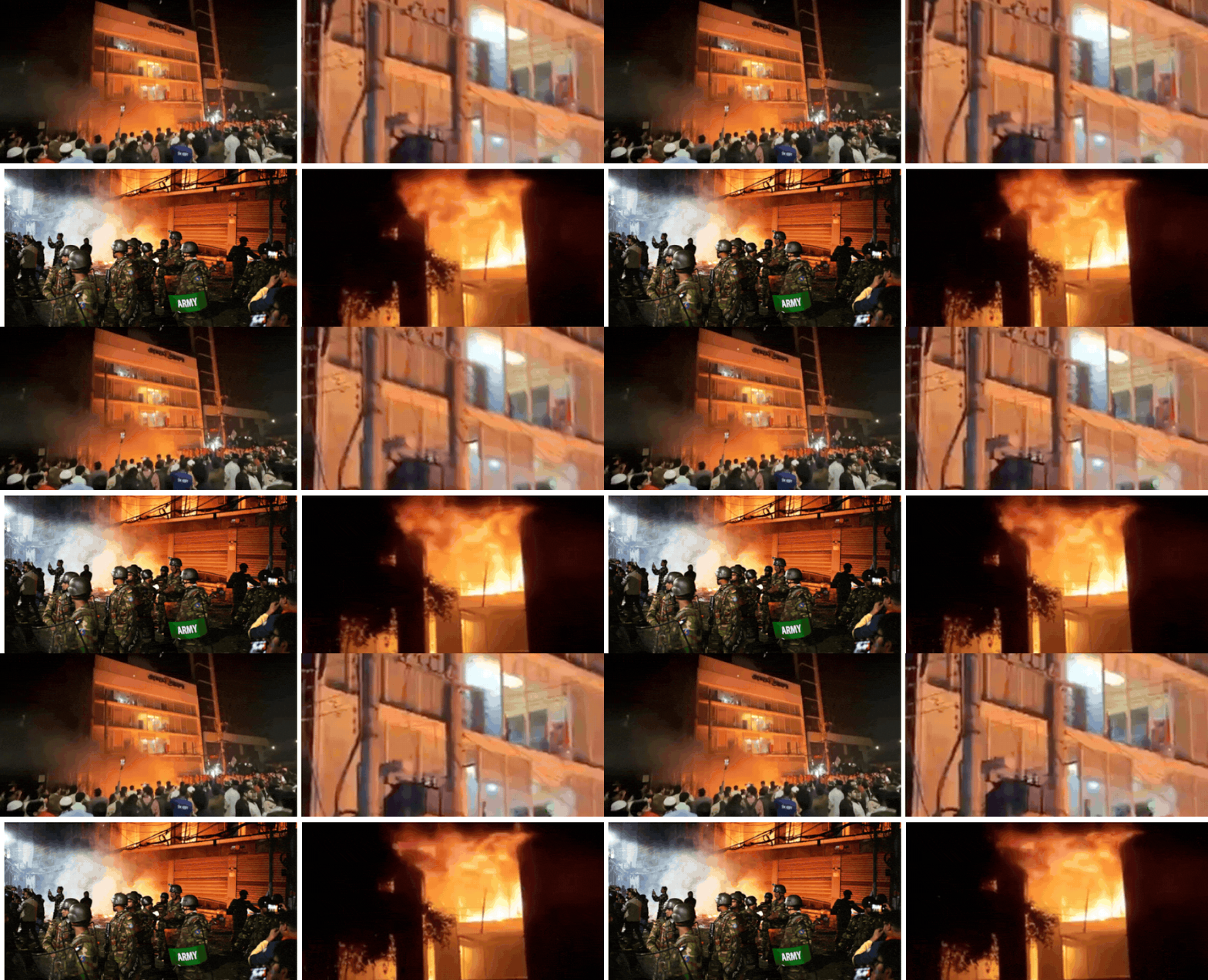
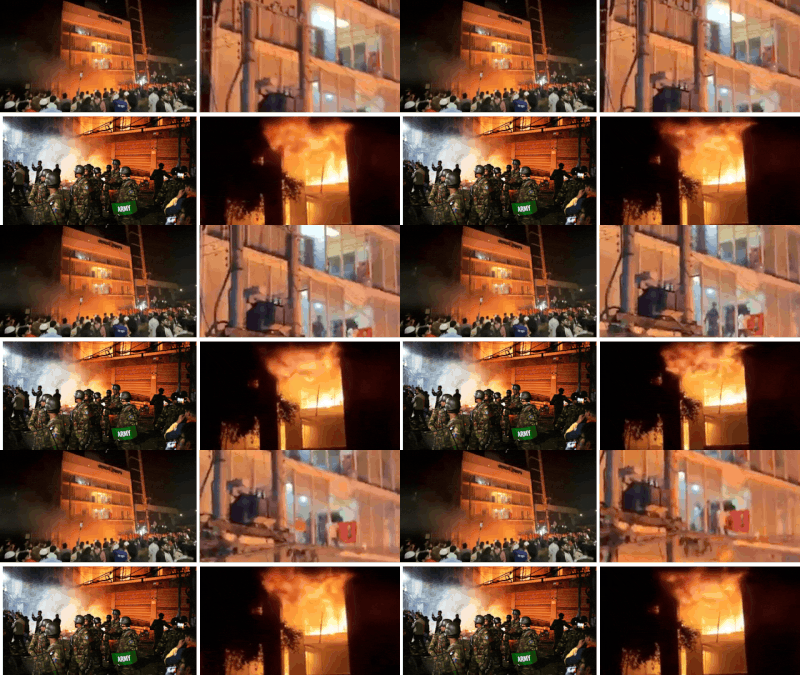
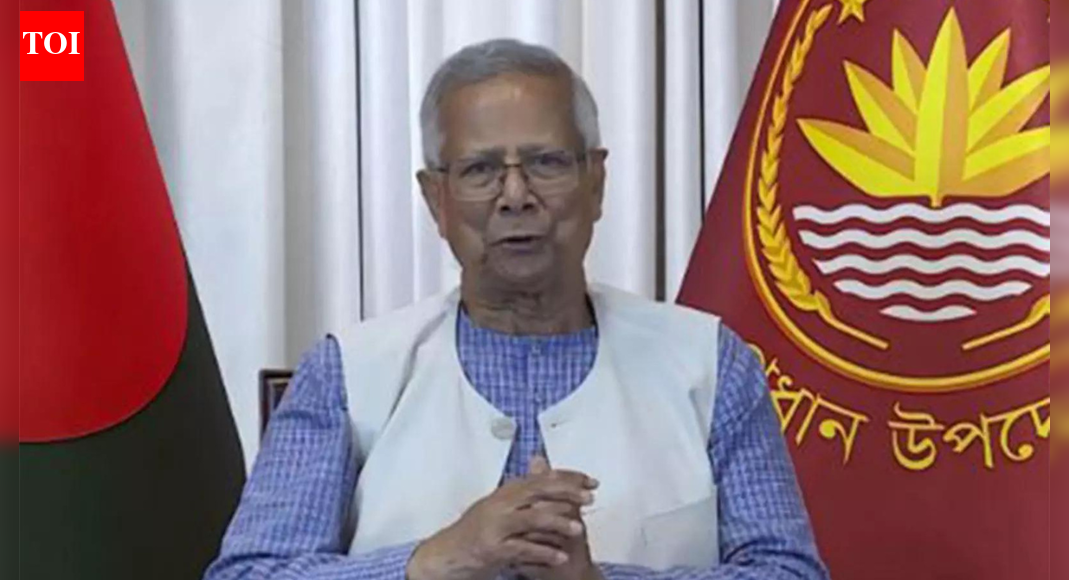
As news of Hadi’s death spread late Thursday and early Friday, hundreds of his supporters poured onto the streets of Dhaka demanding justice and the arrest of those responsible for the killing.At least three incidents of arson were reported in the capital, including fires at buildings housing Bangladesh’s leading newspapers: The Daily Star and Prothom Alo, a spokesperson for the Fire Brigade and Civil Defence force told AFP.Groups of protesters stormed the offices of both newspapers, vandalising the premises before setting parts of the buildings on fire. Journalists and staff were trapped inside as smoke filled the offices.Zyma Islam, a reporter for The Daily Star, described the ordeal as she remained trapped inside the burning building. “I can’t breathe anymore. There’s too much smoke. I am inside. You are killing me,” she wrote on Facebook. The fire at The Daily Star office was brought under control at around 1.40 am, officials said, but 27 employees were still inside at the time. “We took refuge at the rear of the building and could hear them chanting slogans,” Daily Star reporter Ahmed Deepto told AFP, referring to the protesters.A journalist told bdnews24 that staff had received a phone call warning them that a crowd was moving towards the newspaper’s premises. When newsroom employees tried to move downstairs, they found that the mob had already vandalised the lower floors before setting them on fire. Night-shift staff reportedly fled to the terrace to save their lives.At least 25 journalists were rescued over four hours following the attack at the Kawran Bazar office, bdnews24 reported. Firefighters rescued people using ladders, while army contingents were later deployed around the buildings.“Hundreds of people have gathered here and carried out the attack,” a police officer told BBC Bangla. Troops were later deployed to secure the area. Witnesses said protesters first vandalised the Prothom Alo office before setting fire to The Daily Star building. It remained unclear why the two outlets, both known for their passive support for interim leader Muhammad Yunus, were targeted.In a televised address, Yunus announced special prayers at mosques on Friday and declared a day of mourning on Saturday. “Hadi’s demise is an irreparable loss for the nation,” Yunus said, urging protesters to remain calm.

Why the unrest matters for India?

The violence spilled beyond media houses.Hundreds of protesters surrounded the residence of India’s deputy ambassador in Dhaka, prompting police to use tear gas to disperse the crowd, according to local media reports.Protesters also blocked a key highway leading out of the capital, attacked the residence of a former minister in Chittagong, and vandalised Chhayanaut, a cultural institution in Dhaka.Large crowds gathered at Shahbagh intersection near Dhaka University, chanting slogans such as ” Who are you, who am I – Hadi, Hadi.” According to AFP, student groups including Jatiya Chhatra Shakti and the National Citizen Party (NCP) joined the demonstrations. NCP leaders alleged that Hadi’s attackers had fled to India and called for the closure of the Indian High Commission until they were returned. “The interim government, until India returns assassins of Hadi Bhai, the Indian High Commission to Bangladesh will remain closed. Now or Never. We are in a war!,” said NCP leader Sarjis Alm, AFP reported.Amid the turmoil, a parliamentary standing committee on external affairs warned that India faces its most serious strategic challenge in Bangladesh since the 1971 Liberation War.The committee, chaired by Congress MP Shashi Tharoor, said the evolving political and security situation, marked by rising Islamist influence, weakening political institutions, and growing involvement of China and Pakistan, poses a long-term challenge to regional stability.“India faces its greatest strategic challenge in Bangladesh since the Liberation war of 1971,” the report said, adding that while the threat is not immediately existential, it signals a generational shift in Bangladesh’s political order and a “potential strategic realignment away from India.

[ad_2]

Source link
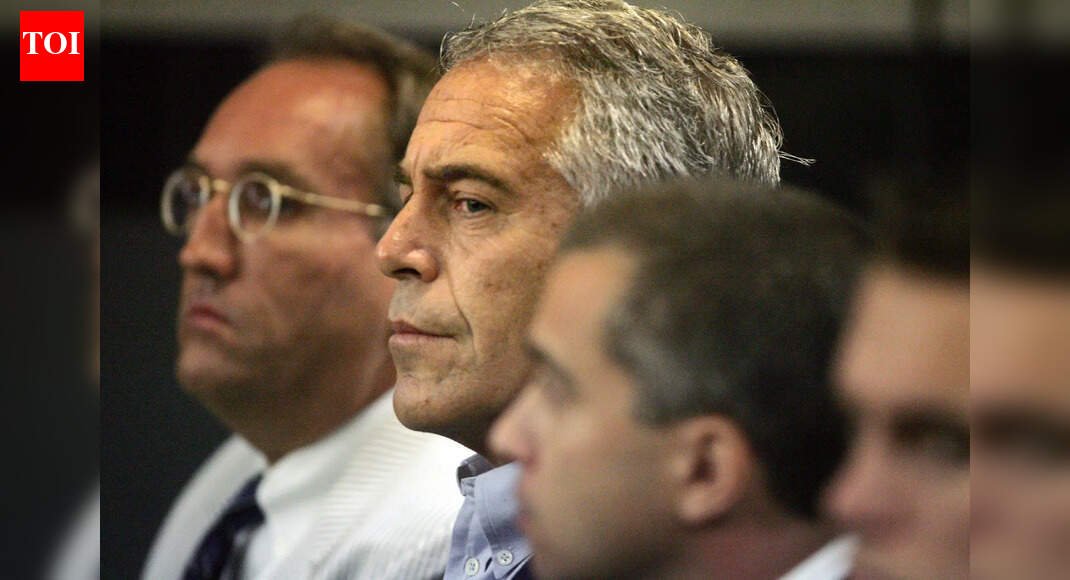
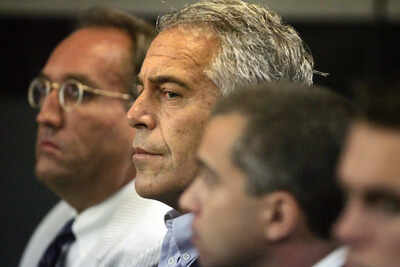
The making of Jeffrey Epstein: How a Brooklyn math teacher turned access into fortune

[ad_1]

The making of Jeffrey Epstein: How a Brooklyn math teacher turned access into fortune
Democrats have unveiled disturbing photos from Jeffrey Epstein’s estate, intensifying calls for the Justice Department to release sealed files. The images offer a glimpse into his network and alleged crimes, including explicit tattoos and redacted IDs. This release is another attempt by Democrats to put pressure on authorities to disclose records concerning the late financier’s activities and wealth accumulation.

With just hours left before a court-mandated disclosure, Congressional Democrats on Thursday released dozens of new photographs from Jeffrey Epstein’s estate, intensifying pressure on the justice department to open its long-sealed files on the late financier and convicted sex offender.TL:DR: Driving the newsDemocrats on the House Oversight Committee have released 68 disturbing images from Jeffrey Epstein’s estate, offering a chilling window into his network and alleged crimes. The photos include:•Passages from Lolita inked across a woman’s body•Redacted IDs of women from seven countries•Late-night texts arranging girls for someone named “j” at $1,000 eachThe images are part of a 95,000-photo archive now in the committee’s hands. The US justice department faces a December 19 deadline to release its Epstein investigation records under the Epstein Files Transparency Act.“We must end this White House cover-up,” said Rep. Robert Garcia, the committee’s top Democrat. “The DOJ must release the Epstein files now.”Photos also show Epstein alongside major figures including President Donald Trump, Bill Gates, Noam Chomsky, and Steve Bannon. Only the White House has responded, dismissing the release as irrelevant: “The Trump administration has delivered on transparency,” said spokesperson Abigail Jackson.Why it mattersThe origins of Epstein’s wealth explain how he was able to operate with impunity for decades. His fortune allowed him to:* Buy access to politicians, scientists, and celebrities.* Acquire properties where abuse occurred.* Fund an international sex-trafficking ring that entrapped hundreds of girls and young women.As Senator Ron Wyden said, “Following the money is how, in our country, we’ve had a long history of catching and rooting out corrupt behavior.”The big picture: How did Jeffrey Epstein get rich in the first place?Jeffrey Epstein wasn’t born into money, didn’t finish college, and wasn’t a Wall Street prodigy – but he built a fortune that funded his access to billionaires, presidents, and underage girls. His rise was marked by brazen lies, insider connections, and a knack for manipulating powerful men who repeatedly looked the other way.A New York Times investigation paints the clearest picture yet: Epstein was less a financial genius, more a grifter in a suit – one who gamed the system, rigged deals, and monetized relationships, all while constructing a predatory sex-trafficking network that shocked the world.An invitation that changed everythingEpstein story, pieced together through years of reporting by The New York Times and others, reveals something less cinematic than espionage or secret client lists, and more unsettling: a career built on proximity, manipulation, and a near-total absence of consequences.In 1976, Epstein was a 23-year-old math teacher at the Dalton School, a prestigious private school on Manhattan’s Upper East Side. He was about to be asked to leave. His teaching was undistinguished. His credentials, as it turned out, were fictional.Then he attended an art gallery opening.A Dalton parent introduced Epstein to another parent, who in turn placed a phone call to Ace Greenberg, the legendary Bear Stearns executive. Epstein showed up to the firm’s offices wearing a turtleneck and knowing almost nothing about Wall Street.Greenberg hired him anyway.Bear Stearns prided itself on recruiting what Greenberg called “P.S.D.s” – poor, smart, and driven. Epstein fit the mold. He was soon earning a Wall Street salary and dating Greenberg’s daughter, a relationship that conferred informal protection inside the firm, according to former colleagues interviewed by The New York Times.Within months, Epstein was caught lying about having college degrees. He admitted it calmly. His supervisor confronted him. Nothing happened.It would not be the last time.Learning the rules by breaking themAt Bear Stearns, Epstein learned less about finance than about leverage.According to the Times, he abused expense accounts, charged luxury travel for girlfriends, and improperly allocated “hot” initial public offering shares to people he was sleeping with. He loaned money in ways that violated brokerage rules. He was questioned by the Securities and Exchange Commission during an insider-trading investigation.Each time, Epstein escaped serious punishment.By 1980, he was named a limited partner, pulling in the equivalent of more than $800,000 a year. Cosmopolitan magazine named him “Bachelor of the Month,” describing him as someone who “talks only to people who make over a million a year.”Bear Stearns eventually opened a formal investigation. Epstein resigned before the penalties could land.What he took with him was more valuable than a severance package: credibility.

How Epstein got rich

The freelancer years: Scams and second chancesAfter leaving Bear Stearns, Epstein styled himself as a financial fixer, adviser and, at times, what he called a “bounty hunter” – someone who recovered lost or hidden assets for wealthy families.In practice, the line between consulting and con artistry was thin.A British defense contractor, Douglas Leese, hired Epstein and later accused him of abusing expense accounts. A businessman named Michael Stroll entrusted Epstein with $450,000 – roughly ten percent of his net worth – for a supposed oil deal. Most of the money disappeared. Epstein eventually prevailed in court on technical grounds.“He’s a despicable prick,” Stroll later said in an unpublished interview cited by the Times.Again, there were no real consequences.According to reporting by The New York Times, Epstein exaggerated relationships, borrowed prestige from old employers, and continued answering his phone “Bear Stearns” long after leaving the firm. Former colleagues kept introducing him to clients. Doors stayed open.Each small deception funded the next.The real breakthroughEpstein’s first undeniable windfall came not from trading but from recovery.In the early 1980s, the brokerage firm Drysdale Securities collapsed, wiping out millions for wealthy families, including Spanish aristocrats. Epstein, through a girlfriend, was hired to help track down missing funds. Working with a former federal prosecutor, he located money hidden in offshore accounts.The reward made him a millionaire.From there, Epstein moved into larger circles, exaggerating his role with powerful figures, including David Rockefeller – an association the Times later reported Epstein inflated far beyond reality. He cultivated foundations, donated strategically, and used famous names as social currency.By the late 1980s, Epstein had found his most important patron: Leslie Wexner, the billionaire retail magnate behind Victoria’s Secret. Wexner granted Epstein sweeping control over his finances. That relationship would underwrite Epstein’s mansions, private jets, and global mobility.It would also insulate him for years.(With inputs from agencies)

[ad_2]

Source link

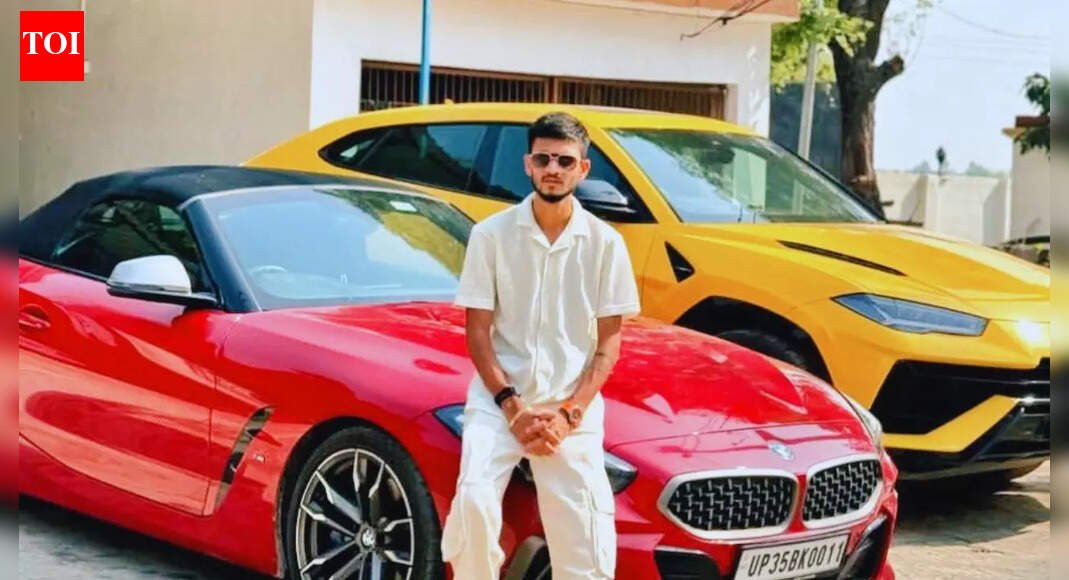
Lamborghini Urus, Mercedes, Thar and Dubai investments: ED raids popular YouTuber Anurag Dwivedi | Delhi News

[ad_1]

Lamborghini Urus, Mercedes, Thar and investments in Dubai: ED raids popular YouTuber Anurag Dwivedi

NEW DELHI: Officials from the Enforcement Directorate (ED) have seized multiple luxury vehicles belonging to a Uttar Pradesh-based YouTuber as part of a money laundering investigation linked to suspected illegal online betting networks.Officials said a Lamborghini Urus, a Mercedes, a Ford Endeavour and a Mahindra Thar were seized during searches at multiple locations on Wednesday. The raids targeted premises linked to Anurag Dwivedi, an online cricket influencer originally from Unnao district, as well as the homes of his relatives in nearby towns.The federal agency searched nine premises in Lucknow, Unnao, and Nawabganj, recovering documents believed to show investments in Dubai real estate allegedly made using funds routed through hawala networks. Officials said the YouTuber has been living in Dubai and has ignored multiple summons for questioning.The ED’s case stems from an FIR registered by West Bengal Police alleging cheating, forgery and illegal betting operations in Siliguri. Investigators claim two accused men, Sonu Kumar Thakur and Vishal Bhardwaj, ran online betting panels using Telegram channels, suspicious bank accounts and digital platforms.According to ED officials, Dwivedi is suspected of playing an “active role” in promoting these platforms. He allegedly created promotional videos and received illegal payments through hawala operators, mule bank accounts and cash couriers. Authorities say the funds were deposited into the bank accounts of his companies and family members without legitimate commercial justification.On Wednesday, ED and CRPF teams arrived at Dwivedi’s village home in Khajur under Ajgain police station. When officers found the house locked, security personnel remained on guard until Dwivedi’s mother was brought from the village to open it.

-

Searches continued late into the evening, with officials examining various rooms and seizing documents related to bank transactions, property papers and digital devices.According to news agency PTI, investigators are also checking whether the alleged illegal earnings – running into crores – came partly through fantasy cricket platforms, including Dream11, and whether these were linked to unauthorised betting networks.Dwivedi, who has been making cricket-related videos for about seven years, has amassed a substantial social media following. He drew attention last month after videos surfaced of his wedding to a Lucknow woman aboard a cruise in DubaiCircle officer Hasan Ganj Arvind Chaurasia confirmed the searches at the homes of Dwivedi, his father and uncle, saying CRPF personnel were deployed as a precaution. He declined to comment further, citing the ongoing investigation.

[ad_2]

Source link

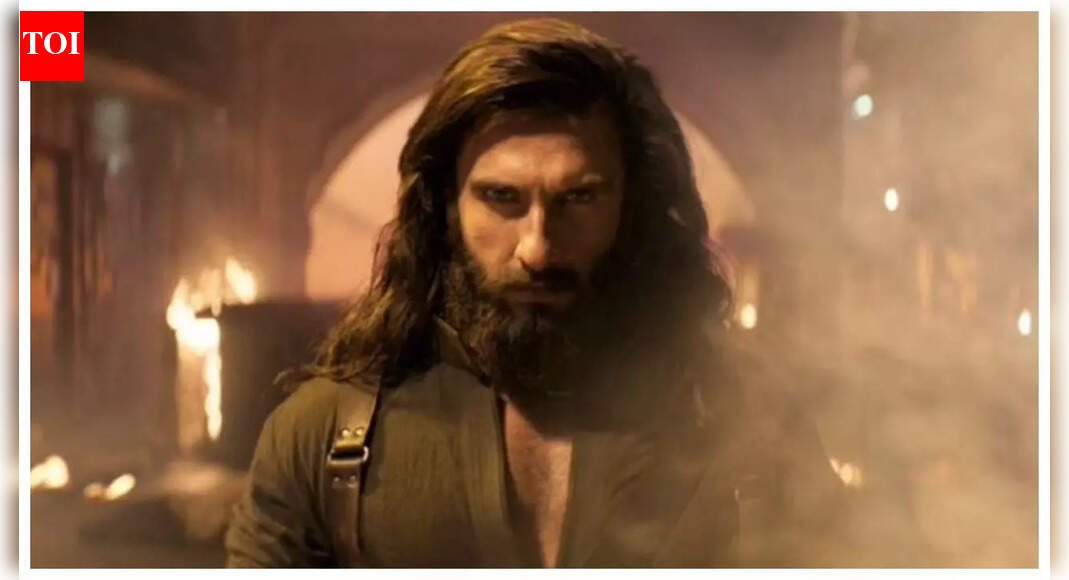
‘Dhurandhar’ box office collections Day 14: Ranveer Singh–Akshaye Khanna starrer ends historic Week 2 with lowest daily earnings amid ‘Avatar: Fire and Ash’ release; worldwide collections cross Rs 700 crore |

[ad_1]

'Dhurandhar' box office collections Day 14: Ranveer Singh–Akshaye Khanna starrer ends historic Week 2 with lowest daily earnings amid 'Avatar: Fire and Ash' release; worldwide collections cross Rs 700 crore

Director Aditya Dhar’s spy action thriller ‘Dhurandhar’, starring Ranveer Singh and Akshaye Khanna in the lead roles, wrapped up its second week at the box office with its lowest single-day collection so far. The film that has been rewriting box office record books, scored its lowest collection on its second Thursday, since its release on December 5. Coincidently, this drop comes ahead of the release of ‘Avatar: Fire and Ash’.According to early estimates on sacnilk, ‘Dhurandhar’ earned approximately Rs 23 crore India net on Day 14 across all languages. Despite the dip, the film closed its second week on a historic note.

‘Dhurandhar’ has record-breaking Week 2

The film amassed an estimated Rs 253.5 crore net in Week 2, making it the highest second-week collection ever for a Hindi film. ‘Dhurandhar’ also became the first Hindi film to cross Rs 200 crore net in its second week, surpassing the previous record held by ‘Pushpa 2 – The Rule’.The Ranveer starrer even outperformed its own opening week numbers. The film had collected Rs 207.25 crore net in Week 1, which it comfortably surpassed in its second week at the box office.

Gross total collections soar to Rs 552 crore

With the completion of two weeks, ‘Dhurandhar’ now stands at an estimated Rs 460.25 crore India net. On the gross front, the film has shot past the Rs 550 crore mark, with India’s gross collections pegged at approximately Rs 552 crore.‘Dhurandhar’ also crossed the Rs 500 crore India gross milestone on its second Wednesday, achieving the feat in just 13 days. It is now, one of the fastest films to hit the mark.

‘Dhurandhar’ becomes 16th Indian film to enter 500-crore club

‘Dhurandhar’ is now the third Indian film and the second Bollywood film of 2025 to cross Rs 500 crore gross in India. Overall, it has become the 16th Indian film of all time to enter the prestigious Rs 500 crore gross club.SS Rajamouli’s ‘Baahubali: The Beginning’ (2015) was the first Indian film to achieve this milestone. Since then, eight Bollywood films, four Telugu films, two Kannada films and one Tamil film have crossed the Rs 500 crore India gross mark.

Fastest films to earn 500 crore net

In terms of net collections, only 12 films have crossed Rs 500 crore so far, with ‘Dhurandhar’ expected to become the 13th in the coming days. The film still has time to put itself in the ranks of Ranbir Kapoor’s ‘Animal’, Shah Rukh Khan’s ‘Pathaan’ and ‘Jawan’, and even Vicky Kaushal‘s ‘Chhaava’, all of which are among the films that hold the record for the fastest films to hit the Rs 500 crore net mark.

Worldwide box office crosses Rs 700 crore

The film has also posted strong overseas numbers, earning an estimated Rs 150 crore from international markets. This has pushed its worldwide total to approximately Rs 702 crore by the end of its second week.With sustained momentum despite fresh competition and a historic second-week performance, trade analysts believe ‘Dhurandhar’ is now firmly on course to target the Rs 1,000 crore mark at the global box office in the weeks ahead.

[ad_2]

Source link
Sorry, what does that mean? Chaos, confusion & snarls mark Day 1 of Delhi’s non-BS 6 ban; 2,768 vehicles turned away | Delhi News

[ad_1]

Sorry, what does that mean? Chaos, confusion & snarls mark Day 1 of Delhi’s non-BS 6 ban; 2,768 vehicles turned away

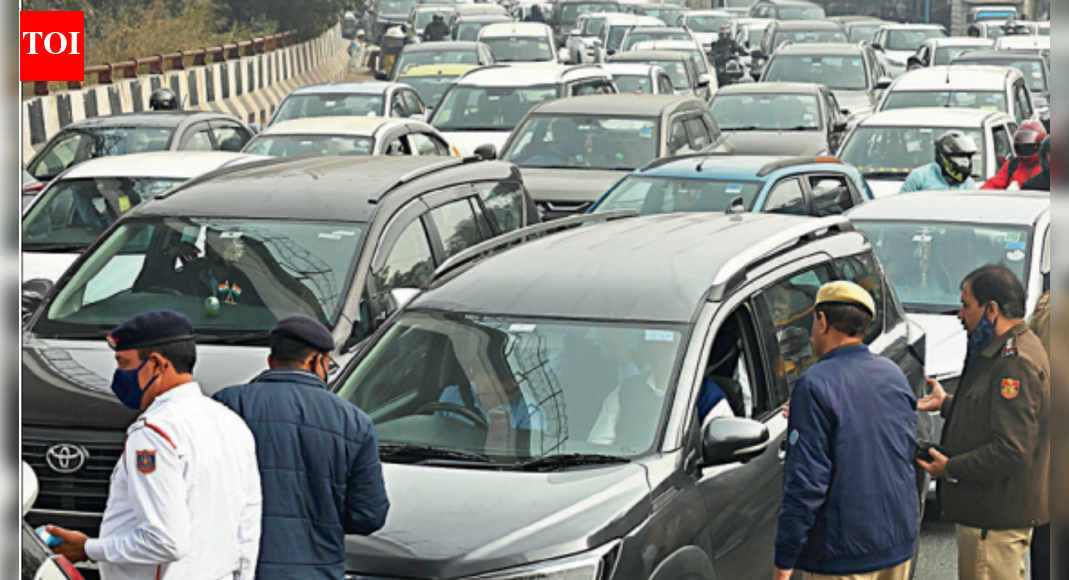
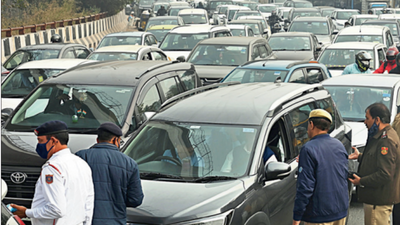
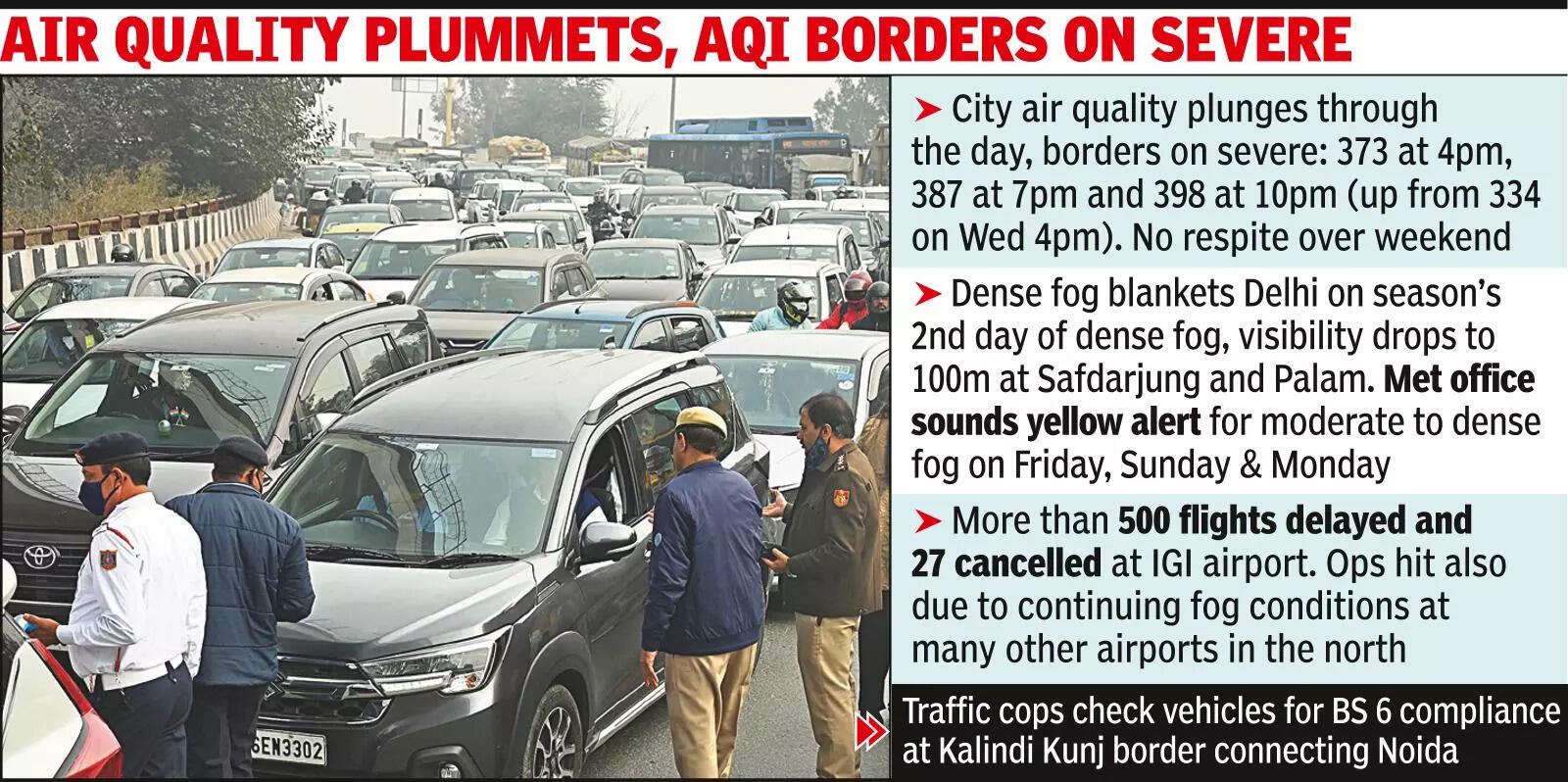
NEW DELHI: Barricades snapped shut, whistles pierced the air, and confusion spread quickly across Delhi’s borders Thursday morning as a rule barring non-Delhi, non-BS 6 vehicles came into force under GRAP Stage IV. Routine entry points rapidly turned into impromptu checkposts, catching many commuters off guard during peak hours.Traffic slowed to a crawl as police stopped vehicles bumper to bumper and scanned registration certificates, calling out “BS 6?”, and scribbling details into handwritten registers. Drivers waited inside idling cars, watching the line inch forward, unsure whether they would be allowed to proceed or forced to turn back.

From Work-From-Home To Vehicle Ban- Delhi Rolls Out Fresh Pollution Curbs

Across 13 main borders from Kapashera to Badarpur, till 4pm, 2,768 vehicles were checked for compliance with BS 6 norms, of which 460 were turned back. Most vehicles were turned back at Najafgarh (175), Sarita Vihar/Kalindi Kunj (93), and Badarpur (33). Fewer vehicles were sent back at Narela (9) and Kapashera (8).At the Noida-Kalindi Kunj border, around 30 cars were turned back between 9.30am and 10.30am, officials said. Each U-turn created fresh snarls metres away from the barricades, and compounding congestion on already clogged stretches.

Chaos, confusion & snarls mark Day 1 of non-BS 6 ban

Pain In Peak Hrs; 2,768 Vehicles Turned Away

BS-VI: Some caught unawares, others fume Many commuters said the ban, announced on Tuesday, was enforced without warning. Dipak and his wife set out early from Pari Chowk in Greater Noida, hoping for a smooth drive towards Khatu Shyam for darshan, confidently following the route suggested by Google Maps. The journey was uneventful, until they reached Kalindi Kunj.A traffic policeman asked them to pull over, checked the vehicle details, and informed them that their car was BS V and not registered in Delhi. “We genuinely didn’t know about the rule,” Dipak said. “Google Maps showed this route, so we came. Now we have to go back 27km to Pari Chowk and start all over again. It’s very disappointing.”They were not alone. Just a few lanes away, Brigadier Chawla faced a similar setback while travelling with his daughter, who had arrived from the US, to their hometown in Haryana.The situation eased after peak hours as traffic volumes fell. Enforcement continued till late into the evening. Traffic cops said it was tough “stopping vehicles, checking them, and controlling traffic simultaneously”. Some 37 Prakhar vans and more than 500 traffic police personnel were deployed across major border points and key internal stretches. “We managed to stop and check vehicles to some extent, while also helping people understand the rules,” a traffic cop said. One person taking his father to dialysis had to be turned back, said a cop.As the day passed, and frustration coursed through the serpentine crawl of vehicles, commuters questioned the way the order was communicated. “There are people who don’t follow the news regularly. How are they supposed to know?” asked Anil Kumar, a real estate professional. “Why couldn’t the transport department send automated SMS or WhatsApp alerts? Anyway, it’s not like every car can be checked-there are just too many.” Others admitted they were unsure about emission categories and struggled to understand whether their vehicles were BS IVor BS VI.Similar scenes unfolded at the Mayur Vihar and Ghazipur borders too. When Poonam’s car was stopped at Mayur Vihar’s Chilla border, her driver quickly stepped out, fumbling with documents. “Arey, it’s a petrol car,” she told the policeman, visibly puzzled. When infor-med it still wasn’t BS VI compliant, she paused and asked, “Sorry, what does that mean?” Eventually, she took a U-turn, adding, “Maybe it’s a good move. We’ll take another car next time.”Others were confident until checks proved otherwise, and far less accepting. Praveen Kumar discovered his Camry met BS IV norms, not BS IV. “I was sure it was compliant,” he said, shaking his head in disbelief as he turned back.Advocate Vijay Mittal, who was stopped while heading to court, said he was aware of the order but did not realise his diesel BS IVcar would be barred. Ghaziabad resident Dr Pushkar Verma, travelling from Jaipur to report for duty at GTB Hospital, was also turned back. “My car is 10 years old. I didn’t think this would be an issue. I’ll now have to take the Metro,” he said.While cops turned back even those with genuine needs, questions lingered about the practicality of the exercise. At Kalindi Kunj, around 11 traffic personnel were deployed, while vehicle volumes during the morning peak can touch nearly 200,000, sources said. At Mayur Vihar, 7-9 were on duty, again vastly outnumbered by the flow of vehicles. With barricades and mid-way U-turns in place, congestion mounted rapidly.Transport expert Anil Chhikara called the ban “premature”, and said enforcement would inevitably be compromised, given the poor manpower. “Turning vehicles back at borders only leads to idling and higher emissions. Pollution in the NCR is a regional problem and treating it as only a Delhi issue won’t help,” he said.

[ad_2]

Source link
1 of 3 eateries wants to exit delivery apps: Report

[ad_1]

1 of 3 eateries wants to exit delivery apps: Report

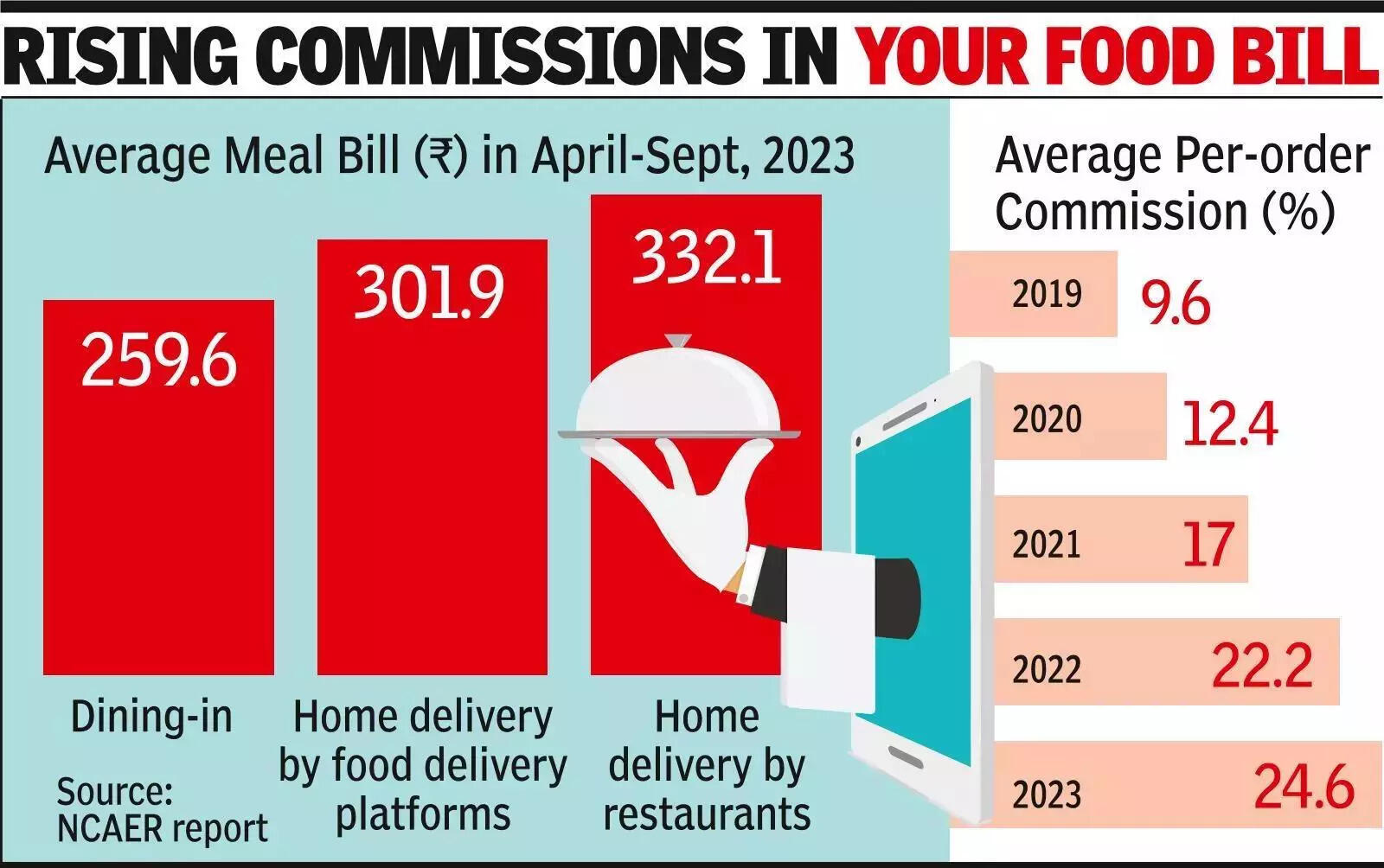
NEW DELHI: Nearly a third of restaurants listed on food delivery platforms said they would stop using them due to rising commissions and lower profits, according to a report by economic policy think tank NCAER and investment firm Prosus.The report stated that 30% of restaurants surveyed wanted a reduction in the commission structure, with the average commission per order rising sharply from 9.6% in 2019 to 24.6% in 2023. However, larger restaurant chains were found to have greater negotiating power, enabling them to settle for lower commissions.

-

The report showed that meals delivered directly by restaurants are the most expensive for consumers. The average bill for restaurant-led home delivery stood at Rs 332, compared with Rs 302 for orders placed through food delivery platforms and about Rs 260 for dine-in meals. “Firms were asked whether they would stop using food delivery platforms, and 35.4% of platform restaurants said that they would do so. The reasons are high commissions, poor customer service, and not giving enough profits, orders, and customers,” the report released Thursday said.The study found that the average share of restaurant revenue from food delivery platforms increased from 22.1% to 28.8%, with small restaurants in Tier-3 cities deriving nearly a third of their revenue from such platforms. Despite the concerns, most restaurants continue to remain on platforms such as Swiggy, where Prosus in an investor, and Zomato as these apps provide visibility and access to a wider customer base.The report also mentioned Zomato’s recent announcement on sharing customer information with restaurants after obtaining user consent, stating, “It could potentially address privacy concerns and restaurants’ demand for more customer information…policy changes by one platform may also hopefully influence other platforms to change their behavior.” Currently, access to customer information remains limited by city type and restaurant sizes and 67% of restaurants reported that platforms shared only customer names.Separately, another NCAER report assessing the overall economic impact of the food delivery platforms showed that the sector has expanded rapidly. The gross value of output nearly doubled from around Rs 61,000 crore in 2021-22 to about Rs 1.2 lakh crore in 2023-24, even though the sector still accounts for a small share of the overall economy.

[ad_2]

Source link

Don’t show 6 films, ‘MEA warns’ Kerala fest, but 3 already screened, other 3 to be pulled | India News

[ad_1]

Don't show 6 films, 'MEA warns' Kerala fest, but 3 already screened, other 3 to be pulled

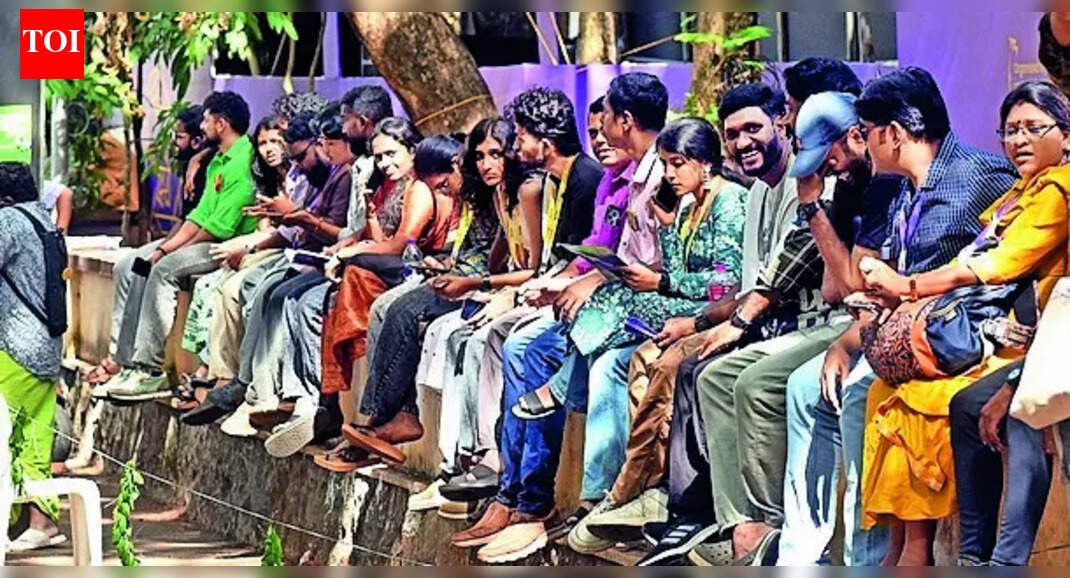
THIRUVANANTHAPURAM: The organisers of International Film Festival of Kerala 2025 won’t show three films after very strong objections to six from the ministry of external affairs, which warned on Thursday of legal action if they were screened, state-run Chalachitra Academy (festival organiser) chairperson Resul Pookutty said at a press conference here.The six films that did not get censor exemption for the festival are ‘All That’s Left of You’, ‘Yes!’, ‘Eagles of the Republic’, ‘A Poet’, ‘Flames’ and ‘Clash’. But three of these – ‘Eagles of the Republic’, ‘A Poet’ and ‘Flames’ – had already been screened as the state govt had said it would show all films regardless of permission after many were denied censor exemption.Pookutty told reporters they decided not to screen the films after MEA said doing so would not be good for the safety and security of the country. The ministry said “they would have to evoke other sections if the organisers violated it. So, without political consultation, the academy decided on its own not to screen these movies,” he said.The festival will conclude on Friday.Pookutty said none of the films had received exemptions initially, and they were then given exemptions in batches. Clearance came eventually for all except six movies, he said.The venues for some films had to be changed because of initial confusion about whether they could be screened at all.

[ad_2]

Source link

Maharashtra NCP minister Kokate resigns; Nashik police in Mumbai with arrest warrant | Nashik News

[ad_1]

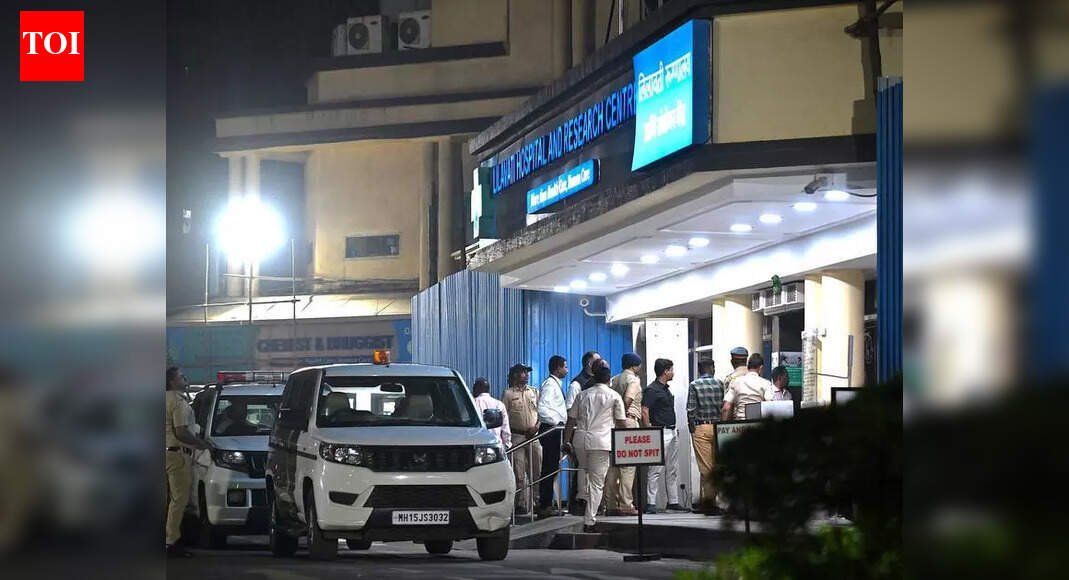
NASHIK: NCP minister Manikrao Kokate on Thursday resigned from his post in the state cabinet in the wake of his conviction and two years of jail sentence in an EWS housing quota cheating case of 1995.A team of Nashik police reached Mumbai late in the evening to execute the arrest warrant issued against him by a Nashik court. However, sources said no arrest would be made while Kokate was still in hospital against medical advice from the doctors. The police earlier visited the residence of Kokate’s brother, Vijay, who is also facing the warrant but could not trace him.Officials in the Maharashtra Chief Minister’s Office (CMO) on Thursday night confirmed that Kokate’s resignation has been forwarded to the Governor.Hours earlier, deputy chief minister and NCP chief Ajit Pawar said in a post on X that he has accepted in principle Kokate’s resignation and forwarded it to chief minister Devendra Fadnavis for “due consideration and acceptance, in accordance with the Constitutional procedure”.Kokate’s resignation followed a series of developments over the last two days, starting with a Nashik sessions court upholding and confirming on Dec 16 the trial court’s order of Feb 20 convicting and sentencing Kokate and his brother to two years of rigorous imprisonment in the case of securing two flats in 1995 under the state’s 10% EWS quota by showing less income. The sessions court directed the trial court to take appropriate steps to execute the jail sentences.On Wednesday, Kokate was divested of all his ministerial portfolios, hours after Nashik’s additional chief judicial magistrate Rupali Narwadiya rejected a plea by Kokate’s lawyer seeking four days’ time on humanitarian grounds to surrender as Kokate was admitted to Lilavati Hospital in Mumbai. The court went on to issue the arrest warrant. All eyes were on the Nashik police regarding execution of the warrant.A 13-member Nashik police team, led by Assistant Commissioner of Police (ACP) Sandeep Mitke, left Nashik around 5.30pm on Thursday for Mumbai. “We have received the arrest warrant, and we are in the process of executing it. We are going to Mumbai to take Manikrao Kokate into custody and produce him before the court. We received information that Kokate has been admitted to the Lilavati Hospital in Mumbai. We are going there to secure his custody.The police are also searching for Kokate’s brother, Vijay. A seven-member Nashik police squad is pursuing leads relating to Vijay Kokate’s whereabouts. “A second team is working on the leads and has tracked him down. The team is after him. We expect to take him into custody soon,” the officer said.(With inputs from Mumbai)

[ad_2]

Source link

Amidst Rs 60 crore fraud case against her and husband Raj Kundra, and reports of complaint against Bastian Bengaluru, Shilpa Shetty now opens her new restaurant |

[ad_1]

Amidst Rs 60 crore fraud case against her and husband Raj Kundra, and reports of complaint against Bastian Bengaluru, Shilpa Shetty now opens her new restaurant

Shilpa Shetty is moving ahead with the expansion of her restaurant business even as she and her husband, Raj Kundra, face allegations in a Rs 60 crore fraud case. Meanwhile, her restaurant Bastian in Bengaluru has also been in the news as reports suggested that a complaint was filed for allegedly operating past the legal closing time. Amidst all this, on Thursday, the actor announced the launch date of her new South Indian restaurant, Ammakai, which will open at the same Bandra address where her well-known eatery Bastian first began operations.While this new restaurant as taken over the space, the original Bastian has shifted to Juhu and has been relaunched as Bastian Beach Club. Sharing a video on Thursday, Shilpa revealed that this new place will officially open on December 19 (Friday) and mentioned that nearly a year of planning went into bringing the restaurant to life.In the video, she said, “This is going to be worth the wait. It’s an ode to my roots and comfort food that reminds me of home.” Meanwhile, Shilpa Shetty and Raj Kundra are currently facing legal trouble in connection with a Rs 60 crore fraud case. Businessman Deepak Kothari, director of Lotus Capital Financial Services Ltd, had earlier filed a complaint accusing the couple of cheating him in a loan-cum-investment transaction worth the same amount. Acting on his complaint, Mumbai Police’s Economic Offences Wing (EOW) registered an FIR against them on Wednesday.As per a statement released by Deepak’s lawyer, the EOW found material evidence against Shilpa Shetty and Raj Kundra that justified the allegations made in the case.Raj Kundra, however, has firmly rejected the claims. Issuing a statement on X, he said, “We categorically deny the baseless and motivated allegations being circulated. The issues sought to be raised are being given a criminal colour without any lawful basis. A Quashing Petition has already been filed before the Hon’ble High Court and is pending adjudication. Having fully cooperated with the investigation, we are sanguine that justice will prevail and have complete faith in the law enforcement authorities and the Indian judiciary. We respectfully urge the media to exercise restraint as the matter is sub judice.”

[ad_2]

Source link

Bangladesh: Yunus declares state mourning for Sharif Osman Hadi, supporters protest in Dhaka; what we know so far

[ad_1]

Bangladesh: Yunus declares state mourning for Sharif Osman Hadi, supporters protest in Dhaka; what we know so far

Bangladesh’s interim government chief Muhammad Yunus announced a day of state mourning on Saturday following the death of Sharif Osman bin Hadi, Prothom Alo reported. Hadi, a youth leader of Bangladesh’s 2024 uprising, died in Singapore after succumbing to injuries from an assassination attempt, officials said on Thursday.Protesters vandalised the offices of the country’s largest daily, Prothom Alo, as anger mounted over the death of Hadi, a spokesperson for the political platform Inquilab Mancha, amid continuing unrest sparked by his killing.Bangladesh witnessed anti-India protests after hundreds, rallying under the banner “July Oikya” (July Unity), marched toward the Indian High Commission in Dhaka on Wednesday afternoon, chanting anti-India slogans and demanding an end to what they called “anti-Bangladesh conspiracies,” along with the return of their former prime minister Sheikh Hasina.What we know so far

Yunus declares state mourning over ‘martyr’ Hadi’s death

In a late-night address, Yunus announced that the national flag would be flown at half-mast on Saturday at all government, semi-government and autonomous offices, educational institutions, public and private buildings, and Bangladesh missions abroad. He said special prayers would be held after Jummah prayers on Friday in mosques nationwide for the forgiveness of “martyr” Osman Hadi, with similar observances to take place at places of worship of other faiths. The chief adviser offered prayers for Osman Hadi’s soul and conveyed condolences to his wife, family members and colleagues. He also said the government would assume responsibility for the welfare of Hadi’s wife and his only child.

Protests erupt following youth leader’s death

Protests erupted in Dhaka following confirmation of the death of Inqilab Manch convener Sharif Osman Hadi, with demonstrators blocking the busy Shahbagh intersection in the capital, according to Prothom Alo. The protest began as news of Hadi’s death spread, causing major traffic disruption in the area. Chanting slogans such as “Who are you, who am I, Hadi, Hadi,” “We will all be Hadi, we will speak in the face of bullets,” and “Catch the league, go to jail,” protesters demanded justice and accountability. Hadi, a spokesperson for Inqilab Manch and a prospective independent candidate for the Dhaka-8 constituency, was shot in the head by assailants on Box Culvert Road in Purana Paltan on December 12. He was initially treated at Dhaka Medical College Hospital before being shifted to a private hospital as his condition worsened. At the government’s initiative, he was later airlifted to Singapore for advanced treatment, where he ultimately succumbed to his injuries.

India resumes visa centre operation in Dhaka; two facilities still shut

India resumed operations at its visa application centre in Dhaka, a day after suspending services over heightened security concerns, even as two similar facilities elsewhere in Bangladesh were shut amid anti-India protests. The Indian Visa Application Centres (IVACs) in Khulna and Rajshahi were closed citing security risks, as demonstrators attempted to march toward the premises before being stopped by security forces.“The Indian Visa Application Centre (IVAC) in Dhaka is now operational and functioning normally,” PTI quoted an IVAC official saying.

Current situation in Bangladesh ‘complex’, says parliamentary panel

A parliamentary committee on external affairs said that the recent unrests in Bangladesh were “complex and evolving”.“The committee has been informed that the current situation in Bangladesh is complex and evolving. There is uncertainty regarding the schedule of democratic elections. The political events of August 2024 have created significant instability and uncertainty with incidents of violence, attacks and intimidation of minorities, tribal communities, media groups, intellectuals, journalists, academicians, etc., becoming the norm,” it said.“Concerns have been raised about human rights issues, including restrictions on freedom of speech and assembly,” the panel said.

[ad_2]

Source link