Breaking News
Oracle layoffs: Reason the 6AM email from “Oracle leadership” told thousands of laid-off employees; ‘After careful consideration of…

[ad_1]

Oracle layoffs: Reason the 6AM email from “Oracle leadership” told thousands of laid-off employees; 'After careful consideration of…
Oracle has begun its largest-ever round of layoffs, with employees receiving termination emails from “Oracle Leadership” at 6AM saying their roles had been eliminated after “careful consideration of Oracle’s current business needs.” Around 10,000 employees have reportedly been cut so far, with estimates suggesting the total could reach 30,000. The email gave employees a narrow window to act before systems were deactivated.

Oracle’s largest-ever round of layoffs didn’t come with a phone call, a meeting, or a conversation with a manager. It came as an email. Sent from “Oracle Leadership” at 6AM in the US (3:30 PM IST), the message opened with five words that thousands of employees woke up to on March 31: “We are sharing some difficult news.” The email informed employees their roles had been eliminated as part of a “broader organizational change” following what Oracle called a “careful consideration” of its business needs. The next line was blunt—”today is your last working day.” No transition period, no buffer.Some 10,000 people are believed to have lost their jobs so far, according to a employees who’ve been tracking a drop in staff active on Oracle’s internal Slack. TD Cowen estimates the total could reach 20,000 to 30,000—roughly 18% of Oracle’s 162,000-strong workforce.

The email asked employees to act fast—before losing access to everything

After a one-line expression of gratitude for their “dedication, hard work, and impact,” the email moved straight to logistics. Employees were told they’d be eligible for a severance package, but only after signing termination paperwork sent via DocuSign to their Oracle email.The clock was already ticking, though. The email warned that access to computers, email, voicemail, and files would be “deactivated soon”—giving employees a narrow window to act. They were asked to immediately submit a personal email address through a linked form so Oracle could send FAQs and separation documents. The email also carried a firm reminder: employees are “prohibited from downloading, copying or retaining” any Oracle confidential information, including emailing files to themselves.CNBC confirmed the layoffs were in the thousands, citing two people familiar with the matter. Michael Shepherd, a senior Oracle manager who was not affected, wrote on LinkedIn that the cuts hit “senior engineers, architects, operations leaders, program managers, and technical specialists” and were not based on performance. Posts on Reddit’s r/employeesOfOracle and Blind painted a similar picture, with teams across Oracle Health, Cloud, Sales, Customer Success, NetSuite IDC, RHS, and SVOS all affected.

No HR, no manager, no conversation—just a sign-off from ‘Oracle Leadership’

The email ended with a thank-you and directed questions to Oracle’s Ask HR page or a toll-free number. No specific HR contact, no manager’s name, no explanation of why specific roles were chosen. The sign-off simply read: “Oracle Leadership.”Oracle’s stock is down 25% this year and has lost over half its value since peaking in September 2025. The company has taken on $58 billion in new debt in two months to fund its AI data centre buildout, and executives have said the investment will pay off over time. Oracle declined to comment on the layoffs.

Read the full layoff email from Oracle’s leadership

We are sharing some difficult news regarding your position.After careful consideration of Oracle’s current business needs, we have made the decision to eliminate your role as part of a broader organizational change. As a result, today is your last working day.We are grateful for your dedication, hard work, and the impact you have made during your time with us.After signing your termination paperwork, you will be eligible to receive a severance package subject to the terms and conditions of the severance plan. You will receive an email from DocuSign to your Oracle email address with details on your severance and termination date.Immediate Action RequiredTo receive important follow-up information, including FAQs and separation documents to help you through this transition, you must provide a personal email address.Please click here to submit a personal email address immediately. If you make a submission error, please re-submit a new form. Please Note: The personal email address will only be used for correspondence regarding separation-related information and severance agreements.Access to your computer, email, voicemail, and files will be deactivated soon, and you will be unable to log into your computer. As a reminder, you are prohibited from downloading, copying or retaining (including emailing yourself) any Oracle confidential information.Thank you for your contributions to our organization. If you have additional questions, please reach out to the HR team via the Ask HR page or at (888) 404-2494.Oracle Leadership

[ad_2]

Source link

Woman Tied Up And Raped: Govt employee gagged, raped at knifepoint, assaulted with rod again after claiming HIV infection | Vijayawada News

[ad_1]

Govt employee gagged, raped at knifepoint, assaulted with rod again after claiming HIV infection

VIJAYAWADA: A 35-year-old woman was severely injured after an unidentified man allegedly inserted an iron rod into her private parts in Macherla town of Palnadu district. The incident took place on Thursday evening at the victim’s residence. She has been working as a government employee in Macherla town and was alone at her residence when the accused arrived and committed the crime.“As per the preliminary probe, the incident took place between 3:30 pm and 4 pm on Thursday when the accused entered the victim’s residence seeking drinking water, during which he forced himself on the woman,” Macherla Town CI Venkata Ramana said. The CI added that the victim is currently undergoing treatment at Narasaraopeta Area Hospital and is out of danger.According to the information, after entering the woman’s residence, the accused tied her up with a scarf, raped her at knifepoint, beat her, and inserted an iron rod after the victim allegedly claimed that she had an HIV infection. After assaulting the woman, the accused fled from the spot.The issue reportedly came to light when the victim’s nephew, who had been staying with her, left for his parents’ house after completing his Class X examinations. The boy reportedly called the victim multiple times on her mobile phone but received no response. Sensing something was wrong, he alerted his friends and family members to visit her residence and check on her.On being alerted by the boy, locals rushed to the woman’s residence and found her lying unconscious. They immediately informed the police, who shifted her to Macherla Government Hospital and later to Narasaraopeta Area Hospital for better treatment.Meanwhile, Macherla MLA Julakanti Brahmananda Reddy expressed shock over the incident. The MLA spoke to Guntur Range IG Sarvashreshth Tripathi and instructed the police to take stern action against the accused who committed the heinous crime.Further, Palnadu district police have formed four special teams and launched a manhunt to nab the accused, who is currently at large.(The victim’s identity has not been revealed to protect her privacy as per Supreme court directives on cases related to sexual assault)

[ad_2]

Source link

Salesforce CEO Marc Benioff on AI layoffs: Most people don’t really understand what is going on, it is…

[ad_1]

Salesforce CEO Marc Benioff on AI layoffs: Most people don't really understand what is going on, it is…
Salesforce CEO Marc Benioff is pushing back on the narrative that AI is driving mass white-collar layoffs, calling it an oversimplification—and in some cases, a CEO’s “lazy way out.” While companies like Block and Atlassian have framed sweeping cuts as AI-driven restructuring, Benioff argues they’re conflating three very different problems. At Salesforce, he’s doing the opposite: hiring 20% more salespeople, convinced that human connection is something no AI can replicate.

Marc Benioff thinks the tech industry is telling the wrong story about AI and jobs—and he’s tired of it. The Salesforce CEO isn’t losing sleep over a white-collar wipeout. He’s actively hiring, approaching $50 billion in revenue, and arguing that the current wave of layoffs sweeping Silicon Valley is being badly misread by almost everyone watching it. “Even though I’ve spoken about this somewhat aggressively, I don’t think most people really understand what is going on,” Benioff said on The Future Live this week. “It’s too easy to basically make AI the scapegoat.”His argument: companies are cutting jobs for three very different reasons—costs that got out of hand, data center financial commitments, and genuine AI-driven rebalancing. Treating them as one story is a mistake, he said. And for some CEOs pinning everything on AI? “I think it’s the lazy way out.”

Salesforce CEO is betting on more salespeople, fewer engineers—and says demand has never been higher

At Salesforce, the rebalancing looks deliberate rather than reactive. Benioff said he held engineer hiring flat last fiscal year because coding agents gave him the capacity he needed. Service headcount was trimmed slightly as AI agents absorbed the load. But sales? He went the other direction entirely—hiring close to 20% more account executives, because demand across small, medium, and large customers kept climbing.“I’m going to try to get to 20,000 account executives this year,” he told TBPN. Salesforce now employs over 83,000 people—a company record, Benioff noted—with a quarter of that workforce dedicated to helping customers use its products.The underlying logic is that AI handles coordination and execution, but humans still close deals. “AI doesn’t have a soul. It’s not that human connectivity,” he said.

Marc Benioff says the companies cutting deepest are the ones that grew too fast, not too slow to adopt AI

His sharpest comments came in response to Jack Dorsey’s decision to cut roughly 4,000 employees at Block—about 40% of its workforce—framed as an AI-era restructuring. Benioff wasn’t convinced by the framing. “Obviously, that company has its own unique issues. We all know that, so let’s put that aside,” he told CNBC.His sharpest comments came in response to Jack Dorsey’s decision to cut roughly 4,000 employees at Block—about 40% of its workforce—framed as an AI-era restructuring. Benioff wasn’t convinced by the framing. “Obviously, that company has its own unique issues. We all know that, so let’s put that aside,” he told CNBC. Block grew from 4,000 employees in 2019 to nearly 13,000 by end of 2023, before going through multiple rounds of cuts. Atlassian followed suit weeks later, announcing a 10% workforce reduction—around 1,600 employees—also citing a pivot to AI and enterprise sales. The pattern hasn’t gone unnoticed. OpenAI CEO Sam Altman acknowledged earlier this year that there’s “some AI washing where people are blaming AI for layoffs that they would otherwise do”—adding that he expected genuine AI displacement to grow over time. Mizuho Americas analyst Dan Dolev was blunter about Block specifically: “The vast majority of these cuts were probably not due to AI.”Dorsey, for his part, isn’t backing down. In a blog post co-authored with Sequoia partner Roelof Botha this week, he outlined Block’s AI-restructured future: no middle management, replaced by individual contributors, directly responsible individuals, and “player-coaches” who develop talent while still building. “There is no need for a permanent middle management layer,” they wrote. “Everything else the old hierarchy did, the system coordinates.Benioff sees it differently. The companies restructuring most aggressively aren’t necessarily the most AI-forward—they’re often the most overstretched. His prescription for CEOs is straightforward: be honest about what’s actually driving cuts, take the criticism that comes with it, and move on.“You’re gonna take bullets no matter what because that’s your role as CEO,” he said. “Then you have to get forward, put everything back together.”

[ad_2]

Source link

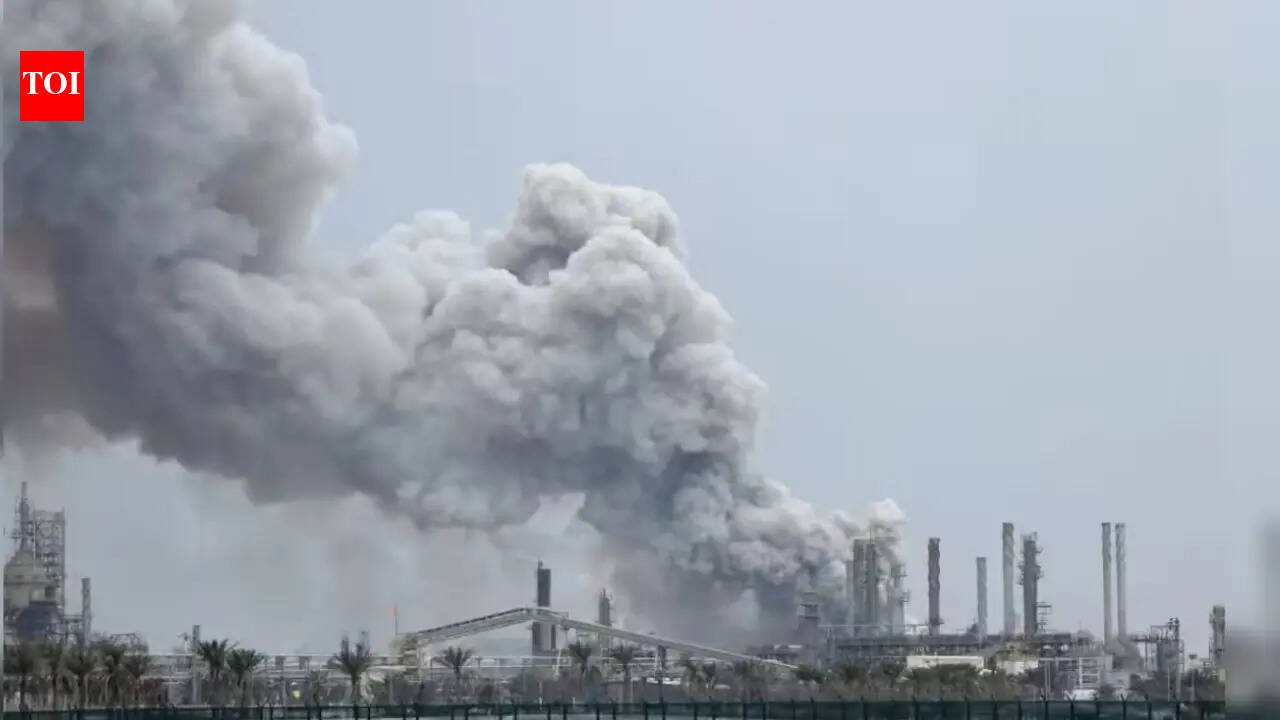
Watch: Kuwait refinery on fire after another Iranian drone attack, operations under threat

[ad_1]

Watch: Kuwait refinery on fire after another Iranian drone attack, operations under threat

Iranian drones struck Kuwait’s key oil facility at Mina al-Ahmadi refinery on Friday, triggering fires at the site, Kuwait’s state-run Kuwait Petroleum Corporation said, adding that no injuries were reported.The company said firefighters were working to control the blazes following the attack, which marks another escalation in strikes on critical energy infrastructure in the Gulf region.Mina al-Ahmadi, one of Kuwait’s three major refineries, has been targeted multiple times during the ongoing conflict. Refineries play a crucial role in Kuwait’s oil production, as disruptions can force oil wells to shut due to lack of processing capacity. Restarting refinery operations is a time-consuming process, meaning production could remain affected even after fires are contained.The strike comes as Iran continues to launch attacks across the region amid ongoing hostilities with the United States and Israel. Early Friday, Iran targeted multiple locations in the Gulf, with both Kuwait and Bahrain reporting incoming attacks, while Israel issued alerts over missile threats.At the same time, the United States and Israel carried out airstrikes inside Iran, including in areas around Tehran and Isfahan, though details of the targets were not immediately clear.Despite claims by Washington and Tel Aviv that Iran’s military capabilities have been significantly degraded, Tehran has maintained sustained pressure on regional adversaries.Attacks on energy infrastructure and Iran’s tightening control over the Strait of Hormuz have disrupted global oil flows, pushing prices sharply higher.Brent crude prices rose to around $109, marking an increase of over 50 per cent since late February, when the conflict escalated.The Strait of Hormuz remains a critical chokepoint through which about a fifth of the world’s oil and gas supplies transit during peacetime, making any disruption a major concern for global markets.The United Nations Security Council is expected to vote on a proposal addressing security in the Strait of Hormuz, amid growing concerns over safe passage for commercial vessels.The proposal, put forward by Bahrain, initially included provisions allowing countries to “use all necessary means” to secure the waterway. However, permanent members including Russia, China and France have expressed opposition to authorising the use of force.Emmanuel Macron said a military solution would be impractical, warning that such an operation “would take an infinite amount of time and would expose anyone passing through the strait to coastal threats.”He added that reopening the route “can only be done in coordination with Iran,” pointing towards diplomacy following a potential ceasefire.The conflict, now entering its fifth week, has led to mounting casualties across multiple regions.More than 1,900 people have been reported killed in Iran, while 19 deaths have been confirmed in Israel. Additional fatalities have been reported in Gulf states, the occupied West Bank and among US forces.In Lebanon, over 1,300 people have been killed and more than one million displaced amid Israel’s ground operations against Hezbollah, with further casualties reported among Israeli troops.The attack on Kuwait’s refinery underscores the widening scope of the conflict, with energy infrastructure increasingly becoming a target in a war that continues to expand across the Middle East.

[ad_2]

Source link

‘Glued to windows’: How Artemis II astronauts spent their first hours on Orion en route to Moon

[ad_1]

'Glued to windows': How Artemis II astronauts spent their first hours on Orion en route to Moon

Nasa astronauts aboard the Orion spacecraft spent the first hours after launch observing Earth and documenting views from space, even as the mission successfully executed a critical engine burn to push towards the Moon.Mission specialist Jeremy Hansen described the view from orbit, saying, “We are getting a beautiful view of the dark side of the Earth, lit by the Moon.” The crew were “glued to the windows” taking photographs, prioritising the view over routine activities such as meals.Commander Reid Wiseman later contacted ground control to ask how to clean the spacecraft windows after continuous photography left them dirty. Ground teams advised the crew to use water and a dry wipe. Nasa confirmed that images captured during the mission will be shared publicly once transmitted back to Earth.

Artemis II completes key burn, spacecraft exits Earth orbit

The mission marked a major milestone after Orion completed its translunar injection burn, a manoeuvre that propels the spacecraft from Earth’s orbit towards the Moon.The burn began at 19:49 EDT (23:49 GMT) and lasted just under six minutes. Nasa described the operation as “flawless”, confirming that both the crew and spacecraft systems were functioning as expected.Following the manoeuvre, Hansen said, “Humanity has once again shown what we are capable of,” marking his first remarks after the burn.The spacecraft initiated the burn at its lowest orbital point relative to Earth, a planned trajectory designed to maximise efficiency and accuracy.

Crew and systems performing as planned, says Nasa

Nasa officials said the Artemis II mission is progressing according to plan, with all major systems operating within expected parameters.At a post-burn briefing, Artemis science lead Lori Glaze said the spacecraft remains “on the path we designed” and confirmed that astronauts are “doing great”.Flight data collected so far includes ascent performance, manual flight testing during proximity operations, and checks on life-support systems such as carbon dioxide scrubbers, all of which have functioned successfully.Ascent flight director Judd Freeling stated that the Space Launch System placed Orion precisely into its intended orbit, with subsequent burns executed as planned.Orion programme manager Howard Hu compared the mission phase to “test-driving the car”, noting that objectives related to manual control and system validation have been achieved.

Mission remains a test flight, Moon landing not planned

Nasa reiterated that Artemis II is a test mission aimed at evaluating how the Space Launch System rocket, Orion spacecraft, and a human crew operate together in deep space conditions.The mission will not include a Moon landing. Instead, the Orion capsule will travel around the Moon and return, allowing engineers to gather data critical for future crewed lunar landings.Officials said the coming days will focus on extracting as much data as possible from the flight, with an emphasis on system performance and crew operations.While minor issues are expected as part of testing, Nasa indicated that the mission has so far met all key objectives, marking a significant step in its broader lunar exploration programme.

[ad_2]

Source link

Will Brand Pinarayi survive Kerala’s electoral cycle? | India News

[ad_1]

Will Brand Pinarayi survive Kerala’s electoral cycle?
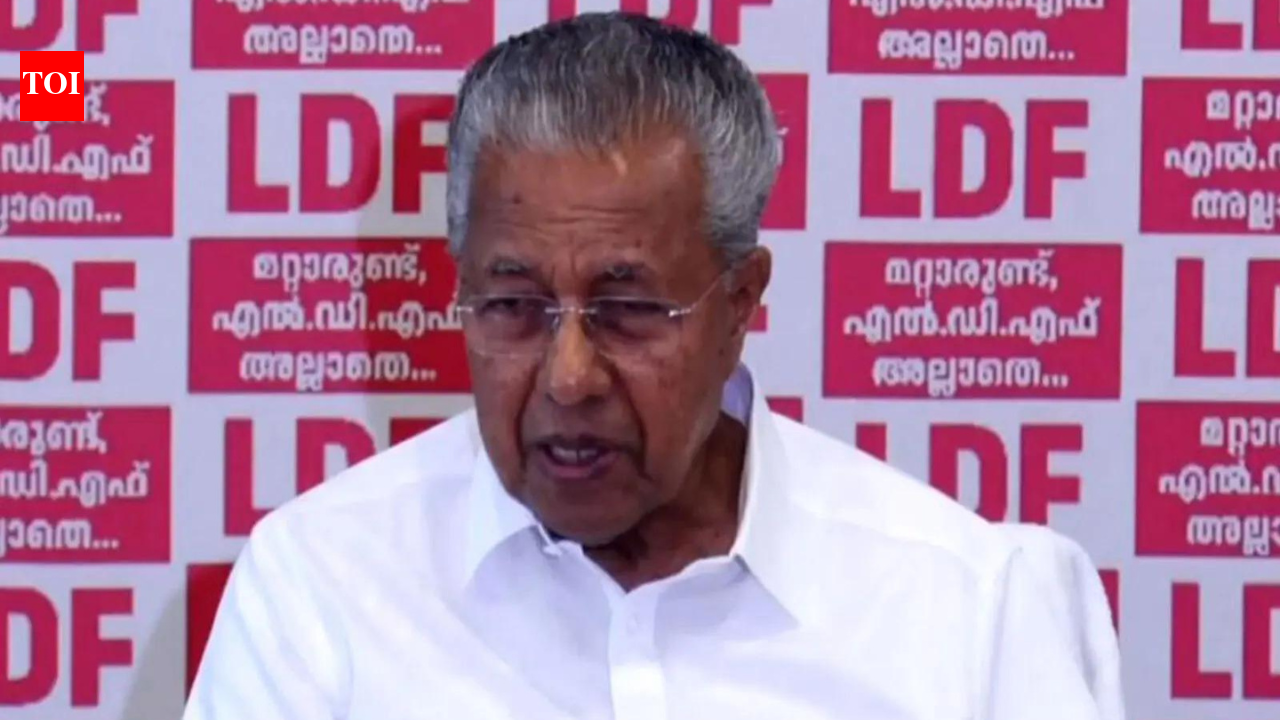
Kerala CM Pinarayi Vijayan

Mounting voter unease, fiscal stress and rifts in CPM will test whether his governance model is enough to defy the state’s alternation patternThe road to the 2026 Kerala assembly elections is shaping up to be a defining political moment not just for the ruling Left Democratic Front (LDF), but, more crucially, for chief minister Pinarayi Vijayan. At stake is more than an electoral victory; it is a referendum on whether the “Pinarayi brand” of governance can withstand anti-incumbency and deliver an unprecedented third straight term in a state historically known for political alternation.Kerala’s electoral history has long been marked by a cyclical shift between the LDF and the United Democratic Front (UDF). The LDF’s return to office in 2021 broke this pattern, raising expectations and intensifying scrutiny. As the 2026 election approaches, the central question is whether that disruption was an exception shaped by extraordinary circumstances or the beginning of a new political trajectory.

Anti-incumbency: Undercurrent or wave?

The debate around anti-incumbency remains complex and, as many observers note, inherently difficult to quantify. Political commentator Roy Mathew describes it as an “undercurrent”, which may not always be visible but manifests itself decisively during polls. Yet, current indicators suggest antiincumbency is no longer merely speculative and has begun to take a more visible form, he says.The LDF’s setbacks in the 2024 Lok Sabha elections and the 2025 local body polls serve as early warning signals. While not definitive predictors, they point to growing unease among voters, driven less by ideological shifts than by governance concerns such as economic distress, delays in welfare delivery, and administrative fatigue, he adds.

Leadership vs govt: A dual challenge

What distinguishes the current political climate is the apparent shift from generic anti-incumbency against the govt to a more personalised critique of Vijayan himself. Increasing instances of dissent within CPM, including rebel candidates and internal discontent, point to friction within party ranks.Critics argue that perceptions of centralised decision-making, an assertive leadership style and allegations of political arrogance have contributed to this sentiment. This raises a critical question: is the anti-incumbency in 2026 primarily centred on leadership, or does it extend more broadly to the govt’s performance?

Economic strain, welfare pressures

Kerala’s fiscal stress has emerged as a key factor when it comes to voter sentiment. Welfare politics has traditionally been the cornerstone of LDF’s legitimacy, and disruptions, particularly delays in pension disbursal, directly affect its core support base. In addition, agrarian distress and unemployment have begun to erode the perception of administrative efficiency.Political analyst and psephologist Dr J Prabhash says LDF now carries the burden of a decade in office, adding that the absence of strong anti-incumbency in 2021 was largely due to the extraordinary context of the pandemic. In contrast, the current environment reflects broader and more palpable dissatisfaction cutting across social groups.

Perception gaps

Recurring allegations of corruption and governance-related controversies have further contributed to a narrative of disconnect between the ruling establishment and public sentiment. While no single issue may decisively sway the electorate, their cumulative effect has reinforced perceptions of strain and fatigue within the system, says Prabhash.

The counter-narrative

Despite these challenges, Vijayan continues to project confidence, seeking to reframe the political discourse around governance and development. His administration highlights achievements in infrastructure, public health and education as evidence of performancedriven legitimacy.Another political commentator, Jacob George, argues that the ‘Pinarayi brand’ remains intact. He points to projects such as the completion of the GAIL pipeline and the progress of the Vizhinjam port as examples of strong leadership. This narrative seeks to consolidate voter trust by emphasising continuity and administrative capability.

A high-stakes battle

The 2026 Kerala Assembly election is unlikely to be a straightforward verdict on anti-incumbency alone. Instead, it is evolving into a more nuanced contest in which leadership perception, governance outcomes, internal party cohesion and opposition mobilisation will all play decisive roles.For the LDF and Vijayan, the challenge lies in sustaining credibility amid economic pressures and political dissent. For the opposition, the task is to convert emerging discontent into a cohesive electoral alternative.Ultimately, whether the election becomes a reaffirmation of the ‘Pinarayi model’ or a reassertion of Kerala’s traditional anti-incumbency cycle will define not just the immediate political future, but also the evolving nature of leadership and voter behaviour in the state.

[ad_2]

Source link

Oil prices today: Crude jumps as Trump dashes hopes of quick Iran war end; Brent tops $111

[ad_1]

Oil prices today: Crude jumps as Trump dashes hopes of quick Iran war end; Brent tops $111

Oil prices rose sharply on Friday as tensions in the Middle East intensified, with the US launching more strikes on Iran, fueling concerns over the energy supply flows through the Strait of Hormuz. Brent crude, the global benchmark, climbed 7.8% to $109.03 per barrel after soaring beyond the $111 per barrel mark. At the same time, WTI crude oil futures for near-term delivery next month recorded their largest-ever premium over second-month contracts, rising to $111.54, up 11.41%. Earlier in the session, the US Crude had jumped beyond the $113 per barrel mark. Meanwhile, the spot price for Brent crude oil for immediate physical delivery surged even higher, to a whopping $141.36, hitting highest level since the 2008 financial crisis, according to S&P Global data, cited by CNBC. The spot price reflects demand for cargoes scheduled for delivery within the next 10 to 30 days.The latest surge builds on an earlier rally in oil markets, which saw prices swing sharply during the previous session. Prices had initially fallen as traders reacted to uncertainty ahead of Donald Trump’s national address, but rebounded after his remarks did little to ease concerns over the Strait of Hormuz. Earlier in the day, Brent crude had dropped $1.16 to $100 per barrel, while US West Texas Intermediate fell $1.41 to $98.71. Sentiment later shifted, with Brent rising more than 4% to $106 and WTI climbing 3% to $103 following the speech.This comes as Iran continues to choke the Strait of Hormuz, disrupting shipping flows through the strategically important passage that normally handles about a fifth of global oil trade during peacetime.The ongoing US-Israeli war on Iran, now nearing the end of its fifth week, has removed millions of barrels per day from global supply, pushing energy prices to multi-year highs and triggering fuel shortages in countries dependent on oil and gas shipments through the now-blocked Strait of Hormuz.Around 20% of global oil flows through the strategic chokepoint. In a Wednesday evening address, Trump vowed to hit Iran “extremely hard” in coming weeks but did not outline a plan to reopen the strait, suggesting instead that other nations should take responsibility for restoring shipping access.

[ad_2]

Source link

Astronaut Shukla lauds Artemis II launch, recalls meeting crew | India News

[ad_1]

Astronaut Shukla lauds Artemis II launch, recalls meeting crew

NEW DELHI: Indian astronaut Shubhanshu Shukla lauded the Artemis II launch on Thursday that sent four astronauts on a journey around the Moon, while recalling his own experience of “standing on those very grounds for the first time, feeling humbled by what it represents”.In a post on X, he said, “It is the same ground from which Neil Armstrong began humanity’s first journey to the Moon. The same place where Peggy Whitson, the most experienced American astronaut and my commander, launched on her first mission to space. And today, it becomes the starting point for yet another chapter in our shared story of exploration.”The space launch system rocket propelled the Artemis II mission from Launch Pad 39 B on Thursday. Neil Armstrong began his journey to the Moon from Kennedy Space Centre’s Launch Pad 39 A, which is just a few kilometres away from the Artemis-2 launch pad. Shukla, who is the only Indian to have flown to space from the US, also lifted off from Launch Pad 39A.“I had the privilege of watching these astronauts prepare for this mission, and even meeting two of them personally. To see them now on the cusp of such a remarkable journey is both inspiring and moving,” he posted on X.India became the 27th signatory to the US-led Artemis Accords in June 2023. While not directly participating in the Artemis program’s manned missions, this partnership allows India to collaborate with Nasa through Isro on technological advancements and joint missions.India is currently working on its own lunar goals through Chandrayaan-6, 7, and 8, building on the momentum of the upcoming Chandrayaan-4 and Chandrayaan-5 missions. It plans to land on the Moon by 2040.

[ad_2]

Source link

CM Omar seeks probe in Ganderbal ‘encounter’ after family disputes ‘terrorist’ claim | India News

[ad_1]

CM Omar seeks probe in Ganderbal ‘encounter’ after family disputes ‘terrorist’ claim

SRINAGAR: J&K chief minister Omar Abdullah on Thursday sought a “transparent and time-bound probe” after a family from his constituency, Ganderbal, claimed that a person killed in an alleged encounter by the Army on March 31 had no links with terrorism, and lodged a police complaint seeking an FIR and investigation.Omar said the family’s claim should not be dismissed. “At the very least, this encounter needs a transparent & time-bound (sic.) probe with the facts made public. Any attempt to obfuscate or delay the announcement of a probe will only damage credibility & that is not in anyone’s interest,” he wrote on X.On Wednesday morning, the Army had said one terrorist was eliminated during a joint operation with J&K Police in the Arahama area of Ganderbal the previous night. However, Ajaz Ahmad Mughal, the brother of the deceased Rashid Ahmad Mughal (28), claimed he had no involvement in terror activities.Ajaz said his brother left home on the morning of March 31 and did not return. On April 1, around 10 am, the SHO of the Lar police station informed him that his brother had met with an accident, and brought him to the police control room in Srinagar, where he was asked to identify the body.Ajaz claimed police informed him that the body was of a foreign terrorist. “I told them he is my brother,” he said, adding that bullets had damaged his brother’s skull.After identifying his brother, Ajaz said he was asked by police to accompany him to Kupwara in north Kashmir, where he was buried in a graveyard. Since 2019, the bodies of local terrorists killed in encounters are not handed to the families, and are buried away in Kupwara and Uri to prevent mass gatherings.Ajaz said everyone in the village of Chountwaliewar and the Ganderbal district knew his brother and could substantiate that he was not involved in terrorism, but helped people get Aadhaar and domicile certificates. “He was preparing for recruitment in the Army,” Ajaz said.Police have not issued any statement on the operation. Srinagar-based defence PRO refused to comment on the family’s allegations and said police would check the background of the slain person, and details would emerge in a few days.Srinagar-Ganderbal MP Aga Ruhullah Mehdi called the allegations grave, saying that “silence from J&K Police is unacceptable”.Former CM Mehbooba Mufti, too, alleged that it was a fake encounter. “He was an orphan and was running an NGO,” she said while speaking to media persons.

[ad_2]

Source link

Iran claims attack on Oracle data center in Dubai; says: IRGC’s navy command …

[ad_1]

Iran claims attack on Oracle data center in Dubai; says: IRGC’s navy command ...
Iran’s IRGC says 37th wave of attacks launched against Israel, heavy missiles used

Iran’s Islamic Revolutionary Guard Corps (IRGC) has reportedly claimed that it has struck a data center of American tech company Oracle in Dubai. According to a report in AlJazeera, IRGC’s navy command claims it launched an attack on a data center belonging to the US technology firm Oracle in Dubai. The claim was reportedly made via Iranian state media and follows the IRGC’s recent public threats to target facilities of 18 major US tech companies, including Oracle, in the Middle East.Just a day earlier, on April 1, IRGC also claimed credit for an attack on an Amazon cloud computing center in Bahrain. The Bahrain’s Interior Ministry said that civil defence teams were extinguishing a fire at a company facility following what authorities described as an Iranian attack. The report of the strike came a day after Iran’s Revolutionary Guards threatened to target U.S. companies in the Middle East, including Microsoft, Google and Apple , in retaliation for attacks on Iran.Last week, the e-commerce giant said its Amazon Web Services region in Bahrain had been “disrupted” amid the current conflict in the Middle East, marking the second time in a month that its operations have been affected by the war.Earlier this week, IRGC reportedly sent a warning to American companies, similar to one issued in March. In its message, IRGC said that it would start targeting US technology and finance companies in the Middle East. IRGC’s post warned “employees of these companies to leave their workplaces immediately to save their lives. It said that residents around these terrorist companies in all countries in the region should also leave their places within a radius of one kilometer and go to a safe place.” In a statement, the Guards said, “These companies, starting from 8:00 pm (1630 GMT) Tehran time on Wednesday, April 1, should expect the destruction of their relevant units in exchange for every assassination in Iran.” The IRGC said the U.S. had “ignored our repeated warnings about the need to stop terrorist operations, and today, a number of Iranian citizens were martyred in your and your Israeli allies’ terrorist attacks.In the post that reportedly appeared on Telegram messaging app, the IRGC accused these 18 companies of acting as “spies” for the US government and helping it to carry out strikes. It said that since the main element in designing and tracking terror targets are American ICT and AI companies, in response to this terrorist operation, from now on the main institutions effective in terrorist operations will be our legitimate targets.

American companies named in IRGC’s warning letter

Out of the 18 companies named in IRGC’s letter, 10 are American technology companies. Names include:* Microsoft* Apple* Google* Meta* IBM * Cisco* Oracle* Tesla * Nvidia* Intel* Palantir* JP Morgan * Boeing

Donald Trump’s address to the nation on Iran war

The Permanent Mission of the Islamic Republic of Iran to the United Nations has issued a sharp response following recent comments from Washington, asserting that “the US President’s explicit threat to ‘bomb Iran back to the Stone Age’ reflects ignorance, not strength, and constitutes evidence of intent to commit war crimes under international humanitarian law and the Rome Statute.”In a post on X, the Iranian Mission to the UN shared the following: “The US President’s explicit threat to ‘bomb Iran back to the Stone Age’ reflects ignorance, not strength, and constitutes evidence of intent to commit war crimes under international humanitarian law and the Rome Statute. Iran’s civilisation spans more than 7,000 years, whereas the US is scarcely 250 years old. Civilisations are defined by their history, culture, resilience, and scientific contributions. The world remains indebted to the civilisation and knowledge that Iranian scholars have bestowed upon humanity for millennia. Such a civilisation cannot be destroyed by bombing.”The essage from Tehran followed national address by the US President Donald Trump, during which he maintained that while Washington has successfully reached its primary goals, the American military will continue to launch strikes against various locations throughout Iran.

[ad_2]

Source link