Breaking News
US closes embassy in Kuwait after Iranian strikes as war spreads across Gulf

[ad_1]

US closes embassy in Kuwait after Iranian strikes as war spreads across Gulf

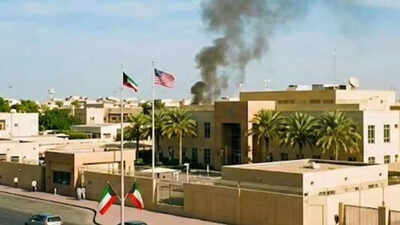
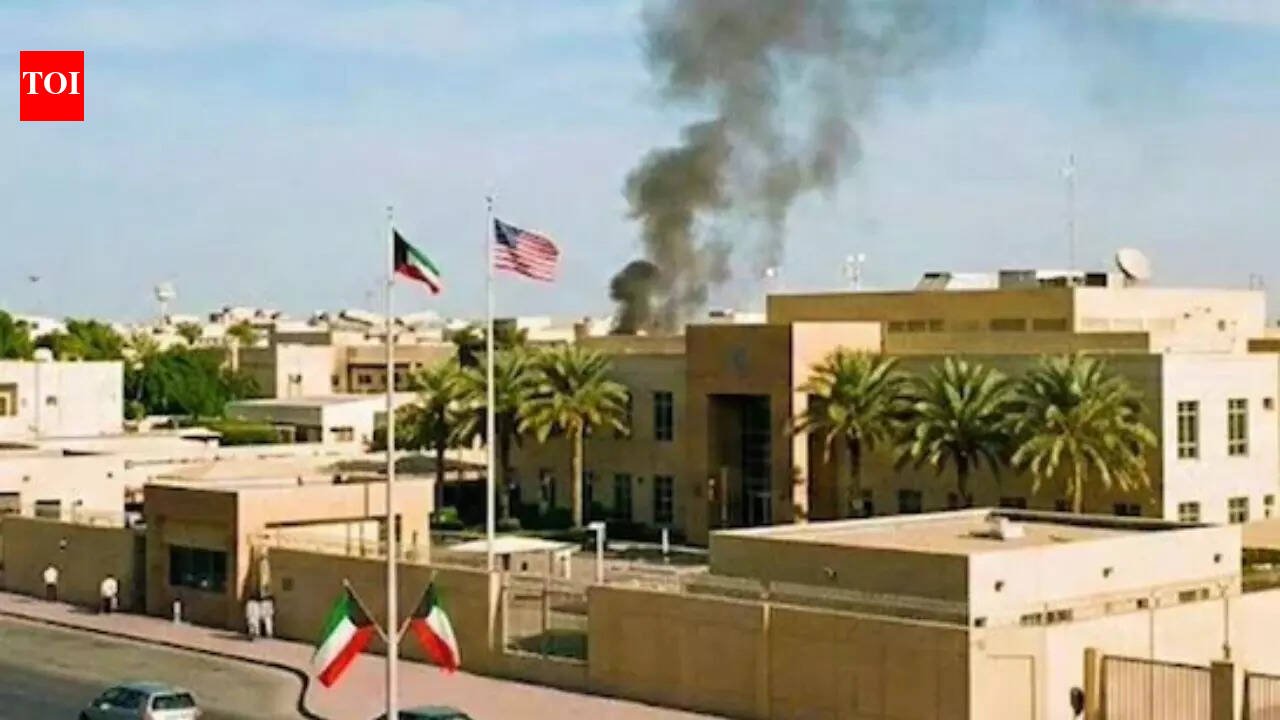
The US State Department on Thursday announced the closure of the US Embassy in Kuwait following retaliatory Iranian strikes, as the widening conflict in the Middle East began directly affecting Gulf capitals.Iran has fired waves of missiles and drones at the American-allied Gulf country since the start of the war, escalating tensions across the region. Six American soldiers were killed in an Iranian drone strike in Kuwait on Sunday, according to officials.Black smoke was seen rising near the US Embassy in Kuwait City after fresh Iranian attacks swept across the Gulf. Sirens sounded as drones were intercepted at dawn while authorities warned of continuing missile and UAV threats.One person has been killed and dozens injured in Kuwait since the escalation began.Earlier this week, the US embassy compound itself was reportedly hit by drones. Three diplomatic sources told AFP that the mission sustained damage during the attack.One Kuwait-based diplomat and a Western diplomat, speaking on condition of anonymity, said the embassy had been damaged by several drones. A second Kuwait-based diplomat said the embassy building had been struck directly.An AFP correspondent also reported seeing smoke rising from the diplomatic mission during Iran’s third day of retaliatory strikes across the Gulf.Following the attack, the US embassy warned the public to stay away from the facility, citing ongoing threats.The embassy said people should not come to the compound due to “a continuing threat of missile and UAV (drone) attacks over Kuwait”.The escalating conflict has also disrupted other Gulf capitals. Explosions were reported in Doha and Bahrain as the regional confrontation intensified. Authorities in several Gulf countries activated air defence systems and closed sections of their airspace.The conflict, triggered by sweeping US and Israeli strikes on Iran earlier this week, has rapidly spread across the region and drawn in multiple countries.Iran has targeted American bases and allies across the Middle East in retaliation for the attacks on its military infrastructure, leadership and nuclear facilities.The war has already affected at least 14 countries across the region and beyond. Iran’s retaliatory strikes have targeted neighbouring states, disrupted oil shipments and severely affected global air travel routes.According to officials, the conflict has killed at least 1,230 people in Iran, more than 100 in Lebanon and around a dozen in Israel. Six US troops have also been killed in the fighting.Tensions have also risen along Israel’s northern frontier with Lebanon. The Israeli military issued evacuation warnings for residents of Beirut’s southern suburbs and reported clashes with Hezbollah fighters in southern Lebanon.United Nations peacekeepers said they observed ground combat west of the border village of Kfar Kila, while airstrikes and explosions were reported near the town of Khiyam.Meanwhile, Gulf states have reported missile and drone attacks linked to the escalating conflict.In the United Arab Emirates, a drone was shot down near Al Dhafra Air Base, which hosts US forces, injuring six people with falling debris. Qatar evacuated residents near the US Embassy in Doha as a precaution and later reported a missile strike on the city.Bahrain said an Iranian missile struck a state-run oil refinery, sparking a fire that was later extinguished. Authorities said the facility remained operational and no casualties were reported.The intensifying conflict has also affected global energy markets and shipping routes. Since the war began, attacks on vessels in the Gulf of Oman and the Strait of Hormuz have pushed oil prices higher and disrupted maritime traffic through one of the world’s most critical energy corridors.

[ad_2]

Source link

Us Strike On Iran Frigate: IRIS Dena sinks: Blaming India for US strike on Iran frigate illogical, says BJP | India News

[ad_1]

IRIS Dena sinks: Blaming India for US strike on Iran frigate illogical, says BJP
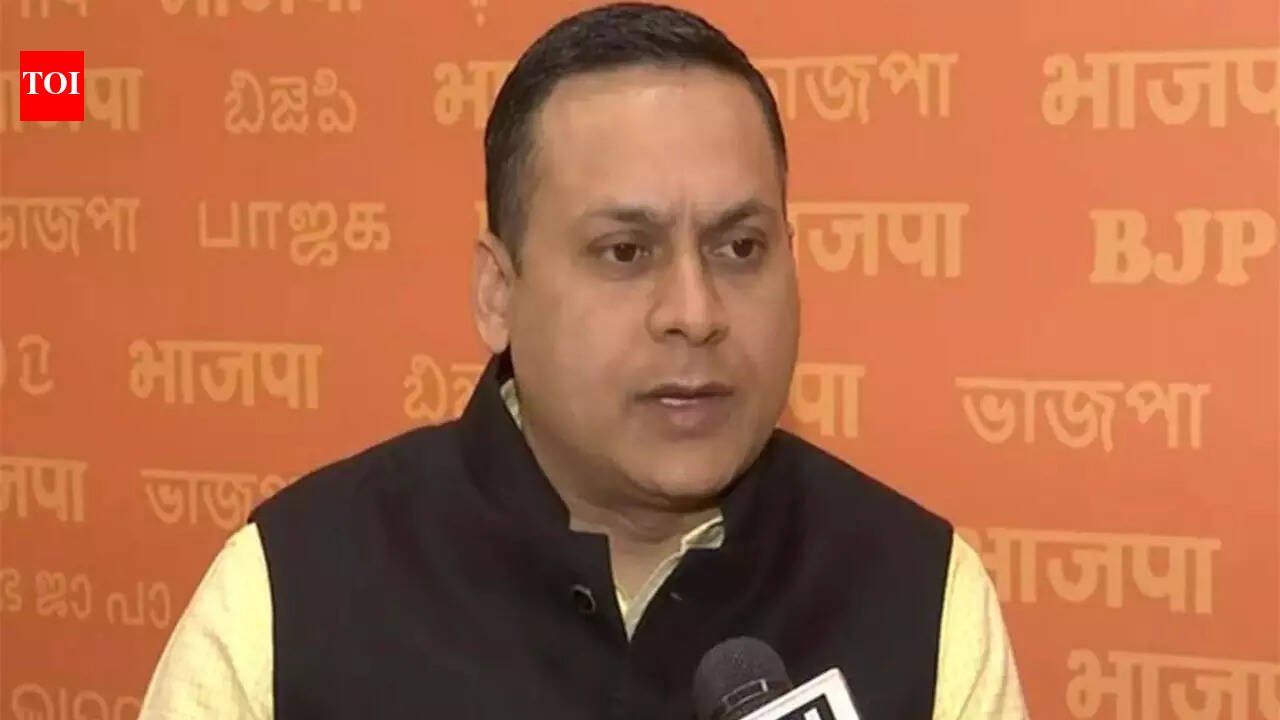
File photo: BJP’s Amit Malviya

NEW DELHI: Blaming India for the US strike on Iranian naval vessel IRIS Dena was both illogical and misleading, the BJP said on Thursday as Congress took a swipe at govt over the attack on the warship that was returning after participating in a naval exercise in India.BJP noted that the strike occurred around 250 nautical miles from the Indian coastline, well beyond the country’s territorial waters and outside its maritime jurisdiction. Holding India accountable for an incident between the US and Iran in international waters was both factually incorrect and diplomatically untenable, it said.“Under international maritime law, a country’s responsibility does not extend to every incident that takes place in the broader oceanic region merely because it is geographically nearby. India shares maritime proximity with many countries across the Indian Ocean, but proximity cannot be conflated with control or accountability,” BJP’s Amit Malviya said.He said events taking place in international waters, especially those involving third countries, fell outside India’s legal or operational domain.“Attempts to drag India into this episode ignore the basic principles of maritime jurisdiction and appear driven more by speculation and political narrative than by facts. India neither controls activities in international waters nor is it a party to actions undertaken by other sovereign nations there. In short, geography does not eq-ual responsibility,” he said.BJP sources expressed dismay over Congress’s criticism. “Those who claim to be the ‘natural party of governance’ cannot be expected to be so ignorant of the basics of international law.,” said a senior party functionary.

[ad_2]

Source link

Us Ukraine Drone Assistance: ‘Protection against ‘Shaheds’’: US asked Ukraine for help against Iranian drones in Middle East, says Zelenskyy

[ad_1]

‘Protection against 'Shaheds'’: US asked Ukraine for help against Iranian drones in Middle East, says Zelenskyy

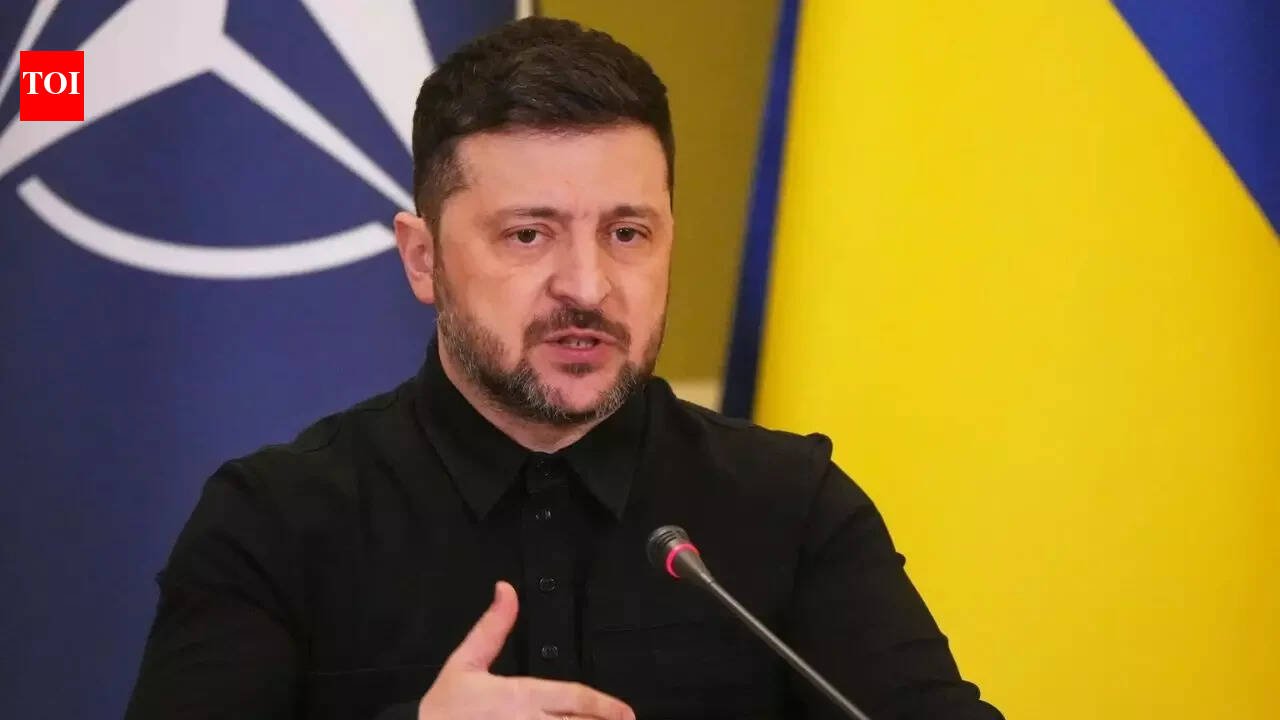
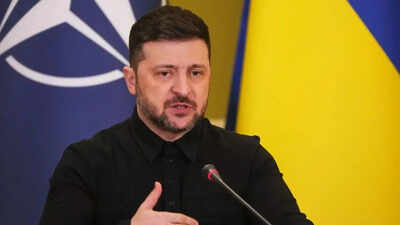
File photo: Ukrainian President Zelenskyy

The United States has asked Ukraine to help counter Iranian drone attacks in the Middle East, Ukrainian President Volodymyr Zelenskyy said on Thursday, adding that Kyiv would provide technical expertise and support while ensuring its own defences remain intact.“We received a request from the United States for specific support in protection against ‘shaheds’ in the Middle East region,” Zelenskyy wrote on X, referring to Iranian-designed drones that have been widely used in attacks. “I gave instructions to provide the necessary means and ensure the presence of Ukrainian specialists who can guarantee the required security,” he added.Ukraine has faced frequent attacks by such drones during Russia’s invasion, prompting Kyiv to develop relatively inexpensive interceptor drones designed to destroy incoming aerial threats mid-air. Zelenskyy said Ukraine would assist partners that help ensure its own security, adding: “Ukraine helps partners who help ensure our security and protect the lives of our people.”

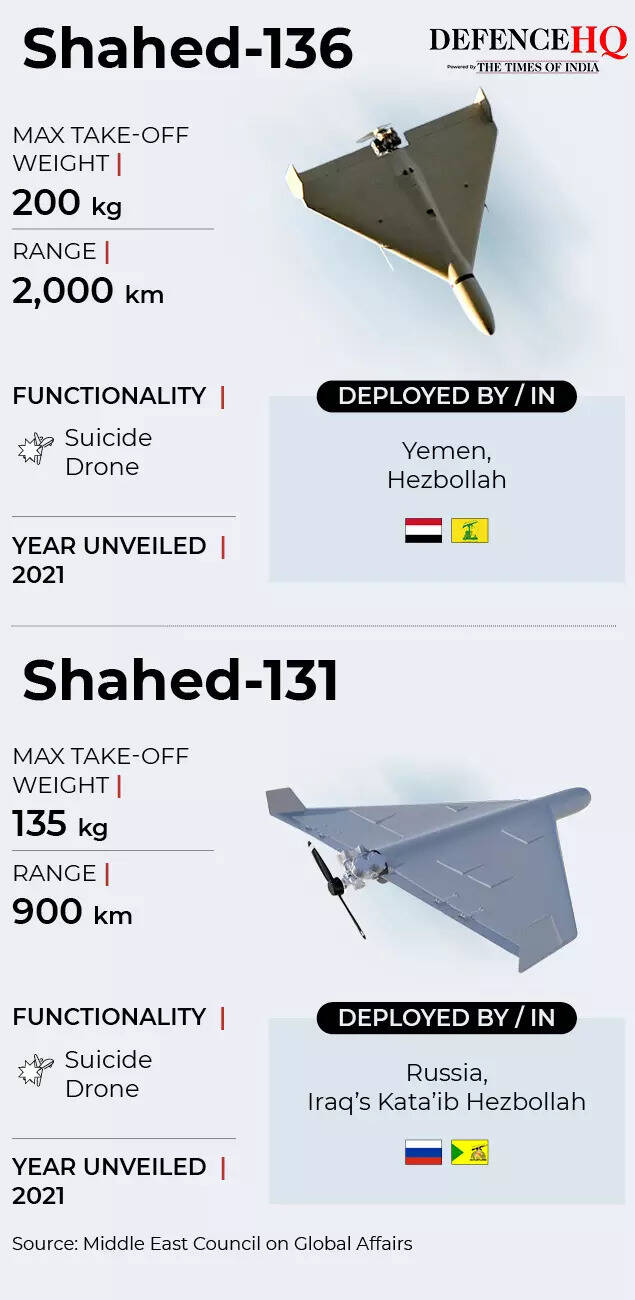
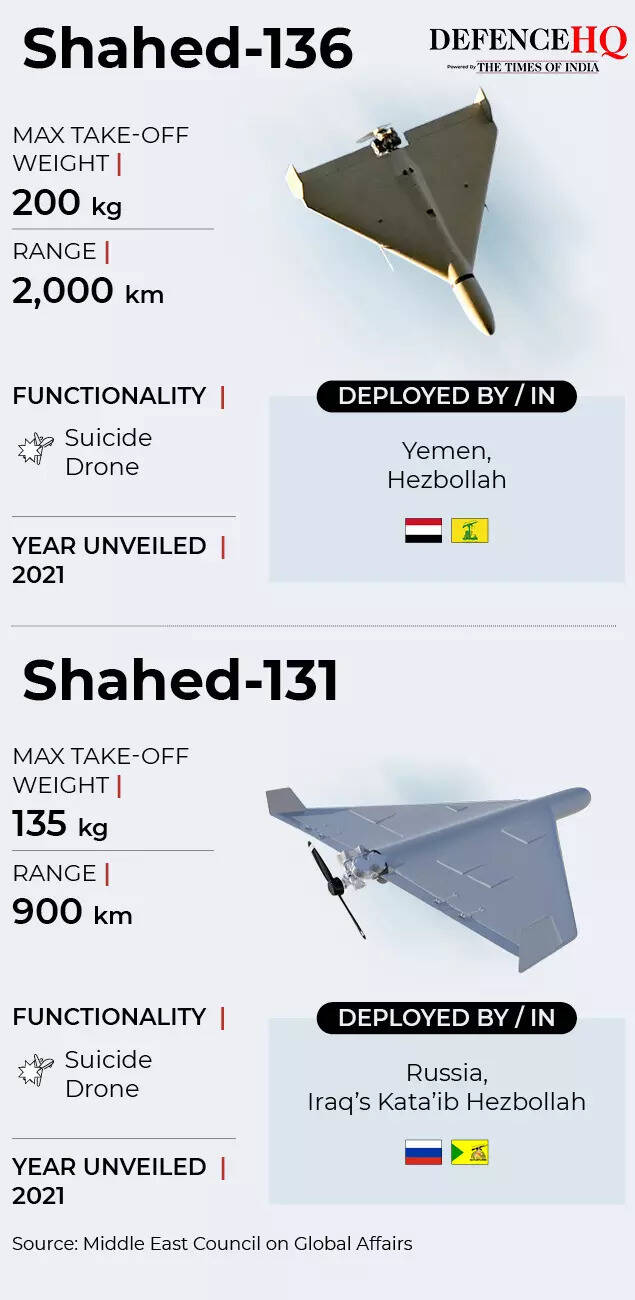
Shahed-136 and Shahed-131

The Shahed-136 is an Iranian-designed loitering munition, often described as a “suicide drone”, developed by Iran’s defence industry and widely used in regional conflicts. It is designed to loiter over a target area before diving into its objective and detonating on impact.The Shahed-131 is a smaller variant of the Shahed-136 and serves a similar loitering munition role. It is lighter, carries a smaller warhead and has a shorter operational range, typically estimated at several hundred kilometres.

Zelenskyy indicated that Kyiv could provide expertise and interceptor drones to help defend military bases and civilian infrastructure in Gulf countries facing Iranian attacks. However, he stressed that any assistance would be conditional. “Of course, any assistance we provide will only be on the condition that it does not weaken our own defence in Ukraine and that it serves as an investment in our diplomatic capabilities,” he said.The Ukrainian leader has also proposed a possible swap arrangement with US allies in the Gulf, offering interceptor drones in exchange for additional Patriot air defence missiles needed to counter Russian ballistic attacks, reported BBC.

[ad_2]

Source link

Us Iran War: $20,000 drones vs $4 million US missiles: How Iran is managing to hit targets across Middle East

[ad_1]

$20,000 drones vs $4 million US missiles: How Iran is managing to hit targets across Middle East

Who is winning the US-Iran war? That’s the question gripping the internet, TV debates, and social media worldwide right now.Six days ago, the US and Israel unleashed coordinated strikes on Iran, hammering military bases, missile sites, and key infrastructure nationwide. Iran has fired back with its remaining arsenal against the world’s top superpower — and Israel, the Middle East’s most battle-hardened force.Missiles, drones and precision-guided bombs have been used by both sides. Yet one particular weapon has drawn global attention: Iran’s Shahed-series drones, which cost a fraction of the missiles used to intercept them.

US Tests ‘Doomsday’ Nuclear Missile: How Does It Strike Any Place On Earth | US-Israel-Iran War

These relatively simple drones, estimated to cost between $20,000 and $50,000 each, are forcing the United States and its regional partners to respond using Patriot air-defence missiles that cost around $4 million per interceptor. The resulting imbalance in costs has turned the conflict into a war of attrition in which the outcome may depend less on technology and more on which side runs out of weapons first.

Cheap drones, expensive defences

Just three days into the conflict, analysts began describing the war as attritional, with both sides expending large quantities of munitions.According to defence data compiled by regional governments and analysts, waves of Iranian drone attacks have targeted US bases, oil infrastructure and civilian buildings across West Asia, including locations in Bahrain, Kuwait, Qatar, Jordan and the United Arab Emirates.Many of these attacks have involved the Shahed-136 one-way attack drone, a loitering munition designed to strike a target and explode on impact.

Iran missiles gfx3

The United States and its allies have largely relied on Patriot air-defence systems to intercept these threats. According to the UAE’s defence authorities, interception rates have exceeded 90 per cent, demonstrating the effectiveness of the American-made system.However, the cost of each interception has become a growing concern among military planners.Destroying a drone worth around $20,000 with a missile costing about $4 million creates a significant economic imbalance. Even if most drones are intercepted, the defending side must expend far more resources to do so.

Iran missiles gfx4

.

The issue has already been observed in the Russia-Ukraine war, where large numbers of inexpensive drones forced defenders to use costly air-defence interceptors.Military analysts say Iran appears to be applying a similar strategy in the current conflict.

Iran missiles gfx

.

Iran’s strategy of attrition

Security experts say Iran’s approach relies on overwhelming air-defence systems with large numbers of inexpensive drones, forcing defenders to expend valuable interceptor missiles.Kelly Grieco, a senior fellow at the Stimson Center, said such a strategy could make operational sense from Tehran’s perspective.

Iran missiles gfx2

.

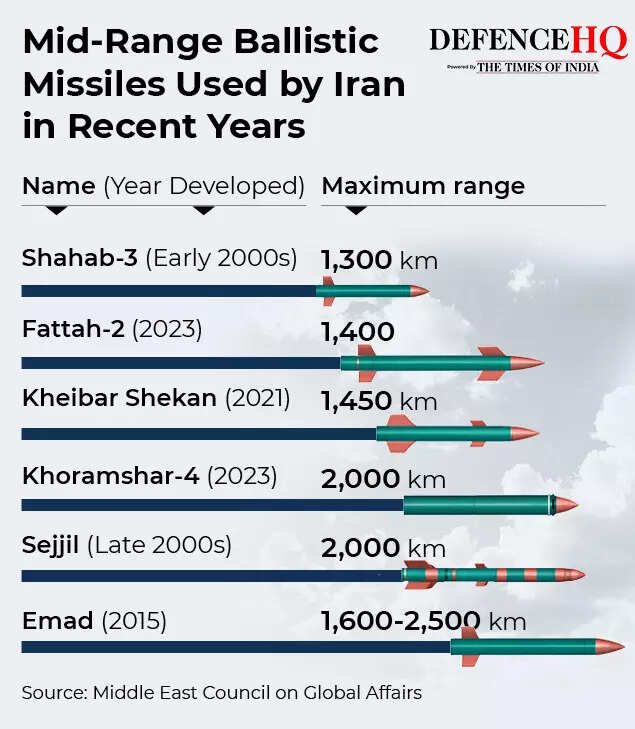
“Attrition strategy makes operational sense from Iran’s perspective,” Grieco told Bloomberg. “They are calculating the defenders will exhaust their interceptors and the political will of Gulf states will crack and put pressure on the US and Israel to cease operations before they run out of missiles and drones.”According to analysts, Iran still possesses a large inventory of drones despite suffering damage to parts of its missile infrastructure during earlier conflicts.Becca Wasser, defence lead at Bloomberg Economics, said Iran was estimated to have around 2,000 ballistic missiles after last year’s confrontation with Israel.However, the number of Shahed drones in Iran’s arsenal is believed to be significantly larger. Russia, which also manufactures similar drones, has demonstrated the ability to produce several hundred per day, according to open-source defence assessments cited by Wasser.Since the start of the current conflict, Tehran is estimated to have launched more than 1,200 projectiles, many of them Shahed drones.Analysts say this could indicate that Iran is conserving its ballistic missiles for later stages of the conflict while relying on cheaper drones to sustain pressure on US and allied defences.

The Shahed drone: Simple but effective

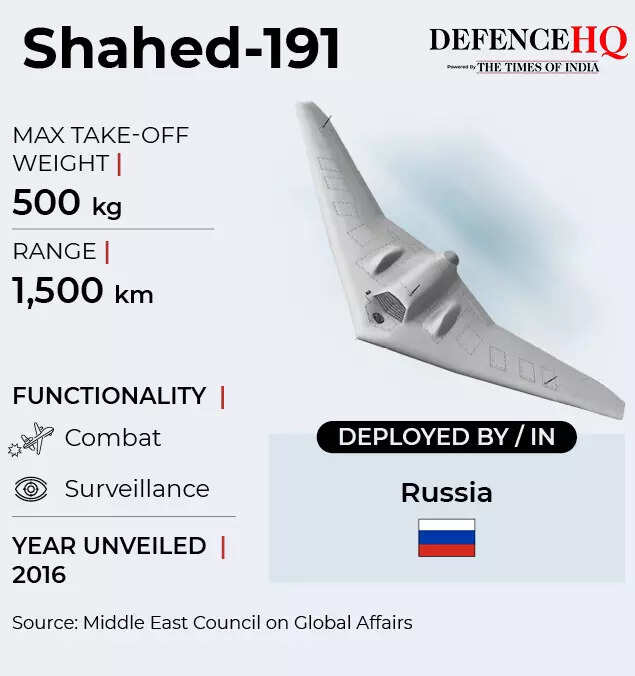
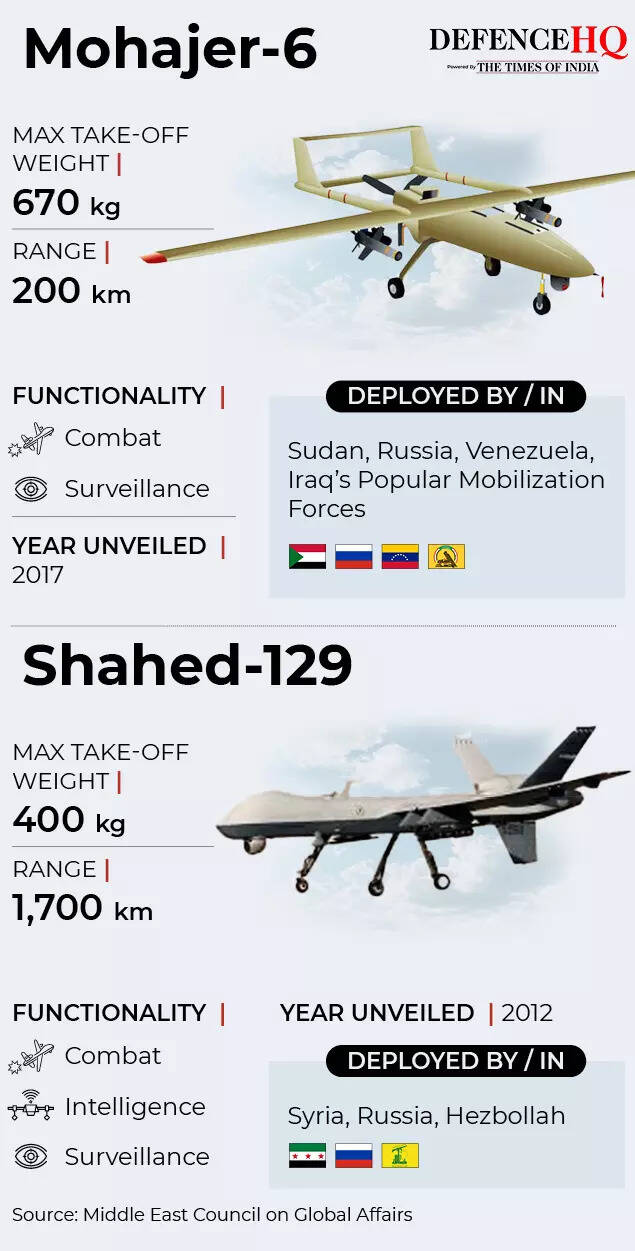
The Shahed-131 and Shahed-136 drones are among the most widely used loitering munitions developed by Iran.The name “Shahed” means “witness” in Persian, and the drones were originally developed by Shahed Aviation Industries, an Iranian aerospace company.Open-source defence assessments suggest the drones are roughly 2.5 to three metres long and weigh around 200 kilograms at launch.They feature a delta-wing design and are powered by a small propeller-driven engine. The engine sacrifices speed but allows the drone to travel long distances while consuming relatively little fuel.The Shahed-136 variant is believed to have a range of 2,000 to 2,500 kilometres, enabling it to reach targets across much of the Middle East.Once launched using a rocket booster, the drone switches to its piston engine and navigates toward pre-programmed coordinates using satellite guidance.It carries an explosive warhead weighing 40 to 60 kilograms, though some versions reportedly carry payloads of up to 90 kilograms with reduced range.Because of their small size and relatively low radar signature, these drones can be difficult to detect until they are already in flight.Their engine produces a distinctive buzzing sound that has earned them the nickname “mopeds of the sky” in previous conflicts.

Launching swarms

One of the main advantages of the Shahed drone is the ability to launch them in large numbers from simple platforms.Unlike advanced fighter aircraft or ballistic missiles that require complex launch infrastructure, Shahed drones can be launched from trucks, mobile launchers or improvised platforms.This makes it difficult for opposing forces to locate and destroy launch sites before drones are deployed.The strategy often involves launching multiple drones simultaneously, creating a swarm designed to overwhelm radar and air-defence systems.Even if most drones are intercepted, the strategy can still be effective.From Iran’s perspective, each drone destroyed forces the defender to spend significantly more money on interception.

Pressure on air-defence stockpiles

The United States and its regional allies rely heavily on the Patriot air-defence system, manufactured by Lockheed Martin and operated across several Middle Eastern countries.The system uses PAC-3 interceptor missiles, which cost several million dollars each.Although the Pentagon has expanded production in recent years, only around 600 PAC-3 missiles were produced in 2025, according to figures cited by defence industry sources.Given the intensity of current combat operations, analysts believe thousands of interceptor missiles may have already been fired since the conflict began.

THAAD2

.

A person familiar with the matter told Bloomberg that Patriot interceptor stocks in the region could run dangerously low within days if Iranian attacks continue at the current rate.

THAAD2

.

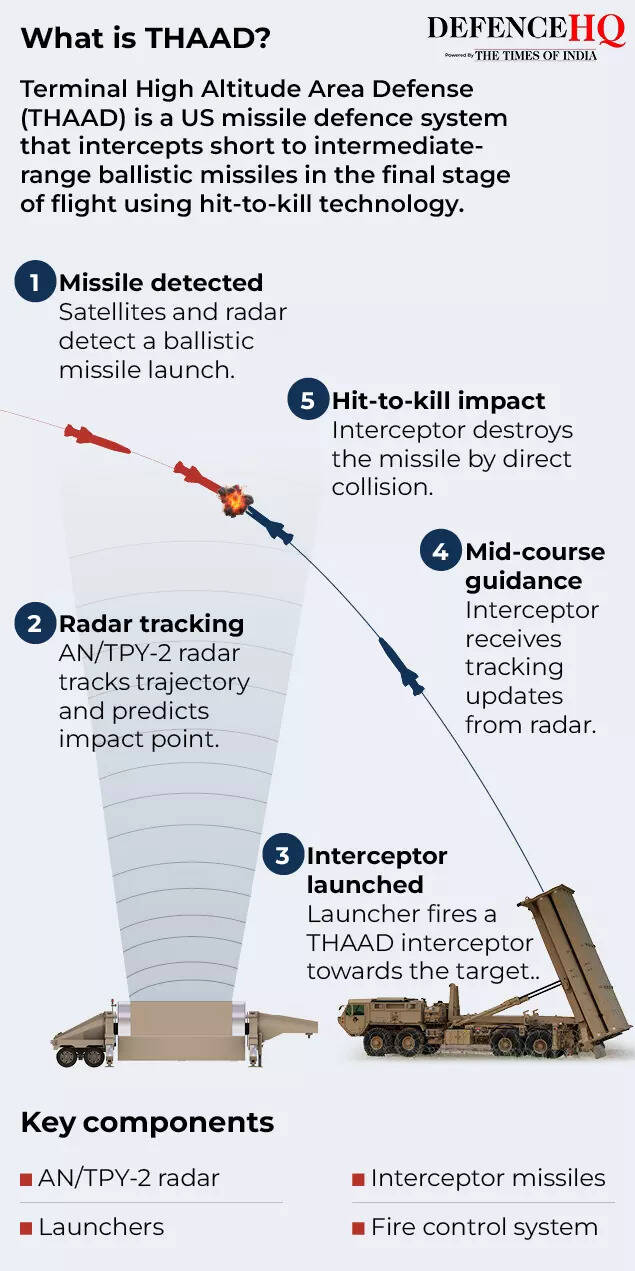
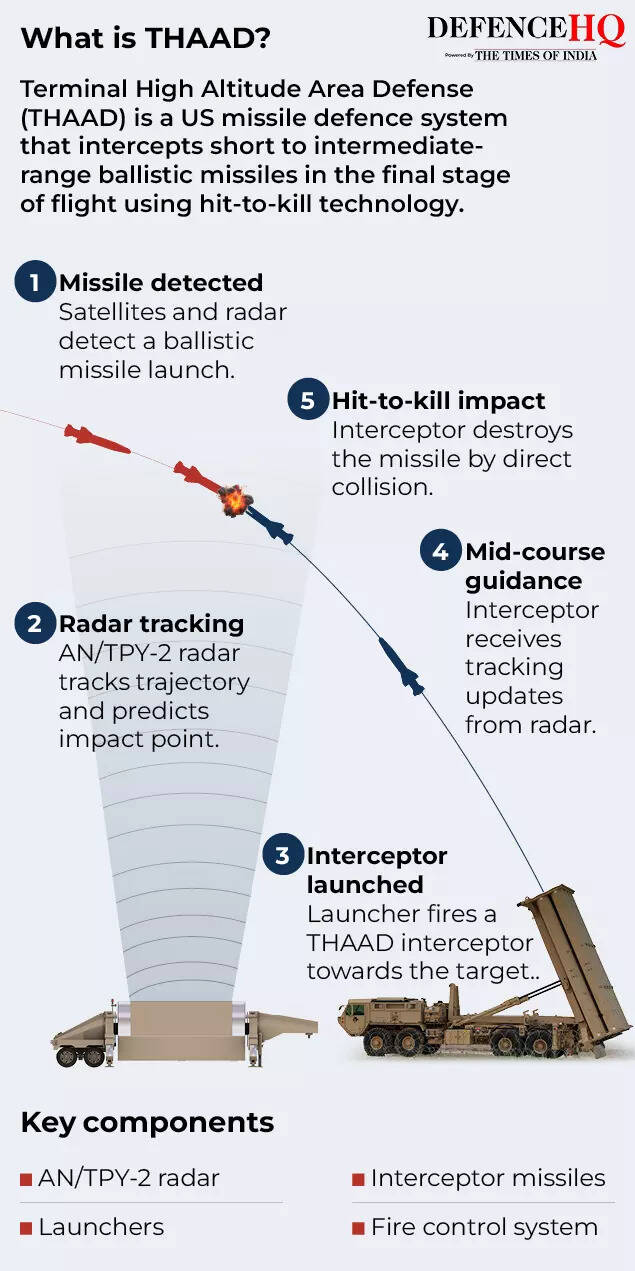
In addition to Patriots, some countries also operate the THAAD missile defence system, designed to intercept high-speed ballistic missiles at high altitude.However, each THAAD interceptor costs around $12 million, making it even more expensive than Patriot missiles.These systems are generally reserved for larger threats such as ballistic missiles rather than slower drones.

Other defensive measures

To reduce reliance on expensive interceptors, the United States and its allies have used other systems to counter drone attacks.These include fighter aircraft armed with Advanced Precision Kill Weapon System (APKWS) missiles, which cost roughly $20,000 to $30,000 each, though the operating cost of the aircraft adds to the expense.

IRAN’S AIR  DEFENCE SYSTEM2

.

However, purpose-built anti-drone systems such as laser weapons, automatic cannons and electronic warfare systems remain limited across the region.Israel has developed a laser-based defence system known as Iron Beam, designed specifically to destroy drones and rockets at a much lower cost.However, the Israeli military said earlier this week that the system had not yet been used in the current conflict.

Iran’s weakened air defences

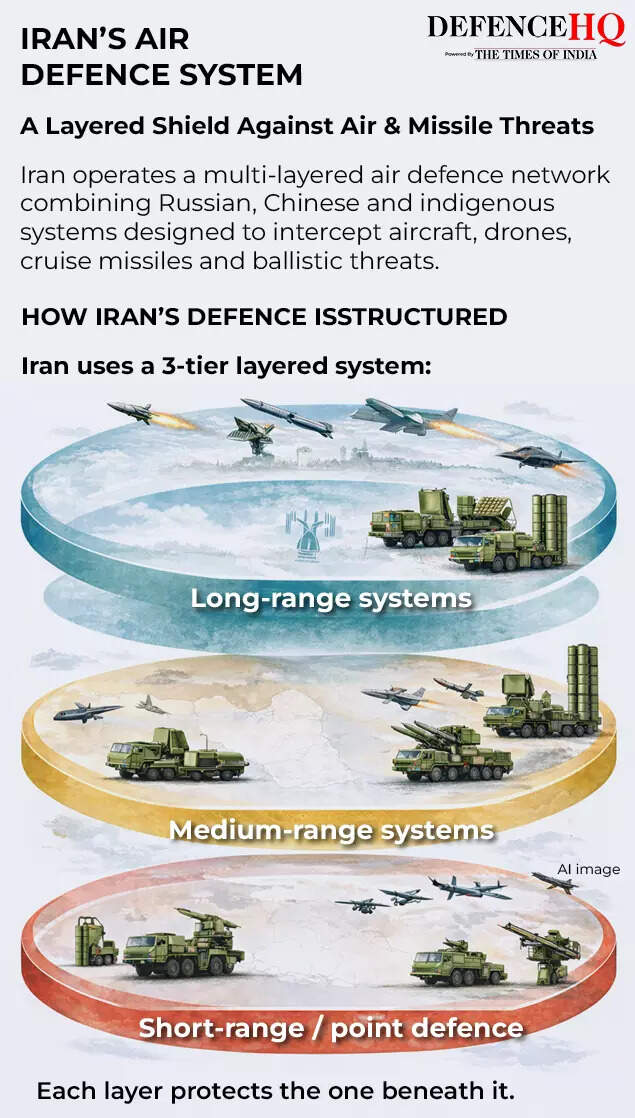
While Iran has been able to launch attacks across the region, its own defensive capabilities have suffered significant damage.According to defence analysts, surface-to-air missile systems were among the first targets during the opening hours of the war.Some of Iran’s most advanced air-defence systems were Russian-made S-300 batteries, designed to intercept aircraft and missiles.Many of these installations were reportedly hit during the initial strikes.As a result, US and Israeli aircraft have been able to operate inside Iranian airspace with relatively little resistance since the start of the conflict.

Military operations and command structure

Iranian Foreign Minister Abbas Araghchi said the country’s military units were operating with a degree of independence during the conflict.“Our military units are now in fact independent and somehow isolated and they are acting based on instructions, general instructions given to them in advance,” Araghchi said in an interview with Al Jazeera.He added that the government had already instructed the armed forces to exercise caution when selecting targets.

Concerns about prolonged war

On the US side, analysts say the Pentagon may not have deployed enough munitions to sustain a prolonged campaign.Becca Wasser said American strike planners were unlikely to have moved sufficient weapons into the region to support the four-week conflict timeline previously mentioned by US President Donald Trump.US Defence Secretary Pete Hegseth also suggested the campaign was not intended to become a long war.“This is not Iraq, this is not endless,” Hegseth said during a news conference.

[ad_2]

Source link

Su-30 MKI fighter jet missing: Aircraft loses radar contact in Assam, IAF deploys team | India News

[ad_1]

Su-30 MKI fighter jet missing: Aircraft loses radar contact in Assam, IAF deploys team
IAF Su-30 MKI (File photo)

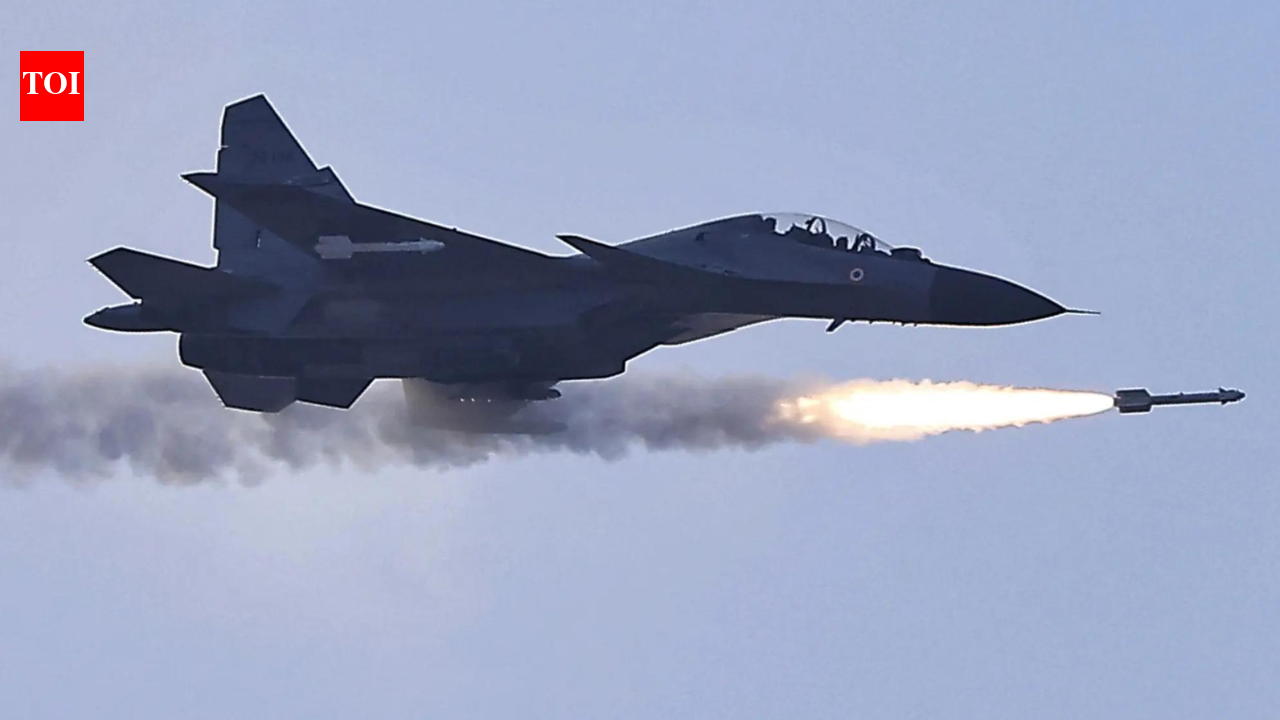
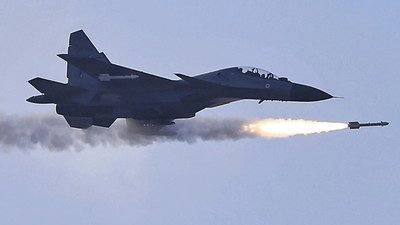
NEW DELHI: A Sukhoi Su-30 MKI fighter aircraft of the Indian Air Force (IAF) has lost radar contact in Assam, officials said on Thursday, adding that an IAF team has been dispatched to determine the circumstances.“An IAF Su-30 MKI is reported overdue. The aircraft had taken off from Jorhat, Assam and was last in contact at 7:42 pm. Further details are being ascertained. Search and Rescue mission has been initiated,” the IAF posted on X, confirming the incident.(Developing story)

[ad_2]

Source link

Abhishek Sharma memes flood social media after another failure in India vs England semi-final | Cricket News

[ad_1]

Abhishek Sharma memes flood social media after another failure in India vs England semi-final
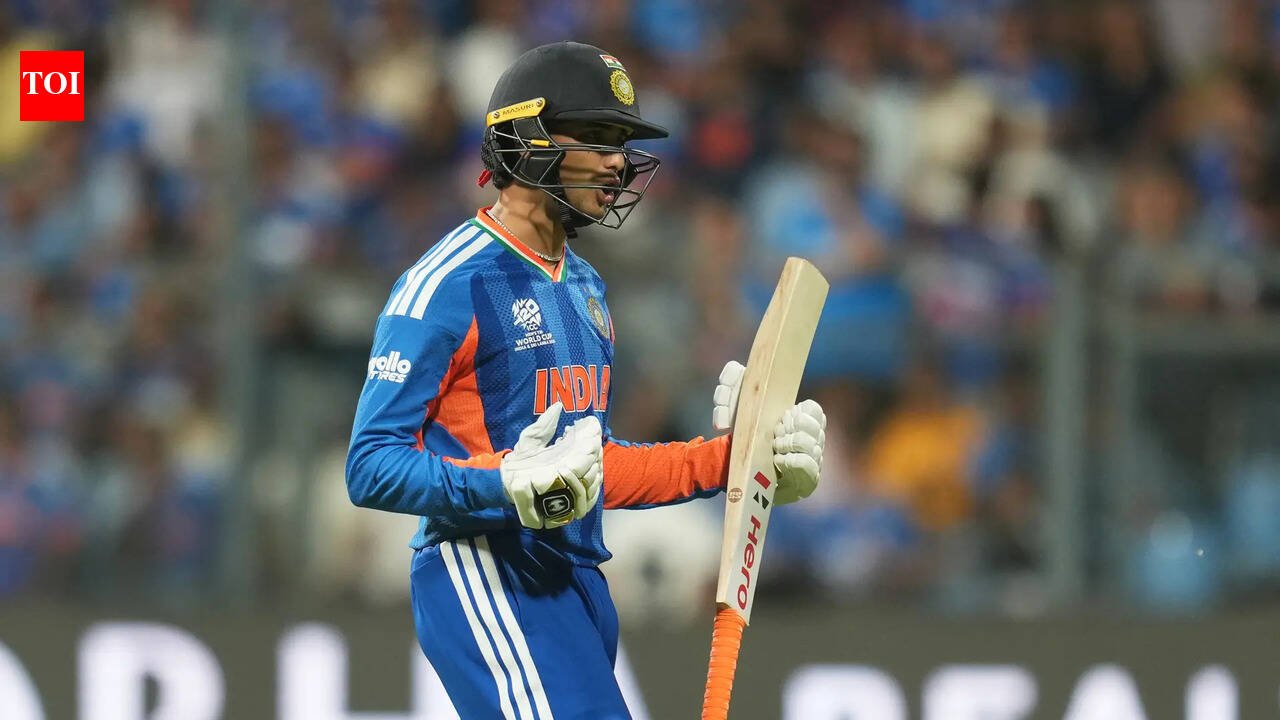
India’s Abhishek Sharma (AP Photo/Rafiq Maqbool)

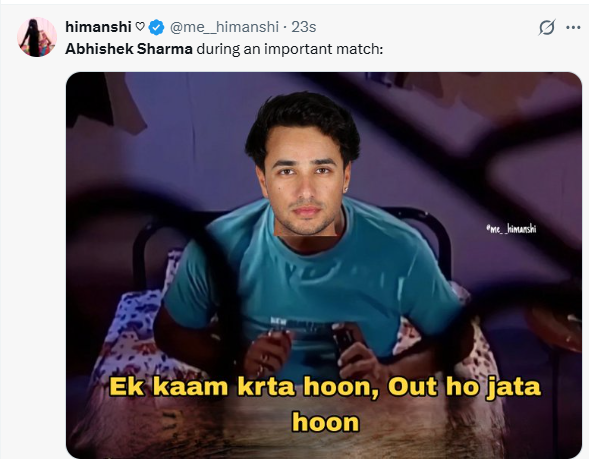
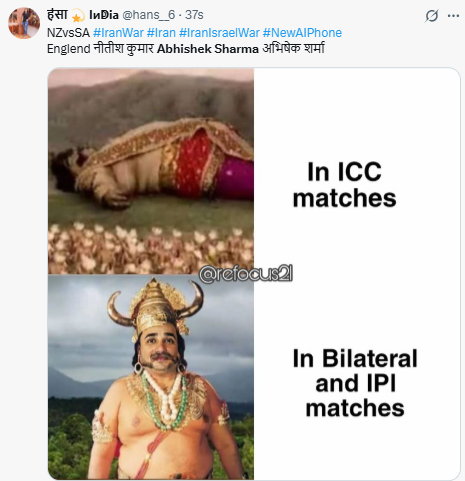
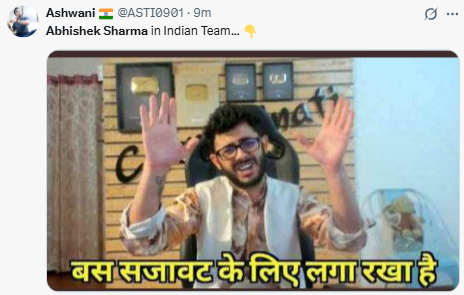
India’s aggressive start in the T20 World Cup semi-final against England cricket team at Wankhede Stadium came with a familiar talking point. The early dismissal of Abhishek Sharma once again triggered a wave of reactions on social media.Abhishek’s campaign in the tournament has been a frustrating one. The left handed opener managed just 9 runs from seven balls before getting out, continuing a run of low scores that has kept fans talking throughout the competition.His numbers in the 2026 T20 World Cup tell the story of an inconsistent run. Abhishek has scores of 0 (1), 0 (4), 0 (3), 15 (12), 55 (30), 10 (11) and now 9 (7). One area that has drawn particular attention is his struggle against off spin. Across five innings against off spinners in this tournament, Abhishek has faced 27 balls and scored 29 runs while being dismissed three times. The average of 9.66 and strike rate of 107.40 have become a talking point among fans analysing India’s batting.Within minutes of his latest dismissal, social media was flooded with memes. Many fans joked about the repeated early wickets while others questioned whether India should rethink the opening combination for big matches. Some supporters also pointed out that young players often go through rough phases in global tournaments.

Abhishek Sharma social media reaction

Abhishek Sharma social media reaction

Abhishek Sharma social media reaction

Abhishek Sharma social media reaction

Abhishek Sharma social media reaction

Abhishek Sharma social media reaction

While Abhishek’s exit sparked debate online, the mood inside the stadium quickly shifted thanks to Sanju Samson. The wicketkeeper batter continued his outstanding form and brought up another half century, his second in a row in the tournament.Samson’s fearless strokeplay set the tone for India’s innings after Harry Brook won the toss and asked India to bat first. The right hander attacked the England bowlers from the start and helped India race to 111 for one in just nine overs.As the semi-final unfolds, Abhishek’s struggles remain a major talking point online. Yet Samson’s brilliant knock has given Indian fans plenty to cheer about on a big night in Mumbai.

[ad_2]

Source link

Sushasan, switches and survival: End of an era in Bihar as Nitish Kumar moves to Rajya Sabha | India News

[ad_1]

Sushasan, switches and survival: End of an era in Bihar as Nitish Kumar moves to Rajya Sabha

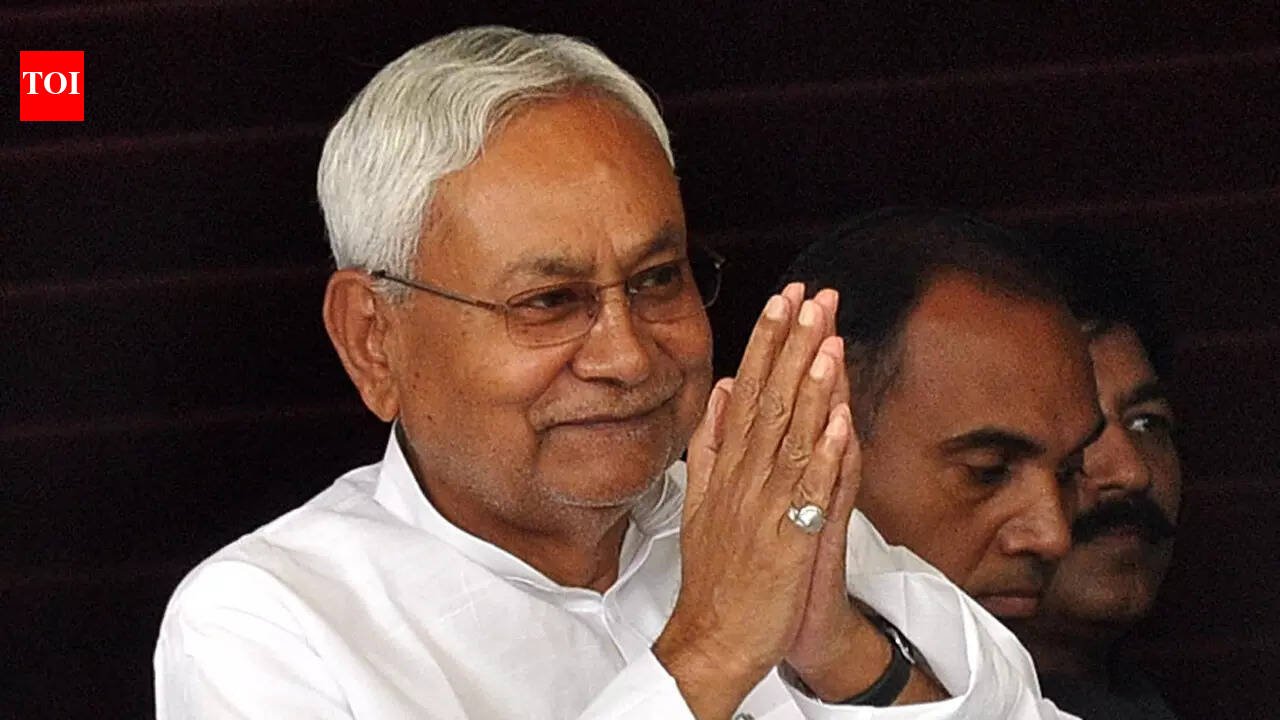
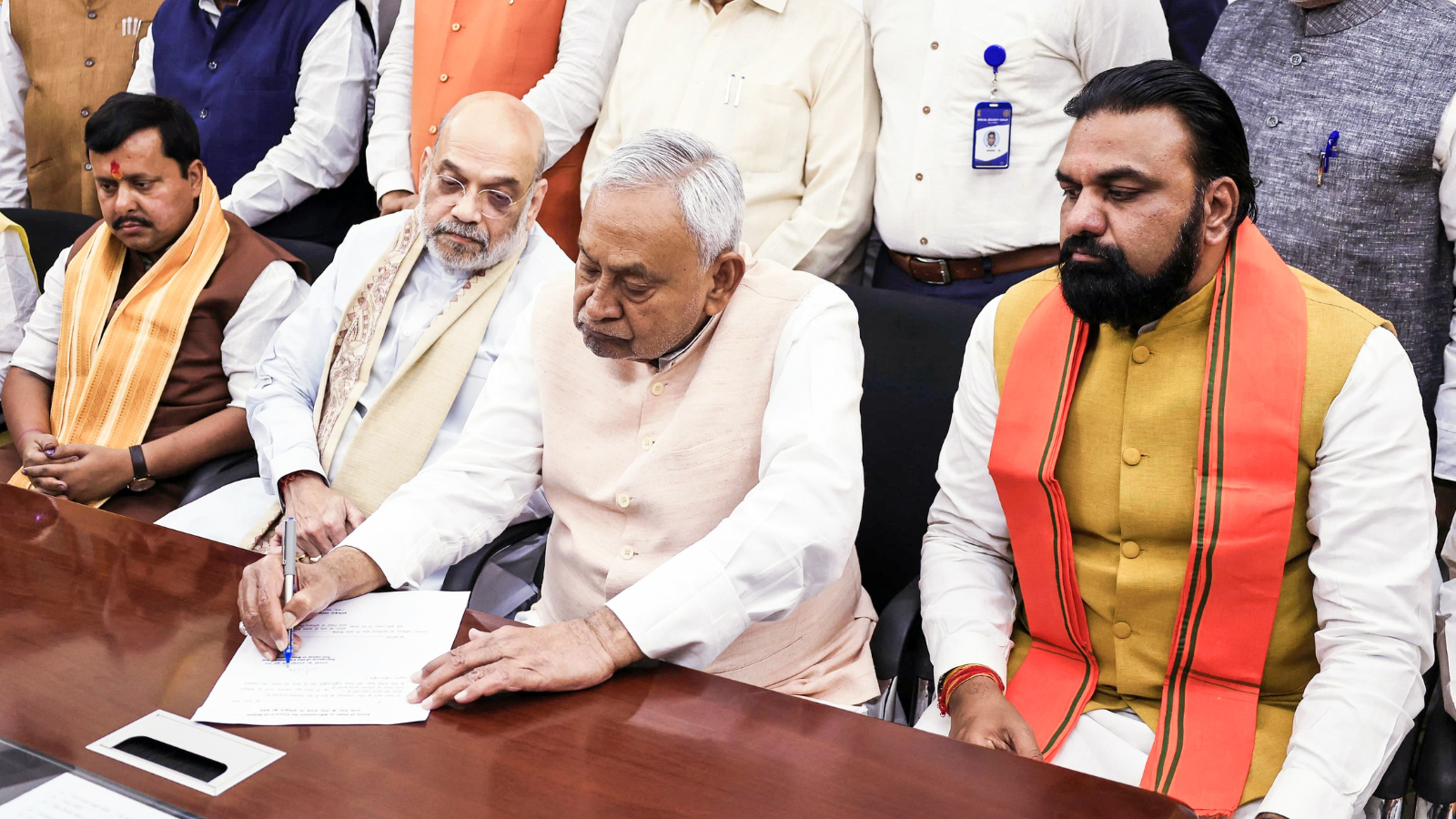
In a surprising turn of events, Bihar chief minister Nitish Kumar filed his nomination for the Rajya Sabha on Thursday in Patna. The sudden move has pushed Bihar into a major political shift while ending the tenure of the state’s longest chief minister.Nitish Kumar, who has served as Bihar’s longest-tenured chief minister for more than two decades, informed of his decision to contest Rajya Sabha elections via social media post.

‘Desire In My Heart’: Nitish Kumar’s Rajya Sabha Decision Sparks Protest, Anger Inside JD(U) Ranks

“I seek to become a member of the Rajya Sabha in the elections being held this time. I want to assure you with complete honesty that my relationship with you will continue in the future as well, and my resolve to work together with you to build a developed Bihar will remain steadfast. The new government that will be formed will have my full cooperation and guidance,” the 75-year-old politician wrote on X.

Nitish Kumar filed his nomination papers for Rajya Sabha in Patna on Thursday. (ANI photo)

For nearly two decades, Nitish has been in power in Bihar through coalitions. And one of the most intriguing paradoxes of Nitish’s long political career is that he governed Bihar for longer than any of his predecessors despite never leading a party that secured an outright majority in the state assembly.

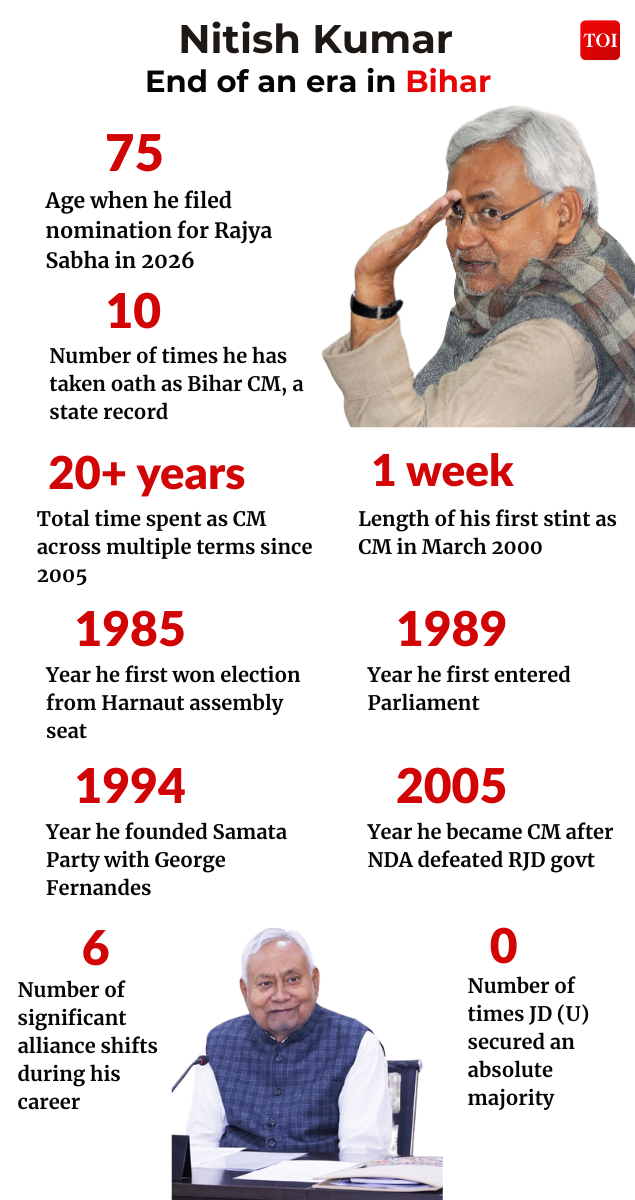
End of an era in Bihar.

His party, the Janata Dal (United), consistently relied on alliances with larger or equally powerful partners to remain in government.This unusual political equation made Nitish Kumar a master negotiator.Power in Bihar during his tenure depended not merely on electoral strength but on the ability to stitch together coalitions across caste blocs and ideological divides. Nitish Kumar excelled at precisely that. His ability to maintain political relevance even as the relative strength of his party fluctuated turned him into one of the most skilled negotiator of Indian politics.Supporters often describe this as evidence of his political acumen. Critics, however, argue that his survival depended more on opportunistic alliances than on a stable electoral mandate.Within the JD(U), the reaction to his decision has been one of disbelief.

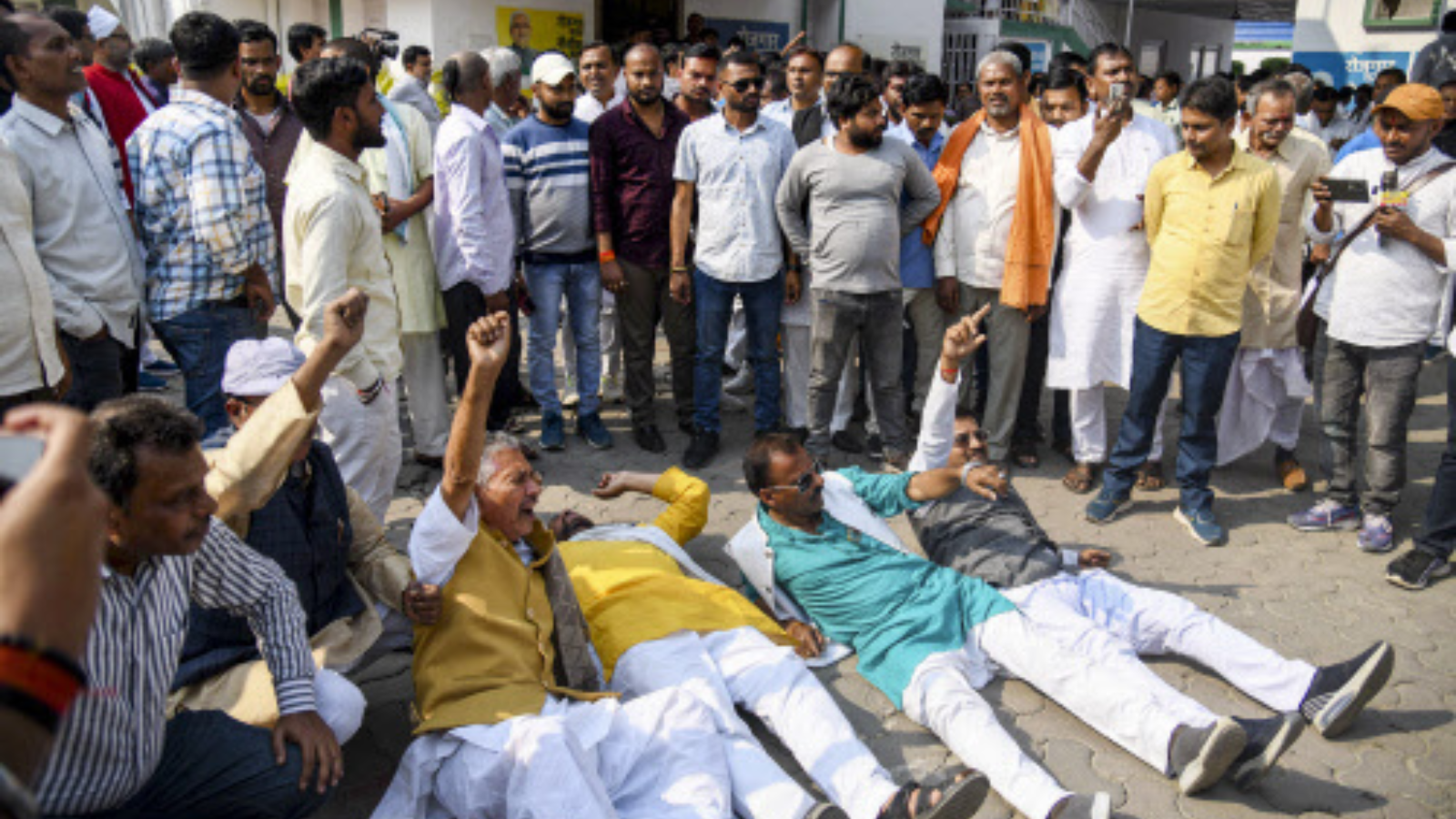
JD(U) workers and supporters staged protest after Nitish Kumar announced that he will be contesting the Rajya Sabha polls. (PTI photo)

Senior party leader and Bihar’s social welfare minister Madan Sahni publicly questioned whether the move truly reflected Nitish Kumar’s personal choice. “We are stunned to see whatever is happening. It is hard to believe that this could have been Nitish Kumar’s own decision,” news agency PTI quoted Sahni as saying.According to Sahni, Nitish Kumar had long expressed a desire to serve in all three legislative arenas of the democracy: the state assembly, the Lok Sabha and the Rajya Sabha. His move to the Upper House, therefore, was being presented as the fulfilment of that ambition.But for many within the JD(U), the transition felt less like a voluntary decision and more like the end of an era forced by changing political realities.Outside the party office in Patna, JD(U) workers gathered in anger and disbelief. Police were deployed to prevent supporters from marching toward the chief minister’s residence.Some refused to believe that the leader they had followed for decades would step down so abruptly.For years, even political rivals acknowledged Nitish Kumar’s stature. The late Sushil Kumar Modi, one of the BJP’s most prominent leaders in Bihar, had once described him as “prime minister material.”To many supporters, therefore, his exit from the chief minister’s office feels like a fall from a position once seen as nationally significant.Opposition leaders, however, see the moment differently.Tejashwi Yadav, leader of the opposition and son of Lalu Prasad Yadav, argued that Nitish Kumar’s predicament was the result of his own political decisions.“The BJP has done a Maharashtra in Bihar,” Tejashwi said, referring to controversial power shifts seen in other states. “But Nitish Kumar has only himself to blame. While in alliance, we supported him as chief minister despite having more MLAs, but he chose to walk away on two occasions.”

Entry into politics

Nitish Kumar was born on March 1, 1951, in Bakhtiarpur in Bihar’s Patna district. His father, Ram Lakhan Singh, was an Ayurvedic practitioner and a freedom fighter who had been associated with the Congress during the independence movement.He studied electrical engineering at the Bihar College of Engineering in Patna, now known as the National Institute of Technology (NIT) Patna. He briefly worked at the Bihar State Electricity Board before turning to politics.Nitish Kumar’s political identity was forged in the turbulence of the 1970s and 1980s.Like many leaders of his generation, he emerged from the socialist movement led by Jayaprakash Narayan during the anti-Emergency agitation. The movement produced a generation of politicians who would dominate north Indian politics for decades.Among them were Nitish Kumar and Lalu Prasad Yadav. Both leaders rose within the same political tradition. Both belonged to backward caste communities empowered by the Mandal revolution of the 1990s.Yet their political styles could not have been more different.

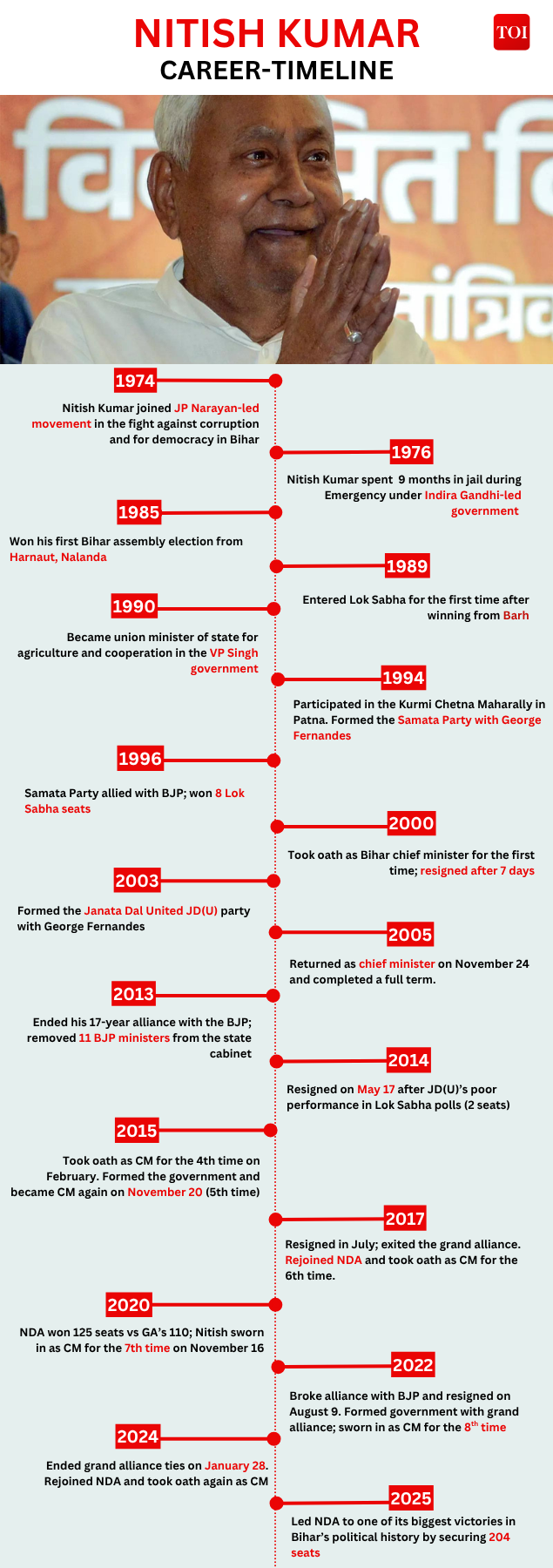
Nitish Kumar timeline

Lalu thrived on mass mobilisation, humour and confrontational politics. Nitish preferred administrative detail, negotiation and strategic positioning.The divergence became clearer as Lalu Prasad Yadav consolidated power in Bihar after becoming chief minister in 1990, following the implementation of the Mandal Commission recommendations by Prime Minister VP Singh.Lalu’s arrest of Lal Krishna Advani during the 1990 Ram Rath Yatra cemented his reputation as a defender of secular politics and a champion of backward caste empowerment.But as Lalu’s popularity grew, Nitish Kumar grew increasingly uneasy with what he saw as the concentration of power within one leader’s personality.In 1995, he finally broke away from the Janata Dal.The split marked the beginning of a long political rivalry that would define Bihar politics for decades.

Experimentation before BJP alliance

After leaving the Janata Dal, Nitish Kumar experimented with several political strategies in his quest to build an alternative to Lalu Prasad Yadav.Along with socialist leader George Fernandes, he founded the Samata Party.In his search for allies, Nitish Kumar briefly explored cooperation with the radical left-wing party CPI(ML) Liberation, which was then an emerging political force in parts of Bihar.The experiment reflected Kumar’s ideological roots in socialist politics. But the attempt soon revealed the limits of ideological alliances in a state where electoral arithmetic was dominated by caste coalitions.

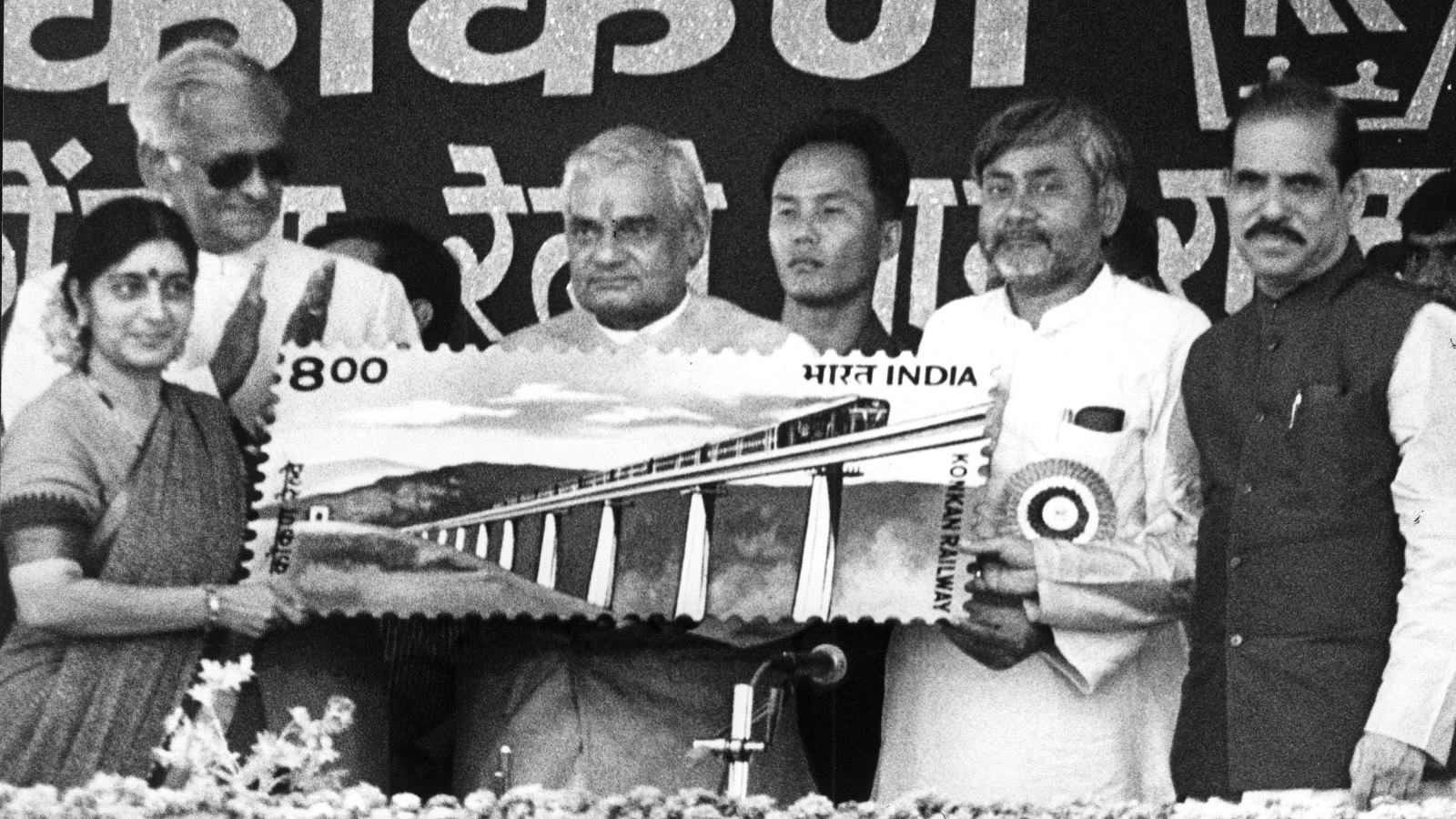
He entered the Vajpayee cabinet, holding the railway ministry and other portfolios from 1998–2004.

Nitish Kumar eventually concluded that defeating Lalu Prasad Yadav required a broader political alliance.That calculation led him toward the Bharatiya Janata Party (BJP). In 1996, he contested the Lok Sabha elections as part of an alliance with the BJP.

The creation of JD(U)

One of Nitish Kumar’s most consequential political moves came when he persuaded veteran socialist leader Sharad Yadav to unite their factions.The merger created the Janata Dal (United).The new party became the central pillar of the BJP-led National Democratic Alliance in Bihar. At the time, the BJP recognised that its own social base in Bihar remained limited. It was widely perceived as a party dominated by upper castes.Nitish Kumar, by contrast, came from the Kurmi community and had credibility among backward caste voters. As a result, the BJP agreed to allow the JD(U) to contest more seats than the BJP itself in the assembly elections of 2005.The strategy proved decisive.After a fractured verdict earlier that year, a fresh election in November 2005 delivered a comfortable victory for the NDA. Nitish Kumar finally became the chief minister.

The longest-serving CM

Over the course of his political career, Nitish Kumar became the longest-serving chief minister in Bihar’s history, holding the office for more than two decades across multiple terms.Kumar first assumed office as chief minister briefly in March 2000, though that government lasted only a week after he failed to prove a majority in the assembly. His enduring tenure began in November 2005, when the alliance between the Janata Dal (United) and the Bharatiya Janata Party secured a clear mandate in the assembly elections.From then on, Kumar remained the central figure in Bihar politics, returning to the chief minister’s office multiple times through changing alliances and political realignments. His long tenure spanned dramatically different political phases — from the early push to restore law and order after the 1990s to the later years of coalition bargaining and shifting alliances.Last year in November, Nitish finally took oath as chief minister of Bihar for a record-extending tenth time.

‘Paltu Ram’: Flip-flops that defined Nitish’s career

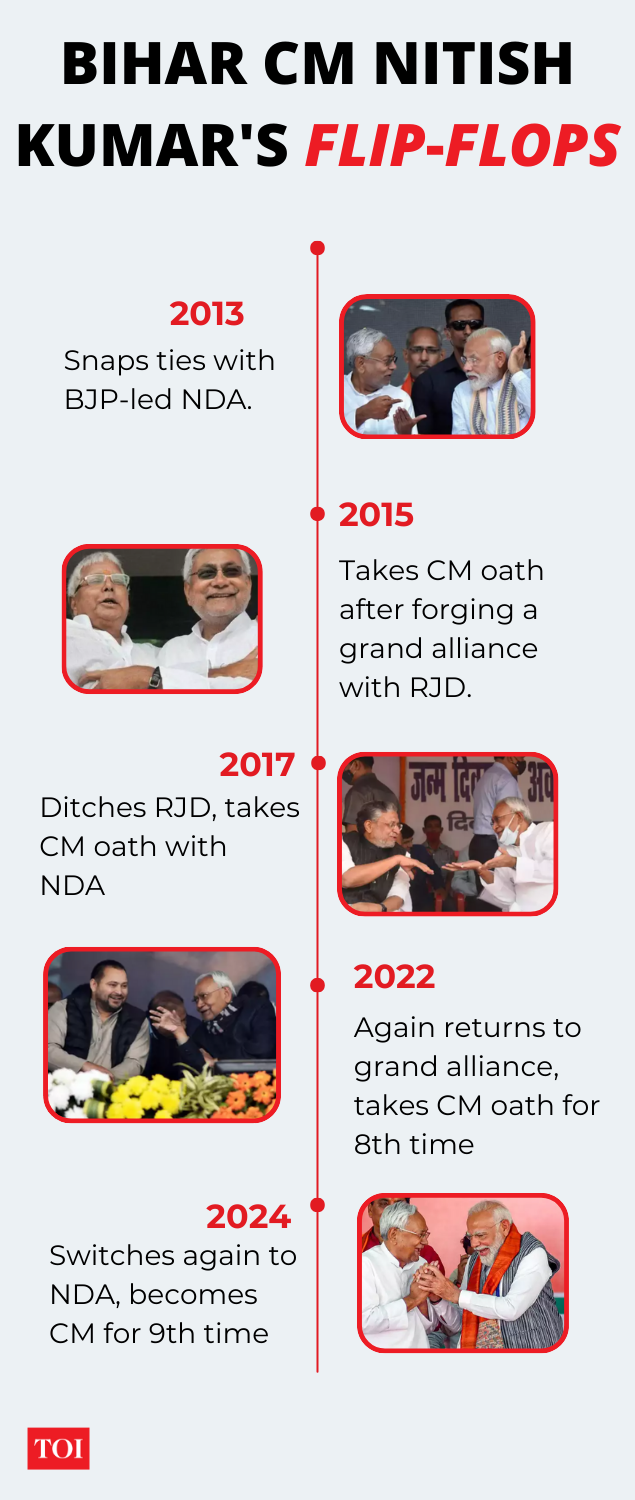
If governance made Nitish Kumar a respected administrator, his shifting alliances made him one of the most controversial political figures.His first major break with the BJP came in 2013, when Narendra Modi was elevated within the party and widely expected to become its prime ministerial candidate. Nitish Kumar ended his party’s 17-year alliance with the BJP, arguing that the country required inclusive leadership.But the decision proved politically costly.In the 2014 Lok Sabha elections, the JD(U) suffered a humiliating defeat, winning only two seats in Bihar.Accepting responsibility, Nitish Kumar resigned as chief minister, taking “moral responsibility” for the party’s performance.Yet his political instincts soon resurfaced.Within months, he regained power after installing Jitan Ram Manjhi as chief minister and later replacing him with the support of his former rival Lalu Prasad Yadav.The alliance between the two leaders culminated in the 2015 Mahagathbandhan victory, one of the BJP’s most significant electoral defeats in the Modi era.

Nitish's flip-flops

But the partnership collapsed in 2017, when Nitish Kumar once again switched sides and returned to the BJP-led NDA.Another shift followed in 2022, when he broke away from the BJP again, only to return to the alliance once more in 2024.The repeated realignments earned him a nickname that became inseparable from his public image: “Paltu Ram.”These flip-flops became one of the defining features of Nitish Kumar’s career.

The ‘Sushasan Babu’ of Bihar

Despite political controversies and shifting alliances, Nitish Kumar built a reputation for governance that earned him the popular nickname ‘Sushasan Babu’, or the man of good governance.When he first assumed office as chief minister in 2005, Bihar faced widespread criticism for poor infrastructure, weak law and order and sluggish economic growth.Nitish’s government focused on improving policing, speeding up criminal trials and expanding road and bridge construction across the state.His administration also launched several social welfare initiatives, including the Mukhyamantri Balika Cycle Yojana, which provided bicycles to schoolgirls to encourage education. The scheme significantly increased enrolment of girls in secondary schools and became one of the most widely cited symbols of his governance model.Other measures included reservations for women in local bodies and government jobs, as well as welfare programmes targeting extremely backward classes and Mahadalits.The masterstroke came after his government banned liquor in the state. The women voters, since then, have rallied behind Nitish making his party a winner every election.These initiatives also helped change Bihar’s governance narrative and restore a sense of administrative stability after years of turmoil and violence.

A CM who rarely fought assembly elections

Another distinctive aspect of Nitish Kumar’s political career has been his repeated use of the Legislative Council route to remain chief minister.After becoming CM in November 2005, Kumar did not contest an assembly election immediately. Instead, he entered the Bihar Legislative Council as a Member of the Legislative Council (MLC), the upper house of the state legislature, allowing him to continue in office without being elected to the assembly.He followed a similar route during subsequent terms, often choosing to remain an MLC rather than contest assembly polls directly. Under the Constitution, a person who is not a member of the legislature can serve as chief minister for six months, within which they must secure membership in either the assembly or the council.Kumar repeatedly used this provision by getting elected or nominated to the Legislative Council, ensuring continuity in office while avoiding the need to contest constituency-level elections.Although he did contest the 2015 Bihar assembly election from the Harnaut seat, winning comfortably, much of his time as chief minister was spent as a member of the legislative council.Supporters say this reflected his role as a statewide leader focused on governance rather than constituency politics. Critics, however, argued that the MLC route allowed him to remain in power while largely avoiding direct electoral contests in the assembly.

The dynasty question

For years, Nitish Kumar distinguished himself from many politicians by criticising “parivaarvaad”, or dynasty politics.He often argued that political leadership should emerge from public service rather than family inheritance.But as his son Nishant Kumar, now in his late forties, prepares to enter public life, that position may face its toughest test. If Nishant formally enters politics, Nitish Kumar could confront the same criticism he once directed at rival leaders.What remains undisputed, however, is his extraordinary ability to remain at the centre of Bihar’s politics for more than three decades.
[ad_2]

Source link

India in ‘comfortable position’ on energy amid Middle East crisis; Australia, Canada offer gas supplies: Report

[ad_1]

India in ‘comfortable position’ on energy amid Middle East crisis; Australia, Canada offer gas supplies: Report

NEW DELHI: India on Thursday reiterated that it’s in a comfortable position with regards to energy supply, amid the Middle East tensions.Country’s energy situation is being reviewed twice a day and remains in a comfortable position on energy security despite the escalating tensions in West Asia, government sources, cited by ANI, said.Officials maintained that there is no global shortage of crude oil, LNG or LPG, and India continues to engage with multiple suppliers to ensure steady inflows. Only about 40 per cent of India’s crude imports pass through the Strait of Hormuz, reducing the country’s vulnerability to potential disruptions in the region. The remaining 60 per cent is sourced through alternative routes.India currently holds nearly eight weeks of total inventory cover for crude oil and petroleum products, including strategic reserves. This includes approximately 25 days of crude oil stocks and around 25 days of petrol and diesel inventory.ANI sources also said diversified sourcing and adequate reserves have positioned India to manage any short-term supply-side shocks, even as it continues to closely monitor developments in the region.Government sources further clarified that there are no plans to ration petrol or diesel, reiterating that sufficient stocks are available across the country to meet domestic demand. Officials maintained that fuel supplies remain stable and that there is no cause for public concern.Sources also noted that Qatar accounts for nearly 20 per cent of global LNG supplies. QatarEnergy has declared force majeure, a contractual provision that allows a supplier to suspend or reduce obligations due to extraordinary circumstances beyond its control.In this context, GAIL (Gas Authority of India Limited) is also expected to invoke force majeure in order to manage supply commitments and prioritise deliveries to critical sectors.Officials added that these measures are precautionary and aimed at ensuring uninterrupted supplies to essential sectors amid evolving regional uncertainties.
Offers from other countries

Australia and Canada have offered to supply gas to India as New Delhi explores alternative energy sources amid the escalating tensions in West Asia, further stated the government sources.India currently imports around 195 million metric standard cubic metres per day (mmscmd) of gas, of which approximately 60 mmscmd comes from Qatar. With supply risks under watch, the government is actively scouting additional markets to ensure continuity and diversification.Officials said India is also engaging with major oil producers and global traders for crude oil and LPG procurement. Discussions are underway with the International Energy Agency (IEA) and the Organization of the Petroleum Exporting Countries (OPEC) to assess market stability and supply outlook. In parallel, talks with the US are focused on securing insurance coverage for Indian vessels operating in sensitive maritime corridors.As part of its broader diversification strategy, India recently signed new energy agreements with the UAE and the US to strengthen and rebalance its energy basket.Earlier reports also suggested that Russia also also offered help to send crude oil to India. “We have been open to supplying crude oil to India,” said Russian Ambassador Denis Alipov.Additionally, according to a Bloomberg report, ship-tracking data shows that two Russian crude cargoes originally destined for East Asia have changed course and are now headed to India.Vessel monitoring data from Kpler and Vortexa indicate that the two tankers are carrying a combined 1.4 million barrels of Urals crude and are expected to discharge at Indian ports later this week. Earlier voyage signals had pointed to East Asian destinations before the ships altered their route.Read more: Russian crude to rescue! Ships carrying Russia’s oil head to India amid Middle East supply shock – Report

[ad_2]

Source link

Jaya Bachchan smiles wide as she attends Arjun Tendulkar’s wedding, Amitabh Bachchan makes a rare appearance as the couple twins in white – WATCH VIDEO | Hindi Movie News

[ad_1]

Jaya Bachchan smiles wide as she attends Arjun Tendulkar's wedding, Amitabh Bachchan makes a rare appearance as the couple twins in white - WATCH VIDEO

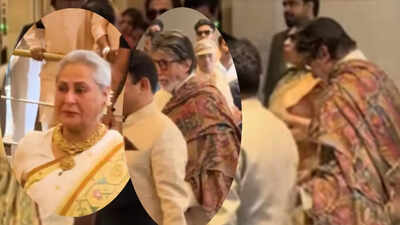
Sachin Tendulkar’s son Arjun Tendulkar tied the knot on Thursday, March 5 with Saaniya Chandhok. One saw several celebs attend this grand wedding and bless the couple. As far as the cricketers are concerned, one saw Sunil Gavaskar, Rahul Dravid, Yuvraj Singh, MS Dhoni, Zaheer Khan, Yusuf Pathan, Harbhajan Singh with their respective wives. Many other celebs also graced the wedding. Amitabh Bachchan made a rare appearance and was spotted by the paps. He was seen in a classy white kurta pyjama teamed with a shawl. Jaya Bachchan was seen twinning with him in a white saree with embroidery and a gajra. The actress looked beautiful and was seen in a good mood as she smiled wide. Though the veteran couple did not pose for the paps and straight away walked in. Abhishek Bachchan and Aishwarya Rai Bachchan were also seen arriving together. Shah Rukh Khan wore an ivory ethnic wear while Gauri Khan along with Suhana Khan were seen twinning in yellow outfits. Khan was all smiles as he posed with his family. Legendary singer Asha Bhosle also attended the wedding, dressed in a white saree paired with a pearl necklace. The couple’s sangeet ceremony, hosted on Tuesday evening, turned into a glittering affair with an impressive mix of cricketing stars and prominent names from the film fraternity in attendance. Among those who joined the pre-wedding festivities were filmmaker Vidhu Vinod Chopra, along with cricketer Yuvraj Singh and his wife Hazel Keech. The guest list also featured Harbhajan Singh and Geeta Basra, Zaheer Khan with Sagarika Ghatge, Ajit Agarkar and his wife Fatima Ghadially, as well as Irfan Pathan with Safa Baig. Yusuf Pathan was also present, accompanied by his wife Afreen.The evening was marked by music, celebration and a strong show of camaraderie from both the sports and entertainment worlds.

[ad_2]

Source link

Petrol and diesel prices today: What does Middle East crisis mean for fuel cost? Check city-wise list of current rates

[ad_1]

Petrol and diesel prices today: What does Middle East crisis mean for fuel cost? Check city-wise list of current rates

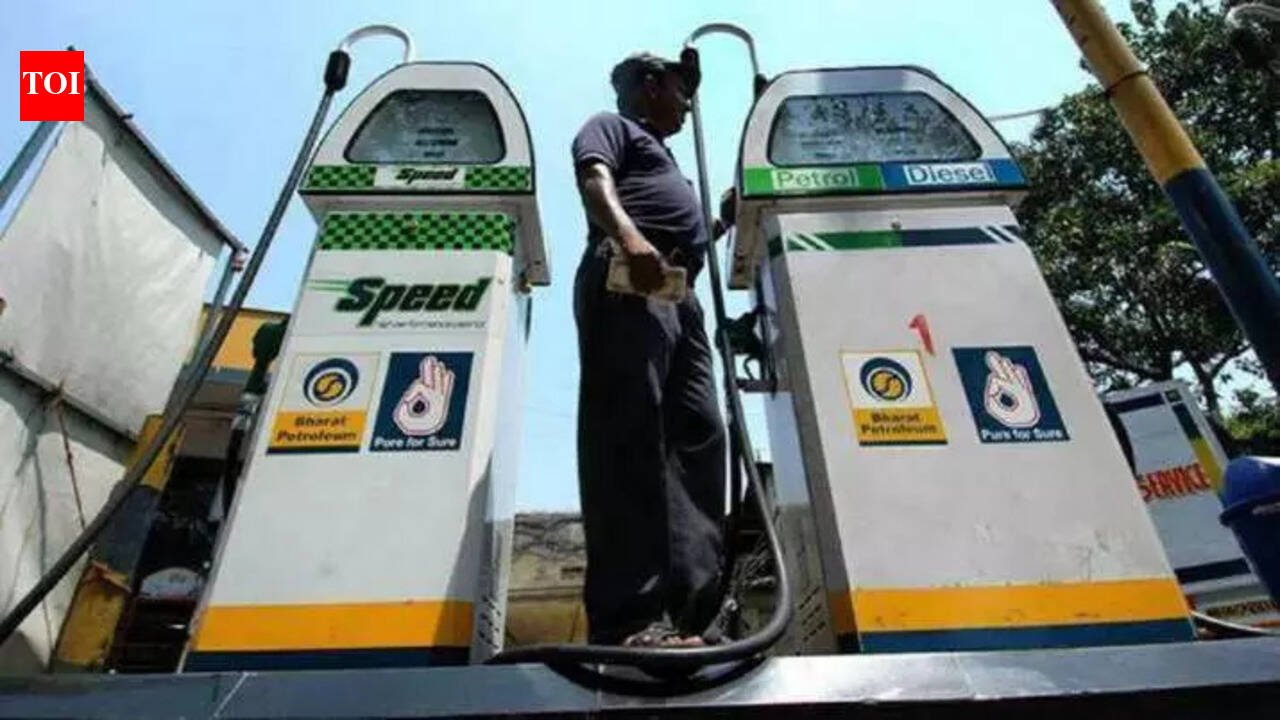
As the Middle East crisis escalates, concerns have grown over a possible rise in petrol and diesel prices. However, despite a sharp increase in global crude oil prices, fuel rates in major Indian cities have remained unchanged. Consumers can breathe a sigh of relief as retail petrol and diesel prices in the country are not expected to rise in the immediate future, according to government sources cited by PTI. The government is reportedly following a calibrated strategy that allows oil marketing companies to improve their margins when international crude prices are low, while shielding consumers when global prices increase.According to a Nomura report, oil marketing companies (OMCs) may absorb part of the increase, instead of passing it fully to consumers. The report stated that the government’s earlier decision not to cut retail petrol and diesel prices when global crude prices had fallen has created a buffer for OMCs to handle the impact of the latest rise in oil prices. In theory, a 10% jump in global crude prices could add around 50 basis points to inflation if the entire increase is passed on to consumers, compared with the earlier estimate of 30 basis points. However, such pass-through rarely happens immediately. “Retail prices of petrol and diesel are unofficially pegged, with OMCs absorbing the impact through their balance sheets,” the report noted.Crude oil prices have already climbed notably amid geopolitical tensions. Since the US/Israel attacks on Iran, Brent crude has risen 16.8%, while WTI crude has increased by 14%.

Petrol, disel prices today: Check rates in your city

As of 05 March 2026, petrol and diesel prices in major cities were as follows:

  • New Delhi: Petrol Rs 94.77 per litre, Diesel Rs 87.67 per litre
  • Hyderabad: Petrol Rs 107.46 per litre, Diesel Rs 95.70 per litre
  • Bengaluru: Petrol Rs 102.92 per litre, Diesel Rs 90.99 per litre
  • Chennai: Petrol Rs 100.84 per litre, Diesel Rs 92.39 per litre
  • Kolkata: Petrol Rs 105.45 per litre, Diesel Rs 92.02 per litre
  • Lucknow: Petrol Rs 94.69 per litre, Diesel Rs 87.81 per litre
  • Jaipur: Petrol Rs 104.72 per litre, Diesel Rs 90.21 per litre

[ad_2]

Source link