Breaking News
‘Growing signs that dictator is gone’: Netanyahu’s big claim on Khamenei after US-Israel strikes

[ad_1]

'Growing signs that dictator is gone': Netanyahu's big claim on Khamenei after US-Israel strikes

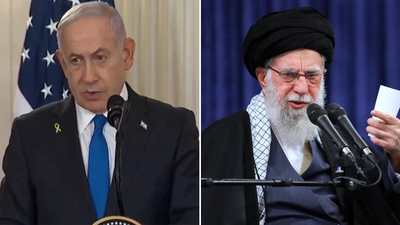
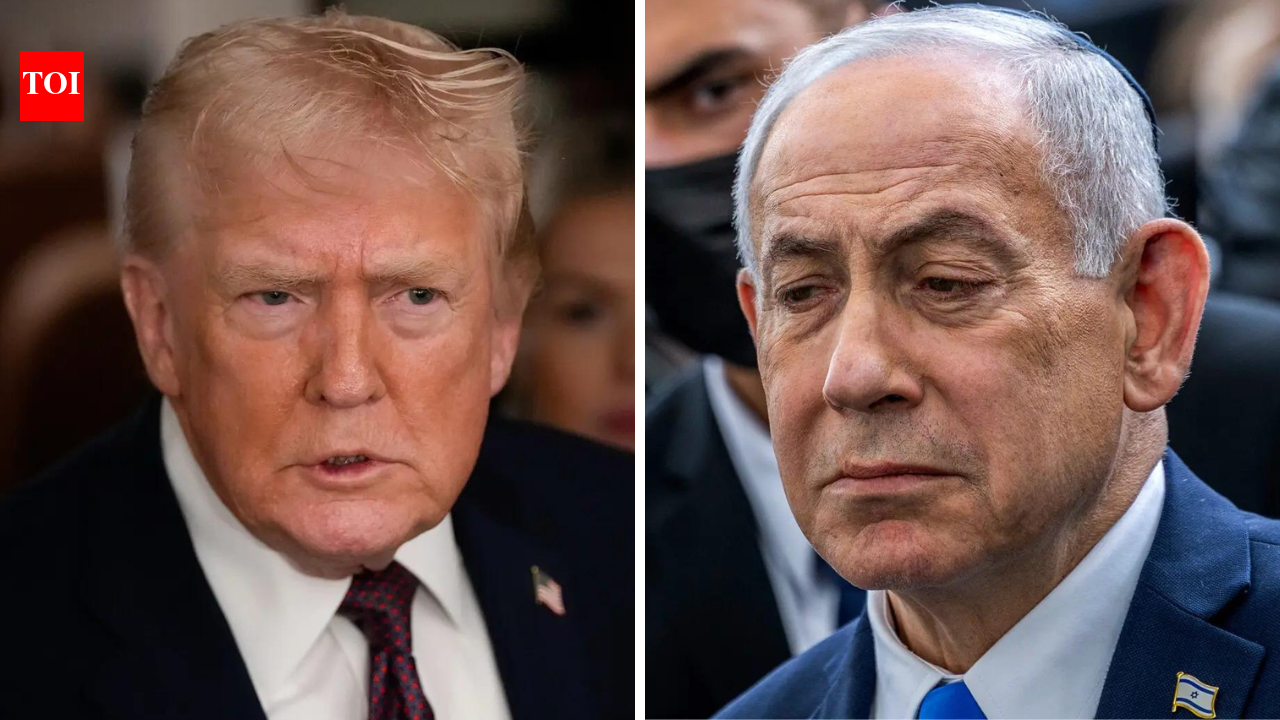
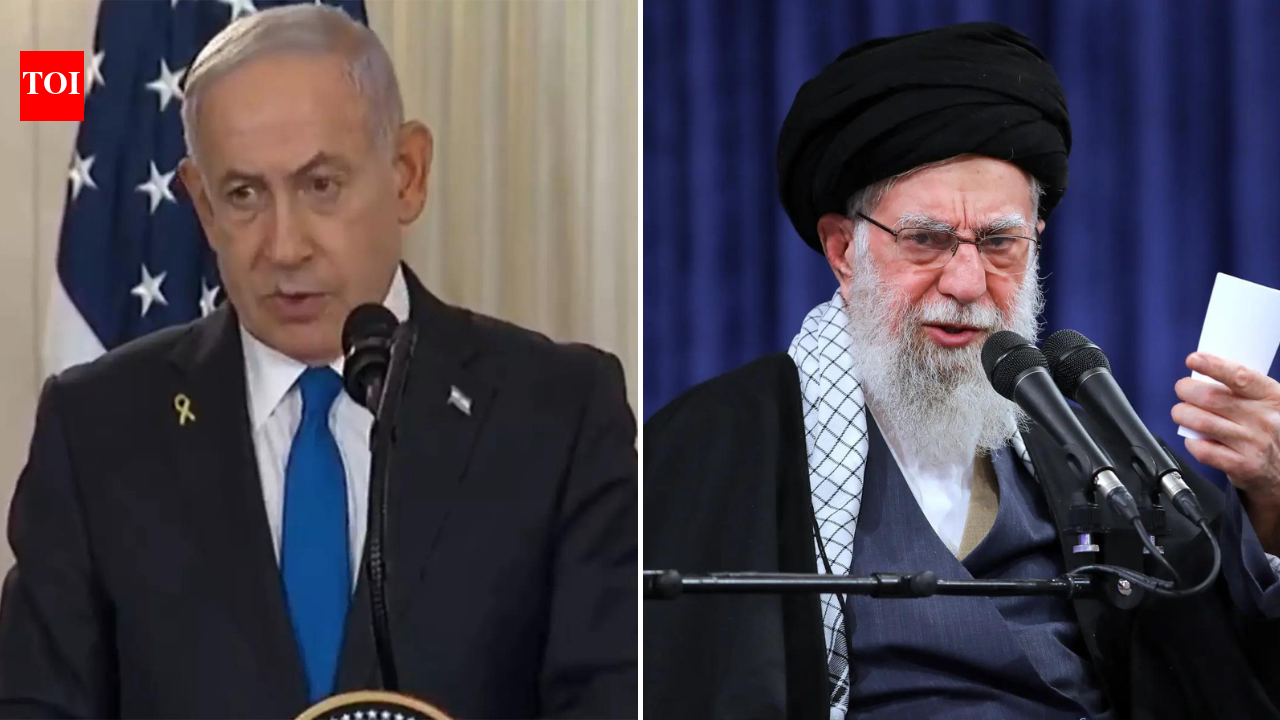
Israeli Prime Minister Benjamin Netanyahu has claimed there are “growing signs that this dictator is gone”, suggesting that Iran’s Supreme Leader Ali Khamenei may have been killed in sweeping US-Israeli strikes on Tehran.In a nationally televised address, Netanyahu said one of the first targets was Khamenei’s compound in the Iranian capital. “There are growing signs that the tyrant is no longer alive,” he told Israelis, hours after explosions were reported near the offices of the 86-year-old cleric.The Israeli leader said the operation had eliminated senior commanders in the Islamic Revolutionary Guard Corps (IRGC), high-ranking regime officials and leading nuclear scientists. “This morning we eliminated IRGC commanders, senior Iranian regime officials, senior nuclear officials,” he said, adding that “in the coming days, we will hit thousands of targets of the terror regime”.The joint assault, described by US President Donald Trump as a “massive operation”, marked one of the most direct attacks on Iran’s leadership in decades. Trump said the objective was to destroy Iran’s military capabilities and remove the threat of it acquiring a nuclear weapon. About 12 hours after the strikes began, the US military reported no American casualties despite what it called “hundreds of Iranian missile and drone attacks”.Iranian state media, citing the Red Crescent, said at least 201 people had been killed and more than 700 injured. Tehran retaliated with missiles and drones aimed at Israel and at US military installations in Bahrain, Kuwait and Qatar. Exchanges of fire continued into the night.Earlier, Iran’s foreign minister, Abbas Araghchi, told NBC News that Khamenei and President Masoud Pezeshkian were alive “as far as I know”, calling the attack “unprovoked, illegal and absolutely illegitimate”.Netanyahu, however, framed the campaign as a turning point. Israel had gone to war to “fundamentally change” the situation in which Iran was nearing a nuclear weapon, he said. The operation would continue “as long as necessary”, and “stamina is necessary”.In an unusual direct appeal to Iranians, he urged them to seize what he called a “once in a generation chance” to overthrow the regime. “Take to the streets en masse,” he said. “It is high time you come together and unite for a historic mission.”Thanking Trump for his “historic leadership”, Netanyahu said the campaign would ultimately “lead to peace, true peace” — even as the region braces for further escalation.

[ad_2]

Source link

US–Israel strikes Iran: Indian embassies in UAE, Syria issue safety advisories for nationals tensions escalate | World News

[ad_1]

US–Israel strikes Iran: Indian embassies in UAE, Syria issue safety advisories for nationals tensions escalate

Indian embassies on Saturday issued urgent advisories urging nationals to exercise caution and follow safety guidelines amid escalating tensions in the Middle East following coordinated strikes by the United States and Israel on Iran. The Embassy and Consulate of India in the United Arab Emirates (UAE) reported that Indian passengers are stranded at airports due to temporary, precautionary airspace closures. In a post on X, the embassy officials said they are in close contact with UAE authorities and airlines to provide full support for affected travelers.Meanwhile, the Embassy of India in Damascus has urged Indian nationals in Syria to avoid unnecessary travel, remain vigilant, take due care and adhere to safety guidelines. Emergency contact details, including a dedicated mobile number and email, have been provided for queries.The advisories follow coordinated attacks by the United States and Israel on Iran earlier in the day. Multiple strikes were reported nationwide, including areas surrounding the offices of Supreme Leader Ayatollah Ali Khamenei. Smoke was seen rising from Tehran as authorities closed roads and responded to explosions. US President Donald Trump described the operation as a massive effort to neutralize Iran’s military capabilities and prevent the development of nuclear weapons.Iran’s foreign ministry vowed to defend its territory, with the Revolutionary Guard reportedly launching counterattacks, including drone and missile strikes targeting Israel and the US military installations in Bahrain, Kuwait, and Qatar.The attacks mark a sharp escalation in already heightened tensions in the Middle East, with at least 85 confirmed deaths in southern Iran alone.

[ad_2]

Source link

Question that Bill Gates’ daughter Phoebe Gates asks every candidate she interviews, be it for engineering, marketing or sales

[ad_1]

Question that Bill Gates' daughter Phoebe Gates asks every candidate she interviews, be it for engineering, marketing or sales

Phoebe Gates regularly asks candidates one question during interviews. The co-CEO of the artificial intelligence (AI)-powered shopping assistant Phia has revealed that she asks this question to candidates during interviews for roles at her startup. The youngest daughter of Microsoft co-founder Bill Gates and philanthropist Melinda French Gates said that this question helps her to understand how applicants approach problem-solving rather than testing their factual knowledge.Speaking on the Opening Bid Unfiltered podcast with Yahoo Finance, Gates said, “I stole this from another founder. ‘How much do you think California state spends on healthcare? And do a bottoms-up approach for how you would build that out.’” She added that the question is being asked across departments. Phobe noted, “I’ll ask that for every single role. I’ll ask that for sales, I’ll ask that for marketing, I’ll ask that for engineering.” Gates said the goal is not to check whether candidates know the correct figure but to evaluate “how someone goes through a logical approach to solving that question.”As Phia expands, Phoebe Gates said she uses additional questions during the hiring process. When interviewing sales candidates, she asks about the “craziest” thing they have done to close a deal. “That teaches you a lot about how far they’ll go, how dedicated they are to do something,” she said.The 23-year-old recently raised $35 million in Series A funding for Phia, the AI shopping agent she co-founded in April 2025 with her Stanford University roommate, Sophia Kianni. Since launch, the startup has attracted more than 1 million users and reported an elevenfold increase in revenue. The company is currently valued at about $185 million.Phia is a mobile app and browser extension designed to help shoppers reduce spending by displaying resale and secondhand alternatives to the products they are browsing.

What Phoebe Gates said about funding from Bill and Melinda Gates

Gates also noted that Phia has not taken funding from her parents, saying, “I have a chip on my shoulder,” during the same podcast. She added that one of the key lessons she has learned from her parents is how to build strong teams.“From my dad, I’ve really learned that your team is the core of what you’re building. You can’t do anything without an incredible team,” she added.Instead of investing financially in the venture, Bill Gates has contributed his time and experience to support his daughter’s startup. Shortly after the company’s launch in 2025, the tech billionaire shared on LinkedIn that he was assisting the team with customer service efforts in the early stages. Announcing his involvement with Phia, Gates wrote: “I’ve entered the startup world again.”“When your daughter asks if you’d be willing to work a shift in customer service at her startup, the only right answer is yes. I’ve spent a lot of time thinking about how technology can make systems more efficient, equitable, and accessible. But I’ve learned over the years that the best way to understand how something works, or where it breaks, is to go straight to the people using it. That’s why I’ll be joining the Phia customer experience team for a day this week”, Bill Gates wrote in a LinkedIn post last year.

[ad_2]

Source link

Iran targets Qatar: Falling missile debris creates panic in Doha – Watch

[ad_1]

IRAN War Explodes: Houthis Threaten Red Sea, Israel As Middle East Burns | WATCH

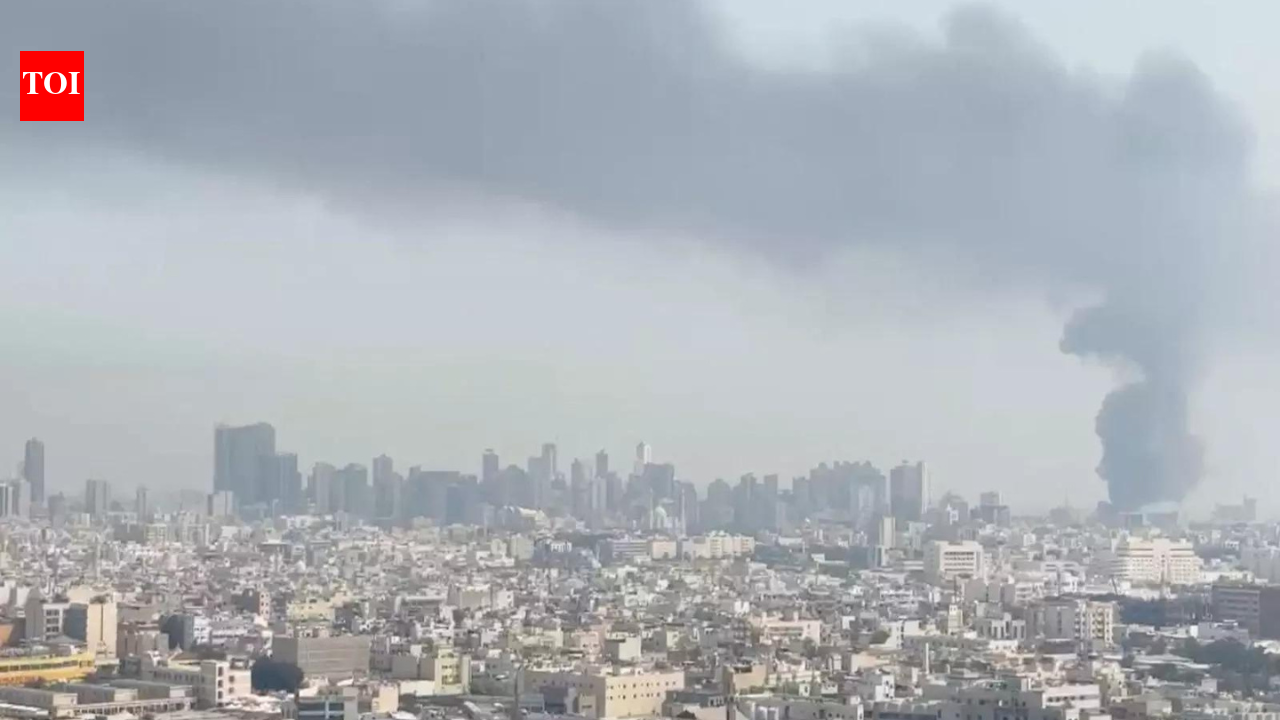
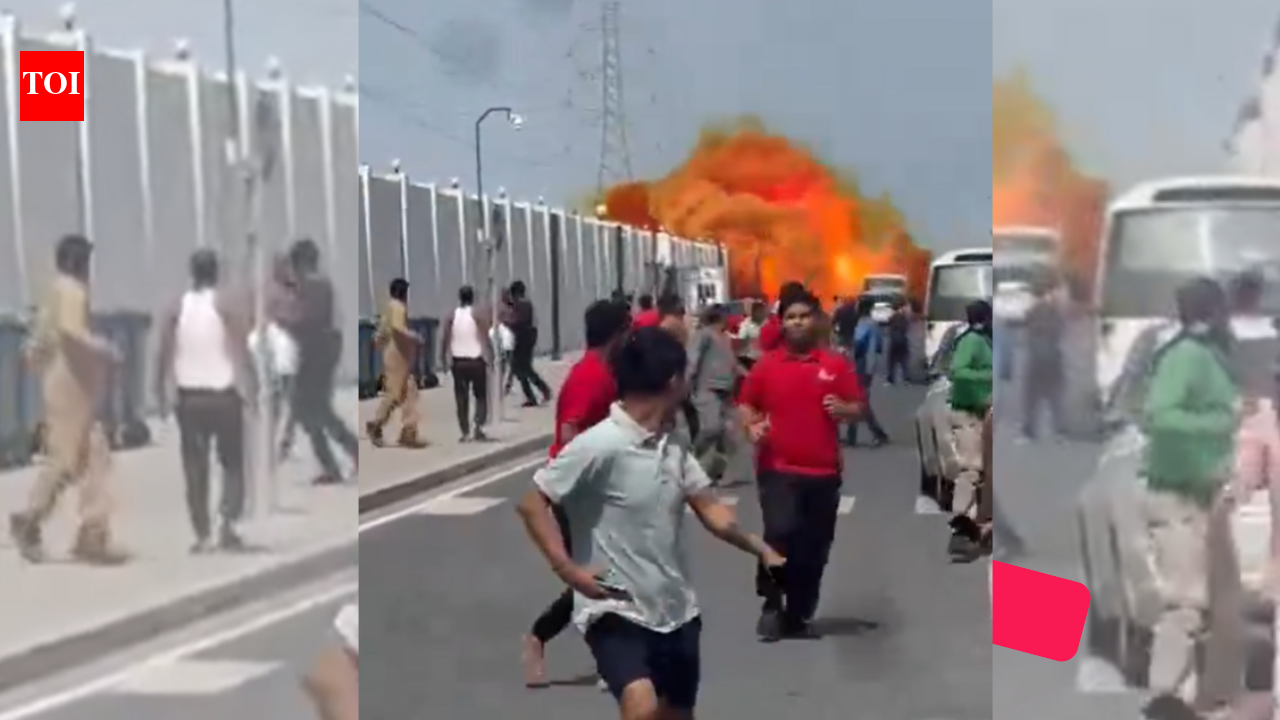
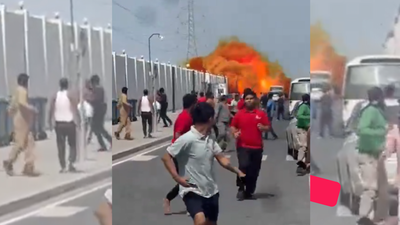
Iran launched retaliatory strikes on several Middle Eastern countries along with targeting Israel and US military facilities in the region on Saturday. One of the country’s targeted is Qatar. In a video now going viral on social media shows, falling rocket debris on the outskirts of Qatar’s capital Doha triggered panic, as video footage showed an object descending from the sky before a large explosion sent flames and thick smoke into the air.

IRAN War Explodes: Houthis Threaten Red Sea, Israel As Middle East Burns | WATCH

The incident followed amid escalating hostilities in the region following coordinated US-Israel strikes on Iran earlier in the day. Footage further showed people screaming and running for cover as the debris struck. The explosion produced red flames and a plume of black smoke rising above a residential area. “It is right next to my room,” one person is heard saying in the footage. “Oh my God! May Allah protect us,” he adds.The development follows a sharp escalation after strikes on Tehran, including near the offices of Iran’s Supreme Leader Ali Khamenei. Iran subsequently launched drones and missiles targeting Israel, while regional airspaces were closed and US embassies advised citizens to shelter in place.Qatar, which hosts the Al Udeid Air Base, the forward headquarters of US central command, has been on heightened alert as tensions intensified. Earlier, Qatar’s foreign ministry condemned what it described as an Iranian missile attack on its territory and said it reserved the right to respond in accordance with international law.The falling debris near Doha reflects the risk of spillover beyond Iran and Israel, as the conflict raises concerns of a broader regional confrontation. Authorities have not yet released detailed information on the specific origin of the debris.

[ad_2]

Source link

‘It is a proud moment’: PM Modi celebrates J&K’s maiden Ranji Trophy triumph | Cricket News

[ad_1]

'It is a proud moment': PM Modi celebrates J&K's maiden Ranji Trophy triumph
PM Modi celebrates J&K’s maiden Ranji Trophy triumph

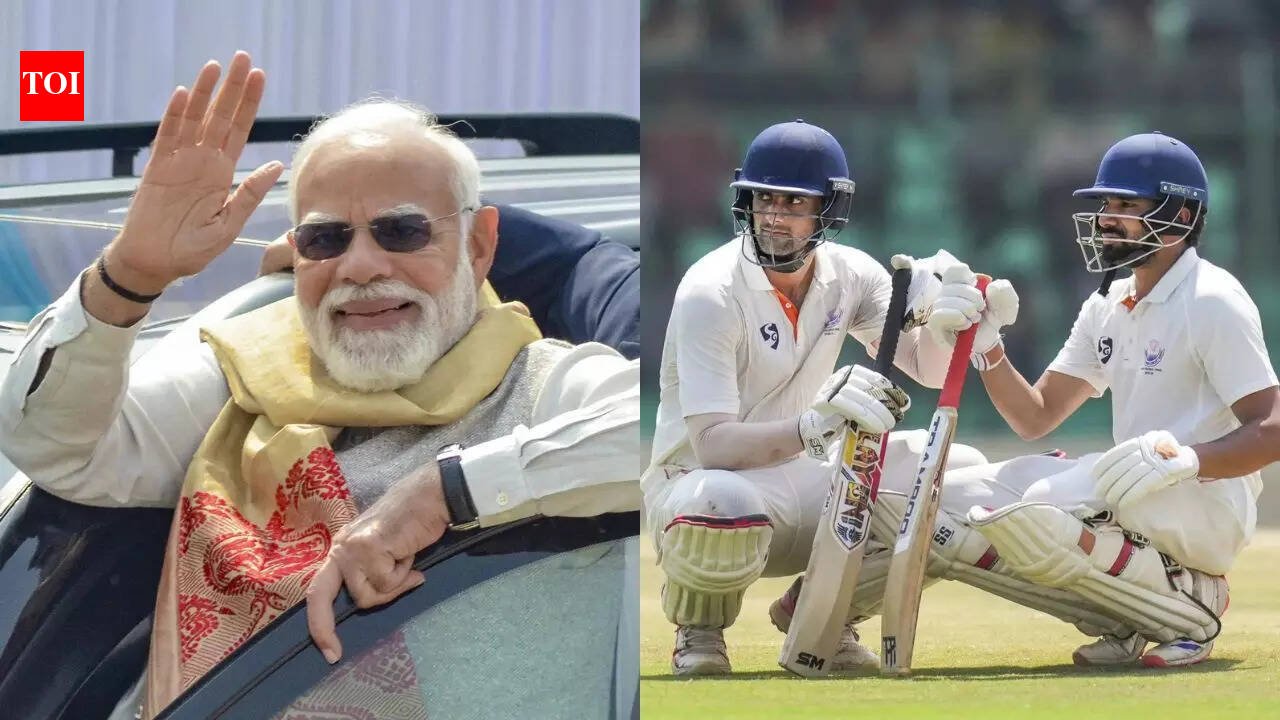
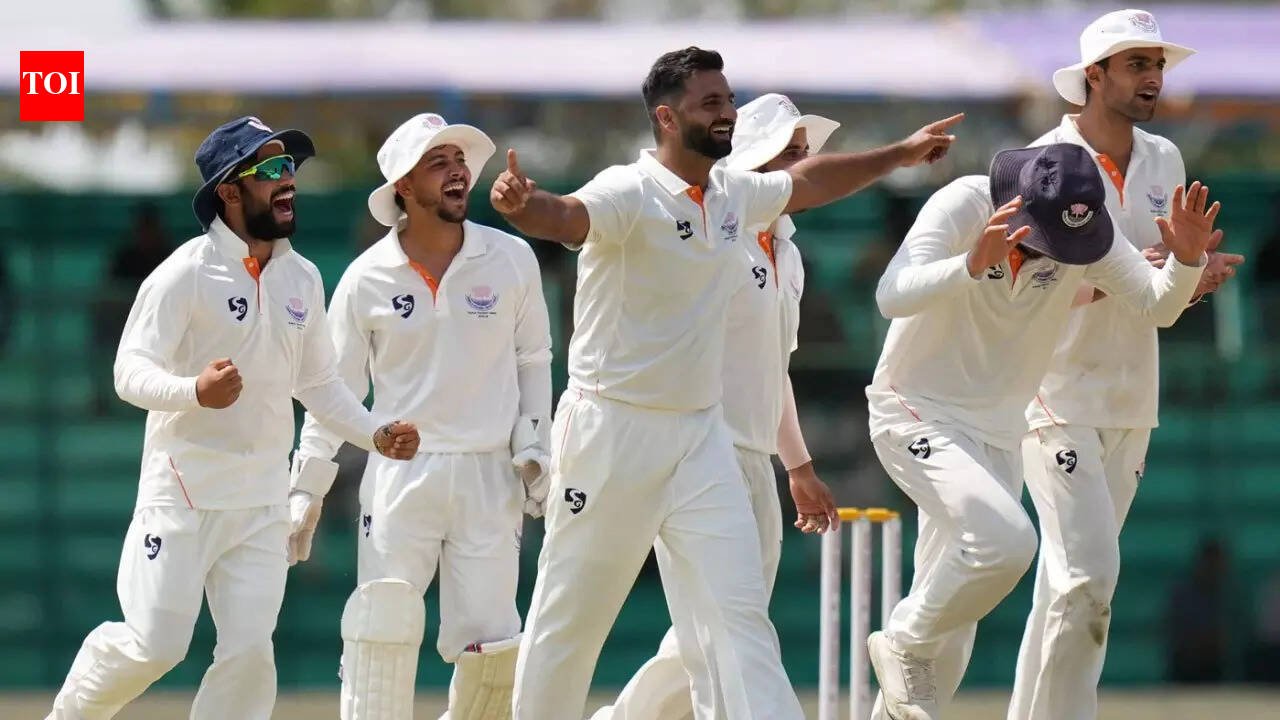
NEW DELHI: Prime Minister Narendra Modi led the nation in congratulating Jammu & Kashmir after they clinched their maiden Ranji Trophy title, calling it a proud moment for the region.“Congratulations to the Jammu and Kashmir team for their first ever Ranji Trophy win! This historic triumph reflects remarkable grit, discipline and passion of the team. It is a proud moment for the people of Jammu and Kashmir and it highlights the growing sporting passion and talent there. May this feat inspire many young athletes to dream big and play more,” PM Modi wrote on X.The cricket fraternity also came together to celebrate Jammu & Kashmir’s historic triumph, with tributes pouring in from legends and administrators alike.

J&K create history! Jammu & Kashmir win maiden Ranji Trophy2025-26 | emotional family reactions

Sachin Tendulkar hailed the transformation, writing, “The Kashmir willows have been a part of many champions’ kits. To see Jammu & Kashmir’s journey from being an enabler of champions, to becoming champions themselves, is beautiful.”Reflecting on the campaign, he added, “The season was built on consistency, resilience, and season-long excellence.Auqib Nabi’s impact with the ball stood out in a demanding campaign.“A historic moment for the team, coaches, and support staff. Journeys like these define the beauty of domestic cricket.”ICC chairman Jay Shah also praised the side, stating, “Congratulations to the Jammu & Kashmir team in India for scripting a remarkable story of grit and perseverance. While the players are fully deserving of the adulation they receive, one must also remember the contribution of the coaching staff, management and administrators from J&K who have toiled behind the scenes to fashion this landmark achievement. I am sure that this win will ignite belief in the hearts of the current generation from the region and drive the next one to pick up a bat or ball. Our sport is rich with such stories of inspiration from around the world, and I hope this one also receives its fair share of admiration.”Mohammad Kaif posted, “Historic day for Jammu & Kashmir cricket. Having led UP to its first Ranji Trophy title, I know what this moment means to the players and the state. More players from J&K will now believe that they too can do it.”Irfan Pathan wrote, “Many congratulations to J&K cricket for creating history by winning the first-ever Ranji Trophy. I never had even a shadow of a doubt that you guys will achieve this and many more trophies.”Aakash Chopra said, “Jammu & Kashmir, you beauty. The story for the ages. So so happy for what our boys have achieved. Indian cricket is in a safe and happy place.”Shikhar Dhawan added, “Historic moment for Jammu & Kashmir cricket. Maiden Ranji Trophy title built on belief, strong leadership from Paras Dogra, and a remarkable season with the ball from Auqib Nabi. Big contributions from Shubham Pundir, Yawer Hassan, Qamran Iqbal, Sahil Lotra, Abdul Samad, and the entire unit. Proud moment.”Harbhajan Singh said, “Will to win, that’s what matters. What a day for Jammu & Kashmir. Well done, simply outstanding, winning the Ranji Trophy isn’t easy at all. They have played terrific cricket throughout the season and played like a unit: many congratulations and many more trophies to come. Great to see Cricket growing in the Jammu and Kashmir region.”Yuvraj Singh posted, “Unbelievable! History has been written today! Huge congratulations to the Jammu & Kashmir team for clinching their maiden #RanjiTrophy title after 67 long years! Dominating Karnataka with pure grit, heart, and unbreakable spirit. Proud beyond words of #AuqibNabi’s fire, #QamranIqbal’s masterclass, and the entire squad and training staff’s belief! J&K cricket has arrived! Keep shining, boys!”Suresh Raina wrote, “Congratulations on the maiden Ranji Trophy, Jammu & Kashmir. Jammu & Kashmir crowned the Ranji Trophy champions for the first time ever. A monumental moment for the state and domestic cricket!! Well done, team, truly well deserved.”

[ad_2]

Source link

Hampus Lindholm leads Boston Bruins surge as NHL trade rumors intensify before deadline | NHL News

[ad_1]

Hampus Lindholm leads Boston Bruins surge as NHL trade rumors intensify before deadline
Boston Bruins reportedly targeting 3 defensemen ahead of trade deadline (Image via Getty Images)

The Boston Bruins came back from the Olympic break with a new sense of urgency because the NHL trade deadline is coming up soon. Boston got a boost from their 4-2 win over the Columbus Blue Jackets, but it also showed areas of the roster that could change in the next few days.As rumors grow about possible new players, veteran defenseman Hampus Lindholm continues to be the anchor of the blue line. General manager Don Sweeney has to make some very important decisions that could change the course of Boston’s postseason and the latest NHL news roundup.

Hampus Lindholm, Jeremy Swayman, and Morgan Geekie talk after 6-2 L @ DAL

Boston Bruins NHL trade rumors heat up

Trade chatter surrounding the Boston Bruins has intensified as the deadline nears, making this a focal point in NHL trade rumors across the league. Boston previously explored defensive upgrades, and league insiders suggest the front office remains active in discussions involving both a top-four defenseman and a middle-six forward.Names linked in league circles include players from the St. Louis Blues, with forwards such as Robert Thomas and Brayden Schenn reportedly drawing interest. While no deal appears imminent, executives around the league expect movement as teams finalize strategies before the cutoff.Lindholm’s steady presence on the ice has been very important. He has often played with young defenseman Mason Lohrei, giving him advice while playing a lot of minutes. Lindholm’s ability to move the puck and play defense has helped a unit that has been inconsistent at times this season.The results of Boston’s recent NHL games show that the team can compete but is still looking for consistency. The win over Columbus showed that the team was better organized and scored at the right times. However, management will probably become more aggressive in the future.There are also decisions being made about depth in goal. Michael DiPietro, the goaltender, was called into action for a short time before going back to the Providence Bruins. Jeremy Swayman, the starter, is expected to take on a bigger role. Over the next week, it will be important to keep an eye on NHL injury updates and roster changes.The Boston Bruins are at a very important point right now, with momentum building and rumors flying.

[ad_2]

Source link

Iran attacks US military bases across Middle East in operation ‘Truthful Promise 4’

[ad_1]

ON CAM: Iran BOMBS American Naval Base In Bahrain; Air Defences Fail To Intercept Missile | WATCH

AP photo

Iran struck American military bases across the Middle East in retaliatory strikes against Israel and the United States, hours after the two arch-rivals rocked Tehran Saturday morning.Iran’s paramilitary Revolutionary Guard said the military struck several facilities across the region in what they named operation “Truthful Promise 4.”

ON CAM: Iran BOMBS American Naval Base In Bahrain; Air Defences Fail To Intercept Missile | WATCH

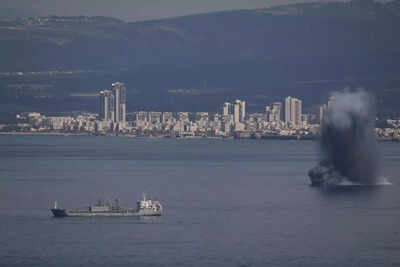
The Revolutionary Guard said in a statement that in the first phase of the operation, named “Truthful Promise 4,” Iran’s military struck the command of the US 5th Fleet in Bahrain, as well as US bases in Qatar and the United Arab Emirates and military targets in Israel. However, the extent of the damage at the headquarters of the United States Fifth Fleet was not immediately clear. The base lies just southeast of central Manama, capital of the island nation of Bahrain.

US (2) (1)

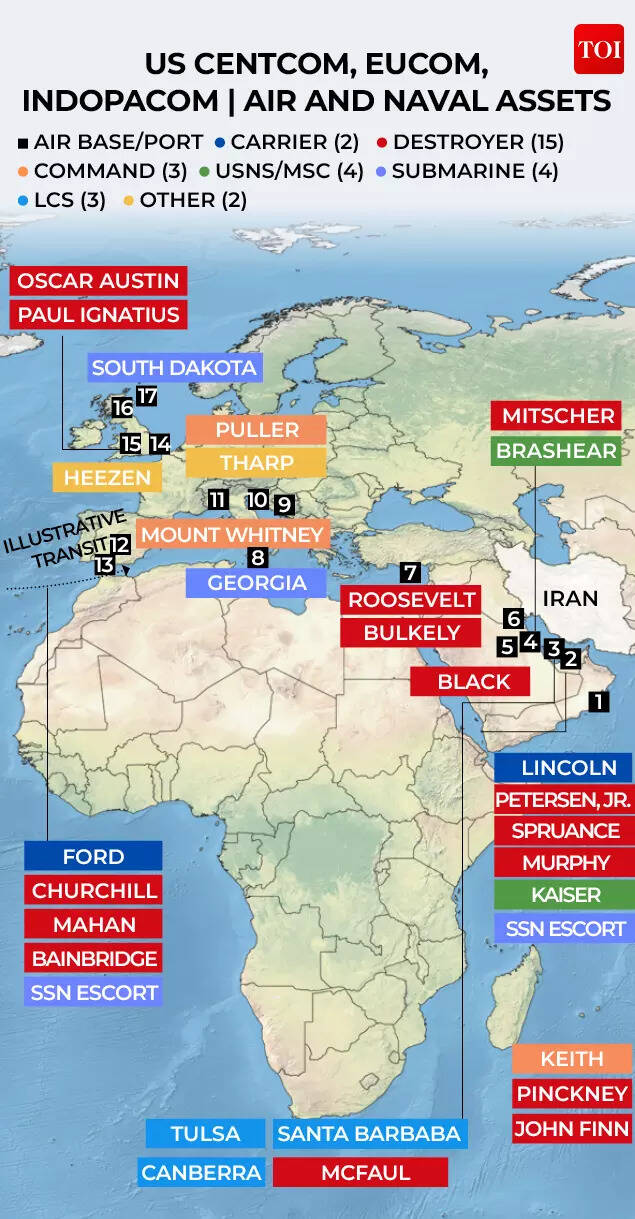
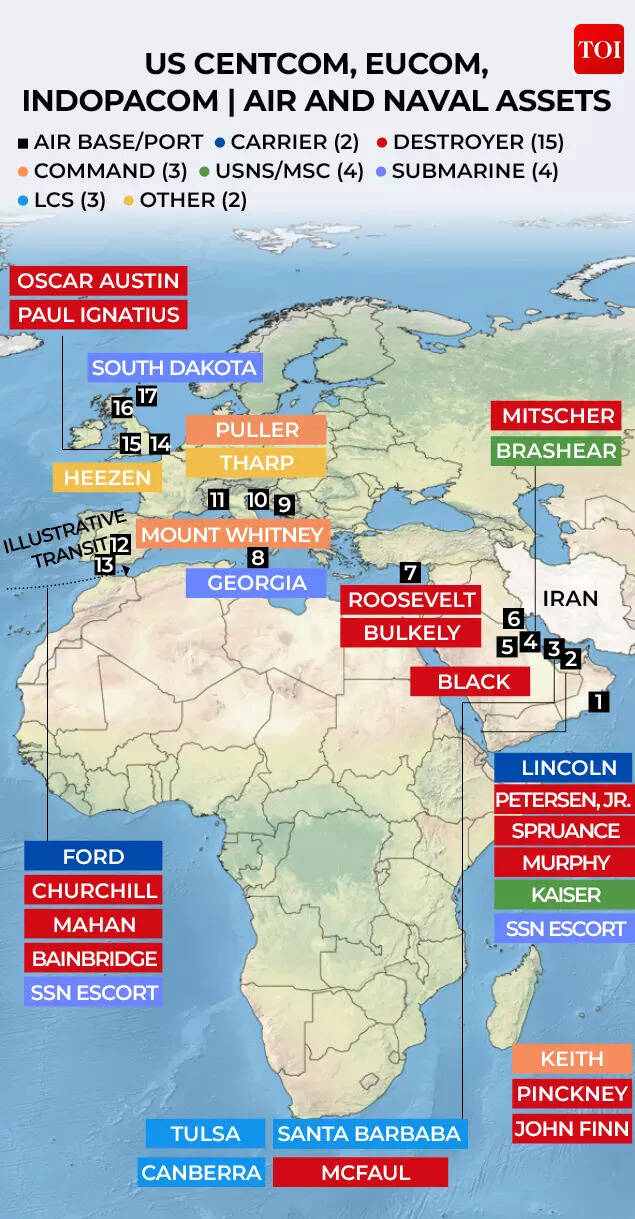
US assets across middle east

There have been no reports of damage in these areas apart from one death in the United Arab Emirates.Shrapnel from an Iranian missile attack on the capital of the United Arab Emirates killed one person Saturday.The state-run WAM news agency reported the fatality, the first known in the Iranian counterattack following the United States and Israeli launching a major airstrike campaign targeting IranBahrain’s ambassador in the US said attacks occurred against “sites within the Kingdom,” without giving further details. Writing on X, Abdalla Al-Khalifa said the attacks were a “blatant violation of sovereignty.”Amid the escalating conflict, the strategic waters under focus include the Persian Gulf, the Red Sea and parts of the Indian Ocean. The region is home to three critical maritime chokepoints: the Suez Canal and the Bab al-Mandeb at either end of the Red Sea, and the Strait of Hormuz between Iran and Oman.Tehran has repeatedly warned that it could close the Strait of Hormuz if attacked, a move that would disrupt a significant portion of global oil shipments. Meanwhile, Iran-aligned Houthi rebels in Yemen have indicated they would resume attacks on commercial shipping lanes as well as on Israel.Iran’s Ministry of Foreign Affairs of Iran reacted to the joint strikes on Saturday, declaring that the country “will not hesitate” in responding to what it described as renewed military aggression.“The time has come to defend the homeland and confront the enemy’s military assault,” the foreign ministry posted in a statement on X. “Just as we were prepared for negotiations, we have been even more prepared for defense at all times. The armed forces of the Islamic Republic of Iran will decisively respond to the aggressors with full authority.”In neighboring Qatar, the Qatar Ministry of Defense said its military intercepted several missiles before they entered its airspace. The ministry said the missiles were dealt with as soon as they were detected “in accordance with the pre-approved security plan.”The Ministry of Defense emphasized that the Qatari Armed Forces possess the full capabilities and resources necessary to safeguard the country.

[ad_2]

Source link

Us Strikes On Iran: First Taliban, now Iran: Why it could be a double whammy for Pakistan

[ad_1]

First Taliban, now Iran: Why it could be a double whammy for Pakistan

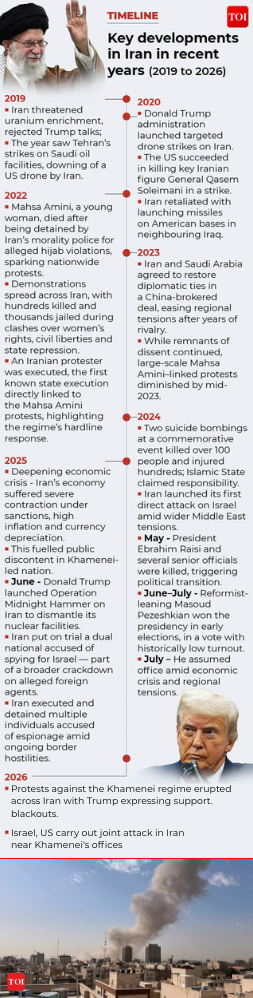
NEW DELHI: As the United States and Israel launched coordinated strikes on Iran , Pakistan finds itself staring at the prospect of a two-front strategic squeeze. What began as cross-border clashes with the Afghan Taliban has now coincided with a rapidly expanding conflict to Pakistan’s west, raising fears of a “double whammy” that could destabilise its already fragile security and economic landscape.With tensions simmering on the eastern border with India and domestic militancy resurging, a new war in Iran threatens to compound Pakistan’s vulnerabilities in ways that could reshape its regional calculus.

A region on the brink

The crisis escalated dramatically after Israel launched preventive missile strikes on Iran, with US media reporting that Washington had begun coordinated strikes alongside its ally. Explosions were reported in Tehran, while Israel declared a nationwide state of emergency and shifted its Home Front Command guidelines from full activity to essential activity.Iranian state media confirmed blasts in the capital, and connectivity disruptions were reported across parts of Tehran. Iran vowed a “crushing response,” while the Israel Defense Forces said it had detected ballistic missiles launched from Iran toward Israeli territory, urging citizens to move into protected spaces.US President Donald Trump confirmed that the United States had initiated “major combat operations in Iran,” describing Tehran as “very difficult” and “very dangerous” and stating that Washington faced a “big decision” in negotiations.
US (2)

.

The strikes come even as diplomatic efforts between the US and Iran faltered. A third round of talks was held in Geneva, but the sudden escalation has cast doubt over any immediate diplomatic breakthrough.For Pakistan, which shares a long and porous border with Iran’s restive Sistan-Baluchestan province, the implications are immediate and serious.

Already at war with Afghanistan

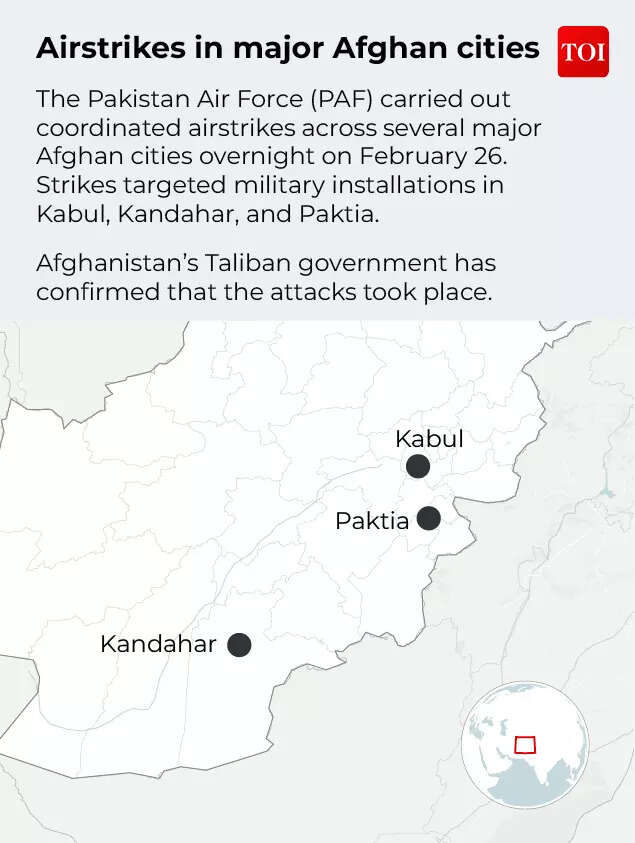
Even before the Iran escalation, Pakistan had launched air strikes on cities in neighbouring Afghanistan following months of cross-border attacks. Islamabad’s Information Minister Attaullah Tarar described the situation bluntly, stating on X that “now it is open war.”The fighting followed retaliatory exchanges between Afghan forces and Pakistani troops along their disputed frontier. Casualty figures from both sides remain contested, with sharply different claims about losses inflicted.At the heart of the dispute is Pakistan’s long-standing accusation that the Afghan Taliban government has failed to rein in the Tehreek-e-Taliban Pakistan (TTP), which has stepped up attacks inside Pakistan since the Taliban returned to power in Kabul in 2021.
gfx (1)

.

Afghanistan’s Taliban authorities deny allowing their territory to be used against Pakistan. However, militant violence inside Pakistan has surged, deepening mistrust between the two neighbours.Diplomatic efforts involving Qatar, Turkey, Saudi Arabia and Iran have failed to produce a durable ceasefire. China has called for restraint and urged both sides to resolve disputes through dialogue.The clashes mark what analysts describe as the most serious confrontation between Pakistan and the Afghan Taliban regime in months, with Pakistan reportedly targeting Taliban government sites rather than just alleged TTP positions.

The Balochistan factor

The most immediate concern for Pakistan in the event of a prolonged Iran conflict is spillover into Balochistan.Balochistan borders both Afghanistan and Iran and has long been a theatre of insurgency led by groups such as the Baloch Liberation Army (BLA). The province is strategically crucial, hosting the China-Pakistan Economic Corridor (CPEC) and the Gwadar port.Unrest in Iran’s Sistan-Baluchestan province could energise cross-border ethnic linkages and embolden separatist elements on both sides of the border. Any weakening of Iranian state control in border areas could create operational space for militants, smugglers and insurgent networks.Pakistan has historically cooperated with Iran on border security, including joint patrols and intelligence sharing. However, if Iran becomes consumed by war with Israel and the US, its ability to coordinate on border control may be severely reduced.An emboldened BLA, operating in tandem with other militant groups, could stretch Pakistani security forces thin at a time when they are already heavily deployed along the Afghan frontier.

Strategic overstretch

Pakistan’s military doctrine has traditionally been India-centric, focusing on deterrence along its eastern border. But recent years have forced a recalibration toward internal security and western border management.Relations with India remain in deep freeze less than a year after their worst conflict since 1971. Cross-border exchanges and diplomatic ties have remained limited, and trust is minimal.A simultaneous crisis with Afghanistan and instability spilling over from Iran would leave Pakistan managing acute tensions on its western front while keeping a wary eye on India.This scenario risks strategic overstretch. Troop deployments, intelligence resources and air assets would need to be divided across multiple theatres. Any miscalculation could prove costly.

Economic shockwaves

Beyond security concerns, a war involving Iran has significant economic ramifications for Pakistan.Iran is a key regional energy player. Any disruption to oil supplies or a spike in global crude prices would hit Pakistan’s already fragile economy. Islamabad is struggling with inflation, external debt and currency pressures.The Strait of Hormuz, through which a substantial portion of global oil shipments pass, could become a flashpoint. Escalation in the Gulf would ripple across energy markets, driving up import costs.Pakistan also shares trade routes and informal cross-border commerce with Iran. Border closures or insecurity could disrupt livelihoods in already impoverished regions.Foreign investment could suffer further setbacks as investors reassess risk in a region marked by simultaneous conflicts.

China’s delicate position

China, a close partner of Pakistan, has urged both Pakistan and Afghanistan to exercise restraint and reach a ceasefire. Beijing maintains ties with both Kabul and Islamabad through a tripartite mechanism.However, China also has substantial energy and infrastructure interests in the Gulf. An expanded Iran conflict complicates Beijing’s regional balancing act.For Pakistan, which relies heavily on Chinese investment and diplomatic backing, Beijing’s priorities will matter. If China shifts focus toward stabilising the Gulf or protecting its own assets, Islamabad may find itself with less direct support in managing western border turbulence.

Diplomacy on life support

With the US-Iran nuclear talks disrupted and the Pakistan-Afghanistan dialogue stalled, diplomacy appears increasingly marginalised.Regional actors such as Saudi Arabia, Qatar and Turkey have attempted mediation in the Pakistan-Afghanistan dispute. Iran had also signalled willingness to facilitate dialogue.Now, with Tehran under direct military pressure, its capacity to play mediator is diminished.Pakistan’s options are narrowing. It must manage tensions with Kabul, prevent insurgent escalation in Balochistan, guard against spillover from Iran and avoid provoking instability along the eastern front.

Oil shock and Hormuz risk: A fresh blow to Pakistan’s fragile recovery

A sustained rise in global oil prices, coupled with any disruption in the Strait of Hormuz, could deliver a sharp external shock to Pakistan’s already fragile recovery. The country imports the bulk of its crude oil and refined petroleum, making it highly vulnerable to price volatility. Even a moderate spike in Brent crude can widen Pakistan’s import bill by billions of dollars annually, exerting fresh pressure on its current account and foreign exchange reserves.Higher energy costs would likely feed directly into inflation, reversing recent gains in price stability. Transport, electricity generation and fertiliser production are heavily dependent on imported fuel. As input costs rise, the impact would cascade through food prices and manufacturing, squeezing household purchasing power and dampening consumer demand. For a government attempting fiscal consolidation under IMF oversight, the dilemma becomes acute: either pass on higher fuel prices to consumers and risk public anger, or absorb part of the shock through subsidies, thereby straining public finances.The Strait of Hormuz is particularly critical. A substantial portion of global oil shipments transits this narrow waterway. Any military escalation that disrupts tanker traffic would not only drive up crude prices but also increase freight and insurance premiums. For Pakistan, this means higher landed costs even if supply volumes remain intact.Investor confidence could also suffer. Currency markets tend to react swiftly to oil shocks in energy-importing economies. A weaker rupee would further inflate import costs and complicate debt servicing, especially on dollar-denominated obligations.In short, an oil shock tied to Hormuz instability would not just be an energy problem for Pakistan. It would threaten macroeconomic stability, strain fiscal space, revive inflationary pressures and slow growth at a moment when policymakers are struggling to restore confidence and momentum.

A dangerous convergence and an uncertain road ahead

What makes this moment particularly perilous for Pakistan is the convergence of multiple crises unfolding at once. An active conflict with Afghanistan has already heated up one western front, while a war involving Iran threatens to destabilise another. At the same time, the eastern border with India remains tense, with relations still strained after recent hostilities. The cumulative effect is strategic compression, with Islamabad facing pressure from nearly every direction.Domestically, the situation is no less challenging. Militant violence has resurged, political divisions persist and economic stress continues to weigh on governance. If unrest in Iran spills into Balochistan and emboldens separatist outfits such as the BLA, Pakistan could confront escalating violence in both its northwest and southwest simultaneously. Such a scenario would stretch security forces and intelligence resources, potentially forcing reactive deployments rather than long-term strategic planning.Much will depend on whether the Iran-Israel-US confrontation is contained or turns into a prolonged campaign. A limited exchange might restrict regional fallout, but an extended conflict could fundamentally alter the security environment along Pakistan’s western flank. In that context, de-escalation with Afghanistan becomes even more urgent. Strengthening border management, preventing militant exploitation and coordinating with regional partners, including China and Gulf states, will be crucial.Ultimately, Pakistan’s room for manoeuvre lies in balancing deterrence with restraint while avoiding strategic overextension. As instability spreads across its western neighbourhood, Islamabad faces a stark reality: first the Taliban challenge, now a potential Iran war. Together, they risk becoming a destabilising double blow at a time when the country can least afford it.
[ad_2]

Source link

Jammu and Kashmir script history, win maiden Ranji Trophy title | Cricket News

[ad_1]

Jammu and Kashmir script history, win maiden Ranji Trophy title

Jammu and Kashmir etched their name in Indian cricket history by claiming their first-ever Ranji Trophy title, defeating eight-time champions Karnataka on Saturday at the KSCA Stadium in Hubli. A historic season, marked by grit and determination, saw J&K outplay favourites and fellow underdogs alike, proving that persistence and strategy can triumph over legacy.The final ended in a draw, but J&K’s commanding 291-run first-innings lead was enough to secure the championship. They extended their advantage to 633 runs by finishing 342/4 in the second innings, with opener Qamran Iqbal scoring 160 not out and Sahil Lotra recording his maiden century of 101 not out.

India land in Kolkata for do-or-die WI clash | Semi-final spot on the line

STAR PERFORMANCES SHINE BRIGHTJ&K’s success was built on a collective effort. Skipper Paras Dogra crossed 10,000 Ranji Trophy runs, while Yawer Hassan, Abdul Samad, and Kanhaiya Wadhawan contributed valuable half-centuries. Pace spearhead Auqib Nabi dominated with the ball, claiming a five-wicket haul for the seventh time this season, and played a key role in turning both the semifinal and final in J&K’s favour.The team’s 10-match campaign demonstrated a rare mix of patience, tactical intelligence, and cohesion, showing that cricketing glory is not just about big names but smart execution.FROM HUMBLE BEGINNINGS TO GLORYJammu and Kashmir made their debut in India’s premier domestic competition 67 years ago, and had previously reached quarterfinals in 2013-14, 2019-20, and 2024-25, but faltered under pressure. This time, the team approached the final with calm and confidence, leaving no doubt about their readiness.Karnataka, despite their legacy and experience, struggled to gain any foothold. On the final day, they failed to take a single wicket after J&K resumed at 186/4, underscoring the visitors’ dominance.SEMIFINAL TEST PREPARES THE CHAMPIONSJ&K’s path to glory was tested in the semifinal against Bengal at Kalyani, where Bengal’s first-innings lead created a tense moment. But Nabi’s brilliant bowling dismantled Bengal for just 88 in the second innings, giving the team belief that a historic triumph was within reach. Shubham Pundir anchored the innings with a classy century, setting up a massive total of 584 and maintaining momentum for the final.OUTSMARTING THE HEAVYWEIGHTSKarnataka, a nine-time Ranji champion, entered the final expecting dominance. Yet, they were outplayed tactically by a team of relatively unknown players. Even a resilient Mayank Agarwal, who scored 160, couldn’t shift the balance. J&K’s consistent pressure, game awareness, and skill execution ensured that the favourites were never in control.INSPIRING GENERATIONS BEYOND CRICKETThis victory carries more than sporting significance. It sends a message of hope and possibility across Jammu and Kashmir, demonstrating how determination and teamwork can overcome obstacles. Pacer Auqib Nabi had long envisioned cricket infrastructure growth in the region, and moments like these could accelerate development and inspire a new generation of cricketers.The historic moment arrived at 2:10 pm, when both captains shook hands in a modest dressing room, sending the J&K squad and supporters into jubilant celebrations. For a team and a region that waited decades for this glory, the triumph was a dream realized and a legacy cemented.

[ad_2]

Source link

Operation Epic Fury: How Israel and US planned the strikes on Iran

[ad_1]

Operation Epic Fury: How Israel and US planned the strikes on Iran

Israel and US on Saturday launched a daylight attack on Iran, closing the window for a diplomatic solution to Tehran’s long-running nuclear dispute with the West.The strikes reportedly took place near the offices of Supreme Leader Ayatollah Ali Khamenei. However, the 86-year-old leader was not in Tehran and had been transferred to a secure location during the attacks.

IRAN UNDER ATTACK: Explosions Rock Tehran As Israel & US Launch Aerial Strikes On Islamic Republic

According to local media reports, there were at least three to four strikes in Tehran.This comes as United States deployed aircraft carriers, fighter jets, guided-missile destroyers and other capabilities to the Middle East in recent weeks. It includes two of the largest US warships — the Gerald R Ford and the Abraham Lincoln. US President Donald Trump has described it as a massive naval armada. ‘Operation Lion’s roar’: How US and Israel planned the attacksUS named its operation against Iran ‘Operation Epic Fury.’In his first statement after the strikes, Trump asserted that US’s goal is ‘eliminating imminent threats’ from Iran.

.

“US will destroy Iranian missile industry, ‘annihilate’ the navy,” he added.According to news agency Reuters, the strikes are being carried out by air and sea. An Israeli defence official told the news agency that the operation had been planned for months in coordination with Washington, and that the launch date was decided weeks ago.Another source told Israeli media outlet the Times of Israel that the “initial phase” of the joint attack is planned to last for at least four days.The TV report says the timing of the initial strikes for the morning hours was designed to surprise the Iranians, who would not have expected a daytime attack.Also read: Trump reacts to US-Israel joint strikes in Tehran, says ‘eliminating threat from Iranian regime’An unnamed security source tells Channel 12 that the operation was jointly planned for months. The source says Israel is going “all out” in this operation, and the US is “on the same page.”The source also says the “initial phase” of the joint attack is planned to last for four days.‘Not exactly happy’ with IranThe attack comes after Israel and Iran engaged in a 12-day air war in June, following repeated US-Israeli warnings that they would strike again if Iran pressed ahead with its nuclear and ballistic missile programmes.Earlier in the day, Trump said he is “not exactly happy” with Iran’s handling of negotiations over its nuclear programme, stressing that the country cannot possess nuclear weapons.“We haven’t made a final decision (on Iran). We’re not exactly happy with the way they’re negotiating. They cannot have nuclear weapons. And we’re not thrilled with the way they’re negotiating. So we’ll see how it all works,” Trump said.“I am not happy with the fact that they are not willing to give us what we have to have. I’m not thrilled with that. We’ll see what happens. We’ll have some additional talks today. But, no, I’m not happy with the way they’re going,” he added.

[ad_2]

Source link