Breaking News
What is Singapore-India-Gulf subsea cable system that UAE’s du is investing in for high data connectivity?

[ad_1]

What is Singapore-India-Gulf subsea cable system that UAE's du is investing in for high data connectivity?
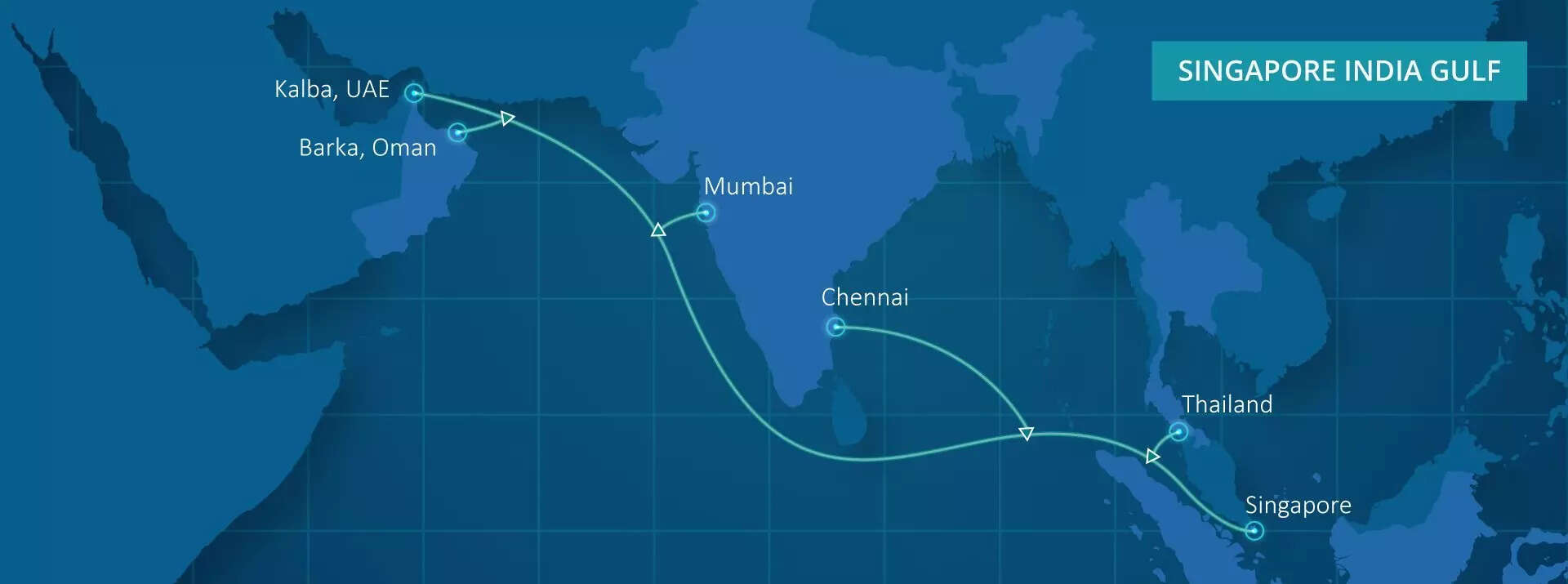
du to invest in the subsea fibre optic network that will link six key locations, with landing points in Kalba in the UAE, Muscat in Oman, Mumbai and Chennai in India, Kedah in Malaysia and Singapore.

In a major step for the UAE’s digital infrastructure ambitions, telecom provider du has announced a strategic partnership to land and invest in the Singapore-India-Gulf (SING) submarine cable system, a next-generation undersea fibre-optic network that will link the Middle East with South Asia and Southeast Asia. The deal reinforces the UAE’s role as a regional data hub and is poised to support future digital growth, artificial intelligence workloads, cloud services and global connectivity.

What is the SING subsea cable system?

The SING (Singapore-India-Gulf) cable is a planned high-capacity submarine fibre-optic network designed to create a direct east–west digital corridor connecting six strategic landing points:

  • Kalba, UAE (UAE landing point)
  • Muscat, Oman
  • Mumbai and Chennai, India
  • Kedah, Malaysia
  • Singapore

This system is designed to provide high-capacity, low-latency connectivity and strengthen network resilience by diversifying data routes beyond traditional paths such as the Red Sea corridor. It will play a key role in supporting increasing global bandwidth demands driven by cloud computing, streaming, e-commerce and real-time digital services.

UAE’s du’s role and strategic importance

Under the new partnership, du, one of the UAE’s leading telecom and digital services providers, will host the SING cable at its Kalba cable landing station and also participate financially in its rollout. This means that when completed, the system will have a physical connection to the UAE’s digital ecosystem, allowing faster, more resilient connectivity between the Gulf region and Asia.
​Dubai-based telecom operator du has joined the Singapore-India-Gulf submarine cable system, announcing a partnership with Cyprus-based Datawave Networks to land the next-generation cable in the United Arab Emirates.​

Dubai-based telecom operator du has joined the Singapore-India-Gulf submarine cable system, announcing a partnership with Cyprus-based Datawave Networks to land the next-generation cable in the United Arab Emirates.

Karim Benkirane, Chief Commercial Officer at du, said the project will “reinforce the UAE’s role as a global hub for data, cloud and artificial intelligence” by providing the connectivity scale, performance and reliability needed for hyperscalers, tech innovators and enterprise customers.

Why UAE’s du’s investment in Singapore-India-Gulf cable matters for global connectivity

The SING subsea cable is part of a broader renaissance in global submarine infrastructure. Projects like SEA-ME-WE 6, another major submarine cable ongoing between Southeast Asia, the Middle East and Europe, have highlighted the growing need for redundancy, capacity and network reliability. In recent years, disruptions to undersea cables in the Red Sea, a critical data conduit, have shown how vulnerable global internet routes can be to outages, emphasising the need for alternative pathways like SING that can mitigate service impacts if certain routes are compromised.

UAE's du Joins SING Submarine Cable System for Enhanced Asia-Middle East Connectivity

UAE’s du Joins SING Submarine Cable System for Enhanced Asia-Middle East Connectivity

By diversifying connectivity pathways, the UAE and its partners aim to ensure stable data routes that underpin everything from corporate cloud services to consumer streaming and real-time financial systems. The UAE’s investment in SING coincides with global trends in subsea cable deployment. For example, projects like the SEA-ME-WE 6 system, which connects Southeast Asia to Europe with high capacity, are enhancing global data traffic infrastructure and helping meet surging demand.

What’s next for SING and UAE connectivity

Although the exact ready-for-service date for the SING cable is not yet announced, project progress has accelerated after a major investment by Cerberus Capital Management, which resolved longstanding funding challenges and propelled the system toward execution with planned deployment by 2030. Once operational, the SING network is expected to deliver tens of terabits per second of capacity, providing scalable flexibility for future data needs from businesses, cloud operators, AI research initiatives and cross-continent platforms.

Additionally, major alternative cable initiatives such as USTDA-supported efforts for trusted India-to-Southeast Asia routes underline increasing international collaboration on building secure, high-performance subsea networks that serve billions of users worldwide.This positions the UAE and the wider Gulf region at the forefront of next-generation connectivity infrastructure for global scale digital services. As digital economies expand and data traffic grows exponentially, projects like the Singapore-India-Gulf subsea cable system represent critical investments in the future of global connectivity.By partnering with Datawave and investing in the SING cable, du and the UAE are strengthening their role as a strategic gateway between continents, enhancing digital resilience, supporting AI-ready infrastructure and unlocking new opportunities for economic and technological growth.


[ad_2]

Source link
Lok Sabha may take up opposition’s notice against Speaker Om Birla on March 9 | India News

[ad_1]

Lok Sabha may take up opposition's notice against Speaker Om Birla on March 9

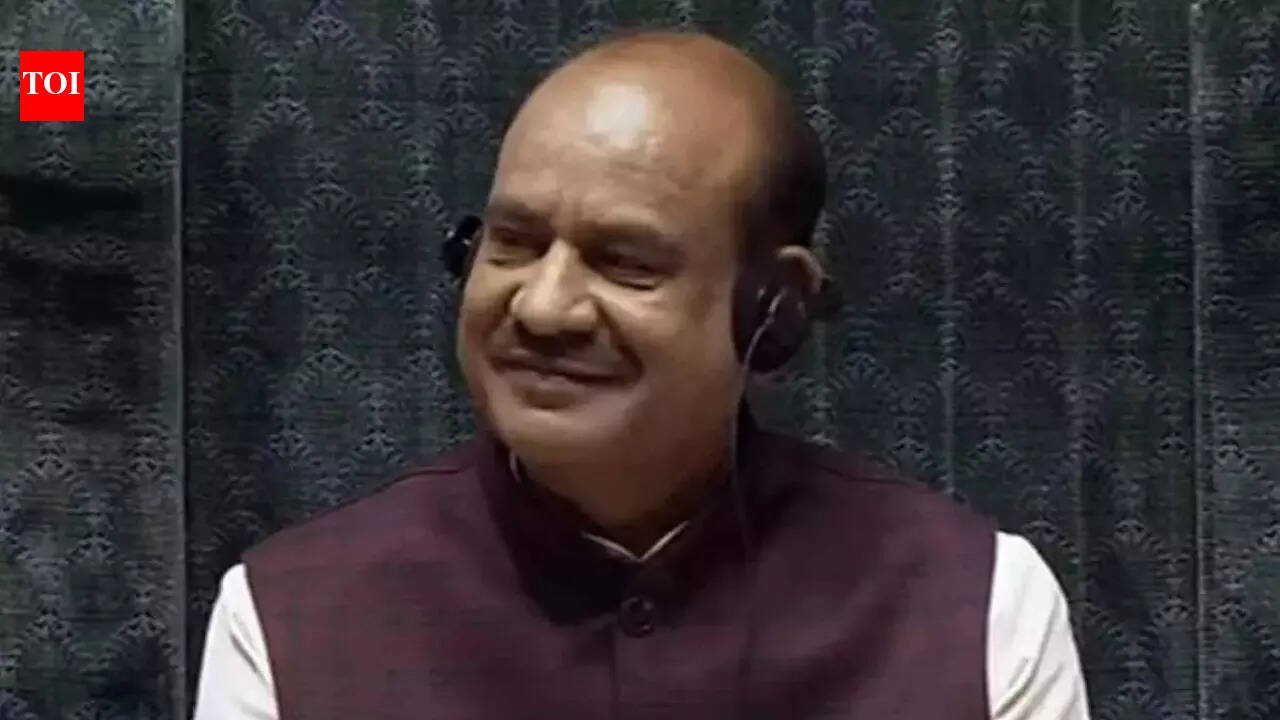
NEW DELHI: The opposition’s notice for a resolution for Speaker Om Birla’s removal is likely to be taken up in Lok Sabha on the first day of the Budget session’s second part on March 9, parliamentary affairs minister Kiren Rijiju said on Sunday, as govt looks to get on with its legislative agenda in the sitting after disposing of the move against the chair.As the BJP-led NDA has 293 members in the 542-member House and is likely to draw support of several fence-sitters, the opposition’s bid for Birla’s ouster for his alleged partiality looks set to fall through.“On March 9 in Lok Sabha, we will have the debate on the no-confidence motion moved against the Speaker. There will be a vote following the debate,” Rijiju told TOI .Official sources said the governing NDA is keen to deal with the issue urgently so that Birla, who has decided to not attend the House till the notice is dealt with, could return to preside over proceedings in the crucial session.Govt’s decision to send Birla for the swearing-in ceremony of BNP leader Tarique Rahman as Bangladesh PM on Feb 17 is being seen as signalling govt’s combative support for the Speaker who attracted Congress’s wrath for saying that the party had planned to deploy its women contingent in LS to do something unprecedentedly indecorous against PM Narendra Modi during his speech on the motion of thanks to the President’s address.The lead up to the vote will see Congress making an effort to get TMC and AAP to support the anti-Birla move. Congress is learnt to have dangled the carrot of a motion to remove chief election commissioner Gyanesh Kumar as a quid pro quo. TMC has been on the warpath against against the CEC over the Special Intense Revision (SIR) of electoral rolls in poll-bound West Bengal.Talking to PTI in Arunachal Pradesh, Rijiju expressed hope that Congress and other opposition parties would allow Parliament to function, but made it clear that the govt will carry on with its legislative agenda, noting that the Finance Bill will have to be passed. The Appropriation Bill will also be passed during the session.Amid deepening acrimony between the treasury and opposition benches, govt has at times got its key bills passed amid uproar, insisting that governance cannot be allowed to be obstructed by disruptions.BJP MP Nishikant Dubey’s notice for taking up a motion for expulsion of the leader of opposition in LS, Rahul Gandhi, is also likely to figure on the session’s agenda. If the issue is mentioned in the House, it is bound to face massive protests from opposition parties.Rijiju termed the next part of the session interesting, noting that it coincides with the upcoming assembly elections in four states and a Union Territory — West Bengal, Assam, Tamil Nadu, Kerala and Puducherry.“We will bring some important bills, including one critical bill. We will not disclose now as to what the bill is, but we will bring up one very important business in the second part. We will pass all these bills,” he said.

[ad_2]

Source link

Kerala gives state farewell to baby who gave life to 4: ‘Yes, the pain is there’ | Kochi News

[ad_1]

Kerala gives state farewell to baby who gave life to 4: 'Yes, the pain is there'

PATHANAMTHITTA: Ten-month-old Aalin Sherin Abraham, the youngest organ donor in the state, was laid to rest with full state honours in the presence of a large gathering at Nedungadappally St Thomas CSI Church on Sunday evening.Declared brain-dead last Friday, Aalin gifted life to four children. Her liver, kidneys, corneas and heart valves were donated, turning a family’s immeasurable loss into hope for others. She suffered critical injuries in a road accident on Feb 5 while travelling in a car with her parents and relatives in Kottayam.Earlier in the morning, a steady stream of people made their way to Valumannil House at Nedungadappally near Mallapally to pay their respects to Aalin and her parents, Arun Abraham and Sherin Ann John, who chose to donate their daughter’s organs in an extraordinary act of generosity.Aalin’s body was brought home around 7.45 am and placed in a tiny coffin on a bed of jasmine. People from all walks of life gathered to offer condolences, as her grief-stricken parents and relatives sat beside her.Ministers Veena George and V N Vasavan, MP Suresh Gopi and several other public representatives visited the house to pay homage. Many travelled from different parts of the state after learning of the couple’s decision, filling both the house and later the church in a collective tribute to a life that, though brief, touched many.The toddler’s body was taken to the church by 3 pm, where a packed gathering assembled to bid her farewell. Aalin’s grandfather, Reji Samuel, addressed the mourners with an emotional message, saying the family found solace in knowing that four other children were given a new lease of life. “When my son told me about the decision to donate my granddaughter’s organs, I agreed. People asked if I felt pain. Yes, the pain is there, but I stood by my children’s decision. We lost our baby, who was with us for 20 months — 10 months in the womb and another 10 months on earth — but we gained four children. Our baby returned after fulfilling the duty entrusted to her even before she was born. God took her back after she fulfilled the purpose of her birth,” he said.Chandran, grandfather of Shreya, who received Aalin’s kidneys, also paid homage at the house. “I met the angel for the last time. She gave a new life to my granddaughter, who is recuperating well after the surgery. I am a grandfather, and I know the excruciating pain Aalin’s family is going through. I came here to share in their grief,” he said.

[ad_2]

Source link

T20 World Cup: How Pakistan created history despite losing match against India | Cricket News

[ad_1]

T20 World Cup: How Pakistan created history despite losing match against India
Pakistan’s Usman Tariq celebrates the wicket of India’s captain Suryakumar Yadav during an ICC Men’s T20 World Cup 2026 cricket match between India and Pakistan, at R Premadasa Stadium, in Colombo, Sri Lanka. (PTI Photo)

Pakistan’s reliance on spin against India in Colombo entered the record books after they bowled 18 overs of spin in a single T20 World Cup innings, equalling the tournament record.Led by Salman Ali Agha, Pakistan sent down 18 overs of spin, matching the most spin overs delivered in a T20 World Cup innings. The only other time 18 overs of spin were bowled in an innings in a T20 World Cup match was when Pakistan used the same approach against Australia at the same venue in the 2012 edition.Other spin-heavy efforts in T20 World Cup history include Afghanistan’s 16 overs of spin against England in Delhi in 2016 and against West Indies in Nagpur in the same year. Pakistan also bowled 16 overs of spin against the USA in 2026.The 18 overs of spin against India also places the game among the most spin-dependent innings in all T20Is between full-member teams. Zimbabwe bowled 18 overs of spin against West Indies in Port of Spain in 2010. Pakistan’s 18 overs against Australia in 2012 remains another instance, while New Zealand bowled 17 overs of spin against India in Lucknow in 2023.In the match, Pakistan won the toss and chose to field. A 77 off 40 balls from Ishan Kishan, along with 32 from 29 balls by captain Suryakumar Yadav and 27 off 17 from Shivam Dube, helped India post 175 for 7 on a pitch that offered assistance to bowlers.Saim Ayub was Pakistan’s leading bowler with figures of 3 for 25 in four overs. Shaheen Shah Afridi (1/31 in two overs), Usman Tariq (1/24 in four overs) and Salman Ali Agha (1/10 in two overs) also took wickets.India won the match by 61 runs after Pakistan were dismissed for a mere 114 in 18 overs.

[ad_2]

Source link

‘Delhi declaration’ may be adopted at AI summit in Delhi | India News

[ad_1]

'Delhi declaration' may be adopted at AI summit in Delhi

NEW DELHI: Govt on Sunday unveiled India’s first comprehensive AI governance guidelines, choosing a light-touch, principle-based rulebook over a rigid new law to manage the risks of artificial intelligence while keeping innovation on track. The framework seeks to curb bias, misuse and opacity in AI systems without slowing down adoption, signalling India’s intent to shape responsible AI governance ahead of the five-day AI Impact Summit 2026, which begins on Monday.The guidelines lay out how AI should be developed and used across sectors such as healthcare, education, agriculture, finance and governance. Instead of prescribing strict controls, the framework is anchored in seven broad principles, or “sutras”, that are meant to guide both policymakers and industry.These include trust as the foundation, ‘people first’, innovation over restraint, fairness and equity, accountability, understandable by design, and safety, resilience and sustainability. Together, they emphasise that AI systems must support human decision-making, remain transparent, avoid discrimination and be deployed with clear safeguards.A key feature of the guidelines is reliance on existing laws. Officials said many AI-related risks are already covered under current legal frameworks such as IT rules, data protection laws, and criminal statutes. Instead of rushing into a standalone AI law, govt has opted for periodic reviews and targeted changes as technology evolves.The framework also proposes creation of new national institutions to oversee AI governance. These include an AI governance group to coordinate policy across ministries, a technology and policy expert committee to provide expert inputs, and an AI safety institute to focus on testing standards, safety research and risk assessment.The guidelines spell out expectations for AI developers and deployers. They call for transparency reports, clear disclosures when AI-generated content is used, grievance redressal mechanisms for people harmed by AI systems, and cooperation with regulators. High-risk applications, especially those affecting safety, rights or livelihoods, are expected to follow stronger safeguards and human oversight.Officials said the approach reflects India’s belief that AI should not remain limited to a few firms or countries, but be widely deployed to solve real-world problems while remaining trustworthy.By prioritising innovation alongside safeguards, govt aims at positioning India not just as a major user of AI, but as a global voice in shaping responsible, inclusive AI governance aligned with the vision of ‘Viksit Bharat 2047’.

[ad_2]

Source link

Pannun murder plot: Guilty plea may reduce Indian national Nikhil Gupta’s jail term substantially

[ad_1]

Pannun murder plot: Guilty plea may reduce Indian national Nikhil Gupta's jail term substantially

NEW DELHI: By admitting to murder-for-hire and money laundering charges, Indian national Nikhil Gupta may have secured a substantial reduction in the 40-year maximum sentence the charges entail through an “acceptance of responsibility” credit. The guilty plea not only reduces his jail-time but also helps him avoid a high-profile trial, besides limiting his trial testimony.Gupta, who has been at a Brooklyn detention centre since his 2024 extradition from Prague, has pleaded guilty before US magistrate Judge Sarah Netburn on three counts: murder-for-hire, conspiracy to commit murder-for-hire and conspiracy to commit money laundering. He is scheduled to be sentenced by US district judge Victor Marrero on May 29, 2026, according to a statement by FBI and DEA.While the combined charges carry a maximum statutory punishment of 40 years in prison, a guilty plea typically triggers a reduction in the offence level under federal sentencing guidelines for “acceptance of responsibility”. Legal experts pointed out this often results in a 20% to 30% reduction in the maximum exposure, though the final decision will rest solely with the sentencing judge.“Gupta is likely to receive a 2- to 3-level reduction, the standard reward for saving the court the time and expense of a trial,” said a source. Going by the US prosecutors’ recommendation, a 20-year sentence or less seems likely, sources said. There could be further reduction if the state files such a motion by May 29 when the sentencing will be announced.Gupta (54) may still have to serve around 80% of the awarded jail time with all mitigating parameters like good behaviour in place. Under US law, if he receives a sentence longer than 12 months, he would be eligible for up to a 15% reduction (roughly two months a year) for good behaviour while incarcerated.Legal experts also said that it was yet to be ascertained whether Gupta’s plea deal included “substantial assistance”, which means he will become a cooperating witness against other individuals. Pleading guilty in a US court does not necessarily require the person to provide information or testify against anyone.

[ad_2]

Source link

US Admiral lauds India’s ‘tactical execution’ of Op Sindoor, says defence ties on ‘steeply upward trajectory’ | India News

[ad_1]

US Admiral lauds India's 'tactical execution' of Op Sindoor, says defence ties on 'steeply upward trajectory'

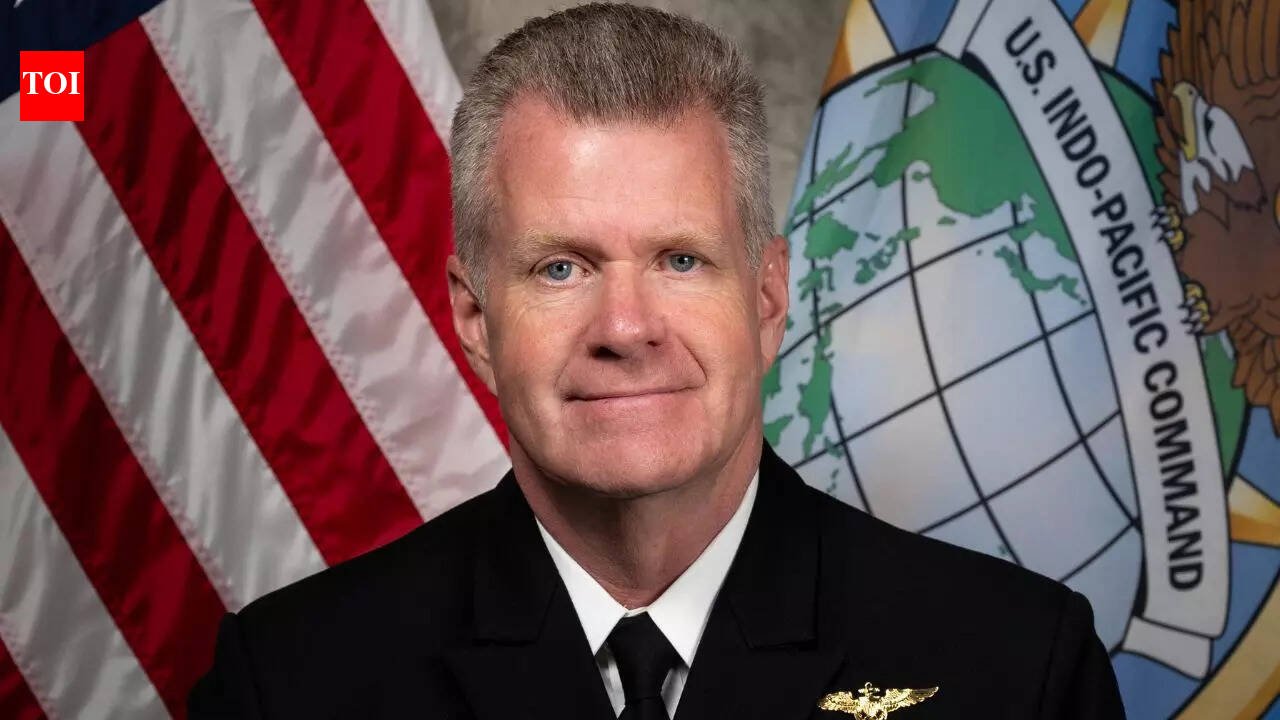
NEW DELHI: US commander of Indo-Pacific Command Admiral Samuel J. Paparo, during his India visit on Sunday, “applauded the tactical execution” of the Indian military operations against Pakistan during Operation Sindoor and said “there is always a lesson to learn from every conflict in the world”.He said the US-India defence relationship is on a “steeply upward trajectory”, even as he flagged concerns about increasing “coercion” and “aggression” in the Indo-Pacific region.

Combat Proven SCALP Missiles Push India, France Defence Ties Into Next Phase After Op Sindoor

In reply to a TOI query about his views on Op Sindoor, the US commander, who was interacting with a select group of journalists, said, “First of all, I have tremendous reverence for the terrible event (Pahalgam terror attack) that preceded the crisis. In my discussion with my partners, I applaud the tactical execution (of operations). We also sincerely applaud the restraint that was exhibited. We hope to work together to see that such a terrible event doesn’t happen again.” The Admiral also said that he has seen a deep commitment from the Indian military to learn lessons from this conflict.Asked what lessons the US took away from Op Sindoor which saw Chinese weapons being used by Pakistan, Admiral Paparo said, “Complex long-range weapons have complex long- range kill chains”. With the “combination of sensors, communication, propulsion, warheads, seekers in the 21st century, geography is no longer a commodity…”On China’s increasing military might, the Admiral, who is responsible for all US military operations in the region, said, “Deterrence is our highest duty. It is my job to think through the worst-case scenario and to be prepared for that. India shares some of those concerns in the Indo-Pacific, as the region is home to 60% of the world’s population, more than 60% of the world’s GDP and seven of the world’s largest militaries.“We deal with those concerns with the growing partnerships… mutually respectful, sovereign relationship between the world’s oldest democracy and the world’s largest democracy,” he said, adding both the US and India are committed to the principles of sovereignty, freedom of navigation and freedom of seas.“We applaud India as a great net contributor to the security of the Indian Ocean region,” he said. The two sides are also looking at boosting maritime security cooperation, including in the sphere of undersea domain awareness.With the impending MILAN exercise in mind, Admiral Paparo said, “It is great to see the deepening of Indo-US defence partnership, enshrined in the recent defence agreement signed in Kuala Lumpur (Oct 31, 2025) between US Secretary of War Pete Hegseth and Indian defence minister Rajnath Singh. A number of joint exercises like Yudh Abhyas in Alaska, MILAN, Malabar series, COPE India exercise and Tiger Triumph series and people-to-people contacts are strengthening the ties between India and the US. And we treasure this relationship.”About modern warfare strategies, the Admiral said, “Increasingly, the 21st century will be dominated by actors who master the information environment, that is, space, counter-space, electronic warfare, low observability and other technologies.”On the upcoming AI summit hosted by India, he said, “PM Modi’s visionary AI summit. I celebrate India’s vision on how to make use of AI in the 21st century. AI has many defence connections and United States Indo-Pacific Command is at the forefront of AI employment for defence.”

[ad_2]

Source link

Inside what may be Mark Zuckerberg’s plan to become Amazon founder Jeff Bezos’ neighbour

[ad_1]

Inside what may be Mark Zuckerberg's plan to become Amazon founder Jeff Bezos' neighbour

Facebook founder Mark Zuckerberg and his wife, Dr Priscilla Chan, are reportedly purchasing a waterfront mansion on Indian Creek Island near Miami. According to a report by The Wall Street Journal, this will position the couple as neighbours to Amazon founder Jeff Bezos on the exclusive 300-acre island. Indian Creek Island is an artificial island with 41 lots and approximately 84 residents, with home prices starting at about $60 million. This is reportedly one of the most sought-after sections of one of America’s most exclusive neighbourhoods.Indian Creek Island operates as an independent municipality with its own government and a private police force that patrols by air, water, and land. Access to the island is controlled by a single gated bridge, making safety and privacy key features. The island’s interior comprises an 18-hole golf course and the Indian Creek Country Club, with a limited number of members, owing in part to a challenging admissions process and a $500,000 initiation fee.

What we know about Meta CEO Mark Zuckerberg’s newly purchased luxury property

Zuckerberg’s reported property is located on the western side of the island, where Bezos also owns two lots. This area features larger lots of about 80,000 square feet compared to 50,000 square feet on the east side, with better access to Biscayne Bay’s open water and expansive sunset views. However, the report didn’t specify whether Zuckerberg’s deal has closed yet. Miami-Dade County property records note the owner as a land trust. One of Zuckerberg’s neighbours, Irma Braman, wife of billionaire car dealer Norman Braman, told WSJ that Zuckerberg revealed his plan to move into the property by April 2025.In a statement to Fortune, Mick Duchon, a Miami Beach real estate agent of the Corcoran Group, said that Zuckerberg’s recently completed luxury property at 2 Indian Creek Island Road is valued between $150 million and $200 million. The purchase would add to his portfolio of luxury homes. “That side of the island is perceived to be the most appealing,” Duchon said. Vacant lots on the island have sold for as much as $105 million in 2025, the report added.Zuckerberg is among the recent billionaires to acquire a Florida property, especially as a proposed ballot initiative in California gains momentum that would impose a one-time 5% “billionaires tax” on any individual worth at least $1 billion, retroactive to Jan. 1, 2026. However, Zuckerberg still calls California home, having just invested $50 million through Meta in a downtown revitalisation and AI-focused project in Sacramento. Google cofounder Larry Page also recently acquired a $173 million compound in Miami, comprising two waterfront lots in the city’s Coconut Grove neighbourhood.Indian Creek Island, in particular, is home to several prominent names, including Bezos, the financier Carl Icahn, and former NFL quarterback Tom Brady. Zuckerberg’s reported new property is another addition to the tech CEO’s growing portfolio of luxury homes across the US.Bezos has also been buying up properties on Indian Creek Island since he announced in 2023 that he was leaving Seattle for Florida. In 2023, the Amazon founder purchased a $68 million home that would end up just a few doors down from Zuckerberg’s. Near the end of that year, he paid another $79 million for a neighbouring property with the intention of combining the lots into a single compound, a trend Duchon said is increasingly common among wealthy buyers because of the scarcity of truly expansive waterfront properties in the area. Meanwhile, Bezos is living in a third Mediterranean-style property also on Indian Creek Island, on the east side, which he acquired for $87 million in 2024. Last year, Bezos sold one of his Seattle homes overlooking Lake Washington for $63 million, the Puget Sound Business Journal reported.

[ad_2]

Source link

New VB-G RAM G scheme gets 40% of Rural Development Budget; Rs 95,692 crore allocated

[ad_1]

New VB-G RAM G scheme gets 40% of Rural Development Budget; Rs 95,692 crore allocated

VB-G RAM G, the scheme set to replace Mahatma Gandhi National Rural Employment Guarantee Act (MGNREGA), has received the highest share in this year’s Budget for the department of rural development, accounting for about 40 per cent of its total allocation, according to an analysis by PRS Legislative Research.The PRS analysis said VB-G RAM G has been allocated Rs 95,692 crore in the Budget, making up around 40 per cent of the Department of Rural Development’s total outlay.

End Of MGNREGA? What VB–G Ram G Means For Rural Workers, Farmers And Viksit Bharat Plan

Allocation pattern across key schemes

The Pradhan Mantri Awas Yojana-Gramin (PMAY-G) accounts for 23 per cent of the department’s Budget. This is followed by MGNREGS at 12 per cent, the National Rural Livelihood Mission (NRLM) at 8 per cent, the Pradhan Mantri Gram Sadak Yojana (PMGSY) at 8 per cent, and the National Social Assistance Programme (NSAP) at 4 per cent, as per news agency PTI.In 2026–27, VB-G RAM G (40 per cent) and PMAY-G (23 per cent) together account for 63 per cent of the ministry’s total gross expenditure, followed by MGNREGS (12 per cent), NRLM (8 per cent), PMGSY (8 per cent) and NSAP (4 per cent), the report said.The ministry of rural development has been allocated Rs 1,97,023 crore in 2026–27, which is 4 per cent higher than the revised estimates for 2025–26.Within this, the department of rural development has been allocated Rs 1,94,369 crore, 4 per cent higher than the revised estimates of 2025–26. The department of land resources has been allocated Rs 2,654 crore, marking a 51 per cent increase over last year’s revised estimates.

Sharp cut in MGNREGS allocation

The allocation for MGNREGS this year stands at Rs 30,000 crore, 66 per cent lower than the revised estimate of Rs 88,000 crore last year, as per PTI.In contrast, most other schemes have seen higher allocations. PMAY-G has been allocated Rs 54,917 crore, reflecting a 66 per cent increase over the previous fiscal year’s revised estimate. PMGSY has received Rs 19,000 crore, a 73 per cent rise compared to last year’s revised estimate.

Fund-sharing pattern and fiscal implications

The report noted that under MGNREGS, wage payments accounted for around 70 per cent of total expenditure over the last five years. Material costs made up about 26 per cent of expenditure, of which roughly 20 per cent was borne by the Centre. Overall, the Centre bore around 90 per cent of the total expenditure under the scheme.“With the change in fund sharing pattern under the VB-G RAM G Act, the expenditure by state governments on the scheme may increase,” the report said.Under the VB-G RAM G Act, which guarantees 125 days of work, the Centre and states will share expenditure in a 60:40 ratio. For northeastern and Himalayan states, the ratio will be 90:10, as per PTI.

Employment trends under MGNREGS

According to the analysis, over the past decade, employment under MGNREGS averaged around 48 days per household per year.Less than 10 per cent of participating households completed 100 days of work. In 2020–21, average days of employment rose to 52 days per household due to the Covid-19 pandemic. Employment generation moderated thereafter, recording 50 days per household in 2024–25, reported PTI.On average, seven crore households demanded work during 2017–25, of which six crore households, around 90 per cent, were able to avail employment.The report also highlighted that actual wages paid to workers have often been lower than the notified rates. In 2025–26 (as of December 2025), wages received by workers were below the notified wage rate in 20 out of 31 states and Union Territories.For instance, in Andhra Pradesh, workers received Rs 268 against a notified Rs 307. In Chhattisgarh, workers were paid Rs 245 compared to Rs 261, and in Gujarat, Rs 264 against Rs 288.In Karnataka, workers received Rs 342 compared to the notified Rs 370. The gap was wider in Rajasthan (Rs 221 versus Rs 281) and Tamil Nadu (Rs 268 versus Rs 336), while in Telangana workers received Rs 259 against a notified Rs 307.

PMAY-G progress and challenges

Under rural housing, PMAY-G has been allocated Rs 54,917 crore, a 69 per cent increase, according to the report.However, only around 70 per cent of the targeted houses across phases have been completed so far. Delays have been attributed to issues such as land availability, migration, Covid-related disruptions and beneficiary-level constraints, the report said.

[ad_2]

Source link

Iran-US indirect talks: Tehran’s top diplomat travels to Geneva for second round

[ad_1]

Iran-US indirect talks: Tehran’s top diplomat travels to Geneva for second round

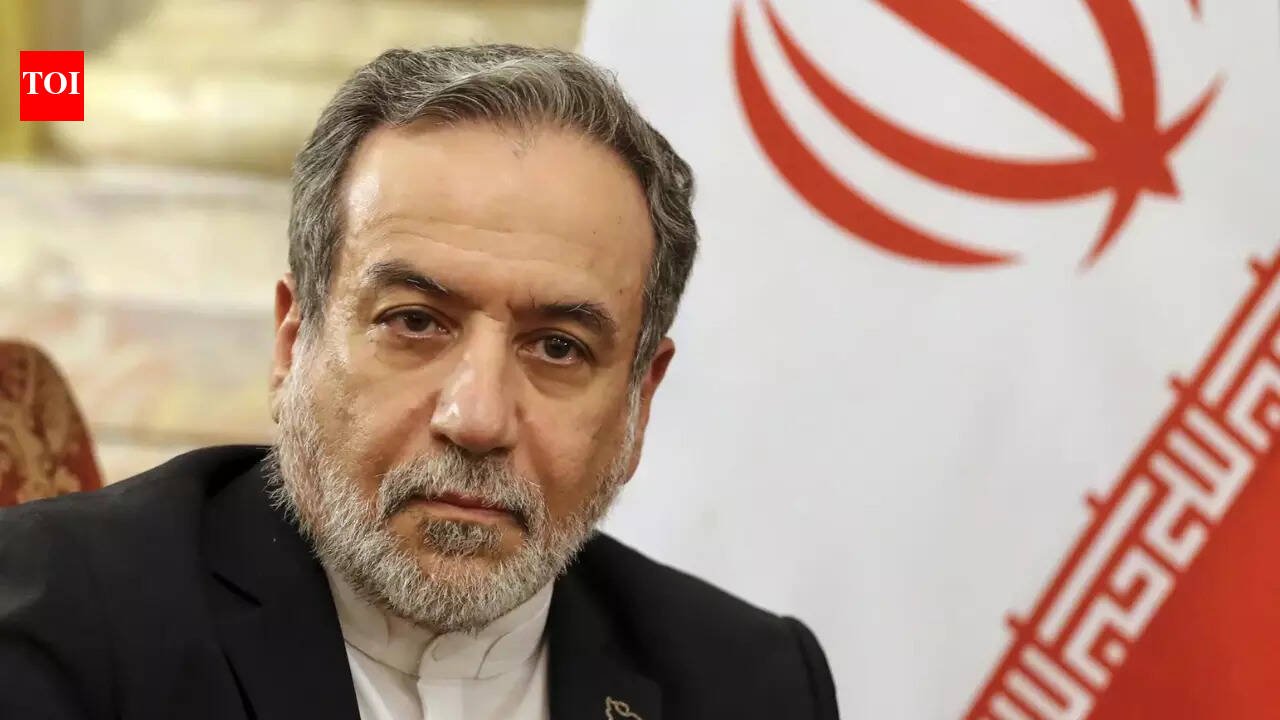
Iran’s foreign minister Abbas Araghchi left Tehran on Sunday for Geneva to take part in the second round of indirect nuclear negotiations with the United States, Iranian state media reported, with AFP confirming the development.Araghchi “left Tehran for Geneva late Sunday heading a diplomatic and technical delegation to conduct the second round of nuclear talks and hold a number of diplomatic consultations,” Iran’s foreign ministry said in a statement, according to AFP. “Indirect Iran–US nuclear talks will be held on Tuesday with the mediation and good offices of Oman.”

‘If Sanctions Are Lifted…’: Iran’s Big Offer To U.S. Amid Nuclear Negotiations | WATCH

The talks follow an initial round held in Muscat on February 6, when Tehran and Washington resumed negotiations months after earlier efforts collapsed. Those talks had broken down after Israel launched a bombing campaign against Iran last June, triggering a 12-day conflict that included US strikes on Iranian nuclear facilities.Oman is again mediating the discussions. During his Geneva visit, Araghchi is expected to meet his Swiss and Omani counterparts as well as Rafael Grossi, head of the International Atomic Energy Agency, and other international officials, the foreign ministry said. Switzerland has long represented US interests in Iran since diplomatic ties were severed following the 1980 hostage crisis.The renewed engagement comes amid heightened tensions over Iran’s nuclear programme. US President Donald Trump has repeatedly warned that Washington could resort to military action if Tehran does not curb its nuclear activities, and has deployed an aircraft carrier group to the region following Iran’s crackdown on anti-government protests last month. Iran has said it would retaliate in the event of an attack, while Gulf Arab states have warned that escalation could spark a wider regional conflict. Lately, Tehran has also signalled it might scale down its nuclear program if the US agrees to lift sanctions. The Trump administration maintains that Iran must halt all uranium enrichment – a demand Tehran has rejected. Iran insists its nuclear programme is for peaceful purposes, though it has enriched uranium to 60% purity in the past, close to weapons-grade levels.AFP reported that Araghchi led the Iranian delegation in the February 6 talks with US Middle East envoy Steve Witkoff and Trump’s son-in-law Jared Kushner in Muscat.Iranian deputy foreign minister Hamid Ghanbari was quoted by Fars news agency as saying Tehran was seeking a deal that would generate economic benefits for both countries, including in aviation, mining and oil and gas. “For the agreement to be viable, it is essential that the United States also be able to benefit from it in areas with strong and rapid economic return potential,” he said.(With inputs from agencies)

[ad_2]

Source link