Breaking News
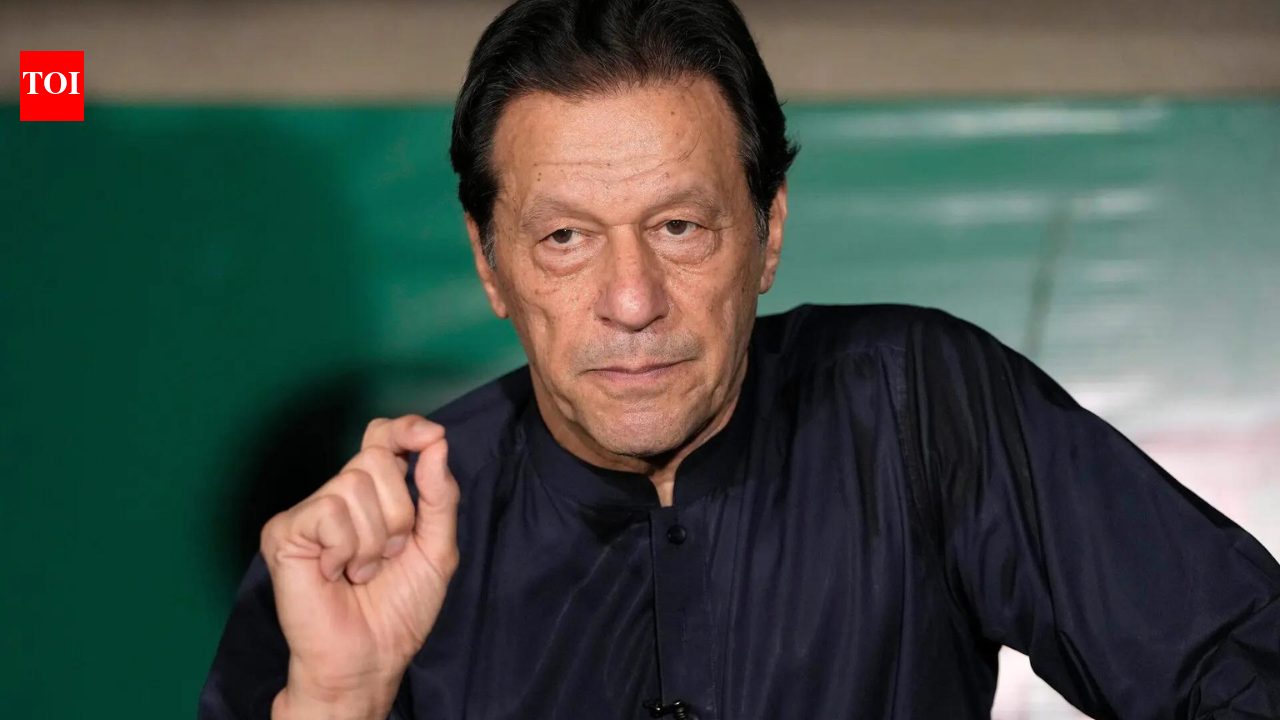
Imran Khan undergoes eye examination at Adiala Jail: PTI calls process ‘malicious’, questions exclusion of family and personal doctors

[ad_1]
Imran Khan undergoes eye examination at Adiala Jail: PTI calls process 'malicious', questions exclusion of family and personal doctors

PTI founder and former prime minister Imran Khan underwent an eye examination at Adiala Jail on Sunday following a Supreme Court order, with Pakistan Tehreek-e-Insaf (PTI) calling the process as “malicious” and questioning the exclusion of his family and personal doctors.According to news website Dawn, a five-member medical team conducted a detailed examination that lasted about an hour. The doctors collected blood samples, measured his blood pressure and brought their own equipment. The process reportedly began after a two-and-a-half-hour wait and a report is expected to be compiled soon.Shortly after the examination ended around 5.30 pm, PTI issued a statement on X rejecting the procedure and objecting to the absence of Imran’s family and personal physicians.“Pakistan Tehreek-e-Insaf categorically rejects the recent conduct of the government and jail administration regarding the medical examination of former prime minister Imran Khan’s eye in Adiala Jail. The government’s claim that a message was sent to the party leadership to arrive at the jail at the time of the examination is, in fact, a crude attempt to divert attention from the core issue,” the party said.Explaining its objection, the statement added, “This matter was never about the presence or absence of the party leadership. In such sensitive and delicate medical matters, the constitutional, moral, and legal right to make decisions belongs to Imran Khan’s family. The family cannot make an informed decision until Imran Khan’s personal doctors are present for the examination. Therefore, inviting the party leadership symbolically has neither any moral rationale nor any legal justification.Imran’s sister Aleema Khanum also said that no medical board would be accepted without the approval of his personal doctors. Referring to reports that he might be shifted to Al-Shifa Eye Hospital in Rawalpindi, she reiterated, “Our demand has been clear from the beginning. Imran Khan shall not be given any treatment without the presence and approval of his personal doctors and family members.”She further said, “We do not accept any medical board they set up and control! We do not accept any reports or results they manufacture.”Questioning the exclusion of family members and doctors recommended by Imran’s team, she asked, “Why are they rejecting the supervision by Imran Khan’s personal doctors? Why are they rejecting the presence of Imran Khan’s family members? Why such fierce resistance? Are they hiding something?”The examination was carried out after the Supreme Court directed the formation of a medical board to assess Imran’s condition. The order followed his claim on February 12 that his right eye retained only 15 per cent vision. The court also allowed him to speak with his children before February 16.Although government officials had indicated on Saturday that Imran might be transferred to a hospital, no shift had taken place by Sunday afternoon. At 3.45 pm, his sister Noreen Khanum said that an ambulance had arrived at the jail to move him.“But, this is unacceptable to us without us and Khan sahib’s personal doctors being taken into confidence,” she said.The jail superintendent dismissed reports of a transfer as a “rumour” and clarified that only a medical examination was underway.“The medical team will examine Imran’s eyes, conduct different tests, and decide whether there is a requirement to move him to a hospital or if he can be retained in jail and continue the treatment here,” the superintendent said.Imran had earlier undergone a medical procedure at the Pakistan Institute of Medical Sciences in Islamabad on the night of January 24, a development that was confirmed later amid limited information shared with his family.Imran’s personal physicians, Aasim Yusuf and Faisal Sultan, also called for a comprehensive evaluation at Shifa International Hospital in Islamabad, news agnecy PTI reported citing Dawn.In a joint video statement they said, “In addition to urgent retina specialist care for his central retinal vein occlusion and severe vision loss, Imran Khan needs a full multidisciplinary evaluation of his underlying conditions at a tertiary hospital like Shifa International Islamabad.”Meanwhile, the Tehreek-i-Tahafuz-i-Ayin-i-Pakistan (TTAP) alliance continued its sit-in at Parliament House for the third day, demanding that Imran be treated at a hospital chosen by his personal doctors.PTI MNA Asad Qaiser told reporters, “We will not compromise on Imran’s health.”A TTAP leader said that the initial understanding to shift Imran to Shifa International collapsed due to demands to change the composition of the medical board. The alliance also alleged that access to food, water and medicines inside Parliament House had been blocked for the third day.Describing the reported denial of medicine to Senator Abbas as an “extreme and condemnable act,” the alliance said, “Prioritising any political disagreement over human compassion and medical needs is the worst form of oppression.”Vowing to continue the protest, TTAP stated, “History bears witness that tyrannical tricks, sieges, and oppression have never suppressed movements, nor forced those standing firm on the right side to back down from their demands.”The Human Rights Commission of Pakistan expressed grave concern over the health of PTI-affiliated prisoners, particularly Imran Khan and Yasmin Rashid and urged authorities to ensure immediate independent medical examinations and uninterrupted access to treatment.

[ad_2]

Source link
Ishan Kishan, Hardik Pandya, Tilak Varma: Saim Ayub’s triple strike stuns India in Colombo | Cricket News

[ad_1]

Ishan Kishan, Hardik Pandya, Tilak Varma: Saim Ayub's triple strike stuns India in Colombo
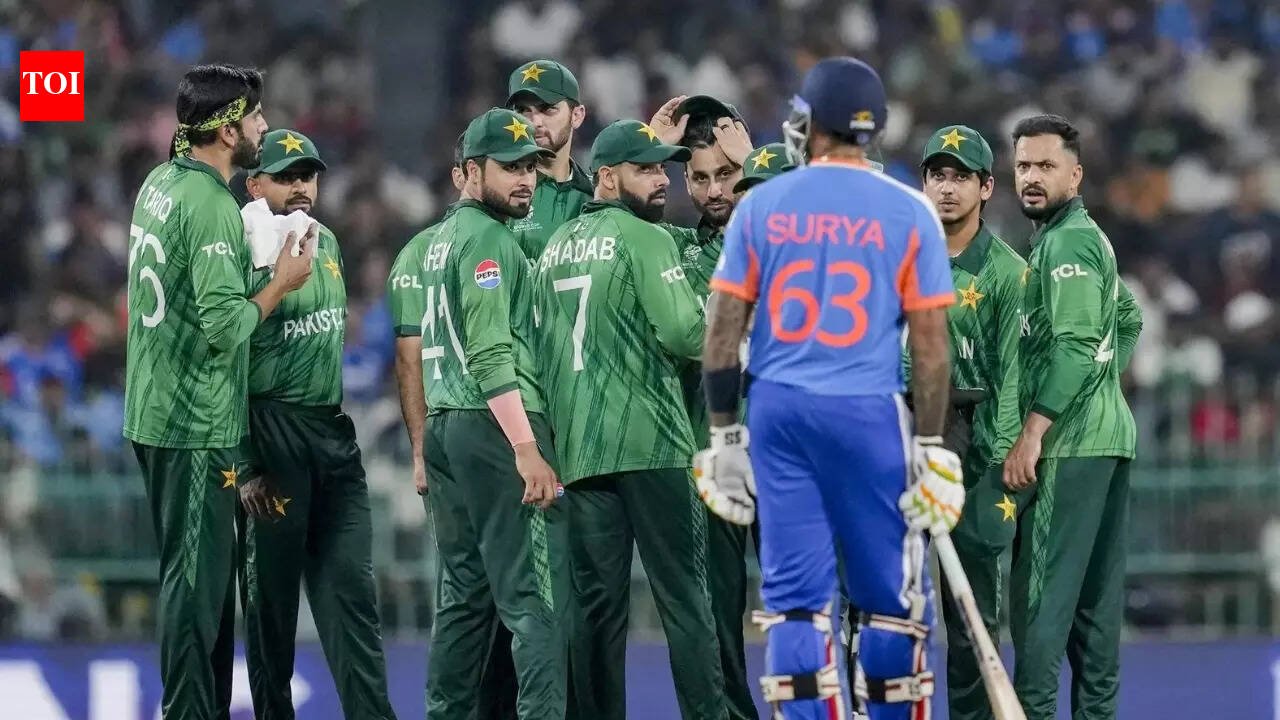
Pakistan’s Saim Ayub celebrates with teammates after taking the wicket of India’s Ishan Kishan during an ICC Men’s T20 World Cup 2026 cricket match between India and Pakistan, at R Premadasa Stadium, in Colombo, Sri Lanka. (PTI Photo)

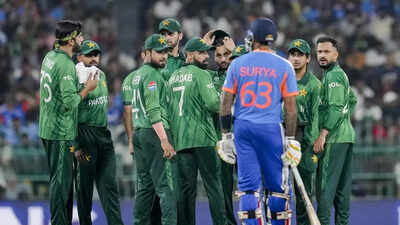
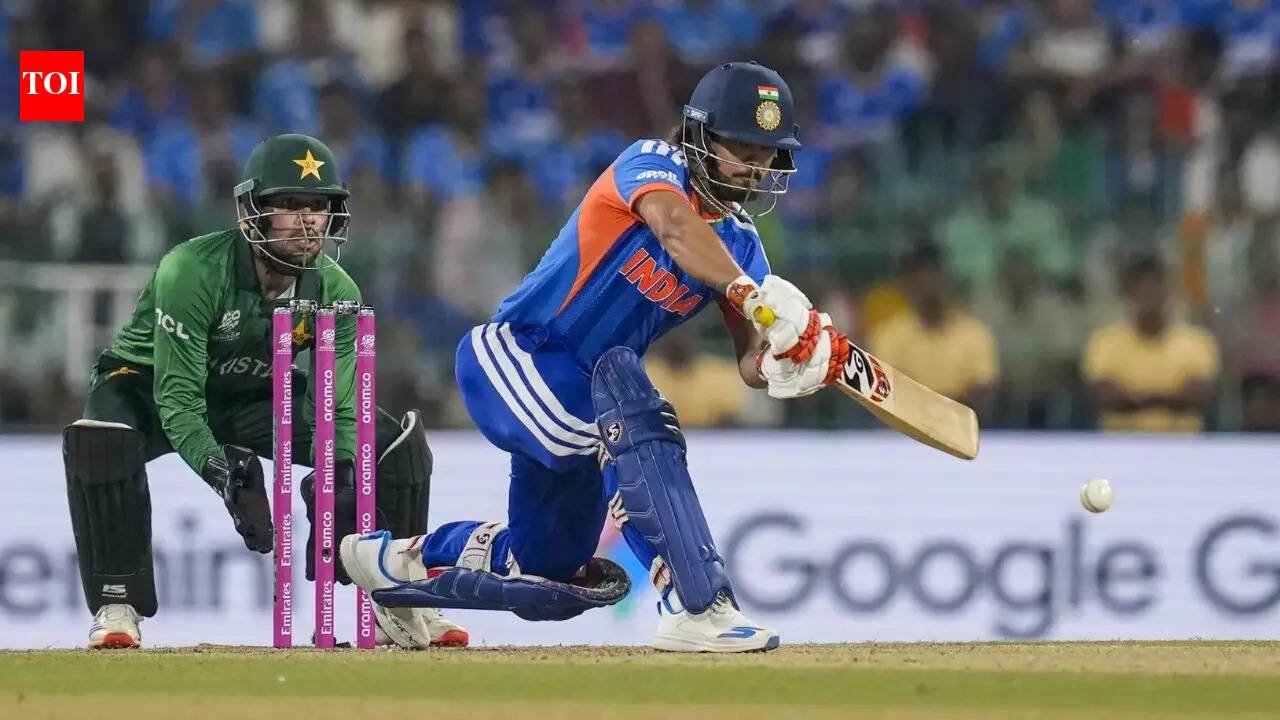
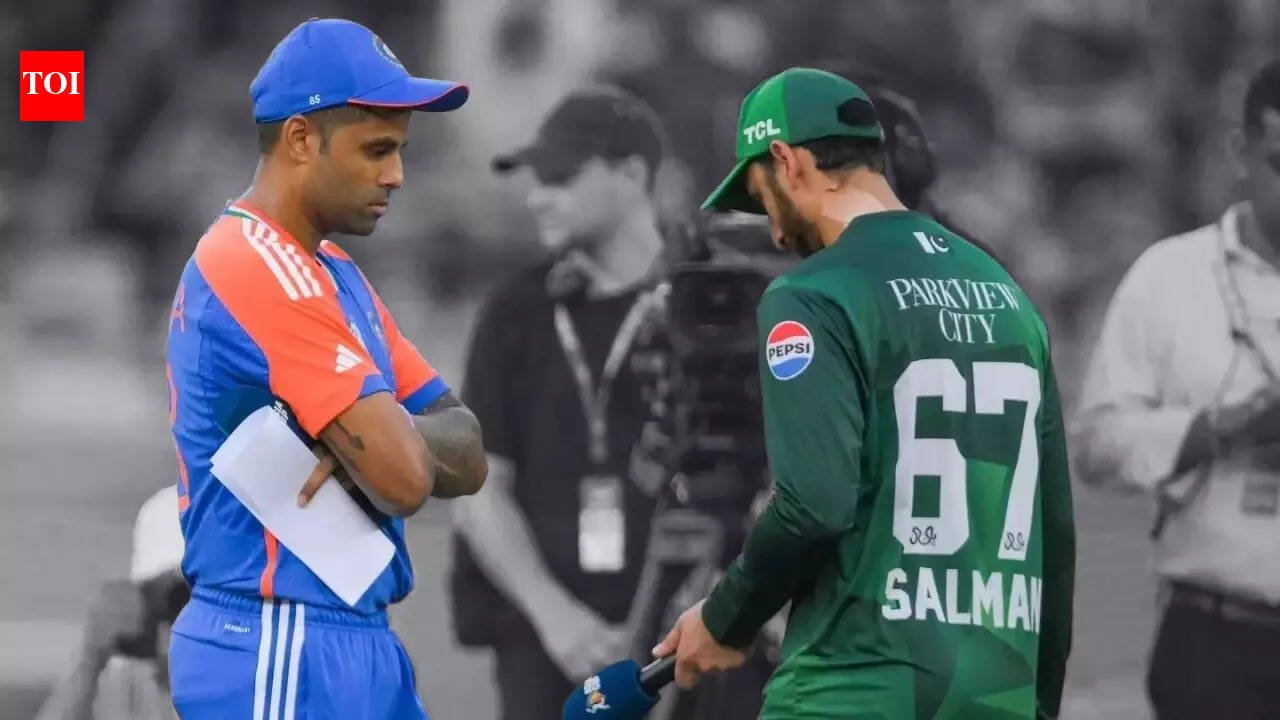
India came to Colombo prepared for Usman Tariq, but it was Saim Ayub who turned the game slightly in Pakistan’s favour with a key spell that checked India’s progress in their T20 World Cup clash in Colombo on Sunday. Ayub first removed Ishan Kishan, who had set the pace for India, and then returned to dismiss Tilak Varma just when India were preparing for a late push. Tilak was beaten on the sweep and fell for 25 off 24 balls.Hardik Pandya walked in and looked to attack immediately. Ayub bowled a carrom ball that took a thick outside edge as Pandya attempted a big shot. He was caught at long-off for a golden duck as India slipped to 126 for 4 in 14.3 overs.Ayub nearly completed a hat-trick. On the hat-trick ball, he bowled with loop and dip, pitching on leg and turning past Shivam Dube’s defense. The ball bounced over the stumps. Pakistan reviewed for a caught behind, but there was no edge.Saim Ayub finished his spell with three wickets, while conceding just 25 runs in four overs.Earlier in the innings, India had lost Abhishek Sharma for his second duck in two World Cup innings. However, Kishan ensured the innings did not slow down and recorded the third-fastest fifty in India-Pakistan T20Is.Fastest 50s in Ind-Pak T20Is (by balls)23 – Mohd Hafeez, Ahmedabad, 201224 – Abhishek Sharma, Dubai, 202527 – Ishan Kishan, Colombo (RPS), 2026*29 – Yuvraj Singh, Ahmedabad, 2012Kishan reached his half-century in 27 balls, getting there with a boundary off Abrar Ahmed’s second delivery in the seventh over.Kishan continued to score and made 77 from 40 balls before being dismissed. The pitch did not appear to favour high totals. Pakistan bowled five overs of spin in the powerplay, only the 13th time a fifth over of spin has been used inside a World Cup powerplay.Before the match began, India captain Suryakumar Yadav did not shake hands with Pakistan captain Salman Ali Agha at the toss, continuing the approach followed since the Asia Cup in Dubai last year.

[ad_2]

Source link
IND vs PAK: Ishan Kishan smashes Yuvraj Singh’s record to rattle Pakistan in Colombo | Cricket News

[ad_1]

IND vs PAK: Ishan Kishan smashes Yuvraj Singh's record to rattle Pakistan in Colombo

India lost Abhishek Sharma for his second duck in as many innings at the T20 World Cup, but Ishan Kishan ensured the innings stayed on course with one of the fastest half-centuries in India-Pakistan T20Is.Kishan recorded the third-fastest fifty in India-Pakistan T20 internationals.Fastest 50s in Ind-Pak T20Is (by balls)

  • 23 – Mohd Hafeez, Ahmedabad, 2012
  • 24 – Abhishek Sharma, Dubai, 2025
  • 27 – Ishan Kishan, Colombo (RPS), 2026*
  • 29 – Yuvraj Singh, Ahmedabad, 2012

Kishan reached his fifty in 27 balls, getting there with a boundary off Abrar Ahmed’s second delivery in the seventh over.India were 52 for 1 at the end of the powerplay after losing Abhishek early in the T20 World Cup match on Sunday. Abhishek, who had missed the previous game against Namibia due to a stomach issue, was dismissed off the last ball of the first over. He was caught at mid-on by Shaheen Shah Afridi off the bowling of Salman Ali Agha.Kishan maintained the scoring rate and went on to make 77 from 40 balls before being dismissed. His innings was significant given the nature of the pitch. Pakistan bowled five overs of spin in the powerplay, only the 13th instance of a fifth over of spin being used inside a World Cup powerplay.Earlier, India captain Suryakumar Yadav did not shake hands with his Pakistan counterpart Salman Ali Agha at the toss, continuing the approach followed since the Asia Cup in Dubai last year.

[ad_2]

Source link
No handshake at toss: India’s stance against Pakistan continues in T20 World Cup despite calls for ‘spirit’ | Cricket News

[ad_1]

No handshake at toss: India's stance against Pakistan continues in T20 World Cup despite calls for 'spirit'

NEW DELHI: India captain Suryakumar Yadav and Pakistan skipper Salman Ali Agha did not shake hands during the toss in the T20 World Cup 2026 match between the arch-rivals in Colombo on Sunday, continuing India’s no-handshake policy against Pakistan.The customary gesture was absent after the toss, extending a stance that has been in place since the Asia Cup 2025 across men’s and women’s cricket.Agha won the toss and elected to bowl in the Group A match, which was only confirmed as going ahead six days ago when the Pakistan government made a U-turn on a threat to boycott the match.Follow liveThat the status quo will be maintained was clear when neither Surya nor Salman committed to shaking hands, while the Pakistan skipper stated that he would like to “uphold” the spirit of cricket.Also read: Sanjay Manjrekar minces no words on India’s ‘silly’ handshake policy vs PakistanAhead of the match, Suryakumar had declined to clarify his position at the pre-match press conference. “Wait for 24 hours. We are here to play cricket. Have good food and sleep,” he had said on Saturday.While Pakistan skipper Agha had indicated that Pakistan were open to the gesture and that the decision rested with India. “Cricket should be played in the right spirit. My personal opinion may not matter, but cricket should be played the way it has always been played. It’s up to them to decide what to do,” he had said.During the Asia Cup, Suryakumar had declined to shake hands with the Pakistan captain, which led to a reaction from Pakistan. They briefly considered boycotting their next fixture in the tournament before deciding to continue. The no-handshake policy remained in place for the next two matches between the teams.Earlier in the day, former India cricketer Sanjay Manjrekar criticised India’s no-handshake policy against Pakistan, calling it “silly” and saying it does not reflect well on a major cricketing nation.“This ‘no shaking hands’ is such a silly thing that India has started. It’s unbecoming of a nation like ours. Either play properly within the spirit of the game or don’t play at all,” Manjrekar wrote on his X account.Sunday’s development confirmed that the approach remains unchanged at the T20 World Cup.

[ad_2]

Source link

Soap opera over soap: Why Karnataka politics is in a ‘lather’ over iconic Mysuru brand

[ad_1]

Soap opera over soap: Why Karnataka politics is in a ‘lather’ over iconic Mysuru brand
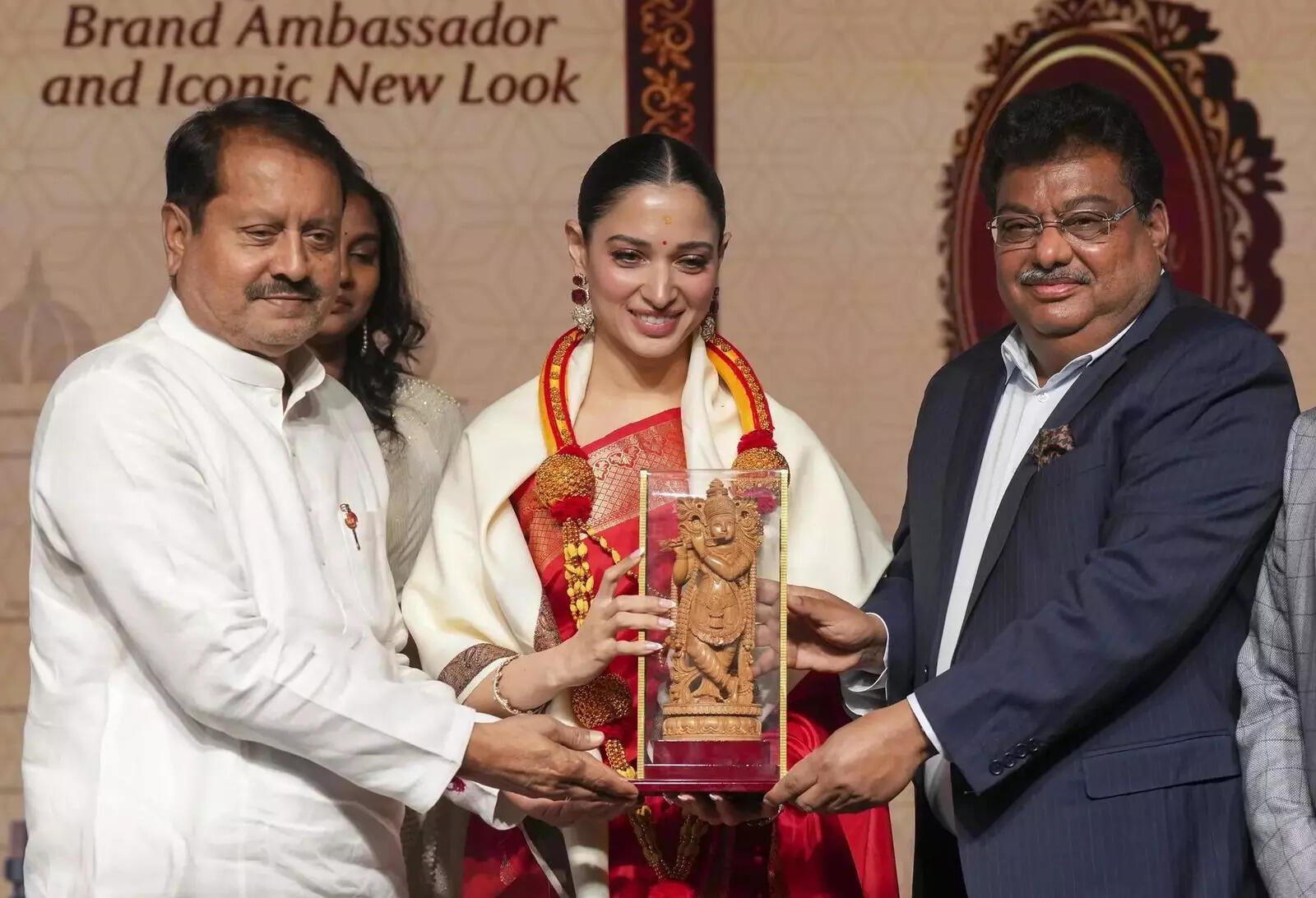
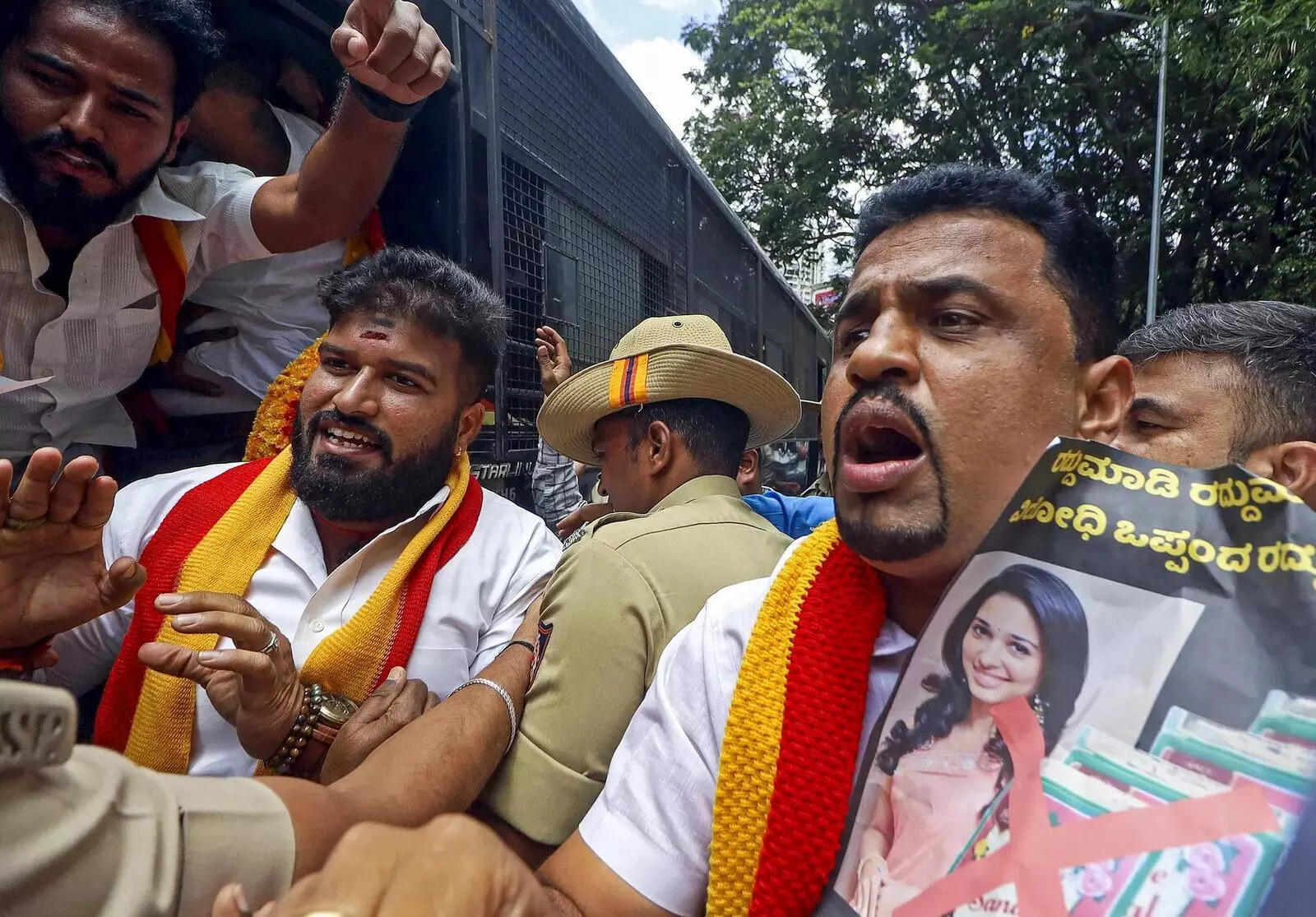
The controversy intensified after Karnataka industries minister MB Patil announced that Tamannaah Bhatia would serve a two-year tenure as brand ambassador for KSDL

When a bar of soap becomes the centre of a political slugfest, one knows the story runs deeper than lather and fragrance.The appointment of actor Tamannaah Bhatia as the new brand ambassador of Karnataka’s iconic Mysuru Sandal Soap has triggered a heated debate that cuts across politics, identity, branding strategy and regional pride. What began as a marketing announcement has spiralled into a controversy over language, representation and the cultural ownership of a 108-year-old legacy product.

Tamannaah Bhatia in Bengaluru.

Karnataka Large & Medium Industries Minister MB Patil, right, with MLA CS Nadagouda, left, felicitated Tamannaah Bhatia during an event to unveil new products in Bengaluru (PTI photo)

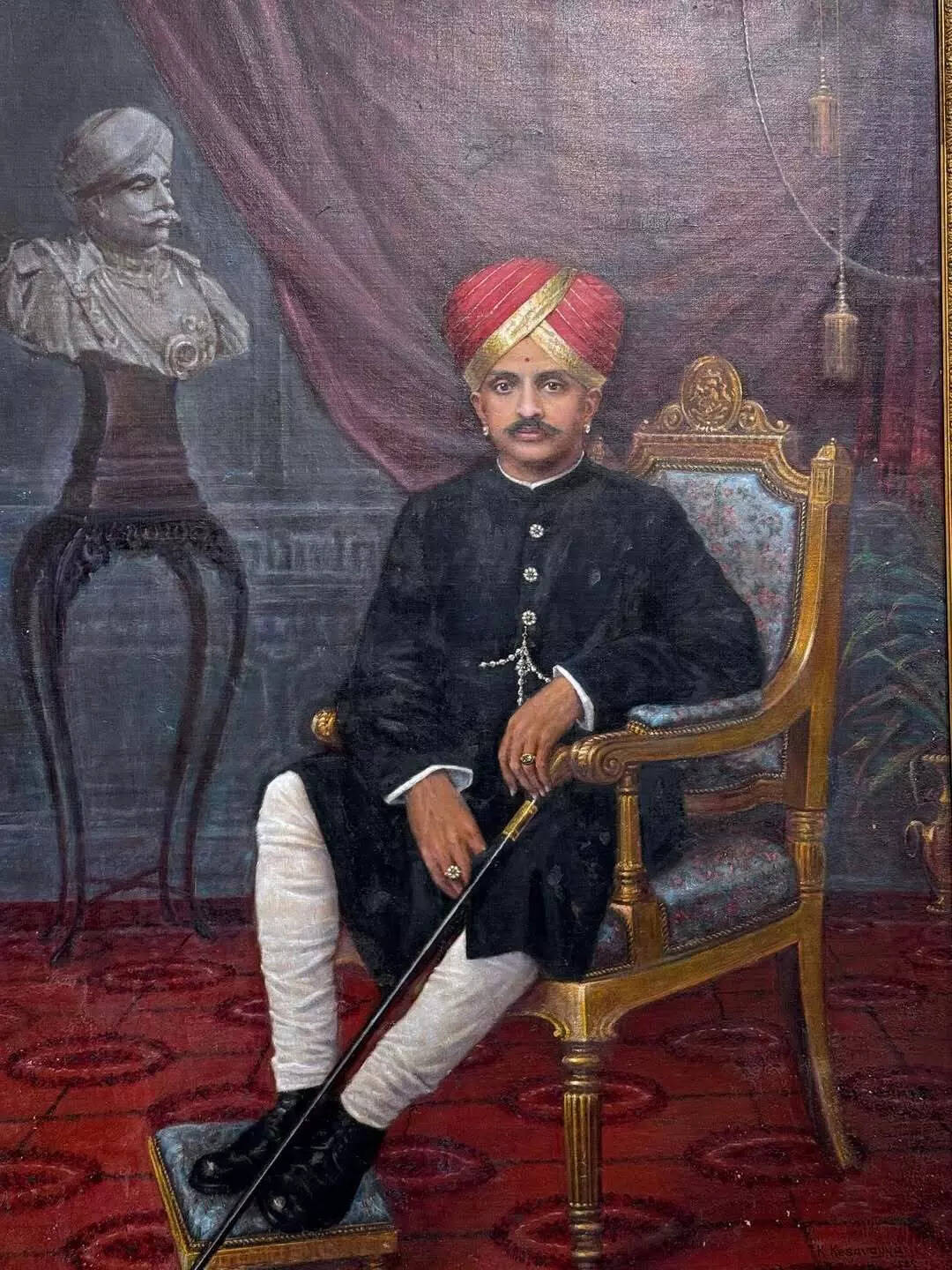
At the heart of the row is Karnataka Soaps and Detergents Limited (KSDL), the government-owned company that manufactures Mysuru Sandal Soap. Founded during the reign of Nalwadi Krishnaraja Wadiyar, the brand is not merely a commercial product. For many Kannadigas, it is an aromatic symbol of heritage.

Reason behind trigger?

The controversy intensified after Karnataka industries minister MB Patil announced that Tamannaah Bhatia would serve a two-year tenure as brand ambassador for KSDL. The actor reportedly signed for a fee of approximately Rs 6.2 crore. Her contract, which was finalised last year, formally came into effect this month.The announcement coincided with the relaunch of Mysuru Sandal Soap in refreshed packaging and a broader strategy to reposition the brand for national and global markets. Several advertisements featuring the actor were unveiled at an event in Bengaluru, along with an expanded portfolio of nearly 60 products.But almost immediately, political opposition emerged.

Bengaluru_ Kannada activists raise slogans during their protest against actor Ta... (1).

Kannada activists raise slogans during their protest against actor Tamannaah Bhatia at the entrance of the company premises at Yeshwanthpur in Bengaluru. (PTI photo)

Bharatiya Janata Party (BJP) MP K Sudhakar accused the Congress-led Karnataka government of displaying what he called an “anti-Kannada mindset”. He questioned why a Mumbai-born actor was chosen to represent a brand rooted in Karnataka’s cultural identity when several Kannada film stars enjoy national and international recognition.He named actors such as Ramya, Rashmika Mandanna, Srinidhi Shetty, Pooja Hegde and Rukmini Vasanth, arguing that they have carried Kannada cinema to wider audiences and would have been more appropriate faces of the brand.The debate quickly moved from business logic to emotional ownership.

A century-old legacy

To understand why a soap can trigger such strong reactions, one must go back to its origins.Mysuru Sandal Soap was born in 1916 in the princely state of Mysore. At the time, the region was rich in sandalwood, a precious and aromatic resource. During the First World War, the export of sandalwood was disrupted. Faced with surplus stock, the Mysore administration decided to explore value addition.Under the guidance of chemists and the encouragement of Maharaja Nalwadi Krishnaraja Wadiyar, the government established a soap factory that used pure sandalwood oil. The idea was simple but visionary. Instead of exporting raw material, produce a finished product of premium quality.

Wadiyar

Nalwadi Krishnaraja Wadiyar

The result was Mysore Sandal Soap, one of the few soaps in the world made with genuine sandalwood oil.In 1980, the operations were reorganised under Karnataka Soaps and Detergents Limited (KSDL), a state enterprise. Over the decades, KSDL expanded into detergents, cosmetics and other personal care products. Yet the flagship soap remained its crown jewel.For many households in Karnataka, the soap is associated with childhood memories, temple visits, wedding gifts and the distinctive scent of sandalwood that lingers long after use.It is not merely hygiene. It is nostalgia.

The business behind the move

Minister MB Patil has defended the appointment, saying the decision was based purely on marketing considerations. According to him, KSDL is entering a transformative phase with ambitious targets. The company aims to achieve a turnover of Rs 5,000 crore by 2030.Currently, the company’s turnover is expected to touch around Rs 2,000 crore this year, with profits reportedly exceeding Rs 500 crore. However, only a small percentage of sales occur within Karnataka. Patil has said that roughly 8 to 12 per cent of sales are in the state, with significant portions in Telangana, other southern states, north India and a small international presence.

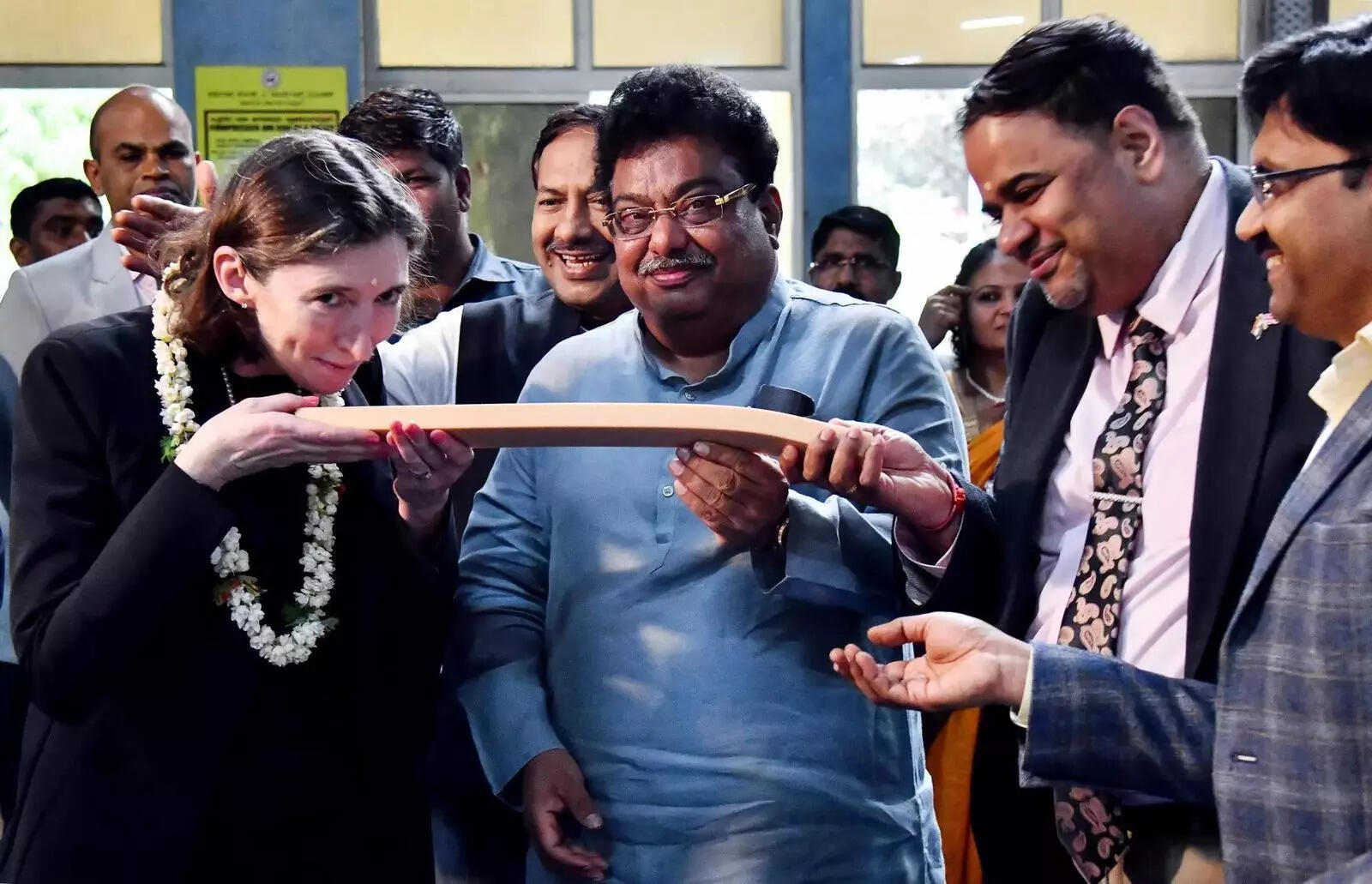
Bengaluru, Jun 25 (ANI)_ Karnataka Minister M. B. Patil along with British High ....

Karnataka minister MB Patil along with British high commissioner to India Lindy Cameron and Deputy high commissioner to Karnataka and Kerala Chandru Iyer during his visit to Karnataka Soaps and Detergents Limited (File photo: ANI)

The government’s argument is straightforward. If the brand wants to expand aggressively in North India and overseas markets, it needs a face with pan-India recognition.Tamannaah Bhatia, though born and brought up in Mumbai, has worked extensively in Tamil, Telugu and Hindi cinema. With millions of followers on social media and cross regional appeal, the government says she fits the bill.Officials have stated that several names were evaluated, including actors from Karnataka. However, some were reportedly endorsing competing brands, which made them ineligible under marketing norms.The state government maintains that branding decisions must align with commercial objectives, not political sentiment.

The cultural counterargument

Critics, however, view the decision through a different lens.For them, Mysuru Sandal Soap is intertwined with Karnataka’s linguistic and cultural pride. In a state where language identity remains politically sensitive, the selection of a non-Kannada-speaking actor to represent a heritage brand has symbolic implications.Mysuru MP Yaduveer Wadiyar, a descendant of the Mysore royal family, publicly questioned the rationale. He argued that soap is not gender-specific and that a cricketer or prominent Kannadiga could have been chosen. He also clarified that he had no interest in serving as brand ambassador himself, despite his name circulating on social media.

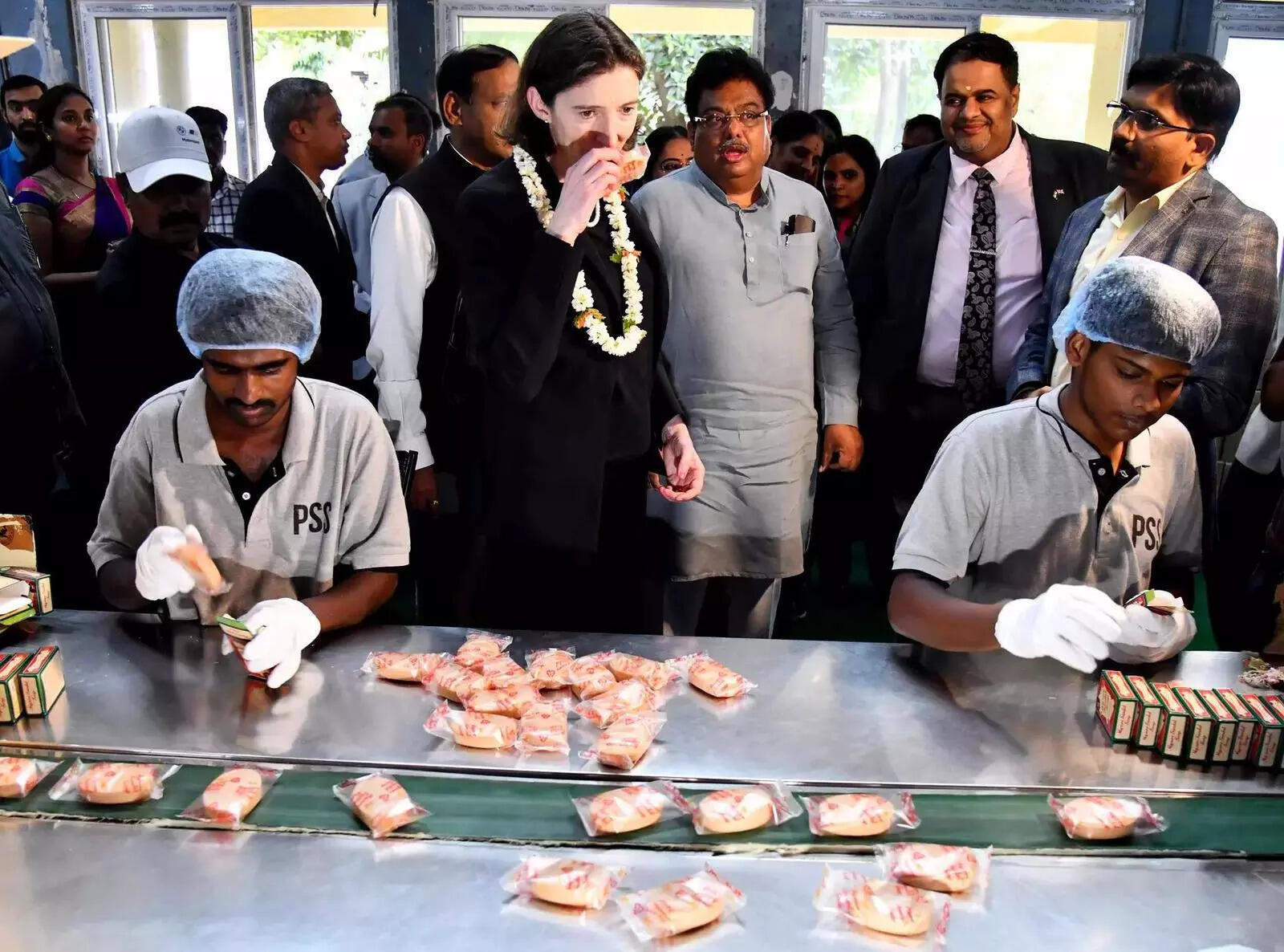
Bengaluru, Jun 25 (ANI)_ Karnataka Minister M. B. Patil along with British High ... (1).

Minister MB Patil, along with Lindy Cameron, seeing the packaging of the Mysuru sandal soap. (File photo: ANI)

Forest minister Eshwar Khandre defended the appointment but assured that Kannadigas would continue to receive priority in other contexts.Meanwhile, housing minister Zameer Ahmed indicated that although the decision had been taken, there were numerous capable Kannada actresses who could have been considered.The disagreement even within the ruling establishment reflects the sensitivity of the issue.For pro-Kannada groups, the controversy touches on a larger fear of cultural dilution. They argue that state-owned enterprises should reinforce regional identity rather than dilute it for broader appeal.

A brand in transition

Beyond the politics, KSDL is attempting a major brand refresh.At the recent relaunch event, the company unveiled 57 products, including new variants of soaps, sandalwood oil, jasmine scented bars, perfumes, toothpaste, coconut oil, petroleum jelly and organic lines. Two coffee table books documenting KSDL’s heritage were also released.The refreshed packaging aims to appeal to younger consumers who are increasingly drawn to premium natural and heritage brands.In recent years, India’s beauty and personal care market has undergone a rapid transformation. Consumers shifted towards global brands and K-beauty trends. However, there has also been a renewed interest in Ayurvedic and traditional formulations.

Bengaluru_ Kannada activists raise slogans during their protest against actor Ta... (2).

Kannada activists raised slogans during their protest at the entrance of the company premises at Yeshwanthpur in Bengaluru. (PTI photo)

Mysuru Sandal Soap, with its authentic sandalwood oil base, occupies a unique niche. It combines tradition with premium positioning.The launch of KSDL eStore, an e-commerce platform for its products, signals a shift toward digital retail. The company has established stock-keeping units closer to consumers to ensure timely delivery and freshness.In this context, the appointment of a high-profile celebrity ambassador is part of a broader strategy to reposition the brand as aspirational and nationally visible.

The politics of scent

The row highlights how even consumer goods can become sites of political contestation.In Karnataka, language and regional identity have historically shaped electoral politics. Debates over Hindi imposition, local employment and cultural representation frequently surface in public discourse. Against this backdrop, the choice of a brand ambassador becomes more than a marketing decision.Opposition leaders have framed the issue as evidence of disregard for Kannada pride. Supporters of the government argue that commercial pragmatism should not be conflated with cultural betrayal.The controversy also raises a larger question about public sector branding. Should government-owned companies prioritise regional representation as part of their mandate, or operate strictly on business metrics?For private corporations, such decisions are typically driven by reach, cost and market impact. But when the brand belongs to the state, expectations shift.

The actor at the centre

Tamannaah Bhatia has not publicly commented on the controversy in detail. At the Bengaluru event, she described Mysuru Sandal Soap as deeply associated with emotion and trust. She said she felt privileged to be associated with an institution of such legacy.Her filmography spans multiple industries, and she enjoys a significant social media presence. From a marketing standpoint, that digital footprint is valuable in an era where brand recall is shaped as much by Instagram reels as by television commercials.Yet, the backlash shows that brand endorsement in India cannot be divorced from identity politics.

More than just a soap

Mysuru Sandal Soap’s enduring appeal lies in its authenticity. Unlike synthetic fragrance soaps, it reportedly uses genuine sandalwood oil, a resource historically associated with Karnataka. The state has long regulated sandalwood harvesting due to its high value and ecological importance.The soap’s emblem, featuring the royal insignia of Mysore, reinforces its historical roots. For many, it represents a time when princely states invested in industrial innovation and self-sufficiency.In that sense, the brand is a bridge between pre-independence industrial vision and modern state enterprise.As of now, the appointment stands. Tamannaah Bhatia’s two-year tenure has begun, and marketing campaigns are underway. KSDL is pushing forward with its expansion plans, eyeing higher turnover, greater exports and a stronger digital footprint.Whether the controversy fades or continues to simmer will depend on political developments and public reception.If the refreshed branding leads to significant growth in north India and overseas markets, the government may point to it as vindication of its strategy. If the backlash persists, opposition parties may continue to frame it as symbolic of deeper cultural concerns.

[ad_2]

Source link
Purr-manent resident: Larry the cat marks 15 years at Downing Street as Britain’s political top cat

[ad_1]

Purr-manent resident: Larry the cat marks 15 years at Downing Street as Britain’s political top cat

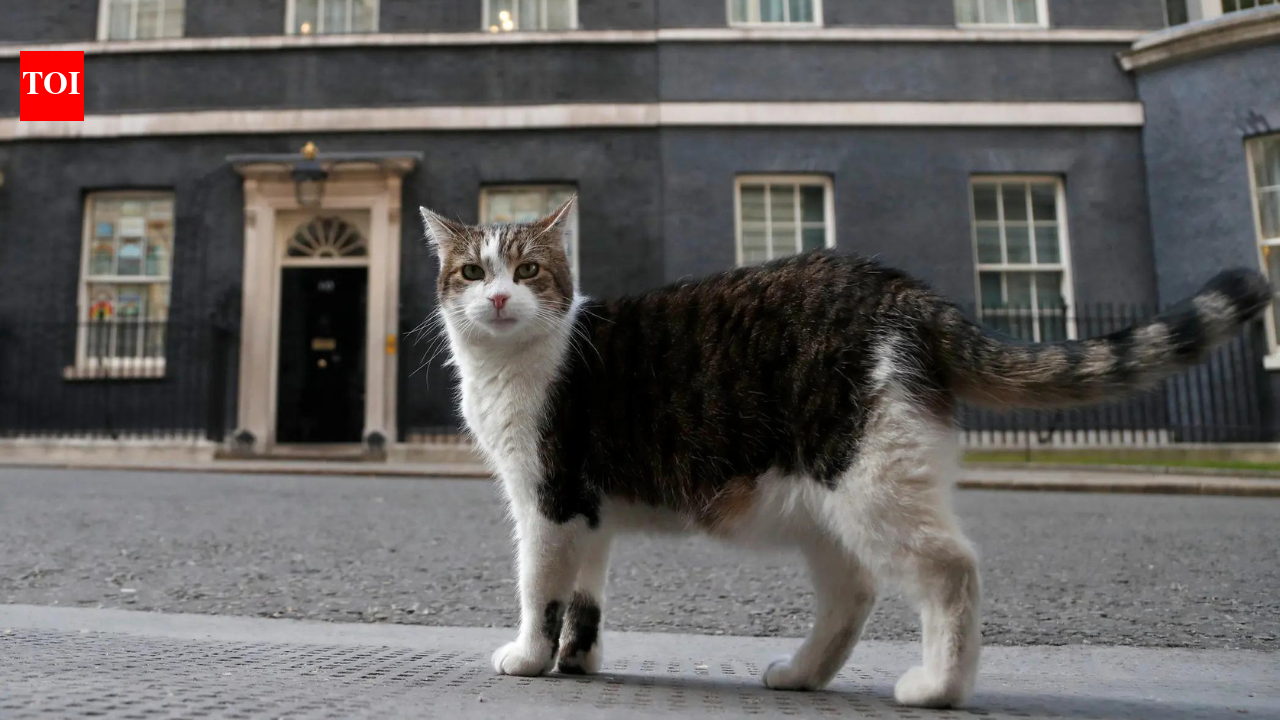
In a political landscape often defined by upheaval and leadership churn, one resident of 10 Downing Street has remained a constant. Larry, the British government’s official Chief Mouser, marked 15 years in the role on Sunday, becoming one of the most enduring figures associated with the prime minister’s residence.First adopted from Battersea Dogs and Cats Home by then-Prime Minister David Cameron, the gray-and-white tabby arrived at Downing Street on Feb. 15, 2011. Since then, Larry has served under six prime ministers, earning a reputation as both a symbol of continuity and an unofficial mascot of British politics.“In turbulent political times, stability comes with four legs, whiskers and a fondness for napping,” said Philip Howell, a Cambridge University professor who has studied the history of human-animal relations. “Larry the cat’s approval ratings will be very high,” Howell added. “And prime ministers tend not to hit those numbers. He represents stability, and that’s at a premium.”Larry’s official responsibilities, according to his government profile, include “greeting guests to the house, inspecting security defenses and testing antique furniture for napping quality.” In practice, his presence has often extended beyond ceremonial duties. The cat has become a familiar sight for photographers gathered outside Downing Street, frequently appearing at moments that coincide with high-profile political arrivals.“He’s great at photo-bombing,” said freelance photographer Justin Ng, who has covered Downing Street for years. “If there’s a foreign leader that’s about to visit then we know he’ll just come out at the exact moment that meet-and-greet is about to happen.”Over the years, Larry has encountered a succession of world leaders, sometimes forcing visiting dignitaries to navigate around him on the famous black doorstep. Observers have noted that while he can be selective in his affections — reportedly less friendly toward men — he appeared comfortable around former U.S. President Barack Obama and drew a smile from Ukrainian President Volodymyr Zelenskyy during one of his visits.During Donald Trump’s 2019 visit to London, Larry famously wandered into the official photo opportunity before settling down beneath the presidential limousine known as “The Beast.”Despite his official title, assessments of Larry’s rodent-catching abilities have varied. He has occasionally been photographed catching mice and once attempted to capture a pigeon, which escaped. Ng described the cat’s appeal differently. “He’s more of a lover than a fighter,” he said. “He’s very good at what he does: lounging around and basically showing people that he’s very nonchalant.”Life at Downing Street has also included rivalries and uneasy coexistence with other political pets. Larry shared space with Boris Johnson’s Jack Russell cross Dilyn and Rishi Sunak’s Labrador Nova. Under current Prime Minister Keir Starmer, Larry remains confined to the working areas, while the Starmer family’s cats, JoJo and Prince, stay in the private residential quarters.Perhaps his most notable rivalry was with Palmerston, the Foreign Office’s resident cat across the street. The two were repeatedly photographed fighting before Palmerston retired in 2020. Palmerston died earlier this month in Bermuda, where he had taken on the honorary role of “feline relations consultant” to the governor.Now believed to be 18 or 19 years old, Larry has slowed with age but continues to patrol Downing Street and spend long stretches resting on a window ledge above a radiator near the entrance — a familiar sight for visitors and staff alike.For many observers, Larry’s enduring popularity reflects something deeper in British political culture. Howell argues that the cat occupies a unique space as a nonpartisan presence in a highly partisan environment.“A cat-hating PM, that seems to me to be political suicide,” Howell said.Unlike American presidential pets, which are often seen as extensions of political image-making, Larry’s appeal lies partly in his independence. “The fact that cats are less tractable is part of the charm, too,” Howell said. “He’s sort of whimsically not partisan in a political sense, but he tends to take to some people and not to others and he won’t necessarily sit where you want him to sit and pose where you want him to pose.“There is a certain kind of unruliness about Larry which I think would endear him, certainly, to Brits.”

[ad_2]

Source link
FPIs infuse Rs 19,675 crore in early February after months of heavy selling

[ad_1]

FPIs infuse Rs 19,675 crore in early February after months of heavy selling

Foreign Portfolio Investors (FPIs) staged a sharp turnaround in early February, infusing Rs 19,675 crore into Indian equities in the first fortnight, buoyed by the US-India trade deal and easing global macroeconomic concerns.The inflows come after three consecutive months of significant outflows. FPIs had pulled out Rs 35,962 crore in January, Rs 22,611 crore in December, and Rs 3,765 crore in November, as per data from depositories.

2025 sees steep net outflows despite February buying

Despite the recent buying, overall foreign investor sentiment in 2025 has remained weak. FPIs have pulled out a net Rs 1.66 lakh crore ($18.9 billion) from Indian equities so far this year, marking one of the worst phases for foreign fund flows.The earlier selling was attributed to volatile currency movements, global trade tensions, concerns over potential US tariffs, and stretched equity valuations.As per the depository data, FPIs invested Rs 19,675 crore in February so far (till February 13).

Softer US inflation, stable domestic macros aid sentiment

According to news agency PTI, Himanshu Srivastava, principal manager–research at Morningstar Investment Research India, said the recent buying was supported by easing global macro concerns, particularly softer US inflation data.This, he noted, led to positive sentiment around the interest rate cycle, helping stabilise bond yields and the US dollar, thereby improving risk appetite toward emerging markets, including India.He added that steady domestic macroeconomic indicators, stable inflation, and broadly in-line corporate earnings reinforced confidence in India’s growth outlook.Echoing similar views, Vaqarjaved Khan, senior fundamental analyst at Angel One, said the inflows were triggered by the US-India trade deal, a supportive Union Budget 2026 with fiscal stimulus measures, easing global trade uncertainties, and stable domestic interest rates.

Selling pressure persists despite positive sessions

However, despite the positive headline inflow figure, FPIs have remained net sellers on a month-to-date basis.According to PTI, FPIs were net buyers on seven of the eleven trading sessions in February up to the 13th, turning sellers on only four occasions. Yet, data shows they have net sold equities worth Rs 1,374 crore so far this month.The overall figure was skewed by a sharp sell-off of Rs 7,395 crore on February 13, when the Nifty 50 declined by 336 points.The week also witnessed heavy selling in IT stocks amid the so-called “Anthropic shock”. VK Vijayakumar, chief investment strategist at Geojit Investments, said it is likely that FPIs aggressively offloaded IT stocks in the cash market, as the IT index plunged 8.2 per cent during the week ended February 13.

[ad_2]

Source link
Pakistan-linked ‘death squads’ accused as seven go missing in Balochistan

[ad_1]

Pakistan-linked ‘death squads’ accused as seven go missing in Balochistan

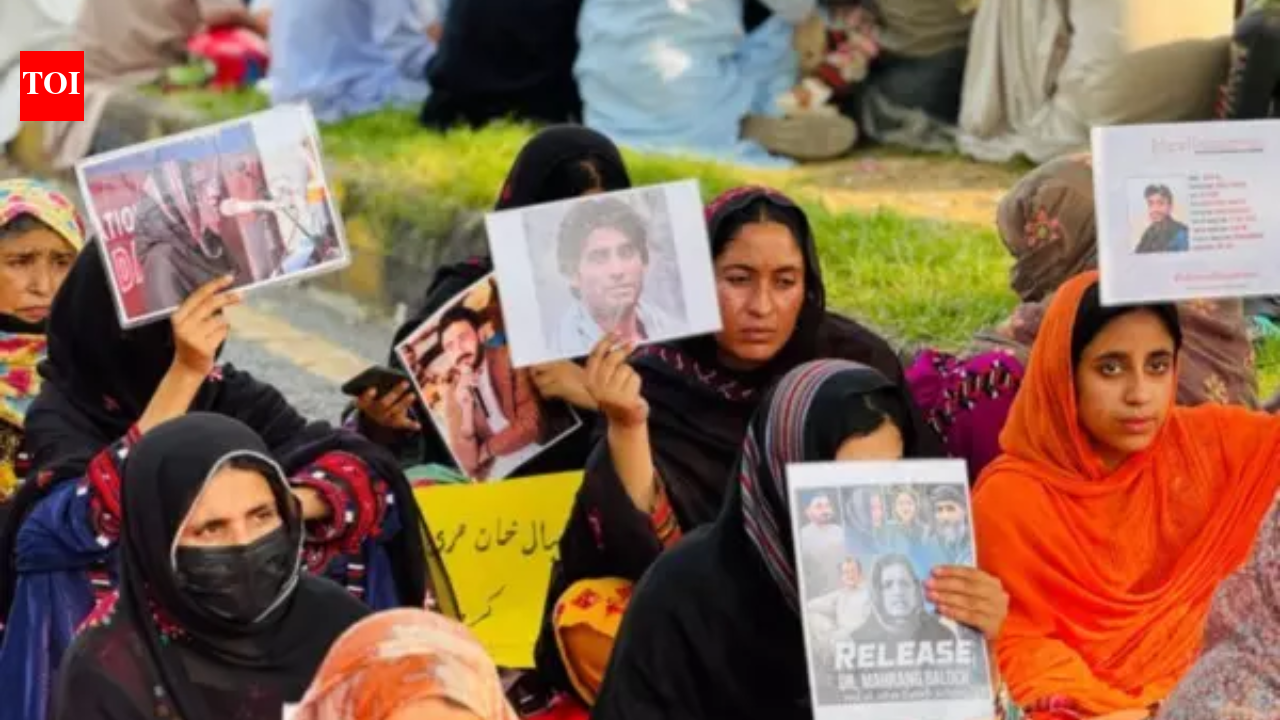
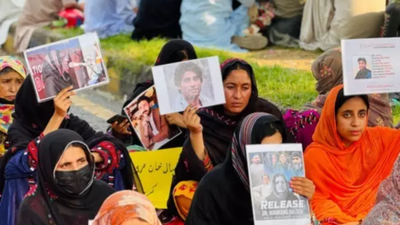
The recent disappearances of several people in Balochistan have been linked to Pakistan’s security apparatus, sparking fear and anxiety among families. At least seven individuals are reported missing in incidents connected to Panjgur and Karachi.Residents of Pulabad, a locality in Panjgur, described a recent raid where armed personnel searched homes and detained at least six people. Witnesses said those taken were transported to unknown locations. Locals mentioned two names, Inayat and Rasheed, while the identities of the other detainees could not be independently confirmed, reported ANI citing The Balochistan Post.

Baloch Leader Akhtar Mengal Stuns Pakistan, Says Balochistan’s ‘Separation Is The Only Option Now’

In a separate case, 23-year-old Zulfiqar, son of Hameed and a resident of Tasp, was reportedly seized from a marketplace on February 13, 2026. Locals alleged that men linked to a state-backed armed faction, commonly described as a “death squad,” carried out the detention. Family members have not received any information regarding his condition since the incident.Another case raising alarm involves Zakir Noor, a student from Panjgur, who was allegedly detained in Karachi on December 30, 2025. The Baloch rights organisation Paank said he was taken by security personnel without legal documentation. Noor has not contacted his family since, fueling fears he may have been transferred to an undisclosed detention site.Paank said secret confinement places detainees at serious risk and violates international safeguards against arbitrary arrest. Activists added that the pattern disproportionately affects students and young men, especially those who migrate to major cities for education or work.

[ad_2]

Source link
All you need to know about USS Gerald R Ford, world’s largest nuclear supercarrier heading to Middle East

[ad_1]

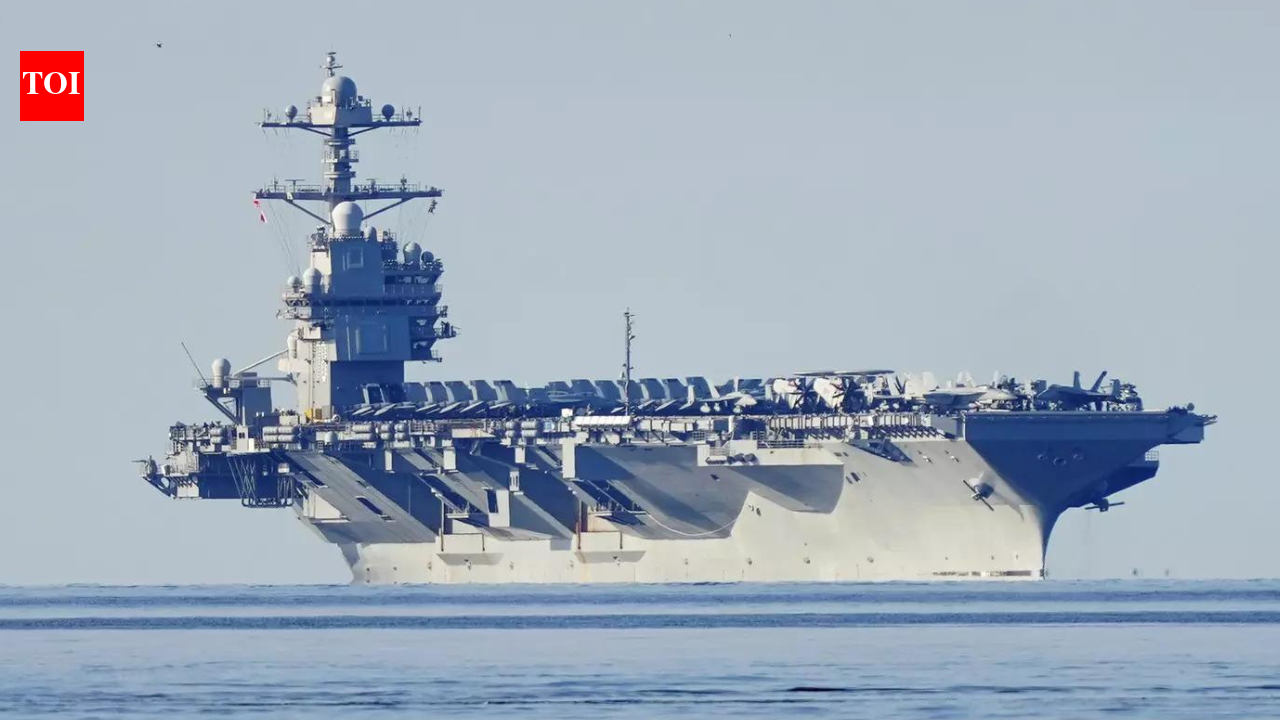
All you need to know about USS Gerald R Ford, world’s largest nuclear supercarrier heading to Middle East

The United States has ordered one of its most advanced naval assets, the USS Gerald R. Ford, to the Middle East in a move widely seen as a significant escalation of military signalling toward Iran, as tensions over Tehran’s nuclear programme intensify.The deployment comes as President Donald Trump increases pressure on Iran to reach an agreement on its nuclear activities, warning of “very traumatic” consequences if negotiations fail to produce results in the coming weeks.

US Preparing For Sustained Ops Against Iran; Bombshell Claim As Trump Deploys USS Gerald Ford

The USS Gerald R. Ford (CVN-78), currently transiting from the Caribbean, is expected to join the USS Abraham Lincoln carrier strike group already operating in the region. The presence of two US aircraft carriers in or near the Middle East is relatively rare and is typically interpreted as a show of force aimed at deterrence during periods of heightened geopolitical tension.

What is USS Gerald R Ford?

Commissioned as the lead ship of a new class of US Navy carriers, the Gerald R Ford represents the most technologically advanced aircraft carrier ever deployed by the United States. It is the first new carrier design introduced in more than four decades and incorporates several major technological upgrades over the older Nimitz-class vessels it is intended to replace.

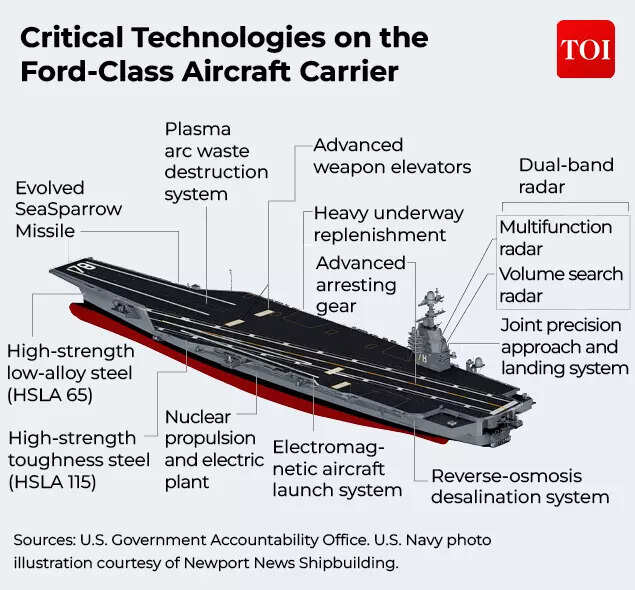
Critical Technologies on the Ford-Class Aircraft Carrier

Critical Technologies on the Ford-Class Aircraft Carrier

Among its most notable features is the Electromagnetic Aircraft Launch System (EMALS), which replaces traditional steam catapults and enables faster and more efficient aircraft launches. The system allows the carrier to generate a higher sortie rate, improving its operational tempo during sustained combat operations.

  • Measuring approximately 1,106 feet in length — roughly the size of three football fields — the nuclear-powered carrier displaces around 100,000 long tons when fully loaded.
  • Powered by two A1B nuclear reactors, the vessel has a virtually unlimited operational range and can sustain speeds exceeding 30 knots.
  • Its air wing can accommodate more than 75 aircraft, including F-35C Lightning II stealth fighters and F/A-18E/F Super Hornets, making it a central component of US naval power projection.

Rapid redeployment

The current mission marks a swift change in operational plans for the carrier.The Gerald R Ford has been deployed at sea since June 2025, initially operating in European waters before being redirected to the Caribbean later in the year. US officials said the carrier played a role in operations connected to the capture of Venezuelan leader Nicolás Maduro.

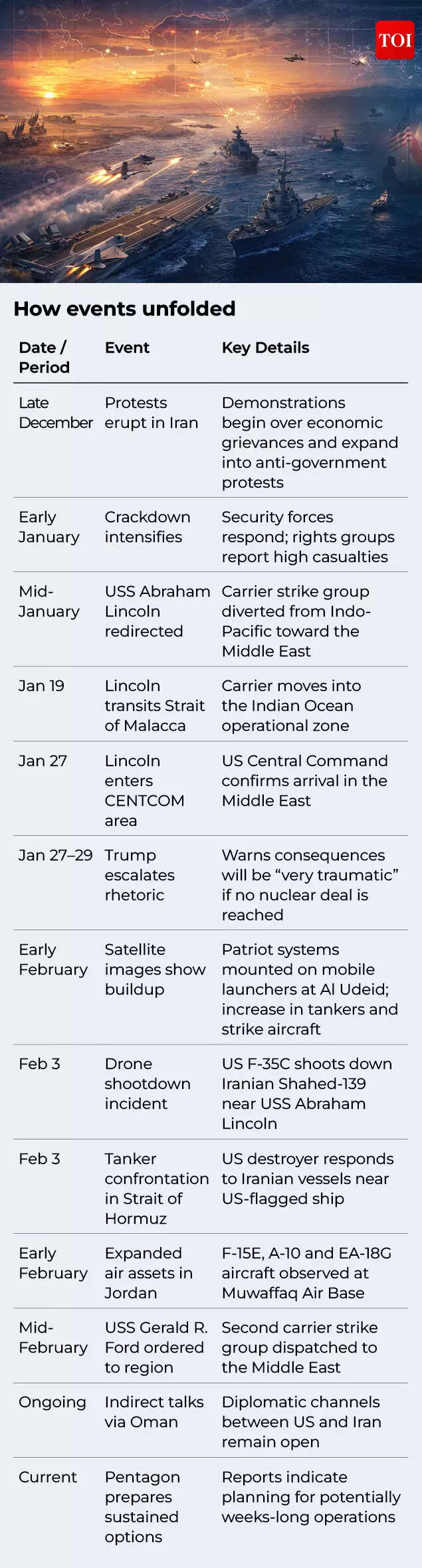
How events unfolded

Instead of returning to its homeport in Norfolk, Virginia, for scheduled maintenance, the carrier has now been ordered to proceed toward West Asia, underscoring the urgency Washington appears to attach to the evolving situation with Iran.Speaking to reporters, President Trump indicated that the deployment was intended to ensure military readiness should diplomatic efforts falter. “In case we don’t make a deal, we’ll need it… If we need it, we’ll have it ready,” he said, while expressing hope that negotiations would ultimately succeed.

US-Iran tensions

The anticipated arrival of the carrier strike group in the Persian Gulf or Arabian Sea has drawn mixed reactions across the region. US officials describe the buildup as a stabilising deterrent meant to discourage escalation, the Gulf states have privately expressed concern that an increased American military presence could heighten tensions and risk miscalculation.

[ad_2]

Source link

China’s secret nuclear expansion: New warhead facilities detected in Sichuan mountains

[ad_1]

China's secret nuclear expansion: New warhead facilities detected in Sichuan mountains
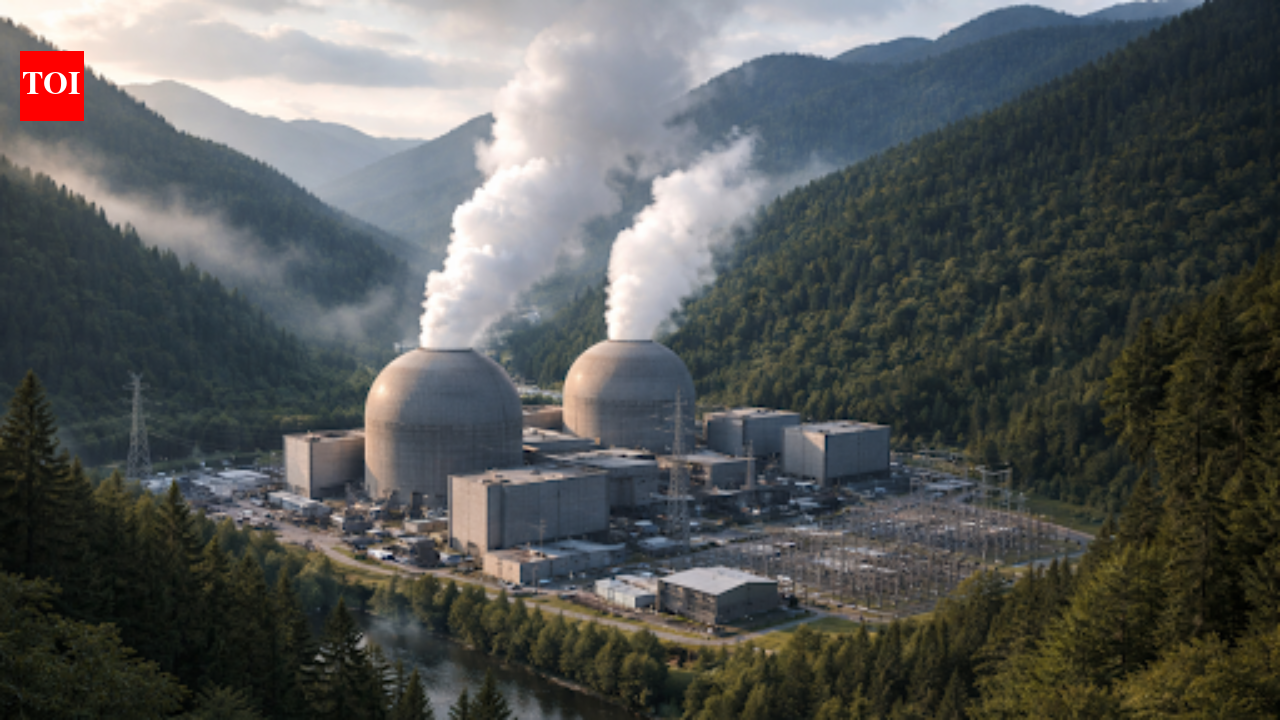
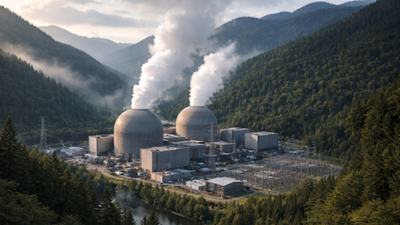
(AI image generated using ChatGPT)

In the mist-covered valleys of southwest China’s Sichuan Province, satellite imagery is revealing a rapid expansion of the country’s nuclear weapons infrastructure, part of what experts say is a broader effort to strengthen China’s position in an era of intensifying superpower rivalry.These secretive nuclear-related sites, including facilities near Zitong and Pingtong, have expanded and been upgraded in recent years. Analysts say the changes fit a wider national push to modernize China’s nuclear arsenal, complicating efforts to revive global arms control after the expiration of the last remaining US-Russia nuclear treaty. Washington argues that any future agreement must also include China, but Beijing has shown no interest.

US, Russia, China And…: Nuclear Stability Shakes As 12,200+ Nukes Across 9 Nations Go Unrestricted

According to the Pentagon’s latest estimate, as reported by The New York Times, China possessed more than 600 nuclear warheads by the end of 2024 and could reach 1,000 by 2030. Although that total remains far below the stockpiles of the United States and Russia, analysts say the pace of growth is concerning.“I think without a real dialogue on these topics, which we lack, it’s really hard to say where it’s going, and that, for me, is dangerous,” said Matthew Sharp, a former State Department official now at the Massachusetts Institute of Technology. “Because now we’re forced to react and plan around the worst-case interpretation of a concerning trend line.”One valley lies near Zitong, where engineers have been constructing new bunkers and ramparts. A newly built complex there is threaded with pipes, suggesting it handles highly hazardous materials. Another valley houses a heavily secured site known as Pingtong, where specialists believe plutonium cores for nuclear warheads are produced. The main structure at Pingtong, marked by a 360-foot ventilation stack, has been refurbished with new vents and heat dispersers, and further construction is underway nearby. Above the entrance, large characters bearing leader Xi Jinping’s slogan—“Stay true to the founding cause and always remember our mission”—are visible from space.Experts say Pingtong’s layout resembles plutonium pit production plants in other countries, including the Los Alamos National Laboratory in the United States. At Zitong, the new bunkers and fortified areas are likely used to test high explosives — the chemical charges that compress nuclear material to trigger a chain reaction.“You have a layer of high explosives and the shock wave at the same time implodes into the center. This needs blast tests to perfect them,” said Hui Zhang, a physicist at Harvard University who reviewed the findings, as quoted by NYT.The precise purpose and scale of the upgrades remain uncertain. “We don’t know how many warheads have been produced, but we just see the plant expansion,” Zhang said. Some changes could reflect safety improvements or preparations to adapt warhead designs for new weapons systems such as submarine-launched missiles.“The changes we see on the ground at these sites align with China’s broader goals of becoming a global superpower. Nuclear weapons are an integral part of that,” said Renny Babiarz, a geospatial intelligence expert who analyzed satellite images of the locations. “There’s been evolution at all of these sites, but broadly speaking, that change accelerated starting from 2019,” he said.US officials worry that a larger and more advanced arsenal could affect China’s actions in a future crisis, especially over Taiwan. China seeks to ensure it is “in the position where they believe they’re largely immune from nuclear coercion by the United States,” said Michael S Chase, a former Pentagon official now at RAND. “I think they probably judge that could come into play in a conventional conflict over Taiwan.

[ad_2]

Source link