Breaking News
From hostels to temples, mithai to manufacture, all hit by LPG shortage | Mumbai News


Mumbai: The shortage of commercial gas cylinders in Mumbai has also affected clubs, religious kitchens, educational institutions, canteens, hostels, automobile sector, jewellery manufacturers, pharmaceutical companies among other sectors.Mithai manufacturer Vicky Jaisinghani of A1 Sweets, which is based in Ulhasnagar said the shortage of dry fruit from West Asia followed by the LPG cylinder crisis was taking a dual toll of business.Among establishments, the Mumbai Press Club said due to the shortage of gas it was issuing a restricted menu of non-LPG items like sandwiches, dry snacks and tandoori fare “until the situation improves”.Religious institutions which feed devotees are also impacted by the crisis. Gurdwaras affiliated to Sri Guru Singh Sabha, which provide free langar meals on a daily basis, are struggling to arrange cylinders or adopt coal based methods. Sardar Balwinder Singh of Pantnagar Gurdwara, Ghatkopar, said they also house 68 patients suffering from cancer. “We feed their relatives too. How will we function, our gas is nearly over.Dadar Gurdwara’s Sardar Kulwant Singh said they have over 260 patients living there. “We are making a representation to the state govt to consider us a special case,” he said.Iskcon Juhu serves daily prasad to visitors and cooks meals for 150 sevedars in the temple, said spokesperson Parijata Devi. The Mumbadevi temple similarly serves khichdi to devotees after aarti. The temple requires six 14 kg domestic cylinders and four 19 kg commercial cylinders every month, said manager Hemant Jadhav.The Haji Ali Dargah is currently providing Iftar meals to 2,000 rozedars including fritters, pulao, chicken, said manager Mohammed Taher, who was anxious about gas supply.Even working hostels and canteens in the city are affected. The YWCA women’s hostel in Fort uses domestic cylinders to cater to 68 residents, said a staffer. The 25-day gap for each refill will weigh heavily. A few religious establishments like the Ghatkopar gurdwara had applied for piped gas connections years ago but there is no supply.


Source link

LPG shortage shuts eateries across Mumbai; up to 20% hotels & restaurants hit, says industry body | Mumbai News


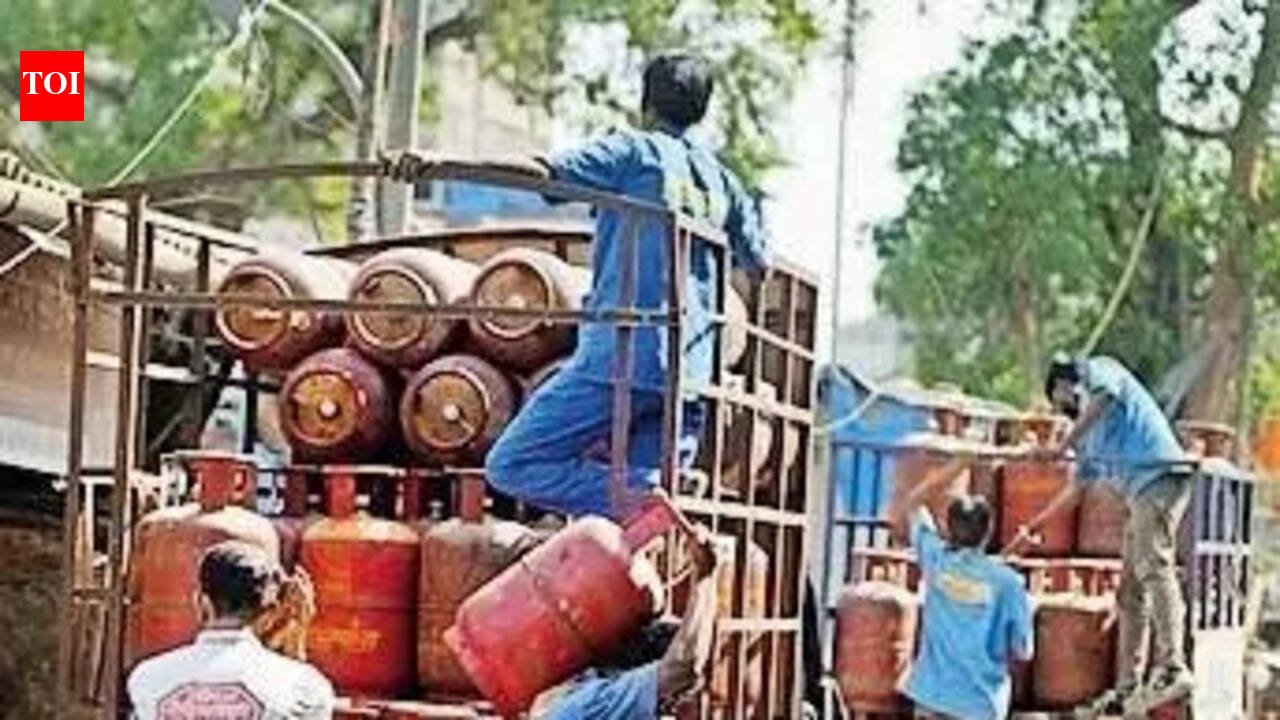
Mumbai: Hotel Free India at Jacob Circle, known for its kheema and butter chicken, has pulled down shutters. A popular veg restaurant Nanumal Bhojraj’s Masjid Bunder outlet was open Tuesday morning but shut down after it ran out of gas; New Edward Restaurant’s Shaan Chinese on D N Road was closed the entire day; Udupi Niketan in Bombay Central reduced the number of dishes it served and curtailed service timings. These are examples of disruption in the restaurant sector in Mumbai where the West Asia war has impacted commercial gas cylinder supplies. A growing shortage of commercial LPG cylinders has forced several eateries in the Mumbai region to scale back operations. Chinese dishes and tawa recipes which require cooking on high flame were the first to go. Industry bodies say nearly 20% of hotels and restaurants in Mumbai are fully or partially shut due to lack of cooking gas and warn that up to 50–60% establishments may close in the next couple of days if the supply crisis continues.Hidayatulla Ismail Dukka, manager at Free India restaurant, said, “There has been no cylinder supply since Monday. Hence we decided to close from today.” Akshay Shetty of Udupi Niketan said he reduced the number of dishes and curtailed service for popular ones such as dosas and idlis which sell in larger quantities on low margins. “The reason is the price of LPG cylinders have suddenly skyrocketed,” said Shetty. Many small and mid-sized eateries have run out of cooking gas stock, leaving kitchen staff idle and uncertain about operations. Hoteliers alleged that shortage has triggered black marketing of LPG cylinders at around Rs 3,000 each in the grey market, far higher than the normal price of around Rs 1,700, which was recently increased to roughly Rs 1,840 following the Gulf crisis.However, no impact is seen so far on piped natural gas supply to commercial and industrial customers, said an official from Mahanagar Gas Ltd. A section of hotels and restaurants also operate on piped gas.The Indian Hotels and Restaurant Association (AHAR), which represents nearly 8,000 small restaurants, permit rooms and hotels across Maharashtra, said the crisis was exacerbated by an order from the Union ministry of petroleum and natural gas saying additional provisions of LPG should be reserved only for domestic use. In the order of priority, the govt has signalled the need to first ensure uninterrupted supply to the domestic sector. An official from an oil marketing company said: “Steps have been taken to enhance LPG production and prioritise its availability for domestic consumers. Along with domestic users, it has been decided to make supplies as per requirement to essential non-domestic sectors such as hospitals, educational institutions.”The official further said: “For LPG supply to other non-domestic sectors, a committee of three executive directors of oil marketing companies—Indian Oil, BPCL and HPCL—have been constituted to review the representations and prioritise LPG supply based on merit, necessity, and product availability.”However, industry bodies say the bulk of small restaurants and roadside outlets, which provide affordable meals to a large workforce as well as students and tourists, operate with limited reserves of fuel. According to AHAR, the industry also provides around 40 lakh direct jobs and nearly 1.6 crore indirect or self-employment opportunities across Maharashtra, making it a critical sector for the economy.AHAR said it has written to Union petroleum and natural gas minister Hardeep Singh Puri highlighting the situation and suggesting that the industry may manage with up to 25% curtailment, but not complete stoppage. Hoteliers also met Maharashtra food and civil supplies minister Chhagan Bhujbal, who assured them he would take up the matter with chief minister Devendra Fadnavis and relevant authorities.Pradeep Shetty, vice-president of the Federation of Hotel & Restaurant Associations of India, “Following the March 5 notification from the ministry, there has been considerable confusion among suppliers and distributors, many of whom have stopped supplying commercial LPG cylinders to hotels, restaurants and food service establishments.”Shetty said shortages were being reported from Mumbai, Pune, Aurangabad and Nagpur. Disruptions were also emerging in Delhi, Karnataka, Telangana and Andhra. “If the situation does not improve in the next two days, nearly 50% of hotels and restaurants in Mumbai may be forced to temporarily shut operations,” he said.Restaurant owners pointed out that alternatives such as electric or induction-based cooking are not viable for commercial kitchens that rely on high-intensity cooking typical of Indian cuisine; new systems would also require significant investment and infrastructure changes. They are now hoping for urgent intervention by govt to restore LPG supply. (With inputs from Somit Sen)


Source link

Demolition threat looms over Ulhasnagar’s largest commercial complex | Mumbai News


Ulhasnagar: One of the largest commercial complexes in Ulhasnagar is facing the threat of demolition after the Town Planning Department raised serious objections over large-scale alleged illegal construction within the premises, reports Pradeep Gupta.The Town Planning Department of the Ulhasnagar Municipal Corporation (UMC) has issued a notice to the developer of Regency Plaza, a prominent commercial complex in the city, citing nearly 31,000 square feet of unauthorized construction along with several structural and regulatory irregularities in the building.According to the notice, Town Planner Vikas Birari has given the developer Sunder Developers seven days to submit an explanation regarding the alleged illegal construction. Authorities have warned that if a satisfactory response is not received within the stipulated period, demolition action may be initiated against the unauthorized portions of the complex.In the order, the Town Planning Department has also directed that the developer must not use the disputed illegal area during this period. Additionally, the ward officer of the municipal corporation has been instructed to seal the concerned portion of the complex until further orders.Regency Plaza houses around 500 offices of several well-known companies, businesses and multiples banquets making it one of the busiest commercial hubs in Ulhasnagar. Following the issuance of the notice, panic and uncertainty have spread among office owners and employees operating from the complex, who fear the impact of possible civic action. The issue reportedly came to light after social activist Swapnil Patil received information about large-scale additional illegal construction within the commercial complex.Patil subsequently filed a complaint with the UMC’s Town Planning Department.Acting on the complaint, the department earlier issued a notice to the developer directing them to demolish the illegal construction. Municipal officials had also carried out partial demolition of the unauthorized structure. However, it is alleged that the developer later reconstructed and began using the demolished illegal portion again.Meanwhile, the developer had applied for approval of a revised building proposal in an attempt to regularize the illegal construction. However, during scrutiny of the application, the Town Planning Department reportedly found several discrepancies and deficiencies in the proposed building plan submitted by the developer.Officials stated that the proposal did not comply with Unified Development Control and Promotion Regulations (UDCPR) norms, particularly with regard to adequate parking provisions required for the building. Several other irregularities were also identified in the proposal. As a result, the Town Planning Department rejected the revised building proposal and ordered the demolition of the illegal construction carried out in the complex. Speaking on the issue, activist Swapnil Patil said that Ulhasnagar is already struggling with the consequences of rampant illegal constructions, which have led to narrow roads and severe congestion, forcing many residents to leave the city. He further stated that while developers are expected to carry out construction in accordance with legal norms, some continue to violate regulations, damaging the city’s image. Patil added that strict action against such illegal structures is necessary to deter others and prevent further unauthorized construction in the city.


Source link

Middle East crisis: Asian airlines raise fares as war fuels oil shock fears


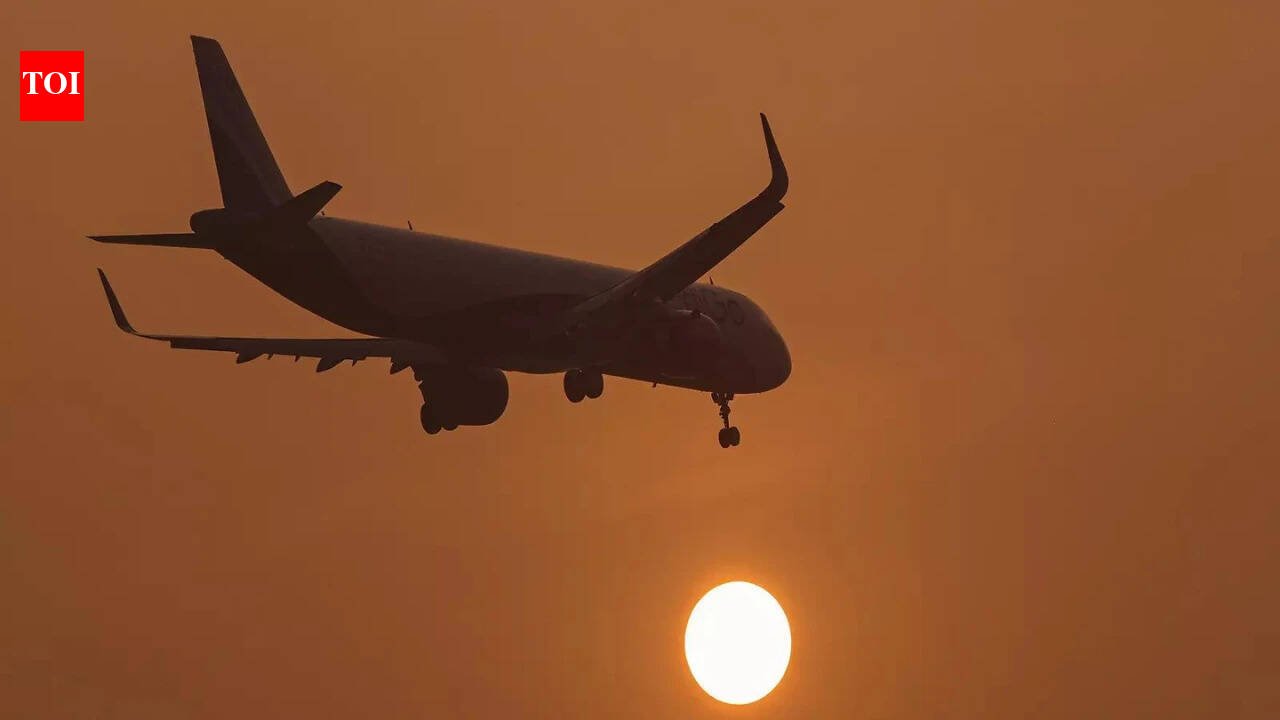
Airlines across Asia are increasing ticket prices and preparing contingency plans, including the possibility of grounding aircraft, as the escalating Middle East conflict threatens to trigger the biggest oil shock since the 1970s.Indian carriers have already raised fares on long-haul routes by about 15 per cent and are considering further hikes as jet fuel prices surge, people familiar with the matter said, as quoted by Bloomberg. In Vietnam, state media has warned that airfares could climb by as much as 70 per cent because of the country’s heavy reliance on imported jet fuel.

Crude Oil Rally Near 120 Dollars, Raises Big Question If India Can Survive Crisis With Russian Oil

Industry analysts say airlines in Asia are particularly vulnerable because many carriers have weaker fuel hedging programmes than their counterparts in Europe or the United States.“Panic buttons have been set off everywhere,” June Goh, senior oil market analyst at Sparta Commodities SA, told Bloomberg. “Airlines in Asia who have a weak hedging program are very vulnerable with the current jet-fuel pricing if they sold tickets at earlier price points than where we are now.”Some low-cost airlines in Southeast Asia are now preparing for scenarios in which planes may need to be grounded if jet fuel becomes too expensive or difficult to access, according to people familiar with the discussions.

Rising fuel prices threaten airline operations

The mounting pressure highlights the widening impact of the conflict, which erupted more than a week ago after joint US-Israeli strikes on Iran and has since disrupted air travel and fuel supplies globally.Oil prices have surged sharply amid fears of prolonged disruptions to shipping routes and energy supplies. According to Reuters, crude prices jumped 15 per cent to more than $105 a barrel, levels last seen in 2022, with Brent crude at one point rising as much as 29 per cent.Jet fuel prices have risen even faster in some markets, in some cases doubling since the start of the conflict.“Absent near-term relief, airlines around the world could be forced to ground thousands of aircraft while some of the industry’s financially weakest carriers could halt operations,” analysts at Deutsche Bank said in a note cited by Reuters.Fuel is the second-largest expense for airlines after labour and typically accounts for between one-fifth and one-quarter of operating costs.

Travel demand at risk as fares surge

The sharp rise in ticket prices is also raising concerns about declining travel demand, particularly for leisure passengers.Lorraine Tan, director of equity research for Asia at Morningstar, said higher fares could discourage travellers and lead companies to scale back business travel due to the uncertain outlook, reported Reuters.“The issue for the airlines now is that travel demand may be curtailed as costs become prohibitive for leisure travellers,” Tan said.Since the start of the conflict on February 28, more than 40,000 flights to and from the Middle East have been cancelled as airlines reroute planes to avoid the conflict zone, according to aviation data provider Cirium cited by Reuters.Airspace closures have forced airlines to carry additional fuel or make extra refuelling stops to avoid sudden diversions.

Airline stocks fall amid uncertainty

Airline stocks have also come under pressure as investors assess the potential impact of higher fuel costs and weaker travel demand.In Asia, shares of several major carriers have fallen sharply. Asiana Airlines dropped to its lowest level in more than 21 years, while the BI Asia Pacific Airlines index slipped to its lowest point in over five years as oil prices climbed above $100 per barrel, reported Bloomberg.Other global carriers have also seen declines. Korean Air shares fell 8.6 per cent, Air New Zealand dropped 7.8 per cent and Hong Kong’s Cathay Pacific declined about 5 per cent, according to Reuters.European airline groups such as Air France-KLM and British Airways owner IAG also fell between 2.5 per cent and 6 per cent in early trading.

Some airlines see opportunity despite crisis

While many carriers face mounting challenges, some airlines with stronger fuel hedging programmes could benefit from the situation.Deutsche Lufthansa AG chief executive officer Carsten Spohr said the German airline group could gain a “relative advantage” if competitors are forced to raise ticket prices because Lufthansa is hedged against fuel price swings, reported Bloomberg.The airline is also planning to increase capacity on Asian and African routes as Middle Eastern carriers struggle to operate normally.Despite the turmoil, some industry executives remain cautiously optimistic that the conflict will be relatively short-lived.“My own personal view is this is shorter-lived,” said John Plueger, chief executive officer of Air Lease Corp. “The main point here is the world doesn’t stop. It may be put on hold,” he told Bloomberg.

Airlines begin raising fares worldwide

Several airlines have already started adjusting fares in response to the surge in fuel costs.Australia’s flag carrier Qantas Airways said it would raise ticket prices on international routes this week as jet fuel costs climb due to the conflict, according to Reuters.The airline said flights to Europe remain more than 90 per cent full in March, significantly higher than typical levels for this time of year. It is also considering increasing capacity on existing routes to Europe in the coming months.Other carriers, including Air New Zealand, have also announced fare increases as airlines worldwide grapple with rising operating costs and uncertainty over fuel supplies.


Source link

Thane Pachpakhadi Crash: Test drive SUV crashes into auto, 2 bikes & plunges into construction pit, 3 hurt | Mumbai News


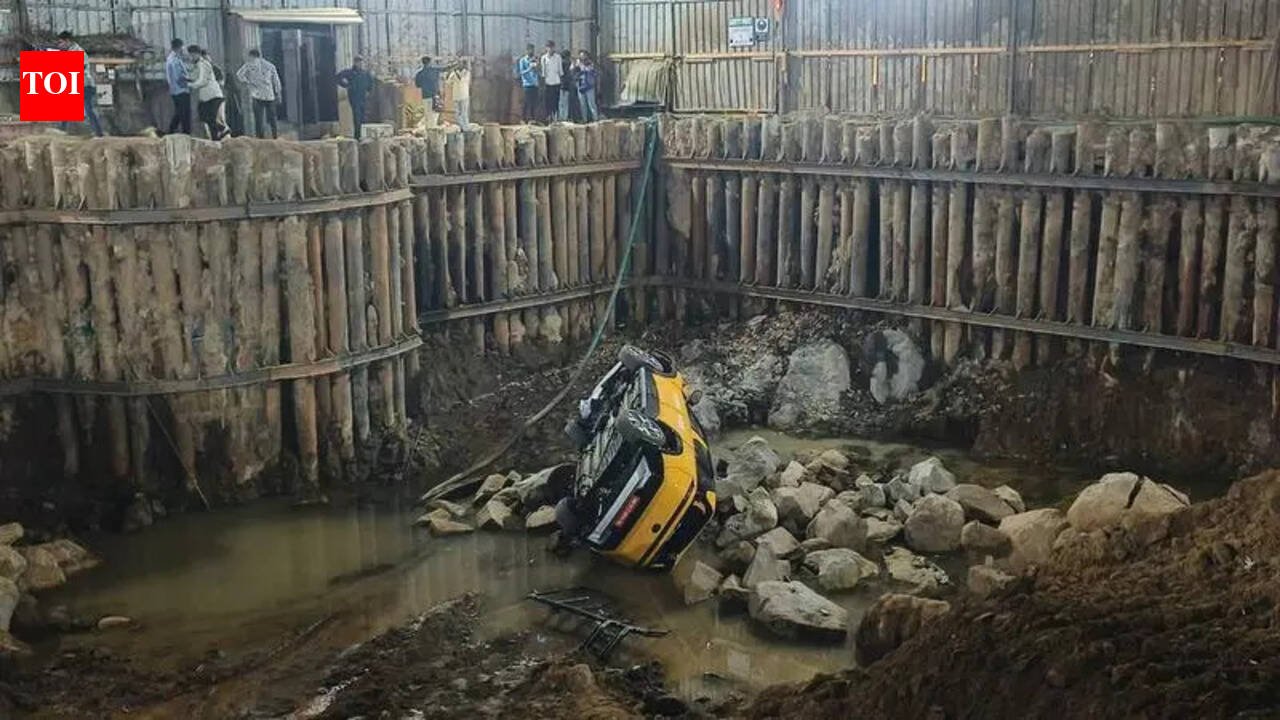
An SUV taken out for a test drive crashed into a parked auto and two bikes, rammed the barricades of a construction site, and nosedived into a 30ft deep pit filled with slush after its driver lost control in Thane’s Pachpakhadi on Tuesday. Its three occupants—Priya Paswan (36) and Mithilesh Paswan (48) from Kalyan, and car showroom staffer Chetan Deshmukh (30)—were injured. It wasn’t clear who drove the car. Yasin Tadvi, Thane disaster management cell in-charge, said the airbags deployed on impact, which prevented serious injuries. “Priya sustained head and waist injuries and was hospitalised. The others had minor injuries.” Vishal Dengale, a civic conservancy staffer who was among the first responders, said the car overturned and suffered major damage. The other vehicles were damaged too. Naupada police launched a probe. —Manoj Badgeri


Source link

Mumbai Dentist Suicide: Police arrest former boyfriend after dental surgery student’s suicide | Mumbai News


Mumbai: A six-page suicide note left behind by a 24-year-old dentistry graduate from Antop Hill who was pursuing her post-graduation while working part-time, led to the arrest of her former boyfriend on Tuesday.The note said the former boyfriend, whom the police identified as Fuzail Ahmed Khan (34), would insult and humiliate her.Khan, who works as an insurance broker, was arrested for abetment to suicide. Produced before the Kurla court, he was remanded in a day’s police custody.The police denied any communal angle and said it was a fallout of a failed relationship. They said that according to the suicide note, the woman’s friends knew about her troubles with Khan and would often joke and say, “We don’t want to see you in the fridge,” a possible reference to a recent criminal case where the body parts of a woman living with her lover in Delhi were found stuffed in a refrigerator.The deceased woman lived with her parents and sister at Rawali Camp in Antop Hill and was pursuing her master’s in dental surgery (MDS) from a Navi Mumbai dental college. She also worked part-time at BYL Nair Hospital.The police said her father, who was retired, lodged the complaint at the Antop Hill police station after he found the suicide note written in English from the victim’s bedroom.In his statement, the father told the police that on Sunday evening his daughter went to her room around 7 pm and refused to come out for dinner despite being called by the family. The next morning, when she did not open the door of her room, the family forced the door open and found her hanging with a white nylon rope. She was taken to Sion hospital, where doctors declared her dead before admission at 11.18 am.The police registered an accidental death report (ADR) and during the spot panchnama recovered the six handwritten pages that they said they were treating as the deceased’s suicide note. After verification, it was confirmed that the handwriting was that of the deceased.Based on the complaint filed by her father, the police on Monday registered an offence of abetment of suicide.In the suicide note, the woman wrote about her relationship with her former boyfriend, whom she met on a dating app. She became friends with him and was in a relationship with him for one and half years. In the note she alleged that her former boyfriend humiliated and insulted her, which resulted in her suffering severe mental trauma.“However, over the course of time the duo realised that their relationship will not last and due to various reasons they cannot go ahead and hence decided to break off and be just friends,” a police official said.The police said they learnt that another man had entered the woman;s life, which did not go down well with Khan, following which there was a scuffle between her and Khan. In a fit of rage, Khan allegedly used some derogatory words against her, which affected her mentally and which she mentioned in her note, said the police.


Source link

Central Railway Bribery Case: CR engr ‘seeks 40L bribe’ for contract to firm, nabbed by CBI | Mumbai News


Mumbai: CBI arrested Central Railway’s (CR) chief electrical distribution engineer after he allegedly accepted a Rs 10-lakh bribe from two persons to award a contract to their company listed on the stock exchange. The bribe-givers were nabbed too.During a subsequent search of the residence of the CR official, Ramesh Kumar Chauve, the agency recovered Rs 90.8 lakh in cash hidden separately, along with jewellery worth Rs 42.5 lakh and other investment-related documents. The bribe was recovered from his office drawer, along with another Rs 3.9 lakh. According to CBI, Chauve demanded a 1% commission (Rs 40 lakh) on a Rs 40.5-crore contract awarded to the company. He was caught after he accepted the first instalment. The agency produced the three arrested accused before a court on Tuesday, which remanded them in one day of CBI custody. CBI was tipped off about Chauve’s involvement in corrupt practices and kept a watch on him. On Monday, two persons representing the company visited his office chamber and came out after delivering the Rs 10-lakh bribe to him. A CBI team waiting outside caught them. On being confronted, they revealed the bribe details. The team then entered Chauve’s office and searched the premises, which led to the recovery of the cash. At the same time, CBI conducted searches at five locations of the three accused in Mumbai, Navi Mumbai and Karjat, including Chauve’s house.The company representative who was caught with Chauve and paid the bribe had secured many railway electrification contracts. Chauve was a 2003 batch officer of Indian Railway Services of Electrical Engineers. According to the railway website, the chief electrical distribution engineer is the technical head of the electrical traction distribution system and looks after planning, maintenance, operation and periodic overhauling of traction distribution assets.


Source link

Maharashtra Qr Textbooks: QR codes in textbooks, geo-surveys… ideas at SCERT contest | Mumbai News


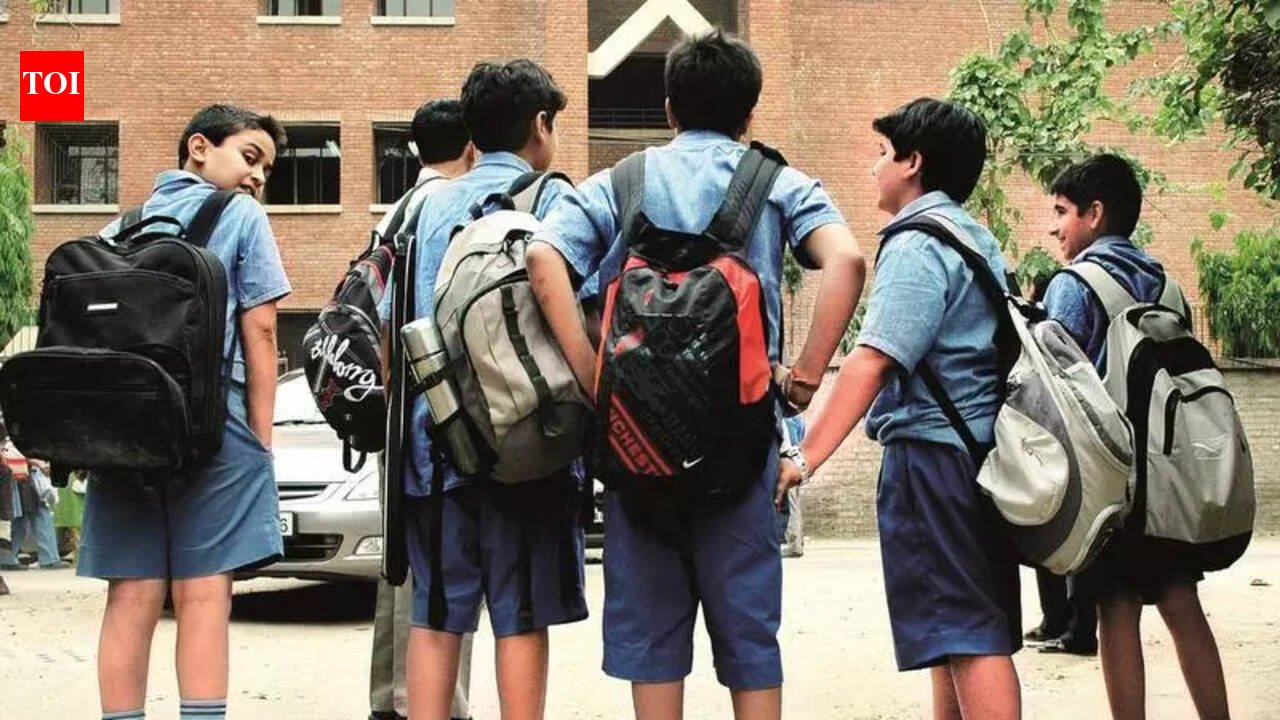
Mumbai: From using QR codes in state textbooks and a 10-point formula to boost enrolment to training modules for teachers and student-led geo-surveys of neighbourhoods, teachers across Maharashtra are experimenting with new ways to improve learning—ideas that came to the fore at a recent research paper competition organised by the State Council of Educational Research and Training (SCERT), where 43 research papers highlighting grassroots innovations in education were selected.Among them was educationist Ajay Kale, part of the textbook writing team at Maharashtra State Bureau of Textbook Production and Curriculum Research (Balbharati), who proposed embedding QR codes in state textbooks. The codes would allow students to scan and watch short videos of their own teachers explaining the basics of a chapter, enabling revision at home through familiar voices rather than long generic online lectures. Kale said such short, teacher-led videos could help students revise concepts independently and strengthen their connection with the classroom.Vijay Bagul, who works with the panchayat at Sinnar in Nashik district, presented a 10-point strategy aimed at improving school enrolment and classroom engagement. His model stresses on direct interaction between officials and students during school visits, identifying reasons for absenteeism, and using locally relatable examples in teaching. Bagul also advocates reinforcing spelling and writing skills, holding remedial classes, encouraging students with small rewards, addressing teachers’ concerns through dialogue, and building a positive philosophy that views schools as a “temple of learning”.From Kolhapur, teacher Ravinder Chavan developed a module to help teachers strengthen their grasp of science concepts before teaching them in class. He noted that teachers often handle subjects outside their academic specialisation, which can result in conceptual gaps being passed on to students. His module focuses on clarifying the core scientific principles behind specific chapters so teachers can explain them more effectively.Another educator, Sachin Chavan from Yavatmal, proposed a new format for the Class 12 geography practical examination through a geo-survey model. Under this approach, students collect socio-economic data from about 15 households in their locality and create custom maps based on the information. The idea is rooted in metacognition—encouraging students to participate directly in data collection and produce tangible outputs from their learning.Narayan Bharti, a teacher from Latur, highlighted how digital tools are reshaping the way children learn. In his research, Bharti argued that students today no longer rely solely on teachers for answers, as they can instantly search and explore information on their own. He suggested that teaching methods must adapt to this shift, replacing long monologues with interactive and visual learning. For instance, instead of only reading a poem in class, teachers could present it through a video, or use digital and AI tools to visually recreate concepts such as the rainwater cycle, making lessons more engaging for students accustomed to multimedia learning.


Source link

Sanjay Gandhi National Park: Mysterious forest fires scorch 20 acres inside Sanjay Gandhi National Park | Mumbai News


Thane: A series of mysterious forest fires over the past three evenings scorched roughly 20 acres of the Sanjay Gandhi National Park (SGNP), alarming environmentalists and residents staying in residential enclaves along the forest fringes. Forest officials estimated the blazes collectively spread across nearly 20 acres of forest land. A detailed assessment of the damage to flora, fauna, and the exact area affected will be released after a formal survey, said forest department officials. The first blaze was reported on Sunday evening in the forest opposite Gawandbaug, where forest teams managed to contain the fire in time. Another larger fire broke out late on Monday night, followed by a third blaze on Tuesday evening in the same range, with flames visible from as far as Pawar Nagar and Mulla Baug, according to disaster management officials.Officials at the regional disaster management cell in Thane said the department was flooded with complaints from vigilant residents since Monday night. Several residents living in housing complexes along the forest boundary said they witnessed flames at multiple spots inside the jungle over the last 3 days and alerted authorities. “Luckily the smoke hasn’t affected our buildings, but the repeated fires are worrying. The blaze late on Monday night was one of the biggest we’ve seen in years,” said Nitin Singh, who lives at Cosmos Lounge. Another resident requesting anonymity questioned if it was the handiwork of the forest mafia, considering the growing infringement of humans and commercial activities in the forest area. Environment activist Rohit Joshi, who spearheaded the cause of rising encroachments in the forest area, said natural forest fires were unlikely in the region, but the incident needed a thorough investigation. Range forest officer Mayur Survase confirmed the incidents and said teams responded quickly to contain the fires, but the cause of the repeated outbreaks is still under investigation.


Source link

Bombay High Court: Pay 8L to family of staffer who fell off train and died, Bombay high court orders Western Railway | Mumbai News


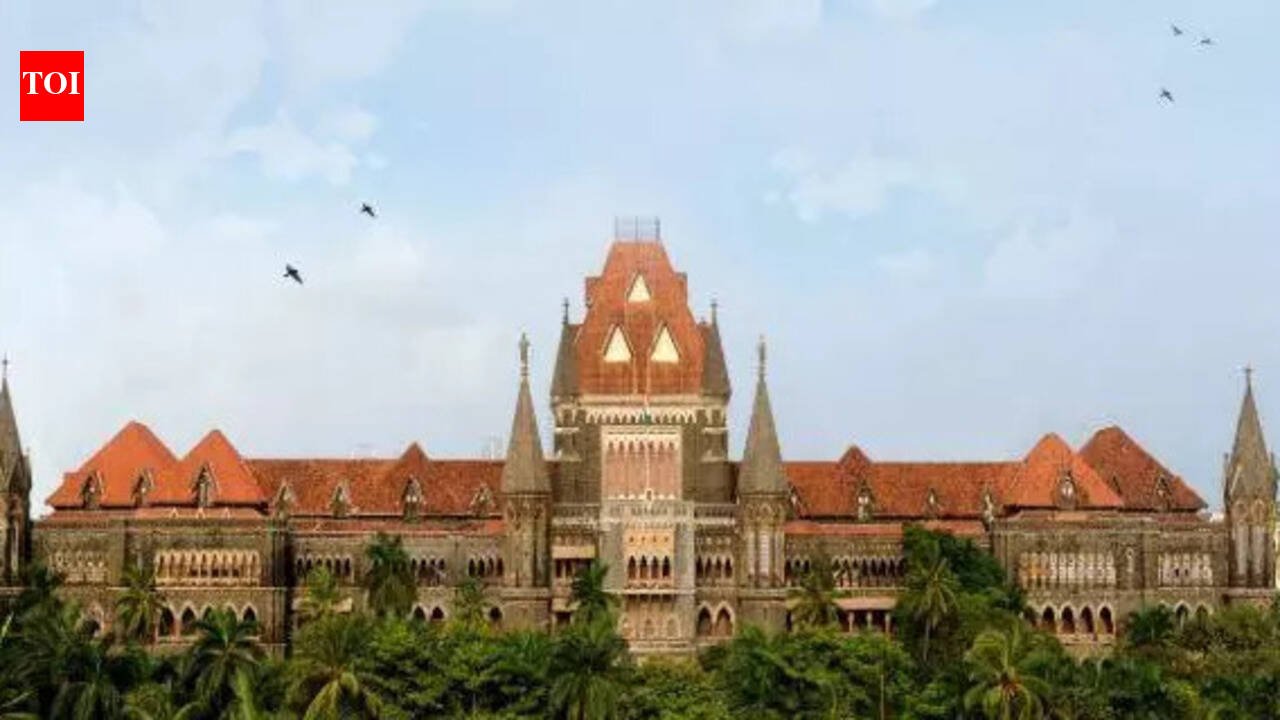
Mumbai: The Bombay high court has directed the Western Railway to pay up to Rs 8 lakh compensation to the family of an employee who died after falling off the train near Virar railway station.Justice Jitendra Jain on Monday observed that such matters where railway employees have died due to accidents “should have never landed in this court or in the tribunal”. The “railways should have, on their own, and more particularly after examining conflicting reports by their own authorities, should have granted compensation without making the employee’s dependents run from pillar to post… I hope that in future such things are not repeated,” he said.Ramnna Burumuri worked in the commercial department and was posted at Elphinstone Road office. On Sept 12, 2020, he was returning from work around 3 am. As the train approached Virar station, due to heavy rush, he fell down. He was declared dead at a primary health centre. In March 2015, the Railway Claims Tribunal (Mumbai) rejected his wife and daughter’s application for Rs 4 lakh compensation. In 2016 they appealed to HC.Justice Jain said for the grant of compensation, the deceased should be a bona fide passenger and death should occur due to an untoward incident. There was no dispute that Burumuri was a bona fide passenger and was issued a free pass. Merely because it was not found at the time of the accident or the deceased was not carrying it, “cannot be a ground for rejecting the claim”, even more so when he was a WR employee.The station master memo stated Burumuri was found on the track between Nalasopara and Virar. The inquest panchnama stated his death was due to dashing against a mail train as he stayed near Virar (E) station with high trespass chance. The Divisional Railway Manager’s (DRM) report said he was knocked down while crossing the track.Justice Jain said the tribunal “fell into grave error” by relying on conflicting and “self-contradictory” versions of three different authorities. The memo gave no reason for the cause of death, the panchnama was not recorded at site and the DRM report was based on it. Rejecting the reports, Justice Jain said Burumuri fell down from a moving train. Such an incident “would squarely fall within the phrase accidental falling from a train which defines ‘untoward incident’,” he added. He directed WR to pay Rs 4 lakh with 6% interest from the date of the accident till payment, subject to a cap of Rs 8 lakh within eight weeks of the claimants making the application.


Source link