Breaking News
Salman Khan led ‘Maatrubhumi’ delayed as Prashant Tamang’s death impacts key film scenes – Reports |


Salman Khan’s eagerly awaited project, ‘Maatrubhumi’, has hit a snag, grappling with unexpected production obstacles. The tragic passing of actor-singer Prashant Tamang, who was set to play a pivotal villain, has introduced significant artistic and logistical setbacks. The team is currently contemplating various solutions, including recasting or deploying AI technology to finish his pivotal scenes.

Salman Khan’s ‘Maatrubhumi’, earlier titled ‘Battle of Galwan’, has been delayed after fresh production hurdles hit the film. According to reports, the project was initially planned for an early April release, but script changes and the death of actor-singer Prashant Tamang forced the team to rework the schedule. Tamang, winner of ‘Indian Idol 3’, was reportedly cast as the main antagonist and had already shot several important portions. His death in January has now left the makers facing major creative and logistical challenges.

‘Maatrubhumi’ release delay and Prashant Tamang’s death

According to India Today, Tamang had already shot several key scenes, but a few crucial portions were still pending, the report said. “The team had a couple of planned schedules where Prashant had to shoot some really key scenes. With him gone, the team is absolutely in crisis,” the report said, citing a source close to the film. The makers initially explored reshooting his scenes, but that option now looks difficult both practically and financially.

Watch

Indian Idol fame Prashant Tamang passes away at 43, tributes pour in nationwide

The report further said, “Close-ups could still be managed, but he was also part of extensive action sequences. It would not only be financially unviable but also a logistical nightmare.” The team is now weighing other options to complete the film.

Salman Khan film ‘Maatrubhumi’ production challenges

Salman Khan’s date availability and the continuity of his look have added to the challenge. The makers are considering either bringing in another actor to complete the role, like Paresh Rawal replacing Rishi Kapoor in ‘Sharmaji Namkeen’, or using AI and VFX to recreate Tamang in the remaining scenes. That step, however, would require his family’s approval.“A decision will be taken by the end of this month as the film needs to wrap up and begin post-production,” the report added. The film does not yet have a new release date, though it could target an Independence Day window.Directed by Apoorva Lakhia, ‘Maatrubhumi’ also stars Chitrangada Singh. The film was initially linked to the 2020 Indo-China Galwan clash and now carries the tagline, “May War Rest In Peace.”


Source link

Grand Cheti Chand Mahayatra draws massive crowds in Ulhasnagar | Thane News


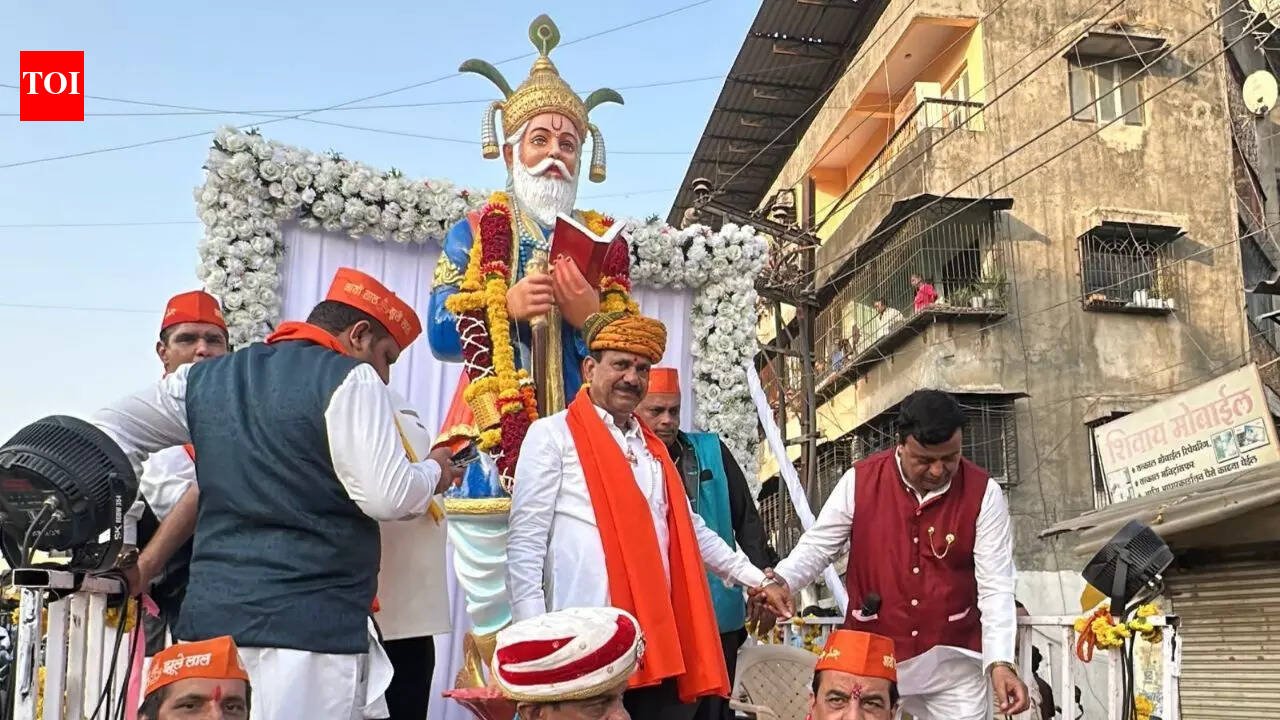
ULHASNAGAR: A grand “Cheti Chand Mahayatra 2026” was held in the city on Friday to mark Cheti Chand, the most important festival of the Sindhi community, with great enthusiasm and devotion. The entire city resonated with chants of “Jhulelal Sai” as thousands of devotees participated in the procession, reflecting deep faith and cultural pride.The yatra commenced from the Jhulelal Temple in Ulhasnagar-1, where devotees offered prayers and sought blessings of Lord Jhulelal. The procession culminated at the Chaliah Temple in Ulhasnagar-5 after passing through key parts of the city. A grand chariot carrying a beautifully decorated idol of the deity was the highlight of the procession.The yatra featured vibrant tableaux depicting Sindhi culture, artists dressed in traditional attire, and devotees dancing to devotional songs. Several cultural programmes, including music and dance performances, were organised along the route, while major junctions and streets were specially decorated for the occasion.Cheti Chand, celebrated as the birth anniversary of Lord Jhulelal, holds immense religious and cultural significance for the Sindhi community. People from other communities also joined the celebrations in large numbers, showcasing communal harmony in the city.Prominent dignitaries, including Mayor Ashwini Nikam, BJP MLA Kumar Ailani, and former MLA Pappu Kalani, participated in the yatra along with several saints from the city.Given the massive turnout, police deployed tight security arrangements and managed traffic to ensure smooth conduct of the procession. Arrangements for drinking water, prasad, and other facilities were made at multiple points for the convenience of devotees.The Ulhasnagar yatra is considered one of the largest Cheti Chand processions in the country, reflecting the significant Sindhi population in the region and their strong cultural roots.

Banner Insert


Source link

‘Dhurandhar: The Revenge’: Fans link Hamza’s passport DOB to 26/11 terror attacks, call it ‘peak detailing’ |


The excitement around ‘Dhurandhar: The Revenge’ intensifies as fans delve into a prop passport used by Ranveer Singh’s character, Hamza Ali Mazari. Observers are drawing connections between his birth date, November 26, 1979, and the tragic 26/11 Mumbai attacks. The film’s intricate narrative receives accolades for its depth, particularly highlighting director Aditya Dhar’s exceptional craftsmanship in storytelling.

Fans of ‘Dhurandhar: The Revenge’ are now talking about more than just the performances and plot turns. A fresh wave of online discussion has focused on a small prop from the film that viewers believe carries a deeper meaning. The detail in question is the passport of Ranveer Singh’s character, Hamza Ali Mazari. A screenshot of the document went viral after viewers noticed the character’s date of birth is listed as November 26, 1979. That detail quickly drew attention because many linked it to 26/11, the date of the 2008 Mumbai terror attacks, and called it another example of the film’s layered writing.

‘Dhurandhar 2’ passport details go viral

As reported by Network18, the detail sparked reactions on X. Users began sharing screenshots of the passport and discussing what they saw as hidden references in the film. One user wrote, “See the date Hamza Ali Mazari was born 👀🤌🏻Another Peak Detailing by Aditya Dhar.” The post helped spark wider interest in the passport shown in the movie. Viewers connected the November 26 birth date to one of India’s darkest terror attacks. In 2008, multiple locations across Mumbai, including luxury hotels, a railway station, and a Jewish center, were targeted. The attacks killed more than 160 people and injured hundreds.

Watch

Dhurandhar 2 Has A Shah Rukh Khan Moment? Fans Go Crazy Over ‘Baazigar’s’ Entry In Ranveer’s Film

The passport detail didn’t stop there. Fans pointed to other dates on the same prop and suggested those, too, were carefully chosen. One user noted that the passport’s expiry date, September 21, 2008, coincided with a period when Delhi was on high alert following intelligence warnings of possible bomb blasts. Another observation focused on the issue date, September 20, 1998. Some users linked that date to reports that Indian security forces killed Abid Hussain, a suspect in the Chapnari massacre in Jammu and Kashmir, where 26 people were killed.

‘Dhurandhar 2’ fans praise Aditya Dhar detailing

These posts have driven a broader “peak detailing” conversation online, with users praising and lightly teasing director Aditya Dhar for imbuing even brief props with extra meaning. The reaction shows how closely audiences are watching the film and how even a passport has become part of the larger discussion.‘Dhurandhar: The Revenge’ follows undercover agent Jaskirat Singh Rangi, who moves through the criminal underworld under the alias Hamza Ali Mazari. The film charts his rise as the new Sher-e-Baloch and his hold over Lyari after Rahman Dakait’s death in the first film. The cast also includes Sanjay Dutt, R. Madhavan, Arjun Rampal, Sara Arjun, Danish Pandor, and Manav Gohil.


Source link

Albino, Bijoy gets national team call-up for Hong Kong clash | Goa News


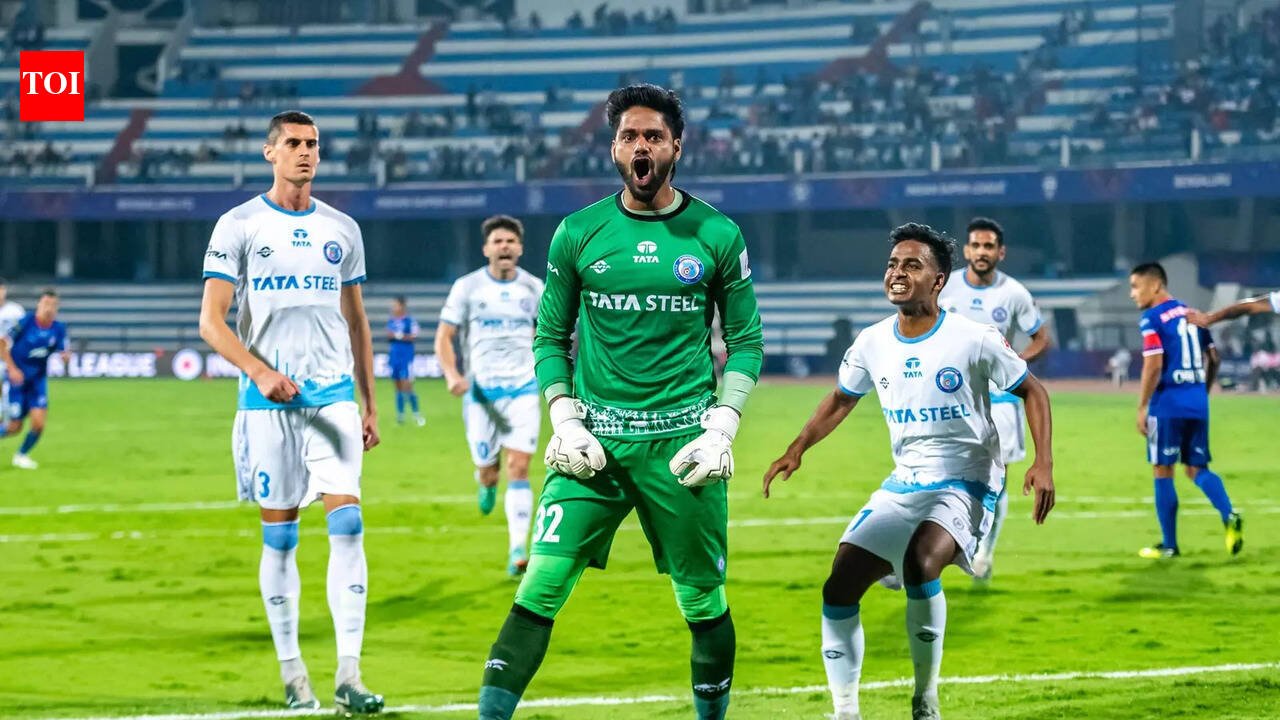
Albino Gomes will face competition from Gurpreet Singh Sandhu and Vishal Kaith for a starting role

Panaji: Coach Khalid Jamil has included goalkeeper Albino Gomes and defender Bijoy Varghese among the national team probables for India’s AFC Asian Cup 2027 qualifier against Hong Kong later this month.Despite being the highest ranked team, India will finish their campaign at the bottom of the four-team table after being winless in five matches so far. The concluding clash is against Hong Kong in Kochi on March 31.With nothing at stake in terms of qualification, Jamil was understood to be contemplating big changes with an eye on the future. However, according to sources, Bijoy (Punjab FC) and Albino (Jamshedpur) are the only two new faces in the squad.“Even if Khalid wanted to include some younger players, they are not available since India U23 will be playing (the tri-nation series) in Arunachal Pradesh,” said a senior official. “Most of the senior team players are from Mohun Bagan Super Giant and Bengaluru FC. More than 50% of the players are from these two clubs.”Impressive youngsters like Mohammed Sanan, Mohammed Aimen, Bikash Yumnam, Vibin Mohanan, Paramveer Singh, Mohammad Suhail and Suhail Bhat are all part of the India U-23 squad for the tri-nation series against Tajikistan and Bhutan.Albino and Bijoy have been consistent performers for their teams in the Indian Super League (ISL). While Bijoy has been an automatic choice for Punjab in defence, coach Owen Coyle has counted upon Albino’s efficiency in goal as Jamshedpur make a determined push for the ISL title.Albino, who has played at multiple clubs under Jamil, including Jamshedpur FC last season, will face competition from Gurpreet Singh Sandhu and Vishal Kaith for a starting role.Sources said the AIFF has already intimated clubs about the probables.The camp will kick off in Kochi on Monday as the ISL takes a break for the FIFA international window.


Source link

Number of autonomous colleges in Maharashtra triple in five years | Mumbai News


Autonomous colleges surge in Maharashtra amid UGC relaxations (Representative image)

MUMBAI: The number of autonomous colleges in Maharashtra has more than tripled over the past five years, rising from 100 in 2020 to 314 in 2025. Mumbai University accounts for the highest number in the state with 130 autonomous colleges, followed by Savitribai Phule Pune University with 74. Of the 314 colleges, 150 are arts, science and commerce colleges and others which come under the Directorate of Higher Education (DHE).Following the easing of norms by the University Grants Commission (UGC) in 2023, a growing number of colleges have been seeking academic autonomy to revise syllabi, introduce new courses and conduct their own examinations. In 2023, the minimum ‘A’ grade requirement in NAAC was removed, allowing all accredited colleges to apply for autonomy. As per the revised UGC regulations, a college with 10 years of existence and accreditation from NAAC or the National Board of Accreditation (for three programmes) is eligible to apply. Earlier, the 2018 UGC notification mandated an ‘A’ grade in NAAC as a prerequisite. Educationists say the change has enabled several institutions, including those with lower NAAC grades, to seek autonomous status.“Autonomy, in the past, was considered as a revolutionary change and a boon to students who could select courses as per their choice. Autonomous colleges were able to introduce innovative, relevant and tailor-made courses to suit different segments of students. The norms for eligibility were stricter,” said academic and former dean of commerce, Mumbai University, Madhu Nair. With rising numbers, concerns have also been raised about possible dilution of academic standards and fee increases.Colleges affiliated with Mumbai University have seen the steepest rise. The number of autonomous institutions under the university increased more than threefold—from 39 in 2020 to 130 in 2025—according to data compiled by the Department of Higher and Technical Education from the UGC portal. This has contributed significantly to the overall growth of autonomous colleges in the state.In Mumbai, St Xavier’s College became the first institution to receive autonomous status in 2010 and, for some time, remained the only one. Leveraging this status, it introduced interdisciplinary learning by allowing students to choose a subject from another discipline in their second year. This model has since gained wider acceptance under the National Education Policy (NEP) 2020 and remains central to its framework.Father Frazer Mascarenhas, former principal of St Xavier’s College during whose tenure the institution became autonomous, supports the concept. He said, “I think all colleges should opt for autonomy, because it is a means to achieve quality if honestly pursued. Monitoring and accountability are a part of the autonomy structure. As for fees, for aided autonomous colleges, major increase in fees is not possible, since grants are being received.Nair, however, cautioned, “Relaxing the norms for granting autonomy and the absence of a continuous and meticulous check and balance system has resulted in a possibility of colleges surpassing the university norms and profiteering. Some have even diluted the standard of passing and examination norms to suit their convenience.”He further said, “Mumbai University, though overburdened with eight lakh students has always been able to command respect both in India and abroad. If autonomous colleges deviate from the university regulations like eligibility of admission, promotion to next year/ ATKT rules, dilute evaluation standards etc may result into creating graduates and post graduates who are not up to the mark. In that situation, the degrees given in the name of the university, and therefore, its reputation, may be at stake.” The only solution is a careful selection of deserving institutions for grant of autonomy followed by continuous monitoring of autonomous colleges to prevent misuse of autonomy, he said.Educationist and former vice-chancellor of North Maharashtra University, RS Mali, though, that quality of education has dropped across colleges, irrespective of autonomy. “It has become difficult to get students in classrooms. There is no seriousness. I have not noticed a drastic change in examination results of colleges even two years after autonomy. As for fees, students will not go to colleges if they fail to provide quality education in the long run. Colleges know that they will not get students if the fees are on the higher side,” said Mali, adding that the responsibility lies with all stakeholders to maintain standards.NEP 2020 recommends phasing out the affiliation system and encouraging autonomous and stand-alone degree-awarding institutions. Under the policy, top colleges under Mumbai University are gradually moving towards empowered autonomy, which enables them to award joint degrees with the affiliating university, distinguishing them from regular autonomous institutions.


Source link

Akshay Kumar House: Akshay Kumar’s Juhu mansion worth Rs 80 crore offers breathtaking sea views, a lush garden and thoughtful design by Twinkle Khanna |


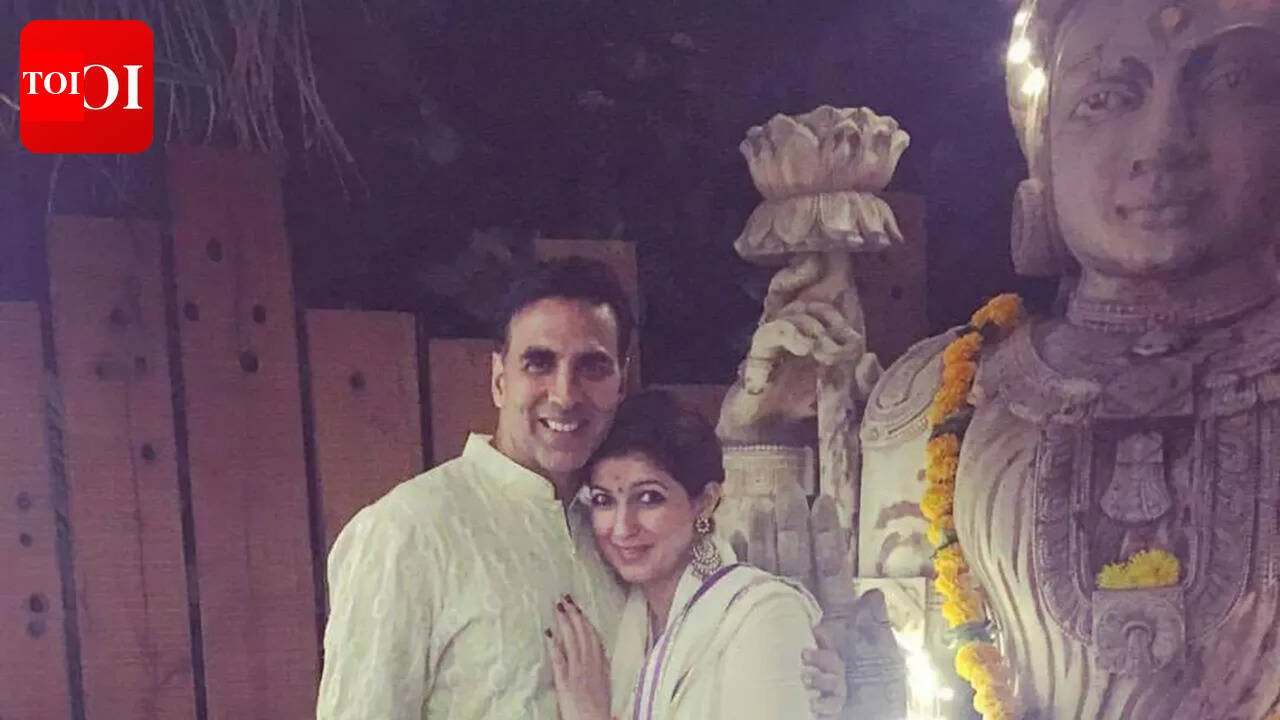
Akshay Kumar’s Juhu duplex, valued at Rs 80 crore, offers a serene sea-facing retreat designed by Twinkle Khanna. Blending modern and Indian aesthetics, the home boasts breathtaking ocean views, a lush garden, and a private pool. This tranquil haven reflects the couple’s sophisticated yet simple lifestyle, providing a peaceful escape from Bollywood’s hustle.

Akshay Kumar may be known for his high-energy performances and action-packed roles, but away from the arc lights, he prefers a life rooted in calm and simplicity. The actor spends his downtime in a stunning sea-facing home in Mumbai, where luxury meets tranquillity. His residence offers a glimpse into a lifestyle that balances stardom with serenity.

A dream address in Juhu

As reported by Economic Times and Housing.com, located in one of Mumbai’s most elite neighbourhoods, Akshay’s duplex home in Juhu is reportedly valued at around Rs 80 crore. Overlooking the Arabian Sea, the property offers breathtaking views and a serene environment that feels far removed from the chaos of the city. Every morning begins with the soothing sound of waves, turning the house into a peaceful retreat rather than just a celebrity residence.

Watch

Akshay Kumar credits father for wrestling lessons, Praises Ranveer Singh’s Dhurandhar

Twinkle Khanna’s personal touch

What makes this home truly special is the creative vision of Twinkle Khanna, who has designed the entire space herself. She has blended modern aesthetics with Indian sensibilities to create a home that feels both stylish and warm.The interiors reflect a balance of minimalism and tradition. Soft tones, carefully chosen furniture and artistic elements come together to create a space that feels inviting without being overdone. The house mirrors the personalities of both Akshay and Twinkle, combining sophistication with simplicity.A key highlight of the home is its seamless connection with nature. Large glass windows allow natural light to flood the interiors while offering uninterrupted sea views. The design focuses on openness, making every corner feel airy and spacious. Despite its modern structure, the home maintains a strong link to the outdoors. The thoughtful use of space ensures that the natural surroundings become an integral part of everyday living.

Garden retreat and poolside comfort

The outdoor area is equally impressive. A lush green garden spreads across the property, offering a peaceful escape within the home itself. It serves as the perfect spot to unwind, whether it is for a quiet morning or a relaxed evening.Adjacent to the garden is a private swimming pool, ideal for Mumbai’s warm weather. The poolside, lined with comfortable loungers, creates a calming atmosphere for relaxation.There is also a well-designed deck that doubles up as an outdoor dining and entertainment space. Whether it is a casual breakfast or a family gathering, this area adds charm and functionality to the home. Twinkle’s attention to detail ensures that the outdoor spaces are just as inviting as the interiors.

Akshay Kumar’s spooky experience

Ahead of the release of ‘Bhoot Bangla’, the famed actor talked about a spooky incident from his own life. The actor, at the India Today Conclave, shared that he and his wife used to live in a house where the latter did not feel safe. Further adding to the spooky details, he revealed that one time his son, who was around 5 at the time, pointed to an empty space and asked someone to leave.

What’s next for Akshay Kumar

On the work front, Akshay Kumar has had a mixed run in recent years. While some films received appreciation, others like ‘Bade Miyan Chote Miyan’ did not perform as expected at the box office. However, the actor continues to maintain a packed schedule. He is set to appear next in ‘Bhooth Bangla’, a horror-comedy directed by Priyadarshan. The film marks their reunion after a long gap and features a strong ensemble cast including Wamiqa Gabbi, Paresh Rawal, Tabu and Rajpal Yadav.In addition, Akshay has big-ticket projects lined up such as ‘Golmaal 5’ and ‘Welcome to the Jungle’.DISCLAIMER: Figures presented in this article are derived from various public sources and are considered approximate unless explicitly noted. We may include direct input from celebrities or their teams when available. We are open to feedback on toientertainment@timesinternet.in.


Source link

Soon, framework to assess at what stage research is | Mumbai News


Mumbai: To boost Indian innovation and give it a leg-up beyond the proof-of-concept stage, the Office of the Principal Scientific Adviser has decided to standardise Technology Readiness Levels (TRLs), creating a common framework for stakeholders to assess the stage at which an experiment lies.The move is expected to have implications beyond laboratories. For funding agencies, TRL standardisation provides a way to distinguish between early-stage research and technologies ready for investment, reducing the risk of bankrolling projects that are not yet mature.Academics point to inconsistencies in how readiness is currently understood, particularly around mid-stage levels at 4 and 5, as also along different verticals. “TRL 5 for a healthcare innovation needed a different set of criteria like clinical trials as compared to an engineering prototype,” said a senior professor.Principal scientific advisor (PSA) Ajay Sood, said: “For too long, a significant number of promising Indian innovations have struggled to cross the proverbial “valley of death”, the arduous journey from a laboratory proof-of-concept to a scalable, market-ready product.” He added, “A primary contributor to this challenge has been the lack of a unified language to articulate technological maturity. When academia, industry, and funding bodies speak different dialects regarding “readiness”, it leads to misaligned expectations, stalled transfers, and inefficient resource allocation.The National Technology Readiness Assessment Framework introduces a structured approach, requiring technologies to pass through defined stages before deployment. “National Technology Readiness Assessment Framework developed by office of PSA is an important framework to assess technology readiness of a particular technology though self-assessment by any entity,” said Prof. Abhay Karandikar, secretary of the department of science and technology.“This is especially important in the context of the Rs 1 lakh crore RDI fund where it has been envisaged to finance projects of TRL 4 level onwards. The framework will also be helpful for other R&D schemes for assessing the output of a project,” he added.The framework adopts a nine-level scale with detailed questionnaires, from early-stage research to full operational deployment. Each level requires specific evidence, including prototypes, testing, etc. It introduces a two-step assessment process, where claimed readiness levels are verified against defined criteria, along with periodic reviews to track progression.


Source link

KDMC presents Rs 3,186 crore budget with no tax hike; infra, water, waste management projects get major push | Thane News


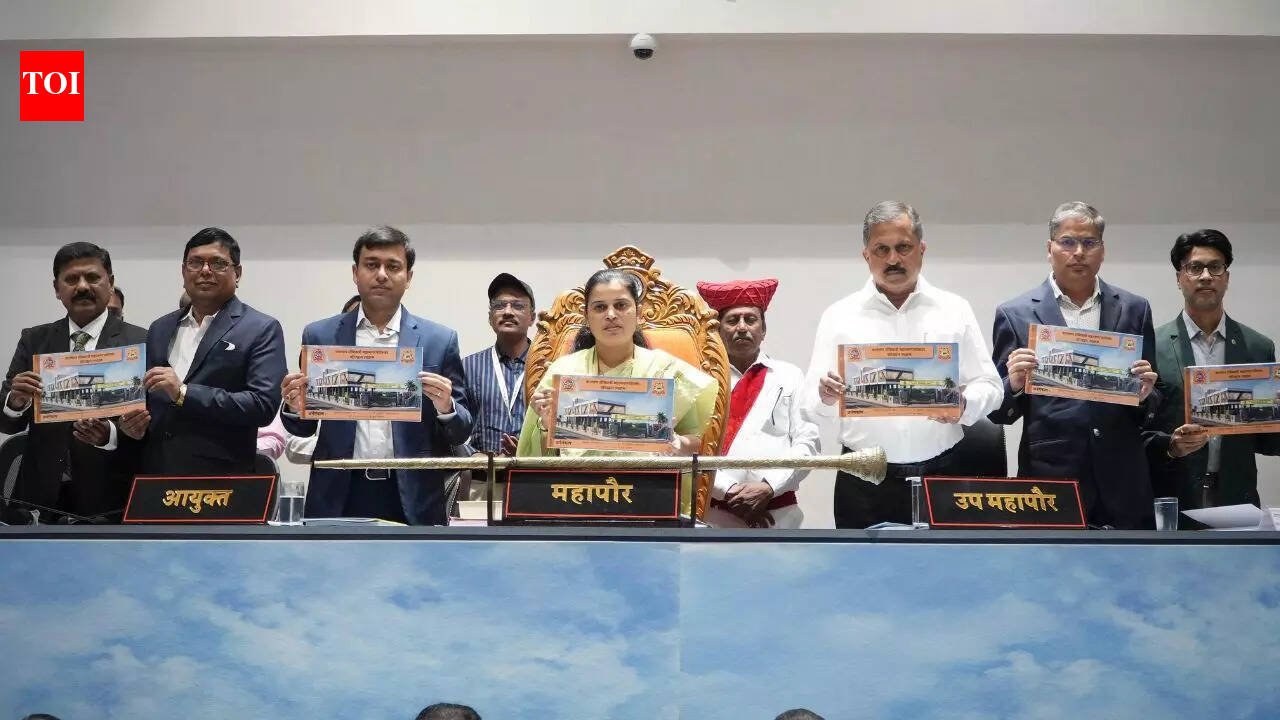
Kalyan-Dombivli Municipal Corporation unveiled a Rs 3,186.60 crore budget, prioritizing infrastructure expansion

KALYAN: The Kalyan-Dombivli Municipal Corporation (KDMC) on Friday presented a ₹3,186.60 crore budget for the financial year 2026–27, keeping taxes and civic rates unchanged while focusing on infrastructure expansion, improved civic amenities and stronger revenue mobilisation.Municipal Commissioner Abhinav Goel tabled the budget during the general body meeting, projecting an opening balance of ₹572.76 crore. The total expenditure is pegged at ₹3,186.49 crore, including ₹1,654.08 crore towards revenue expenditure and ₹1,524.20 crore for capital expenditure. The civic body also expects ₹829.25 crore in capital receipts through various government schemes.Infra boost across Kalyan-Dombivli:The budget lays strong emphasis on road and bridge infrastructure. Several road projects have been proposed, including U-type roads in Kalyan East, stretches along Malang Road, Chetna School to Nevali Naka, and works in Manda-Titwala and Thangewadi areas.A railway overbridge has been proposed at Mohone, while an additional two-lane flyover is planned near Kopar to ease traffic congestion between Dombivli East and West.Modernisation of civic infrastructure is also underway, including the redevelopment of Savitribai Phule Kalamandir. Cultural infrastructure projects such as community hall for Agri, Koli, Kunbi and Warkari communities in Kalyan West, development of Dr Anandibai Joshi Garden at Barave, and a stadium at Subhash Maidan have been proposed.Crematoriums, parks and urban amenities:KDMC has planned large-scale renovation and redevelopment of crematoriums across its jurisdiction, including Adharwadi, Lal Chowki, Bail Bazaar, Murbad Road, Vitthalwadi, Patharli and Kolegaon. New crematorium facilities are proposed at Casario and Manere.The civic body will also install CCTV systems in parks and playgrounds, develop 15 new small gardens, and undertake beautification of Bhopar Hill. A fully equipped garden at Barave, featuring an autism-friendly concept, is nearing completion.Additionally, 24 self-cleaning eco-toilets will be installed at key public locations to improve sanitation and convenience for residents and visitors.Water supply overhaul under AMRUT 3.0: A major focus area is water supply strengthening under the AMRUT 3.0 scheme. Plans include construction of a 275 MLD water treatment plant for 27 villages and Dombivli West, along with new overhead tanks, pumping stations and upgraded distribution systems.Reconstruction of the Patharli water tank and repairs to the Netivali water treatment plant are also proposed. The water supply network will be digitised using flow meters, SCADA systems and digital twin software for real-time monitoring and control.Waste management, environment initiatives:The budget outlines several large-scale waste management and environmental projects. These include a 750 TPD waste-to-energy plant at Umbarde through MMRDA, a 200 TPD bio-CNG plant at Barave in collaboration with BPCL, and expansion of an existing bio-CNG facility from 35 TPD to 60 TPD.Other initiatives include a briquetting plant for horticulture waste, a construction and demolition waste processing unit at Manda, an incineration plant for disposal of dead animals, and a green waste processing unit.To tackle pollution, KDMC has proposed dust suppression projects, installation of dry mist fountains in Kalyan and Dombivli, outdoor air purification systems and air purification units at crematoriums.Health, education and social initiatives: The civic body has announced multiple initiatives in the social sector. Municipal school students will receive Hepatitis-A vaccination, while sanitary napkin vending machines will be installed in schools. Sports infrastructure including tracks, long jump pits and equipment will be developed.Astronomy clubs with modern telescopes will be introduced in civic schools, and additional classrooms will be constructed where needed. A provision of ₹50 lakh has been made to improve facilities in balwadis.Animal welfare measures include upgrading the sterilisation centre for stray dogs at Bail Bazaar and setting up new sterilisation and shelter facilities in Dombivli.Special social initiatives include skill development programmes for the transgender community and development of 10 model seating spaces for senior citizens.Digital governance pushKDMC plans to adopt advanced technologies to improve governance and service delivery. Key initiatives include implementation of HRMS, a WhatsApp chatbot for citizen services, network security audits, new networking infrastructure across wards, and a document management system.Revenue targets and financial strategy: On the revenue front, KDMC has set a property tax collection target of ₹600 crore for 2026–27, up from last year’s ₹500 crore target.The corporation expects ₹510.03 crore from GST compensation and stamp duty grants, ₹526.30 crore under special levies, ₹101 crore from water charges, and ₹115.06 crore from government grants including education support. Miscellaneous revenue is estimated at ₹28.85 crore. Additional revenue streams include ₹241 crore from development proposals such as FSI premiums, ₹20–25 crore annually from smart parking and advertisements, and ₹48 crore from rental and advertisement income from municipal properties.To enhance tax collection efficiency, KDMC will undertake GIS and drone-based property surveys and strengthen online payment systems.Municipal bonds, funding plan:To finance major infrastructure projects, KDMC plans to raise ₹200 crore through municipal bonds from the open market. Officials said that timely repayment could enable access to additional funding through urban challenge funds and green bonds.Corporators raise concerns:During the discussion, corporators expressed concern over the lack of clarity on ward-level development funds and demanded that allocations be increased to ₹2 crore per corporator.The budget will now be taken up for detailed discussion in the general body meeting scheduled on March 24 and is expected to be approved after deliberations over the following days.


Banner Insert


Source link

Anthony Albanese: ‘Get them out of here’: Australian PM Anthony Albanese, Tony Burke heckled at Eid prayers in Sydney over support for Israel — watch


Anger of the Muslim community toward the Australian government spilled into an Eid prayer gathering in Western Sydney, attended by Prime Minister Anthony Albanese and Home Affairs Minister Tony Burke, as a small number of attendees called for the leaders to be removed from the mosque.The leaders, attending the event in Lakemba — part of Burke’s electorate — were seated among thousands, ahead of Eid al-Fitr celebrations, when a handful of people began heckling during a post-prayer address, ABC News reported. Shouts of “boo Tony Burke, boo Albanese,” “genocide supporters,” and “get them out of here” rang out, though many others in the crowd appeared welcoming.NSW Police were called to the mosque over a disturbance about 8am and ordered a 33-year-old man to move on. He was escorted out without any further incident.

Watch

Iran Strikes Australian Military Base In UAE; PM Albanese Confirms Damage In Direct Hit

The man, Sheikh Mukhlis, said he was thrown off the stairs barefoot after heckling Albanese and Burke.“The question we need to ask ourselves is why are they there in our sacred places, in our sacred times, put up in front, smiling for photos,” he said in a social media video.“The irony is, if you listen to what the sheikh was actually saying in his khutbah, about our happiness being incomplete because there isn’t peace in Gaza and there’s a war in Lebanon.”The Muslim community has been divided on whether the federal govt should be invited to events due to their ongoing strained relationship.There have been increased tensions due to criticisms of the govt’s response to the Israeli war in Gaza, the increase in Islamophobic attacks in Australia and the NSW Police’s response to Muslim men who were praying during a protest in Sydney.Lakemba Mosque itself has received several hateful and threatening letters this year, which it said have left the community fearful.Today was the first time the Lebanese Muslim Association invited Albanese to the Lakemba Mosque since October 7, 2023.Lebanese Muslim Association secretary and spokesman Hajj Gamel Kheir said choosing to re-engage with the govt is a way to give their concerns a voice.“Walking away from engagement has not advanced our community, nor has it changed outcomes overseas,” he said in a statement after the incident this morning.“We do not open our doors for appearances.“We do so because real conversations require access, and because our community deserves to be heard directly, not spoken about from a distance.”

Poll

What do you think about the decision of the Lebanese Muslim Association to re-engage with the government?

In a social media post after the commotion, Albanese said it was an honour to attend the Lakemba Mosque.“Eid Mubarak. An honour to join thousands for Eid al-Fitr at Lakemba Mosque this morning,” he said.Albanese also visited the Lakemba Ramadan Night Markets with his wife Jodie and Canterbury-Bankstown Mayor Bilal El-Hayek earlier this month.


Source link

Mumbai condemns damage to Iran’s World Heritage sites | Mumbai News


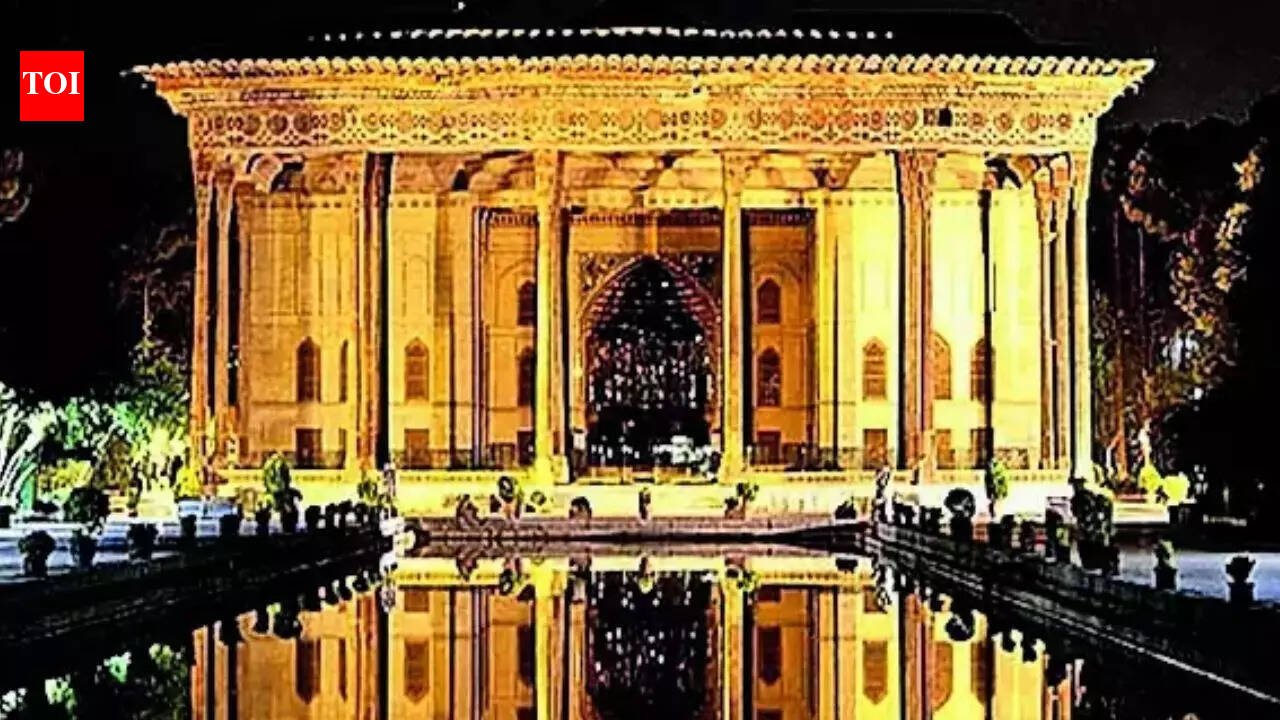
The 17th-century Chehel Sotoun Palace, a Unesco World Heritage site in Isfahan, was damaged by airstrikes. Its name, meaning ‘Forty Columns’, comes from 20 pillars reflected in a pool to appear as 40

MUMBAI: They survived invasions, coups, World War II and the eight-year war with Iraq. Now many of Iran’s iconic heritage sites — including the Unesco-listed Golestan Palace, Naqsh-e Jahan Square and Chehel Sotoun Palace — have suffered damage following US-Israel airstrikes. Iran has said it installed blue flags on all heritage and cultural sites as a signal to Israel and the US, in vain.Historians, Zoroastrian researchers and heritage enthusiasts have expressed outrage at the damage to these World Heritage sites, saying they “belong not just to Iran, but to humanity”. Many of the monuments — including museums and mosques — may not have been directly hit. However, they sustained damage from shockwaves and falling debris caused by strikes on nearby govt buildings and military and police infrastructure.Among the sites are Ali Qapu Palace, Golestan Palace and Falak-ol-Aflak Castle. The castle, built atop an ancient hill during the pre-Islamic Persian Empire of the Sasanian era, stands in Khorramabad in Lorestan Province. “Fifty-six museums, historical monuments and cultural sites have so far sustained damage,” said Hamid Sharifi, public diplomacy officer at the Consulate General of Iran in Mumbai.Historians say the damage to heritage sites in Isfahan is particularly heartbreaking. Landmarks such as Naqsh-e Jahan Square — a 16th-century plaza spanning 964,000 square feet — and the gardens and pavilion of Chehel Sotoun Palace are so magnificent that they helped earn Isfahan the title Nisf-e-Jahan, or “half the world”, among Iranians. “I have been to Iran many times and am devastated at the reported damage to these historic sites,” said Firoza Mistree. “As a Zoroastrian, I consider Iran my homeland, though I live in and love India. The sites associated with the pre-Islamic Persian Empire were well maintained, and Iranians are proud of their heritage. I am heartbroken.”The reported damage to Chehel Sotoun Palace is no less painful for historians. In Persian, chehel means 40 and sotoun means column. The palace’s twenty wooden columns are reflected in the garden’s long pool, creating the illusion of forty — a feature that gives the monument its name.Historians say the destruction of such sites erases shared cultural memory. “All heritage sites are universal and carry the cultural memory of human civilisation,” said historian Rana Safvi.In a social media post, Mehdi Jamalinejad said, “In the 21st century, with the most advanced weapons, they target the oldest symbols of civilisation.”


Source link