Breaking News
Short Tests ‘bad for business’: Cricket Australia boss after 20 wickets fall on Day 1 at MCG | Cricket News
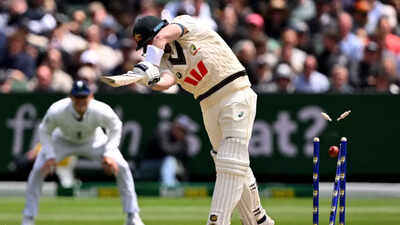

Short Tests 'bad for business': Cricket Australia boss after 20 wickets fall on Day 1 at MCG
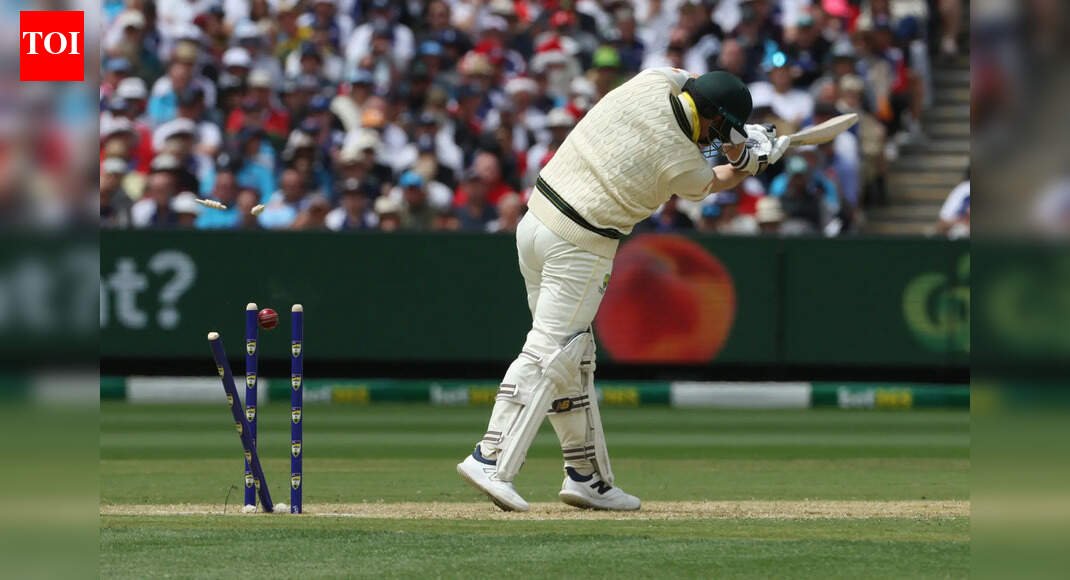
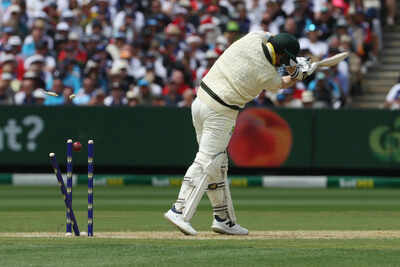
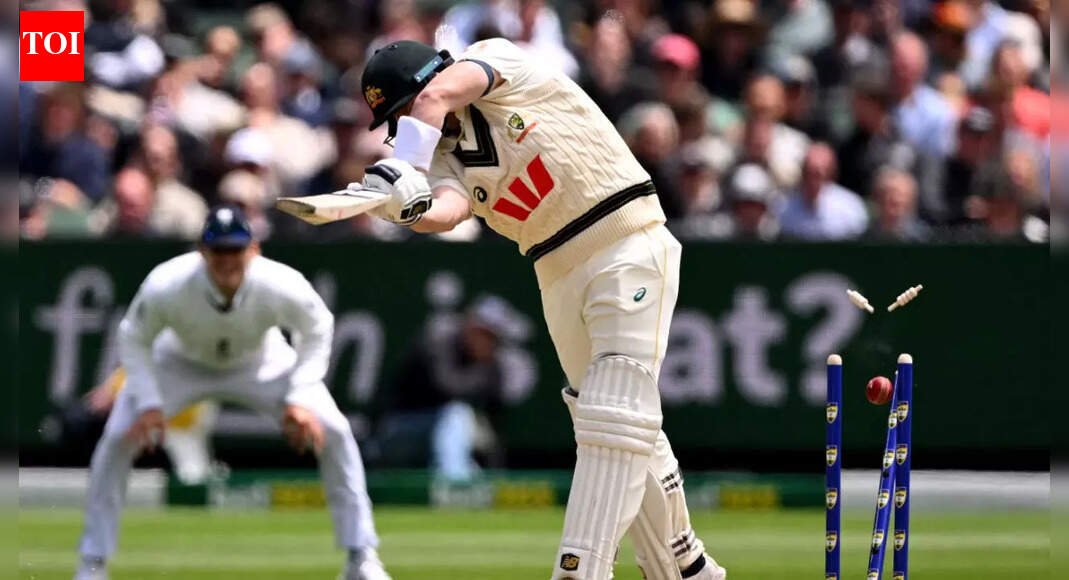
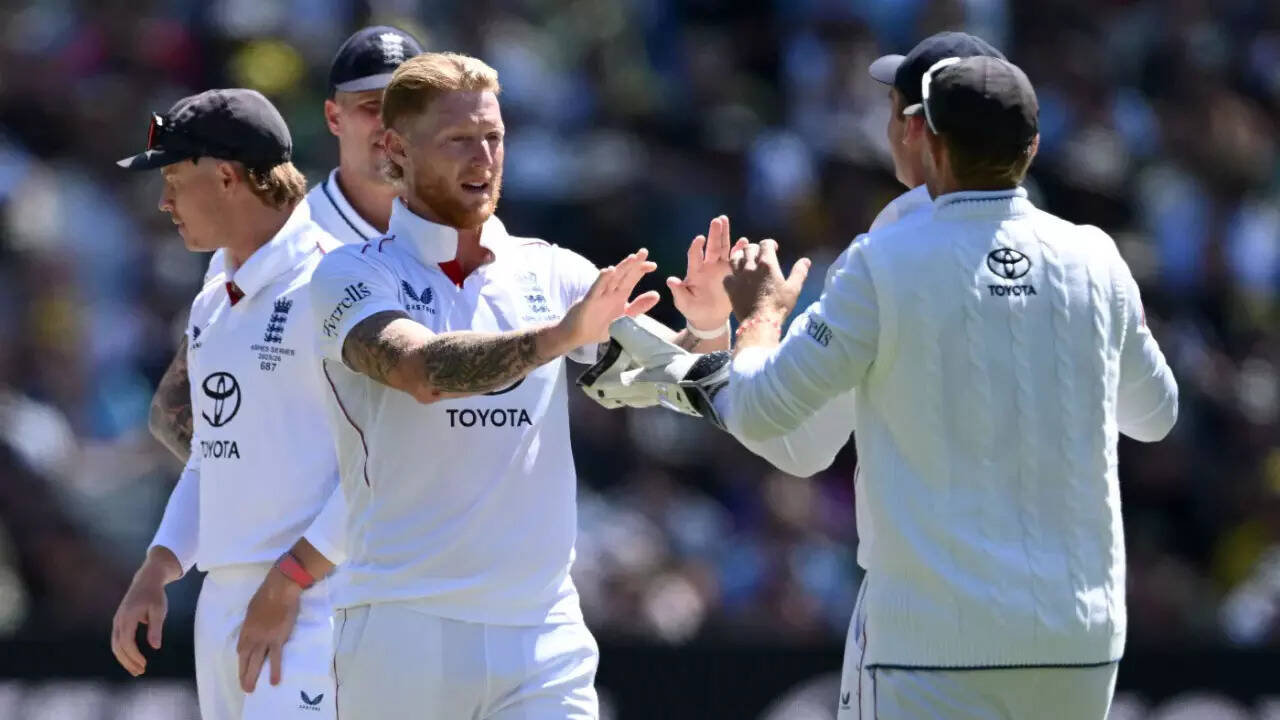
Steve Smith was bowled by Josh Tongue for 9 runs (AFP Photo)

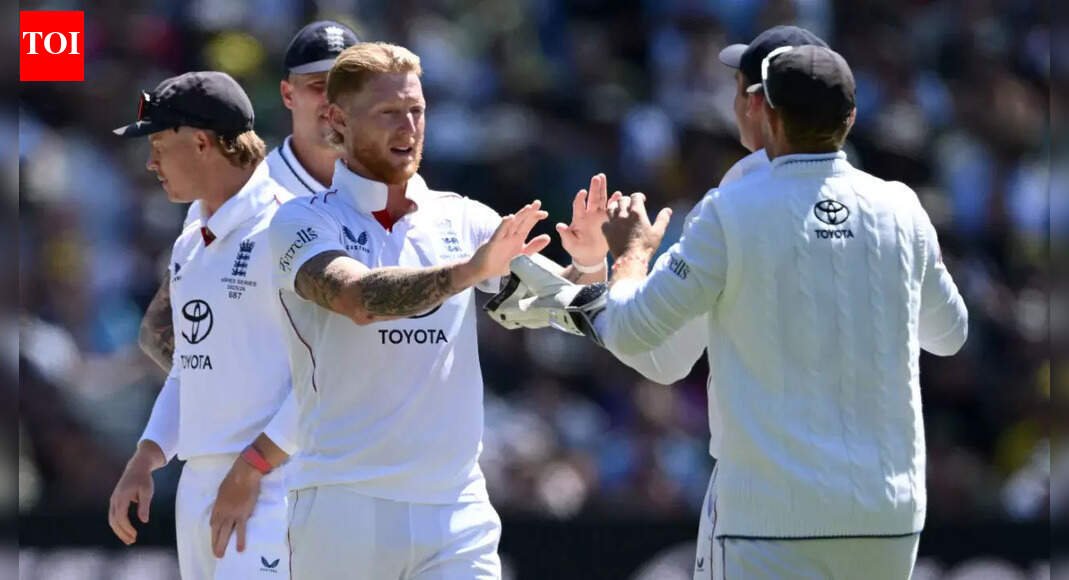
NEW DELHI: A total of 20 wickets tumbled on the opening day of the fourth Test between Australia and England at the Melbourne Cricket Ground (MCG) on Friday, with Australia bowled out for 152 before dismissing England for just 110.Go Beyond The Boundary with our YouTube channel. SUBSCRIBE NOW!The dramatic collapse on both sides sparked concern within Cricket Australia, with chief executive Todd Greenberg warning that shortened Tests were bad for business, even as several of the biggest names in the game criticised the condition of the MCG pitch.

Gautam Gambhir’s year as India coach ends like it started – on a chaotic note

It was the highest number of wickets to fall on the first day of an Ashes Test since 1909, following the 19 wickets that fell on day one of the series opener in Perth.That match ended inside two days, costing Cricket Australia millions of dollars in lost revenue, and the Melbourne Test is also shaping up as a potential financial blow for the governing body.“I didn’t sleep well last night, put it that way,” Greenberg said on SEN radio after more than 94,000 packed into the MCG for Friday’s first day.“It was an amazing day of Test cricket, so for that record number of people who were here, boy, they’ve had an experience.“But our challenge is to make sure we can continue those experiences day after day. That’s the challenge for all of us.”The Melbourne pitch was prepared with 10 millimetres of grass on the wicket, making it heavily favourable for the bowlers with plenty of movement and bounce under overcast skies. Greenberg said a trend towards shorter Test matches was not in Cricket Australia’s interest.“A simple phrase I’d use is short Tests are bad for business. I can’t be much more blunt than that,” he said.“So I would like to see a slightly broader balance between the bat and the ball.”A host of former greats have been critical of the Melbourne pitch with former England captain Michael Vaughan on Saturday calling it “a joke”.“This is selling the game short,” he added, while another ex-England skipper Alastair Cook branded it “an unfair contest”.Curators in Australia are traditionally independent when it comes to preparing pitches, both from captains and Cricket Australia.Greenberg suggested a more interventionist approach might be needed.“It’s hard not to get more involved when you see the impact on the sport, especially commercially, he said.“I’m not suggesting I’ll go around talking to ground staff, but we do have to have a careful eye on what our expectations are over the course of a summer.”(With inputs from AFP)
Source link

MS Dhoni at Salman Khan birthday party: Fans chant ‘Mahi bhai’ – WATCH | Cricket News


MS Dhoni at Salman Khan birthday party: Fans chant 'Mahi bhai' - WATCH
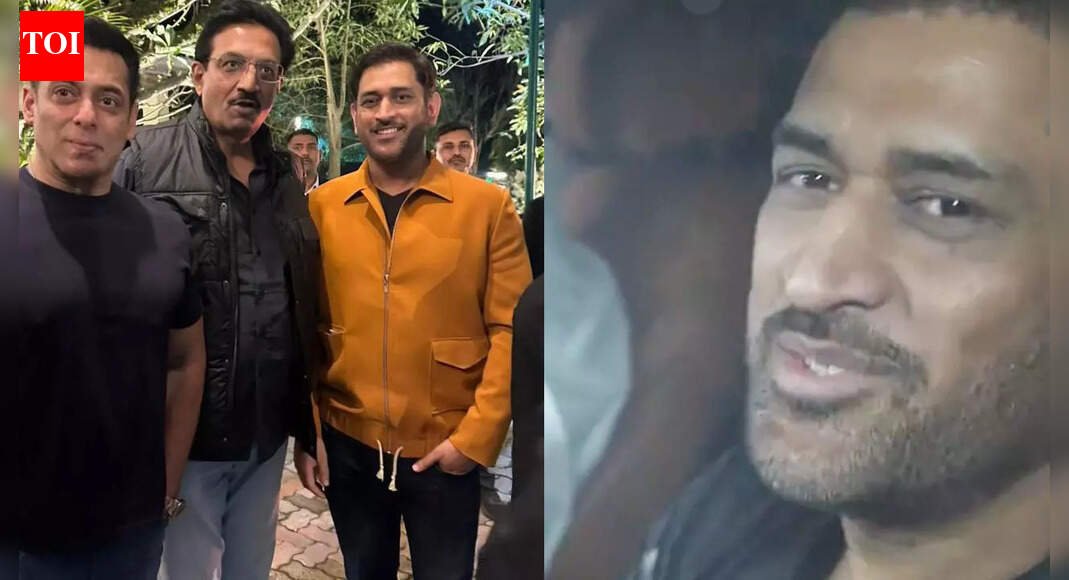
MS Dhoni made a rare public appearance when he attended Bollywood superstar Salman Khan’s 60th birthday celebrations in Panvel (Image credit: Agencies)

NEW DELHI: Former India captain Mahendra Singh Dhoni, who largely keeps a low profile away from the cricket field, made a rare public appearance when he attended Bollywood superstar Salman Khan’s 60th birthday celebrations in Panvel, Maharashtra. Khan marked the milestone with a midnight party at his farmhouse, which was attended by close family members, friends and colleagues from the film industry. Dhoni’s presence at the event quickly became a talking point, underlining his enduring popularity even years after retiring from international cricket.Go Beyond The Boundary with our YouTube channel. SUBSCRIBE NOW!As Dhoni left the venue and settled into his car, fans gathered outside broke into loud chants of “Mahi bhai! Mahi bhai!”, a reminder that his aura remains untouched by time or absence from the international stage.

Gautam Gambhir’s year as India coach ends like it started – on a chaotic note

While Dhoni now limits his cricketing appearances to the Indian Premier League, his fan following continues to be unmatched, cutting across generations and sporting loyalties.Dhoni will once again be seen in Chennai Super Kings colours in the IPL 2026 season, having been retained by the franchise he has led with remarkable success over the years. Under his captaincy, CSK have built a reputation for stability, backing experience while seamlessly integrating young talent. Notably, Vijay played eight IPL seasons for CSK, all under Dhoni’s leadership, a testament to the former skipper’s ability to foster long-term player development.The influence of Dhoni is already evident on CSK’s latest recruits. Kartik Sharma, one of the franchise’s newest entrants, admitted he was overwhelmed by the intense bidding war that unfolded for him at the recently concluded IPL auction and said he was “extremely excited” at the prospect of sharing a dressing room with the veteran.Watch the video hereKartik, along with Prashant Veer, became the joint-highest-priced uncapped players in IPL history after CSK paid a staggering Rs 14.20 crore each for the duo, who had entered the auction with a base price of Rs 30 lakh. The investment highlighted CSK’s clear intent to nurture emerging Indian talent alongside established names.Speaking to JioStar, Kartik described the emotional rollercoaster of auction night. “First of all, a special thank you to all my family members and friends. Without their support, I don’t think I would have reached this stage. My entire family is very happy, everyone is celebrating and dancing,” he said. Kartik added that playing with Dhoni was a dream come true, revealing that he broke down in tears as the bids kept climbing.Recognised for his aggressive middle-order batting and reliable wicketkeeping, Kartik has scored 334 runs in 12 T20 matches at a strike rate of 164, hitting 28 sixes and featuring among the top six-hitters in the Ranji Trophy. He has also impressed in the Syed Mushtaq Ali Trophy and earned praise after training with CSK last season, particularly for his ability to handle both spin and pace — qualities that could flourish under Dhoni’s guidance.


Source link

England 26/0 in 4.0 Overs | AUS vs ENG 4th Ashes Test Live: Australia 132 all out; England need 175 runs to win MCG Test


Australia vs England 4th Ashes Test Live: A fired-up England struck six times before lunch to stay in the contest on another chaotic day of the fourth Ashes Test on Saturday, even as a brittle Australia stretched their lead to 140 runs.

At the interval on day two, in front of another packed Melbourne Cricket Ground, Australia were 98 for 6, with Steve Smith unbeaten on 16 and Cameron Green on six.

The hosts lost nightwatchman Scott Boland (6), Jake Weatherald (5), Marnus Labuschagne (8), Travis Head (46), Usman Khawaja (0) and Alex Carey (4) in a frenetic morning session, despite England being a bowler short after pace spearhead Gus Atkinson limped off with an apparent hamstring injury.

Australia had resumed the day on 4 without loss following a dramatic opening day that saw 20 wickets fall, with the hosts bowled out for 152 and England dismissed for 110.

It marked the most wickets to tumble on the opening day of an Ashes Test since 1909, surpassing the 19 that fell on day one of the series opener in Perth.

With nearly 10 millimetres of grass left on the surface, it proved a bowler’s paradise, though several former greats criticised the pitch for “doing too much” and being “unfair for batters”.

Boland resumed on four alongside Head, who was yet to score, and the pair safely negotiated one over before stumps on Friday. Head began positively on Saturday, driving Atkinson for a boundary, while Boland added two before edging the same bowler to wicketkeeper Jamie Smith.

Atkinson soon left the field clutching his left hamstring, forcing England to reshuffle their attack.

Josh Tongue returned on a hat-trick after claiming the final two Australian wickets on day one, but Weatherald briefly countered with a whip through midwicket for three. The opener, however, failed again, bowled by Ben Stokes for five by a delivery that jagged back sharply.

Head, dropped on 26 by Will Jacks, continued to look fluent but Labuschagne fell for eight, caught by Joe Root in the slips off Tongue. Head’s resistance ended when Brydon Carse produced a beauty that beat the outside edge and rattled the stumps.

Tongue and Carse then removed Khawaja and Carey in the space of nine balls to swing the momentum firmly England’s way.

Australia, however, have already retained the Ashes after dominant wins in Perth and Brisbane and an 82-run victory in Adelaide.


Source link

‘Not great’: Magnus Carlsen opens up on relations with FIDE ahead of World Rapid & Blitz return after ‘Jeansgate’ | Cricket News


‘Not great’: Magnus Carlsen opens up on relations with FIDE ahead of World Rapid & Blitz return after ‘Jeansgate’
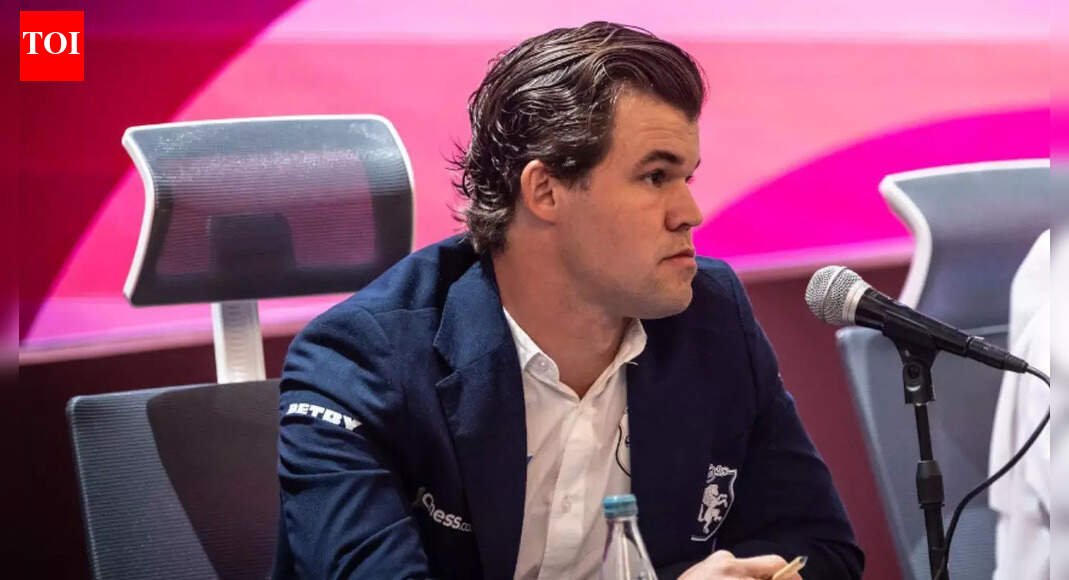
Magnus Carlsen (Photo: FIDE/Anna Shtourman)

World No. 1 and five-time World champion Magnus Carlsen has returned to take part in the FIDE World Rapid & Blitz Championships in Qatar. Speaking ahead of the tournament in Doha, the Norwegian discussed his relationship with the game’s governing body, FIDE, especially after last year’s much-publicised “jeansgate” controversy.

GM Bibisara Assaubayeva Exclusive: Sindarov’s World Cup win, Candidates ambitions, and more #chess

The 2025 edition of the World Rapid & Blitz Championships is being held in Doha, Qatar, from December 26 to 30 at the Sports and Events Complex, Qatar University. With a prize fund exceeding €1 million, the event marks Doha’s return as host after a nine-year gap. The open section features 251 players, including 57 rated above 2600, while the women’s event includes 141 participants, with 41 rated over 2300.At Thursday’s pre-tournament press conference, Carlsen stressed that personal relationships, rather than institutional ties, played the biggest role in his return to the event. “My family and I have had a great relationship with Mohammed and the organising committee here for many years. I think we’ve had three family trips here, to the Qatar Masters twice, which I like tremendously, and the World Rapid and Blitz. I really enjoyed the last time, even though my play wasn’t very good,” Carlsen said. “We also have a lot of family here now, so we’re very happy to be back. That was a massive factor in me playing here, and honestly, a very big part of the reason why I wanted to play.”He also acknowledged the expectations back home, adding, “Apart from that, there are some other reasons as well. There’s definitely some expectation of me in Norway to provide holiday entertainment. I’m not saying that’s a decisive factor, but it definitely plays a role, and I want to provide that.“There was also a question about what motivates me during games and so on. I love playing, and coming here forces me to really do my best. I still play quite a number of events, and my motivation can be a little bit up and down, but coming here I know that nothing except my best is acceptable, and that motivates me too.”When asked directly about FIDE, Carlsen was blunt. “As for my relationship with FIDE, I wouldn’t say that it’s great. In terms of coming here, my family’s relationship with Muhammad and the Qatar Chess Federation is much more important,” he added.The comments inevitably revive memories of “jeansgate”, when Carlsen was forfeited from the final round of the 2024 World Rapid Championship after refusing to change his jeans, deemed a dress-code violation by arbiters. Earlier this year, they were sold at auction for $36,100, far above their original retail price of $300–$500. Carlsen donated the proceeds to Big Brothers Big Sisters of America, adding a philanthropic twist to the saga.


Source link

14-year-old Vaibhav Suryavanshi meets PM Narendra Modi; pic goes viral | Cricket News


14-year-old Vaibhav Suryavanshi meets PM Narendra Modi; pic goes viral
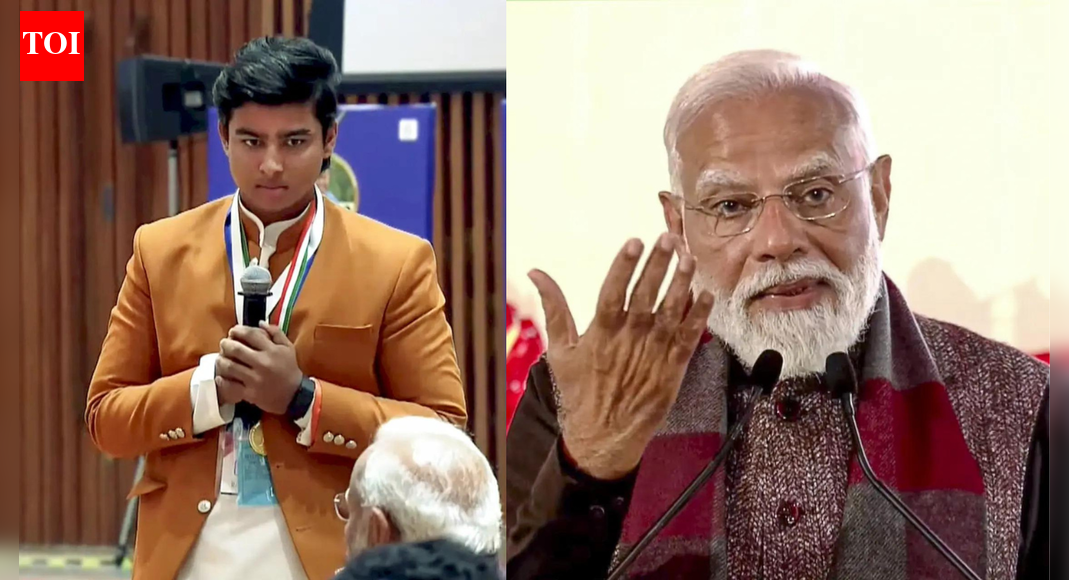
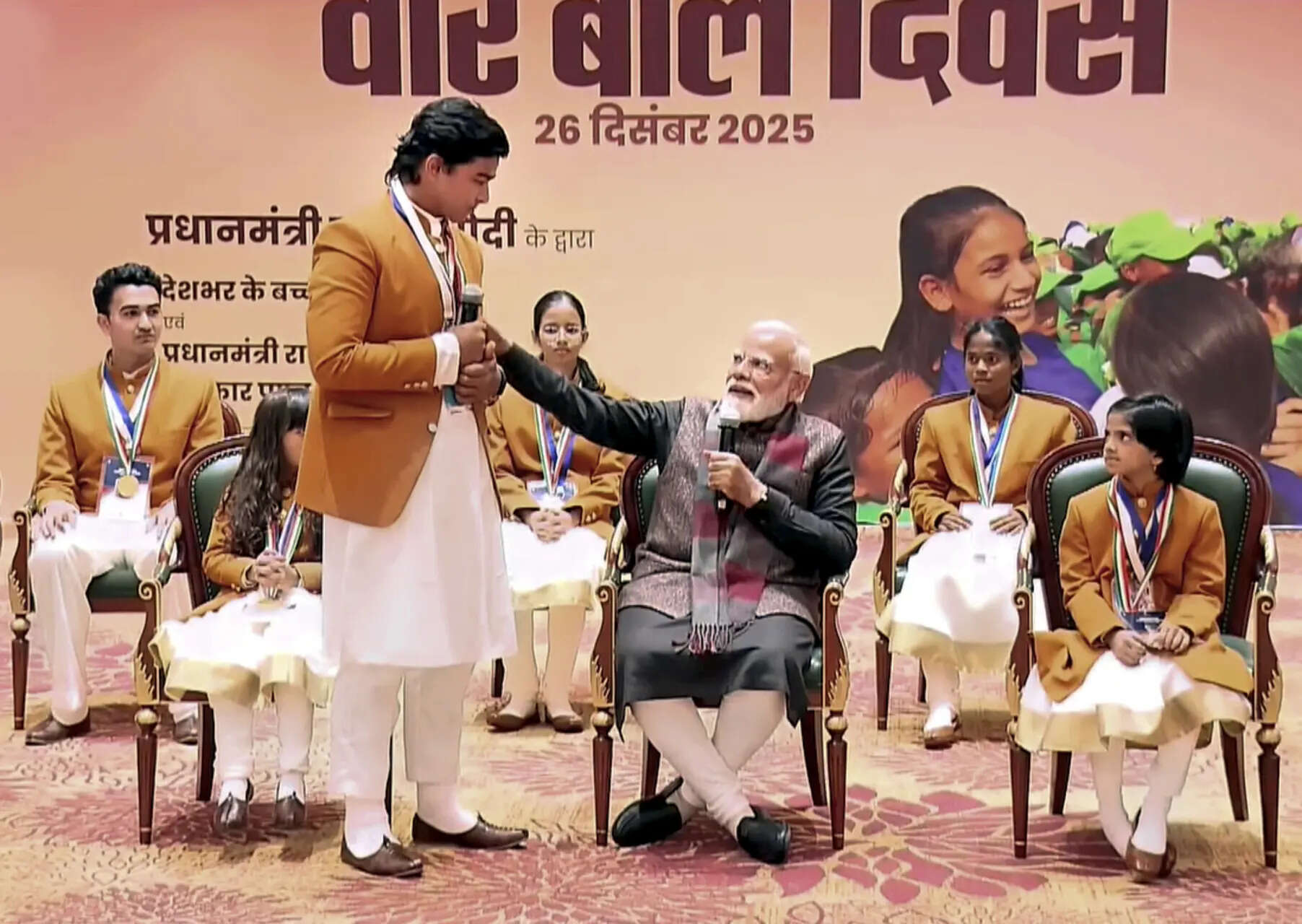
Vaibhav Sooryavanshi & PM Narendra Modi (PTI)

As the year drew to a close, Indian cricket found itself sharing space with an unfamiliar kind of headline. Vaibhav Sooryavanshi, still three months short of his 15th birthday, was named a recipient of the Prime Minister’s National Award for Children, the Pradhan Mantri Rashtriya Bal Puraskar. It is the country’s highest civilian honour for achievers between the ages of five and 18. No cricketer had ever received it before. That alone set him apart. The fact that he now sits alongside names like chess stars R Praggnanandhaa and R Vaishali only underlined how extraordinary his rise has been.

PM Modi meets Rashtriya Bal Puraskar winners

Prime Minister Narendra Modi interacts with cricketer Vaibhav Suryavanshi (@NarendraModi/YT via PTI Photo)

The award felt like a natural conclusion to a year in which Sooryavanshi did far more than chase records. He rewrote expectations of age, time and readiness. In 2025, no Indian cricketer was searched more on Google. Not Virat Kohli. Not Rohit Sharma. Instead, it was a schoolboy left-hander from Motihari, Bihar, whose name kept reappearing on screens across the country. What began as curiosity soon turned into understanding. This was not noise built on novelty. It was attention driven by performance.

Gautam Gambhir’s year as India coach ends like it started – on a chaotic note

The defining moment arrived quietly, without television cameras or primetime build-up. In a Vijay Hazare Trophy match against Arunachal Pradesh, Sooryavanshi produced an innings that seemed to belong to another era. He smashed 190 off just 84 balls, striking at 226.19, with 16 fours and 15 sixes. That knock made him the youngest player in the history of List A cricket to score a century, breaking a 39-year-old world record previously held by Pakistan’s Zahoor Elahi. Yet this was no sudden eruption. Months earlier, on April 28 in Jaipur, Sooryavanshi had announced himself on the IPL stage with startling clarity. At 14 years and 32 days, he scored a breathtaking 101 off 38 balls against Gujarat Titans. It was fearless, explosive and unapologetic. Seven fours, eleven sixes, and a tally of maximums that equalled Murali Vijay’s IPL record. At 14, he also became the youngest player ever to score a T20 century. Even his final appearance of the IPL season felt scripted. Against Chennai Super Kings, he struck 57 off 33 balls to seal a Rajasthan victory. Broadcasters framed it as “Gen Bold vs Gen Gold”. By then, the identity of the poster boy was already clear. Records trailed him everywhere. He made his Ranji Trophy debut at 12 years and 284 days, becoming India’s youngest first-class cricketer. At just 13, he earned an IPL contract worth Rs 1.1 crore, the youngest player ever to be bought at an auction. His impact stretched beyond domestic cricket. Against Australia Under-19, he blasted 104 off 58 balls, the fastest Under-19 century by an Indian and the second-fastest worldwide. Across consecutive Under-19 Asia Cups, he remained central to India’s batting narrative. In 2025, he went even further, hammering an audacious 144 off 42 balls against UAE, an innings that included a 32-ball hundred. Indian cricket has known prodigies before. Very few, however, have shaped an entire year around themselves before finishing school. Vaibhav Sooryavanshi did exactly that.


Source link

On This Day: Ajinkya Rahane’s century that changed Indian cricket | Cricket News


On This Day: Ajinkya Rahane’s century that changed Indian cricket
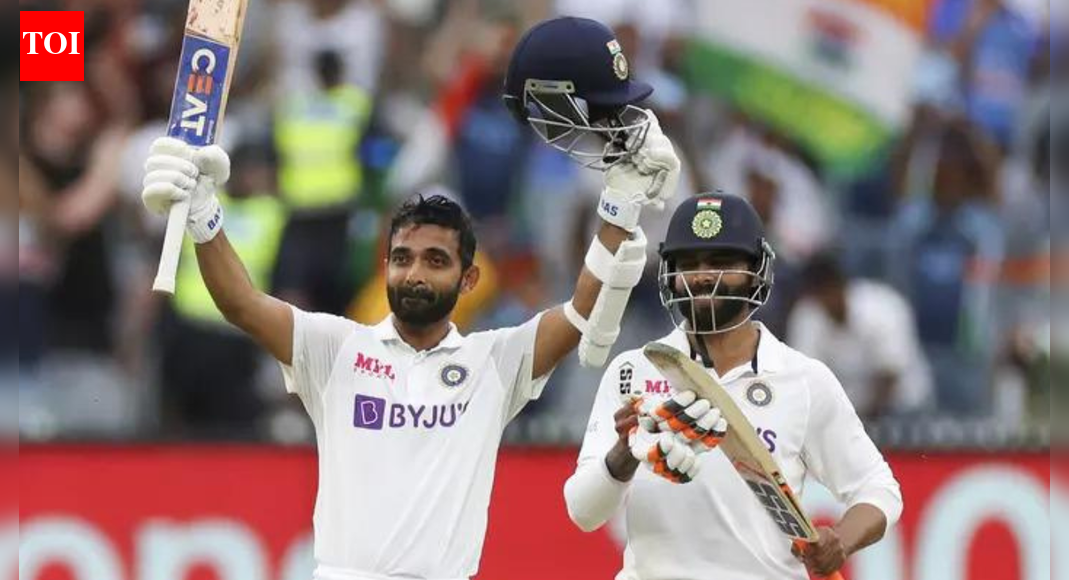
Ajinkya Rahane and Ravindra Jadeja (AP/PTI)

On this day in 2020, December 27, Ajinkya Rahane played an innings that quietly altered the course of Indian Test cricket. It did not come wrapped in noise or bravado. It arrived in the aftermath of trauma. India had been bundled out for their lowest-ever total in the previous match – a humiliating 36 all out in Adelaide. Captain Virat Kohli had flown home on paternity leave. Mohammed Shami was ruled out of the tour. Umesh Yadav was injured. Confidence was fractured, belief questioned, and Australia sensed blood. What followed at the Melbourne Cricket Ground was not merely a response but a reclaiming of dignity, led by a stand-in captain who spoke with his bat.India began the second Test carrying the weight of collapse and expectation. When Day 2 started, they were 36 for 1 after Australia had been bowled out for 195, the echoes of Adelaide still loud. The morning was overcast, the ball moved, and Australia’s fast bowlers bowled disciplined lines.

Gautam Gambhir’s year as India coach ends like it started – on a chaotic note

Australia struck early. Shubman Gill and Cheteshwar Pujara fell in quick succession, briefly threatening another collapse. Yet Rahane stood firm. From the very first delivery he faced, there was clarity in his intent. He drove straight when the ball was full, pulled with control when it was short, and trusted his defence when Australia searched for errors. A dropped catch on 78 off the second new ball proved decisive. Rahane marched on, making Australia pay for every missed chance.He stitched the innings together patiently. Partnerships with Hanuma Vihari, Rishabh Pant, and eventually Ravindra Jadeja rebuilt India’s hold on the match. Vihari and Pant showed promise before falling, but Jadeja became the perfect partner. Jadeja left well, chose his scoring areas carefully, and allowed Rahane to dictate the tempo. Their century stand for the sixth wicket broke Australia’s resistance. The bowlers tired, the new ball lost its threat, and frustration crept in. Even when Starc struck Rahane on the handle late in the day, fortune stayed with him as another chance was spilled. By stumps, India had surged to 277 for 5 and momentum had firmly shifted. Rahane’s century was not just technically sound; it was emotionally stabilising. It gave India belief when very little existed.Rahane’s stay ended on 112 off 223 balls the following morning, in unfortunate fashion — run out after a mix-up following Jadeja’s call. There was no visible frustration or anger. Instead, Rahane walked back and gently patted Jadeja on the shoulder, a quiet acknowledgement that such moments are part of the game. Only a week earlier in Adelaide, Rahane himself had been involved in Virat Kohli’s unfortunate run-out, a moment that triggered India’s dramatic collapse in the first innings. Perspective came easily to him. India eventually added a few more runs to be bowled out for 326, but by then the damage to Australia had already been done.Australia’s second innings only deepened the shift. India strangled their scoring, conceding almost nothing. Australia were bowled out for 200 in 103.1 overs, their slowest home Test innings in decades. They did not manage a single half-century. R Ashwin closed it out, Jasprit Bumrah provided the hostility, and Mohammed Siraj continued his remarkable rise. India were left chasing just 70.There were flickers of tension. Mayank Agarwal fell early. Pujara followed. Memories of 36 briefly hovered. But this was not the India from Adelaide. Shubman Gill batted with freedom, and fittingly, it was Rahane who struck the winning runs. India went from humiliation to dominance in the space of a week.That hundred at Melbourne did more than win a Test. It reset the tour. It restored belief. It laid the foundation for what would become one of India’s greatest Test series victories. Quietly, without theatre, Ajinkya Rahane played one of the most important innings in Indian cricket history.Rahane will forever remain an enigma in Indian cricket. Over the years, he played several outstanding overseas innings, often in some of the most difficult conditions imaginable. He remains one of the rare Indian batters whose Test average away from home is better than his record in India, a statistic that speaks volumes about his technique and temperament. Remarkably, India have never lost a Test match when Rahane scored a century, and under his captaincy, the team remains unbeaten in Test cricket.At the same time, his overall numbers never quite reflected the full extent of his ability. An average of 38.46 does not truly capture the quality of a batter who delivered when conditions were hostile and margins were fine. Rahane’s last few home series were particularly challenging, played on surfaces where batting was extremely difficult and excessive turn made run-scoring a constant struggle. These conditions did not affect him alone. The averages of Cheteshwar Pujara, Rahane, and Virat Kohli all took a hit during this phase, largely because India played on wickets where survival itself was an achievement.Rahane played his final Test in 2023 against the West Indies. He had earned a recall for the World Test Championship final earlier that year and responded by finishing as India’s highest run-scorer in the match, with scores of 89 and 46 in the two innings. That performance briefly suggested a late-career revival.However, the subsequent tour of the West Indies proved disappointing. India played two Tests, but the runs did not come. Soon after, he was dropped from the Test side. Since then, Rahane has remained out of the national team, and it appears highly unlikely that he will represent India in Test cricket again.His career, much like his personality, defied easy definition. Understated, resilient, and often underappreciated, Rahane leaves behind a legacy that stats alone cannot fully explain.


Source link

Ashes: After 20 wickets on Day 1, Stuart Broad blasts MCG pitch – ‘There is something really wrong’ | Cricket News


Ashes: After 20 wickets on Day 1, Stuart Broad blasts MCG pitch - 'There is something really wrong'
Australia’s Steve Smith is bowled by England’s Josh Tongue during their Ashes cricket test match in Melbourne. (AP Photo)

NEW DELHI: Former England fast bowler Stuart Broad was left unhappy with the pitch at the Melbourne Cricket Ground after the first day of the Boxing Day Test. Watching the match, Broad felt the surface was doing far too much for the bowlers and said it was not what a proper Test pitch should offer. Day 1 turned into a bowler’s game, with wickets falling almost every session. England’s Josh Tongue produced a stunning spell, having picked up five wickets for just 45 runs as Australia were bowled out for 152 in their first innings.

Gautam Gambhir’s year as India coach ends like it started – on a chaotic note

However, England could not take full advantage, as Australia hit back strongly and dismissed the visitors for only 110 runs. By the end of the day, a remarkable 20 wickets had fallen, making it one of the most dramatic opening days in recent memory. In fact, it was the first time in 74 years that 20 wickets fell on the opening day of a Test match in Australia. While fans enjoyed the non-stop action, Broad was not convinced the pitch was fair for Test cricket. “The amount of movement that this pitch has shown has indicated to me that there is something really wrong. Test match bowlers do not require this level of movement to bowl effectively in a Test match. Good Test match pitches will have good bounce but not excessive sideways movements,” Broad said on Sen Cricket. Despite the debate around the pitch, it was a dream day for Josh Tongue. The England pacer made history by becoming the first England bowler this century to take a five-wicket haul in a men’s Test match at the MCG. The last time an England bowler achieved the feat at the venue was back in 1998, when Darren Gough and Dean Headley did so. Tongue’s performance was also his best in Test cricket so far. It bettered his previous best figures of 5-66, which he recorded against Ireland at Lord’s in 2023. Not surprisingly, the fast bowler was delighted with his achievement on such a big stage. The day was made even more special by the crowd at the MCG. A total of 94,199 fans packed the stadium on Friday. This broke the previous record of 93,013, set during the 2015 Cricket World Cup final between Australia and New Zealand.


Source link

Vijay Hazare Trophy: Mumbai overpower Uttarakhand by 51 runs despite Rohit Sharma’s golden duck | Cricket News


Vijay Hazare Trophy: Mumbai overpower Uttarakhand by 51 runs despite Rohit Sharma’s golden duck
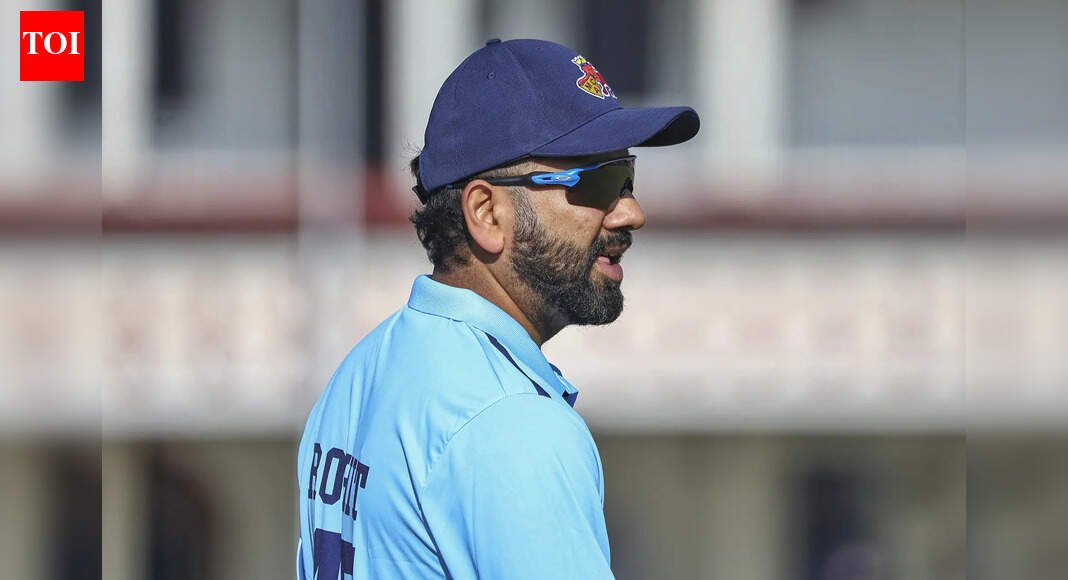
Mumbai’s Rohit Sharma (PTI Photo)

Rohit Sharma’s brief stay at the crease ended in a golden duck, but Mumbai’s firepower ensured they defeated Uttarakhand by 51 runs in a Group C Vijay Hazare Trophy clash on Friday. Batting first, Mumbai posted a commanding 331 for seven, thanks to crucial contributions from Hardik Tamore, who remained unbeaten on 93 off 82 balls, and half-centuries from Sarfaraz Khan (55 off 49 balls) and Musheer Khan (55 off 56 balls). The Khan brothers stitched together a 107-run partnership for the third wicket, with Sarfaraz targeting square-of-the-wicket shots, including a six off Mayank Mishra, while Musheer focused on straight drives over the seamers’ head.

Gautam Gambhir’s year as India coach ends like it started – on a chaotic note

Tamore later guided Mumbai’s innings, running well between the wickets and attacking the two left-arm spinners Mishra and J Suchith, hitting a six over extra cover and another wide off long-on. His partnership of 95 in just 10.5 overs with Shams Mulani (48 off 35 balls) proved decisive, though Tamore fell just short of a deserved century. Uttarakhand responded with 280 for nine, largely due to opener Yuvraj Choudhary’s 96 off 96 balls. Musheer Khan also contributed with the ball, claiming two wickets for 57 runs, while debutant Onkar Tarmale impressed with figures of 2 for 40. Devendra Bora was the pick of the bowlers for Mumbai, taking 3 for 74, and famously dismissing Rohit Sharma with a short delivery that was caught at deep fine leg by Jagmohan Nagarkoti. Despite Rohit’s early departure, he made a mark in the field, taking a sharp first-slip catch off Shardul Thakur to dismiss Uttarakhand opener Kamal Singh. The crowd of around 5,000-6,000 had hoped to see more of Rohit’s impact, chanting for him to bowl late in the innings, but he chose not to roll his arm over. Ultimately, Mumbai’s dominant batting display and disciplined bowling effort saw them secure a comfortable 51-run win, continuing their strong run in the tournament. Brief Scores: Mumbai: 331/7 in 50 overs (Hardik Tamore 93*, Sarfaraz Khan 55, Musheer Khan 55; Devendra Bora 3/74) Uttarakhand: 280/9 in 50 overs (Yuvraj Choudhary 96; Onkar Tarmale 2/40, Musheer Khan 2/57)


Source link

R Praggnanandhaa, Anish Giri or Hikaru Nakamura? Richárd Rapport reveals his pick for Candidates 2026 | Exclusive | Chess News


R Praggnanandhaa, Anish Giri or Hikaru Nakamura? Richárd Rapport reveals his pick for Candidates 2026 | Exclusive
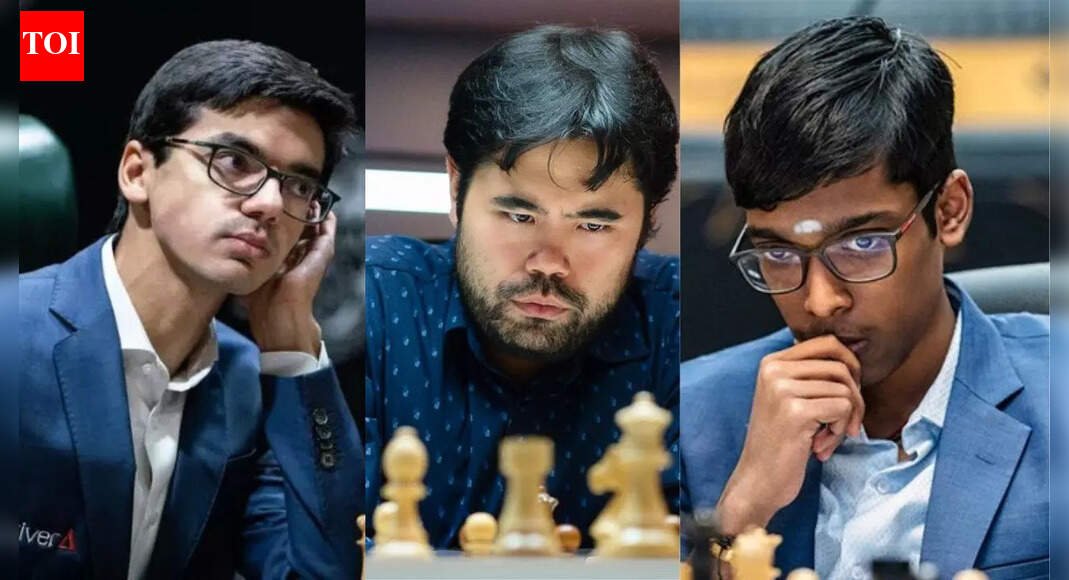
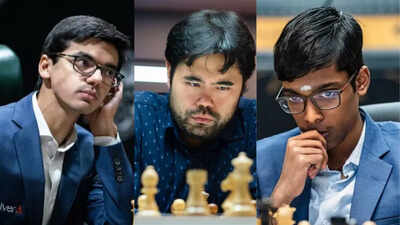
Anish Giri, Hikaru Nakamura, and R Praggnanandhaa

NEW DELHI: It was in December last year when an 18-year-old boy from Chennai, Gukesh Dommaraju, stunned China’s Ding Liren to become the youngest-ever World Chess Champion.The victory sent a wave of euphoria across the global chess fraternity. Even those in the opposition camp could not help but admire the moment. And one such individual was Hungary No. 1 Richárd Rapport, who worked as Ding’s second (an assistant who helps a player prepare by analysing opponents’ openings, middlegame ideas and endgame structures) during the World Championship match.

GM Bibisara Assaubayeva Exclusive: Sindarov’s World Cup win, Candidates ambitions, and more #chess

Rapport, himself one of the most creative minds in elite chess and the youngest-ever Hungarian grandmaster at just 13, knows how it feels to be in the position when something as big as the Candidates Tournament is approaching.As the 2025–26 World Championship cycle reaches its boiling point with the Candidates Tournament scheduled to be held in Cyprus between March 28 and April 16, 2026, Rapport feels this time would be different to his 2022 Candidates, where Jan-Krzysztof Duda, the 2021 World Cup winner, was the lowest-seeded player with a rating of 2750. In the current cycle, Javokhir Sindarov is the lowest-rated player in the field with an Elo of 2726, as per the December ratings list.“The likes of Hikaru (Nakamura), Fabiano (Caruana) and Anish (Giri), they are very experienced. And Pragg, you know, very young and up and coming, and he’s proven himself over and over and over. So yeah, these guys are really good,” Rapport told TimesofIndia.com.“It’s more like these guys have been around. It’s not a big shock. When I played my Candidates, we had a very strong lineup. I think young Jan-Krzysztof Duda was seeded last. He was still like 2750 or something.”That memory tells his understanding of how round-robin Candidates tournaments are often decided.“Very often it comes down to beating the guys who are struggling the most with a very big score,” Rapport explained. “That’s usually the key to success. You play tight games with the guys who are doing well, and you leverage the fact that you beat someone to zero while the other guy made two draws. Suddenly, it’s one point difference, and then he has to take more risks.”The 2021–22 cycle, however, unfolded with a subplot never seen before in chess.

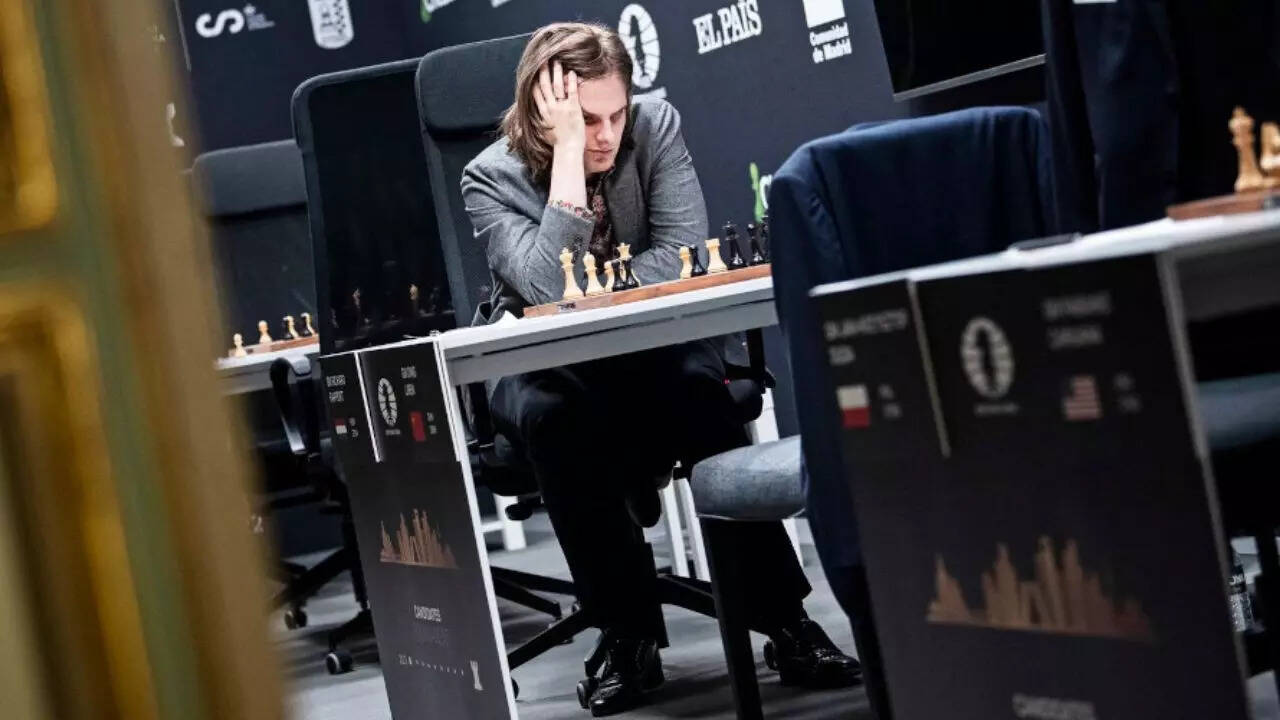
Richard Rapport in Candidates 2022 (Photo Credit: FIDE/Stev Bonhage)

Richárd Rapport in Candidates 2022 (Photo Credit: FIDE/Stev Bonhage)

After repeatedly praising the Russian invasion of Ukraine in public, Sergey Karjakin was found by FIDE in March 2022 to have breached its Code of Ethics and was handed a six-month ban, ruling him out of the Candidates Tournament. His appeal, filed by the Russian Chess Federation, was rejected in May.Under the replacement rules, the spot passed to the highest-rated eligible player who had not already qualified, Ding Liren.But Ding initially lacked the required 30 rated games due to COVID-related travel restrictions, forcing the Chinese Chess Association to hastily organise tournaments so he could meet the criteria.Once Karjakin’s ban was upheld, Ding officially qualified, and what followed became one of the most ironic twists in recent chess history.“After the first half of the Candidates cycle that we were playing, the only player with absolutely no mathematical chance of qualifying was Ding,” Rapport recalled. “And then at the end of the cycle, he became the champion. It’s a bit ironic.”Rapport is a believer that similar dynamics can emerge for lower-seeded players in any Candidates. “It kind of gives possibilities for them as well,” he added. “People will try more against them, so things can happen.“If you look at some games like Fabiano versus Hikaru, they’ve played so many times already. They know each other so well. I would expect to see some very tight games.”Preparation gaps, he feels, will be more visible against the less experienced players, while clashes between veterans may yield fewer decisive results.That brings the conversation inevitably to R Praggnanandhaa, often described as young and inexperienced by casual observers. Rapport strongly disagrees.“You cannot call him inexperienced,” he said with some visible firmness. “Even though, you know, by age. He’s kind of been around the blocks. Pragg’s second Candidates comes at roughly the same age, or even younger, than some of these guys. It’s just insane.”ALSO READ: ‘Don’t really have next generation’: Judit Polgár, Richárd Rapport and changing face of Hungarian chessFor all the talk of ratings, experience and favourites, Rapport offers a final reminder of the Candidates’ unforgiving nature. “Because it’s one event, even though it’s a long event, it’s still one event at the end of the day,” he said. “Anything can happen. I would normally predict some of the guys you mentioned, the top-rated, the experienced ones, to take the spot.”As Cyprus prepares to host the next chapter in chess history, Rapport puts his money on the experienced shoulders.But as recent cycles have shown, today’s underdog can very quickly become tomorrow’s world champion. All we can say is time will tell.


Source link

AIFF proposes 20-season ISL framework under new model, February start possible | Football News


AIFF proposes 20-season ISL framework under new model, February start possible

The All India Football Federation (AIFF) on Friday proposed a new structure for the Indian Super League (ISL), under which the league would be owned and operated by the national body in accordance with its new constitution for the next 20 seasons.According to the new proposal the AIFF formulated after a meeting with the ISL clubs, the league will implement a promotion and relegation system from the upcoming season. Each season will be calculated from June 1 to May 31 of the next year.“We have sent the proposal to the clubs, we have to wait for their response in the next couple of days before finalising our plan,” an AIFF source told PTI.“Let the clubs respond, we will try to find a solution after hearing them.”It is expected that the AIFF and the clubs will have two more rounds of meetings — one on Sunday and the other on Monday.If all goes well, the ISL season may start in the first week of February, according to the source.According to the proposal, the ISL will have a predetermined ‘Central Operational Budget’ for every year that would come from yearly contributions from all ‘revenue share holders’ proportionate to their revenue share in the league.“This would be known as the ‘League Membership Contribution’. Any operational expenses required for the league to be conducted and for clubs to comply with their applicable licensing criteria with the addition of prize money distribution would be capped and borne out of this budget,” the proposal said.“Governance would be overseen by a Board that would be empowered by the AIFF general body with certain operational autonomy over commercial matters of the League. The jurisdiction of the board would be limited to the utilisation of unrestricted funds within the yearly operational budget earmarked for the same.”Each club, under the proposal, will pay the AIFF a ‘standard participating fee’ of Rs 1 crore a year at the beginning of the season. This would, however, be independent of any calculations of the ‘Central Operating Expenditure’.“This amount would be fully reimbursable from the central revenue prior to distribution of ‘Net Revenue’. The total participation fee for all clubs would be put at 20% of the ‘central operational budget’ of the League. In case the Board decides to raise the ‘central operational budget’ by 10% in the future, the ‘standard participation fee’ would proportionately increase.”Any profit, or savings from the operational budget, will be distributed equally amongst all revenue shareholders in proportion to the respective revenue shares.On December 20, a proposal from 10 ISL clubs for “perpetual” operational and commercial ownership of the country’s top-tier competition failed to get the approval of the AIFF’s General Body, which formed a committee to look into the matter.The AIFF panel was tasked with holding discussions with representatives of five clubs – Chennaiyin FC, Mumbai City FC, Delhi Sporting Club, NorthEast United FC and Mohun Bagan Super Giant from December 22 to 29.Under the AIFF’s proposal, the total outlay of the first season of the ISL will be Rs 70 crore with the AIFF’s revenue share pegged at 10 per cent (that is Rs 7 crore) in the first season, while 50 per cent (Rs 35 crore) will come from the clubs — 14 as of now unless there is any pull out.But interestingly, a revenue share of 30 per cent has been reserved for a potential commercial partner. The AIFF is yet to get a commercial partner as it did not receive any bid after a tender was floated on the supervision of a Supreme Court-appointed committee under a retired SC judge.Though the AIFF has included a 30 per cent revenue share for a potential commercial partner in the proposal, it is learnt that since the number of matches this season could be less than earlier years, the ISL can be run with a ‘central operating budget’ of less than the proposed Rs 70 crore.


Source link