Allies split in Ambernath, MNS to use UBT symbol | Thane News


Political alliances fractured on the final nomination day for Ambernath and Badlapur municipal council elections. In Ambernath, Shiv Sena and BJP are set for a direct presidential contest, while the MVA partners are divided, with Congress fielding its own candidate. Badlapur shows more MVA unity, though MNS faced internal splits.

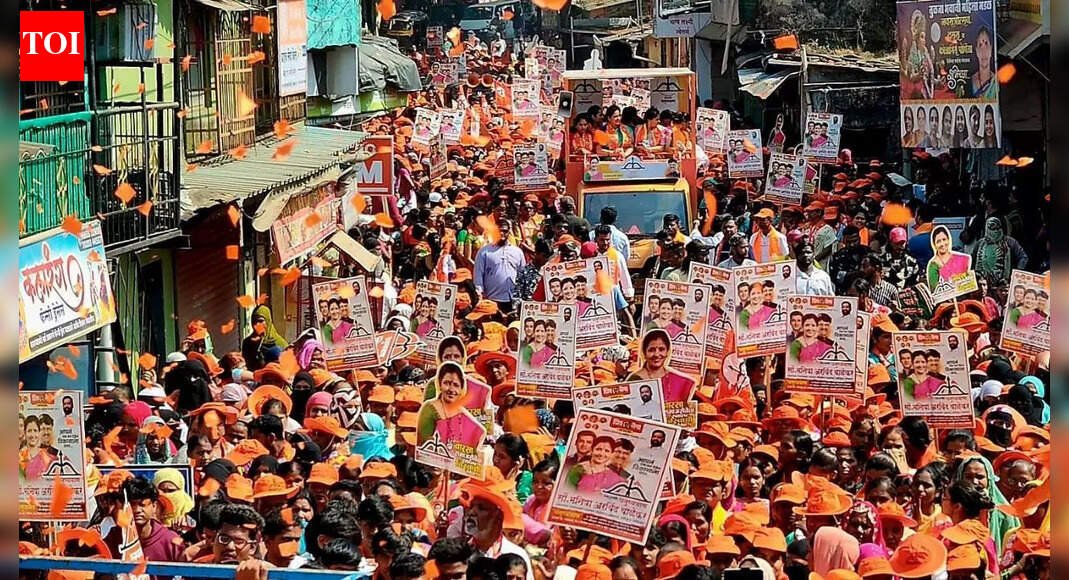
THANE: A clear divide in the two major political alliances in the state emerged on the final day of filing nominations for the Ambernath and Badlapur municipal council elections, slated to be held on Dec 2. In Ambernath, Shiv Sena and BJP held their own respective shows of strength as their candidates – Manisha Walekar for Sena and Tejashree Karanjule for BJP – formed their nominations for the post of president of the council. There is going to be a direct election for the president’s election, and Sena and BJP are pitted against each other.

Mumbai Headlines Today — The Biggest Updates You Need to Know.

Within the MVA, differences became clearly visible. While Congress is contesting independently on 47 seats out of the total 59 and has fielded Nutan Pradeep Patil for the president’s post, alliance partners Shiv Sena (UBT), MNS and NCP (SP) have jointly fielded Anjali Raut from Sena (UBT) as candidate for president.This has made the battle complex: Sena vs BJP vs UBT Sena-MNS-NCP (SP) vs Congress vs NCP. Sena MP Shrikant Shinde said his party’s mayoral (council president) candidate will win by a huge margin. In Badlapur, Sena’s Veena Mhatre filed nomination for the president’s post. Unlike Ambernath, MVA partners in Badlapur appeared more united, with Sena (UBT), NCP (SP), Congress and sections of MNS coming together.In Ambernath, all 14 MNS candidates are contesting on the UBT Sena’s ‘mashaal’ symbol while in Badlapur, one MNS candidate will contest on the UBT symbol and two, including Badlapur city president Sangeeta Chinvankar, refused and filed nomination as independents. – Pradeep Gupta


Source link

Trump’s Gaza peace plan: UNSC approves US-drafted resolution; Hamas rejects proposal


Trump’s Gaza peace plan: UNSC approves US-drafted resolution; Hamas rejects proposal

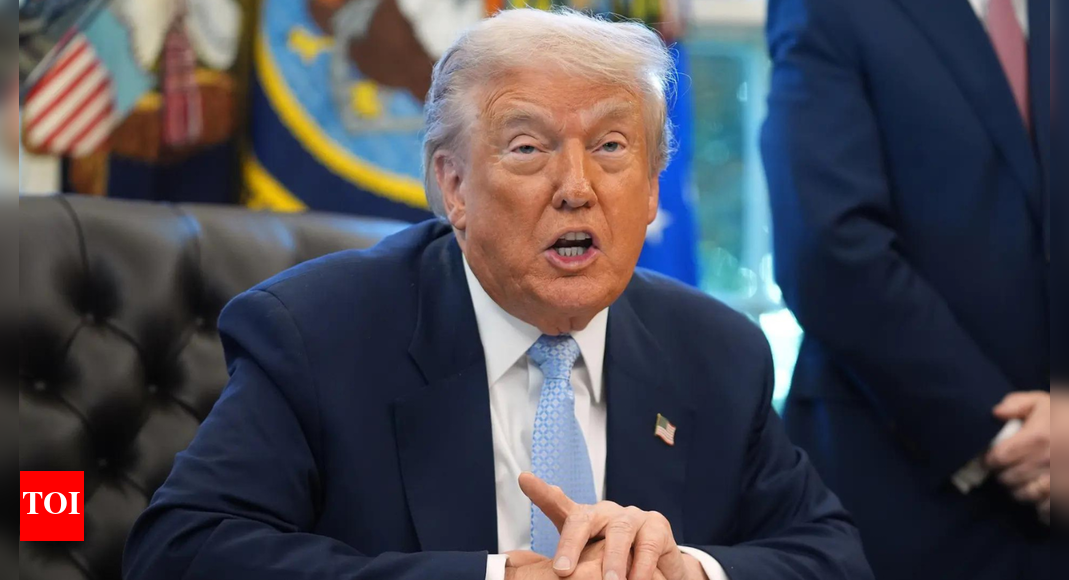
US President Donald Trump (Photo credit: AP)

The United Nations Security Council on Monday approved a US-drafted resolution endorsing President Donald Trump’s 20-point peace plan for Gaza, giving the proposal a binding international mandate after two years of conflict.The resolution received 13 votes in favour with zero vetoes, while Russia and China abstained. It authorises the creation of an International Stabilisation Force, or ISF, which the US said that several unnamed countries have expressed willingness to join.

‘Plan To Rule…’: Trump’s Gaza Plan Stuns Netanyahu; U.S.-Led Force To ‘Seize Strip’?

The force would be tasked with entering Gaza, overseeing demilitarisation, securing key areas and supporting the delivery of humanitarian assistance. It would also coordinate its operations with Israel and Egypt, Gaza’s southern neighbour.However, Hamas has rejected the resolution, arguing that it does not address Palestinian rights and imposes an unwanted external authority on the territory. In a statement on Telegram, the group said the plan “imposes an international guardianship mechanism on the Gaza Strip, which our people and their factions reject,” and added that giving the stabilisation force a mandate to disarm resistance groups “strips it of its neutrality, and turns it into a party to the conflict in favour of the occupation”, news agency Reuters reported.The draft resolution states that the ISF would work on the “permanent decommissioning of weapons from non-state armed groups,” including Hamas, which would be required to surrender its weapons under Trump’s proposal. The draft also calls for the creation of a newly trained Palestinian police force to eventually take over policing responsibilities in Gaza, replacing the Hamas-run force currently in place.US ambassador to the UN Mike Waltz told the council that the stabilisation force would be “tasked with securing the area, supporting the demilitarization of Gaza, dismantling the terrorist infrastructure, removing weapons, and ensuring the safety of Palestinian civilians.” He described the initial ceasefire phase, which began on 10 October with the exchange of hostages and detainees, as a “fragile, fragile first step.The plan also proposes the establishment of a Board of Peace, which Trump is expected to head, and a World Bank-supported trust fund to support Gaza’s reconstruction. The vote took place as global actors sought to maintain the fragile ceasefire following the war that began with Hamas’ 7 October 2023 attack on Israel, which killed about 1,200 people. Israel’s subsequent offensive has killed more than 69,000 Palestinians, according to the Hamas-run Gaza health ministry.


Source link