Student’s suicide: BJP, Cong spar over ‘divisive politics’; language row intensifies | Mumbai News


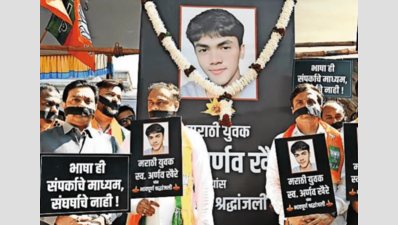
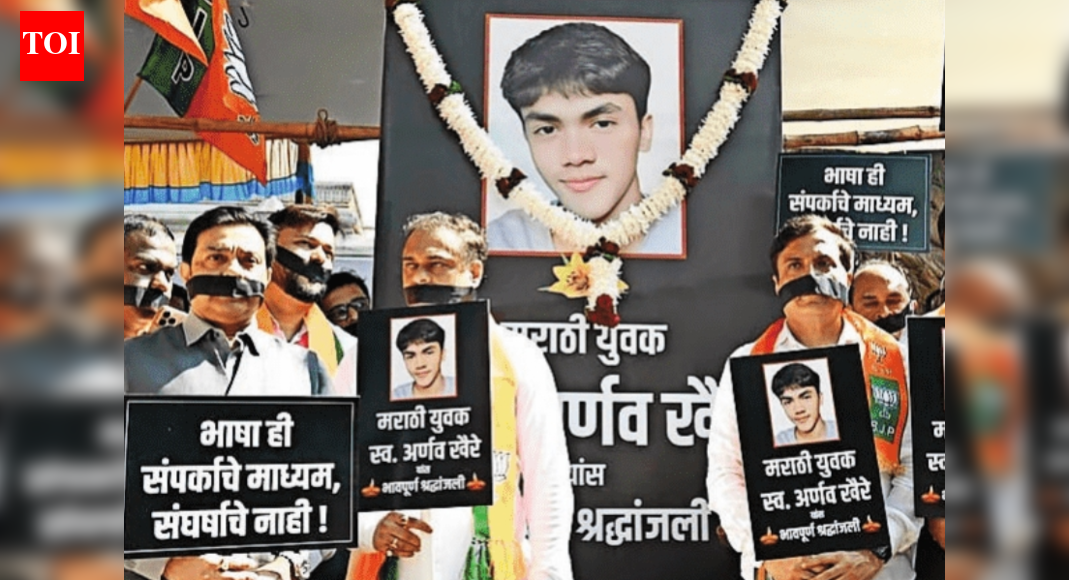
MUMBAI/THANE: A war of words erupted between BJP and the opposition Congress over the suicide of Marathi youngster Arnav Khaire after an alleged assault on a local train for not speaking Marathi. While the BJP accused the opposition and especially the Thackerays of fomenting social divisions, the Congress alleged the BJP was the one indulging in divisive politics.The verbal clash came on a day an abetment to suicide case was registered against unknown persons for allegedly assaulting Khaire. Earlier, Kolsewadi police had registered the incident as an accidental death case.Deputy CM and Shiv Sena chief Eknath Shinde on Friday called the deceased student’s father, Jitendra Khaire, and assured him the govt would take strict action against all the accused. Shinde told the family that the govt stood firmly with them and promised that “no one involved will be spared,” especially those who are promoting linguistic discrimination. He urged the family to remain strong during this difficult time.BJP functionaries, along with the party’s city president Ameet Satam, gathered at Balasaheb Thackeray’s memorial at Shivaji Park to protest against politicians who they said were spreading hatred and conflict in society over language differences, hinting clearly at Shiv Sena (UBT) and MNS. The Congress however accused the BJP of engaging in divisive politics based on religion and said it should not preach on the issue.The BJP stated that the tragic incident had led to outrage across the state. “We express our condolences on the demise of Arnav Khaire. We strongly condemn the attempts by somepolitical leaders and parties to create discord in society in the name of language. Our stand is to maintain unity, not hostility, in society. We prayed at the memorial of Balasaheb Thackeray that such people gain wisdom,” Satam said.AICC secretary Sachin Sawant said, “The BJP has no right to speak on any kind of divisive politics as it’s they who used everything to polarise society.” He added, “BJP is using the unfortunate demise of the boy for their political purposes. It’s the same partythat uses religion to play politics and statements of their leaders stoke hatred. We are the only party that is against any kind of divisive politics.”Meanwhile, BJP MLA Chitra Wagh also visited the Khaire family and assured them of stringent action against the perpetrators. Speaking to the media, Wagh, without naming the Thackeray brothers, strongly criticized political leaders who spread linguistic division for their own political survival, which she claimed led to Arnav’s tragic death.Wagh said, “Some leaders planted the poison of linguistic politics in people’s minds just to safeguard their children’s political future. And the first heavy price for that has been paid by a Marathi family. Arnav Khaire from Kalyan ended his life. What was Arnav’s fault? When political leaders’ children go abroad or study in English-medium schools, is that not acceptable? Do they speak Marathi at Bollywood parties? Did the attackers ever think about that?” On Saturday evening, Sena MP Shrikant Shinde also met the Khaire family. Shrikant Shinde said the family members have requested that parties refrain from politicising the issue. The family wants justice, and police are working to ensure they get it, he said.


Source link

‘Mazak bana rakha hai Test cricket ko’: Rishabh Pant’s fiery message for Team India star caught on stump mic – watch | Cricket News


'Mazak bana rakha hai Test cricket ko': Rishabh Pant's fiery message for Team India star caught on stump mic - watch
Rishabh Pant made his frustration clear with his teammates during Day 2 of the 2nd Test in Guwahati. (Agencies)

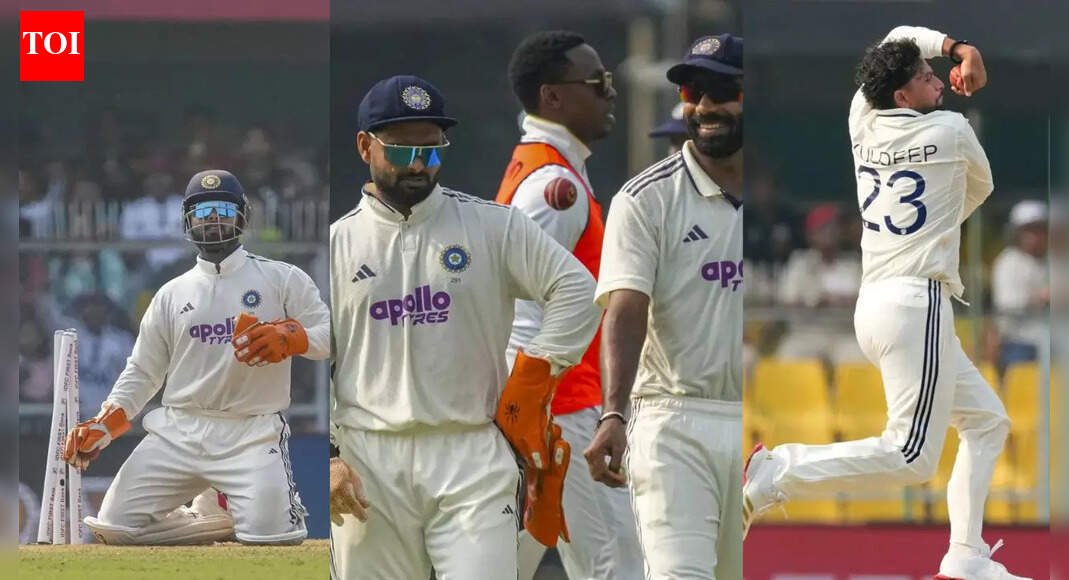
Stand-in captain Rishabh Pant’s voice dominated Day 2 of the second Test in Guwahati, with several stump-mic moments revealing India’s rising frustration as South Africa strengthened their position. With Shubman Gill unavailable due to injury, Pant took charge on the field, and his constant instructions, reminders and corrections became one of the major talking points as India struggled to control the game. India’s over-rate issues and inability to take wickets only added to the pressure. Pant repeatedly demanded urgency from his bowlers and fielders between deliveries. In one clip, he said, “Yaar 30 seconds ka timer hai” (There’s a 30-second timer), followed by “Ghar pe khel rahe ho kya? Ek ball daal jaldi.” (Are you playing at home? Bowl one quickly.) He also reminded Kuldeep Yadav about the two warnings India had already received, saying, “Yaar Kuldeep, dono baar warning le li” (Kuldeep, we’ve already taken two warnings). As delays continued, Pant grew sharper in tone, telling his team, “Pura ek over thodi na chahiye. Mazak bana rakha hai Test cricket ko.” (We don’t need a whole over. You’ve made a joke out of Test cricket.) While organising the field, Pant insisted on handling the placements himself, saying, “Field mere ko karne de. Tu tappe se daalne ko dekh. Baaki ho jaayega kaam.” (Let me set the field. You just focus on bowling quickly. The rest will fall in place.)Watch Pant’s heated stump-mic moments here At another moment, urging his side not to drop intensity, he said, “Bhai kal poori din mehnat kari hai yaar. Chhodenge nahi. Kaam karte raho.” (We worked hard all day yesterday. We can’t let it slip now. Keep at it.) When Washington Sundar prepared to bowl, Pant again referred to the timer, saying, “Guys play with the timer, there’s 1 minute timer for every over. come on yaar” (Play according to the timer, there’s a one-minute limit for every over, come on.) Pant’s comments reflected the tense phase India found themselves in, especially after South Africa’s lower middle order continued to frustrate the hosts. Senuran Muthusamy and Kyle Verreynne put on an 88-run stand for the seventh wicket before Ravindra Jadeja finally broke through.

Poll

Was South Africa’s lower middle order’s performance surprising?

At lunch, South Africa reached 428 for 7 in 137 overs. Muthusamy was unbeaten on 107 from 203 balls, while Marco Jansen moved to 51 off 57 deliveries. Pant’s on-field exchanges became a key storyline on a day when South Africa controlled the contest and India searched for breakthroughs.


Source link

Thakurli elevated flyover work to restart after 7 years; Rs 36-crore tender issued | Thane News


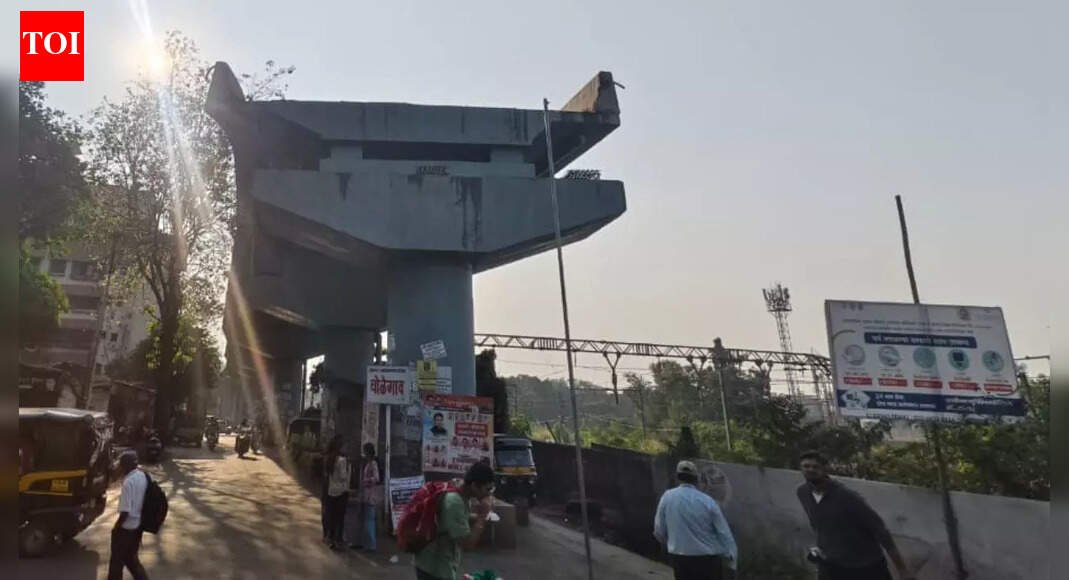
KALYAN: The long-pending Thakurli elevated flyover project in Dombivli — stalled for nearly seven years — is finally set to resume soon, bringing major relief to commuters struggling with traffic congestion in the region. The Mumbai Metropolitan Region Development Authority (MMRDA) has issued a tender worth Rs 36 crore to complete the remaining stretch of the flyover from Thakurli Railway Phatak up to Mahsoba Chowk.Once completed, the alternative parallel route connecting Kalyan and Dombivli will become fully operational, providing residents with a faster and decongested travel experience compared to the currently crowded internal roads of Thakurli.Kalyan Lok Sabha MP Dr Shrikant Eknath Shinde consistently followed up the issue with MMRDA. Acknowledging the project’s progress, he expressed gratitude to Chief Minister Devendra Fadnavis and Deputy Chief Minister Eknath Shinde for ensuring the long-delayed project gets back on track.Celebrating the tender announcement, Shiv Sena MLA from Kalyan Rural, Rajesh More, along with party workers, said that the completion of this elevated connector will significantly ease traffic chaos for thousands of daily commuters. “The work was stuck for years, but once the flyover becomes operational, citizens will get massive relief,” he said.To facilitate construction, the Kalyan-Dombivli Municipal Corporation (KDMC) has announced compensation for around 60 houses that will be impacted. This was a major reason behind the earlier delay in progress.It may be recalled that the MMRDA-built flyover connecting Dombivli East and West was completed in 2018, but the extension toward Thakurli — linking directly to 90 Feet Road — remained incomplete pending land and compensation issues which now have been resolved. Construction is expected to restart soon in one or maximum two months following the tender finalization and necessary on-ground approvals.


Source link

Thane: Telugu group helps migrants blend in with Marathi lessons | Thane News


THANE: In a community hall nestled inside Thane’s upscale Vasant Vihar, a small group of Telugu-speaking residents gathers once every weekend evening, not for cultural or political meetings, but to learn Marathi and seamlessly blend into the city’s social and linguistic landscape.The idea germinated a few years ago and took shape last year after the FTAM group of like-minded people from the Telugu community secured a space to operate sessions. “We knew of struggles our people faced when they arrived in Mumbai and couldn’t ask for directions. Our goal was to help migrants, professionals coming from Andhra Pradesh and Telangana to Mumbai and Thane. The motivation was practical, not political,” said Jaganbabu Ganji, a member. As word spread, two Marathi-proficient volunteers stepped in to teach the basics. Maharashtra-born Radhika Gujja, who has roots in Telangana, has piloted two batches. “We start with consonants and basic vocabulary. It feels good to help someone read a bus board or talk to vendors in Marathi,” she said.“Each class runs for about an hour every weekend, and each course lasts a few weeks-enough for students to get comfortable with Marathi, which many fondly describe as their ‘maushi’ (the maternal aunt of their mother tongue, Telugu),” Ganji said. “We charge a nominal Rs 250 per month per student only to cover teachers’ travel costs.”The response, though not so encouraging as many students drop out midway due to commitments, has led the team to plan conducting sessions online to accommodate more working professionals. Some who dropped out have also requested virtual classes. Participants say the lessons have made settling in easier. Bhanu Prakash Malla, a general manager with a construction firm, said acclimatising was initially tough. “Learning Marathi has made it easier to interact with clients, contractors, and local vendors,” he said.


Source link

How a program helped Bombay Jayashri re-learn how to stand, walk & sing… virtually | India News


How a program helped Bombay Jayashri re-learn how to stand, walk & sing... virtually

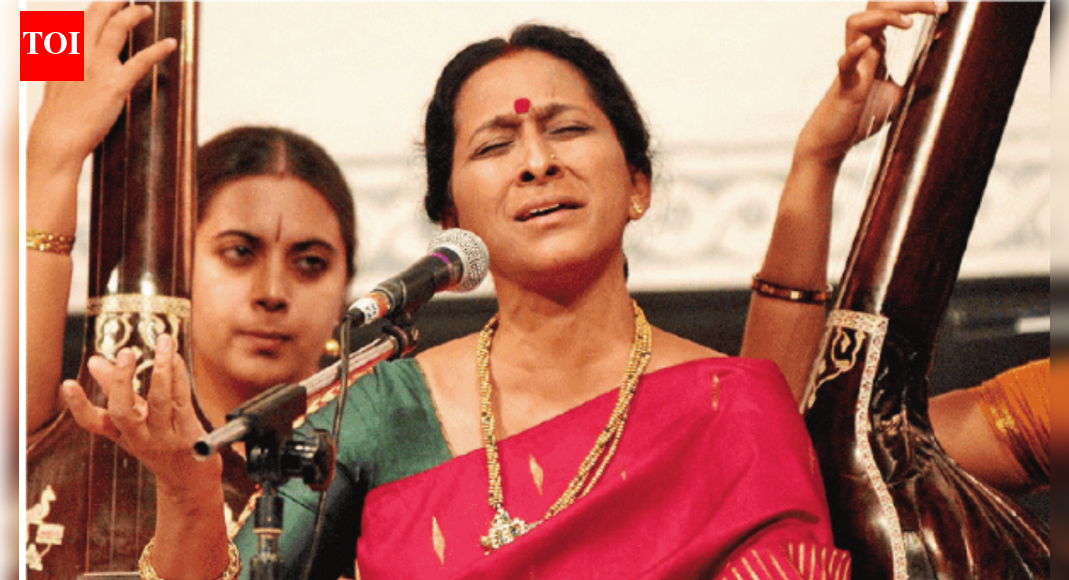
When Carnatic vocalist Bombay Jayashri Ramnath suffered a brain haemorrhage in March 2023, the singer was unable to sit, stand, or move. Involuntary neck and jaw tremors made even speech, an uphill task, forget singing. Traditional physiotherapy, with its repetitive routines, felt painful, monotonous and dispiriting. Recovery seemed distant, and she shut herself from social circles. Then came Jerry — not a real person, but a lively, animated coach inside a virtual reality (VR) rehabilitation program.Restoring mobility with cartoonsIn one of the games, “Save the Jerry”, set on a sunlit beach, the avatar nudged her to stand up and walk. Through immersive sessions, each small motion made Jerry dance and cheer, turning therapy into play. Other games targeted different challenges — like restoring neck mobility, controlling her left shoulder, or helping her relax and reduce involuntary movements. They were set in storylines featuring forests and snowy mountains, where she rescued birds and gathered fruit for penguins, or prayed peacefully at a temple.“I looked forward to these sessions. Recovery became less about gruelling effort. It was about play, progress, and hope,” said the 60-year-old singer, who has sung in multiple languages, including Tamil, Telugu, Kannada, Malayalam, Hindi, and English.A year later, in Dec 2024, Jayashri, the fourth generation of artistes in her family and trained by legends like Lalgudi Jayaraman and T R Balamani, stood on stage once again, this time to receive the Music Academy’s Sangita Kalanidhi award. “I haven’t done a fullfledged concert yet. But I’ve begun recording again. It may not be this Dec, but I plan to restart my kutcheries (Carnatic concerts) soon,” she said.After undergoing brain surgery in the UK, Jayashri returned to India for therapy. She chose to continue most of her physiotherapy at home. The immersive VR program tapped into neuroplasticity, helping her brain rebuild damaged motor pathways through visual and emotional feedback. “It was slow, but I gradually regained strength, coordination, and confidence. These sessions even encouraged me to perform better in speech therapy, too,” she said.While her therapy included the usual mix of physiotherapy and speech exercises, her therapists gradually increased the time spent on digitally prescribed routines to match her progress. Her physiotherapist, Raja from ReWin, a company using digital therapeutics to enhance rehabilitation, said that unlike conventional physiotherapy, the system integrates a wearable motion sensor that tracks joint movement with precision, eliminating human error.“It also gives us quick, repeatable measurements to monitor progress. Combining this technology with immersive VR creates a powerful tool for lower-limb and gait rehabilitation, allowing patients to visualise and experience leg movements for strengthening neuromuscular pathways,” he added.

.

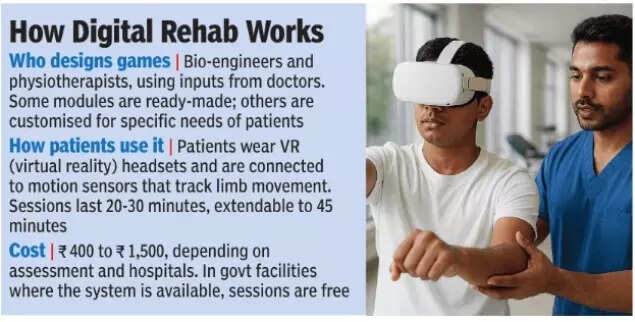
Exercising via virtual AartisPhysiotherapists point to research showing that engaging in virtual tasks stimulates dopamine release, enhancing motivation and speeding up neural recovery. Dopamine plays a key role in motor memory formation and motivation pathways, which means patients train more effectively and recover faster from neurological injuries. VR and gaming-style immersive tasks activate dopamine-driven reward circuits, improving motor and cognitive outcomes.Digital exercises also allow room for creativity. In one instance, a 66-year-old woman with a frozen shoulder was taken on a virtual journey to the Sai Baba temple in Shirdi. Her therapy involved reaching out to offer digital flowers and rotating her hands during a virtual aarti. These movements were designed to mirror the stretches she needed for recovery, without drawing her attention to the pain. After just one session, she said she felt so much better.“Places of worship are very popular with my patients with Parkinson’s and dementia,” said senior orthopaedic surgeon Dr Thineshchandar Andiappan. “It helps them regain a wide range of hand movements.”Doctors say VR is here to stayDigital exercise prescriptions also ensure continuity of care through remote monitoring, progress tracking and consistent engagement. This is why hospitals and rehabilitation centres are increasingly integrating them into postsurgical routines. Dr Andiappan began briefly using the system a year ago, but has steadily increased its use.“Now patients do about half an hour of digital exercises along with traditional ones. Earlier, it was just 15 minutes of digital and 45 minutes of traditional,” he said. The digital format, he added, improves adherence, affordability and accessibility. “Quality of life improves for most patients. The sensors alert them when movements are incorrect or the range is insufficient. They can correct themselves in real time.At least two govt hospitals in Chennai — the Government Institute of Rehabilitation Medicine and the National Institute of Ageing — now combine traditional and digital therapy. “We cannot replace traditional exercises. They supplement traditional exercises well. We track patient movement range and make timely corrections, improving outcomes,” said physical medicine and rehabilitation specialist Dr P Thirunavukkarasu. In the private sector, several companies are offering portable, interactive systems for home use, complete with real-time feedback and guided routines — bringing a new dimension to rehabilitation outside the clinic.How digital rehab worksWho designs games | Bio-engineers and physiotherapists, using inputs from doctors. Some modules are ready-made; others are customised for specific needs of patientsHow patients use it | Patients wear VR (virtual reality) headsets and are connected to motion sensors that track limb movement. Sessions last 20-30 minutes, extendable to 45 minutesCost | 400 to 1,500, depending on assessment and hospitals. In govt facilities where the system is available, sessions are free


Source link