Breaking News
Anil Kumble criticises senior batters for India’s struggles in Tests at home


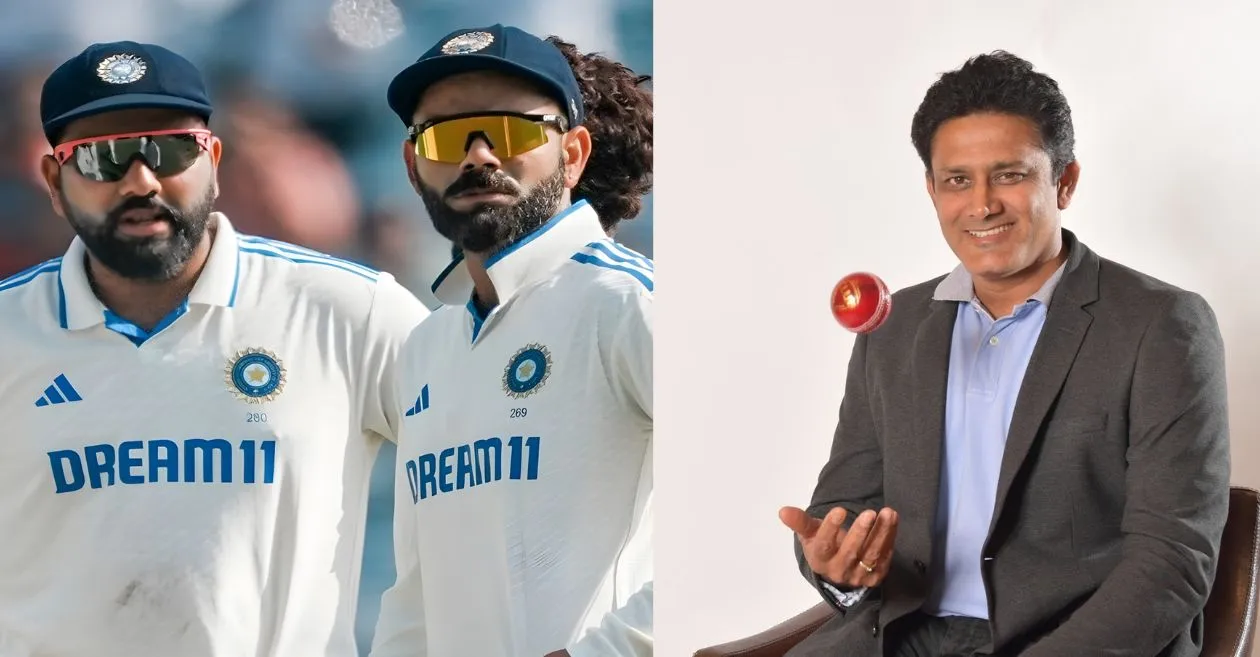
Former India skipper Anil Kumble has strongly criticized the instability in India’s Test batting lineup, attributing recent disappointing performances against South Africa to the retirements and absences of key batters like Virat Kohli, Rohit Sharma, and Cheteshwar Pujara. Kumble emphasized that frequent changes in the top order and middle order have unsettled the team, impacting their confidence and ability to build innings steadily at home.

Anil Kumble points to player absence after India’s dismal batting performances

Speaking to JioHotstar, Kumble revealed that over the last few years, the Indian Test top order has undergone too many alterations with four of the five main batters either retired, dropped, or unavailable. These include the retirements of Kohli, Rohit, and Pujara, along with Ajinkya Rahane being out of the squad. Additionally, captain and key batter Shubman Gill has missed matches due to a neck injury.

“The other aspect of also, you know, I want to bring this point about India’s batting. Over the last three or four years, you have seen four batters in the top five either retire or not be picked. You know, if it is, you know, Virat Kohli is retired, Rohit Sharma, Cheteshwar Pujara, then you have, of course… Rahane. So four out of five, plus Shubman Gill isn’t in this lineup,” Kumble said.

Kumble highlighted how this constant chopping and changing disrupts the rhythm of players who require a stable run to settle into international cricket. He stressed that young batters need support across six to eight Tests to find their form, rather than facing relentless pressure and frequent exclusion from the lineup.

According to Kumble, this instability has been largely responsible for India’s poor batting efforts and failures to negotiate tough spells from bowlers like South Africa’s Marco Jansen, who exploited India’s lack of patience and application.​

Also READ: Will Rohit Sharma and Virat Kohli feature in Vijay Hazare Trophy 2025-26? Here’s what we know

Gautam Gambhir blames batters’ temperament and defends pitch after Kolkata Test

Following India’s 30-run loss to South Africa in the first Test in Kolkata, head coach Gautam Gambhir rejected complaints about the pitch and instead openly criticized the Indian batters’s temperament. He noted that the total India posted in the second innings of 93 was very much chaseable, and attributed the collapse to poor mental strength and inability to build partnerships. Gambhir’s stance contrasts with some viewers’ concerns about the playing conditions, as he asserted the pitch was fair and that more application was required by the batters to weather the challenges. This aligns with the observations made by Kumble on the need for greater patience and grit in the batting approach. Both experts highlighted the collective failure of the Indian batting order under pressure, underscoring how the lack of continuity in selection seems to compound the problem.​

These remarks come as India is on the verge of losing yet another home Test series against South Africa, raising questions about the direction of team selection and player development. The absence of experienced players combined with an inconsistent lineup has clearly led to a fragile batting framework that struggles to withstand quality bowling attacks in crucial moments.

Also READ: New Zealand star batter Daryl Mitchell overtakes Rohit Sharma to claim top spot in ICC ODI batting rankings


Source link

‘No good and bad Taliban’: Pakistan refutes attacking Afghanistan; Kabul vows retaliation


'No good and bad Taliban': Pakistan refutes attacking Afghanistan; Kabul vows retaliation

Pakistan’s military on Tuesday rejected accusations from the Taliban government that it carried out airstrikes inside Afghanistan, where an overnight raid reportedly killed 10 people near the Durand Line.“Pakistan has not attacked Afghanistan,” army spokesperson lieutenant general Ahmed Sharif Chaudhry said on state broadcaster PTV, calling the Afghan administration’s allegations “baseless.”“Whenever Pakistan attacks someone, it announces it,” Sharif Chaudhry said.He further added, “In our view, there are no good and bad Taliban.”Afghanistan, however, strongly condemned Pakistan for strikes in Paktika, Khost and Kunar provinces, calling them a direct violation of its sovereignty and a breach of international norms. The Taliban government said it would respond “at an appropriate time.”Afghan government spokesperson Zabihullah Mujahid said Pakistan’s “hostile actions” reflected the “ongoing failures of Pakistan’s military regime,” adding that defending Afghanistan’s airspace, territory and citizens was its “legitimate right.”


Source link

Access Denied


Access Denied

You don’t have permission to access “http://www.ndtv.com/india-news/pakistani-couple-elopes-crosses-into-kutch-on-foot-to-be-together-9697849” on this server.

Reference #18.adf5d217.1764075752.190e9969

https://errors.edgesuite.net/18.adf5d217.1764075752.190e9969


Source link

Access Denied


Access Denied

You don’t have permission to access “http://www.ndtv.com/offbeat/delhi-restaurateur-alleges-zomato-for-showing-his-restaurant-as-unavailable-company-reacts-9697202” on this server.

Reference #18.34fdd417.1764071911.277b0345

https://errors.edgesuite.net/18.34fdd417.1764071911.277b0345


Source link

Mumbai: Man held for stealing cash from temple donation boxes | Mumbai News


MUMBAI: A 20-year-old man was recently arrested by the Dahisar police for breaking two donation boxes at a temple in Dahisar East and stealing cash. With this arrest, police have solved one more case of theft registered at Dahisar police station earlier this year.The incident occurred in the intervening night of Nov 20 and 21 at the temple located in Maratha Colony, Dahisar East. In the morning on Nov 21, a temple trustee discovered the damage and lodged a police complaint.Police teams scanned footage from 30 electronic surveillance cameras before tracking down the accused — Badal Kumar Das, 20. Police seized Rs 8000 in cash from Das that he had stolen from the temple. Four batteries stolen from trucks and autorickshaws in a separate offence were also recovered. Police said Das lives in Dahisar East.


Source link

‘Delete central govt’: Mamata attacks EC, BJP over SIR; will back survey on one condition | India News


'Delete central govt': Mamata attacks EC, BJP over SIR; will back survey on one condition

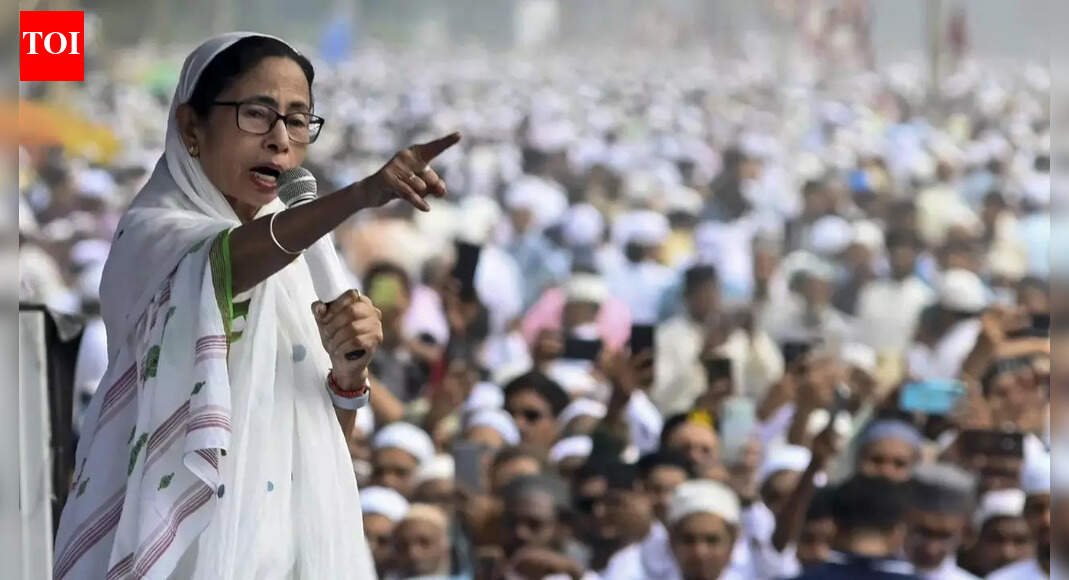
NEW DELHI: West Bengal chief minister Mamata Banerjee on Tuesday said she “loves Bangladesh as a country, because their language is same,” before training guns at the BJP-led central government and the Election Commission over the ongoing Special Intensive Revision (SIR) of the electoral roll, warning that the exercise must not be rushed ahead of the 2026 Assembly polls.Addressing an anti-SIR rally in Bongaon, the chief minister told the crowd, “If your name gets deleted, the central government should also be deleted.” Referring to claims that the aim of the SIR is to remove Bangladeshi nationals from the voter list, she asked why the exercise was being conducted in several BJP-ruled states as well and questioned the purpose behind the revision.“I love Bangladesh as a country, because our language is the same. I am from Birbhum, but one day they will call me Bangladeshi. PM Modi got votes in 2024 as per the same list. If your name gets deleted, the central government should also be deleted. Why conducting SIR in such a hurry?” she said.“Till I am here, I will not allow them to throw you out. Nobody can throw you out. If Bangladeshi is a problem, then why are you conducting SIR in Madhya Pradesh and UP?” she asked.She asserted that she has no fear of the ruling party, declaring, “BJP cannot fight and defeat me politically,” and accused the Centre of using the SIR exercise to target voters.Further indicating conditional support for the revision, Banerjee said, “If SIR is conducted over two-three years, we will support the exercise with every possible resource.” The chief minister accused the Election Commission of losing its neutrality, stating that the “EC is no longer an impartial body, it has turned into a ‘BJP Commission’.” She claimed that people would realise the “disaster” caused by the EC and BJP once the draft voter list is published after the SIR. “Does conducting SIR in BJP-ruled states imply the Centre accepts ‘ghuspaithiyas’ exist there?” she asked.These remarks come as the Election Commission has begun the second phase of the Special Intensive Revision across 12 states and Union Territories. The final electoral roll is scheduled to be published on February 7, 2026. The first phase was carried out in Bihar before its Assembly elections.The current phase covers Andaman and Nicobar Islands, Chhattisgarh, Goa, Gujarat, Kerala, Lakshadweep, Madhya Pradesh, Puducherry, Rajasthan, Tamil Nadu, Uttar Pradesh and West Bengal.


Source link

‘Congratulations India for restoring important civilizational symbol’: Israeli envoy on Ayodhya Dhwajarohan ceremony | India News


'Congratulations India for restoring important civilizational symbol': Israeli envoy on Ayodhya Dhwajarohan ceremony
‘Congratulations India for restoring important civilizational symbol’: Israeli Ambassador on Ayodhya Dhwajarohan ceremony

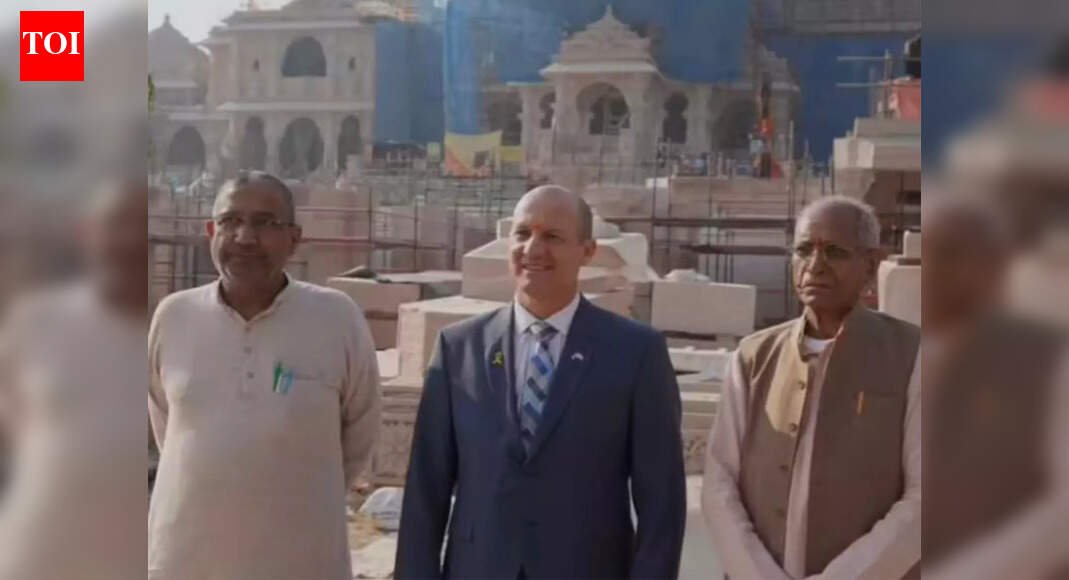
NEW DELHI: Reuven Azar, Israeli Ambassador to India, extended greetings on the Dhwajarohan ceremony in Ayodhya of the Ram Mandir and called it an important civilizational symbol.He also shared pictures from his visit to the temple during its construction.In a post on X on Tuesday, he said, “Congratulations India for the Ram Mandir Temple flag hoisting in Ayodhya today and for restoring such an important civilizational symbol. Here are some pictures of my visit while in construction last year.”Prime Minister Narendra Modi and Rashtriya Swayamsevak Sangh (RSS) chief Mohan Bhagwat on Tuesday ceremonially hoisted the saffron flag atop the Ram Janmabhoomi Temple’s 191-foot-high shikhar in Ayodhya, symbolising the completion of the temple’s construction.Uttar Pradesh Chief Minister Yogi Adityanath was also present at the ceremony.The ‘Dharma Dhwaj’ carries three sacred symbols, Om, the Sun and the Kovidara tree, each representing profound spiritual values rooted in the Sanatan tradition.The right-angled triangular flag, measuring 10 feet in height and 20 feet in length.The Kovidar tree is a hybrid of the Mandar and Parijat trees, created by Rishi Kashyap, showcasing ancient plant hybridisation. The Sun represents Lord Ram’s Suryavansh lineage, and Om is the eternal spiritual sound.The flag hoisting has coincided with the Abhijit Muhurat of Lord Ram and Goddess Sita’s Vivah Panchami.Earlier today, PM Modi performed a pooja at Ram Lalla Garbha Grah. He was accompanied by RSS Chief Mohan Bhagwat, Uttar Pradesh Chief Minister Yogi Adityanath and Governor Anandiben Patel, and offered prayers at Mata Annapurna Mandir.He also offered prayers at the Saptmandir at the Ram Janmabhoomi Temple premises, ahead of the flag-hoisting ceremony at the temple.Prime Minister Narendra Modi on Tuesday said that India and the world are “Ram-may”, as he described the installation of the Dharma Dhwaja atop the Ram Temple as a moment that heals “wounds of centuries” and marks the fulfilment of a civilisational resolve kept alive for 500 years.Elaborating on the symbolism of the flag, PM Modi noted that it reflects the rebirth of an ancient civilisation and embodies the ideals of Ram Rajya.Calling the hoisting of Dharma Dhwaja atop the Ram Janmabhoomi Temple in Ayodhya “historic,” Prime Minister Narendra Modi on Tuesday said India must simultaneously draw strength from its heritage and free itself from “the slave mentality” to achieve the goal of becoming a developed nation by 2047.Soon after hoisting the saffron flag atop the Ram Temple in Ayodhya, PM Modi invoked the values associated with Lord Ram to underline the vision of building a “confident” and “future-ready India”.While addressing the gathering at the ‘Dhwajarohan’ ceremony in Ayodhya, PM Modi said, “Ram is not a person, He is a value. If we want to make India developed by 2047, we have to awaken Ram within ourselves. What day can be better than today for this resolution?”He emphasised that “Lord Ram connects through emotion”, reaffirming that devotion and cooperation form the core of Indian society.Reflecting on India’s development journey of the past decade, the Prime Minister said, “In the last 11 years, every section of society, women, Dalits, backward classes, extremely backward classes, tribals, the deprived, farmers, workers, and youth, has been placed at the centre of development.”He said that by 2047, when the nation marks 100 years of Independence, the “goal of building a Viksit Bharat must be fully realised”. He urged citizens to act with vision, keeping future decades and centuries in mind.


Source link

‘I don’t care what Gautam Gambhir says’: Ex-India captain explodes in fiery attack on head coach | Cricket News


'I don’t care what Gautam Gambhir says': Ex-India captain explodes in fiery attack on head coach
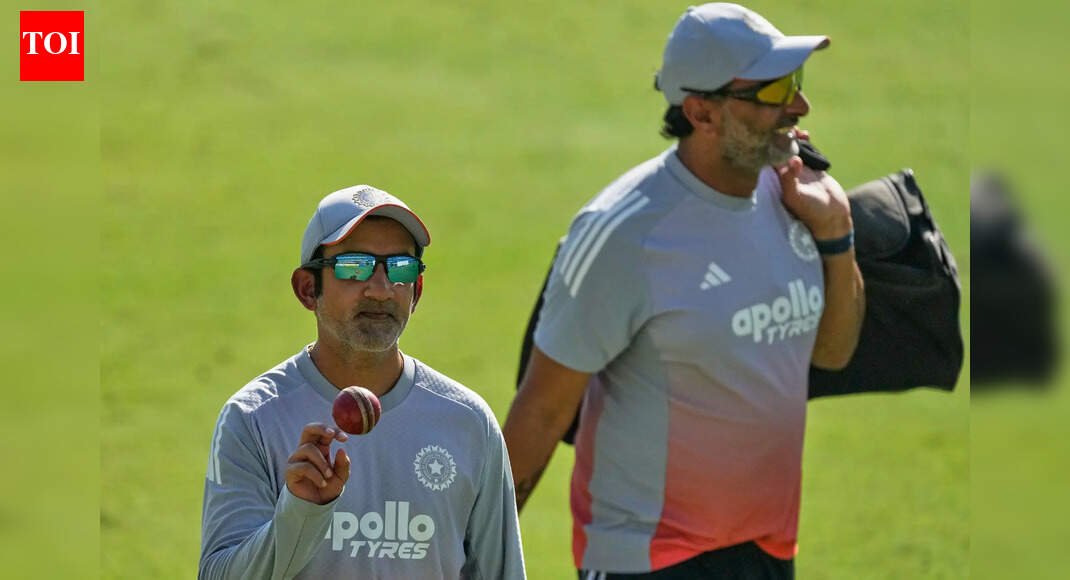
India’s head coach Gautam Gambhir (AP Photo/Anupam Nath)

Former India captain and ex–chief selector Krishnamachari Srikkanth has launched yet another fierce critique of head coach Gautam Gambhir, tearing into India’s selection policy after South Africa dominated the first three days of the second Test in Guwahati. With the visitors already 1–0 ahead after their Kolkata win, India’s struggles prompted Srikkanth to go on an explosive rant on his YouTube show Cheeky Cheeka, which he hosts with his son Anirudha. Srikkanth questioned several decisions made by the team management, beginning with the omission of Axar Patel.“Why didn’t Axar play? Was he injured? He’s been consistent everywhere. Why this constant chopping and changing?” he asked, criticising the continual rotation of players. He added that Gambhir’s approach looked like endless trial and error. “Gautam Gambhir can say whatever he wants — I don’t care. I’ve been a captain and a chairman of selectors. I know what I’m talking about.”

Are selectors confused? First Ravindra Jadeja now Axar Patel | Musical chairs!

This fresh attack comes after a series of heated exchanges between the two. Earlier, Srikkanth had labelled pacer Harshit Rana a “yes man to Gambhir,” a remark the Indian coach slammed as “shameful.” In his latest tirade, Srikkanth expressed disbelief at India’s collapse on a pitch their own players had earlier described as a “road.” He pointed out how Simon Harmer, Keshav Maharaj, and Marco Jansen exploited conditions India claimed were lifeless. “Kuldeep Yadav said nothing was happening on the wicket,” Srikkanth said. “But today our batters edged to slip against Harmer and Maharaj and also fell to Jansen’s short balls. Five wickets to bouncers on a so-called road.” He praised Harmer’s classic off-spin for its loop and drift, while criticising India’s spinners for firing the ball flat. The batting unit wasn’t spared either, with Rishabh Pant’s reckless attempt to slog Jansen drawing particular disapproval. “They will say it’s his natural game,” Srikkanth said. “But he’s the captain. Shouldn’t he understand the situation?” Srikkanth admitted that India might still scrape out a draw but insisted that the core problem lies in selection inconsistency. “Wrong policies,” he stated. “You need stability.” With South Africa firmly in command in Guwahati and holding a 1–0 lead, India’s management faces growing scrutiny — and Srikkanth’s latest outburst ensures Gambhir and the selectors remain under intense pressure.


Source link

Gold loan boom: Credit market poised for major expansion; NBFCs plan 3,000 new branches as demand jumps


Gold loan boom: Credit market poised for major expansion; NBFCs plan 3,000 new branches as demand jumps

India’s gold loan market is gearing up for strong expansion, with non-bank lenders preparing to open around 3,000 dedicated branches over the next year to meet rising demand. The market, which is largely led by public-sector banks, grew 36% year-on-year to Rs 14.5 lakh crore by the end of September.According to sector heads quoted by ET, this is the largest annual branch expansion undertaken by gold loan companies. Lenders are setting up exclusive gold-loan centres and adding the product to many existing branches to tap what they see as a fast-growing opportunity.George Alexander Muthoot, managing director of Muthoot Finance, was cited by ET as saying that demand for gold loans is increasing sharply, as borrowers struggling to secure unsecured microfinance loans are turning to secured lending against jewellery. Microfinance firms have become more selective due to heavy stress in their asset quality.Rising gold prices have also boosted loan ticket sizes, making the product particularly attractive to farmers and small traders seeking working capital. Rating agency ICRA has projected the organised market will reach Rs 15 lakh crore in FY26, a year ahead of earlier expectations.Shaji Varghese, CEO of Muthoot Fincorp, said that he expects the momentum to continue, noting that global central bank demand is driving gold prices, reported ET. His firm plans to open 200 branches by March. Major players such as Muthoot Finance, Muthoot Fincorp, IIFL Finance and Bajaj Finance together intend to add about 1,800 branches. Bajaj Finance alone aims to open 900 by March 2027, while IIFL Finance plans 500 by this fiscal year.New entrants are also expanding aggressively. L&T Finance, which entered the gold loan market in February after acquiring Paul Merchants Finance’s 130-branch business, plans to add 200 more outlets. Microfinance players such as Keertana Finserv and Uttrayan Financial Services are diversifying into gold loans to stabilise their portfolios. “We are scaling down our microfinance business,” Padmaja Reddy said, adding they will set up 175 gold-loan branches by FY26, ET reported.Setting up a gold loan branch requires significant security infrastructure, from strong rooms to vaults and cameras, costing between Rs 8 lakh and Rs 20 lakh. Such branches usually break even within 1.5–2 years.ICRA expects NBFC gold-loan assets under management to grow 30–35% in FY26, supported by high gold prices and slower growth in unsecured loan products. Public-sector banks remain dominant in the segment, with their gold loan portfolios growing at a CAGR of 27% in FY24 and FY25, compared with 22% for private banks.


Source link

How to be a value investor when Nifty is at 26,000, Sensex at 85,000: Guide to finding value when the market looks pricey


How to be a value investor when Nifty is at 26,000, Sensex at 85,000: Guide to finding value when the market looks pricey

Value investing is not about chasing the latest momentum darling. It is about spotting fundamentally sound businesses. (AI image)

When the Nifty hovers around 26,000 and the Sensex sits near 85,000, investors naturally wonder: Is there any juice left in the market? The answer is an unequivocal yes. Expensive markets are not uniformly expensive. Even near record highs, pockets of value quietly exist for investors who are willing to look past the noise and choose patience as their strategy.Value investing is not about chasing the latest momentum darling. It is about spotting fundamentally sound businesses that the market has temporarily ignored or punished. It requires temperament, not trend-following. Think of it as gardening: you plant when sentiment is dry, nurture your picks, and wait for the cycle to turn.History is full of reminders that value emerges when others are distracted. Midcap and small-cap stocks had surged to expensive valuations in October 2024, before profit taking brought them down to saner levels by the end of the year. Then a warning from Sankaran Naren, CIO of ICICI Prudential Mutual Fund, triggered an alarm in the markets.By March 2025, the BSE Midcap had slipped below 39,000 and the BSE Small Cap below 43000. Within those aggregates were dozens of companies that were fairly priced and not overvalued. But just as a rising tide lifts all boats, a surging tsunami destroys everything it touches. Even good stocks were beaten down, even as the broader indices fell 25% from their October 2024 peak.That was a wonderful opportunity for value investors. As Nathan Rothschild’s once said, “Buy when there’s blood in the streets.” Investors who stepped in during that massacre have pocketed rich rewards. Both the BSE Midcap and the BSE Smallcap have shot up 20% since their March lows.Value investors typically operate in two environments. There are absolute value phases, when there are sudden, fear-driven wipeouts. For instance, in March 2020, the Covid shock sent markets tumbling. At times like that, valuations detach from fundamentals, and quality stocks get thrown out with the junk. These moments don’t come often, but they are the closest thing to a bumper discount sale for a value investor.Then there are relative value periods, when the markets move sideways. Though the indices are stable, several stocks remain stuck in the doldrums. These are ideal hunting grounds. The challenge is to find companies priced well below their intrinsic worth. These are businesses whose long-term earning power is higher than what current prices imply.Valuation ratios like price-to-earnings (PE) and price-to-book (PBV) are good starting points but not always the best way to judge a stock. A stock may appear cheap simply because its growth engine is stalling. Earnings alone are not important. What is more important is the quality of the earnings.Companies often show inflated profits due to a one-off asset sale, divestment or windfall gains. That boosts the EPS but not the business. Sustainable value comes only from operations, not accounting fireworks. Always check whether operating margins are robust and consistent.Margin of safety is the cornerstone of value investing. It is the gap between a stock’s intrinsic value and its market price. The wider this gap, the lower your downside risk and the higher your probability of outsized returns.For example, if a company’s fair value is Rs 400 but trades at Rs 350, you already have a 12.5% buffer. If it corrects further to Rs 320, your margin of safety expands to 20%. For long-term investors, such declines are less of a threat and more of an opportunity. Market pessimism is often the discount coupon for future wealth creation.Bull markets distort perception. When frothy stocks trade at triple-digit PEs, even a PE of 35 can look like a bargain in comparison. But relativity is a trap. Overvaluation is overvaluation, regardless of what your peer group looks like. Never buy an expensive stock simply because another one is even more overpriced.To separate true value from low-quality cheapness, investors must dig deeper into profitability metrics. Return on Equity (RoE) helps measure how efficiently a company uses shareholder capital. Return on Capital Employed (RoCE) assesses overall capital productivity, especially crucial in capital-heavy industries like infrastructure, engineering, or manufacturing. A consistent RoE or RoCE above 10% signals that management is deploying capital wisely. In value investing, good businesses matter as much as good prices.Dividend payout is often overlooked but invaluable. Companies that share profits regularly demonstrate financial discipline and cash-flow strength. A decent dividend yield not only cushions returns during volatile periods but also discourages sharp price declines. ITC is a textbook example—its steady payouts have anchored its stock price through multiple market storms. Dividend-paying companies typically have mature business models, predictable earnings, and conservative capital allocation. These are traits a value investor should love.Value investing is part maths, part mindset. The maths helps you estimate fair value; the mindset helps you stay calm while the market decides what it wants to fret over next. At 26,000 Nifty or 85,000 Sensex, the discipline remains the same: buy businesses you understand, insist on a margin of safety, demand quality earnings, and give time the respect it deserves. Patience, not predictions, is what turns value investing into wealth building.


Source link