Breaking News
Meesho IPO: SoftBank-backed firm set to launch Rs 4,250 cr IPO on Dec 3; what investors should know


Meesho IPO: SoftBank-backed firm set to launch Rs 4,250 cr IPO on Dec 3; what investors should know

SoftBank-backed e-commerce firm Meesho will open its initial public offering on December 3, featuring a Rs 4,250-crore fresh issue of shares, according to the red herring prospectus filed on Thursday. The issue will close on December 5, while anchor investors will be allotted shares on December 2, PTI reported.Alongside the fresh issue, the IPO will include an offer-for-sale of 10.55 crore shares by existing investors. Early backers such as Elevation, Peak XV, Venture Highway and Y Combinator will offload part of their holdings through the OFS.Where the proceeds will goMeesho said the funds raised will be deployed for cloud infrastructure investments, marketing and brand-building initiatives, inorganic expansion through acquisitions and other strategic plans, and general corporate purposes. The size of the issue and the company’s valuation will depend on the price band, which will be released on Friday.Platform metrics show strong tractionIn FY25, Meesho connected more than 500,000 transacting sellers with 199 million annual transacting users, enabling 1.8 billion placed orders. The company’s Net Merchandise Value (NMV) rose 29 per cent year-on-year to Rs 29,988 crore in FY25, after growing 21 per cent in FY24.Meesho defines NMV as the cumulative checkout value of successfully delivered orders, including taxes. The metric is a key gauge of platform health as it reflects user adoption and repeat engagement, making it central to revenue, margin and cash-flow trends.On the financial front, Meesho reported a net loss of Rs 3,942 crore in FY25, driven largely by one-time exceptional items, including reverse flip tax and perquisite tax linked to its transition to a public structure.


Source link

Bengaluru Infrastructure: Building Bengaluru 2.0, City bets whopping Rs 1.5 lakh crore on its infrastructure | Bengaluru News


BENGALURU: Bengaluru, India’s technology and innovation powerhouse, is on the verge of one of its most ambitious infrastructure expansions yet. With a population exceeding 12 million and a sprawling IT/ITES ecosystem, the city faces mounting pressure on roads, public transport, water supply, waste management and urban amenities.

Google To Invest $15 Billion On AI Hub In Visakhapatnam, CEO Sundar Pichai Speaks To PM Modi

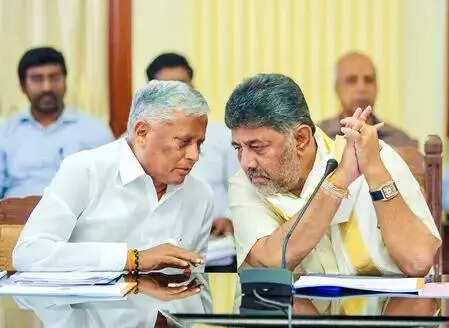
On 10 August 2025, deputy chief minister DK Shivakumar sent a note to Prime Minister Narendra Modi outlining a comprehensive set of projects aimed at transforming Bengaluru into a “truly global metropolis.”The proposed plan, totalling an estimated Rs 1.5 lakh crore, spans urban tunnels, elevated roads, mass transit upgrades, integrated waste management, and water infrastructure.

-

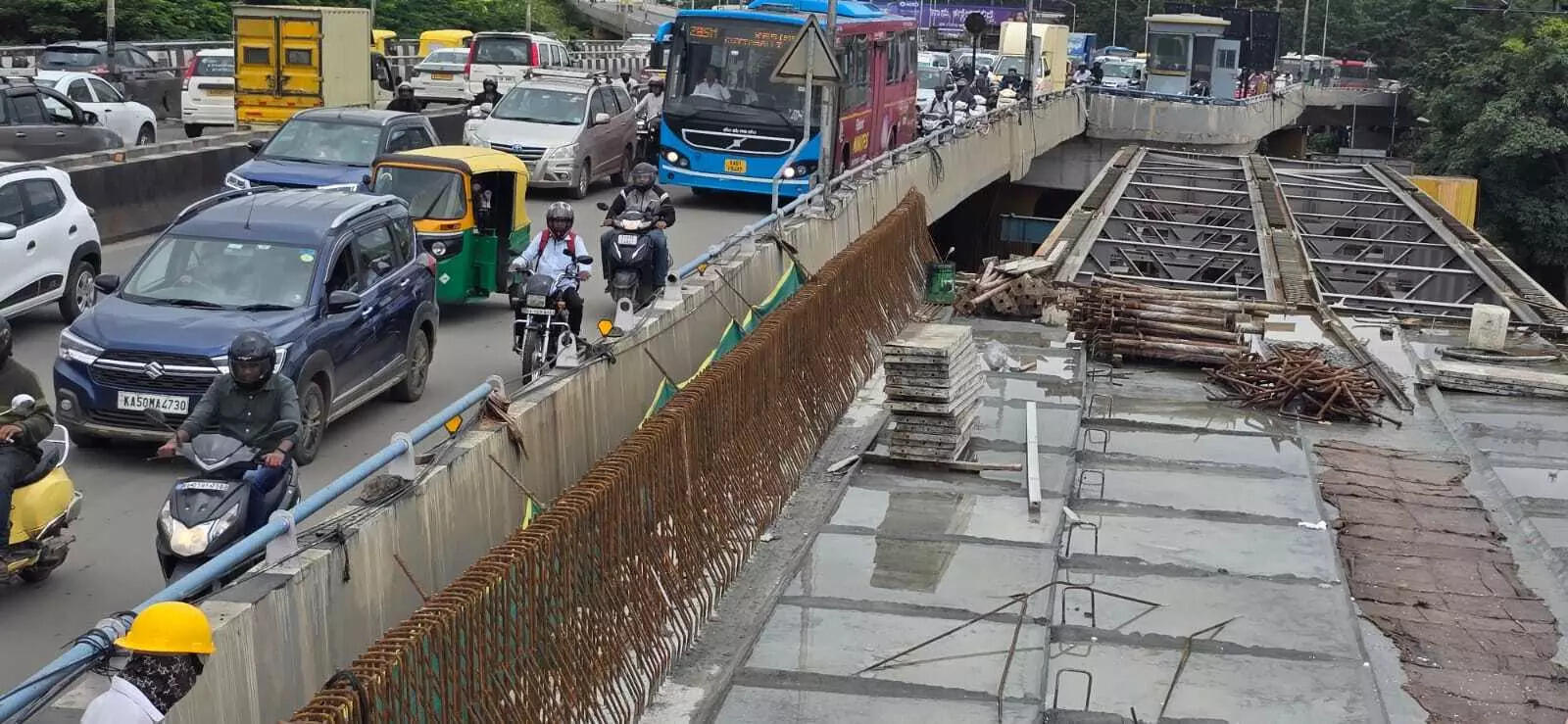
Urban Tunnels and Elevated CorridorsThe plan identifies the city’s former national highways — 76 km of critical urban corridors — as chokepoints that need urgent upgrades. Current traffic levels have pushed the Level of Service (LOS) to below 10 kmph, far exceeding the LOS “F” threshold.Proposed interventions include:

  • Tunnel 1: Hosur Road to Bellary Road (NH-7)
  • Tunnel 2: KR Puram to Mysuru Road (NH-4/NH-275)
  • Elevated corridor: Kanakapura Road for uninterrupted transit
  • Estimated cost: Rs 41,780 crore

These interventions aim to reduce travel times on congested routes by 60–70% while minimising surface disruption. Additional elevated corridors are proposed along major arterial roads to connect business districts efficiently, with an estimated cost of Rs 15,000 croreAlso read: Bengaluru blues: The hidden cracks in megacity’s shining growth storyPeripheral Ring Road (PRR)To relieve congestion on the Outer Ring Road and city highways, Bengaluru Development Authority (BDA) is implementing a 73.5 km, 8-lane Peripheral Ring Road under a PPP model. The PRR is expected to.

  • Divert highway traffic from the city center
  • Reduce travel times
  • Route heavy vehicles efficiently
  • Estimated cost: Rs 27,000 crore (land acquisition: Rs 21,000 crore; construction: Rs 6,000 crore)

Revenue generation is expected through tolls, impact fees and advertising, while central assistance is requested to support the project.
-

Image Credit: TOI

Integrated Solid Waste ManagementBengaluru generates approximately 6,500 metric tonnes of solid waste daily. Current processing capacity is insufficient due to land constraints.The proposal includes:

  • Four 100-acre waste management facilities at city corners
  • Wet waste composting and bio-CNG units
  • Dry waste recycling
  • Waste-to-Energy (RDF-based) plants
  • Leachate treatment and green buffers

Estimated cost: Rs 3,200 crore, with Viability Gap Funding (VGF) support of Rs 960 crore sought under Swachh Bharat Mission 2.0.

-

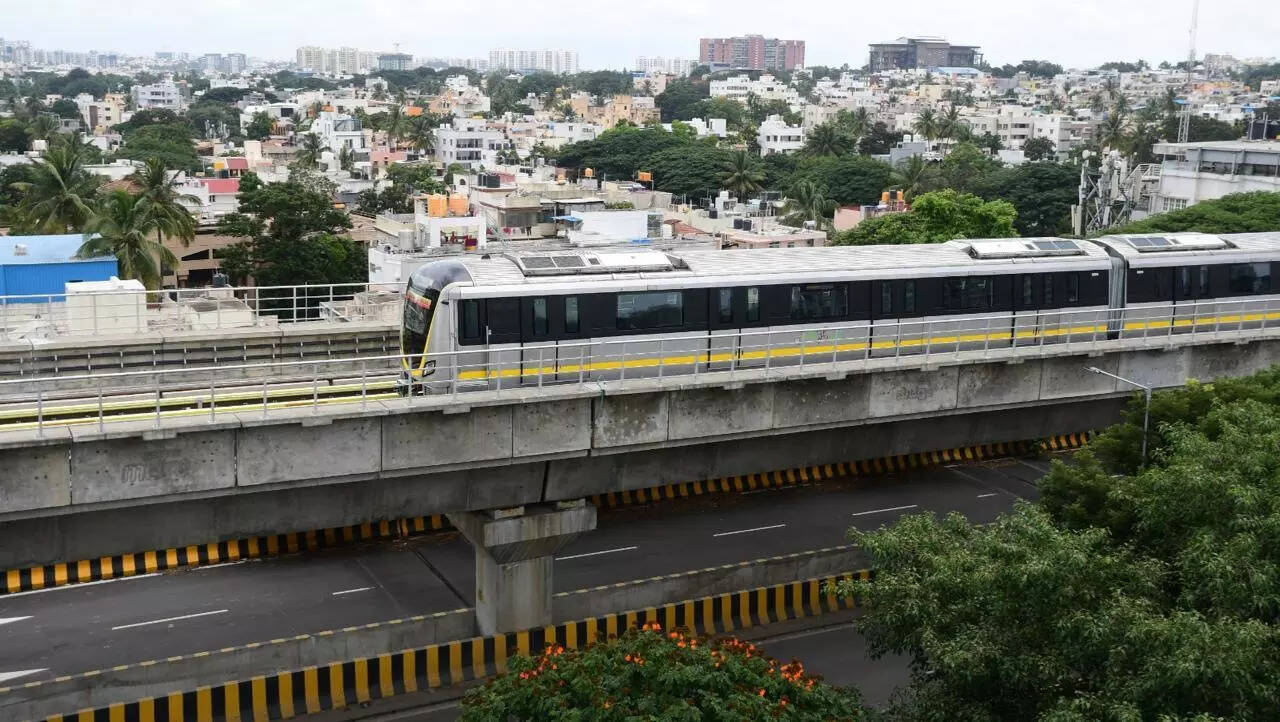
Metro Rail ExpansionBengaluru Metro Rail Corporation Limited (BMRCL) is in various phases of expansion:

  • Phase 1: 42 km (operational)
  • Phase 2: 75 km (partly operational)
  • Phase 2A & 2B: 69 km (under construction)
  • Phase 3: 44.65 km (sanctioned)
  • Phase 3A: 37 km (DPR approved, pending approval)
-

Image Credit: TOI

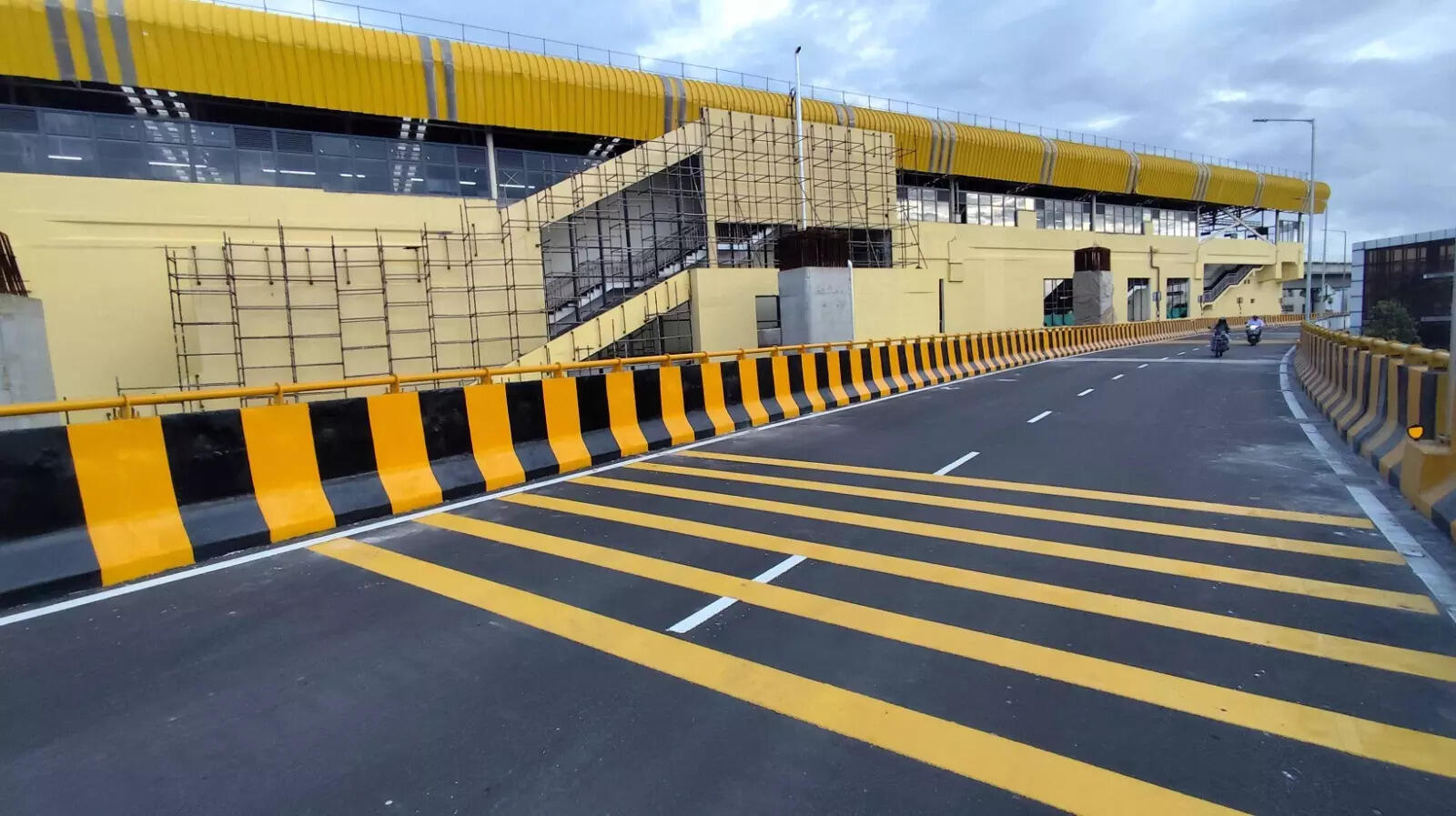
Five new metro extensions covering 128 km are planned to connect peripheral regions and satellite towns, aiming to integrate mass transit into the city’s growth framework.Double-Decker Elevated Roads Along Metro ViaductsFollowing the Yellow Line’s success (Silk Board–Ragigudda), Karnataka proposes extending double-decker roads to:

  • JP Nagar to Hebbal (via ORR West)
  • Hosahalli to Kadabagere (via Magadi Road East)

This approach optimises land vertically, reduces congestion, and combines road and metro infrastructure efficiently.
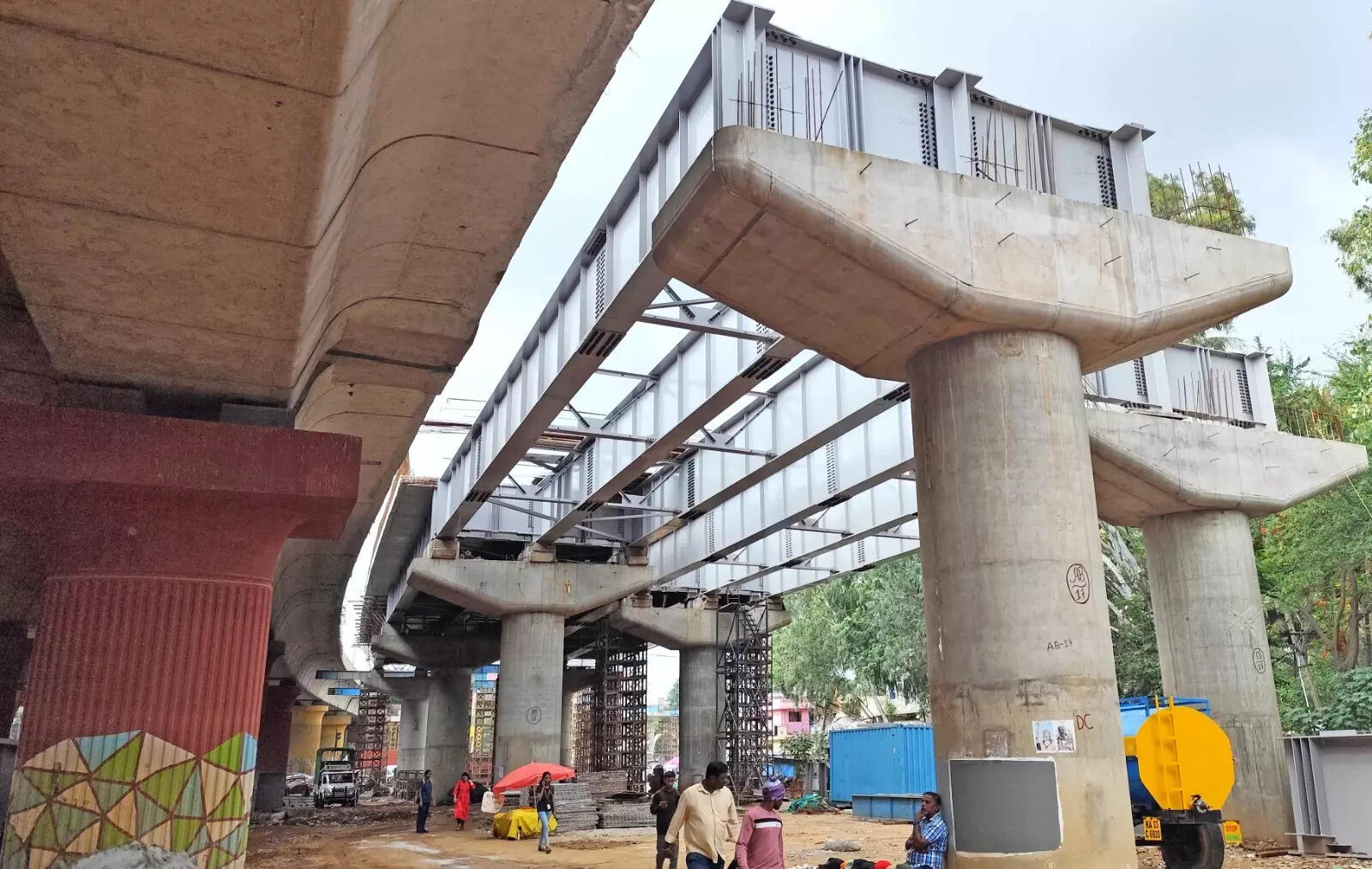
-

Hebbal Flyover (Image Credit: TOI)

Estimated cost: Rs 5,916 croreProtecting Lakes and Reducing CongestionBengaluru’s lakes are connected through SWDs (Raja Kaluves). Encroachment and traffic congestion prompted a plan to construct 300 km of roads along stormwater buffer zones, improving mobility while protecting hydrology.Estimated cost: Rs 3,000 croreAdditional Water SupplyThe Cauvery Water Supply Scheme Stage V is operational, while Stage VI aims to supply an additional 570 MLD by 2030 to meet the city’s growing demand.Estimated cost: Rs 6,939 crore.Rapid Rail Transit System (RRTS)Inspired by the Delhi–Meerut RRTS, Bengaluru proposes a regional rapid transit system connecting key corridors

Corridor Length (Km) Travel Time (Min)
Bengaluru – Bidadi – Mysuru 145 102
Bengaluru – Harohalli – Kanakapura 60 42
Bengaluru – Nelamangala – Tumakuru 60 42
Bengaluru – Airport – Chikkaballapur 64 46
Bengaluru – Hoskote – Kolar 65 46

The plan aims to integrate regional transit with city-level infrastructure.The Broader DebateWhile the government positions the tunnel and elevated corridor projects as technical solutions to traffic woes, critics argue the focus remains car-centric.Environmental concerns also loom large. Tunnels intersect aquifers and flood-prone zones, with incomplete hydrological studies raising questions about climate resilience.
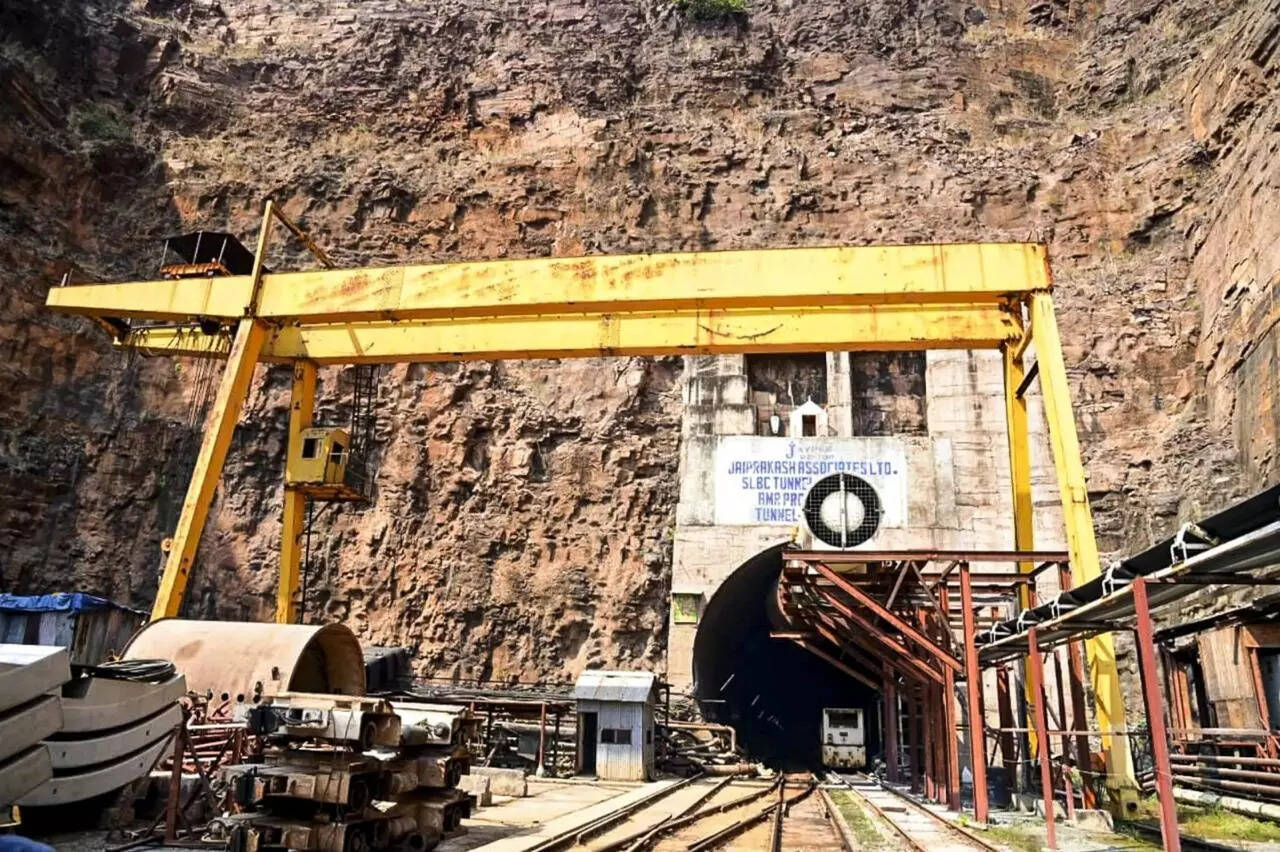
-

Image Credit: TOI

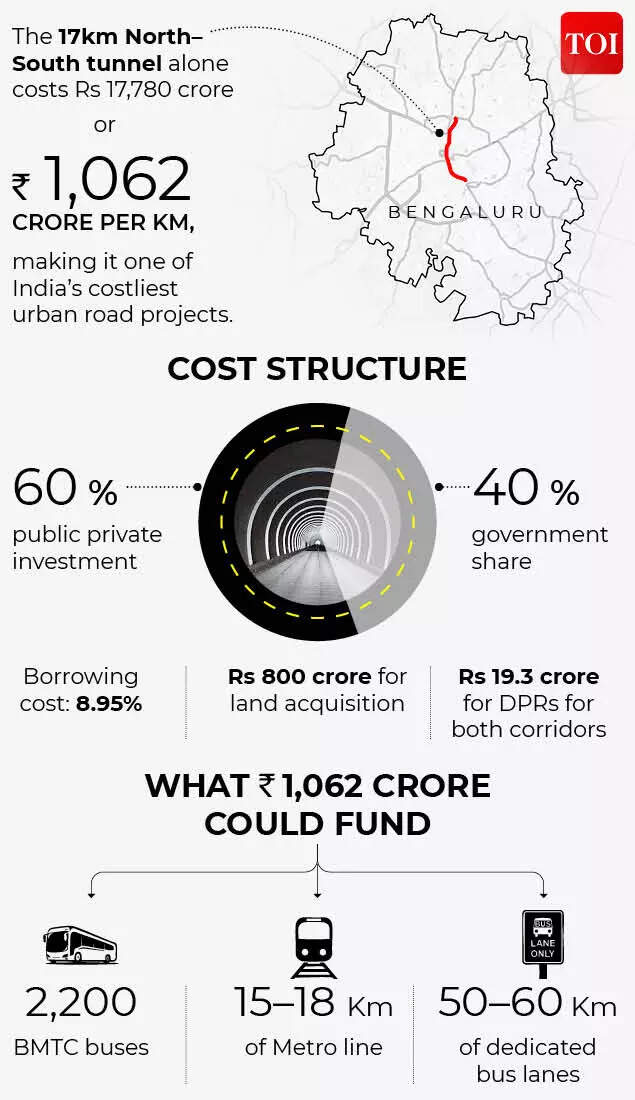
Transport economists note that funds allocated to tunnels could instead purchase thousands of buses, extend metro lines, or fund free BMTC travel for years.The Ambitious tunnel road projectBengaluru’s ambitious tunnel road project — pegged at Rs 17,698 crore — aims to become India’s costliest intra-city transport corridor. Stretching nearly 16.75 km, the fully underground expressway is designed to provide a high-speed, signal-free route between Silk Board Junction and Hebbal, potentially easing the city’s notorious north–south traffic congestion.
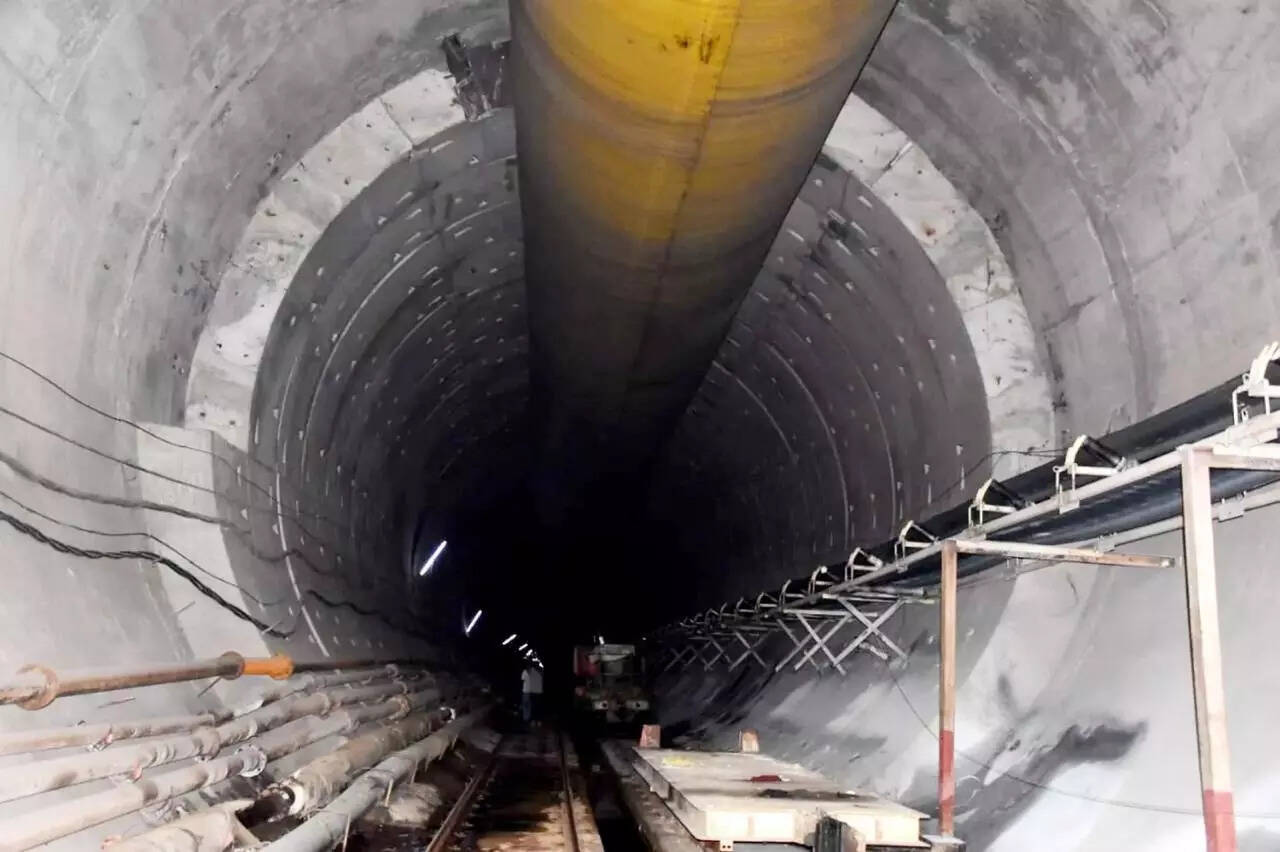
-

Image Credit: TOI

Officials claim that once operational, the tunnel will reduce travel time by up to 45 minutes, bringing the Silk Board–Hebbal commute down from 60–90 minutes to just about 20–25 minutes.The corridor is expected to bypass 25 major bottlenecks, offering Bengaluru commuters a smoother drive along one of the city’s busiest arterial stretches.Advanced Engineering Meets Deep-Bore TunnelsThe project plans to employ tunnel boring machines (TBMs) similar to those used in metro rail projects. Safety and operational efficiency are integral to the design

  • Emergency exits every 500 metres
  • Ventilation shafts along the route
  • Firefighting systems
  • Real-time monitoring units

The corridor is designed as a 3+3-lane expressway, although experts have recommended revising the configuration to 2+2 lanes based on projected traffic in 2041.Environmental ConcernsThe proposed alignment passes directly beneath Lalbagh — Bengaluru’s cherished green lung and a living heritage site. Environmentalists and citizen activists have raised multiple red flags:

  • Acquisition of six acres of Lalbagh land along Siddapura Road could disrupt its delicate ecosystem.
  • Two 15-metre-diameter tunnels, two 10-metre-diameter ramps, and a ventilation shaft are planned under the garden, at depths between 50 and 100 metres.
  • Potential damage to Lalbagh Rock, a Peninsular Gneiss National Geological Monument estimated to be 3,000 million years old, and the 16th-century watchtower built by Kempegowda.
  • Ventilation shafts could raise noise and air pollution, affecting the garden and nearby areas.
  • Concerns over Lalbagh Lake, with tunnel entry points less than 100 feet from the water’s edge.

Environmentalist Dr Yellappa Reddy warned that disruptions to the Dharwad craton system could have wider geological and hydrological repercussions, including water seepage into the Nimhans complex. Citizens for Citizens founder Rajkumar Dugar highlighted gaps in the DPR regarding tree removal and environmental mitigation measures.Expert Panel Flags Major DPR ShortcomingsA government-appointed committee, led by BMRCL executive director Siddanagouda Hegaraddi, reviewed the detailed project report (DPR) and found multiple flaws:

  • Geotechnical data inadequate: Soil-test boreholes were limited to four points; comprehensive testing needed
  • Aquifer and groundwater mapping missing: Electrical resistivity tomography (ERT) was not used
  • Stormwater drainage plan flawed: Hydraulic calculations missing; proposed Hebbal Lake diversion impractical
  • Tunnel alignment concerns: Runs almost parallel to Namma Metro corridor, potentially redundant
  • Traffic projections inflated: DPR did not account for Metro, suburban rail, or BMTC commuters
  • Ramp and lane mismatch: Current 3+3-lane design inconsistent with horizon year 2041; 2+2-lane design recommended
  • Cost estimation gaps: TBM cost based on a single vendor quote; land acquisition, utilities, and toll system costs rounded off
  • The panel recommended a complete revision of the DPR, including a fresh alignment study, updated traffic forecasts, and rigorous environmental safeguards.

Cars vs Public TransitShivakumar defended the project as necessary for urban mobility. His remark — “people can’t be stopped from using cars” and “there’s hesitation to marry a boy who doesn’t own a car” — sparked sharp criticism from public transport advocates.

-

Bangalore South MP Tejasvi Surya argued the project favors a car-owning elite.“As per RTO records, only 12% of Bengalureans own cars. The more we widen and build new roads, the more vehicles we attract. Only a reliable and efficient public transport system can truly decongest our roads.”Surya noted that the tunnel’s capacity — around 1,600 cars per hour — pales in comparison to Metro corridors, which can move 10,000–20,000 passengers per hour. One-way travel costs would also favor private car users: Rs 330 versus Rs 50–60 for Metro commuters.Shivakumar responded that technical experts support the project and said urban rail initiatives are welcome if funding is secured.What’s Choking Bengaluru?According to article from AFP, entrepreneur RK Misra, co-founder of a multimillion-dollar start-up, avoids scheduling in-person meetings until nearly noon, then squeezes them in before the city’s gridlock returns.“The situation is pretty bad. And it hurts by not being able to plan your day,” Misra said, describing his gruelling 16-kilometre (nine-mile) commute, which can take up to two hours at peak times.“It also discourages people from doing anything other than work, because there’s no work-life balance any more.”Bengaluru, home to nearly 12 million people and the state capital of Karnataka, is the country’s tech hub, hosting thousands of start-ups, outsourcing firms, and global giants from Google to Microsoft.Yet its flagship Outer Ring Road (ORR) business district is clogged with traffic, riddled with potholes, and often flooded during the monsoon. Water shortages plague the city during summer months.The roughly 20-kilometre (12-mile) ORR corridor, lined with swanky tech parks, hosts dozens of Fortune 500 offices and more than a million employees.Frustration boiled over in September when Rajesh Yabaji, CEO of digital trucking logistics platform BlackBuck, announced he was moving his company out of ORR.Yabaji said he snapped after the “average commute for my colleagues shot up to 1.5+ hours (one way),” he wrote on social media, adding that the roads were “full of potholes and dust, coupled with lowest intent to get them rectified.”‘Now Or Never’Pharma tycoon Kiran Mazumdar-Shaw, founder of Biocon, also voiced concern.“I had an overseas business visitor to Biocon Park who said; ‘Why are the roads so bad and why is there so much garbage around? Doesn’t the government want to support investment?” she wrote on social media.Bengaluru had the world’s third-slowest traffic in 2024, according to the TomTom Traffic Index—far worse than San Francisco or London.Manas Das, of the Outer Ring Road Companies Association, works with city authorities to resolve infrastructure woes for global tech companies.“Companies would like to get the basics right—and today those basics are getting compromised,” Das said.BS Prahallad, technical director of the government-backed Bengaluru Smart Infrastructure Limited, set up to manage major projects, said an average resident needed 90–100 minutes to cover 16 kilometres.“Something has to be done, now or never,” he told AFP.“The next step is, we will decay.”Karnataka deputy chief minister DK Shivakumar wrote last month on X that “10000+ potholes” had been identified, with half fixed so far.“Instead of tearing Bengaluru down, let’s build it up—together,” he said.“The world sees India through Bengaluru, and we owe it to our city to rise united!”Borrowing a page from London’s playbook, authorities have also decided to split the municipal corporation into five smaller bodies and set up an overarching Greater Bengaluru Authority. Shivakumar said this move would “transform the way Bengaluru is planned and governed.”‘Choking On Pollution’The southern city was not always an overrun metropolis. India’s software boom kicked off in the 1990s, with outsourcing companies striking gold. Waves of investment from Silicon Valley companies and start-ups helped quadruple the state’s software exports from 2014 to 2024 to $46 billion.Venture capitalist TV Mohandas Pai, former CFO of Infosys, said the city’s infrastructure was “possibly three to five years behind.”Rapid expansion clogged waterways, cut trees, and filled wetlands, straining the infrastructure, ecologist Harini Nagendra said.“We have flooding because water has no place to go, drought because the water is not infiltrating into the ground,” she said.“People are choking on pollution, choking on the concrete—and all the dust that comes with the construction, traffic, smog, heatwaves,” she added.Nearly half the city depends on boreholes that run dry in summer, while the rest rely on costly water trucked in—a problem set to worsen with climate change, according to the Water, Environment, Land and Livelihoods (WELL) Labs research centre.Pai, 67, remains optimistic.“The future is going to be bright, but there is going to be pain,” he said.“We are suffering the pangs of growth because India knows how to handle poverty, not prosperity.”




Source link

Govt conspiring to classify Dharavi Koliwada as slum: Cong MP Gaikwad | Mumbai News


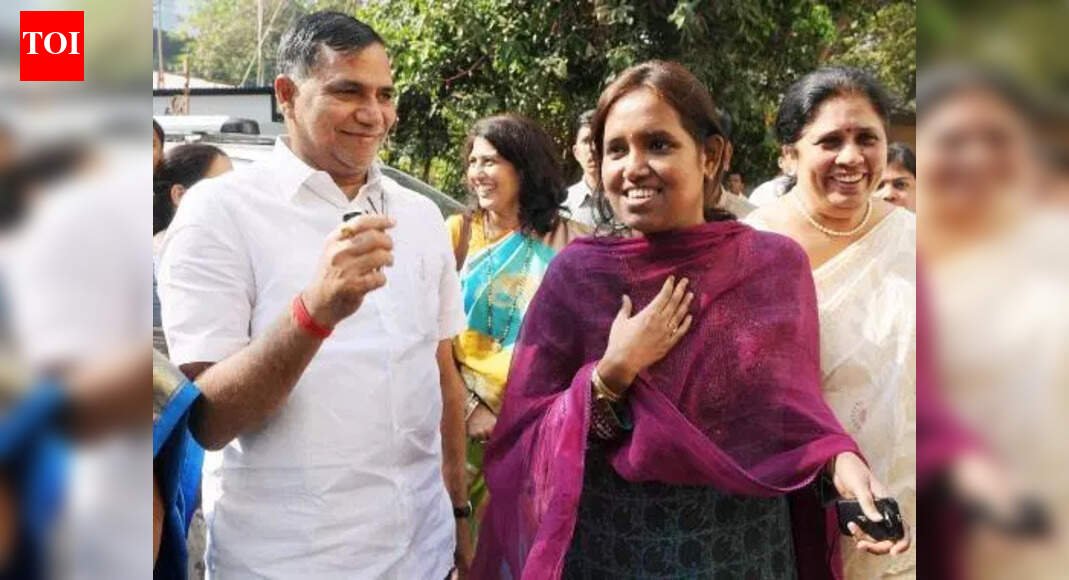
Mumbai: Congress MP Varsha Gaikwad alleged that officials are misclassifying the external boundary of Dharavi Koliwada as a slum and have begun a survey by Adani group company under the Dharavi Redevelopment Project despite the area not being included in the plan.She said it is a conspiracy to grab land and undermine the future of the original inhabitants.Gaikwad joined a protest march organised by the Dharavi Koli Community Trust, during which participants displayed black flags to condemn the ‘monstrous’ and ‘anti-Mumbai’ attitude of the govt.She demanded that the external boundary and extended land of Dharavi Koliwada be fixed before any survey under the DRP was carried out.Gaikwad pointed out that despite a govt order stating that the gaothans and Koliwadas of Mumbai are not slums, the state govt is attempting to declare them as such, thereby encroaching on the land and rights of the original inhabitants.The MP insisted on fixing the external boundaries of all gaothans and Koliwadas and for mapping them in the city development plan.


Source link

WPL 2026 Mega Auction: Complete list of unsold players


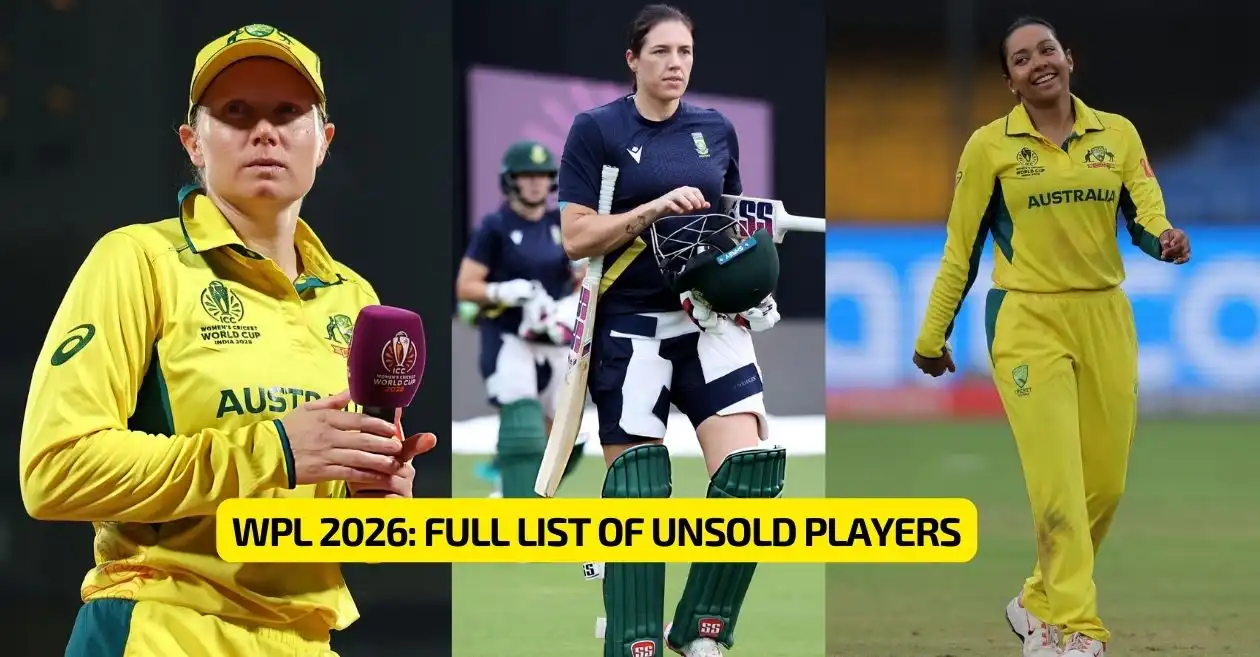
The WPL 2026 Mega Auction was a whirlwind of aggressive bidding, record-breaking buys, and, as always, some truly astonishing omissions. While the spotlight often shines on the players who bag crores, the story of the unsold list often reveals the deeper, more ruthless strategic calculations of the franchises. With a limited number of slots (especially overseas) and a cap on the purse, even world-class players found themselves overlooked.

The headliner shock: Alyssa Healy

The single biggest talking point of the auction was undoubtedly Alyssa Healy going unsold at her base price of ₹50 Lakh. Current Australian captain, a destructive opener, and one of the most successful wicketkeeper-batters in T20 history. She was UP Warriorz’s captain in the first season. Reports suggest that injury concerns, particularly a recurring calf and a previous foot injury that caused her to miss part of a previous WPL season, may have made franchises cautious about spending a high initial amount and blocking a crucial overseas spot on a player with a question mark over her immediate fitness.

Star players who missed out

Beyond Healy, several other established international and domestic players were left without a franchise, reflecting the sheer tactical nature of a mega-auction. The list of unsold overseas specialists contained several surprising omissions, highlighting the ruthless strategic planning of the franchises. High-profile names like one of the world’s premier T20 leg-spinners, Alana King went unsold. This suggests teams may have either secured strong Indian spin options or opted for cheaper overseas alternatives, prioritising other positions. Furthermore, Amy Jones, a reliable international wicketkeeper-batter, suffered the same fate as Healy, as franchises preferred to use their highly valuable overseas slots on all-rounders rather than specialist keepers, a role that can be efficiently covered by Indian talent.

Also READ: WPL 2026 Mega Auction: Complete list of sold players with their price

Complete list of Unsold players

  • Alyssa Healy
  • S Meghana
  • Tazmin Brits
  • Izzy Gaze
  • Amy Jones
  • Uma Chetry
  • Darcie Brown
  • Lauren Cheatle
  • Priya Mishra
  • Amanda-Jade Wellington
  • Alana King
  • Pranavi Chandra
  • Davina Perrin
  • Vrinda Dinesh
  • Disha Kasat
  • Arushi Goel
  • Sanika Chalke
  • Humairaa Kaazi
  • Amandeep Kaur
  • Jintimani Kalita
  • S Yashasri
  • Khushi Bhatia
  • Nandini Kashyap
  • Komalpreet Kour
  • Shabnam Shakil
  • Prakashika Naik
  • Bharti Rawal
  • Priyanka Koushal
  • Parunika Sisodia
  • Jagravi Pawar

Also READ: Fans stunned as Australia captain Alyssa Healy goes unsold in WPL 2026 mega auction

This article was first published at WomenCricket.com, a Cricket Times company.


Source link

Apple MacBook Air M4 price drops to Rs 55,911 in Croma Black Friday Sale; check bank discount and exchange offer |


Apple MacBook Air M4 price drops to Rs 55,911 in Croma Black Friday Sale; check bank discount and exchange offer

Croma has announced one of the most notable Apple deals of the 2025 shopping season, offering a major price drop on the 13-inch MacBook Air M4 during its Black Friday sale. The offer allows buyers to combine several discount components to bring the laptop’s effective price down from its retail tag of Rs 99,900 to Rs 55,911. This significant reduction is achieved through a mix of student and teacher pricing, bank cashback, and an exchange program that includes both bonus value and device-specific trade-in benefits.The deal gives customers multiple pathways to savings, depending on their eligibility. Those who meet all conditions can unlock the lowest price, while others can still access meaningful discounts through individual schemes. The sale highlights Croma’s Black Friday strategy and offers an opportunity for students, professionals, and Apple enthusiasts to buy the latest MacBook Air at one of its most competitive price points in India.The deal is available through Croma’s retail stores, official website, and Black Friday promotional channels. Customers can check their eligibility at the time of purchase and combine applicable offers during the sale period.

Apple MacBook Air M4 Black Friday offer on Croma: Key discount offers

Croma’s deal is built using several layered benefits, each contributing to the final reduced price. Customers can stack these offers to unlock the lowest possible amount.

  • Student and teacher offer: The base of the discount structure is the Student and Teacher price, reducing the MacBook Air M4 from Rs 99,900 to Rs 88,911. This component alone offers substantial savings and is available to those who can verify academic or educational credentials.

  • Bank cashback of Rs 10,000: An additional Rs 10,000 bank cashback is available on select bank cards. This cashback applies after the initial discounted price, offering further reduction for eligible cardholders.

  • Exchange program with bonus + device value

Customers can trade in an old laptop or device to unlock more savings:

    • Rs 10,000 exchange bonus
    • Up to Rs 13,000 additional exchange value, depending on the condition and model of the device exchanged

This combined exchange benefit can total up to Rs 23,000, further lowering the net payable price for buyers who have an eligible device to trade in.

How Apple MacBook Air M4 drops to Rs 55,911

When all discounts are combined:

  • Student and teacher price: Rs 88,911
  • Bank cashback: Rs 10,000
  • Exchange bonus + max device value: Rs 23,000

Effective price: Rs 55,911

The final amount varies depending on customer eligibility. Those without an exchange device or bank offer may still access the academic discount, while those without academic verification can still benefit from bank and exchange options.

MacBook Air M4 specifications

  • Slim and lightweight aluminium build

The MacBook Air M4 continues Apple’s iconic thin-and-light design. Its compact aluminium frame makes it easy to carry for daily travel, office use, or academic work.

  • 13.6-inch liquid retina display

The laptop features a bright and sharp 13.6-inch screen suitable for reading, watching content, studying, and creative work.

  • Powered by Apple’s M4 Chip

The M4 chip allows the device to handle:

    • Everyday computing tasks
    • Multitasking
    • Browsing and streaming
    • Productivity workloads
    • Basic to moderate creative applications

The chip is designed to balance performance and power efficiency.

  • Fanless and silent operation

The MacBook Air M4 maintains a fanless architecture. Even during heavier tasks, it continues running silently, which is useful in classrooms, libraries, meetings, and shared workspaces.The device offers all-day battery support, enabling extended use without frequent charging. This makes it suitable for students attending long sessions or professionals working through daily schedules.


Source link

Meet Asha Sobhana, the first crorepati from Kerala at WPL auction | Cricket News


Meet Asha Sobhana, the first crorepati from Kerala at WPL auction

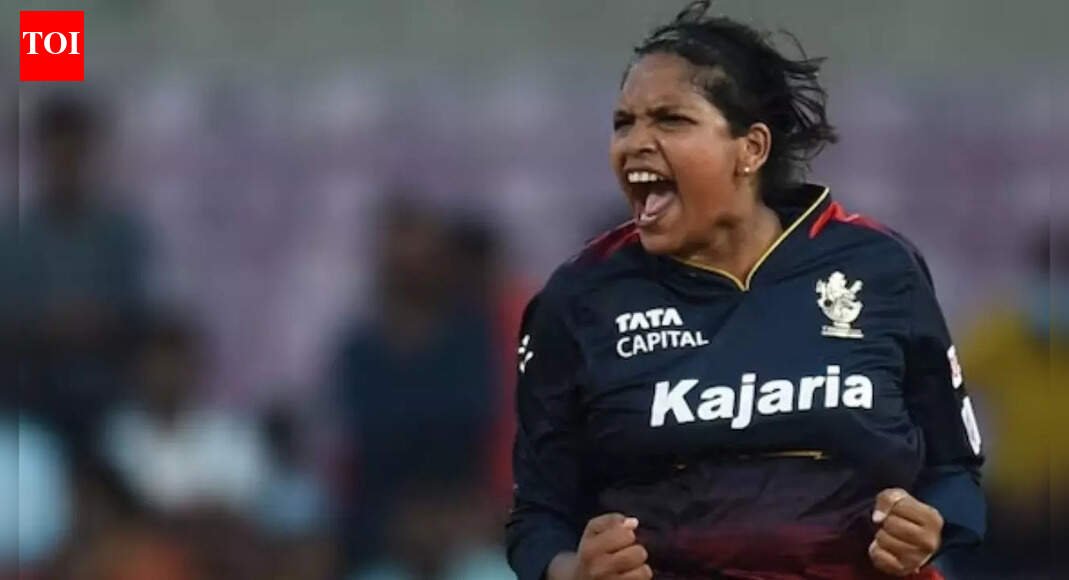
The Women’s Premier League (WPL) auction in New Delhi on Thursday opened up with a crackle and quickly turned into a blaze as Asha Sobhana became the first Malayali cricketer to breach the Rs 1-crore mark. In a pulsating, seesawing bidding war, the UP Warriorz snapped up the 34-year-old leg-spinner from Thiruvananthapuram for a staggering Rs 1.1 crore, capping one of the most dramatic tussles of the evening.The action began innocuously, after the Delhi Capitals kicked things off at the base price of Rs 30 lakh. But the tempo surged swiftly as Delhi and UP Warriorz traded bids up to Rs 55 lakh.

WPL Auction: Delhi Capitals co-owner Parth Jindal on women’s cricket after India’s World Cup win

Delhi bowed out, only for the Royal Challengers Bangalore (RCB) — Asha’s former home franchise — to storm in at Rs 60 lakh, determined to reclaim the leggie who had helped power through their title charge in the 2024 season.But the Warriorz refused to blink. The bids climbed into uncharted territory, and when the hammer finally came down at Rs 1.1 crore, UP Warriorz had clinched one of the most compelling stories from Kerala at the auction.For Asha, the moment was surreal.“I was watching the auction at my home in Thiruvananthapuram, glued to the television,” she tells TOI. “I got nervous during the bidding war…very happy with the result.”The milestone is a natural culmination for the player built on persistence and doggedness.RCB had first signed Asha in the inaugural 2023 WPL season for just Rs 10 lakh — a modest sum for the bowler who went on to claim 12 wickets and finish joint second-highest wicket-taker. Her unforgettable five-wicket haul against the UP Warriorz remains one of the defining spells of that year. Incidentally, she is the only Indian to claim a five-for in the WPL.“It was against the Warriorz two seasons back that I bagged my first five-for in WPL, and now to play for them is incredible. Too many things happening at the moment,” she chuckles.The RCB contract came to her at the right time as she was toying with the idea of quitting the game because of the lack of recognition after toiling away in domestic cricket for over a decade.A die-hard fan of former Australian legspinner Stuart MacGill, Asha’s WPL heroics earned her a long-awaited India call-up in April last year for the Bangladesh tour, followed by her T20I debut in May.In October, she ticked off another dream, when she made her ICC T20 World Cup debut in Dubai, and started in India’s opener against New Zealand.But the journey has hardly been linear. A knee injury forced her out of the last WPL season and sidelined her for nearly a year.Far from dimming her spark, the layoff seemed only to sharpen her resolve. On her return to domestic cricket for Kerala, she struck immediately, delivering a Player-of-the-Match performance in the Senior Women’s T20 Trophy game against Vidarbha last month.Her career has been as itinerant as it has been inspirational: stints with the Railways, Kerala, Pondicherry, and then back to Kerala, all while juggling her employment with the South Central Railways in Hyderabad.With the WPL beginning in January next year, Asha stands on the cusp of a luminous chapter — proof that perseverance, patience, and craft can script a heartwarming tale in Kerala cricket.


Source link

South Africa fires back as Trump torches it over ‘white genocide’ and threatens G-20 ban


South Africa fires back as Trump torches it over 'white genocide' and threatens G-20 ban

TOI Correspondent from Washington: Bluntly accusing the South African government of genocide of white people, US President Donald Trump said he would bar the country from attending the G-20 summit in Miami late next year, throwing the world’s main forum for international economic cooperation, of which India is a part, into turmoil.In an angry social media post, the US President, who boycotted the just concluded G-20 meet in Johannesburg, said he did not attend because the South African Government “refuses to acknowledge or address the horrific Human Right Abuses endured by Afrikaners, and other descendants of Dutch, French, and German settlers.” “To put it more bluntly, they are killing white people, and randomly allowing their farms to be taken from them,” he alleged. The narrative, mostly from a small minority of white nationalists in South Africa and US., has been widely debunked by independent observers amid acknowledgment that the country faces a law-and-order situation. The US President further maintained that South Africa “has demonstrated to the World they are not a country worthy of Membership anywhere,” and said he will “stop all payments and subsidies to them, effective immediately.” U.S aid to Pretoria, mostly in the health sector, peaked at $ 564 million in 2024 before tailing off to a planned $ 103 million in 2025 amid deteriorating ties underscored by an Oval Office ambush of South Africa’s President Cyril Ramaphosa where Trump showed him a multimedia presentation of “white genocide.” Ramaphosa maintained that the farm attacks were part of broader crime affecting all races and the allegations Trump referenced was from a “small minority party” not reflective of government policy.Ramaphosa’s narrative was backed by golfing greats Ernie Els and Retief Goosen (brought in to appeal to Trump’s love of golf) and billionaire Johann Rupert (South Africa’s richest man) even as Trump surrogate Elon Musk, who has promoted the white genocide allegations, glowered over them. “I am sorry I don’t have a plane to give you,” Ramaphosa joked at one point during the meeting, referring to a story at that time about Trump receiving a jet from Qatar. “I wish you did,” the U.S President kidded back. But beyond the banter ties continued to sour, with Trump taking exception to what he claimed was South Africa’s refusal to hand off the G20 Presidency to a Senior Representative from the U.S. Embassy, who attended the closing ceremony in Johannesburg. Ramaphosa rejected the charges saying the “instruments of the G20 Presidency were duly handed over to a US Embassy official,” amid doubts over whether the Miami event will take place at all given the growing fissures in global politics and the adversarial position the U.S has taken on several fronts.In a blistering rebuttal to Trump’s effort to evict South Africa from the G-20, Ramaphosa said the country is a member of the group “on its own name and right” and called on other member nations to reaffirm its continued operation in the spirit of multilateralism, based on consensus, with all members participating on an equal footing in all of its structure. “South Africa… does not appreciate insults from another country about its membership and worth in participating in global platforms,” he lashed back. Legal and institutional norms surrounding the G20 cast serious doubt on the possibility and legitimacy of a unilateral ban on South Africa by Trump. The G20 is an informal, consensus-based forum without a binding charter or formal exclusion mechanism. No single member state — including the U.S — has the right to expel another, a fact that has been widely acknowledged in prior controversies, such as attempts to exclude Russia, where other members, including China, defended Russia’s status. The U.S is currently feuding with several other G-20 members including Brazil, Canada, and Mexico, with on-off spats with Russia, China, and India.


Source link

Mutual fund reach: Sebi unveils new distributor incentives; extra payouts for B-30 and new women investors


Mutual fund reach: Sebi unveils new distributor incentives; extra payouts for B-30 and new women investors

Markets regulator Sebi on Thursday rolled out a revised incentive framework for mutual fund distributors, offering additional payouts for bringing in first-time individual investors from B-30 cities and new women investors from any location.Designed to widen outreach and improve awareness, the new structure will take effect from February 1, 2026, Sebi said in a circular, PTI reported.Under the plan, asset management companies (AMCs) will pay distributors 1 per cent of the first lump-sum investment or first-year SIP amount, capped at Rs 2,000, as long as the investor remains invested for at least a year. The commission will be funded from the 2 basis points already set aside by AMCs for investor education and will be paid over and above existing trail commissions. “The mutual fund distributors shall be eligible for additional commission (for bringing) — new individual investors (new PAN) from B-30 cities… and new women individual investors (new PAN) from both Top 30 and B-30 cities.” Sebi said. No dual benefits will be allowed for the same woman investor from B-30 cities. The additional commission will not be available for ETFs, certain Fund of Funds, or short-duration schemes such as overnight, liquid, ultra-short, and low-duration funds.Industry body AMFI will issue implementation guidelines within 30 days, and any changes made to scheme documents to reflect the new structure will not qualify as fundamental changes.Sebi noted that while incentives were earlier provided for fresh inflows from B-30 cities, concerns about misuse prompted the regulator to overhaul the framework for distributors bringing in new investments.


Source link

Ambala cylinder blast: Mother and child among two dead; massive fire now under control | India News


Ambala cylinder blast: Mother and child among two dead; massive fire now under control

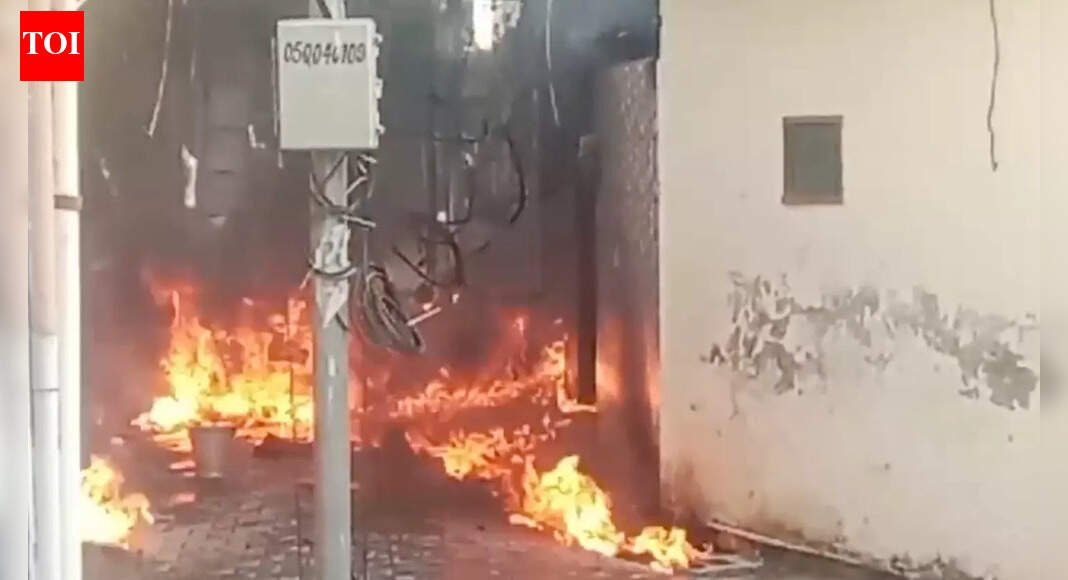
AMBALA: A devastating cylinder blast in Ambala’s Friends Colony on Thursday led to a massive fire, claiming lives of a 1.5-year-old boy and his 31-year-old mother, and leaving her 13-year-old daughter critically injured. The deceased were identified as Ekta and her son Priyans, while her daughter Tanushka is critically injured. Officials confirmed that the blaze intensified due to a large quantity of diesel stored inside the house, turning the incident into a major tragedy. Firefighters have since brought the fire under control, but the house was completely gutted.According to eyewitnesses, the house was being used for making

gachak

(sweet made of peanuts and jaggery), when a loud explosion shook the area. The impact triggered flames that shot high into the sky, fuelled by the diesel stored in drums. Neighbours reported seeing the house engulfed within minutes, and the fire quickly spread to an adjacent property before the blaze could be contained.Fire brigade teams rescued the three occupants trapped inside and rushed them to the Civil Hospital. Despite receiving medical care, the child and the woman succumbed to their injuries. The injured teenage girl was referred to a higher medical facility at PGI, Chandigarh for advanced treatment.Dr Aditi from the Civil Hospital, Ambala City confirmed the casualties, stating that the victims suffered severe burn injuries. “A 1.5-year-old child and a 32-year-old woman were brought dead. A 13-year-old girl has been referred due to critical condition,” she said.SDM Darshan Kumar, who reached the site, said preliminary findings indicate that the fire was caused by a cylinder blast. “An investigation is underway to determine the exact cause,” he noted.Fire brigade officials informed that four fire tenders were pressed into service. “We received information about a cylinder blast. Four vehicles were dispatched one after another, and the fire was brought under control. Three people trapped inside were rescued,” an officer said.Officials are continuing to probe the circumstances leading up to the blast and the large stock of diesel inside the residential premises.Investigation officer from Ambala City police station, Roshan, said that Priyansh and Ekta could not be saved while Tanushka is undergoing treatment. To a query about gachak unit being run in residential area, Roshan said the matter is being investigated.


Source link

Adani Group now bags bid for 1.7k cr Mithi River rejuvenation project | Mumbai News


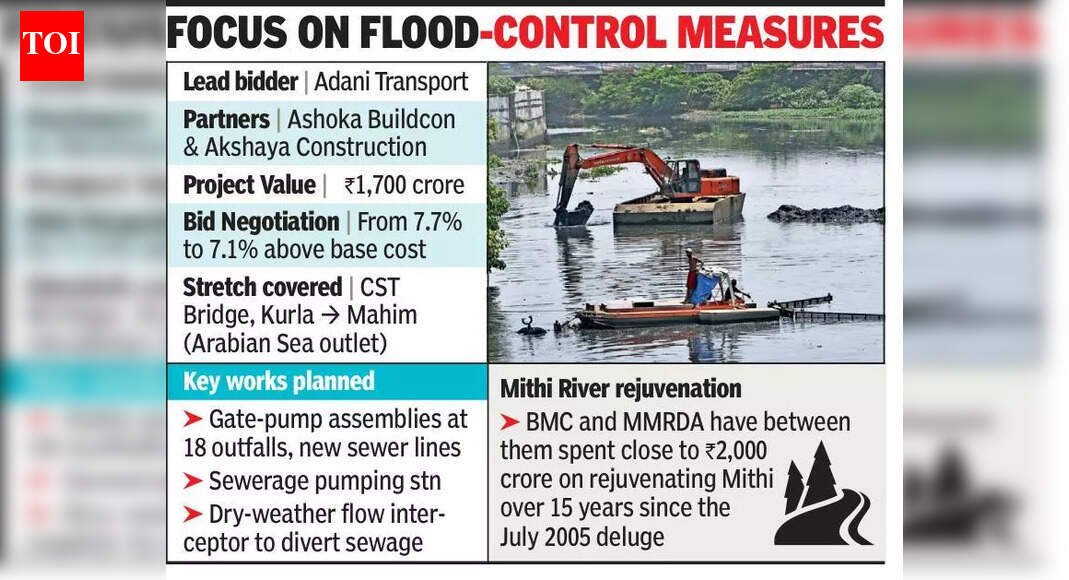
Mumbai: After bagging the Dharavi slum redevlopment project, Adani Group is now part of a Special Purpose Vehicle (SPV) that has emerged as the lowest bidder for the Rs 1,700-crore Mithi River Rejuvenation Project (Package 3). The contract will be carried out by Adani Transport in partnership with Ashoka Buildcon Limited and Akshaya Infraproject Pvt Ltd. The development has stirred yet another controversy with the Congress alleging the current “government is not of the Mahayuti, but of Adani.” The stretch of work, from the CST bridge at Kurla to Mahim where the river meets the Arabian Sea, focuses on critical flood-control measures. These include installing gate-pump assemblies at 18 outfalls, building a major sewerage pumping station—likely at Machhimar Colony near Mahim—and creating a dry-weather flow interceptor to divert sewage to the Dharavi treatment plant. The project also involves construction of sewer lines, service roads, and retaining walls. “The project includes installing gate-pump assemblies at multiple river outfalls so that during heavy rains, accumulated water can be pumped out and discharged back into the sea,” said a civic official. He added that all phases of the work stem from recommendations made by consultant Frischmann Prabhu, whom the BMC appointed in 2017 to propose short- and long-term pollution-control measures. After conducting a detailed survey, the consultant suggested four project packages aimed at diverting nearly 285 MLD of dry-weather discharge from the Mithi into the municipal sewer system.According to civic officials, the SPV initially quoted 7.7% above the base cost, which BMC negotiated down to 7.1%. However, this still means that the BMC would be paying more than it estimated as the project cost. Other bidders in the fray included Afcons and Hindustan Construction Company Limited (HCC).Officials said this package is among the final phases of the Mithi rejuvenation effort, and with the proposal now forwarded for administrative approval, work is expected to expedite next year — subject to environmental clearances. “This is a design, build, and operate project, which means that the contractor is expected to operate and maintain it for the next 10 years after construction works are completed,” said an official. The project’s duration is 48 months, excluding monsoons. The BMC had earlier also planned to construct a promenade under this phase of the work, which was later dropped as it was leading to a steep cost escalation.Sachin Sawant, secretary of the All India Congress Committee, in a post on social media X, said, “I raised allegations of corruption in the tender process for the Mithi River Package-3 around 1.5 months ago. This tender completely violated the guidelines of the Central Vigilance Commission. At that very time, I hinted that these manoeuvres were carried out to benefit an industrialist close to the BJP. Now it has become clear that this work has been awarded to the Adani company. From the very beginning, this tender was consistently postponed to ensure the work went to Adani.”The BMC and MMRDA have so far already spent over Rs 2,000 crores on the rejuvenation of the Mithi River, but the restoration of this vital waterway still remains incomplete. So far, at the head of the 18km river, near Filterpada, improvements are visible. Slums have been cleared for a retaining wall and service road that lets cleaning machines access the river. A sewer line has been laid to run sewage water to a new treatment plant at Powai, where the water is cleaned and discharged back upstream.


Source link