Breaking News
Siddaramaiah vs Shivakumar in Karnataka: Did Congress high command fail to act on time, yet again? | India News


Siddaramaiah vs Shivakumar in Karnataka: Did Congress high command fail to act on time, yet again?

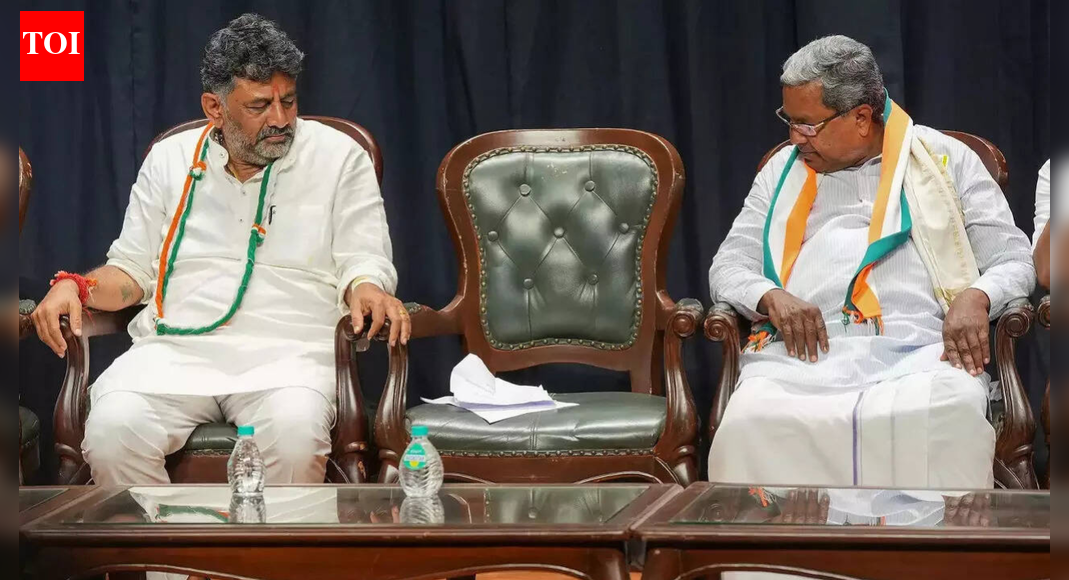
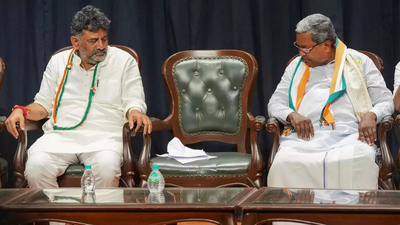
NEW DELHI: The Congress would have a strong feeling of deja vu about the turn of events in Karnataka. The grand-old-party stares at a political crisis in the state that threatens the very stability of its government. Ironically, while the crisis is in Karnataka, on test is the Congress high command – which has proved to be a bad crisis manager in recent times.The open power tussle between chief minister Siddaramaiah and deputy chief minister D K Shivakumar has reached a point of no return, forcing the top leadership into a huddle. Ironically, the seeds of the current crisis were sown two-and-a-half years back – when both the regional stalwarts had staked claim to the CM post – following the party’s emphatic victory over the BJP in the 2023 assembly elections. So the big question is: Has the top Congress leadership failed to act in time, yet again? We have seen similar leadership tussles play out in two states – Madhya Pradesh and Rajasthan – where the factionalism between state Congress leaders played a key role in the party eventually losing power. The common thread in all three states has been the Congress leadership’s reluctance to act decisively in the fight between the party’s old guard and the younger leaders.In Madhya Pradesh, when Jyotiraditya Scindia wanted to step into the leadership role, Congress backed veteran heavyweights Kamal Nath and Digvijaya Singh. This eventually saw the Scindia Junior quitting the party and joining the BJP. Scindia’s revolt brought down the Congress government and in the next assembly elections, Kamal Nath and Digivijay Singh failed miserably to counter the BJP. Today, the Congress in Madhya Pradesh is in doldrums while Scindia is a Union minister.In Rajasthan, when Sachin Pilot, who as state president had led the Congress to emphatic victory in 2018, sought the chief minister’s chair, the party again backed state veteran Ashok Gehlot. Gehlot, who had led the party to defeat in 2013, became the chief minister again and Sachin Pilot and his supporters were left disappointed. When Sachin stepped up his campaign for the top job, Gehlot used his full might to crush the rebellion. Pilot, who camped at a resort with his supporters, was eventually convinced by the Gandhi family to stay with the party. While the party high command bet big on Gehlot, he could not win the state in 2024.Now, we see a similar script play out in Karnataka. Siddramaiah, who was made the chief minister in 2013, led the party to defeat in 2018. DK Shivakumar, as the state Congress president, played a key role in the party’s victory in 2023. But once again, senior leader Siddaramaiah staked claim to the top post and the party eventually went with him. DKS then remained defiant for almost a week before eventually relenting. DKS now claims that there was a secret deal in the know of five-six people about rotating the post of chief minister and wants the Congress high command to ensure that he gets his due. But the Congress high command, as usual, allowed the crisis to blow out of hand. And now, when the factionalism is out in the open, it is trying to broker a truce.The last-minute crisis management may save the Congress government in Karnataka for now, but the open power tussle has the potential to damage the party’s image and perhaps also its electoral prospects. The Congress had managed a historic victory against the BJP in 2023. Instead of consolidating its gains, the party finds itself managing the power play between its state leadership. But then, this is how the Congress high command has worked in recent years. The Congress high command needed to anticipate this crisis in Karnataka and should have worked to find a balance between Siddaramaiah, who is past his prime, and DKS – who is the strongest contender to lead the party forward. Perhaps the Congress leadership needs to be reminded about an old adage: A stitch in time saves nine.It will be interesting to see how the Congress high command wriggles out of this crisis and how much this impacts the party’s prospects in the 2028 assembly elections. Is the grand old party on the verge of losing yet another state?


Source link

GDP grows at 8.2%, fastest in 6 quarters: What the data really says about Indian economy – explained


GDP grows at 8.2%, fastest in 6 quarters: What the data really says about Indian economy - explained
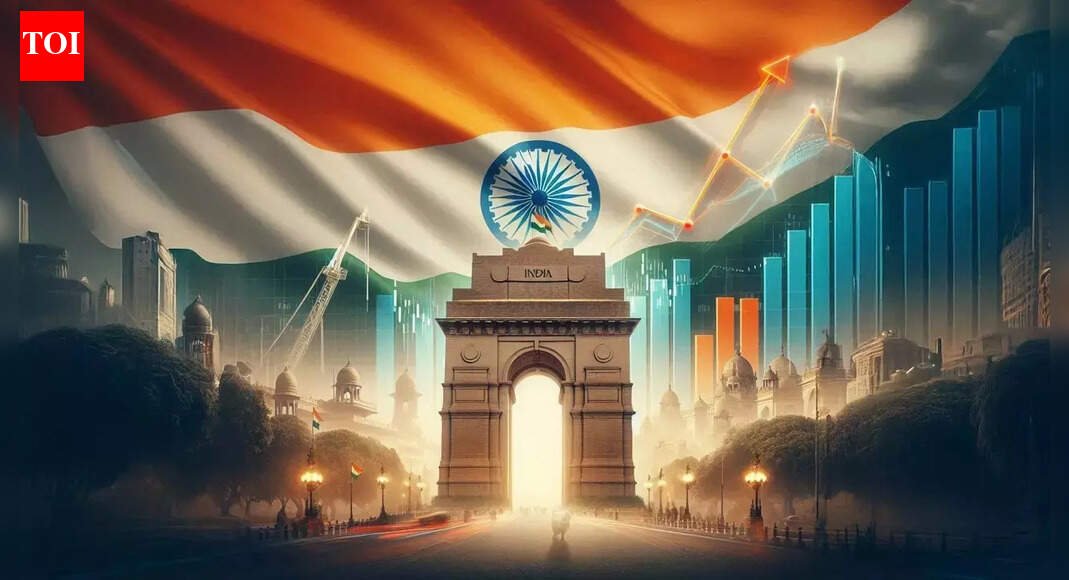
India’s GDP growth has consistently surprised on the upside in the last few quarters. (AI image)

India’s GDP has grown at a robust 8.2% in the second quarter of the financial year – a number that beats all estimates by economists and even the RBI. The six-quarter high real GDP growth is expected to push up the full year number to above 7%, with India retaining its tag of being the fastest growing major economy in the world.Incidentally, the better-than-expected GDP growth comes at a time when the Indian economy faces external challenges in the form of 50% tariffs imposed by US President Donald Trump in late August. Even as hopes of an India-US trade deal are improving, the impact of trade war policies on India’s exports remains uncertain.

India’s Growth Story Is Built On Scale, Youth, And Resilience, Says World Bank Economist

India is largely a domestic consumption driven economy and the income tax cuts and sweeping GST rate changes are likely to cushion the impact of external headwinds, while at the same time driving growth upwards for the whole year.Why has the real GDP growth been more than expected and what’s the outlook for the coming quarters? Why are economists pointing to the narrowing gap between nominal and real GDP growth? We explore:

India’s Q2 FY 2025-26 GDP Growth: Top 7 Numbers

  1. India’s real GDP has grown at 8.2% in Q2 of FY 2025-26 as against a growth rate of 5.6% during Q2 of FY 2024-25, and 7.8% in Q1 FY 2025-26.The nominal GDP has seen a growth of 8.7% in Q2 of FY 2025-26.
  2. Real GDP has registered 8.0% growth rate in H1 (April-September) of FY 2025-26, as compared to the growth rate of 6.1% in H1 of FY 2024-25.
  3. The Secondary (8.1%) and Tertiary Sector (9.2%) has majorly boosted the real GDP growth rate in Q2 of FY 2025-26.
  4. Manufacturing (9.1%) and Construction (7.2%) in the Secondary Sector, have seen above 7.0% growth rate at constant Prices in this quarter.
  5. Financial, Real Estate & Professional Services (10.2%) in the Tertiary Sector has seen a sustained growth at Constant Prices in Q2 of FY 2025-26.
  6. Agriculture and Allied (3.5%) and Electricity, Gas, Water Supply and Other Utility Services Sector (4.4%) have seen moderate Real growth rate during Q2 of FY 2025-26.
  7. Real Private Final Consumption Expenditure (PFCE) has seen 7.9% growth rate during Q2 of FY 2025-26 as compared to the 6.4% growth rate in the corresponding period of previous financial year.

What does the better-than-expected GDP data tell us?

India’s GDP growth was led by a sharp increase in manufacturing growth of 9.1% – a multi quarter high. Other sectors on the output side that have done well include financial, real estate et al. services with a robust growth of 10.2% and public administration defence et al. services at 9.7%. For DK Srivastava, Chief Policy Advisor, EY India, India’s economic fundamentals are characterized by three key features.

  • First, growth is largely driven by domestic demand covering both consumption and investment demand.
  • Second, inflation momentum has remained subdued for some time.
  • Third, in the wake of private investment not showing enough growth, the government is ready to pick up the slack and frontload its own capital expenditure.

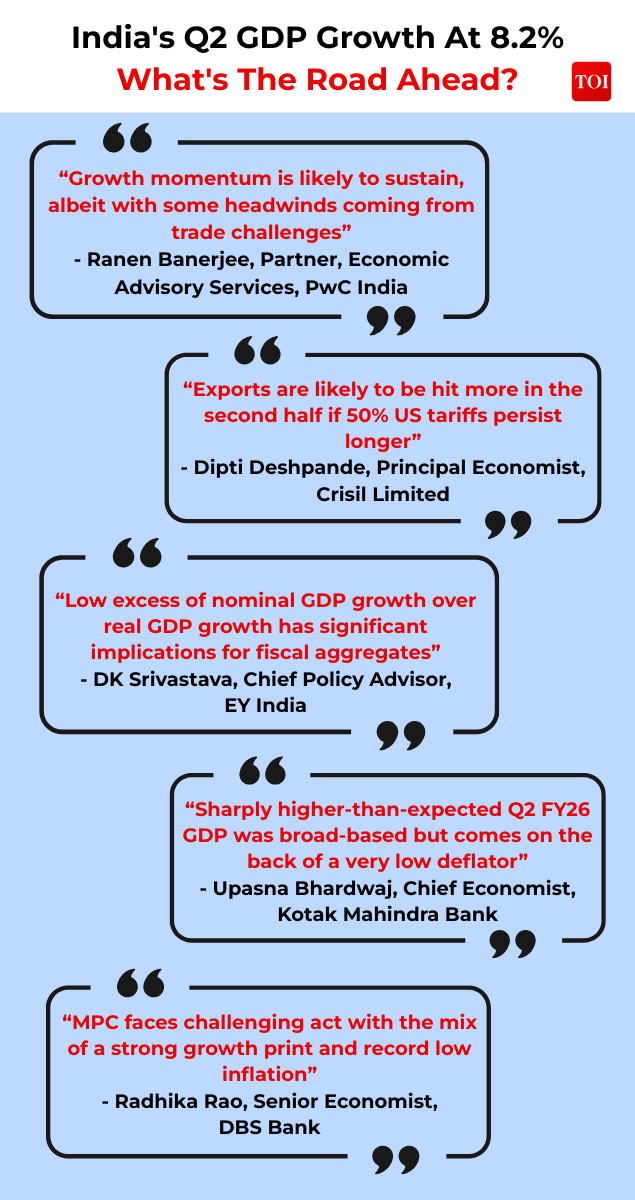
With these strengths, real GDP has shown a remarkable growth of 8.2%, he tells TOI.“There is a balanced sectoral spread of growth,” notes Srivastava. On the demand side, support to growth came from private final consumption expenditure which grew at 7.9% in 2Q. Gross fixed capital formation also showed a robust growth of 7.3%, largely driven by frontloading of GoI’s capital expenditure. “However, the negative contribution of net exports to GDP growth increased to (-)2.1% points in 2Q as compared to (-)1.4% points in 1Q 2025-26, reflecting the impact of the US tariff related issues and other global uncertainties,” the EY expert adds.Ranen Banerjee, Partner and Leader, Economic Advisory Services Government Sector Leader at PwC India explains that front loading of production for exports, sustained rural demand and government spending as well as a lower deflator owing to much lower inflation has helped the Q2 GDP print exceed consensus estimates.Dipti Deshpande, Principal Economist, Crisil Limited points out that India’s economy exhibited strength, despite the external headwinds. “Private consumption – the biggest driver of India’s GDP – grew above-trend at 7.9% even before GST cuts took effect. Robust rural demand, falling inflation, RBI’s rate cuts and some benefit from income tax relief have likely helped. Both industry and services growth improved in the second quarter, reflecting some impact of export frontloading on exports and supported by domestic macro tailwinds. That said, high real growth was also propped up by statistical factors such as low GDP deflator (due to low inflation), and low base effect (lower growth in the same quarter last year),” she tells TOI.

Why is the gap between nominal & real GDP growth narrowing and what it means

One of the most critical aspects highlighted by economists is nominal GDP growth slowdown, even as real GDP (inflation-adjusted growth) remains strong. Usually, in a developing economy like India, nominal GDP growth is significantly higher than real GDP growth because of inflation. The primary culprit is exceptionally low inflation, particularly in the wholesale sector (Wholesale Price Index or WPI). While low inflation is good for consumers (cheaper goods), a slowdown in nominal GDP poses a headache for the government’s fiscal math:Tax Collections: Taxes are calculated on the nominal value of goods and incomes. If prices aren’t rising, the tax base doesn’t expand as quickly. A nominal growth rate below the Union Budget’s assumption of 10.1% implies the government might collect less tax revenue than anticipated.Fiscal Deficit: The fiscal deficit is often expressed as a percentage of GDP (Nominal). If the denominator (Nominal GDP) grows slower than expected, the deficit ratio appears larger, potentially straining the government’s fiscal targets.The excess of real GDP growth at 8.2% over real GVA growth at 8.1% is limited. The difference between the two is due to the excess of product taxes over product subsidies. The growth in the net magnitude referred to as net-taxes on products fell from 10.3% in the first quarter to 9.5% in the second quarter 2025-26.The low excess of nominal GDP growth at 8.7% over real GDP growth of 8.2%, however, has significant implications particularly for fiscal aggregates. “This difference is due to the low level of GDP deflator-based inflation. For 1H 2025-26, the GDP deflator inflation was low at 0.8%. This low deflator inflation is due to both CPI and WPI inflation rates keeping low at 2.2% and 0.1% respectively in 1H 2025-26,” explains DK Srivastava of EY.“Data released today indicates GoI’s gross tax revenue (GTR) growth of 2.8% in 1H 2025-26 and 4.0% in the first seven months of the fiscal year. For the 1H, the GTR buoyancy is 0.32 as against a budgeted buoyancy assumption of 1.1. To meet the budget target for GTR growth of 12.5% over 2024-25 CGA actuals, a growth of 22.3% would be required in the remaining five months of the current fiscal year,” he adds.PwC’s Ranen Banerjee cautions that the nominal GDP growth being lower poses a challenge to the fiscal consolidation roadmap as the fiscal deficit is computed as a percentage of the nominal GDP.“This reduces the fiscal headroom available to meet the budgeted spending if revenues are not higher. However, given the non-tax revenue numbers are likely to be much higher, it should in all likelihood be able to make up for the shortfall,” he tells TOI.The CRISIL expert notes that the gap between nominal and real GDP growth is the lowest since fiscal 2020’s third quarter. The central government in its budget estimates, had penciled in a nominal GDP growth of 10.1% while computing crucial figures such as fiscal deficit to GDP ratio as well as for assumptions on tax collections for fiscal 2026. A lower nominal GDP growth (the first half saw a growth of 8.8%) could create some challenges.“Government tax collections have already trailed their targeted growth rates. Low nominal growth also affects the debt-GDP metric. However, the windfall from non-tax collections could create some offsets,” she says.

What’s the GDP growth outlook for the coming quarters?

Most economists are of the view that India’s GDP growth for the full fiscal year is likely to exceed 7%, much above RBI and IMF estimates of 6.8% and 6.6% respectively.DK Srivastava expects the annual real GDP growth to exceed 7.2% with a balanced spread of growth drivers both on the output side and on the demand side. “The key drivers will remain manufacturing growth on the output side and private final consumption expenditure on the demand side,” he says.PwC’s Ranen Banerjee also sees the growth momentum sustaining, albeit with some headwinds coming from trade challenges. “The GST reforms and the continued higher disposable incomes owing to income tax relief in the households at the lower end of tax brackets will support the urban demand. With good rainfall and no major adverse climatic event, rural demand will also sustain. Thus, we expect a strong print of the GDP in the second half too,” he says.
GDP Growth: Top Quotes From Experts

GDP Growth: Top Quotes From Experts

Dipti Deshpande of CRISIL expects growth to moderate in the second half of the financial year as statistical benefits from low deflator and base effect fade. She is of the view that unless Indian exporters diversify to other markets, merchandise exports could feel greater pain due to the delay in cementing an India-US trade deal.“Government capex, which was frontloaded this year, is also expected to moderate in the second half as the government targets its fiscal goals. Yet, private consumption should see strength supported by improved purchasing power due to tax relief measures, lower interest rates, strong agriculture incomes and a benign outlook on inflation,” she predicts.CRISIL has raised India’s GDP growth for this fiscal to 7%, up from 6.5%. “This follows a first-half growth of 8% and an expected slowdown to 6.1% in the second half owing to the impact of higher US tariffs and normalisation of government capital expenditure,” explains Dipti.

Will Trump’s 50% tariffs dent India’s growth story?

So far Trump’s 50% tariffs have not been able to significantly dent India’s growth story. As economists explain, there was a frontloading of exports in anticipation of tariffs. Additionally, of the three months that the GDP growth data is for, September is the only full month that saw the 50% tariffs. The impact of the tariffs is expected to be fully known in the coming quarters, if an India-US trade deal remains elusive. But will it be significant?According to Dipti Deshpande, exports are likely to be hit more in the second half if 50% US tariffs persist longer. “Export diversification to non-US markets can help mitigate the impact. While global growth has done better than expected so far, higher US tariffs on-year are likely to moderate growth in all major economies going ahead,” she says.Ramen Banerjee notes that the recently released export numbers show that the exporters have diversified their geographies of export.“With the 3.5% decline in the rupee dollar exchange rate, Indian goods will be more price competitive and that would offset some of the tariff headwinds. Hence, the impact on GDP growth is not expected to be very significant,” he tells TOI.DK Srivastava of EY expects the contribution of net exports to real GDP growth to remain negative and possibly increase in its magnitude. “In 2Q 2025-26, the contribution of net exports was (-)2.1% points rising from (-)1.4% points in 1Q. This impact may continue if there are no downward revisions in the US tariff rates in the near future. However, if a trade arrangement is worked out between the US and India in the near future, this adverse impact may not happen. There is a likelihood of a closure of the Russia-Ukraine conflict in the near future which may ease many supply chain bottlenecks,” he says.India’s GDP growth has consistently surprised on the upside in the last few quarters. As it moves on the road to becoming the third largest world economy in nominal GDP terms, its growth story will need to continue being broad-based, while successfully navigating global uncertainties and headwinds.



Source link

India unveils new seismic map, entire Himalayan arc now in highest danger zone | Dehradun News


It’s always a best bet to have that one place in the list that won’t disappoint any kind of traveller in any case. With chill hitting your spine, apple orchards blanketed in white, and cafes serving sizzling momos beside roaring bonfires, are something that will sum up your experience when here. It’s in short India’s quintessential winter escape, where taking a dip in the hot springs at Vashisht, or just sipping thukpa while watching snow pile up on pine roofs, can be your favourite pastime. And if you’re feeling extra adventurous, the road to Rohtang (if open) offers jaw-dropping views.

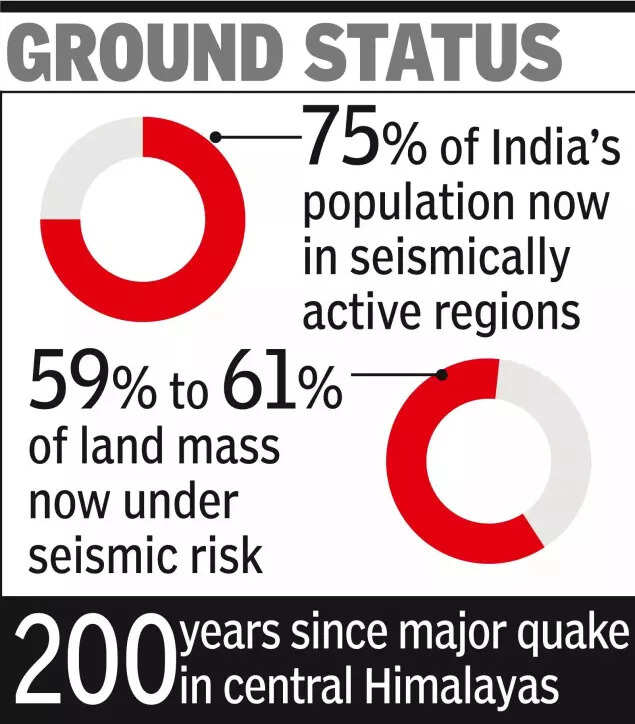
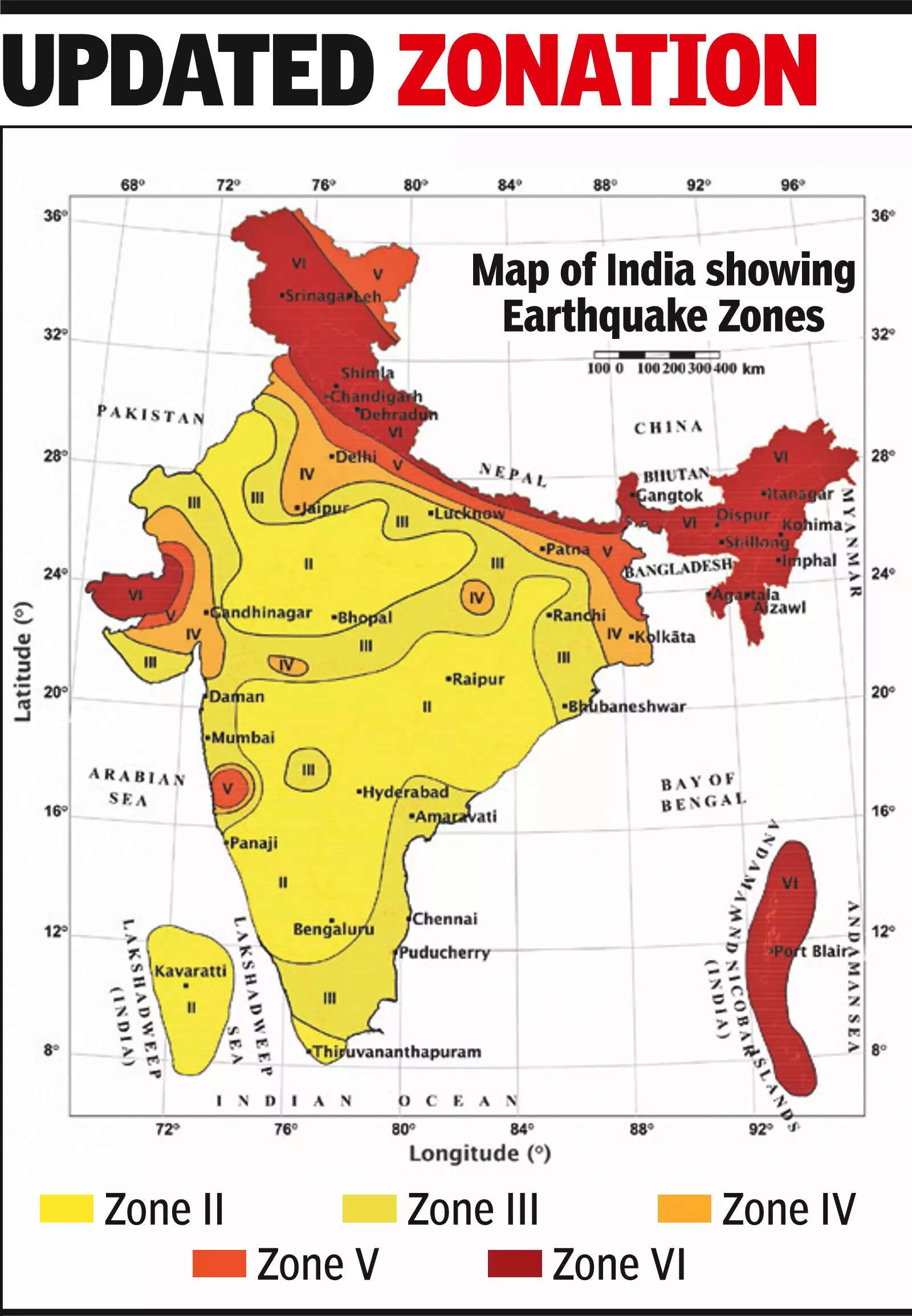
DEHRADUN: India has released a radically updated seismic zonation map under the new Earthquake Design Code, placing the entire Himalayan arc in a newly introduced highest-risk Zone VI for the first time, and reshaping the country’s understanding of earthquake exposure by showing that 61% of India now lies in moderate to high hazard zones, a shift that redefines how buildings, infrastructure and urban expansion must respond to the persistent tectonic stresses beneath some of the most densely populated regions in the subcontinent.Vineet Gahalaut, director of the Wadia Institute of Himalayan Geology and former director of the National Centre for Seismology, said the updated map finally brought much-needed uniformity to the Himalayan belt, which earlier remained split across Zones IV and V despite sharing the same underlying tectonic threat. He said previous versions underestimated the risks posed by long-unruptured fault segments, especially the central Himalayan stretch that has not produced a major surface-rupturing event in almost two centuries. “The earlier zonation did not fully account for the behaviour of these locked segments, which continue to accumulate stress,” he said, adding that the new framework adopted a more scientific, data-driven approach to seismic classification across the region.

India’s Updated Quake Map Warns Entire Himalayan Arc Faces Major Risk, Forcing Urgent Safety Reforms

-

The revision marks one of the most significant shifts in India’s seismic hazard assessment in decades because it reclassifies the outer Himalaya as a zone where rupture is likely to propagate southwards until it intersects the Himalayan Frontal Thrust, which in Dehradun region begins near Mohand, a shift that senior scientists told TOI has brought consistency to the entire Himalayan corridor, particularly in areas that earlier saw abrupt changes in hazard levels due to administrative boundaries rather than geological realities. Under the new map, towns situated along any boundary separating two categories will now automatically be placed in the higher-risk zone to ensure that planners and engineers do not rely on outdated assumptions about local hazard.Bureau of Indian Standards, which released the updated zonation as part of the revised Earthquake Design Code, said the map had been built using internationally accepted probabilistic seismic hazard assessment (PSHA) methods that incorporate detailed data on active faults, the maximum potential magnitude on each fault, the manner in which ground shaking diminishes with distance, the tectonic regime of each region and the lithology underlying various terrains. These inputs replace the earlier approach, which relied heavily on known epicentres and magnitudes of past earthquakes, broad geological features, soil classifications and historical damage surveys, and which often led to zone adjustments around industrial townships or large cities without fully accounting for fault-specific seismic potential.

India unveils new seismic map, entire Himalayan arc now in highest danger zone

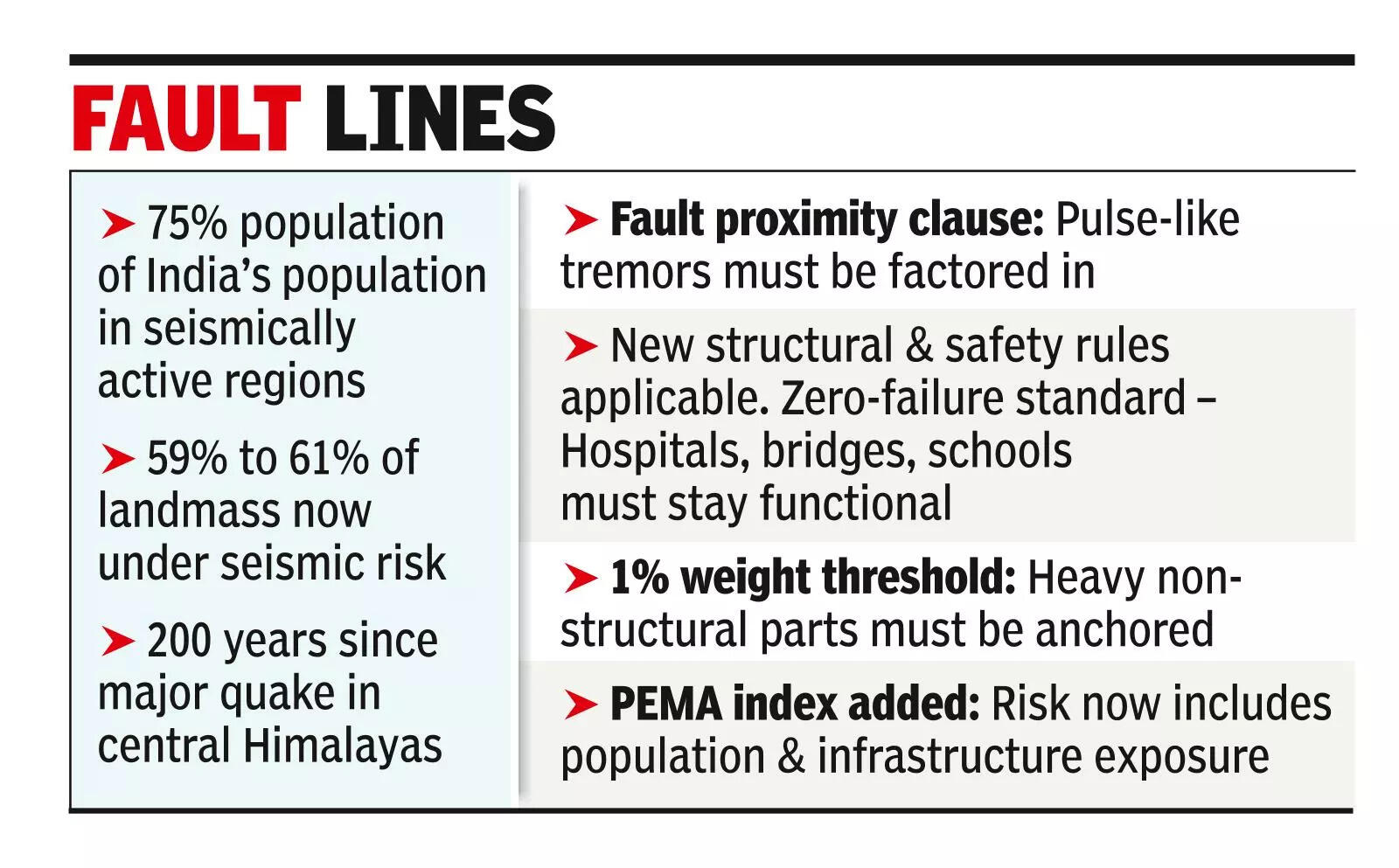
BIS said the new zonation provides a clearer understanding of the peak ground accelerations that can be expected during future earthquakes and urged that all new structures and infrastructure projects adopt the 2025 version instead of the 2016 map so that safety standards reflect the current assessment of seismic activity. The shift assumes particular importance because nearly three-fourths of India’s population now lives in seismically active areas, and the overall proportion of land falling under moderate to high hazard categories has increased from 59% to 61%.The revised design code introduces sweeping safety requirements for both structural and non-structural elements, with the latter receiving focused attention for the first time because components such as parapets, ceilings, overhead tanks, façade panels, electrical lines, lifts and suspended fixtures frequently fail during earthquakes even when the main structural frame survives. Under the new norms, all heavy non-structural components exceeding 1% of a building’s total weight must be securely anchored and braced to prevent internal collapses that endanger occupants, a requirement that engineers said would significantly reduce avoidable injuries during moderate earthquakes.

In new seismic map, Himalayan arc in highest danger zone

For buildings located close to active faults, the code mandates that structural design must consider severe pulse-like ground motions characteristic of near-fault earthquakes, and introduces updated limits relating to displacement, ductility and energy dissipation to prevent catastrophic failures. It also includes new provisions to address liquefaction risks, soil flexibility and site-specific response spectra, ensuring that structural performance reflects the actual behaviour of the ground beneath each development rather than generic assumptions applied across entire districts.The updated norms also tighten performance expectations for critical infrastructure such as hospitals, schools, bridges, pipelines and major public buildings, which must remain functional after a major earthquake to support emergency response and continuity of essential services. Engineers said this requirement aligns India with global best practices that prioritise resilience in essential facilities rather than mere survival of the structural frame.Another major addition to the 2025 map is the introduction of an “exposure window” that accounts for population density, infrastructure concentration and socioeconomic vulnerability using the probabilistic exposure and multi-hazard assessment (PEMA) method. This ensures that seismic zoning captures not just the physical hazard but also the degree of potential impact on communities, especially in urbanising regions where even moderate shaking can trigger widespread disruption due to high occupancy and dense construction.While the Himalayan region witnessed sweeping reclassification under the new map, the southern peninsula saw only minor scientific refinements, with its overall hazard profile remaining broadly unchanged because the tectonic regime there has shown relatively stable behaviour compared with the northern arc.


Source link

Karnataka CM tussle: Congress veteran Moily breathes fire; blames top brass of being blind | India News


Karnataka CM tussle: Congress veteran Moily breathes fire; blames top brass of being blind

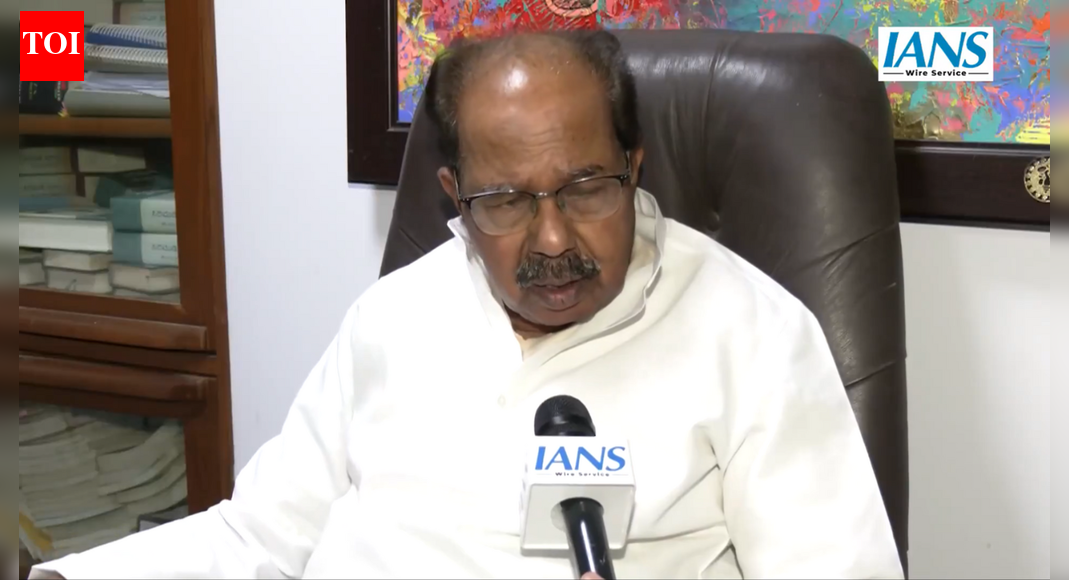
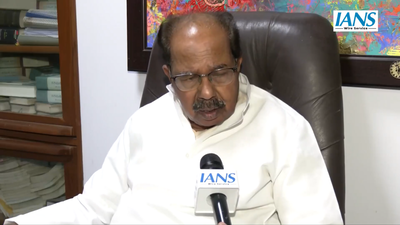
NEW DELHI: Amid the ongoing leadership crisis in Karnataka over the chief ministerial post, veteran Congress leader M Veerappa Moily on Friday launched a broadside against the party high command, saying that “discipline” has to be brought into the party.Talking to news agency IANS, the former Union minister said that the high command representatives should have foreseen some of these developments in the state.“If you want to turn it into a political turmoil, yes, it can happen, but the leaders of the Congress party who are in responsible positions, and also our high command representatives, whoever they may be, should have foreseen some of these developments. It’s not a sudden development,” Moily said.“I will not comment on who should continue, whether he should continue or whether a new Chief Minister will come or not. I am not on that. First, discipline has to be brought into the party,” he added.This comes amid the ongoing tussle between Karnataka CM Siddaramaiah and his deputy DK Shivakumar over the top job in the state.The deliberation over the issue has now shifted to Delhi, as both DKS and Siddaramaiah are likely to meet Mallikarjun Kharge along with Sonia and Rahul Gandhi on November 30.Earlier, Congress chief Mallikarjun Kharge played down the “internal conflict” within the party and said that the “high command” will sit together and deliberate on the issue.“Only the people there can say what the government is doing. But I would like to say that we will resolve such issues,” Kharge said.“People in the high command — Rahul Gandhi, Sonia Gandhi and I — will sit together and deliberate on this… We will give the medicine when required,” he added.This was the first acknowledgment by Kharge that there is indeed a power struggle between Siddaramaiah and his deputy DK Shivakumar in Karnataka.As soon as the Congress government in Karnataka completed its halfway mark on November 20, reports quoting Congress sources suggested that MLAs and MLCs from Shivakumar’s faction had camped in Delhi to push the party high command to make him the next chief minister.DK Shivakumar added to the speculations after he claimed that there had indeed been “a confidential understanding on leadership transition among five-six leaders” soon after Congress won a landslide in the 2023 elections.The deputy chief minister made the first reference to the power pact but stopped short of divulging more details. “This is confidential. I don’t want to speak publicly on this,” he said.


Source link

India squad for U19 Asia Cup 2025: Ayush Mhatre to captain Vaibhav Suryavanshi-starrer team


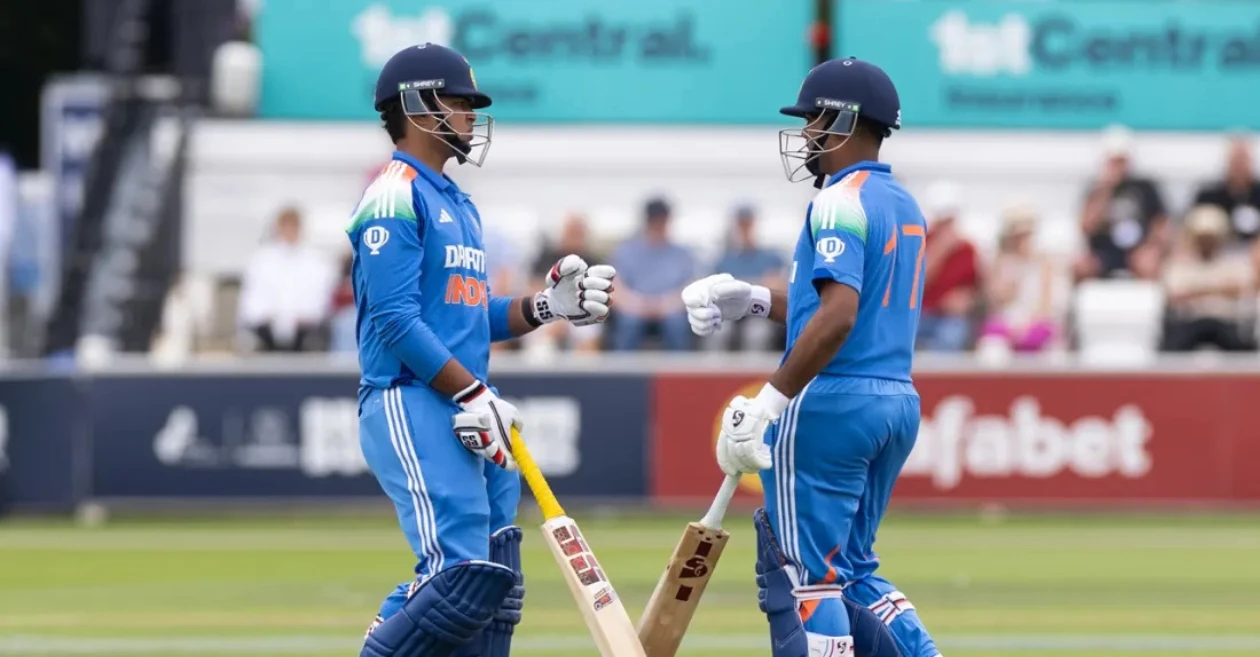
The Board of Control for Cricket in India (BCCI) has announced India’s squad for the ACC Men’s Under-19 Asia Cup 2025, appointing Mumbai-born opening batter Ayush Mhatre as captain for the tournament scheduled from December 12 to 21 in Dubai.

India has been placed in a challenging group featuring arch-rivals Pakistan and two qualifier teams, setting the stage for high-intensity youth cricket.

The newly unveiled 15-member squad blends emerging stars with seasoned junior-level performers. Key names include Vaibhav Suryavanshi, Vihaan Malhotra (vice-captain), and Abhigyan Kundu, all of whom bring match experience from domestic and India age-group tours.

Ayush Mhatre: Calm leader trusted to continue India’s youth legacy

18-year-old Ayush Mhatre, regarded as one of the most technically reliable openers in youth cricket, steps into the leadership role after a string of consistent performances. Hailing from Mumbai’s robust cricketing structure, Mhatre has delivered impactful knocks across domestic U19 tournaments and showcased IPL-level temperament in age-group development programs.

Coaches credit his calm personality, tactical maturity, and ability to anchor innings as major reasons behind his elevation. His appointment mirrors India’s long-standing focus on grooming strong leaders early – an approach that previously shaped future seniors like Rohit Sharma and KL Rahul. Supporting him is vice-captain Vihaan Malhotra, a wicketkeeper-batter admired for his middle-order stability, sharp glovework, and game awareness.

Vaibhav Suryavanshi, Vedant Trivedi and others strengthen India’s balanced core

Among the standout players in the squad is Vaibhav Suryavanshi, a stylish left-hander known for his match-winning innings at both junior and India-A youth levels. His performances in the Asia Cup Rising Stars competition have earned him widespread praise, and his ability to adapt under pressure makes him a major asset in India’s top order.

The squad features a well-rounded unit with strong support roles. Vedant Trivedi adds power and balance as a dependable all-rounder, while wicketkeeper Harvansh Singh acts as a reliable backup option. The bowling attack will be spearheaded by Henil Patel and Khilan A. Patel, both recognized for their disciplined spells and wicket-taking abilities.

Promising names such as Naman Pushpak, Aaron George and Udhav Mohan further deepen the bench strength. Kishan Kumar Singh remains under fitness monitoring, and four standby players – Rahul Kumar, Hemchudeshan J, B.K. Kishore, and Aditya Rawat – have been placed on alert for any late changes.

Also READ: “Kuch pressure nahi feel hota…” – Vaibhav Suryavanshi after smashing 32-ball century for India A vs UAE in Asia Cup Rising Stars 2025

India set for Pakistan clash on December 14

India will kick off their U19 Asia Cup campaign on December 12 against a qualifier at the ICC Academy Ground in Dubai. However, the marquee fixture arrives two days later when India face Pakistan on December 14, a clash that traditionally draws massive fan attention at both senior and junior levels.

With the semi-finals set for December 19 and the final scheduled on December 21, the tournament is viewed as a key preparatory platform ahead of the 2025 Under-19 World Cup in Zimbabwe and Namibia. Talent scouts and national selectors will closely monitor performances as India looks to identify the next generation of stars.

India squad for the Under-19 Asia Cup 2025

Ayush Mhatre (c), Vaibhav Sooryavanshi, Vihaan Malhotra (vc), Vedant Trivedi, Abhigyan Kundu (wk), Harvansh Singh (wk), Yuvraj Gohil, Kanishk Chouhan, Khilan A. Patel, Naman Pushpak, D. Deepesh, Henil Patel, Kishan Kumar Singh*, Udhav Mohan, Aaron George.

Also READ: Here’s how India head coaches have fared in home Tests since 2000/01


Source link

‘Bhai hai woh mera’: Nitish Rana provides major update on Shubman Gill’s health – WATCH | Cricket News


'Bhai hai woh mera': Nitish Rana provides major update on Shubman Gill's health - WATCH
Nitish Rana, who is currently playing in Syed Mushtaq Ali Trophy, provided an update on Shubman Gill’s condition when asked by a fan. (AFP Photo)

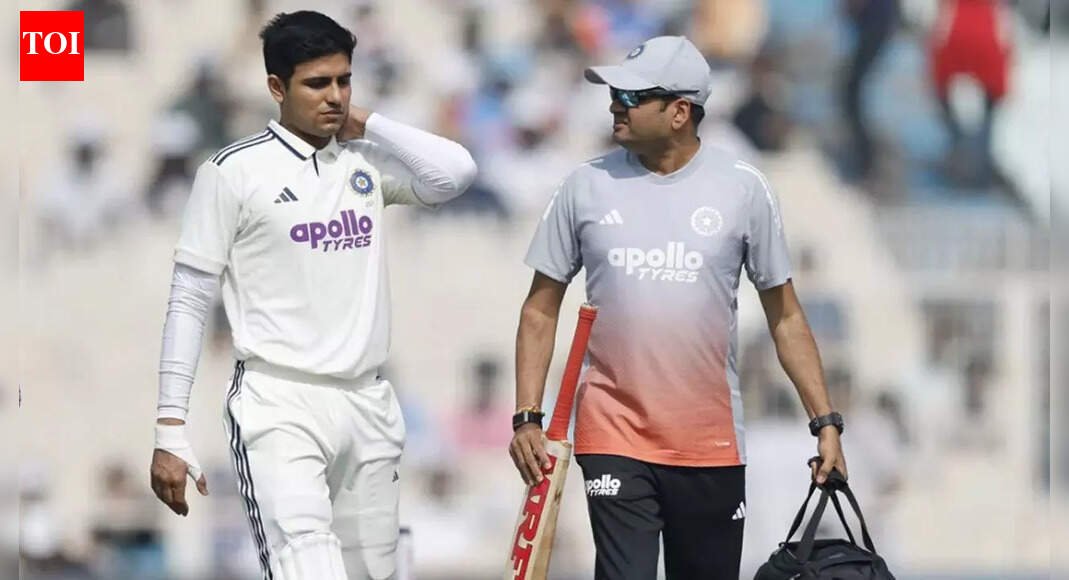
NEW DELHI: Indian cricket captain Shubman Gill has been sidelined from both Test and ODI series against South Africa due to a neck injury sustained during the first Test match in Kolkata. His absence significantly impacted India’s performance, resulting in a 2-0 Test series loss to South Africa.Go Beyond The Boundary with our YouTube channel. SUBSCRIBE NOW!The injury occurred when Gill attempted a sweep shot against Simon Harmer during India’s first innings at Eden Gardens. Despite hitting a boundary, he suffered neck spasm and immediately required medical attention, leading to his hospitalisation.Gill had travelled to Guwahati but was released just before the Test match began. He continues to be absent from the upcoming three-match ODI series as he hasn’t fully recovered.Indian cricketer Nitish Rana, who is currently playing in Syed Mushtaq Ali Trophy, provided an update on Gill’s condition when asked by a fan. The fan inquired: “Sir Shubman Gill apke jo dost hai wo abhi kaise hai?” To which Rana responded, “Bhai hai yaar mera chota wo.” When further asked about Gill’s condition, Rana confirmed, “Better hai. Pehle se better hai.”

Look who is back! Virat Kohli arrives for the ODI series vs South Africa

There are reports that Gill might return for the T20I series against South Africa.Watch the video hereGill shared his thoughts on social media platform ‘X’, writing: “Calm seas don’t teach you how to steer, it’s the storm that forges steady hands. We’ll continue to believe in each other, fight for each other, and move forward – rising stronger.”The cricket action will now shift to white-ball format, with the first ODI scheduled to take place in Ranchi on November 30, following the conclusion of the Test series.


Source link

Access Denied


Access Denied

You don’t have permission to access “http://www.ndtv.com/world-news/former-pakistan-prime-minister-imran-khan-vs-asim-munir-the-feud-that-began-in-2019-9715381” on this server.

Reference #18.2ef63717.1764327590.7512dd8

https://errors.edgesuite.net/18.2ef63717.1764327590.7512dd8


Source link

Asia Power Index: India reaches ‘major power’ status; Operation Sindoor boosts military rankings | India News


Asia Power Index: India reaches 'major power' status; Operation Sindoor boosts military rankings
India reaches ‘major power’ status in Asia Power Index 2025

NEW DELHI: India has secured third rank in the Asia Power Index, giving it the status of ‘major power’. India has secured this ranking in the Lowy Institute study based on its performance in Operation Sindoor.The first two ranks of ‘superpowers’ were retained by the United States and China, respectively.In 2024, India was ranked among the ‘middle powers’, with a comprehensive score of 38.1, whereas in this year’s reports, India scored 40 out of 100. It stands ahead of Japan and Russia, which hold the fourth and fifth positions, scoring 38.8 and 32.1, respectively. However, the nation still sees a large aspirational gap as compared to China, which has 73.7 points on the index. The US topped the rankings with 80.5 points.

Untold Bravery in Operation Sindoor: CISF Reveals It Foiled Pakistan Attack on Uri Hydro Power Plant

As per the detailed assessments, India’s rank is backed by its growth in terms of economic and military capabilities. Notably, India rose to ninth place in economic relationships, driven by increases in inward investment.The Lowy Institute said the modest advances in India’s geopolitical relevance were measured through international connectivity, leverage, and technological development. It also highlighted India’s military capabilities to have grown steadily.“For the most part, these gains were from improved expert appraisals of its capability, which were likely influenced by India’s performance in Operation Sindoor, launched in May 2025, which added to India’s recent combat experience,” the institute said.India saw its sharpest decline in terms of defence networks, dropping its rank to 11th position. It dropped two ranks lower as compared to the 2024 rankings, which were overtaken by the Philippines and Thailand.According to the index, India overtook China as the country attracting the most inward investment after the United States, an indicator capturing 10-year cumulative flows. Overall, the institute concludes that India’s recent military experience and economic momentum have strengthened its regional standing, even as challenges persist in building defence partnerships.The Australia-based think tank study assesses a nation’s ability to influence its external environment among the power states in Asia.


Source link

Indian economy enters H2 of FY26: Finance ministry says GST reform lifts consumption; sees strong demand despite global risks


Indian economy enters H2 of FY26: Finance ministry says GST reform lifts consumption; sees strong demand despite global risks

The finance ministry on Thursday said the Indian economy entered the second half of the fiscal year on a “firm foundation,” supported by easing inflation, resilient domestic demand and recent tax reforms. The rationalisation of goods and services tax (GST) rates has given a “measurable boost” to consumption, strengthening the growth outlook, it added.In its October monthly economic review, the ministry noted that easing inflation and recent GST changes have improved household disposable income. Retail inflation dropped sharply to 0.25% in October, from 1.44% in September, helped by GST cuts, a favourable base effect and softer food prices.“Overall, the economy enters the second half of FY26 on a stable footing, anchored by well-contained inflation, resilient domestic demand and supportive policy dynamics, even as global uncertainties warrant continued vigilance,” the report said.India’s GDP growth had risen to a five-quarter high of 7.8% in Q1, while the Q2 growth official numbers are expected at 7.3% The GST Council’s new two-slab structure of 5% and 18%, effective September 22, has reduced rates on several household goods.The ministry said that, “rationalisation of GST rates has provided a measurable boost to consumption, as reflected in the strengthening of high-frequency indicators, including higher e-way bill generation, record festive-season automobile sales, robust UPI transaction values, and a notable rise in tractor sales.”These trends suggest strengthening demand across both rural and urban markets. The full impact will be clearer over the next two quarters, it noted. On external conditions, the report flagged that global trade policy uncertainty remains high, ET reported.India’s merchandise exports fell 11.8% in October, while imports rose 16.6% due to higher gold and silver inflows. Services exports, however, hit a record $38.5 billion.The ministry also highlighted the impact of the 50% tariff imposed by the US, including a 25% penalty for importing Russian oil, warning that shifting trade policies, geopolitical tensions and financial market volatility could affect exports and investment flows.


Source link

‘This is what real teammates do’: Suniel Shetty hails Jemimah Rodrigues’ decision to skip WBBL and support Smriti Mandhana | Cricket News


'This is what real teammates do': Suniel Shetty hails Jemimah Rodrigues' decision to skip WBBL and support Smriti Mandhana
Smriti Mandhana and Jemimah Rodrigues (AFP Photo)

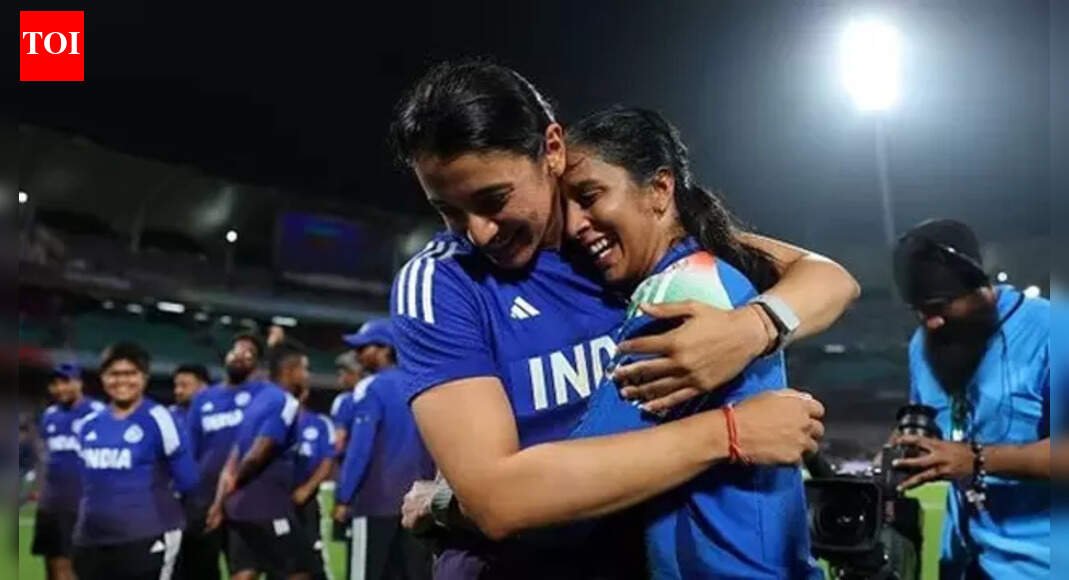
NEW DELHI: Bollywood actor Suniel Shetty on Friday penned a heartfelt note praising World Cup-winning star Jemimah Rodrigues for opting out of the ongoing Women’s Big Bash League (WBBL) to be with her close friend and teammate Smriti Mandhana during a difficult personal phase. Mandhana’s wedding, scheduled earlier this month, had to be postponed due to a sudden health complication involving her father — an emotional setback that prompted Jemimah to quietly stay back in India instead of rejoining her WBBL franchise, Brisbane Heat.Go Beyond The Boundary with our YouTube channel. SUBSCRIBE NOW!Suniel Shetty, who is also the father-in-law of India cricketer KL Rahul, spotlighted the gesture on X, calling it the purest form of camaraderie. “Bumped into this article first thing in the morning and my heart felt full. Jemimah leaving the WBBL to be by Smriti’s side. No big statements, just quiet solidarity. This is what real teammates do. Simple. Straight. Genuine,” Shetty wrote, posting a newspaper clipping that reported Jemimah’s withdrawal.

Rohit Sharma opens up on India winning Women’s World Cup, & why it was special

Jemimah had travelled to India after Brisbane Heat’s match against the Hobart Hurricanes for what was initially a brief, pre-planned visit to attend Mandhana’s wedding. She was due to fly back for the final stretch of the WBBL season. But when the ceremony was called off owing to Mandhana’s father’s health issue, she requested to remain in India — a decision the Heat immediately supported.

Suniel Shetty

“The Brisbane Heat have agreed to a request to release Jemimah Rodrigues from the remainder of the Women’s Big Bash League,” the club said in its statement, noting she would stay back to support her friend. CEO Terry Svenson acknowledged it as a “challenging time” for the 24-year-old and said the team wished the Mandhana family well.The decision comes at a time when Jemimah’s stock in world cricket is soaring. Brisbane Heat’s No.1 pick in this year’s International Player Draft, she had been in strong form before her departure. Her unbeaten century in the Women’s World Cup semifinal against Australia remains one of India’s greatest modern knocks.


Source link