Breaking News
US stock markets today (March 31, 2026): Wall Street rallies on de-escalation hopes; S&P 500 jumps over 1.6%, tech stocks lead gains

[ad_1]
US stock markets today (March 31, 2026): Wall Street rallies on de-escalation hopes; S&P 500 jumps over 1.6%, tech stocks lead gains

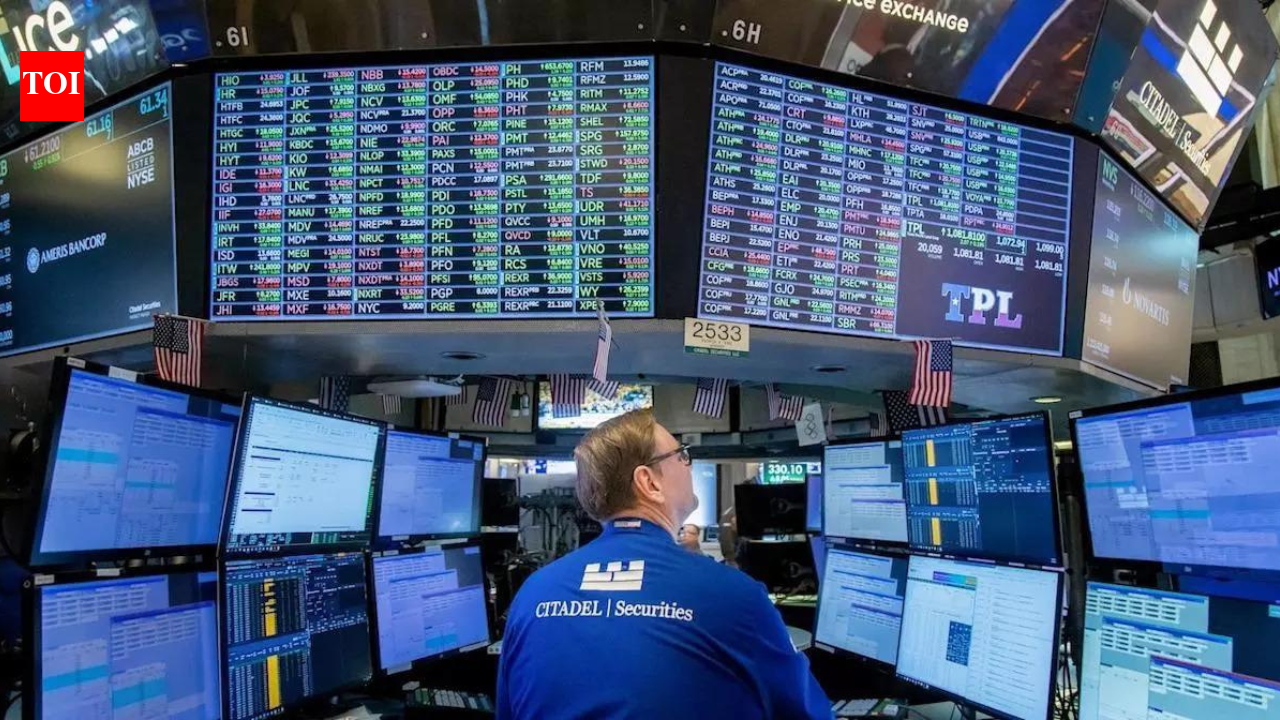
US stock markets moved sharply higher on Tuesday as investors cheered signs of possible de-escalation in the Middle East conflict, even as major indexes remain on track for their steepest monthly declines in years.At 10:05 a.m. ET, the Dow Jones Industrial Average surged 627.92 points, or 1.39%, to 45,844.06. The S&P 500 gained 103.78 points, or 1.64%, to 6,447.50, while the Nasdaq Composite advanced 432.71 points, or 2.08%, to 21,227.35, reported Reuters.Market sentiment improved after a Wall Street Journal report said US President Donald Trump had indicated willingness to end the military campaign against Iran, even if the Strait of Hormuz remains largely closed.The development eased investor concerns after weeks of volatility triggered by the conflict, which has pushed the S&P 500 and the Dow toward their largest monthly losses since September 2022. The benchmark index is also on track for its weakest quarterly performance since 2022.Oil prices remained volatile but are set for a record monthly gain. The S&P 500 energy index has risen more than 11% in March, making it the only sector expected to end the month in positive territory and marking its strongest quarterly performance on record.“The move in markets is reflecting what traders want to see, what they hear. They would like to hear that resolution to this is quick,” said Mark Malek, CIO at Siebert Financial, Reuters quoted.He cautioned that elevated oil prices, driven by continued disruption in the Strait of Hormuz, could “cause damage” to the broader economy.Technology stocks led Tuesday’s gains, with the S&P 500 technology index rising 2% after a weak quarter marked by concerns over heavy capital expenditure and AI-led disruption in software services.CoreWeave climbed 8.4% after securing an $8.5 billion loan to expand AI infrastructure, while Marvell Technology rose 6.8% following a $2 billion investment from Nvidia.Communication services stocks also advanced, with Meta Platforms gaining 3.9% and Alphabet rising 2.5%, lifting the sector index by 2.2%.Overall, nine of the 11 major sectors in the S&P 500 traded in positive territory.Last week, both the Dow and Nasdaq confirmed correction territory after falling more than 10% from their record highs, while the small-cap Russell 2000 had entered correction earlier in the month.On the macro front, the Job Openings and Labor Turnover Survey (JOLTS) showed vacancies declined to 6.882 million in February, slightly below expectations of 6.918 million, while consumer confidence came in above estimates.Investors are also watching comments from Federal Reserve officials, including Austan Goolsbee and Michelle Bowman, for signals on the policy outlook.The surge in oil prices has revived inflation concerns, prompting markets to scale back expectations of rate cuts this year, according to CME Group’s FedWatch Tool.Among other stocks, McCormick fell 6% after Unilever agreed to spin off its food business and merge it with the company in a deal valuing the spice maker at about $44.8 billion. Constellation Energy dropped 7.1% after issuing a weaker-than-expected profit forecast for 2026.Market breadth remained strong, with advancing stocks outnumbering decliners by a 5.23-to-1 ratio on the NYSE and 4.21-to-1 on the Nasdaq. The S&P 500 recorded three new 52-week highs and three lows, while the Nasdaq saw 19 new highs and 85 new lows.

[ad_2]

Source link
Sexual violence used as weapon of war in Sudan, aid group says

[ad_1]

Sexual violence used as weapon of war in Sudan, aid group says

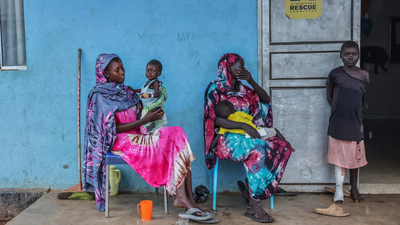
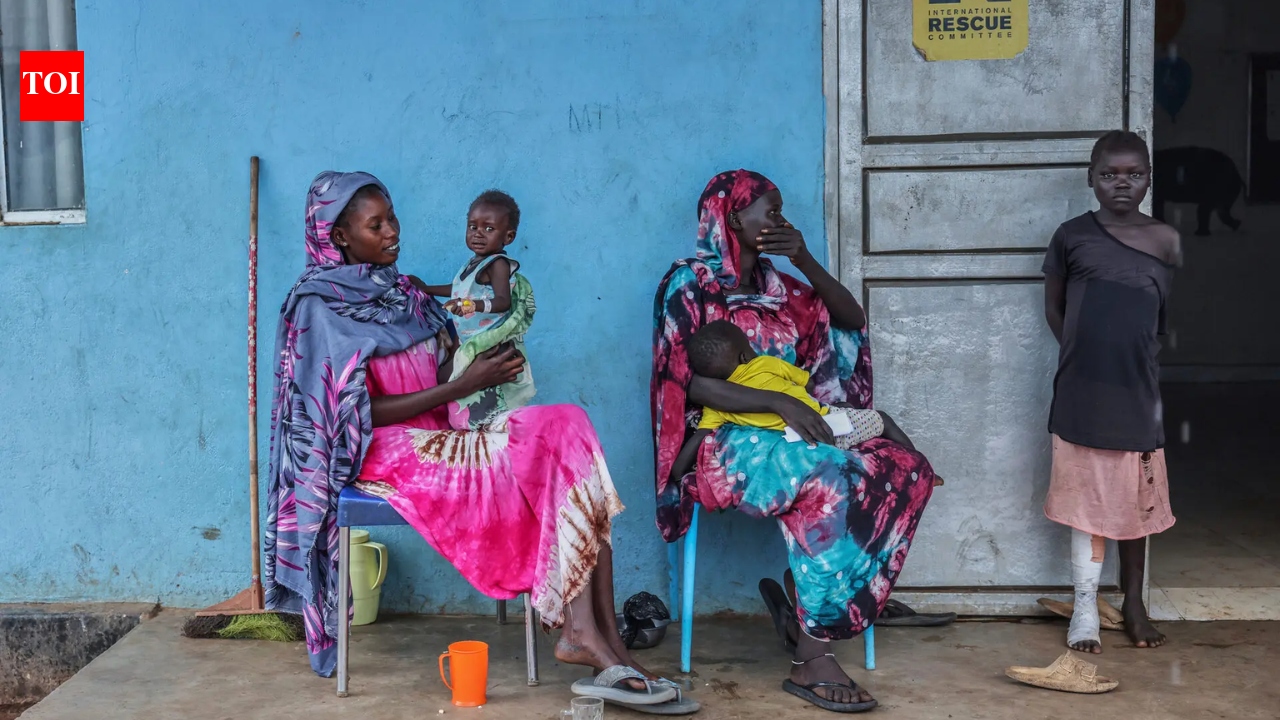
Thousands of women and girls sought treatment for sexual violence in war-ravaged Sudan over nearly two years, with Doctors Without Borders saying Tuesday that rape is being used as a weapon in the country’s brutal conflict.The aid group, known by its French acronym MSF, said at least 3,396 survivors of sexual violence were treated at its facilities between January 2024 and November 2025. Most survivors identified the attackers as armed men, while 60% of the reported cases in South Darfur involved multiple perpetrators.In a report released Tuesday, as cited by AP, MSF documented accounts from women who were gang raped in South Darfur and North Darfur, highlighting what it said is a much wider crisis than current figures show.One survivor described her ordeal in the report, saying, “They took us to an open area. The first man raped me twice, the second once, the third four times.”MSF Emergency Coordinator Myriam Laroussi said the numbers recorded in the report reflect only a small part of the violence.Speaking at the report launch in Nairobi, Kenya, Laroussi, who was in Tawila in North Darfur in late 2025 after the fall of El Fasher, said the figures were just a “tip of the iceberg” and that the scale of sexual violence is likely far greater in areas where MSF has no access.Medical workers said survivors often face major delays in reaching treatment. MSF midwife Gloria Endreo said teams in Tawila were seeing an average of 10 to 15 women a day, with most arriving after the first 72 hours, a critical period for treating injuries and trauma, preventing infections and avoiding unwanted pregnancies.Many victims, she said, have to walk for days or travel by camel to reach care.“As healthcare practitioners, we consider the 72 hours as a golden period because we provide a lot of care within that period,” Endreo said.MSF sexual health specialist Andreza Trajano said the violence has also left a deep impact on entire communities.In some cases, girls were raped in front of their mothers and grandparents, she said. Fear of sexual assault has also stopped some people from carrying out daily activities such as farming.“Will we continue to just let women’s and girls’ bodies be used as a weapon of war?” she said.MSF urged the United Nations to strengthen its presence in Sudan to better respond to the needs of affected communities.Sudan descended into chaos in April 2023 after a power struggle between the military and the paramilitary Rapid Support Forces erupted into open fighting in Khartoum and other parts of the country. The International Criminal Court is investigating mass killings, gang rapes and other abuses linked to the conflict as potential war crimes and crimes against humanity.The war has killed more than 40,000 people, according to UN figures, though aid groups say the actual death toll is likely much higher.Fighting has recently intensified in the Darfur and Kordofan regions, where deadly attacks, mostly involving drones, have been reported daily. The UN Human Rights Office said more than 500 civilians had been killed in drone strikes this year as of mid-March.

[ad_2]

Source link

US gas prices cross $4/gallon for first time since 2022; Iran war drives global spike

[ad_1]

US gas prices cross $4/gallon for first time since 2022; Iran war drives global spike

US gasoline prices have crossed $4 per gallon for the first time since 2022, as the ongoing Iran war continues to disrupt global oil supplies and push up fuel costs.According to the American Automobile Association (AAA), the national average price for regular gasoline stood at $4.02 per gallon on Tuesday — more than $1 higher than levels seen before the conflict began on February 28.The last time US consumers faced such prices was nearly four years ago, in the aftermath of Russia’s invasion of Ukraine.

Watch

‘Global Oil Crisis May Push India Closer To Iran’: US Expert Robert Pape Hints Big Diplomatic Shift

Fuel prices vary across states depending on supply dynamics and local taxes, with some regions already witnessing higher-than-average rates.The surge has been driven by sharp increases in crude oil prices–the primary input for gasoline– amid supply chain disruptions and production cuts across the Middle East following the escalation of hostilities involving the US, Israel and Iran.The price shock is global in nature. In Paris, for instance, gasoline is priced at 2.34 euros per litre ($2.68), translating to about $10.27 per gallon.Rising fuel costs add to inflation pressuresHigher fuel prices are adding to cost-of-living pressures for households and raising operating costs for businesses.As spending on essentials such as fuel increases, consumers may be forced to cut back on discretionary purchases. Analysts warn that the ripple effects could extend to groceries and everyday goods as transportation costs rise.Logistics and delivery services are already feeling the impact. The United Postal Service is seeking a temporary 8 per cent surcharge on services including Priority Mail.Diesel prices — critical for freight movement– have also surged, with the national average reaching $5.45 per gallon, up from about $3.76 before the war, according to AAA.If the conflict persists, prices could climb further as disruptions continue in the Strait of Hormuz, through which roughly one-fifth of global oil supply typically passes.With tanker movements constrained and energy infrastructure targeted in the conflict, supply concerns have intensified.Policy steps to ease pressureIn response, the International Energy Agency has pledged to release 400 million barrels of oil from emergency reserves of member nations, including the US.The Trump administration has also eased sanctions to allow additional oil supply from Venezuela and temporarily from Russia. It has further waived maritime shipping requirements under the Jones Act for 60 days to improve logistics.However, it remains uncertain how quickly these measures will translate into relief at the pump, as refineries typically process crude purchased earlier at higher prices.Seasonal factors are also contributing to the rise. Increased travel demand and the shift to costlier summer-blend fuel are adding upward pressure on prices.Global market dynamics keep US exposedDespite being a net oil exporter, the US remains sensitive to global price movements.Oil is traded globally, and while the US produces largely light, sweet crude, many refineries are configured to process heavier, sour crude, necessitating imports.Geopolitical shocks have historically driven sharp increases in fuel prices. In June 2022, US gasoline prices had surged above $5 per gallon following the Ukraine war.While prices later moderated, they had remained below $4 per gallon since mid-August 2022 until the latest spike, according to AAA data.

[ad_2]

Source link

Dubai rolls out AED 1 billion incentives; fee deferrals, policy support to cushion war-led disruptions

[ad_1]

Dubai rolls out AED 1 billion incentives; fee deferrals, policy support to cushion war-led disruptions

Dubai has announced a package of economic measures, including incentives worth AED 1 billion, to support businesses and individuals over the next three to six months amid global supply disruptions linked to the ongoing West Asia conflict.The initiatives, approved by the Executive Council of Dubai in a meeting chaired by Crown Prince Sheikh Hamdan bin Mohammed bin Rashid Al Maktoum, will come into effect from April 1, PTI reported.The measures aim to ease financial pressures across sectors, promote trade and investment, and strengthen workforce support systems as economies grapple with disruptions caused by the war involving the US, Israel and Iran.As part of the package, the government will defer payment of certain fees for three months. Hotels will also be allowed to postpone payment of 100 per cent of sales-related fees and Tourism Dirham for the same period to improve liquidity in the hospitality and tourism sectors.A total of AED 1 billion in economic incentives will be implemented over three to six months starting April 1, 2026.In addition, Dubai will streamline the issuance and renewal of residency permits, making it easier for skilled professionals to live and work in the emirate.“Dubai has earned a reputation for credibility, transparency, and trust among businesses and investors worldwide, and stands ready to meet any challenge through the determination of its people and the strength of its inclusive society,” Sheikh Hamdan said.He added that the Executive Council approved five key initiatives, including the AED 1 billion incentive package, updated GDP measurement methodology, the Virtual Warehouses Initiative, the Dubai Empowerment Strategy, and a new Health and Safety Strategy for Workers’ Accommodation.The health and safety initiative aims to improve living and working conditions, targeting 100 per cent access to essential services and full compliance with safety regulations in workers’ accommodations by 2033. It aligns with the Dubai 2040 Urban Master Plan and International Labour Organization standards.The council also reviewed Dubai’s economic performance, noting a 6.4 per cent growth in the fourth quarter of 2025 and an overall GDP expansion of 5.4 per cent for the year, with the economy reaching AED 937 billion.An updated methodology for measuring GDP has also been approved, expanding survey coverage and improving data accuracy to better reflect economic activity.Meanwhile, the Virtual Warehouses Initiative is expected to facilitate smoother movement of goods through temporary import mechanisms. The scheme allows duty-free import of artworks under specific conditions, removes geographical restrictions, simplifies extensions, and introduces digital tracking.The move is aimed at strengthening Dubai’s position as a global hub for trade, investment and high-value sectors, while providing immediate relief to businesses navigating current economic challenges.

[ad_2]

Source link

‘India managed Middle East situation well, but opposition wants to spread anarchy’: PM Modi | India News

[ad_1]

'India managed Middle East situation well, but opposition wants to spread anarchy': PM Modi

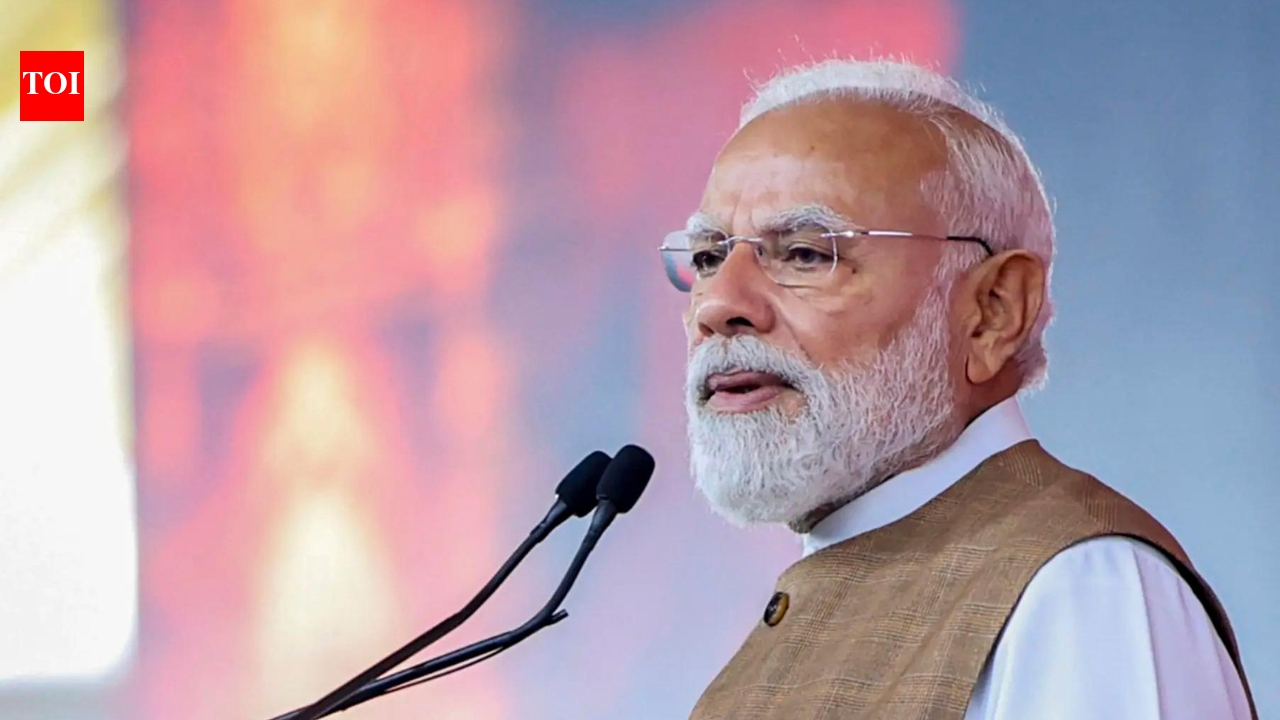
NEW DELHI: Prime Minister Narendra Modi on Tuesday said India had handled the fallout of the West Asia crisis “effectively”, while accusing the Opposition of attempting to “spread anarchy” by fuelling panic over fuel shortages and rising prices.Addressing a rally in Vav-Tharad in Gujarat, Modi said global disruptions caused by tensions involving the United States, Israel and Iran had affected energy supplies worldwide, particularly diesel, petrol and gas. He said India, however, had managed to keep the situation under control due to “strong foreign policy and national unity”.“The situation unfolding in West Asia is impacting the entire world,” he said, adding that despite rising global difficulties, India had avoided major disruption. “But at a time when the country needs unity, Congress leaders are spreading rumours and fear, trying to incite people to queue at fuel pumps,” he said, accusing the party of seeking political gains from the crisis.Modi also said India was capable of handling any crisis and would emerge as a global leader in renewable energy, pointing to ongoing investments in transmission and infrastructure.The Prime Minister’s remarks came as he inaugurated and laid the foundation stone for development projects worth over Rs 20,000 crore across Gujarat, spanning sectors such as power, railways, road transport, health, urban development and rural infrastructure. Among the key projects was the Ahmedabad-Dholera Expressway, built at a cost of over Rs 5,100 crore, along with multiple rail upgrades and urban initiatives aimed at improving connectivity and public services.He also referred to the strategic importance of Deesa, saying a long-pending airbase project had been stalled for years under previous governments. “Files were buried, but once you gave me responsibility, we revived the project. Today, a major Air Force base stands there,” he said.

[ad_2]

Source link

Vedanta tells Supreme Court its revised Jaypee bid tops Adani offer

[ad_1]

Vedanta tells Supreme Court its revised Jaypee bid tops Adani offer

Mining billionaire Anil Agarwal’s Vedanta Ltd has told the Supreme Court that its tweaked bid for the bankrupt Jaiprakash Associates Ltd was rejected despite being better than Adani Group’s offer.In its petition challenging the lenders’ decision to accept Adani’s takeover offer, Vedanta contended that its addendum bid is about Rs 3,400 crore higher in gross value terms and roughly Rs 500 crore more in net present value compared to the Adani Group’s offer.In the bid challenge process and final resolution plan submitted on October 14, 2025, Vedanta offered Rs 3,770 in upfront payment and Rs 3,100 crore at the end of the 365th day from the effective date to secured financial creditors. It also offered an equity infusion of Rs 400 crore into Jaypee.Thereafter, on November 8, 2025, Vedanta submitted an addendum via email, offering to raise the upfront cash payout to Rs 6,563 crore and equity infusion to Rs 800 crore while keeping the overall bid value at Rs 12,505.85 crore.The committee of creditors (CoC) accepted Adani’s bid because it offered around Rs 6,000 crore upfront cash payment and faster payments for the remaining amount within two years, compared to Vedanta’s longer payment timeline of up to five years.According to sources, Vedanta, in its petition before the Supreme Court, has alleged that lenders acted “arbitrarily” while rejecting its bid to acquire Jaiprakash Associates Ltd (JAL) and also questioned the role of the resolution professional in the ongoing insolvency process.Vedanta Ltd has also mentioned that the National Company Law Tribunal (NCLT) erred in appreciating that the commercial wisdom of lenders is not ‘absolute’ and therefore, the same can be set aside in cases of ‘arbitrariness, perverseness or capricious exercise’ of power.In November last year, the CoC of JAL, which went into insolvency in June 2024, approved the Rs 14,535 crore resolution plan of Adani Enterprises Ltd to acquire the debt-ridden Jaypee Group’s flagship firm that has a presence in many sectors, including cement, hospitality, power and real estate, among others.The grand total of Vedanta’s bid was Rs 17,926.21 crore, which included a Rs 1,200 crore payment towards settlement for sports city dues.Earlier this month, the NCLT approved the Adani bid. Vedanta moved the appellate tribunal NCLAT, which declined to stay the implementation of Adani’s bid. This forced Vedanta to approach the apex court the next day.In the petition, Vedanta Ltd has requested the apex court to pass an ex parte ad interim order staying the operation, implementation and effect of the order passed by the National Company Law Appellate Tribunal (NCLAT).In its petition, Vedanta Group has said Adani’s financial bid is substantially lower in value compared to its bid, which defeats the primary objective of value maximisation under the Insolvency & Bankruptcy Code.Vedanta group contended that the Allahabad bench of NCLT “erred in characterising the net present value differential” of Rs 500 crore as a “slightly higher amount” and the gross value differential of Rs 3,400 crore as capable of being overridden by subjective qualitative parameters.It further said the Evaluation Matrix, RFRP and Process Note relied on by the NCLT are instruments designed to achieve value maximisation and must be read harmoniously with the objectives of the Code.The NCLT has erred in not appreciating that the lack of transparency in the challenge process, particularly the failure to disclose the two identified criteria as per the Process Note, which vitiated the entire process, the mining conglomerate said.Moreover, the NCLT’s finding that there is no legislative intent for recording reasons by the CoC while approving or rejecting a resolution plan is erroneous and contrary to the settled law, the petitioner said.It further said CoC’s decision-making process lacked the requisite deliberation and reasoning in as much as the lenders abdicated their entire decision-making responsibility to an external consultant.The Vedanta group had also said that the appellate tribunal NCLAT has failed to appreciate that permitting the implementation of the resolution plan would result in ‘irreversible’ consequences.This includes the acquisition of shares of JAL by Adani Enterprises, transfer of management of the company, handover of key assets, and operational takeover, which will make its appeal ‘infructuous’.Moreover, the NCLAT has also failed to appreciate that the implementation of Adani’s resolution plan during the pendency of its appeal would lead to “creation of third-party rights”, including disbursement of upfront payments to creditors, which cannot be unwound.Besides, the NCLAT failed to appreciate that once the approved resolution plan is implemented, execution of next steps, such as acquisition of shares of JAL by Adani, payment to creditors, grant of statutory approvals, and assumption of control over the Corporate Debtor’s business and assets, would create a fait accompli, effectively reducing its appeal to a mere academic exercise.Moreover, the NCLAT failed to consider that the approved resolution plan of Adani Enterprises has provisions for time-bound implementation, and there is a real, well-founded apprehension that the successful bidder shall take “irreversible steps” towards the implementation that would render Vedanta’s appeal practically infructuous.Vedanta also said that the Resolution Professional of JAL ‘exceeded his neutral role’ by offering an opinion on the addendum and characterising it as violative of the Process Note, without providing the CoC with a proper opportunity for independent evaluation.

[ad_2]

Source link

Indian business delegation visits China after five-year gap; focus on EV, clean energy ties

[ad_1]

Indian business delegation visits China after five-year gap; focus on EV, clean energy ties

In a significant step following the recent thaw in bilateral ties, an Indian business delegation has travelled to China, marking the first such visit in over five years after relations were frozen due to the 2020 Eastern Ladakh military standoff.A delegation from the Punjab, Haryana, Delhi Chambers of Commerce and Industry (PHDCCI) is currently visiting Shanghai and Jiangsu province–one of China’s most industrialised regions–from March 29 to April 4, reported news agency PTI.The visit comes after India and China moved towards normalisation of ties last year, following engagements between Prime Minister Narendra Modi and Chinese President Xi Jinping in 2024 and 2025 on the sidelines of BRICS and SCO summits.

Watch

‘China And India Cannot Be Moved Apart’: Chinese Envoy’s BIG Message To Delhi, Urges Good Ties

During the visit, the Indian Consulate General in Shanghai, led by Pratik Mathur, hosted a Business Round Table with the PHDCCI delegation and leading companies and financial institutions from Eastern China.Welcoming the delegation, Mathur told PTI that India continues to be the world’s fastest-growing major economy with a young demographic profile, offering strong opportunities for global partnerships and investments.He highlighted emerging sectors such as New and Renewable Energy, Electric Vehicles (EVs), infrastructure, connectivity and information technology as key areas for collaboration.The visit aims to strengthen engagement between Indian businesses and their counterparts in Eastern China, particularly in Shanghai and the provinces of Zhejiang and Jiangsu, while encouraging new trade and investment partnerships.Apart from industrial discussions, the delegation is also engaging in technology partnerships and business-to-business (B2B) meetings to deepen cooperation.These interactions are aligned with India’s broader goal of strengthening domestic capabilities, fostering innovation and advancing its long-term vision of becoming a developed nation by 2047, according to a Consulate release.The roundtable saw participation from major Chinese firms and financial institutions, including HSBC and Wuxi Technology Development Corporation, reflecting interest in expanding cooperation with Indian companies.Representatives from European business groups also took part in the discussions, sharing perspectives on opportunities arising from the proposed India–European Union Free Trade Agreement.Participants underlined the importance of building resilient and sustainable global supply chains with a central role for Indian businesses.According to a brochure on the visit, the delegation is focusing on exploring partnerships in clean energy ecosystems, studying China’s advancements in electric mobility and battery technologies, and identifying investment and collaboration opportunities.The objectives include fostering B2B ties, visiting industrial and innovation parks, and understanding renewable integration and supply chain models.

[ad_2]

Source link

Iran claims it shot down two US MQ-9 drones – shares video

[ad_1]

Iran’s Islamic Revolutionary Guard Corps (IRGC) claimed that their air defence systems shot down a US-made MQ-9 Reaper unmanned aerial vehicle over the central city of Isfahan on Tuesday.In a statement, the IRGC said the long-range drone was “intercepted and destroyed” by an advanced system forming part of Iran’s integrated air defence network. Iran’s local media shared a video claiming the attack saying, “The moment of impact and explosion of two MQ-9 drones in the airspace over Isfahan last night.”As tensions in the Middle East escalate, Iran earlier this week also claimed that it destroyed a US E-3 Sentry surveillance aircraft during a March 27 missile and drone strike on Prince Sultan Air Base near Riyadh. The base, a key hub for American military operations, reportedly sustained significant damage, with at least 12 US service members injured. Images circulating on social media purportedly show the aircraft burned out, though the claim has not been independently verified.The aircraft, identified in reports as serial number 81-0005, was parked on a taxiway at the time of the attack. While it is unclear if it was directly hit, defence experts say even a nearby blast could have destroyed it due to shrapnel impact and the high risk of fire, according to military website War Zone.

[ad_2]

Source link

Asia to face worst impact of Iran war energy crisis as Hormuz choke hits supplies, says Kpler

[ad_1]

Asia to face worst impact of Iran war energy crisis as Hormuz choke hits supplies, says Kpler

Asia is likely to face the worst impact of the ongoing Iran war and the resulting energy disruptions, with supply gaps emerging across key economies, global maritime analytics firm Kpler has warned, as reported AFP.“We think Asia will, for now, be the ones suffering the most,” Kpler president Jean Maynier told AFP in an interview at the company’s Singapore office.

Watch

Iran War ‘Nears’ End? Trump Signals US May ‘End Operation’ Despite Hormuz Closure | Report

He said the region lacks sufficient domestic energy resources to offset supply disruptions caused by restricted flows through the Strait of Hormuz.“It will not be enough in China, it will not be enough to cover in big countries like the Philippines or Indonesia. So it’s a real energy crisis,” Maynier said.The disruption has already begun to show visible effects. Maynier pointed to the Philippines, where authorities have declared a national energy emergency amid tightening supplies.“It’s really bad for Asia and we are not optimistic if the event continues,” he said, adding, “We hope at some point that politicians will find a solution.”Kpler, a Brussels-based firm founded in 2014 that owns the MarineTraffic platform, tracks global commodity flows and shipping activity.Data from the firm shows a sharp decline in vessel movement through the Strait of Hormuz since the conflict escalated following US-Israel strikes on Iran on February 28.While 17 commodities vessels crossed the strait over the weekend — including 12 on Saturday — overall traffic remains significantly lower. As of 1700 GMT on Monday, only 196 commodities vessels had crossed the route this month, far below pre-war levels.Of these, 120 were oil tankers and gas carriers, with most shipments moving eastward out of the strait.The Strait of Hormuz is a critical artery for global energy trade, and continued disruption is expected to intensify supply constraints and price pressures, particularly for energy-import dependent Asian economies.

[ad_2]

Source link

Govt notifies Finance Act 2026: New income tax rules, surcharge changes come into effect from April 1

[ad_1]

Govt notifies Finance Act 2026: New income tax rules, surcharge changes come into effect from April 1

The government has notified the Finance Act 2026, bringing into force the tax changes approved under the Union Budget for 2026-27, according to a gazette notification issued by the Ministry of Law and Justice.“The following Act of Parliament received the assent of the President on March 30, 2026 and is hereby published for general information,” the notification said.The Act gives legal effect to the Centre’s financial proposals for the upcoming fiscal year beginning April 1.Parliament had cleared the Finance Bill 2026 last week, with the Rajya Sabha returning it to the Lok Sabha by a voice vote after a brief discussion. The Lok Sabha had earlier passed the bill on March 25 along with 32 amendments, with Finance Minister Nirmala Sitharaman responding to members’ queries.Also Read: Your income tax changes from April 1, 2026! Top 10 things salaried taxpayers should know about new rules & tax regime choiceUnder the Budget 2026-27, total expenditure is pegged at Rs 53.47 lakh crore, marking a 7.7 per cent increase over the current fiscal ending March 31. Capital expenditure has been set at Rs 12.2 lakh crore.The government has projected gross tax revenues at Rs 44.04 lakh crore and gross borrowing at Rs 17.2 lakh crore, with the fiscal deficit estimated at 4.3 per cent of GDP for FY27, lower than 4.4 per cent in the current fiscal.Also Read: ITR filing AY 2026-27: Income Tax Return forms ITR-1 to ITR-7 notified; key changes, eligibility explainedAmong key tax changes, the Act introduces a flat 12 per cent surcharge on capital gains earned by individual and corporate shareholders from company share buybacks, effective April 1.The move is expected to increase the effective tax burden on such gains, replacing the earlier slab-based surcharge structure. At present, no surcharge is levied on taxable income up to Rs 50 lakh, while income between Rs 50 lakh and Rs 1 crore attracts a 10 per cent surcharge on capital gains from buybacks

[ad_2]

Source link