Breaking News
Less shower time, no elevators & more: How the Middle East war is seeping into daily life worldwide

[ad_1]
Less shower time, no elevators & more: How the Middle East war is seeping into daily life worldwide

The Middle East conflict has now crossed the one-month mark, with its effects causing ripples far beyond the region and into everyday life across the globe. What began as a confrontation between Iran and Israel is increasingly disrupting global supply chains, pushing up costs, and forcing governments and individuals to adjust.The war entered a new phase on Saturday as Yemen’s Houthi rebels launched their first strike on Israel since the conflict began, opening a fresh front in a crisis that has already spread across multiple countries and unsettled trade and energy markets. As the geopolitical situation intensifies, its impact is increasingly being felt across continents: from farmers scaling back production to governments enforcing energy-saving measures, highlighting how drastically the war is reshaping daily lives, not just in the Middle East but across the globe.AustraliaAs fertiliser prices climb, farmers in Australia are forced to plant less wheat. Farmers further called on the federal government for tax relief and support in fertiliser purchases to cope with rising fuel costs, as the national cabinet prepares to consider further assistance for businesses. While details of the meeting remain undisclosed, state premiers have urged stronger national coordination. The government is not expected to support petrol rationing, with health minister Mark Butler favouring minimal intervention despite looming fuel supply concerns.Concerns have intensified as a third of the world’s fertiliser is shipped through the Strait of Hormuz, which is currently under Iran’s chokehold. In response, the United States has lifted sanctions on Venezuela to allow fertiliser exports. South KoreaSouth Korean citizens are forced to cut down bathing time, appliance usage as the country has rolled out a nationwide campaign to curb energy use, asking people to take shorter showers, opt for bicycles for short journeys, and avoid charging phones and electric vehicles at night.The push comes as concerns grow over oil and gas supply disruptions linked to the US-Israeli war on Iran. The country relies entirely on imports for its energy needs, with nearly 70% of its crude oil supply previously moving through the Strait of Hormuz, a route where tanker traffic has nearly come to a halt since the conflict began.This has intensified pressure on the economy, as surging oil prices and a weakening won against the dollar together weigh on South Korea’s energy-dependent manufacturing industries.ThailandIn Thailand, energy-saving measures are being reinforced both symbolically and practically. The prime minister has begun wearing short-sleeved shirts to work, encouraging the public to follow suit, while government offices have been told to cut back on air conditioning. Civil servants have also been instructed to use stairs instead of elevators and choose lighter attire over formal suits to help reduce overall energy use.Philippines Efforts to reduce energy consumption are being stepped up elsewhere as well. In the Philippines, civil servants have been asked to avoid using elevators, even as President Ferdinand Marcos declared a state of “national energy emergency”, warning that the Middle East war poses “an imminent danger of a critically low energy supply”.The emergency, set to last for an initial year, was announced hours after the country’s energy secretary said the Philippines would increase output from coal-fired power plants to keep electricity costs in check as the conflict disrupts gas shipments.EgyptEgypt has also moved to curb energy use, cutting shopping days to five a week as part of wider restrictions introduced amid rising fuel costs. Retail outlets, restaurants and cafes are now required to shut by 21:00 each night, alongside measures such as reduced street lighting and limits on remote working.The government has described these as “exceptional measures” to ease mounting pressure on energy supplies. Egyptian PM Mostafa Madbouly said that the country’s petrol expenditure has more than doubled in recent months. While tourism-related businesses have been exempted, the broader economy continues to feel the strain, particularly due to its reliance on imported fuel.BangladeshIn Bangladesh, cancelled flights have disrupted textile exports, causing a build-up of garments at airports. The country exports nearly $50 billion annually, with ready-made garments making up more than 80% of total shipments.The risks are especially high for Dhaka, as nearly 90% of its fuel imports come from the Middle East. At the same time, its biggest markets, the European Union and the United States, rely heavily on shipping routes that are now facing disruptions.UAE and QatarFears are mounting over delays in critical medical supplies, with cancer drugs at risk of missing delivery timelines as cargo movement slows in key hubs such as Dubai and Doha.At the same time, tightening fuel supplies are driving up the cost of everyday goods. Track suits made from petrochemicals could become more expensive, while party balloons may be harder to source as disruptions hit Qatar, which produces a third of the world’s helium as a by-product of natural gas.Bahrain and Saudi ArabiaThe conflict has also begun to disrupt global events, with Formula 1 races in Bahrain and Saudi Arabia scrapped due to missile threats targeting Gulf nations.United StatesIn the United States, rising oil prices are stoking fears of higher inflation, driving up mortgage rates and making home buying more expensive.Consumers are likely to feel the strain in multiple ways, both through domestic commerce and the interconnected nature of global trade. With supply chains stretching across regions, where raw materials are sourced in one place, manufactured in another, and then shipped to consumers, disruptions are expected to filter through to everyday goods and services.BrazilSugar prices are seeing mixed trends as Brazil’s mills adjust production. While high energy prices are pushing some towards biofuel, supply disruptions linked to the Strait of Hormuz are offering some support to sugar prices.However, prices fell on Friday due to higher production in Brazil, where mills are using more cane for sugar instead of ethanol. Data from Unica showed that 2025–26 Centre-South sugar output (October to mid-March) rose 0.7% year-on-year to 40.25 MMT, with 50.61% of cane used for sugar, up from 48.08% last year.Sri Lanka and LaosSome governments have taken more stringent steps to manage the crisis. Sri Lanka, for instance, has declared Wednesdays a public holiday to reduce commuting and conserve fuel, while Laos has moved to a three-day school week.Sri Lanka remains particularly exposed, importing around 60 per cent of its energy needs and holding reserves that last only about a month. In response, authorities have reintroduced a QR-based fuel rationing system, similar to the one used during the 2022 economic collapse. Under this system, motorbikes receive eight litres of petrol per week, three-wheelers 20 litres, cars 25 litres, buses 100 litres of diesel, and lorries 200 litres.As the conflict drags on, its effects are becoming harder to contain, cutting across borders and sectors with growing intensity. What began as a regional crisis is now steadily reshaping global trade flows, energy use, and everyday life, leaving countries to navigate a widening web of economic and logistical challenges.

[ad_2]

Source link

‘Rohit 2.0 will worry all IPL teams’: Kumble hails MI star’s blazing return | Cricket News

[ad_1]

‘Rohit 2.0 will worry all IPL teams’: Kumble hails MI star’s blazing return

NEW DELHI: Former India captain Anil Kumble believes a resurgent Rohit Sharma could spell trouble for the rest of the IPL, after the Mumbai Indians opener announced his return in style with a match-winning knock against Kolkata Knight Riders.Rohit smashed a scintillating 78 off just 38 balls to power MI to a six-wicket win in their season opener at the Wankhede Stadium, ending their long-standing jinx of losing the first match of an IPL campaign.Go Beyond The Boundary with our YouTube channel. SUBSCRIBE NOW!Kumble was particularly struck by the authority and ease with which Rohit dominated quality bowling, calling it a sign of a dangerous new phase in his career.“Rohit Sharma seems to have arrived in his 2.0 avatar, and his innings showed he is ready to dominate again. The way he hit the ball all around the ground reminded me of his prime,” Kumble said on Star Sports.The former India coach highlighted how Rohit made light work of a potent spin attack featuring Sunil Narine and Varun Chakravarthy, along with pacer Blessing Muzarabani.“It is not easy to hit sixes against bowlers like Varun Chakravarthy, Sunil Narine and Blessing Muzarabani, but he made it look easy. He has worked a lot on his fitness… when you come back after a short break, it takes time to find rhythm,” Kumble noted.“This was a fantastic innings… the six-hitting looked easy, and even though the boundaries were small, those shots were going into the stands. This knock shows that Rohit means business and this version of him will worry all IPL teams,” he added.KKR’s spin strategy under scrutinyWhile praising Rohit, Kumble also pointed out tactical lapses from Kolkata Knight Riders, particularly their under-utilisation of key spinners.“KKR are relying too much on Sunil Narine and Varun Chakravarthy, and Narine did not even complete his quota, which was surprising. The disappointing part was that Ajinkya Rahane did not bring him on in the Powerplay,” he said.According to Kumble, the delay in introducing Narine proved costly as Mumbai’s openers had already taken control.“By the time Narine came on, the damage was already done… they need to use their resources better. When you have two world-class spinners, you need to use them well,” he added.

[ad_2]

Source link

LPG crisis eases: Operations back to normal in many factories as commercial LPG supplies improve; workers return

[ad_1]

LPG crisis eases: Operations back to normal in many factories as commercial LPG supplies improve; workers return
The Centre has designated sectors such as steel, automobiles, textiles, dyes, chemicals and plastics as priorities. (AI image)

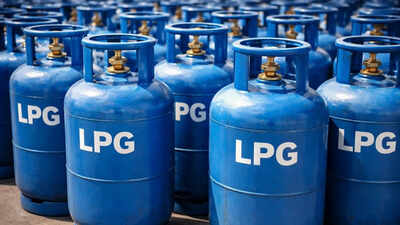
LPG crisis for factories across the country seems to be easing as the government steps up availability of commercial liquefied petroleum gas. Production disruptions are gradually subsiding as supplies of commercial LPG improve and migrant workers return to factories, supported by companies providing meals or alternative cooking solutions.This improvement follows the government’s move on Friday to raise the allocation of commercial LPG by an additional 20 percentage points, taking it to 70 per cent of pre-disruption levels that had been affected by the Gulf conflict and Iran’s near blockade of the Strait of Hormuz.The Centre has designated sectors such as steel, automobiles, textiles, dyes, chemicals and plastics as priorities, given their labour-intensive operations and strong interlinkages with other industries, according to an ET report.Companies operating in these sectors have started to see operations gradually stabilise.Liquefied petroleum gas is extensively used across industries such as automobiles and electronics, particularly in processes like brazing and paint shop operations, as well as in segments like food processing.

Availability of Commercial LPG supplies

Industry players indicated that LPG availability has become more stable.“Earlier we had visibility of one-two days; now it’s about a week,” said Kamal Nandi, head of the appliances business at Godrej Enterprises. “There are no issues with labour or raw materials, and production is running at full throttle,” he was quoted as saying.An executive from the automobile sector noted that supply constraints at smaller vendors are easing, while larger manufacturers have managed to limit disruptions by adopting alternative fuel options.“The higher allocation for non-domestic LPG and inclusion of automobiles as a priority sector is a big help,” he said.Mayank Shah, vice president at Parle Products, said improved LPG availability is enabling previously impacted plants to move back towards optimal production levels. He added that companies have urged the government to include packaged foods among the priority sectors.Ajay DD Singhania, chief executive of Epack Durable, noted that supplies have recovered to nearly 60 per cent of normal levels and are likely to rise to around 80 per cent this week. “The new normal is that we have to follow up daily to secure LPG supplies, but availability has improved,” Singhania said. “Workforce retention is no longer a challenge with us offering meals or cooking support. However, production losses over the past three-four weeks are not recoverable.Attendance levels have also improved as several firms introduced canteen meals, reducing reliance on LPG for cooking. Earlier, supply disruptions had led to absenteeism among migrant workers and a temporary outflow, as higher black market prices and the shutdown of small eateries and mess facilities made food access difficult.A senior executive in the auto components sector said companies are now providing meals across shifts or offering incentives of up to Rs 5,000 to offset higher LPG costs and retain workers. “Attendance has returned to normal,” he said.Avneet Singh Marwah, chief executive of Super Plastronics, said the migrant workforce has returned as supply pressures have eased. The company produces televisions under the Kodak, Thomson and Blaupunkt brands.

[ad_2]

Source link

Income tax overhaul: Key changes you should watch for from April 1, 2026

[ad_1]

Income tax overhaul: Key changes you should watch for from April 1, 2026
One of the most notable changes is the introduction of a unified ‘Tax Year’. (AI image)

By Sunil BadalaAs we approach FY 2026-27, the country stands at the cusp of one of the most significant overhauls of its income-tax framework in decades. With the introduction of the new Income-tax Act, 2025 and the Income-tax Rules, 2026, the Government aims to make the system even further simplified, streamlined, transparent, and taxpayer-friendly.For salaried individuals, this transition marks more than just a procedural change. It signals quite a shift in how income is reported, assessed, and taxed. The reforms seek to simplify compliance, reduce ambiguity, and align India’s tax administration with global best practices.Some key changes that salaried individuals should look out for are mentioned below:A unified ‘Tax Year’ conceptOne of the most notable changes is the introduction of a unified ‘Tax Year’, replacing the long-standing distinction between Previous Year (PY) and Assessment Year (AY). This move is expected to eliminate confusion, particularly among individual taxpayers, by aligning income earnings, assessment periods and other aspects (like due dates, time limits etc.) with a single reference point.Expanded house rent allowance (HRA) benefits and disclosure normsThe HRA benefits have also been expanded. Salaried taxpayers residing in rented premises in cities such as Bengaluru, Hyderabad, Pune, and Ahmedabad may now be eligible for higher exemption limits (reference amount being increased from 40 per cent of basic salary to 50 per cent of basic salary), bringing them at par with traditionally classified metro cities like Mumbai, Delhi, Chennai, and Kolkata.Additionally, a stricter disclosure requirement has been introduced. Taxpayers must now declare their relationship with the landlord. This measure is aimed at curbing potential misuse and improving transparency in claims.Enhanced allowances for education and meal expensesIn a move likely to benefit middle-class households, the tax exemption limits for children’s education and hostel allowances have been significantly increased. Education allowance limits have been increased from Rs 100 per month to Rs 3,000 per month per child, while hostel allowance limits have been increased from Rs 300 to Rs 9,000 per month per child. While this may still be only a fraction of the cost of education in certain cities and towns it is a welcome move to enhance these age-old limits.Similarly, the tax-free limit for employer provided meals and non-alcoholic beverages as well as food coupons has been enhanced from Rs 50 per meal to Rs 200 per meal. This increase reflects inflationary trends and aims to improve employees’ take-home pay.Revised perquisite valuation for employer provided carsThe valuation of perquisites for employer provided cars has also been substantially revised and a valuation mechanism has been introduced for electric vehicles as well. Monthly taxable values range from Rs 2,000 to Rs 7,000 per month, with an additional Rs 3,000 per month where a chauffeur is provided. These updated slabs replace the earlier valuations of Rs 600 to Rs 2,400 (plus Rs 900 for chauffeur), potentially increasing the tax liability for employees availing such benefits.Broader changes to perquisites and exemptionsSeveral employee related exemptions and perquisite thresholds have been revised upward. These include higher transport allowances for differently abled employees, increased limits for tax-free employer provided gifts and vouchers, updated valuation rules for education benefits, and expanded exemptions for employer provided loans.Procedural overhaul and new compliance requirementsThe reforms are not just limited to tax computation, they also introduce procedural changes. Key tax forms have been replaced or consolidated, for instance, Form 130 has replaced Form 16 (popularly known as salary certificate), while Form 124 has taken the place of Form 12BB (employee declaration). Additionally, various TDS forms and PAN application processes have been streamlined.A new declaration requirement under Form 157 has been introduced for individuals leaving India, enhancing reporting obligations in cross-border scenarios where either no PAN or income below taxable limit. Furthermore, taxpayers claiming foreign tax credit exceeding Rs 100,000 would now need certification from a Chartered Accountant in Form 44 which is a replacement of Form 67 under the current law required when a taxpayer is claiming foreign tax credit.Additionally, certain Budget 2026 recommendations (which is yet to receive the Presidential assent) are also noteworthy, which are expected to impact the salaried taxpayers effective 1 April 2026:Extended timelines for filing ReturnsTo provide greater flexibility, revised tax returns filing deadline is proposed to be extended to March 31 of the next tax year, instead of the earlier December 31 deadline, subject to a nominal fee.Similarly, the due date for filing original returns for taxpayers with non-audit business income is proposed to be extended from July 31 to August 31, offering additional time for compliance.Rationalisation of TCS and relief measuresIt is also proposed that for overseas tour packages and education/ medical purposes remittances, TCS rates may be reduced to 2% from the current 5% or 20%. This change is expected to provide cash flow relief to families incurring such expenses.Foreign Assets Disclosure SchemeAnother noteworthy initiative is the proposed Foreign Assets Disclosure Scheme for small taxpayers. This would offer a six-month window for voluntary disclosure of previously unreported foreign assets, allowing taxpayers to regularise their filings upon payment of applicable taxes and levies.The proposed reforms signal a decisive shift toward simplification, transparency, and improved compliance. While the transition may require adjustment, these changes are aimed to reduce complexity and enhance efficiency, ultimately aimed at creating a more streamlined and taxpayer friendly system aligned with India’s evolving economic landscape.(Sunil Badala is Partner and National Head of Tax, KPMG in India)

[ad_2]

Source link

Petrol, diesel price today (March 30, 2026): Global crude oil prices rise; what’s the situation in India?

[ad_1]

Petrol, diesel price today (March 30, 2026): Global crude oil prices rise; what's the situation in India?
In the national capital, petrol continued to be priced at Rs 94.77 per litre, while diesel held steady at Rs 87.67 per litre. (AI image)

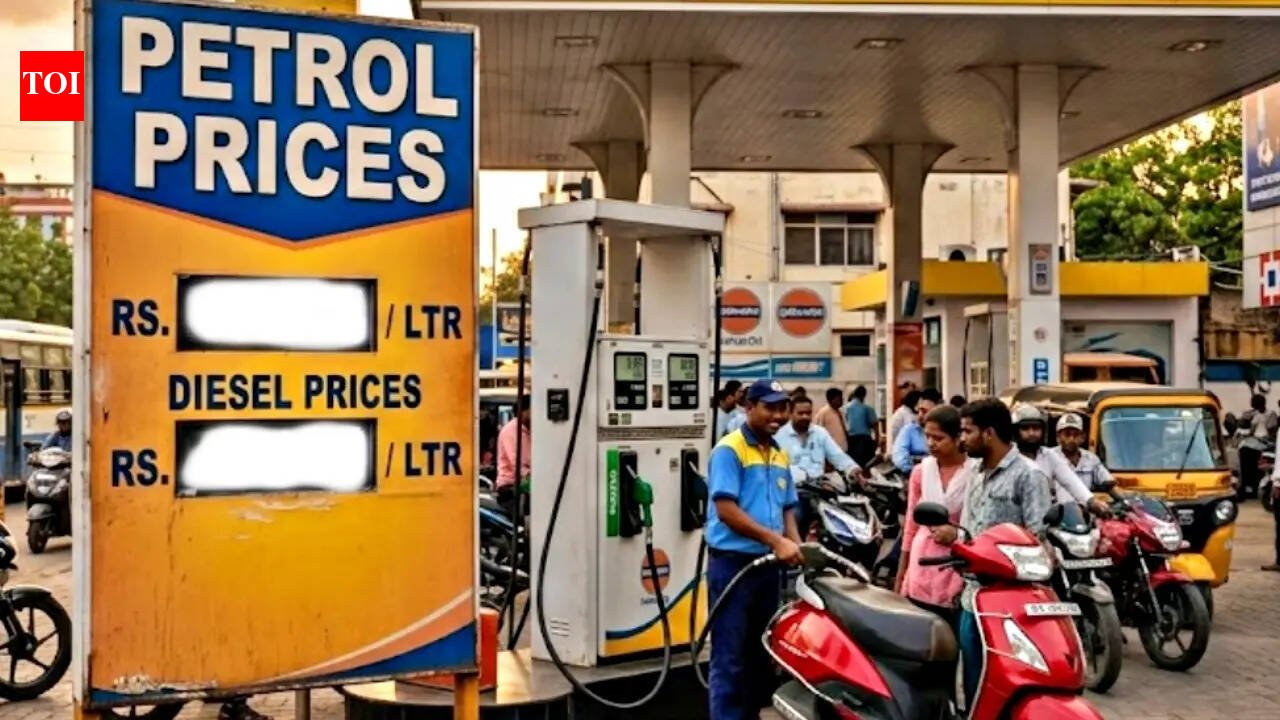
Petrol, diesel prices today: Amid US-Iran war and continued transit issues via the Strait of Hormuz, countries around the world have been forced to either raise petrol, diesel, gas prices or announce rationing measures. In India, so far petrol and diesel prices have not been hiked by state-run refiners despite global crude oil prices climbing to around $120 per barrel.Last week, the government announced a big excise duty cut on petrol and diesel prices, in effect cushioning consumers from a hike, while also reducing the blow for oil marketing companies.To strengthen domestic supply, the government has reduced excise duty on petrol and diesel by Rs 10 per litre and introduced export duties of Rs 21.50 per litre on diesel and Rs 29.50 per litre on aviation turbine fuel.

Petrol, diesel prices today

Despite a rise in global oil prices on Monday amid growing concerns over escalating tensions in the Middle East, retail prices of petrol and diesel in major Indian cities remained unchanged on March 30, 2026. In the national capital, petrol continued to be priced at Rs 94.77 per litre, while diesel held steady at Rs 87.67 per litre. In Mumbai, petrol was unchanged at Rs 103.54 per litre and diesel at Rs 90.03 per litre.With the excise duty cut in place, retail prices of petrol and diesel will remain unchanged. The reduction is aimed at easing the financial burden on public sector oil marketing companies such as Indian Oil Corporation, Bharat Petroleum Corporation and Hindustan Petroleum Corporation. These companies have been selling fuel domestically at prices significantly below their cost of supply. At prevailing global crude levels, their losses are estimated at about Rs 26 per litre on petrol and Rs 81.90 per litre on diesel, translating into a combined daily under-recovery of nearly Rs 2,400 crore. The excise duty cut of Rs 10 per litre helps absorb part of these losses, allowing continued supply without altering pump prices.In comparison with global trends, the situation stands out. Fuel prices have climbed between 30 and 50 per cent across South and South-East Asia, risen by around 30 per cent in North America, and increased by about 20 per cent in Europe since the current crisis began. Meanwhile, the government has intensified efforts to ensure steady availability of fuel and gas following the disruption at the Strait of Hormuz, while appealing to the public not to engage in panic buying after isolated surges were reported at some fuel stations.In an official update on the evolving situation linked to the West Asia conflict, the oil ministry said on Sunday that domestic refineries are operating at elevated capacity levels with sufficient crude stocks, and supplies of petrol and diesel remain adequate across the country. Fuel outlets continue to function normally, although misinformation led to brief spikes in demand in certain regions.“There were certain rumours, which led to panic buying at some retail outlets in a few states, resulting in unusually high sales and heavy crowding at retail outlets. However, it is informed that there are adequate stocks of petrol and diesel available at all petrol pumps in the country,” the ministry said.

LPG, LNG availability

In the natural gas segment, priority allocation has been given to essential sectors, with full supply directed towards piped natural gas and CNG consumers, while industrial and commercial users are receiving around 80 per cent of their usual consumption. Fertiliser units are being supplied at 70 to 75 per cent levels, alongside efforts to procure additional LNG cargoes.The ministry also noted that expansion of city gas networks is being fast-tracked by simplifying approvals and encouraging a transition from LPG to piped natural gas. Over 2,90,000 new PNG connections were added in March, with companies such as Indraprastha Gas, Mahanagar Gas, GAIL Gas and BPCL offering incentives to accelerate adoption.While LPG supply has been affected by geopolitical developments, distribution continues without reported shortages. Daily refill deliveries have exceeded 55 lakh cylinders, and monitoring measures have been tightened to prevent diversion. Supply of commercial LPG has recovered to about 70 per cent of pre-crisis levels, with priority given to hospitality, food services and key industrial users.Additionally, kerosene allocations to states have been increased, and enforcement action against hoarding and black marketing has been stepped up, with nearly 2,900 inspections carried out and around 1,000 cylinders seized recently.State governments have been instructed to enhance oversight, conduct daily reviews, counter misinformation and expedite approvals for gas infrastructure.“The government reiterates its advice to the public not to believe rumours,” the statement said.“The government is making all efforts to ensure the availability of petrol, diesel and LPG. Avoid panic purchases of petrol, diesel and booking of LPG.”

[ad_2]

Source link

Sergey Brin: Google cofounder Sergey Brin to employees at town hall: This year a big role will be played by … |

[ad_1]

Google cofounder Sergey Brin to employees at town hall: This year a big role will be played by ...

Google employees have been buzzing about a new internal tool called Agent Smith, named after the antagonist in The Matrix. The tool is created to automate various tasks such as coding, run asynchronously in the background, and even be accessed via mobile phones. According to a report by Business Insider, the tool became so popular within the organisation that Google had to restrict access in order to manage demand. Designed on Google’s existing agentic coding platform Antigravity, Agent Smith interacts with various internal tools and can autonomously plan and execute workflows. Unlike earlier assistants, it can pull up documents linked to employee profiles and be used directly from Google’s internal chat platform.

Google cofounder Sergey Brin’s message to employees

As per the BI reports, at a recent town hall with sales employees, Google cofounder Sergey Brin also stressed on the fact that AI agents will be a major focus for Google in 2026. Brin, who returned to hands-on work at Google in 2023, said agents represent the next big leap in productivity. Along with this, he also hinted at tools similar to “OpenClaw,” though it’s unclear if he was referring to Agent Smith or another project.In the same meeting, Google’s business chief Philipp Schindler also joked that he could tell when Brin’s agent was responding to messages on his behalf underscoring how deeply these tools are already being integrated into workflows.

AI adoption becoming mandatory at Google

Google’s leadership, including CEO Sundar Pichai, has been pressing employees to adopt AI tools across technical and non-technical roles. In some cases, usage of AI is now factored into performance reviews. Engineers were told last year that AI adoption was expected, and more recently, non-technical staff have been given the same directive.Beyond top-down mandates, employees themselves are experimenting with initiatives like Project EAT, aimed at standardizing AI adoption across Google’s infrastructure teams.The comments made by Brin highlight the boarder industry trend as Meta CEO Mark Zuckerberg is also reportedly building his own AI agent to help run the company, while other tech giants are racing to embed agentic AI into daily operations.

[ad_2]

Source link

Gold price prediction today: Is gold in bearish territory? Key levels to watch out for March 30, 2026 week

[ad_1]

Gold price prediction today: Is gold in bearish territory? Key levels to watch out for March 30, 2026 week
Gold is witnessing sharp swings in a broad range amidst mixed signals. (AI image)

Gold price prediction today: Gold prices seem to be exhibiting a corrective phase with a bearish tone, feels Manav Modi, Senior Analyst, Commodity Research at Motilal Oswal Financial Services Ltd. The analyst shares his outlook on the yellow metal:Gold is witnessing sharp swings in a broad range amidst mixed signals around a potential US–Iran ceasefire, with optimism fading after Iran denied negotiations despite positive remarks from Donald Trump. Prices later rebounded on bargain buying following a sharp 15% monthly decline driven by ETF outflows and reduced investor exposure. While geopolitical tensions and risks around the Strait of Hormuz offered support, gains remained capped by a stronger dollar and elevated bond yields amid “higher-for-longer” rate expectations. Physical demand showed slight improvement in India, while China stayed subdued. Focus now shifts US consumer confidence and jobs market data later this weekGold on MCX daily chart reflects a corrective phase after a steep rally, forming a potential bearish continuation structure with volatility still elevated. Immediate resistance is seen at 148,500–150,000 (near the middle Bollinger Band), while stronger resistance lies at 158,000; on the downside, support is placed at 136,000, followed by a crucial level at 128,500. Fibonacci retracement of the broader up move highlights 143,000 as a key pivot (38.2%), 135,000 as strong support (50%), and 127,000 as major demand (61.8%). Price recently touched the lower Bollinger Band and is attempting a mean reversion, but wide bands suggest continued high volatility. Overall bias remains sell-on-rise unless gold sustains above 150,000, while a break below 136,000 could accelerate downside pressure toward deeper support zones.(Disclaimer: Recommendations and views on the stock market, other asset classes or personal finance management tips given by experts are their own. These opinions do not represent the views of The Times of India)

[ad_2]

Source link

Delhi Police nab Lashkar-e-Taiba commander Shabbir Ahmed Lone near Bangladesh border | Delhi News

[ad_1]

Delhi Police nab Lashkar-e-Taiba commander Shabbir Ahmed Lone near Bangladesh border
Shabbir Ahmed Lone (File photo)

NEW DELHI: Delhi Police special cell has arrested Lashkar-e-Taiba commander Shabbir Ahmed Lone from near Bangladesh border, sources said. Lone was running a Lashkar cell from his hideout near Dhaka. The operation, monitored closely by police commissioner Satish Golcha, was the result of a cat-and-mouse chase of two months. A special team led by additional CP Pramod Kushwaha, ACP Lalit Negi and inspector Sunil Rajain had been tracking Lone after his role emerged in recruitment of youths for terrorist activities in Delhi, Kolkata and Tamil Nadu. Lone was earlier arrested by Delhi Police on terror charges in 2007. He fled to Bangladesh after getting bail in 2019 and had become a headache for the security agencies and Delhi’s ATS after it emerged that he had set up a terror cell in that country.

-

However, he is not the only terror kingpin with Delhi links who the agencies are after. Besides Lone, the agencies are now aggressively trying to locate Sheikh Sajjad Gul who was arrested from Nizamuddin station in Delhi in 2002 and was lodged in Tihar for over a decade after being convicted in 2003. He was sentenced to 10 years before being released in 2017. Gul also fled to Pakistan around the same time and is now at the helm of Lashkar’s new face, The Resistance Front (TRF), which has been behind several terror strikes including the Pahalgam attack.

[ad_2]

Source link

Hormuz energy crunch: Centre rolls out PDS kerosene in 60-day relief push to ease LPG pressure on consumers

[ad_1]

Hormuz energy crunch: Centre rolls out PDS kerosene in 60-day relief push to ease LPG pressure on consumers

As global energy supplies come under strain due to the ongoing Middle East conflict, the Centre has introduced a temporary measure to ease pressure on cooking fuel availability in the country. Under the 60-day emergency plan, announced on Monday, states and Union Territories will receive additional kerosene for essential household use, including cooking and lighting.The decision also signals a short-term reintroduction of kerosene in 21 regions where it had previously been phased out or classified as PDS SKO-free. This step is intended to ensure that households facing shortages of LPG continue to have access to a basic source of energy.

Watch

India Secures Vital LPG Supply as BW Tyr and BW Elm Successfully Cross Tense Hormuz Route

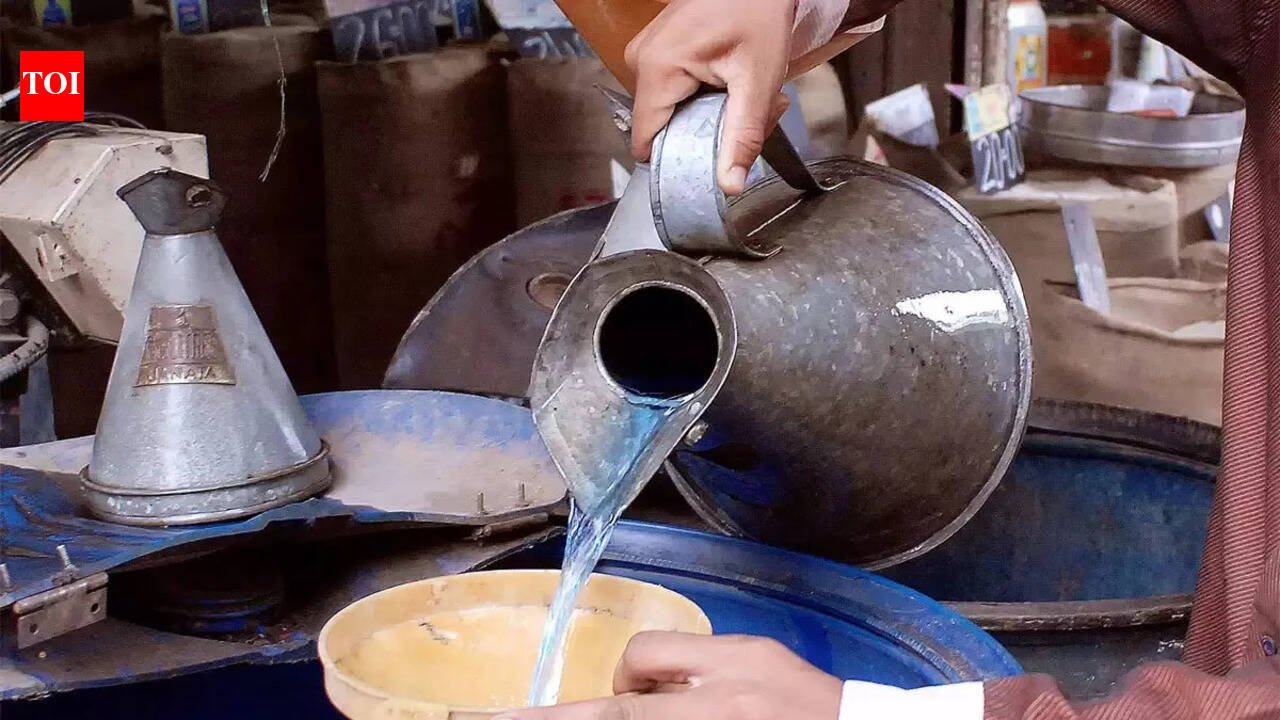
To facilitate this, the ministry of petroleum and natural gas has authorised selected fuel stations in kerosene-free regions to store and distribute Superior Kerosene Oil for household consumption. According to the notification, up to two fuel stations in each district, preferably company-owned outlets run by public sector oil firms, will be allowed to stock up to five thousand litres of kerosene.In order to speed up the process, certain licensing requirements for dealers and transporters have been relaxed, although safety and monitoring standards will continue to be enforced. The ministry has clarified that this provision is strictly for kerosene meant for household cooking and lighting.This move comes after the government sanctioned an additional 48,000 kilolitres of kerosene over and above regular allocations for all States and Union Territories. Local administrations have been asked to identify district-level distribution points. Earlier, 17 States and Union Territories received SKO allocation orders, while Himachal Pradesh and Ladakh maintained that they do not require any such allocation. These include regions like Delhi, Uttar Pradesh, Gujarat, and Rajasthan.At the same time, enforcement efforts have been stepped up to curb irregularities in the energy supply chain. Authorities have carried out nearly 2,900 raids in recent days, seizing close to 1,000 cylinders as part of action against hoarding and black marketing. States have also been instructed to intensify monitoring, conduct daily briefings, counter misinformation, and speed up approvals for gas-related infrastructure. “The government reiterates its advice to the public not to believe rumours,” the statement said.Amid these developments, a section of consumers has begun shifting away from LPG. As of Saturday, 6,000 piped natural gas (PNG) users had surrendered their LPG connections. “6000 PNG consumers surrendered their LPG till yesterday! A big thanks to them!!” said the secretary, ministry of petroleum and natural gas Neeraj Mittal on X.In terms of supply management, the government has prioritised domestic and transport needs, ensuring full allocation for PNG and CNG segments. Industrial and commercial users are currently receiving around 80% of their average consumption, while fertiliser plants are operating at 70–75% capacity. Additional LNG cargoes are also being arranged, as part of efforts to secure fuel and gas supplies, according to a government statement reported by PTI.

[ad_2]

Source link

Stock market crash today (March 30, 2026): Nifty50 opens below 22,500; BSE Sensex down over 1,100 points on rising oil prices, US-Iran war

[ad_1]

Stock market crash today (March 30, 2026): Nifty50 opens below 22,500; BSE Sensex down over 1,100 points on rising oil prices, US-Iran war
Stock market today (AI image)

Stock market crash today: Nifty50 and BSE Sensex plunged in opening trade on Monday. Nifty50 opened the trading day below 22,500 and BSE Sensex dropped over 1,100 points. At 9:16 AM, Nifty50 was trading at 22,488.20, down 331 points or 1.45%. BSE Sensex was at 72,477.66, down 1,106 points or 1.50%.Dr. VK Vijayakumar, Chief Investment Strategist, Geojit Investments Limited says, “With the conflict in West Asia entering the fifth week, there are signs of escalation of the war with the Houthi’s joining the conflict and the US sending additional troops to reinforce the attack. Brent crude has again shot up to $116. The Goldilocks macro scenario which India had before the war has almost disappeared thanks to the war. Instead of high GDP growth, low inflation, moderate fiscal and current account deficits and expectations of higher corporate earnings growth in FY27, now we face prospects of lower GDP growth, higher inflation, higher fiscal and current account deficits and lower earnings growth for FY27.”The market has largely discounted these negatives as reflected in the decline in the Nifty trailing PE ratio to about 19.9 times. This is fair but not yet cheap valuations. But there are segments which are attractively valued like financials. A significant development today is likely to be strengthening of the rupee in response to the RBI directive capping the net open position (NOP- INR) in the offshore deliverable market at $100 million. Unwinding of large dollar positions will strengthen the rupee in the near-term.”US markets witnessed a sharp selloff last week. All three major indices closed at their lowest levels in more than seven months on Friday, and the Dow officially entered correction territory as the ongoing conflict in the Middle East dampened investor sentiment.Asian equities came under pressure while crude oil prices moved higher amid escalating tensions, with Iran-backed Houthi forces joining the conflict and an expanded US military presence raising fears of a prolonged standoff.Foreign institutional investors remained net sellers, offloading shares worth Rs 4,367.30 crore on Friday. In contrast, domestic institutional investors provided some support by purchasing equities worth Rs 3,566.15 crore.(Disclaimer: Recommendations and views on the stock market, other asset classes or personal finance management tips given by experts are their own. These opinions do not represent the views of The Times of India)

[ad_2]

Source link