Breaking News
Gold prices crash! US-Iran war wipes out $9 trillion yellow metal market cap – why is gold falling & is it losing safe haven appeal?

[ad_1]

Gold prices crash! US-Iran war wipes out $9 trillion yellow metal market cap - why is gold falling & is it losing safe haven appeal?
Gold has corrected significantly by 19% globally and 17% in rupee terms. (AI image)

Gold prices crash and how! The unprecedented rise in gold prices over the last few quarters has come to a halt – for now. In fact, gold prices have been on a crashing spree for the last two months, and the March downfall has been particularly noticeable in the wake of the US-Israel-Iran war and Middle East conflict.Most asset classes have bled in the ongoing rout. From an equity markets stand point, investors have lost a whopping Rs 48.29 lakh crore since the US-Israel strikes on Iran. BSE Sensex and Nifty50 have crashed over 10.5%. The market capitalization of BSE-listed companies has come down by Rs 48.72 lakh crore) to Rs 415 lakh crore since the conflict began. But, in times of geopolitical uncertainties, gold is the go to investment – it’s a time-tested safe haven that investors rush to. Then why are gold prices plunging amidst the ongoing war? Does this mean that gold’s safe haven appeal is fading?

How much has gold crashed?

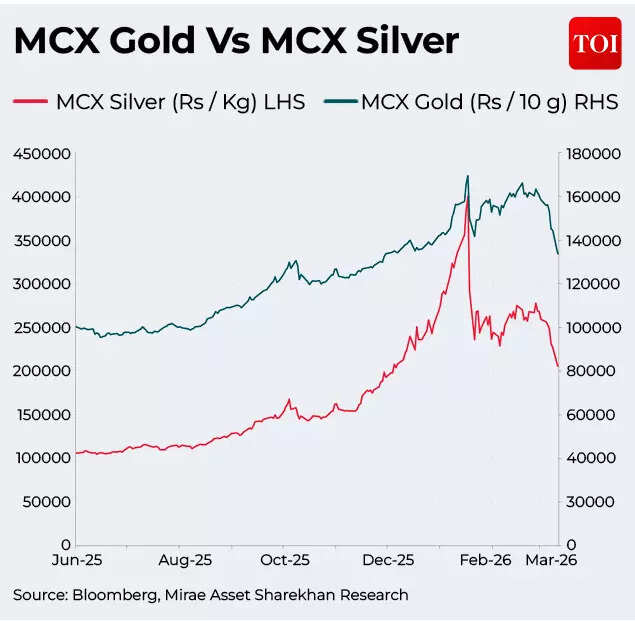
According to Jateen Trivedi, VP Research Analyst – Commodity and Currency, LKP Securities, since the start of the year, gold has seen a relatively limited correction, down 2% internationally (CMP ~$4257) and about 0.5% in domestic markets (₹134700). However, the sharper decline has come post the February 28 Middle East conflict, where gold has corrected significantly by 19% globally and 17% in rupee terms, reflecting heavy liquidation and macro-driven selling pressure. Silver has also mirrored this trend with steep declines following the geopolitical escalation.The figures for gold and silver are staggering. According to data shared by Mirae Asset Sharekhan, since the start of the US-Iran war gold has lost $9 trillion in market capitalisation or Rs 133 lakh crore in domestic market terms. The combined market capitalization loss for gold and silver stands at $10.5 trillion in international market terms and Rs 165 lakh crore domestically.An important point that investors should note is that gold and silver are still up substantially on a year-on-year basis:

  • International gold price is up by 45% y-o-y.
  • MCX Gold price is up by 58.3% y-o-y.
  • International silver price is up by 102.8% y-o-y.
  • MCX Silver prices are up 119% y-o-y.

Why are gold prices crashing? Is gold losing safe haven appeal?

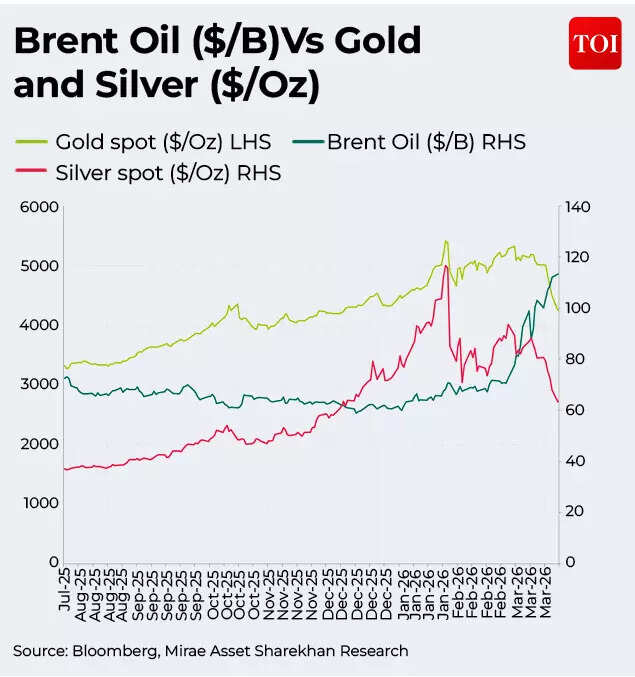
While some commodity experts say it’s too early to say whether gold’s safe haven appeal is fading, others say the reasons for the price crash explain the current scenario.“The current fall is not due to a loss of safe-haven appeal, but rather a shift in macro expectations. Rising crude oil prices are keeping global inflation elevated, which is forcing central banks, especially the US Federal Reserve, to maintain a higher-for-longer interest rate stance,” says Jateen Trivedi.Markets had earlier priced in aggressive rate cuts, but the narrative has reversed, with the US Fed indicating possibly only one rate cut in 2026. This shift has strengthened the dollar and bond yields, reducing the attractiveness of non-yielding assets like gold and silver, he tells TOI.
MCX Gold Vs MCX Silver

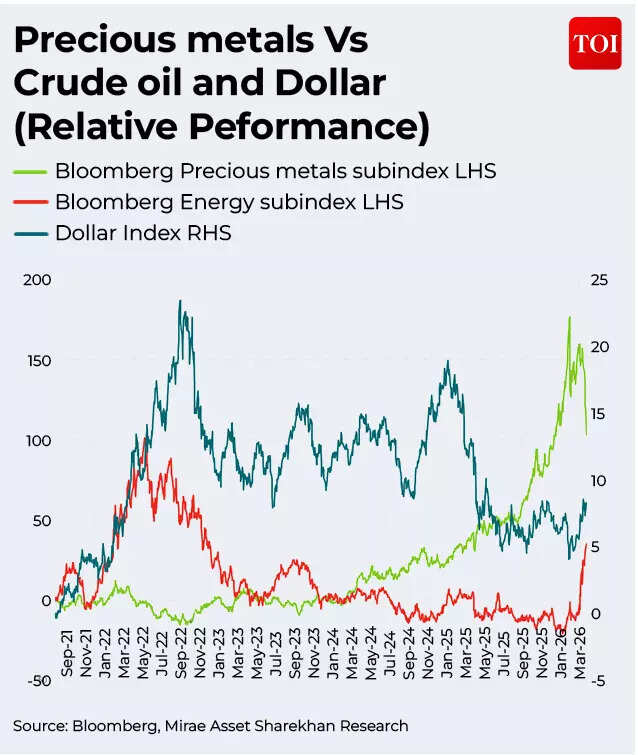
“Additionally, the recent sharp fall was amplified by heavy profit booking and unwinding of long positions, especially after the steep rally seen earlier,” he adds.To understand the crash in gold prices, it’s important to understand the factors that led to the yellow metal’s record rally.Weakness in the US Dollar Index has been one of the major structural fundamental factors fuelling rallies in commodities, especially precious metals, says Praveen Singh, Head of Commodities at Mirae Asset ShareKhan.Investors and central banks have been moving out of the US Dollar Index due to growing threats to the institutional independence and debasement and weaponization of the currency amid rising fiscal concerns in the key economies, he tells TOI.In a way, de-dollarization became a one-way consensus trade. Precious metals rallied hard in January-end as the dollar, driven by threats to the US Fed’s independence and a notion that the US administration would tolerate the US’s Dollar weakness (something akin to Plaza Accord in 1985), crashed to 95.55 on January 27 –a four-year low.
Precious metals Vs Crude oil and Dollar (Relative Performance)

“However, surging oil prices due to the raging Iran war threw the moribund US dollar a new lease of life as the US, being energy independent, is placed relatively better than most of its peers who are oil importing nations. Oil prices rose to a 4-year high before correcting on Trump’s de-escalation announcement,” he explains.While risks to the dollar’s status as a global reserve currency are real and huge; however, at the same time, as we have seen many times, alternatives to the greenback are limited in near term. So, occasionally the US dollar is surely capable of throwing surprises, he adds.Yet another factor that has worked against the rally of gold is the reaffirmation of independence of the US institutions. The Supreme Court’s ruling against the Trump-era tariffs and the Federal Reserve’s continued autonomy—backed by judicial support—have reinforced the resilience of US institutions.
Brent Oil ($/B) Vs Gold and Silver ($/Oz)

“Finally, owning hard assets became a crowded trade, so leverage unwinding is weighing on commodities. Considering the aforesaid factors, corrections, although quite unnerving and sharp, are not entirely unexpected,” Praveen Singh tells TOI.For Maneesh Sharma, AVP – Commodities & Currencies at Anand Rathi Shares and Stock Brokers, it’s too early to say that gold has lost its status as a safe haven asset this year.Gold’s performance since the war broke out mirrors its decline through mid-2022, when Russia’s invasion of Ukraine caused an energy price shock that rippled through global markets. While volatility in precious metals has calmed somewhat compared with the wild price swings in January, fluctuations have scared off some investors seeking a haven, Sharma tells TOI.Gold-backed ETFs, a popular way to hold the metal for Western retail and institutional investors, have seen persistent outflows in recent weeks, weighing on prices. InCred Money told TOI that gold is not losing its safe haven appeal – what we’re seeing is a combination of profit booking from an overextended rally and an interest rate headwind, both operating simultaneously. That’s why the correction feels as pronounced as it does, it says.
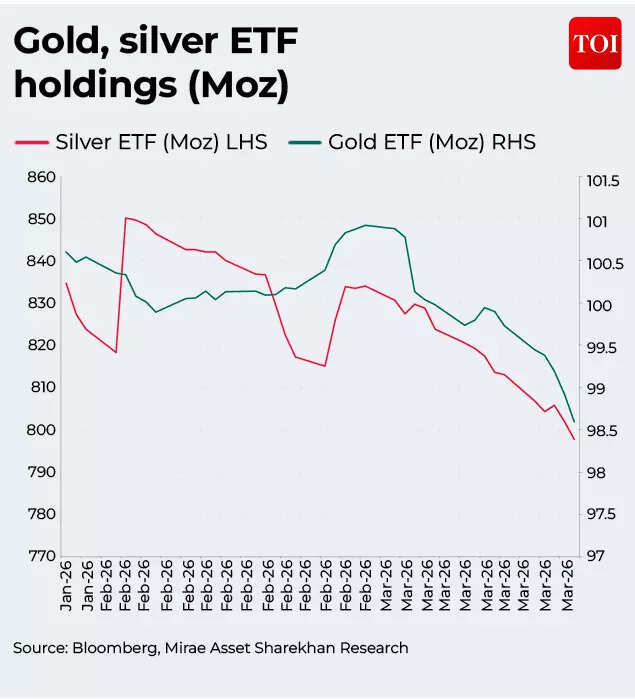
Gold, silver ETF holdings (Moz)

Where are gold prices headed and what should investors do?

While gold and silver prices have already undergone quite a sharp correction, unless oil prices and yields stabilize, precious metals may remain vulnerable, feel experts.In fact, Maneesh Sharma said that a further 10–15% downside moves in both gold and silver in the near term scenario cannot be ruled out.“With prices correcting by almost 15% since the start of ongoing geopolitical conflict, movements in crude oil prices in the short term could remain an important trigger influencing trends,” he says.“Investors could still continue to accumulate gold & silver on any 10–15 % dips in prices in the near term. We still expect gold to deliver 25–30 % returns on a yearly average basis (2025 avg. – 3,445/Oz) while prices could still test $ 5,800–6,000/Oz on the higher side by year end or by the start of next year. Meanwhile silver could remain volatile with higher side targets of $95–100/oz still achievable by year end,” he predicts.Jateen Trivedi, of LKP Securities also believes that the current phase appears to be a corrective downtrend driven by profit booking, and prices may extend lower by another 10–15% in the near to short term.“Internationally, gold could test levels of $4000–$3600, while in domestic markets, prices may drift towards ₹110000–₹115000. This decline should be viewed as an accumulation opportunity for long-term investors, rather than a structural breakdown,” he advises.“If geopolitical tensions persist, upside may remain capped, with gold likely to stabilize in the ₹130000–₹140000 range. However, in case of de-escalation and a shift toward rate cuts, gold can resume its bullish trend, potentially moving back towards $5000 internationally and ₹155000 domestically,” he adds.At least in the short term, we need to dwell on the possibility and impact of demand for risk assets competing with gold demand should the Iran war come to an end, says Mirae Asset Sharekhan’s Praveen Singh.He recommends accumulating gold and silver for medium-to-long term. “This is the preferred strategy as the possible upside is much more than the possible downside. In fact, these corrections are quite healthy. No gainsaying that long-term structural fundamental factors remain well in place. Gold price is expected to rise to $6000-$6500 and silver to $140 by the year-end,” he said.InCred Money is of the view that the gold price correction does not alter the fundamental rationale for holding gold and silver in a portfolio.“The diversification argument remains intact. These assets have low correlation with equities and bonds. They behave differently under stress. That characteristic doesn’t disappear because prices have pulled back from elevated levels,” it says.“Investors should look at gold and silver from an asset allocation point of view and not as a trading position. The long term thesis of gold (geopolitical uncertainties) and silver (high industrial use) are intact as of now. Such sharp corrections offer a better entry point for long term investors,” it adds.(Disclaimer: Recommendations and views on the stock market, other asset classes or personal finance management tips given by experts are their own. These opinions do not represent the views of The Times of India)

[ad_2]

Source link

Rupee Value: Rupee under pressure: INR breaches 94-per-dollar mark for the first time; geopolitical tensions, foreign outflows weigh heavily

[ad_1]

Rupee under pressure: INR breaches 94-per-dollar mark for the first time; geopolitical tensions, foreign outflows weigh heavily

The rupee breached the 94-per-dollar mark for the first time ever on Monday but recovered sharply to close flat at 93.53 against the US dollar, instead of ending at a fresh record closing low, amid geopolitical tensions in the Middle East, persistent foreign fund outflows and volatile crude oil prices.At the interbank foreign exchange market, the local currency opened at 93.84, slipped past the 94 barrier for the first time in intraday trade, but later pared all losses to settle unchanged at 93.53.The rupee had already crossed the 93-mark against the greenback on Friday after plunging 64 paise to settle at 93.53.

Oil, dollar strength and equity crash hit rupee

Forex traders said the rupee came under heavy strain as investors turned risk-averse amid fears that the ongoing Middle East conflict could keep energy markets disrupted for longer.Spiralling global crude prices, unabated foreign fund outflows, a stronger US dollar and a sharp fall in domestic equities all contributed to the slide.“The rupee hit fresh all-time lows on Friday and breached the 94-mark for the first time amid escalating geopolitical tensions in Middle East and weak domestic markets. Surge in crude oil prices and FII outflows, too, weighed on the rupee,” Anuj Choudhary, research analyst at Mirae Asset ShareKhan, said, as quoted bye news agency PTI.He added, “We expect the rupee to trade with a negative bias as deteriorating global sentiments and geopolitical tensions may keep the rupee under pressure. However, time-to-time intervention by the Reserve Bank may support the rupee at lower levels.”According to Choudhary, the USD-INR spot is expected to trade in a range of Rs 93.60-94.40.

Rupee weakness deepens since war began

Monday’s fall extends a sharp losing streak that accelerated after the war in the Middle East erupted on February 28.The rupee had touched 93.98 during the day, beating its previous intraday low of 93.7350 hit on Friday, and then moved past the 94-per-dollar mark on the interbank order matching system after the local spot session ended at 3:30 pm.The agency said the rupee has now fallen about 3 per cent since the Iran war began, hurt by an over 50 per cent surge in oil prices and severe disruptions to gas supplies.That broader trend has raised concern because India, as Asia’s third-largest economy, remains highly sensitive to imported energy costs.

RBI seen offering mild support

As per Reuters, despite the pressure, the Reserve Bank of India (RBI) may have been active in limiting sharper losses.The rupee has held up better than some regional peers during the crisis because of frequent RBI interventions.While the rupee is down about 3 per cent since the war began, currencies such as the South Korean won and Thai baht have fallen 5 per cent and nearly 6 per cent, respectively.On Monday, traders told Reuters that the central bank’s presence in the market appeared mild, and was likely focused on the non-deliverable forwards (NDF) market.

Dollar firms, Asian currencies under pressure

The global backdrop also remained unfavourable for emerging market currencies.The dollar index, which measures the greenback against a basket of six currencies, was trading 0.14 per cent higher at 99.78.The dollar index rose about 0.3 per cent to 99.9, helped by safe-haven demand as hopes of de-escalation in the Middle East faded.The agency said Asian currencies were down between 0.1 per cent and 0.8 per cent on Monday.In a note cited by Reuters, ING described the current market environment as “a sell-everything mood” affecting equities, bonds and precious metals, adding, “This is an ideal environment for the dollar, especially against higher beta currencies.”

Domestic markets and outflows add to pressure

The rupee’s slide also tracked a sharp sell-off in Indian financial markets.The Sensex crashed 1,836.57 points, or 2.46 per cent, to 72,696.39, while the Nifty fell 484.30 points, or 2.10 per cent, to 22,630.20.Foreign institutional investors sold equities worth Rs 5,518.39 crore on a net basis on Friday, according to PTI.Foreign investors have pulled out more than $11 billion from Indian stocks and bonds in March, putting the month on track for the heaviest monthly outflows since October 2024.That steady exit of overseas capital has become a major drag on the rupee, especially as oil prices remain elevated.

Forex reserves decline adds to watchfulness

Separately, India’s external buffers also saw a decline.The country’s forex reserves fell by $7.052 billion to $709.759 billion in the week ended March 13, according to RBI data released on Friday.While reserves remain substantial, the drop will likely keep markets alert to how aggressively the central bank may need to step in if volatility intensifies.

[ad_2]

Source link

Former AI Express CEO Aloke Singh now in IndiGo cockpit as CSO

[ad_1]

Former AI Express CEO Aloke Singh now in IndiGo cockpit as CSO

NEW DELHI: IndiGo Monday appointed Aloke Singh, former MD & CEO of Air India Express, as its chief strategy officer (CSO). Singh had completed his tenure at AI Express on March 19, during which he had overseen the merger of erstwhile AirAsia India into the airline and steered the Tata Group low cost carrier (LCC) to become a force to reckon with. He has previously held senior leadership positions, including in the strategy domain, at Air India and Oman Air.This is the first big hire by IndiGo founder Rahul Bhatia who has recently taken over as the airline’s interim CEO and clearly signals the intention to aggressively scout for the best available talent in India and abroad.Rahul Bhatia said: “Aloke brings an exceptional blend of strategic vision and operational depth. His comprehensive understanding of the aviation ecosystem will be invaluable as we build a more agile, resilient and future-ready organisation, and accelerate our next phase of growth. For now, Aloke will report to me. Once the next CEO assumes office, he will transition to reporting to the new chief executive.”Aloke Singh said: “I am delighted to join IndiGo at such a pivotal moment for the airline and for Indian aviation broadly. Having redefined India’s domestic and short-haul international aviation landscape, IndiGo is taking its ambitions global. I look forward to working with colleagues across the organisation to sharpen our strategic direction, double down on operational excellence and deepen and broaden our markets.As IndiGo CSO, Singh will lead the LCC’s “long-term strategic planning function and drive enterprise-wide transformation initiatives focused on accelerating growth, enhancing operational efficiency and strengthening competitive positioning in a rapidly evolving global aviation landscape,” the airline said in a statement. He will partner closely with the leadership team on cross-functional priorities designed to improve agility, elevate customer experience and deliver sustainable shareholder value.Singh has over three decades of aviation industry experience spanning strategy, planning, operations and commercial functions with a track record of leading complex operational and cultural transformation, driving rapid growth and managing large-scale expansion programmes.

[ad_2]

Source link
Fragile footing: How India, China face sizeable economic damage prospects from US-Iran war; outlook has grown more daunting

[ad_1]

Fragile footing: How India, China face sizeable economic damage prospects from US-Iran war; outlook has grown more daunting
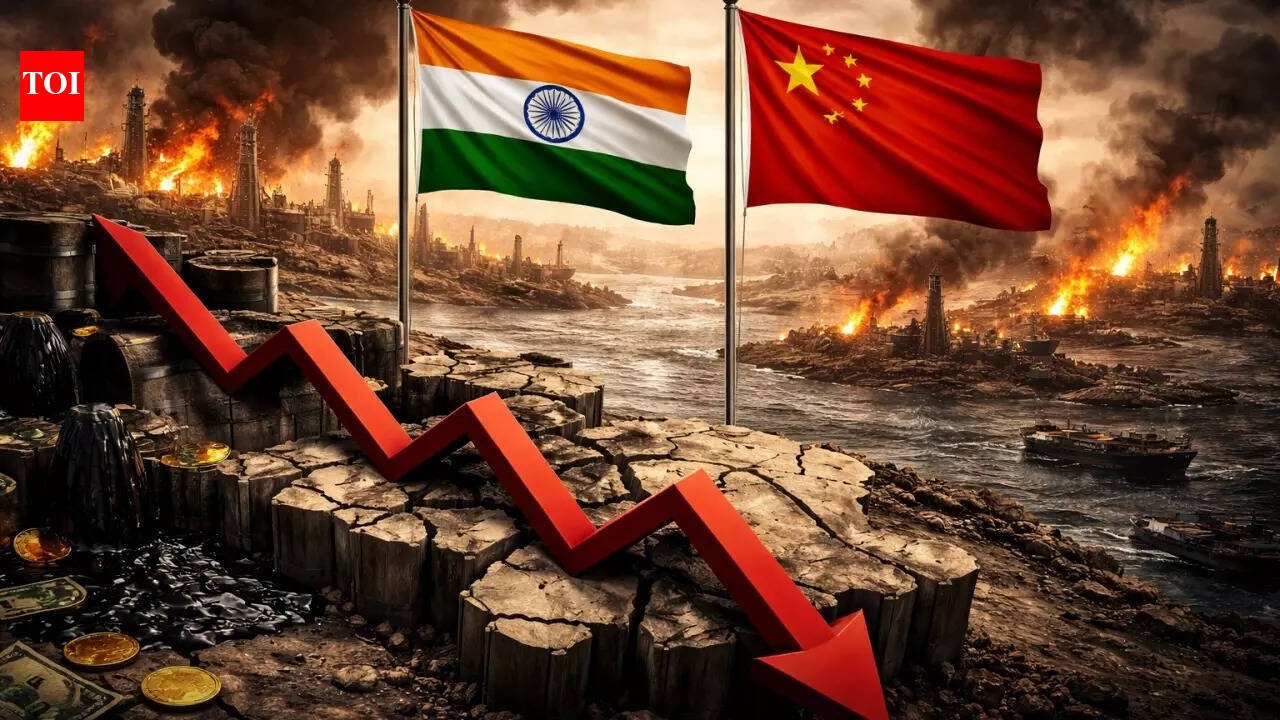
Asia-Pacific economies entered 2026 on a fragile footing. (AI image)

Asia-Pacific economies have entered 2026 on a fragile footing, and the US-Israel-Iran war has exacerbated the risks to GDP growth for economies like China, India, and other major countries in the region, says Moody’s Analytics in its latest report.The global economy has been undergoing a period of turmoil since the start of this decade – first it was the Covid pandemic, then the Russia-Ukraine war, then the Donald Trump administration’s tariff policies, and finally 2026 has added the Middle East conflict to the growing list.What does this latest disruption mean for the growth prospects of Asian economies that are in large part dependent on oil and energy imports. Since the start of the Middle East conflict, passage of ships through the Strait of Hormuz has been curtailed, major energy infrastructure across the Gulf has been hit, and oil prices have risen past $100 per barrel, stoking inflation fears.

Fragile Economic Scenario

According to Moody’s Analytics, 2026 was always going to be a tough year for Asia-Pacific countries. Now the uncertainty of the Middle East conflict has added another spanner in the growth wheel of major economies like China, India, Japan, and South Korea.

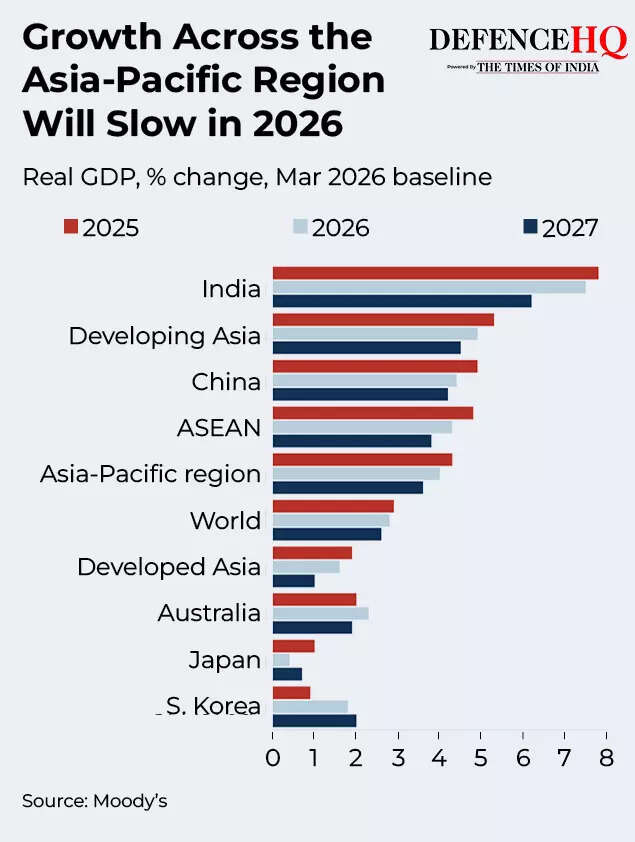
Growth Across Asia-Pacific Will Slow in 2026

Growth Across Asia-Pacific Will Slow in 2026

As Moody’s says: Asia-Pacific economies entered 2026 on a fragile footing. Domestic demand was weak, and export growth looked set to slow.“Growth was set to slow after export front-loading ahead of US tariff hikes flattered the numbers last year. And the artificial intelligence boom looked ripe for a pause. Still, cooling inflation allowed some central banks to ease policy, providing reason for cautious optimism. Added to that, the US Supreme Court’s decision in February to strike down country-specific tariffs brought some relief to some of the region’s exporters,” Moody’s Analytics says in its latest report titled ‘Asia-Pacific Outlook: Buckling Up’. But now, recent events have complicated the growth outlook considerably.The report notes the following for major Asian economies:

  • External and domestic shocks have scrambled economic fortunes across the region over the past 18 months. Looking at exports, economies seem surprisingly strong, it says, adding that US tariff related uncertainties led to front loading of shipments last year.
  • Shipments of semiconductors, storage and memory related products have grown massively due to the artificial intelligence (AI) -led boom globally. The biggest beneficiary from this has been Taiwan, which has seen a big GDP growth jump of 8.7% in 2025.
  • However, according to Moody’s domestic demand has been weak in key economies. “While exports have done well, domestic demand has not. Across much of the region, homegrown demand sits below pre-pandemic trends and global averages, dragging on prices,” it says.
  • Consumer price inflation is also averaging below central banks’ target levels. China is actually working to fight off deflation. In India too the CPI is averaging around 3%, below RBI’s 4% target level.
  • However, risks to inflation are growing with commodity prices rapidly climbing after the Middle East conflict broke out. “The Middle East conflict is pushing commodity prices higher, raising the possibility that inflation will reaccelerate. It’s also causing shortages of chemicals and fertilisers,” says Moody’s.

“All of this creates an uncomfortable echo of the inflation and supply shocks that followed the COVID-19 pandemic and Russia’s invasion of Ukraine,” it warns.

Three Risks For Asia-Pacific Economies – Where Does India Fit In?

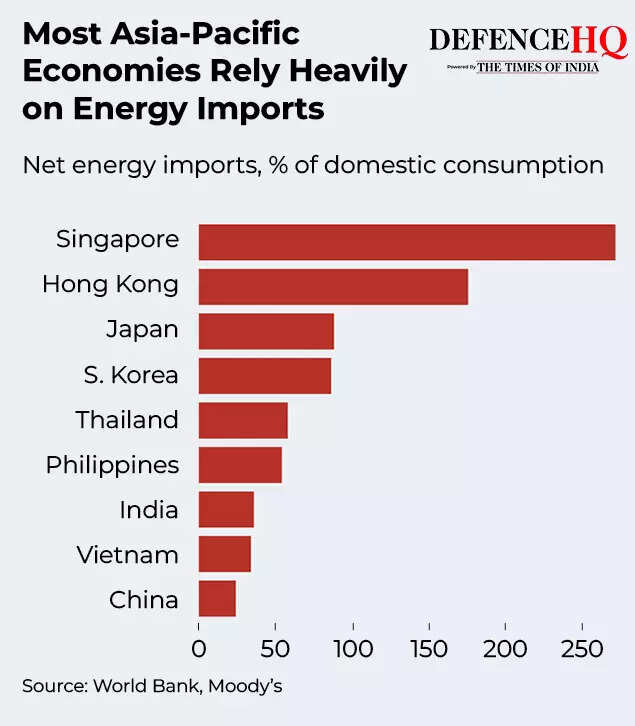
Moody’s has a big warning for Asia-Pacific economies: They are faced with a ‘troublesome mix of external threats’!Threat 1: Middle East ConflictThe report says that the Middle East conflict sits at the top of the list. This is because of the region’s heavy dependence on imported commodities. This is especially true since the source of energy needs is the very set of countries that are currently involved in the conflict.

Most Asia-Pacific Economies Rely Heavily on Energy Imports

While India imports a big percentage of its crude oil requirements, Moody’s Analytics is of the view that compared to other countries in the region its dependency is somewhat less.Northeast Asia’s high-income economies such as Japan, South Korea and Taiwan are particularly dependent on imported fossil fuels. However it notes that these countries maintain sizeable strategic oil reserves. The typically limited pass-through from short-lived price spikes to domestic consumer prices provides a meaningful buffer, it says. China, which is one of the largest buyers of Iranian discounted crude, similarly maintains huge reserves.

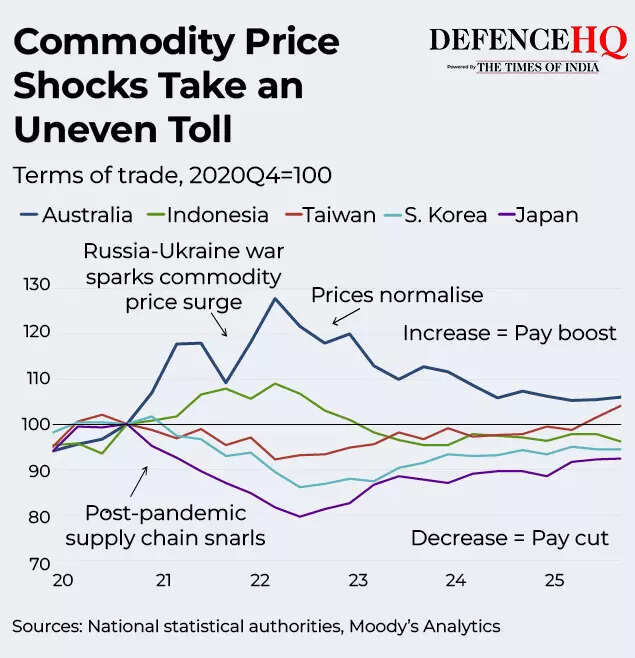
Commodity Price Shocks Take an Uneven Toll

“India and Southeast Asian economies are somewhat less import-dependent but hold far smaller reserves; their governments instead lean on direct or indirect price caps and fuel subsidy schemes to shield consumers from volatility,” Moody’s Analytics says its report.In a scenario where the US-Iran war does not persist for a longer duration, the inflation shock to South Asian economies would be contained, but a longer breakout of conflict has meaningful implications that cannot be ignored.“A prolonged conflict or a further sustained rise in energy prices would materially alter the assessment of limited impact. In addition to energy prices, food inflation is another concern given its large weight in regional consumption baskets,” the report says.

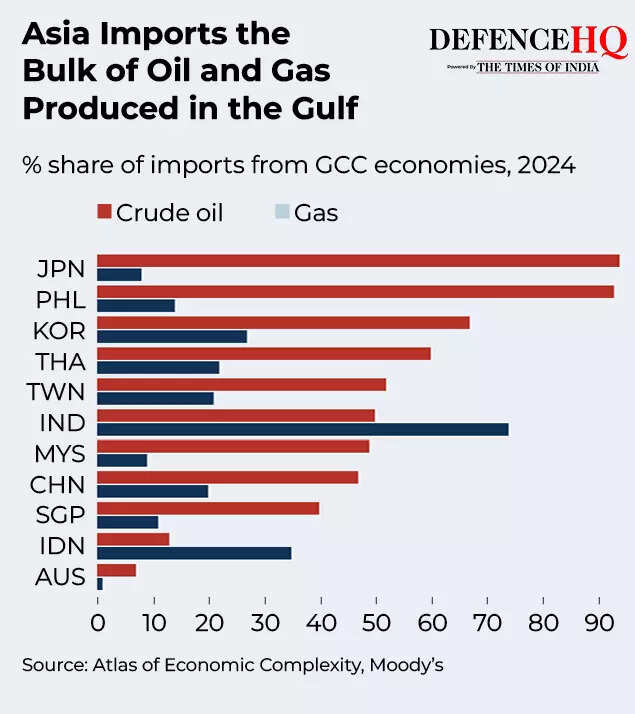
Asia Imports the Bulk of Oil and Gas Produced in the Gulf

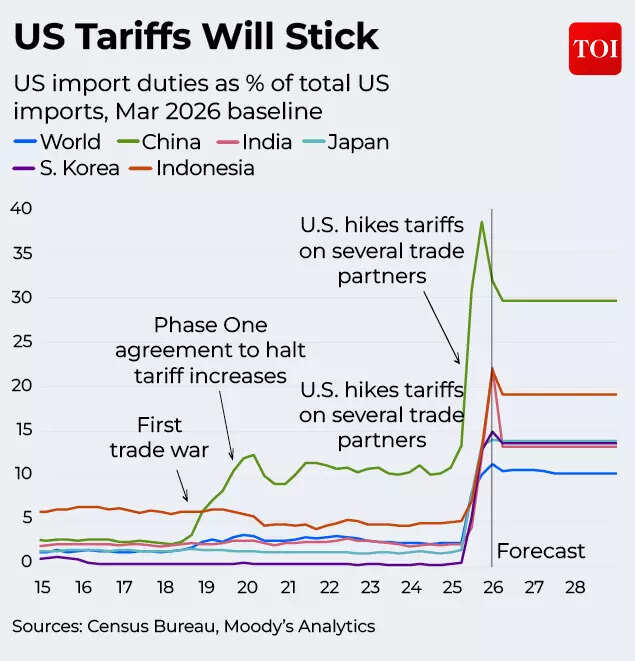
Threat 2: Trump Tariff RisksMiddle East conflict is not the only risk that threatens the growth story of Asian economies this year. Uncertainty related to tariffs is a big concern.“The Asia-Pacific region has always grown through exports, and that dependence has only deepened since the pandemic. With access to the US market becoming more difficult, the imbalance leaves the region exposed,” says the Moody’s report.The report acknowledges that the US Supreme Court has struck down the Donald Trump administration’s reciprocal tariffs, but quickly points to the 10% global tariff that was announced, with the prospect of it being raised to 15%.

US Tariffs Will Stick

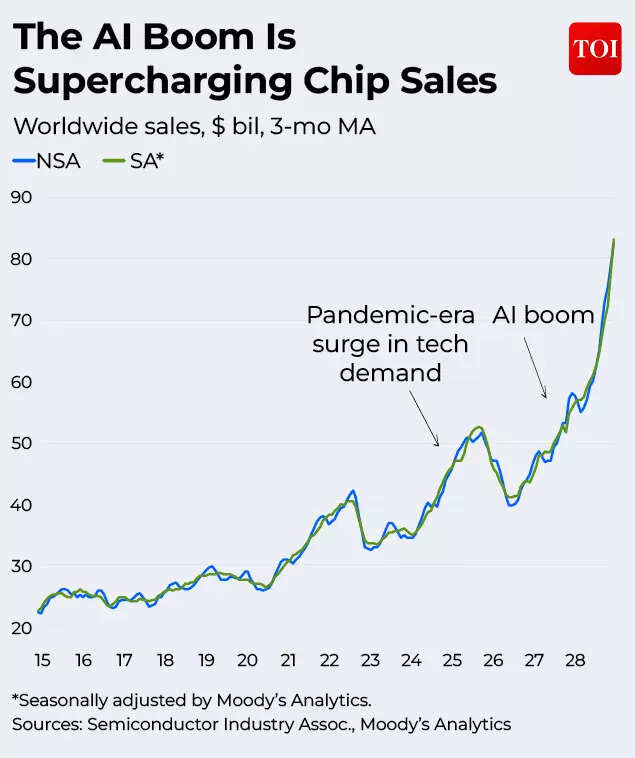
“Trump’s subsequent announcement of a flat global 15% tariff rate means the average effective US import tariff would be broadly unchanged – and considerably higher than this time last year,” it says.The Moody’s report also cautions that the new investigations under Section 301 of the Trade Act signal that the Trump administration is looking to rebuild the tariff regime that existed before the apex court’s decision. Moody’s baseline assumption is that US import tariffs will stay at current levels through 2028.Threat 2: End of the AI Boom?AI has been driving the news for months now – disruptive models are taking the world by a storm, but is the rally set for a pause According to the Moody’s report, a key source of uncertainty around its forecast is the AI boom.“Asia produces most of the world’s electronics, so the surge in AI-related demand has been a powerful tailwind – first in Taiwan, which produces most of the world’s bleeding-edge semiconductors, and since late 2025, in memory chips, storage and related products,” the report notes.

The AI Boom Is Supercharging Chip Sales

What this has meant is a rise in electronics exports across the region, and an increase in prices and some isolated shortages as well. “Data centre investment has been an added benefit, complementing the export-led growth boost. But this also means the region is heavily exposed should AI momentum falter,” Moody’s says. Exports and investments are at the risk of being hit in case the AI-led boom were to either end or worst still see a big downturn.“Financial markets would react sharply. Nowhere is this dynamic more visible than in South Korea, whose equity market nearly tripled over 18 months before selling off sharply when the Middle East conflict exposed macro vulnerabilities that worsened the risk-off move,” Moody’s explains.

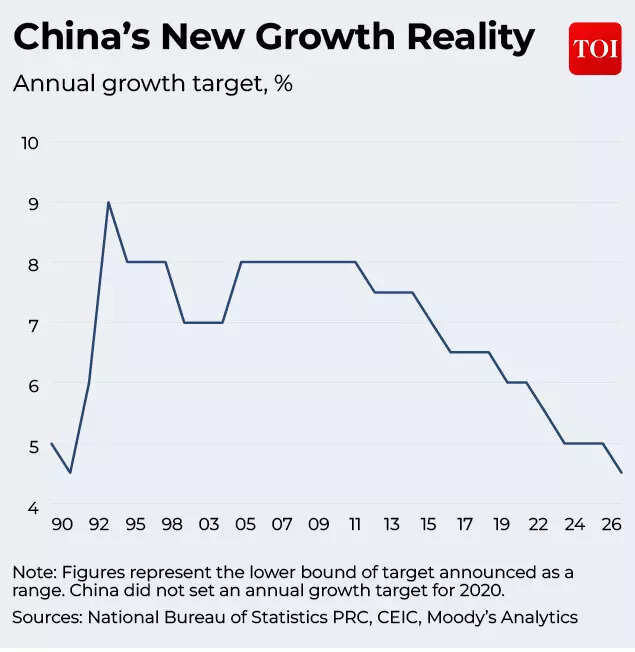
China’s New Economic Normal

China has been flooding markets with exports, a policy which is driven by its own weak domestic demand. Earlier this month, China projected a GDP growth rate of 4.5% to 5% for 2026 – which is the first time in over three decades that officials in Beijing have projected a sub 5% growth number.Domestic weakness and industrial overcapacity received rhetorical acknowledgement, but the policy focus remains firmly on industrial upgrading and technological self-sufficiency, says Moody’s.

China’s New Growth Reality

At home, policy efforts to address involution, the excess competition that compresses returns and drives prices ever lower, may be bearing some fruit. But we wouldn’t be surprised if fresh investment into strategic sectors will see involution and deflation return before long, the report says.

South Asia Growth Projections For 2026

With this situation in mind, Moody’s Analytics projects that the growth across the Asia-Pacific region will slow down from 4.3% in 2025 to just 4$ in 2026. The number will come down further to 3.6% in 2027, it estimates.Individual economy wise projections are:

  • India: 7.8% in 2025, 7.5% in 2026, 6.2% in 2027, and 6% in 2028
  • China: 5% in 2025, 4.4% in 2026, 4.3% in 2027, and 4% in 2028
  • Japan: 1.1% in 2025, 0.5% in 2026, 0.7% in 2027, and 0.9% in 2028
  • Singapore: 5% in 2025, 3.8% in 2026
  • South Korea: 0.9% in 2025, 1.9% in 2026
  • Taiwan: 8.7% in 2025, 6.6% in 2026

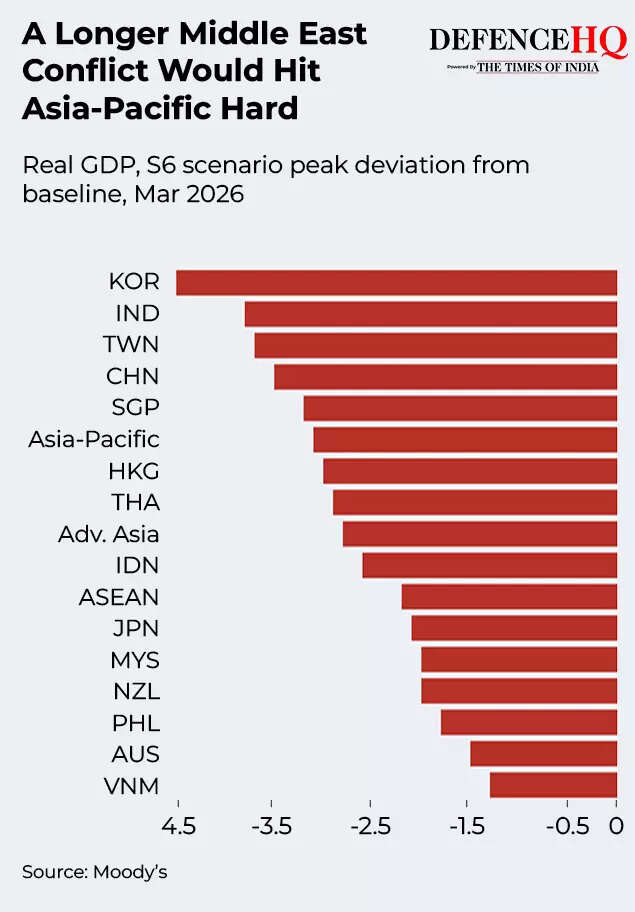
In its report Moody’s Analytics simulates a more ‘severe and protracted’ conflict which sees Brent crude rising substantially.“Results show GDP losses across the APAC region peaking at 3%, a larger hit than either Europe or the US would absorb, reflecting the region’s heavy dependence on Middle Eastern commodities,” it says.

A Longer Middle East Conflict Would Hit Asia-Pacific Hard

“Developed Asia sustains a particularly large blow; its pronounced exposure to commodity price spikes weakens trade balances and currencies, pushing up inflation. India and China face sizeable damage given their dependence on oil and gas imports from Gulf economies caught up in the conflict,” it adds.As Moody’s Analytics concludes: This year is shaping up to be an even more difficult year for the Asia Pacific region than originally envisaged.“A more severe and prolonged conflict in the Middle East would compound existing tariff pain. And while the AI boom is powering ahead, stretched equity valuations, alongside price spikes and isolated hardware shortages, suggest it is increasingly ripe for a pause. With limited support from fiscal and monetary policymakers, growth will slow,” it says.

[ad_2]

Source link
Stock market today: Which are top gainers and losers on NSE & BSE on March 23? Check list

[ad_1]

Stock market today: Which are top gainers and losers on NSE & BSE on March 23? Check list

Benchmark equity indices Sensex and Nifty plunged sharply on Monday, tracking a brutal global sell-off as the Middle East war deepened into its fourth week, with rising crude prices, persistent foreign fund outflows and a record-low rupee worsening investor nerves.The 30-share BSE Sensex slumped 1,836.57 points, or 2.46 per cent, to close at 72,696.39, after falling as much as 1,974.52 points intraday to 72,558.44. The NSE Nifty dropped 601.85 points, or 2.60 per cent, to settle at 22,512.65.

Nifty50 top gainers

Company Name Current Price (Rs) Price Change % Change
HCL Tech 1,359 24.90 ↑ 1.87% ↑
Power Grid 302.10 4.50 ↑ 1.52% ↑
Infosys 1,257 0.90 ↑ 0.08% ↑
ONGC 265.45 0.06 ↑ 0.02% ↑

Sensex top gainers

Company Name Current Price (Rs) Price Change % Change
HCL Tech 1,359 24.90 ↑ 1.87% ↑
Power Grid 302.10 4.50 ↑ 1.52% ↑
Infosys 1,257 0.90 ↑ 0.08% ↑

Nifty50 top losers

Company Name Current Price (Rs) Price Change % Change
Shriram Finance 877.70 -60.90 ↓ -6.49% ↓
Titan Company 3,853 -254.00 ↓ -6.18% ↓
Trent 3,357 -203.00 ↓ -5.71% ↓
Jio Financial Ser… 226.10 -13.21 ↓ -5.52% ↓
UltraTech Cem. 10,362 -572.00 ↓ -5.24% ↓
JSW Steel 1,110 -60.00 ↓ -5.13% ↓
HDFC Life 592.10 -31.55 ↓ -5.06% ↓
InterGlobe 3,945 -204.00 ↓ -4.92% ↓
Adani Ent. 1,833 -94.10 ↓ -4.89% ↓
Tata Steel 187.17 -9.61 ↓ -4.88% ↓

Sensex top losers

Company Name Current Price (Rs) Price Change % Change
Titan Company 3,853 -254.00 ↓ -6.18% ↓
Trent 3,357 -203.00 ↓ -5.71% ↓
UltraTech Cem. 10,362 -572.00 ↓ -5.24% ↓
InterGlobe 3,945 -204.00 ↓ -4.92% ↓
Tata Steel 187.17 -9.61 ↓ -4.88% ↓
BEL 405.50 -20.61 ↓ -4.84% ↓
HDFC Bank 744.15 -36.31 ↓ -4.66% ↓
Adani Ports SEZ 1,304 -61.81 ↓ -4.53% ↓
M&M 2,956 -110.00 ↓ -3.60% ↓
Asian Paints 2,121 -74.10 ↓ -3.38% ↓

War, oil and rupee pressure trigger broad sell-off

Monday’s fall came in line with a steep decline across global markets as fears mounted over prolonged geopolitical disruption and the risk of deeper energy supply shocks.Brent crude — the global oil benchmark — rose 0.97 per cent to $113.3 per barrel, adding to concerns for an oil-importing economy like India.“Markets witnessed a sharp sell-off on Monday, continuing the prevailing downtrend amid weak global cues and escalating geopolitical tensions. Investor sentiment remained extremely fragile amid escalating geopolitical tensions in West Asia, which have once again pushed crude oil prices sharply higher,” Ajit Mishra, SVP, research at Religare Broking Ltd, said, according to news agency PTI.He added that the rise in oil prices, along with continued foreign institutional investor outflows and weakness in the rupee, significantly hit risk appetite.Vinod Nair, head of research at Geojit Investments Ltd, was quoted by PTI as saying that domestic markets mirrored weakness across Asia as investors worried about potential disruptions to global energy supplies.“Domestic markets witnessed a sharp decline, mirroring weakness across Asian markets amid escalating tensions in the Middle East and concerns over potential disruptions to global energy supplies. Investor sentiment turned cautious following Trump’s 48-hour ultimatum to Iran on the Strait of Hormuz,” Nair said.He added that rising global bond yields, signalling inflation and fiscal worries, along with the rupee falling to a record low, further pressured equities and triggered more FII selling.

Titan, Trent among major losers; IT stocks buck trend

The sell-off was broad-based, with heavy damage across consumption, metals, real estate and banking names.Titan was the biggest loser among Sensex stocks, tumbling 6.24 per cent. Trent, UltraTech Cement, Bharat Electronics, InterGlobe Aviation, Tata Steel and HDFC Bank were also among the major laggards.A handful of IT and utility counters offered limited resistance, with HCL Tech, Power Grid and Infosys ending in the green.

Midcaps, smallcaps and sectoral indices sink

The pain was even sharper outside the frontline indices, pointing to a wider risk-off mood in the market.The BSE MidCap Select index tanked 3.82 per cent, while the SmallCap Select index plunged 3.66 per cent.All sectoral indices ended lower. Consumer durables fell the most, dropping 4.91 per cent, followed by metal (4.76 per cent), realty (4.75 per cent), services (4.70 per cent), BSE PSU Bank (4.39 per cent), MidSmall Private Banks Quality Tilt (4.37 per cent), commodities (4.35 per cent), industrials (4.05 per cent) and capital goods (3.99 per cent).Market breadth remained extremely weak, with 3,798 stocks declining, compared with just 635 advancing, while 123 remained unchanged on the BSE.

Foreign investors continue heavy exit

Foreign capital flight remained a major overhang.Foreign Institutional Investors (FIIs) sold equities worth Rs 5,518.39 crore on Friday. In contrast, Domestic Institutional Investors (DIIs) bought shares worth Rs 5,706.23 crore, partially cushioning the fall.Still, the broader trend remains negative: PTI said foreign investors have pulled out Rs 88,180 crore — about $9.6 billion — from Indian equities so far this month.That persistent outflow, combined with currency weakness and expensive oil, is reinforcing fears that the market may remain vulnerable even on rebound days.

Global markets deep in the red

The weakness was not limited to India.Major Asian markets ended sharply lower, including South Korea’s Kospi, Japan’s Nikkei 225, Shanghai’s SSE Composite and Hong Kong’s Hang Seng. The Kospi saw the steepest fall, plunging 6.49 per cent.Markets in Europe were also trading with deep losses, while the US market had ended significantly lower on Friday, adding to the negative global backdrop.

Sensex, Nifty down over 10% since war began

Monday’s slump adds to the deep losses already seen since the conflict began on February 28.Since the war started, the Sensex has fallen 8,590.8 points, or 10.56 per cent, while the Nifty has shed 2,666 points, or 10.58 per cent.That means Indian equities have now erased a substantial chunk of gains in less than a month, with the market increasingly pricing in a prolonged conflict, sustained energy stress and a tighter macro environment.

[ad_2]

Source link

India’s highways to get AI dashcams: A high-tech plan to track potholes and road damage across 40,000 kilometres |

[ad_1]

India’s highways to get AI dashcams: A high-tech plan to track potholes and road damage across 40,000 kilometres

India’s highways are all set to get a tech boost. The National Highways Authority of India (NHAI) reportedly plans to install AI-based dashcam systems on approximately 40,000 kilometres of Indian roads. The initiative appears to be an attempt to make the management of Indian highways more data-driven and forward-thinking. Rather than waiting for complaints or accidents to occur, authorities will reportedly use cameras to detect issues. Surveys will be conducted every week, defects will be detected by cameras, and real-time monitoring will be done.

AI dashcams set to transform India’s highways with real-time road monitoring

According to PIB reports, Route Patrol Vehicles will carry the specialised dashboard cameras. These vehicles are expected to conduct weekly surveys across all major stretches. The cameras will record high-definition images and videos, which AI models will analyse for over 30 types of defects and anomalies. The main idea is to automate detection and reduce the need for manual inspection.A major focus of the system is pavement condition. Potholes, rutting, and severe cracks will be identified early. The AI models reportedly detect these issues automatically using advanced machine learning. Experts say early detection could reduce long-term maintenance costs and prevent sudden road hazards. It appears the system might even track the progress of repairs over time.

AI-powered road monitoring: How dashcams will detect potholes, cracks, and more

On India’s highways, they’re fitted to Route Patrol Vehicles to keep a constant eye on the roads. They will record high-resolution images and videos every week, but the real twist is that AI and machine learning systems analyse this footage automatically. These models will be trained to spot over 30 different issues, from potholes, rutting, and cracks to faded lane markings, damaged barriers, and streetlights that don’t work.

AI watches beyond the road: Safety, signs, and night checks

The AI system isn’t limited to the road surface. It will also cover road furniture such as lane markings, crash barriers, and streetlights. Faded or damaged components will be flagged in real time. Monitoring will extend to safety issues and encroachments. Illegal median openings, unauthorised signboards, and roadside encroachments will be recorded. Even illegal parking along highways may be identified. This makes the system more comprehensive than traditional inspections.NHAI reportedly plans at least one monthly nighttime survey for each stretch. Night checks are crucial for assessing road signs, reflective pavement markings, road studs, and highway lighting. These surveys could reveal issues that daytime inspections might miss. Officials say the addition of night data might improve safety for drivers who travel after dark.

AI dashboards and data zones make monitoring easier

In order to effectively handle this vast amount of data, the NHAI plans to subdivide the country into five monitoring zones. Each of these zones will have a specific IT solution to handle the data, run AI analytics on it, and display the results through interactive dashboards. Side-by-side analysis of the road conditions will reportedly help officials track maintenance progress. The results produced by AI will be integrated into the Data Lake solution provided by the NHAI.

[ad_2]

Source link

‘Petrol Shortage League’: Pakistan’s PSL trolled after league reduced to two venues | Cricket News

[ad_1]

'Petrol Shortage League': Pakistan's PSL trolled after league reduced to two venues
PSL trophy (l), and PCB chief Mohsin naqvi

The Pakistan Cricket Board (PCB) has revised the schedule for the 11th edition of the Pakistan Super League (PSL), reducing the scale of the tournament after consultations with the government over austerity measures.Under the new plan, the number of host cities has been cut from six to two, with all matches now set to be played in Lahore and Karachi.The decision has drawn reactions from a section of fans on social media, with many criticising the reduced arrangements. The changes come amid an ongoing oil crisis, which has impacted planning for the tournament.

Watch

T20 World Cup: India humiliate Pakistan again

Apart from limiting venues, the PCB has also cancelled the opening ceremony and decided to hold matches behind closed doors in an effort to reduce costs. The league has also seen player exits, with some cricketers moving to the Indian Premier League as injury replacements.Some fans mocked the situation online.Iceland Cricket also posted a message on X. “The PSL is coming up and that is very exciting for many millions of cricket fans. We have always wondered what PSL stands for and it turns out it means Petrol Shortage League,” the post read.A user replied to the post by calling it the “Paisa shortage league.”The PSL is being held alongside the IPL this year after it could not take place in its usual window due to the T20 World Cup 2026. Players such as Zimbabwe’s Blessing Muzarabani and reportedly Sri Lanks’s Dasun Shanaka have left the PSL to join IPL teams as replacements.With higher earnings available in the IPL, players have opted for those opportunities.The changes, including fewer venues, no opening ceremony and matches without spectators, come at a time when the league continues to compete with other T20 tournaments.

Banner Insert

[ad_2]

Source link
From 48-hour ultimatum to 5-day pause: Trump cites ‘productive’ US-Iran talks, halts strikes on energy infrastructure

[ad_1]

From 48-hour ultimatum to 5-day pause: Trump cites ‘productive’ US-Iran talks, halts strikes on energy infrastructure

US President Donald Trump on Monday said the United States and Iran have held “very good and productive” talks over the past two days and announced a five-day pause on planned military strikes, signalling a possible de-escalation in the ongoing conflict.In a post on Truth Social, Trump said: “I am please to report that the United States of America, and the country of Iran, have had, over the last two days, very good and productive conversations regarding a complete and total resolution of our hostilities in the Middle East. Based on the tenor and tone of these in depth, detailed, and constructive conversations, witch will continue throughout the week, I have instructed the Department of War to postpone any and all military strikes against Iranian power plants and energy infrastructure for a five day period, subject to the success of the ongoing meetings and discussions. Thank you for your attention to this matter!”Meanwhile, Iranian embassy in Kabaul said, “Trump backs down from attacking energy infrastructures after iran’s firm warning.”The announcement comes a day after Trump issued a 48-hour ultimatum to Iran, warning of strikes on its energy infrastructure if Tehran failed to fully reopen the Strait of Hormuz.“If Iran doesn’t fully open, without threat, the Strait of Hormuz, within 48 hours from this exact point in time, the United States of America will hit and obliterate their various power plants, starting with the biggest one first!” Trump said earlier.Following the ultimatum, Iran said the Strait of Hormuz would remain open to all shipping except vessels linked to its “enemies,” referring to the United States and Israel.“We are ready to cooperate with the International Maritime Organization (IMO) to enhance maritime safety and protect seafarers in the Gulf. Ships not linked to Iran’s ‘enemies’ can transit the strait by coordinating security and safety arrangements with Tehran,” Iran’s permanent representative to the IMO, Ali Mousavi, was quoted as saying.“Diplomacy remains Iran’s priority. However, a complete cessation of aggression, along with the rebuilding of mutual trust and confidence, is essential. The Israeli and US attacks against Iran are at the root of the current situation in the Strait of Hormuz,” he added.The conflict has intensified in recent weeks, with Iran disrupting traffic through the Strait of Hormuz in response to joint US-Israeli strikes on February 28. Tehran has also launched attacks on Israeli territory and targeted Gulf states hosting US military bases.Iran’s Unified Combatant Command has warned that any attack on its energy infrastructure would trigger retaliatory strikes across the region. According to Iranian media, it said that if Iran’s facilities are targeted, “all energy infrastructures belonging to the U.S. in the region will be targeted.”The situation has entered a more volatile phase, with Israel confirming that Iran has deployed long-range missiles for the first time. Israeli military chief Eyal Zamir said two ballistic missiles with a range of 4,000 kilometres were launched towards the US-UK military base on Diego Garcia.“These missiles are not intended to strike Israel. Their range reaches European capitals – Berlin, Paris, and Rome are all within direct threat range,” Zamir said.The conflict has resulted in rising casualties, with more than 2,000 people reported killed in Iran since US and Israeli strikes began, while Iranian attacks have claimed at least 15 lives in Israel. Recent missile strikes hit southern Israeli cities including Dimona and Arad, injuring several civilians.Israeli Prime Minister Benjamin Netanyahu said the country would continue its military operations, stating, “This has been a very difficult evening in the battle for our future.”“We are determined to continue striking our enemies on all fronts,” he added.

[ad_2]

Source link
Candace Owens dragged into explosive Charlie Kirk text leak controversy as Joe Kent faces mounting scrutiny

[ad_1]

Candace Owens dragged into explosive Charlie Kirk text leak controversy as Joe Kent faces mounting scrutiny
Claims have emerged that Joe Kent leaked Charlie Kirk’s private messages to Candace Owens through an internal chain involving Turning Point USA figures. The texts, sent shortly before Kirk’s death, revealed tensions over donor pressure and political direction. Kent denies leaking them, but the controversy has intensified scrutiny and sparked backlash across conservative and pro-Israel circles.

The scandal of Joe Kent and Candace Owens has intensified after their allegations that they were associated with a leak of personal messages of Charlie Kirk. What started as a mere speculation has now become a wider discussion of trust, intentions and responsibility on the right wing. The purported messages have cast fresh doubts on what Kirk went through during his last days, as well as unveiling internal strains. The chain of custody of the leak is now being posited to be in some way checked by those in the know, and those who have access to the leak are now more on the spot. With the emerging details, the situation is no longer a rumour, but a serious test of credibility, and there may be political and reputational repercussions in all directions.

Leak claims ignite political storm around Joe Kent and Candace Owens

During a recent media appearance, Rabbi Pesach Wolicki laid out a sequence that has since gained traction. According to him, the screenshots originated within a private WhatsApp group before being passed along through multiple hands. The path allegedly ran from Turning Point USA spokesman Andrew Kolvet to Joe Kent, and ultimately to Candace Owens. Kolvet himself later confirmed the authenticity of the messages, stating he shared them with officials “to leave no stone unturned.”The texts, sent roughly two days before Kirk’s death, paint a complicated picture. They reportedly show him venting frustration over donor pressure and internal disagreements. One message claimed he had lost a major financial backer after refusing to cancel Tucker Carlson. Another line suggested deeper tensions, with Kirk writing that “Jewish donors play into all of the stereotypes,” while also weighing whether to bring Owens into the conversation as a counterbalance.Kent has publicly rejected accusations that he leaked the material, even as the claims gain momentum. He has instead framed the messages as “data points” tied to broader questions surrounding Kirk’s death. Still, the renewed attention comes at a difficult moment, as Kent already faces scrutiny over separate allegations involving classified information.Conservatives and pro Israel people have responded in various ways ranging to concern to overt anger. The last thing people expected was to see the personal issues of Kirk, who was always considered a good ally. Meanwhile, the messages have been abused by Owens and her supporters to advance larger agendas and aggravate an already tense situation.

[ad_2]

Source link
Hormuz blocked, Yanbu rises: Saudi’s inland pipeline keeps oil flowing

[ad_1]

Hormuz blocked, Yanbu rises: Saudi's inland pipeline keeps oil flowing

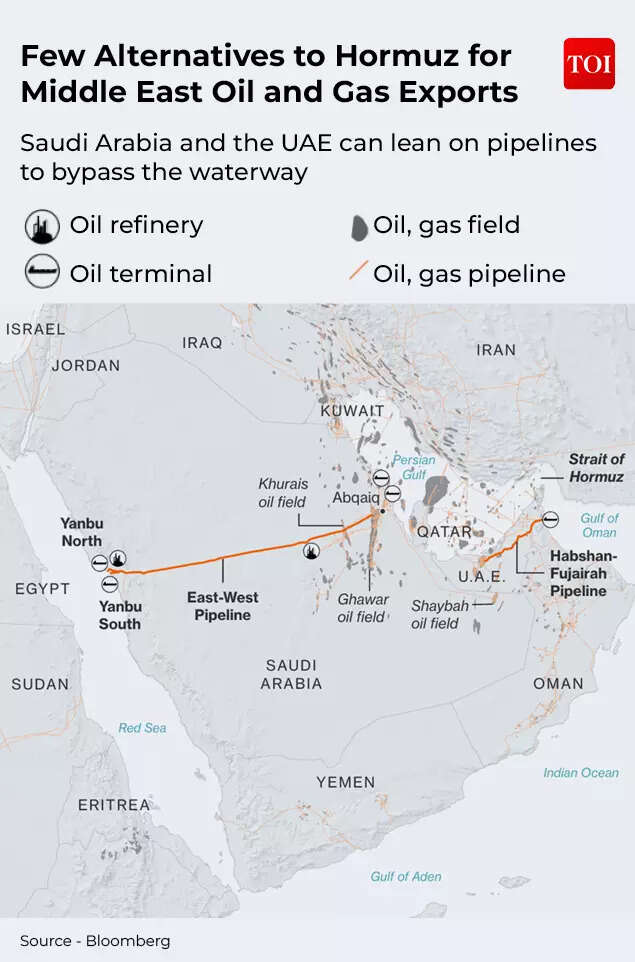
The Middle East conflict continues to squeeze global energy supplies as the war drags on, sending ripples of concern across markets worldwide. Against this uncertain backdrop, Saudi Arabia, appears long prepared for a worst-case scenario like this. The kingdom has effectively pressed the “contingency plan” button after the Strait of Hormuz was disrupted following US and Israeli strikes on Iran, moving swiftly to keep its oil exports flowing even as tensions continue to climb.At the centre of this preparation is a 1,200-kilometre East-West pipeline, built in the 1980s, running across the Arabian Peninsula from the country’s eastern oil fields to the Red Sea port of Yanbu, Bloomberg reported. The route, originally designed as a backup to Hormuz, has quickly taken a front seat as the crisis intensifies.

Watch

Hormuz Under Siege: Iran Taxes Global Shipping Route, Imposes Massive $2 Million Toll As Passage Fee

Within hours of the escalation, Saudi Arabia began rerouting crude through this inland corridor. Yanbu, a relatively low-profile industrial port compared to the Gulf coast hubs, has now become the main export point, with a growing number of oil tankers assembling offshore to load shipments as more vessels arrive each day.State-owned Saudi Aramco is now operating under pressure to scale up flows through this alternative route. Crude exports from Yanbu have reached a five-day rolling average of 3.66 million barrels, according to Bloomberg ship-tracking data, around half of the kingdom’s pre-conflict export levels.

‘Global economy is better with the line in operation’

The importance of the pipeline lies in its ability to offset the impact of the Hormuz closure. Everyday, roughly 20 million barrels or about one-fifth of global oil consumption, typically pass through the strait. With that route disrupted, producers across the region have faced constraints, but Saudi Arabia has retained an alternative outlet that allows it to continue moving crude to market.“The East-West pipeline is looking like a strategic masterstroke right now,” Jim Krane, the Wallace S. Wilson Fellow for Energy Studies at Houston’s Rice University told Bloomberg. “The entire global economy is better off with the line in operation.”The current reliance on the pipeline marks a return to a system conceived during earlier regional conflicts. Initially developed during the Iran-Iraq war in the 1980s, the East-West pipeline was intended to reduce dependence on Gulf shipping lanes. Over time, it has been expanded and adapted, eventually reaching a capacity of around 5 million barrels per day in the 1990s, with further enhancements allowing higher throughput in times of crisis.

.

Saudi Aramco, which operates a highly integrated global logistics network, has had to pivot quickly. The company began contacting customers as soon as hostilities began, requesting that vessels be redirected to Yanbu. Saudi tanker operator Bahri issued similar instructions to shipowners, helping coordinate the sudden shift in export flows. By March 4, Aramco confirmed it had begun ramping up pipeline operations, and within days, international buyers, including a major Indian refiner, had started securing cargoes from Yanbu.The scale of the rerouting has been significant. By March 10, at least 25 supertankers were heading towards the Red Sea port. Shipping sources indicate that Bahri was paying rates exceeding $450,000 per day to secure enough vessels to service Yanbu. Despite the high costs, the number of ships bound for the port has continued to rise, reflecting the urgency to maintain supply chains. At times last week, Yanbu was loading more than 4 million barrels per day.“The mere existence of an alternative route helps calm markets by reassuring buyers that not all the region’s exports are trapped,” says Carole Nakhle, chief executive officer of energy consultancy Crystol Energy Ltd. “That said, it’s not a risk-free alternative. If Yanbu and the East-West system were to come under sustained pressure, that would mark a serious escalation,” Bloomberg cited the expert.That risk has already been highlighted. Iran’s strike on the Samref refinery in Yanbu, a joint venture between Saudi Aramco and Exxon Mobil Corp, came just days into the escalation. This followed Israeli strikes on Iran’s largest gas production and processing facilities, prompting Tehran to retaliate with attacks on energy infrastructure across the Gulf.The East-West pipeline itself has previously been targeted, including as recently as 2019, and remains exposed in the event of further tit-for-tat strikes. Saudi Arabia’s eastern production facilities have also faced attacks, and the Ras Tanura refinery, the country’s largest, was temporarily shut down. Aramco has at times reduced crude production by as much as 2.5 million barrels per day, resulting in lost revenue despite higher oil prices.

Yanbu at center of outflows

Yanbu itself has now moved to the centre of Saudi Arabia’s export operations. Historically overshadowed by the eastern Gulf coast, from Jubail to Ras Tanura, where Aramco shipped its first crude cargo in 1939, the Red Sea port is now handling the bulk of the kingdom’s export activity. Refineries and petrochemical plants in Yanbu, though less prominent, are currently serving as a critical interface between Saudi production and global buyers.The pipeline feeding Yanbu originates near Abqaiq on the eastern coast, where it connects to major oil fields. From there, it crosses desert terrain and climbs to elevations exceeding 1,000 metres over the Hijaz mountains before reaching the Red Sea. Alongside crude exports, around 2 million barrels transported through the pipeline are directed to domestic refineries along the western coast, which continue producing refined products such as diesel for export.

A lifeline with risks

The idea of an alternative route dates back to the late 1970s and early 1980s, when concerns over Hormuz first intensified. A 1980 report in the Mideast Report described the planned pipeline as a safeguard against the “strategic yet vulnerable Strait of Hormuz, which could eventually come under Iranian guns.” Since then, successive expansions and upgrades have turned it into a core component of Saudi Arabia’s export infrastructure.However, the Red Sea route is not entirely without risk. Vessels travelling to and from Yanbu must still pass through the Bab El-Mandeb Strait, another critical chokepoint linking global shipping lanes between the Mediterranean and Asia. In recent years, this area has seen intermittent attacks from Houthi militants, raising concerns about potential disruptions to maritime traffic.“The Houthis now have a veto on Saudi oil exports via the Bab al-Mandab,” says Rice University’s Jim Krane. “If they decide to back Iran by shutting another critical chokepoint, oil markets will gyrate even more wildly.”The broader implications of Hormuz being blocked are now becoming clear. The war has triggered a global energy shock, with commodity prices rising across sectors. Brent crude has climbed to its highest levels since Russia’s 2022 invasion of Ukraine, up 55% in the three weeks since the conflict began, closing at $112.19 per barrel on Friday.Over the longer term, the crisis is likely to reshape energy strategies across the Middle East. Countries are increasingly evaluating alternative export routes and infrastructure resilience. Oman has been positioning its port of Duqm as a regional hub, with plans for large-scale storage capacity. The United Arab Emirates operates a 1.5 million-barrel-per-day pipeline to Fujairah in the Gulf of Oman, bypassing Hormuz, though that terminal has itself come under repeated attacks in recent weeks.

[ad_2]

Source link