Breaking News
Ajit Pawar plane crash: Baramati lacked IMD weather services; visibility below ideal landing norms, say experts | Pune News

Ajit Pawar plane crash: Baramati lacked IMD weather services; visibility below ideal landing norms, say experts

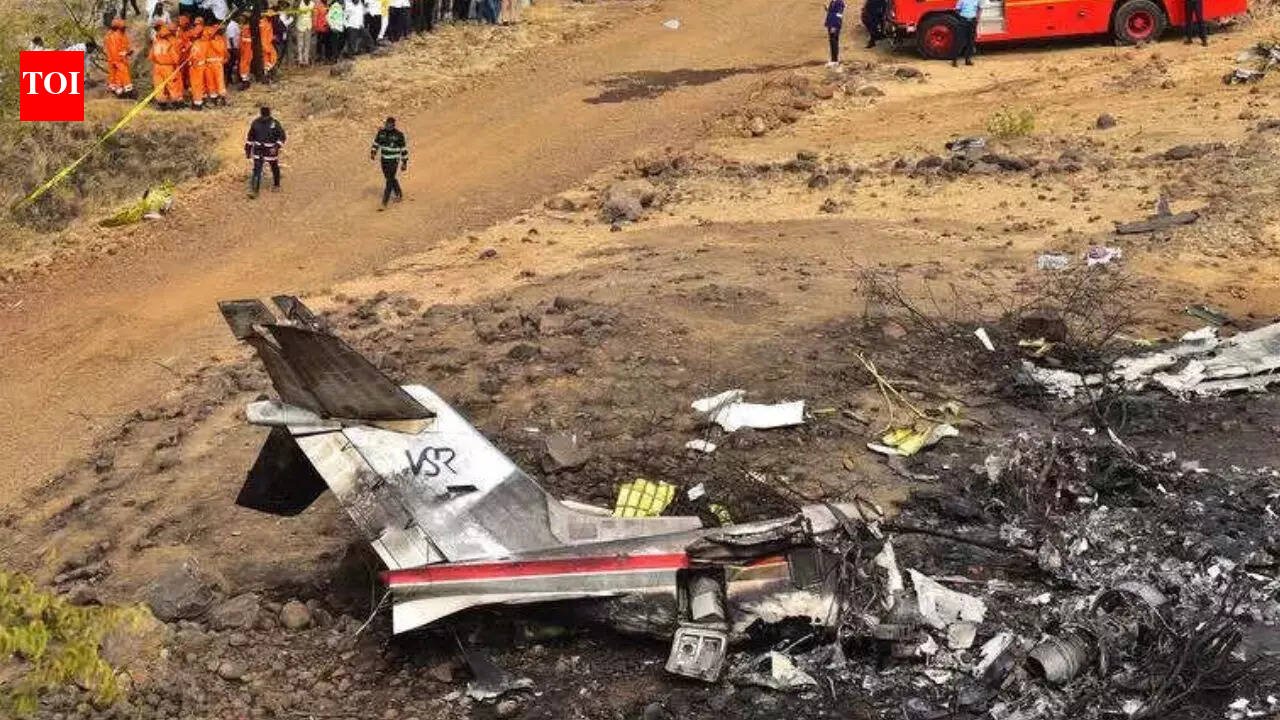
PUNE: The plane crash on Wednesday that killed deputy chief minister Ajit Pawar and four others has raised questions about aviation weather protocols — particularly the pre-flight weather briefing procedures for chartered aircraft and the visibility conditions during landing.The Learjet 45, which departed from Mumbai and crashed near the Baramati airstrip, was operating as a non-scheduled charter flight. According to a senior official from IMD’s civil aviation services division, this category of aircraft does not receive direct weather briefings from the India Meteorological Department.“Baramati airstrip lies outside IMD jurisdiction and does not have any meteorological office on site. We don’t provide services there,” an official said, adding that it was a small, non-commercial facility primarily used for private and temporary landings.This stands in contrast to major Indian airports where IMD units provide comprehensive weather bulletins — covering cloud cover, visibility, and other aviation-critical parameters — for both departure and arrival points. For non-scheduled and charter flights, pilots typically rely on IMD’s Online Briefing System (OLBS), a centralised platform run by IMD offices at international airports in Chennai and New Delhi. Access requires airline registration and approval from the ministry of civil aviation.“National carriers get official OLBS accounts through proper procedures,” the official said. “Charter operators with accounts can log in and obtain all weather data themselves. But we don’t know whether this particular aircraft was registered or accessed the system,” the official added.While scheduled and VVIP flights receive direct IMD briefings, charter operators depend mainly on the self-service online portal.A PIB press release stated that when the aircraft contacted Baramati, airfield staff reported calm winds and visibility of around 3,000 meters (about 3km).A former IMD official with aviation experience suggested this visibility might have been inadequate. “Visibility should be above 5km for safe landing,” the expert said, emphasising that landing decisions ultimately rested with pilots and Air Traffic Control (ATC), and vary depending on aircraft specifications.He said smaller airstrips like Baramati, which lacked on-site IMD offices, relied on ATC’s own equipment for weather updates. “Such airfields generally do not issue METARs, the standardized half-hourly weather observations used widely in aviation,” the official said.According to a DGCA statement on Wednesday, Baramati is an “uncontrolled airfield” where traffic information is provided by instructors or pilots from the local flying training organizations.Baramati is also categorised as a table-top airport, located on elevated terrain. IMD officials said such airports posed additional risks. “Table-top airports are situated on small hills, above sea level. Their runways are often shorter than those at major airports, reducing the margin for landing and taxiing,” another IMD official said.
Source link

‘Not an act of war’: Marco Rubio defends Venezuela operation at Senate hearing — what he said


‘Not an act of war’: Marco Rubio defends Venezuela operation at Senate hearing — what he said

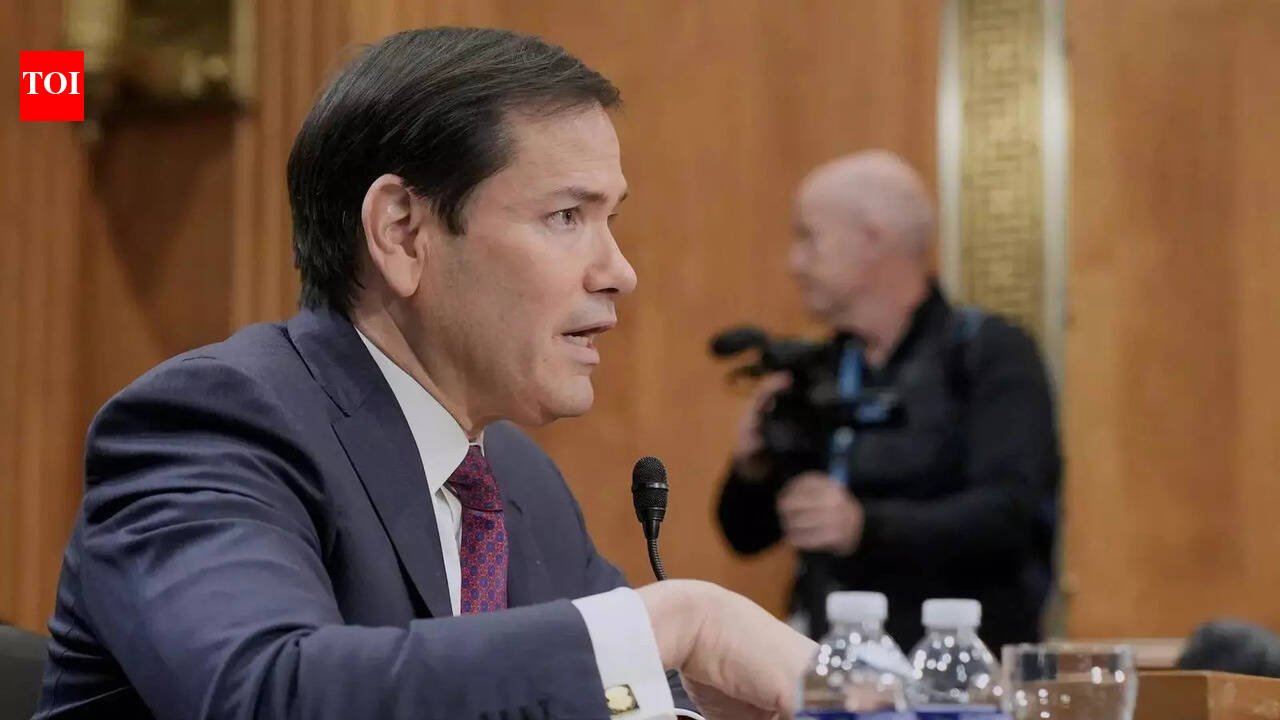
US Secretary of State Marco Rubio appeared before the Senate Foreign Relations Committee on Wednesday, defending the Trump administration’s recent military actions in Venezuela and explaining the US posture on Iran.Rubio said the US operation to capture Venezuelan leader Nicolas Maduro was not an act of war and stressed that Washington does not plan further military action in the country. “We are not postured and do not expect to take military action,” he told lawmakers, adding that additional strikes could harm long-term efforts to stabilise Venezuela and support a democratic transition.He also addressed Iran, saying there is no current plan to attack the country, even as the US increases its military presence in the Middle East. Rubio described the buildup as “wise and prudent” to protect American personnel and facilities from potential Iranian threats. His comments came as President Donald Trump again warned Tehran of a “far worse” attack if it does not abandon its nuclear ambitions.Rubio cautioned that regime change in Iran would be “far more complex” than in Venezuela, noting the longevity of Iran’s leadership and the need for careful consideration.The hearing also touched on Ukraine, with Rubio saying disagreements over territory remain a key obstacle in talks involving the US, Russia and Ukraine. He said Washington may need to provide a “security backstop” for any future agreement.Rubio further said the Trump administration would like to see a change in Cuba’s government but stopped short of saying the US would force such an outcome.“We would like to see that regime change, Rubio said, adding, “That doesn’t mean that we’re going to make a change, but we would love to see it change.”


Source link

Border 2 Full Movie Collection: ‘Border 2’ box office collection day 6 (LIVE): The Sunny Deol, Varun Dhawan film breaks the January jinx, touches Rs 200 crore in India, slows down after Republic day |


'Border 2' box office collection day 6 (LIVE): The Sunny Deol, Varun Dhawan film breaks the January jinx, touches Rs 200 crore in India, slows down after Republic day

‘Border 2’ released in theatres on Janaury 23 and it was a great period to release the film around Republic day, since it’s brimming with patriotism. While the advance bookings of the film were good, it has managed to have a good four-day extended weekend number and met expectations. The film began with a decent Rs 30 crore on day 1 and on Saturday, day 2, it saw growth with a good Rs 36.5 crore. But the Sunday numbers along with the Republic day figures proved to be a complete game changer for the movie. It earned more than Rs 50 crore each on both the days.Border 2 Movie ReviewAccording to Sacnilk, ‘Border 2’ minted Rs 54.5 crore on Sunday and Rs 59 crore on Monday due to Republic day holiday. Clearly, the purpose of the film was solved to release around a National holiday like this. On Tuesday, one expected the film to decline which it did. The Sunny Deol, Varun Dhawan, Diljit Dosanjh, Ahan Shetty starrer, directed by Anurag Singh, made Rs 20 crore on Tuesday, which is day 5. And now on day 6, the film has collected Rs 1.45 crore so far on Wednesday. With that, it has crossed the double century mark. The total collection of ‘Border 2’ so far now stands at Rs 201.45 crore.

Day wise collection of the film:

Day 1 [1st Friday] ₹ 30 Cr –Day 2 [1st Saturday] ₹ 36.5 Cr Day 3 [1st Sunday] ₹ 54.5 Cr Day 4 [1st Monday] ₹ 59 Cr Day 5 [1st Tuesday] ₹ 20 Cr Day 6 [1st Wednesday] ₹ 1.45 Cr ** Total ₹ 201.45 Cr


Source link

‘Very bad choice’: Trump warns US will end support for Iraq if Nouri al-Maliki returns as prime minister


‘Very bad choice’: Trump warns US will end support for Iraq if Nouri al-Maliki returns as prime minister

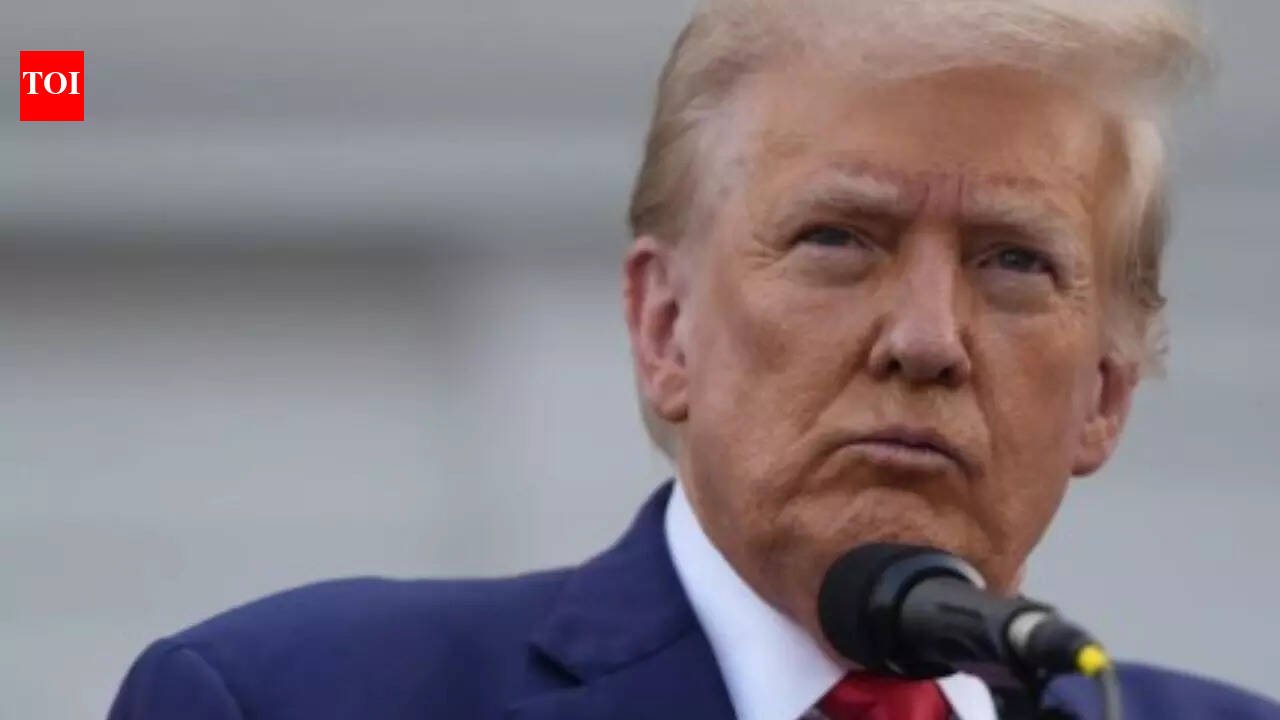
US President Donald Trump on Tuesday warned that the United States would end all support for Iraq if former prime minister Nouri al-Maliki returns to power. Trump said Iraq would be making a “very bad choice” by bringing Maliki back. Maliki has been nominated for the post by the largest Shiite political bloc in the country. In a post on his Truth Social platform, Trump said that when Maliki was last in office, Iraq fell into poverty and chaos. He said this should not be allowed to happen again.

Screenshot 2026-01-28 035108

.

Trump said that because of Maliki’s policies and ideology, the United States would stop helping Iraq if he is elected prime minister. He added that without US support, Iraq would have no chance of success, prosperity or freedom. Maliki stepped down in 2014 after pressure from the United States, which blamed his sectarian policies for contributing to the rise of the Islamic State group. The United States holds significant leverage over Iraq, as most of the country’s oil export revenues are kept at the Federal Reserve Bank in New York under an arrangement made after the 2003 US invasion. Oil sales make up around 90 per cent of Iraq’s government income. Trump’s comments came days after US Secretary of State Marco Rubio raised similar concerns in a phone call with current prime minister Mohammed Shia al-Sudani. Political sources said Washington had also sent a letter to Iraqi leaders stating its negative view of Maliki. By tradition, Iraq’s prime minister has been a Shiite Muslim since the fall of Saddam Hussein. On Saturday, the Coordination Framework, a group of Shiite parties that holds a majority in parliament, backed Maliki’s nomination.


Source link

NASA shares new details about dark matter: The hidden framework of the universe |


NASA shares new details about dark matter: The hidden framework of the universe

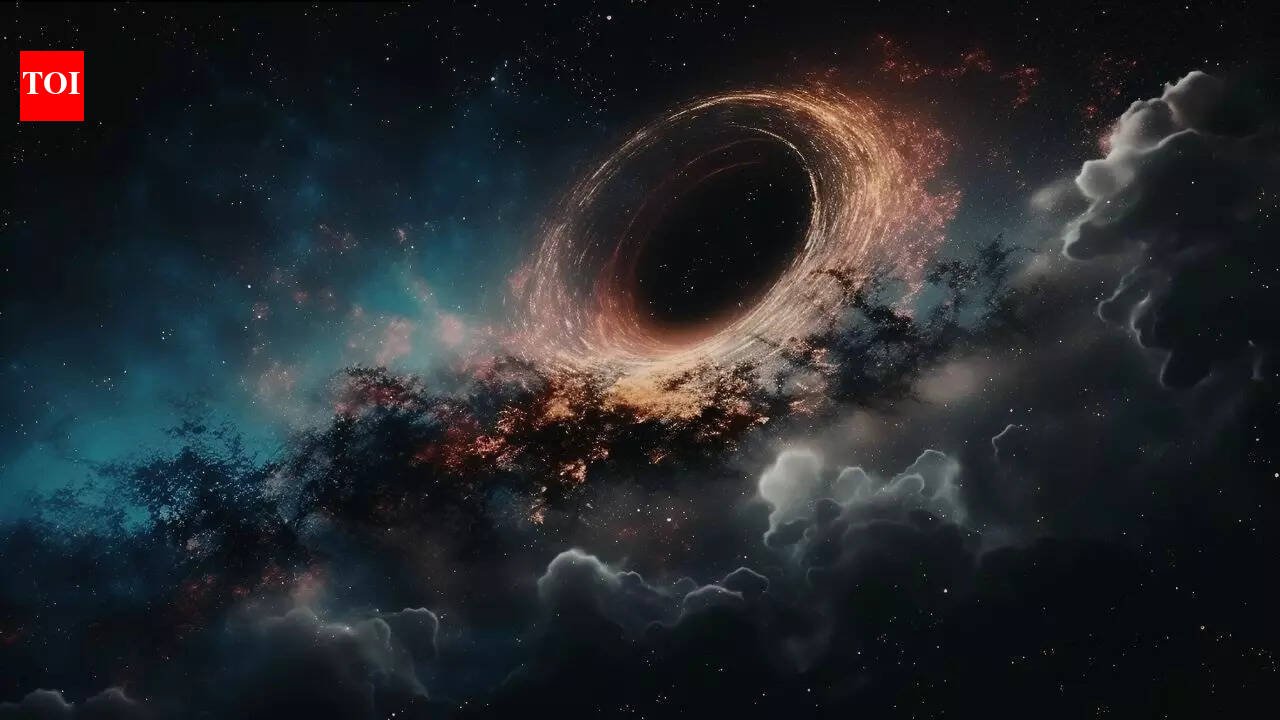
The idea of dark matter has existed for decades, mostly as a necessary explanation rather than something clearly seen. New observations from the James Webb Space Telescope are adding texture to that idea, without resolving it completely. Scientists working with Webb data have produced a detailed map showing where dark matter appears to sit in relation to galaxies and stars. The map focuses on a small but deeply studied patch of sky, already familiar from earlier surveys. What changes here is not the theory but the clarity. The patterns look sharper, more crowded, and harder to dismiss. Researchers say the new view strengthens the case that dark matter has quietly influenced how the universe took shape, long before planets or life were possible. It remains invisible, but its presence feels more fixed.

NASA plans even larger dark matter surveys after Webb breakthrough

The map was created using long observations of a region known as COSMOS, in the constellation Sextans. Webb spent hundreds of hours collecting light from distant galaxies, many of them faint and distorted. Those distortions matter. They occur because mass bends space itself, slightly shifting the path of light as it travels.By measuring those shifts, scientists can estimate where large amounts of unseen mass must lie. What emerges is a web-like pattern. Dense knots sit where galaxy clusters gather. Thinner strands stretch between them. The shapes echo what astronomers have long suspected, though rarely seen with this level of definition.

Dark matter aligns closely with ordinary matter

One striking feature of the map is how closely dark matter appears to track normal matter. Where galaxies cluster, dark matter clusters too. Where galaxies thin out, so does the unseen mass.Researchers say this alignment is unlikely to be accidental. Gravity is the link. Over billions of years, dark matter seems to have drawn gas and dust towards it, creating the conditions needed for galaxies to form. The map does not show dark matter directly, but the overlap is persistent enough to feel deliberate. This relationship has been hinted at before. Webb makes it harder to ignore.

Older surveys laid the groundwork

The COSMOS region has been studied since the mid-2000s, including with the Hubble Space Telescope. Those earlier maps were useful but limited. They contained fewer galaxies and less precise distance measurements.Webb changes that balance. It detects far more objects, including galaxies hidden behind dust. Its infrared instruments allow scientists to estimate distances with greater confidence, which matters when building a three-dimensional picture of mass. The result is not a new idea but a clearer one. Some features seen by Hubble now look more complex. Others appear newly resolved rather than entirely new.

Why early structure still matters today

The map also feeds into a broader question about how the universe evolved. In the early universe, matter was spread thinly. Scientists think dark matter began clumping first, slowly creating gravitational wells. Ordinary matter followed later, falling into those regions.That sequence matters. Early galaxy formation allowed stars to form sooner, producing heavier elements over time. Without that process, planets like Earth would not have the materials they rely on. The influence is indirect and distant but not abstract. It reaches forward into the conditions that made complex worlds possible.

Future telescopes will widen the picture

Webb will not be the final word. NASA’s upcoming Roman Space Telescope is expected to map dark matter over much larger areas of sky, though with less fine detail. Together, the two approaches may offer a balance between scale and resolution.Even then, some limits will remain. Dark matter does not emit light, and its nature is still unknown. The maps show where it seems to be, not what it is. For now, the picture is sharper, not complete. The scaffolding of the universe looks more defined, but it still sits quietly behind everything else, shaping the view without stepping into it.


Source link

Who is Tom Homan? Donald Trump’s point man sent to Minneapolis as protests erupt over ICE raids


Trump Deploys BORDER Czar Tom Homan To Minnesota Amid Protests, Investigations, And Chaos

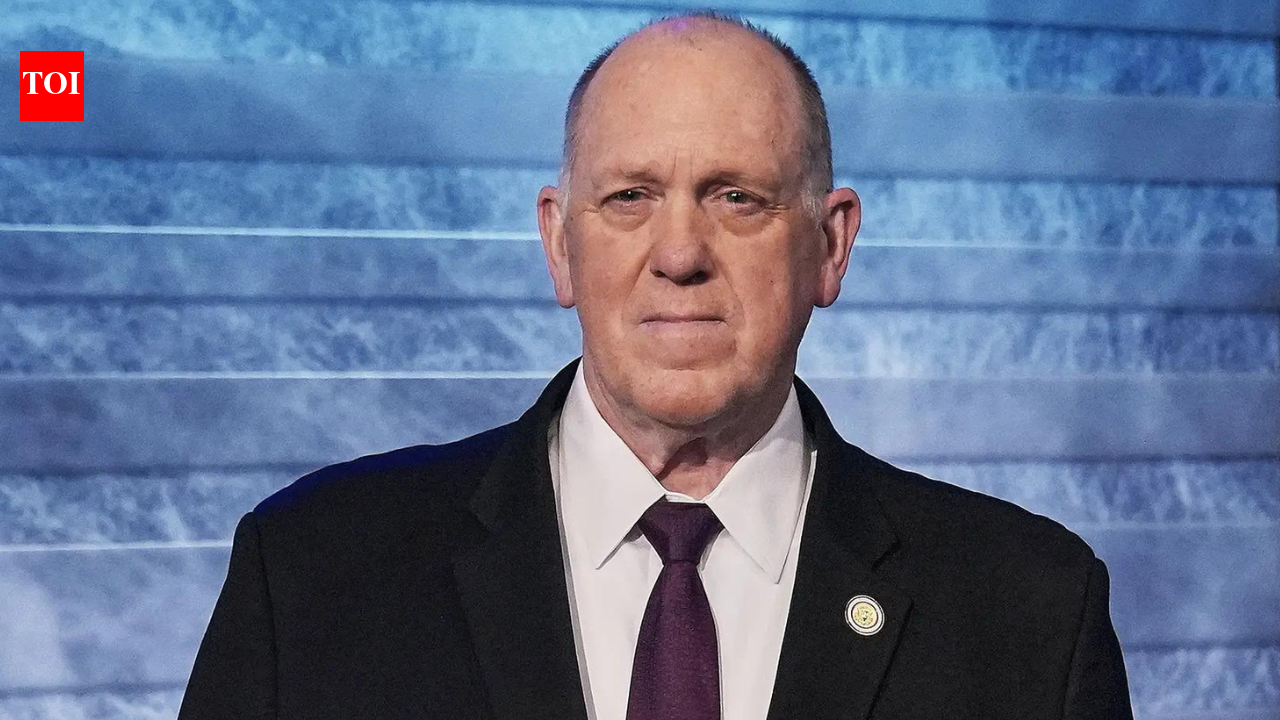
File photo: Tom Homan (Picture credit: AP)

US President Donald Trump has announced that his border czar, Tom Homan, will be sent to Minneapolis, a city that has emerged as the epicentre of protests against the administration’s immigration enforcement tactics following two fatal shootings involving federal agents this month. Trump on Monday said Homan would report directly to him, describing him as “tough but fair”.

Trump Deploys BORDER Czar Tom Homan To Minnesota Amid Protests, Investigations, And Chaos

The announcement came days after the fatal shooting of Alex Jeffrey Pretti by federal agents, the second such incident in Minneapolis in January Earlier, Minneapolis resident Renee Good was also shot dead by an ICE agent. In both cases, official explanations by homeland security secretary Kristi Noem were questioned after eyewitness videos appeared to contradict claims that the victims posed an immediate threat.Protests have intensified across the city, with growing calls from both Democrats and Republicans for an independent investigation into ICE operations.

Who is Tom Homan

  • Tom Homan, 64, is a veteran immigration enforcement official with nearly four decades of experience.
  • He began his career as a US Border Patrol agent in 1984 and later joined Immigration and Customs Enforcement (ICE) when the agency was created in 2003 under the Department of Homeland Security.
  • Homan rose to prominence as head of ICE’s Enforcement and Removal Operations during the Obama administration, overseeing deportations at a time when removals peaked at 432,000 in 2013.
  • He received a Presidential Rank Award in 2015 for his work. Although known for his hardline views, he was seen as a relatively low-profile but influential figure until he became acting ICE director during the early months of Trump’s first term.
  • Strongly aligned with Trump’s immigration agenda, Homan has defended aggressive enforcement, including policies that led to family separations.
  • “If you’re in the country illegally, you should be concerned,” he told the news agency The Associated Press in a 2018 interview, arguing that enforcement should apply to anyone without legal status.
  • After retiring in 2018, Homan remained a vocal critic of then-US President Joe Biden’s immigration policies and returned to government as Trump’s “border czar”, pledging in 2024 to run “the biggest deportation operation this country’s ever seen”.
  • While he has said enforcement would prioritise public safety threats and be carried out in a “humane manner”, recent ICE actions in Minnesota have intensified scrutiny of his role as he prepares to take charge on the ground in Minneapolis.


Source link

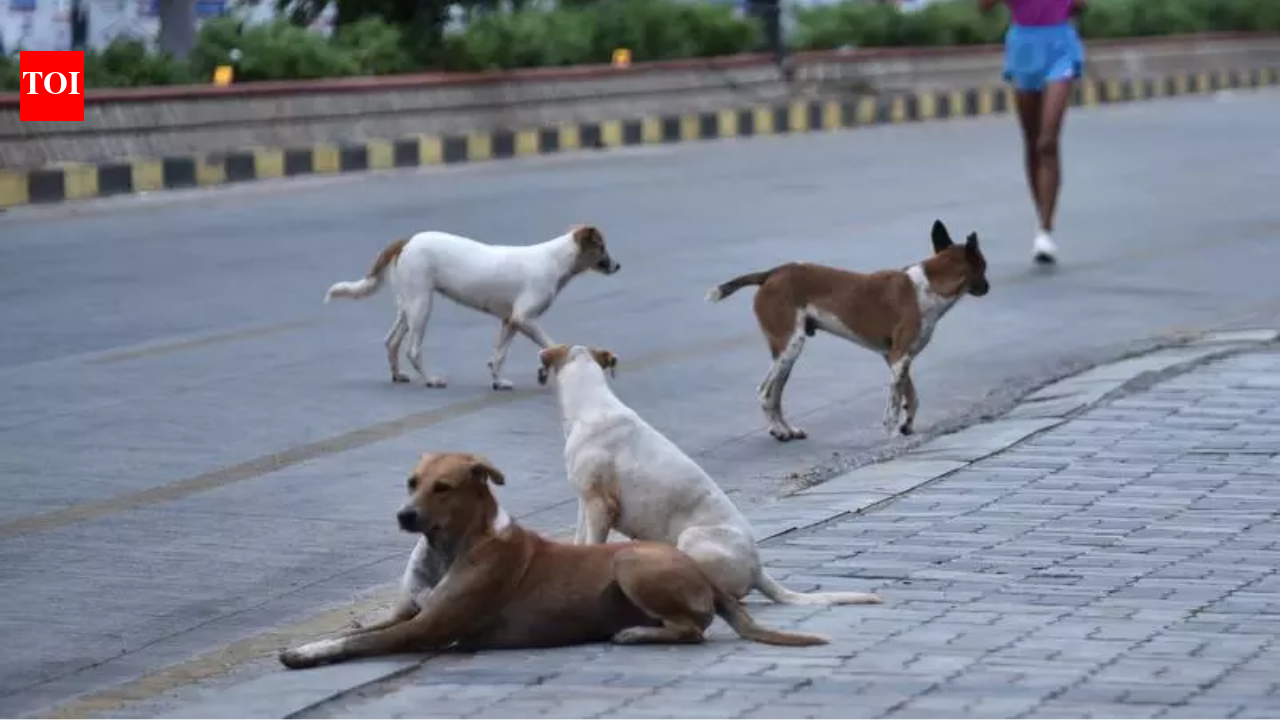
Mass killing of stray dogs continues: 200 more killed in Telangana, toll crosses 1,000 in a month | Hyderabad News


Mass killing of stray dogs continues: 200 more killed in Telangana, toll crosses 1,000 in a month

HYDERABAD: Incidents of mass killing of stray dogs in Telangana continued to surface on Monday with another 200 dogs allegedly poisoned to death at Pathipaka village in Hanumakonda district. While the incident, according to animal rights activists, took place a month ago — amid the sarpanch elections — it came to light on Jan 25 after locals tipped them off about the dogs being buried at a site close to the village.This is the second such incident being reported from a village under the Shayampet police station limits this month. On Jan 9, cops here had filed an FIR after a complaint was lodged about 300 dogs being similarly killed in Arepally village, in the same area.

Hyderabad Headlines Today — The Biggest Updates You Need to Know.

“Since both the cases fall under our jurisdiction, as is suspected to have been executed by the same people, we have decided to make changes to the earlier FIR and add details of the latest case,” said Jakkula Parameshwar, SI, Shayampet police station adding that the dog carcasses will be retrieved and sent for post mortem examination on Tuesday.In the Arepally case, cops had booked the village sarpanch, secretary and others, under Sections 325 of the Bharatiya Nyaya Sanhita (BNS), and Section 11(1)(a) of the Prevention of Cruelty to Animals (PCA) Act, 1960 (dealing with killing and poisoning of animals by multiple persons).“We were informed about these killings on Sunday. We suspect that these dogs too were killed by administering lethal injections. We went to the site where they were buried and registered a complaint with the police after the visit,” said Goutham Adulapuram of Stray Animal Foundation India. He added that they also interacted with the locals to understand the motive behind these killings. “It looks like this too was ordered by gram panchayat officials to fulfil poll promises,” he added.So far, more than 1,000 dogs have been allegedly killed across Telangana this month. The accused include several sarpanchs and ward members who, complainants claim, promised to address the dog and monkey menace while campaigning for the recently concluded gram panchayat elections. These mass killings have been reported from Kamareddy, Jagtial, Hanumakonda and Ranga Reddy districts.


Source link

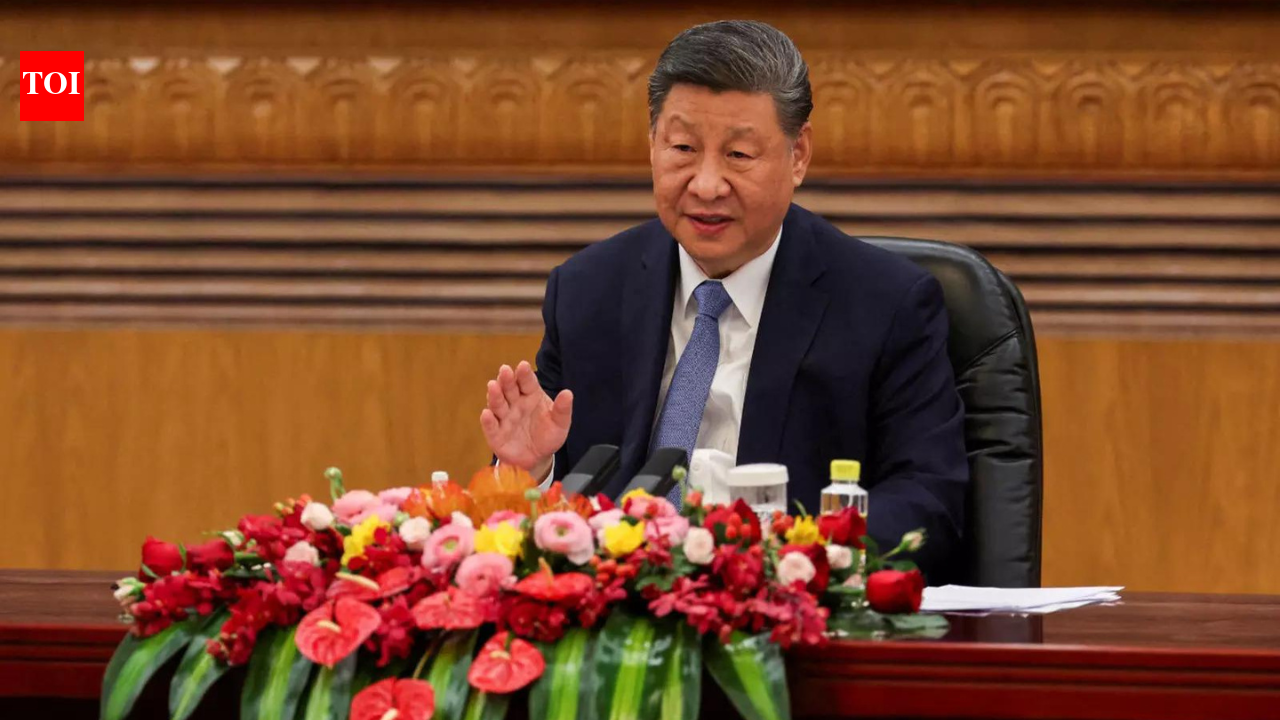
‘Dragon and elephant dance together’: China’s Xi greets President Droupadi Murmu on 77th Republic Day | India News


'Dragon and elephant dance together': China's Xi greets President Droupadi Murmu on 77th Republic Day

NEW DELHI: Chinese President Xi Jinping on Monday extended greetings to President Droupadi Murmu on the occasion of India’s 77th Republic Day, describing New Delhi and Beijing as “good neighbours, friends and partners.” He also said that achieving the vision of the “dragon and the elephant dancing together” is the right choice for both countries.In his message, Xi said India-China relations have continued to improve and develop, aligning with the fundamental interests of both countries and their people. He added that the relationship also carried significant implications for global peace and prosperity. According to China’s state-run Xinhua news agency, he stressed that Beijing has consistently believed that being good neighbours, friends and partners who help each other succeed is the correct path for the two Asian giants.Xi also expressed hope that both sides would adhere to the consensus that China and India are “partners for cooperation and opportunities for development,” strengthen strategic communication, expand exchanges and cooperation, address each other’s concerns and promote the healthy and stable development of bilateral ties.Highlighting Xi’s message, Chinese Ambassador to India Xu Feihong shared a post on X, reiterating Beijing’s position on ties with New Delhi. Chinese Premier Li Qiang also sent a congratulatory message to Prime Minister Narendra Modi. The message comes amid a gradual improvement in ties between the two countries, which had stalled following the eastern Ladakh military standoff in 2020. Relations began to revive after PM Modi and President Xi held two meetings first in Kazan in 2024, and later in Tianjin on the sidelines of the Shanghai Cooperation Organisation (SCO) summit in August last year. During their August meeting, the two leaders agreed to deepen bilateral ties, tackle pressing challenges and work towards a “fair” solution to the long-standing border issue.In recent months, India and China have taken a series of steps to normalise relations after ending the more than four-year military face-off along the Line of Actual Control (LAC) in eastern Ladakh. These include resumption of direct flights in October, agreement to restart the Kailash Manasarovar Yatra, commemoration of the 75th anniversary of diplomatic relations and visa facilitation. India also resumed granting tourist visas to Chinese nationals in July, reversing a suspension imposed after the 2020 standoff.Earlier this month, Foreign Secretary Vikram Misri met Sun Haiyan, vice minister of the International Department of the Communist Party of China, to review the positive momentum in bilateral relations. The ministry of external affairs said that the discussions focused on advancing ties through enhanced people-to-people exchanges while addressing sensitive issues. Separately, a Chinese Communist Party delegation also held courtesy meetings with leaders of the RSS and the BJP as part of routine exchanges, news agency ANI reported.


Source link

Stocks to buy: What’s the outlook for Nifty for Budget 2026 week? Check list of top stock recommendations


Stocks to buy: What's the outlook for Nifty for Budget 2026 week? Check list of top stock recommendations
Top stocks to buy (AI image)

Stock market recommendations: According to Sudeep Shah, Head – Technical Research and Derivatives, SBI Securities, the top stock picks for the Budget week week are Hindustan Unilever, and Ashok Leyland. Here’s his view on Nifty, Bank Nifty for the Budget 2026 trading week starting January 27, 2026:Nifty View:From its all-time high, the benchmark index Nifty has undergone a sharp correction of over 5% within just 11 trading sessions, marking one of the steepest declines in recent times. While the index found interim support near the 24,900 level last Wednesday and attempted a modest pullback, the rebound lacked follow-through, and selling pressure resurfaced on Friday, pushing the index lower once again.The ongoing correction has been largely led by sustained weakness in index heavyweight stocks. On a month-to-date basis, Reliance Industries has declined nearly 12%, HDFC Bank is down 7.58%, ITC has corrected sharply by around 20%, L&T has slipped 8.32%, and Bharti Airtel has lost close to 6%, highlighting broad-based selling across frontline counters.Technically, the damage has deepened as the index slipped below its 200-day EMA for the first time since April 2025. On the weekly chart, Nifty has formed a sizeable bearish candle, reflecting strong distribution. Momentum indicators continue to signal weakness, with the weekly RSI hovering near 45—its lowest level since April 2025—and trading below its 9-week average, reinforcing the prevailing bearish bias.The correction is even more pronounced in the broader market. Both the Nifty Midcap 100 and Nifty Smallcap 100 have witnessed sharp declines over the past week. Notably, the Nifty Midcap 100 has broken below its 200-day EMA, while the Nifty Smallcap 100 is currently trading more than 7% below its 200-day EMA, underscoring strong bearish momentum across the broader space.Looking ahead, the 25,400–25,450 zone is expected to act as a key resistance for Nifty. As long as the index remains below 25,450, the risk of further downside cannot be ruled out. On the downside, immediate support is placed near 24,800, followed by 24,600 in the near term.Bank Nifty ViewThe banking benchmark index, Bank Nifty, which had been an outperformer over the past few weeks, witnessed notable selling pressure during the previous week. The index declined by over 2.5% and formed a large bearish candle on the weekly chart, signalling a clear shift in momentum and the emergence of supply at higher levels.From a trend perspective, Bank Nifty has slipped below its 50-day EMA for the first time since October 2025, indicating a weakening of the short-term trend. This breakdown marks a loss of leadership from the banking space, which had until recently been supporting the broader market.Momentum indicators further reinforce the bearish bias. The daily RSI has moved below the 40 mark for the first time since September 2025, reflecting rising downside momentum and deteriorating sentiment. Additionally, the –DI continues to remain well above the +DI, suggesting sellers maintain firm control. The rising ADX points to a strengthening of the prevailing negative trend rather than a mere corrective phase.Going forward, the 100-day EMA zone near 58,200–58,100 is expected to act as the immediate support area.A decisive and sustained breakdown below 58,100 could accelerate the correction toward 57,500, followed by 57,000 in the near term. On the upside, the 20-day EMA band of 59,300–59,400 is likely to act as a key resistance zone, and only a sustained move above this region would indicate a potential trend reversal or recovery.

Stock recommendations

Hindustan UnileverHindustan Unilever has been consolidating in the 2439–2341 range since 6th January, indicating a healthy pause after a strong pullback from the lows of 2245, made on 12th December. Despite the sideways action, the stock trades above its short- and long-term moving averages. The RSI is nearing the 60 level, while the MACD remains above both the signal and zero line. The ADX has started to rise steadily indicating strengthening bullish momentum. Indicator’s placement suggests that the stock is well-positioned for an upside breakout. Hence, we recommend to accumulate the stock in the zone of 2420-2410 with a stoploss of 2340. On the upside, it is likely to test the level of 2585 in the short term.Ashok LeylandAshok Leyland has witnessed a breakout above its previous swing high of 192, recorded on 5th January, signalling a resumption of the uptrend. Although the stock briefly slipped below its 20-day EMA earlier in the week, it swiftly reclaimed the level and pushed higher, highlighting strong buying interest at lower levels. The stock’s ability to sustain above its short-term moving average confirms that the near-term trend remains intact. Momentum has accelerated, with the RSI surging from 54 to 68 in just three sessions, reflecting strong bullish strength. Additionally, the stock has closed above the upper Bollinger Band, suggesting continued outperformance and potential for further upside in the coming sessions. Hence, we recommend to accumulate the stock in the zone of 194-192 with a stoploss of 186. On the upside, it is likely to test the level of 210 in the short term.(Disclaimer: Recommendations and views on the stock market, other asset classes or personal finance management tips given by experts are their own. These opinions do not represent the views of The Times of India)


Source link

Watch: Mi-17 choppers shower petals, fly ‘Dhwaj Formation’; carry national, service ensigns at Republic Day parade | Delhi News


Watch: Mi-17 choppers shower petals, fly ‘Dhwaj Formation’; carry national, service ensigns at Republic Day parade
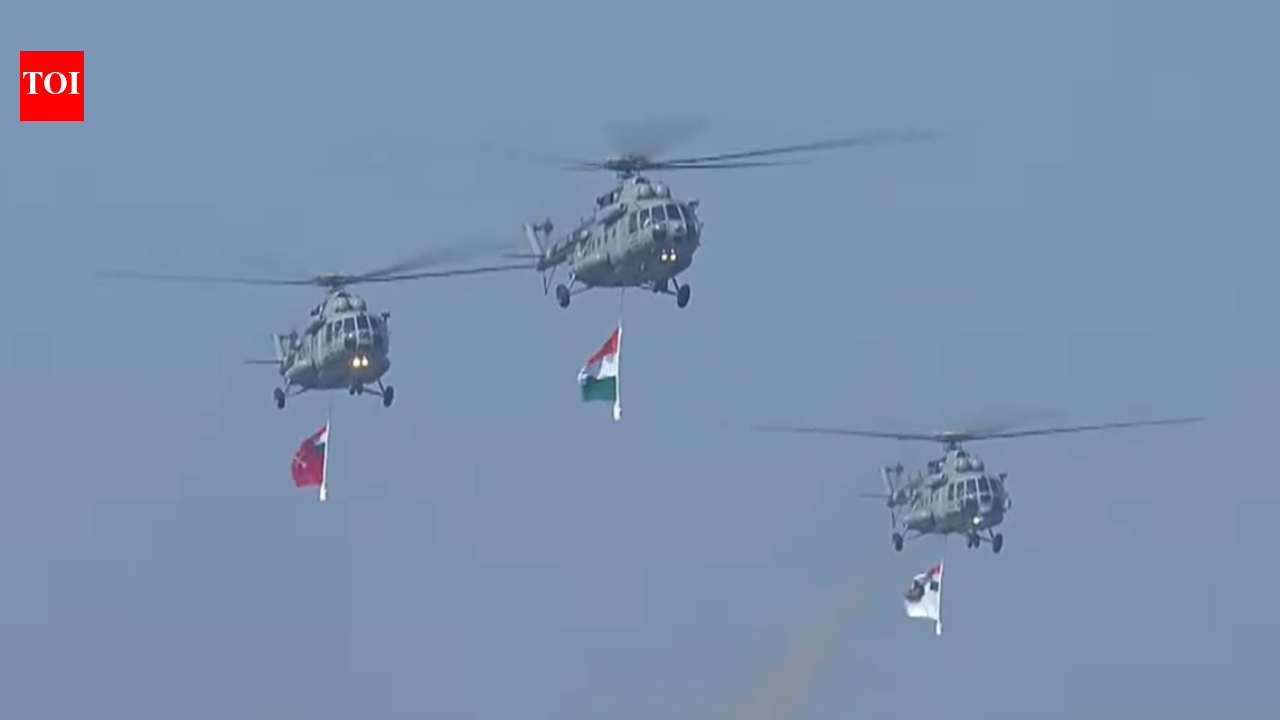
Mi-17 choppers shower petals, fly ‘Dhwaj Formation’

NEW DELHI: The Republic Day parade began on Kartavya Path on Monday with a stirring aerial display titled the ‘Dhwaj Formation’, as four Mi-17 1V helicopters of the 129 Helicopter Unit flew overhead in a striking inverted ‘Y’ formation, carrying the National Ensign along with the service flags of the Indian Army, Indian Navy and Indian Air Force.The formation was led by Group Captain Alok Ahlawat, who trooped the National Flag. Wing Commander Ashutosh Khanduri followed as Deputy Formation Leader carrying the Indian Army Ensign, while Wing Commander Abhishek Malhotra carried the Indian Navy Ensign and Wing Commander Abhishek Shukla carried the Indian Air Force Ensign. As the helicopters passed over Kartavya Path, they showered flower petals, adding colour and solemnity to the Republic Day celebrations.

‘Republic Day 2026 Flypast Will Be IAF’s Tribute To Operation Sindoor’: Says Wing Commander Deshwal

The aerial salute was followed by the arrival of the Parade Commander, Lieutenant General Bhavnish Kumar, Ati Vishisht Seva Medal and Vishisht Sena Medal, who smartly saluted the Commander-in-Chief, President Droupadi Murmu, as he passed the dais.A second-generation Army officer, Lt Gen Bhavnish Kumar was commissioned into the 3rd Battalion of the Parachute Regiment on December 16, 1989. He has served in high-altitude areas at Dras under Operation Rakshak, in counter-insurgency and counter-terrorism operations in the North East under Operation Orchid, and in the Siachen Glacier under Operation Meghdoot. He has also served twice with the 50 (Independent) Parachute Brigade.During his career, the General Officer has commanded the 5th Battalion of the Kumaon Regiment as part of the Strike Corps, a Mountain Brigade in Jammu and Kashmir, and a Reorganised Army Plains Infantry Division on the western borders.The Deputy Parade Commander, Major General Navraj Dhillon, Vishisht Sena Medal, was commissioned into the 42 Armoured Regiment in December 1991. A third-generation Army officer, with the fourth generation currently serving, he has commanded the 42 Armoured Regiment and an Independent Armoured Brigade, besides holding several staff and instructional appointments.Following the Parade Commander, recipients of India’s highest gallantry awards — the Param Vir Chakra and the Ashok Chakra — arrived on Kartavya Path. Subedar Major (Honorary Captain) Yogendra Singh Yadav (Retd) and Subedar Major Sanjay Kumar were honoured with the Param Vir Chakra, while Major General C A Pithawalia (Retd) and Colonel D Sreeram Kumar received the Ashok Chakra.Kartavya Path, stretching from Rashtrapati Bhavan to the National War Memorial, has been elaborately decorated this year to reflect India’s journey, blending the legacy of Vande Mataram, the country’s developmental progress, military strength and cultural diversity, the Ministry of Defence said.Republic Day, celebrated annually on January 26, marks the adoption of the Constitution in 1950 and symbolises India’s transition into a sovereign, socialist, secular and democratic republic founded on justice, liberty, equality and fraternity.


Source link