Breaking News
Was Ajit Pawar considering an NCP merger before his death? What aides say | India News

Was Ajit Pawar considering an NCP merger before his death? What aides say
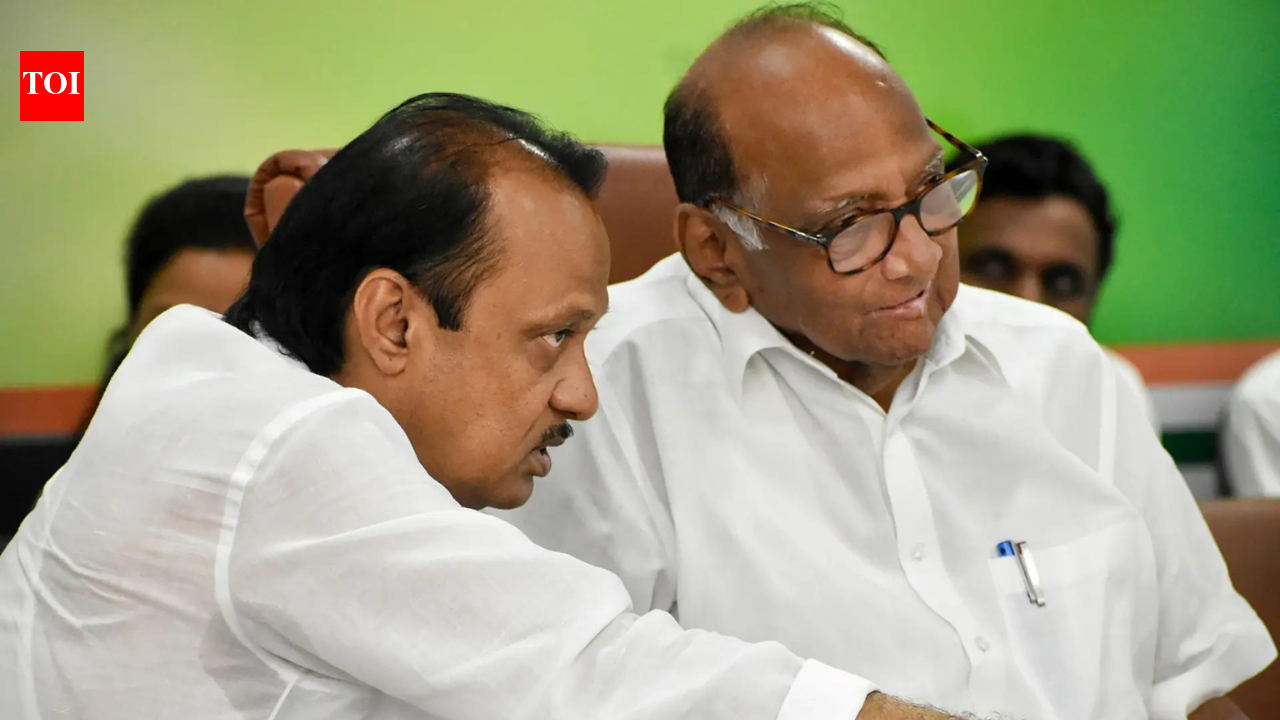
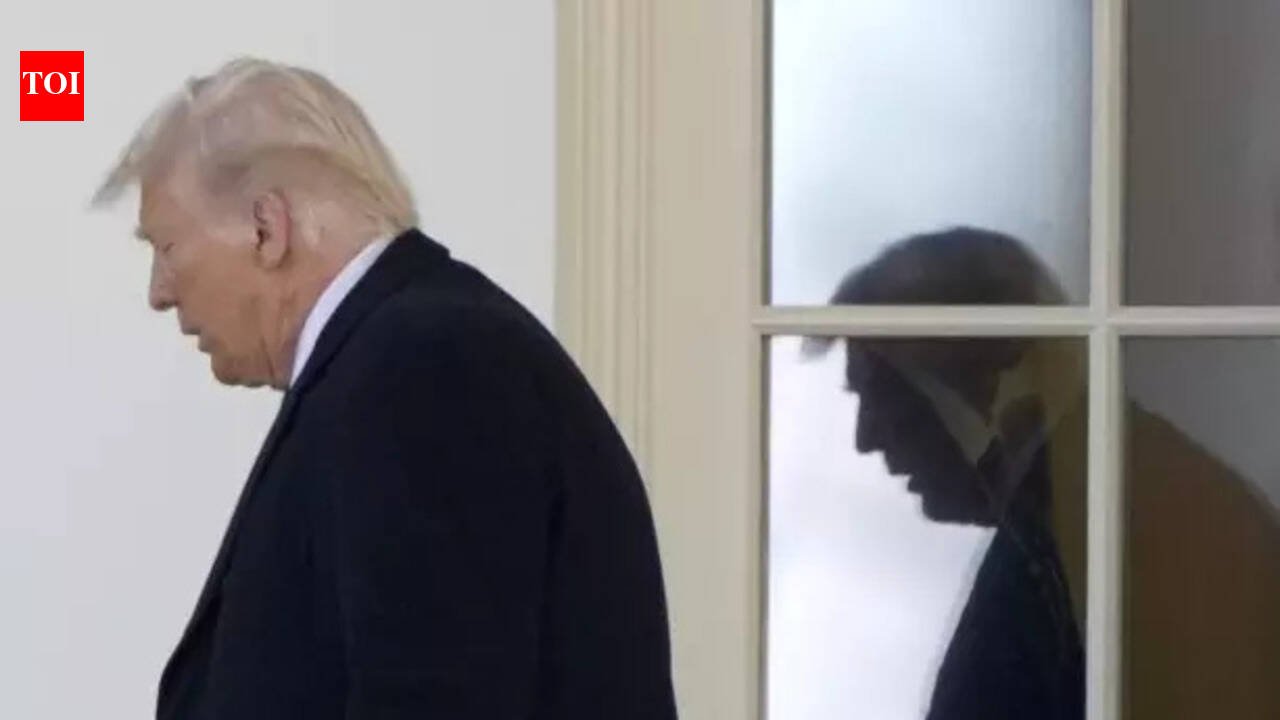
Ajit Pawar and Sharad Pawar (PTI file photo)

NEW DELHI: Was Ajit ‘dada’ Pawar considering an NCP merger before his death? A close aide said he was “100% keen.”The sudden death of Maharashtra deputy chief minister and NCP chief Ajit Pawar in a plane crash on Wednesday has left a political vacuum in the state’s ruling establishment, and reopened questions about a reunion that may have been closer than many realised.Ajit Pawar, the second-most powerful figure in the Devendra Fadnavis-led Mahayuti government and a key pillar alongside Shiv Sena’s Eknath Shinde, was at the centre of Maharashtra’s three-power-axis politics. With the Baramati strongman gone, the future of the Nationalist Congress Party, fractured since its dramatic split in 2023, now hangs in uncertainty.In his final days, was Ajit Pawar actively working towards merging both factions of the NCP?According to those closest to him, the answer is yes.A senior aide told news agency PTI that the late leader was keen on a reunion of the two factions led by him and his uncle, Sharad Pawar. Kiran Gurjar, a longtime associate who has known Ajit Pawar since before his entry into politics in the mid-1980s, said the deputy CM had confided in him just five days before the fatal crash.“He was one hundred per cent keen on merging both the factions. He had told me five days ago that the entire process was complete and the merger was imminent in the next few days,” Gujar said.Echoing the sentiment, a leader from the Sharad Pawar-led NCP (SP) Eknath Khadse told ANI, “Both factions of NCP to come together.”Ajit Pawar himself had earlier told TOI that reuniting the party was his immediate political goal, with the blessings of uncle Sharad Pawar.The irony of the moment is stark. Ajit Pawar was the architect of the 2023 split that broke the NCP and aligned a majority of its legislators with the BJP–Shinde Sena-led Mahayuti government. That move left Sharad Pawar with the remaining faction in opposition. Yet Ajit Pawar also managed to retain the party’s official identity, with the Election Commission recognising his group as the “real” NCP and awarding it the “watch” symbol.Despite the split, channels between the two sides never fully closed. Mutual respect within the Pawar family endured, and the two factions recently came together for local body elections, fuelling speculation that a merger was only a matter of time.Now, the ruling NCP finds itself leaderless. With senior leader Chhagan Bhujbal not in good health and Ajit Pawar gone, the party faces an uncertain future. Sharad Pawar, the party’s founder and patron, continues to head the opposition NCP (SP).Within Ajit Pawar’s faction, voices are already emerging over succession. Many party members want his wife and Rajya Sabha MP Sunetra Pawar to take charge. Others have floated the name of Parth Pawar, while some see Ajit’s son Jay Pawar as the natural political heir from the Baramati bastion.“NCP’s identity goes with the Pawar family and so far the party’s functioning revolved around Sharad Pawar, Ajit Pawar and Supriya Sule. Now with the untimely death of Ajit Pawar, many party seniors as well as grassroots workers feel that only his wife Sunetra can take his position,” one NCP functionary told TOI.Ajit Pawar had already begun preparing the next generation. In 2024, he introduced Jay Pawar to Baramati’s political circles and held meetings with local units during the election campaign. After Sunetra Pawar’s defeat in the Lok Sabha election, Ajit had expressed his wish to step aside and nominate Jay as the party’s candidate for the Baramati assembly seat.“Ajitdada was keen to bring Jay into active politics. He was preparing him for a bigger role in the party. After his death, the demand is growing particularly from Baramati for Jay to get into politics. Though NCP seniors are not averse to his entry, they felt that his mother Sunetra, who comes from a political family, will be able to command more respect and keep the NCP flock together, if a merger does not work out,” an observer told TOI.Sunetra Pawar had contested against Supriya Sule in the 2024 Lok Sabha elections but lost. This time, party insiders believe that if a Pawar from Ajit’s family contests from Baramati, no major party is likely to field a rival candidate.Yet Ajit Pawar’s death has complicated what once looked like an imminent reunion. The merger talks were expected to gain momentum after the February 5 zilla parishad elections, but without the man driving the process, consensus may be difficult.Another close aide and NCP functionary said that the talks of reunion were “only limited to Pawar family members”.He added, “They were still working out a strategy to involve other senior members from both sides to take the proposal forward. Due to Ajit Pawar’s death, the process of having a reunion is likely to halt for some time till the NCP finds its new chief.”Political observers note that the biggest challenge lies in power alignment. Ajit Pawar’s faction is part of the ruling Mahayuti, while Sharad Pawar’s NCP (SP) remains in opposition. Convincing MLAs in government to give up power — or persuading the opposition faction to join the BJP-led alliance, will not be easy.Sharad Pawar and Supriya Sule, the working president of NCP (SP), now face a crucial decision: whether a reunion is worth the ideological and political compromises it may demand.Whether the two NCPs reunite or chart separate futures, one reality is clear — Ajit Pawar’s sudden death has altered Maharashtra’s political equations in ways that will take time to settle.


Source link

Stock market today: Nifty50 opens below 25,300; BSE Sensex down over 500 points


Stock market today: Nifty50 opens below 25,300; BSE Sensex down over 500 points
Stock market today (AI image)

Stock market today: Nifty50 and BSE Sensex, the Indian equity benchmarks, opened in red on Friday. While Nifty50 went below 25,300, BSE Sensex was down over 500 points. At 9:16 AM, Nifty50 was trading at 25,274.65, down 144 points or 0.57%. BSE Sensex was at 82,056.49, down 510 points or 0.62%.Analysts expect stock-specific movements to take centre stage as investors position themselves ahead of the Union Budget. Global and domestic market cues point to a cautious, rangebound trading environment.Dr. VK Vijayakumar, Chief Investment Strategist, Geojit Investments Limited says, “As we near the Budget Day there are headwinds and tailwinds for the market. Geopolitical issues continue to plague global trade with continuous threats of tariff weaponisation by Trump. The spike in Brent crude to near $ 70 is a headwind for Indian macros in general and industries that use oil as inputs, in particular. However, these headwinds are likely to be countered by the positive message from the Economic Survey that projects GDP growth of 6.8 to 7.2% growth in FY 27.“With 3.5% headline inflation, India is headed for around 10% nominal GDP growth in FY27. This has the potential to deliver 15 to 17% earnings growth in FY 27, imparting resilience to the market. The steady decline in FPI outflows during the last two days indicate a possible change in FPI strategy. Another significant trend is India’s success in diversification of its export market away from the US to other markets. From early 2027 onwards this trend will gain momentum with the India- EU trade deal getting implemented. Overall, at this juncture, tailwinds are stronger than headwinds and this is positive for markets in the medium to long-term.”US equities ended lower on Thursday, as concerns over corporate earnings and uncertainty around heavy investments in artificial intelligence weighed on sentiment. The S&P 500 and the tech-focused Nasdaq slipped after investors questioned whether massive AI-related spending by large technology firms would translate into sustainable returns.Early on Friday, futures linked to the S&P 500 and the Nasdaq 100 were down about 0.2 per cent. Technology stocks remained in focus after Apple flagged that rising component costs could pressure its margins, despite reporting earnings that beat market expectations. The stock posted marginal gains in extended trade, while Asian markets opened slightly higher.Back home, foreign portfolio investors continued to trim exposure, selling equities worth Rs 394 crore on Thursday, according to provisional data. In contrast, domestic institutional investors provided support to the market, purchasing shares valued at Rs 2,639 crore.(Disclaimer: Recommendations and views on the stock market, other asset classes or personal finance management tips given by experts are their own. These opinions do not represent the views of The Times of India)


Source link

‘Must be corrected’: Trump threatens Canada with 50% aircraft tariff; dispute over jet certification


‘Must be corrected’: Trump threatens Canada with 50% aircraft tariff; dispute over jet certification
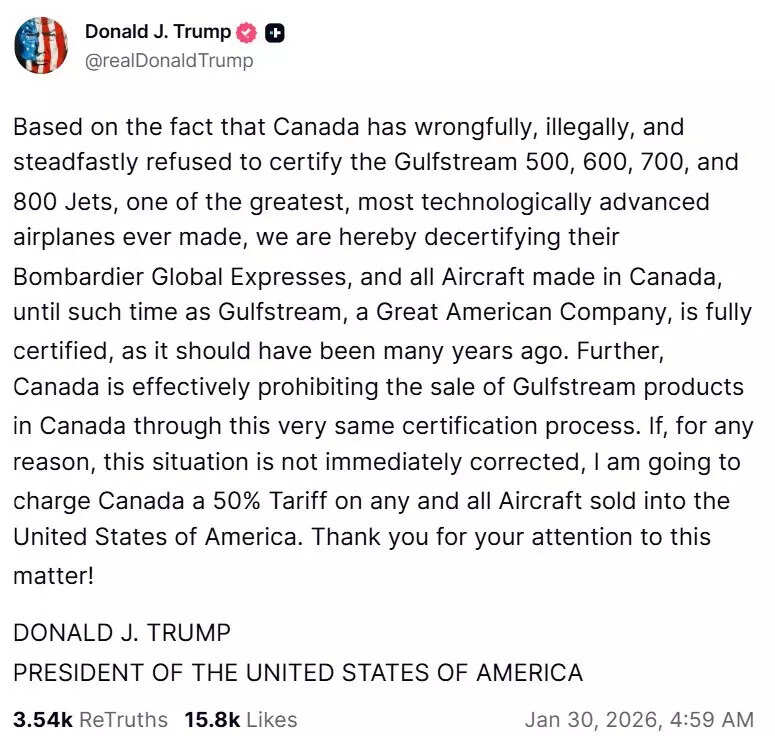
President Trump has threatened Canada with a 50% tariff on all aircraft sold in the U.S. This retaliatory measure follows Canada’s refusal to certify jets from Gulfstream Aerospace. The U.S. also plans to decertify all Canadian aircraft, impacting manufacturers like Bombardier.

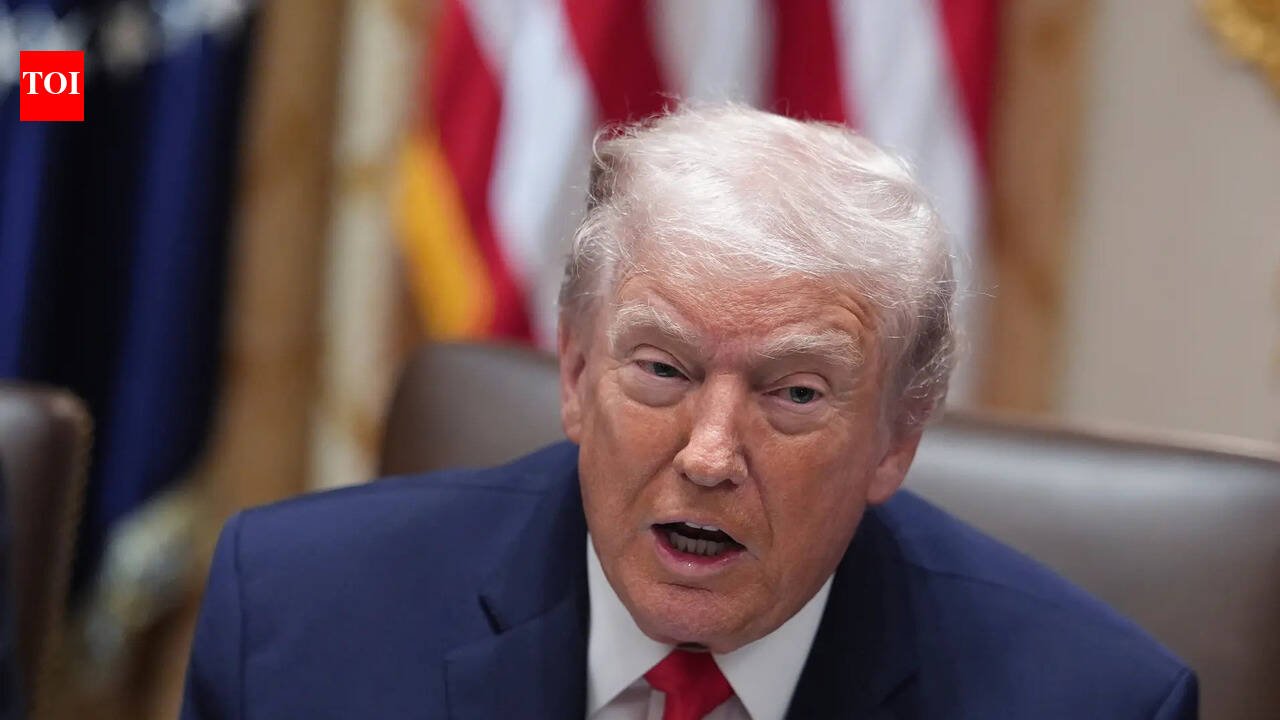
US President Donald Trump on Thursday warned Canada that the United States could impose a 50% tariff on all aircraft sold in the country. The move comes as tensions rise between Trump and Canadian Prime Minister Mark Carney. Trump said the threat was in response to Canada refusing to certify jets from Savannah, Georgia-based Gulfstream Aerospace. “If, for any reason, this situation is not immediately corrected, I am going to charge Canada a 50% Tariff on any and all Aircraft sold into the United States of America,” he wrote on social media platform Truth Social.

Screenshot 2026-01-30 055256

He added that the US would also decertify all Canadian aircraft, including planes from the country’s largest aircraft manufacturer, Bombardier.


Source link

Silver jumps above Rs 4L/kg, gold close to Rs 2L/10gm mark


Silver jumps above Rs 4L/kg, gold close to Rs 2L/10gm mark

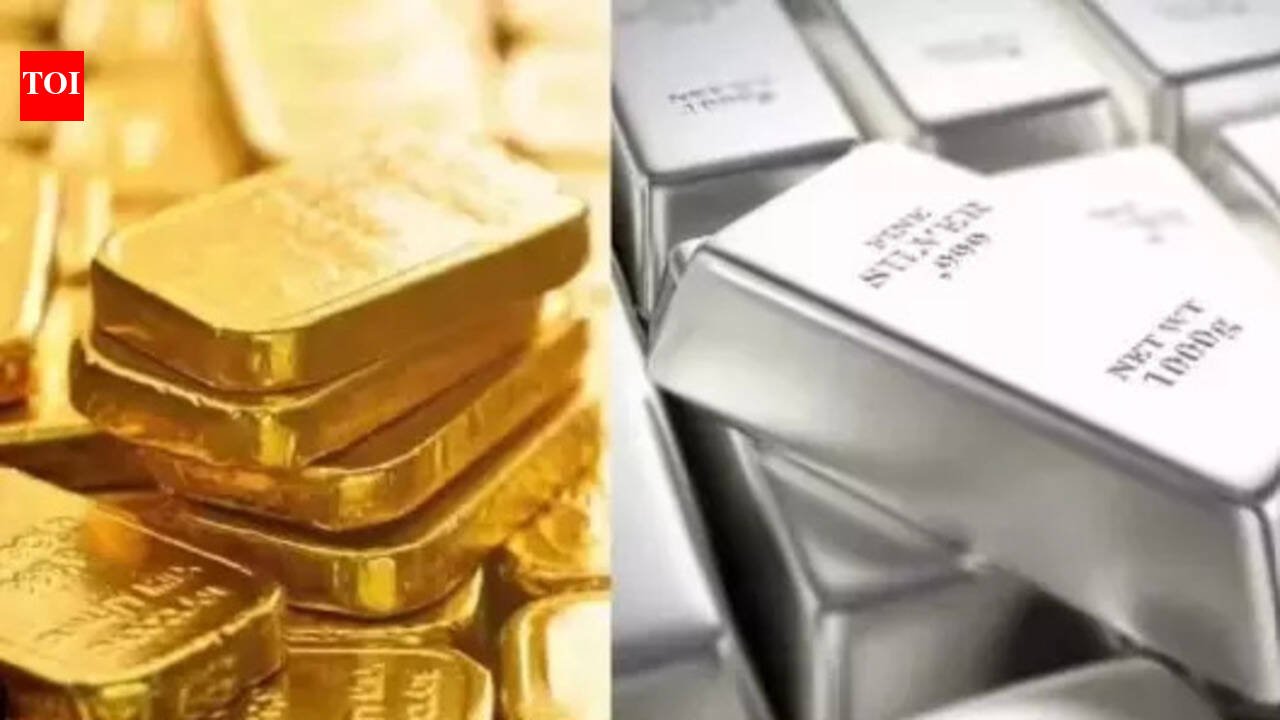
Mumbai: Silver, the precious metal that has been witnessing an unprecedented rally for over two years, on Thursday breached above the Rs 4-lakh/kg price level for the first time in history as geopolitical tensions kept international prices of the white metal on the boil.Gold, the more precious of the two, which is also witnessing a more than a year-long rally, went above the Rs 1.8 lakh/10gm mark on MCX.In the international market, silver prices rallied above the $120/ounce (Oz) mark, while gold prices broke above the $5,600/Oz mark, both for the first time in its history. However, silver dropped by 6% and gold by 4% as investors booked profits after record highs.On MCX, in late trades, gold futures contracts for Feb delivery were trading at Rs 1.75 lakh level with the day’s high at almost Rs 1.81 lakh. With the Feb contracts nearing expiry, April futures were the most traded ones on Thursday with the day’s high at Rs 1.93 lakh.Also on MCX, silver contracts for March were trading at Rs 4.2 lakh, at the highest price logged on Thursday.According to Rahul Kalantri, VP Commodities, Mehta Equities, gold extended its record-breaking rally on Thursday as investors increased their demand for safe-haven assets in the backdrop of mounting geopolitical and economic uncertainty. Silver also strengthened due to similar reasons.On Thursday, these metals rallied further despite the US Federal Reserve’s decision to leave interest rates unchanged, reinforcing expectations of prolonged monetary support, Kalantri said. “Investors are increasingly shifting away from paper currencies and moving toward tangible assets such as precious metals. Meanwhile, geopolitical uncertainty rose after the US President Donald Trump urged Iran to reach a nuclear deal, warning that any future US military response could be far more severe.


Source link

Trump says US will reopen commercial airspace over Venezuela


Trump says US will reopen commercial airspace over Venezuela

US President Donald Trump said on Thursday that he has told Venezuela’s acting President Delcy Rodriguez that the United States will reopen commercial airspace over Venezuela. He said Americans will soon be able to travel to the country.Trump said he has instructed US Transportation Secretary Sean Duffy and US military leaders to open the airspace by the end of the day.“American citizens will be very shortly able to go to Venezuela, and they’ll be safe there,” Trump said.Earlier this week, the Trump administration informed Congress that it had begun initial steps that could lead to the reopening of the closed US Embassy in Venezuela. This is part of efforts to explore restoring relations with the South American country after a US military raid that removed then-President Nicolas Maduro.In a notice sent to lawmakers on Monday, the US State Department said it would deploy a regular and growing number of temporary staff to carry out “select” diplomatic functions.Diplomatic ties between the US and Venezuela broke down in 2019. That year, the State Department warned Americans not to travel to Venezuela and raised its travel advisory to the highest level.In November, Trump had said the airspace “above and surrounding” Venezuela should be considered “closed in its entirety.” After that, the US Federal Aviation Administration warned pilots to exercise caution due to increased military activity. Several international airlines later cancelled flights to Venezuela.American Airlines, the last US carrier to fly to Venezuela before suspending operations in March 2019, said on Thursday it plans to restart non-stop flights from the US in the coming months.“We have a more than 30-year history connecting Venezolanos to the U.S., and we are ready to renew that incredible relationship,” said Nat Pieper, American Airlines’ chief commercial officer. “By restarting service to Venezuela, American will offer customers the opportunity to reunite with families and create new business and commerce with the United States.”


Source link

FMGE January 2026 result released at natboard.edu.in: Check direct link to download and key details here


FMGE January 2026 result released at natboard.edu.in: Check direct link to download and key details here

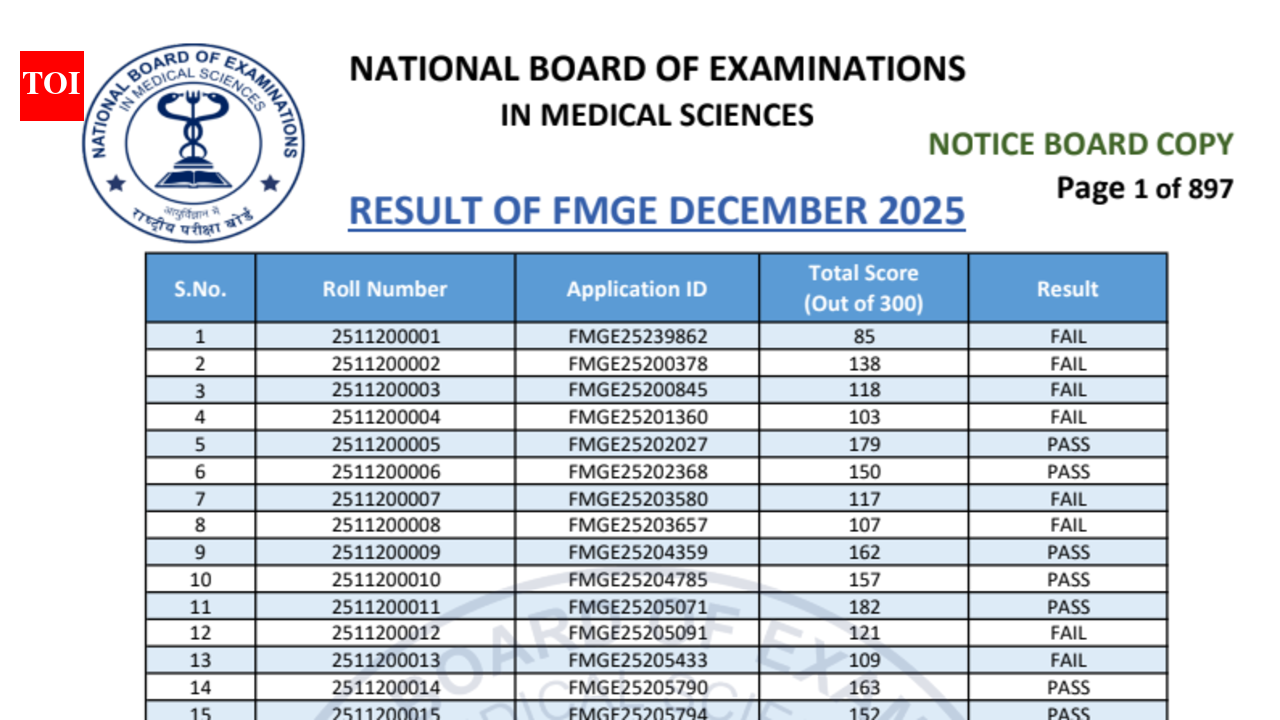
FMGE January 2026 result: The National Board of Examinations in Medical Sciences (NBEMS) has released the Foreign Medical Graduate Examination (FMGE) December 2025 result. The result was declared today, January 29, 2026, and is now available on the official website natboard.edu.in.Candidates who appeared for the FMGE December 2025 exam can check and download their result in PDF format through the NBEMS website. The result is published digitally and carries authentication through NBEMS.

Steps to download FMGE January 2026 result

Candidates can follow the steps below to check and download their result:

  1. Visit the official website natboard.edu.in
  2. Click on the link related to FMGE December 2025 result
  3. Open the result PDF file
  4. Search for your roll number using the search option (Ctrl + F)
  5. Download and save the PDF for future reference

Direct link here.

How was the FMGE December 2025 result prepared?

According to NBEMS, the result has been prepared after:

  • Reviewing each question using the answer key
  • Correcting technical errors, if any
  • Awarding marks to all candidates who selected the correct answer
  • Giving marks to candidates for technically incorrect questions where applicable

Important instructions for qualified candidates

  • Candidates declared qualified will have to appear in person for document verification
  • The schedule for document verification will be notified separately on the NBEMS website
  • Registration with the State Medical Council or for FMGE Pass Certificate will be allowed only after successful verification

FMGE December 2025 exam details

  • Exam name: FMGE
  • Exam session: December 2025
  • Result date: January 29, 2026
  • Conducting body: NBEMS
  • Official website: natboard.edu.in
  • Result format: PDF file

FMGE scorecard details

Individual scorecards will be available for download from February 6, 2026, after 6:00 PM. Scorecards will remain available for six months from the date of issue.Candidates are advised to download and save their scorecard for future use.Note: The result of four candidates has been withheld. The reasons for withholding will be communicated separately to the concerned candidates.For any queries related to the FMGE December 2025 result, candidates can contact NBEMS at 011-45593000, or use the NBEMS Communication Web Portal available on the official website, according to the official notice.Candidates are advised to regularly visit natboard.edu.in for further updates related to document verification and registration.


Source link

How to get VIP number plate online in India: Step-by-step application process, online auction system and pricing for numbers like 0001 and 9999 |


How to get VIP number plate online in India: Step-by-step application process, online auction system and pricing for numbers like 0001 and 9999

Fancy vehicle registration numbers in India have quietly turned into a status symbol. Not overnight. Slowly. Almost casually. A clean number plate with repeating digits or a neat sequence tends to attract attention, whether the vehicle is modest or high-end. Many owners say it feels personal. Others believe certain numbers bring luck. Some just like standing out in traffic.These numbers are not assigned randomly. They are chosen, bid for, and paid for through an official government system. It sounds complicated at first. It isn’t, once you understand the flow. The entire process now runs online, which reportedly reduces middlemen and confusion. This guide breaks down how fancy registration numbers work in India, what the process looks like, how much it costs, and what rules people often overlook.

Understanding fancy vehicle registration numbers in India

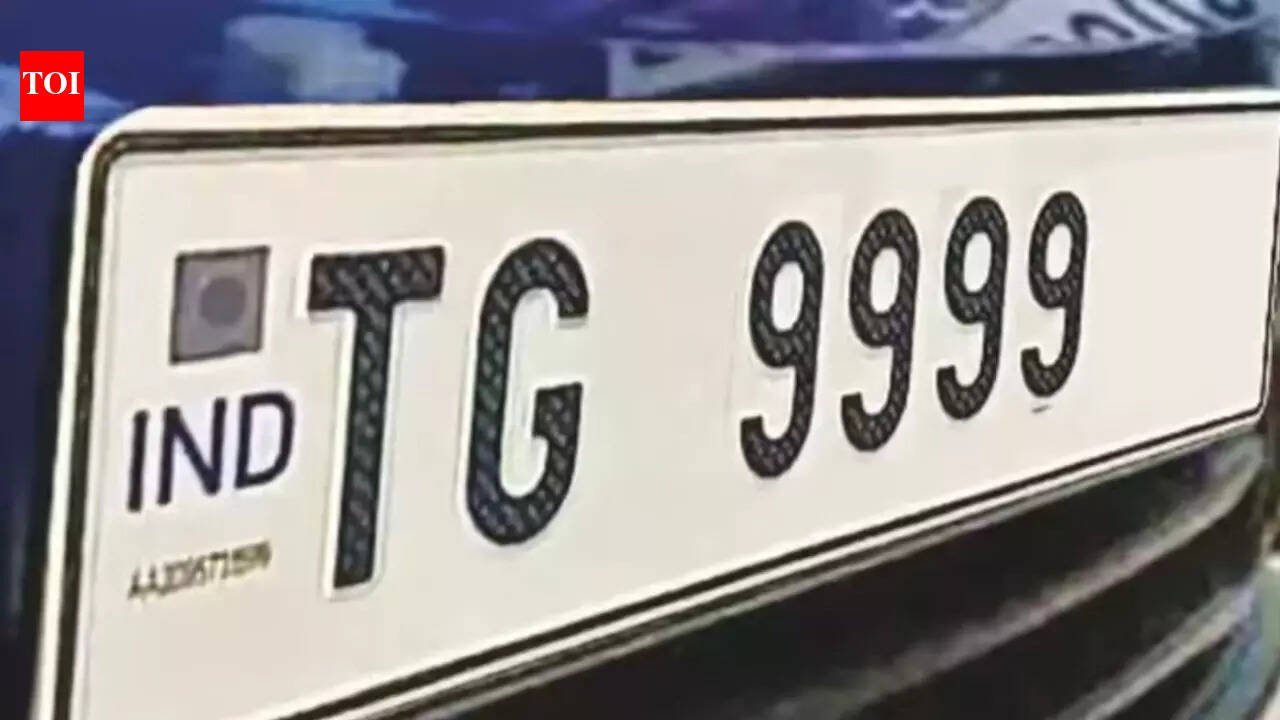
A VIP number plate or fancy vehicle registration number is a special numeric combination that appears in the last four digits of a licence plate. Numbers like 0001, 1111, 9999, or patterned sequences such as 1234 fall into this category.They differ from regular registration numbers because they are not randomly issued by the Regional Transport Office. Instead, they are made available for public selection and bidding. Experts say the appeal comes from symbolism, aesthetics, and numerology. It might also be about recognition. A memorable number sticks.These numbers are legally valid and fully compliant, as long as they follow government rules.

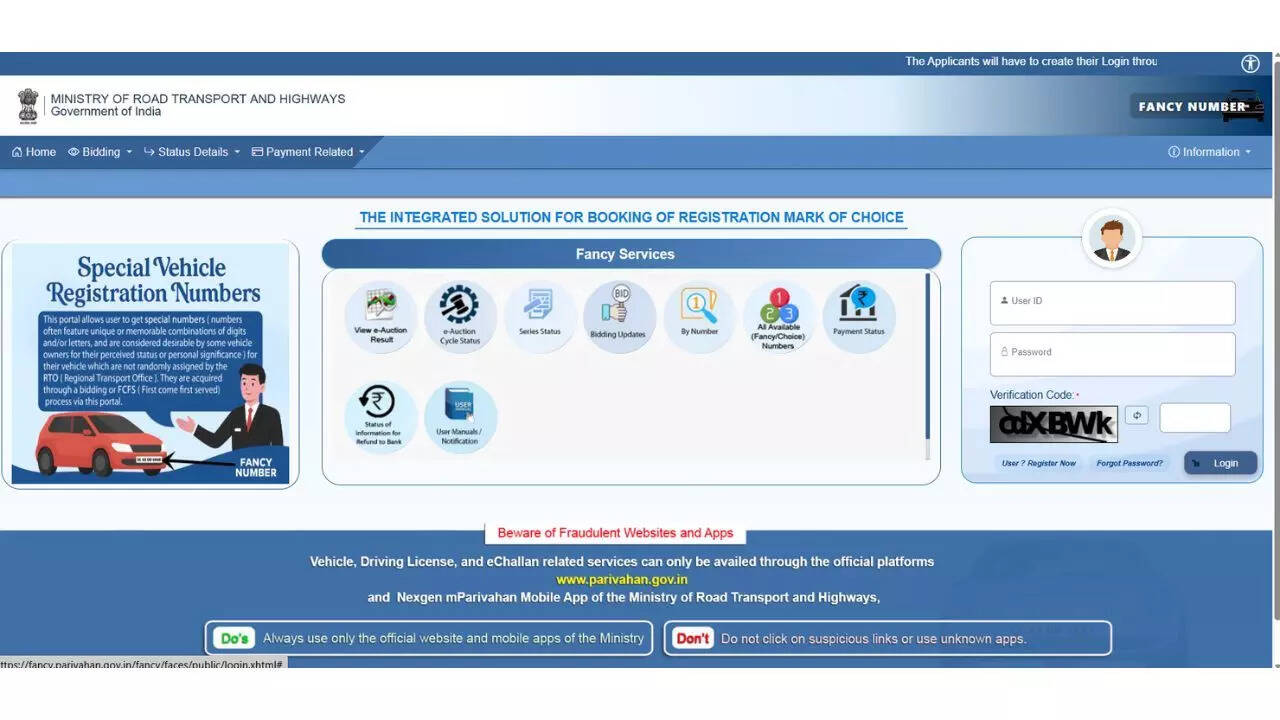
VIP vehicle registeration number plate

Source: Fancy Parivahan Official Website

Steps to apply for a VIP vehicle registration number online

  • The entire fancy number allocation process is handled through the Ministry of Road Transport and Highways’ Vahan portal. More specifically, the Fancy Parivahan website. https://fancy.parivahan.gov.in/
  • Applicants must register before signing up for the account for enrolling to enrol and get VIP number plate.
  • Once logged in, users can browse available numbers based on state and RTO. Everything from availability to auction results is visible on the same platform.
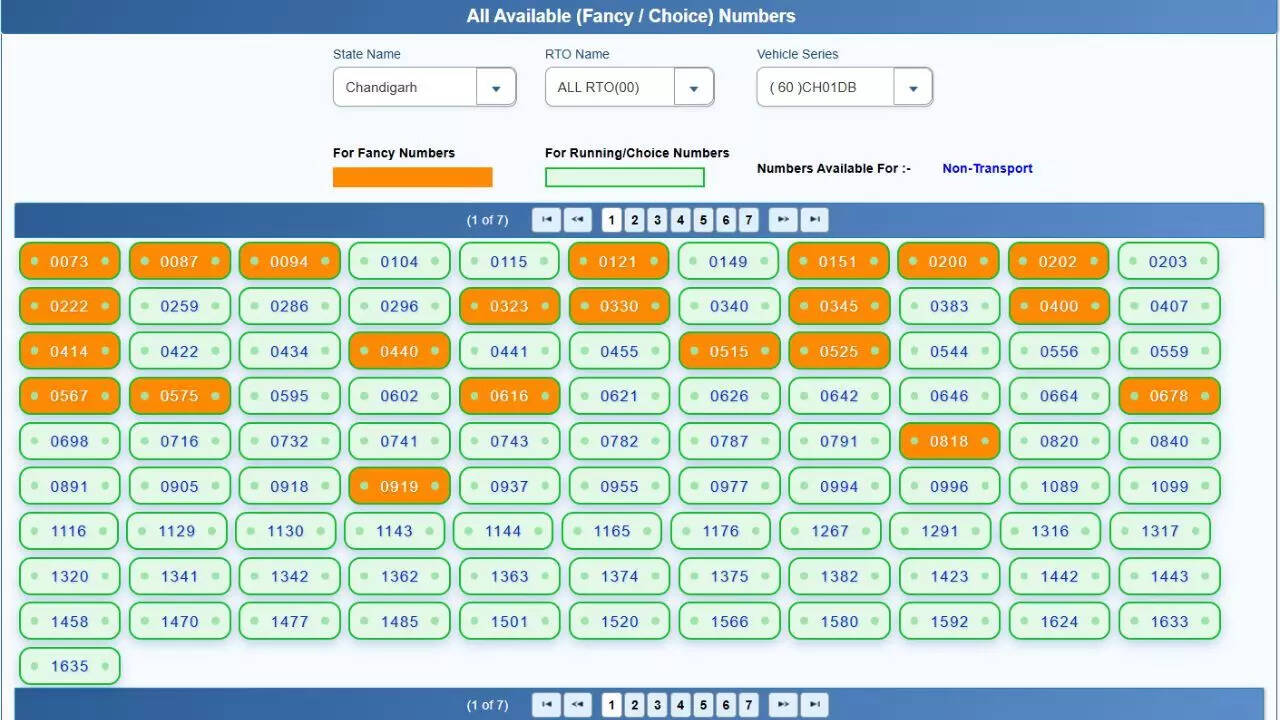
  • Checking availability before spending money: Before committing to anything, users can search for available fancy numbers by selecting their state and RTO.

Not all numbers are available at all times. Some are already assigned. Others appear only when a new series opens. The portal shows which numbers are open for reservation and which ones will move to bidding.For example: Chandigarh Fancy numbers availability

VIP vehicle registration number (Example)

Source: Fancy Parivahan Official Website

How to bid for a fancy vehicle registration number online

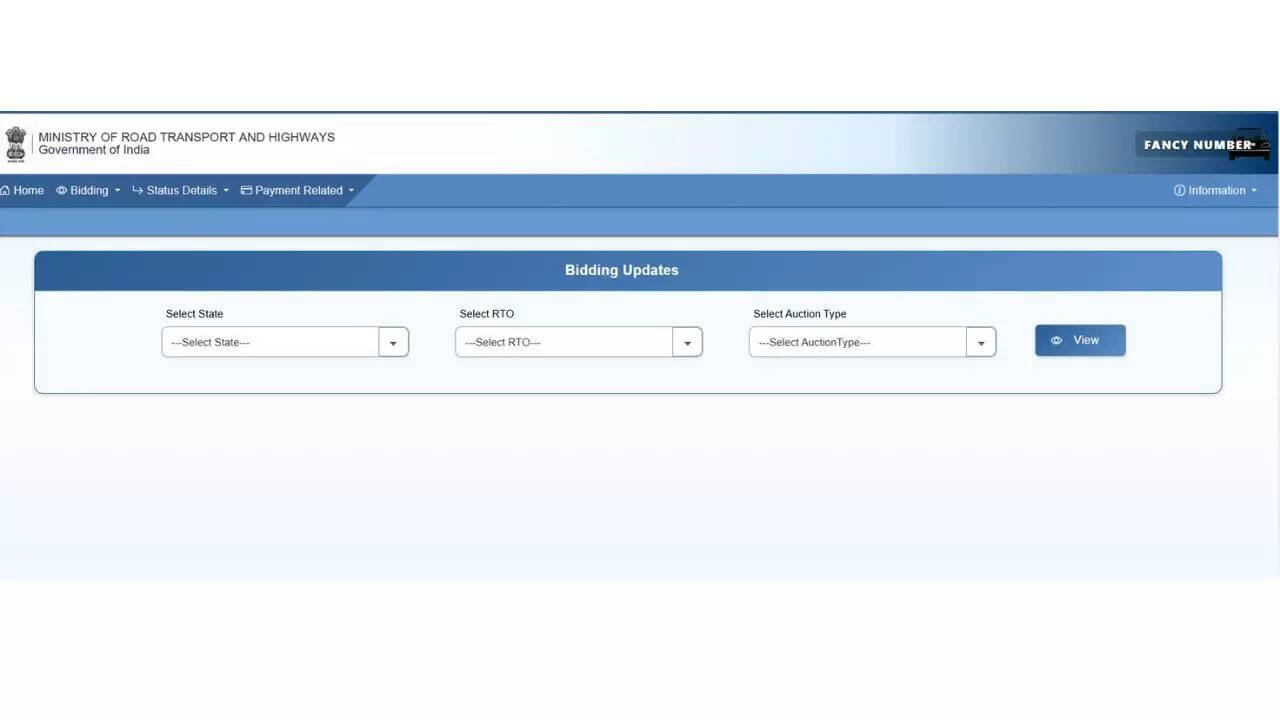
Once a number is selected, a registration fee and reserve price must be paid. This temporarily blocks the number. If only one applicant chooses it, the number may be allotted directly. If multiple people apply for the same number, it enters an e-auction. Registration stays open for three days. Bidding runs for the next two.Bids increase in fixed increments. Premium numbers rise faster. Less popular numbers move more slowly. Live bidding updates show the current highest bid in real time. One can select the option (Bidding Updates) given on the top right corner of the official website. Select state, RTO and auction type to view the updates.

Fancy vehicle registeration number plate bidding

Source: Fancy Parivahan Official Website

Ways to check fancy vehicle registration number auction results

Auction results are announced on the same day bidding ends. Usually in the evening. Winners are notified through the portal, SMS, or email. The remaining balance must be paid.

How much a fancy vehicle registration number really costs

Vehicle registration follows the usual process. Forms, verification, and documentation ( https://fancy.parivahan.gov.in/fancy/faces/public/usermanual.xhtml )The cost of fancy number plates varies from state to state, which one can log in to ‘auction services’ and check for the balance amount to be paid, depending on the state you click.


Source link

Nurse kills parents with lethal injection for opposing inter-caste marriage in Telangana; arrested | Hyderabad News


Nurse kills parents with lethal injection for opposing inter-caste marriage in Telangana; arrested

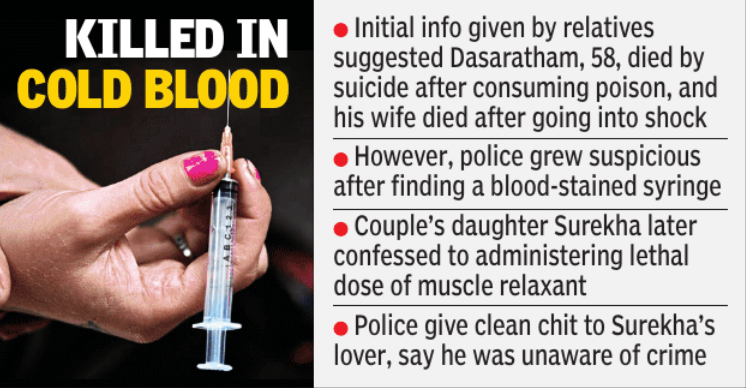
HYDERABAD: In a chilling case of familial betrayal, a 25-year-old nurse allegedly murdered her parents after they opposed her inter-caste marriage, administering a lethal overdose of medication using her professional medical knowledge. The incident took place in Yacharam village of Vikarabad district.Vikarabad police said they received information on Jan 25 about the deaths of a couple, N Dasaratham (58) and his wife Lakshmi (54), at their residence in Yacharam. Initial information provided by relatives suggested that Dasaratham had died by suicide after consuming poison, and that Lakshmi passed away soon after, reportedly due to shock following her husband’s death.

Nurse kills parents

However, police suspicion grew during an inspection of the scene, where a blood-stained syringe was recovered. Treating the case as one of suspicious death, police registered an FIR and sent the bodies for post-mortem examination.During the course of the investigation, police questioned the couple’s son and their three daughters. The statement of the youngest daughter, Surekha, raised doubts, prompting further interrogation. Under sustained questioning, Surekha confessed to killing her parents on the night of Jan 24.Steals drug from hospital“Surekha works in a private hospital in Sangareddy district. Without the knowledge of hospital authorities, she stole a drug used to relax the muscles of patients undergoing surgery in the operating theatre. An overdose of this drug can be fatal,” Dharur circle inspector Ch Raghuramulu told TOI .Police said Surekha had taken leave on the day of the offence and travelled to her parents’ home in Vikarabad district. After dinner, she allegedly administered the drug to her parents on the pretext of giving them medication to help them relax, injecting a life-threatening dose.Investigators later matched the serial number of the recovered medicine with hospital records and found it belonged to a batch available at the private hospital where the accused was employed. Dasaratham was a farmer.Police have given a clean chit to Surekha’s boyfriend, stating that he was unaware of the crime. The accused has been arrested and remanded in judicial custody.


Source link

UGC equity rules hit the streets: Student protests across states intensify as Supreme Court steps in


UGC equity rules hit the streets: Student protests across states intensify as Supreme Court steps in

In Indian educational institutes, policy rarely stays on paper for long. It steps off the page, enters the classroom, and—when it collides with identity—moves swiftly to the street. This week, a regulatory amendment meant to institutionalise equity in higher education has done exactly that, drawing students into protest, states into argument, and the judiciary into review.Opposition to the University Grants Commission (Promotion of Equity in Higher Education Institutions) Regulations, 2026, notified on January 13, played out simultaneously across campuses and courtrooms on Wednesday. Students at Delhi University’s North Campus staged a protest demanding a rollback of the rules, while in Patna, student groups announced a nationwide strike call. At the same time, the Supreme Court prepared to hear petitions challenging the regulations as Tamil Nadu CM M. K. Stalin described them as a “welcome step”.

Delhi University protest turns tense

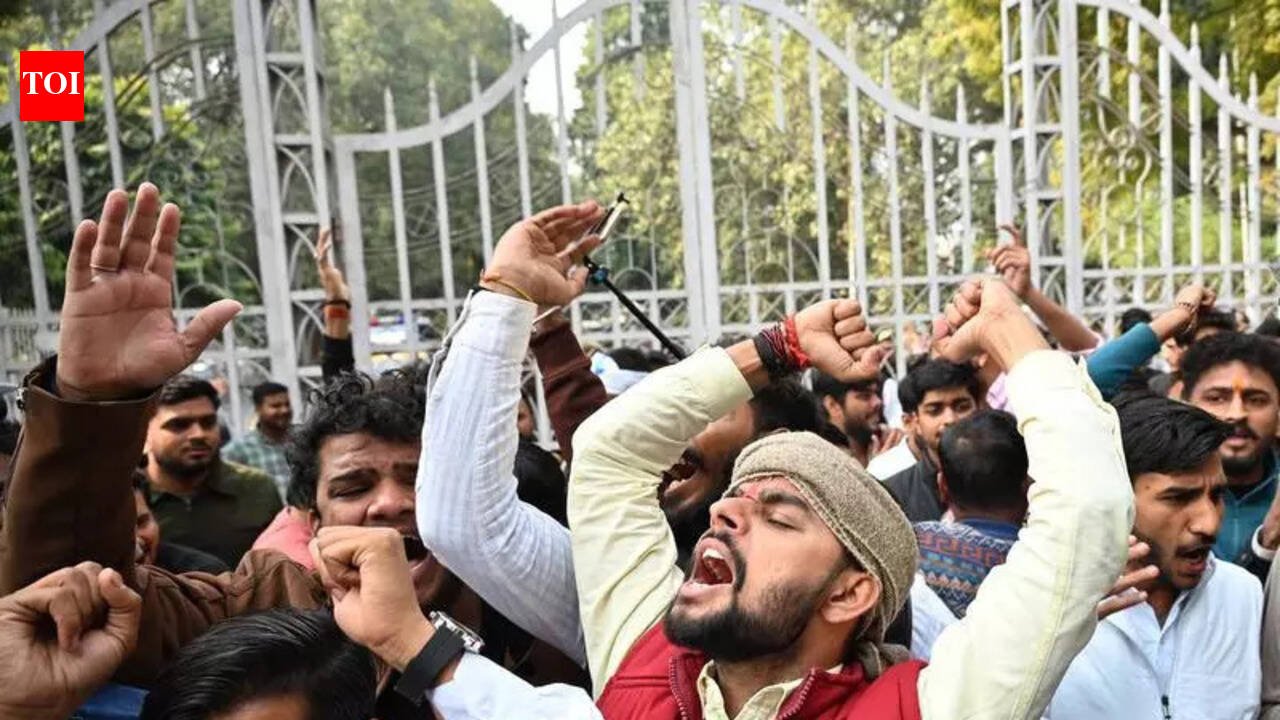
At Delhi University’s North Campus, students—mostly identifying themselves as belonging to the general category—gathered near the Vice-Chancellor’s office to protest what they described as an exclusionary framework. According to ANI, the protest turned tense when students breached the first police barricade and attempted to move closer to the administrative block, following which police closed the main university gate to prevent escalation.The protesters alleged that the new UGC guidelines violated the principle of “educational equality” by excluding general category students from representation in grievance redressal mechanisms.Holding placards reading “Equity for all, not for few,” “Education with justice builds a strong nation,” “Kaala kanoon vaapas lo,” and “Rajneeti Murdabaad,” the students warned that their agitation would intensify if the regulations were not withdrawn.Satvik Sharma, one of the protesters, said the students were seeking a complete rollback of the regulations. “There is no clear procedure. The definition of discrimination is vague, and the UGC should clearly list what constitutes discrimination. If there is no rollback, we will go to Parliament and the courts. This black law will not be accepted,” Sharma told ANI.Another protester, Akhilesh Tiwari, alleged that the regulations were tilted in favour of specific categories. In an interaction with ANI he said, “Ambiguities and loopholes in the regulations could lead to misuse and said the movement would be taken to Parliament if necessary.” Tiwari explained that students were not opposing safeguards against discrimination, but were demanding amendments based on the principles of natural justice, alleging that the general category had been excluded from the framework.The protesters also questioned the need for a new framework, pointing to an existing grievance redressal system notified through a 2013 gazette, and raised concerns over what they described as a lack of procedural clarity in the new rules.

Patna sees street protest, strike call

In Bihar, opposition to the proposed UGC framework took a more confrontational turn. Patna witnessed tense scenes as hundreds of students staged a protest at Dinkar Golambar, a major traffic intersection, disrupting movement for some time.The protest, organised under the banners of the All Bihar Students Union (ABSU) and Savarna Ekta Manch, saw sloganeering against the central government and burning of materials on the road, reports IANS.Student leader Vishal Kumar alleged that the proposed UGC Bill was against the interests of upper-caste students. “If you stay united, you will be safe; if you divide, you will be destroyed,” Kumar said, addressing the protesters, reports IANS. He added, “Unity, integrity and equality are talked about across the country, but in the vicious cycle of politics, upper-caste people are becoming helpless. The Prime Minister has been elected three times — were upper-caste votes not taken? Then why has such a bill been brought?”Another student leader, Suryadev Kumar, described the framework as divisive. “This law is meant to divide students into two groups. On one hand, caste-based politics is being promoted, and on the other, the upper castes are being targeted. Upper castes will not tolerate this,” Kumar told IANS.Saroj Kumar, another student protester, questioned the intent behind the regulations. IANS quoted him saying, “The UGC Bill should be withdrawn. If false allegations are being made, there should be a proper investigation mechanism. The government should have created an institution to ensure justice.” Rakesh Kumar linked the proposed regulations to earlier legal frameworks, alleging misuse. “Thousands of people are in jail under false charges. Now another Bill is being brought to target the upper castes. If an allegation is made in a university, what is its basis? The burden of proof should not fall unfairly on the accused,” he told IANS.The protesters announced that if the Bill was not withdrawn, a nationwide strike would be held on February 1, according to IANS.

UP students join protests

As the agitation widened beyond Delhi and Bihar, students across Uttar Pradesh staged protests for a second consecutive day against the UGC Regulations, 2026, reports TNN. Raising slogans such as “UGC Roll Back,” “Bantenge Toh Katenge,” and “Ek Hain Toh Safe Hain,” the demonstrators accused the UGC of promoting discriminatory policies in the name of equality, finds the TNN report. The report has quoted Chhatra Panchayat president Shivam Pandey saying, “This black law is unacceptable. The Prime Minister spoke of unity, but these regulations will only poison the atmosphere inside university campuses. Students eat together, study together, and do not even know each other’s surnames. This law is politically motivated and aims to divide students.”

Supreme Court to hear petitions

As protests unfolded on the ground, the legal challenge to the UGC regulations moved forward. The Supreme Court is scheduled to hear on Thursday a batch of petitions challenging the regulations.According to IANS, a bench led by Chief Justice of India Surya Kant and Justice Joymalya Bagchi will take up the matter. Earlier, IANS quoted him as saying, “We know what’s happening. Make sure defects are cured. We will list it.”The petitioners have argued that the regulations institutionalise discrimination by denying grievance redressal mechanisms to individuals belonging to non-SC, ST and OBC categories. One petition contends that the definition of caste-based discrimination under the regulations accords legal recognition of victimhood exclusively to certain categories, irrespective of the nature or gravity of discrimination faced by others.The plea seeks directions to ensure that Equal Opportunity Centres, equity helplines, inquiry mechanisms and Ombudsperson proceedings are made available in a “non-discriminatory and caste-neutral manner,” alleging violations of Articles 14, 15(1) and 21 of the Constitution, reports IANS.

Tamil Nadu CM backs regulations

Amid the backlash, Tamil Nadu Chief Minister M K Stalin defended the regulations, calling them overdue but necessary. In an interaction with PTI, Stalin said the UGC regulations were a welcome step in reforming a higher education system “scarred by deep rooted discrimination and institutional apathy.”PTI quoted him as saying, “Since the BJP came to power at the Centre there has been a visible rise in student suicides within Indian HEIs particularly among SC and ST students.” He added, “This has been accompanied by repeated attacks and harassment targeting students from south India, Kashmir, and minority communities.”Stalin said equity safeguards were “not a matter of choice but an unavoidable necessity,” and argued that the inclusion of OBCs within the framework deserved support. Drawing parallels with resistance during the implementation of Mandal Commission recommendations, he said the current backlash reflected a regressive mindset.However, the Chief Minister also flagged concerns about implementation. Referring to cases such as the suicide of Rohith Vemula, Stalin said it was difficult to see how equity committees chaired by institutional heads could function independently. He said the regulations must be strengthened, revised to address structural gaps, and enforced with “real accountability,” reports PTI.

From campus unrest to constitutional test

As the controversy travels from university campuses to the Supreme Court, and from street protests to political platforms, the Union government has sought to steady the narrative. Union Education Minister Dharmendra Pradhan has said the UGC’s equity regulations will not be misused and has assured that there will be no discrimination in their implementation—positioning the framework as a safeguard rather than a sanction. That reassurance, however, has not slowed the pushback. Leaders from opposition parties and state governments have read the same regulations through sharply different lenses: Some have called them unconstitutional and divisive, while others have defended them as an overdue response to institutional discrimination, warning against any dilution under political pressure. What began as a regulatory correction has thus become a broader contest over how equity is defined, administered and contested in public institutions. With student groups mobilised, state leaders split, and petitions now before the Supreme Court, the UGC’s attempt to turn anti-discrimination norms into enforceable governance stands at a moment of reckoning—its intent defended, its design disputed, and its future likely to be shaped as much by judicial scrutiny as by political consensus.(With inputs from agencies)


Source link

Homicide, fraud, gambling dens: Why did China execute 11 members of a family?


Homicide, fraud, gambling dens: Why did China execute 11 members of a family?

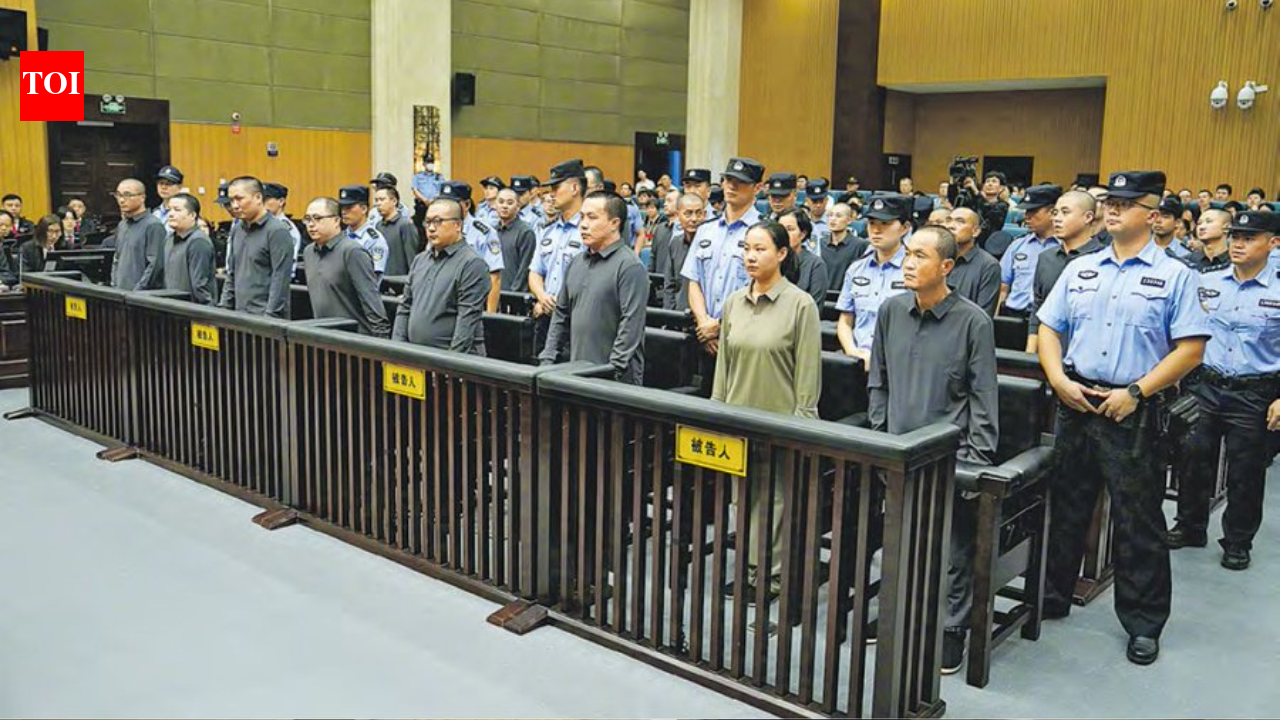
China has executed 11 members of the Ming family, a powerful clan that ran large-scale scam centres and gambling operations in Myanmar.A court in Zhejiang province had sentenced the family members in September for a range of crimes, including homicide, illegal detention, fraud and operating gambling dens, reported BBC.The executions mark one of the most significant outcomes of China’s recent crackdown on cross-border scam networks. The Ming family was among several clans that effectively controlled Laukkaing, a town in Myanmar near the Chinese border. Once a remote and impoverished area, Laukkaing was transformed under their influence into a hub of casinos, scam centres and red-light districts.According to the court, the family’s criminal operations generated more than 10 billion yuan ($1.4 billion) between 2015 and 2023. The activities led to the deaths of 14 Chinese citizens and injuries to many others.The group’s downfall began in 2023, when Myanmar authorities arrested the Ming family members and handed them over to China. The move followed sustained pressure from Beijing as it stepped up efforts to curb telecom fraud and illegal gambling operations targeting Chinese nationals. The case reflects on China’s hardline stance against overseas scam syndicates and signals continued cooperation with neighbouring countries to dismantle networks operating beyond its borders.


Source link