Breaking News
Us Stocks Rally: US stock market today: Wall Street jumps as Donald Trump delays Iran strikes; oil prices retreat

US stock market today: Wall Street jumps as Donald Trump delays Iran strikes; oil prices retreat

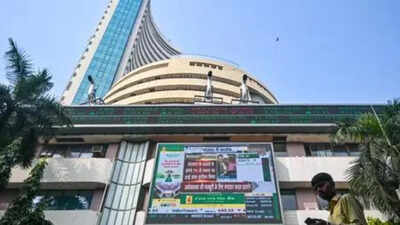
US stocks rallied sharply on Monday after President Donald Trump said the United States had held talks with Iran and would postpone planned strikes on Iranian power plants, triggering a relief rebound across global markets and a steep fall in oil prices.The Dow Jones Industrial Average rose 1,021.70 points, or 2.24 per cent, to 46,599.17, while the S&P 500 gained 136.26 points, or 2.09 per cent, to 6,642.74, and the Nasdaq Composite advanced 493.02 points, or 2.28 per cent, to 22,140.63.

Trump’s delay on Iran strikes sparks relief rally

The rebound came after Trump said he would postpone military action against Iranian power plants and energy infrastructure, easing immediate fears of a deeper escalation in the Middle East war.Trump made the announcement just hours before a deadline that had raised concerns of further conflict. In a post on Truth Social, he said the US and Iran had held “very good and productive” conversations over the past two days on a “complete and total resolution of hostilities in the Middle East”.Trump also said he was delaying attacks on Iranian power plants by five days to allow talks to continue.The announcement marked a notable shift from his weekend warning that he would “obliterate” Iran’s power plants if Tehran did not reopen the Strait of Hormuz within 48 hours.

Oil prices tumble, fueling risk-on move

The sharp rise in equities was closely tied to a sudden drop in crude prices, which had been a major source of market stress in recent weeks.Brent crude fell 10.5 per cent to $100.37 per barrel, down from nearly $120 last week. It briefly dropped as low as $96 immediately after Trump’s announcement before recovering part of the decline.Brent was last down 9.14 per cent at $101.89 per barrel, while US crude fell 8.58 per cent to $89.80 a barrel.Benchmark US crude initially fell toward $84 per barrel before trimming losses and rising back to $88.85.The easing in oil prices was a major positive for equities because investors had been worried that prolonged disruption in the Persian Gulf could drive a fresh inflation shock across the global economy.

S&P 500 heads for best day since before war

The S&P 500 jumped 1.9 per cent and was on track for its best day since well before the war began, reflecting broad-based relief after severe losses in previous sessions.The rally was widespread, with AP saying nine out of every 10 stocks in the S&P 500 were in positive territory.Companies with large fuel costs led gains as lower oil prices improved the outlook for operating expenses.Norwegian Cruise Line Holdings surged 7.9 per cent, while United Airlines climbed 4.5 per cent and American Airlines rose 4.9 per cent, news agency AP reported.Smaller companies also outperformed, with the Russell 2000 jumping 3 per cent, which AP described as a market-leading move.

Iran pushes back on Trump’s negotiation claims

Despite the market relief, uncertainty remained high because Iranian media quickly challenged Trump’s version of events.Iran’s Tasnim news agency, citing an Iranian official, said the Strait of Hormuz would not return to pre-war conditions and that energy markets would remain unsettled, while also stating that no negotiations with the US were under way.Iranian state television said Trump had backed down “following Iran’s firm warning”, while a state-owned newspaper said Iran’s Foreign Ministry denied that any negotiations had taken place.That contradiction limited the scale of optimism, even as investors welcomed the pause in immediate military escalation.

Global markets rebound, but Asia missed the turn

The US rally was part of a wider rebound in risk assets after Trump’s comments.MSCI’s global stock index rose 1.31 per cent to 994.34, while the pan-European STOXX 600 gained 1.87 per cent.European markets reversed earlier losses and held gains, with France’s CAC 40 up 1.7 per cent and Germany’s DAX rising 2.2 per cent.Asian markets, however, had already closed before Trump’s announcement and ended sharply lower. South Korea’s Kospi fell 6.5 per cent, while Japan’s Nikkei 225 and Hong Kong’s Hang Seng each dropped 3.5 per cent.

Treasury yields and dollar ease as fear trade unwinds

Bond markets also reflected a reduction in immediate panic.The 10-year US Treasury yield fell to 4.34 per cent from 4.39 per cent late Friday, though it remained well above the 3.97 per cent level seen just before the war began.Two-year and 10-year Treasury yields were each 5 to 6 basis points lower, with the 10-year yield last at 4.344 per cent.The dollar also softened after initially rising earlier in the day. Reuters said the euro was last up 0.4 per cent at $1.1616.

Analysts caution against assuming full de-escalation

Market strategists warned that Monday’s rally may prove fragile unless diplomatic progress becomes more concrete.“The market woke up to some potentially good news out of the Middle East on Monday. But follow-through on any relief rally will likely require tangible follow-through on the geopolitical front,” Chris Larkin, managing director of trading and investing at E*TRADE from Morgan Stanley, told Reuters.Reuters also quoted Elias Haddad, global head of markets strategy at Brown Brothers Harriman, as saying, “It’s clearly jawboning in the face of the meltdown that we’ve seen. We’re seeing a bit of a knee-jerk reaction to this positive news.”He added, “There’s certainly room for a bit of an unwind in the fear trade. A more sustained rally in risk assets will depend on whether this is legit de-escalation or simply a pause before a next leg up in escalation.”


Source link

Stock market today: Which are top gainers and losers on NSE & BSE on March 23? Check list


Stock market today: Which are top gainers and losers on NSE & BSE on March 23? Check list

Benchmark equity indices Sensex and Nifty plunged sharply on Monday, tracking a brutal global sell-off as the Middle East war deepened into its fourth week, with rising crude prices, persistent foreign fund outflows and a record-low rupee worsening investor nerves.The 30-share BSE Sensex slumped 1,836.57 points, or 2.46 per cent, to close at 72,696.39, after falling as much as 1,974.52 points intraday to 72,558.44. The NSE Nifty dropped 601.85 points, or 2.60 per cent, to settle at 22,512.65.

Nifty50 top gainers

Company Name Current Price (Rs) Price Change % Change
HCL Tech 1,359 24.90 ↑ 1.87% ↑
Power Grid 302.10 4.50 ↑ 1.52% ↑
Infosys 1,257 0.90 ↑ 0.08% ↑
ONGC 265.45 0.06 ↑ 0.02% ↑

Sensex top gainers

Company Name Current Price (Rs) Price Change % Change
HCL Tech 1,359 24.90 ↑ 1.87% ↑
Power Grid 302.10 4.50 ↑ 1.52% ↑
Infosys 1,257 0.90 ↑ 0.08% ↑

Nifty50 top losers

Company Name Current Price (Rs) Price Change % Change
Shriram Finance 877.70 -60.90 ↓ -6.49% ↓
Titan Company 3,853 -254.00 ↓ -6.18% ↓
Trent 3,357 -203.00 ↓ -5.71% ↓
Jio Financial Ser… 226.10 -13.21 ↓ -5.52% ↓
UltraTech Cem. 10,362 -572.00 ↓ -5.24% ↓
JSW Steel 1,110 -60.00 ↓ -5.13% ↓
HDFC Life 592.10 -31.55 ↓ -5.06% ↓
InterGlobe 3,945 -204.00 ↓ -4.92% ↓
Adani Ent. 1,833 -94.10 ↓ -4.89% ↓
Tata Steel 187.17 -9.61 ↓ -4.88% ↓

Sensex top losers

Company Name Current Price (Rs) Price Change % Change
Titan Company 3,853 -254.00 ↓ -6.18% ↓
Trent 3,357 -203.00 ↓ -5.71% ↓
UltraTech Cem. 10,362 -572.00 ↓ -5.24% ↓
InterGlobe 3,945 -204.00 ↓ -4.92% ↓
Tata Steel 187.17 -9.61 ↓ -4.88% ↓
BEL 405.50 -20.61 ↓ -4.84% ↓
HDFC Bank 744.15 -36.31 ↓ -4.66% ↓
Adani Ports SEZ 1,304 -61.81 ↓ -4.53% ↓
M&M 2,956 -110.00 ↓ -3.60% ↓
Asian Paints 2,121 -74.10 ↓ -3.38% ↓

War, oil and rupee pressure trigger broad sell-off

Monday’s fall came in line with a steep decline across global markets as fears mounted over prolonged geopolitical disruption and the risk of deeper energy supply shocks.Brent crude — the global oil benchmark — rose 0.97 per cent to $113.3 per barrel, adding to concerns for an oil-importing economy like India.“Markets witnessed a sharp sell-off on Monday, continuing the prevailing downtrend amid weak global cues and escalating geopolitical tensions. Investor sentiment remained extremely fragile amid escalating geopolitical tensions in West Asia, which have once again pushed crude oil prices sharply higher,” Ajit Mishra, SVP, research at Religare Broking Ltd, said, according to news agency PTI.He added that the rise in oil prices, along with continued foreign institutional investor outflows and weakness in the rupee, significantly hit risk appetite.Vinod Nair, head of research at Geojit Investments Ltd, was quoted by PTI as saying that domestic markets mirrored weakness across Asia as investors worried about potential disruptions to global energy supplies.“Domestic markets witnessed a sharp decline, mirroring weakness across Asian markets amid escalating tensions in the Middle East and concerns over potential disruptions to global energy supplies. Investor sentiment turned cautious following Trump’s 48-hour ultimatum to Iran on the Strait of Hormuz,” Nair said.He added that rising global bond yields, signalling inflation and fiscal worries, along with the rupee falling to a record low, further pressured equities and triggered more FII selling.

Titan, Trent among major losers; IT stocks buck trend

The sell-off was broad-based, with heavy damage across consumption, metals, real estate and banking names.Titan was the biggest loser among Sensex stocks, tumbling 6.24 per cent. Trent, UltraTech Cement, Bharat Electronics, InterGlobe Aviation, Tata Steel and HDFC Bank were also among the major laggards.A handful of IT and utility counters offered limited resistance, with HCL Tech, Power Grid and Infosys ending in the green.

Midcaps, smallcaps and sectoral indices sink

The pain was even sharper outside the frontline indices, pointing to a wider risk-off mood in the market.The BSE MidCap Select index tanked 3.82 per cent, while the SmallCap Select index plunged 3.66 per cent.All sectoral indices ended lower. Consumer durables fell the most, dropping 4.91 per cent, followed by metal (4.76 per cent), realty (4.75 per cent), services (4.70 per cent), BSE PSU Bank (4.39 per cent), MidSmall Private Banks Quality Tilt (4.37 per cent), commodities (4.35 per cent), industrials (4.05 per cent) and capital goods (3.99 per cent).Market breadth remained extremely weak, with 3,798 stocks declining, compared with just 635 advancing, while 123 remained unchanged on the BSE.

Foreign investors continue heavy exit

Foreign capital flight remained a major overhang.Foreign Institutional Investors (FIIs) sold equities worth Rs 5,518.39 crore on Friday. In contrast, Domestic Institutional Investors (DIIs) bought shares worth Rs 5,706.23 crore, partially cushioning the fall.Still, the broader trend remains negative: PTI said foreign investors have pulled out Rs 88,180 crore — about $9.6 billion — from Indian equities so far this month.That persistent outflow, combined with currency weakness and expensive oil, is reinforcing fears that the market may remain vulnerable even on rebound days.

Global markets deep in the red

The weakness was not limited to India.Major Asian markets ended sharply lower, including South Korea’s Kospi, Japan’s Nikkei 225, Shanghai’s SSE Composite and Hong Kong’s Hang Seng. The Kospi saw the steepest fall, plunging 6.49 per cent.Markets in Europe were also trading with deep losses, while the US market had ended significantly lower on Friday, adding to the negative global backdrop.

Sensex, Nifty down over 10% since war began

Monday’s slump adds to the deep losses already seen since the conflict began on February 28.Since the war started, the Sensex has fallen 8,590.8 points, or 10.56 per cent, while the Nifty has shed 2,666 points, or 10.58 per cent.That means Indian equities have now erased a substantial chunk of gains in less than a month, with the market increasingly pricing in a prolonged conflict, sustained energy stress and a tighter macro environment.


Source link

India’s highways to get AI dashcams: A high-tech plan to track potholes and road damage across 40,000 kilometres |


India’s highways to get AI dashcams: A high-tech plan to track potholes and road damage across 40,000 kilometres

India’s highways are all set to get a tech boost. The National Highways Authority of India (NHAI) reportedly plans to install AI-based dashcam systems on approximately 40,000 kilometres of Indian roads. The initiative appears to be an attempt to make the management of Indian highways more data-driven and forward-thinking. Rather than waiting for complaints or accidents to occur, authorities will reportedly use cameras to detect issues. Surveys will be conducted every week, defects will be detected by cameras, and real-time monitoring will be done.

AI dashcams set to transform India’s highways with real-time road monitoring

According to PIB reports, Route Patrol Vehicles will carry the specialised dashboard cameras. These vehicles are expected to conduct weekly surveys across all major stretches. The cameras will record high-definition images and videos, which AI models will analyse for over 30 types of defects and anomalies. The main idea is to automate detection and reduce the need for manual inspection.A major focus of the system is pavement condition. Potholes, rutting, and severe cracks will be identified early. The AI models reportedly detect these issues automatically using advanced machine learning. Experts say early detection could reduce long-term maintenance costs and prevent sudden road hazards. It appears the system might even track the progress of repairs over time.

AI-powered road monitoring: How dashcams will detect potholes, cracks, and more

On India’s highways, they’re fitted to Route Patrol Vehicles to keep a constant eye on the roads. They will record high-resolution images and videos every week, but the real twist is that AI and machine learning systems analyse this footage automatically. These models will be trained to spot over 30 different issues, from potholes, rutting, and cracks to faded lane markings, damaged barriers, and streetlights that don’t work.

AI watches beyond the road: Safety, signs, and night checks

The AI system isn’t limited to the road surface. It will also cover road furniture such as lane markings, crash barriers, and streetlights. Faded or damaged components will be flagged in real time. Monitoring will extend to safety issues and encroachments. Illegal median openings, unauthorised signboards, and roadside encroachments will be recorded. Even illegal parking along highways may be identified. This makes the system more comprehensive than traditional inspections.NHAI reportedly plans at least one monthly nighttime survey for each stretch. Night checks are crucial for assessing road signs, reflective pavement markings, road studs, and highway lighting. These surveys could reveal issues that daytime inspections might miss. Officials say the addition of night data might improve safety for drivers who travel after dark.

AI dashboards and data zones make monitoring easier

In order to effectively handle this vast amount of data, the NHAI plans to subdivide the country into five monitoring zones. Each of these zones will have a specific IT solution to handle the data, run AI analytics on it, and display the results through interactive dashboards. Side-by-side analysis of the road conditions will reportedly help officials track maintenance progress. The results produced by AI will be integrated into the Data Lake solution provided by the NHAI.


Source link

‘Petrol Shortage League’: Pakistan’s PSL trolled after league reduced to two venues | Cricket News


'Petrol Shortage League': Pakistan's PSL trolled after league reduced to two venues
PSL trophy (l), and PCB chief Mohsin naqvi

The Pakistan Cricket Board (PCB) has revised the schedule for the 11th edition of the Pakistan Super League (PSL), reducing the scale of the tournament after consultations with the government over austerity measures.Under the new plan, the number of host cities has been cut from six to two, with all matches now set to be played in Lahore and Karachi.The decision has drawn reactions from a section of fans on social media, with many criticising the reduced arrangements. The changes come amid an ongoing oil crisis, which has impacted planning for the tournament.

Watch

T20 World Cup: India humiliate Pakistan again

Apart from limiting venues, the PCB has also cancelled the opening ceremony and decided to hold matches behind closed doors in an effort to reduce costs. The league has also seen player exits, with some cricketers moving to the Indian Premier League as injury replacements.Some fans mocked the situation online.Iceland Cricket also posted a message on X. “The PSL is coming up and that is very exciting for many millions of cricket fans. We have always wondered what PSL stands for and it turns out it means Petrol Shortage League,” the post read.A user replied to the post by calling it the “Paisa shortage league.”The PSL is being held alongside the IPL this year after it could not take place in its usual window due to the T20 World Cup 2026. Players such as Zimbabwe’s Blessing Muzarabani and reportedly Sri Lanks’s Dasun Shanaka have left the PSL to join IPL teams as replacements.With higher earnings available in the IPL, players have opted for those opportunities.The changes, including fewer venues, no opening ceremony and matches without spectators, come at a time when the league continues to compete with other T20 tournaments.

Banner Insert


Source link

From 48-hour ultimatum to 5-day pause: Trump cites ‘productive’ US-Iran talks, halts strikes on energy infrastructure


From 48-hour ultimatum to 5-day pause: Trump cites ‘productive’ US-Iran talks, halts strikes on energy infrastructure

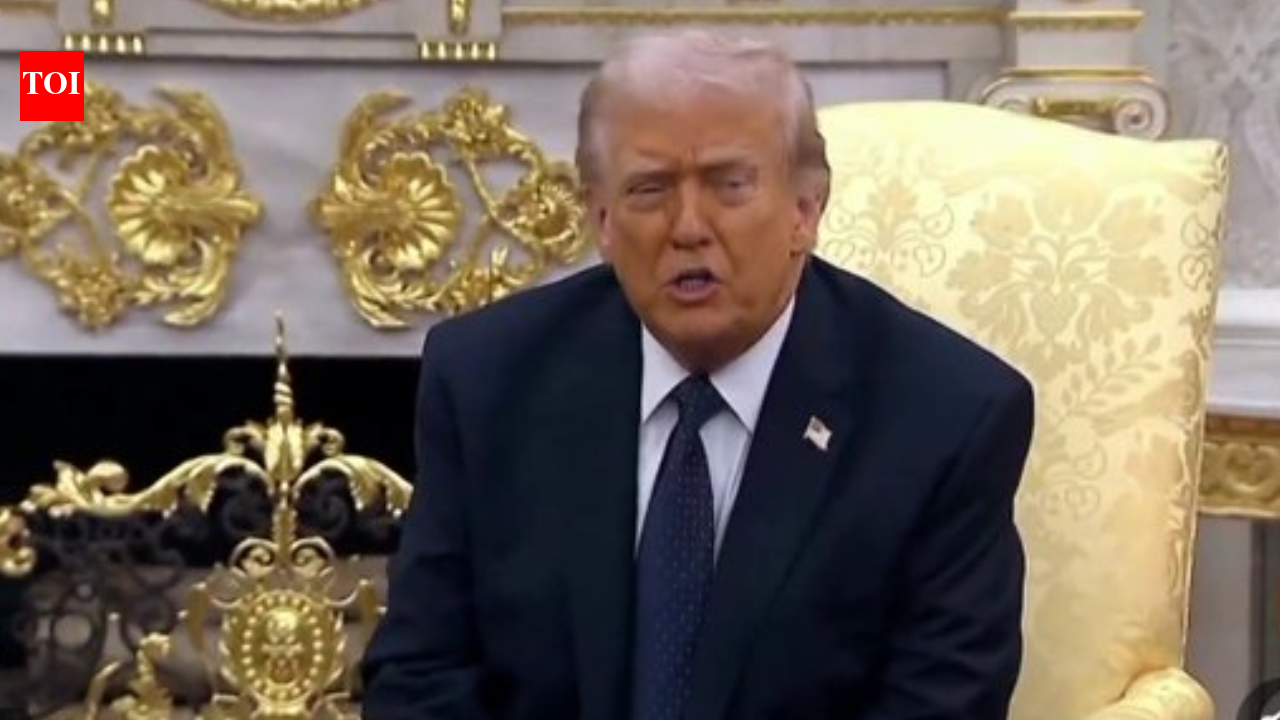
US President Donald Trump on Monday said the United States and Iran have held “very good and productive” talks over the past two days and announced a five-day pause on planned military strikes, signalling a possible de-escalation in the ongoing conflict.In a post on Truth Social, Trump said: “I am please to report that the United States of America, and the country of Iran, have had, over the last two days, very good and productive conversations regarding a complete and total resolution of our hostilities in the Middle East. Based on the tenor and tone of these in depth, detailed, and constructive conversations, witch will continue throughout the week, I have instructed the Department of War to postpone any and all military strikes against Iranian power plants and energy infrastructure for a five day period, subject to the success of the ongoing meetings and discussions. Thank you for your attention to this matter!”Meanwhile, Iranian embassy in Kabaul said, “Trump backs down from attacking energy infrastructures after iran’s firm warning.”The announcement comes a day after Trump issued a 48-hour ultimatum to Iran, warning of strikes on its energy infrastructure if Tehran failed to fully reopen the Strait of Hormuz.“If Iran doesn’t fully open, without threat, the Strait of Hormuz, within 48 hours from this exact point in time, the United States of America will hit and obliterate their various power plants, starting with the biggest one first!” Trump said earlier.Following the ultimatum, Iran said the Strait of Hormuz would remain open to all shipping except vessels linked to its “enemies,” referring to the United States and Israel.“We are ready to cooperate with the International Maritime Organization (IMO) to enhance maritime safety and protect seafarers in the Gulf. Ships not linked to Iran’s ‘enemies’ can transit the strait by coordinating security and safety arrangements with Tehran,” Iran’s permanent representative to the IMO, Ali Mousavi, was quoted as saying.“Diplomacy remains Iran’s priority. However, a complete cessation of aggression, along with the rebuilding of mutual trust and confidence, is essential. The Israeli and US attacks against Iran are at the root of the current situation in the Strait of Hormuz,” he added.The conflict has intensified in recent weeks, with Iran disrupting traffic through the Strait of Hormuz in response to joint US-Israeli strikes on February 28. Tehran has also launched attacks on Israeli territory and targeted Gulf states hosting US military bases.Iran’s Unified Combatant Command has warned that any attack on its energy infrastructure would trigger retaliatory strikes across the region. According to Iranian media, it said that if Iran’s facilities are targeted, “all energy infrastructures belonging to the U.S. in the region will be targeted.”The situation has entered a more volatile phase, with Israel confirming that Iran has deployed long-range missiles for the first time. Israeli military chief Eyal Zamir said two ballistic missiles with a range of 4,000 kilometres were launched towards the US-UK military base on Diego Garcia.“These missiles are not intended to strike Israel. Their range reaches European capitals – Berlin, Paris, and Rome are all within direct threat range,” Zamir said.The conflict has resulted in rising casualties, with more than 2,000 people reported killed in Iran since US and Israeli strikes began, while Iranian attacks have claimed at least 15 lives in Israel. Recent missile strikes hit southern Israeli cities including Dimona and Arad, injuring several civilians.Israeli Prime Minister Benjamin Netanyahu said the country would continue its military operations, stating, “This has been a very difficult evening in the battle for our future.”“We are determined to continue striking our enemies on all fronts,” he added.


Source link

Candace Owens dragged into explosive Charlie Kirk text leak controversy as Joe Kent faces mounting scrutiny


Candace Owens dragged into explosive Charlie Kirk text leak controversy as Joe Kent faces mounting scrutiny
Claims have emerged that Joe Kent leaked Charlie Kirk’s private messages to Candace Owens through an internal chain involving Turning Point USA figures. The texts, sent shortly before Kirk’s death, revealed tensions over donor pressure and political direction. Kent denies leaking them, but the controversy has intensified scrutiny and sparked backlash across conservative and pro-Israel circles.

The scandal of Joe Kent and Candace Owens has intensified after their allegations that they were associated with a leak of personal messages of Charlie Kirk. What started as a mere speculation has now become a wider discussion of trust, intentions and responsibility on the right wing. The purported messages have cast fresh doubts on what Kirk went through during his last days, as well as unveiling internal strains. The chain of custody of the leak is now being posited to be in some way checked by those in the know, and those who have access to the leak are now more on the spot. With the emerging details, the situation is no longer a rumour, but a serious test of credibility, and there may be political and reputational repercussions in all directions.

Leak claims ignite political storm around Joe Kent and Candace Owens

During a recent media appearance, Rabbi Pesach Wolicki laid out a sequence that has since gained traction. According to him, the screenshots originated within a private WhatsApp group before being passed along through multiple hands. The path allegedly ran from Turning Point USA spokesman Andrew Kolvet to Joe Kent, and ultimately to Candace Owens. Kolvet himself later confirmed the authenticity of the messages, stating he shared them with officials “to leave no stone unturned.”The texts, sent roughly two days before Kirk’s death, paint a complicated picture. They reportedly show him venting frustration over donor pressure and internal disagreements. One message claimed he had lost a major financial backer after refusing to cancel Tucker Carlson. Another line suggested deeper tensions, with Kirk writing that “Jewish donors play into all of the stereotypes,” while also weighing whether to bring Owens into the conversation as a counterbalance.Kent has publicly rejected accusations that he leaked the material, even as the claims gain momentum. He has instead framed the messages as “data points” tied to broader questions surrounding Kirk’s death. Still, the renewed attention comes at a difficult moment, as Kent already faces scrutiny over separate allegations involving classified information.Conservatives and pro Israel people have responded in various ways ranging to concern to overt anger. The last thing people expected was to see the personal issues of Kirk, who was always considered a good ally. Meanwhile, the messages have been abused by Owens and her supporters to advance larger agendas and aggravate an already tense situation.


Source link

Bihar Board Inter Science Toppers 2026: Bihar Board Inter Science Toppers 2026: Aditya Prakash Aman becomes stream topper with 96.20%, check complete list


Bihar Board Inter Science Toppers 2026: Aditya Prakash Aman becomes stream topper with 96.20%, check complete list
Bihar Board Inter Science Toppers 2026

The Bihar School Examination Board (BSEB) has declared the Class 12 Inter results 2026. This year, Aditya Prakash Aman from Samastipur topped the Science stream with 481 marks (96.20%), while Sakshi Kumari of Sitamarhi and Sapna Kumari of Nawadah shared the second rank with 479 marks (95.80%) each. The BSEB Inter exams, conducted from February 2 to 13, 2026, were evaluated in just 25 days, covering over 6 lakh answer sheets. Girls continued to outperform boys, reflecting the impact of government initiatives promoting female education. Students can now check and download their Science marksheets from bsebexam.com or other authorised portals using their roll code and roll number.

BSEB Class 12 Science Toppers 2026

Check list of Bihar Board Intermediate toppers for Science stream below:

Rank Student Name Gender District Marks Percentage
1 Aditya Prakash Aman Male Samastipur 481 96.20%
2 Sakshi Kumari Female Sitamarhi 479 95.80%
2 Sapna Kumari Female Nawadah 479 95.80%
3 Anamika Kumari Female Begusarai 478 95.60%
4 Satyam Kumar Male Darbhanga 476 95.20%
5 Palak Kumari Female Muzaffarpur 475 95.00%

BSEB science stream performance highlights

A total of 6,14,710 candidates appeared in the Science stream, including 3,67,798 boys and 2,46,912 girls. Out of them, 3,04,307 students passed in first division, 2,27,694 in second division, and 5,608 in third division, making the overall pass percentage 87.46%.Girls outperformed boys in the Science stream, with 88.79% of girls passing, compared to 86.56% of boys. The strong results reflect the effectiveness of state initiatives promoting girl education and the high academic standards maintained in Bihar’s Science stream.

Girls vs boys performance in Science stream

Girls once again outperformed boys in the Science stream. 88.79% of girls cleared the examination, compared to 86.56% of boys. The strong performance of female students highlights the success of government initiatives promoting girl education, including the Chief Minister Girl Child Bicycle Scheme, CM Girl Child Dress Scheme, and CM Girl Child (Intermediate) Incentive Scheme. The results demonstrate consistent academic excellence among girls and reflect Bihar’s focus on equitable education across genders.


Source link

‘Stop, stop, stop!’: Cockpit audio captures final moments between pilot, co-pilot before Air Canada crash kills both


'Stop, stop, stop!': Cockpit audio captures final moments between pilot, co-pilot before Air Canada crash kills both
Air Canada crash (Images/X)

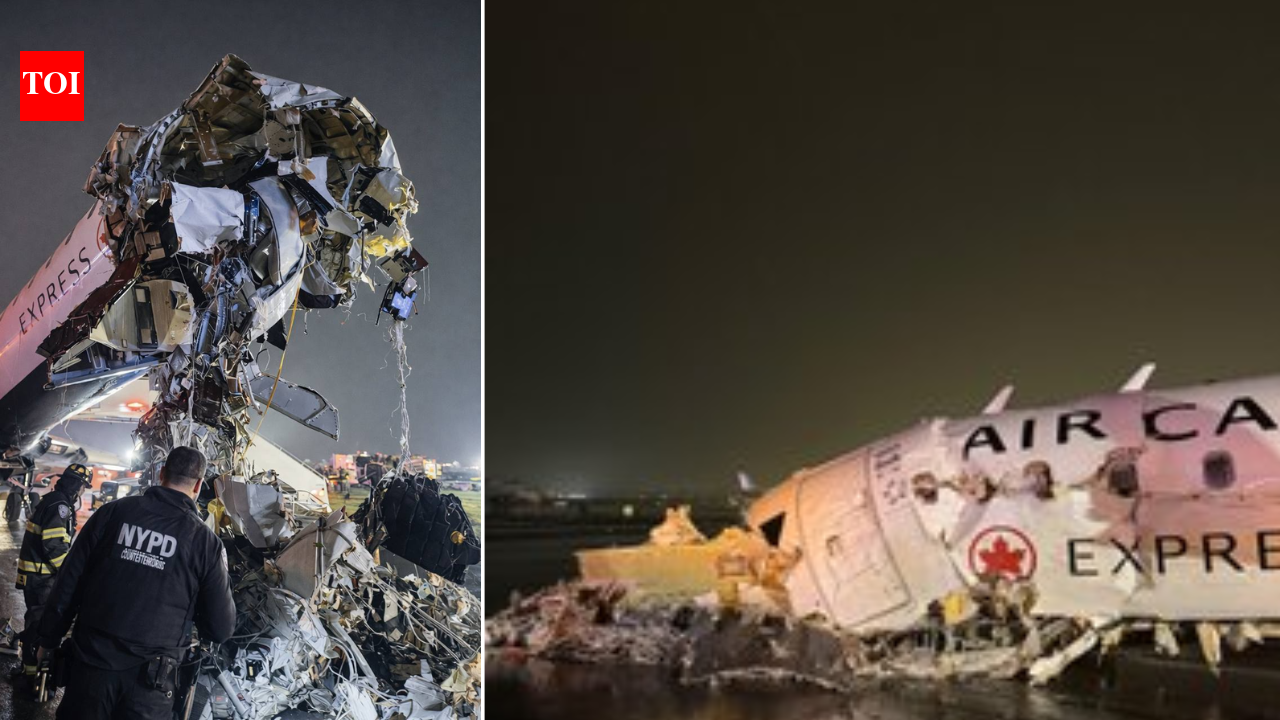
An audio clip from the cockpit has revealed the final moments before an Air Canada Express plane collided with a fire truck at New York’s LaGuardia Airport. The accident killed both the pilot and co-pilot and forced the airport to shut down.The air traffic control recording captures a series of urgent and confused instructions as ground vehicles and aircraft moved on the runway shortly before the crash late Sunday night. In the audio, controllers can be heard repeatedly warning a vehicle to halt. “Stop. Stop. Stop,” the controller says multiple times, moments before informing another aircraft that a collision had occurred on the runway.According to officials, the Air Canada Express CRJ-900, operated by Jazz Aviation, struck a Port Authority aircraft rescue and firefighting vehicle around 11.40 pm (local time) while landing on Runway 4. The truck had been responding to a separate incident involving another aircraft that had reported an issue.Seconds after the impact, the controller is heard telling the aircraft, “I see you collided with the vehicle… hold position”.Emergency responders were immediately dispatched and the runway along with the entire airport, was shut down to manage the situation. “I repeat, Runway 422 is closed at this Time. Tower car 90, LaGuardia Airport is closed at this time,” the audio ended with this message.Authorities confirmed that the pilot and co-pilot of the aircraft were killed in the collision. Several others were injured, including personnel inside the fire truck, though passengers on board the flight largely avoided major injuries. The aircraft was carrying 72 passengers and four crew members.The audio also reveals the rapid escalation of the situation, with repeated announcements that the runway and eventually LaGuardia Airport had been closed, as emergency vehicles rushed to the scene.Initial reports suggest the fire truck had been cleared to cross the runway, but the exact sequence of events leading to the collision remains under investigation. The US Federal Aviation Administration issued a ground stop shortly after the crash, while the National Transportation Safety Board has launched a probe into the incident.Visuals from the scene showed significant damage to the aircraft’s nose, while passengers were evacuated and transported by bus. Flights were diverted or delayed as authorities worked through the night to respond to the emergency.


Source link

Bitcoin falls below $70,000 mark, Middle East conflict drags down cryptocurrencies


Bitcoin falls below $70,000 mark, Middle East conflict drags down cryptocurrencies

With the Middle East conflict now stretching into its fourth week, the impact is rippling across global markets, triggering a fresh wave of selling in cryptocurrencies and pulling Bitcoin below the $70,000 mark. Bitcoin fell to around $68,000 and was hovering near $68,627 after about $243 million in rapid liquidations hit the market, with most losses coming from long positions. The broader crypto space also saw declines. Ethereum dropped 2%, while Bitcoin eased 0.9% over the past 24 hours. Among altcoins, BNB, XRP, Solana, Dogecoin, Hyperliquid and Cardano declined by up to 2%, while TRON managed a marginal gain of 0.3%.However, even as prices soften, market positioning indicates that investors are still eyeing higher levels, with call interest concentrated near $75,000 and $80,000, and a support base forming around $60,000. According to the CoinSwitch, macroeconomic pressures, including elevated oil prices and reduced expectations of US rate cuts, continue to weigh on both equities and digital assets. The desk added that short-term volatility is likely to persist, especially as weekend trading typically sees thinner liquidity, with clearer trends expected once full participation returns during the week. The total crypto market capitalisation slipped by 1% to $2.35 trillion, data from CoinMarketCap showed. Over the past week, Ethereum has declined 8.5%, while Bitcoin has fallen 7%. Among altcoins, BNB, XRP, Solana, Dogecoin and Cardano have dropped by as much as 11%, whereas TRON and Hyperliquid have risen 4% and 0.5% respectively.Here’s what analysts are projecting Riya Sehgal, as cited by ET, said that the market is currently in a cautious consolidation phase amid macro uncertainty. She highlighted that Bitcoin is holding support near $66,000–$67,000, while Ethereum is testing the $2,000 level, pointing to a fragile near-term structure. Vikram Subburaj, CEO at Giottus told the financial daily that the market remains confined to a narrow range and continues to be driven more by oil prices, interest rates and geopolitical developments than by internal crypto dynamics. He added that unless Bitcoin moves back above $70,000–$72,000 with stronger participation and steady ETF demand, the current rebound should be treated with caution.


Source link

AI has created a ‘new status game’ among engineers at IT companies that analysts say is ‘expensive’


AI has created a ‘new status game’ among engineers at IT companies that analysts say is 'expensive'

Artificial intelligence is changing how engineers work at tech companies, but it has also created what analysts are calling an “expensive status game”. According to a report by New York Times, engineers at Meta, OpenAI and other big tech firms are now competing based on how much they use AI tools, measured in “tokens,” which are units of data processed by AI systems. This trend, being referred to as “tokenmaxxing,” is leading to high costs as employees use large amounts of AI resources to show productivity and stay competitive at work.“A.I. was supposed to help tech companies boost productivity and cut costs. But it has also created an expensive new status game, known as “tokenmaxxing,” among A.I.-obsessed workers who are desperate to prove how productive they are,” NYT report says.

What is tokenmaxxing

Tokenmaxxing is a trend where engineers try to maximize their use of AI tools by processing large amounts of data, known as tokens. In this trend, workers run multiple AI agents or tools at the same time to increase their output and show higher productivity. This often leads to higher usage of computing resources and costs.At companies like OpenAI, Meta and Shopify, AI usage is being increasingly tracked. So much so that some teams use internal leaderboards to show how many tokens each employee consumes. “Generous “token budgets” are becoming a job perk for coders, like dental insurance or free lunch, and some are spending thousands of dollars a month trying to automate as much of their own work as possible,” the report states.“If you have some continuously running agents, you’ll do 700 million tokens a week from a single full-time agent,” said Ege Erdil, a co-founder of Mechanize, an AI start-up, who estimated his own token consumption at between one billion and 10 billion a week. “It doesn’t really take that much.”

Rising costs and competition due to AI

Heavy AI usage is leading to high expenses. At Anthropic, one user reportedly generated a bill of over $150,000 in a month. Some engineers are also spending large amounts to automate their work.Max Linder, a software engineer in Stockholm says “I probably spend more than my salary on Claude”.However, some employees have raised concerns about whether this trend is sustainable. “It doesn’t seem sustainable,” said one OpenAI employee speaking anonymously to the publication. At the same time, experts say not using AI tools could become a career risk.“Inside large tech companies, it’s becoming a career risk to not use A.I. at an accelerated pace, regardless of output quality,” said Gergely Orosz, a software engineering analyst.


Source link