Breaking News
SC imposes life ban on three academics for ‘corruption’ chapter, seeks action on posts | India News


SC imposes life ban on three academics for 'corruption' chapter, seeks action on posts

NEW DELHI: The Supreme Court on Wednesday imposed a life ban on three academics, holding them responsible for “projecting a negative image of judiciary” by mentioning “corruption in judiciary” in the class 8 NCERT textbook. The court also said it would take stringent action against social media “mischief mongers” who endorsed the objectionable content to malign the judiciary.After banning the three academics from any assignment with the govt or govt-aided institutions or projects, a bench of CJI Surya Kant, Justices Joymalya Bagchi and Vipul M Pancholi ordered that the Union govt identify the “social media mischief mongers”. NCERT director Dinesh Prasad Saklani and school education secretary Sanjay Kumar tendered an unconditional and unqualified apology to the SC for the “major and unpardonable lapse” and promised preventive steps against such lapses in future. NCERT said the controversial chapter was drafted by Textbook Development Team (TDT) under the chairmanship of Prof Michel Danino and comprised Suparna Diwakar and Alok Prasanna Kumar. These three will not be associated with any activity of NCERT in future, it said. These three “either had no reasonable knowledge about the judiciary or deliberately and knowingly misrepresented facts to project a negative image of Indian judiciary before students of class eight (who are) at an impressionable age”, said the bench.

Academics can seek modification of order by approaching us with an explanation: SC

The Supreme Court has directed all govts and institutions receiving govt funds to immediately cut ties with the three academicians, whom the court held responsible for “projecting a negative image of the judiciary”, but allowed them the option to seek a modification of the order.“We see no reason as to why these kinds of persons should be associated in any manner for the purpose of framing of curriculum or finalisation of textbook for the children,” it further said while directing Centre, states and Union territories, universities and public institutions receiving govt funds “to forthwith disassociate with these three persons and not assign any responsibility which involves public funds either fully or partially”.Leaving a window open for the three to seek modification of the order, the bench said the three can do so by approaching SC with an explanation for drafting the chapter “The Role of Judiciary in Our Society”, which contained the controversial reference to “corruption” in the institution.The bench took strong exception to certain social media platforms, websites and individuals defending the reference to alleged corruption in judiciary in the NCERT textbook. It said, “After the Feb 26 order (which banned the circulation of the entire textbook) was passed, some elements of the so-called social media have acted and reacted irresponsibly. We firmly believe in catching the bull by its horns. We direct the Union govt to identify such sites, the persons running those sites and furnish their full details to enable us to take suitable action. The law must take its own course against mischief mongers.”Solicitor general Tushar Mehta said Newton’s law “for every action, there is an equal and opposite reaction” has been redefined by social media which believes that for “every action, there is a disproportionate and idiotic overreaction”. The bench clarified that its Feb 26 and today’s orders “are not intended to prevent objective and legitimate criticism of the institutional functioning of the judiciary. The judiciary, like any other institution, suffers from deficiencies and if an expert committee highlights such deficiencies, it will be a welcome step for the future generation of this nation, including the future judges and practitioners, and offer an avenue for present stakeholders to take correctional steps”.But SC disapproved of NCERT’s stand that the controversial chapter on judiciary has been “duly rewritten” after the controversy for incorporation in the textbook. The bench said that NCERT through “one after the other hasty acts” is making the issue more complex and impeding transparent and dispassionate information on judiciary from being disseminated to students.Mehta assured the court that “nothing of the earlier chapter four on judiciary” would be incorporated in the new textbook. The bench said the National Syllabus and Teaching Learning Material Committee does not even include a jurist or a person from legal field and expressed surprise that the draft of the controversial chapter was not approved by NSTC prior to its inclusion in the textbook.It said the revised version of the controversial chapter would not be incorporated in the textbook unless approved by a committee of domain experts, which must include a former judge, eminent academician and a renowned law practitioner. “It shall be appreciated if a committee of domain experts to be constituted by the Union govt within one week also associates National Judicial Academy, Bhopal, for finalising the legal studies curriculum proposed by NCERT for not only class 8 but the higher classes,” said the bench.


Source link

Arctic Sea Ice: Arctic sea ice heading for one of lowest winter peaks on record: Report


Arctic sea ice heading for one of lowest winter peaks on record: Report
AI image (Picture credit: OpenAI via ChatGPT)

Arctic sea ice is on track to record one of its smallest winter peaks since satellite monitoring began four decades ago, raising fresh concerns about climate change and its geopolitical implications, according to data reviewed by news agency AFP.Figures from the National Snow and Ice Data Center show that Arctic sea ice extent reached nearly 14.22 million square kilometres on March 10. If the current trend continues until the winter maximum later this month, the level could rank among the five lowest ever recorded.Sea ice forms when ocean water freezes during winter and melts during summer. However, the total amount of ice returning each winter has been steadily declining due to human-driven global warming.

Risk of record-low winter peak

Seamus McAfee said the situation could still change slightly, but current data suggests the Arctic is approaching a historically low winter extent.“But so far, it is looking like it could be a very significant extent, perhaps one of, if not the lowest, in the record,” McAfee said, as quoted by AFP.Last year, Arctic sea ice reached its lowest winter maximum on March 22, covering 14.31 million square kilometres, according to the NSIDC. Previous lows were recorded in 2016, 2017 and 2018.Samantha Burgess said the 2026 level would likely fall within the five lowest years on record.Meanwhile, polar oceanographer Gilles Garric said the current winter was already among the “top three” lowest levels so far.

Arctic warming far faster than global average

Scientists say the shrinking ice cover reflects a broader warming trend in the Arctic.The last three years have been the hottest globally on record as greenhouse gas emissions continue to rise. The Arctic is warming significantly faster than the rest of the planet.“Given that the Arctic is warming at 3–4 times the global average rate, we are likely to continue to observe continued Arctic warming, loss of multi-year ice,” Burgess told AFP.Experts also warn that the return of the El Nino later this year could further push global temperatures higher.Low winter sea ice levels could also accelerate melting during the summer months.

Threat to ecosystems and wildlife

Although melting sea ice does not directly raise sea levels, unlike melting glaciers or ice sheets, scientists warn that the loss of frozen ocean cover threatens fragile polar ecosystems.Species such as the polar bear and emperor penguin depend on sea ice for breeding, hunting and survival.Shaye Wolf warned the shrinking ice cover could signal deeper climate dangers.“The sirens are blaring that we’re headed for a hothouse planet with massive devastation around the world,” Wolf told AFP.“But Arctic warming, driven by fossil fuels, puts us all in peril. We’re closer than ever to irreversible tipping points that will forever alter the world we know.”Despite the Arctic hitting a record low, Antarctica saw an improvement as its sea ice extent approached its typical summer average following four years of significant lows, according to a report from the NSIDC.

Melting ice reshaping geopolitics

Beyond environmental risks, the loss of Arctic ice is also reshaping global geopolitics.As ice retreats, new shipping lanes and access to untapped mineral and energy resources could emerge across the region.Elizabeth Chalecki said the melting Arctic could transform the region into a contested maritime zone.“From a geopolitical perspective, the climate change-induced melting of sea ice is turning the Arctic into the new Mediterranean: a common shared maritime resource surrounded by competing states,” she told AFP.Russia is already expanding its economic and military presence along the Northern Sea Route, while the United States and Canada may need to increase their activity in the region.Meanwhile, US President Donald Trump has previously voiced interest in acquiring Greenland, arguing the Arctic territory holds strategic importance amid growing competition with Russia and China.Scientists warn that while new economic opportunities may emerge from the melting ice, the environmental consequences could be far more severe if global emissions are not rapidly reduced.


Source link

LPG shortage may force production halt in Chennai industrial corridors; OEMs ready contingency plans | Chennai News


LPG shortage may force production halt in Chennai industrial corridors; OEMs ready contingency plans

CHENNAI: Manufacturing units across Tamil Nadu’s key industrial corridors such as Sriperumbudur and Oragadam warn they may be forced to shut operations if the LPG shortage persists for seven to 10 days more.In the auto component industry, LPG is used in several processes, including forging, casting, heat treatment and fabrication. LPG-fired furnaces provide precise and consistent temperature control, crucial for maintaining metallurgical properties. Any disruption in supply of LPG can hit production schedules, particularly for MSME suppliers that form a vital part of OEM supply chains.Industry sources warn that if forging and casting suppliers face prolonged shortages, the disruption could eventually reach larger automobile manufacturers. Leading OEMs have begun drawing up contingency plans. “The situation is somewhat similar to what we faced during Covid. But this time, it is not restrictions but a shortage of a key fuel that powers several manufacturing processes. This could affect the entire manufacturing ecosystem,” said a senior official at a leading auto OEM.Meanwhile, PSU oil major Bharat Petroleum Corporation said in a tweet on Wednesday that available supplies are being rationed to ensure wider coverage, with domestic households being the top priority.Other requests are being reviewed by a joint committee of LPG executive directors from BPCL, IOC and HPCL. Private players supplying LPG to the commercial and industrial sectors declined to comment.


Source link

Monalisa Bhosle Wedding: Kumbh Mela girl Monalisa Bhosle marries boyfriend Farman Khan in Kerala after seeking police help amid family opposition |


Kumbh Mela girl Monalisa Bhosle marries boyfriend Farman Khan in Kerala after seeking police help amid family opposition
Monalisa Bhosle, who shot to internet fame during the Kumbh Mela in Prayagraj, has married her boyfriend Farman Khan in Kerala after approaching the police following opposition from her family. The couple tied the knot at the Nainar Temple.

Monalisa Bhosle, who shot to internet fame during the Kumbh Mela in Prayagraj, has married her boyfriend Farman Khan in Kerala after approaching the police following opposition from her family. The couple tied the knot at the Nainar Temple.

Approached police amid family opposition

The development comes days after Monalisa reportedly sought help at the Thampanoor Police Station, stating that her family was against the relationship and that her father was trying to take her back to their hometown against her wishes.According to police officials, Monalisa and Farman arrived at the station along with members of a film crew she was working with in Kerala. During the interaction, she reportedly told officers that she intended to stay with her partner and proceed with the marriage despite her family’s objections.A police officer was quoted as saying by India Today, “She insisted that she will not go with her father and made it clear that she plans to marry her boyfriend. Since she is a major, she has the right to make her own decisions.”Officials added that there was no need for police intervention as both individuals are adults. After the discussion, Monalisa left the station with her boyfriend and members of the film crew, while her father later returned to his hometown.

Wedding held at Nainar Temple

The couple later solemnised their marriage at the Nainar Temple in Thiruvananthapuram. Several political leaders were reportedly present at the ceremony, including V Sivankutty, MV Govindan and AA Rahim.Speaking at the venue, Rahim said the marriage reflected the constitutional right that allows individuals from different faiths to marry.“The Constitution allows people from different religions to marry. We came here to celebrate the couple,” he said.

‘Ours is a six-month love story’

After the wedding, Monalisa expressed happiness about the new chapter in her life and said the couple chose Kerala as the venue because they liked the state.Farman also spoke briefly about their relationship, saying, “Ours is a six-month love story, but it feels like sixty years. I am also an actor.”

From viral Kumbh Mela video to nationwide attention

Monalisa first drew attention during the Kumbh Mela in Prayagraj when a video of her selling rudraksha garlands was captured by a content creator and went viral on social media, turning her into an internet sensation. The Indore-based woman later travelled to Kerala for a film shoot. Police said the couple had been staying in Poovar near Thiruvananthapuram in connection with the project when the dispute with her family surfaced. Despite the initial resistance, Monalisa and Farman eventually went ahead with their wedding plans in the state.


Source link

From oilfield to kitchen flame: India’s crude oil and gas supply chain explained


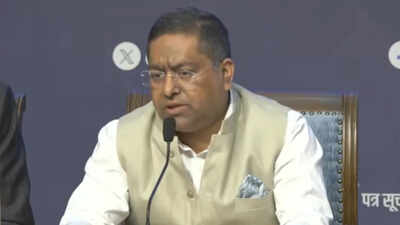
Opposition Flags ‘Emergency Situation’, Slams Modi Govt as LPG Shortage Looms Amid West Asia War

AI image for representative purpose only

On any given morning in India, a quiet choreography of energy unfolds. In a Delhi kitchen, a blue LPG flame hisses beneath a pressure cooker. Hundreds of kilometres away, a freight truck hums along the Delhi–Mumbai Expressway, its engine burning diesel. At Bengaluru airport, a jet roars down the runway, rising into the sky on aviation turbine fuel.Different scenes, different fuels, but all trace back to the same source: crude oil drawn from deep beneath the earth’s surface, shipped across oceans in giant tankers, refined into usable fuels and distributed through one of the most complex industrial networks in the modern world.

Opposition Flags ‘Emergency Situation’, Slams Modi Govt as LPG Shortage Looms Amid West Asia War

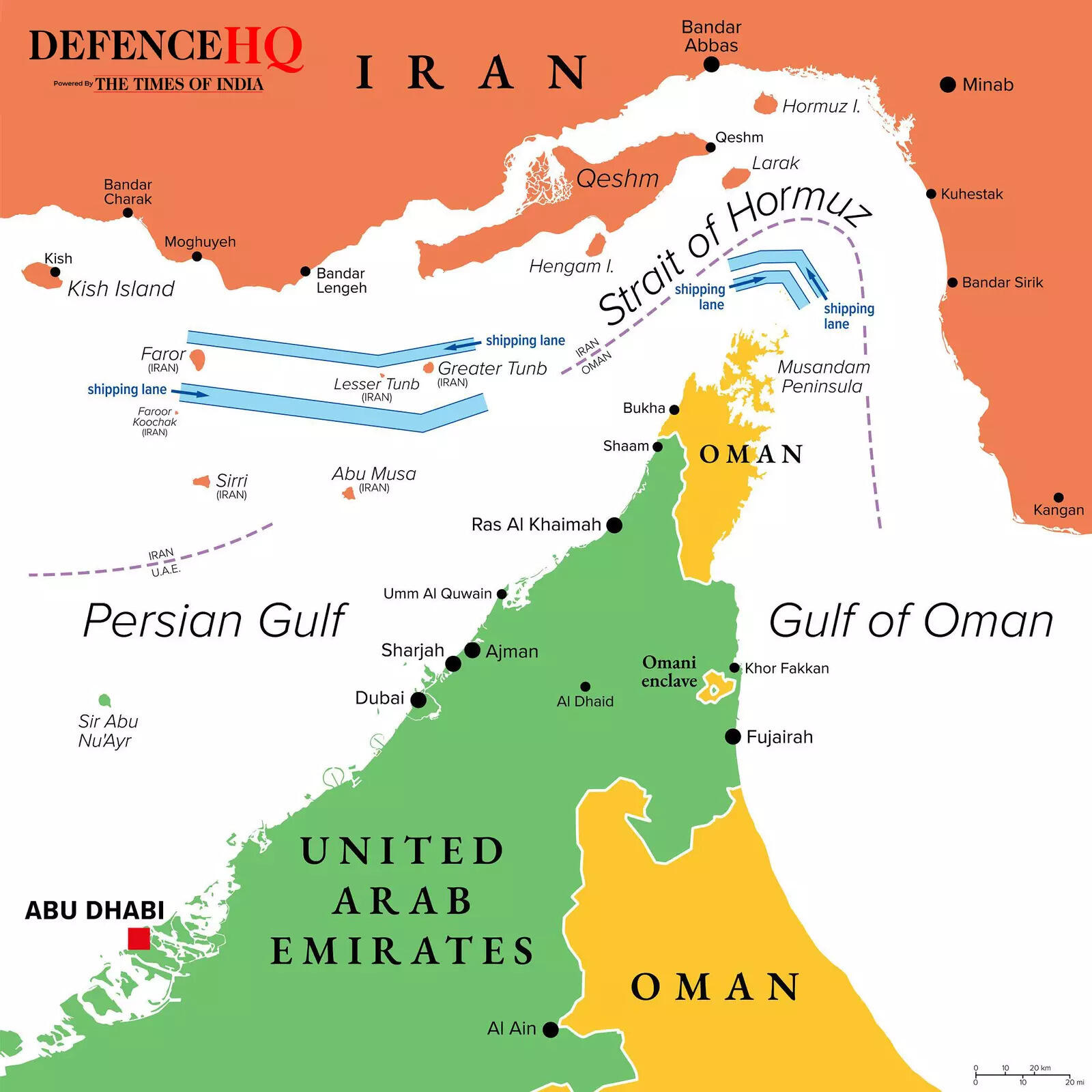
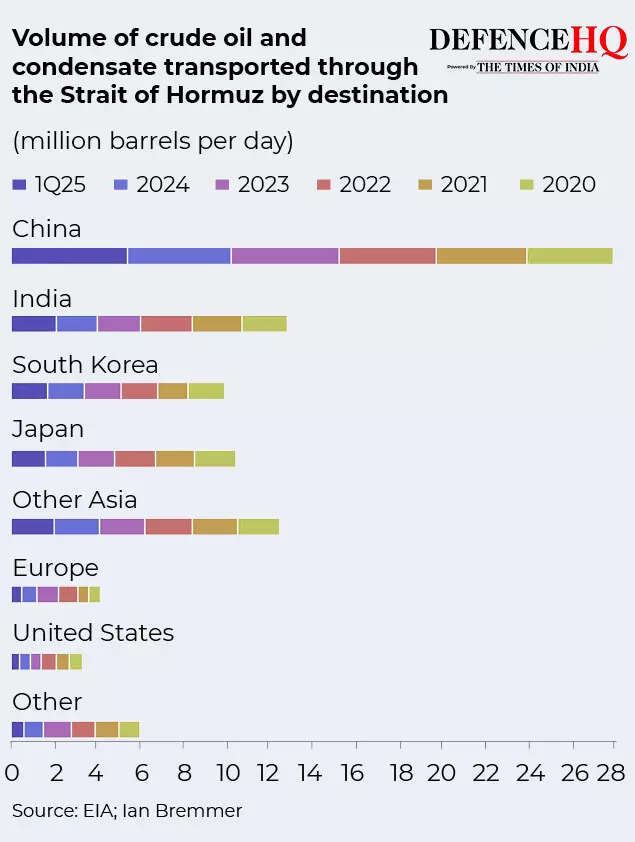
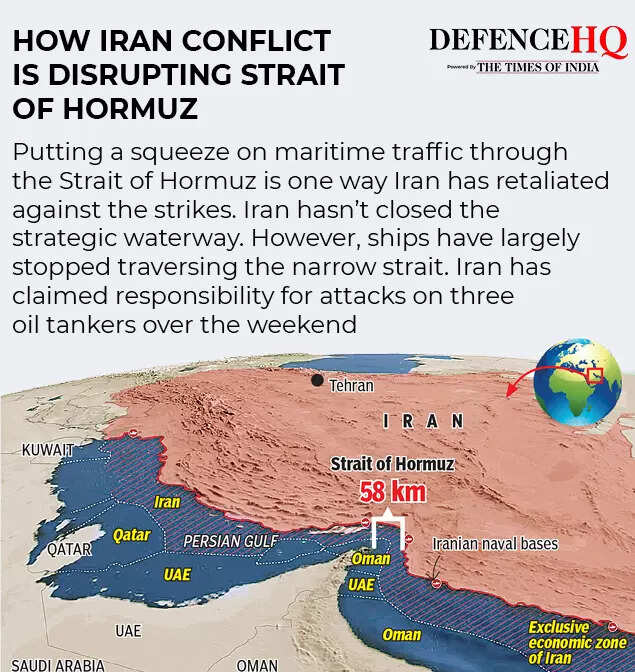
This vast chain, stretching from distant oilfields to households, highways and airports, is what the energy industry calls the oil and gas supply chain. India occupies a distinctive place within it. The country imports the bulk of the crude it consumes, yet it has built one of the world’s largest refining hubs, transforming that imported oil into fuels that power its economy and are shipped to markets across the globe.The Strait of Hormuz – the narrow waterway between Iran and Oman–remains a critical energy chokepoint, with more than 40% of India’s crude imports, and nearly half of its LNG and LPG shipments passing through the narrow waterway.

-

Earlier, TOI had reported on March 4 that officials, speaking on condition of anonymity, said India’s crude oil stocks were sufficient to meet demand for about 25 days, while inventories of petroleum products such as petrol and diesel could last another 25 days. They also noted that additional volumes held in strategic reserves could help cushion short-term supply disruptions. According to the officials, cooking gas stocks were adequate for 25-30 days, while liquefied natural gas supplies were available for roughly 10 days.According to the Petroleum Planning and Analysis Cell (PPAC), the government’s official oil and gas data agency, India consumed 21.05 million metric tonnes (MMT) of petroleum products in January 2026, a 2.5% increase over the same month a year earlier. Over the April–January period of FY2025-26, the country’s petroleum demand averaged about 5.43 million barrels per day.Government projections suggest demand will remain strong. The official estimate for FY2026-27 places India’s total petroleum product consumption at 250,790 thousand metric tonnes (TMT), equivalent to about 250.8 million tonnes for the year.

-

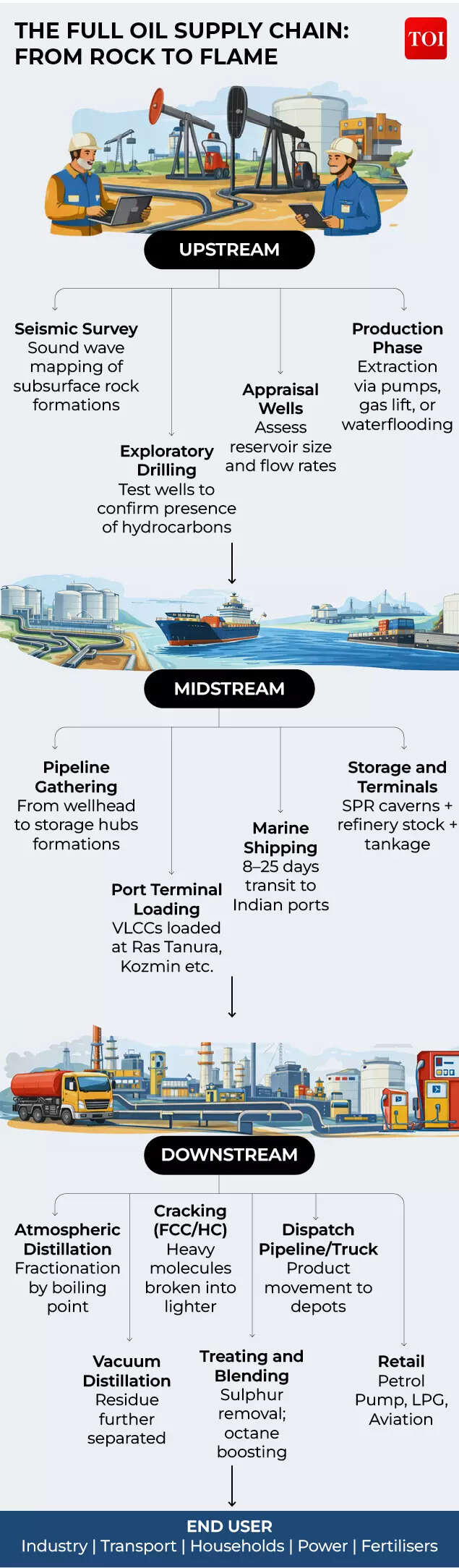
Behind those numbers lies a vast supply chain that spans global oil markets, maritime shipping routes, refineries, pipelines and distribution networks. Understanding how it works – and where it is vulnerable–requires starting at the basics.

The crude oil market: Benchmarks that shape India’s import bill

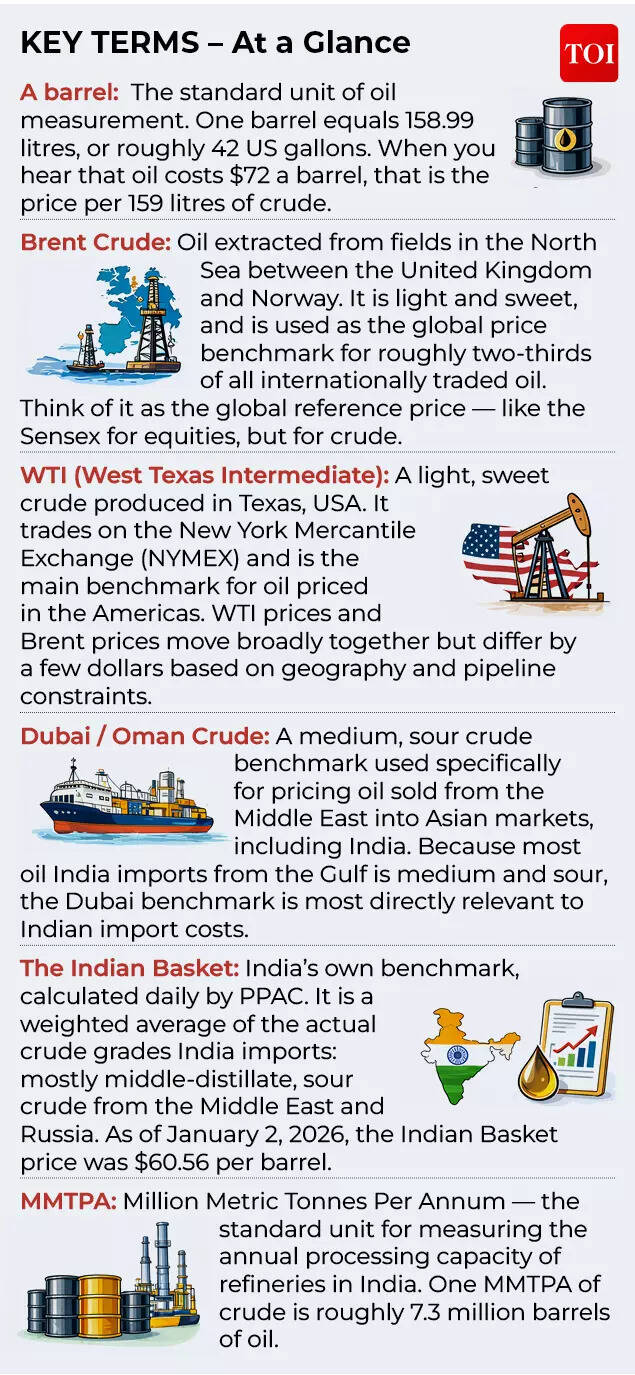
Crude oil is not a single uniform substance. It is a mixture of hydrocarbons formed from the compressed remains of ancient marine organisms over millions of years. Different oilfields produce crude with different chemical properties, and those differences affect both pricing and refining.Two characteristics define crude oil quality. The first is API gravity, a scale developed by the American Petroleum Institute that measures how heavy or light crude oil is relative to water. Higher API gravity indicates lighter crude, which typically produces more valuable fuels such as petrol and diesel during refining.The second property is sulphur content. Oil with low sulphur is called sweet crude, while high-sulphur oil is known as sour crude. Sweet crude requires less processing and generally commands a higher price.Because crude oil varies so widely in quality, global oil markets rely on benchmark prices that serve as reference points for contracts. The most widely used benchmarks are Brent crude from the North Sea, West Texas Intermediate (WTI) from the United States and Dubai/Oman crude, which is commonly used to price oil exported from the Persian Gulf to Asian markets.

-

India uses its own reference price called the Indian Basket, calculated daily by the Petroleum Planning and Analysis Cell. Unlike global benchmarks, the Indian Basket reflects the specific mix of crude grades processed by Indian refineries. According to PPAC’s official methodology, the basket consists of 78.71% sour crude, represented by the average of Dubai and Oman grades, and 21.29% sweet crude represented by Brent Dated.For FY2025-26, the Indian Basket averaged $63.08 per barrel in January 2026. The most recent price available from PPAC for February 2026 placed the basket at around $70.70 per barrel.These numbers matter far beyond oil markets. Because India imports most of its crude oil, fluctuations in global prices directly affect the country’s import bill, inflation and fiscal balances.

Import dependence: The structural reality

India’s domestic crude production meets only a fraction of national demand. Most of the oil processed in Indian refineries is imported.Major suppliers include Iraq, Saudi Arabia, Russia and the United Arab Emirates. The composition of these imports has shifted significantly in recent years. Following Western sanctions on Russia after the Ukraine war, Indian refiners sharply increased purchases of discounted Russian crude.

-

Despite diversification, the supply chain remains exposed to global shipping chokepoints. One of the most critical is the Strait of Hormuz, the narrow waterway between Iran and Oman through which roughly one-fifth of global oil trade passes every day.Disruptions in this corridor—whether geopolitical or military—can quickly affect shipping costs and fuel prices worldwide.India has attempted to mitigate this vulnerability by expanding the number of countries it imports crude from. According to government data, India now sources crude from around forty countries, compared with about twenty-seven countries a decade ago.

Refining: India’s industrial strength

If India’s oil story began and ended with imports, the country would simply be another energy-dependent economy. But the next stage in the supply chain changes that picture.India has built one of the world’s largest refining sectors. Crude oil arriving at Indian ports is processed in twenty-three refineries with a combined capacity exceeding 258 million tonnes per year, according to PPAC data.The refining process begins in a distillation column where crude oil is heated and separated into different fractions according to boiling point. Lighter molecules rise to the top of the column while heavier fractions remain lower in the tower.From this process emerge the fuels that power modern economies: LPG for cooking, petrol for vehicles, aviation turbine fuel for aircraft, diesel for trucks and trains, and heavier residues used to produce bitumen or fuel oil.India’s refining industry is highly sophisticated. Modern refineries employ complex units such as catalytic crackers and hydrocrackers that break heavy molecules into lighter fuels. The result is a higher yield of valuable products.The Jamnagar refinery complex in Gujarat, operated by Reliance Industries, is the largest refining hub in the world at a single location. Together with refineries operated by Indian Oil Corporation, Bharat Petroleum and Hindustan Petroleum, it forms the backbone of India’s petroleum supply system.This refining strength has also turned India into a major exporter of petroleum products. Refined fuels such as petrol, diesel and aviation turbine fuel are shipped from Indian refineries to markets across Asia, Africa and Europe.

What fuels India consumes

Official government projections provide a clear picture of how petroleum demand is distributed across products.According to the PPAC official estimate for FY2026-27, diesel remains the dominant fuel in India’s energy system. Diesel consumption is projected at 96,399 TMT, accounting for 38.4% of total petroleum product demand.Petrol follows at 44,877 TMT, representing 17.9% of consumption. LPG, the country’s primary cooking fuel, accounts for 34,692 TMT, or about 13.8% of total demand.Other products include aviation turbine fuel, naphtha used by petrochemical plants, bitumen for road construction and fuel oils used by industry.These figures reflect the structure of India’s economy. Diesel powers freight transport and agriculture, while petrol demand is driven by rising vehicle ownership, particularly the country’s vast fleet of two-wheelers.

LPG: The fuel of everyday life

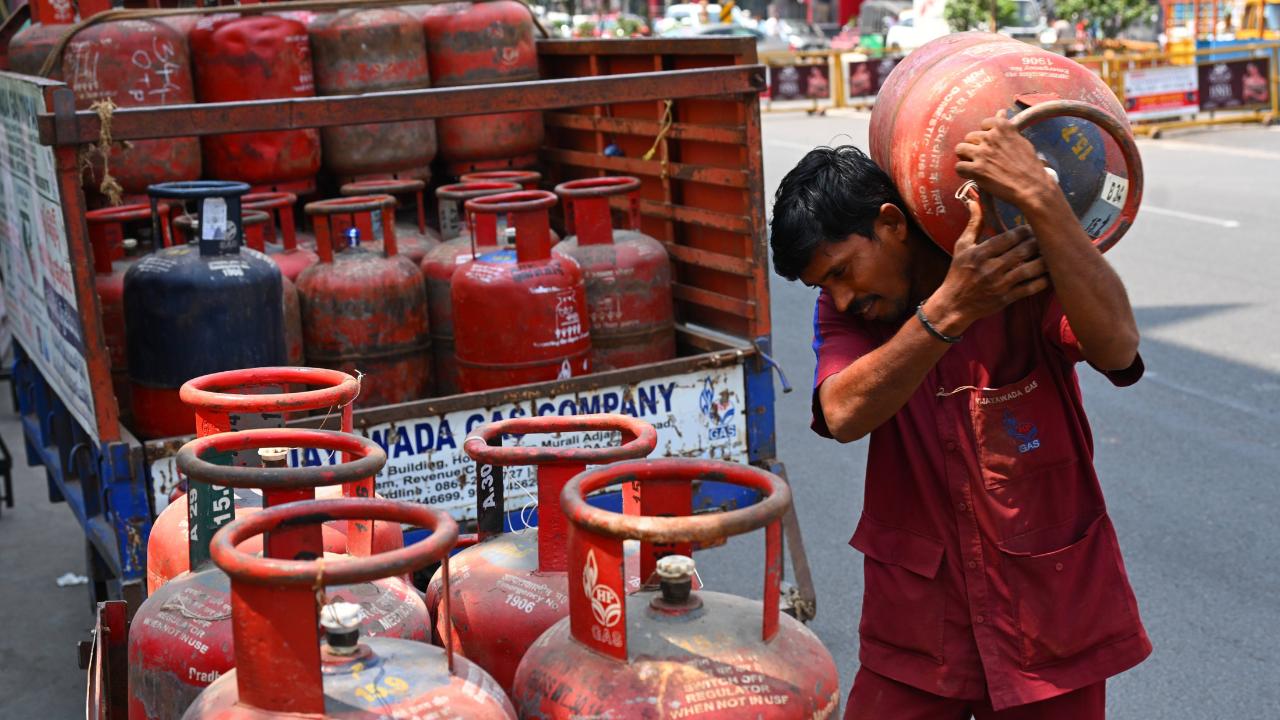
Among petroleum products, LPG occupies a unique position because it directly affects household life.Liquefied Petroleum Gas is a mixture of propane and butane gases separated during crude refining or natural gas processing. When compressed under moderate pressure, these gases liquefy, allowing them to be transported in cylinders.According to PPAC data, India consumed about 3.03 MMT of LPG in January 2026, a 7% increase over the same month a year earlier.

-

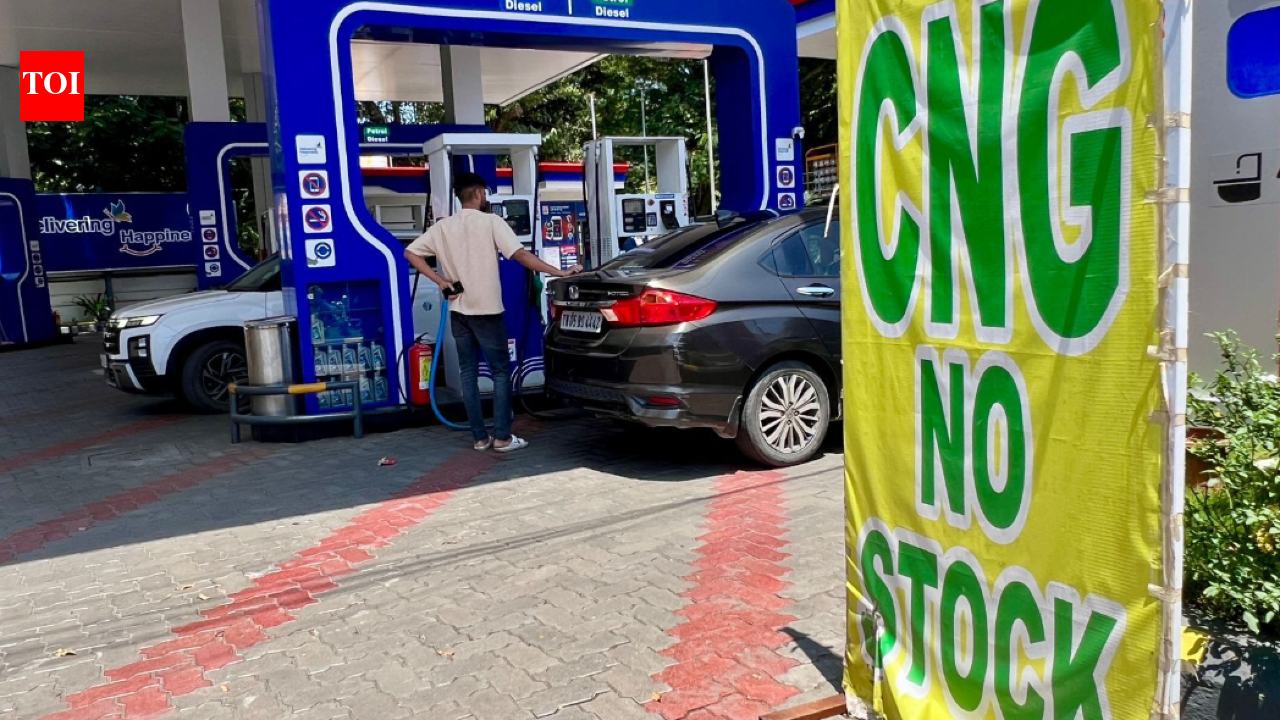
The scale of the LPG distribution system is enormous. As of January 2026, India had more than 33 crore active domestic LPG connections. Over 10 crore of these were provided under the Pradhan Mantri Ujjwala Yojana scheme designed to expand access to clean cooking fuel for low-income households.Imported LPG arrives at coastal terminals and is transported to bottling plants across the country. At these plants the gas is compressed into cylinders before being distributed through a nationwide network of dealers and delivery agents.Yet even within this sector, the data reveals changing patterns. Auto LPG—once used in three-wheelers and small vehicles—is declining as compressed natural gas becomes more widely available. At the same time, industrial demand for bulk LPG has surged, partly because it has become cheaper than liquefied natural gas for some applications.

Natural gas: promise and complications

Natural gas occupies a somewhat different place in India’s energy mix. It burns more cleanly than coal or oil and is widely used in fertiliser production, city gas networks, power generation and industry.However, transporting natural gas across oceans is complex. To ship it by sea, gas must be cooled to around minus 162 degrees Celsius, turning it into Liquefied Natural Gas. At the destination, LNG is warmed back into gas in a process known as regasification before being transported through pipelines.

-

India imports LNG through several coastal terminals, with the Dahej terminal in Gujarat among the largest.Despite expectations that natural gas demand will grow as India transitions toward cleaner fuels, the latest official data shows a more complicated picture. PPAC figures indicate that cumulative natural gas consumption during April–January FY2025-26 was about 4.4% lower than in the same period a year earlier.Higher LNG import prices and weaker industrial demand have contributed to this decline.

Ethanol blending: reducing oil dependence

One development that has significantly affected India’s fuel mix is ethanol blending in petrol.Ethanol, produced from sugarcane or grain, can be blended with petrol to reduce crude oil consumption and lower emissions. Government data indicates that ethanol blending reached 19.99% in January 2026, effectively achieving the national target of 20%.This milestone has important implications for India’s oil imports because each percentage point of ethanol blended into petrol reduces the amount of crude oil needed to produce that fuel.

The paradox of India’s energy transition

India has committed to achieving net-zero carbon emissions by 2070 and is rapidly expanding renewable energy capacity. Solar and wind power are growing quickly, and electric mobility is beginning to reshape parts of the transport sector.Yet oil demand continues to rise alongside economic growth. As incomes increase, vehicle ownership expands, aviation traffic grows and industrial output rises.This creates an unusual policy challenge. India must continue building refineries, pipelines and gas infrastructure to meet current demand even as it invests heavily in renewable energy systems that will eventually reduce dependence on fossil fuels.The result is an energy economy in transition–one that is simultaneously expanding fossil fuel infrastructure and preparing for a future where those fuels play a smaller role.

A price that affects every household

Global oil markets may appear distant from everyday life, but their effects are felt across the economy.Every increase in crude oil prices raises the cost of transport, electricity, fertilisers and cooking fuel. Every decline eases inflationary pressure.The price of a barrel of oil, set in global markets far from India’s shores, ultimately shapes the cost of living for millions of households.And as India’s economy continues to grow, the path from oilfield to kitchen flame will remain one of the most important supply chains in the country’s economic life.




Source link

Middle East crisis: 2 Indians killed, 1 missing after merchant vessels attacked, says MEA | India News


Middle East crisis: 2 Indians killed, 1 missing after merchant vessels attacked, says MEA

NEW DELHI: Two Indian nationals have been killed, and another remains missing after merchant vessels carrying them came under attack in the ongoing conflict in West Asia, the ministry of external affairs (MEA) said on Wednesday. The ministry added that several Indians have also sustained injuries in the Gulf region, with consular officials coordinating medical assistance and support.MEA spokesperson Randhir Jaiswal, in an inter-ministerial briefing on recent developments in West Asia, said that the government has been actively monitoring the situation and assisting affected nationals.“There have been reports of some casualties. We have two Indian nationals whom we have lost, and one is missing. These three Indian nationals died or are missing. It happened when they were on merchant vessels which came under attack. A few Indians who have suffered injuries in the GCC region are being treated. Our consulate is in touch with them,” he said.He also confirmed that the Indian national reported injured in Dubai earlier today is undergoing treatment, with consular staff staying in close contact.“Today, in the morning, you would have seen reports that the Indian National was injured in Dubai. This gentleman, our consulate is in touch with him. He is also receiving treatment at the hospital, and we are in regular touch with him to ensure his welfare and well-being,” Jaiswal added.Amid mounting concerns over the safety of Indian citizens in the conflict-hit region, the MEA has activated a dedicated control room to address queries and provide assistance.“In MEA, we have started a control which is functioning. We have been receiving a lot of phone calls regarding Indian nationals and their welfare, and we have been guiding the people calling,” the spokesperson said.India has a sizeable expatriate population across the Gulf and Middle East, many of whom work aboard merchant vessels or in sectors exposed to regional instability.The MEA said it continues to coordinate with Indian missions in the region to ensure the safety and repatriation of affected citizens if necessary.


Source link

White House forced shut after van ploughs into security gate


White House forced shut after van ploughs into security gate

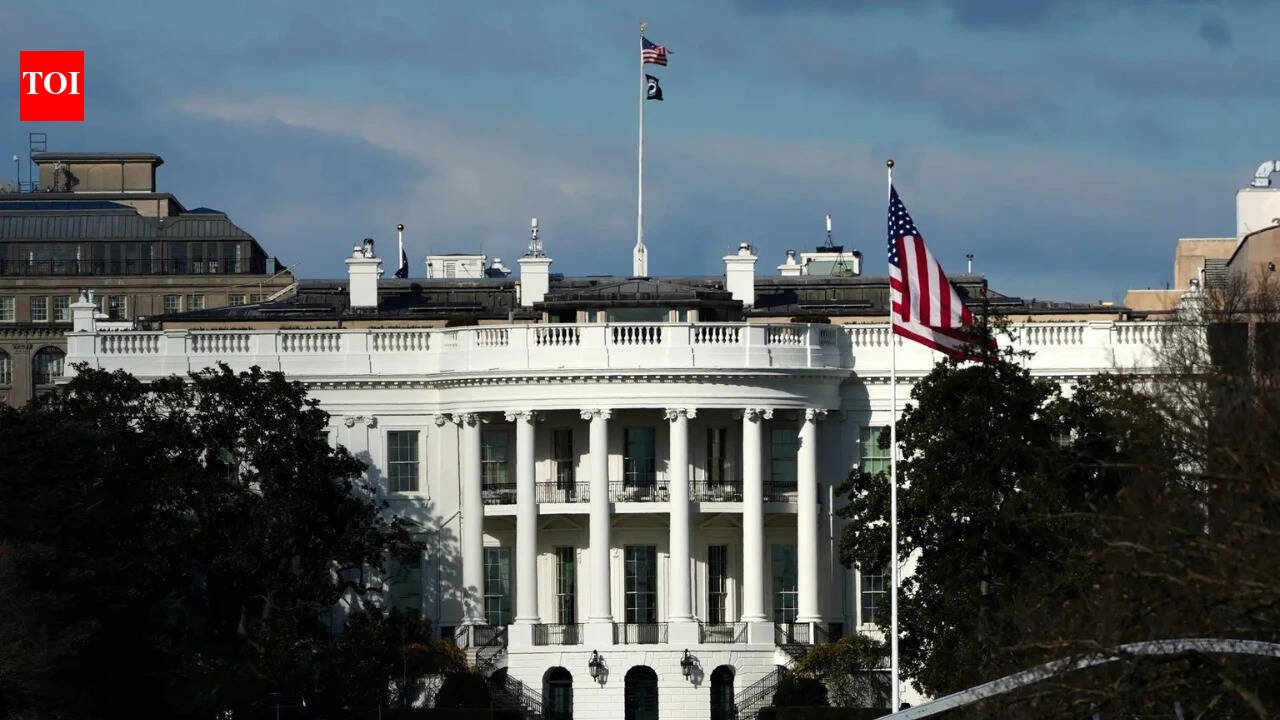
The White House was forced under a lockdown early Wednesday after a van smashed through a security barricade near the presidential complex, prompting a shutdown of the surrounding area during the morning rush hour, the Metropolitan Police Department of the District of Columbia (MPDC) said.According to the police, the vehicle rammed into a gate at Lafayette Square, just north of the White House, around 6.30 am local time. “A driver has been detained after crashing a van through a White House barricade early Wednesday,” police said in a statement, ABC News reported.The crash occurred at the intersection of Connecticut Avenue and H Street, Northwest, according to the reports, forcing road closures and a swift response from Secret Service officers and the Metropolitan Police Department.The area, usually crowded with tourists and office workers, was immediately sealed off as officers moved in to secure the scene. According to a local news report, the driver of the van was detained, while no casualties were reported by the authorities.Officials have not yet released details about the driver or any possible motive behind the breach. The Secret Service continues to investigate the circumstances surrounding the crash.Police cordoned off several major streets around the White House, preventing government employees and city workers from reaching their offices as traffic came to a standstill across the area. Dozens of emergency vehicles with flashing lights crowded the scene, while tourists and residents waited on the sidewalks for roads to reopen, scrolling through their phones for the latest updates.Washington remains on heightened alert amid the ongoing US-Israel war on Iran, a conflict that has intensified security measures across the capital.


Source link

Govt says crude oil supplies secure, LPG distribution prioritised for households


Govt says crude oil supplies secure, LPG distribution prioritised for households

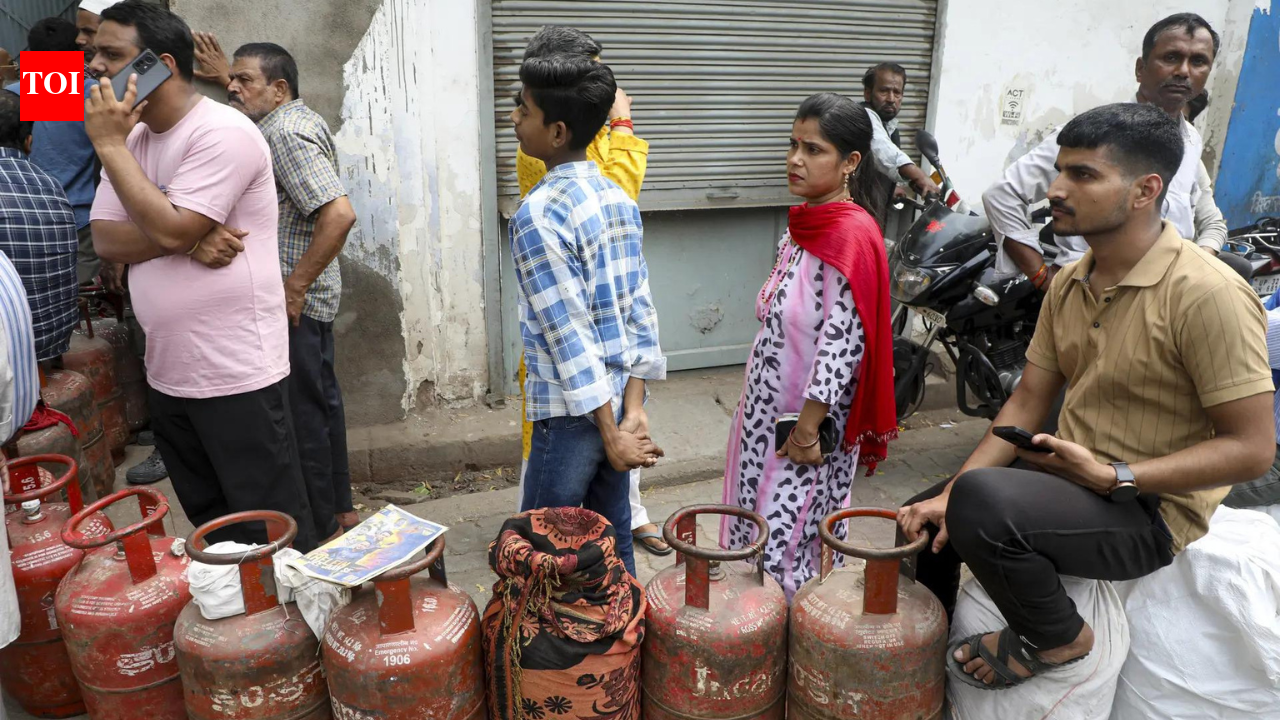
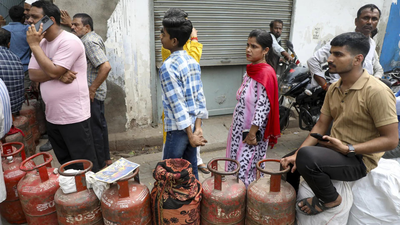
The government on Wednesday said India’s crude oil supplies remain secure and urged consumers not to panic over LPG availability, noting that steps have been taken to ensure fair distribution amid geopolitical disruptions.Sujata Sharma, Joint Secretary (Marketing & Oil Refinery) in the Ministry of Petroleum and Natural Gas, said domestic LPG supplies are currently being prioritised, ANI quoted . “Currently, LPG is being directed to the domestic sector. For non-domestic LPG, priority is being given to essential sectors such as hospitals and educational institutions. The committee is consulting with state authorities and industry bodies to finalise the plan to ensure that available LPG is distributed fairly and transparently,” she said.“Our gas companies have procured LNG cargos from new sources. Two LNG cargos are on their way to India,” Sujata Sharma added.The ministry oficial also said there is no need for panic booking of LPG cylinders as the normal delivery cycle for domestic households remains about 2.5 days. It added that government measures have resulted in a 25 per cent increase in LPG production.Officials further noted that crude oil is being sourced through routes other than the Strait of Hormuz, and overall supplies are now more secure than the volumes that were earlier disrupted, according to the ministry.


Source link

Middle East crisis: Thai vessel struck in Strait of Hormuz; 3 crew members missing


Middle East crisis: Thai vessel struck in Strait of Hormuz; 3 crew members missing

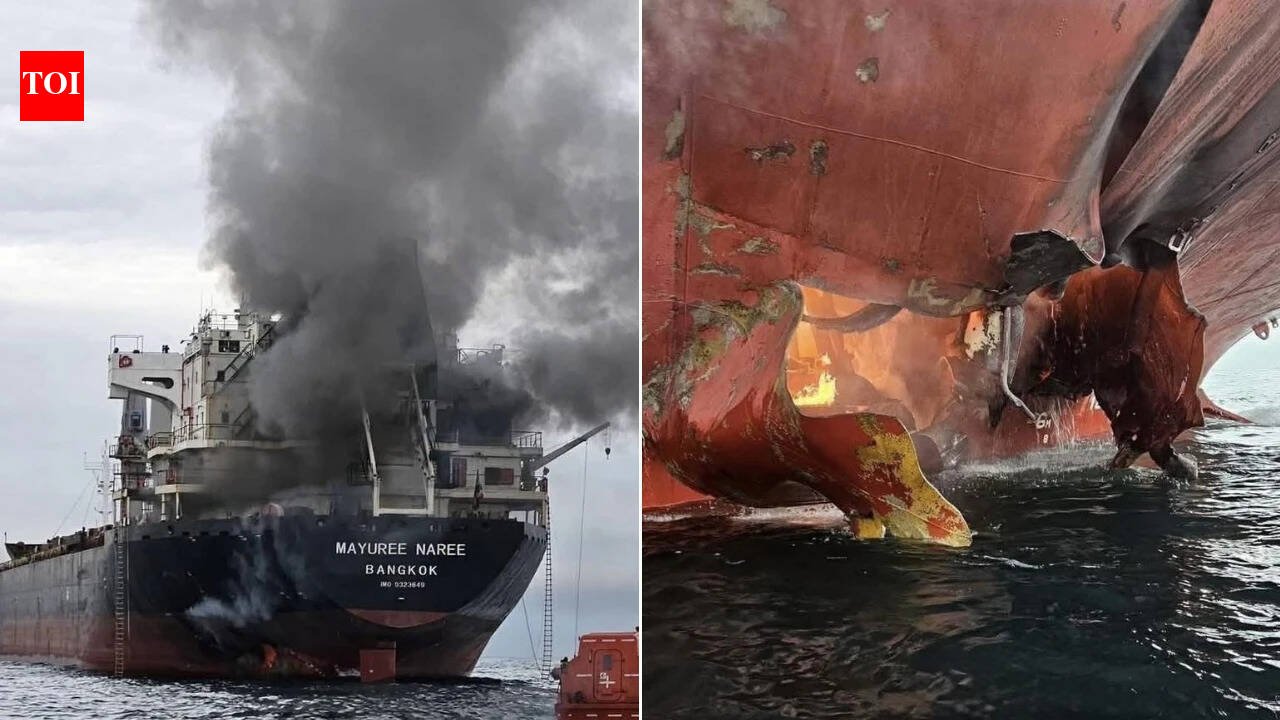
Twenty crew members have been rescued, while three remain missing after a Thai cargo vessel was struck by unknown projectiles in the Strait of Hormuz, Thailand’s Transport Ministry said on Wednesday.According to the ministry, the crew abandoned the vessel in a lifeboat after the incident and were later rescued by the Omani navy. Authorities said an explosion occurred at the stern of the ship, triggering a fire in the engine compartment where the three missing crew members had been working at the time.Dramatic visuals from the damaged ship show smoke billowing from the damaged ship after it was struck.Search and rescue operations were underway for the missing crew, the ministry said, adding that the cause of the attack and the origin of the projectiles were not immediately clear.The vessel, Mayuree Naree Bangkok, was struck while sailing near the Iranian waters. The offensive hit the ship near its stern. Images shared by the local news outlet, Thai Enquirer, show the damage done to the vessel. The shipping data from MarineTraffic showed the vessel had departed from Dubai, United Arab Emirates, and was heading to India at the time.Omani naval authorities have not yet disclosed further details about the condition of the rescued crew or the current status of the damaged vessel. Investigations into the incident are ongoing.The incident comes amid heightened tensions and security concerns in the Strait of Hormuz.Shipping companies have increasingly raised alarms over the safety of commercial vessels navigating the narrow waterway as regional hostilities have intensified.Recent weeks have seen multiple disruptions to maritime traffic in the region, with ships facing threats from missiles, drones and other projectiles linked to the ongoing conflict involving Iran, Israel and the United States. Several international shipping firms have reportedly rerouted vessels or adopted additional security measures while transiting the Gulf.


Source link

‘Legitimate targets’: Iran issues warning to US tech firms including Google, Amazon, Microsoft, Nvidia


'Legitimate targets': Iran issues warning to US tech firms including Google, Amazon, Microsoft, Nvidia

Iran on Wednesday warned American tech companies that their offices and infrastructure could become targets as the conflict in the region widens.The IRGC-affiliated Tasnim News Agency has published a list of offices and infrastructure run by major US technology companies that it claims are linked to Israel and used for military purposes.The report described these locations as “Iran’s new targets”. It said the list includes infrastructure used for cloud-based services operated by companies such as Google, Microsoft, Palantir Technologies, IBM, Nvidia and Oracle Corporation.According to the report, the listed offices and infrastructure are located in several Israeli cities as well as in some Gulf countries.Tasnim said the targets were identified because their technology had allegedly been used for military applications. “As the scope of the regional war expands to infrastructure war, the scope of Iran’s legitimate targets expands,” it said.

Iran’s BIG Spy Bust Amid War; IRGC Nabs Dozens For Espionage Tied To U.S., Israel

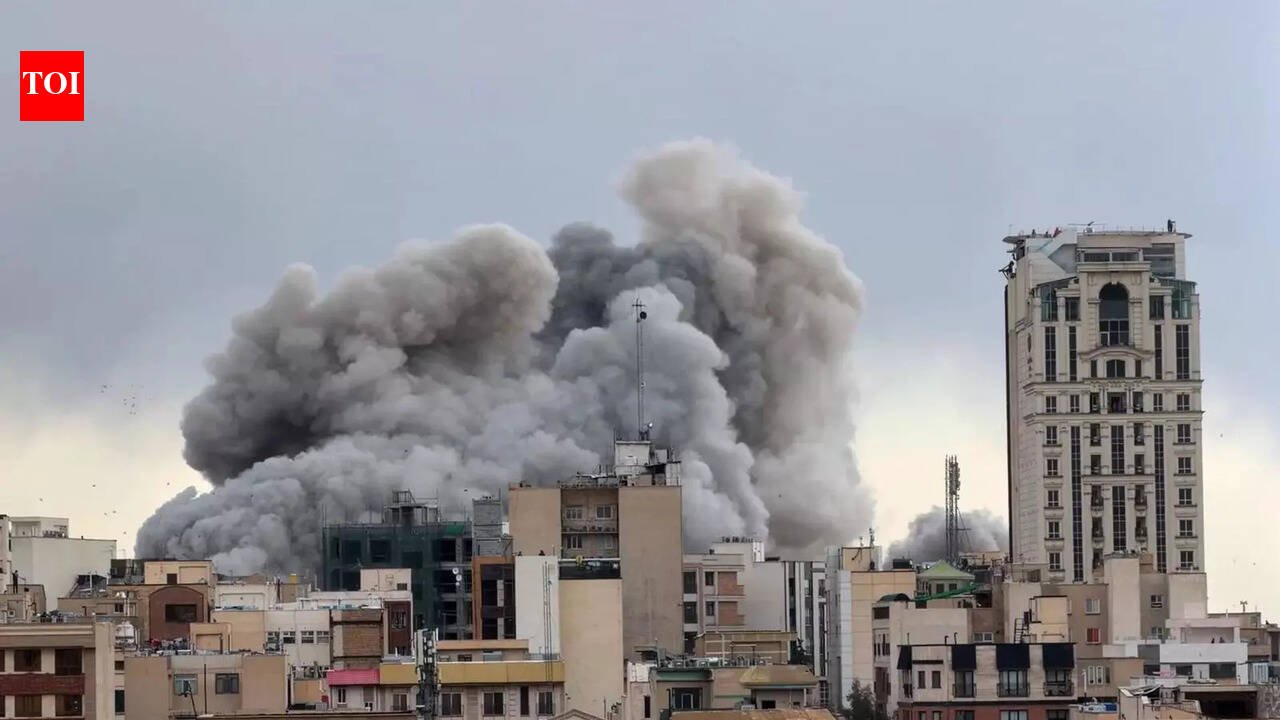
Separately, Iran also warned that it could target economic centres and banks linked to US and Israeli entities across the region.A spokesperson for Khatam al-Anbiya Headquarters, which the United Nations has described as owned by the Islamic Revolutionary Guard Corps, said the warning came after what Iran called an attack on one of its banks.“The enemy left our hands open to targeting economic centres and banks belonging to the United States and the Zionist regime in the region,” the spokesperson said.The official also warned civilians to stay away from such locations. “People of the region should not be within a one-kilometre radius of banks,” the spokesperson said.Meanwhile, the war between the United States, Israel and Iran entered its 12th day on Wednesday. Lebanon’s health ministry said Israeli strikes killed at least seven people across southern Lebanon early Wednesday, including five in the town of Qana. Residents of Tehran also reported some of the war’s “heaviest bombardment” overnight, with powerful explosions shaking neighborhoods and causing electricity outages across parts of the capital.


Source link