Breaking News
Dense fog: Air India issues travel advisory; warns of possible flight disruptions | India News


Dense fog: Air India issues travel advisory; warns of possible flight disruptions

NEW DELHI: Air India on Wednesday night issued a travel advisory alerting passengers about possible flight disruptions over the next few days due to dense fog conditions in northern and eastern India. The advisory highlights that Delhi along with several other airports in the region, may experience reduced visibility, which could affect flight operations. “Over the next few days, potential dense fog conditions resulting in poor visibility may impact flight operations at our primary hub in Delhi, and a few airports in northern and eastern India, with a cascading effect in some other cities across our network,” it said.Passengers were advised to check the status of their flights at Air India’s official website before heading to the airport, especially during the busy holiday season.The airline said it has taken multiple proactive steps to reduce the impact of fog-related disruptions, ensuring that operations remain as smooth as possible under challenging weather conditions.It said it has also launched its ‘FogCare’ initiative, which allows passengers booked on flights likely to be affected to receive advance alerts on their registered phone numbers. Under this scheme, travellers have the option to reschedule flights without extra charges or request a full refund if they prefer not to travel. “We sincerely solicit your patience and support to help us make your travel experience better. The safety and wellbeing of our guests and crew remain our top priority,” Air India said.


Source link

‘Waiting in vain’: Tharoor reacts to IND-SA match cancellation; cites Kerala’s AQI | India News


‘Waiting in vain’: Tharoor reacts to IND-SA match cancellation; cites Kerala's AQI
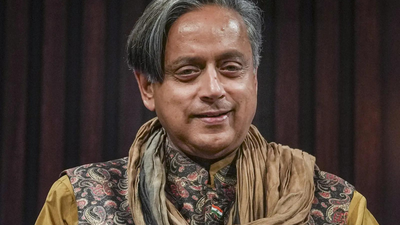
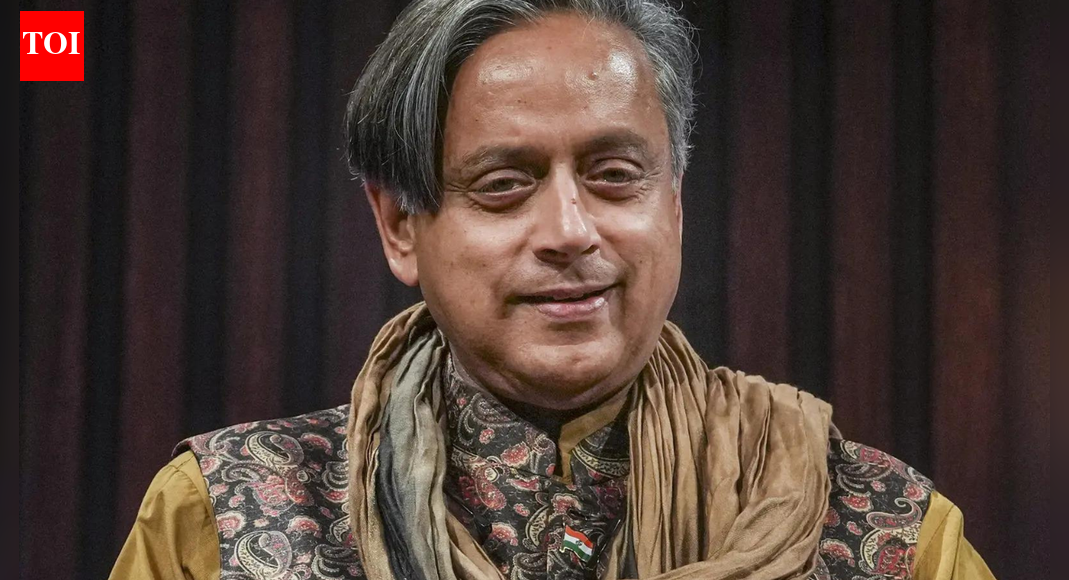
Shashi Tharoor (PTI image)

NEW DELHI: Congress MP Shashi Tharoor on Wednesday questioned the decision to host the fourth India–South Africa T20I in Lucknow amid dense fog and severe air pollution, after the match was eventually called off due to poor visibility.Tharoor suggested the game should have been scheduled in Thiruvananthapuram, citing significantly better air quality conditions there.In a post on X, the Congress leader said cricket fans were “waiting in vain” as hazardous conditions stalled play.

Delhi Pollution: China Shares Playbook On How To Fix Air Quality Amid Politics Over Accountability

“Cricket fans have been waiting in vain for the #INDVSSAODI to start in Lucknow. But thanks to dense smog, pervasive in most north Indian cities, and an AQI of 411, visibility is too poor to permit a game of cricket. They should’ve scheduled the game in Thiruvananthapuram, where AQI is about 68 right now!” he wrote.India was scheduled to play the fourth match of the five-T20I series against South Africa at the Ekana Cricket Stadium. However, the toss was repeatedly delayed as thick fog enveloped the venue, forcing umpires to conduct multiple ground inspections through the evening.Fans expressed their disappointment following the announcement of match cancellation. With visibility failing to improve even after several assessments, match officials eventually called off the game. Both teams remained in their dressing rooms for most of the evening as conditions worsened after sunset. The fifth and final match between the two countries will be played at the Narendra Modi Stadium in Ahmedabad on Friday.The India Meteorological Department had earlier issued an orange alert for very dense fog in several parts of Uttar Pradesh, with visibility at the stadium severely affected. Former cricketers on the broadcast had warned that delaying the start could make it even harder to complete the match, as fog typically intensifies later in winter evenings.The washout came as an added setback for India, with vice-captain Shubman Gill ruled out of the match due to a toe injury sustained during training. Sanju Samson was expected to open the innings in his absence.India continues to lead the five-match series 2–1 against South Africa.


Source link

Goa nightclub blaze: Luthra brother demands mattress in custody citing back pain; advocate says he is medically fit | India News


Goa nightclub blaze: Luthra brother demands mattress in custody citing back pain; advocate says he is medically fit
Luthra brothers (File photo)

NEW DELHI: Advocate Vishnu Joshi, representing a victim’s family in the Goa nightclub fire case, on Wednesday said that one of the Luthra brothers requested a Dunlop mattress during police remand.Joshi explained that the court carefully considered the brothers’ health claims before granting custody. Speaking to reporters, he said, “Today, when the Goa Police presented them in court, one accused, during their arguments, claimed he had spinal issues and other health problems. He requested that they be provided with a Dunlop mattress during their police remand. The state strongly opposed this… Their pre-medical examination showed them to be perfectly fit.He added that the duo had attempted to evade legal proceedings since fleeing India.

Interpol Blue Notice Explained: How CBI Tracks Absconding Luthra Brothers In Goa Nightclub Fire Case

“Since these people (Luthra brothers) absconded and fled the country, they have been employing tactics to somehow escape. First, they filed an anticipatory bail application on vague grounds in the Rohini Court, even though that court had no jurisdiction… But that bail application was rejected. Since then, they have been trying wherever they get a chance to obtain some kind of relaxation,” Joshi said.Joshi explained that the court carefully considered the brothers’ health claims before ordering custody. “The brothers claimed to be suffering from back pain. The court considered all submissions and directed the police to first conduct a pre-medical examination and re-examination. No medical necessity was found, following which the court, exercising its full authority, granted five days of police remand,” he said.The Luthra brothers, owners of the Birch by Romeo Lane nightclub in Arpora, were remanded to five-day police custody by the Mapusa Judicial Magistrate First Class (JMFC) court. They were brought back to Goa from Thailand following their deportation and produced before the court after undergoing multiple medical examinations.After landing at Manohar International Airport, Mopa, under police escort around 10.45 am, the duo was taken to a primary health centre in Siolim and then to the District Hospital in Mapusa. The court directed fresh medical examinations before ordering the five-day custody to allow investigators to question them regarding alleged safety lapses at the club.The blaze broke out on December 6 around 11.45 pm during a crowded event at the nightclub, when electric firecrackers allegedly struck the wooden ceiling. The incident claimed the lives of 25 people, including tourists and staff, while several others were injured.Police said the brothers fled India hours after the incident on December 7, leaving for Thailand while rescue operations were under way. Goa Police launched a nationwide and international manhunt, issued a lookout circular and sought an Interpol Blue Notice.Following their detention by Thai authorities for illegal stay and the suspension of their passports, the brothers were deported to India on emergency travel documents. They landed at Delhi’s Indira Gandhi International Airport on Tuesday and were arrested by Goa Police, who obtained a 48-hour transit remand from a Delhi court to facilitate their return to Goa.They have been booked under several provisions of the Bharatiya Nyaya Sanhita, including culpable homicide not amounting to murder and negligence. Investigators have also arrested several others linked to the nightclub’s operations and are probing allegations that the venue was operating with expired licences and without mandatory safety clearances.


Source link

‘Make informed decisions’: DGCA cautions students headed abroad for pilot training | India News


'Make informed decisions': DGCA cautions students headed abroad for pilot training

NEW DELHI: India has sounded a caution for students headed abroad for pilot training. The Directorate General of Civil Aviation (DGCA) has issued a notice for such students and their parents that it “has no role or responsibility in the regulation, oversight, quality, progress or completion of pilot training undertaken at organisations/ institutions situated abroad and approved by other states (countries)”.“Any issues arising out of training delays, interruption of training, non-completion of flying hours, change in training schedule, or any administrative delays at such foreign based training organizations are the matters solely between the student and the concerned institution and DGCA India has no role of any kind in this. Refund of fees, financial disputes, change in terms of training, or any contractual disagreements between the student and the foreign based training organizations are outside the purview of DGCA,” the notice says.“DGCA shall not be responsible or liable for any accident, incident, safety, injury, insurance claim or loss occurring during the course of training abroad. 5. Before enrolling for pilot training outside India, students are strongly advised to conduct due diligence at their level on the FTO’s approvals, safety record, training quality, fees, refund policy, and contract/agreement terms,” it adds while advising students and their parents/ guardians “to exercise due caution and make informed decisions.”India enables conversion of pilot licenses issued by other ICAO contracting states into Indian pilot licenses. “To avail this provision, a number of Indian nationals (students) enrol themselves every year to foreign based Flying Training Organisations (FTOs) approved by concerned State’s Civil Aviation Authorities, for undertaking pilot training courses.”


Source link

Nuclear Energy Bill 2025: Lok Sabha clears ‘SHANTI’ bill as opposition walks out; paves way for entry of private players | India News


Nuclear Energy Bill 2025: Lok Sabha clears 'SHANTI' bill as opposition walks out; paves way for entry of private players

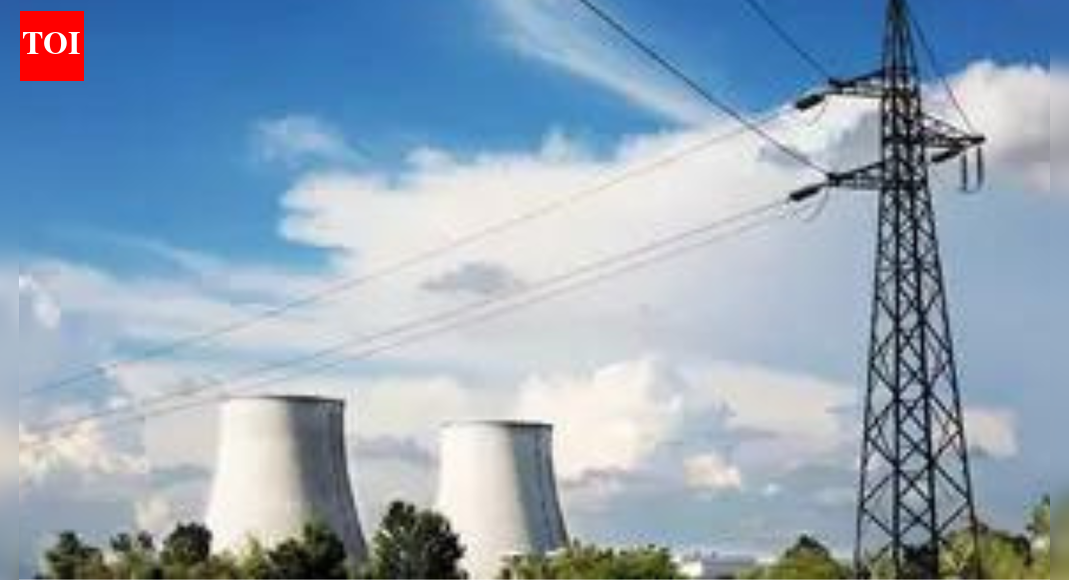
NEW DELHI: The Lok Sabha on Wednesday gave its nod to the the nuclear energy bill called the “Sustainable Harnessing and Advancement of Nuclear Energy for Transforming India Bill (SHANTI), 2025”. The bill was passed as opposition staged a walkout, during the ongoing Winter Session.The amended bill was tabled in the lower house, with introduction by MoS for department of atomic energy Jitendra Singh in the House on Monday, signifying a policy shift in the atomic sector operations. The bill allows entry of private players into the industry, something that was reserved for government enterprises till now. Singh said that it provides for “a pragmatic civil liability regime for nuclear damage and to confer statutory status to Atomic Energy Regulatory Board.The proposed legislation further aims to facilitate significant growth in nuclear energy and its applications across multiple sectors. This aligns with country’s target to establish 100GW of nuclear power capacity by 2047. The law introduces fresh regulatory provisions encompassing updated safety protocols, a specialised nuclear tribunal for resolving disputes, and modifications to the nuclear liability framework to limit risks and encourage investments.The proposed legislation permits private enterprises and their collaborative ventures to seek authorisation for establishing and running nuclear facilities, as well as transporting nuclear fuel. However, crucial operations including uranium enrichment, spent fuel handling and heavy water manufacturing shall continue to be exclusively managed by the Central government. The Centre will maintain oversight of radioactive materials and radiation-producing apparatus to ensure proper safety standards.


Source link

AI in education: Helping students learn or doing the thinking for them? | India News


AI in education: Helping students learn or doing the thinking for them?

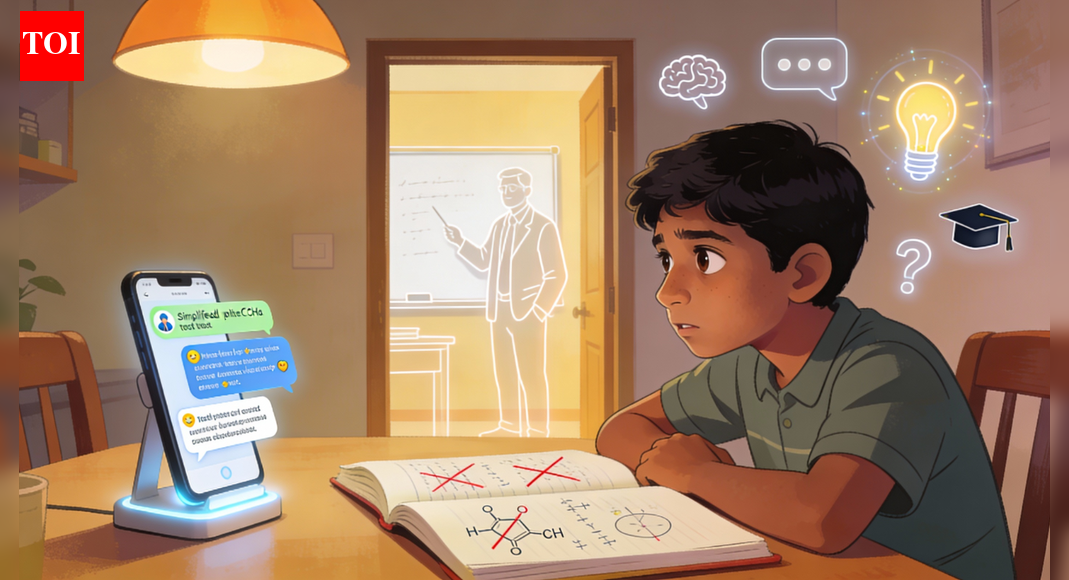
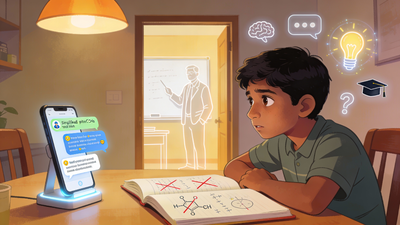
On an evening in Bengaluru, 14-year-old Aarav sits at his dining table, staring at a chemistry problem. His notebook lies open. Half the page is crossed out. His next tuition class is two days away.Instead of waiting, Aarav picks up his phone. “Explain this like I’m new to chemistry,” he types into an AI chatbot.The reply appears within seconds. It explains the steps in simple terms. Aarav asks again, this time for a real-world example. The explanation changes. He asks a third time. The chatbot does not rush or judge. It explains again.The next morning, Aarav goes to school. His teacher does not ask for the answer. She asks him to explain the process.This quiet exchange between a student, a machine, and a teacher captures where education stands today. Artificial intelligence is no longer a future idea debated in policy rooms. It already shapes how students study and how teachers teach.Yet this instant access carries a risk. When explanations are always available, confusion does not linger. Without that pause, understanding may never fully form.The real question is no longer whether AI belongs in education. It is how it is used, where it fits, and who remains in control.

What AI in classrooms looks like

AI in education does not mean robots replacing teachers. In practice, it appears in ordinary and often invisible ways.Most students use generative AI tools such as ChatGPT, Gemini, Grammarly, QuillBot, Canva Magic Design, and Gamma. They use them to simplify textbook language, clear doubts, create summaries, practise answers, and plan essays. For many, AI now acts as a round-the-clock study companion.These tools rely on generative artificial intelligence, or Gen AI. These systems produce original content—text, images, audio, or code—based on user prompts. Powered by large language models (LLMs), they analyse large datasets to generate human-like responses. Unlike earlier education software that retrieved information, Gen AI constructs answers. Its fluency can hide errors, bias, or weak reasoning.Adaptive learning platforms form another layer. Schools and coaching centres use them to track how students respond to questions and adjust lessons in real time. When students struggle, the software revisits basics. When they perform well, it raises the level. The goal is personalisation in classrooms where individual attention remains limited.

.

Teachers also use AI tools such as MagicSchool AI and Eduaide.AI. These help with lesson plans, worksheets, quizzes, and performance analysis. Used well, AI acts as a support system, not a substitute. It helps teachers focus their time where guidance matters most.Together, these tools respond to learners in real time. That marks a shift no earlier education software achieved.

Are students learning, or outsourcing thinking?

Students adopted AI faster than schools expected. Many now turn to AI before textbooks or teachers, especially for homework and exam revision. For some, AI has become the first step, not the last option.A 2024–25 report by the Center for Democracy and Technology found that 86 percent of students and 85 percent of teachers used AI during the school year. Students most often used it for tutoring and for college or career advice.This raises a harder question. Are students learning, or are they handing over the work of thinking?A Class 10 student preparing for board exams describes the change in her study habits.“Yes, AI has changed how I study. I often know the answer but struggle to write it well. AI tools help me phrase answers by giving templates and refining my responses.”Used with care, AI can support learning. It lets students revise at their own pace, return to hard topics without embarrassment, and practise independently. For students without access to personal academic support, AI can reduce gaps.

Is AI replacing critical thinking?

When answers arrive instantly, something subtle disappears. The struggle with confusion fades. That struggle is not a flaw. It is part of learning. Confusion forces students to pause, test ideas, and connect concepts. Without that pause, understanding stays shallow.Learning chess offers a clear example. An app that suggests the best move may help you win. It does not teach strategy. You follow instructions without knowing why they work. Real learning happens when players make mistakes and build intuition over time.Research from higher education signals concern. Studies show that students who rely on large language models for writing and research invest less mental effort. They often show weaker reasoning than peers who use traditional search methods. AI reduces effort, but it can also block deeper thinking.Other studies find that students using AI engage with fewer ideas. Their analysis becomes narrow and sometimes biased. When a clear answer appears quickly, students explore fewer alternatives and challenge fewer assumptions.Searching the internet still demands effort. Students must evaluate sources, interpret information, and decide how to use it. Generative AI often delivers finished responses. When used without reflection, it can replace the work of thinking.Critical thinking—the ability to question, weigh evidence, and form independent judgments—remains human. The risk lies not in using AI, but in letting it replace judgment.

“I’m not here to replace teachers or do the thinking for students. My purpose is to support learning—breaking down complex ideas, personalising practice, and helping students explore at their own pace. The real understanding still comes from human guidance, curiosity, and critical thinking.”

AI on it’s role in classrooms

AI in homeschooling: Help or hollow guidance?

AI has become a common tool in homeschooling. Many parents use it to save time on lesson planning, grading, and practice. AI tools can also explain topics and offer basic tutoring, which makes homeschooling more flexible and easier to manage.Homeschooling allows families to move at their own pace, but it also demands time and effort. AI can ease that burden by helping parents create lesson plans, explain ideas at different levels, and design worksheets or quizzes. If a child struggles with a topic, AI can repeat the explanation without strain. For working parents, this support helps maintain routine.But AI has clear limits.AI has no training in teaching methods. It does not understand how children learn or how skills develop over time. It pulls ideas from online sources but cannot judge their quality or suitability for a specific child.Parents do not need teaching degrees to homeschool. Still, when they face unfamiliar subjects, experienced teachers remain the better guide. Educators design curricula based on classroom experience and tested methods. That human judgment carries more weight than AI-generated material.AI also falls short in assessment. It gives broad feedback that ignores a child’s voice, effort, and progress. It cannot explain why a student struggles or recognise growth. In homeschooling, adults must stay in control. Children still need human guidance and care, that responsibility cannot belong to a machine.

The human cost: connection in the age of convenience

“Earlier, students came to me with doubts,” says a middle-school science teacher at a CBSE school in Pune. “Now they come with answers, and I have to check if they understand them.”Academic concerns are not the only issue. Connection is also at stake.The Center for Democracy and Technology report found that half of students felt less connected to teachers when AI entered the classroom. Many teachers worried about weaker peer interaction. Parents share this concern.In a country like India, where teachers are not merely instructors but are often revered as gurus who shape lives, this shift feels especially profound. The relationship between teacher and student has long carried emotional and moral weight, built on respect, guidance, and personal connection.Classrooms do more than transfer information. They teach collaboration, debate, empathy, and trust. If AI becomes the main link between students and knowledge, the human fabric of education may thin.For this reason, many experts stress one point: AI must remain a tool, not a teacher.

Why banning AI misses the point

Some schools tried to ban AI in response to plagiarism fears. These bans rarely work.Students continue to use AI outside school, often without guidance. Teachers end up enforcing rules that ignore reality.As researchers at the Harvard Graduate School of Education argue, denying AI’s presence does not protect learning. It avoids responsibility. Students already use these tools. What they need is direction.Across research and classrooms, a practical framework has emerged.

  • AI should support, not replace: AI works best when it reduces routine work and supports different learning needs. Judgment and explanation should remain human.
  • AI literacy must be taught: Students need to learn how to ask good questions, check accuracy, spot bias, and understand limits.
  • Assessment must change: Schools should value reasoning, process, and application over polished answers. Oral exams, in-class work, and reflection matter more.
  • Teachers should use AI with students: Examining AI responses together and questioning them in class shows students how to think critically.

As one educator puts it, the goal is not to stop students from using AI. It is to stop AI from doing the thinking for them.

A hybrid, human-centred future

The classroom of 2030 will not lack teachers. It will not revolve around AI. It will blend both.In this model, AI handles routine tasks and offers personal support. Teachers focus on discussion, creativity, ethics, and social learning. Students learn how to question AI, not just use it.Once students build healthy AI habits in school, higher education must continue that work. Universities can no longer treat AI as new. Curricula must reflect daily use.The workplace faces the same shift. Employers will need to invest in AI literacy to strengthen judgment and productivity. Every field will feel this change. How society responds will shape the next century.Back at his dining table, Aarav does not see AI as risky or radical. For him, it listens when he feels stuck. What matters is what follows—when a teacher asks him to explain, when thinking is required, and when learning becomes human again.



Source link

‘Our manufacturing is declining’: Rahul Gandhi visits BMW factory in Munich, takes guided tour – watch | India News


'Our manufacturing is declining': Rahul Gandhi visits BMW factory in Munich, takes guided tour - watch

NEW DELHI: Congress leader Rahul Gandhi on Wednesday visited the automobile giant BMW’s headquarters in Germany’s Munich and took a tour of the BMW Welt and BMW plant.In a social media post, shared by Congress on X, Rahul was seen inspecting several cars and bikes.“He (Rahul) was pleased to see TVS’s 450cc motorcycle, developed in partnership with BMW—a proud moment to witness Indian engineering on display,” the party wrote on X.“Manufacturing is the backbone of strong economies. Sadly, in India, manufacturing is declining. For us to accelerate growth, we need to produce more – build meaningful manufacturing ecosystems, and create high-quality jobs at scale,” it added.In the video, Rahul also attacked the Centre and claimed that “India’s manufacturing is declining which actually should be going up.”“India needs to start producing. Production is the key for the success of any country. And our manufacturing is declining which actually should be going up,” Rahul said.This comes as Rahul is visiting Berlin, where he will attend a major Indian Overseas Congress event on December 17 and will meet IOC leaders from across Europe.Indian Overseas Congress (IOC) has described the visit as a significant outreach initiative aimed at strengthening the party’s global engagement. The IOC announced that Rahul Gandhi will address the Indian diaspora in Berlin on December 17, where Presidents of IOC chapters across Europe will gather to discuss NRI issues, the Congress Party’s strengthening, and strategies to expand the party’s ideological reach.


Source link

‘Feels like home’: Rousing welcome for PM Modi in Ethiopia; key quotes from Parliament address | India News


‘Feels like home’: Rousing welcome for PM Modi in Ethiopia; key quotes from Parliament address

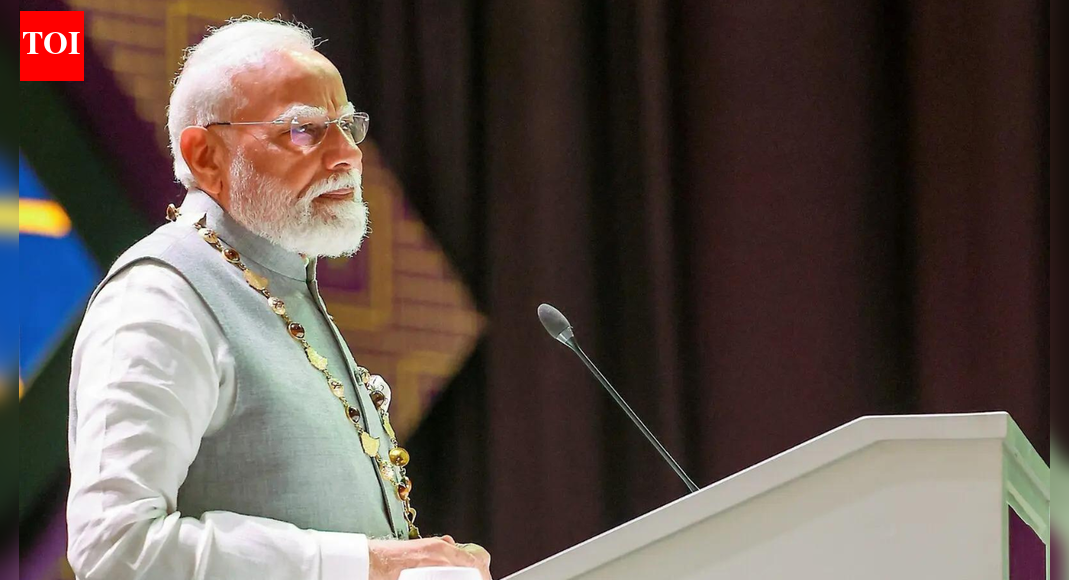
NEW DELHI: Prime Minister Narendra Modi on Wednesday hailed the relations between India and Ethiopia as he addressed the joint session of the Parliament of Ethiopia.This is the 18th parliament in the world where PM Modi addressed the parliamentarians.

Ethiopia Confers Top National Honour On PM Modi, Citing Visionary Leadership And Global Impact

Here are the top quotes from his address

  • It is a moment of a great privilege for me to stand before you today. It is wonderful to be here in Ethiopia – The land of lions.
  • On behalf of 1.4 billion people of India, I bring greetings of friendship, goodwill and brotherhood.
  • India’s national song ‘Vande Mataram’ and Ethiopia’s national anthem, both refer to our land as the Mother. They inspire us to take pride in the heritage, culture, beauty and protect the motherland.
  • When the wheel of the state moves in harmony with the people, the wheel of progress moves forward with hope and purpose. Through you, I am also speaking to farmers in the fields, to entrepreneurs building new ideas, to proud women leading communities and institutions, and to the young people of Ethiopia who are shaping the future.
  • I come to you with big respect for your Parliament, for your people and your democratic journey…On behalf of 1.4 billion people of India, I bring greetings of friendship, goodwill and brotherhood.
  • In this great building, your laws are shaped, here the will of people becomes will of the state, and when the will of the state is in harmony with the will of the people, then the wheel of programs moves forward. Through you, I am also speaking to your farmers in the fields, to entrepreneurs building new ideas, to the women leading communities, and to the youth of Ethiopia who are shaping the future.
  • Yesterday, I was also honoured to receive ‘The Great Honor – Nishan of Ethiopia’ from my dear friend Prime Minister Abiy Ahmed Ali. I accept this award with folded hands, with humility on behalf of the people of India.
  • India and Ethiopia share warmth in climate as well as in spirit. Nearly 2000 years ago, our ancestors built connections across the great waters. Across the Indian Ocean, merchants sailed with spices and gold, but they traded more than goods; they exchanged ideas and way of life. Ports like Addis and Dholera were not just trade centres, but bridges between civilisations. In modern times, our relationship enters a new era, as Indian soldiers fought alongside Ethiopians for the liberation of Ethiopia in 1941.
  • Science has traced some of the earliest footprints of our species in Ethiopia; we share a common origin, whether we live in Addis Ababa or Ayodhya, if our beginning was shared, then our destiny must also be shared.
  • “India sent medicines and vaccines to more than 150 countries during COVID-19. It was India’s proud privilege to supply Ethiopia with over 4 million vaccine doses.


Source link

India-Russia defence ties: IAF hosts joint Exercise AviaIndra-2025; bilateral cooperation, aerospace synergy in focus | India News


India-Russia defence ties: IAF hosts joint Exercise AviaIndra-2025; bilateral cooperation, aerospace synergy in focus

NEW DELHI: The Indian Air Force (IAF) is hosting Exercise AviaIndra-2025, a joint exercise with the Russian Federation Aerospace Force (RFASF), from December 15 to 22. The exercise reflects the long-standing Indo-Russian relationship and continues the AviaIndra series, which began in 2014.Personnel from both forces will conduct joint flying operations on Su-30 MKI, Tejas, IL-78 aircraft, and Mi-17 helicopters.

Russia Confirms Su-57 Fighter Jets, S-400 Deal On Agenda Ahead of Vladimir Putin’s India Visit

IAF said the joint air exercise provides an opportunity to enhance bilateral cooperation, mutual understanding, and aerospace synergy between the two nations.In a post on X, the IAF wrote: “The #IAF is hosting Exercise AviaIndra-2025, a joint exercise with the Russian Federation Aerospace Force (RFASF) from 15–22 Dec 2025. The exercise reflects the long-standing Indo-Russian relationship and continues the AviaIndra series which began in 2014. Personnel from both forces will conduct joint flying operations on Su-30 MKI, Tejas, IL-78 and Mi-17 helicopters, sharing best practices and lessons learnt. It provides an opportunity to enhance bilateral cooperation, mutual understanding and aerospace synergy.”Earlier this month, India and Russia agreed to further enhance their expansive defence partnership during Russian President Vladimir Putin’s visit to India, including collaboration in niche military technologies and stronger defence-industrial cooperation.Defence minister Rajnath Singh and his Russian counterpart Andrei Belousov emphasized that ties between the two countries are built on “a deep sense of trust, common principles and mutual respect.” They also signed a protocol outlining “ongoing and prospective areas” of defence cooperation, reinforcing the strategic and long-standing military relationship.


Source link

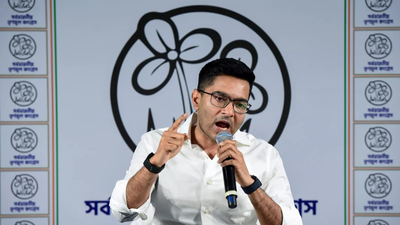
‘Jhukta wahi hai …’: TMC MP Abhishek Banerjee’s ‘Kumbh’ retort to chaos at Messi’s Kolkata event; takes dig at BJP | India News


'Jhukta wahi hai …': TMC MP Abhishek Banerjee’s ‘Kumbh’ retort to chaos at Messi’s Kolkata event; takes dig at BJP

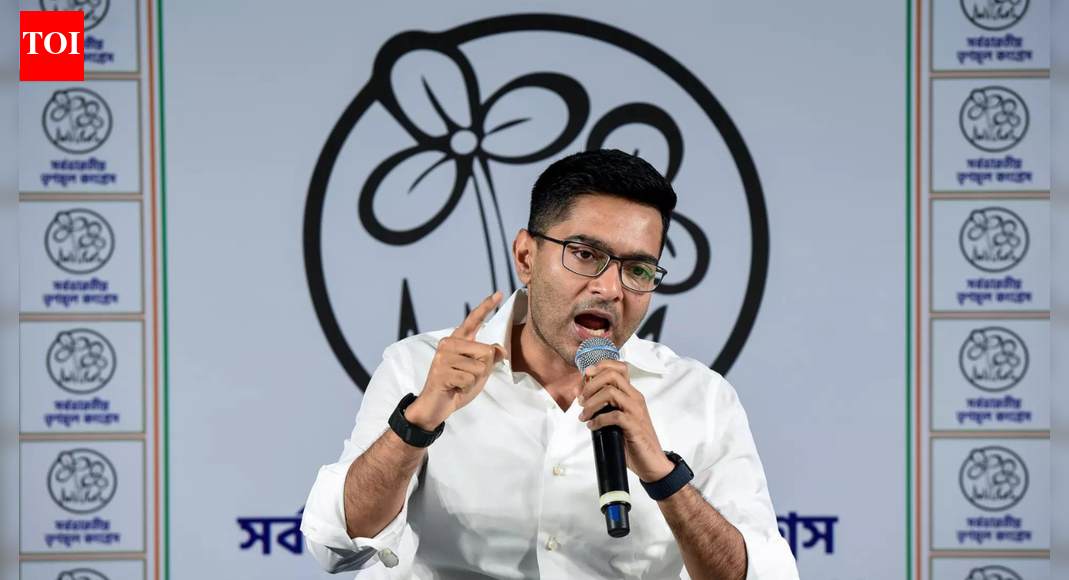
NEW DELHI: Trinamool Congress MP Abhishek Banerjee on Tuesday defended the West Bengal government’s actions after chaos erupted during football legend Lionel Messi’s appearance at the Salt Lake Stadium in Kolkata.Banerjee said West Bengal chief minister Mamata Banerjee apologised within an hour of the incident, while other state governments had not owned responsibility for incidents such as the Kumbh stampede and the New Delhi railway station stampede.

From Kolkata Chaos to Delhi Celebration: Lionel Messi’s G.O.A.T India Tour At A Glance

“In states ruled by the BJP, so many people died during the Kumbh. So many people died in the stampede at New Delhi railway station — did you question them about that? Did you question Yogi Adityanath? What happened in Bengal — the chief minister apologised within one hour,” the TMC said.“Jhukta wahi hai jisme jaan hai. Akad to murdon ki pehchaan hai (Only those who have life in them bow; rigidity is the mark of the dead). We have bowed before the people. Action is being taken against everyone against whom there are allegations. That is why the BJP loses, and the Trinamool defeats them,” he added.Messi’s Kolkata appearance, the first stop of the GOAT Tour 2025, ended in chaos. What was meant to be a celebration of the World Cup-winning superstar in a football-loving state turned chaotic as VIPs and politicians on the pitch sparked fan frustration, with many attendees claiming they could barely see the footballer they had paid to watch.Angry fans resorted to vandalism at the stadium, alleging poor event management and criticising VIPs and politicians for hogging the football icon’s attention and time, to the extent that many fans did not even get a glimpse of Messi.Meanwhile, sports minister Aroop Biswas also resigned from his post on Tuesday following the chaos during Messi’s GOAT India Tour in Kolkata. The chief minister accepted his resignation.The state government also informed that a Special Investigation Team comprising IPS officers Piyush Pandey, Javed Shamim, Supratim Sarkar and Muralidhar has been constituted to conduct a thorough probe into the matter.The government has already served a notice to Director General of Police Rajeev Kumar, ordering him to clarify within 24 hours why such mismanagement and lapses occurred at the stadium and why proper coordination with concerned stakeholders, including the private organiser, was not carried out to ensure the smooth conduct of the event.


Source link