Breaking News
Draft roll done, 1.9cr in Bengal face notice over mapping, discrepancies | India News

Draft roll done, 1.9cr in Bengal face notice over mapping, discrepancies

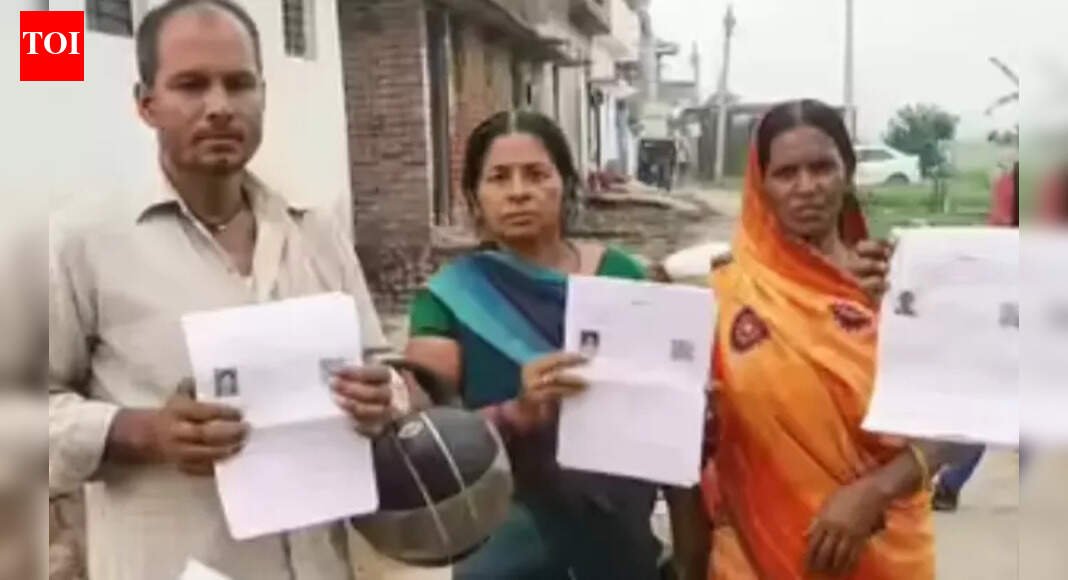
New Delhi: The draft electoral roll for West Bengal published on Tuesday, along with those for four other states/UTs under Phase 2 of special intensive revision (SIR) has 7.1 crore electors after 7.6% (58 lakh) of its 7.6-crore electorate as of Oct 29, 2025, was found to be dead, shifted/absent or enrolled at multiple places. Electoral registration officers (EROs) also found that 28 lakh enumeration forms were returned without mapping with the roll from the last SIR, while ‘logical discrepancies’ were found in forms submitted by 1.65 crore electors.This means around 1.9 crore electors in West Bengal will be issued notices by EROs, to explain the discrepancies and produce verifying documents. A hearing will be held to ascertain the elector’s whereabouts prior to the last SIR. Those who fail to satisfy the ERO will not make it to the final roll.WB roll deletions at 7.6%, Kol North tops with 26%These electors returned their forms with incomplete or incorrect details (the changed rule under SIR Phase 2 did away with the need to submit any documents).TOI has learnt that the ‘logical discrepancies’ include more than six progeny being linked to the same parent in the roll from last SIR, an elector aged more than 45 years who has never enrolled, ‘father name mismatch’, less than 15-year or over 50-year age difference with the parent, and less than 40-year age difference with the grandparent.Though the rate of deletions in West Bengal is 7.6% — comprising 3.2% dead electors, 4.3% shifted/absent and 0.18% enrolled at multiple places — the district-wise deletions ranged from a low of 3.3% in Purba Medinipur to 25.9% in Kolkata North and 23.8% in Kolkata South. Paschim Bardhaman saw 13.1% electors being struck off the district’s rolls.Significantly, the deletions in seven districts bordering Bangladesh are below the state average — only North 24 Parganas and South 24 Parganas reported higher deletions of 9.5%. However, the ‘father name mismatch’ rate in border districts is high: 15.9% in Malda, 15% in Uttar Dinajpur and 12.5% in Murshidabad. Even Darjeeling, bordering Nepal, has 13.8% ‘father name mismatch’ and Kalimpong, which adjoins Darjeeling, 19.9%.As for the other states/UTs where draft rolls were published on Tuesday, Rajasthan saw 41.8 lakh, or 7.6% of its 5.48-crore electorate as of Oct 29, being removed from the rolls. The deletions in both Goa and Puducherry were a little over 1 lakh; Puducherry saw the highest rate of exclusions at 10.1%, bringing down its electorate to 9.18 lakh from 10.2 lakh. Goa had 8.45% of its 11.8 lakh electors struck off the rolls, reducing its electorate to 10.8 lakh.In the small UT of Lakshadweep, around 2.47% of voters were found to be dead, shifted and duplicate electors, shrinking its electorate to 56,384 from 57,813.The list of dead, shifted/absent and duplicate voters has been shared with booth level agents (BLAs) of political parties and published on the CEO website and public offices. Claims and objections can be filed by the elector or BLAs till Jan 15, 2026. The notice phase, involving hearing and verification of eligibility documents, will continue up to Feb 7, 2026.The final roll for the five states/UTs will be published on Feb 14, 2026.
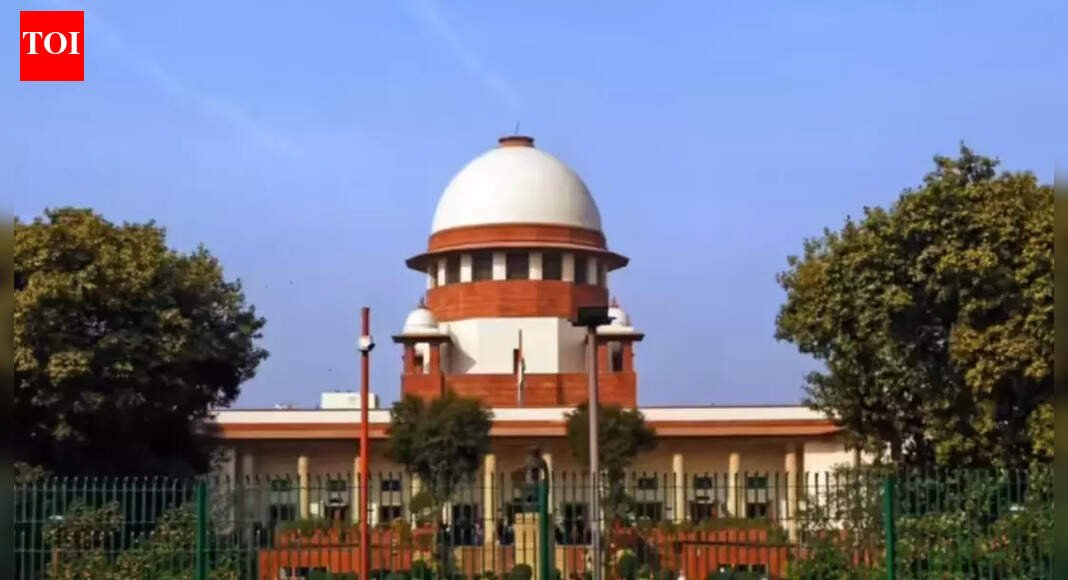
Source link

SC: Gangsters jump state to dodge arrest, need one agency for entire NCR | India News


SC: Gangsters jump state to dodge arrest, need one agency for entire NCR

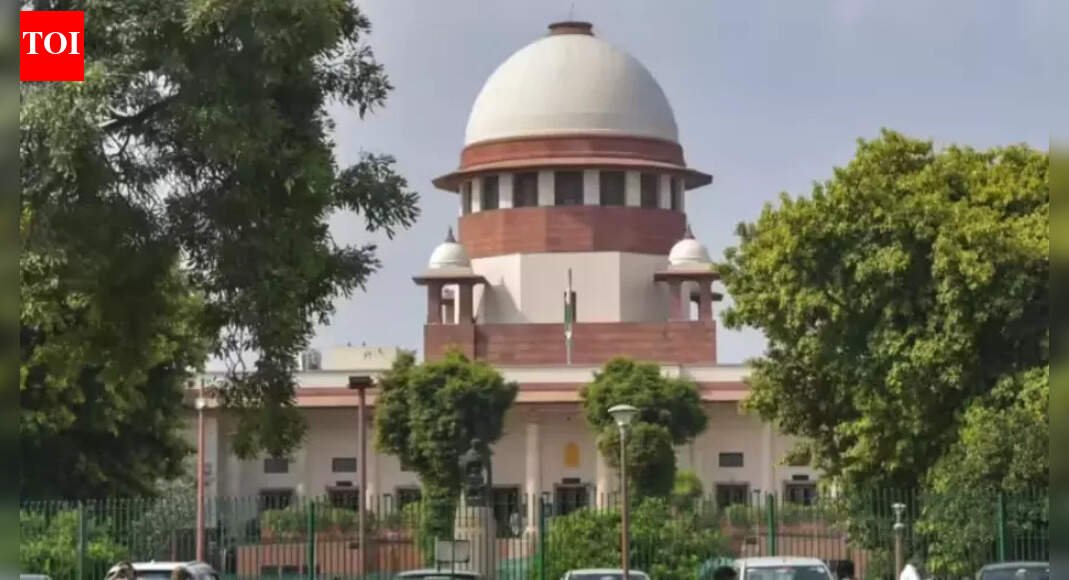
New Delhi: Taking note of an increasingly familiar pattern of gangsters moving across jurisdictions in Delhi and its surroundings, Supreme Court on Tuesday asked the Centre to consider enacting a legislation empowering a single agency to pursue organised crime syndicate members in Delhi and National Capital Region (NCR) states unhindered and produce them before a special court in Delhi, Noida, Faridabad or Gurgaon.“Why not a law to cater to the entire National Capital Region? Create exclusive special courts for central laws like UAPA, PMLA and NDPS Act in Delhi, Gurgaon or Noida, where the offences committed under the central laws would be tried irrespective of the location of the criminal incidents,” CJI Surya Kant told additional solicitor general Aishwarya Bhati.Gang members take undue advantage of jurisdiction issues: SCTaking stock of the progress made by the Centre and states towards constituting exclusive special courts to try offences probed by the National Investigation Agency (NIA), a bench of CJI Surya Kant and Justice Joymalya Bagchi highlighted the modus operandi of gangsters who commit crime in one state and move to another to dodge arrest, delay trial, and take advantage of the delay to get bail.“If a gangster commits 10 offences in Haryana, five in Rajasthan and two in Delhi, the NIA can be asked to investigate which would trigger invocation of the special law to enable trial of the accused in one court in NCR,” Justice Bagchi elaborated.Bhati suggested that SC could take this issue up suo motu and provide a framework. The bench said it is a legislative exercise.In its order, the bench said, “In matters relating to grave offences under central penal laws, members of organised criminal gangs take undue advantage of jurisdictional issues in NCR. For prompt police action, there should be a competent court at one location where such gangsters are tried. In absence of this, hardened criminals get the benefit of bail due to delayed trials at different locations, which may not be in the interest of society and the public... It would be desirable that an effective law is enacted to deal with such situations for optimum utilisation of the legal architecture.”SC had earlier directed that no existing court should be designated as special court as these exclusive special courts should be vested with trials of NIA cases and not saddled with routine workload.Bhati informed SC that financial approval has been received from the Centre to the proposal to reimburse states Rs 1 crore each for recurring and non-recurring expenditures towards establishment of exclusive special courts to try NIA cases.Additional solicitor general S D Sanjay informed the court that the Delhi govt has decided to set up 16 exclusive special courts in three months for trial of cases under the central penal law.


Source link

Banking system laxity a cause for cyber conning: SC | India News


Banking system laxity a cause for cyber conning: SC

New Delhi: The Supreme Court on Tuesday said laxity by banks resulting in siphoning of money from people’s accounts due to cyber fraud, including digital arrests, counts as deficiency of service and emphasised that govt and regulators must devise a mechanism to ensure that an alarm goes off when scammers attempt to con account holders, reports Dhananjay Mahapatra .Referring to an earlier disclosure by one of the probe agencies that people have so far been conned to the tune of Rs 3,000 crore through digital arrests and cyber heists, a bench of CJI Surya Kant and Justice Joymalya Bagchi said, “The staggering amount taken from people through digital arrest and cyber fraud is shocking. The banking system must have a mechanism to detect these laxities immediately when scamsters attempt to exploit it and raise a countrywide alarm.”This story continues on page 24 in the newspaper. For your reading convenience we have added it below.Stop over-the-counter sale of SIM boxes: SC to authoritiesAttorney general R Venkataramani said, “There are obviously some gaps because of which such scams are taking place. We are putting our heads together to attempt plugging these loopholes.” He said various proposals are under consideration of an inter-departmental ministerial committee to create a robust mechanism to prevent cybercrimes like digital arrest.Amicus curiae and senior advocate N S Nappinai told the court that similar cyber crimes are prevalent in the United Kingdom but more than 90% of the money is recovered and restored to the persons who were cheated. She said the govt and probe agencies must focus on the recovery of the siphoned amount and restore it to the cheated account holders.SC Advocates-on-Record Association president Vipin Nair said SIM boxes, each containing 400 SIMs, continue to be sold over the counter enabling scamsters to use different numbers from the same device to con people. This should be stopped immediately, he pleaded.The bench on Dec 1 had flagged the rampant breach of norms in issuance of SIM cards and said, “Facts brought on record so far reveal an alarming negligent and irresponsible approach of telecom service providers while issuing multiple SIM cards in one name. We direct the department of telecom (DoT) to submit a proposal for the consideration of SC, which may eventually be required to be implemented to prevent misuse of SIM cards.Nair said despite the directions, no corrective or regulatory steps have been taken by the authorities. The CJI-led bench asked the authorities to immediately address the issue and take all measures to stop over-the-counter sale of SIM boxes. Venkataramani said the CBI, which was entrusted with the probe into digital arrest cases across the country, has made good progress. The bench asked the AG to place the probe status report in sealed cover. The bench said if the CBI needed additional directions for a seamless investigation into all cases, it could approach the court.


Source link

Sessions court confirms 2 years’ jail for Maharashtra minister, brother | India News


Sessions court confirms 2 years' jail for Maharashtra minister, brother

Pune/Nashik: Conviction over securing a flat under a 10% EWS quota in 1995 by showing lower income has put a question mark over Manikrao Kokate’s continuation as an MLA and as a Maharashtra cabinet minister. A Nashik sessions court upheld Tuesday a Feb 20 trial court judgment convicting and sentencing the sports minister and NCP functionary, along with his brother Vijay Kokate, to two years of rigorous imprisonment in the housing quota cheating case. The siblings had secured two flats. The court, however, set aside the trial court’s direction to Maharashtra Housing and Area Development Authority and deputy collector to cancel the allotment of flats to the Kokate brothers and restore possession as earlier.Kokate represents Sinnar in rural Nashik. The ruling triggers the risk of “immediate disqualification” under the Representation of the People Act for sentences of two years or more, unless a higher court stays the conviction.Public prosecutor Sudhir Kotwal said the matter must now go to the high court. “Under the law, Kokate’s disqualification is certain unless he gets a suspension of his sentence and a stay on his conviction from the high court. Even with urgent circulation, this may take eight to 10 days. There is no bar on disqualification in the intervening period,” Kotwal said.Assembly speaker Rahul Narwekar said he had not yet received the order. Supreme Court ruling from 2013 states disqualification is immediate, despite a three-month window to appeal. Relief comes only if conviction itself is stayed.Kokate’s lawyer Avinash Bhide disagreed. “We have a month’s time to secure a stay and suspension from the high court. Even after that, the matter goes before the speaker,” Bhide said.After the trial court ruling, Kokate had secured bail and on March 5, a sessions court stay on conviction and sentence during pendency of appeal. That protection has lapsed. “Once a sessions court confirms conviction in appeal, it has no power to grant bail. The matter goes to the high court,” Kotwal said.The prosecution said the brothers applied for flats under the EWS quota, declaring annual income of Rs 25,000 each, below the Rs 30,000 eligibility ceiling. “Allotment relied on affidavits. When falsity emerged, onus lay on the deponents to prove otherwise,” Kotwal said. Prosecutors said Kokate failed to disclose improved finances even by 1995, citing documents showing supplies of 70 tonnes, 80 tonnes and 120 tonnes of sugarcane in 1993, 1994 and 1995 to the Kopargaon cooperative sugar mill, yielding substantial earnings. “This line weighed with the sessions court while affirming conviction and sentence,” Kotwal said. Opposition parties accused BJP-headed govt of double standards, citing the swift disqualification of Congress MP Rahul Gandhi after his 2023 defamation conviction and contrasting it with the continued tenure of Kokate. “Govt should immediately dismiss Kokate,” Maharashtra Congress chief Harshvardhan Sapkal said. NCP state president Sunil Tatkare said the party would decide its next course of action after discussing the ruling with party chief and deputy CM Ajit Pawar.


Source link

Goa cops arrest Luthra brothers in Delhi on arrival from Thailand | India News


Goa cops arrest Luthra brothers in Delhi on arrival from Thailand

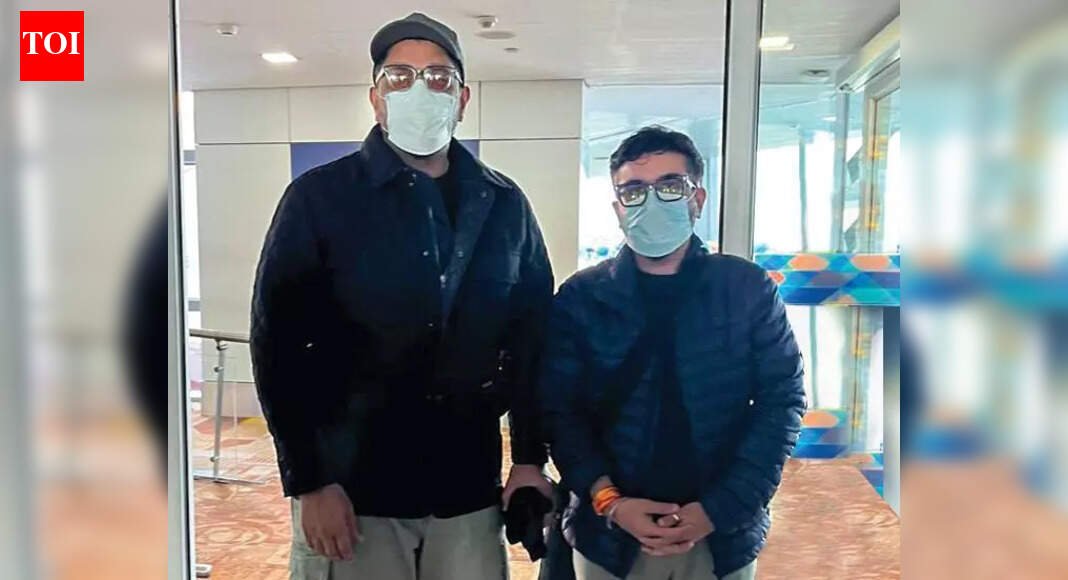
NEW DELHI: The 10-day-long cat and mouse game between Indian law enforcement agencies and the Luthra brothers finally ended on Tuesday as their aircraft touched down at Delhi airport at 1.45pm. The duo — Saurabh and Gaurav Luthra — was arrested by a team of Goa police at immigration.They will be flown to Goa on Wednesday morning after a Delhi court on Tuesday granted a two-day transit remand.“We have arrested Saurabh and Gaurav,” Goa director general of police (DGP) Alok Kumar told TOI.The brothers were sent back to India from Bangkok on an ‘emergency certificate’ on Tuesday morning as their Indian passports were suspended by the ministry of external affairs shortly after they flew to Thailand.Anjuna police will produce the Luthra brothers before a judicial magistrate first class (JMFC) at Mapusa on Wednesday to seek their custody for investigation.The duo had fled India on an IndiGo flight on Dec 7, hours after a deadly blaze led to the death of 25 people at their Arpora-based nightclub, Birch by Romeo Lane. They were staying at the Indigo hotel in Phuket and returned to India on an IndiGo flight as well.On Tuesday morning, the duo was spotted at the Bangkok airport wearing masks and surrounded by immigration security officials. They were allotted seats on either side at the very back of the aircraft with security personnel accompanying them. They were produced at the Patiala House Court in New Delhi at around 6.45pm where Goa police sought three days’ custody. The JMFC granted two days of transit remand. They were medically examined and taken back to the airport after that. The brothers folded hands and nodded when reporters asked them why they fled the country.“After taking custody of the deported Luthra brothers in New Delhi and on obtaining a transit remand, Goa police is bringing both the accused to the state. A police team is likely to land in Goa along with deported and arrested accused at around 11am on Wednesday,” Goa police’s public relation officer DySP Nilesh Rane said.Goa police had registered an FIR against them under various sections of the BNS, including culpable homicide not amounting to murder. Last week, a local court in Delhi had rejected the transit anticipatory bail of both the accused in connection with the case.Once a lookout notice was issued, the ministry of external affairs (MEA) decided to impound their passports, which meant that they were staying without valid travel documents in Thailand. India and Thailand signed a formal extradition treaty in 2013, which came into force on June 29, 2015.The duo was detained last week by Thai authorities for staying in that country illegally. A special team had subsequently gone to Phuket on Saturday to complete the deportation process. The brothers were then brought to the Bangkok detention centre. The Indian embassy in Thailand consequently issued an emergency certificate — a one-way travel document — to the Luthras since their passport was suspended by the Indian govt.So far, Goa police have arrested Gurgaon resident Ajay Gupta, 55, a partner of the Luthra brothers, New Delhi natives Rajiv Modak, 49, chief general manager, and Priyanshu Thakur, 32, gate manager, along with UP natives Rajveer Singhania, 32, bar manager, Vivek Singh, 27, general manager, and Bharat Kohli from Delhi.When the fire broke out at the nightclub at around 11.45pm on Dec 6, there were more than 150 tourists attending an event. A preliminary investigation by police and the directorate of fire services concluded that the fire broke out after electric firecrackers struck the wooden ceiling during the event.


Source link

Indo-Bangladesh border records highest infiltration cases in 2025: Govt data | India News


Indo-Bangladesh border records highest infiltration cases in 2025: Govt data

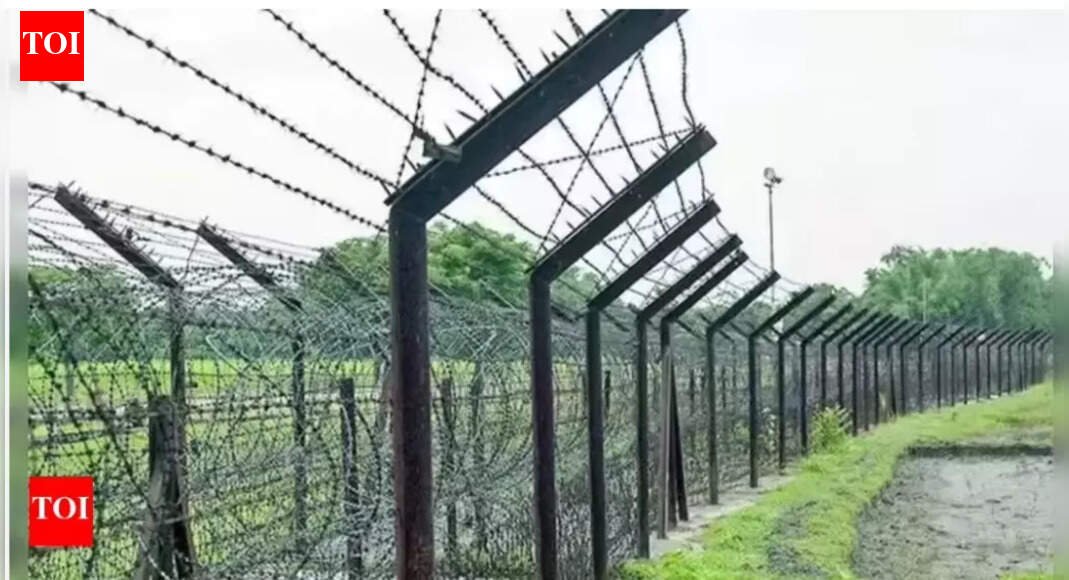
New Delhi: The Indo-Bangladesh border witnessed the highest 1,104 infiltration attempts among the country’s international borders, along with 2,556 arrests between January and November 2025, according to data provided by the government in the Lok Sabha on Tuesday.Also, 79% per cent of the border with Bangladesh and 93.2% of the border with Pakistan have been fenced.In a written reply, junior home minister Nityanand Rai said there 32 infiltration cases and 49 infiltrators were arrested on the Indo-Pakistan border this year till November. The Indo-Myanmar border saw 95 infiltration cases and 437 arrests and the Indo-Nepal and Indo-Bhutan border, 54 infiltration cases and 78 arrests in the first 11 months of this year. No infiltration cases were reported along the India-China border, the minister said.Rai said that since 2014, more than 8,500 infiltration attempts have been detected across India’s borders, while over 20,800 infiltrators have been arrested.The India-Bangladesh border, which is 4,096.70 km long, accounted for the bulk of these cases, with over 7,500 infiltration attempts and more than 18,800 arrests recorded between 2014 and 2024.


Source link

‘Gogo paper’ banned: Gujarat bars sale of rolling papers, pre-rolled cones; cites youth addiction | India News


'Gogo paper' banned: Gujarat bars sale of rolling papers, pre-rolled cones; cites youth addiction

NEW DELHI: Gujarat government on Tuesday imposed an immediate ban on the storage, sale, and distribution of rolling papers and pre-rolled cones, citing health risks, the state home department said.These ultra-thin paper sheets and cones are commonly sold at grocery stores and paan shops across the state. They are mainly used by tobacco smokers to roll cigarettes by filling raw tobacco inside.According to a notification issued by the home department, local media outlets and social organisations had raised concerns that these rolling papers, commonly known as “Gogo paper”, were also being used by youths and teenagers to smoke narcotic substances such as weed and charas.The notification said the rolling papers, which are sold in packets, contain harmful substances. These include titanium oxide, potassium nitrate, artificial dye, calcium carbonate, and chlorine bleach.Despite the harmful effects, the products were easily available at paan parlours and grocery shops, leading to the spread of addiction among young people, the notification said.The home department stated that the ban has come into force with immediate effect. Anyone found violating the order will be booked under section 223 of the Bharatiya Nyaya Sanhita, which deals with disobedience of government orders.


Source link

‘India will teach them lesson’: Assam CM slams Bangladesh leader; remark on NE states in focus | India News


'India will teach them lesson': Assam CM slams Bangladesh leader; remark on NE states in focus
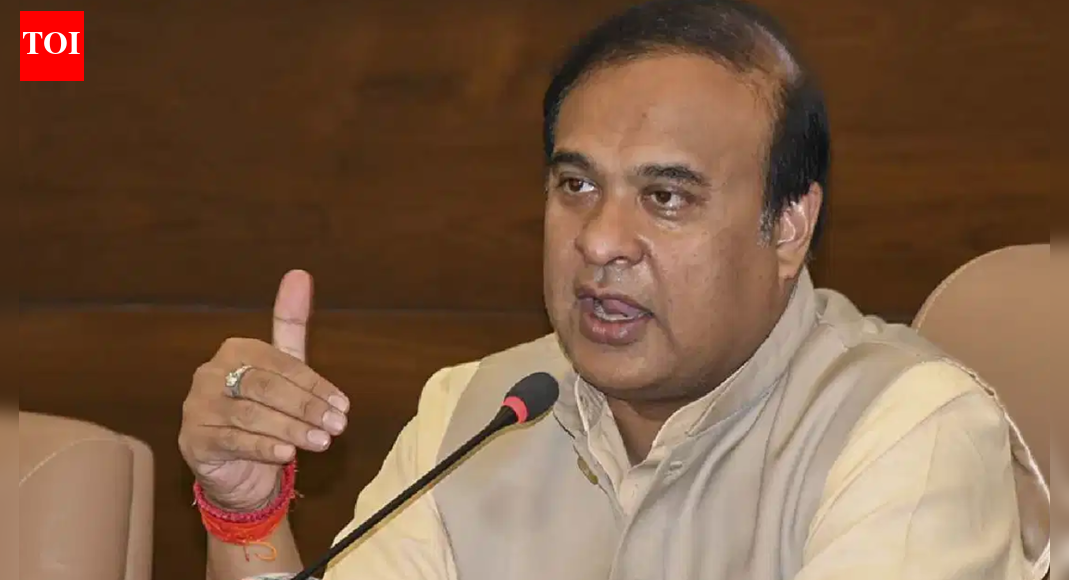
Assam CM Himanta Biswa Sarma (File photo)

NEW DELHI: Assam chief minister Himanta Biswa Sarma on Tuesday warned that India would not remain silent and teach a “lesson” if politicians in Bangladesh continued to make remarks about India’s northeastern region.His comments came a day after Hasnat Abdullah, a senior leader of the newly formed National Citizen Party, said Dhaka should “isolate” India’s northeastern states and support separatist elements in the region if New Delhi attempted to “destabilise” the neighbouring country.“For the last one year, statements have been coming repeatedly from that country (Bangladesh) that the states of northeast India should be separated and made a part of Bangladesh. We are a very big country, a nuclear nation and the world’s fourth-largest economy. How can Bangladesh even think about it?” Sarma told reporters, according to PTI.“This mindset should not be encouraged, and Bangladesh should not be helped much in any way. We should teach them a lesson that if they continue to behave in this way. We will not remain silent,” the BJP leader added.On Monday, Abdullah, a key leader of the student-led protests that brought down Bangladesh’s Sheikh Hasina government in August last year, claimed that India’s northeastern states were geographically “vulnerable” as they depend on the narrow Siliguri Corridor—also known as the “Chicken’s Neck”—for connectivity with the rest of the country.Hasina has been living in Delhi since fleeing Dhaka, and ties between the two neighbours have been at an all-time low since her ouster. Last month, an International Crimes Tribunal found her guilty and sentenced her to death for “crimes against humanity” during the protests. Hasina rejected the verdict, describing it as “politically motivated.”Dhaka has repeatedly sought the former prime minister’s extradition, a request New Delhi has said is “being examined.”Nobel laureate Muhammad Yunus, whose caretaker administration has been governing Bangladesh since the fall of Hasina’s government, has also repeatedly commented on India’s northeastern region, commonly known as the “Seven Sisters” after the seven states that constitute it.


Source link

Cash discovery row: SC agrees to hear Justice Varma’s plea against constitution of LS probe panel; lawyer flags ‘procedural lapse’ | India News


Cash discovery row: SC agrees to hear Justice Varma's plea against constitution of LS probe panel; lawyer flags 'procedural lapse'
Cash discovery row: Justice Yashwant Varma (File Photo)

NEW DELHI: The Supreme Court on Tuesday agreed to hear a plea by Allahabad high court’s Justice Yashwant Varma challenging the constitution of an inquiry committee set up by the Lok Sabha Speaker to probe corruption charges against him.A bench of Justices Dipankar Datta and Augustine George Masih issued notices to the Lok Sabha Speaker’s office and the secretaries-general of both Houses of Parliament, seeking their responses after senior advocate Mukul Rohatgi, appearing for Justice Varma, flagged a “procedural lapse” in the constitution of the Lok Sabha inquiry panel.Rohatgi submitted that the introduction of a motion in both Houses of Parliament to remove a judge requires the inquiry panel to be formed jointly by the Lok Sabha and Rajya Sabha, and cannot be constituted unilaterally by the Lok Sabha Speaker.“Where the notices of the motion are ‘given’ to the Houses on the same date, no committee will be constituted, unless the motion is being admitted in both Houses. And where such motion is admitted in both Houses, the committee shall be constituted jointly by the Lok Sabha Speaker and the Rajya Sabha Chairman,” PTI quoted Rohatgi as saying.In his plea, Justice Varma has also sought that the admission of the Lok Sabha motion to remove him be declared “contrary to law.”The matter has been posted for the next hearing on January 7.On March 14, large sums of currency were found at Justice Varma’s official residence in Delhi, where he was then serving as a high court judge. He was later transferred to the Allahabad high court in Uttar Pradesh. Following the discovery, then-Chief Justice of India (CJI) Sanjiv Khanna initiated an in-house probe into the allegations and set up a three-member panel, which submitted its report on May 4. The panel found Justice Varma guilty of misconduct.After receiving the report, the then-CJI asked Justice Varma to resign or face impeachment proceedings. Following the judge’s refusal to resign, the report was forwarded to President Droupadi Murmu and Prime Minister Narendra Modi.On August 7, the Supreme Court dismissed Justice Varma’s plea seeking to invalidate the in-house inquiry report. On August 12, Lok Sabha Speaker Om Birla constituted a separate three-member committee to probe the charges against the judge.


Source link

‘Bid to kill MGNREGA’: Priyanka Gandhi Vadra on government renaming jobs scheme; flags 3 changes | India News


'Bid to kill MGNREGA': Priyanka Gandhi Vadra on government renaming jobs scheme; flags 3 changes

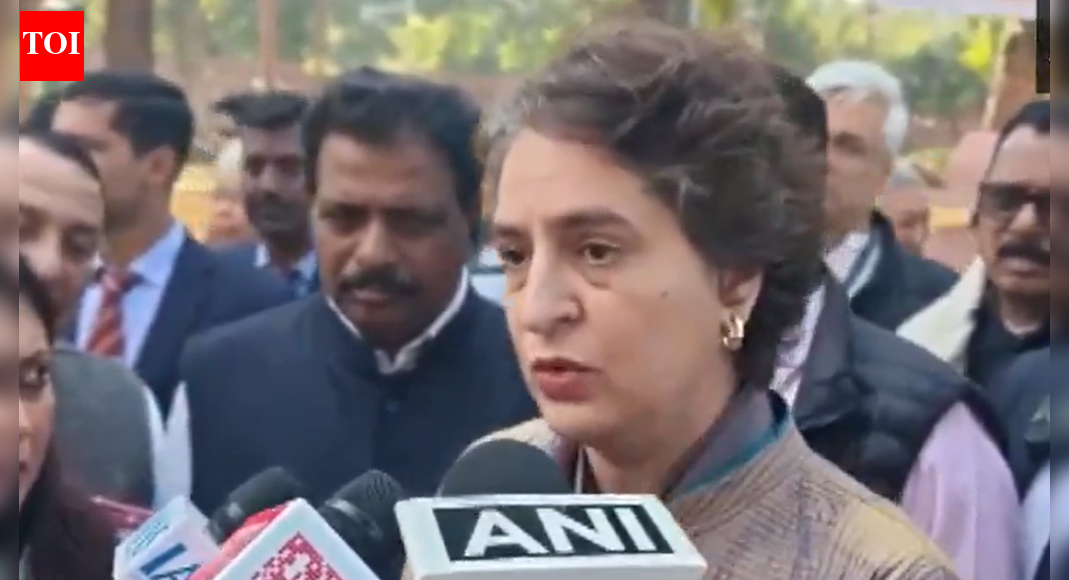
NEW DELHI: Congress leader Priyanka Gandhi Vadra on Tuesday accused the Centre of attempting to dismantle the Mahatma Gandhi National Rural Employment Guarantee Act under the pretext of renaming and restructuring it, warning that the proposed changes could eventually lead to the scheme being scrapped.Speaking during a protest against the proposed renaming of MGNREGA to G RAM G, Priyanka Gandhi said the government was “obsessed” with changing names and argued that such exercises lead to unnecessary expenditure. She said the rural employment scheme carries the name of Mahatma Gandhi, the Father of the Nation, and altering it amounts to disrespect.“This scheme is named after Mahatma Gandhi. He is the Father of the Nation and his name should not be insulted,” she said.Priyanka Gandhi also pointed out that MGNREGA was enacted with unanimous political consensus. “When this law was passed, there was not a single national party that opposed it. It was made with everyone’s consent,” she said, adding that the law was meant to guarantee 100 days of employment to the poorest sections of society.Questioning the government’s claim that it was expanding employment from 100 to 125 days, she said the proposal was misleading. “On the surface, it appears they are increasing workdays, but if you read it carefully, the scheme itself could come to an end,” she said, alleging that there were multiple provisions that could weaken or dismantle the programme.She criticised the proposed change in the funding pattern, noting that earlier the Centre bore 90 percent of the financial responsibility. “Now the Centre wants the work to continue but is shifting the burden onto states. Poor states will not be able to afford this, and eventually the scheme will collapse,” Gandhi said.“The truth is that in the garb of changing the name of the scheme, they want to scrap this scheme. Why do they want to change the name of this scheme? Mahatma Gandhi is the father of the nation,” she added.

  1. Renaming used as a cover to weaken or scrap MGNREGA

    “On the surface, it appears that only the name is being changed and the number of workdays is being increased from 100 to 125. But if one reads this carefully, there are 23 provisions through which this scheme can be weakened or even finished.”

    “The truth is that in the garb of changing the name of the scheme, they want to scrap this scheme.”

  2. Financial responsibility shifted from Centre to states

    “Earlier, 90 percent of the responsibility lay with the Centre to provide the funds.”

    “Once the Centre’s share is reduced, the burden will fall on the states. Poor states will not be able to afford this, and eventually the scheme will collapse.”

  3. Centralisation of decision-making, weakening Panchayati Raj

    “That decision is taken at the panchayat level by the gram pradhan.”

    “Now what will happen? These decisions will be made at the Centre. People sitting in Delhi will decide.”

    “The powers given to panchayats under the 73rd Constitutional Amendment, under the Panchayati Raj system, will be taken away.”

    Several opposition MPs staged a demonstration outside Parliament’s Makar Dwar and later gathered near the Mahatma Gandhi statue within the Parliament compound. Holding photographs of Mahatma Gandhi and accused the Centre of attempting to dismantle the rural employment scheme under the guise of renaming it. Samajwadi Party chief Akhilesh Yadav and other senior opposition leaders were present during the protest.

    Earlier in the day, Union agriculture minister Shivraj Singh Chouhan sought permission in the Lok Sabha to introduce the Viksit Bharat Rozgar and Ajeevika Mission (Gramin) Bill, 2025, also known as the G RAM G Bill, which seeks to replace MGNREGA.

    The proposed Bill guarantees 125 days of wage employment per rural household, up from the existing 100 days, for adult members willing to undertake unskilled manual work. The government has said the new framework aims to provide income security while creating durable and productivity-enhancing rural assets through a nationally coordinated development strategy.


Source link