Breaking News
IIT-Bombay steps into future with its own AI firm | India News


IIT-Bombay steps into future with its own AI firm

MUMBAI: The Indian Institute of Technology Bombay, long seen as a launchpad for India’s brightest startups, has quietly crossed an even more telling milestone. It incorporated a company of its own. This is not an incubated spinoff or a faculty-seeded venture, but an organisation owned and anchored by IIT Bombay itself.On Nov 7, 2025, BharatGen Technology Foundation was registered with the Registrar of Companies in Mumbai, carrying the Powai institution’s address as its own-an unmistakable signal of how India’s top engineering school plans to shape the future of artificial intelligence. BharatGen, the country’s first attempt to build a Large Language Model that mirrors India’s linguistic, cultural, and social diversity, first took shape last year after the Department of Science and Technology (DST) laid the groundwork with Rs 235 crore in initial support, signalling an early bet on public infrastructure for AI. The project is supported under the DST’s National Mission on Interdisciplinary Cyber-Physical Systems (NM-ICPS). Led by IIT Bombay, the BharatGen consortium brings together several leading institutions, including IIT Madras, IIT Kanpur, IIIT Hyderabad, IIT Mandi, IIT Hyderabad, IIM Indore, IIT Kharagpur, and IIIT Delhi.“To take the models from the lab to market requires the functional freedom and autonomy of a corporation as opposed to being just an academic project,” said Prof Ganesh Ramakrishnan, IIT Bombay’s professor who is the founder director of BharatGen Technology Foundation Designed to work across more than 22 Indian languages, BharatGen combines text, speech, and document vision, so AI can interpret information the way citizens naturally speak, read, or interact. BharatGen’s ambition is not just to build large language models, but to build ones that sound and think like India. Its strength, said Prof Ramakrishna, lies in training systems on home-grown datasets and Indian languages-an approach he believes will make them far more dependable in real-world use.He added that the foundation plans to release distilled versions of its models to developers, allowing startups and enterprises to plug into sovereign AI without the cost or expertise of training colossal systems on their own. In other words, hesaid, BharatGen will do the heavy lifting so the country’s innovators can get straight to building.The initiative has now received an additional Rs 1,058 crore from MeitY under the IndiaAI Mission, expanding BharatGen into a national sovereign AI effort.

Source link

Union power minister flags misinformation on smart meters, calls for consumer education | India News


Union power minister flags misinformation on smart meters, calls for consumer education
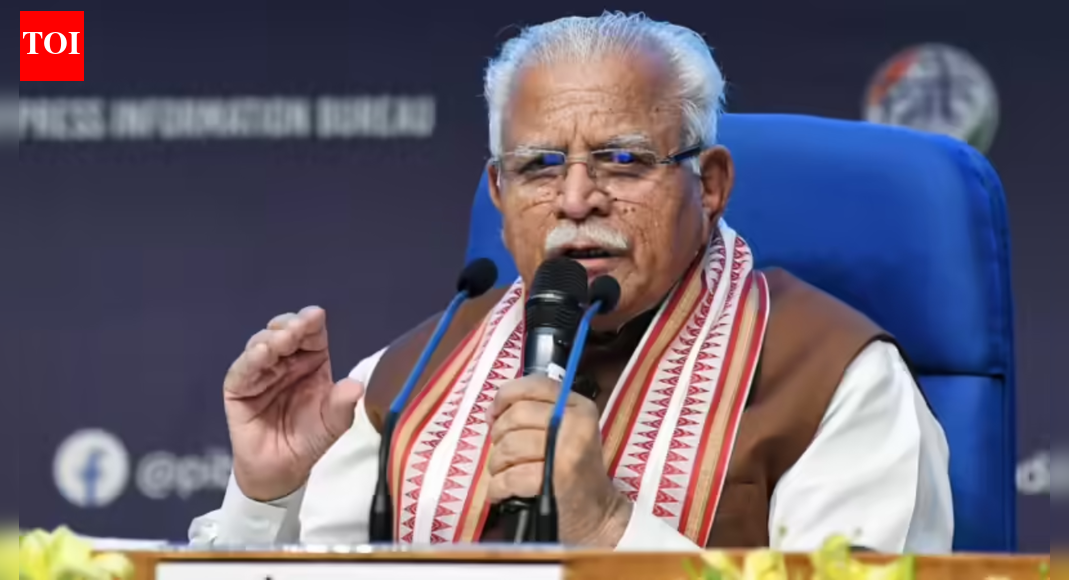
Union power minister Manohar Lal

NEW DELHI: Flagging the widespread misconceptions about smart electricity meters among consumers, Union power minister Manohar Lal on Sunday urged power distribution companies to run a coordinated campaign to counter misinformation.“Farmers plan to hold a nationwide demonstration on Monday, demanding that the clause related to smart meters in the draft Electricity (Amendment) Bill, 2025, be scrapped. They are not aware what smart meters are or what impact they will have, yet believe they are harmful. Moreover, they don’t even have to pay the electricity bills because the state governments give the subsidy,” Lal said. He added that both the govt and discoms need to actively step in and explain the facts.Farmers held protests against the bill by blocking railway tracks across 19 districts of Punjab on Friday.Drawing a parallel with the initial resistance to electronic meters, Lal said only a fraction of consumers today understand the benefits of smart meters, making large-scale awareness and training essential to prevent fear and confusion from spreading.As per the government, the draft Electricity (Amendment) Bill, 2025, aims to transform the existing market structure by rationalising cross-subsidy, promoting cost-reflective tariffs, and enabling direct procurement of power by industrial users. It seeks to dismantle longstanding barriers to India’s manufacturing competitiveness, making industrial power more affordable, reliable and responsive to market demands, while at the same time protecting subsidised tariffs for farmers and other eligible consumers. The bill is likely to be brought to Parliament in the ongoing winter session.Installation of smart metres is part of the Centre’s revamped distribution sector scheme, which aims to modernise the power distribution infrastructure, reduce commercial losses and improve billing efficiency. Of a total target of 25 crore, nearly 4.8 crore prepaid smart meters have been installed across the country so far.The minister was speaking at the closing session of a national conference on the use of artificial intelligence and machine learning in the power distribution sector, organised by the Union ministry of power at Bharat Mandapam. The two-day conference showcased smart meter data analytics, integrated IT/OT systems and smart home automation use cases aimed at improving operational efficiency and consumer satisfaction across discoms.Touching on the growing influence of AI across sectors, Lal expressed a mix of optimism and caution. “Innovation brings happiness, but AI also creates doubts. We should not let our natural thinking power decline,” he said. While noting that India’s power sector has made remarkable progress over the past century, he stressed the need to keep moving forward with scientific thinking, efficiency and public awareness. “We must keep moving forward, resolving the challenges that come in the way,” he added.Lal also underlined India’s progress toward the target of 500 GW of non-fossil capacity by 2030, but cautioned that fossil fuels cannot be phased out abruptly. Coal, he said, will continue to play a role in power generation until renewable sources become fully stable.


Source link

Who is Saurabh Luthra? Award-winning restaurateur; main accused in Goa nightclub fire | India News


Who is Saurabh Luthra? Award-winning restaurateur; main accused in Goa nightclub fire

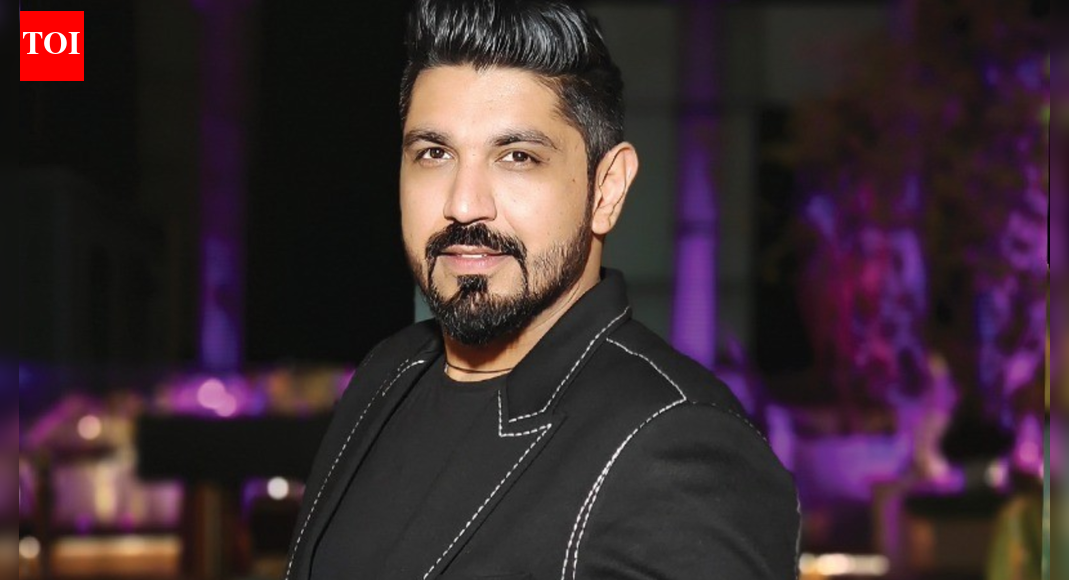
(Image credits: LinkedIn @Saurabh Luthra)

Police initially suspected a cylinder blast, but a tourist who survived claimed fireworks went off during a dance performance and were the likely cause. The deceased included four tourists and 14 staff members, while the identities of seven others were still being confirmed.Follow live updates of Goa nightclub tragedyChief minister Pramod Sawant vowed strict action against officials who allowed the club to run despite safety violations, and police registered an FIR against the owners under various sections of the Bharatiya Nyay Sanhita.Police have registered an FIR against Saurabh Luthra and Gaurav Luthra, the owners of Birch by Romeo Lane, along with the nightclub’s manager and event organisers. The sarpanch of the Arpora–Nagoa panchayat, Roshan Redkar—who had issued a trade licence for the premises in 2013—has also been detained.Redkar said earlier in the day that the club was run by Saurabh Luthra, who had a dispute with his partner. “They had filed a complaint against each other with the panchayat. We had inspected the premises and found that they did not have the permission to construct the club,” he said.According to Official website of Romeo Lane described Romeo Lane, was sealed later in the day after district officials found it was operating illegally on government-owned land.


Source link

IndiGo turmoil: Centre slams Rahul Gandhi’s ‘monopoly model’ remark; claims govt promotes competition | India News


IndiGo turmoil: Centre slams Rahul Gandhi's 'monopoly model' remark; claims govt promotes competition
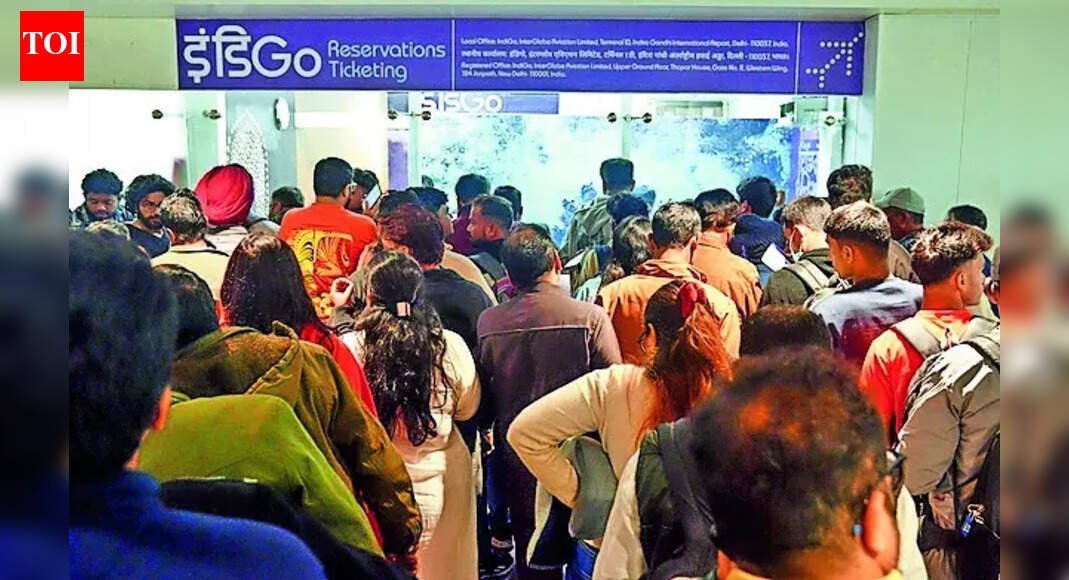
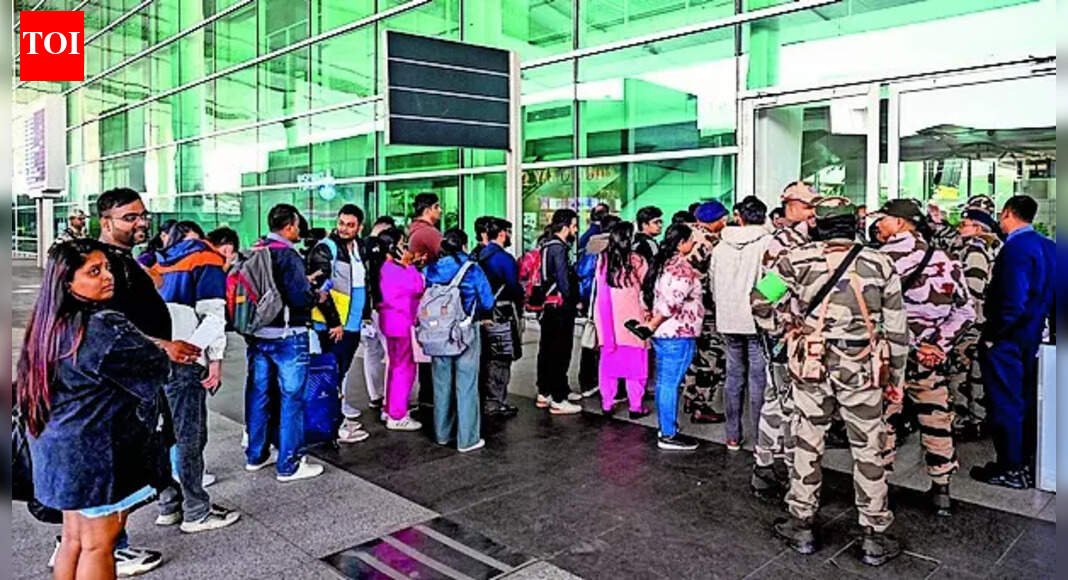
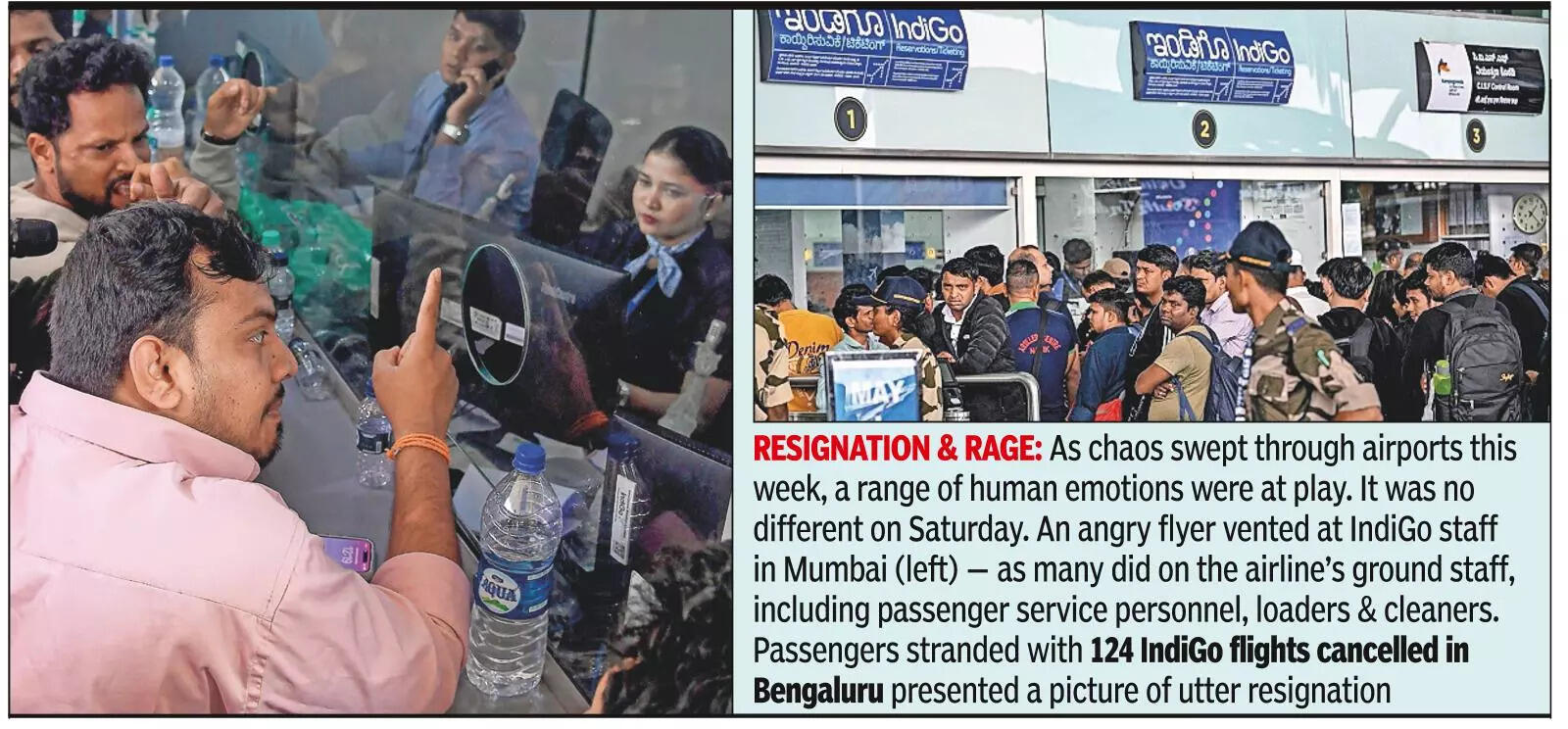
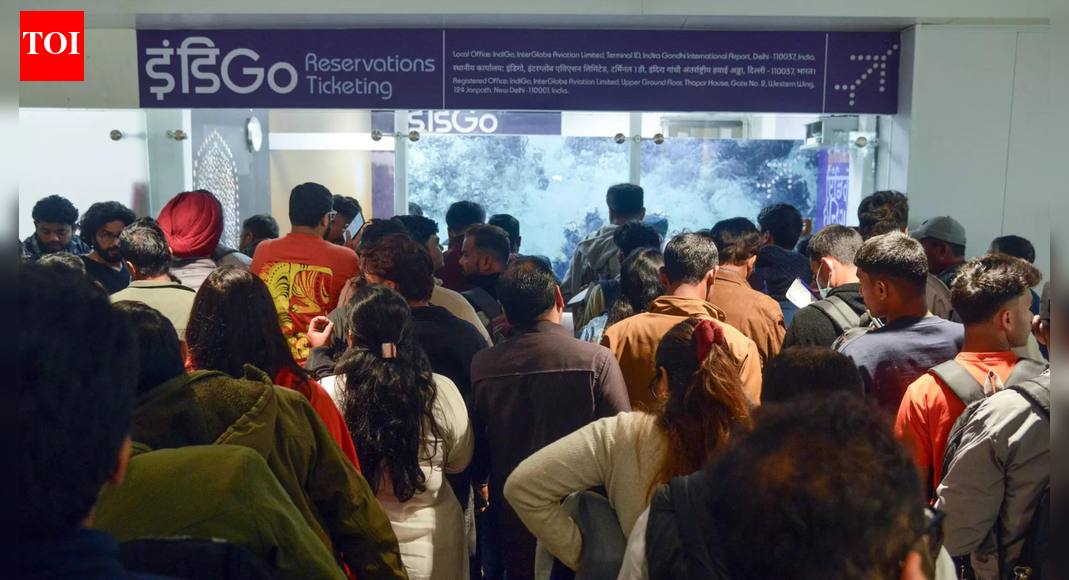
IndiGo crisis enters its sixth day as passengers remain stranded at major airports (ANI)

NEW DELHI: Civil aviation minister Ram Mohan Naidu, in response to Rahul Gandhi’s remark, stated that the government has consistently promoted competition in the aviation sector to promote the entry of more airlines in the market. He highlighted recent legislation aimed at reducing leasing costs, noting that it will make it easier for airlines to expand their fleets.In his statement, Naidu pointed out that the IndiGo crisis is an issue of public concern rather than a political issue.

Aviation Meltdown Escalates As IndiGo Cancels 400 Flights And Government Enforces Fare Controls

“He should understand that this is not a political issue, but a matter concerning the public. In the aviation sector, the government has always aimed to increase competition,” he said, “More competition means allowing new airlines to enter, increasing aircraft in our fleet, and reducing leasing costs. We have even passed legislation in Parliament to lower leasing costs so that more aircraft can be added.”Rahul Gandhi on Friday stated that the IndiGo fiasco is a result of the government’s monopoly model, causing the general public to bear the brunt of it. In a post on X, he said, “IndiGo fiasco is the cost of this Govt’s monopoly model. Once again, it’s ordinary Indians who pay the price – in delays, cancellations and helplessness.”He had also urged promoting more competition across sectors, saying, “India deserves fair competition in every sector, not match-fixing monopolies.”The IndiGo crisis has entered its sixth day, causing significant disruption for thousands of passengers. Many remain stranded at airports, while others are missing important life events due to flight delays and cancellations.


Source link

India records highest ever non fossil capacity addition in current financial year | India News


India records highest ever non fossil capacity addition in current financial year

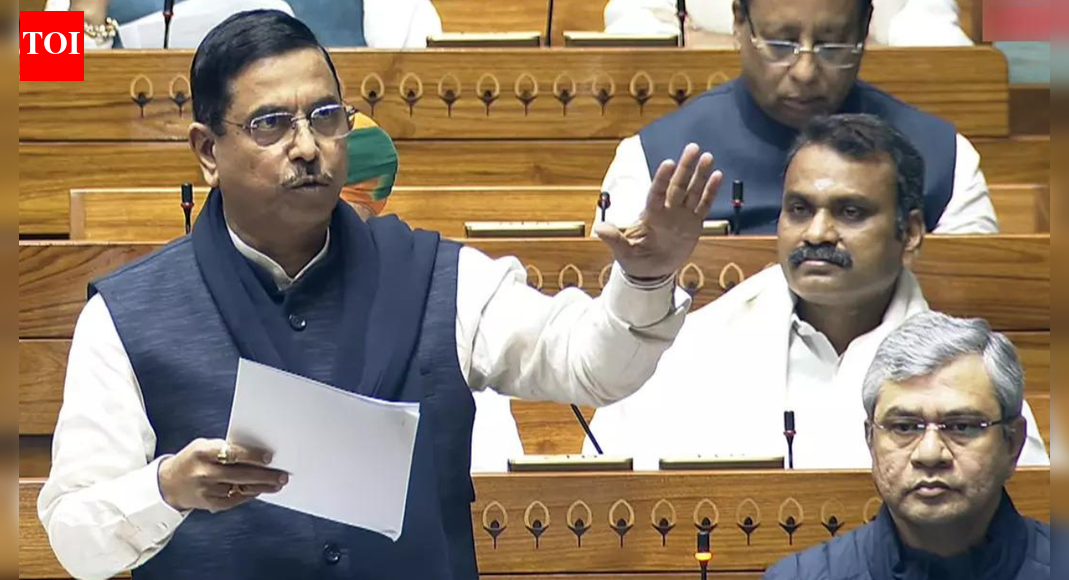
Union minister of new and renewable energy Pralhad Joshi (ANI Photo)

Highlighting India’s clean energy expansion, Joshi stated that the country’s solar capacity grew from 2.8 GW to around 130 GW in the last 11 years, registering a rise of more than 4,500%. He added that India contributed 46 GW to global solar additions between 2022 and 2024, becoming the third-largest contributor. “India is a key driver of this explosive global surge in renewable energy,” the minister said while speaking at the Global Energy Leaders’ Summit 2025 in Odisha’s Puri.

Winter Session Of Parliament: Bills On Atomic Energy, Excise On Agenda; Oppn Gears Up For SIR

Joshi mentioned that India held the world’s fifth-largest coal reserves and was the second-largest consumer of coal. Yet, with that abundance, it was steadily balancing fossil energy with renewables as the transition gathered pace. With global mechanisms now shaping industrial competitiveness, he said India’s shift towards renewable energy has become even more urgent and strategically important.


Source link

Parliament panel to summon all airlines, DGCA | India News


Parliament panel to summon all airlines, DGCA

NEW DELHI: Taking note of the days-long ordeal faced by passengers due to mass cancellation of IndiGo flights, the parliamentary panel on transport, tourism and civil aviation will soon summon all airlines and other stakeholders, including sector regulator DGCA and officials from aviation ministry. The panel, headed by Sanjay Kumar Jha of JDU, will not only seek explanations but also explore solutions to ensure that such disruptions do not occur again, sources said.TOI learnt that while some panel members themselves faced inconvenience due to sudden flight cancellations, others received calls detailing how the crisis derailed travel plans of thousands of passengers.

Aviation Meltdown Escalates As IndiGo Cancels 400 Flights And Government Enforces Fare Controls

“This is an unprecedented situation in the history of India’s aviation sector. Both the airlines and the regulator will have to explain why such a situation occurred and why they failed to anticipate it,” said a member of the panel.Another member said the episode has exposed deeper systemic issues of the aviation sector, including manpower shortages, strained crew-management systems and gaps in regulatory oversight. The panel will also discuss how rival airlines ‘increased fares abnormally to make undue profit’.


Source link

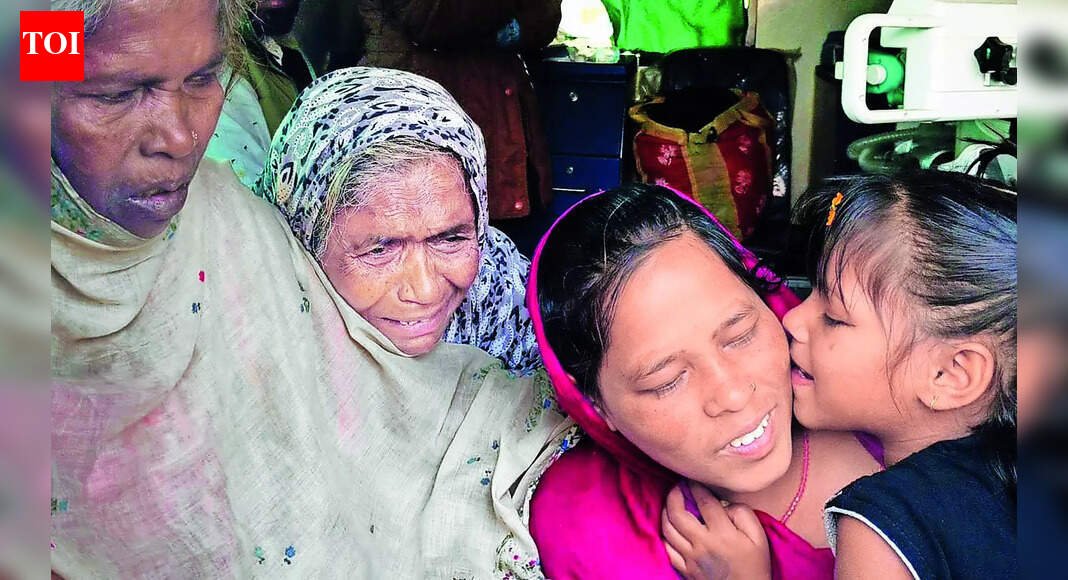
Joy for 1 family, agony for another: Sunali back, cousin Sweety still trapped in Bangladesh | India News


Joy for 1 family, agony for another: Sunali back, cousin Sweety still trapped in Bangladesh

Joy for 1 family, agony for another: Sunali back, cousin Sweety still trapped in B’desh

KOLKATA: Tears of relief flowed in one mud-walled home in Bengal’s Birbhum district. A kilometre away, another house filled with the same prayers stayed silent.On Saturday, Sunali Khatun returned to Paikar village with her son Shabir, 8, after months of detention in Bangladesh. Her return, ordered on humanitarian grounds because of her advanced pregnancy, has only sharpened the anguish of another Birbhum family still waiting for their daughter, Sweety Bibi, and her two sons to come back.Sweety’s third child Imran, who lives with his grandparents, keeps asking why his aunt has returned but not his mother. “How do you explain this to a 10-year-old?” said Sweety’s mother Rozina Bibi, 50. “They took my mother,” Imran said. “When will they return her to me?”The family’s struggle runs deeper. Sweety has been the sole earner since her husband Azizul Dewan went missing in TN four years ago. Working as a house help in Delhi, she supported her three sons and her ailing parents. “We cry every time we meet,” Rozina said of Sunali’s parents Bhodu and Jyotsna. “Today their daughter is back. We are happy for them. But why not mine?”Why wasn’t Sweety, deported with Sunali, brought back: KinSunali, her husband Danish Sheikh, their son, and her cousin Sweety, 32, along with Sweety’s two sons — Kurban, 16, and Imam, 6 — were picked up in June during a crackdown on “illegal immigrants” in New Delhi. They were flown to Guwahati and pushed across the border under an order of Delhi’s Foreigners Regional Registration Office. Bangladesh authorities arrested them on Aug 21. A Chapai Nawabganj court later granted them bail.A Calcutta high court division bench had quashed the deportation order, citing procedural lapses, and directed that all six be brought home. That judgment was challenged before the Supreme Court, where a two-judge bench asked the Centre on Dec 3 to bring back Sunali and her son and keep her under hospital care.“If the HC ordered all six to be brought back, why was my daughter stopped?” asked Rozina. “They told us she reached the border, then said it would take two or three more days. We have been hearing this since Sept 26.”Bengal migrant workers’ welfare board chairperson Samirul Islam said Supreme Court will hear Sweety’s case again on Dec 12. “We are hopeful that Sweety and her two minor children, and Sunali’s husband, will be allowed to return too,” he said. Until then, one Birbhum household rocks a pregnant daughter back into safety. Another counts the footsteps that still haven’t crossed the border.


Source link

Govt caps flight fares, gives IndiGo 2 days to normalise | India News


Govt caps flight fares, gives IndiGo 2 days to normalise

NEW DELHI: Govt on Saturday cracked the whip on IndiGo and other airlines charging exorbitant fares amid mass cancellations, capping domestic airfares at Rs 18,000 (UDF, passenger security fees and taxes extra). In a late evening meeting, civil aviation secretary Samir Kumar Sinha gave IndiGo two days — instead of the 21 sought by the airline — to fully restore operations.Sinha summoned the airline brass led by CEO Pieter Elbers to Rajiv Gandhi Bhawan after the ministry invoked the Bharatiya Vayuyan Adhiniyam, arming itself with powers instead of leaving it to aviation regulator DGCA. The carrier, controlling 60% of the domestic traffic, has been ordered to ensure refunds for cancelled tickets by 8pm on Dec 7, and return bags within two days. The airline has been barred from charging any rescheduling fee, which it was levying despite failing for over a month to adhere to new flying time norms for pilots and crew.

Centre caps flight fares, gives IndiGo 2 days to normalise ops

Unlike other airlines which were updating DGCA periodically about flight duty time limitations (FDTL), IndiGo not only failed to implement it but even refused to disclose details to the regulator. Officials pointed out that the airline did not update authorities and travellers adequately during the chaos caused by its failure to adhere to FTDL despite being given two years to accept the globally accepted protocol.IndiGo has been instructed to improve its communication: it will now submit a report every fortnight on implementation of its commitment to recruit enough pilots to ensure compliance with resting norms.Separately, officials indicated the probe into IndiGo’s operational collapse may be expedited to find out why such a massive failure took place, and based on that the airline may be penalised. The role of the management is under the scanner as well. The airfare caps stay till IndiGo operations stabilise.Cap on fares comes too late for lakhsFares for short flights covering a distance of up to 500km (like Delhi-Lucknow/Jaipur) have been capped at Rs 7,500; for 500-1,000km (Delhi-Udaipur, Hyderabad-Chennai) at Rs 12,000; 1,000-1,500km (Delhi-Mumbai) at Rs 15,000 and above 1,500km (Delhi-Chennai/Bengaluru/Hyderabad) at Rs 18,000. India had last imposed fare caps during Covid (May 2020 to Aug 2022).Aviation ministry said it has “taken a serious note of unusually high airfares being charged by certain airlines during the ongoing disruption” and “invoked its regulatory powers to ensure fair and reasonable fares across all affected routes” to “protect passengers from any form of opportunistic pricing.”IndiGo is expected to normalise operations by Dec 15 after govt kept certain provisions of the new FDTL norms related to its Airbus A320 fleet in abeyance till Feb 10, 2026.A reduction in flight cancellation may have begun on Saturday when that number dropped to about 700 — from over 1,000 a day earlier. “We are on our way to operate over 1,500 flights by end of day (Saturday). With regards to destinations, over 95% of network connectivity has already been re-established as we are able to operate to 135 out of the existing 138 destinations in operations. We are committed to build back the trust of our customers,” IndiGo said in a statement. IndiGo used to operate over 2,200 flights daily.The fare-capping development may have come way too late for lakhs of passengers who had IndiGo tickets for travel from earlier this week when the airline started cancelling hundreds of flights, till mid-Dec when IndiGo expects to normalise operations. These passengers had to cancel their IndiGo tickets and buy on other airlines like Air India, AI Express, Akasa and SpiceJet at sky-high fares — touching upto Rs 90,000 on certain routes.Geeta Srivastava (name changed on request), for instance, bought tickets for Delhi-Udaipur-Delhi for Rs 11,000. While she travelled Delhi-Udaipur (Dec 5) on some other airline, she was forced to cancel her IndiGo Udaipur-Delhi ticket of Sunday. “I bought Udaipur-Delhi ticket on another airline for Rs 24,000. Of what use is govt directive? Throughout this crisis, aviation ministry has been nothing but a mute spectator,” she fumed.Like Srivastava, lakhs of passengers have had to shell out many times the usual airfare to get to their destinations. The arithmetic is against passengers as IndiGo has almost 65% of the domestic market share. Before the IndiGo crisis, more than five lakh daily domestic flyers were travelling daily this season. Until IndiGo operations are back to normal, almost the vast majority of travellers are chasing seats on airlines that have the remaining 35%. With such a demand-supply mismatch, fares have zoomed.Aviation ministry said in a statement Saturday: “An official directive has been issued to all airlines mandating strict adherence to fare caps that have now been prescribed. These caps will remain in force until the situation fully stabilises. Any deviation from the prescribed norms will attract immediate corrective action in public interest.”


Source link

At Vatican observatory, Goa priest decoding cosmic past | India News


At Vatican observatory, Goa priest decoding cosmic past

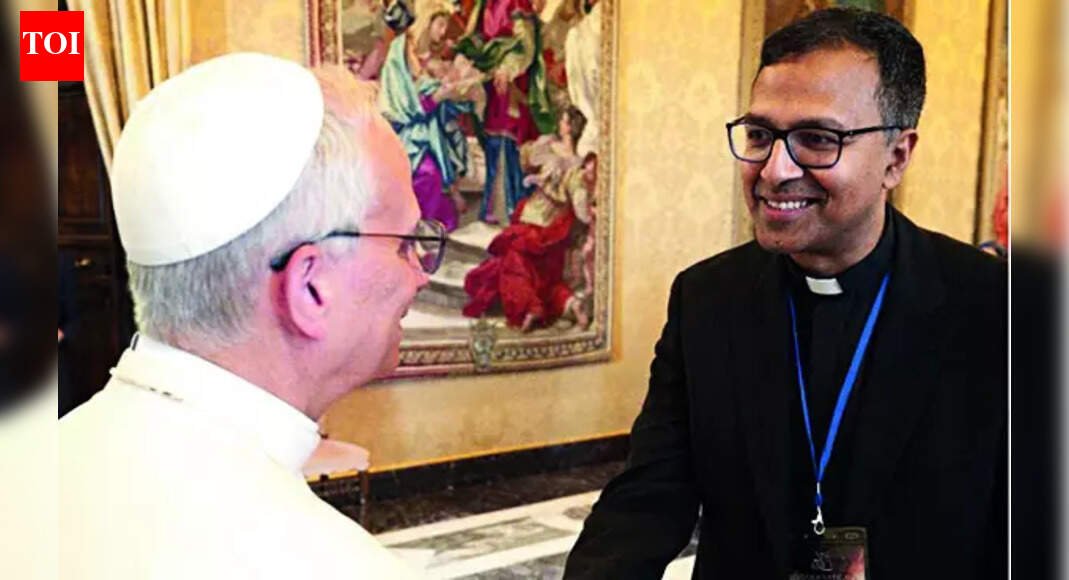
Fr Richard D’Souza with Pope Leo XIV. D’Souza has served as superior of the Jesuit community attached to Vatican Observatory since 2002

PANAJI: Physicist, astronomer, scientist, Indiana Jones. Not quite the words to describe a priest, let alone a 46-year-old Jesuit from Mapusa. But that is exactly what Fr Richard D’Souza is.At the Vatican Observatory in Castel Gandolfo, an ancient castle that once hosted pontiffs, D’Souza is piecing together the violent history of galactic cannibalism — the consumption of smaller galaxies by larger ones. “My work is basically to understand the histories of galaxies. I try to be a galactic archaeologist, so I put on this Indiana Jones cap and I try to see how galaxies grow to the massive size that they are,” he said.His breakthrough came in 2018, published in Nature Astronomy, when he and Eric Bell proposed that the Andromeda galaxy’s most significant merger — a violent collision that reshaped the Milky Way’s nearest galactic neighbour — occurred approximately 2 billion years ago.D’Souza’s own trajectory was less violent. Born in Pune in 1978, raised partly in Kuwait and partly in Goa, he entered the Society of Jesus, the formal name of the Jesuits, at 18. A Catholic order known for its intellectual pursuits, the society recognised in him something worth nurturing.“I used to go for camping trips while studying at St Britto’s, in the countryside, far away from the city lights where you could see the night sky. This was perhaps my first interest in the heavens, and this was confirmed a lot during my novitiate in Desur, Belagavi, which was a remote place where I could see the night sky,” said D’Souza.For his Jesuit formators, D’Souza’s path was neither straight nor predictable. After completing his physics degree at St Xavier’s College, Mumbai, he pursued a master’s degree in Heidelberg, working at the Max Planck Institute for Astronomy. Then came philosophy in Pune, as his Jesuit formation demanded, followed by theology. Then, a gravitational pull-back to physics through his doctoral work at the Max Planck Institute for Astrophysics in Munich.“I seriously started thinking of astronomy as a career when I started my master’s in physics at Heidelberg, where I did some small research project on astronomy, and it was this that really attracted me. I fell in love with the subject,” he said.Between philosophy and theology, he briefly veered towards social action in 2007 when he helped start St Paul’s Community College in Belagavi for school dropouts. This oscillation between the cosmic and the communal, between the spiritual and the celestial, should be debilitating. Not for him.“Our work at the observatory is basically doing scientific research with 80-90% of our time going in collecting and analysing data, and going for conferences. The remaining 10% of the time, we remind the Church that faith and science need to go together,” said D’Souza.Since 2022, D’Souza has served as superior of the Jesuit community attached to the Vatican Observatory. He is now director of the observatory itself, one of the oldest astronomical institutes in the world that dates back to 1774.Given that he straddles the two heavenly realms of theology and astronomy, he is often asked about extraterrestrial life. “I was waiting for this question and my response is, thank God I am not an expert on that,” he recently said at an event in Porvorim, blending humour with pragmatism.


Source link

Customs reforms next big thing on govt agenda: FM | India News


Customs reforms next big thing on govt agenda: FM

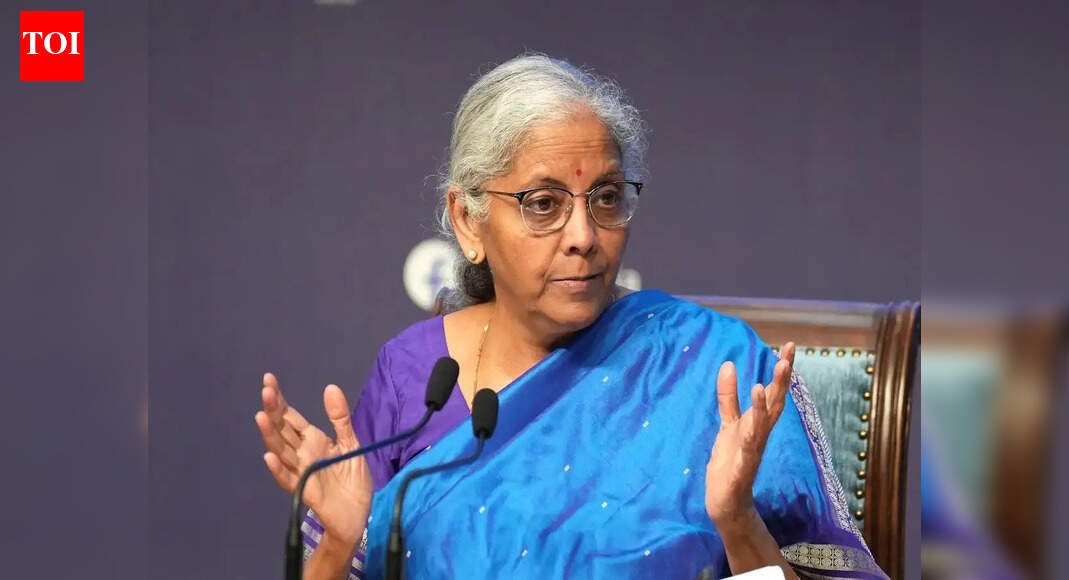
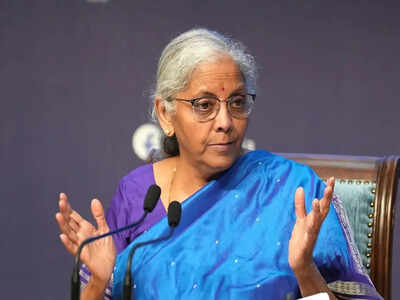
Finance Minister Nirmala Sitharaman

NEW DELHI: Govt will soon undertake “comprehensive” reforms of Customs to make it more transparent and ease compliance, Union finance minister Nirmala Sitharaman said Saturday.“There are quite a few things to do. There is the complete overhaul of the Customs area. We need to have a lot more simplified Customs department for people to feel that it is not tiresome and cumbersome for them to comply with the expectations in the rules, to make it more transparent,” Sitharaman said at an event here.The FM said govt had undertaken reforms of the Income Tax Act and ensured that income tax is no longer seen as a “tiresome exercise”. She said measures had been taken to ensure transparency, faceless assessment had been introduced and reforms in tax administration had been undertaken.“Now the same virtues have to be brought to Customs…” she said, adding that the aim was to introduce technology to scan and clear goods with minimal interference of officials and end “discretion”.“We are looking at it in that sort of way comprehensively… We have brought down Customs duties over the last two years steadily, but in those few items where we are still considered to be over the optimal rate, we will bring them down as well. So, Customs is my next big cleaning up assignment if I can say,” Sitharaman said when asked about the next “big bang” reforms that govt was planning to undertake.


Source link