Breaking News
Special session a violation of election code, claims Congress | India News


Special session a violation of election code, claims Congress

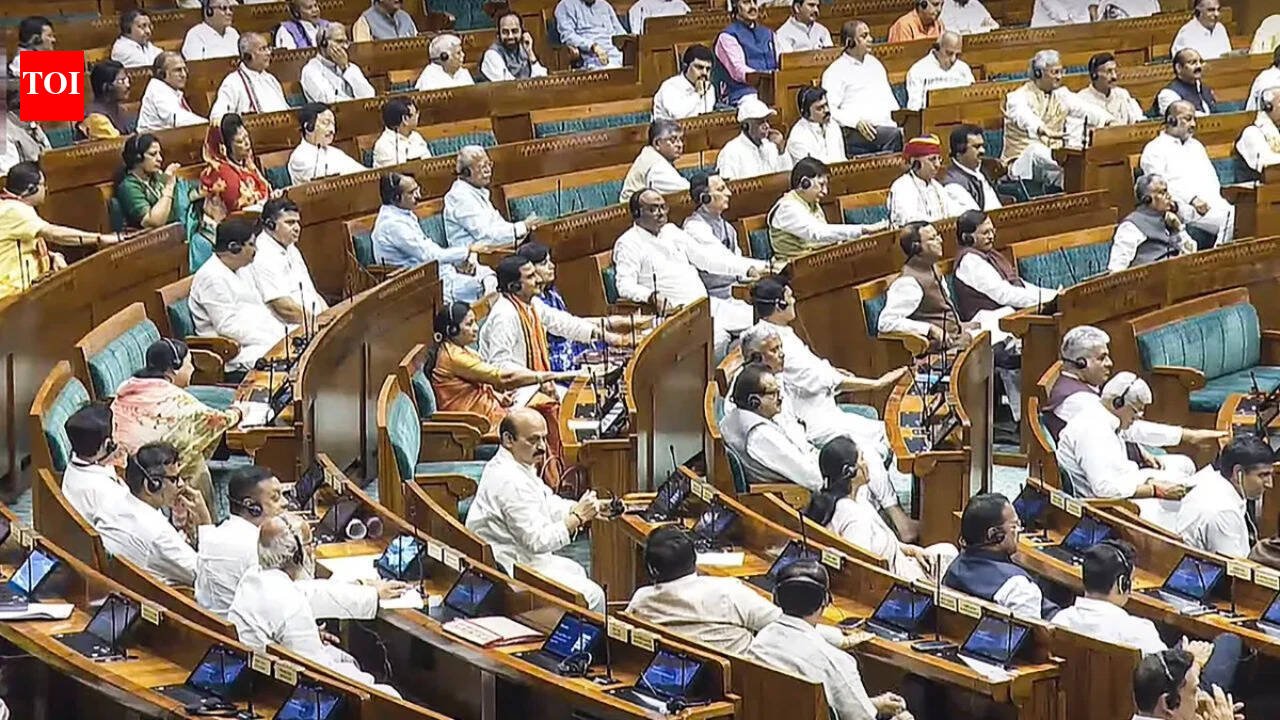
NEW DELHI: Congress termed the convening of a “special session of Parliament” on April 16-18 a violation of the model code of conduct, accusing the BJP of trying to use the women’s quota bill to influence elections in Tamil Nadu and Bengal, which go to polls later this month.AICC spokesman Jairam Ramesh said Congress opposes any “change in relative strength of states” in the Lok Sabha, criticising a “hasty proposal” for a “proportionate” increase in parliamentary seats. He said such a move would permanently disadvantage southern states like TN and Kerala vis-à-vis northern states, while also hurting north-eastern states, north-western states like Punjab, and smaller states. Ramesh said there have been informal inputs that the Modi government is planning a new delimitation law with a 50% increase in seats of all states in the Lok Sabha and assemblies.Quoting Uttar Pradesh and Kerala, Ramesh said seats in UP could rise to 120 from 80, while Kerala’s could increase to 30 from 20. The earlier gap of 60 seats would widen to 90, the Congress neta argued.“The opposition will take a joint stand, and the government’s strategy of dividing political parties will not succeed,” he said. Ramesh also dismissed the government’s argument linking quota and delimitation, citing the Registrar General of India’s statement that census results will be available in 2027.


Source link

Centre asks states to curb fuel rumours | India News


Centre asks states to curb fuel rumours

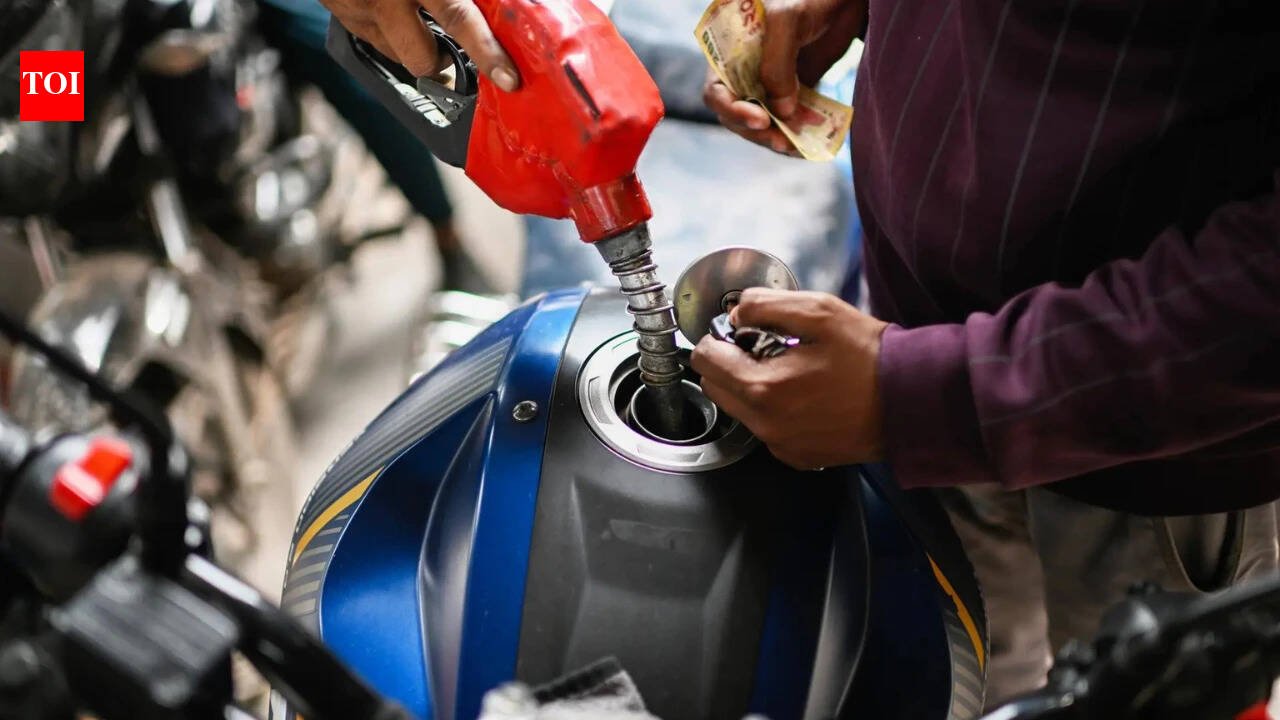
NEW DELHI: The government has directed all states to take measures to curb misinformation on the availability of petrol, diesel and gas, and to prevent black marketing and hoarding of LPG cylinders. In a letter to the chief secretaries of all states and Union territories on Thursday, petroleum secretary Neeraj Mittal also emphasised the need for regular dissemination of information to assure citizens of adequate availability and smooth distribution of LPG cylinders.“…rumours continue to circulate in certain areas, leading to…panic buying… states/UT govts are requested to intensify proactive and regular public communication,” he said.


Source link

Won’t be cowed, says Raghav, AAP brass says he indulged in ‘soft PR’ | India News


Won’t be cowed, says Raghav, AAP brass says he indulged in ‘soft PR’

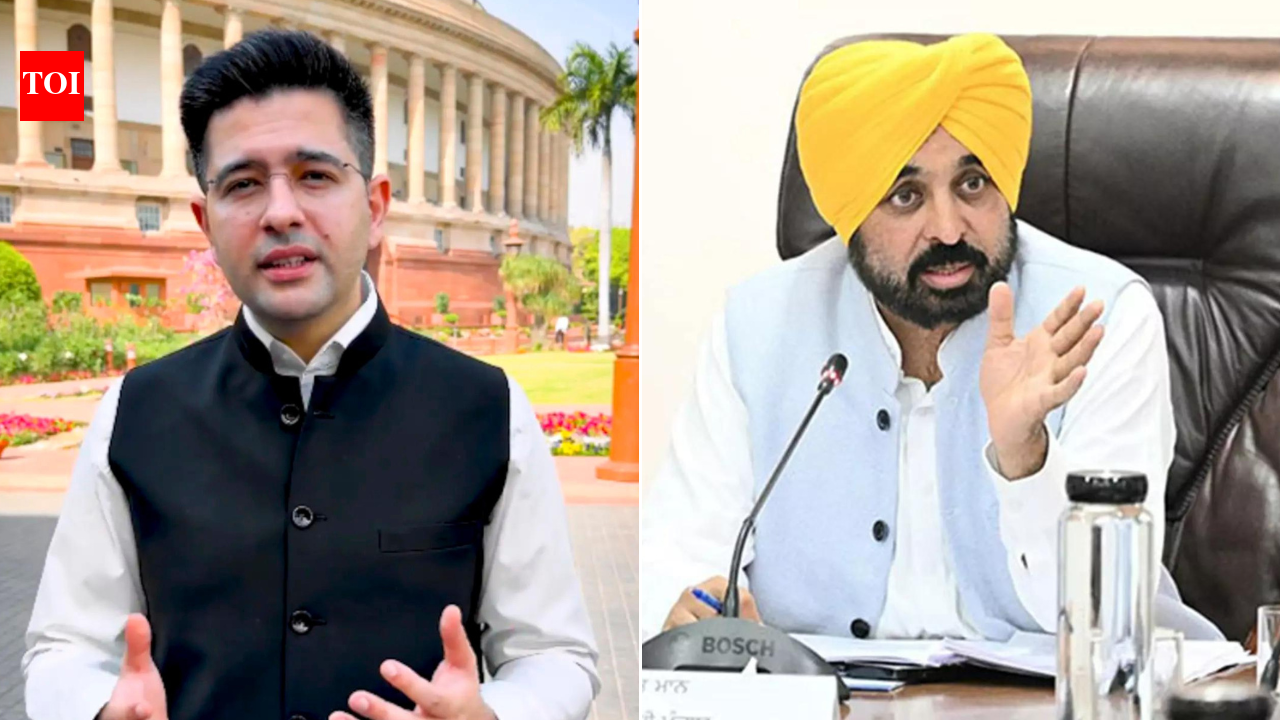
NEW DELHI: A day after AAP removed him as deputy leader of the party in the Rajya Sabha, Raghav Chadha declared that he would not be cowed by attempts to silence him, drawing a fierce backlash from his colleagues.Senior AAP members accused Chadha of being scared of PM Narendra Modi and not raising issues tied to the party’s stand. They mentioned his failure to sign the notice seeking the removal of CEC Gyanesh Kumar, and defying the party line on walkouts over issues in the House. Chadha was accused by Punjab CM Bhagwant Singh Mann, leader of the party in the Rajya Sabha Sanjay Singh, and leader of the opposition in Delhi, and Atishi of engaging in “soft PR” in Parliament. Asked by a journalist if he believed Chadha was compromised, Mann replied, “Yes”.

Won’t be cowed, says Raghav, AAP brass says he indulged in ‘soft PR’

Mann questions Raghav’s focus: ‘Samosas over serious issues?’

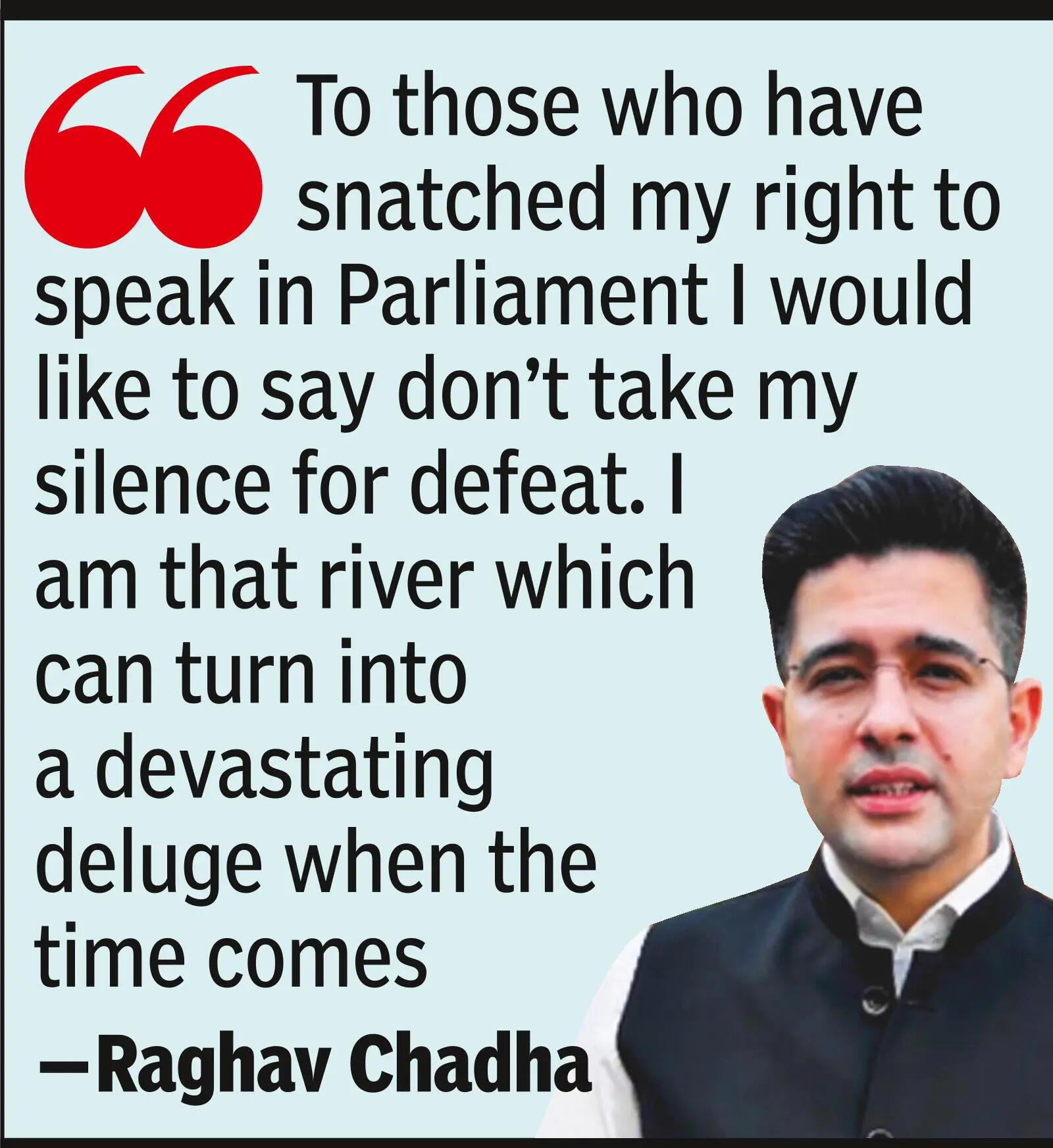
Mann criticised Raghav Chadha for raising issues such as the price of samosas at airports while ignoring core issues prioritised by AAP, and accused him of deviating from the party line.Mann said, “If the party gives a line to raise specific issues, such as valid votes being deleted (in West Bengal), 160 AAP leaders and volunteers being booked in Gujarat, or Punjab’s issues, like attempts to polarise communities, MSP, Centre holding back GST funds or rural development fund but someone raises issues of samosas at airports or pizza delivery time, won’t it raise doubts that he is talking from a different station?” ‘Jo Dar Gaya Samjho Mar Gaya’ jibe (those who live in fear are as good as dead), AAP leaders taunted their estranged colleague.The slugfest started after Chadha, an RS MP from Punjab since 2022, put out a video message on X. “To those who have snatched my right to speak in Parliament, I would like to say don’t take my silence for defeat. I am that river which can turn into a devastating deluge when the time comes,” he warned.The Rajya Sabha MP asked if speaking about the common man’s problems in Parliament was a crime. “Today, I ask this as AAP has told the Rajya Sabha secretariat that Raghav Chadha should not be given time to speak in Parliament. Now, why would anyone want to stop me from speaking?” he asked and went on to list the diverse issues he has raised, ranging from expensive food at airports, problems faced by food delivery riders, to tax on the middle-class.Sanjay Singh questioned Chadha’s silence on the many issues — from LPG cylinders, to manipulation of votes in West Bengal, rights of Punjab under attack and the atrocities being faced by AAP volunteers in Gujarat. “On all these issues, Raghav Chadha keeps silent. I would like to tell him that we are foot soldiers of Arvind Kejriwal, who has taught us to fearlessly fight against Modi.”Referring to the arrest of Kejriwal in March 2024, former Delhi CM Atishi said that while party leaders were on the streets protesting and facing detention, questions were raised about Chadha’s absence. “We defended you then…But today, even I want to ask that when Kejriwal was arrested, were you scared of the BJP and therefore ran away to London out of fear?” she lashed out.


Source link

MeT forecasts heavy rains in Kashmir plains, snowfall in higher reaches | India News


MeT forecasts heavy rains in Kashmir plains, snowfall in higher reaches

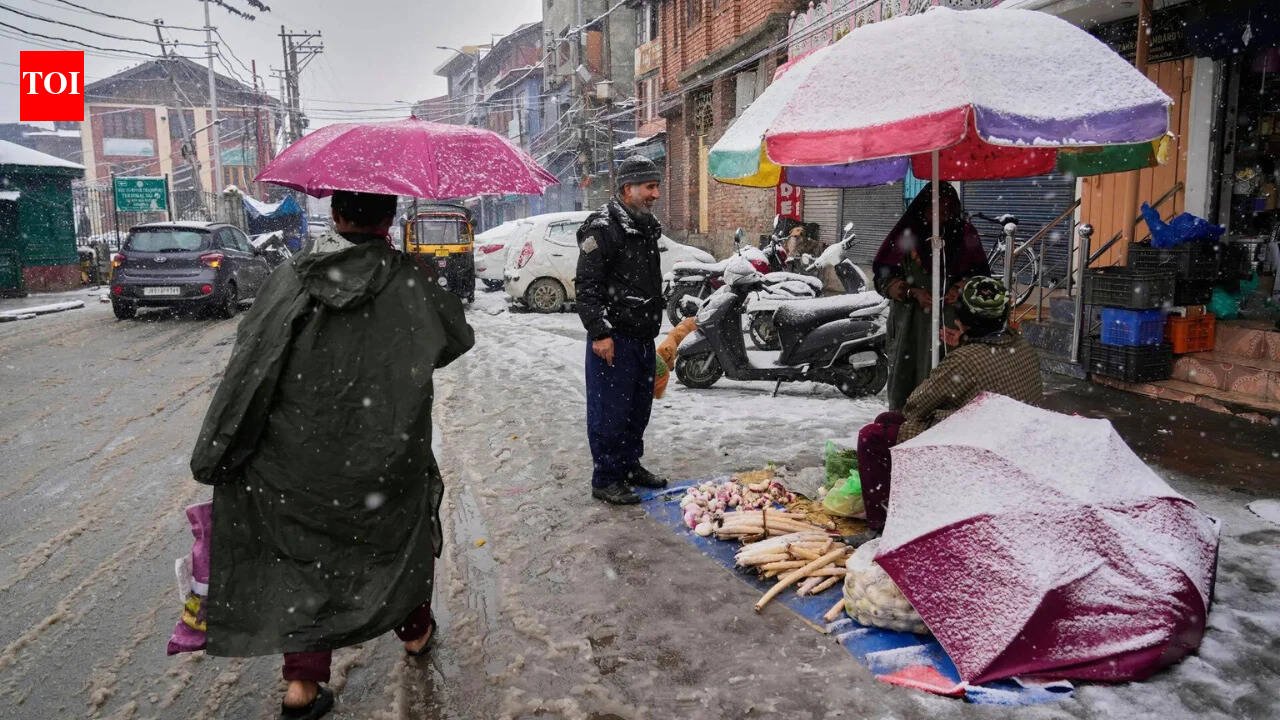
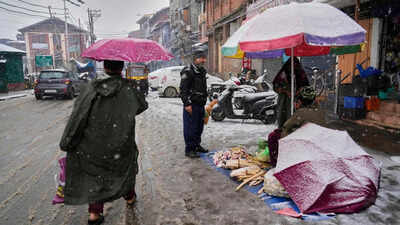
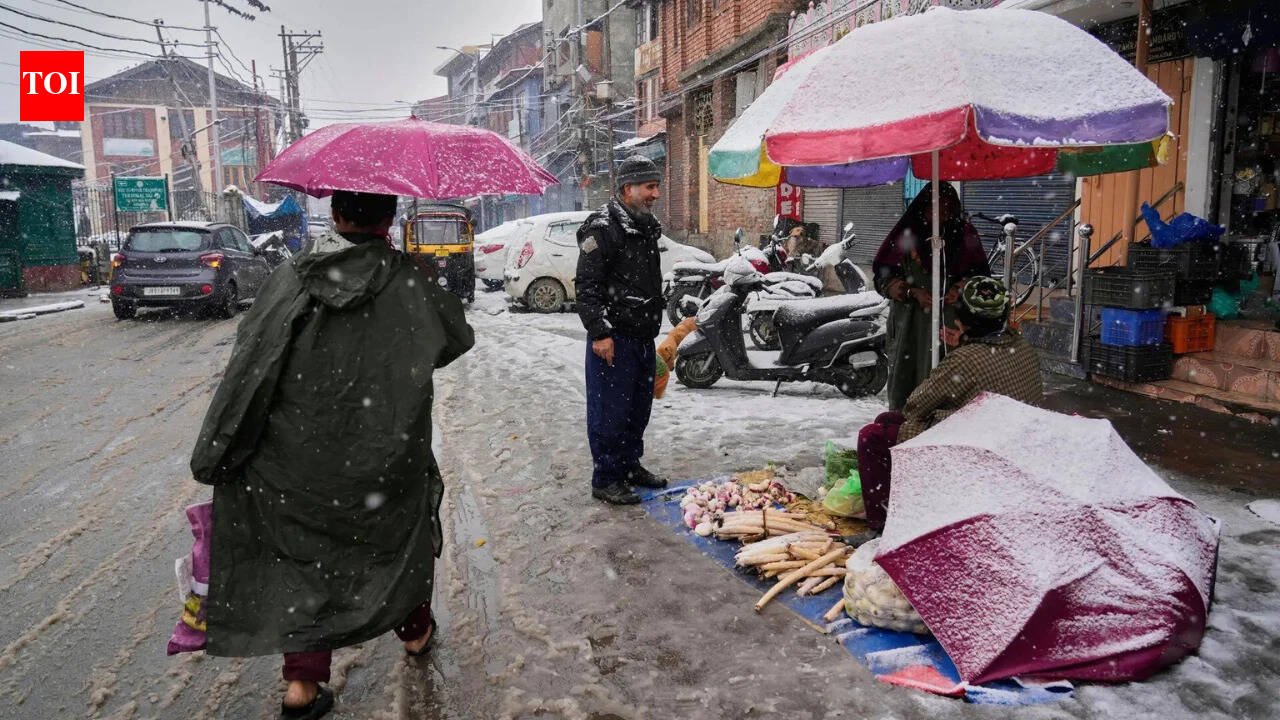
SRINAGAR: The meteorological department has forecast widespread rain, gusty winds and also snowfall at some places in Jammu and Kashmir over the next 36 hours due to a strong western disturbance, even as heavy rains flooded roads in Srinagar on Friday.Authorities have issued an advisory urging residents to avoid non-essential travel and follow safety precautions, especially in Srinagar.On Friday, higher reaches of Kashmir, including Mughal Road in Shopian and Sadhna Top in Kupwara, received fresh snowfall, while Srinagar and other districts saw heavy rains, which flooded roads, making the movement of people and vehicles difficult. Officials said five road accidents were reported due to slippery roads.The MeT forecast said “erratic weather conditions” are likely to continue till April 10.On April 4, the weather is expected to remain cloudy, with moderate to heavy rainfall in the plains and snowfall in the higher reaches in J&K. On April 5 and April 6, though the weather will remain cloudy, light rainfall is expected at isolated places.The district administration in Srinagar has issued a public advisory, warning of inclement weather and wind speeds of 40–50 kmph till the evening of April 4. “The general public of district Srinagar is hereby advised to avoid unnecessary movement on roads except in cases of absolute necessity,” the advisory said.“Tourists, local shikara operators, and others around Dal Lake, Jhelum River and other water bodies are strictly advised not to venture out or operate without verifying prevailing conditions and safety status,” the advisory said.The administration also asked miners and others working near water bodies to exercise caution and avoid risk-prone activities near water bodies. Authorities have urged people to remain vigilant, take necessary precautions, and cooperate with officials to ensure safety during the adverse weather period.


Source link

MeT forecasts heavy rains in Kashmir plains, snowfall in higher reaches | India News


MeT forecasts heavy rains in Kashmir plains, snowfall in higher reaches

SRINAGAR: The meteorological department has forecast widespread rain, gusty winds and also snowfall at some places in Jammu and Kashmir over the next 36 hours due to strong western disturbance, even as heavy rains flooded roads in Srinagar on Friday.Authorities have issued an advisory urging residents to avoid non-essential travel and follow safety precautions, especially in Srinagar.On Friday, higher reaches of Kashmir, including Mughal Road in Shopian and Sadhna Top in Kupwara, received fresh snowfall, while Srinagar and other districts saw heavy rains which flooded roads, making the movement of people and vehicles difficult. Officials said five road accidents were reported due to slippery roads.The MeT forecast said “erratic weather conditions” are likely to continue till April 10.On April 4, the weather is expected to remain cloudy, with moderate to heavy rainfall in the plains and snowfall in higher reaches in J&K. On April 5 and April 6, though the weather will remain cloudy, light rainfall is expected at isolated places.The district administration in Srinagar has issued a public advisory, warning of inclement weather and wind speeds of 40–50 kmph till the evening of April 4. “The general public of district Srinagar is hereby advised to avoid unnecessary movement on roads except in cases of absolute necessity,” the advisory said.“Tourists, local shikara operators, and others around Dal Lake, Jhelum River and other water bodies are strictly advised not to venture out or operate without verifying prevailing conditions and safety status,” the advisory said.The administration also asked miners and others working near water bodies to exercise caution and avoid risk-prone activities near water bodies. Authorities have urged people to remain vigilant, take necessary precautions, and cooperate with officials to ensure safety during the adverse weather period.


Source link

The battle of promises and bigger promises: Decoding manifestos of parties in Kerala fray | India News


The battle of promises and bigger promises: Decoding manifestos of parties in Kerala fray

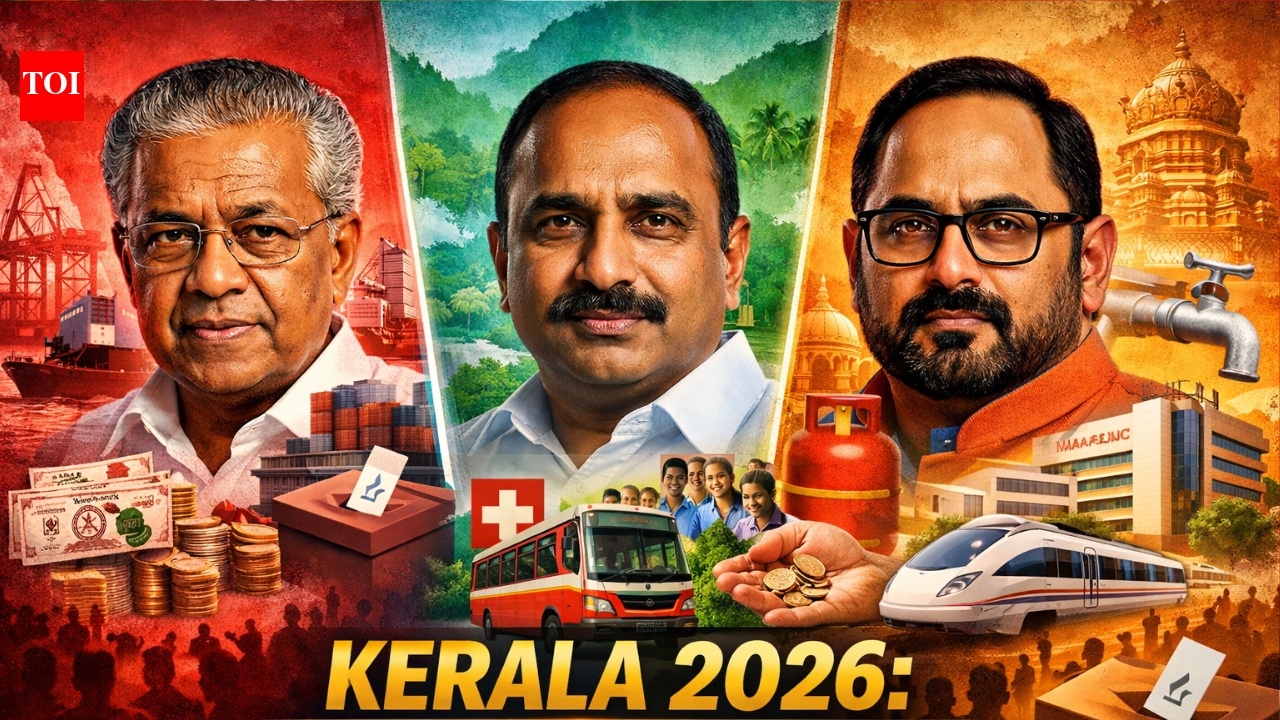
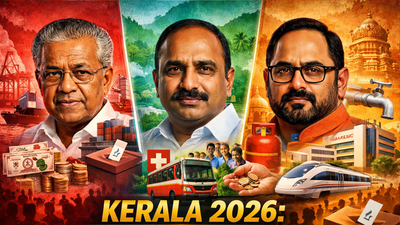
NEW DELHI: As Kerala heads into the 2026 assembly elections, the contest is no longer just about ideology or leadership, it is increasingly a battle of promises. From welfare payouts and free services to large-scale infrastructure and economic transformation plans, all three major fronts – the LDF, UDF and BJP-led NDA – have unveiled expansive manifestos aimed at wooing a politically aware and welfare-conscious electorate.The scale and scope of commitments underline a larger shift in Kerala’s electoral politics. Welfare is no longer a differentiator; it is the baseline. What sets parties apart is the scale, delivery mechanism, and credibility of execution. In a state known for high human development indicators and strong public participation, voters are now weighing not just promises, but sustainability and governance capacity.All three alliances have converged on key themes, social security – employment, healthcare, and infrastructure – while competing to outdo each other in quantum and coverage. The result is a dense, high-stakes policy contest where every segment of society, from youth and women to farmers and senior citizens, has been targeted with tailored offerings.

LDF: The incumbent’s bet – delivery, not disruption

The ruling LDF, led by chief minister Pinarayi Vijayan, has framed its manifesto as a continuation of its governance model, combining welfare expansion with long-term economic growth.At the core is a promise to eliminate absolute poverty, with a targeted plan to uplift around five lakh families. Welfare pensions are proposed to be increased to Rs 3,000 per month, alongside expanded care systems for the elderly and bedridden.

CM Vijayan

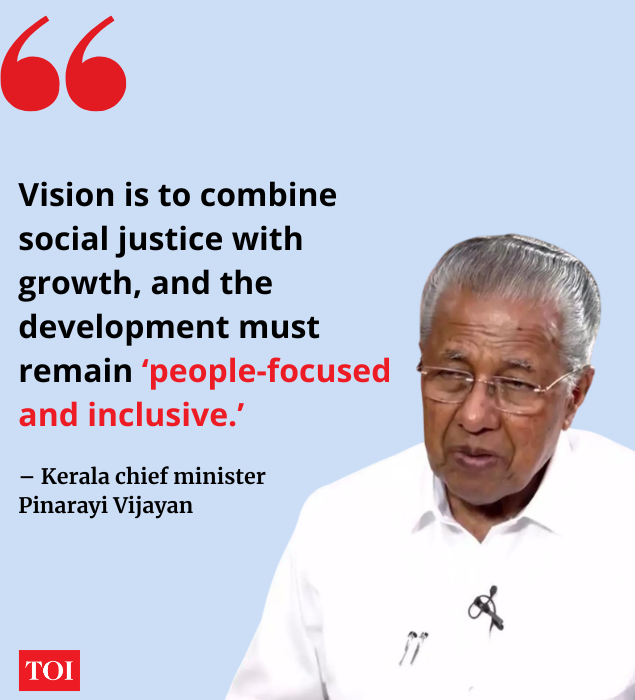
The LDF has placed strong emphasis on employment and skills, promising campus placements, expanded training programmes, and a “Back to Campus” initiative to bridge employability gaps. Women’s participation in the workforce is targeted to reach 50%, backed by support systems such as childcare, safe mobility, and skill development.On the economic front, the Left has outlined an ambitious plan to attract Rs 2 lakh crore in investments over five years, develop industrial corridors, and promote innovation hubs. Public sector units are to be modernised, with a goal of raising turnover to Rs 10,000 crore by 2031.Tourism, agriculture, and infrastructure also feature prominently. The manifesto targets 5 crore domestic tourists by 2031, improved support prices for key crops, and expansion of transport networks including metro and water-based systems. Speaking after releasing the manifesto, Vijayan said the vision was to combine social justice with growth, adding that development must remain “people-focused and inclusive.”

UDF: The comeback pitch – welfare with accountability

The Congress-led UDF has countered with a manifesto blending welfare guarantees with governance and institutional reforms. Released in Kochi, the document was presented by Telangana chief minister Revanth Reddy and handed over to Leader of Opposition VD Satheesan. The key highlights are the “Indira Guarantees” announced by Rahul Gandhi. These include:

  • Free bus travel for women
  • Rs 1,000 monthly assistance for college girls
  • Rs 3,000 welfare pension
  • Free health insurance up to Rs 25 lakh per family
  • Interest-free loans up to Rs 5 lakh for young entrepreneurs

The UDF has also promised to legally guarantee welfare pensions, stating they are “not charity but a right.”Economic proposals include Mission Samudra to build a port-led economy, expansion of aviation infrastructure, and creation of 10,000 high-revenue enterprises. A “Job Watch Tower” is proposed to track employment trends.On social welfare, the alliance has pledged food security through Indira Canteens, free ration for vulnerable groups, and the “Nava Ashraya” housing scheme targeting five lakh beneficiaries.Healthcare and labour reforms include free dialysis for BPL patients, higher wages for ASHA workers, and subsidies for sectors such as fishing and transport.The manifesto also places emphasis on social harmony, proposing a ministry of tolerance and a social harmony department to address communal tensions and political violence.

NDA: Breaking the duopoly – Identity, benefits and big-bang projects

The BJP-led NDA, whose manifesto was released by party president Nitin Nabin, has combined direct welfare benefits with infrastructure and governance-focused proposals.Among the key promises:

  • Rs 3,000 monthly pension for women heads, widows, and senior citizens above 70
  • Bhakshya Arogya Suraksha Card with Rs 2,500 monthly support for essentials
  • Two free LPG cylinders annually (on Onam and Christmas)
  • 20,000 litres of free water per household

The NDA has also promised to establish an AIIMS in Kerala and expand healthcare coverage under Ayushman Bharat to all residents.

BJP president Nitin Nabin

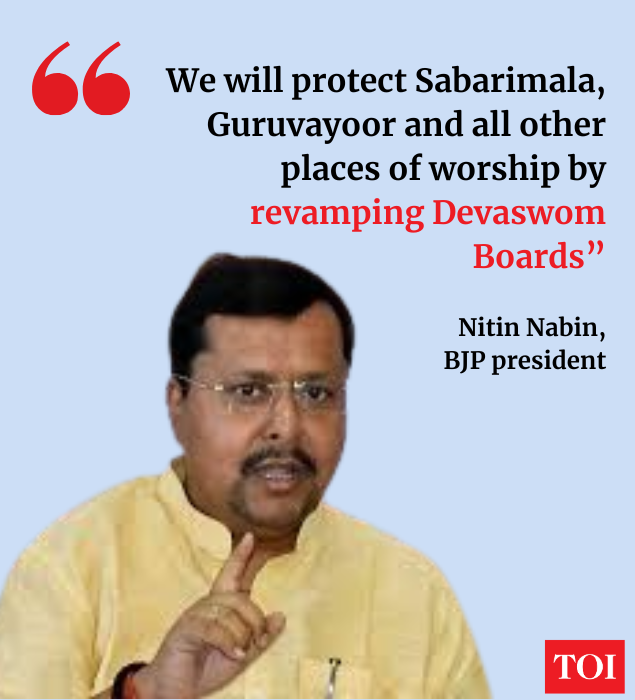
On infrastructure, the alliance has proposed a high-speed rail corridor linking Thiruvananthapuram and Kannur, expansion of metro networks, and development of Vizhinjam port into a major industrial hub.The manifesto includes a strong focus on religious and institutional reforms, with commitments to revamp Devaswom Boards and ensure “greater participation of devotees” in temple management.“We will protect Sabarimala, Guruvayoor and all other places of worship by revamping Devaswom Boards,” Nabin said.It also promises a time-bound CBI probe into the Sabarimala gold theft case and a dedicated infrastructure mission for the shrine.On the economic front, the NDA aims to transform cities into sectoral hubs, positioning Thiruvananthapuram as an IT capital, Kochi as a shipbuilding hub, and Kannur as a defence innovation centre.Nabin criticised both LDF and UDF, alleging “negligible industrial growth, economic stagnation and fiscal misgovernance,” and claimed the electorate was seeking change.

Common ground: Welfare as the political centrepiece

Despite sharp political differences, a clear pattern emerges across manifestos, welfare remains central to Kerala’s electoral politics.All three alliances have:

  • Promised Rs 3,000-level social security pensions
  • Focused heavily on women-centric schemes
  • Prioritised healthcare expansion
  • Targeted youth employment and entrepreneurship

This convergence reflects both the expectations of Kerala’s electorate and the competitive nature of its politics, where incremental advantages can decide outcomes.

Beyond promises: The real test

While the manifestos are expansive, the key question remains implementation. Kerala’s fiscal constraints, rising debt, and structural economic challenges pose significant hurdles to delivering on large-scale commitments.At the same time, the overlap in promises raises the stakes of credibility. Voters are likely to evaluate not just what is being promised, but who is best placed to deliver.As the campaign intensifies, the 2026 election is shaping up not just as a contest of parties, but as a referendum on competing models of welfare, growth, and governance.(With inputs from agencies)

Source link

Bombay high court comes to rescue of couple with Australian citizenship three years after they adopted a baby in India | India News


Bombay high court comes to rescue of couple with Australian citizenship three years after they adopted a baby in India

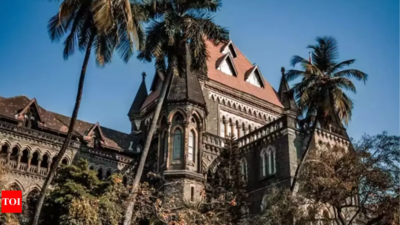
MUMBAI: The Bombay High Court has come to the rescue of a couple facing legal hurdles in taking their adopted daughter to Australia despite a valid adoption under Indian law. The couple, both now 44, adopted a relative’s third child in April 2023 under the Hindu Adoption and Maintenance Act (HAMA). At the time, the child was 45 days old, the wife was an Indian citizen while the husband had two months earlier acquired Australian citizenship. The wife later became an Australian citizen.However, Australian authorities did not recognise the adoption as an “inter-country adoption”, stating children adopted outside a Hague Convention on Intercountry Adoption process are not automatically accepted. This meant the mother and child were stranded in India for 3 years. Justices Ravindra Ghuge and Abhay Mantri of Bombay HC on March 30, while disposing of a petition filed last year by the couple for judicial intervention, directed the couple to approach the district magistrate to have the adoption certified. The court invoked 2022 rules that govern adoptions and directed that once the district magistrate issues the verification certificate in 30 days, Central Adoption Resource Authority (CARA) must issue its No Objection Certificate (NOC) within 15 days. The CARA nod is crucial for inter-country adoptions and would then be intimated to the immigration authorities of India and Australia, the HC said. Children adopted overseas in circumstances outside of a Hague Convention process do not automatically have their adoptions recognised in Australia, the Australian authorities informed the couple and pointed to specific Australian migration requirements concerning special visas and citizenship pathways for adopted children. The HC said: “It is apparent that the (Australian) authorities need the appropriate authority in India to do the scrutiny and indicate its clearance. This authority is CARA.” The mother wrote to CARA in August 2025 what the Australian Home Affairs had emailed her. CARA, in turn, said since the adoptive father was an Australian citizen with Overseas Citizen of India (OCI) status, Section 68 of Adoption Regulations, 2022 (rules governing inter-country HAMA adoptions), applied. A reply by CARA before the HC said it cannot regularise any aspect of the couple’s adoption unless they comply with requirements under the 2022 regulations to relocate a child adopted under HAMA to a foreign country. Anil Anturkar, senior counsel appearing for the adoptive parents, said it was not a case of inter-country adoption and questioned the objections raised by CARA. He said Regulation 69 of the Adoption Regulations, which pertains to concluded HAMA adoptions, would apply to the couple. It was an “expatriate adoption”, Australian authorities had said. “There is no provision either in the Juvenile Justice Act or the Adoption Regulations 2022, which defines Expatriate Adoption,” the HC said, but noted the adoption was legal under HAMA. The HC, after also hearing advocate YR Mishra for the Centre, held that in the peculiar facts, process under Section 69 would kick in. “Regulation 69 prescribes the adoption process and considers the case of parties to an adoption already concluded under the HAMA. This Regulation will have to be read as being applicable to the case,” said the HC, citing prior SC rulings. The court said: “Ideally petitioners should have followed Regulation 68 (procedure for inter-country adoptions).” But the process now cannot be reversed, the HC said, adding it had to consider “the future of the adopted baby as well.” The HC ruling made available late Thursday also noted that the mother, twice earlier, “on wrong advice” had filed petitions that led her nowhere. The HC said, “If the child is not permitted to be taken to Australia because of technicalities, the adoption would fail.” Justice Ghuge, who authored the judgment, observed adoptive parents’ dedication. The case “navigated through complex laws, to bless the adopted child with the love and care of the adoptive parents”, said the HC, noting the “sincerity and purity of the feelings of the adoptive parents.”


Source link

Tamil Nadu polls: Why Annamalai was denied a ticket, Tejasvi Surya explains | India News


Tamil Nadu polls: Why Annamalai was denied a ticket, Tejasvi Surya explains

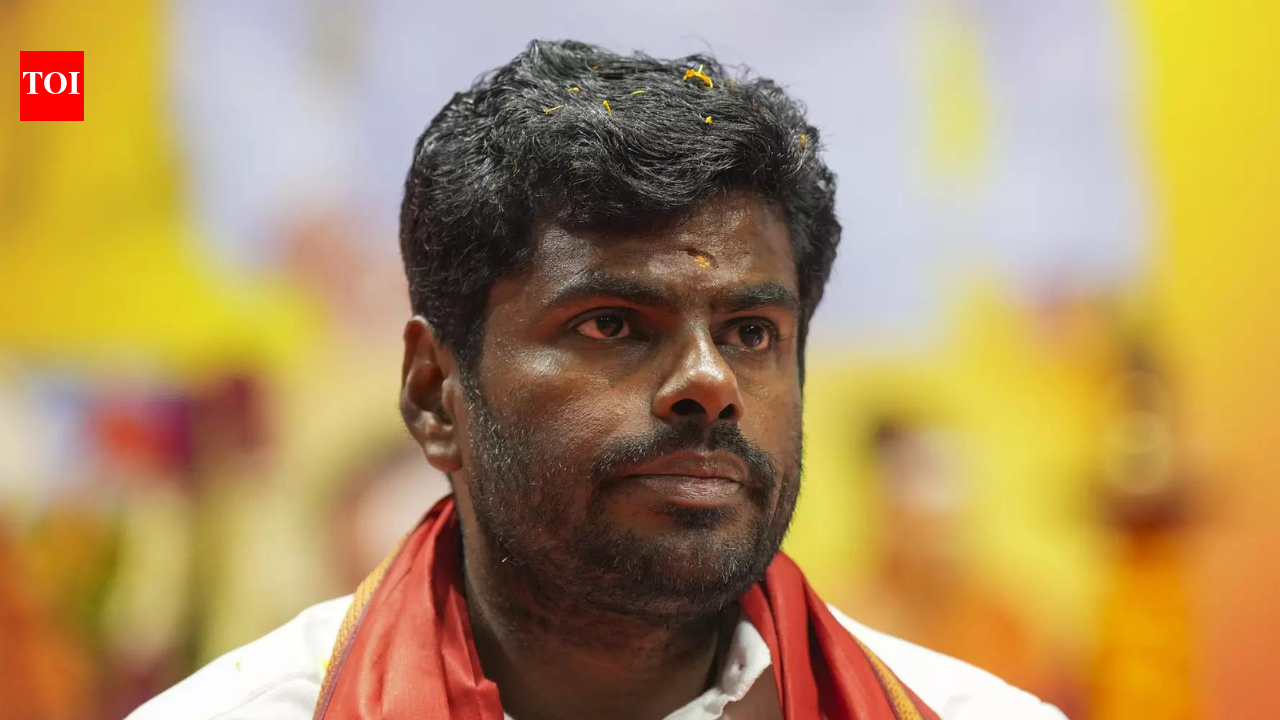
NEW DELHI: Hours after Bharatiya Janata Party left K Annamalai from the candidates list for the upcoming elections, party MP from Karnataka Tejasvi Surya on Friday described the former Tamil Nadu BJP chief as the “most popular leader”, claiming that the party has made him responsible for campaigning for all candidates.While campaigning at for the BJP in poll-bound Kerala, Surya said, “Annamalai is the most popular leader of the BJP, not just in Tamil Nadu, but he commands a large following all over the country. He has been given the responsibility of campaigning for all the candidates in Tamil Nadu.”“Even today, he is in Keralam where he enjoys a great following. He is also campaigning in Puducherry, where people are crazy about him. I am extremely confident that Annamalai’s popularity and his campaign all across Tamil Nadu will translate into victory for the BJP candidates all across the state,” he added.Earlier in the day, BJP released its list of 27 candidates for the upcoming Tamil Nadu assembly elections after negotiations within the NDA alliance.While senior leaders like Tamilisai Soundararajan (Mylapore), Vanathi Srinivasan (Coimbatore North), and Union Minister L. Murugan (Avinashi) have been fielded, Annamalai’s name is nowhere to be found on the list.However, K Annamalai said that he will continue to campaign for the upcoming assembly polls despite being absent from the party’s candidate list in Tamil Nadu, calling it his “responsibility.”Speaking with the mediapersons in Keralam’s Kannur after a public meeting here, Annamalai described campaigning in Puducherry, Kerala and Tamil Nadu for the BJP as his “role” in the upcoming elections.“In this election, my role is to campaign for candidates across Tamil Nadu. Right now, the party has given me the responsibility to campaign in Puducherry and Kerala till the 7th (April). From the 7th to the 23rd, I have to campaign for all BJP and NDA candidates across Tamil Nadu. That is the responsibility given by the party to me. I’ll be fulfilling that responsibility,” he said.Notably, Annamalai, the former IPS officer, is a key figure in the party’s aggressive expansion strategy in South India. He’s often seen as a direct representative of PM Narendra Modi’s vision, frequently appearing alongside him at major rallies.Tamil Nadu will go to the polls in a single phase on April 23, covering a total of 234 constituencies in the State. Counting of votes is scheduled for May 4.


Source link

Ravikant Kisana Talks Privilege & Uncomfortable Truths | India News


Ravikant Kisana Talks Privilege & Uncomfortable Truths

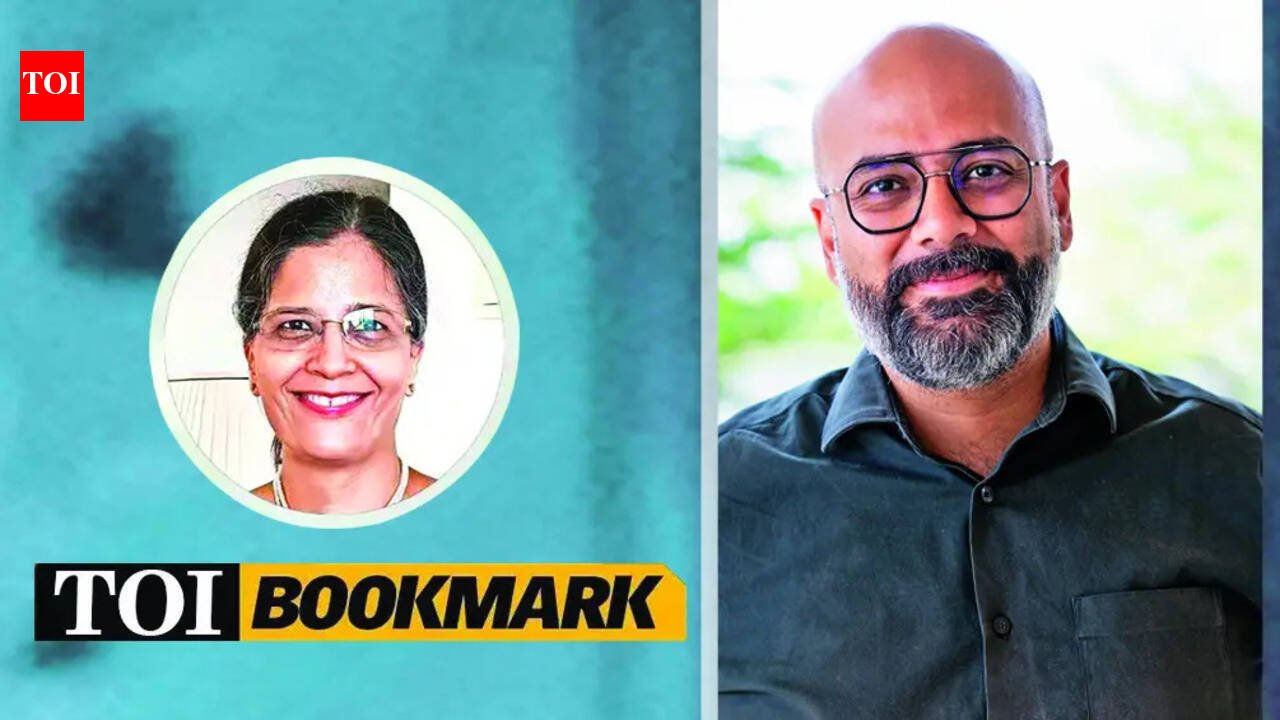
Q: What made you write Meet the Savarnas? A: It comes out of partly my life’s experiences also because I did not grow up in a Savarna family. I come from an intercaste marriage between a Scheduled Caste mother and an OBC father. And neither of those two sides of the family had a tradition for intergenerational literacy and what you would call high culture. But they were immigrants from Punjab. They were raising their kids in Kolkata. So I got exposed to a world which was not native to mine. And as I grew up, I realised that there was a world which was very much all around me, but I didn’t have access to it. And that world always seemed so much bigger than my own. It seemed full of very interesting people who were talking about books, culture, art, a ‘higher order of things’. When I looked at my own family and the people around me, the concerns were very mundane, were very existential. And as a young person…, I really wanted to escape the orbit of that world. And I, in time, started realising that a lot of that world was coded around the politics and the performance of caste. It was the world of Savarnas. It was a world where they decided what was legitimate, what was to be talked about, what was authentic and what was fake. And no matter how hard I tried, I couldn’t fit into that world… I eventually got into academia and got into cultural studies and did a fair amount of cultural anthropology as a method. I understood that when it comes to caste, the sociology and anthropology departments in India are full of these books and researches which centre Dalit communities, tribal communities, even OBC communities. There are lots of very interesting works which have been done on that. But the world of Savarnas... there’s not a lot of anthropological work which has happened there. And part of it is because it is very inaccessible. Like, it’s easier to go down to a slum in a city and do research, do field work there, interview people. You can’t walk into a gated community in Gurgaon or Bangalore and try to do that…. But more importantly, it was like this academic blind spot where you have all these great writers, thinkers, intellectuals in civil society, in media, academia, and they are all writing about caste, but they’re not writing about their own caste and communities. And it’s almost like their gaze is always facing outwards and never to their own. And I think it is a culmination of a lot of these different strands which put me in this space where I started writing and theorising about Savarnas. And it started out with articles for various digital media platforms where I was trying to do a series very loosely called ‘Like a Savarna’… And one of the articles there, ‘Dating like a Savarna’, I thought I had written a very non-controversial piece. It’s just a little bit about how caste and dating and intimacy overlap. And I got a tremendous backlash. There was a huge campaign on social media. I was called all sorts of names. And it had an impact on my professional life, my university where I was working. I had to pay some consequences because of that. And part of that backlash also made me realise that this is actually a very loaded conversation. It kind of made me a little more determined to write this. Q: You’re now carrying this book around in your domain space. How do you navigate it? A: It’s extremely challenging. The book begins very much grounded in closer to a memoir because I was grounding myself and my gaze into the book. As you go deeper into it, it becomes more of the social. It’s not just a book about caste. It is also a book about this period in time… from the late 90s, early 2000s till about Covid, 2020, 2022 because this was the period where the larger consensus was that India as a story is doing well, that we are on the rise, that this was our ascent towards superstar superpowerdom. And everywhere there was almost like you couldn’t say anything negative or you couldn’t say that the emperor had no clothes. Because then they would shout you down and say you’re being a naysayer. I have tried to theorize about it in the book through the idea of a glass floor. So if I am below the glass floor and what you’re calling the shining India story is happening above the glass floor in the world of Savarnas, well, that world looks very different to us… But it has a cost almost built into it. My career as an academic takes a hit. It’s almost like you’re always walking with a target on your back. Any right-wing reactionary group can just take the title of the book itself and create all sorts of discourse around it. So there is definitely a challenging, loaded responsibility that comes with it… I also want to point out there’s been a lot of understanding and love also from Savarnas. A lot of people have read the book and then come back to me, not through anger or bitterness, but through some kind of an idea that, okay, I am now going to be soul-searching and I’m going to be looking at myself. Q: It’s a great moment in history that you capture from modern India, but you also make visible to a young and modern audience using their lingo. A: When I was in college in the early 2000s, we were told that 21st century is a century of Asia, India and China… There were jobs, the tech sector was booming, real estate was booming. Hollywood was taking note of us. By every conceivable popular narrative. It seemed like we were on the rise. And we were supposed to reach the superpower status by 2020, because that’s what APJ Abdul Kalam had kind of told us. Now that date has been shifted back to 2047... When 2020 comes, forget being a superpower, it’s one of the most challenging years of the republic. It opens with the Shaheen Bagh protests, it goes into Covid. There’s a total breakdown of that positivity. And on the other side of it, it’s like we’ve emerged and we are beginning to ask ourselves this question, where did we go wrong? And I feel where we went wrong is that in this 20-25 year period, the steering wheel of this story was given into the hands of a very specific group of elite Savarnas who don’t even understand very much their own blind spots. So I’m trying to explain through this book why the Indian story didn’t work, why it ended up reproducing these pocket enclaves of hyper privilege while creating this system where our cities are unliveable, our policies are unworkable, there’s a political and existential crisis, the climate change crisis, all of these things have intensified and all the fruits of this great success story that we thought we will get, we haven’t received. And I’ve tried to answer some of those questions without trying to pathologise it into ‘this is how it is in India. The system is broken.’ A lot of times analysis hides behind these sweeping statements — ‘everything is broken, everything is corrupt’. No, what does broken mean? Who is in charge? Who are the people who are benefiting from these sort of systems? What are their politics? What is their social and cultural inner life? And I think in this book I’ve tried to connect both of these things. It’s not just a description of Savarnas, it’s not just a book on caste. It’s about both of those things and also how they intersect with policymaking and the larger trajectory of this moment that we had in India and we seem to have sort of squandered it. So in many which ways it’s also a book about a tragedy of a post-colonial state which had all the pieces in play and promised to itself that it was going to transcend itself and reach a higher level and couldn’t do it. Q: There’s so much being said which should be said in classrooms, in drawing room conversations, in public opinion pieces. A: Wherever there is knowledge production and wherever there is knowledge distribution in these spaces, there is near absence of any sort of caste diversity. As a result, what has happened is the structure becomes unaware of its own self. A lot of well-meaning Savarna intellectuals, thinkers, progressives often end up misdiagnosing and misunderstanding what they themselves are reproducing. So the critique then becomes just right versus left, progressive versus conservative. Whereas if you look at it from a caste formation, in a lot of these cases, the conservative and the progressive are often people within the same family WhatsApp group… The way we think of caste is fundamentally through oppression narratives, through the idea of suffering and exclusion. And don’t get me wrong, those need to be documented and talked about over and over again endlessly. But the system through which it mediates, through which it operates, is a Savarna system. And there is a sort of pathos in that. There is a sort of absurdity in that… One way of dealing with the pathos and the tragedy of caste and the absurdity of it is to also lean on humour a little bit because otherwise it just becomes too heavy and too intense and you can’t deal with it. So it is also an ode to a certain dysfunctionality in society. It is the code gone wrong on which the system operates. And you see all these attempts to try and write it and correct it and do the right thing in xyz, but the code is elsewhere. The system is operating on a different level… And my attempt in writing this book is that hopefully Savarnas see themselves a little bit, meet themselves a little bit, so they understand themselves a little bit and therefore they understand the systems they’ve created a little bit better.


Source link