Breaking News
Maharashtra govt’s task force to study digital addiction and its adverse impact on children | India News


Maharashtra govt's task force to study digital addiction and its adverse impact on children
Representative image by IANS.

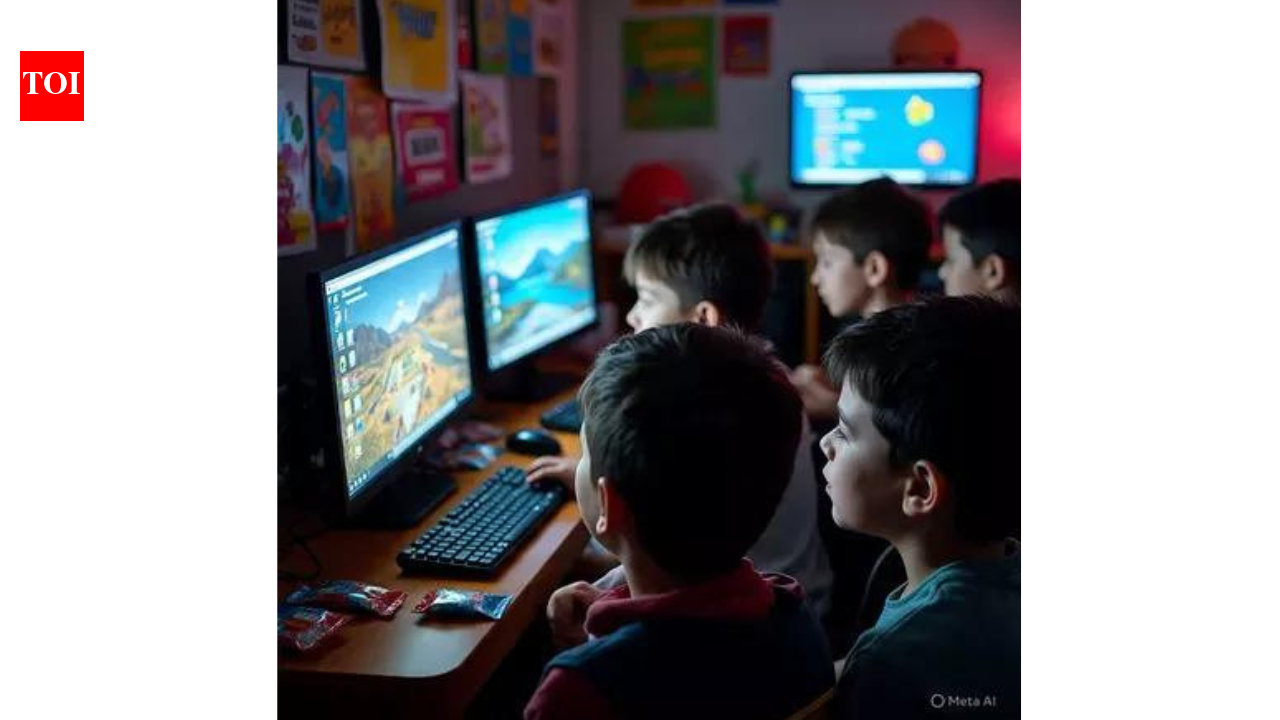
MUMBAI: Amid growing concerns over “digital addiction” among children and its adverse effects, the Maharashtra government has decided to constitute an expert task force to study the issue and recommend measures, state IT Minister Ashish Shelar told the legislative council on Wednesday. The task force, which will include members from both the Houses of the state legislature, will submit its report before the next session of the legislature, he said. He also cited a study indicating a significant rise in gaming addiction among children in urban and rural Maharashtra.


Source link

Watch: Teary Arvind Kejriwal’s emotional moment with wife Sunita & kids after relief in Delhi excise policy case | India News


'I Am Not Corrupt': Arvind Kejriwal Breaks Down As Court Frees Him, Sisodia In Excise Policy Case

Arvind Kejriwal comes home to his family after the court verdict.

NEW DELHI: It was an emotional moment at the Kejriwal household on Friday after the names of former Delhi chief minister Arvind and his deputy CM Manish Sisodia were cleared in the liquor excise policy case.Arvind Kejriwal and Manish Sisodia were welcomed with flowers, tight embraces and emotional scenes after a Delhi court discharged them, refusing to take cognisance of the CBI chargesheet.

‘I Am Not Corrupt’: Arvind Kejriwal Breaks Down As Court Frees Him, Sisodia In Excise Policy Case

The atmosphere at Kejriwal house turned celebratory as Kejriwal and Sisodia was greeted with bouquets and hugs from family members and supporters. Arvind’s wife Sunita Kejriwal and their children embraced him as he arrived, marking an emotional moment after months of legal battles. Sisodia was also surrounded by party colleagues and supporters who congratulated him on the court’s decision.The Rouse Avenue Court discharged both leaders in the excise policy case, observing that the alleged central conspiratorial role could not be substantiated. The court noted that the allegations had “failed judicial scrutiny” and found “no criminal intent” on the part of Sisodia, adding that the conspiracy theory “cannot survive against one constitutional authority.”Reacting to the verdict, Sunita Kejriwal wrote on social media: “In this world, no matter how powerful one becomes, one cannot rise above Shiva Shakti. Truth always prevails.”Visibly emotional after the verdict, Kejriwal said he had full faith in the judicial system and maintained that the case was politically motivated. “Today, the court has discharged all accused in this case. We always said that the truth emerges victorious. We have full faith in the Indian legal system. Amit Shah and Modi ji together hatched the biggest political conspiracy to finish AAP and 5 big leaders of the party were put in jail. The sitting CM was dragged out of his house and put in jail. Kejriwal is not corrupt. I have only earned honesty in my life. Today, the court has said that Kejriwal, Manish Sisodia and AAP are honest,” he said.Kejriwal’s counsel Vivek Jain said the court had closely examined the evidence submitted by the CBI. “The court has said that it meticulously went through all evidence produced by CBI and not a shred of allegation can be said to cross the threshold of charge. The court has discharged them, saying that there is no allegation which can be held to be true in this matter. The court has also said that the framing of the excise policy was done through institutional safeguards, and there cannot be any doubt on the mannerism and the way the policy has been framed,” he said.The CBI had filed its first chargesheet in 2022, followed by multiple supplementary chargesheets, alleging that Rs 100 crore was paid by a “south lobby” to influence the now-scrapped excise policy.A total of 23 people were chargesheeted in the case, including Kejriwal and Sisodia. They have all been cleared by the court.


Source link

Centre appoints SC judge as new head of panel probing Manipur ethnic violence | India News


Centre appoints SC judge as new head of panel  probing Manipur ethnic violence

NEW DELHI: The Centre on Thursday appointed former Supreme Court judge Balbir Singh Chauhan as the new chairperson of the commission of inquiry probing the ethnic violence that broke out in Manipur in May 2023. This follows resignation of the incumbent, former chief justice of Gauhati High Court Ajai Lamba. Justice Chauhan will assume charge on March 1, consequent upon the acceptance of Justice Lamba’s resignation with effect from February 28. “The terms of reference and other conditions of the commission as notified in the principal notification…dated June 4, 2023, as amended from time to time, shall remain unchanged,” the home ministry stated in a gazette notification issued on Thursday. The commission, The ethnic violence had led the Centre to place Manipur under President’s rule for almost a year. President’s rule was lifted last month and a popular govt installed in the state, with Y Khemchand Singh as chief minister.


Source link

SC seeks experts for panel on Aravalis; mining ban to continue | India News


SC seeks experts for panel on Aravalis; mining ban to continue

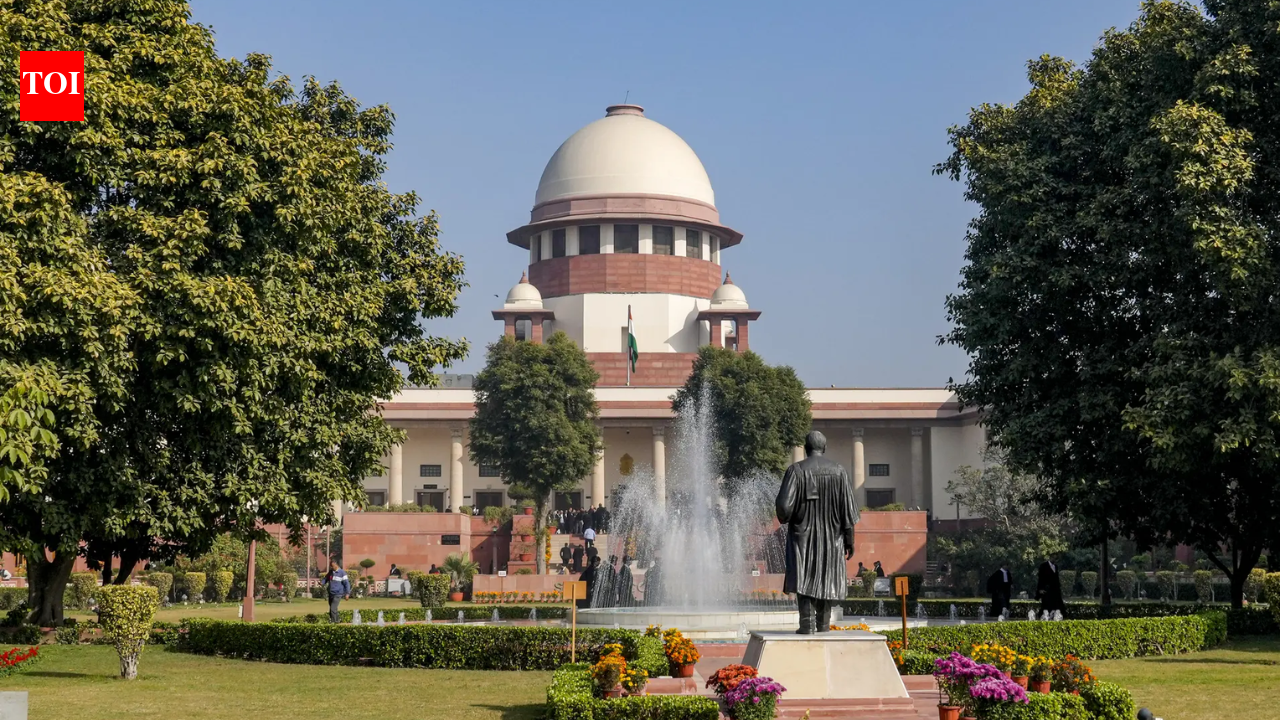
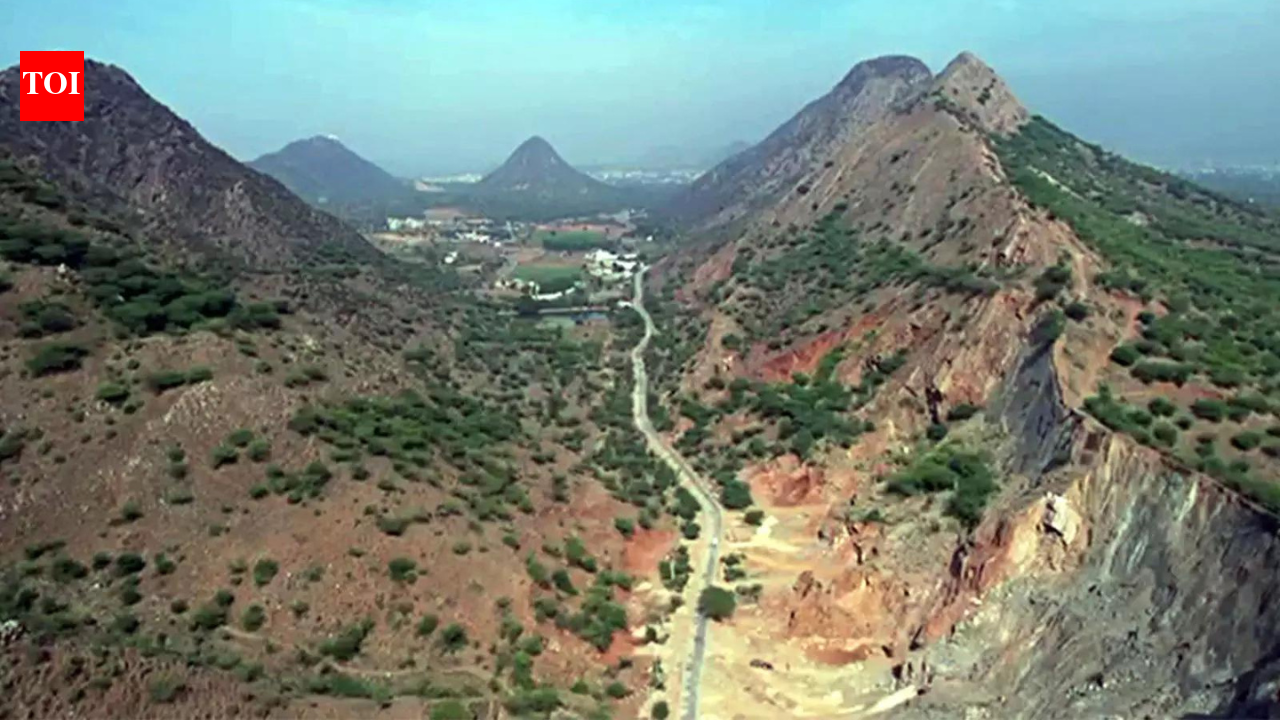
NEW DELHI : SC asked the environment ministry and other stakeholders on Thursday to suggest names of domain experts for the committee to be tasked with defining the Aravali hills and ranges, and observed that only lawful mining would be allowed in the region.The top court, on Dec 29, had taken note of the outcry over the new definition of Aravalis and kept in abeyance its Nov 20 order accepting a uniform definition of the hills and ranges. It had also put all mining on hold.On Thursday, a bench of CJI Surya Kant and Justices Joymalya Bagchi and Vipul M Pancholi extended its earlier stay order on mining for the time being.Aravali case: We will allow lawful mining only, says SCDuring the hearing, senior advocate Mukul Rohatgi, appearing for a litigant, said the company had a mining license and had won the right to mine after a protracted battle. Now, because of the court order, mining had been stalled.“We will allow lawful mining only… let the experts tell us (the definition). We will cross all bridges and reach the right destination,” the CJI said.The bench asked lawyer Jay Cheema to assist it. Senior advocate K Parmeswar is already assisting the bench as amicus curiae.“We request the (environment) ministry to suggest a panel of domain experts along with their profiles. Senior counsel are also requested to give profiles of some eminent domain experts for the purpose of constituting the committee, as was observed by this court,” the bench said.The bench said it was conscious of the fact that all activities, especially mining by licenced firms, have come to a halt. “However, status quo will have to be maintained for the time being till some preliminary issues are answered in a phased manner. Post this matter for the constitution of the committee,” the CJI said.The bench asked stakeholders to submit written notes by March 10 after the amicus curiae submitted his suggestions on the aspect of definitions of the Aravali hills and ranges.The bench said it will set up the panel of experts and frame issues to be decided on the next date of hearing.Earlier, the bench said it seemed prima facie that the earlier report of a committee and the verdict had “omitted to expressly clarify certain critical issues” and there was a “dire need to further probe” to prevent any regulatory gaps that might undermine the ecological integrity of the Aravali region.“There has been a significant outcry among environmentalists, who have expressed concern about the potential for misinterpretation and improper implementation of the… definition and this court’s directions,” the bench had said.


Source link

Social media companies must pay creators fairly: Vaishnaw | India News


Fair Pay, Consent, Online Safety: Ashwini Vaishnaw Draws Red Line For Digital Platforms

NEW DELHI: Information and broadcasting minister Ashwini Vaishnaw said Thursday social media platforms should compensate creators of the content they use for earning billions in profit.“Social media platforms must also share revenue in a fair way with the people who are creating content, whether it is news persons, conventional media, creators in far-flung areas, influencers, or professors and researchers disseminating their work using the platforms... there has to be a fair share of revenue with the people who are creating the content,” Vaishnaw said at the Storyboard 18 Digital News Publishers Association Conclave.

Fair Pay, Consent, Online Safety: Ashwini Vaishnaw Draws Red Line For Digital Platforms

‘Social media giants must be accountable’Information and broadcasting minister Ashwini Vaishnaw’s pitch for “fair compensation” comes amid a debate raging globally over the refusal of social media giants to compensate creators of content which they have used to make huge profits.The conduct of platforms was under focus in the deliberations at the conclave, with Vaishnaw saying that social media companies can no longer function as neutral intermediaries. They now operate like publishers and must be accountable for the content they host and amplify, he said.Vaishnaw said internet’s evolution into a powerful media ecosystem demands a redistribution of responsibility. “The nature of internet has changed… today it has become a powerful media outlet, where, like media, the platforms must take responsibility,” he said, adding, “Platforms must take responsibility for what they are publishing.”Warning deepfakes, disinformation and synthetic media are corroding public trust, the minister said the damage goes beyond individual harm. “The entire society is built upon trust in institutions… that core tenet of trust is under threat,” he said, pointing to the rapid spread of fabricated images and videos through algorithm-driven virality.The I&B minister also emphasised that synthetic content must not be created without explicit consent.


Source link

In Rajasthan, the Aravallis can’t be simply measured | India News


In Rajasthan, the Aravallis can’t be simply measured

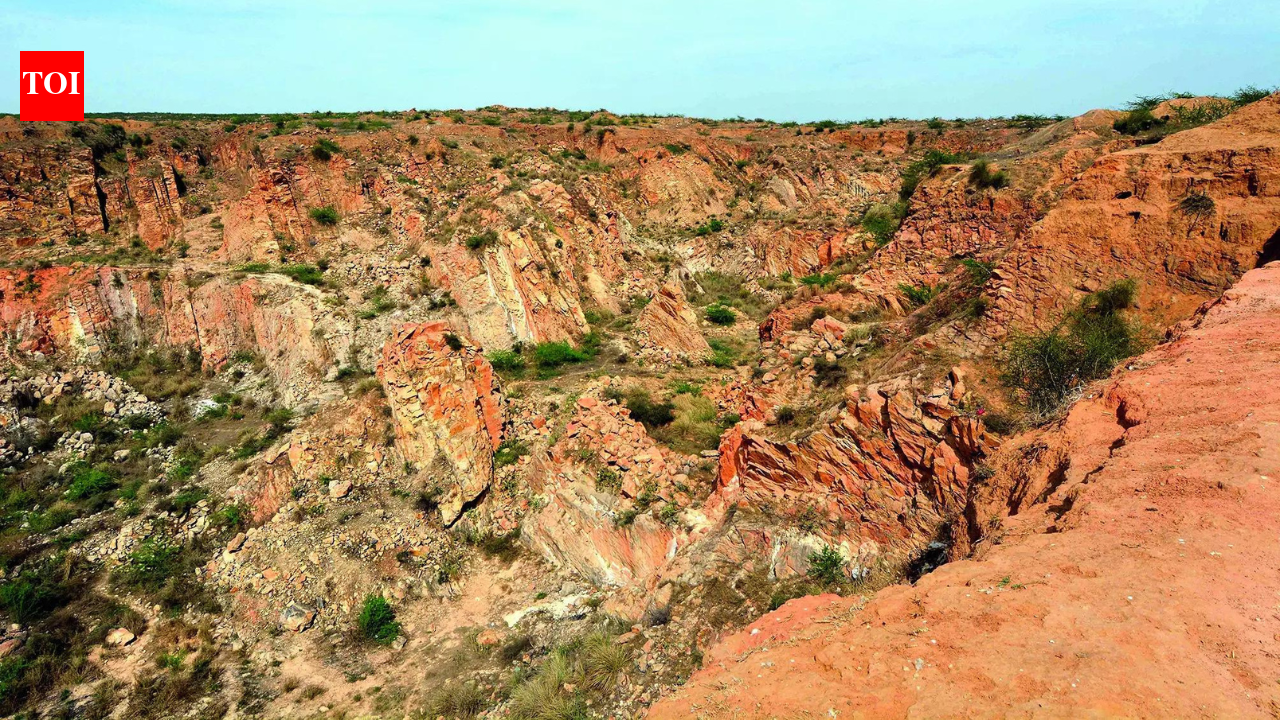
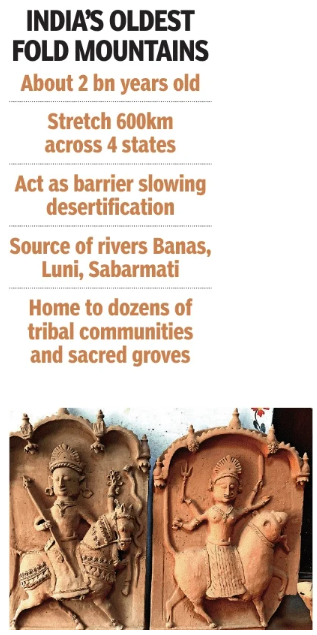
The range has shaped everything — from livelihoods to culture, faith and language — for the many communities and tribes it has cradled. Even as controversy over an official definition has led Supreme Court to seek a review, voices on the ground say the Aravallis’ imprint far exceeds physical dimensionsWhat are the Aravallis? An answer to this seemingly straightforward question was stayed by Supreme Court last Dec after it sparked a public outcry for being too narrow in scope. The top court now wants a new yardstick to define the range, which stretches 600km across four states and, at close to 2 billion years old, represents India’s oldest fold mountains. But talk to people on the ground in Rajasthan, the state synonymous with the Aravallis, and it becomes evident that the measure of these mountains lies not so much in their height, but in how deeply they have shaped the lives of the people who call the landscape home.The now-shelved definition — involving a 100m elevation cutoff and proximity of 500m between hills for demarcating the range — had inspired fears that a significant portion of the Aravallis would be stripped of environmental protections. For people who live in its folds, the stakes are immediate: if the map shrinks, so do forests, grazing commons, water systems, sacred groves, and the checks that stand between community life and mining, fragmentation and forced migration.Shelter And Sustenance“The Aravallis and our communities share a bond that goes back centuries. These mountains are not just geography for us. They are a living god, central to our identity and survival,” says Hari Ram Meena, tribal writer and former IPS officer.

.

The Aravallis are home to some of Rajasthan’s oldest communities. The Meena tribe once ruled large parts of the Jaipur region, controlling strategic passes of the Aravallis before the rise of the Kachwaha Rajputs. In southern Rajasthan, Bhil chieftains held sway over vast forested tracts. “The Bhils were known as the ‘kings of the forest’. So crucial was their role that the royal coat of arms of Mewar depicts a Rajput warrior on one side and a Bhil warrior on the other,” Meena adds.The mountains also shaped warfare. During Maharana Pratap’s resistance against the Mughals, the Aravallis enabled guerrilla tactics and hidden movement based on local knowledge of forests, mountain passes and water sources.If the hills protect, they also sustain. The Aravallis are Rajasthan’s ecological spine. It regulates climate, arrests desertification, feeds rivers like the Banas, Luni and Sabarmati, and helps forests survive in a largely arid landscape. It is also a cultural watershed, separating not just river systems flowing towards the Arabian Sea and the Bay of Bengal, but also shaping traditions, languages and ways of life.

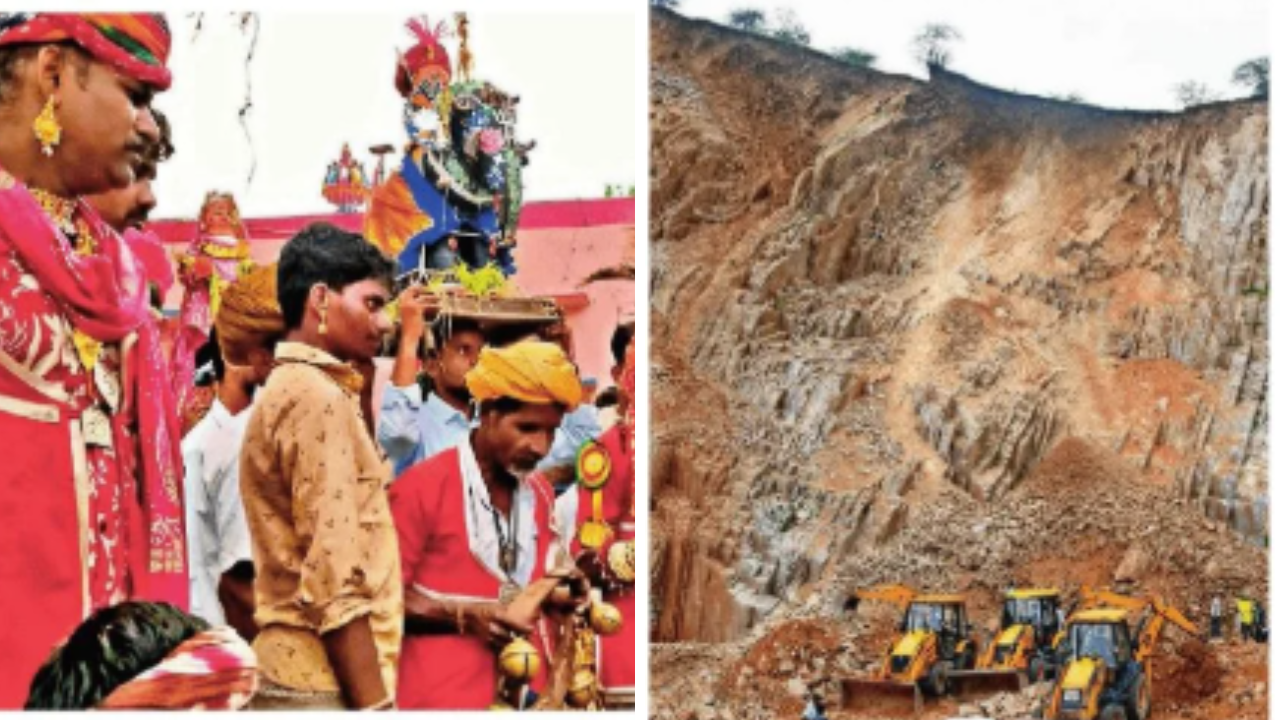
Men of the Bhil community perform the annual Gawari dance (left) themed around the message of conservation of forests and the Aravallis; (Right) Illegal mining and hill-cutting in the Aravallis have long posed a threat to the range

For communities such as the Bhil, Meena, Garasia, Saharia, Raika, Rewari, Mogia, Nath, and Gurjar, the mountains are not a resource, but a living presence. Temples, sacred groves, hilltop shrines, and forest deities dot the landscape and the mountains are treated as a ‘prakriti tirtha’, a sacred geography.Embedded In Everyday LifeLife in the Aravallis has always revolved around forest produce, livestock and water. Communities collect food, fuelwood, medicinal herbs, bamboo, tendu leaves and wild fruits from the forest. Rain-fed terraced farming supports hardy crops such as millets and pulses, while hill slopes provide grazing areas for cattle, sheep, goats and camels.Traditional water systems are central to survival. ‘ Johads ’, stepwells, nadis and baoris — built and maintained collectively — harvest rainwater and recharge groundwater. “Our water structures are our lifeline. They are protected not by law but by community ethics,” Meena says.Social activist Kunj Bihari Sharma explains how deeply human and animal life are intertwined here. “Aravalli forests are not just greenery,” he says. “They are sources of fuel, fodder, herbs and water. In summers, even wild animals depend on village wells and grazing areas. Humans and wildlife survive together.”But this balance has been steadily eroded. Over the years, communities were told that forests belonged to the state, not to them. “Earlier, people built johads through collective labour. Now, even that is restricted. At the same time, illegal mining and stone mafia hollow out the hills,” Sharma says.Nowhere is the impact more visible than among Denotified Tribes (DNTs) and nomadic communities, whose lives depend entirely on grazing landscapes. Gopal Keshawat, former chairperson of the Development and Welfare Board for Denotified, Nomadic, and Semi-Nomadic Communities, warns that mining has triggered a deep livelihood crisis. “Pastoral communities survive on livestock, milk, wool and leather. When grazing lands are destroyed, their entire economy collapses,” he says.Keshawat says that nearly 10% of India’s nomadic population and more than one crore people in Rajasthan depend on Aravalli-linked ecosystems. He recalls that commissions such as the Ayyangar Committee, and Balkrishna Renke Commission had clearly recommended mining bans in the Aravallis and separate grazing lands for DNT communities. “These recommendations were to protect both people and nature. Ignoring them puts animals and humans at equal risk,” he said. But, where laws fail, cultural practices continue to protect biodiversity.Living MountainsAcross Rajasthan, ‘orans’, or community-protected sacred groves, remain untouched due to religious beliefs. Social sanction rather than written rules prohibit tree-cutting and hunting in these forests, dedicated to local deities like Bhadarva Dev and Pandurimata.Among the most powerful expressions of this belief is the Gawari dance of the Bhil community. Dedicated to Shiva and Parvati and performed over 45 days by men in parts of Udaipur district, the dance is both spiritual and ecological — what social activist Kishan Gurjar says “is not entertainment, but the worship of nature”. “Cutting forests is considered a sin, and Gawari spreads the message of conservation,” Gurjar adds.The Aravallis are also deeply linked to nomadic communities such as the Sapera or Kalbelia. “The Kalbelia learned to live with snakes, treat snake bites and understand forest behaviour,” says social justice researcher Navin Narayan, who has worked with these groups for over 20 years. Kalbelia were once seen as protectors of villages, not entertainers. Amid mining and forest loss, Narayan warns that the shrinking Aravallis are threatening not only their livelihoods, but also the traditional knowledge that connected people with nature for generations.“The survival of the Aravallis is largely because of indigenous communities. These hills have protected people, and people have protected the hills,” says Manish Barod, block president of the Scheduled Areas Reservation Front in Udaipur. It’s a link that is repeatedly stressed with an eye on the Aravallis’ future, with activists and stakeholders saying that protecting the mountains is much more than a simple definition. “Reducing Aravallis to physical measurements denies its reality. It is a socioecological organism where folk culture, agriculture and community knowledge are deeply intertwined,” says sociologist Shyam Sunder Jyani.What is at stake is not just forests or hills, but Rajasthan’s living memory — its languages, rituals, arts and ways of life shaped over millennia.Mountains that define art, cultureAlong the banks of the Banas river, which originates in the Aravallis, lies Molela village that’s famed for its terracotta sculptures of deities. Ask potter Prabhu Gameti, and he says the craft exists because of the mountains. “The clay from the Banas is smooth and flexible. When fired, it doesn’t crack. That’s why idols made here last generations,” he explains.Researcher and folk artist Madan Meena warns that environmental destruction directly erases culture. “When livelihoods collapse, people migrate. And when people migrate, languages die,” he says, referring to the more than two dozen languages and dialects, many existing only in oral tradition, that are spoken in the region. An art form carries hundreds of words linked to seasons, tools, etc. “When an art form disappears, an entire vocabulary disappears with it,” he says.Communities like the Mogiya, who collect medicinal herbs, and the Nath sect, whose shrines such as Pandupol lie deep within the hills, show how belief, livelihood and landscape merge seamlessly. Also, Jain temples, Buddhist remnants and folk shrines together reflect the Aravallis’ religious diversity. “The Aravallis prevented cultural homogenisation in Mewar. Its geography ensures this region’s diversity,” says C S Sharma, a history professor in Udaipur.



Source link

Delhi High Court: Sengar’s sentence suspension plea: HC asks AIIMS to examine him | India News


Sengar’s sentence suspension plea: HC asks AIIMS to examine him

NEW DELHI: Delhi high court has asked AIIMS to set up a medical board to examine Jaideep Sengar, who is seeking suspension of a 10-year jail sentence on medical grounds in the 2018 custodial death case of the Unnao rape survivor’s father.Jaideep — brother of expelled BJP functionary Kuldeep Sengar, who was convicted of raping the Unnao girl when she was a minor — sought relief on account of Stage-IV oral cancer with suspected recurrence.

Unnao Rape Case: Delhi HC Rejects Kuldeep Sengar’s Plea To Suspend Sentence

A bench of Justices Navin Chawla and Ravinder Dudeja observed that an independent medical assessment was necessary to ascertain Jaideep’s current health condition.CBI opposed the petition and contended that the medical documents produced by the convict in support of his plea were fake. Counsel for the rape survivor also opposed the plea, apprehending that he would misuse his liberty.


Source link

Pm Modi Instagram Followers: PM Modi first leader to cross 100m followers on Instagram | India News


PM Modi first leader to cross 100m followers on Instagram

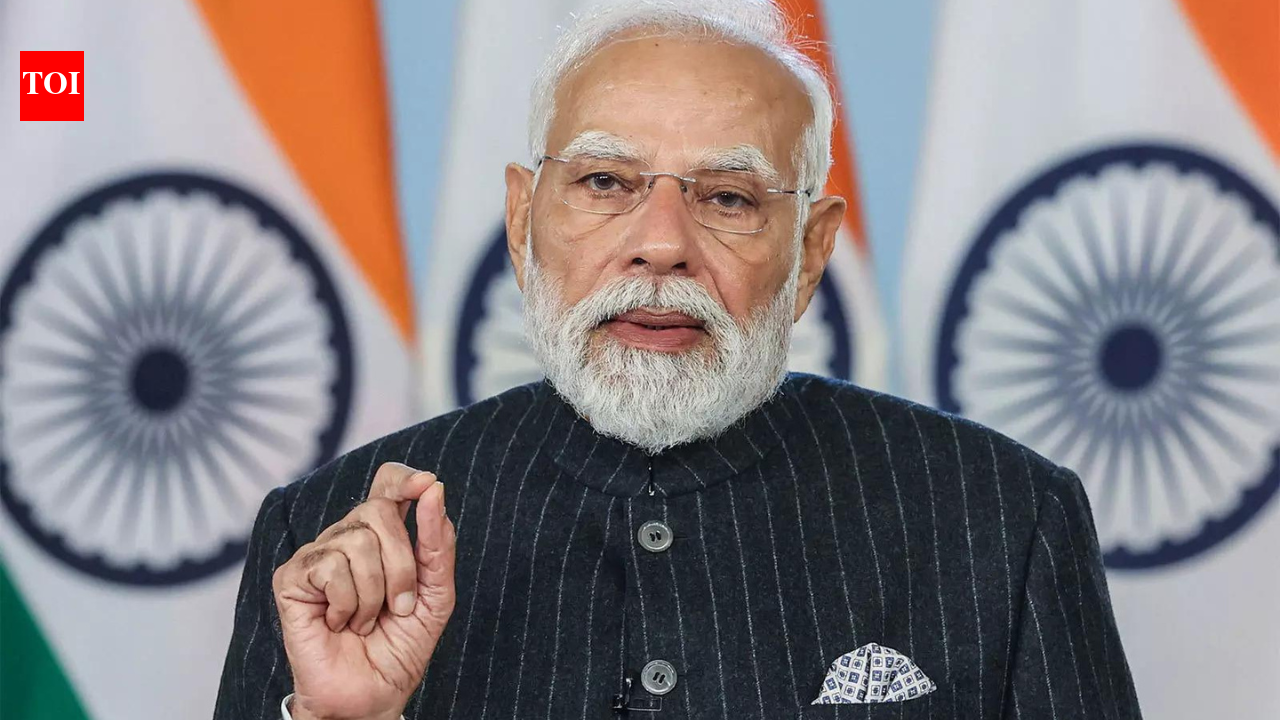
NEW DELHI: PM Modi Thursday became the first world leader and politician to cross 100 million followers on Instagram, marking a new milestone in his global digital footprint and online political communication.Modi, who joined the platform in 2014, has steadily built one of the world’s most-followed political accounts. His follower count is now more than double that of US President Donald Trump, who stands second with around 43.2 million followers on Instagram.Among other international leaders, Indonesian President Prabowo Subianto has about 15 million followers, Brazilian President Luiz Inacio Lula da Silva has 14.4 million, Turkish President Recep Tayyip Erdogan has 11.6 million, and Argentine President Javier Milei has about 6.4 million followers. The combined following of these five leaders remains lower than Modi’s individual tally.In India, UP CM Yogi Adityanath has around 16.1 million followers, while Leader of Opposition in Lok Sabha Rahul Gandhi has about 12.6 million.The milestone comes alongside strong global approval ratings for the PM. As of Dec 2025, Modi held a 70% approval rating, according to Statista, placing him first among selected world leaders. Japan’s PM Sanae Takaichi ranked second with 63%, followed by Argentina’s Milei at 60%, while Trump ranked 11th with 43%.


Source link

US weakened global organisations: Merkel | India News


US weakened global organisations: Merkel

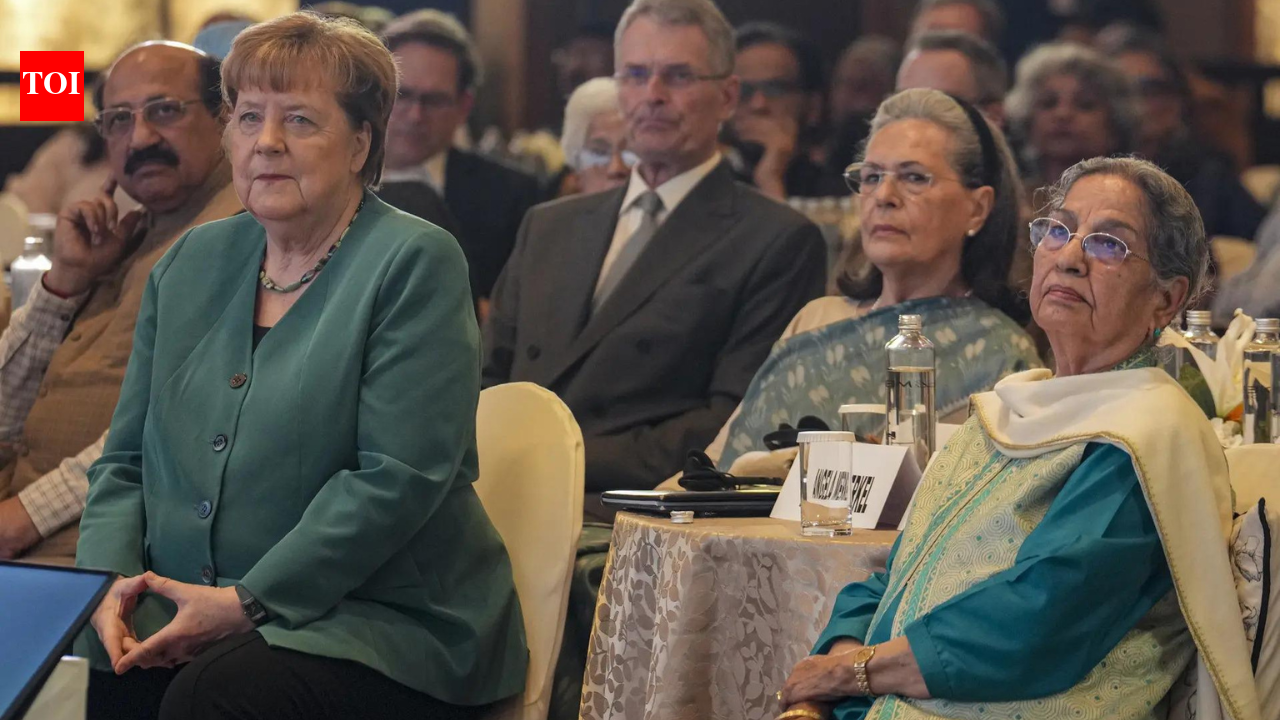
New Delhi: US has weakened international organisations and multilateralism is under threat, former German Chancellor Angela Merkel said while delivering the inaugural Dr Manmohan Singh lecture. Referring to Russia’s attack on Ukraine, she said the principle of territorial integrity in Europe was violated, forcing the European order “into a corner”.“The right of territorial integrity and sovereignty was trampled. Multilateralism as a concept for our cooperation is under pressure,” she said, adding that the global order had been shaken. “US under Trump weakened international organisations such as WHO, World Trade Organization and the Paris Climate Agreement. They even question the role of UN or replace it with unilateral action. The previous order of cooperation is being replaced by one in which might means right,” said Merkel, who served as Germany’s chancellor for 16 years.The former chancellor made a strong pitch for multilateral cooperation, saying giving up on it in times of rising protectionism was not an option.


Source link

Govt: Carney’s visit at ‘crucial juncture’ | India News


Govt: Carney's visit at 'crucial juncture'

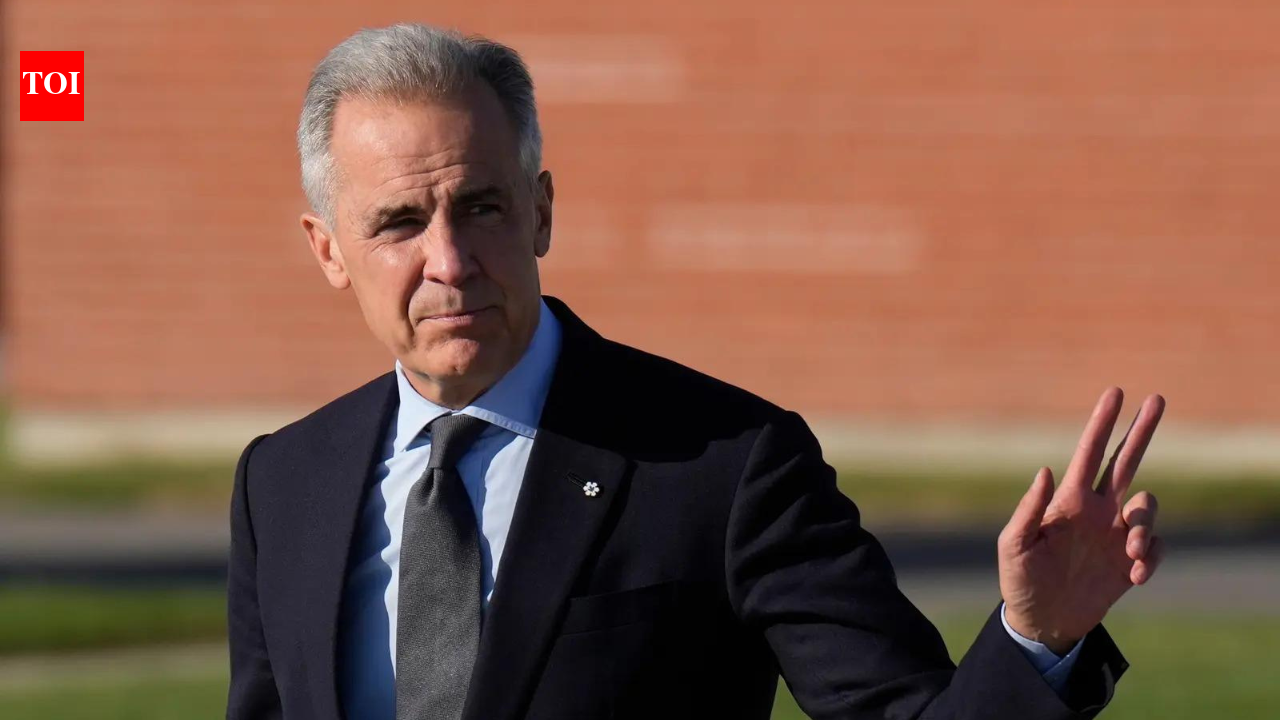
NEW DELHI: After Canada, India too Thursday announced the four-day visit by Canadian PM Mark Carney beginning Friday, saying it comes at an important juncture in normalisation of India-Canada bilateral relations. The govt said PM Modi and Carney had earlier agreed to pursue a constructive and balanced partnership grounded in mutual respect for each other’s concerns and sensitivities, strong people-to-people ties, and growing economic complementarities.“The forthcoming meeting between the leaders will provide an opportunity to reaffirm the positive momentum and shared vision of India and Canada in building a forward-looking partnership,” MEA said in a statement.Carney arrives in Mumbai on Friday for what is his first official visit to India. He will be in Delhi on March 2 for a bilateral meeting with Modi. In Mumbai, Carney will participate in separate business engagements, interact with Indian and Canadian CEOs, industry and financial experts, educators as well as Canadian Pension Funds based in India.Modi and Carney will review the progress achieved till date across diverse areas of the India-Canada Strategic Partnership, building on their earlier meetings in Kananaskis (June 2025) and Johannesburg (Nov 2025), said the MEA. TNN


Source link